
Introduction to Peacock Designs in Rugs
Discover our curated selection of stunning Peacock Designs Rugs and elevate your space with mesmerizing color.
The Enduring Allure of Peacock Designs
Among the many decorative traditions in textile art, peacock designs hold a singular place of prestige. Their allure stems not only from their rich colors and intricate designs but also from the associations the peacock has carried across civilizations. From Persian courts to Indian palaces, the image of the peacock has symbolized opulence, elegance, and versatility, making it one of the most sought-after luxury rug motifs.
Whether woven into the borders of a silk masterpiece or spread boldly across the field of a wool carpet, the bird’s sweeping feathers and radiant form give these pieces a dramatic presence.
In contemporary interiors, a peacock symbol carpet often becomes the centerpiece of a room. Its jewel-toned palette and flowing patterning can harmonize with both traditional and modern aesthetics, bridging past and present in a single textile.
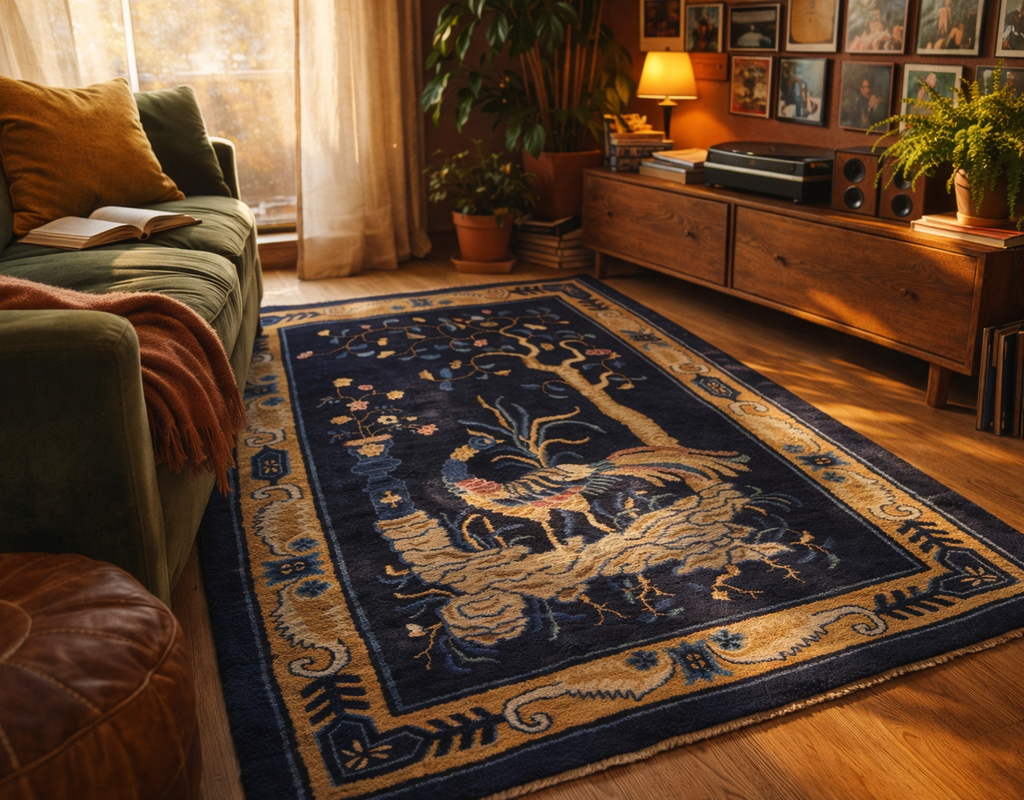
A detailed, dark-hued traditional rug anchors the eclectic and warmly lit living area.
Designers frequently highlight them in living rooms, dining spaces, or formal halls, where their vibrant detailing communicates sophistication while their historical depth adds cultural weight. This versatility ensures that peacock designs remain relevant and desirable even in the ever-changing world of interior style.
Key Symbolic Meanings
The power of peacock designs meaning lies in the layered symbols attached to the bird throughout history.
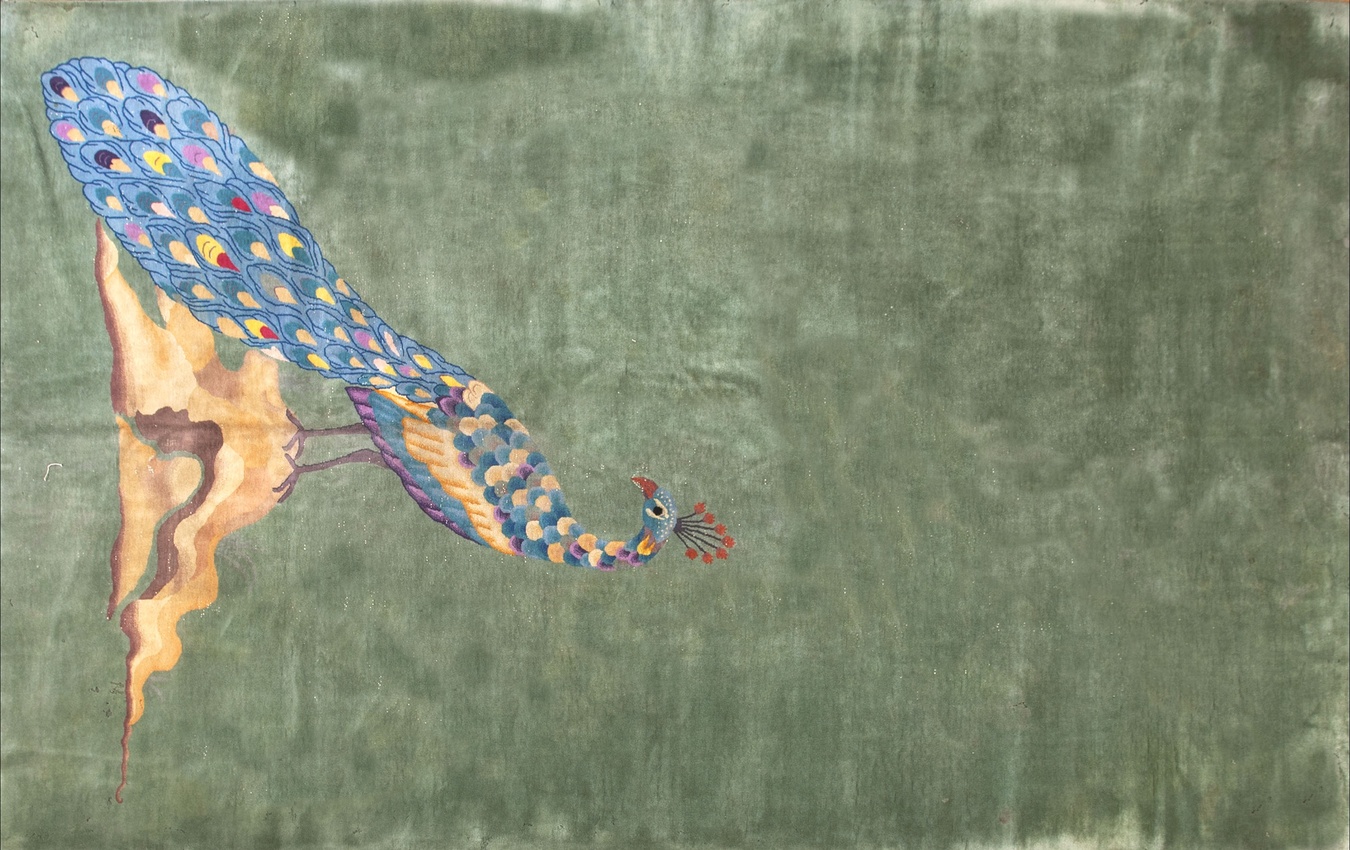
Antique Floral Wool Hand Knotted Pile Green 1920s Rug – by Rugs On Net
These themes are woven into the fibers of each rug, adding dimension far beyond visual appeal:
- Royalty and Nobility — Why: The peacock has long been a symbol of kingship and divine right. Its plumage appears in courts, temples, and textiles as a marker of authority and grandeur. A rug carrying this motif signals elevated status.
- Beauty and Paradise — Why: With feathers likened to a “thousand eyes,” the peacock embodies heavenly gardens and eternal spring. Rugs with this imagery are believed to bring harmony, fertility, and aesthetic perfection into the home.
- Immortality and Renewal — Why: In both Persian and Christian symbolism, the peacock was thought to renew itself, its feathers falling and regrowing in a cycle of rebirth. This belief transformed the motif into a sign of enduring life and timeless elegance.
- Protection and Watchfulness — Why: The “eyes” on the feathers were seen as guardians against evil spirits or misfortune. Owners valued peacock motif rugs not only for their beauty but for their protective aura within domestic and sacred spaces.
- Grandeur and Luxury — Why: The sheer intricacy of weaving a lifelike peacock demanded skill and expense. As a result, such rugs historically belonged to elites. Today, their continued association with artistry and refinement makes them synonymous with luxury rug motifs.
Peacock Designs Symbolism in Décor
For homeowners and collectors, the peacock designs symbolism translates directly into interior meaning. A peacock rug in a living room can represent aspiration and success, echoing its royal legacy. In a bedroom, it may signify protection, renewal, and beauty. When used in ceremonial or display settings, it serves as a cultural statement, signaling continuity with centuries of artistic tradition.
Ultimately, the peacock motif is more than decorative—it is a storytelling device. Each rug captures centuries of cultural dialogue, transforming a simple floor covering into a conversation piece that embodies historic nobility and contemporary style alike.
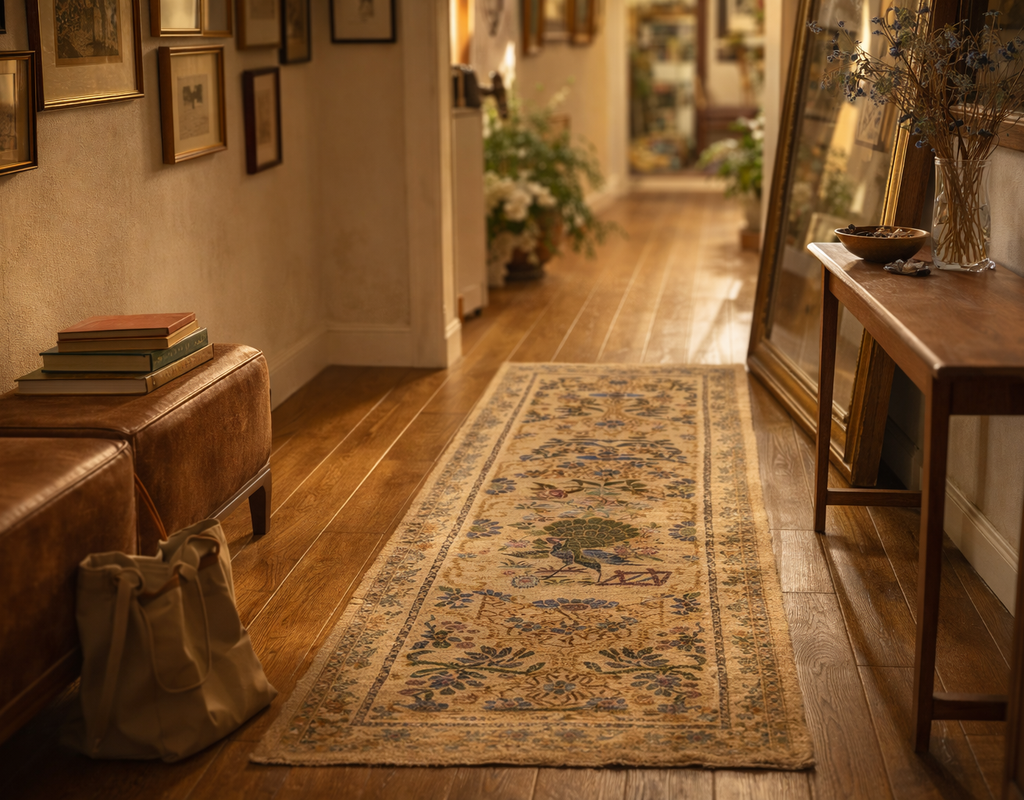
An antique-style runner rug warms the entryway, complementing the rich wood tones and leather accents.
In both museum halls and modern homes, the peacock rug remains one of the most visually captivating and meaningful expressions of textile art.
Origins & Etymology of the Peacock Motif
Historical Emergence of Peacock Rug Patterns
The origins of peacock designs in rugs trace back to the cultural golden ages of Safavid Persia (16th–17th century) and Mughal India. Both empires used the motif not merely as decoration but as a deliberate symbol of power and refinement. In Safavid carpets, the tāvus (Persian for peacock) frequently appeared in palace commissions and prayer rugs, embodying paradise, immortality, and divine beauty.
Similarly, Mughal weaving traditions in India employed the mayura (Sanskrit for peacock) to represent fertility, spring, and royal authority, themes deeply connected to Hindu and Islamic cosmologies. These early appearances were often reserved for courtly or sacred contexts, reinforcing the peacock as an emblem of majesty and the divine order.
Over time, the motif spread through trade, conquest, and cultural exchange, entering Ottoman, Chinese, and Caucasian weaving repertoires.
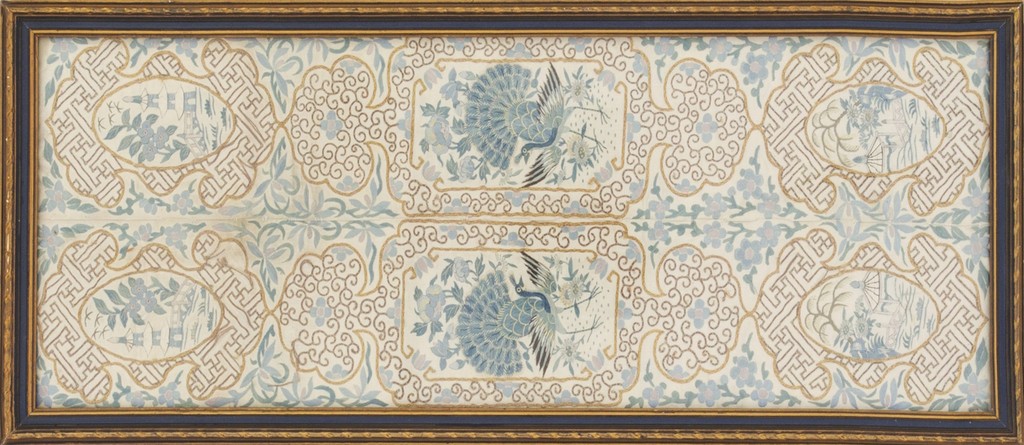
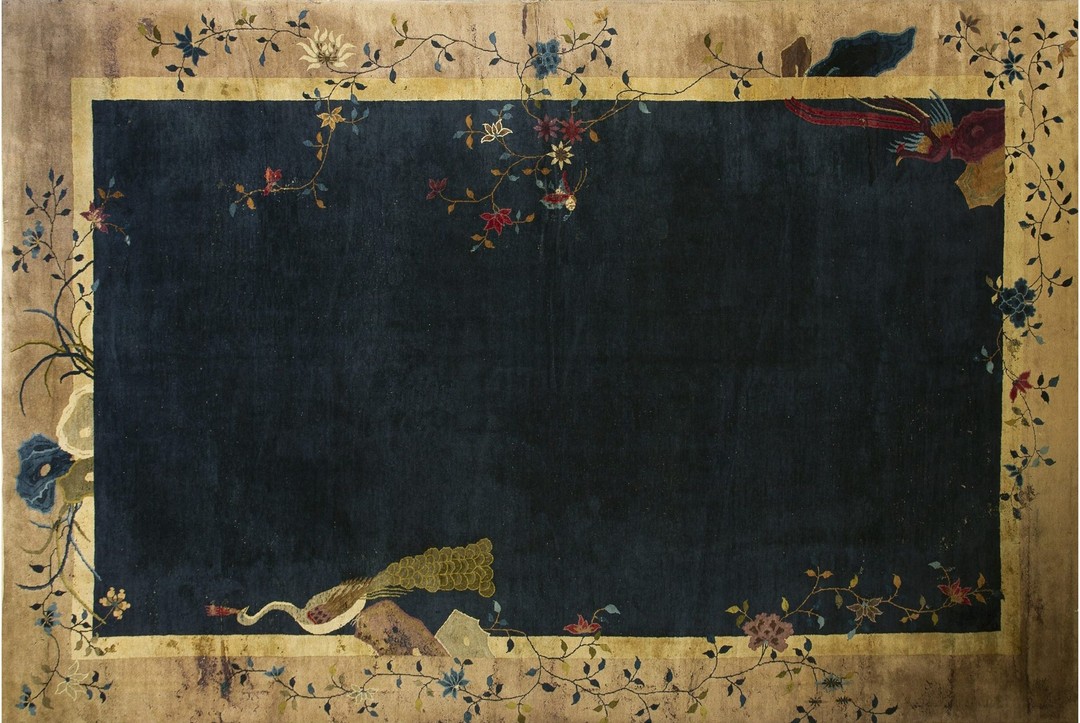
Antique Chinese – Textile Ivory 1890s Rug by Rugs On Net
The result was a cross-regional icon that maintained its symbolic prestige while adapting to different design languages. This historic foundation explains why peacock designs became popular in Persian carpets—they captured both spiritual meaning and aesthetic brilliance, aligning with Persia’s reputation for textile mastery.
Regional Names and Cultural Meanings
The vocabulary used to describe the peacock in various weaving traditions underscores the reverence each culture placed on the bird:
- Tāvus (Persia) — Why: Rooted in Persian poetry and mysticism, tāvus symbolizes eternal beauty and paradise. Its presence in Safavid carpets reflected both aesthetic ideals and spiritual depth.
- Mor / Mayura (India) — Why: In Sanskrit and later Hindi usage, mayura is the sacred bird of Saraswati and Kartikeya. Its inclusion in Mughal and regional Indian rugs connected weaving to divine blessing and artistic fertility.
- Tavus Kuşu (Turkey/Ottoman world) — Why: Translating to “peacock bird,” this term reflects the Ottoman fascination with exotic motifs. Rugs carrying this imagery often adorned mosques, palaces, and elite households, marking the bird as a guardian of status.
- Kǒngquè (China) — Why: In Chinese symbolism, the peacock embodies dignity, compassion, and rank. The adoption of peacock patterns in carpets woven for the Qing court mirrored its role in robes and imperial iconography.
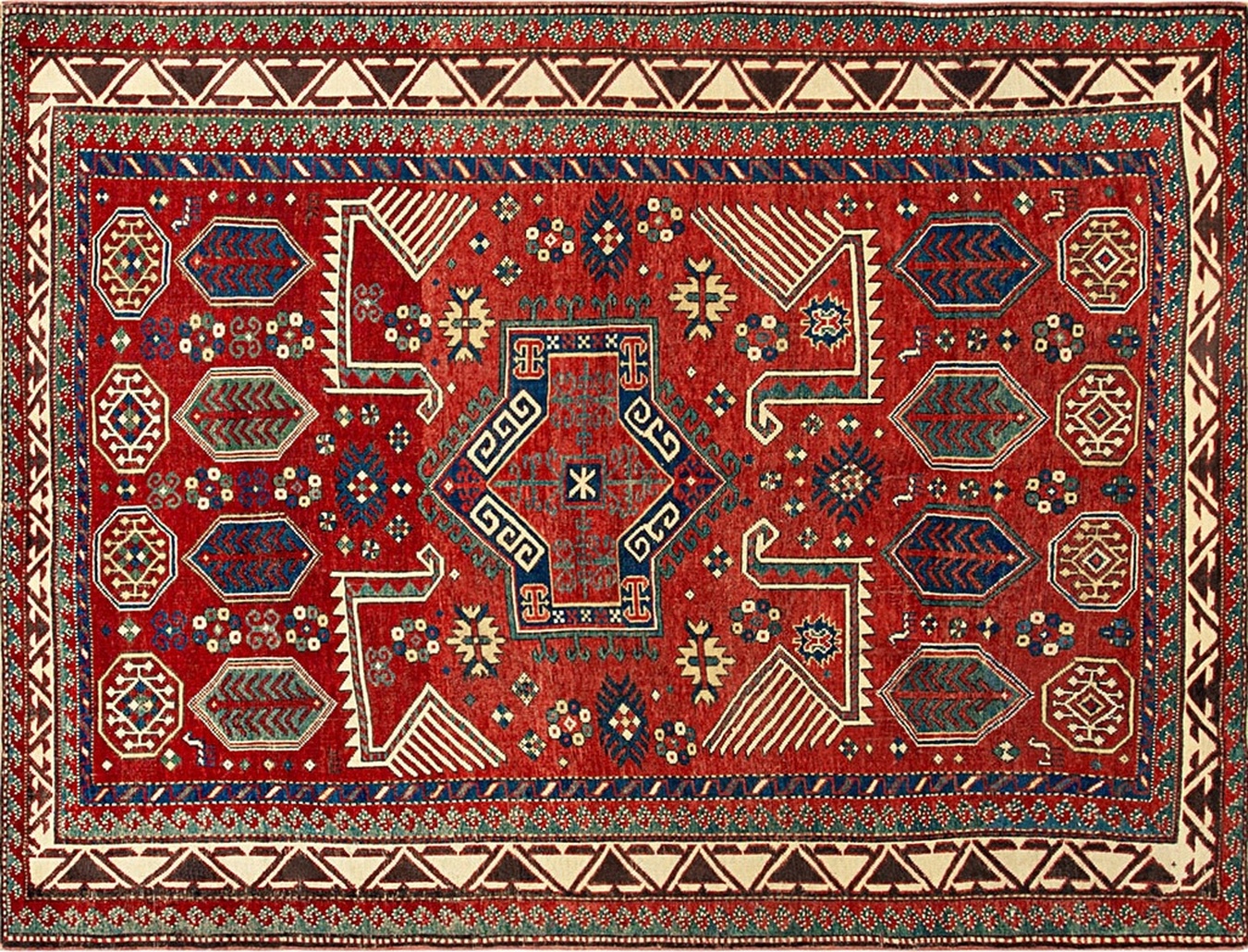
- Akstafa Peacock (Caucasus) — Why: The Akstafa region of the Caucasus became known for stylized Akstafa peacock rugs, where the bird was rendered in bold geometric abstraction. These carpets carried both protective meaning and a distinctly local aesthetic tied to tribal identity.
Across these traditions, the peacock pattern history consistently reveals a dual role: the motif beautifies the textile while signaling cultural ideals of royalty, paradise, and protection. The etymological diversity—tāvus, mayura, tavus kuşu, kǒngquè—shows how each culture reinterpreted the peacock’s qualities to reflect its own values, yet the bird’s majestic symbolism remained constant.
Ultimately, the spread of peacock designs in rug art illustrates not only the universal admiration for its beauty but also the way language and design encode reverence, ensuring that every woven bird carries the weight of myth, power, and cultural memory.
Geographic & Cultural Spread
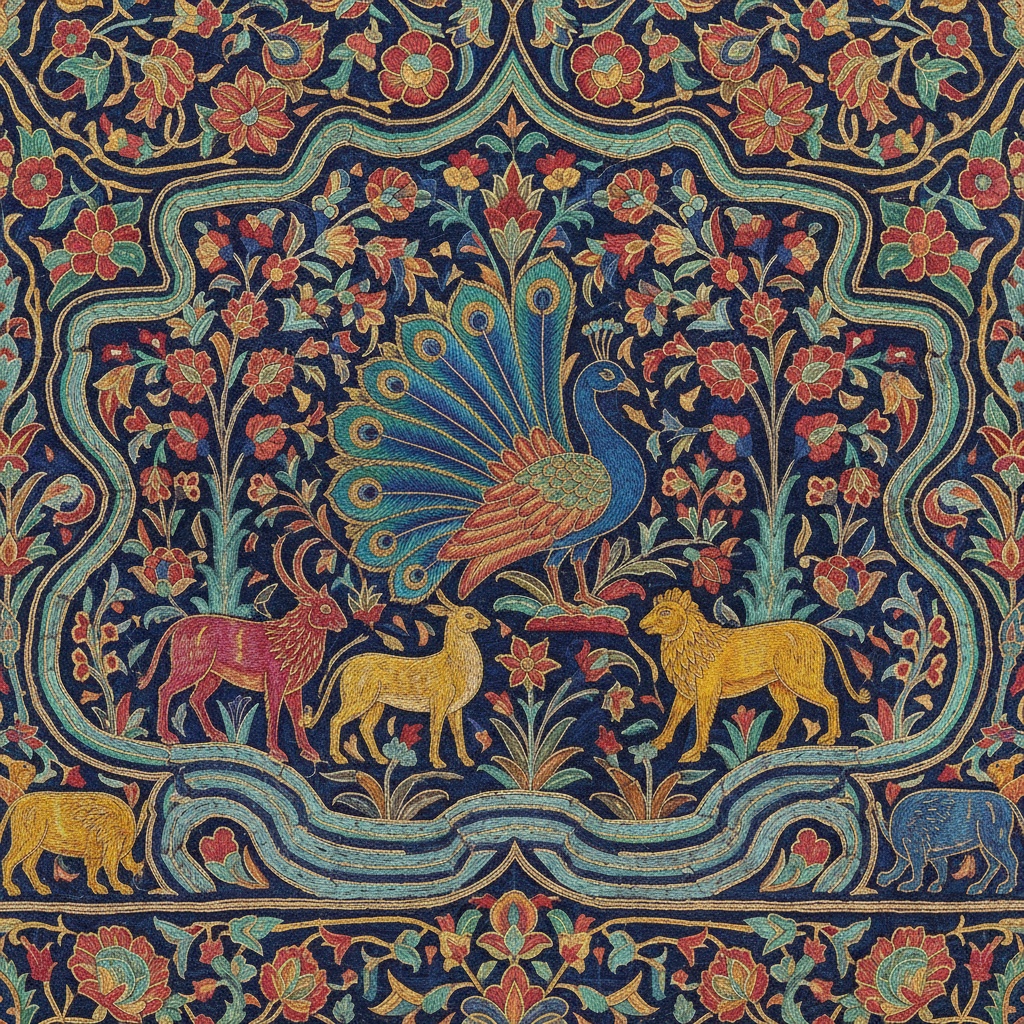
Intricate textile pattern showcasing diverse fauna.
Persian Origins: Safavid Court Carpets
The peacock rug origins are most vividly preserved in Safavid Persia (16th–17th century), where court workshops elevated the bird into a motif of extraordinary refinement. Here, the peacock was often integrated into Persian paradise garden compositions, where lush foliage, flowing water channels, and sacred animals formed symbolic visions of eternal bliss.
Within this setting, the peacock embodied immortality, divine guardianship, and celestial splendor. Safavid weavers masterfully combined jewel-toned silks, gold-wrapped threads, and natural dyes to capture the bird’s iridescence, ensuring that its presence on carpets paralleled its prominence in Persian poetry and miniature painting. This is why peacock designs became so popular in Persian carpets: they harmonized beauty with spirituality, serving both decorative and devotional functions.
Indian Mughal and Regional Textiles
In India, the Mughal peacock carpet became a profound statement of imperial identity. The Mughal emperors, who ruled from the 16th to 18th centuries, embraced the peacock as a symbol of sovereignty, drawing on Hindu associations with Saraswati, Lakshmi, and Kartikeya as well as Islamic metaphors of paradise. Woven in the famed ateliers of Lahore, Agra, and Kashmir, Mughal peacock rugs often depicted the bird in naturalistic poses with spreading plumage, framed by floral borders that echoed the architecture of palace gardens.
Beyond the Mughal court, regional Indian weavers also adapted the mayura motif, using it in folk and temple textiles where it signified renewal, beauty, and divine blessing. Today, the peacock remains India’s national bird, underscoring the depth of its cultural resonance.
Turkish, Chinese, and Central Asian Interpretations
The peacock’s journey across continents demonstrates its adaptability to local weaving traditions. In the Ottoman world, regional rug motifs featuring peacocks appeared on Anatolian and Turkish rugs, especially in the 18th and 19th centuries, when Western demand for exotic decorative carpets surged. Here, the bird was less a sacred emblem and more a sign of refinement and luxury for export markets. In China, the peacock entered rug design through both imperial symbolism and early 20th-century innovation.
Qing court textiles employed the kǒngquè to signify compassion, dignity, and official rank, while in the Republican era, Chinese Art Deco rugs reimagined peacocks in vibrant modernist palettes, pairing them with phoenixes, florals, and geometric borders for cosmopolitan buyers. Central Asia also developed distinct interpretations, most famously the Akstafa peacock in Caucasian rugs. Rendered with bold, geometric abstraction, these tribal carpets reduced the bird to striking shapes—elongated bodies, stylized tails, and protective “eye” motifs—infusing the design with both mystical power and local identity.
A Hallmark of Global Textile Heritage
Across Persia, India, Turkey, China, and Central Asia, each weaving culture adapted the peacock motif to reflect its own values and artistic language. Yet despite these differences, the bird consistently retained its core associations with paradise, royalty, and protection.
This universality makes peacock designs and patterned area rugs not just decorative textiles but cultural artifacts that embody centuries of global exchange and symbolic depth. From Safavid palaces to Art Deco salons, they stand as one of the most enduring and recognizable hallmarks of world textile heritage.
Design Characteristics of Peacock Rugs
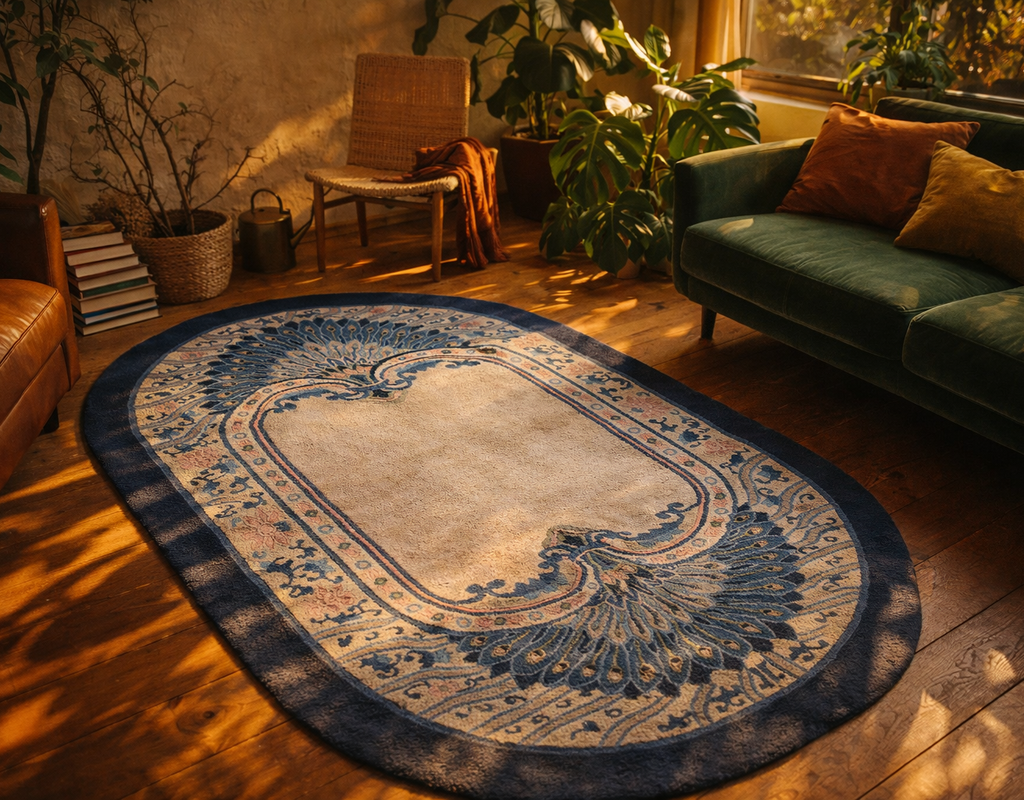
A richly patterned oval rug complements the cozy, nature-infused decor of this warmly lit interior.
Intricate embroidery showcasing the classic peacock eye motif.
Types of Representation: Full Bird vs. Feather Motifs
Stylized peacock rugs can portray the bird in multiple ways, depending on the tradition and weaving school. Some showcase the full peacock, often standing proudly with its tail displayed, creating a dramatic focal point.
Others emphasize the peacock feather pattern, isolating the iconic fan of plumage. In many cases, weavers focus solely on the eyespotted feathers, distilling the motif into its most recognizable element. This versatility allows the design to function both as a central narrative image and as a repeating decorative unit within borders and medallions.
Symmetry, Layout, and Typical Motif Arrangements
- Paired Birds Facing Inward — Why: A symbol of balance, unity, and protection, often positioned flanking a tree of life or medallion.
- Central Medallions with Peacock Imagery — Why: Used in Persian and Mughal rugs to create a focal centerpiece echoing royal garden carpets.
- Rhythmic Borders with Feather Patterns — Why: Continuous repetition of feathers with eyespots created protective boundaries and rhythmic harmony.
- Axial Symmetry in Tribal Rugs — Why: Simplified geometric birds arranged symmetrically reflected order and cosmic balance in nomadic traditions.
Such symmetrical rug design not only enhanced aesthetics but also reinforced symbolic meaning, turning the rug into a protective and harmonious space.
Realism vs. Abstraction in Weaving Styles
A key distinction in peacock pattern history is how different regions chose to depict the bird. Persian and Mughal weavers often favored naturalism, weaving feathers with subtle shading and lifelike detail.
By contrast, Caucasian and Central Asian rugs translated the motif into bold, geometric abstraction, reducing the peacock to stylized forms that still conveyed its power and symbolism. Both approaches highlight the adaptability of the motif: lifelike for courtly refinement, abstract for tribal strength and spiritual protection.
Signature Color Palettes
- Rich Blues and Greens — Why: Evoke the natural iridescence of the bird, symbolic of paradise and renewal.
- Gold and Ivory Contrasts — Why: Used to highlight the peacock eyespot color, creating depth and drawing attention to the protective “eye” motif.
- Bold Reds and Dark Grounds — Why: Provided contrast in tribal rugs, making stylized feathers pop visually.
The eyespots in peacock designs are almost always emphasized with high-contrast colors, such as gold or ivory against deep blues and greens, ensuring they remain the most striking element of the design.
Differences from Floral Rug Motifs
The difference between peacock vs floral motifs lies in meaning as much as form. Floral rugs tend to emphasize fertility, natural abundance, and aesthetic harmony, weaving blossoms and vines into endlessly repeating fields. Peacock rugs, however, carry a more layered narrative: the bird itself signifies beauty, watchfulness, nobility, and protection.
Formally, floral motifs are often secondary decoration, while peacocks dominate the visual field or appear as symbolic guardians. This distinction makes peacock designs stand out in décor—not only for their striking visuals but for the depth of meaning they carry beyond simple ornamentation. In sum, the stylized peacock rug combines lifelike elegance and bold symbolism with dynamic layouts and jewel-like palettes, making it one of the most distinctive and enduring textile motifs in world weaving.
Techniques, Materials & Construction
Hand-Knotting the Peacock Motif
Creating a hand-knotted peacock rug requires careful planning and skilled execution to ensure the bird’s elegance translates into textile form. First, the weaver draws a cartoon (design plan) that maps out the peacock’s form, whether full-bodied or feather-focused. Next, the loom is prepared with vertical warps, and the motif is built row by row using knots. Two main knot types are employed:
- Persian (asymmetrical) knot — Allows greater finesse and curvilinear detail, making it ideal for naturalistic peacock feathers and subtle shading.
- Turkish (symmetrical) knot — Produces bolder outlines and geometric stylization, often seen in tribal or Anatolian interpretations of the peacock.
As the knots are tied around each warp and cut, the peacock’s shape gradually emerges, with fine details like eyespots requiring denser knot counts to remain crisp and recognizable. This method answers the question of how peacock designs are hand-knotted into wool rugs: through deliberate placement of thousands of knots, each determining the clarity of form.
Silk, Wool, and Materials for Feather Shimmer
- Silk — Why: The reflective qualities of silk make it the premier choice for a silk peacock rug, as its natural sheen captures the same iridescence found in real feathers. When light hits the pile, the shimmer shifts, enhancing the lifelike effect.
- Wool — Why: A wool peacock rug provides durability and deep, saturated color. Wool’s ability to absorb dye ensures that jewel-toned blues, greens, and golds remain rich for centuries.
- Metal-wrapped threads — Why: Rare but historically used in luxury textiles, these threads mimic the sparkle of peacock eyespots, adding prestige to ceremonial or court rugs.
Thus, to answer the popular questions: silk enhances the iridescence of peacock feather patterns, while wool ensures longevity and vibrancy. Together, they remain the best materials to capture peacock feather shimmer in rugs.
Impact of Pile Height on Clarity
Pile height design clarity plays a crucial role in how recognizable the peacock designs appear. Lower pile height creates a sharper outline, allowing eyespots and feather details to remain crisp—essential for intricate naturalistic designs.
Higher pile height, by contrast, produces a softer texture but can blur fine detailing, making it more suited to abstract or geometric renderings of the motif.

A detailed focus on the intricate, vivid colors and geometric weave of a traditional textile rug.
Collectors seeking precise feather representation often favor lower pile silk or fine wool rugs, while those appreciating texture may prefer higher-pile tribal versions.
Flatweave, Embroidery, and Modern Techniques
Beyond pile carpets, the peacock motif has been interpreted in other textile forms. Flatweaves such as kilims reduce the bird to angular geometry, transforming feathers into patterned bands. In Central Asia, embroidered suzanis portray peacocks in vivid stitchwork, often paired with protective and fertility symbols.
In the modern era, machine-tufted and digitally woven designs reimagine the motif for mass markets, though the artistry of the hand-knotted or hand-embroidered rug remains unmatched. Ultimately, the shimmer peacock rug stands as both a technical and artistic achievement, where knot type, material, and pile height work in harmony to capture one of nature’s most spectacular forms in textile art.
Symbolism & Cultural Relevance
Symbolism in Home Décor
- Grandeur and Prestige — Why: In modern interiors, peacock rug symbolism conveys luxury and artistic depth. The bird’s vibrant feathers, especially the “thousand eyes,” add drama and elevate a space into something regal.
- Good Fortune and Protection — Why: Many homeowners believe the peacock meaning in home extends to warding off negativity. The feather’s eyespots symbolize vigilance, making the rug a protective presence.
- Conversation and Personality — Why: A peacock decor meaning goes beyond design—its symbolism sparks dialogue, offering guests a glimpse of the cultural and spiritual values tied to the motif.
These associations ensure that a peacock rug is not merely a decorative textile but a meaningful focal point that shapes the character of a room.
Royal, Divine, and Protective Meanings
- Royalty and Nobility — Why: Across Persian and Mughal traditions, the peacock stood as an emblem of kingship and wealth. Woven into rugs, it signaled status and divine authority.
- Immortality and Renewal — Why: In Christian and Western symbolism, the peacock became a metaphor for eternal life, its molting and regrowth mirroring spiritual resurrection.
- Divine Guardian — Why: In Persian gardens and Indian temples, the bird guarded the gates of paradise, a protector of beauty and cosmic order. Its placement in rugs mirrored this spiritual role.
This triad of meanings—royal, eternal, protective—cements the peacock as one of the most potent spiritual rug motifs in textile history.
Emotional, Spiritual, and Folk Interpretations
Beyond courts and temples, everyday interpretations of the peacock enrich its cultural relevance. Tribal and folk traditions often wove the bird into textiles as a wish for abundance, luck, and prosperity.
In some contexts, it symbolized pride and vigilance; in others, longing and spiritual yearning. Modern decorators inherit this layered past, appreciating peacock rugs as both cultural heirlooms and personal talismans.
A Living Symbol in Décor
So, what does a peacock rug symbolize in décor? It embodies a union of beauty, vigilance, and nobility, channeling centuries of meaning into the home. Whether chosen for prestige, spiritual protection, or as a striking design statement, a peacock rug transforms a living space into something far greater than decoration—it becomes a vessel of memory, myth, and aspiration.
In short, the peacock meaning in home is multifaceted: a celebration of elegance, a shield of protection, and a timeless conversation piece that continues to captivate across cultures and eras.
Historical Evolution & Modern Legacy
Key Periods of Development
The story of the peacock designs in rug weaving charts a remarkable journey through time. In the Safavid courts of Persia (16th–17th centuries), the bird was a symbol of paradise and immortality, woven into silk masterpieces for royalty. In Mughal India, the vintage peacock carpet stood as an emblem of imperial majesty, gracing palaces with naturalistic portrayals of the bird in full plumage.
Moving into tribal contexts, nomadic weavers in the Caucasus and Central Asia stylized the peacock into bold, geometric forms, infusing folk art with protective symbolism. By the early 20th century, the motif experienced a new phase in the Art Deco movement (1920s–1930s), where Chinese and Western workshops translated it into streamlined, modern compositions with rich jewel tones and geometric abstraction.
Art Deco and Modern Design Adaptations
The Art Deco peacock rug is among the most striking examples of how traditional motifs adapted to modern sensibilities. Designers in the 1920s and 1930s emphasized symmetry, bold outlines, and contrasting colors, reducing the bird into stylized arcs and feathers that fit the angular elegance of the era.
In Chinese Art Deco rugs, peacocks were often paired with floral sprays, medallions, or even phoenixes, merging Eastern symbolism with Western modernist taste. This marked the moment when Art Deco rugs adopted peacock designs and imagery, ensuring its continued relevance in contemporary interiors.
Today, the motif thrives in multiple directions. Some artisans produce faithful revivals of Safavid or Mughal styles, maintaining naturalistic depictions of feathers in silk and wool. Others push the design into abstract, minimalist territory, emphasizing feather “eyes” or bold color fields. This adaptability ensures that the modern peacock designs resonate with both collectors of historic rugs and decorators seeking fresh, statement-making textiles.
Traditional vs. Contemporary Style
- Traditional Peacock Rugs — Why: They emphasize full-bodied depictions, naturalistic shading, and symbolic layering tied to royalty, paradise, and protection. Collectors value them for authenticity, craftsmanship, and cultural heritage.
- Contemporary Peacock Rugs — Why: They distill the motif into abstract forms, geometric patterns, or minimalist outlines, aligning with modern interiors. Designers favor them for their versatility and bold graphic appeal.
This dual identity explains why peacock rugs can be considered both traditional and contemporary style: their long legacy ensures historical depth, while their adaptability allows constant reinvention.
A Timeless, Collectible Motif
For collectors, the question arises: can vintage peacock rugs appreciate in value over time? The answer is yes. Safavid, Mughal, or early Art Deco examples are highly collectible, often commanding strong prices at auction. Their rarity, artistry, and symbolic depth make them coveted assets in the market. Meanwhile, modern designers continue to reinterpret the motif, ensuring it remains relevant to contemporary tastes.
Ultimately, the collectible rug motif of the peacock bridges centuries. From antique carpets in museums to bold Art Deco statements and sleek contemporary revivals, the peacock rug’s adaptability secures its place as both a treasured piece of rug history and a vibrant force in modern décor.
Regional Styles & Collectibility
Notable Regional Types
- Persian Peacock Rugs — Why: Safavid-era examples stand at the pinnacle of textile art, where naturalistic depictions of paradise birds were woven in silk with breathtaking finesse. Their courtly association and technical mastery make them among the most coveted antique peacock rugs in the world.
- Mughal Peacock Carpets (India) — Why: Reflecting imperial grandeur, these rugs combined Persian techniques with Indian symbolism. The collectible peacock carpet from Mughal ateliers often features lush garden settings and refined depictions of the bird, appealing to collectors of South Asian luxury art.
- Turkish Peacock Rugs — Why: Ottoman and later Anatolian productions incorporated the peacock motif for both local and export markets. These pieces are admired for their bold coloration and adaptability to Western decorative tastes.
- Chinese Peacock Rugs — Why: Especially during the Art Deco period, Chinese workshops created striking rugs pairing peacocks with florals, phoenixes, and geometric framing. Their vibrant palettes and cultural fusion ensure strong popularity in modern collections.
- Caucasian Akstafa Rugs — Why: The Akstafa peacock rug is one of the most iconic tribal renditions of the motif. Its stylized, geometric birds with elongated forms and “eyespot” details attract connoisseurs who value folk abstraction and regional identity.
- Uzbek and Central Asian Textiles — Why: Peacock designs appear in embroidered suzanis and flatweaves, where they signify protection and prosperity. These works appeal to collectors interested in the broader folk traditions of Central Asia.
Distinctive Traits and Collector Appeal
Each regional style reflects a different approach to peacock designs. Persian and Mughal examples are admired for their refinement and symbolism, while Akstafa peacock rugs represent bold tribal abstraction.
Chinese Art Deco versions bridge East and West, offering collectors a fusion of heritage and modernity. Turkish and Anatolian rugs appeal for their adaptability and decorative power. This diversity makes the motif attractive across markets, from museum curators to interior designers.
Value and Investment Potential
So, can vintage peacock rugs appreciate in value over time? Absolutely. Condition, rarity, and provenance drive price, with Safavid and Mughal carpets fetching the highest values due to their historical significance.
At the same time, Akstafa and Art Deco peacock rugs have risen sharply in demand as collectors increasingly prize distinctive regional interpretations.
Auction records and museum acquisitions confirm a robust market for fine examples. When asked what drives price differences among peacock rugs today, the answer lies in three key factors:
- Rarity — Unique regional interpretations or early examples are more valuable.
- Condition — Well-preserved pile, original dyes, and minimal restoration increase worth.
- Historical Context — Rugs tied to specific dynasties, courts, or notable weaving centers command premium prices.
In this way, the investment rug motif of the peacock combines artistic prestige with financial potential. Whether in a palace-woven silk masterpiece or a bold tribal Akstafa abstraction, the collectible peacock carpet remains a high-demand textile, carrying equal weight as both a cultural artifact and a long-term asset.
Peacock Rugs in Today’s Market
Current Trends, Revivals, and Designer Pieces
The contemporary rug market has embraced the peacock motif in both traditional revivals and modern reinterpretations. Collectors continue to pursue authentic peacock carpets from Safavid, Mughal, or Art Deco periods, while designers commission bold, abstracted peacock designs for luxury interiors.
Custom ateliers increasingly offer custom peacock rugs, allowing clients to reproduce historic patterns with accuracy or adapt them into minimalist, modern palettes. This flexibility ensures the motif’s survival as both a heritage symbol and a design-forward trend, appealing to buyers who value cultural depth as well as aesthetic drama.
Price Drivers and Authenticity Tips
- Materials — Why: Silk pieces command higher prices for their iridescence, while wool rugs balance durability and rich dye absorption.
- Knot Density — Why: Higher knot counts mean sharper feather detail and stronger market value.
- Origin — Why: Rugs from Safavid Persia, Mughal India, or Caucasian Akstafa weaving centers often fetch premiums due to cultural prestige.
- Motif Execution — Why: Naturalistic peacocks or finely rendered eyespots are more desirable than loosely stylized versions.
When buying area rugs, knowing how to verify authenticity of antique rugs with peacock designs are essential. Look for natural silk or wool, hand-knotted construction, and crisp detailing in the feathers.
Provenance—such as auction records, dealer certificates, or museum catalog references—further strengthens authenticity. Be wary of mass-produced machine-made carpets that mimic the look without the craftsmanship.
Where to Buy Affordable Handmade Peacock Rugs
- Online Artisan Marketplaces — Why: Platforms featuring vetted weavers let buyers buy peacock rugs online at fair prices, often with direct-to-customer value.
- Rug Dealers & Galleries — Why: Established dealers can authenticate and appraise pieces, offering both antique and contemporary selections.
- Artisan Collectives and Cooperatives — Why: These groups support traditional weaving families while providing access to affordable handmade peacock rugs that carry both authenticity and social impact.
Each of these sources balances price, authenticity, and cultural integrity, ensuring buyers can find rugs that fit both budget and design goals.
Custom Weavers and Historic Reproductions
For those drawn to museum-quality designs, the question arises: can custom weavers reproduce historic peacock designs accurately? The answer is yes—skilled artisans in Persia, India, Nepal, and Turkey often work from historic cartoons and samples to recreate motifs faithfully.
Silk, wool, and even metallic threads can be selected to mimic the shimmer of original masterpieces, ensuring that even contemporary commissions retain the gravitas of historic models.
A Dynamic Market for Collectors and Designers
In today’s global rug trade, peacock designs thrive because of its adaptability. Both antique treasures and innovative designer creations circulate in auctions, galleries, and online platforms, offering options for every level of buyer. Authentic, well-crafted examples—whether vintage or new—remain strong assets, valued not only for their artistry but for their ability to grow in worth over time.
For homeowners, collectors, and designers alike, the authentic peacock carpet represents a rare combination of history, symbolism, and enduring visual splendor.
Buying Guide: Materials, Quality & Care
Hand-Knotted vs. Tufted vs. Machine-Made
- Hand-Knotted Peacock Patterned Rugs — Why: These are the gold standard for quality. Every knot is tied individually, producing intricate detail, durability that can last for generations, and investment value. For collectors and serious buyers, the hand-knotted vs tufted peacock rug comparison always leans toward hand-knotted pieces for authenticity and longevity.
- Tufted Peacock Motif Rugs — Why: These are created using a tufting gun to punch yarn through a canvas. They are more affordable and versatile in design but lack the durability of knotted rugs. Ideal for trend-focused buyers or low-traffic spaces.
- Machine-Made Peacock Motif Area Rugs — Why: Mass-produced options can be cost-effective and practical. A machine-made peacock rug offers decent durability in high-traffic areas, but fine detail and cultural authenticity are sacrificed.
The choice depends on your priorities: longevity and artistry vs. budget and practicality.
Durability for High-Traffic Areas
If your rug will be placed in a living room, hallway, or dining area, durability matters as much as design. Wool hand-knotted rugs perform exceptionally well in such spaces, balancing resilience with vibrancy.
Machine-made versions can handle wear but lack the depth and value of authentic weaving. Tufted rugs, while attractive, wear down more quickly in busy zones and are better suited for bedrooms or decorative layering.
Verifying Authenticity of Antique Peacock Designs Rugs
To confirm whether a piece is an authentic peacock rug, consider:
- Weave & Knotting — Hand-knotted construction with visible knots on the back is a strong indicator.
- Materials — Natural wool or silk, not synthetic fibers.
- Dyes — Traditional natural dyes age with subtle patina, unlike harsh synthetics.
- Design Fidelity — True antique peacock motifs show clarity in eyespots and balanced layout.
For valuable carpets, expert appraisal and provenance documentation are highly recommended. This is the surest way to verify authenticity when dealing with antique peacock designs area rugs.
Custom Weaving and Historic Pattern Accuracy
Modern workshops across Persia, India, Turkey, and Nepal often specialize in custom peacock designs in thier reproduction. Using historic cartoons (pattern templates) and skilled artisanship, these weavers can faithfully recreate Safavid, Mughal, or Art Deco peacock designs.
Choices in wool, silk, or metallic threads allow for fine-tuned authenticity, making custom commissions a viable option for buyers seeking museum-quality designs with contemporary durability.
Care and Longevity
Once purchased, authentic rugs with peacock designs care ensures both beauty and value are preserved. Regular vacuuming, rotating the rug to prevent uneven fading, and avoiding prolonged direct sunlight are essential.
For antiques, gentle cleaning by a professional conservator is advised. Ultimately, material choice and construction method dictate how your rug will age. By weighing use, budget, and authenticity, buyers can select a peacock rug that balances artistry, symbolism, and practicality—ensuring a piece that enhances both décor and cultural legacy for years to come.
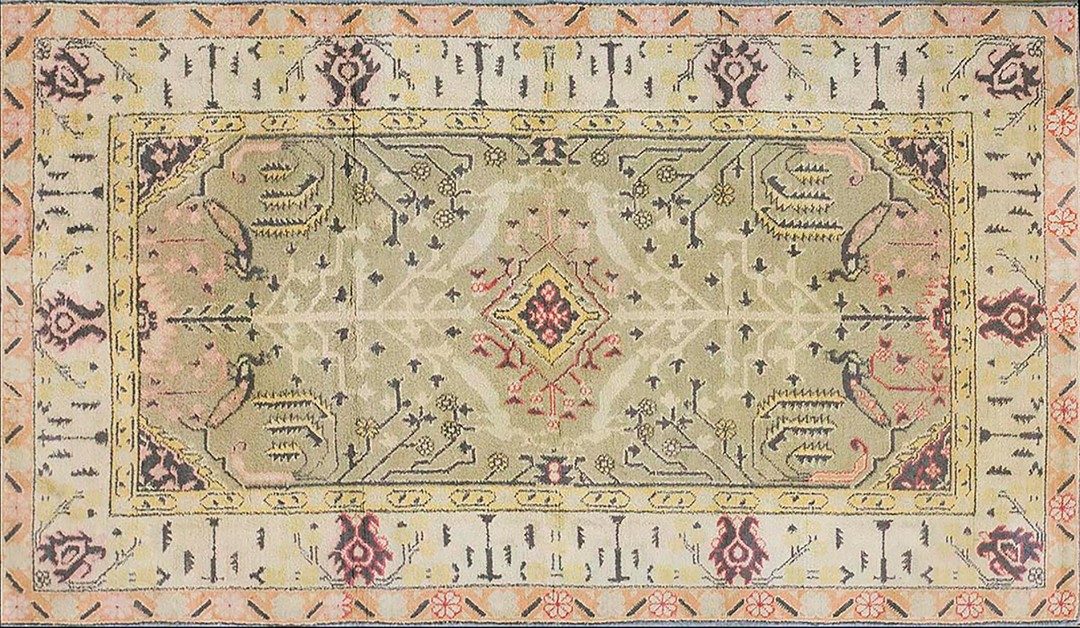
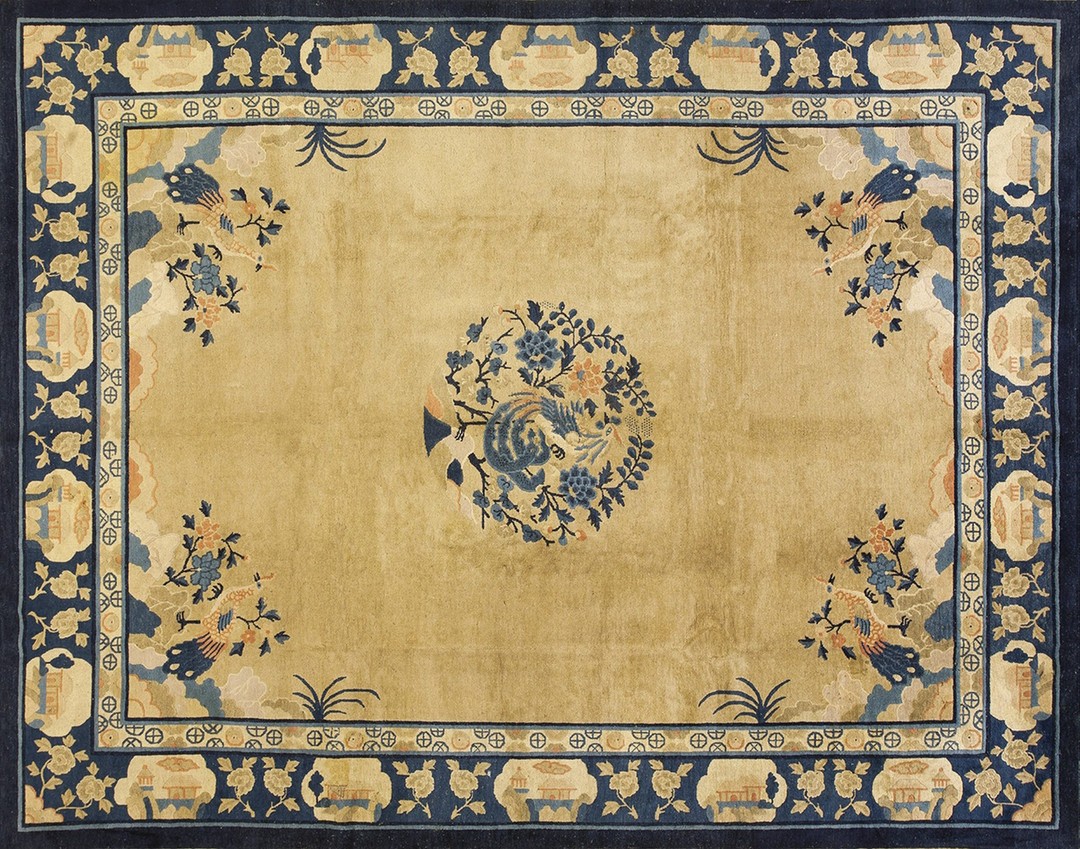
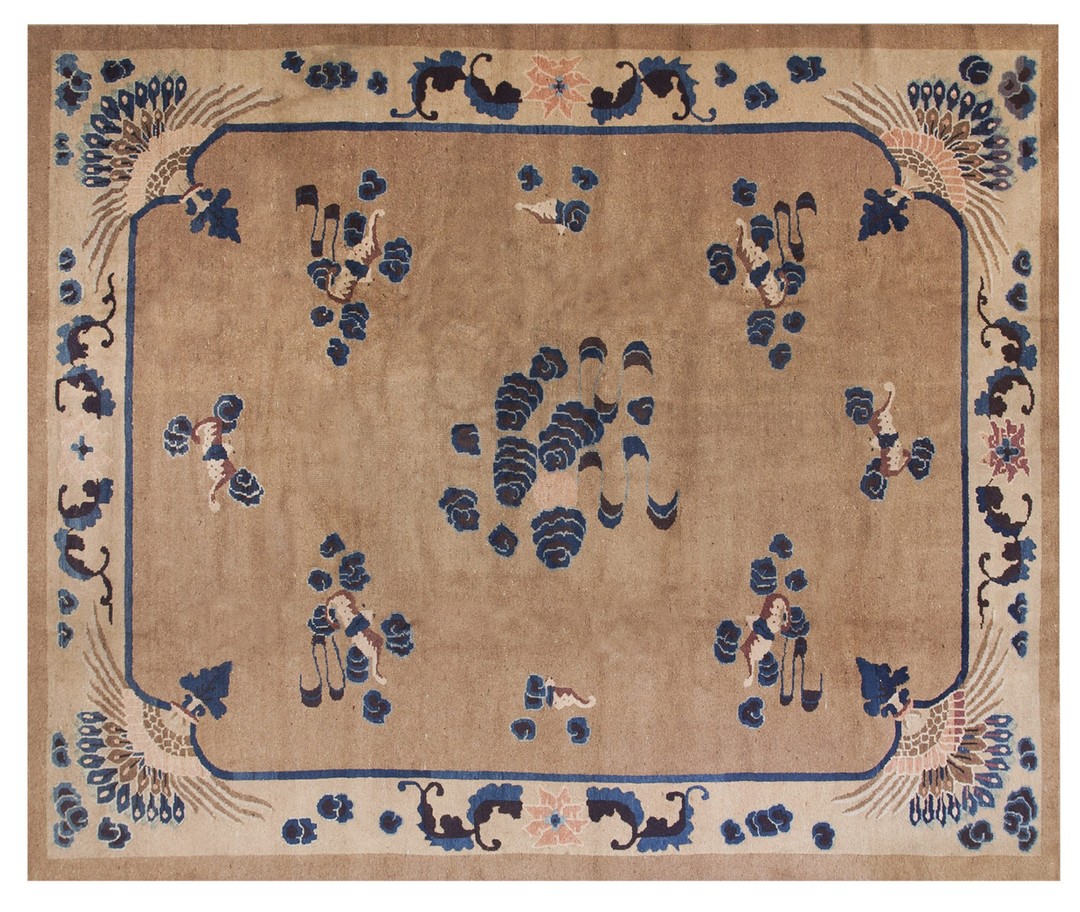
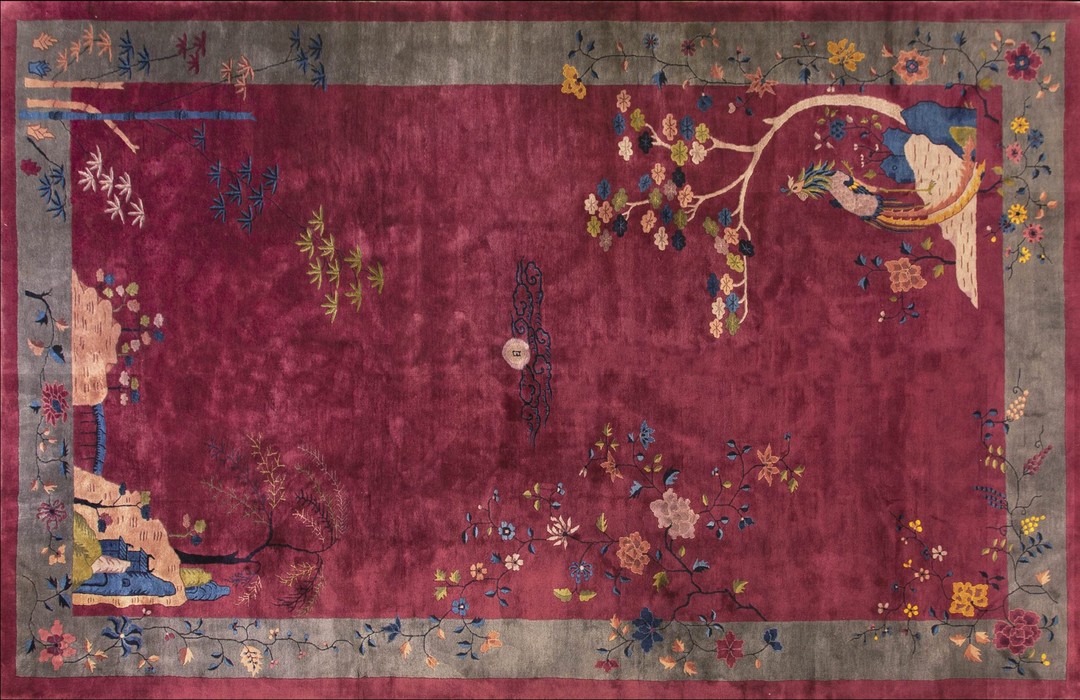
Explore a Few of Our Favorite Peacock Design Rugs
FAQ
- How much do peacock rugs cost?
Machine-made prints often run \~\$100–\$800; hand-knotted wool commonly \$400–\$4,000; fine silk pictorials can reach \$2,000–\$20,000+ depending on size, origin, and fineness.
- Is paisley (boteh) a peacock?
No. Boteh is a seed/flame teardrop; peacocks depict a full bird, sometimes stylized but still avian with body, head, and tail.
- What is the “Tree of Life” with peacocks?
Two peacocks flank a central tree symbolizing paradise and protection. It’s common in Persian designs and later Qajar-era interpretations.
- Are peacock motifs found on runners?
Yes. Repeating peacocks are classic on Akstafa and Shirvan long rugs, making striking hallway runners with rhythmic, directional movement.
- How can I tell if a peacock rug is handmade?
Flip it over: hand-knotted backs mirror the front and have integral fringe. Tufted rugs show a canvas/latex backing; machine-made backs look grid-uniform with sewn-on fringe.
- What sizes are common for peacock rugs?
Standard areas like 5×8, 8×10, and 9×12 are typical. Caucasian Akstafa peacocks frequently appear on runners around 3–4′ × 9–10′.
- What knot counts indicate a fine peacock rug?
Hand-knotted wool often ranges \~100–200 KPSI; fine Persian or Hereke silks frequently exceed 300 KPSI, with select pieces around 500+.
- How do I hang a peacock rug as wall art safely?
Sew a Velcro-on muslin strip along the top and mount to a wooden slat; this museum-style method spreads weight evenly. Consult a conservator for fragile silk.
- Can a robot vacuum clean a rug with fringe?
It may tangle in fringe. Tuck or secure fringes, set no-go zones, or use a standard vacuum for edges to protect tassels.
- Are peacock rugs pet-friendly?
Choose hand-knotted wool in cut-pile; avoid loop-pile and shag that snag claws. Mid-tone, patterned fields help disguise fur and everyday wear.
- Will vivid peacock blues and greens fade?
Sunlight fades all dyes over time. Rotate every 3 months and use curtains or UV film; modern chrome dyes are more lightfast but not immune.
- What’s a safe at-home routine for wool peacock rugs?
Vacuum weekly (new wool may need 1–2 times weekly initially), blot spills promptly, and test colorfastness before spot cleaning. Dry thoroughly after any wet work.
- How should I vacuum a silk peacock rug?
Use suction-only (no beater bar), vacuum with the pile, and fold back fringes to avoid snags. Schedule professional cleaning for deep care.
- Are silk peacock rugs practical for busy households?
Not ideal for high traffic or pets. Use silk in bedrooms or as wall hangings, and choose low-pile hand-knotted wool for living areas.
- What materials are common for peacock rugs?
Wool (durable, soil-hiding) and silk (lustrous detail) are primary; wool-and-silk blends add sheen. Machine-made synthetics mimic the look but trade detail and longevity for price.
- Which rooms suit peacock motifs best?
Living rooms, bedrooms, and entries. Consider hanging fine silk pictorials as wall art in low-traffic spaces; use durable wool under dining chairs.
- How do I style a peacock rug without overwhelming a room?
Let the rug lead and keep upholstery neutral. Pull just two accent colors from the plumage (e.g., teal and gold) into pillows or art for cohesion.
- Is a peacock the same as the Persian Simurgh?
No. The Simurgh is a mythical hybrid bird; peacocks are naturalistic. Both can symbolize protection, but peacocks are identifiable by fan tails and grounded realism.
- How do peacocks appear in Indian/Mughal carpets?
As emblems of royalty and elegance, echoing the famed Peacock Throne. Kashmir and other Indian silks frequently depict peacocks amid trees, flowers, and arches.
- Are peacocks seen on Turkish Hereke silk rugs?
Yes. Hereke pictorial silks often include birds, sometimes signed, with fine weaves commonly exceeding 300 knots per square inch and occasional examples around 500+ KPSI.
- Do Chinese Art Deco rugs use peacocks?
Yes—peacocks symbolize beauty and status. Designs typically pair vibrant teal, cobalt, and coral with florals and rocks, common on 1920s–30s room-size rugs.
- How do Persian carpets use peacocks?
They appear in garden and medallion layouts, sometimes filling pendants or flanking trees. Expect balanced, naturalistic birds integrated among blossoms and arabesques.
- What is an Akstafa peacock?
A stylized, geometric bird with a comb-like tail in 19th-century Caucasian Akstafa rugs. It often repeats along runners roughly 9–10 feet long, creating a rhythmic procession.
- Which rug traditions most feature peacocks?
Persian garden carpets, Mughal/Indian pictorials, Caucasian Akstafa tribals, Chinese Art Deco (1920s–30s), and fine Turkish Hereke or Persian Qum silks. Each renders the bird differently, from geometric “stick” forms to painterly plumage.
- What does a peacock motif mean on rugs?
Beauty, immortality, and paradise—often shown as paired birds guarding a Tree of Life. In Persian traditions it signals divine glory; in Chinese art it suggests nobility and good fortune.