
Introduction to Keyhole Rugs
Browse our curated collection of Key Hole Motif Rugs perfect for any luxury space.
What is the Keyhole Design in Rugs?
The keyhole design rug motif is one of the most recognizable geometric patterns in traditional weaving, immediately identifiable by its universal silhouette: a rounded or oval form joined to a narrower rectangular extension. This arrangement mirrors the shape of an old-fashioned iron keyhole, which is why it carries the name.
In weaving, the design often appears as a central medallion, repeating field motif, or incorporated into borders, giving rugs a striking architectural quality. When asking what is a keyhole rug, the answer lies not only in its visual form but also in its adaptability. The keyhole design can stand boldly on its own as a singular medallion or repeat rhythmically to create movement across the field of the carpet.
Its geometry allows weavers to play with scale—some versions are compact and orderly, while others are oversized, dominating the visual field. Whether woven into a tribal kilim or a finely knotted urban workshop piece, the keyhole design rugs remain unmistakable in character.
Overview and Lasting Appeal
The keyhole design medallion has appeared across a wide geography, from the tribal looms of Central Asia to Anatolia, the Caucasus, and the Middle East. In each region, the motif carries local interpretation and symbolism while maintaining its essential outline. Among Turkmen weavers, keyhole forms often merge with guls or octagonal motifs, while in Anatolian rugs, they may frame stylized floral or animal figures. In Caucasian rugs, they frequently appear in bold, graphic arrangements, emphasizing symmetry and contrast.
Part of the lasting appeal of keyhole design rugs lies in this cross-cultural presence. The motif embodies both universality and individuality: recognizable everywhere yet distinct in each weaving tradition.
Collectors and historians value the keyhole design pattern because it bridges tribal and workshop production, carrying associations of protection, passage, and sacred threshold. Its shape suggests a gateway or portal, leading some to interpret it as symbolic of entry into a protected space or spiritual dimension.
The durability of the keyhole design rug motif in weaving history also reflects its adaptability to changing tastes. In antique examples, the medallion can be highly angular, woven with deep madder reds, indigos, and ivory.
In later and modern adaptations, it appears softened, abstracted, or combined with contemporary color palettes, ensuring its relevance in both traditional and modern interiors. This ability to evolve without losing its visual identity secures the keyhole pattern as one of the enduring legacies of rug design.
In essence, the keyhole design in rugs is not simply decorative; it is a cultural marker and a design language shared across generations of weavers. Its bold geometry makes it a focal point of many carpets, while its symbolic resonance ensures that it continues to attract interest from collectors, scholars, and homeowners alike.
Origins and Evolution of the Keyhole Design Motif
Early Development: Central Asia, the Middle East, Anatolia
The origins of the keyhole design pattern can be traced to the weaving traditions of Central Asia and the Middle East during the 19th century. Scholars suggest that the motif’s distinctive form may have been inspired by architectural arches and mihrabs, symbols of both shelter and sacred entry.
The rounded crown joined to a vertical extension mirrors the shape of mosque niches or carved stone archways, reinforcing the sense of passage between the earthly and the spiritual.
From Central Asia, particularly among Turkmen groups such as the Beshir and Ersari, the motif took hold as a bold graphic form.
In the Middle East, especially within Persianate contexts, it blended with medallion traditions already in circulation.
Anatolian keyhole rugs brought a further dimension: woven by Kurdish and village weavers, often as prayer rugs or dowry pieces, the design acquired a deeply personal and devotional function.
By the early 1800s, the history of keyhole rugs was firmly established across these interconnected regions.
Why is the Keyhole Design Motif Called “Bellini”?
The collector’s term “Bellini keyhole design rug” derives from Renaissance art rather than from the weaving centers themselves. Giovanni Bellini, the Venetian master, painted several altarpieces and portraits in which Anatolian prayer rugs with keyhole medallions appear. These depictions preserved the image of early Anatolian keyhole rugs for European viewers long before they reached Western collections.
As the art market grew in the 19th and 20th centuries, scholars and dealers adopted “Bellini rugs” as shorthand for these early Anatolian prayer rugs with prominent keyhole motifs. The name reflects their art-historical significance: they are not only textiles but also part of Renaissance visual culture, bridging East and West through trade, diplomacy, and artistic exchange.
How Did Keyhole Design Rugs Originate in Anatolia?
In Anatolia, keyhole design rugs originated primarily in village settings, where weaving was integral to both household and ritual life. The motif became closely tied to prayer rugs, echoing the form of the mihrab and serving as a symbolic gateway during worship.
Woven by women, often as dowry weavings, these rugs carried layered meanings: devotion, protection, and family continuity. Kurdish weavers in eastern Anatolia, along with other village groups across central and western regions, played a key role in preserving and transmitting the design.
When Did Keyhole Medallion Patterns First Appear?
The keyhole design medallion emerged in recognizable form during the early 19th century. While isolated prototypes may have existed earlier, it was in the 1800s that the design became widespread, particularly in Turkestan rugs from Beshir and Ersari weavers and in Caucasian Kazak rugs, where bold, oversized keyhole motifs were favored. Its spread coincided with broader patterns of trade and migration that linked Central Asian, Anatolian, and Caucasian weaving traditions.
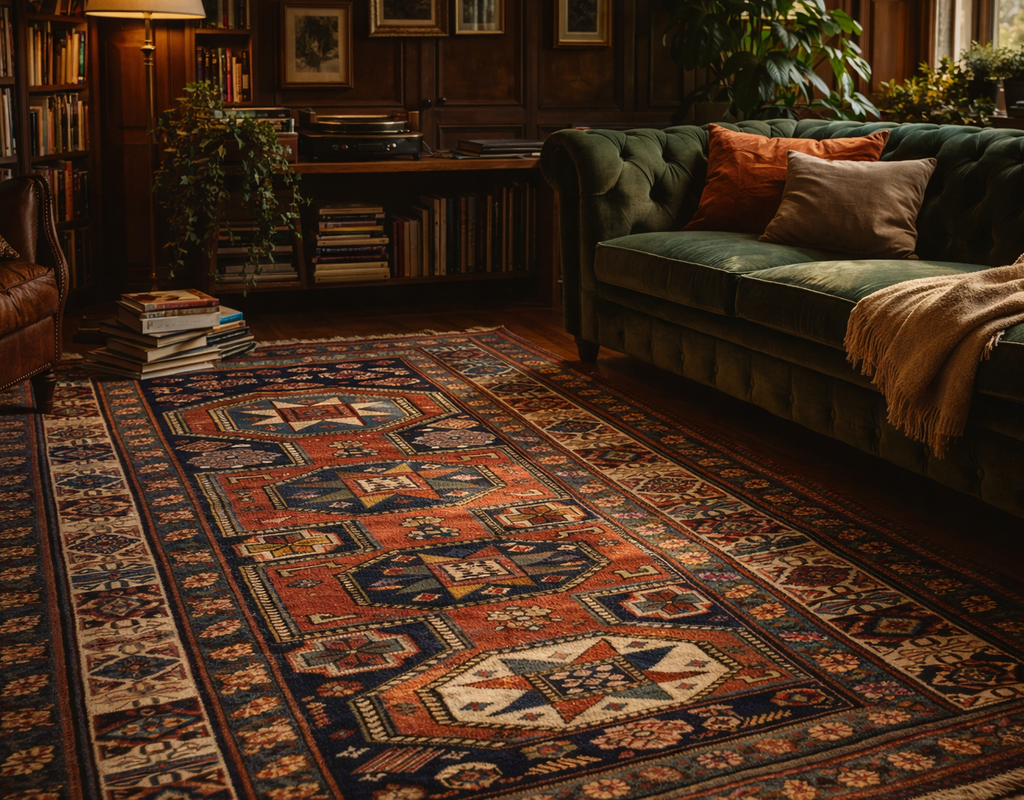
Spread via Trade, Migration, and Adaptation
As rugs traveled through trade caravans, markets, and family inheritance, the origins of the keyhole design motif expanded beyond its Central Asian and Anatolian heartlands. In the Caucasus, keyhole designs were reinterpreted with sharper geometry and saturated color contrasts. In Anatolia, they retained devotional connotations, while in Central Asia they remained associated with tribal identity and bold textile artistry.
This ability to adapt across cultures while maintaining its recognizable outline ensured that the keyhole rug motif endured, becoming one of the defining symbols of 19th-century weaving and an ongoing focus of collector interest today.
Defining Visual Features of Keyhole Design Rugs
Keyhole Medallion vs. Central Medallion
The keyhole design medallion is defined by its unmistakable structure: a rounded or lobed dome joined to a vertical stem or rectangular base. Unlike the central medallion, which is typically circular, oval, or diamond-shaped and symmetrically centered, the keyhole design form is vertically oriented and asymmetrical.
This verticality creates a sense of direction, almost architectural, reminiscent of doorways or sacred arches. Where a central medallion anchors a rug evenly, the keyhole rug features emphasize a top-to-bottom flow, pulling the eye along the axis of the design.
Shape, Proportion, and Layout
- Dome and Stem Composition — The signature of the geometric keyhole design rug lies in the combination of a dome or oval crown with a rectangular extension. — Why: This shape is what sets it apart from all other medallion-based patterns.
- Vertical Orientation — Keyhole motifs often stretch the length of the field, sometimes repeated in stacked arrangements. — Why: The elongated form reinforces the idea of passage or gateway.
- Dominant Silhouette — The motif frequently dominates the layout, often dwarfing surrounding elements. — Why: Its bold profile ensures immediate recognition and symbolic weight.
Decorative Detailing: Color, Outlines, Filler Motifs
- Color Palettes — Deep madder reds, indigos, and ivory are most common, though later Anatolian and Caucasian examples experiment with brighter contrasts. — Why: These strong colors highlight the form and provide regional identity.
- Outlines and Echoing Shapes — The medallion is often double- or triple-outlined, with inner borders that mirror the main contour. — Why: This creates depth and reinforces the architectural quality of the motif.
- Filler Motifs — Crosses, meanders, rosettes, or small stars populate the field within or around the keyhole. — Why: These details break up large color blocks and add narrative or symbolic richness.
Regional Visual Variations
- Turkmen Weaving — Keyhole medallions appear curvilinear within a geometric frame, integrated into repeating gul-like fields.
- Caucasian Rugs — Bold, oversized keyhole design motifs dominate Kazak carpets, emphasizing strong symmetry and saturated contrast.
- Anatolian Keyhole Designs — Angular, primitive renderings characterize village and prayer rugs, often with simplified outlines.
- Persian Interpretations — Less common, but when adopted, the motif is softened into flowing medallions, integrated with floral filler patterns.
What Visual Features Define a Keyhole Design Rug?
A keyhole design rug is defined by its distinct silhouette: a dome or oval form extending into a rectangular stem. Its strong vertical axis, bold outlines, and architectural presence differentiate it from other rug patterns. Decorative fillers, repeating outlines, and deep color palettes further reinforce the identity of the design.
How Does a Keyhole Design Medallion Differ from a Central Medallion?
While a central medallion is usually symmetrical, self-contained, and balanced, a keyhole design medallion projects vertically, combining curved and angular elements into a directional motif.
The difference lies in movement and intent: the central medallion radiates balance outward, while the keyhole medallion acts as a visual gateway, drawing the viewer inward and upward.
Techniques, Materials, and Construction
Hand-Knotted vs. Flat-Woven Rugs
- Hand-Knotted Keyhole Rugs — Most antique and collectible examples are hand-knotted, using the Ghiordes (Turkish) knot in Anatolia and the Caucasus, or the Persian knot in Iran. — Why: Knotted pile allows for dense detail, durability, and crisp rendering of the keyhole medallion.
- Flat-Woven Rugs (Kilim, Soumak) — Some village traditions rendered the keyhole pattern in flatweave techniques. These lack pile but achieve striking graphic clarity through contrasting color blocks. — Why: Flat-woven examples are lighter, portable, and often produced for household or dowry use.
Does Pile Height Affect Keyhole Design Motif Clarity?

A detailed focus on the intricate, vivid colors and geometric weave of a traditional textile rug.
Yes. Pile height in rugs has a direct effect on how sharply the keyhole design motif appears. A low pile emphasizes geometry, keeping the outlines crisp and the motif clearly legible. A high pile, while soft underfoot, tends to blur lines and soften angular details.
Collectors typically prize low-pile antique rugs for their sharper, more architectural keyhole design.
Which Materials Are Common in Keyhole Patterned Rugs?
Traditional keyhole rug materials are dominated by wool, valued for its resilience, natural luster, and ability to absorb dyes. Warps and wefts may also be of wool, though cotton is common in later workshop pieces to add structural stability. In luxury contexts, silk highlights were occasionally introduced, lending shimmer and prestige. Modern reproductions sometimes incorporate synthetic fibers, but authentic hand-knotted keyhole design rugs rely primarily on natural wool or wool-and-cotton foundations.
Use of Natural vs. Synthetic Dyes
- Natural Dye Rugs — Madder red, indigo blue, and undyed ivory are the hallmarks of traditional dyeing. — Why: Natural dyes age gracefully, producing rich patinas and long-lasting vibrancy.
- Synthetic Dye Rugs — Introduced in the mid-19th century, these could offer brighter palettes at lower cost. — Why: While convenient, inferior synthetics are prone to uneven fading, reducing both clarity and value.
Are Keyhole Design Rugs Mostly Hand-Knotted or Flat-Woven?
The majority of keyhole design rugs are hand-knotted, particularly Anatolian, Caucasian, and Central Asian examples from the 19th century. Flat-woven keyhole rugs exist but represent a minority, often tied to local village traditions. For collectors and historians, hand-knotted keyhole rugs remain the standard-bearers of the style.
Can Synthetic Dyed Keyhole Design Rugs Fade Faster?
Yes. Synthetic dye rugs—particularly those dyed with early or low-quality aniline colors—tend to fade faster than natural-dyed examples. While natural madder and indigo develop nuanced tones over time, poor synthetic reds or purples can wash out unevenly. For this reason, authenticity and dye quality play a critical role in assessing the longevity and value of a keyhole design rug.
Symbolism, Meaning, and Cultural Context
Doorways, Protection, and Spiritual Symbolism
- Gateway to the Sacred — The keyhole design motif meaning is often linked to doorways and arches, representing entry into a protected or holy space. — Why: In prayer rugs, the vertical orientation of the motif echoes the form of the mihrab, reinforcing the rug’s role as a personal sanctuary for worship.
- Protection in Rug Design — In Anatolian traditions, the shape was sometimes read as a symbolic lock, barring evil or misfortune from entering the home. — Why: This ties the motif to the widespread belief in safeguarding against the nazar, or evil eye.
- Fertility and Continuity — In dowry weavings, the form could also be understood as a vessel, associated with fertility, abundance, and the continuation of family lineage. — Why: The symbolic versatility gave the design lasting appeal in both private and communal contexts.
Use in Rituals, Prayer, and Dowries
The symbolic rug motifs of the keyhole were especially significant in ritual and devotional settings. As a prayer rug design, it framed the worshipper in a symbolic doorway, reinforcing both humility and divine connection.
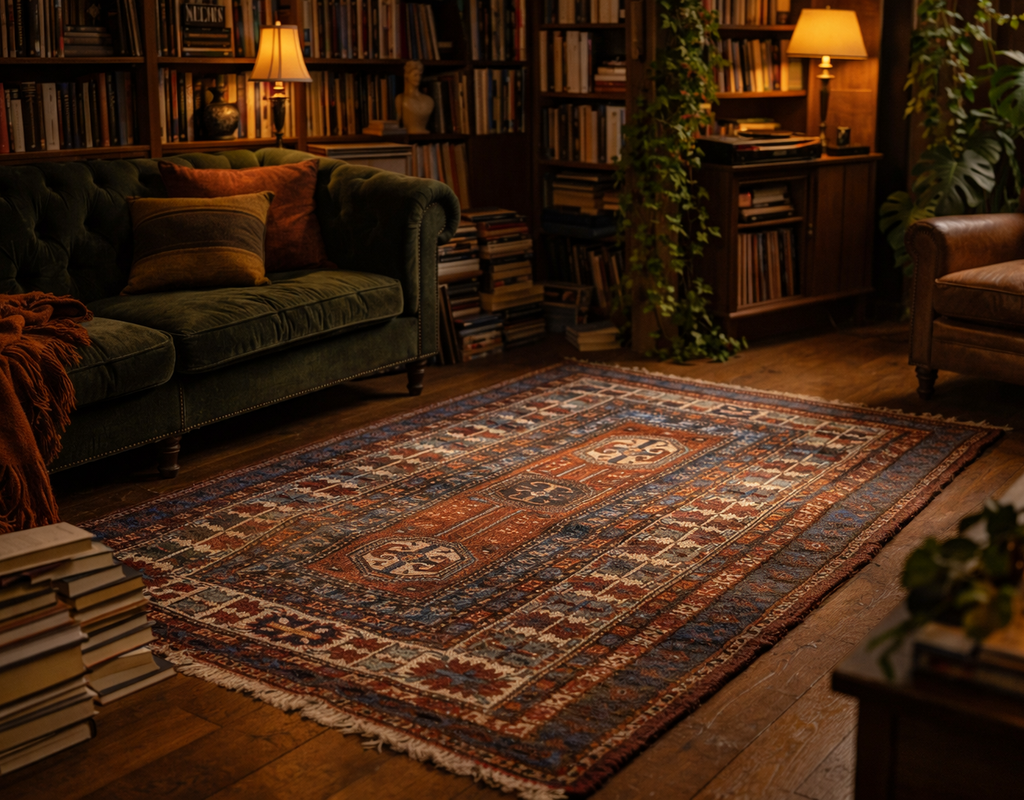
In dowries, a bride might bring an Anatolian keyhole design rug as a textile of blessing, protection, and prosperity for her new household. These associations ensured the motif’s presence in key life events—marriages, religious festivals, and rites of passage.
Identity, Emblems, and Storytelling
Beyond its spiritual role, the keyhole motif functioned as a cultural emblem. Different tribal or regional groups wove distinct variations, turning the motif into a marker of identity much like a signature.
In this sense, the design operated as both a decorative feature and a story-bearing symbol: recounting heritage, signaling origin, and embedding local beliefs into the fabric of the rug.
Symbolic Meanings of the Keyhole Design Motif
The keyhole design motif meaning unites several layers: a gateway to sacred space, a lock for protection, a vessel of fertility, and a cultural signature of community identity. This multifaceted symbolism explains why the motif endured across regions and centuries, weaving together spiritual practice, daily life, and collective storytelling.
Authenticity, Value, and Collecting Keyhole Rugs
How to Verify a Rug’s Keyhole Design Pattern Authenticity?
An authentic keyhole design rug is best identified through its construction, materials, and regional traits. Hand-knotted structure is the first marker, with Ghiordes knots common in Anatolia and Caucasus, and Persian knots in Iranian pieces. Natural dyes—particularly madder red, indigo, and undyed ivory—age with subtle patina, unlike synthetic dyes that often fade unevenly.
Collectors also look for wool pile with visible aging and traditional warp/weft foundations. Finally, regional features, such as the angular renderings in Anatolia or bold geometric Kazak interpretations, help confirm authenticity.
Provenance, Condition, and Collector Priorities
- Provenance — A rug with documented history or origin commands significantly higher value. — Why: Provenance links the piece to a specific region, tribe, or collection, ensuring authenticity and uniqueness.
- Condition — Pile wear, restoration, and dye preservation all affect market appeal. — Why: Collectors prize rugs that retain strong outlines and natural color depth.
- Age and Rarity — Earlier examples, especially 19th-century Anatolian prayer rugs, are scarce. — Why: Limited survival makes these highly sought after in the market.
Where Can I Find Authentic Vintage Keyhole Design Prayer Rugs?
Collectors can source authentic vintage keyhole design prayer rugs from reputable dealers, specialist rug auctions, and museum deaccession sales. Major auction houses often handle early Anatolian “Bellini” rugs, while regional dealers in Turkey, the Caucasus, and Central Asia sometimes offer later 19th- and early 20th-century examples.
Buyers should always request documentation of provenance and, if possible, expert appraisal.
What Factors Influence Keyhole Rug Pricing?
The value of a keyhole rug is determined by multiple factors: age, region of origin, knot density, material quality, dye type, and overall condition. Provenance and documentation can dramatically increase price, while restoration or synthetic dye fading can lower it.
Among collectors, rarity and visual strength of the keyhole design pattern are major price drivers.
Why Do Bellini Keyhole Carpets Command High Auction Values?
Bellini carpet value is exceptionally high due to their rarity and art-historical significance. These early Anatolian prayer rugs, immortalized in Renaissance paintings, embody the earliest stages of the design’s evolution.
Their scarcity—combined with strong condition, natural dyes, and museum-level provenance—makes them blue-chip investments for major collectors and institutions.
Should Collectors Prioritize Provenance for Keyhole Carpets?
Yes. Keyhole rug provenance is the single most important factor at the high end of the market. A rug with clear documentation of origin, previous ownership, or museum exhibition history far outpaces a similar piece without a traceable story.
For serious collectors, provenance ensures both authenticity and long-term value.
Is Investing in Museum-Grade Keyhole Design Carpets Worthwhile?
For dedicated investors, museum-grade keyhole design carpets represent a secure long-term asset. Their rarity, cultural significance, and demand among both private collectors and institutions make them resistant to market fluctuations.
While prices can be extremely high, owning such a piece carries both financial and cultural prestige, making them a compelling choice for those focused on investment rugs at the highest tier.
Modern Reinterpretations and the Current Market
How Do Modern Weavers Reinterpret Keyhole Designs Today?
The modern keyhole design rug has taken on fresh forms while preserving the recognizable silhouette of the traditional motif. Contemporary weavers often enlarge the keyhole medallion into bold, minimalist statements, using expansive fields of neutral color to highlight the shape. Others abstract the motif into geometric fragments, allowing it to blend seamlessly with mid-century or modern interiors.
Some designers reinterpret the form with softer edges, merging it into painterly or abstract compositions. Across these approaches, the essential outline of dome and stem remains intact, maintaining continuity with the past while appealing to current design sensibilities.
Are New Keyhole Design Rugs as Durable as Antiques?
Durability depends on construction. A contemporary keyhole design rug that is hand-knotted with wool or wool-and-cotton foundations can be every bit as resilient as antique examples, provided it uses traditional methods.
However, machine-made rugs or those woven with synthetic fibers are generally less durable and may show wear more quickly. Antiques gain additional value through their natural dye patinas and proven longevity, but a well-made durable rug produced today can still last for generations with proper care.
Where to Source Affordable Keyhole-Inspired Area Rugs?
Affordable options are widely available for those seeking the keyhole design area rug aesthetic without entering the high-end collector’s market. Ethically sourced, artisan-made reproductions can be found through specialty rug dealers and cooperatives, ensuring authenticity and fair trade.
For budget-conscious buyers, reputable online retailers offer affordable keyhole rugs that emulate the historic pattern in wool or wool-blend constructions. Machine-made versions provide an even lower-cost alternative, though they sacrifice the tactile richness and longevity of hand-knotted pieces.
Sourcing: Vintage, Reproduction, Affordable Options
- Vintage Originals — Collectors often pursue authentic 19th- and early 20th-century rugs with proven provenance. — Why: These carry historic, cultural, and aesthetic value, appealing to connoisseurs and investors.
- Reproductions — Hand-knotted workshop rugs recreate the keyhole motif using traditional dyes and wool. — Why: They balance authenticity with accessibility, offering heirloom quality without museum-level pricing.
- Affordable Alternatives — Machine-made rugs or wool-blend weavings inspired by the motif. — Why: These bring the iconic keyhole pattern into everyday homes at approachable price points.
Contemporary Designers and Brands Using the Motif
Today, several brands and artisan workshops reimagine the keyhole rug features for global audiences. Turkish and Caucasian weaving cooperatives continue to produce faithful reproductions, while contemporary design houses incorporate the motif into modern interiors, often blending it with minimalist palettes or sustainable materials.
This trend reflects a broader market demand for heritage-driven, story-rich textiles that connect tradition with modern living. In every category—antique, reproduction, or affordable—keyhole rugs remain relevant, proving that their enduring form continues to inspire both artisans and buyers in the modern market.
Care, Maintenance, and Preservation
What Care Routines Preserve Antique Keyhole Design Rugs?
Caring for antique rugs—especially those with rare keyhole design motifs—requires gentle, preventive measures. Rugs should be kept out of direct sunlight to prevent fading, vacuumed lightly and regularly to remove surface dust, and rotated occasionally to distribute wear evenly.
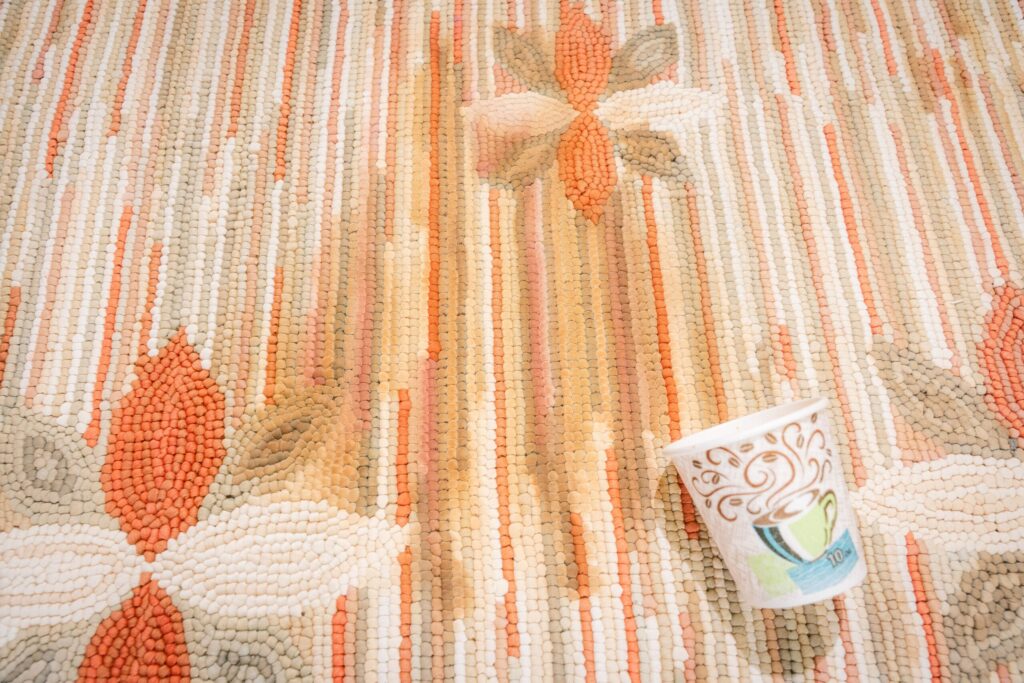
Close-up view of a tipped paper coffee cup resting on a handwoven wool rug, highlighting the rug’s dense pile, subtle color variations, and traditional geometric motifs in warm neutral and terracotta tones.
Spot cleaning should only be done with pH-neutral solutions and minimal moisture to avoid dye bleeding. Most importantly, high-value pieces should receive professional cleaning every few years to preserve their structure and natural dyes.
Best Practices for Storage, Display, and Cleaning
- Avoid Direct Sunlight — Ultraviolet exposure weakens fibers and fades natural dyes. — Why: Protects the vibrancy of reds, indigos, and ivories over decades.
- Proper Storage — Antique keyhole rugs should be rolled (never folded) with acid-free paper or cotton cloth, stored in a cool, dry place. — Why: Prevents creasing, cracking, and moth infestation.
- Gentle Vacuuming — Light suction without beater bars removes dust without damaging pile. — Why: Maintains clarity of the keyhole medallion and overall rug surface.
- Professional Cleaning — Entrust only to specialists in antique textiles. — Why: Harsh chemical cleaners or DIY methods can irreparably damage dyes and wool fibers.
Preserving Color and Pile, Repairing Damage
The longevity of a vintage keyhole design rug depends on careful attention to both color preservation and pile health. Using window shades or UV-blocking glass can help retain natural dye brilliance.
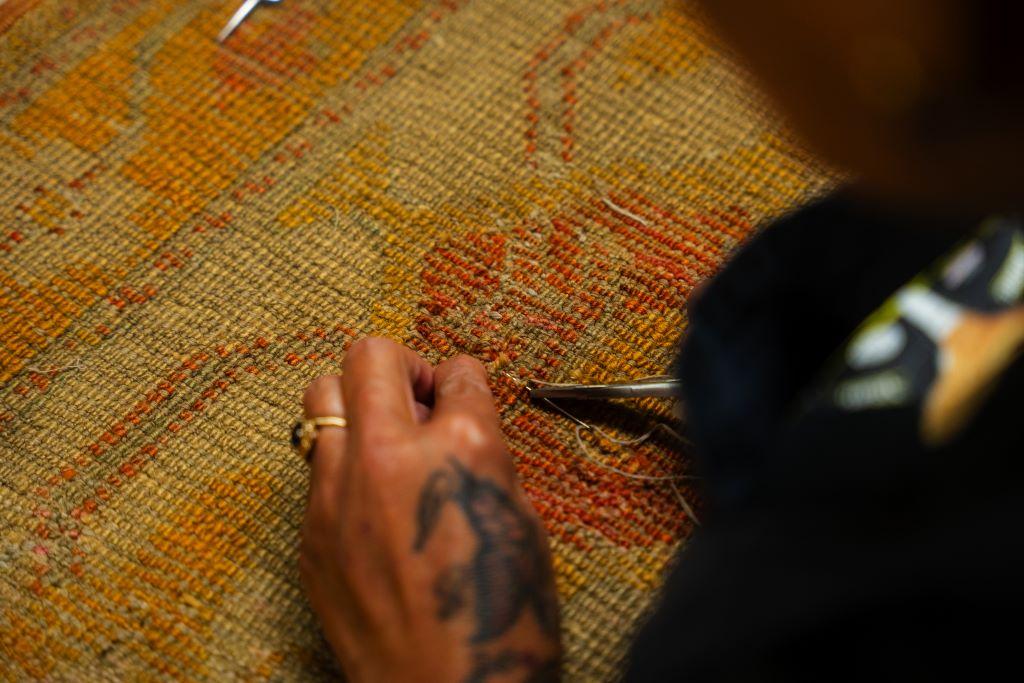
Detail of hands mending a rustic, richly colored woven rug.
For pile, preventing heavy foot traffic and using rug pads reduces abrasion. If wear or moth damage occurs, professional restoration is often worthwhile, especially for rare examples like Bellini prayer rugs. Re-weaving, pile re-knotting, and edge repair can extend both beauty and value.
Rug Preservation: Protecting Heritage
Every rug preservation step—from display to cleaning—directly safeguards history and artistry. By protecting vintage rugs with gentle care, careful storage, and timely conservation, owners ensure that these textiles continue to serve as both cultural artifacts and works of art.
Proper maintenance not only extends their functional life but also secures their role as enduring symbols of tradition and craftsmanship.
Explore a Few of Our Favorite Keyhole Rugs
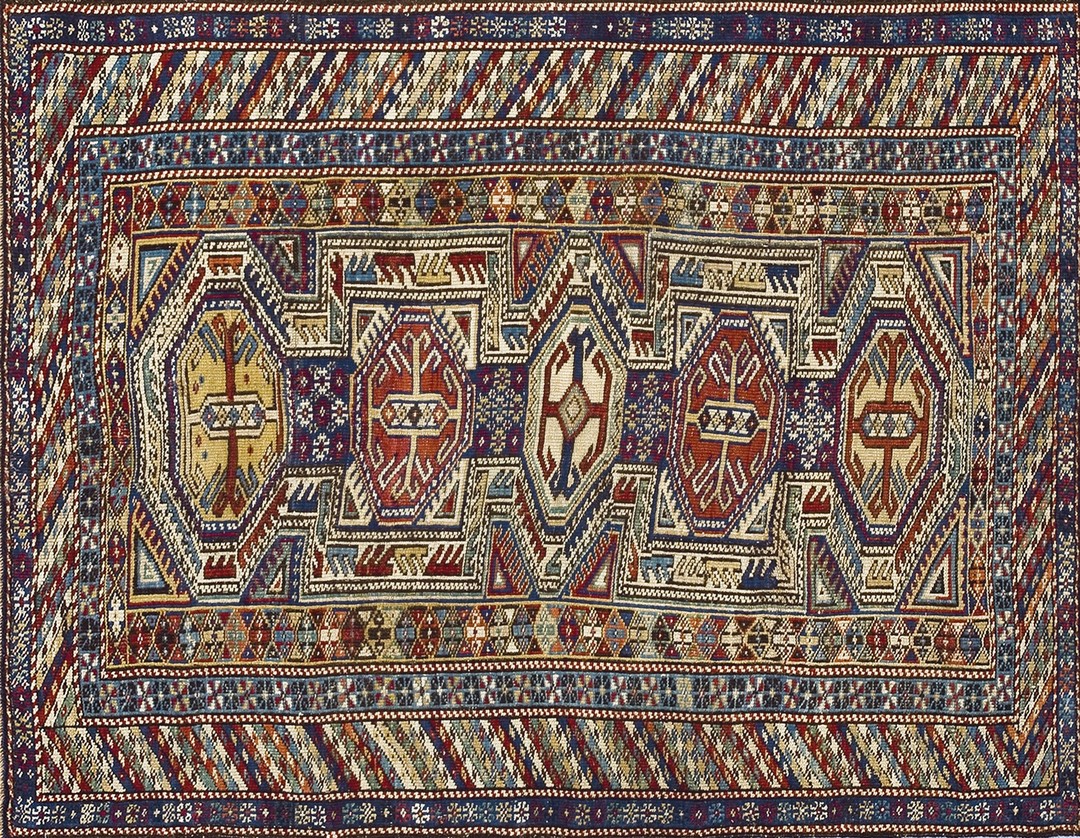
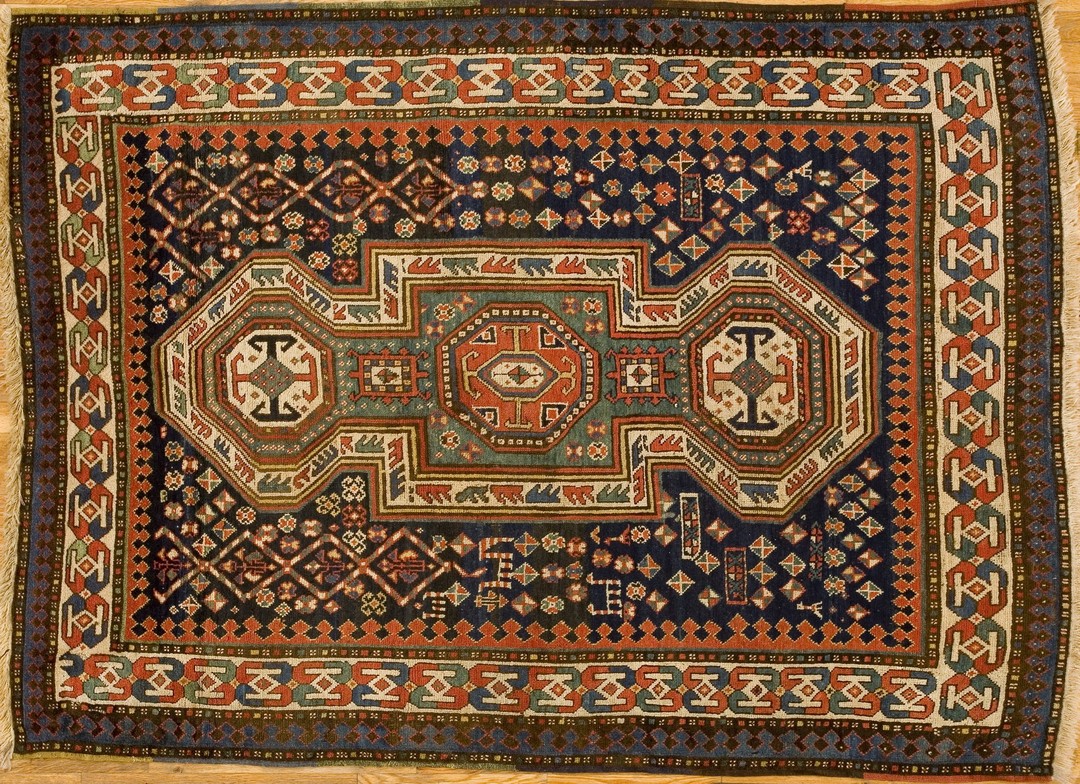
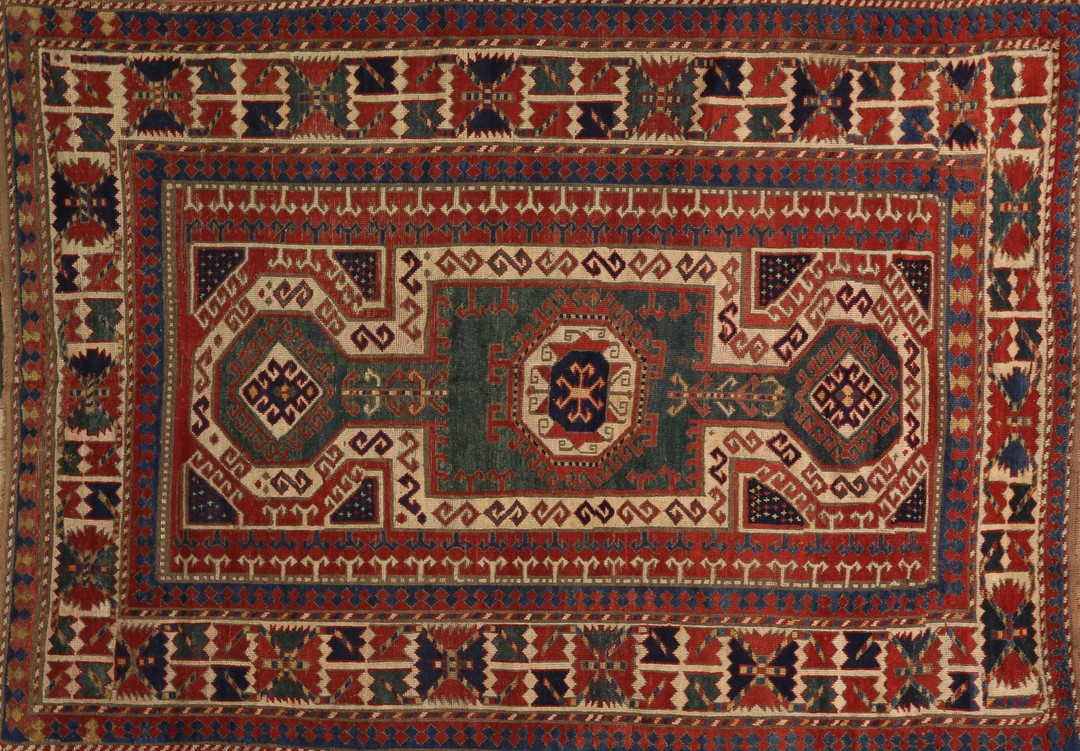
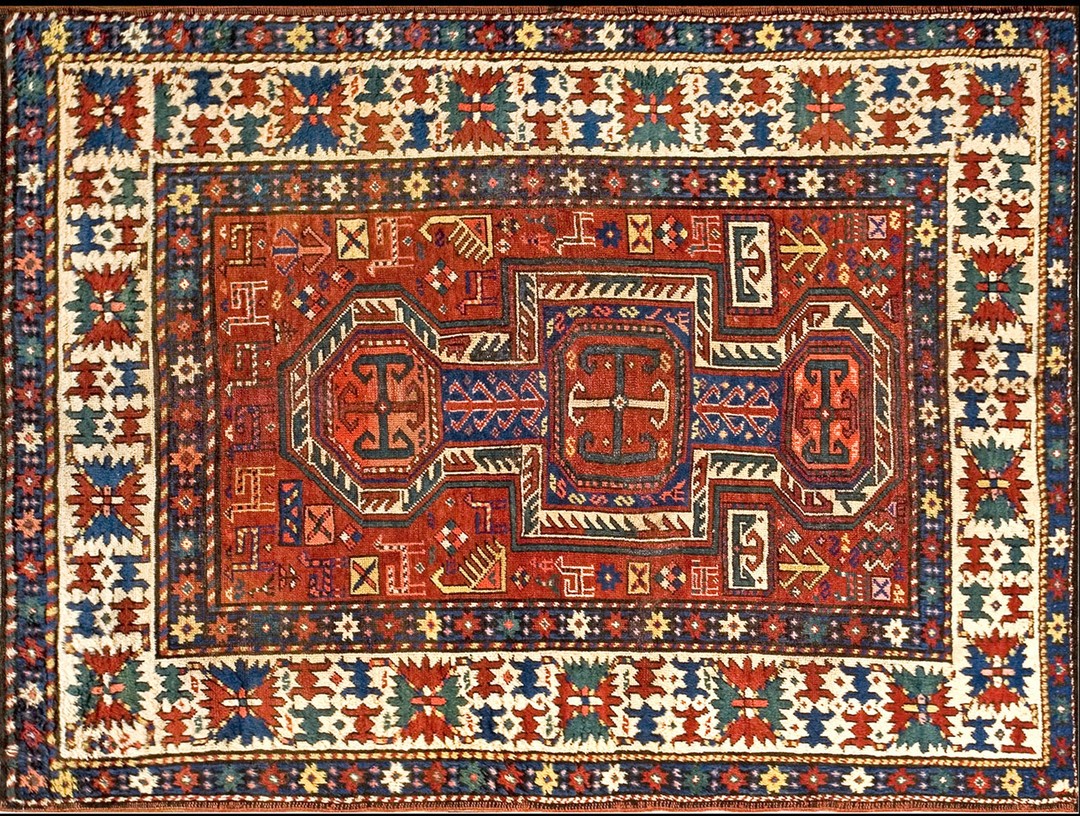
FAQ
- How should I store a keyhole motif rug?
Clean first, then roll face-in on a tube, wrap in breathable fabric (no plastic), and add moth deterrent. Check the stored keyhole rug every 3–6 months.
- Are there modern reproductions of keyhole motif rugs?
Yes—workshops in Turkey, the Caucasus region, and Afghanistan produce new keyhole-inspired rugs using hand-spun wool and natural dyes. They offer classic looks at lower prices.
- How do I verify a keyhole rug’s authenticity?
Inspect weave structure, knot type, and dyes; review provenance and expert opinions. For valuable keyhole rugs, request a written appraisal from a rug specialist.
- What rug pad is best under a keyhole rug?
Use a 1/4″–3/8″ felt pad (felt-rubber combo for slick floors). It reduces wear and prevents slipping without stressing an antique keyhole rug.
- Are keyhole motif rugs considered rare?
Early keyhole rugs (15th–16th century) are extremely rare; double keyhole rugs are scarce. Nineteenth-century keyhole pieces are collectible but more findable.
- How should I orient a keyhole rug in a room?
Traditionally, the keyhole niche points toward the user or a wall. In decor, choose the orientation that frames seating or an entry sightline best.
- Do runners exist with keyhole designs?
Historic keyhole motif rugs are mostly small formats, so true antique runners are uncommon. Contemporary weavers sometimes produce keyhole-inspired runners.
- Can I use a keyhole motif rug with radiant floor heating?
Yes—wool keyhole rugs tolerate moderate radiant heat. Use a felt pad (not rubber) and avoid excessive temperatures.
- What’s the difference between keyhole Kazak and keyhole Bergama rugs?
Keyhole Kazak rugs tend to be bolder with latch-hook medallions and saturated primaries. Keyhole Bergama rugs show Western Anatolian palettes and prayer-niche compositions.
- How do keyhole motif rugs fit modern interiors?
The arch-like keyhole creates a strong focal point. Balance the geometry with neutral upholstery and one accent color pulled from the rug.
- Are keyhole rugs durable for high-traffic spaces?
Wool keyhole motif rugs are durable, but antiques deserve gentler use. Pair with a dense felt pad and rotate 2–3 times a year.
- How should I clean keyhole rugs safely?
Vacuum with suction only (no beater bar) and blot spills with water, then white vinegar if needed. Use professional hand-washing for keyhole motif rugs every few years.
- How can I date a keyhole motif rug?
Structure, dyes, and drawing style date keyhole rugs: natural dyes and refined borders suggest earlier pieces; synthetic aniline tones indicate later 19th-century work. Always confirm with a qualified appraiser.
- How much do antique keyhole rugs cost?
Prices vary widely—roughly \$3,000 to \$50,000+ depending on age, condition, and rarity; exceptional keyhole rugs can sell much higher. Get a specialist appraisal before purchase or sale.
- What sizes are common for keyhole motif rugs?
Many keyhole rugs are prayer-size around 3×5 ft; yastiks are smaller. Larger keyhole medallion carpets can range 4×6 to 5×8 ft or more.
- What materials and knots do keyhole rugs use?
Antique keyhole motif rugs are usually wool pile on wool foundation with symmetrical Turkish (Ghiordes) knots. Natural dyes and visible abrash are common.
- What colors and patterns are typical in keyhole motif rugs?
Keyhole rugs often feature coral red, emerald or dark green, ivory, and strong blues. Expect octagons/stars, latch-hook medallions, and compartmented foliate borders around the keyhole reserve.
- How old are keyhole rugs I’m likely to find on the market?
Most available keyhole motif rugs are 18th–19th century. Museum-level 15th–16th-century keyhole rugs are exceedingly rare.
- Which regions besides Anatolia made keyhole motif rugs?
Keyhole motif rugs also appear in the Caucasus—Kazak, Shirvan, and Kuba weavings—especially in the 19th century. Modern Afghan workshops sometimes reproduce classic keyhole/Kuba patterns.
- What are double keyhole rugs?
Double keyhole rugs show two opposing re-entrant niches or a “double-niche” reserve. They’re a rarer sub-type within keyhole motif rugs, seen in both Anatolian and Caucasian examples.
- Are keyhole rugs always prayer rugs?
Not always. Many keyhole rugs are prayer-size niches, but some larger medallion carpets use a keyhole reserve without devotional intent.
- How do I identify an authentic keyhole motif rug quickly?
Look for a thin inner border that “re-enters” the field forming the keyhole, sometimes with a pendant lamp. Anatolian keyhole rugs typically use symmetrical (Turkish/Ghiordes) knots and naturally dyed wool.
- What does the keyhole shape in keyhole rugs symbolize?
Interpretations vary: many see the keyhole as a mihrab (prayer niche) or a courtyard fountain for ablutions. Both readings appear in museum notes and scholarship.
- Where did keyhole design rugs originate?
Most keyhole design rugs originated in Western Anatolia (Uşak/Bergama/Konya). They appear in Renaissance paintings by artists like Bellini and Lotto, dating the type to the late 1400s–1500s.
- What are keyhole motif rugs?
Keyhole motif rugs feature a re-entrant, “keyhole” niche cutting into the field, often with a hanging lamp—also called Bellini or re-entrant rugs. The design emerged in Western Anatolia in the late 15th–16th centuries.