
Introduction to Damask Rugs
Explore our sophisticated selection of luxury damask rugs and elevate your interior design today.
What is a Damask Rug Pattern?
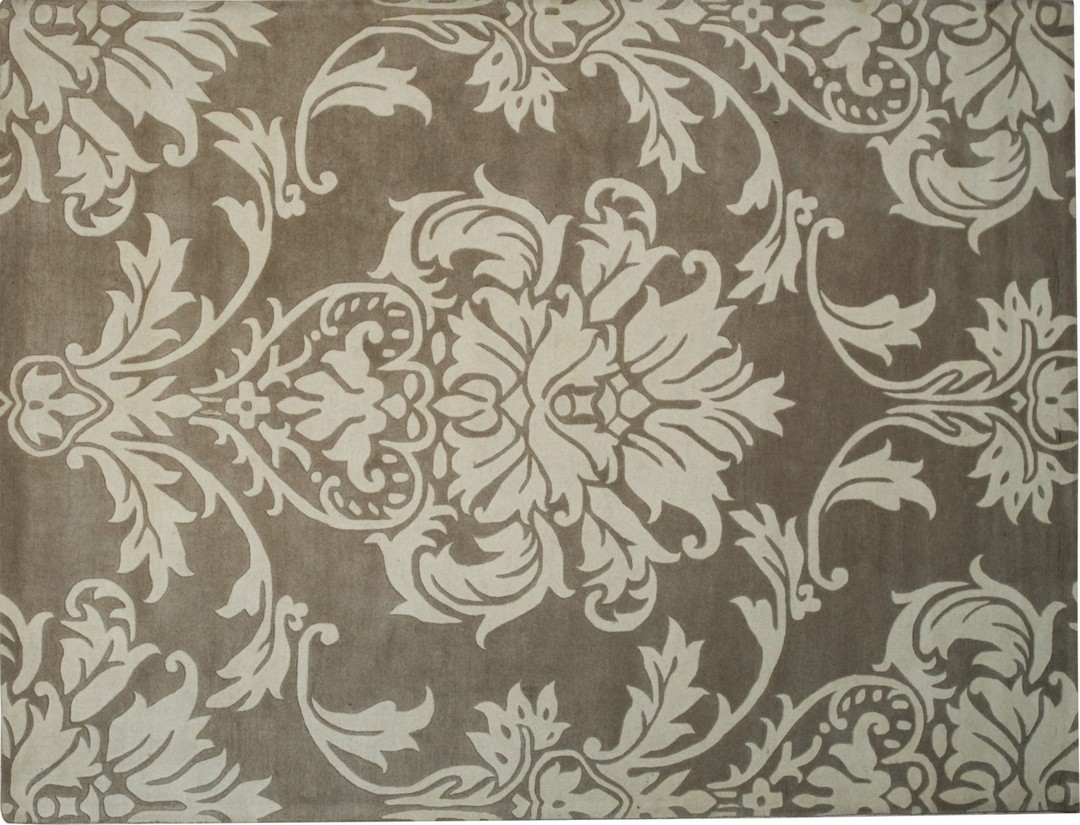
A damask rug pattern is defined by its large, ornate, and usually symmetrical motifs. These designs often feature floral arrangements, scrolling vines, or foliate elements that repeat across the rug’s surface in a mirror-like fashion. Unlike geometric or tribal patterns, the damask motif is distinctly decorative, intended to create an atmosphere of elegance and refinement. A damask style rug often uses tone-on-tone contrasts or subtle variations in texture, making the design appear rich without relying on bold color shifts. It’s important to note that “damask” refers specifically to the luxury patterned rug style, not the weaving method itself.
Why is it Called a Damask Rug Design?
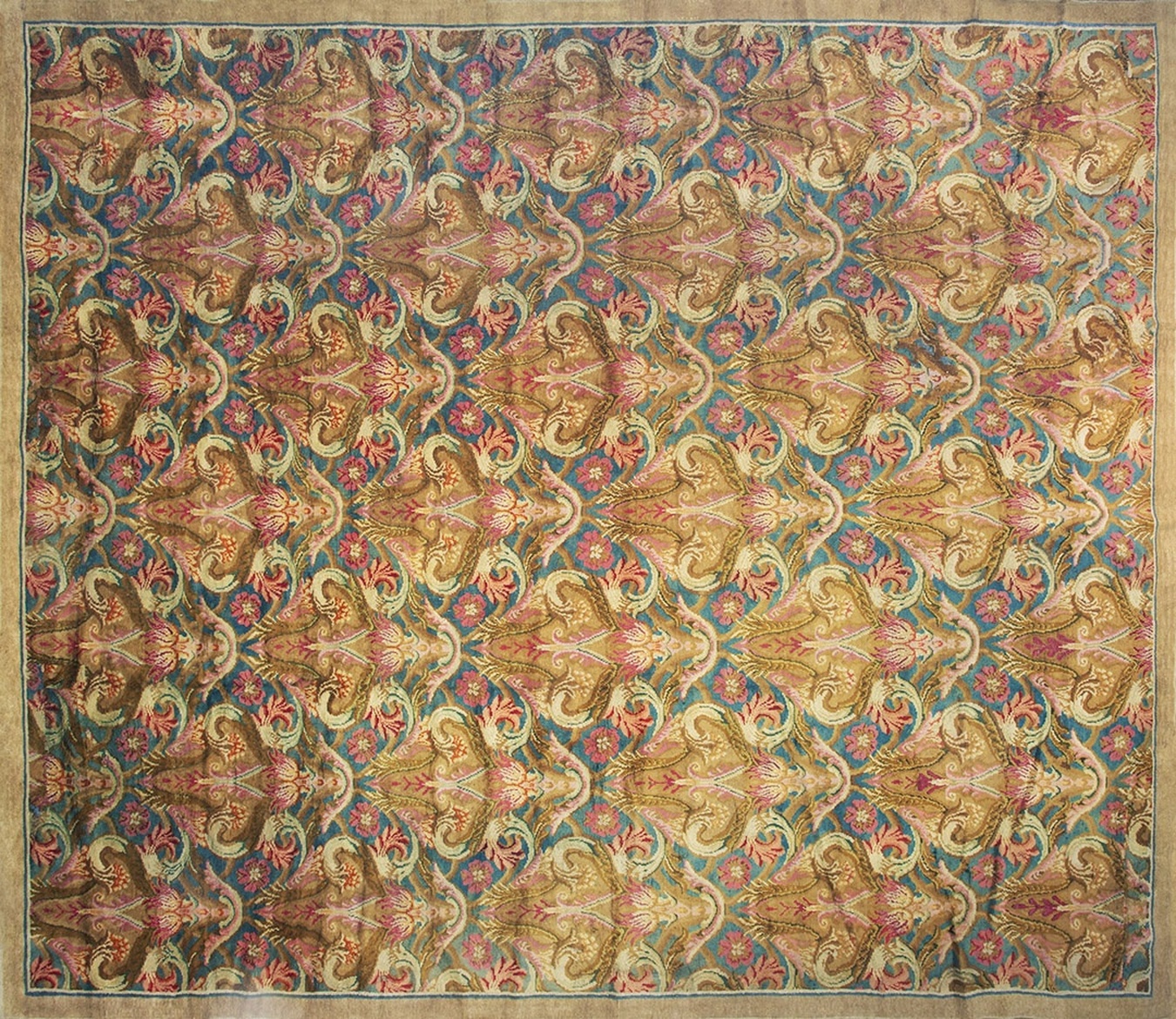
The term “damask” originates from Damascus, Syria, which was a celebrated textile hub during the medieval period. Traders and travelers across Europe and the Middle East admired the city’s fabrics, known for their intricate repeating motifs, and over time the word “damask” became synonymous with this style of decorative patterning. A Damascus-inspired rug carries this legacy, tying modern interiors back to the city’s heritage as a crossroads of trade and artistry. The name reflects cultural origin rather than technique, marking damask designs as part of a broader history of Middle Eastern luxury goods.
Executive Summary of Damask Rug Style
A damask style rug embodies timeless luxury. With its symmetrical floral and vine motifs, the design bridges traditional artistry with modern interior fashion. The effect is one of sophistication—at once rooted in Middle Eastern history yet versatile enough to adapt to contemporary décor. Whether used in classic spaces or paired with minimalist furnishings, the damask rug design elevates a room by bringing a sense of refinement and cultural depth. Its origins in Damascus highlight not just beauty but also the enduring exchange of ideas, craft, and artistry across centuries. For those seeking heritage-rich patterns with enduring appeal, damask belongs firmly within the family of Classic Traditional Rugs.
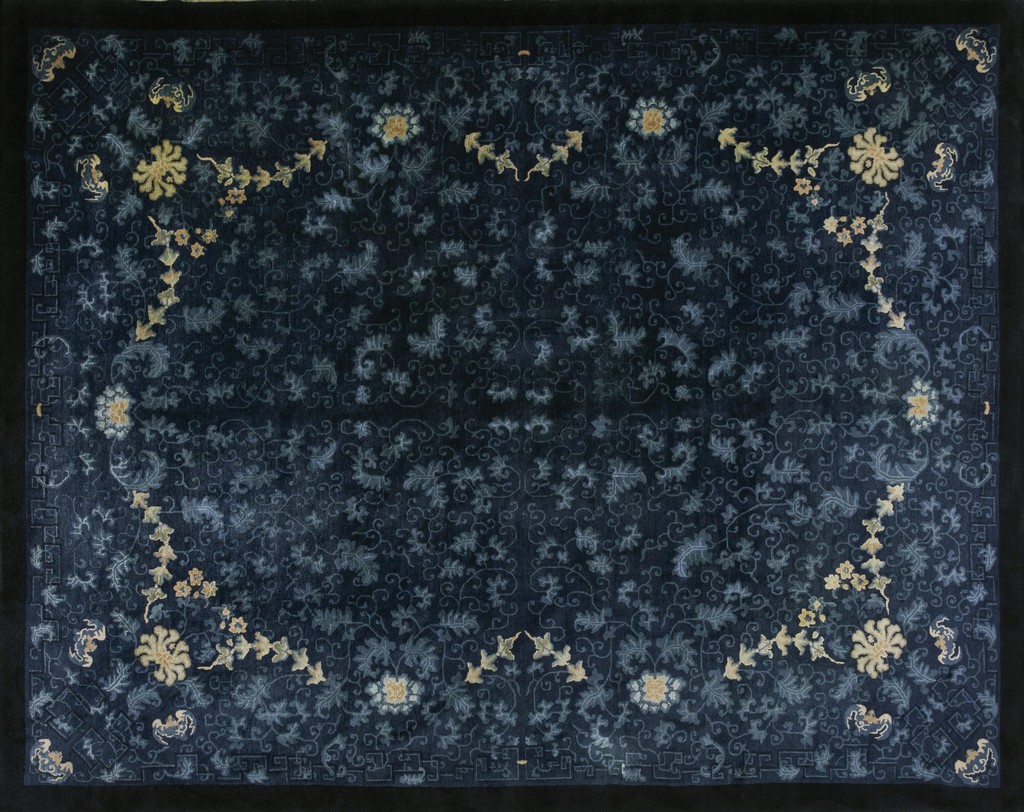
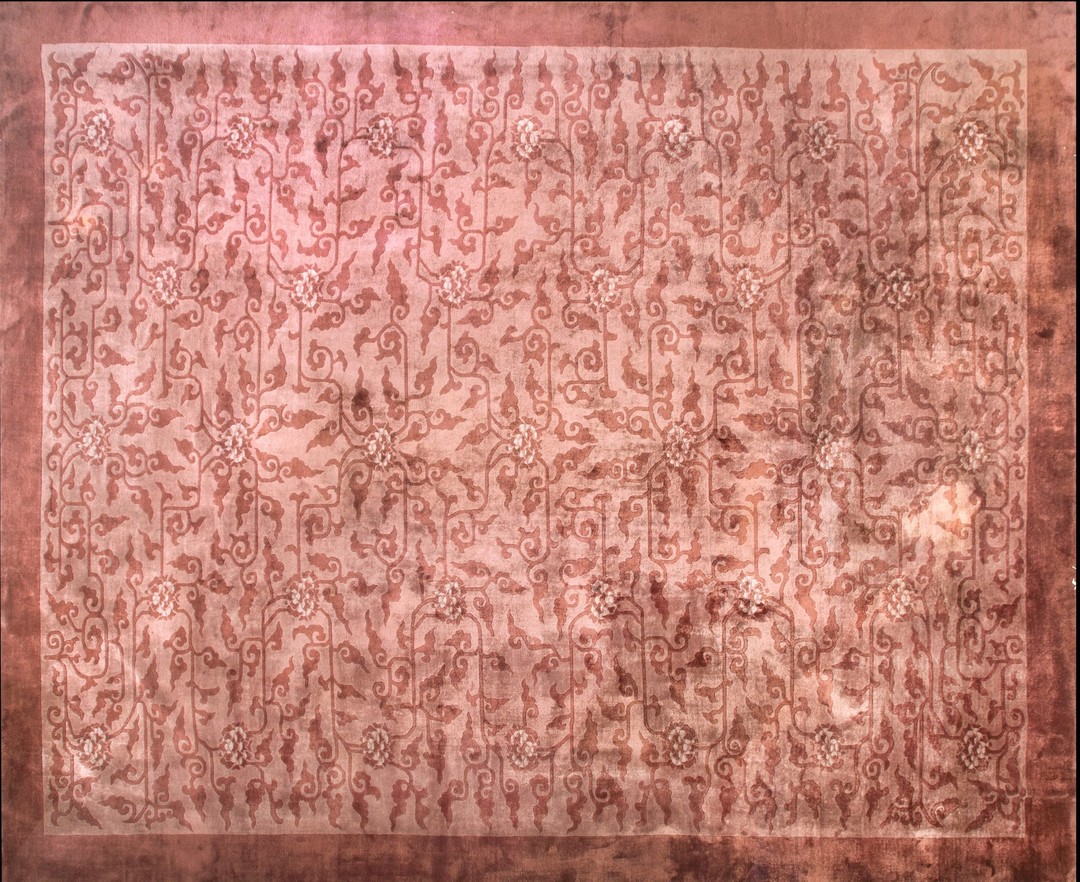
Blue Room Size Knotted Rectangle Chinese – Peking 1920s Antique Wool Rug by Rugs On Net
Origin, Etymology, and Geographic Roots
The Meaning and Origin of “Damask”
The word “damask” comes directly from Damascus, the Syrian capital that flourished as a major hub of silk weaving and trade during the medieval period. In the 14th century, the term entered Western languages as merchants and travelers carried Damascus textiles across Europe. Originally, “damask” described a type of silk fabric woven on intricate drawlooms, known for its reversible patterns and luxurious feel. Over time, the name shifted from a technical textile process to the damask etymology we know today: a reference to elaborate, repeating motifs that symbolize elegance and refinement.
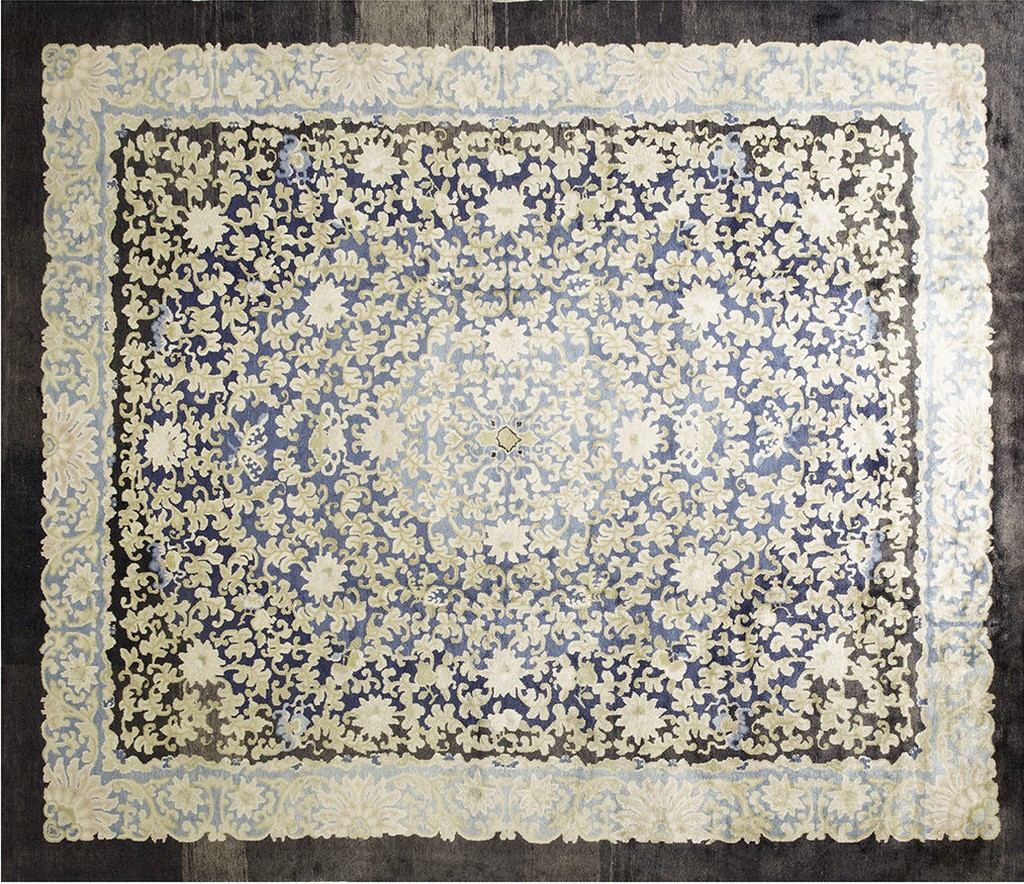
1920s Hand Knotted Pile Allover Floral Blue Antique Wool Rectangle Rug by Rugs On Net
How Did Damask Weaving Start in Rugs?
While damask weaving began with silk, rug artisans soon adapted its bold ornamental motifs into carpets and floor coverings. Instead of using the labor-intensive drawloom method, rug makers incorporated the signature history of damask weaving—large, symmetrical floral and vine designs—into knotted or woven constructions. This allowed the visual richness of Damascus silk to transition into the realm of rug-making, blending fabric traditions with the durability and artistry of carpets. In rugs, “damask” no longer described a weaving technique but a pattern language recognized for its ornamental luxury.
Where Are Damask Rugs Traditionally Made?
The origin of damask rugs lies in the Middle East, particularly in Syria, Turkey, and Iran, where artisans translated the fabric designs into rug form. As the motif spread, Europe quickly embraced it; Italy and France became leaders in adapting damask into textiles and carpets during the Renaissance, while India and China also developed their own interpretations for both courtly and commercial markets. Today, when asking where are damask rugs made, the answer spans continents: from Middle Eastern weaving centers to European workshops and Asian manufacturers, reflecting the motif’s global journey.
The Global Spread and Adaptation of Damask Motifs
Damask patterns began as a cultural export of Damascus but grew into a trans-cultural motif through centuries of trade. During the Renaissance, damask designs adorned tapestries, wall hangings, and carpets across European courts. Later, colonial and global trade routes carried the style to Asia, where it blended with local artistic traditions. The history of damask weaving shows how a pattern that began with Damascus silk became an international language of luxury, bridging East and West and leaving its mark on textiles, furniture, wallpapers, and—most enduringly—rugs.
Design Characteristics of Damask Rugs
Core Motifs and Repeating Patterns
At the heart of damask rug motifs lies a language of symmetry and repetition. The most common elements are floral damask rug patterns—stylized blossoms, scrolling foliage, and leafy vines that recall the elegance of Damascus textiles. Yet florals are not the only theme. Palmettes, pomegranates, acanthus leaves, and even heraldic or geometric symbols also appear, weaving cultural meaning into the design. These motifs are usually aligned vertically or mirrored to form a balanced, repeating rhythm that defines the ornate identity of damask rugs.
Are Damask Rug Motifs Always Floral Patterns?
No—while florals dominate, not all damask rug motifs are strictly floral. Some pieces emphasize symbolic fruit like the pomegranate, a traditional emblem of fertility and abundance, while others feature stylized palmettes or abstract vine scrolls. The hallmark of damask is its symmetrical patterning, not the exclusivity of flowers. This flexibility allows damask rugs to embody both botanical beauty and broader decorative symbolism.
Damask Pattern Layouts: All-Over vs. Medallion, Scale Variations
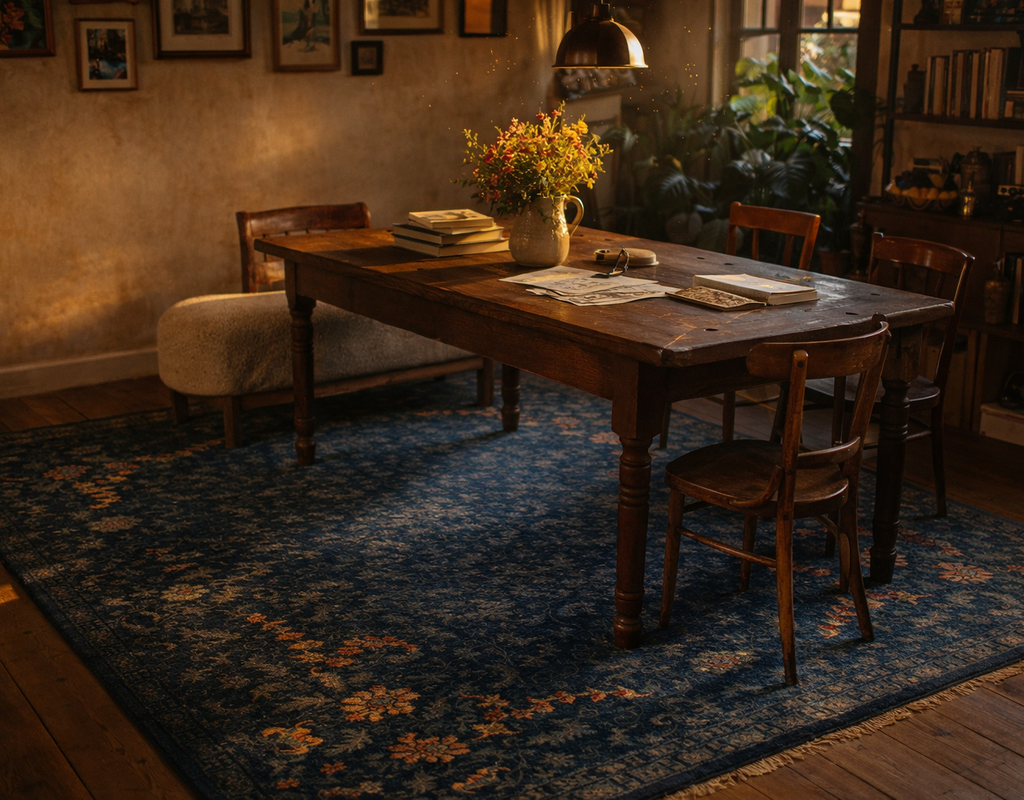
A richly textured, warm dining nook defined by a deep blue traditional rug and heavy antique wood furniture.
- All-over damask pattern — The design repeats seamlessly across the entire rug surface. — Why: Creates a sense of continuity and grandeur, especially in larger rooms.
- Damask medallion rug — A central motif anchors the composition, framed by repeating damask elements. — Why: Balances symmetry with a focal point, giving the rug a formal elegance.
- Large-scale motifs — Oversized blossoms, vines, or acanthus leaves dominate. — Why: Dramatic and bold, suited for statement-making interiors.
- Small-scale repeats — Compact motifs create a more subdued surface texture. — Why: Ideal for subtle luxury in modern or minimalist settings.
Damask vs. Brocade Rug Patterns
Though often compared, damask vs. brocade reveals key distinctions. Damask patterns are woven or knotted directly into the structure of the rug’s pile or foundation, producing their motifs as part of the fabric itself. Brocade, by contrast, relies on raised or supplementary threads—sometimes metallic or silk—to create an embossed effect above the ground weave. The result is that damask rug motifs appear flat yet richly ornamental, while brocade dazzles with shimmering texture. Both share a reputation for opulence, but they differ fundamentally in method and visual impact.
Materials, Construction, and Technical Traits
Yarn preparation and weaving tools on a table.
What Materials Are Used in Damask-Style Rugs?
A damask rug construction can feature a wide variety of materials, each influencing its look and performance. The most luxurious examples are silk damask rugs, prized for their luminous sheen and refined texture. Wool damask rugs are equally valued for their plush feel, warmth, and durability, making them practical for everyday use. Blends of wool and silk balance softness with radiance, while art silk (viscose) and cotton provide affordable alternatives with a lighter drape. In modern markets, synthetics are also used to replicate the ornate damask rug motifs at lower cost, though they lack the depth and longevity of natural fibers.
Construction Methods: Knotted, Tufted, Woven, Flatweave
- Hand-knotted — Traditional and most prestigious method; knots form dense, durable patterns. — Why: Ideal for heirloom-quality luxury damask rugs with crisp, detailed motifs.
- Tufted — Yarn punched into a canvas backing, secured with latex and fabric. — Why: Faster and more affordable, offering the look of damask without the high labor costs.
- Flatweave (kilim, tapestry) — Motifs woven directly into the foundation. — Why: Produces a lightweight, versatile rug with a subtler interpretation of the damask rug design.
- Machine-made (power-loomed) — Industrial weaving reproduces motifs efficiently. — Why: Offers accessible damask style rugs with consistent quality, though less artisanal depth.
Does a Damask Rug Have Reversible Patterns?
Unlike authentic damask textiles—where the drawloom technique produces a reversible fabric—a reversible damask rug is rare. Most rugs display the pattern clearly on one face only, with the back revealing structural knots, tufts, or machine weaving. This distinction highlights how “damask” in rugs refers to the pattern style rather than the reversible weaving method of Damascus silks.
Typical Weight and Density: How Heavy Is the Typical Damask Area Rug?
The damask rug weight varies by size, fiber, and method of construction. A wool damask rug tends to be heavier due to the dense pile and durable fiber, while a silk damask rug is lighter but tightly knotted, giving it a concentrated density. Tufted or machine-made damask rugs weigh less overall, making them easier to handle but less substantial in feel. For an average 8×10 wool or silk hand-knotted damask area rug, the weight typically ranges from 40 to 80 pounds, reflecting both the luxury of the material and the intricacy of its construction.
Historical Evolution and Regional Variations
Early Islamic and Byzantine Roots
The antique damask rug tradition traces back to medieval Syria, where the flourishing silk trade and advanced drawloom techniques defined Damascus as a global textile hub. These designs drew inspiration from both Byzantine ornamental motifs and Persian artistic traditions, merging vine scrolls, floral repeats, and symbolic emblems into a distinctive patterned style. In this era, “damask” referred primarily to reversible silk weaves, but the ornamental motifs soon migrated into carpet design, laying the foundation for the Middle Eastern damask legacy.
Diffusion to Europe and the Renaissance
By the late Middle Ages and Renaissance, damask motifs had captivated Europe. Italian workshops in cities such as Venice and Florence pioneered the adaptation of Damascus-inspired designs into Italian damask carpets and textiles, prized in aristocratic courts. France refined the aesthetic further with luxurious French damask rugs, often in deep crimson, gold, or royal blue. Spain also embraced the style, integrating Moorish influences with European heraldry. Across the continent, the damask motif became a mark of prestige, linking the Old World’s fascination with Oriental luxury to new European weaving centers.
Regional Damask Rug Variations
The damask pattern evolved uniquely as it spread:
- Middle Eastern damask — Rooted in Syria, Turkey, and Persia, often featuring bold vine scrolls and geometric-floral blends.
- European damask rugs — Italian and French examples favor opulent colors and courtly motifs, while Spanish versions merged Islamic and Christian symbols.
- Indian damask rugs — Produced during Mughal rule, with delicate florals and jewel-toned palettes reflecting imperial tastes.
- Chinese damask rugs — Interpreted with auspicious motifs such as lotus, peonies, or dragons, blending native symbolism with the symmetrical damask style.
— Why: These variations demonstrate how each region localized the damask aesthetic, producing a spectrum of designs tied to its cultural heritage.
Are Vintage Damask Rugs Always Hand-Made?
- Yes, for pre-20th century examples — Most vintage damask rugs were hand-knotted or woven, showcasing traditional craftsmanship. — Why: Before the rise of industrial weaving, handmade rugs were the only method of creating detailed damask motifs.
- Not always after 1900 — Machine-made damask-style rugs became widely available in the 20th century. — Why: Industrial looms allowed for mass production, making damask designs more accessible but less artisanal.
- Antique damask rugs are especially valued. — Why: Their handmade quality, age, and cultural heritage make them rare and highly collectible.
Today, collectors prize vintage damask rugs precisely because they embody centuries of artistry and cultural exchange. For those seeking authentic pieces, reputable dealers specializing in antique damask rugs and heritage carpets remain the best sources.
Modern Damask Rugs: Market, Trends, and Styling
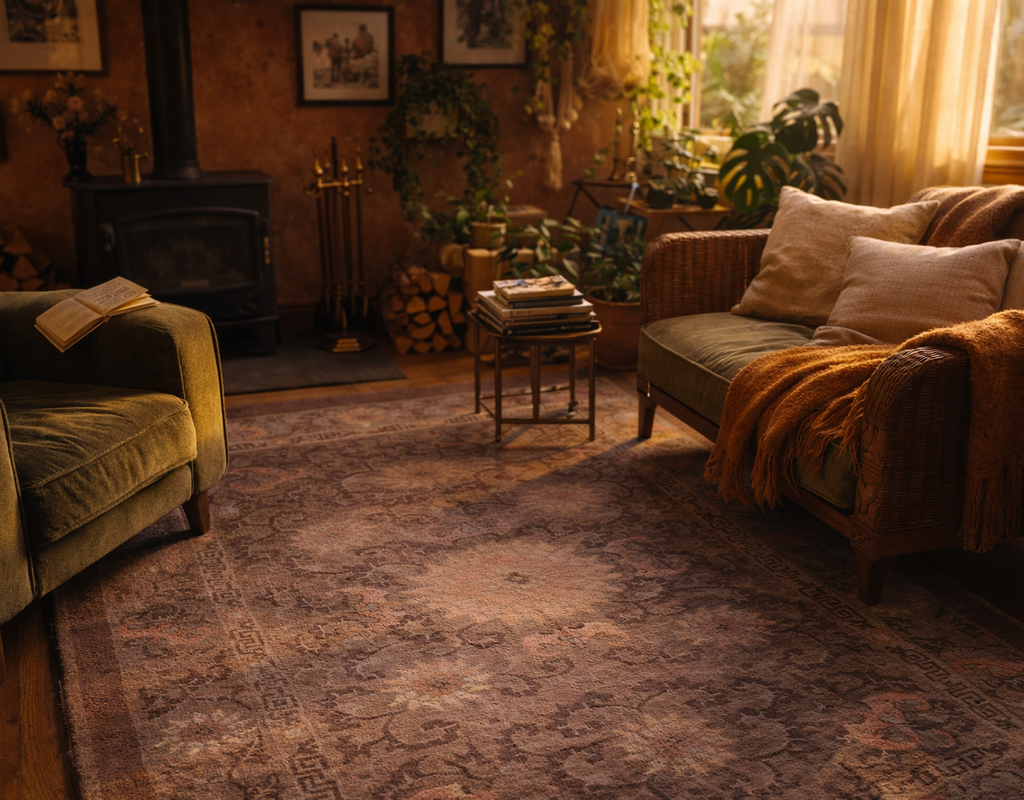
An intimate corner showcasing rich textures and warm, late-afternoon sunlight illuminating a room anchored by a subtly patterned area rug.
Can Modern Damask Rugs Match Minimalist Interiors?
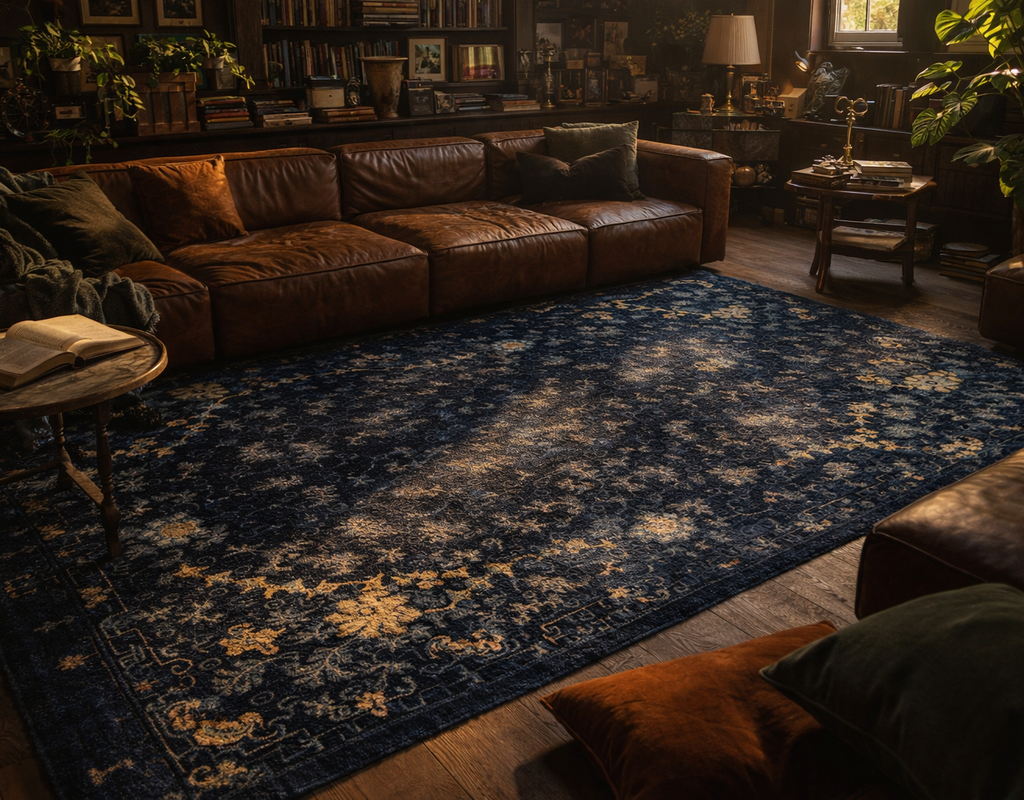
A richly textured, dark blue distressed rug grounds this warm and intimate library-style living space.
Yes—contrary to the idea that damask belongs only in opulent settings, a modern damask rug can complement minimalist interiors beautifully. Designers now produce minimalist damask rugs in muted or monochrome colorways, where the emphasis is on texture rather than bold contrast. Subtle tone-on-tone patterns or oversized motifs in neutral shades allow the damask motif to add depth without overwhelming a pared-down aesthetic. This makes damask adaptable, able to bridge both traditional and contemporary design philosophies.
Hand-Tufted vs. Woven Damask Rugs: Pros & Cons
- Hand-tufted damask rugs — Why: Affordable and versatile, they allow experimentation with bold damask motifs at a fraction of the cost of knotted rugs. However, they are less durable, often lasting 5–10 years.
- Woven or hand-knotted damask rugs — Why: Considered the premium choice, these rugs are exceptionally durable, with motifs woven directly into the structure. They command higher prices but also hold long-term value, often becoming heirlooms.
Is a Machine-Made Damask Rug Worth Buying?
- Yes, for budget-conscious buyers — Why: A machine-made damask rug offers the look of ornate damask designs at a lower price, with consistent quality and easy maintenance.
- No, for collectors or connoisseurs — Why: Machine-made options lack the craftsmanship, material depth, and long-term value of handmade damask pieces. They are decorative rather than collectible.
Does Fiber Content Change Damask Rug Price?
- Silk damask rugs — Why: The most expensive, silk provides luster and fineness, making each rug a statement of luxury. A high-quality silk damask rug can range from several thousand dollars to well into five figures, depending on size and origin.
- Wool damask rugs — Why: Durable, plush, and moderately priced, wool offers warmth and practicality while retaining elegance.
- Synthetics (viscose, polyester, blends) — Why: Budget-friendly and visually appealing, though less durable. Perfect for short-term styling or lighter use.
Where to Buy Authentic Vintage Damask Rugs?
Authentic vintage damask rugs should be sourced through trusted channels: specialty rug dealers, auction houses, heritage textile fairs, and vetted online platforms. These outlets often provide provenance, condition reports, and restoration details that ensure the rug’s authenticity and value.
Why Are Vintage Damask Rugs So Sought After?
The high vintage damask value stems from their rarity, craftsmanship, and cultural history. Handmade with traditional techniques, these rugs carry centuries of design legacy and often feature unique regional adaptations. Collectors and interior designers alike seek them not only as floor coverings but as investments in heritage and artistry.
How Much Should a Silk Damask Rug Cost?
The price of a silk damask rug depends on size, knot density, and origin. Small decorative pieces may begin around $1,000–$2,000, while full-sized hand-knotted rugs can easily exceed $10,000. Antique silk damask rugs, especially those with verified provenance, may command auction prices well above that, reflecting both material and historical value.
Practical Considerations for Damask Rug Owners
Should I Professionally Clean My Damask Rug Yearly?
Yes. Professional cleaning of a damask rug once a year is highly recommended, especially for silk damask rugs or high-quality wool pieces. Routine vacuuming helps maintain surface appearance, but professional cleaning removes deep-set dirt, restores luster, and prevents fiber degradation. For homeowners, this yearly investment in damask rug care safeguards both beauty and long-term value.
Are Damask Outdoor Rugs Colorfast in Sunlight?
The colorfastness of a damask outdoor rug depends largely on the fiber. Polypropylene or solution-dyed synthetics are the most UV-resistant, holding up well to sun exposure. Some treated wools also resist fading, though they require more care. If durability outdoors is the goal, ensure the rug is labeled as UV-stable and specifically designed for exterior use. Otherwise, prolonged sunlight may dull or wash out the intricate damask rug motifs.
How Does Aging Affect Damask Rug Sheen?
Over time, rug sheen aging creates a soft, distinguished patina. In silk damask rugs, the lustrous shine may mellow into a satin-like glow, enhancing its antique charm. Wool damask rugs develop a gentle matte finish that reflects natural wear and foot traffic. Rather than being a flaw, this mellowing is often prized by collectors, as it signals authenticity and a lived-in elegance that new rugs cannot replicate.
Can Damask Rugs Increase Home Resale Value?
A well-chosen damask rug can subtly boost resale value by signaling refinement and luxury to potential buyers. While not a direct financial return like renovations, the visual effect of a high-end rug contributes to staging success. A resale value damask rug in a living or dining room enhances the perception of quality and sophistication, helping set the tone for a home that feels more valuable.
Best Practices for Care and Longevity
- Rotate regularly — Why: Prevents uneven wear and fading, keeping motifs balanced in appearance.
- Use quality rug padding — Why: Reduces friction with flooring, protects fibers, and improves comfort underfoot.
- Address stains immediately — Why: Prompt action avoids permanent marks and preserves the clarity of damask rug motifs.
- Avoid direct sunlight indoors — Why: Even indoor damask rug colorfast fabrics can fade when exposed to UV rays for long periods.
- Schedule annual professional cleaning — Why: Restores sheen, eliminates hidden dirt, and maintains long-term structural health.
Through proper cleaning and damask rug care, owners not only preserve the beauty of their rugs but also secure their place as enduring investments in luxury and style.
Cultural Significance and Symbolism
Damask in Courts, Palaces, and Ceremonial Settings
Throughout damask rug history, these patterns were woven into the very fabric of prestige. In the Islamic world, courtly damask textiles and rugs adorned mosques, palaces, and ceremonial halls, where their symmetry symbolized divine order and earthly refinement. In Renaissance Europe, kings and queens commissioned luxury rug traditions inspired by Damascus fabrics, using them to decorate throne rooms, banquet halls, and even church sanctuaries. In Asia, damask motifs appeared in Chinese palaces and Japanese ceremonial garments, their adoption signaling respect for both the artistry and the cosmopolitan style they represented. Wherever they appeared, damask patterns were synonymous with authority, grandeur, and refinement.
Symbolism of Motifs
- Pomegranate — Fertility, abundance, and eternal life. — Why: The fruit’s many seeds made it a universal emblem of prosperity.
- Palmette — Vitality and regeneration. — Why: Derived from ancient Persian and Islamic art, the leaf form suggests endless growth.
- Fleur-de-lis — Royalty, purity, and Christian virtue. — Why: Adopted by French nobility, it transformed the damask motif meaning into a symbol of sovereign power.
- Peony — Wealth and honor. — Why: In Chinese damask symbolism, the peony was revered as the “king of flowers,” often woven into rugs and textiles to bless homes with prosperity.
Cross-Cultural Meaning and Legacy of the Damask Pattern
The damask motif meaning transcends borders, embodying a shared language of elegance and refinement. From Damascus workshops to Venetian looms, from Mughal courts to Chinese ateliers, damask carried with it a message of prosperity, beauty, and cultural sophistication. Its adaptability is what made it a luxury rug tradition across so many continents. Today, damask rugs still signal taste and heritage, while their motifs echo through fashion, architecture, and interior design. The global journey of damask symbolism shows how a single pattern, rooted in medieval trade, came to stand for timeless cosmopolitan style.
Explore a Few of Our Favorite Damask Rugs
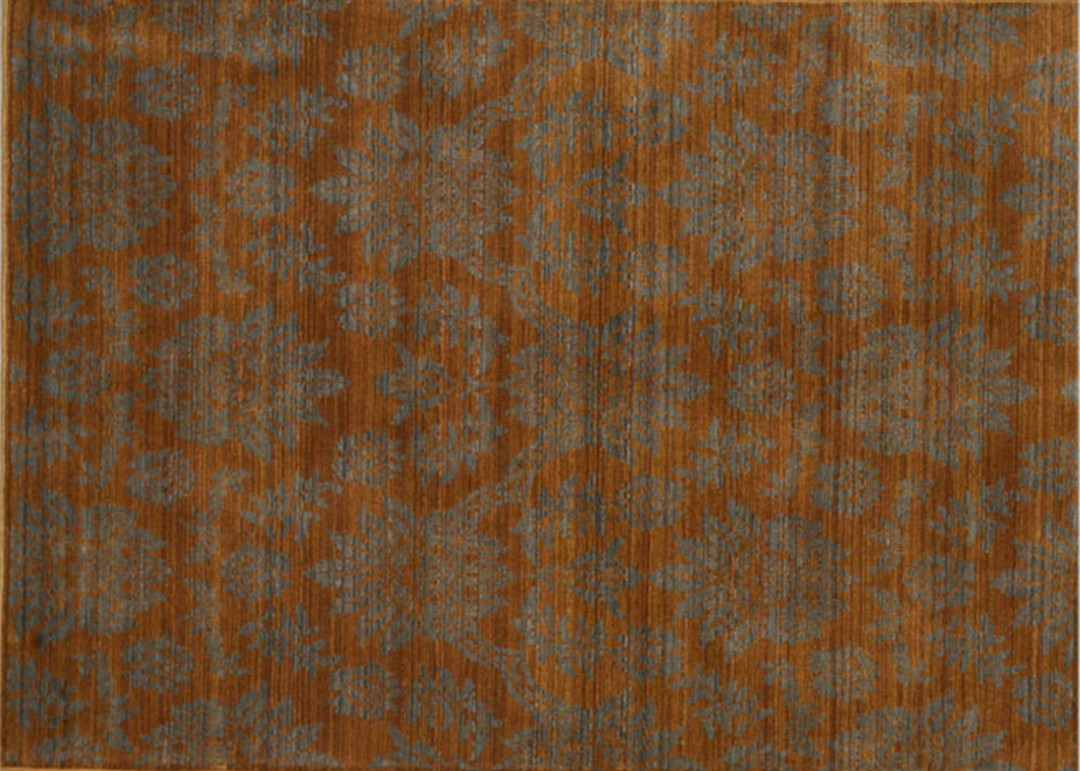
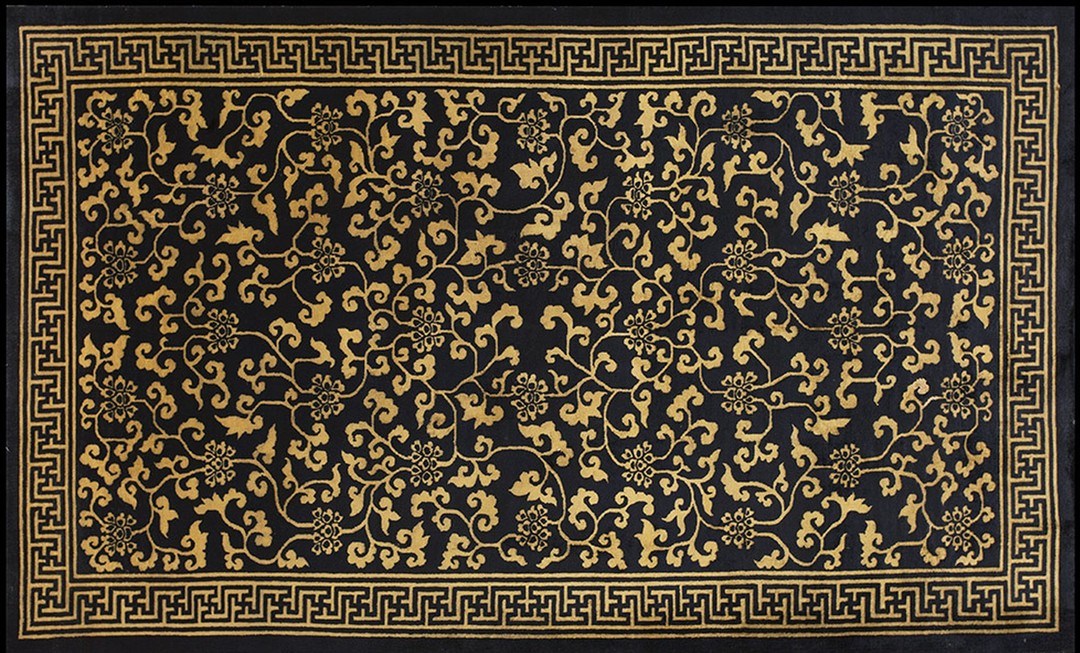
FAQ
- How much do damask rugs cost?
Expect \$60–\$300 for machine-made synthetics, \$300–\$1,200 for quality wool, and \$1,500+ for hand-knotted wool/silk. Size, fiber, and construction drive price.
- Where should I use a damask runner rug?
Damask runners elevate hallways and kitchens; leave 4–6″ of floor showing on each side. Typical lengths are 8–12 feet.
- Are machine-washable damask rugs worth it?
They’re convenient for apartments, pets, and dining areas. Check washer capacity and follow label temps; large sizes may need a laundromat machine.
- Can damask rugs work with underfloor heating?
Yes—most natural-fiber or synthetic damask rugs are fine with radiant heat. Use a heat-safe pad and follow the floor manufacturer’s max-temperature guidance.
- What rug pad should I use under a damask rug?
Use a felt-and-rubber pad for grip on hard floors; 1/4″ is a versatile thickness. Trim the pad 1–2″ smaller than the rug on all sides.
- Do high-low damask rugs look more modern?
Yes—sculpted (high-low) damask rugs add texture and depth, modernizing a classic motif. The relief also helps the pattern read clearly in neutrals.
- Are damask rugs reversible like damask fabric?
No—damask rugs display the pattern on one face only. True reversible damask refers to woven fabric, not pile or printed rugs.
- Can I layer a damask rug over jute?
Absolutely—use a larger jute base and center the smaller damask rug. Keep 6–12″ of the base showing to frame the motif.
- Are outdoor damask rugs a thing?
Yes—polypropylene damask rugs handle moisture and hose-off cleaning. They’re great for patios and mudrooms but feel less plush than indoor wool.
- What size damask rug under a dining table?
Add 24–30″ beyond the tabletop on all sides so chairs slide smoothly. For a 36×72″ table, a damask rug around 8×10 works well.
- What size damask rug for a living room?
Let front legs of seating rest on the rug and leave 6–18″ of floor border. Common fits are 8×10 or 9×12 for typical seating arrangements.
- Will patterned curtains fight with a damask rug?
Not if you mix pattern scales—large damask rug + small-scale stripe or micro-floral curtain works. Keep a shared color (e.g., the rug’s secondary hue).
- What colors pair well with damask rugs?
Damask rugs shine in tone-on-tone neutrals (ivory, greige, charcoal) or muted jewel tones (teal, garnet). Repeat one rug color on curtains or pillows for cohesion.
- Can robot vacuums handle damask rugs?
Most manage low-/medium-pile damask rugs, but fringe can tangle. Use a rug with bound edges or tuck fringe under during cleaning.
- Are damask rugs pet- and kid-friendly?
Choose low-pile wool or polypropylene damask rugs for durability and easier cleanup. Aim for ≤0.25–0.4″ pile so toys and chairs glide.
- Do damask rugs shed?
New wool damask rugs may shed lightly for 1–3 months—vacuuming helps. Synthetics shed less; viscose may fuzz or pull if abraded.
- How do I spot-clean a viscose damask rug safely?
Blot dry, avoid water, and call a pro; acidity-balanced cleaners are sometimes used. Even water alone can cause brown/yellow “cellulosic browning.”
- How do I clean a damask rug day-to-day?
Vacuum weekly with suction only (no beater bar) and blot spills immediately. Deep-clean yearly based on fiber—wool with wool-safe shampoo; synthetics can handle mild DIY mixes.
- Are viscose damask rugs a bad idea in busy homes?
They’re risky: viscose fibers weaken and can yellow with moisture. Avoid dining rooms, baths, plants on top, and heavy spot-scrubbing.
- Are wool damask rugs good for high-traffic areas?
Yes—wool damask rugs resist crushing and soil, making them solid for living rooms and halls. Look for dense pile (e.g., 2000+ g/m²) or flatweave construction.
- What materials are best for damask rugs?
Wool damask rugs balance durability and softness and hide wear well. Polypropylene/polyester options are budget-friendly and easy-clean; viscose/silk offer sheen but need careful care.
- How do damask rugs compare to Persian rugs?
“Damask” refers to a motif; “Persian” refers to origin and weaving traditions. A Persian rug might include medallions and borders, while a damask rug repeats its scroll motif across the field.
- What makes damask rugs look different from generic floral rugs?
Damask rugs use mirrored, stylized motifs arranged in a repeating frame or ogee, not scattered blossoms. The result is orderly, formal patterning with clear axes of symmetry.
- Are damask rugs outdated or still in style?
Damask rugs remain classic and are trending in updated palettes and high-low textures. Neutral tone-on-tone or muted jewel tones feel current in 2025.
- What is a damask rug design?
A damask rug features a symmetrical, scrolling floral (often acanthus) motif inspired by historic damask textiles. Many versions are tone-on-tone or two-color and read elegant rather than busy.