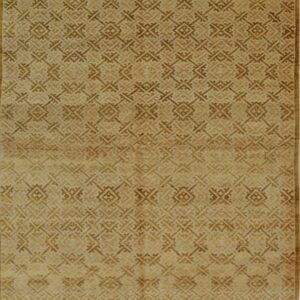
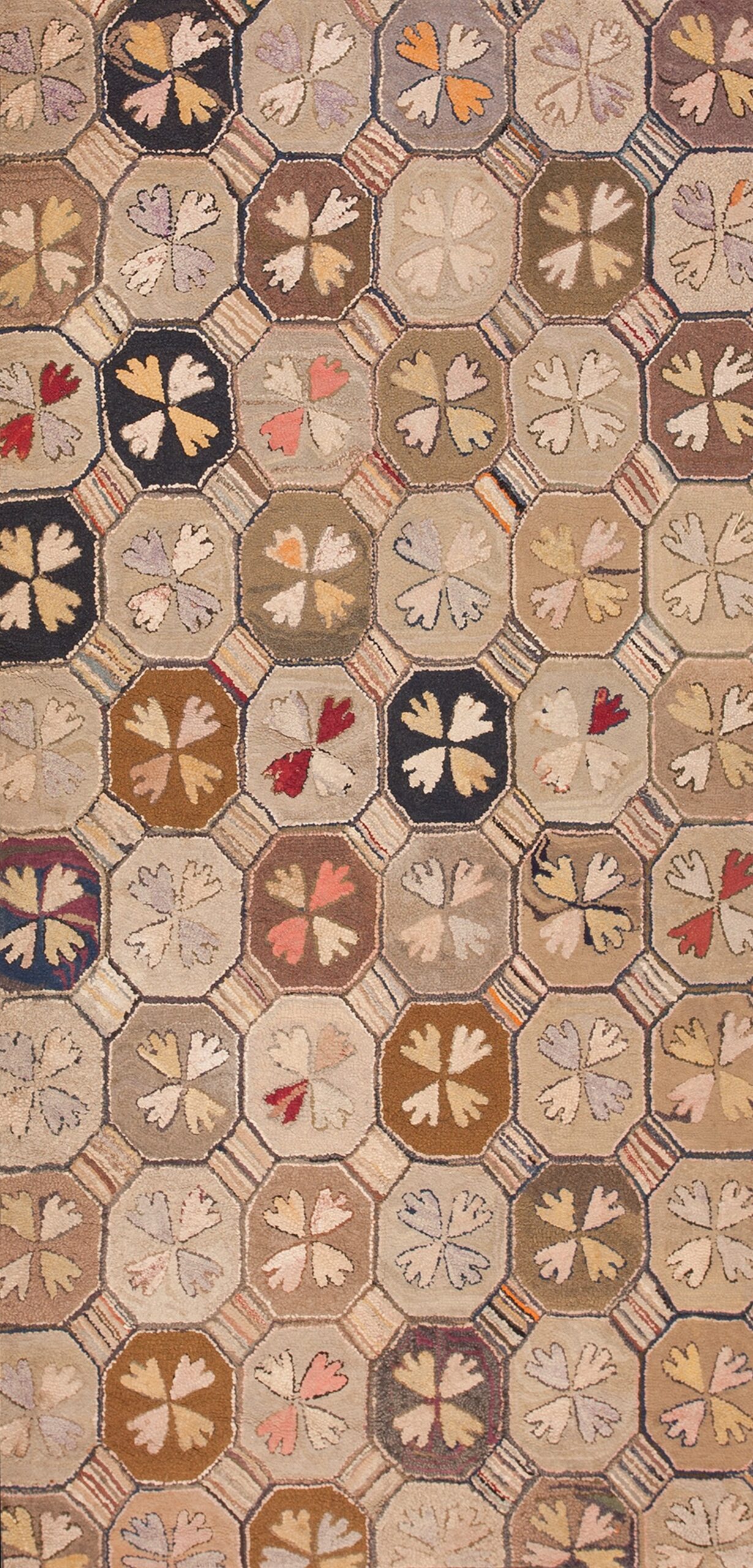
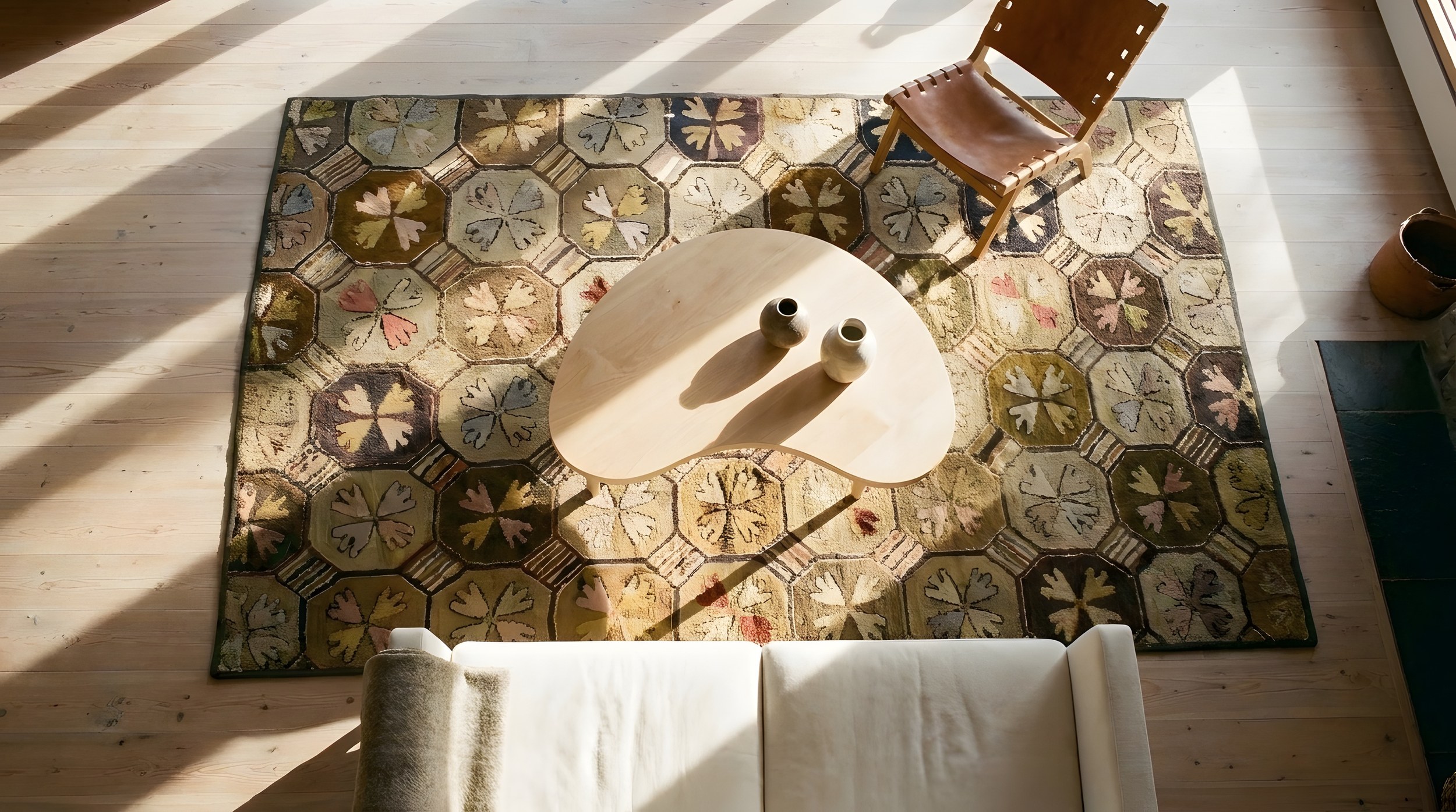
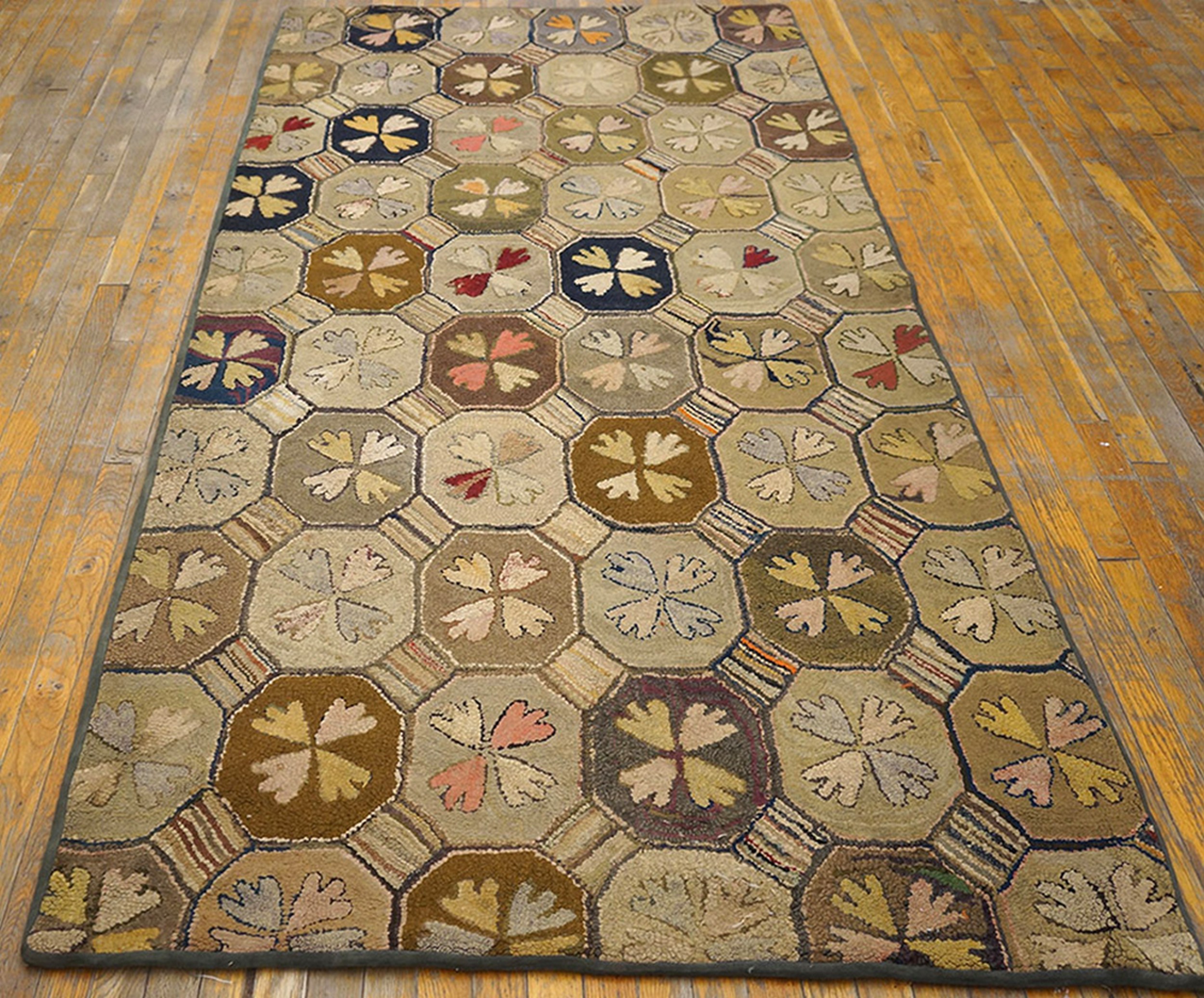
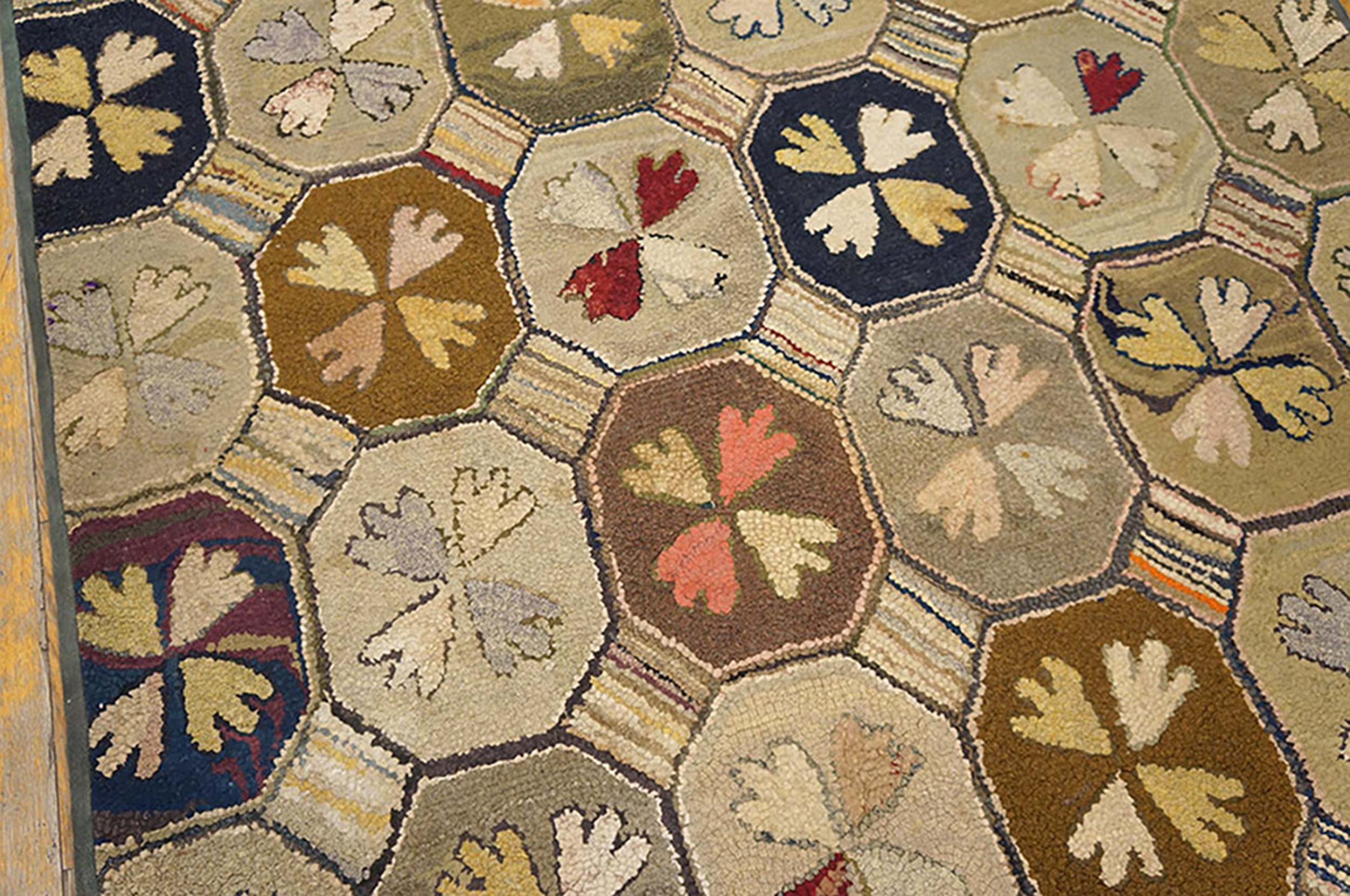
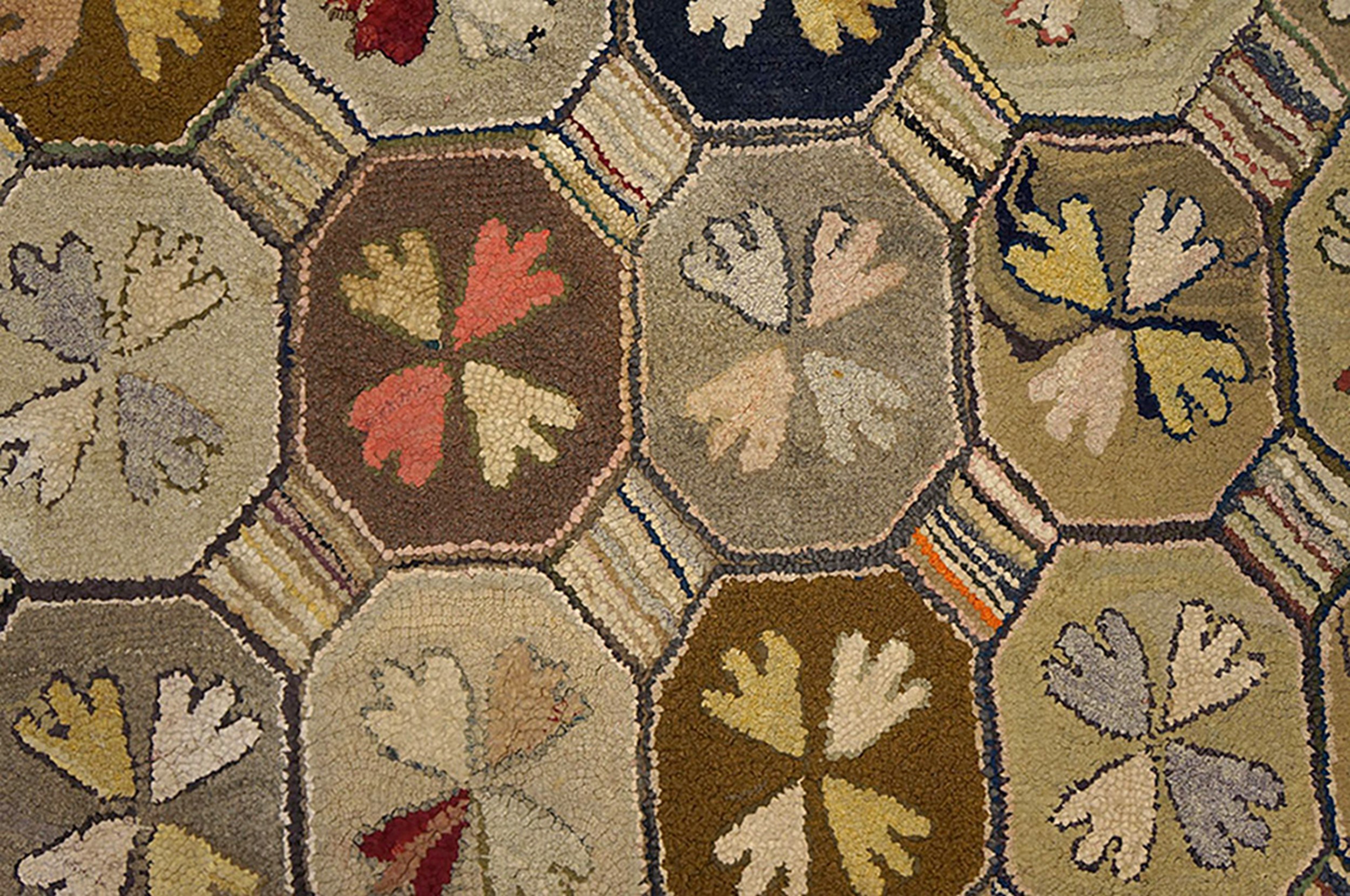
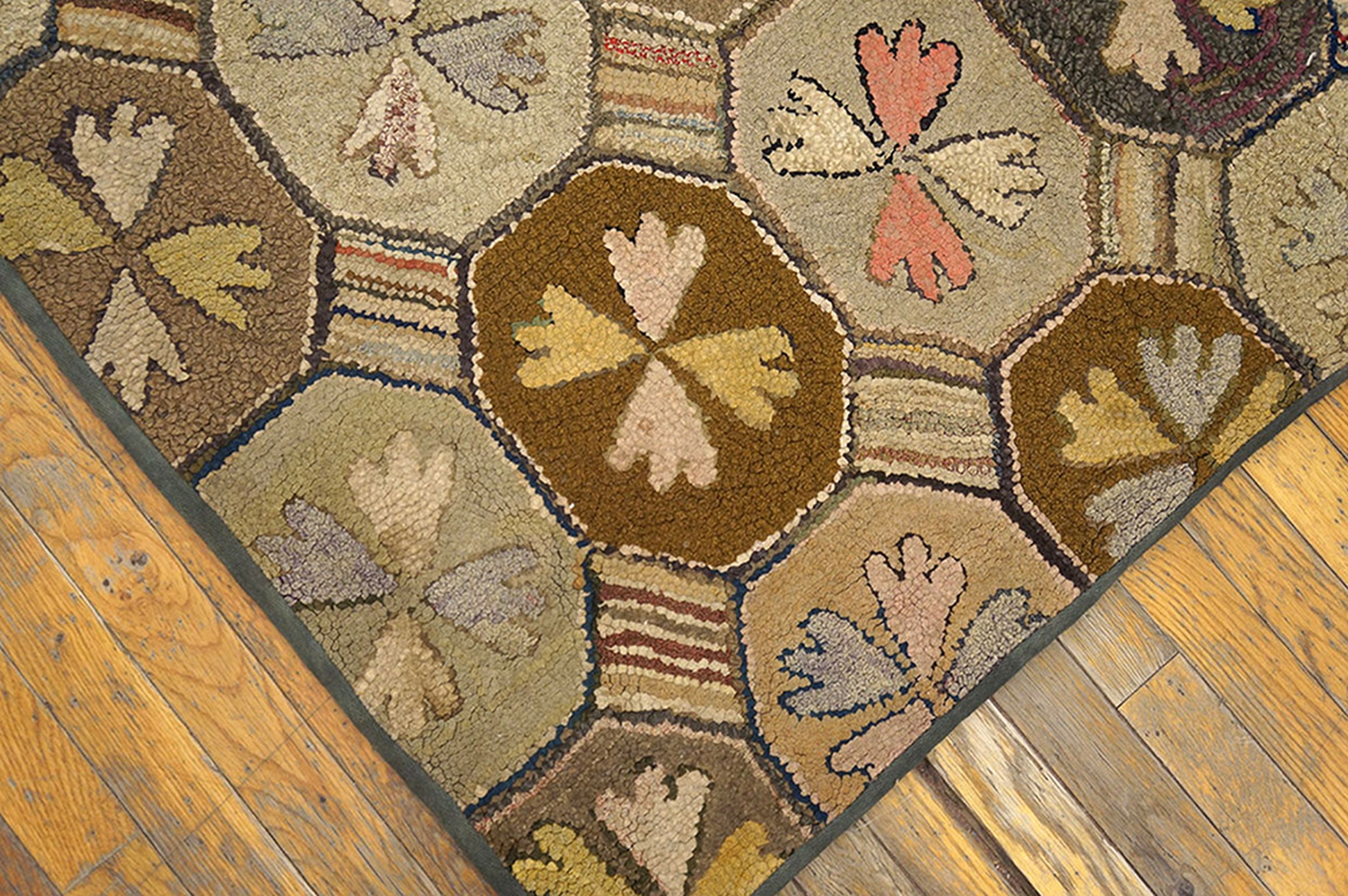

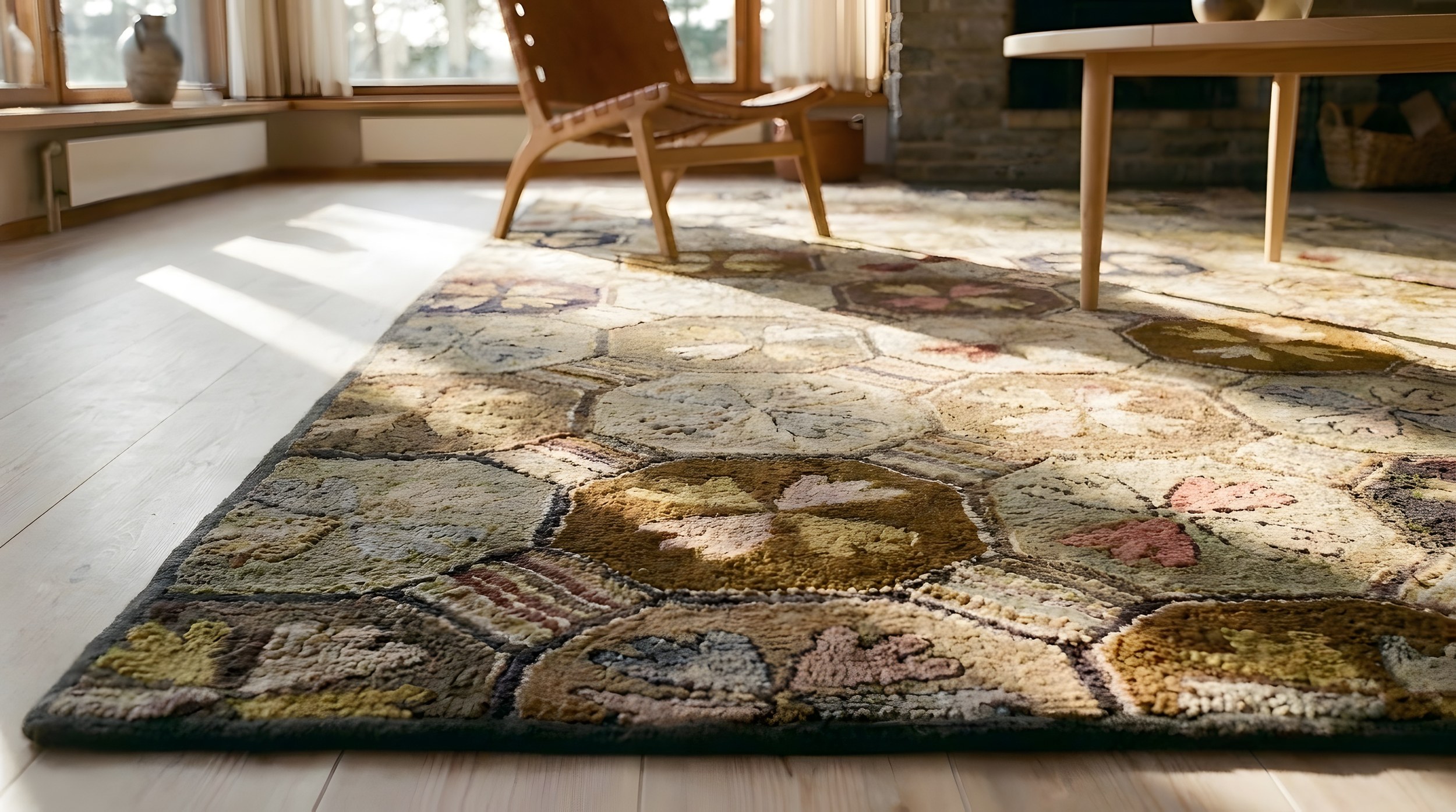
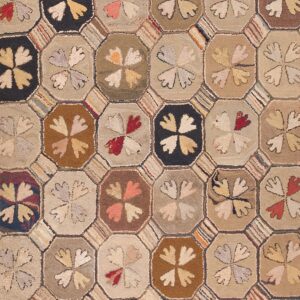
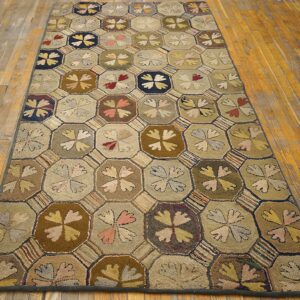
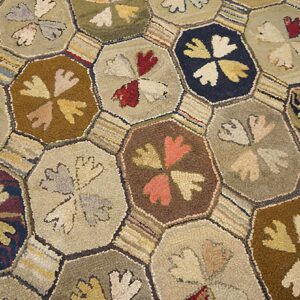
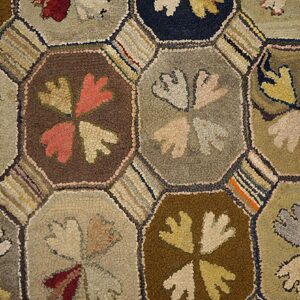

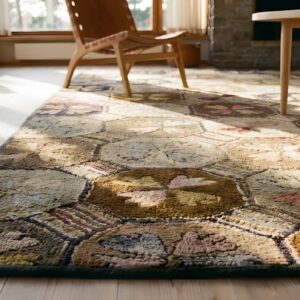
This late 19th-century American hooked rug is a sophisticated exemplar of “Primitive Modernism,” showcasing the innate architectural sense of rural American artisans. While many antique American folk art hooked rugs of the Victorian era favored exuberant floral bouquets or literal pictorial scenes, this rare specimen is distinguished by its disciplined geometric vocabulary and its remarkably contemporary neutral, earthy palette.
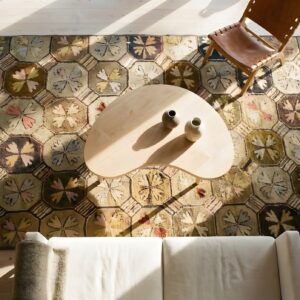
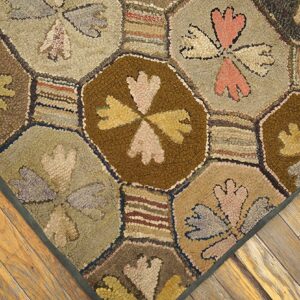
The composition is centered upon a rhythmic, all-over geometric pattern, likely a series of interlocking diamonds, squares, or a stylized “log cabin” motif. This structural approach to design reflects a “Quilt-inspired” aesthetic, where the weaver utilized the repetitive nature of the hook to create a sense of infinite, mathematical order. The lack of a central focal point allows the eye to travel across the field, making the American folk art design rug feel expansive and architectural—a quality that makes it highly compatible with modern, minimalist interiors.
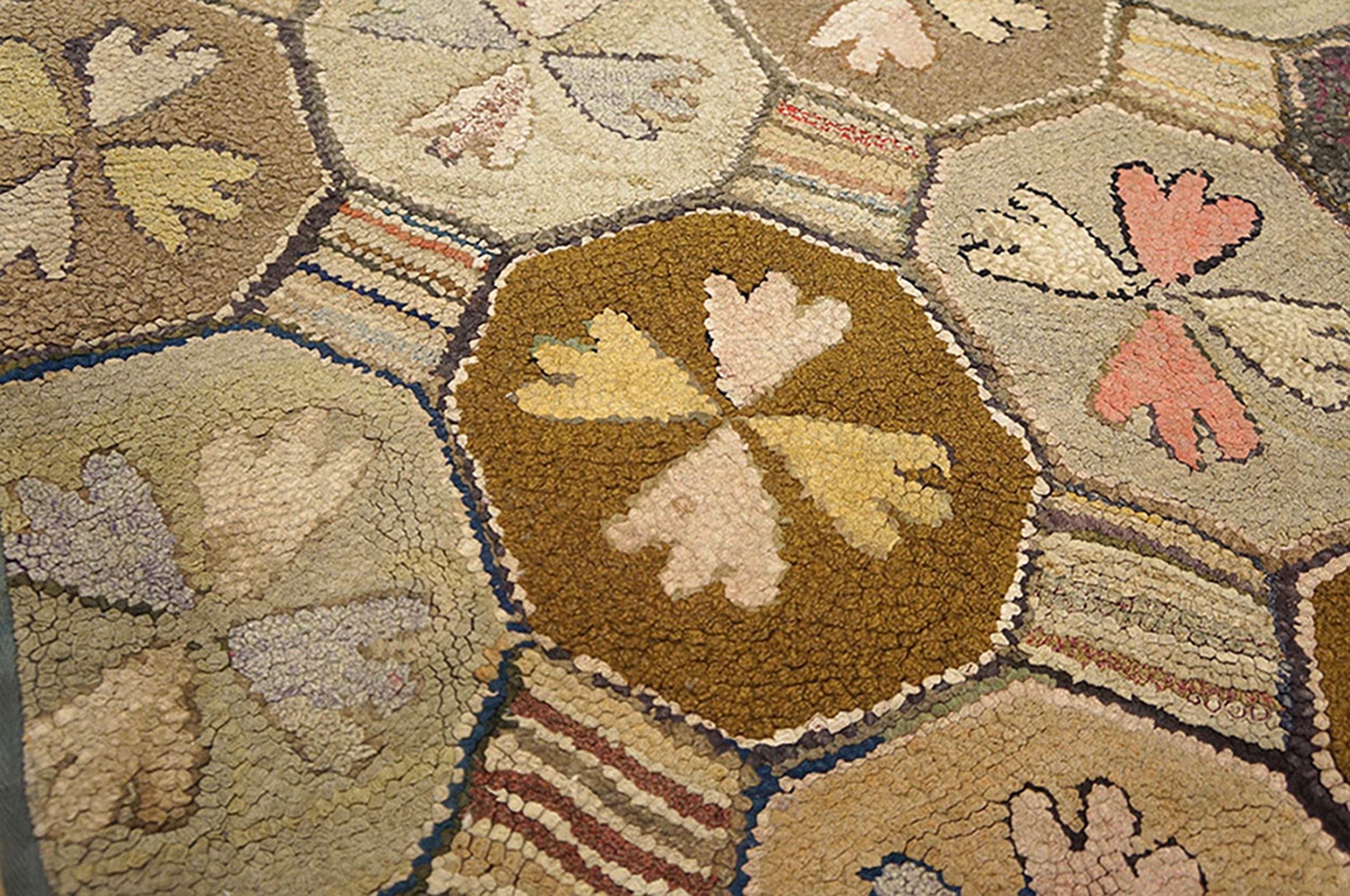
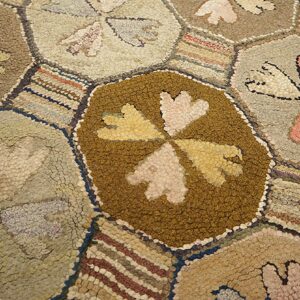
The palette is a masterclass in tonal restraint. Eschewing the bright primary colors often found in folk art, this piece utilizes a “jewelry box” of organic, earth-derived tones: sandy beiges, soft taupe colors, muted charcoal, and warm ochre. Because these antique area rugs from America were made using hand-cut strips of recycled wool garments and blankets, the “solid” areas possess a beautiful, variegated abrash (tonal shifting). This creates a shimmering, “salt-and-pepper” texture that gives the neutral colors a watercolor-like depth and a soulfulness that modern factory dyes cannot replicate.
Technically, this hooked rug is prized for its tactile, nubby texture. The process of pulling individual loops of wool through a burlap or linen foundation results in a dense, substantial pile with a heavy, “meaty” handle. Over more than a century of use, the wool has developed a soft, felted patina, softening the edges of the geometric shapes and imbuing the textile with a sense of “Quiet Luxury” and historical gravity.
The borders act as a simple, grounding frame, often using a slightly darker “mottled” tone to anchor the lighter neutral field. To possess this antique geometric American hooked rug is to own a monument to early American design. It is a work that bridges the gap between humble colonial resourcefulness and the high-design requirements of the 21st century—a hand-wrought sanctuary that transforms a space into a gallery of historical, earthy grace.