
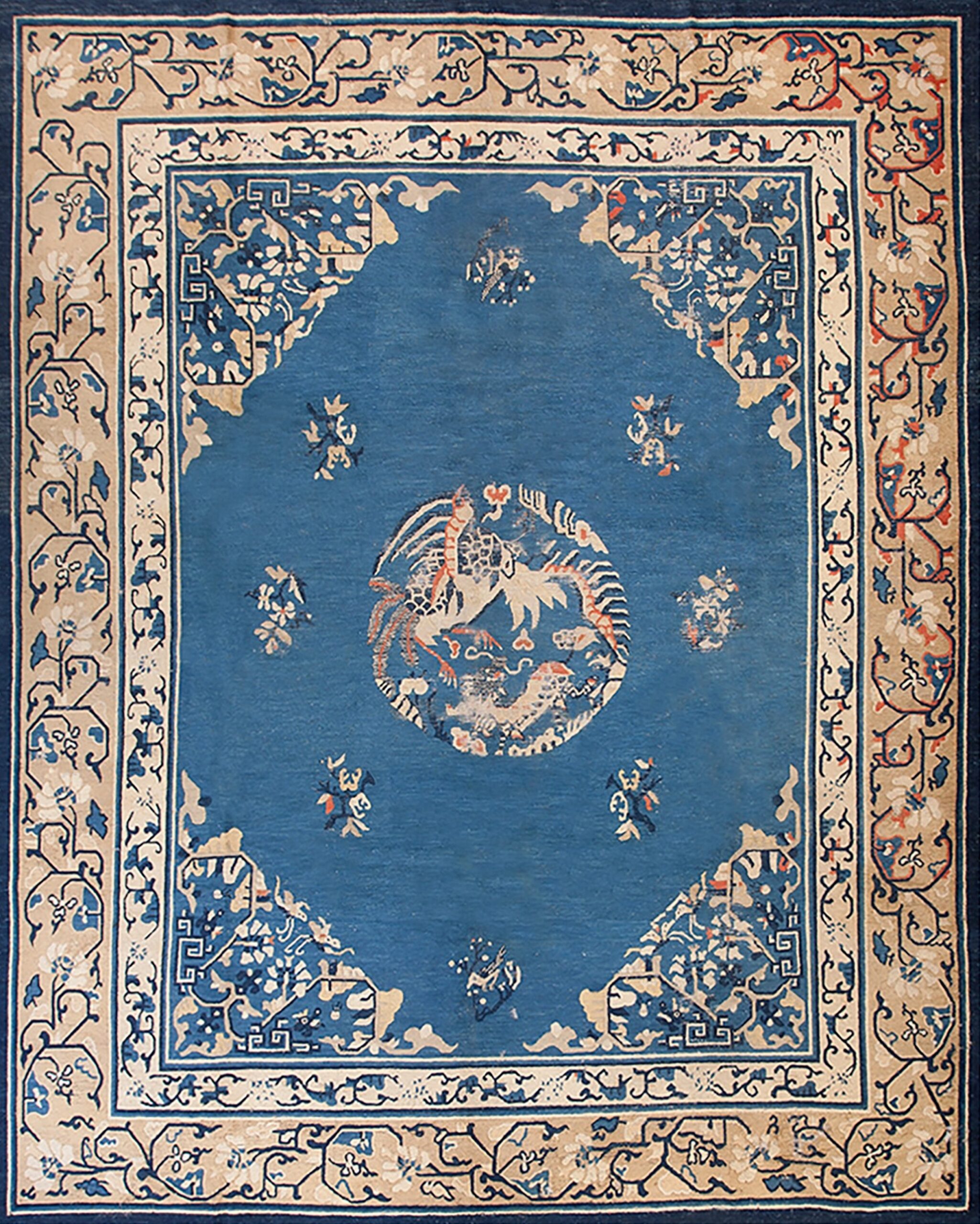
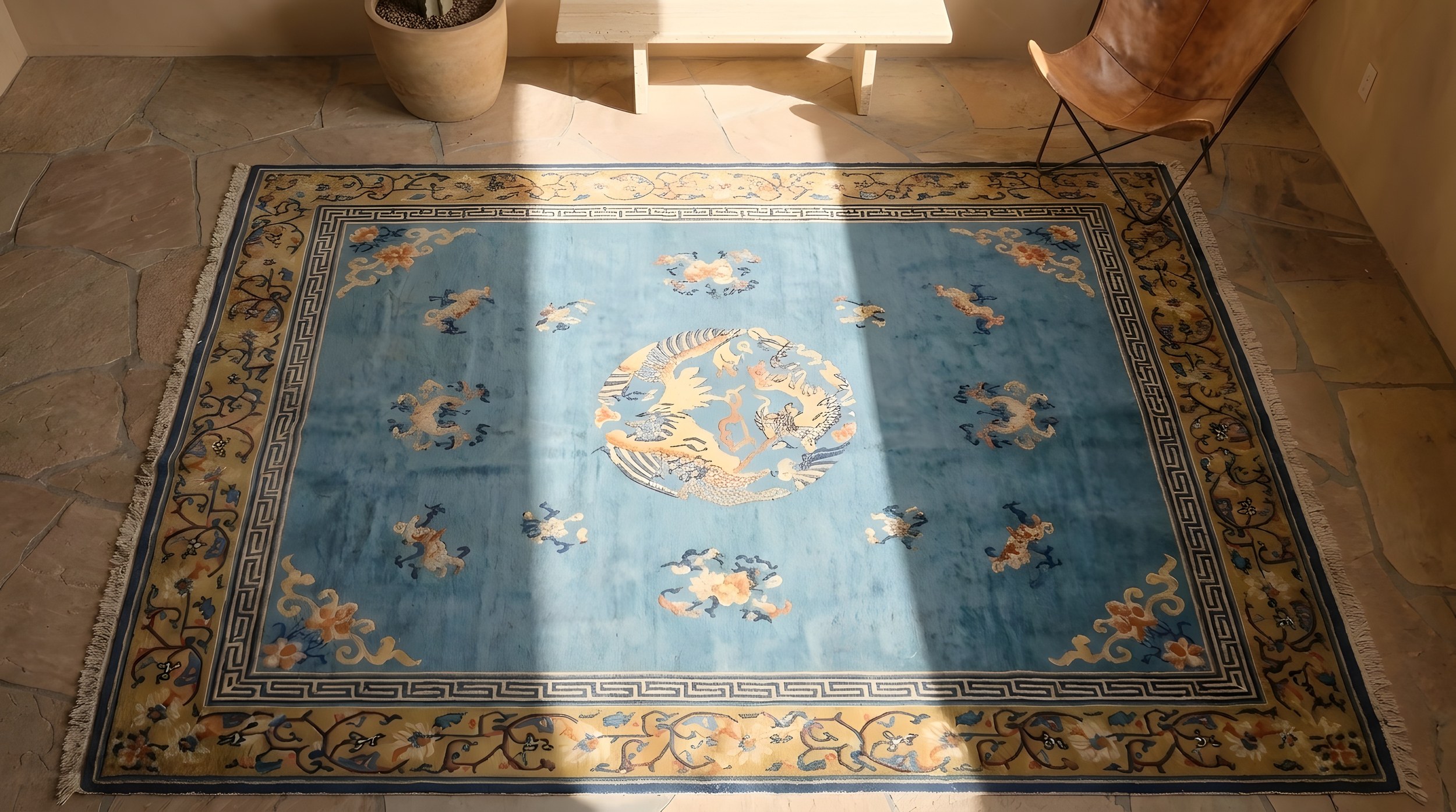
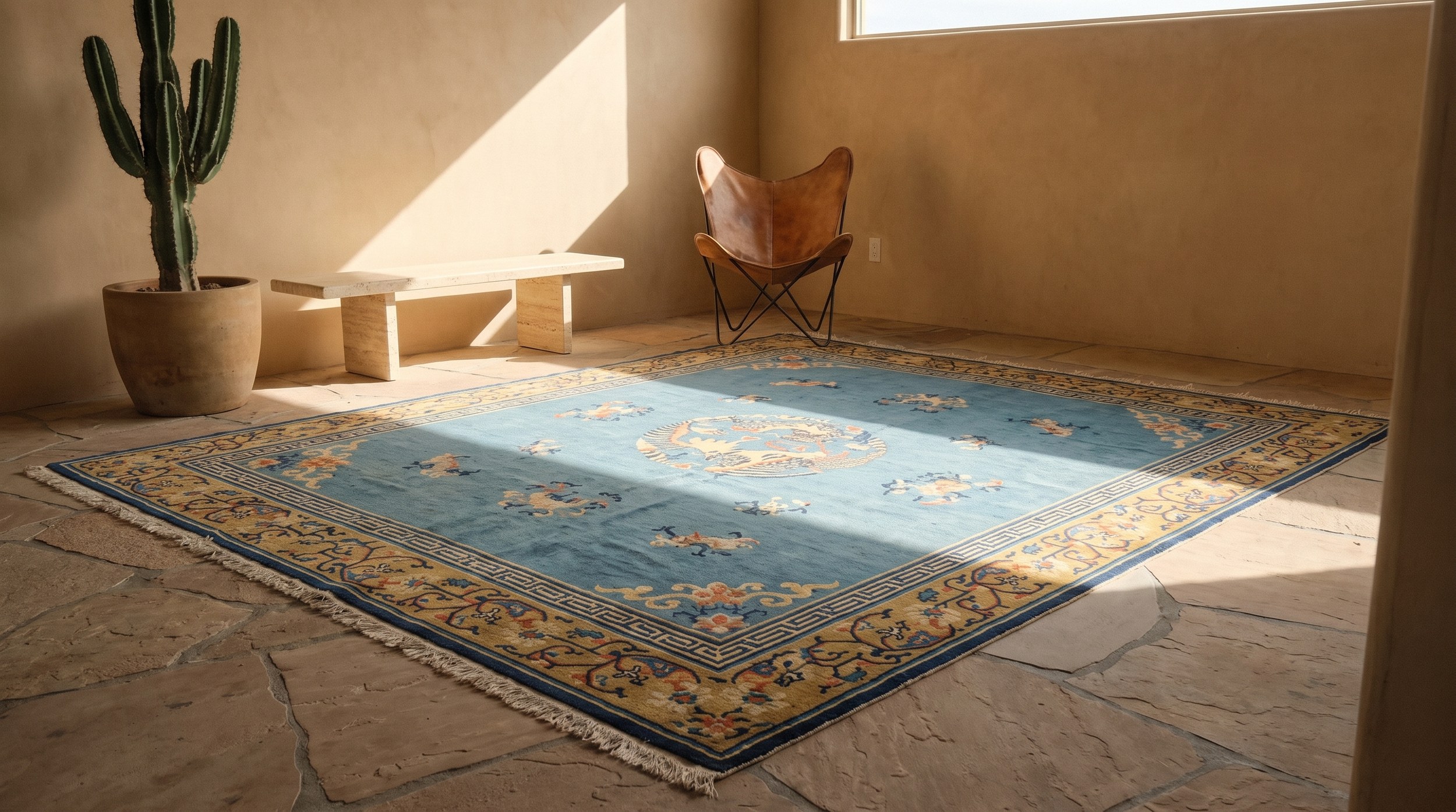
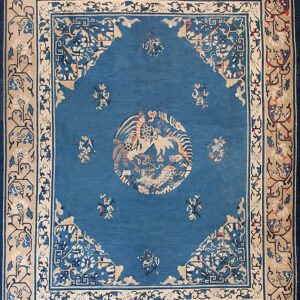
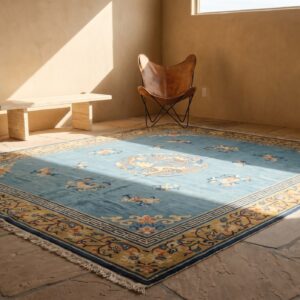
This early 20th-century Chinese Peking rug is a whimsical and sophisticated example of “Narrative Art,” representing the transition from traditional dynastic symbolism to the more decorative aesthetic of the early Republican period. While many antique Peking rugs of this era focused on floral sprays, this room-size specimen is distinguished by its charming Animal and Pictorial motifs, making it a captivating piece for collectors who value textiles with a storytelling quality.
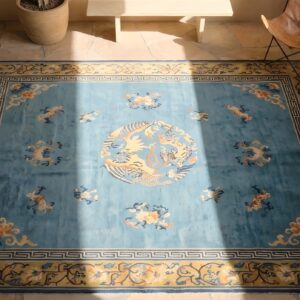
The composition is centered upon a classic pictorial and floral layout. The field is populated with a menagerie of auspicious creatures—likely deer (symbolizing longevity), foo dogs (guardians), or playful birds designs—woven amongst a verdant landscape of blossoming peonies and lotuses. The drawing is quintessentially “Peking”: it balances a scholarly precision with a delightful, almost folk-art playfulness. The placement of the animals within the “open” areas of the field creates a sense of dynamic movement, as if a quiet garden scene has been captured in mid-moment.
The palette is anchored by a rare and tranquil Light Blue and Sky-Blue foundation. In the hierarchy of Peking rugs from China, the “Blue and White” (or “Blue and Ivory”) combination is the most iconic, inspired by the classic aesthetic of Ming Dynasty porcelain. Against this watery, serene stage, the motifs are rendered in darker indigo, soft ivory, and hints of muted gold or apricot. Because this is an antique specimen, the light blue ground exhibits a magnificent “watercolor” abrash (tonal variation). The natural indigo dyes have aged into a soft, matte patina, giving the rug a luminous, ethereal depth that feels both grounded and airy.
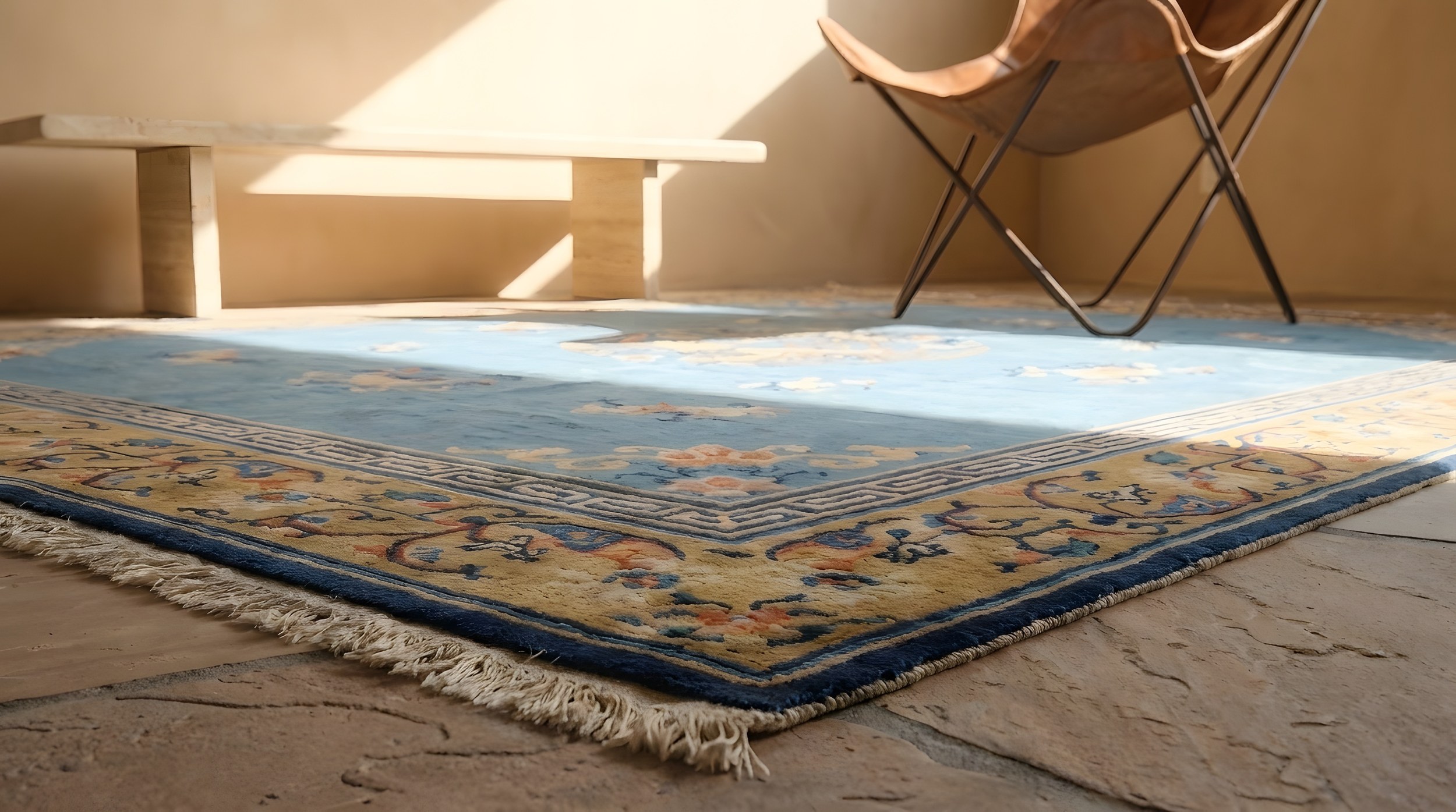
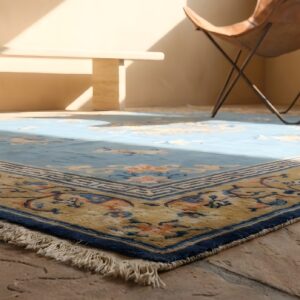
Technically, this Peking area rug from China is prized for its lush, “meatier” pile and substantial, “heavy” handle. The wool, sourced from high-altitude sheep, is exceptionally rich in natural lanolin, resulting in a velvety surface with a subtle, healthy sheen. A defining characteristic of this tradition is the hand-carving or “embossing” technique, where the weaver hand-clipped the wool around the animals and flowers to create a three-dimensional, sculptural effect. This technique makes the figures “pop” against the field, adding a tactile, high-relief quality to the floor.
The borders act as a grand architectural frame, often featuring a “T-fret” or “Meander” (Greek Key) design alongside a secondary floral border to “lock in” the whimsical energy of the central field. To possess this antique blue Peking animal rug is to own a piece of early 20th-century design history. It bridges the gap between the formal traditions of the Forbidden City and the playful elegance of the modern decorative arts—transforming any space into a sanctuary of historical soul and serene, garden-inspired grace.