
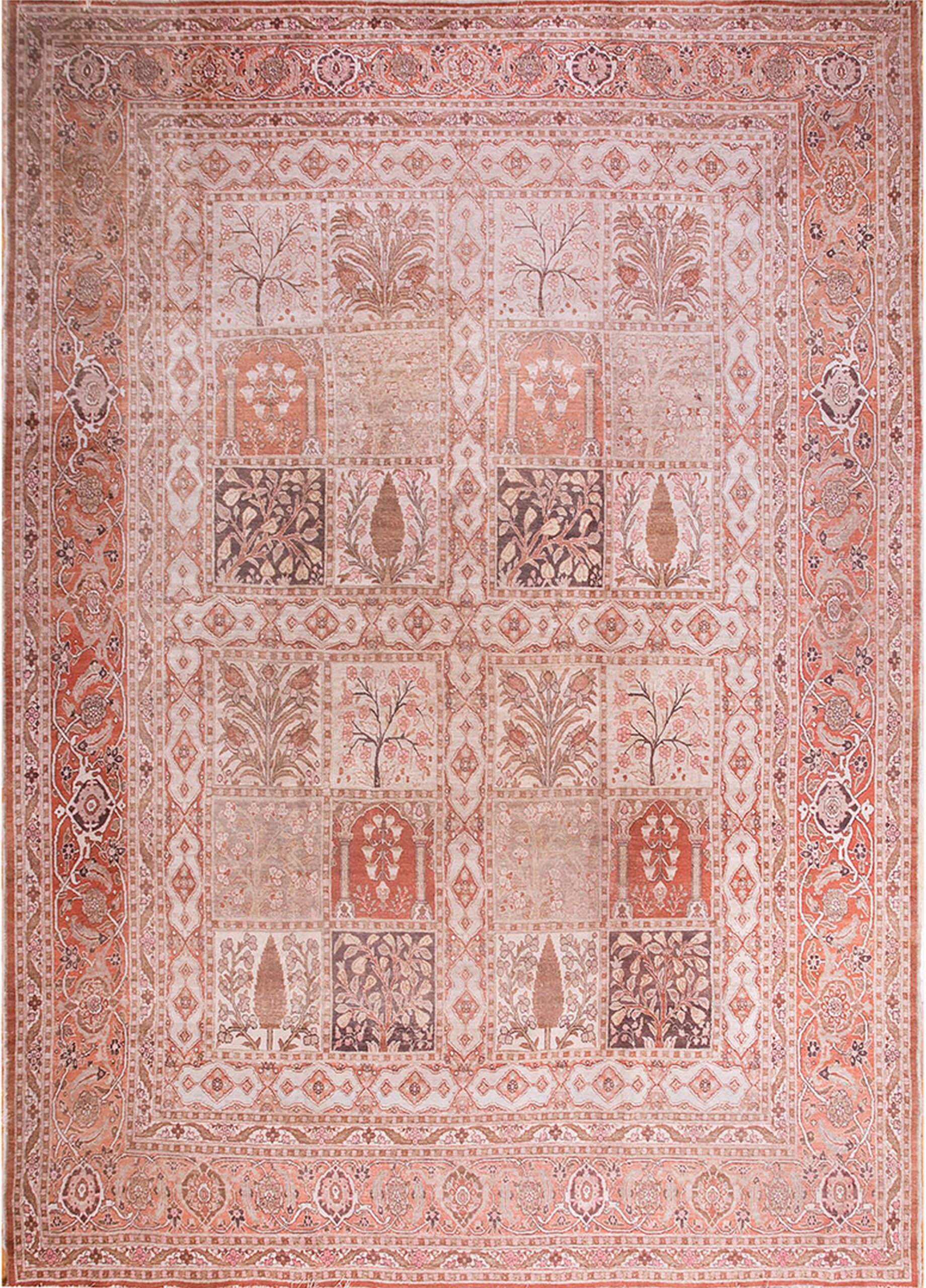
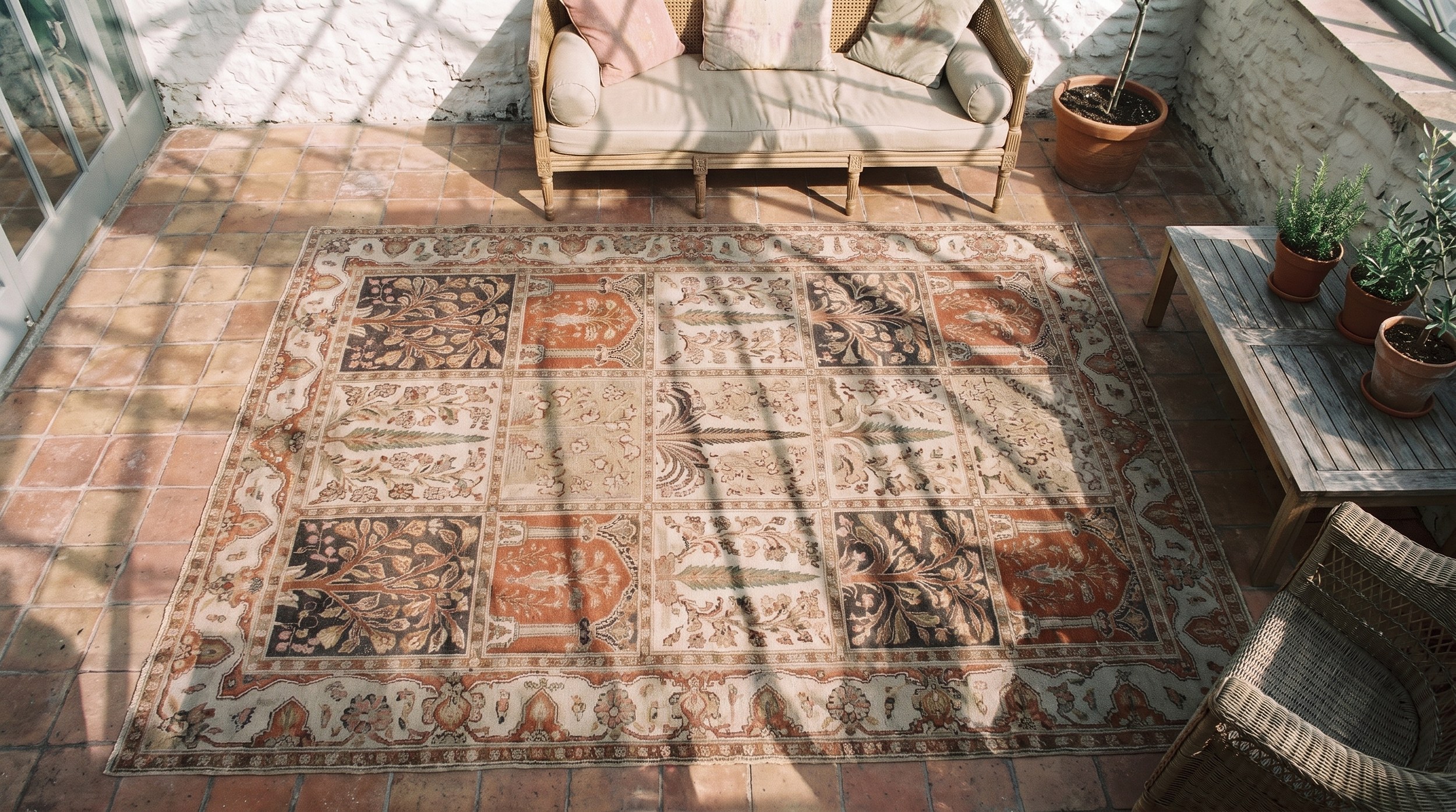
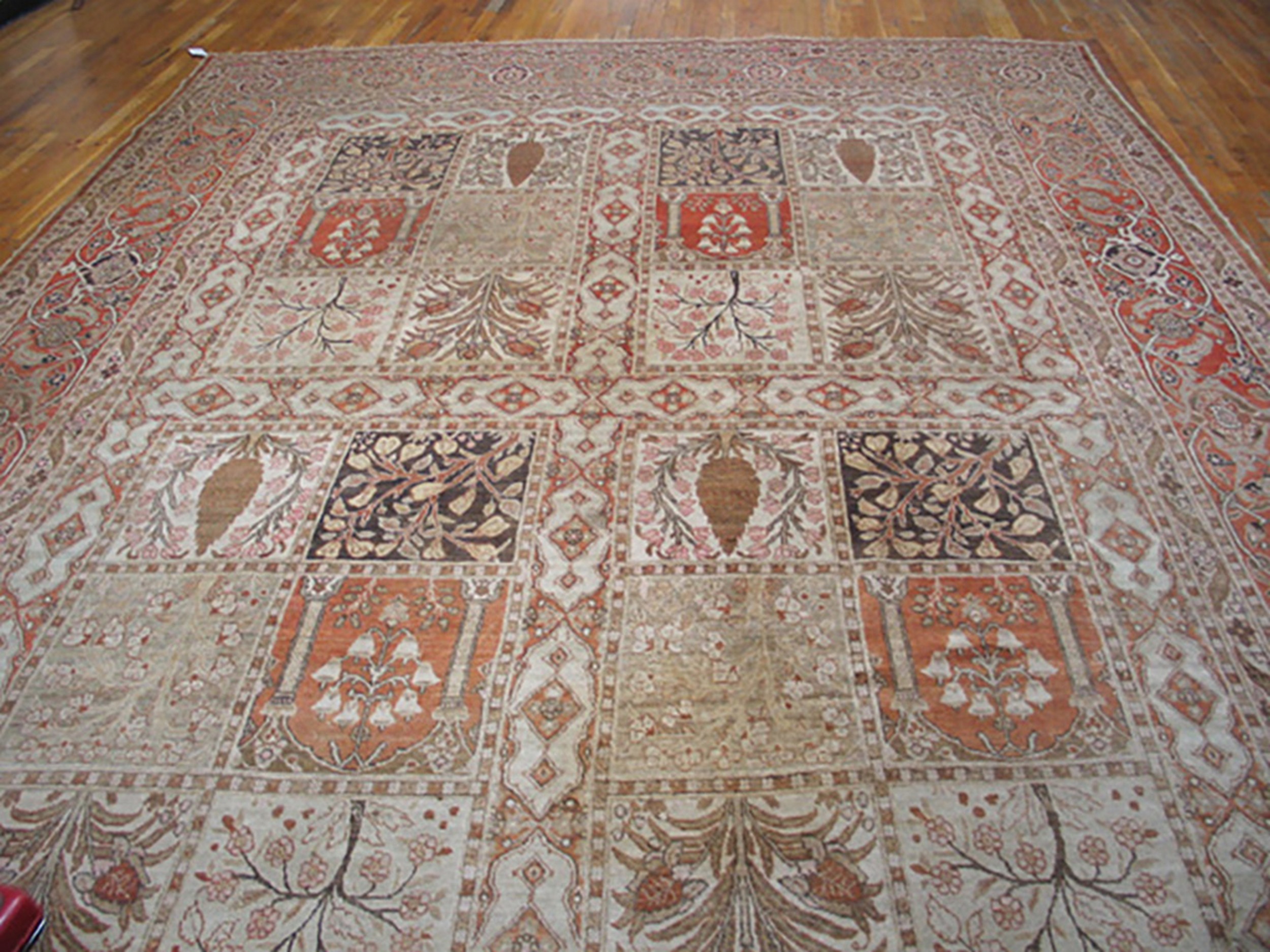
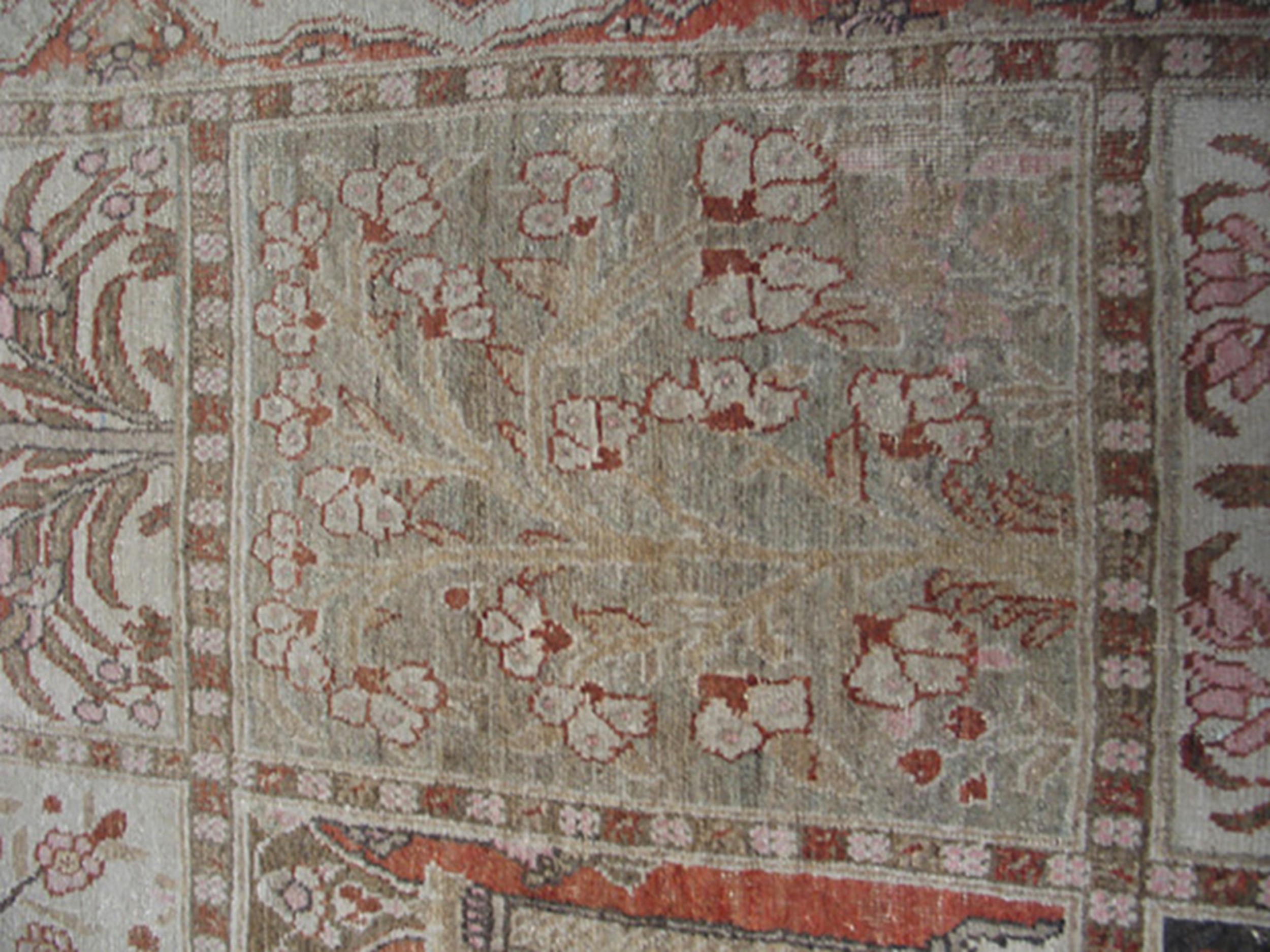
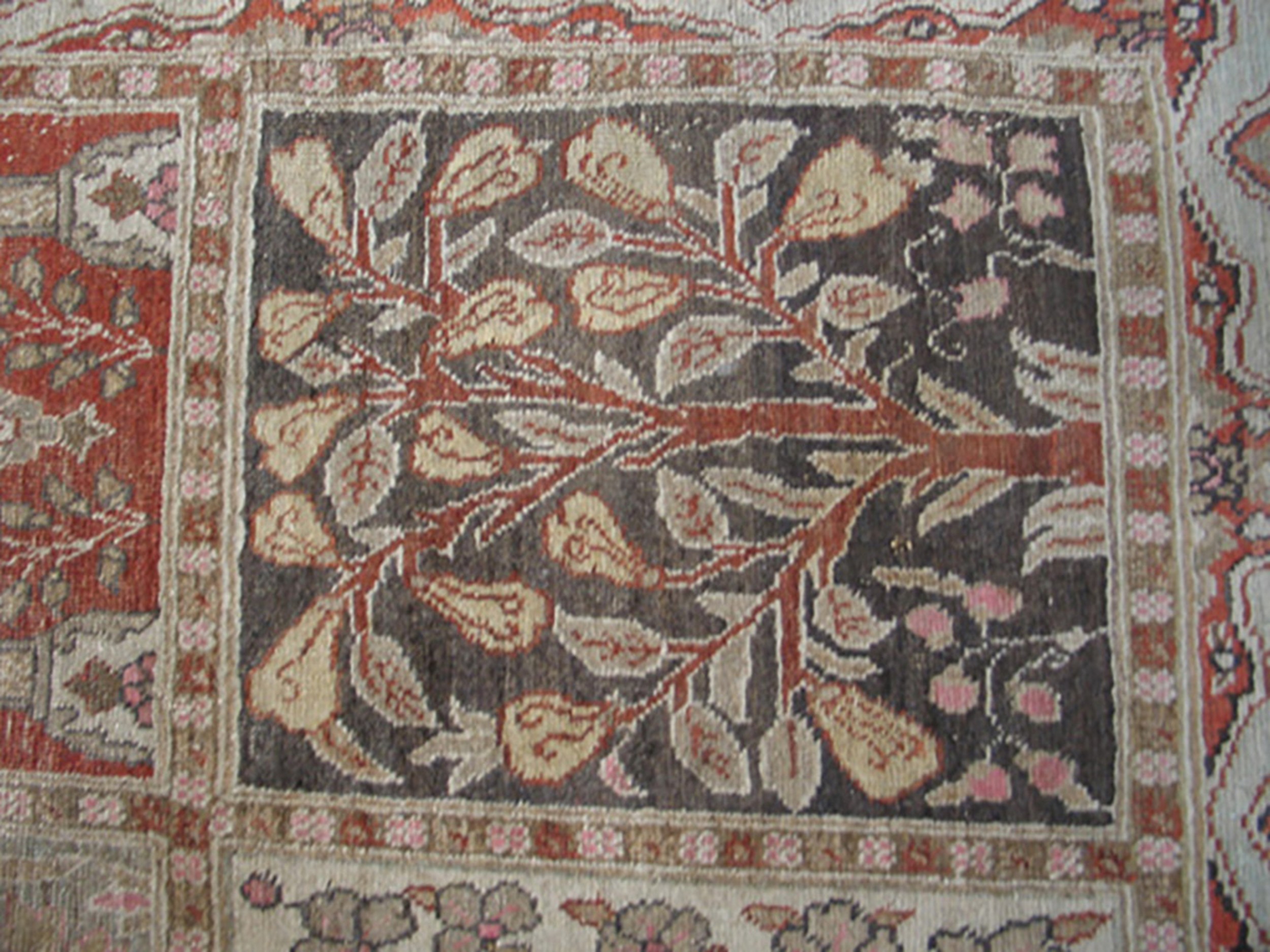
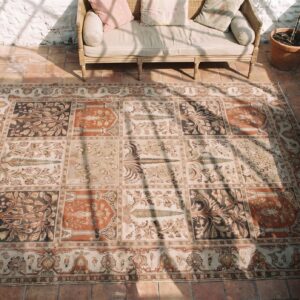
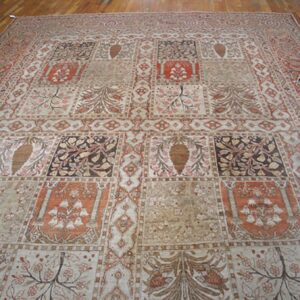
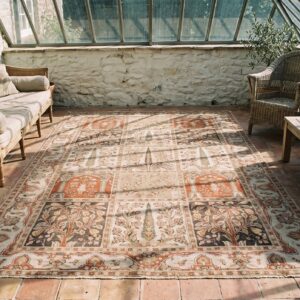
This nineteenth-century fine floral Persian Tabriz carpet is a monumental achievement of urban weaving, representing the peak of the Azerbaijani workshop tradition. The city of Tabriz, located on the ancient Silk Road, has long been the intellectual heart of Persian carpets and design, and this large room-size specimen showcases the city’s ability to translate complex philosophical themes into a grand architectural textile.
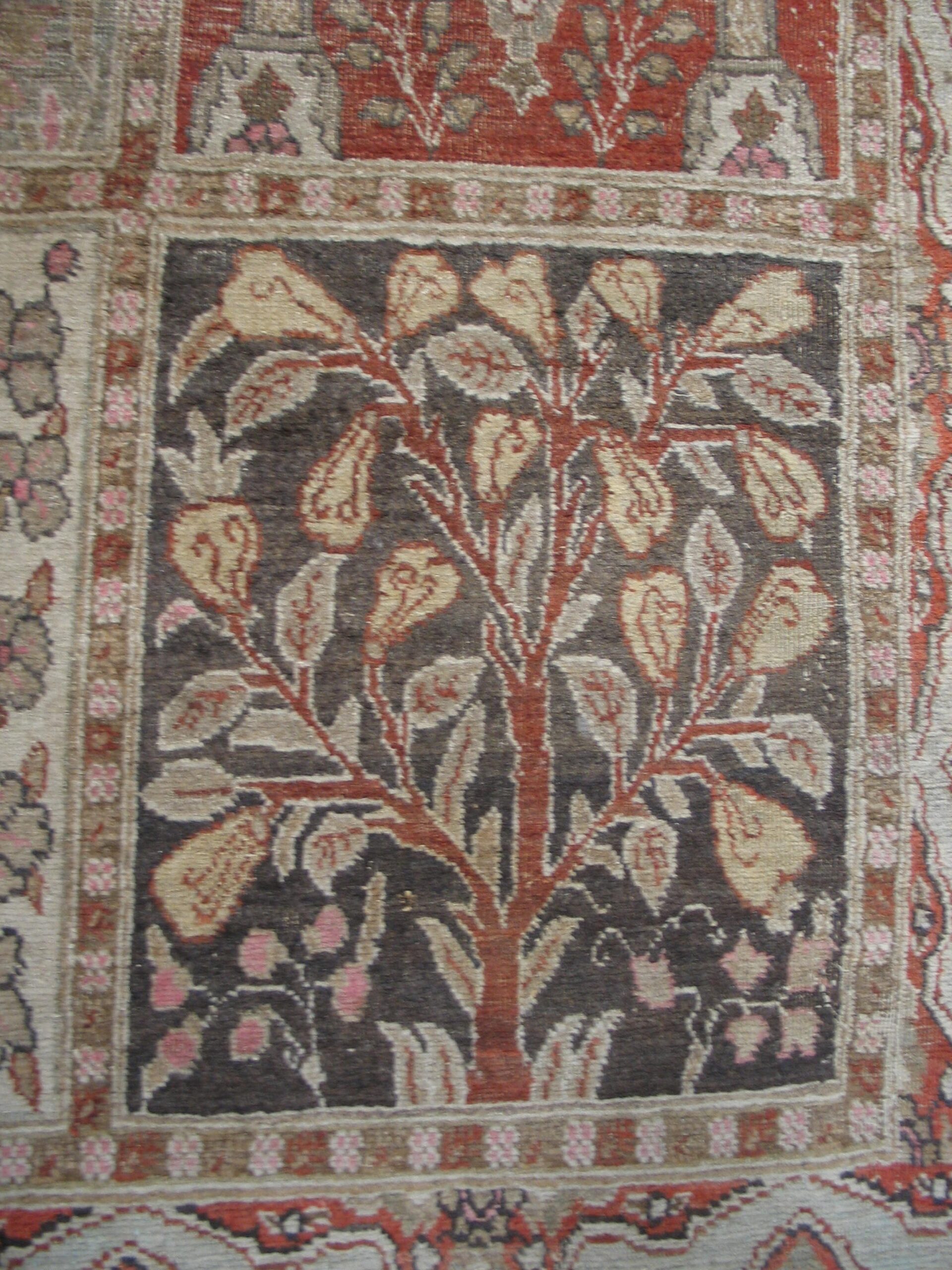
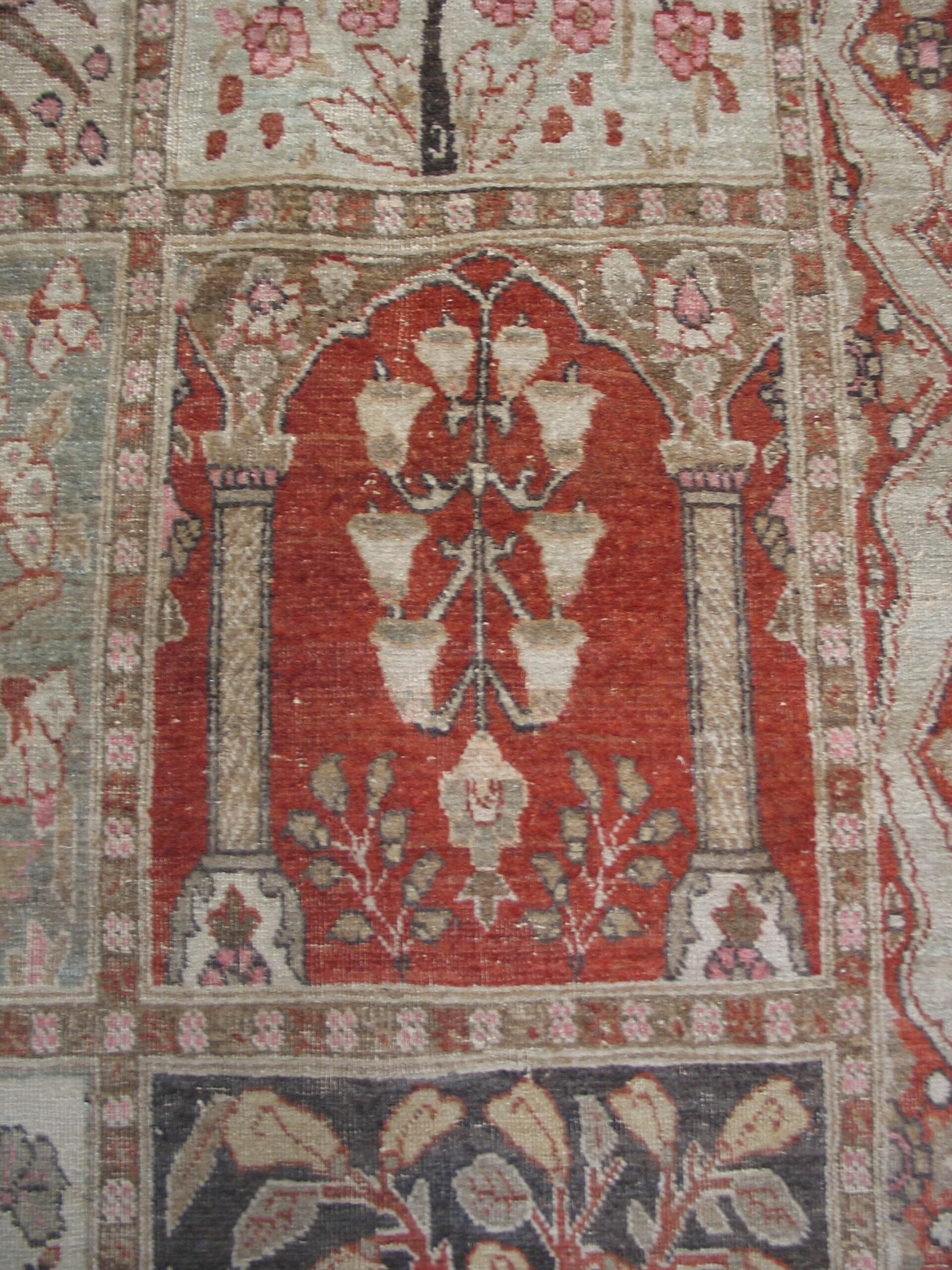
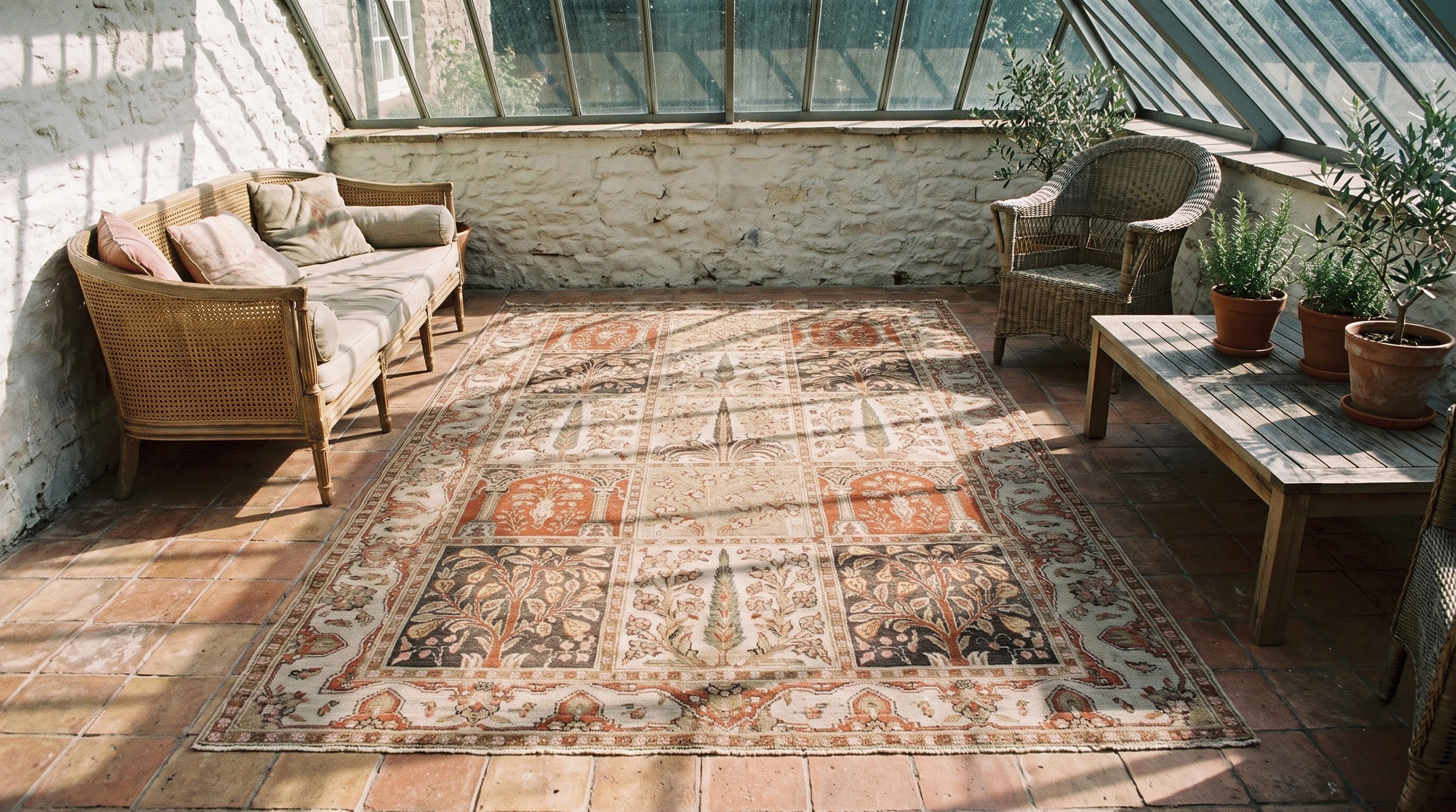
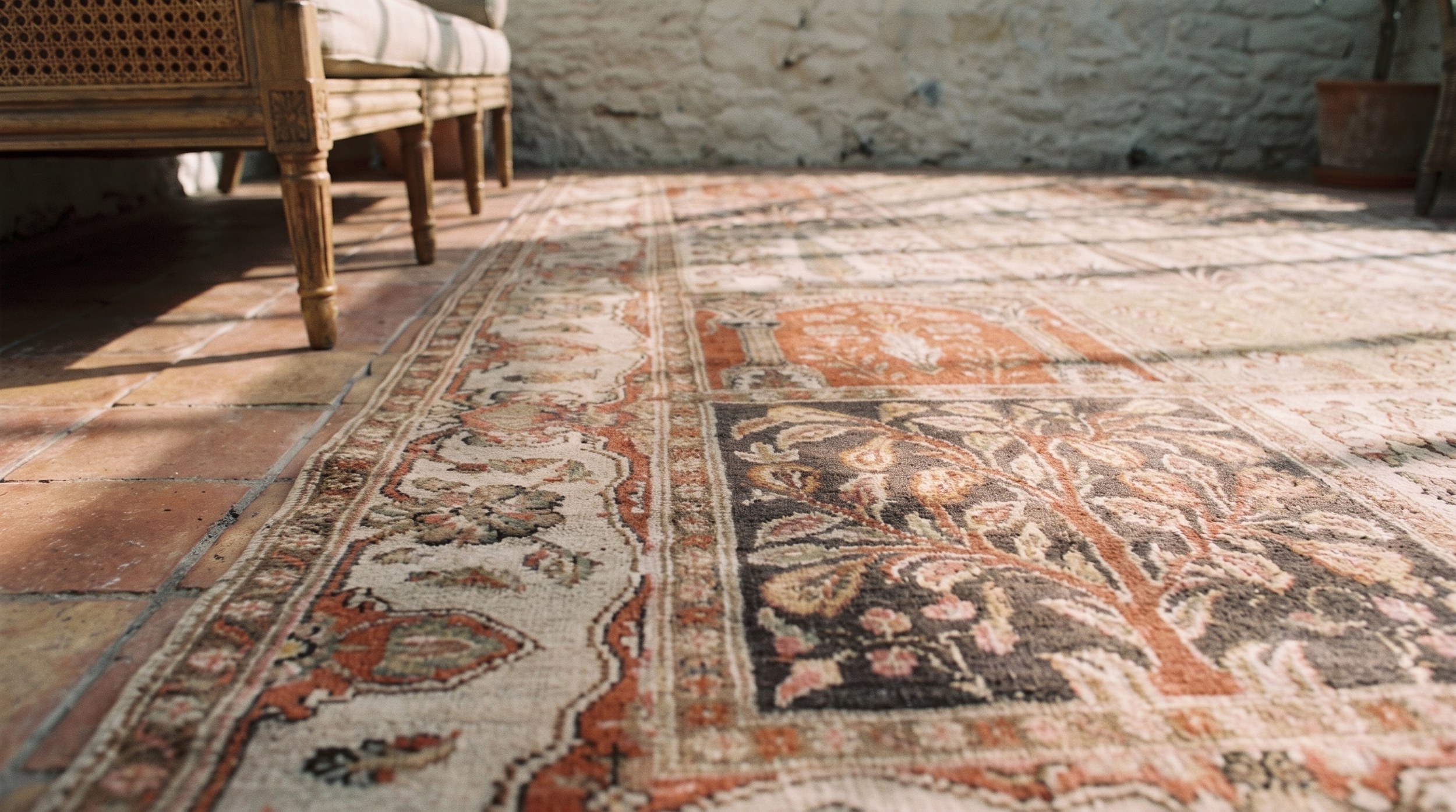
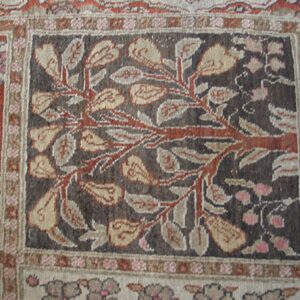
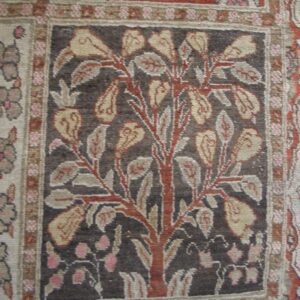
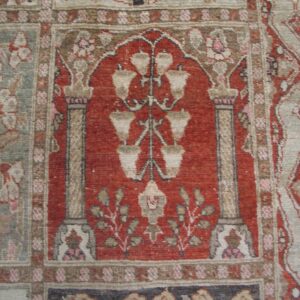
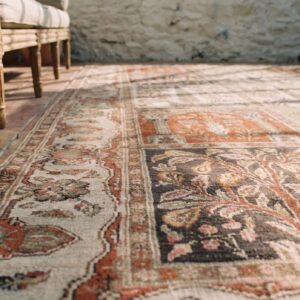
The composition is centered upon a majestic floral Garden and cypress trees design motif, a layout known as the Bagh or “Paradise Garden.” The Cypress tree (Sarv) is the primary protagonist of the field—an ancient symbol of eternal life, endurance, and grace. Here, the trees are rendered with a sophisticated verticality, interspersed with a rhythmic lattice of blossoming fruit trees, weeping willows, and delicate floral sprays. The drawing is remarkably disciplined and “High-Art,” characterized by the calligraphic precision that defines the finest Tabriz master-workshops.
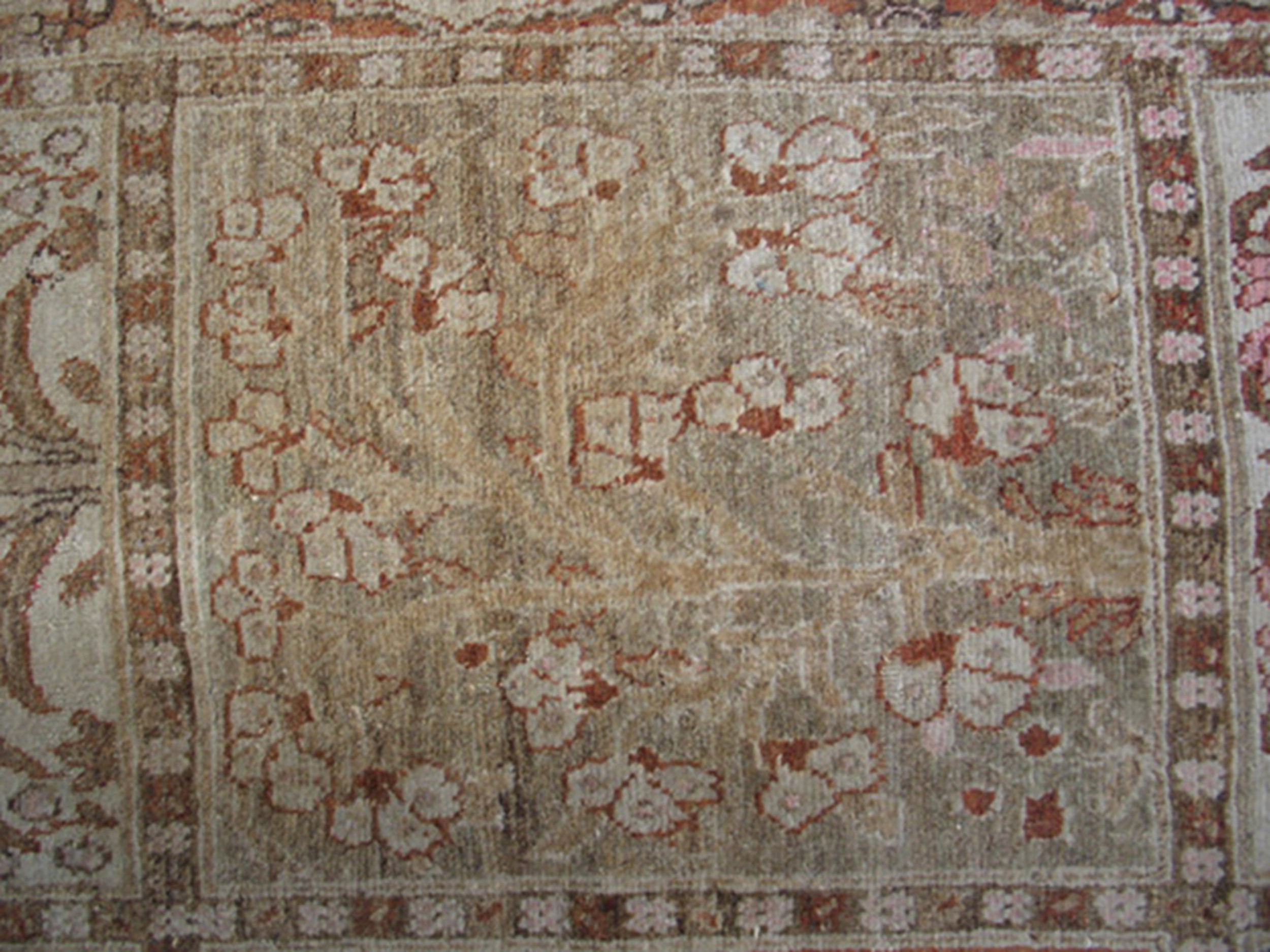
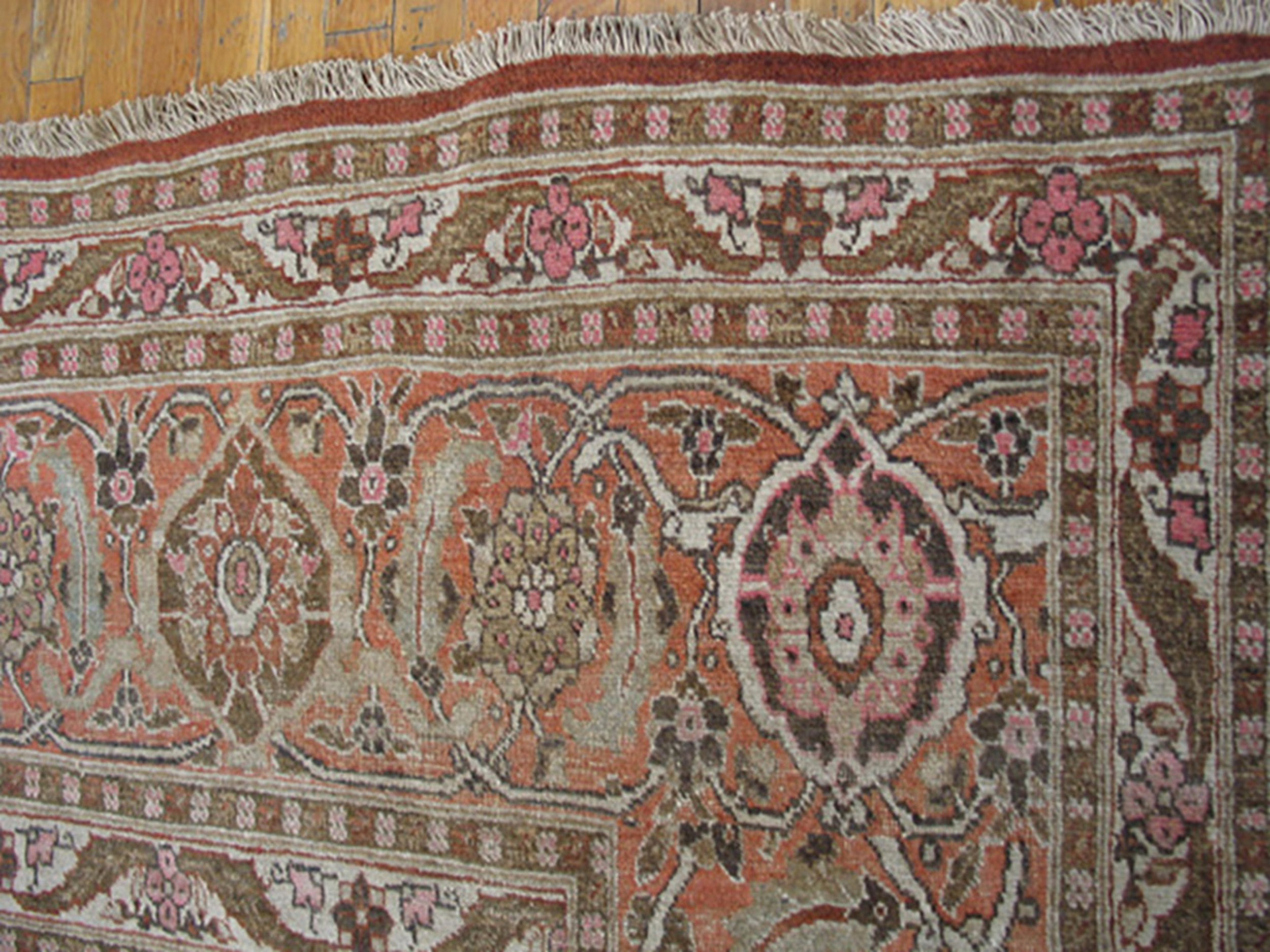
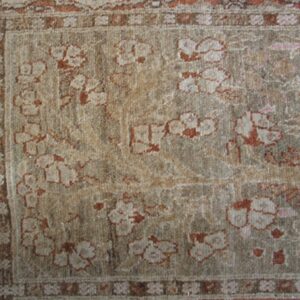
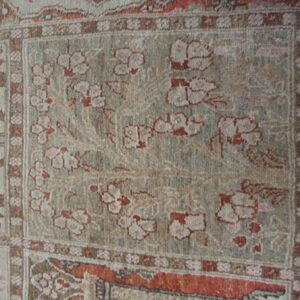
The palette is anchored by a sophisticated and varied Natural color theory. The foundation often features a rich terracotta, midnight indigo, or a luminous ivory, providing a high-contrast stage for the botanical narrative. Because this is an antique specimen, the colors possess a magnificent tonal depth and “abrash.” The natural vegetable dyes—derived from madder root, pomegranate skins, and indigo—have oxidized over a century to create a “painterly” patina. This results in a soft, watercolor-like resonance where the greens have mellowed to a sage-moss and the reds have taken on a sun-burnished, historical glow.
Technically, this Tabriz is prized for its extraordinarily fine weave and substantial, “leathery” handle. The weavers of Tabriz are famous for their use of the “hook” (Gureh) to tie symmetrical knots, allowing for a level of detail and structural integrity that is unmatched in other regions. The wool, often a high-grade “Kurk” or neck-wool, is rich in natural lanolin, resulting in a pile that is shorn close to the foundation to highlight the intricate drawing while remaining incredibly durable and soft to the touch.
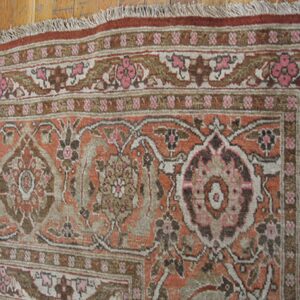
The borders act as a grand architectural frame, often featuring a “Shah Abbas” or “Herati” design to “lock in” the vibrant energy of the central garden. To possess this antique garden design carpet is to own a monument to Persian horticultural philosophy. It bridges the gap between the formal symmetry of the court and the soulful beauty of the natural world—transforming any grand space into a sanctuary of historical gravity and serene, botanical brilliance.