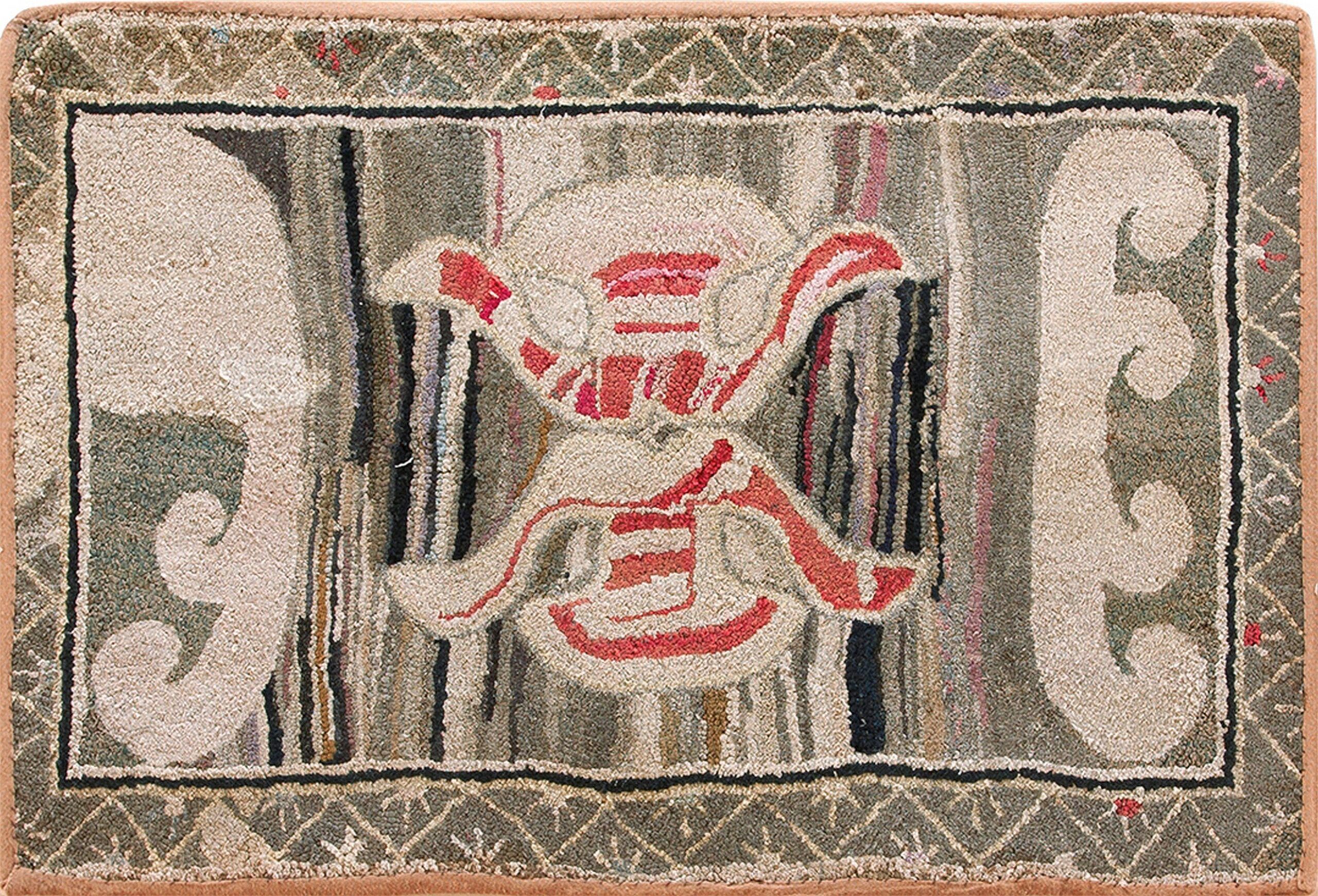
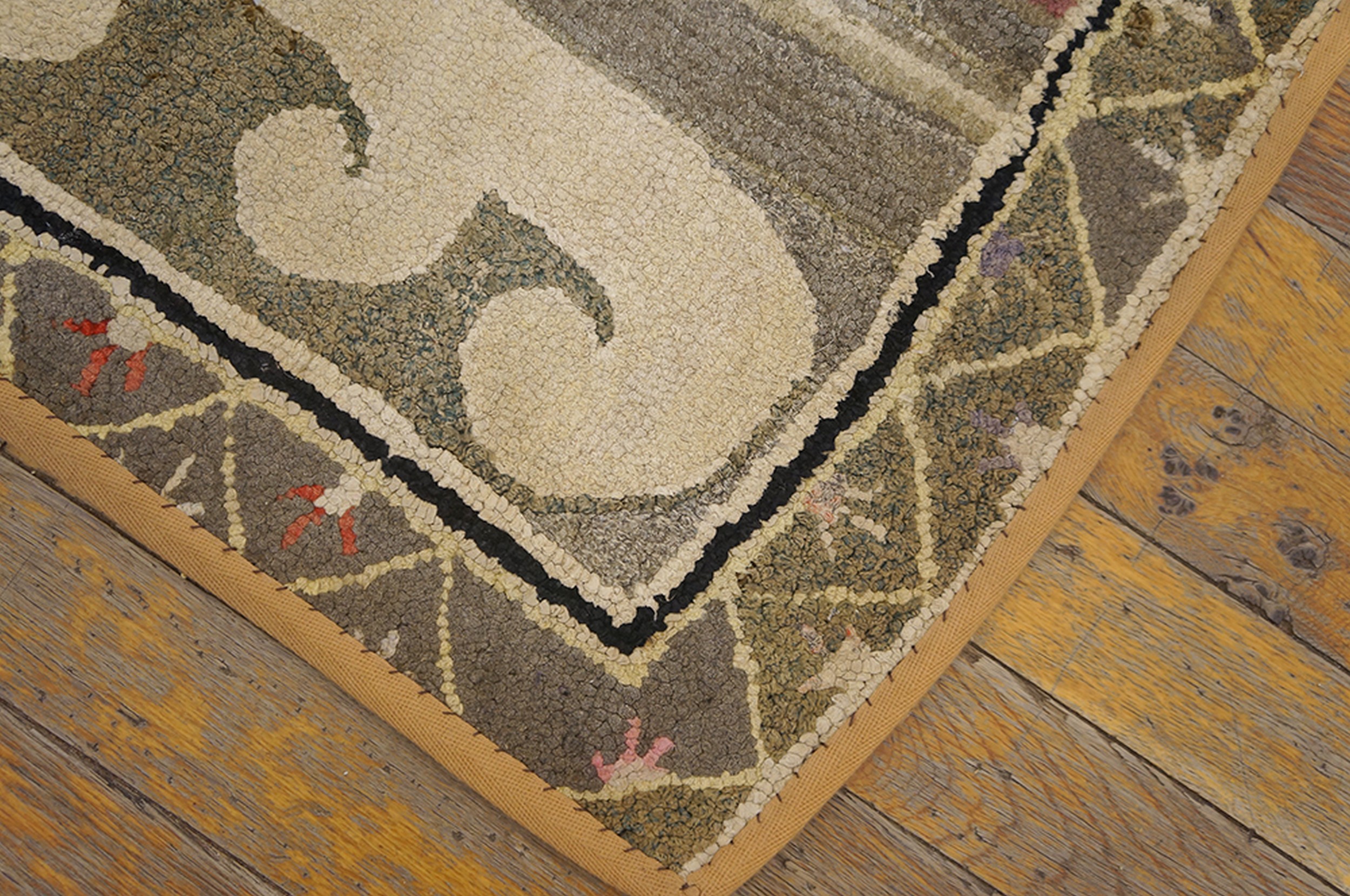
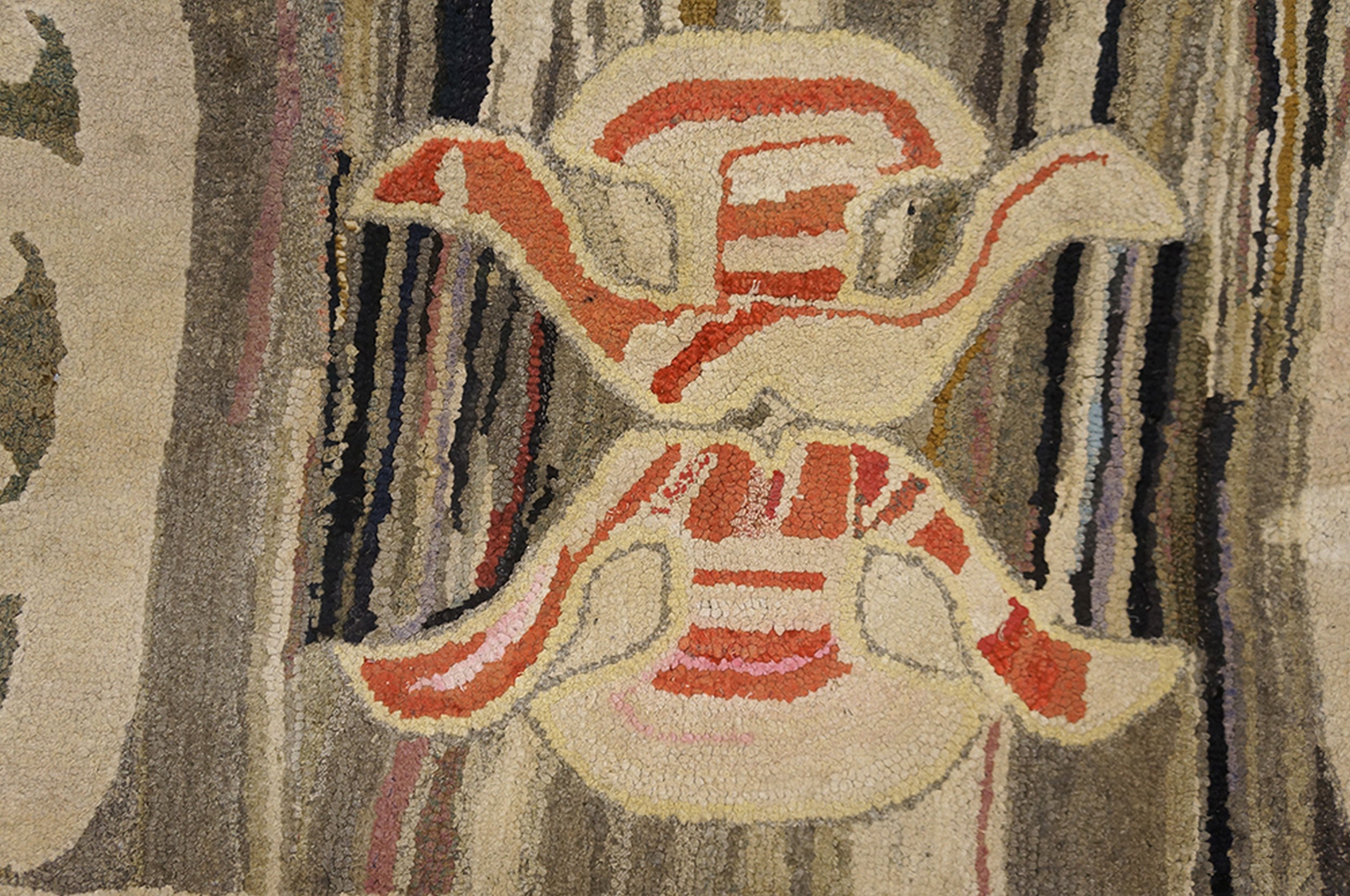
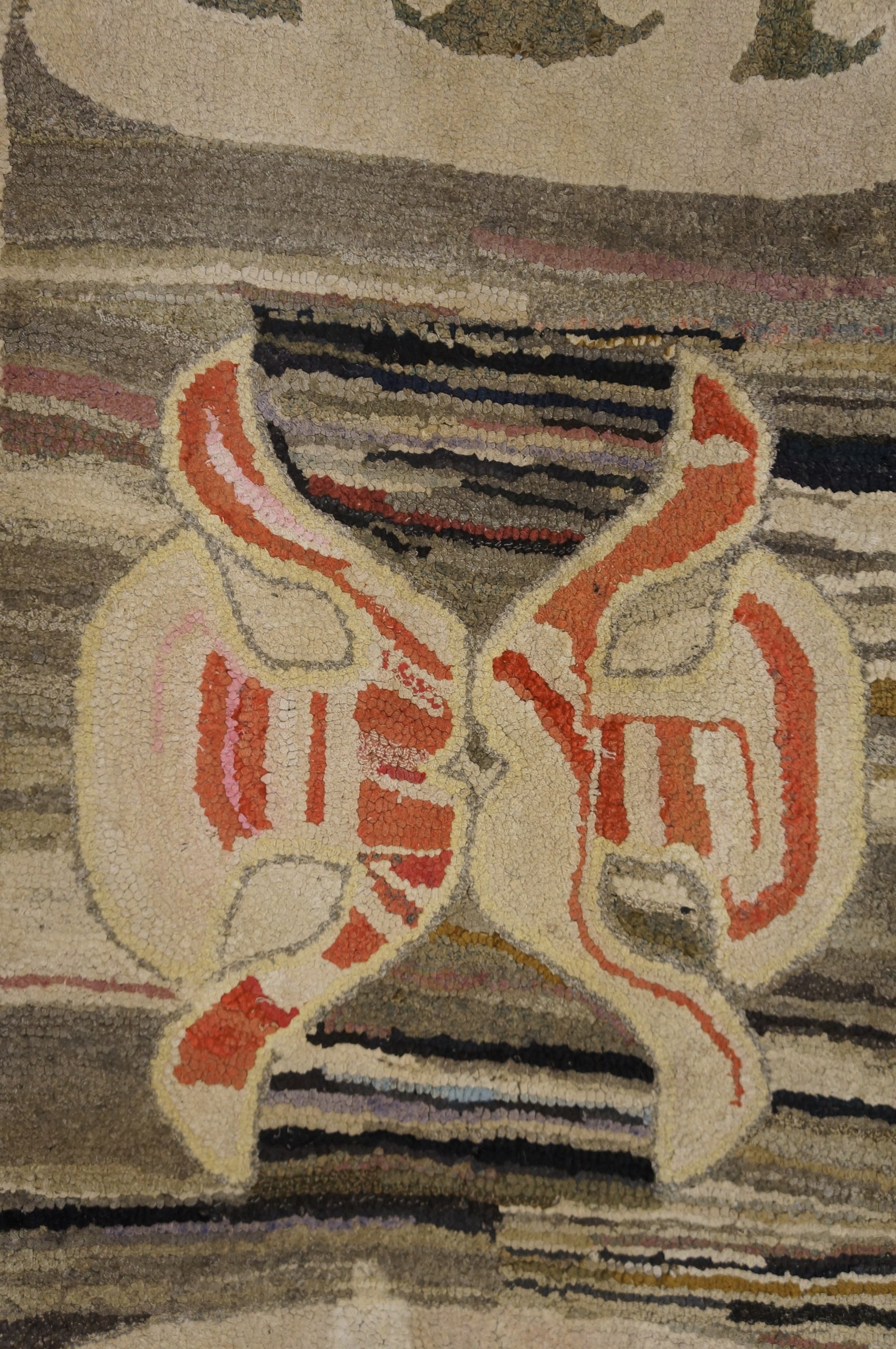
This early 20th-century American Hooked rug is a sophisticated example of “Textile Fine Art,” bridging the gap between utilitarian domestic craft and modern abstract expressionism. While many hooked American folk art rugs from this era utilized floral or pictorial themes, this particular specimen is distinguished by its highly artistic, painterly approach and its nuanced, contemporary palette, making it a “connoisseur’s piece” for collectors of Americana.
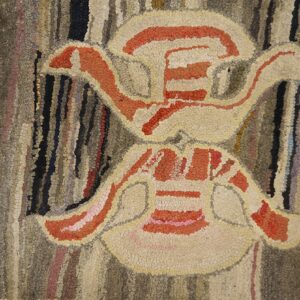
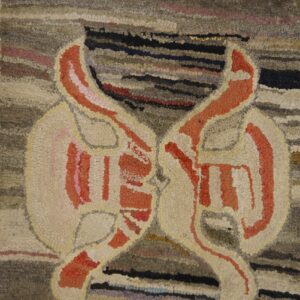
The composition is centered upon an Artistic Folk Art design, likely featuring abstract botanical elements or soft, flowing geometric shapes that feel “sketched” rather than rigidly plotted. The drawing possesses an intentional “naïve” or primitive quality, where the slight irregularities in the lines reveal the hand of the maker. This organic movement allows the design to float within the field, creating a sense of “visual poetry” that mirrors the American Impressionist movement of the late 19th and early 20th centuries.
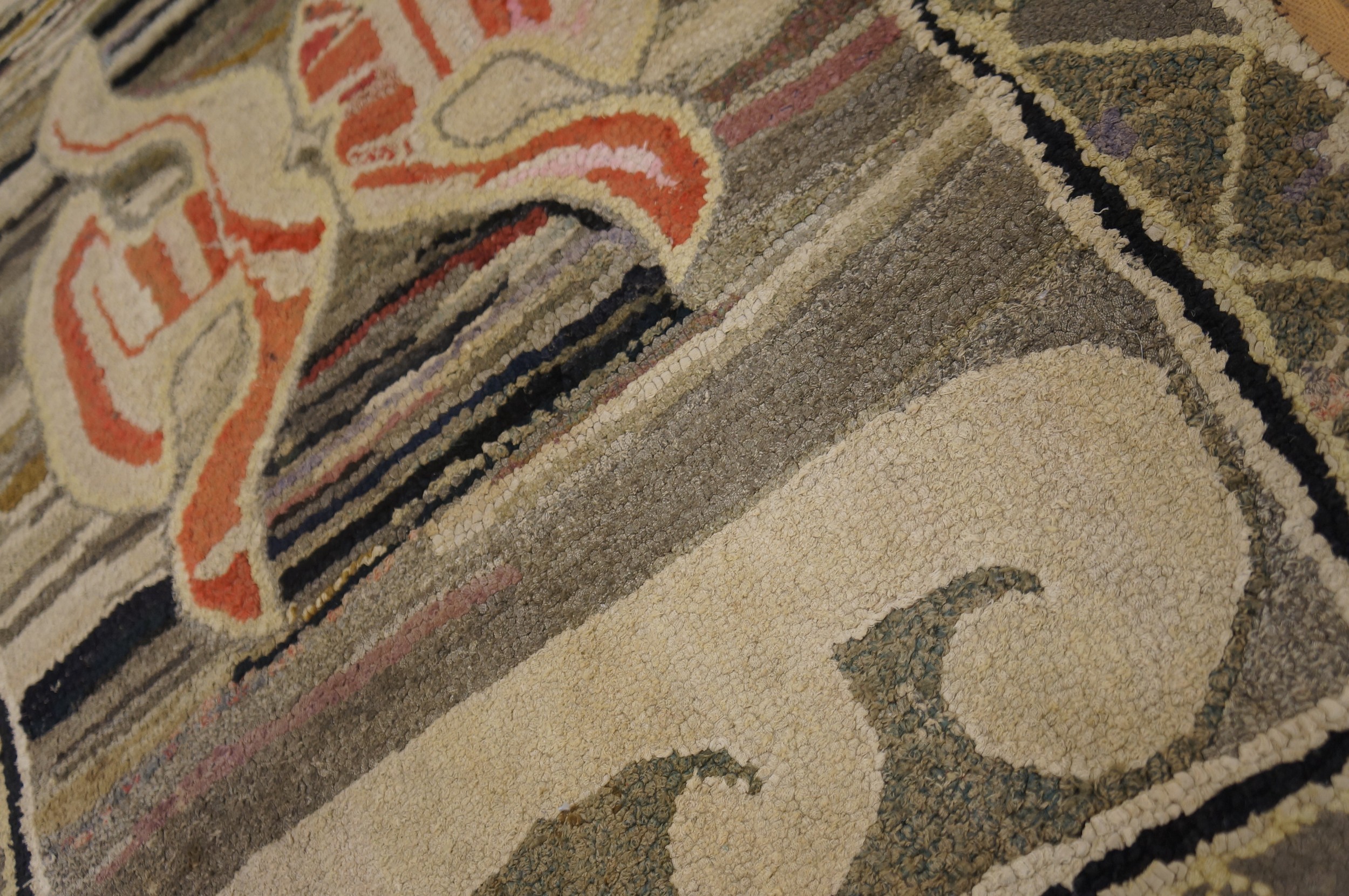
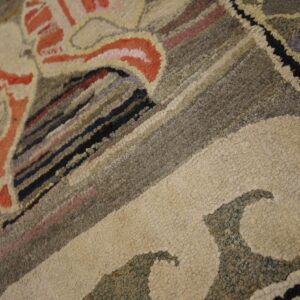
The palette is defined by its rare and elegant Gray foundation. In the world of antique American rugs, a cool gray field is significantly less common than the typical black or cream grounds. This smoky, neutral stage allows the secondary accents—often rendered in muted teal, dusty coral, ochre, and charcoal—to emerge with a subtle, glowing intensity. Because the rug was created using hand-cut strips of recycled wool and flannel, it exhibits a magnificent “marbled” variegation (abrash). This textural shifting of gray tones gives the rug a “salt-and-pepper” depth, preventing the solid areas from appearing flat.
Technically, this hooked rug is prized for its tight, nubby loop-pile and its substantial “meaty” handle. Unlike woven carpets, the hooking process—pulling loops through a burlap or linen backing—creates a three-dimensional surface that catches the light differently from every angle. Over the last century, the wool fibers have softened and “felted” slightly, resulting in a velvety, suede-like patina that is incredibly soft to the touch and visually “broken-in.”
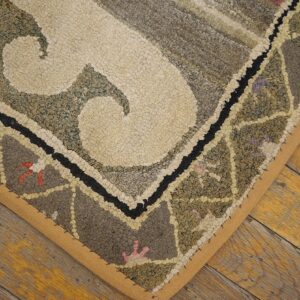
The borders act as a soft architectural frame, often echoing the dominant colors of the central motifs to “lock in” the composition. The result is a textile that feels like a “painting for the floor.” To possess this Antique Gray American Hooked rug is to own a monument to the resourcefulness and artistic soul of the New World—a work that brings a sense of historical gravity and quiet, modern sophistication to any interior sanctuary.