
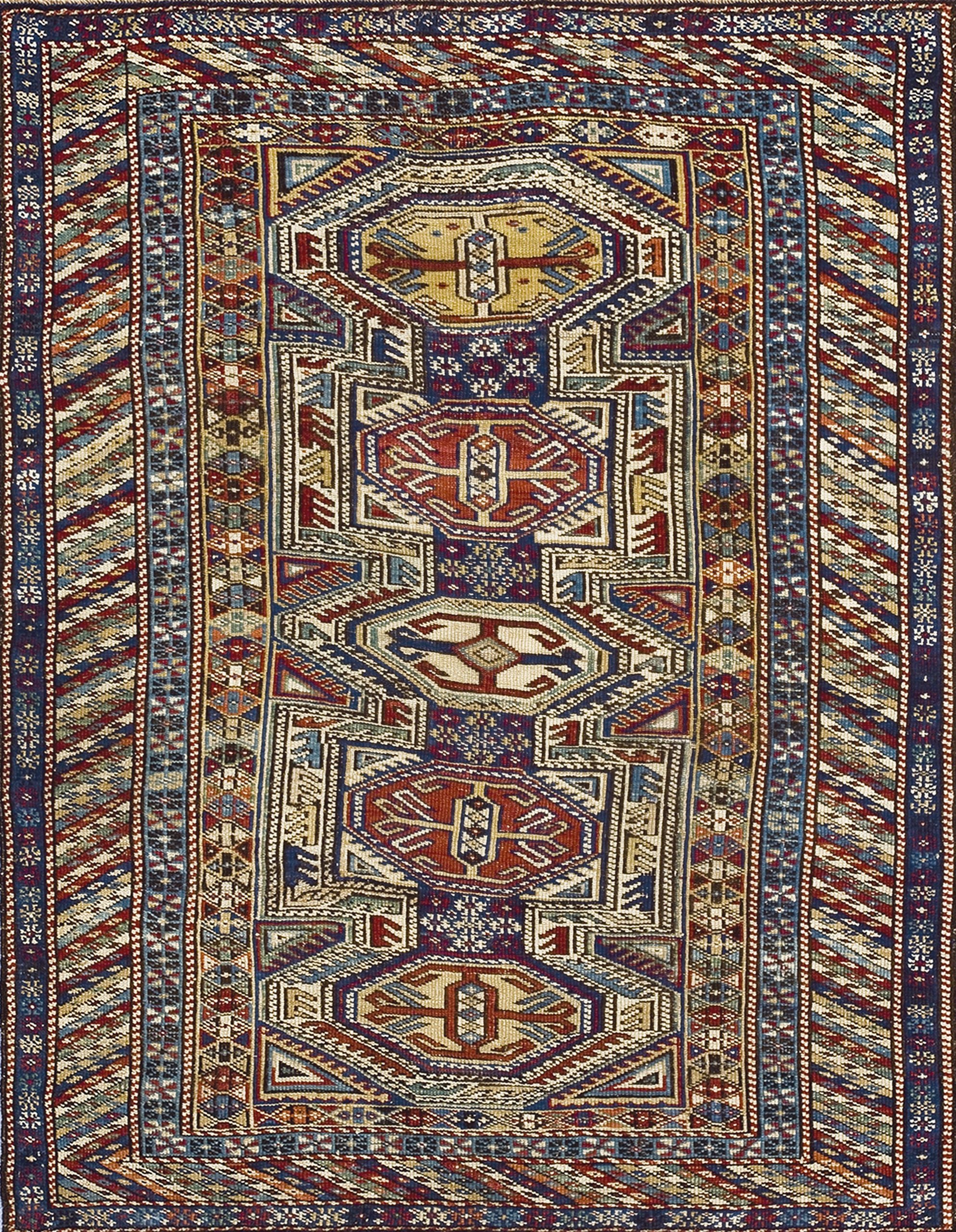
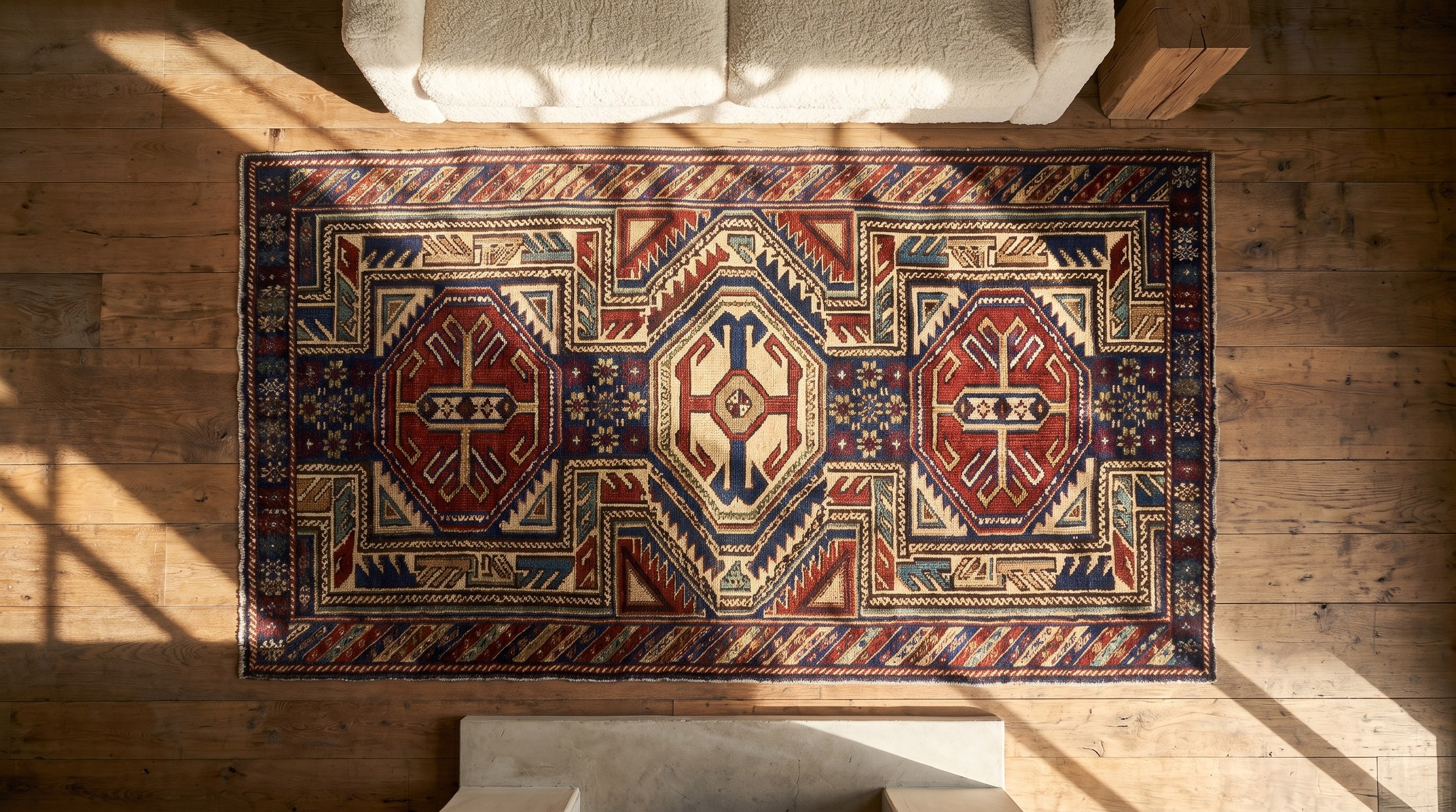
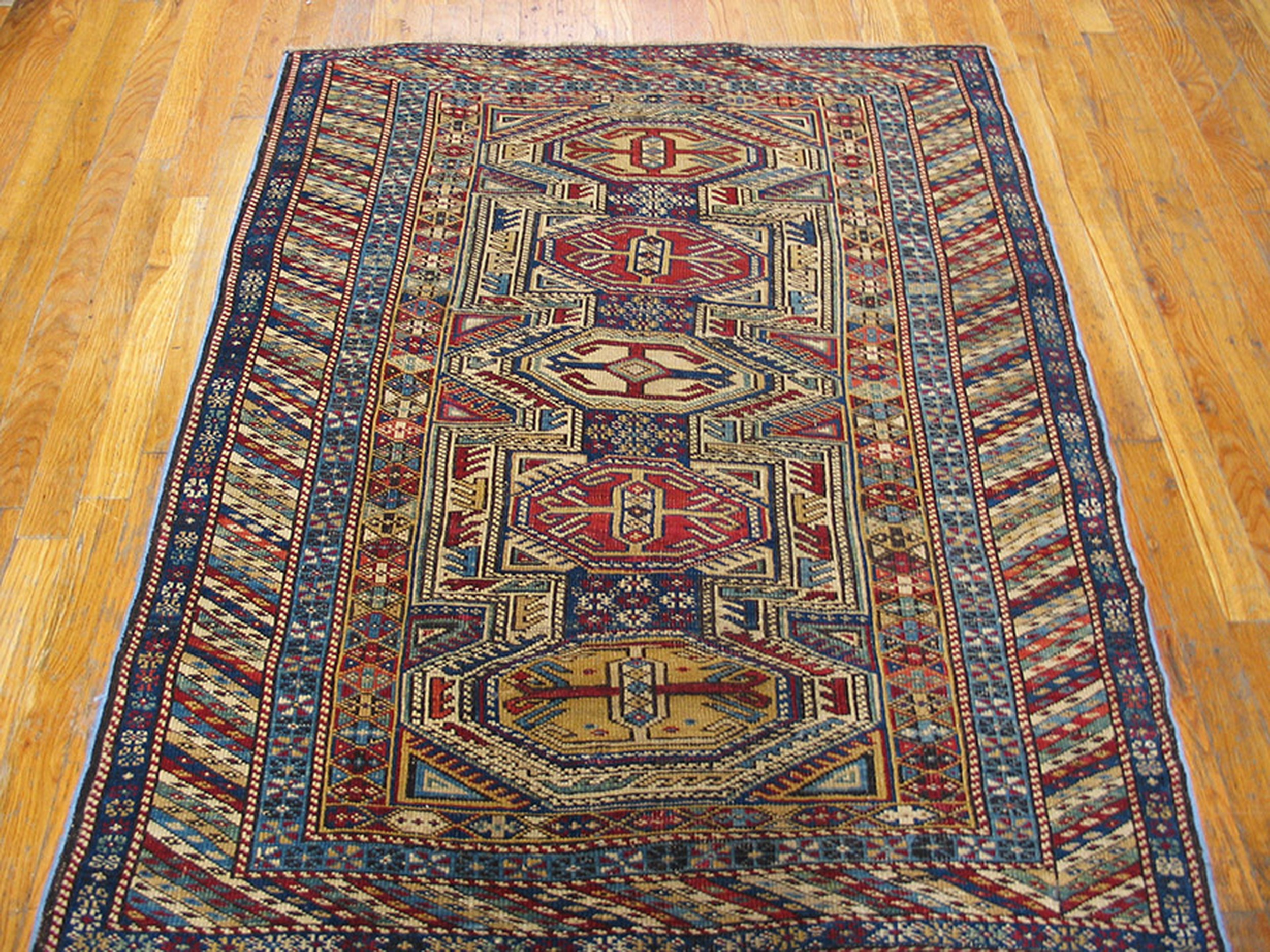
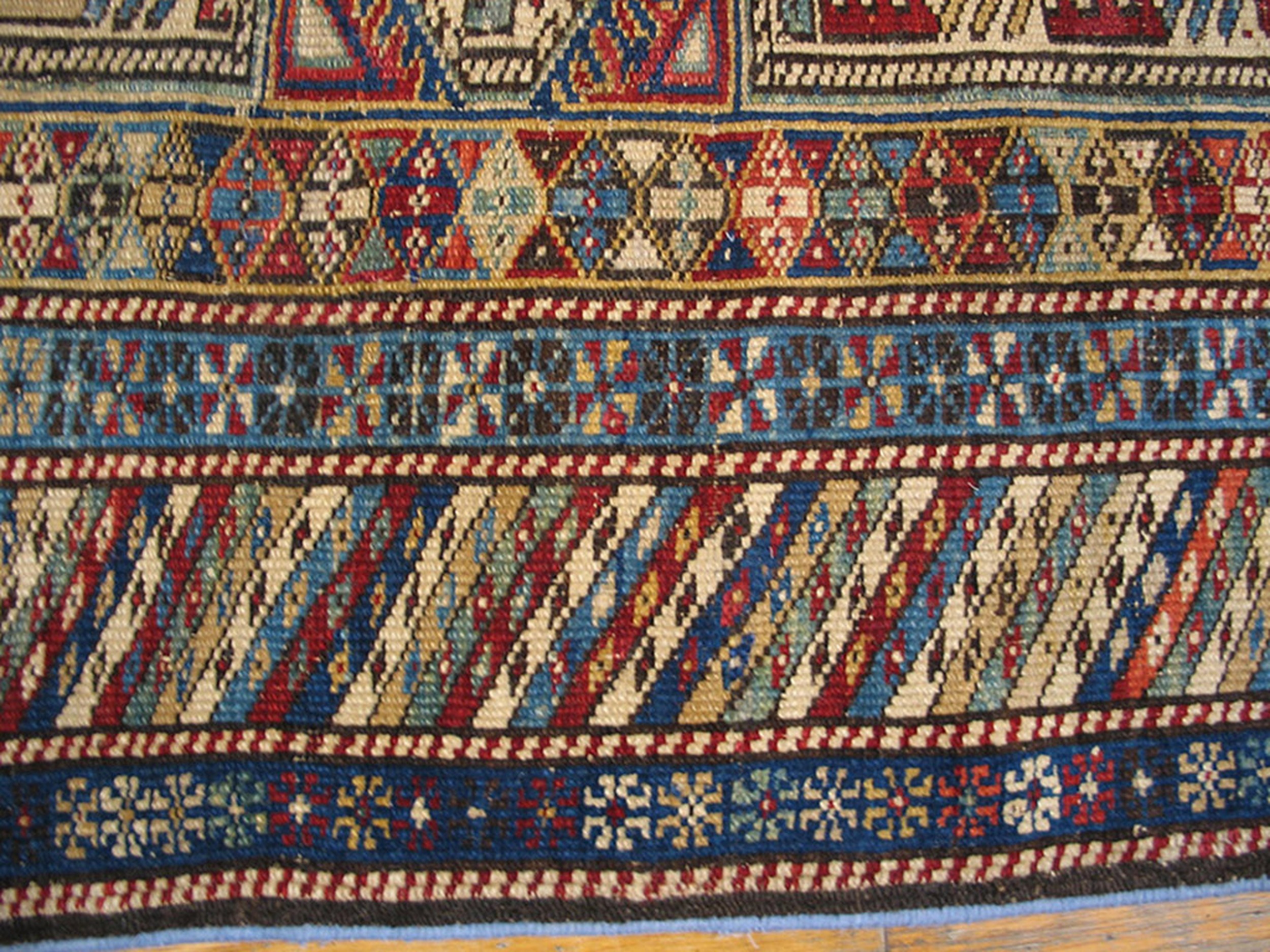
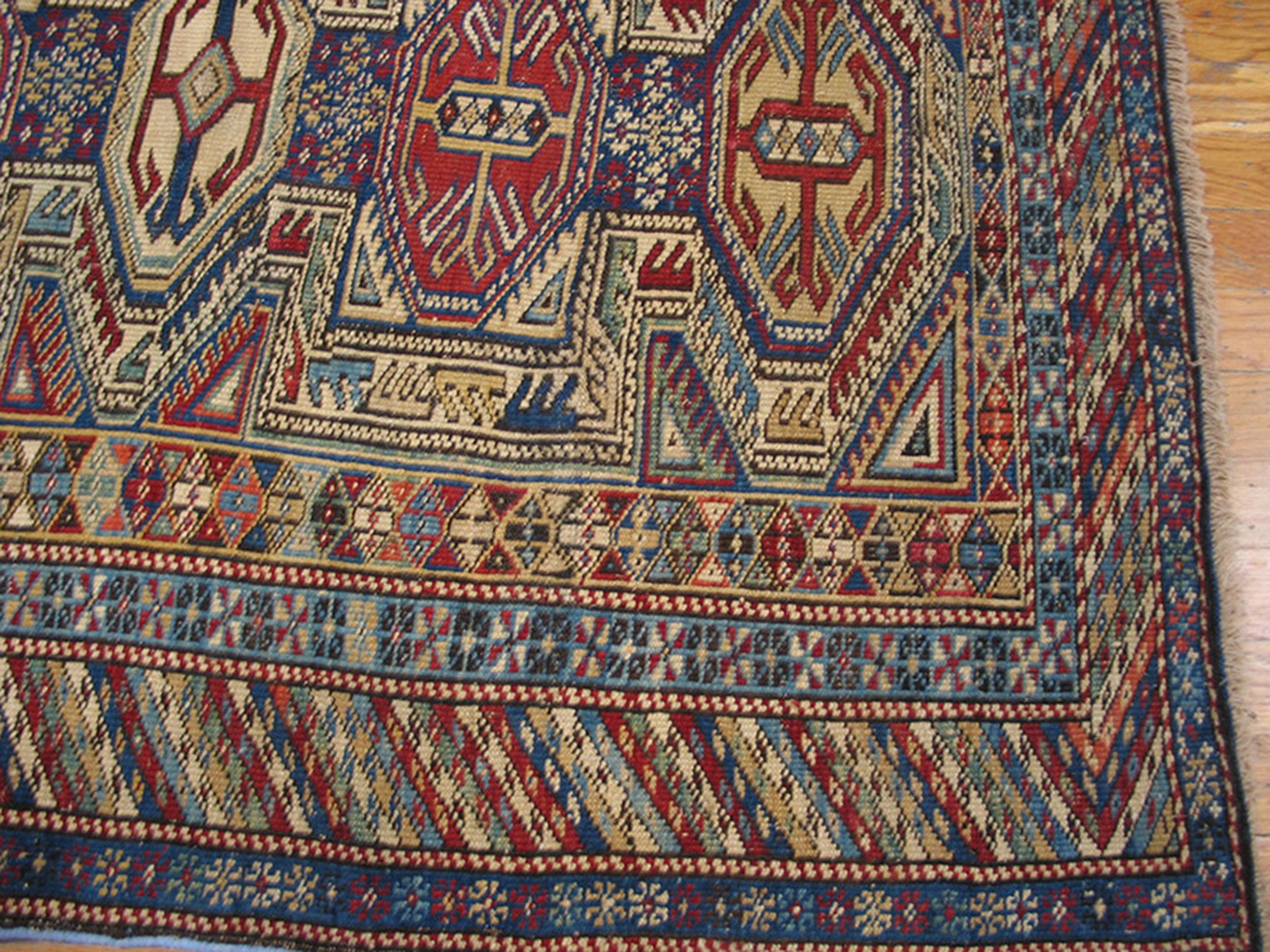
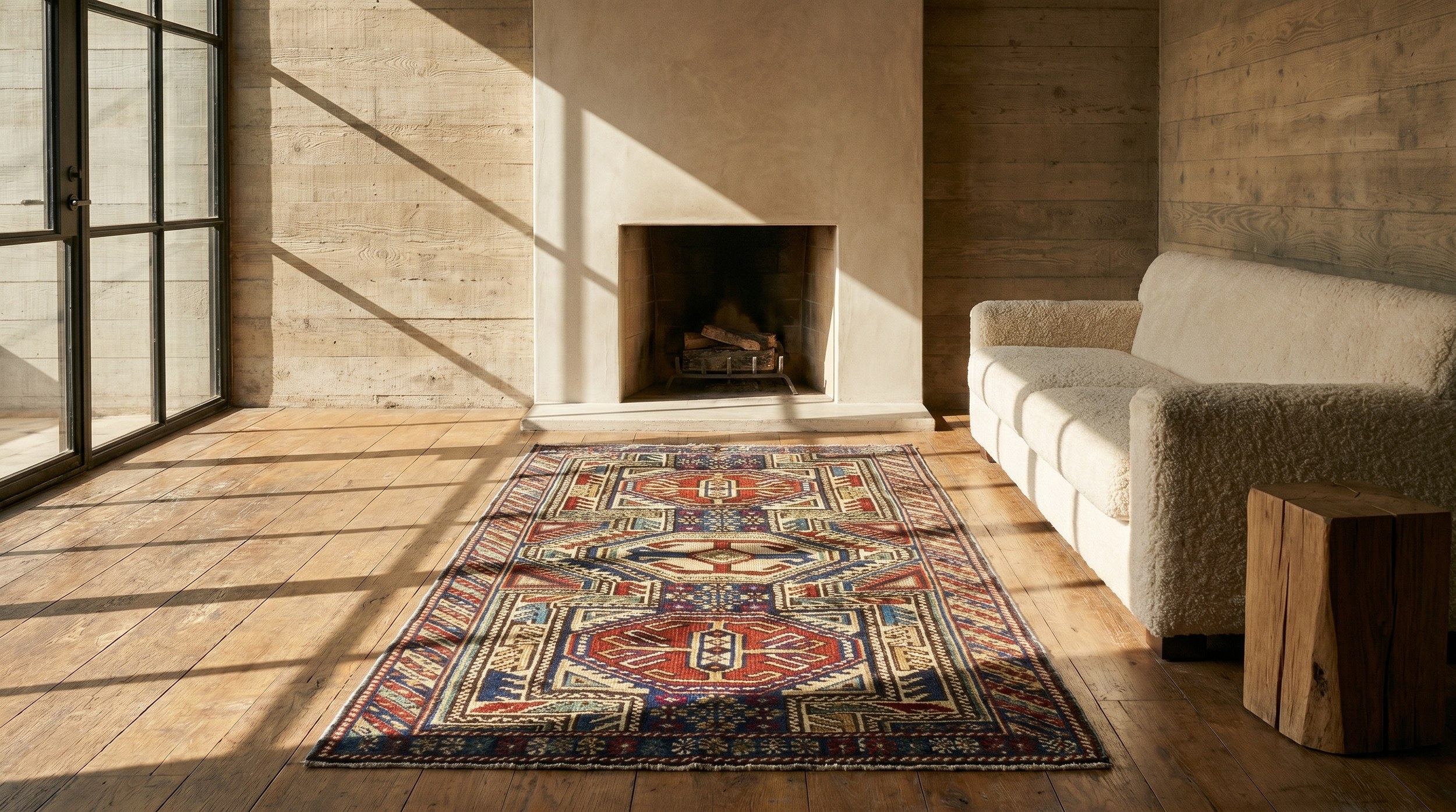
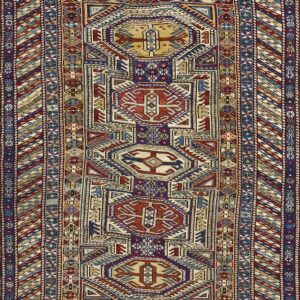
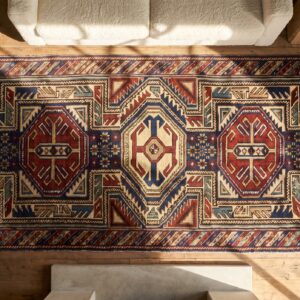
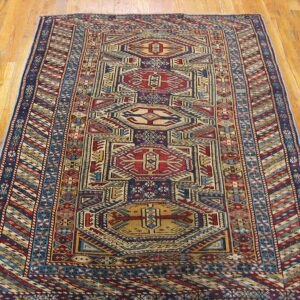
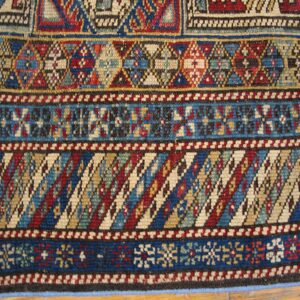
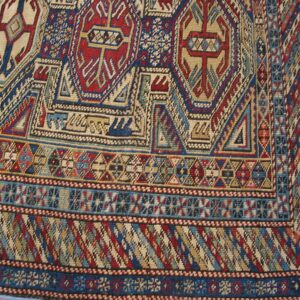
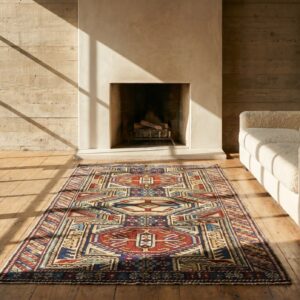
This late 19th-century tribal Caucasian rug is a quintessential collector’s piece, featuring the rare and iconic “Keyhole” (or “Lesghi Star”) design. While antique tribal Caucasian Shirvan rugs are generally celebrated for their fine weave and sophisticated geometry, the tribal key-hole design variant is particularly prized for its architectural strength and its connection to the ancient architectural motifs of the Eastern Caucasus.
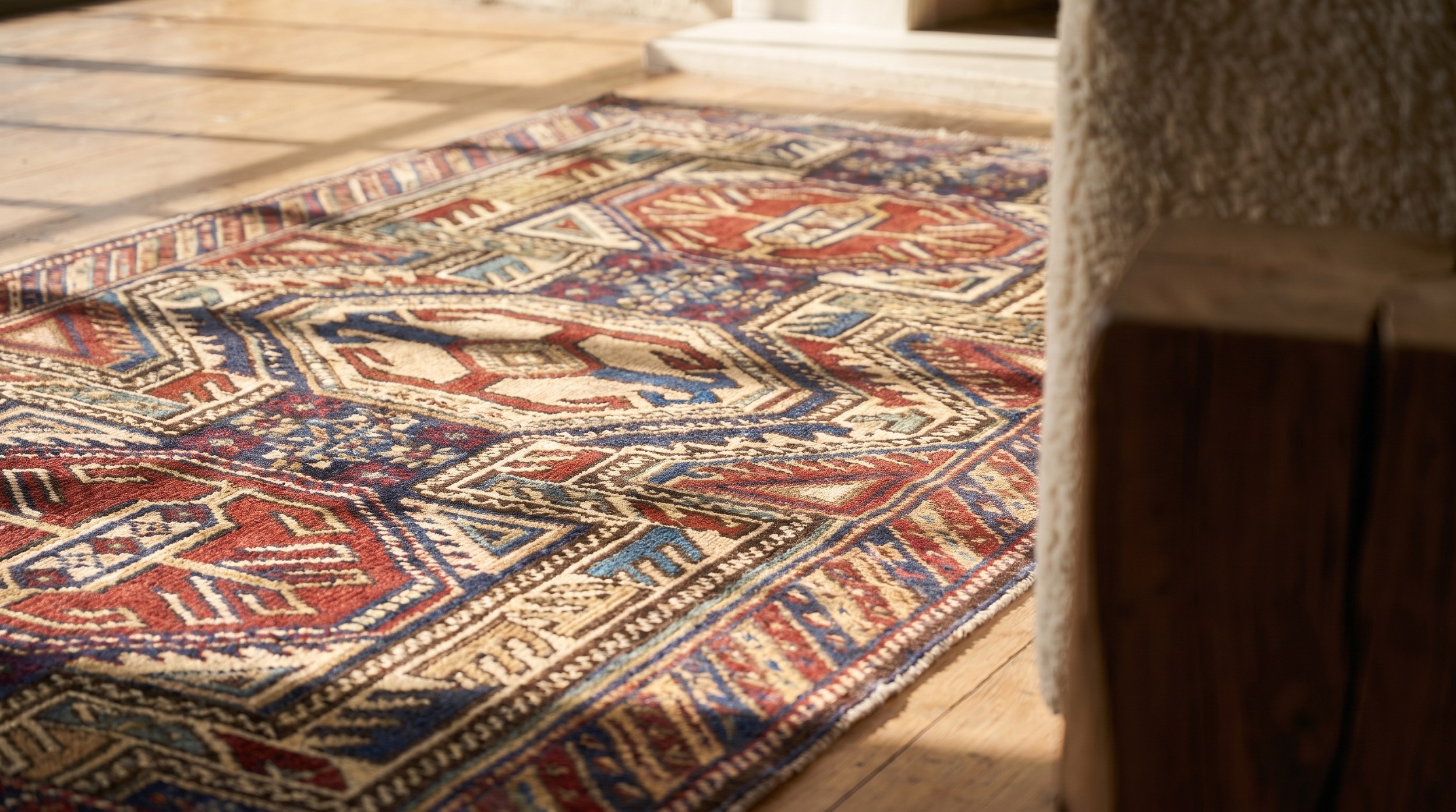
The composition is centered upon a series of geometric “Keyhole” medallions, often arranged in a vertical row. These unique motifs—characterized by an ivory or high-contrast hexagonal center with protruding “latch-hook” or “stepped” edges—resemble ancient sanctuary portals or totemic seals. The precision required to execute these sharp angles in a hand-knotted medium is a testament to the Shirvan weaver’s mastery. Surrounding these primary medallions, the field is often densely populated with a “galaxy” of tribal devices: eight-pointed stars, stylized birds, and small “S-hook” protection symbols that provide a rich visual narrative.
The palette is a vivid celebration of late 19th-century natural dyes. A deep, shimmering Indigo Blue ground typically serves as the stage for the “Bright and Bold” primary accents. The “Keyhole” motifs often appear in a brilliant ivory or a sun-drenched gold, creating a dramatic “pop” against the dark field. Accents of madder red, terra cotta, and forest green are utilized throughout the secondary motifs, each possessing a magnificent abrash (tonal variation) that gives the small tribal design rug a luminous, watercolor-like depth.
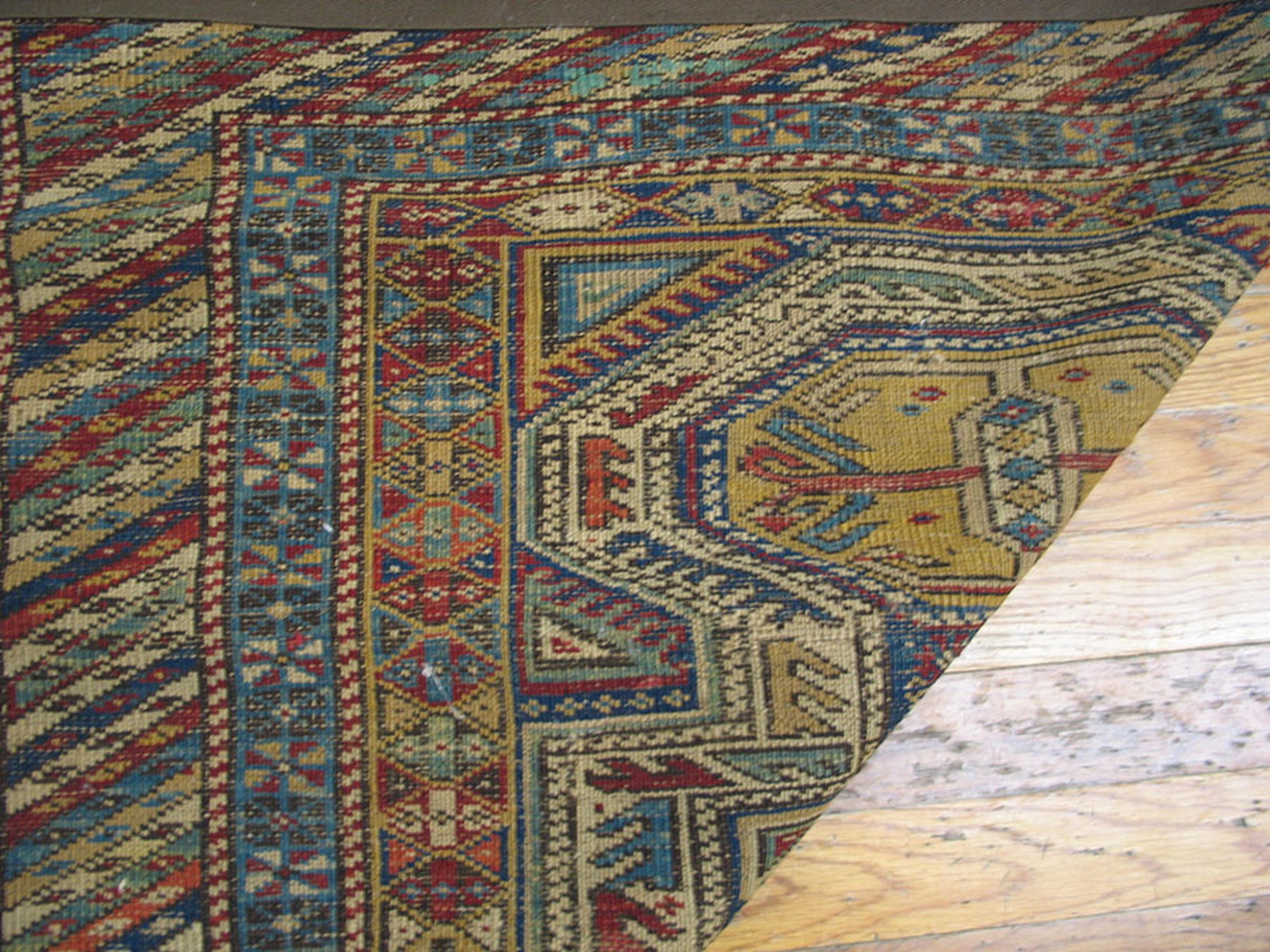
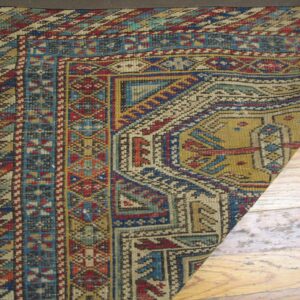
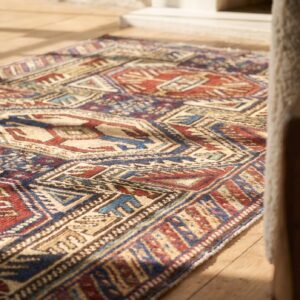
Technically, this Shirvan is distinguished by its crisp, low-cut pile and its firm, “paper-like” handle. Because the wool is hand-spun from high-altitude sheep and rich in natural lanolin, the surface has a soft, matte luster that enhances the clarity of the design. The small scatter size makes it an exceptionally versatile piece, equally suited for a sophisticated floor placement or as a wall-hanging work of textile art.
The borders act as a disciplined, rhythmic frame, often featuring the iconic “Kufic” or “Running Dog” patterns. This architectural containment “locks in” the explosive energy of the colorful central field, providing a sense of historical permanence. To possess this antique Keyhole Shirvan is to own a monument to a vanishing tribal heritage—a work that bridges the gap between rugged nomadic utility and the high-design requirements of the modern interior.
Condition: Good. Repaired.