
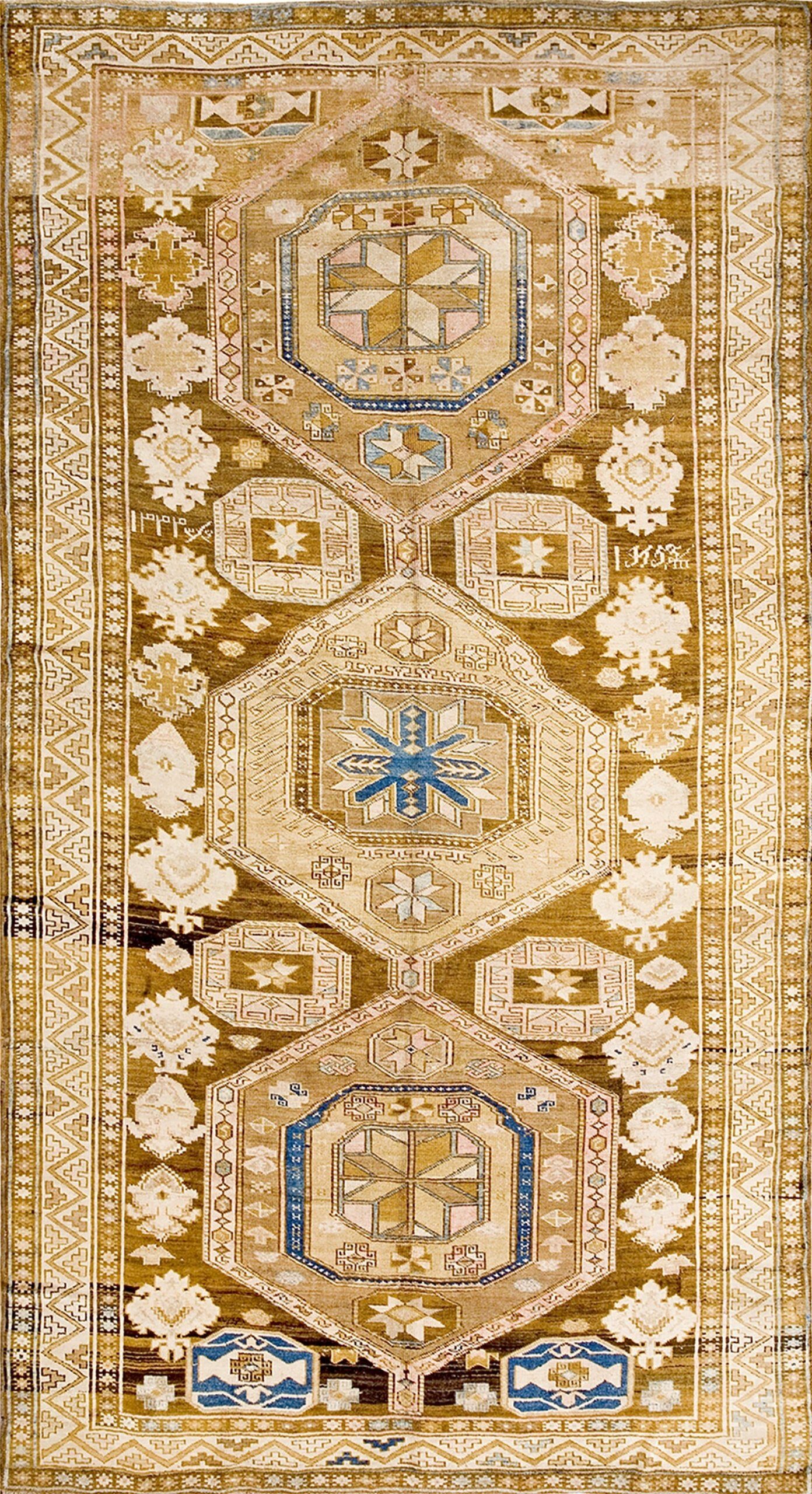
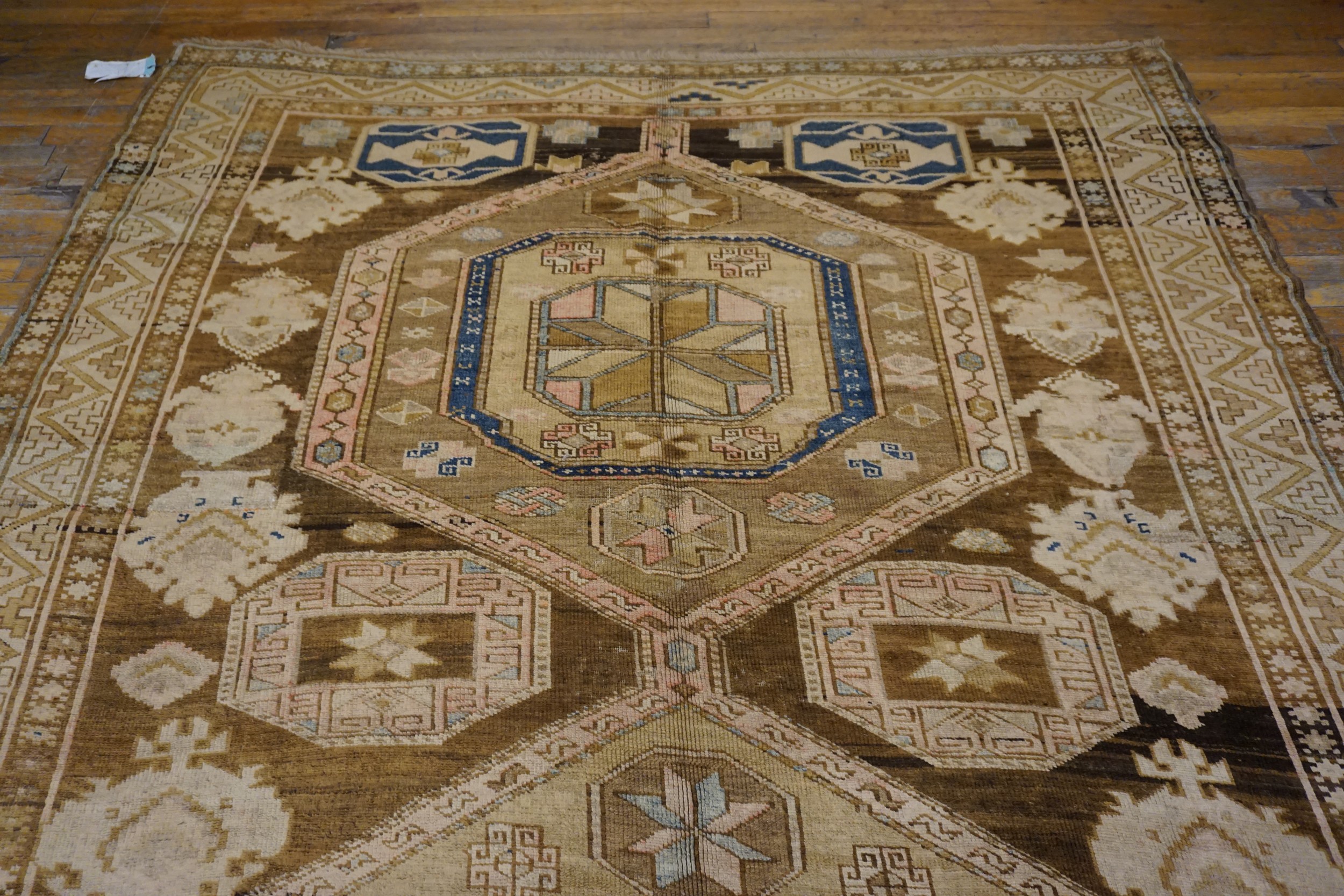
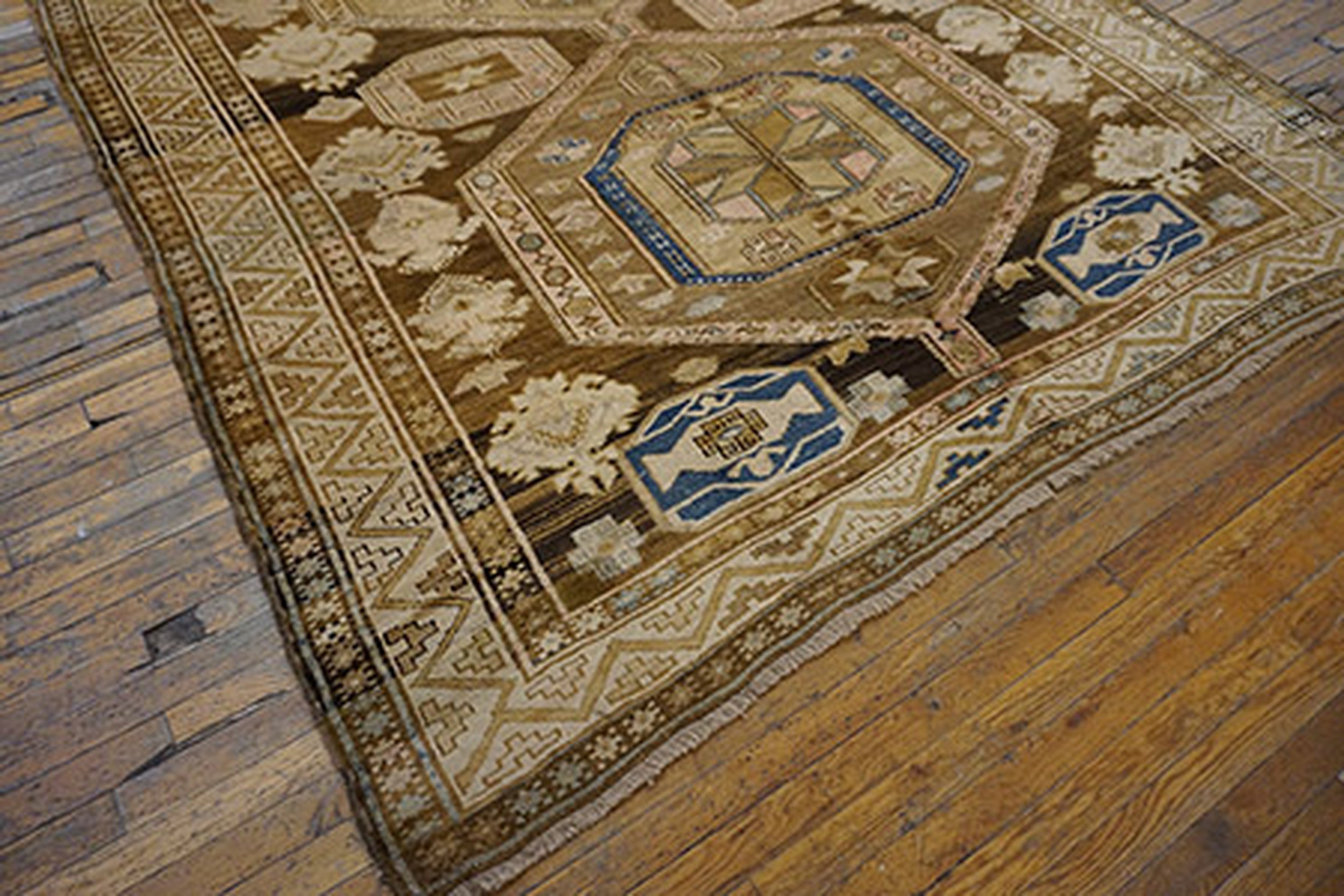
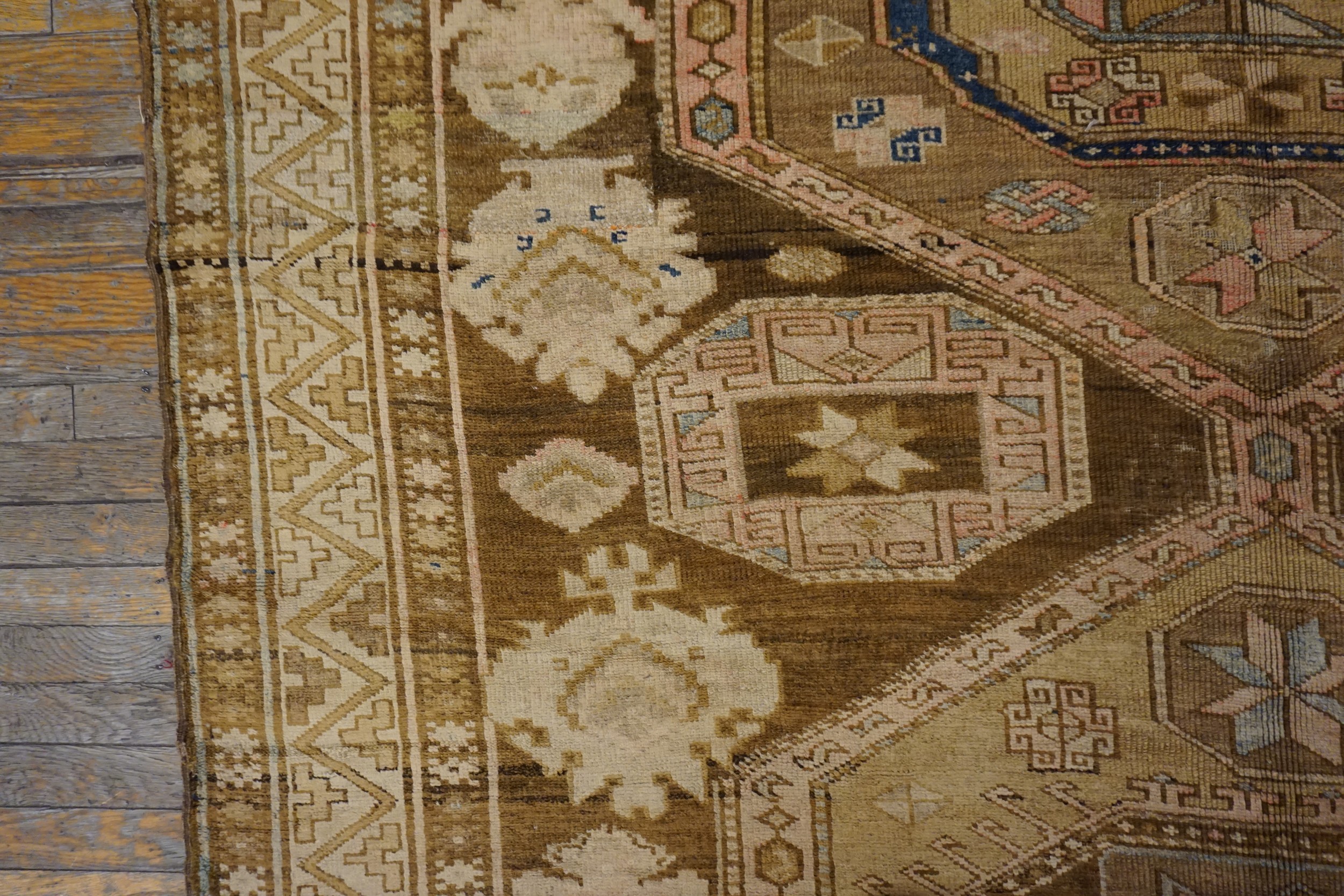
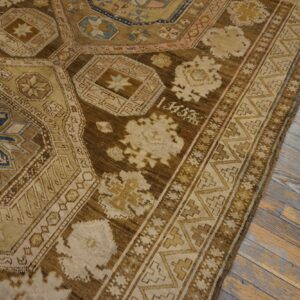
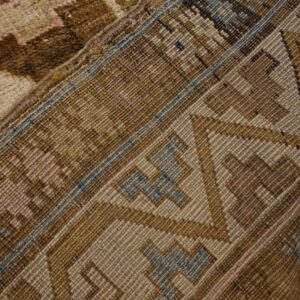
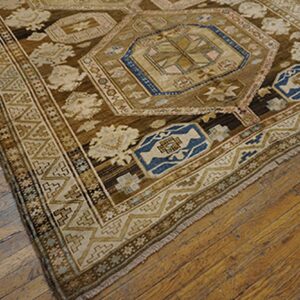
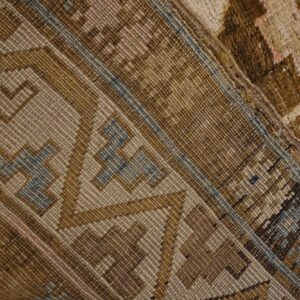
This rare late nineteenth-century Caucasian Karabagh runner is a striking testament to the “high-altitude” weaving traditions of the southern Caucasus. Historically, Karabagh—meaning “Black Garden”—produced some of the most artistically diverse textiles in the region, bridging the gap between the nomadic, geometric power of the northern tribes and the floral sophistication of neighboring Persia. This specific specimen is defined by its deep “tobacco brown” field, a color of significant rarity and prestige achieved through the use of undyed natural wool or complex mineral-based dyes, which provides a moody, grounded backdrop for its vibrant tribal narrative.
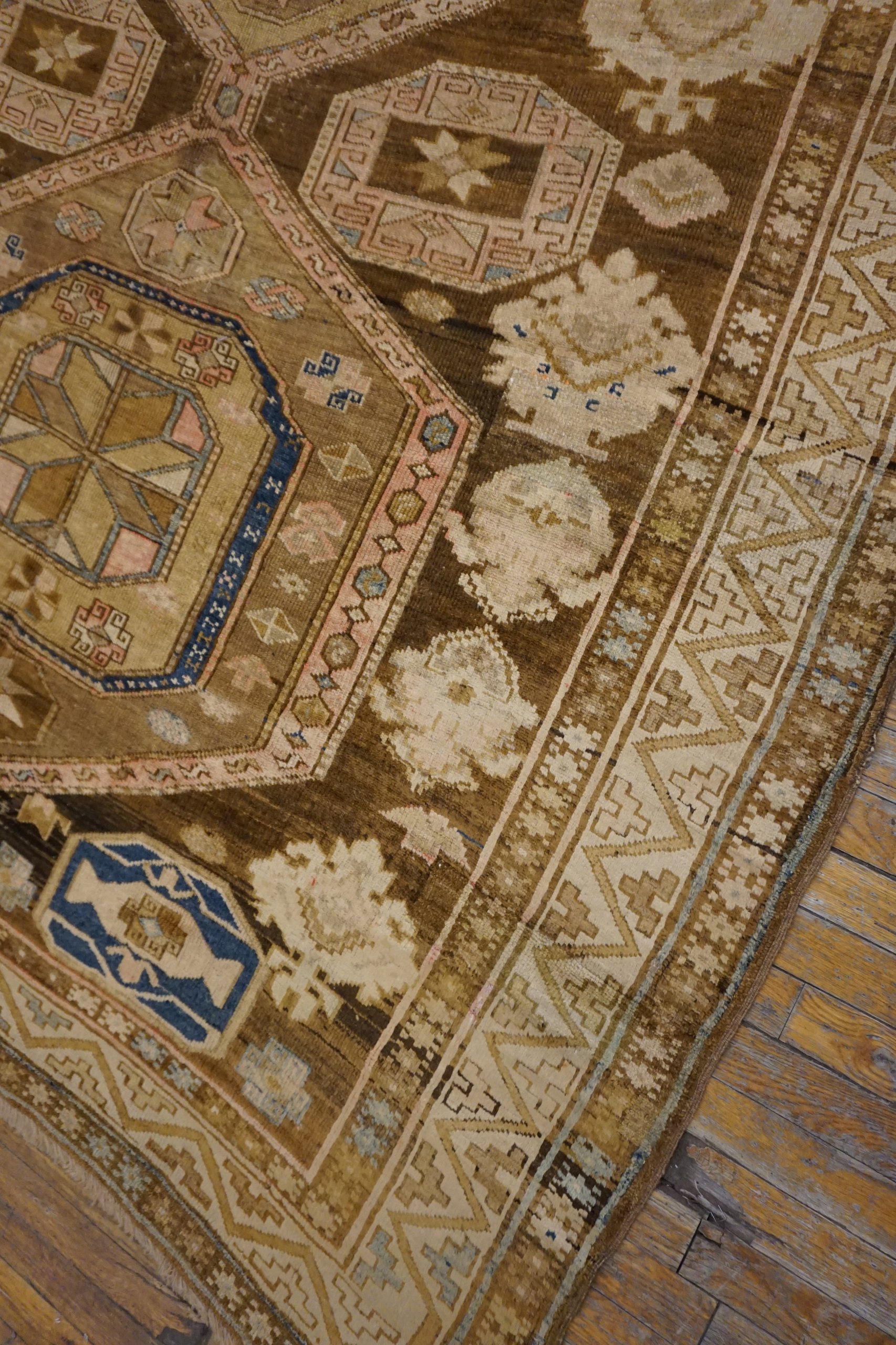
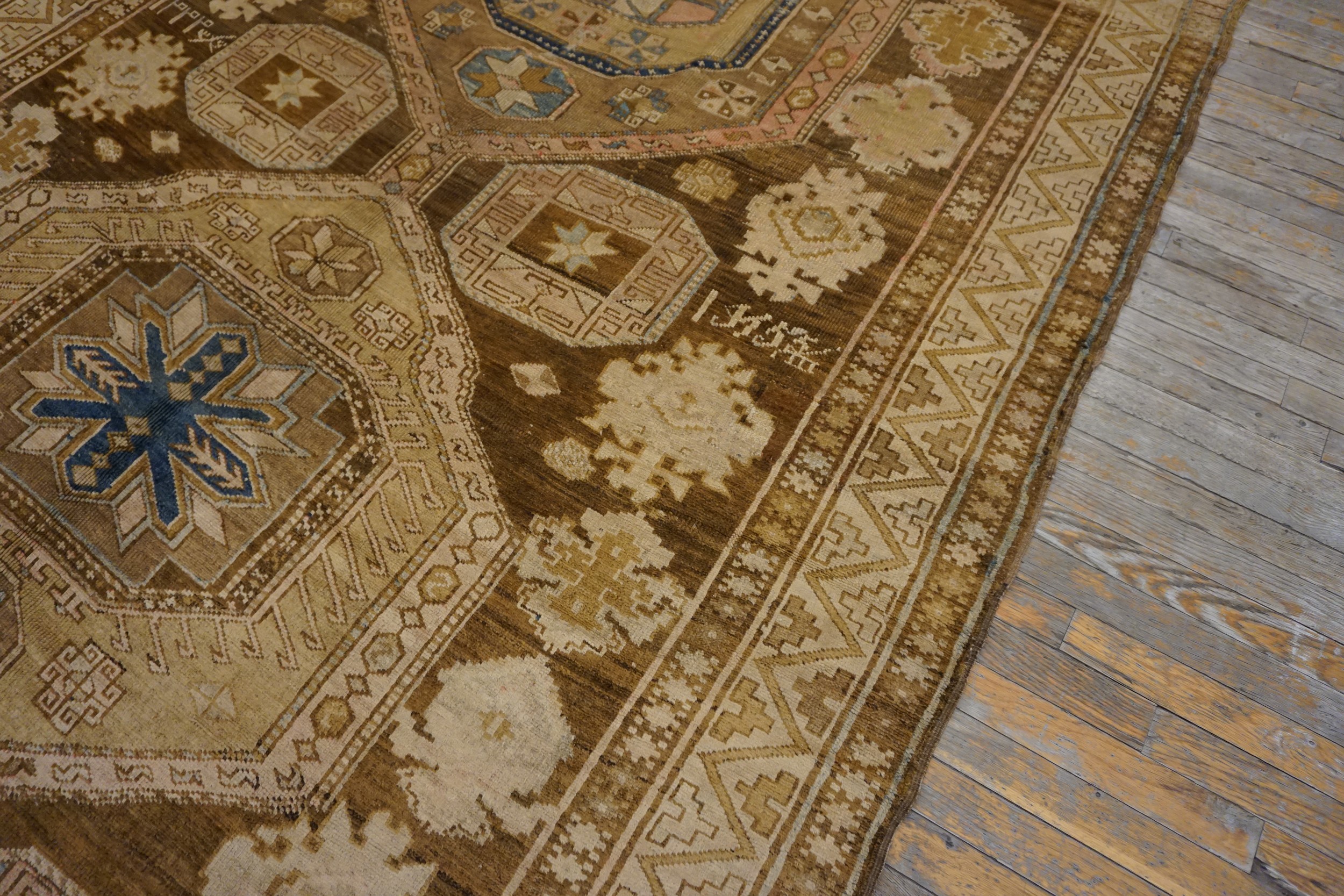
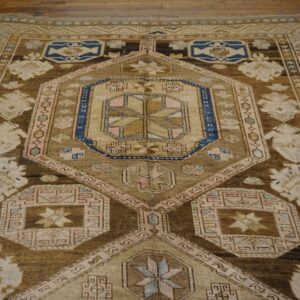
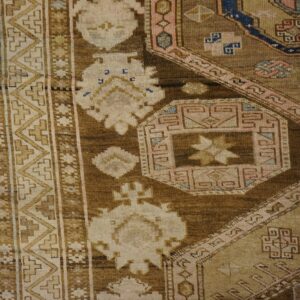
The composition features a rhythmic, vertical succession of bold geometric medallions, a format characteristic of the Kenareh (long and narrow runner). Each medallion serves as a “shield” or a “stepped polygon,” housing ancient symbolic motifs such as stylized “S” hooks (representing protection), tribal stars, and primitive avian figures. Unlike the rigid symmetry of city woven antique carpets, this Karabagh possesses a “charming irregularity” known as abrash—natural color variations within the wool—which gives the rug a shimmering, painterly movement. The contrast between the dark, earthy field and the pops of saturated madder red, ivory, and lapis blue creates a “jewel-box” effect that is a hallmark of the 19th-century Caucasian rug aesthetic.
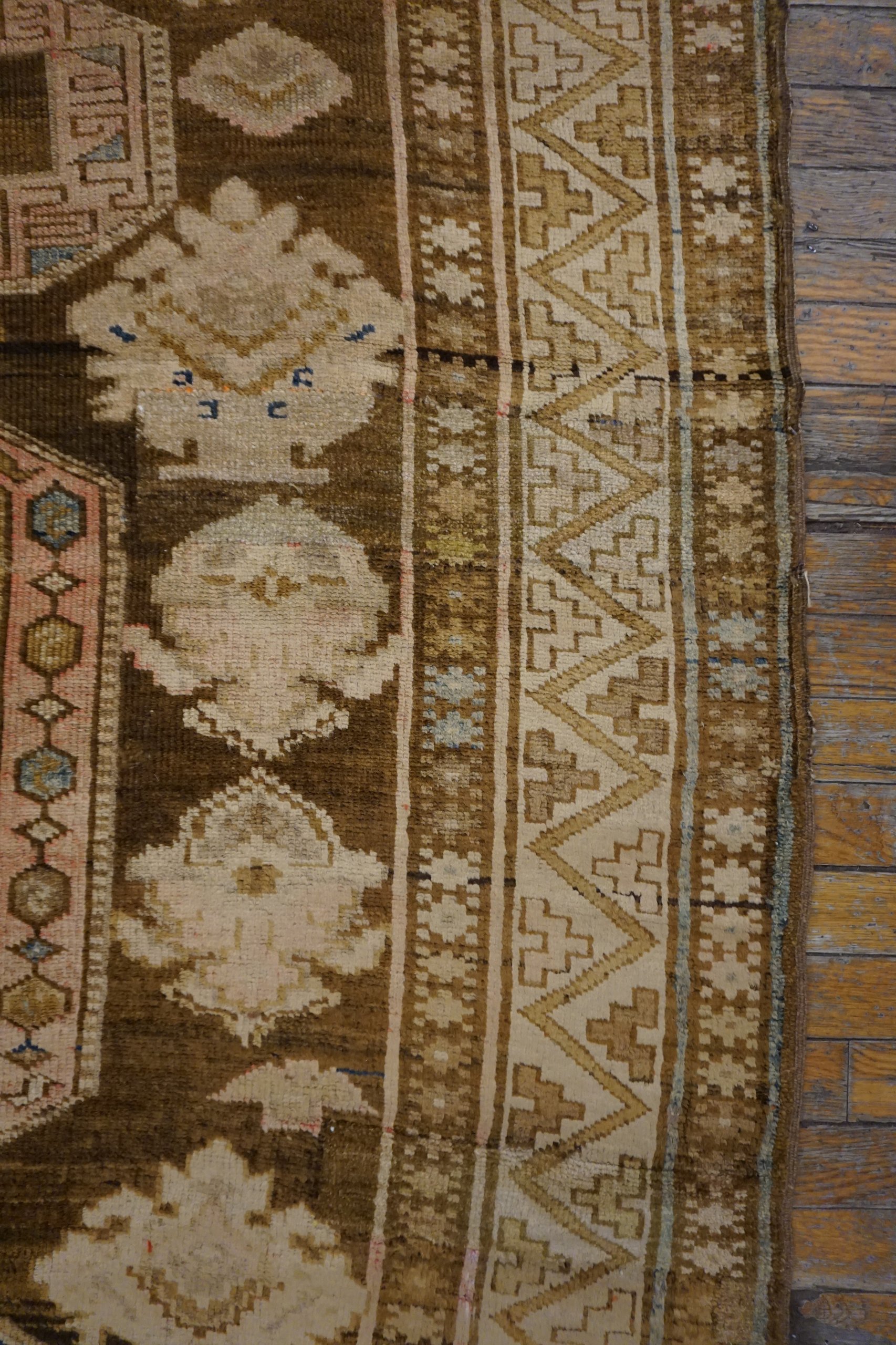
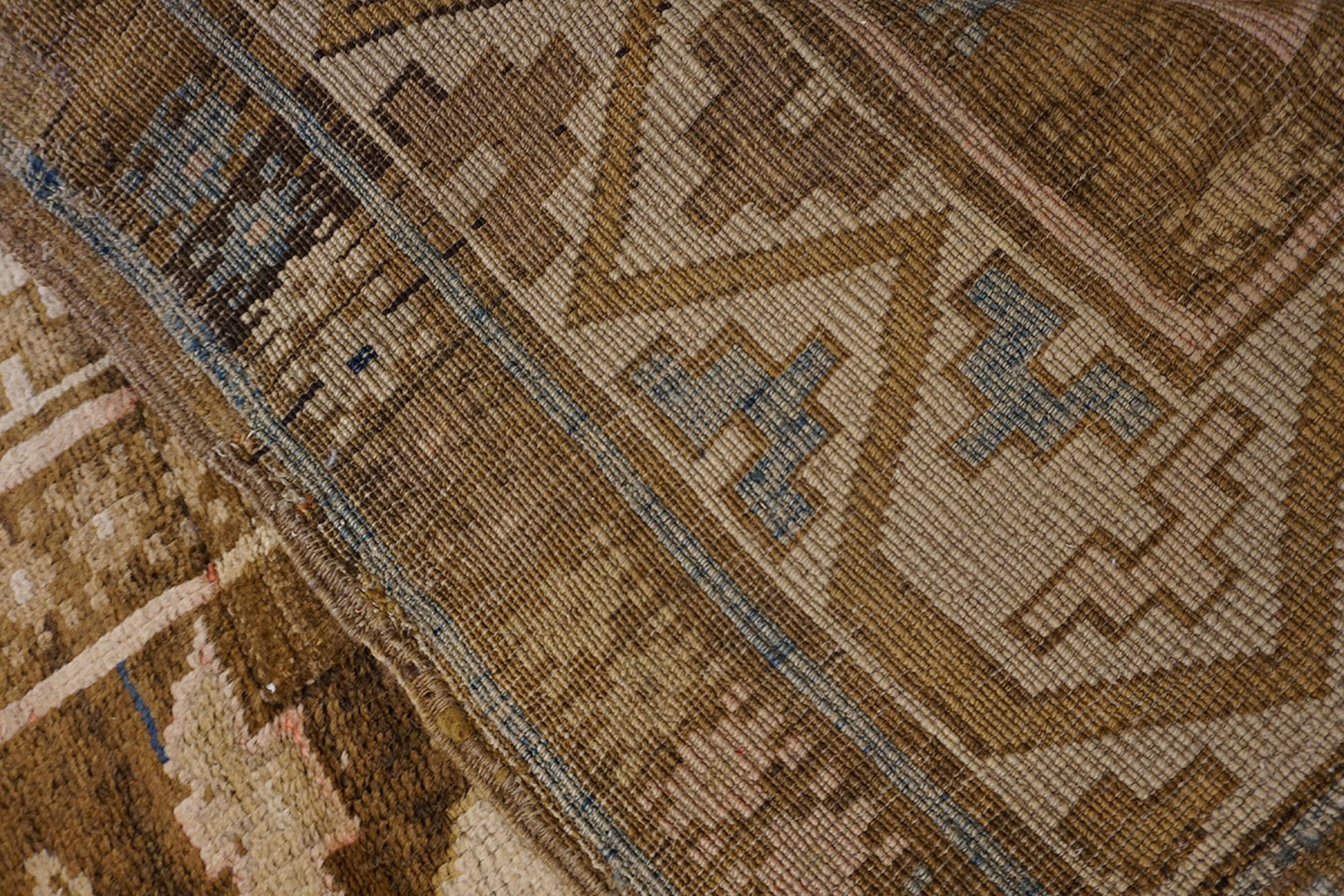
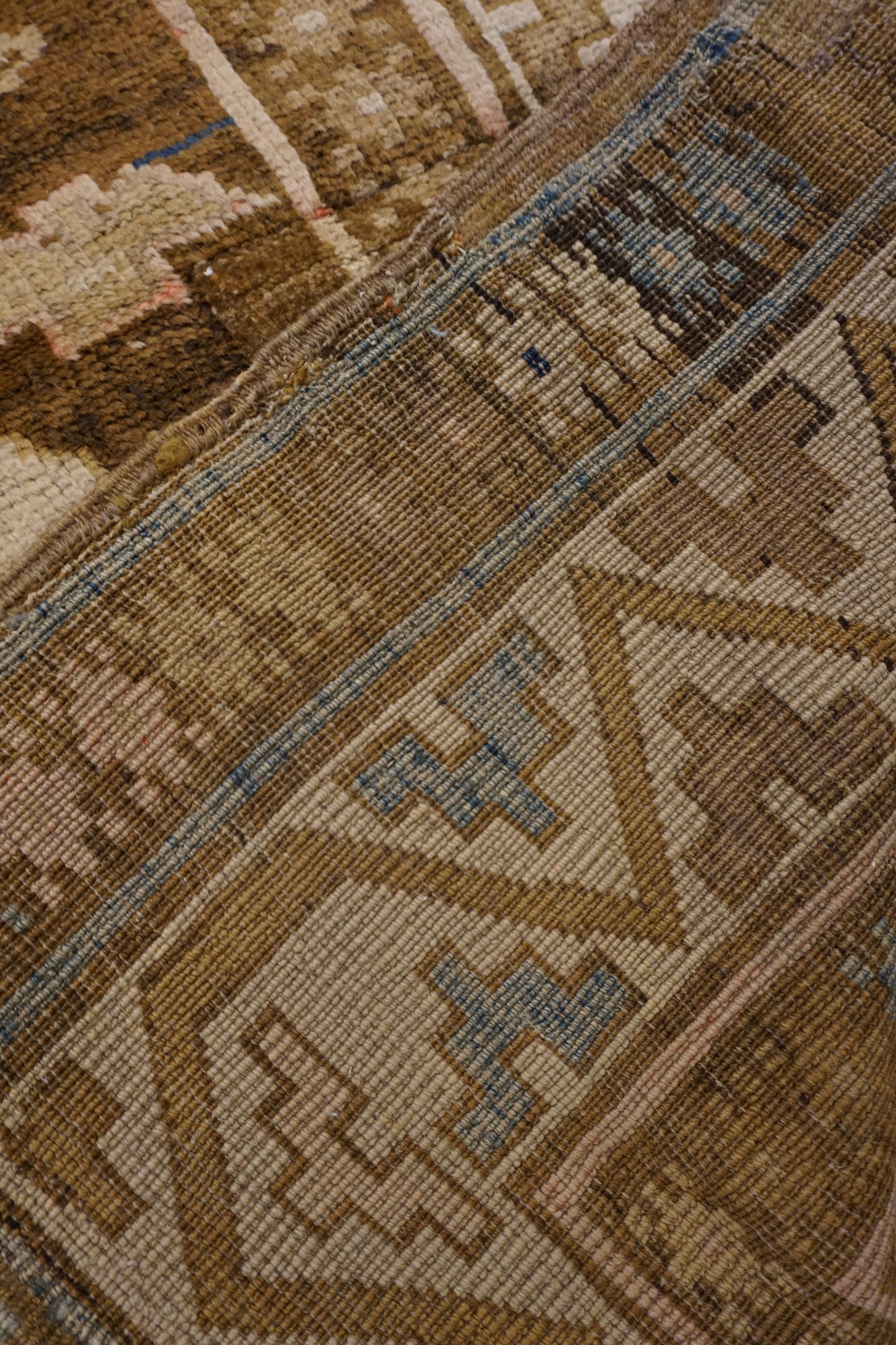
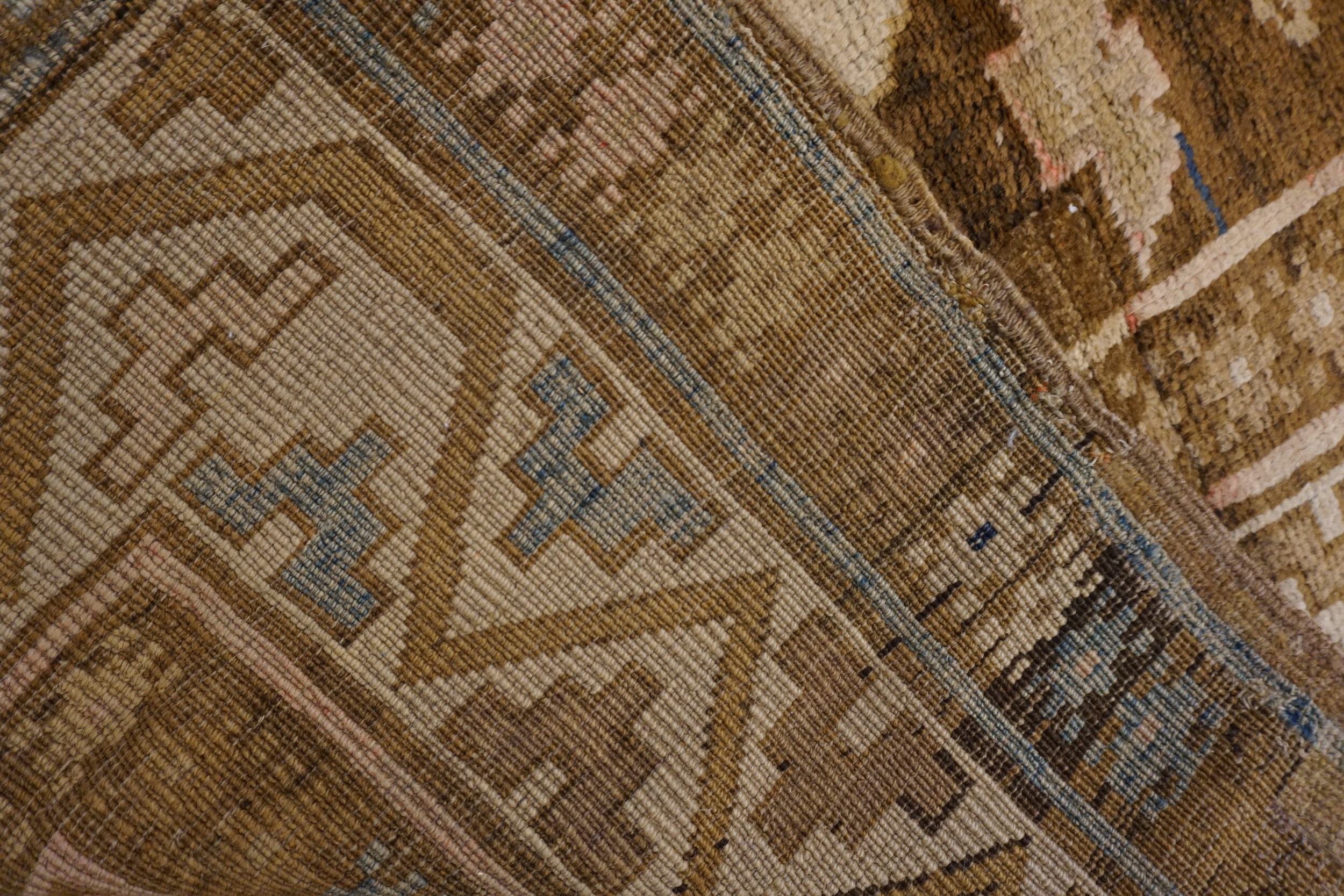
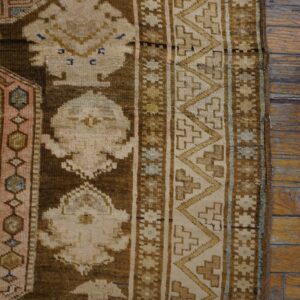
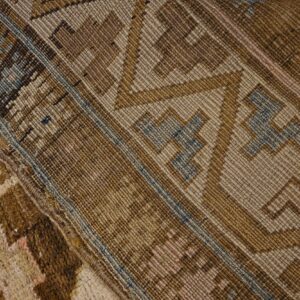
Technically, antique tribal geometric Caucasian Karabagh rugs are known for their substantial, slightly heavier pile and lustrous wool, a necessity for the harsh winters of the Karabagh highlands. The long and narrow format suggests this piece was originally intended for the stone corridors of a tribal chieftain’s home or a merchant’s estate, designed to provide both physical warmth and a gallery of ancestral symbols. The borders are equally compelling, typically featuring a “running dog” or “leaf and calyx” pattern that anchors the exuberant energy of the central medallions.
To possess this antique brown-ground Karabagh is to hold a monument to a vanishing way of life. It is a work that bridges the gap between ancient nomadic geometry and the sophisticated decorative requirements of the modern interior—a sprawling, hand-wrought chronicle of Caucasian heritage that transforms a transitional hallway into a space of historical gravity and rustic elegance.