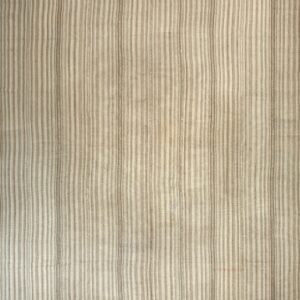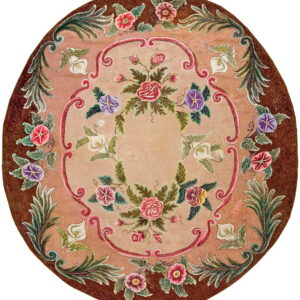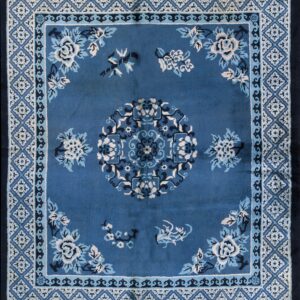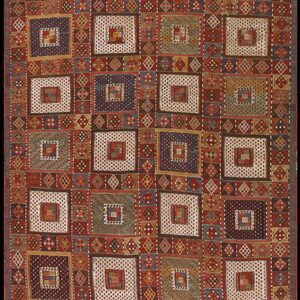
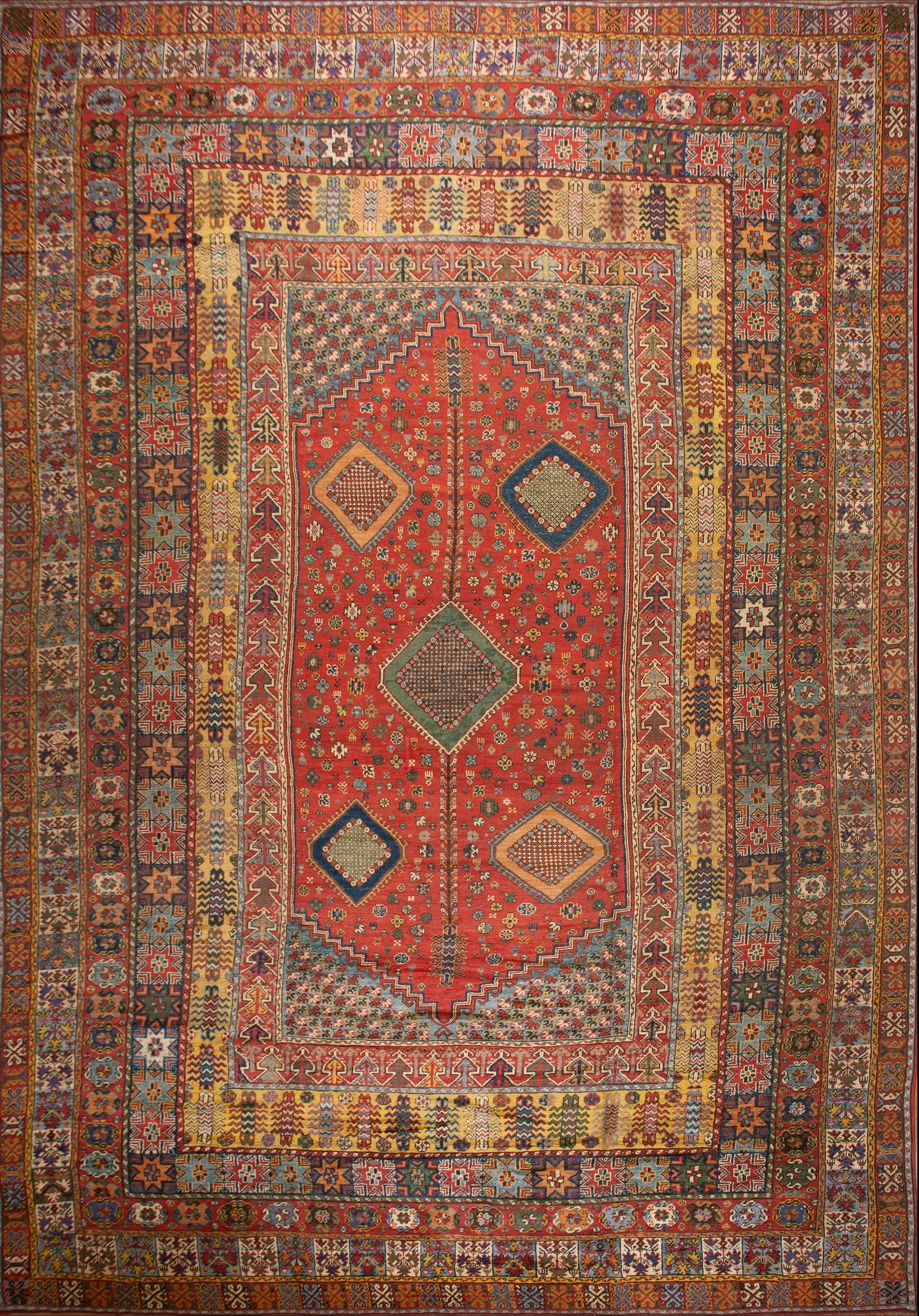
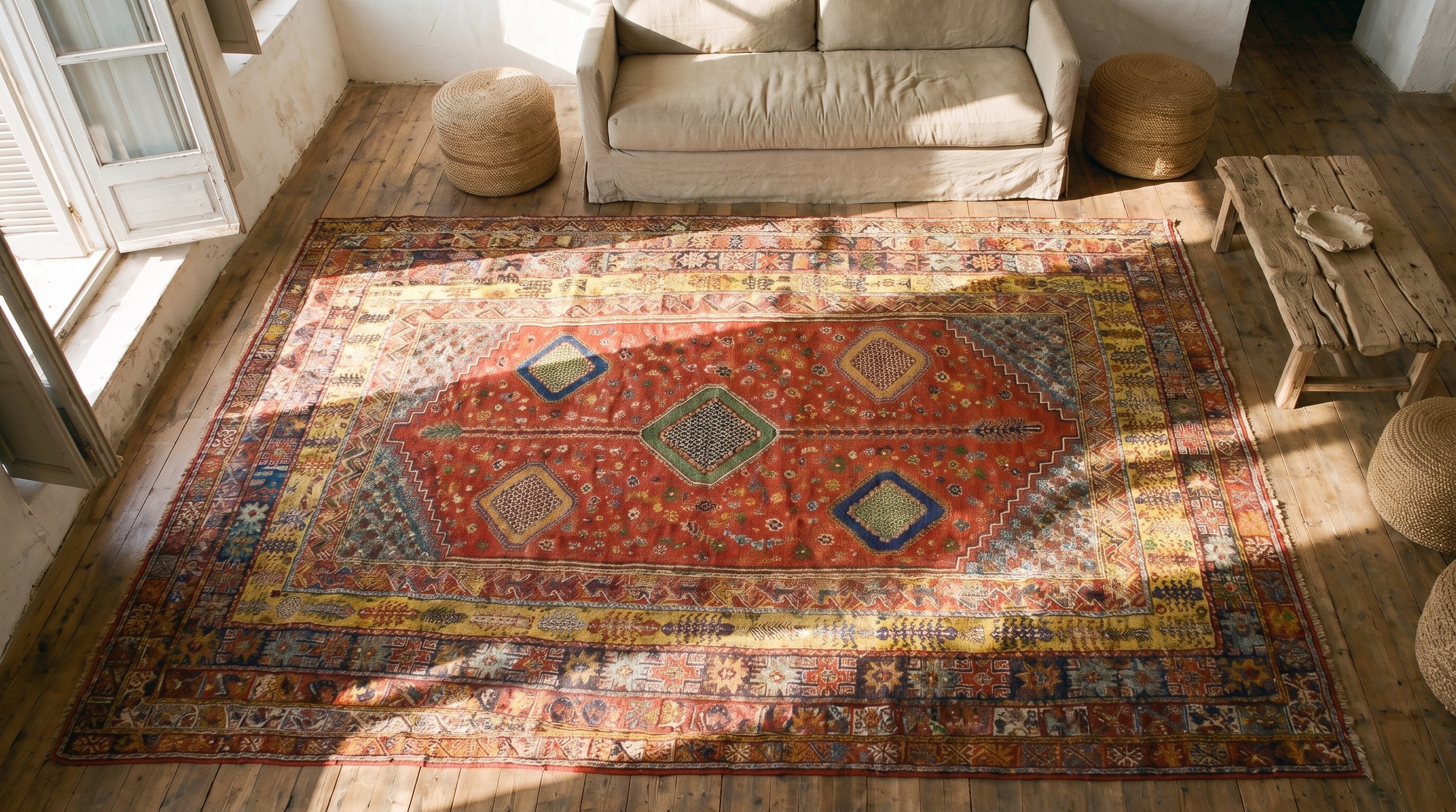
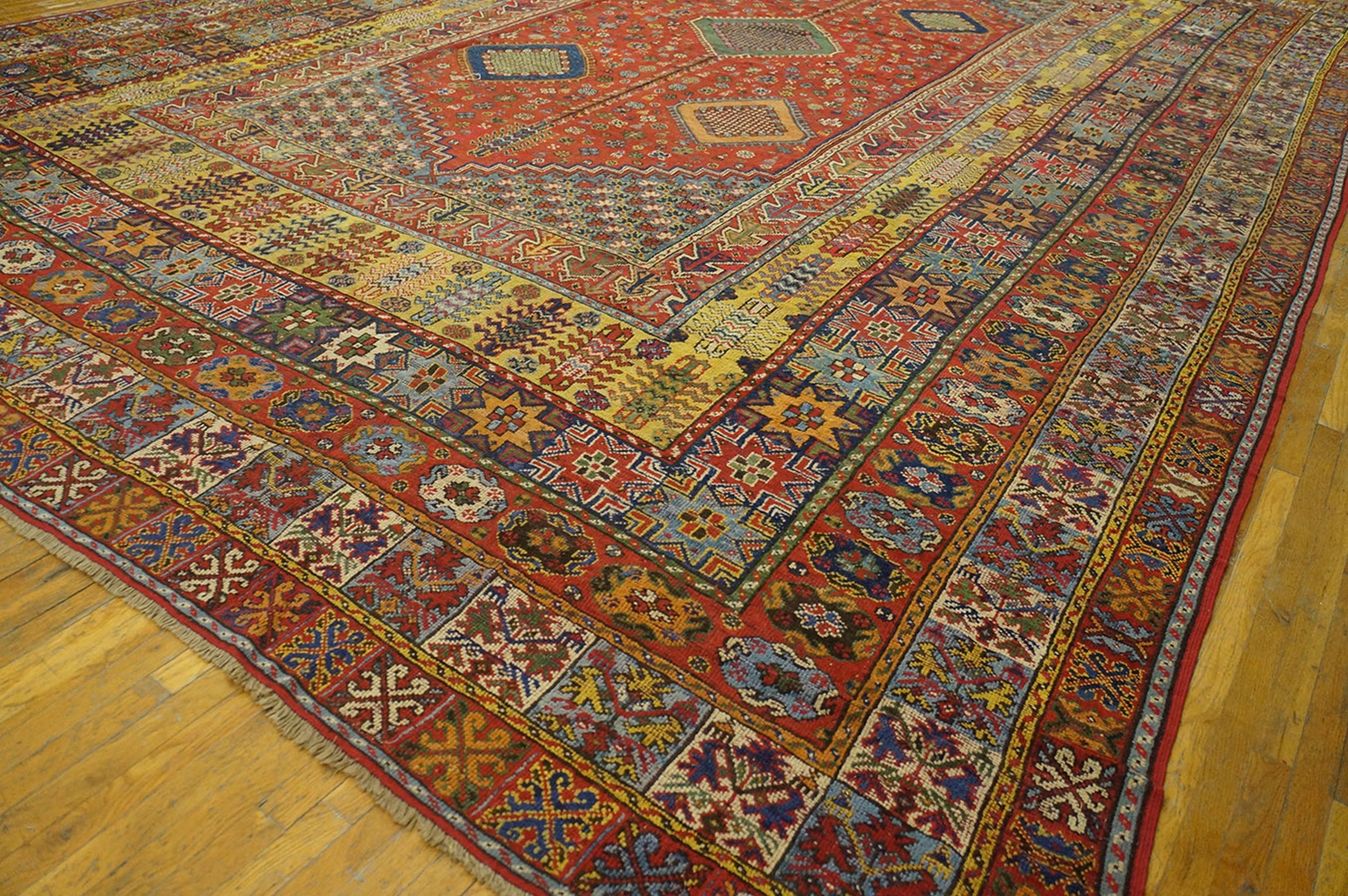
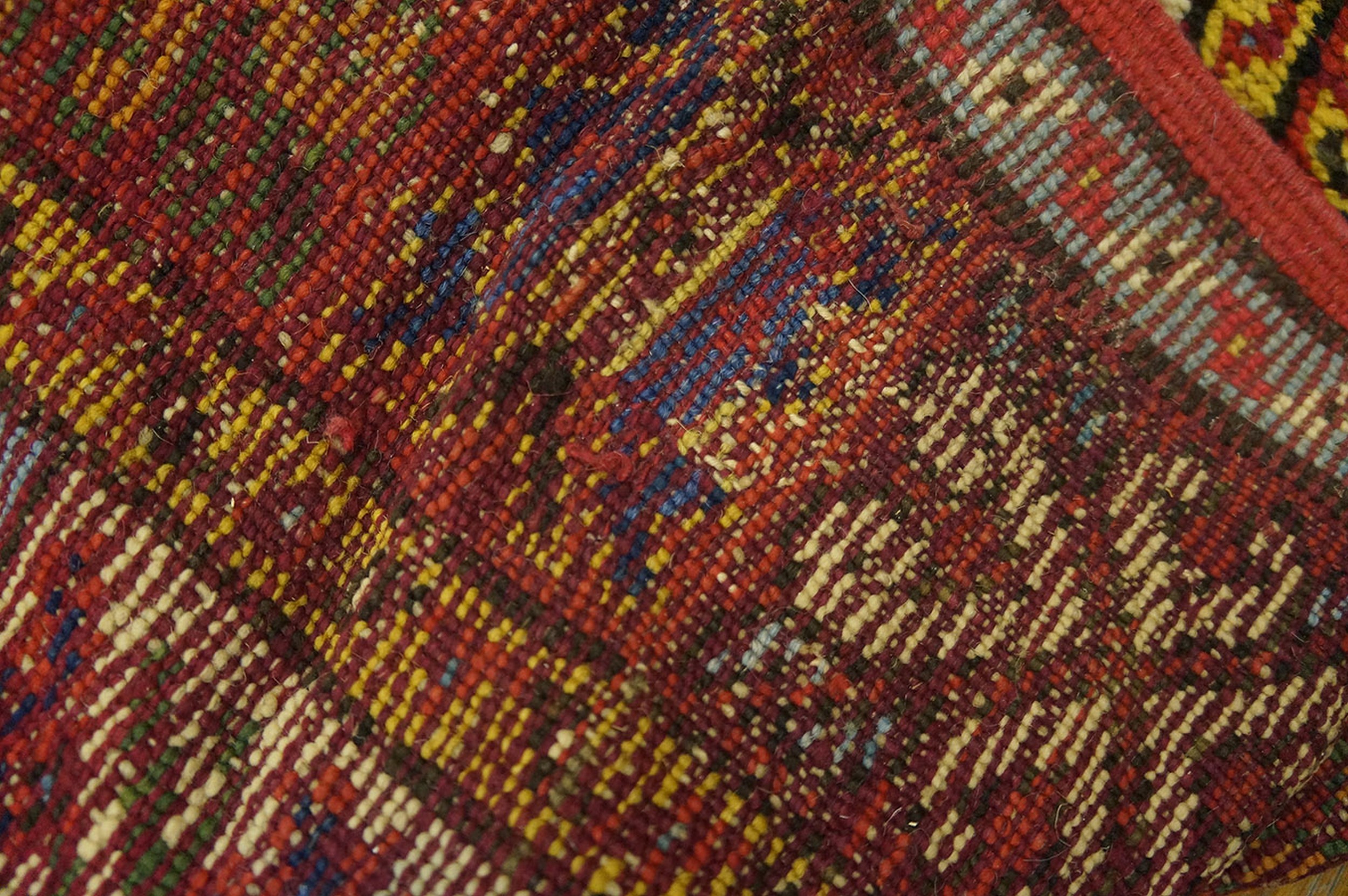
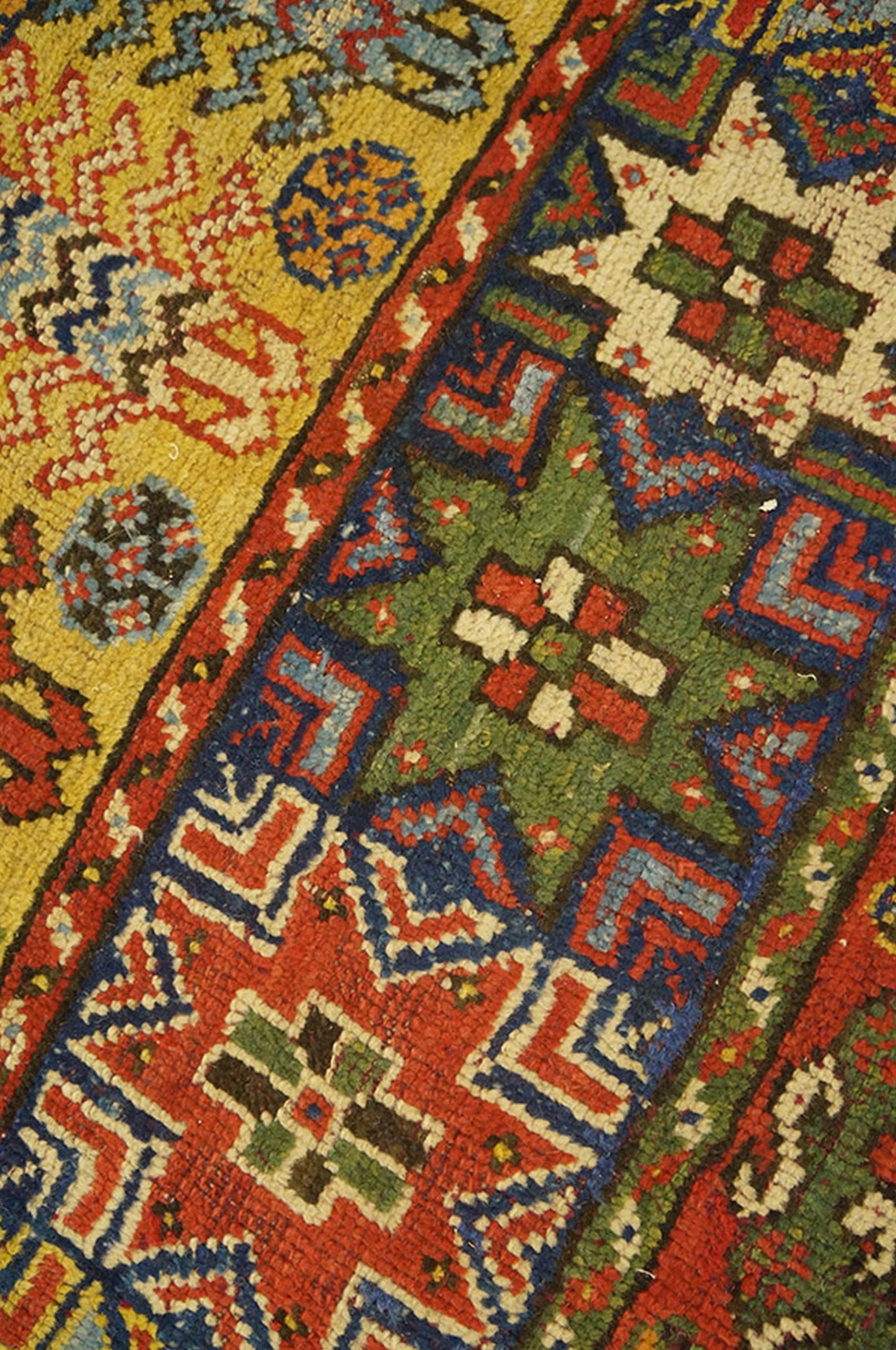
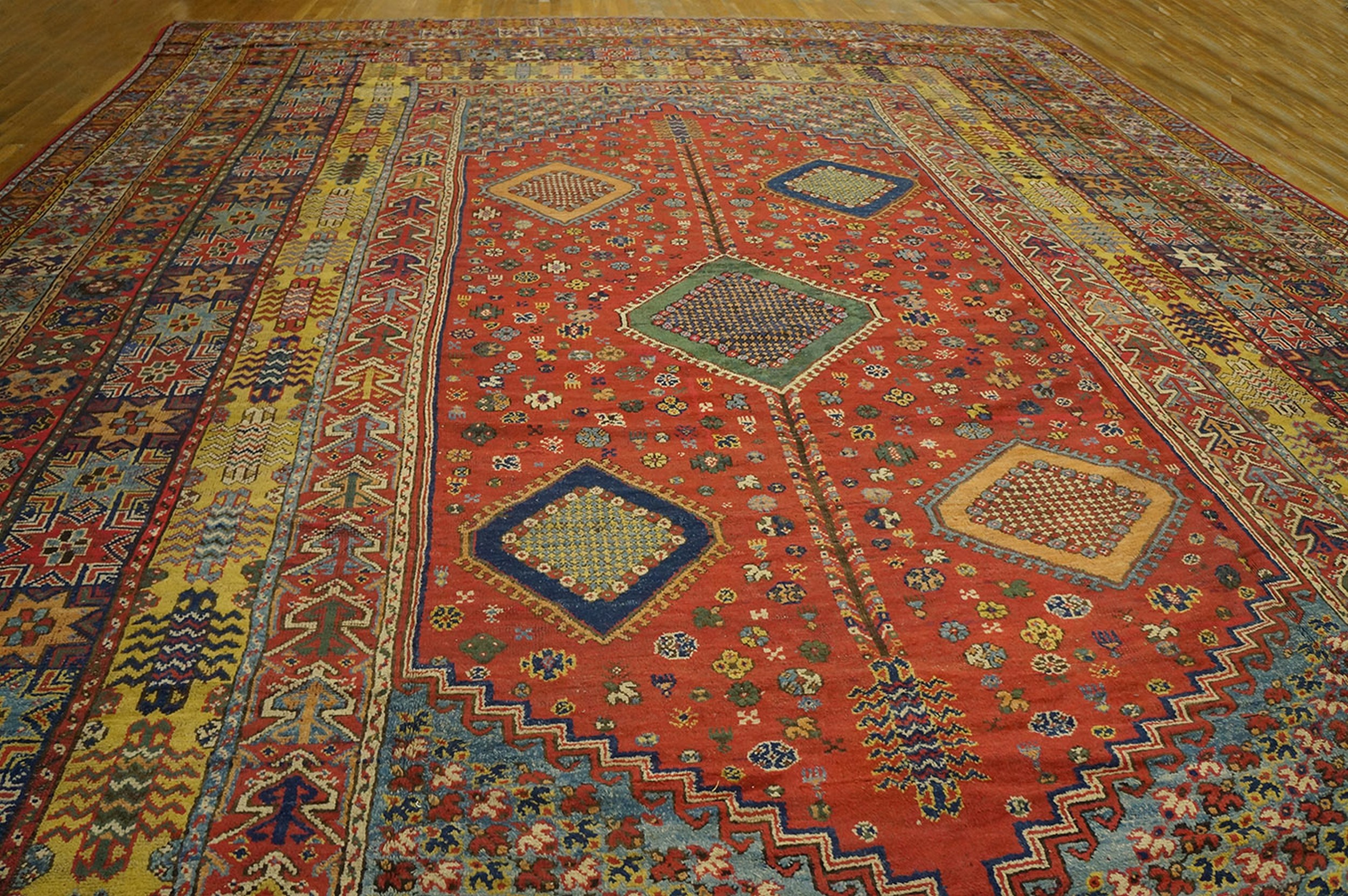
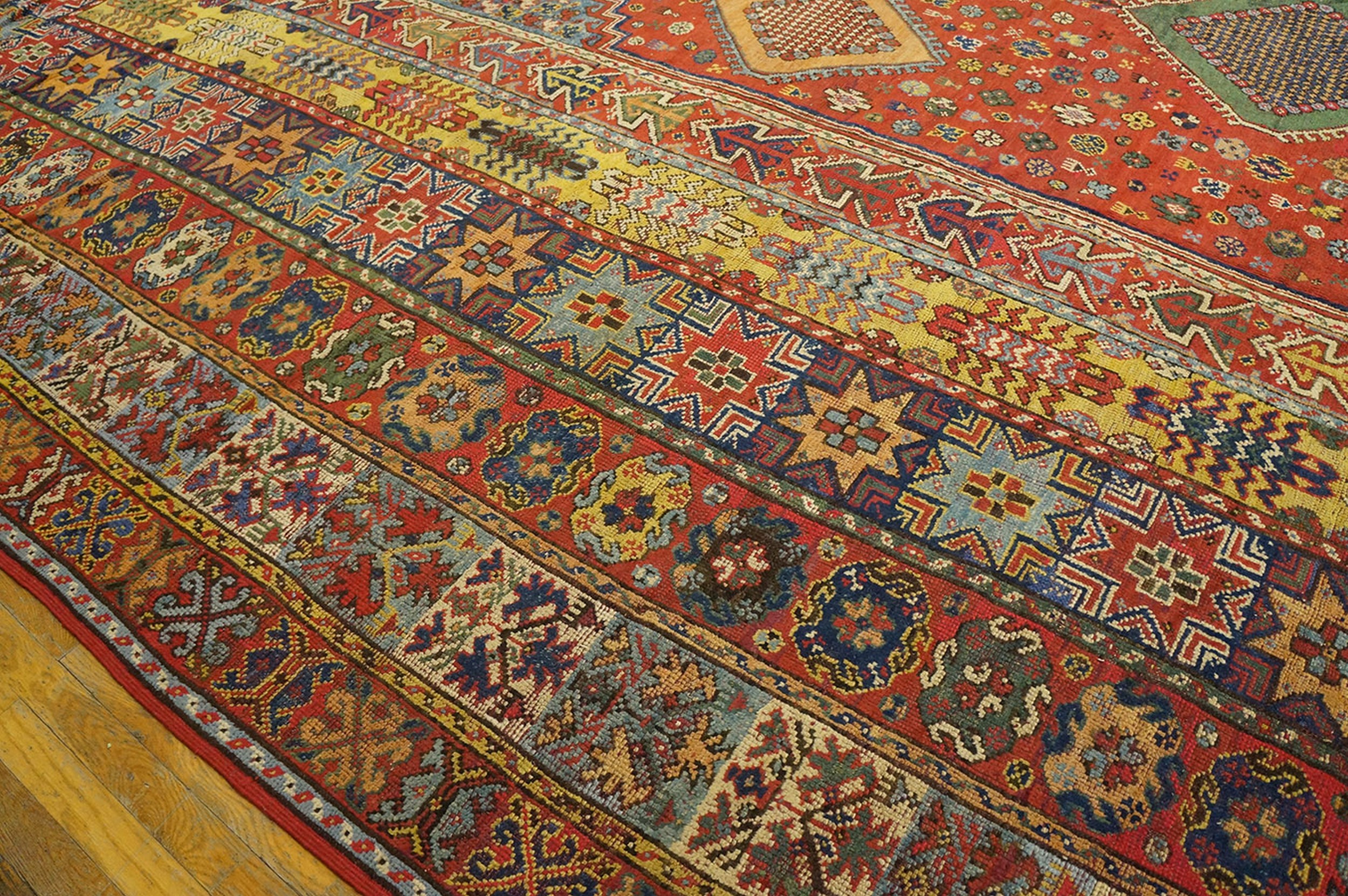
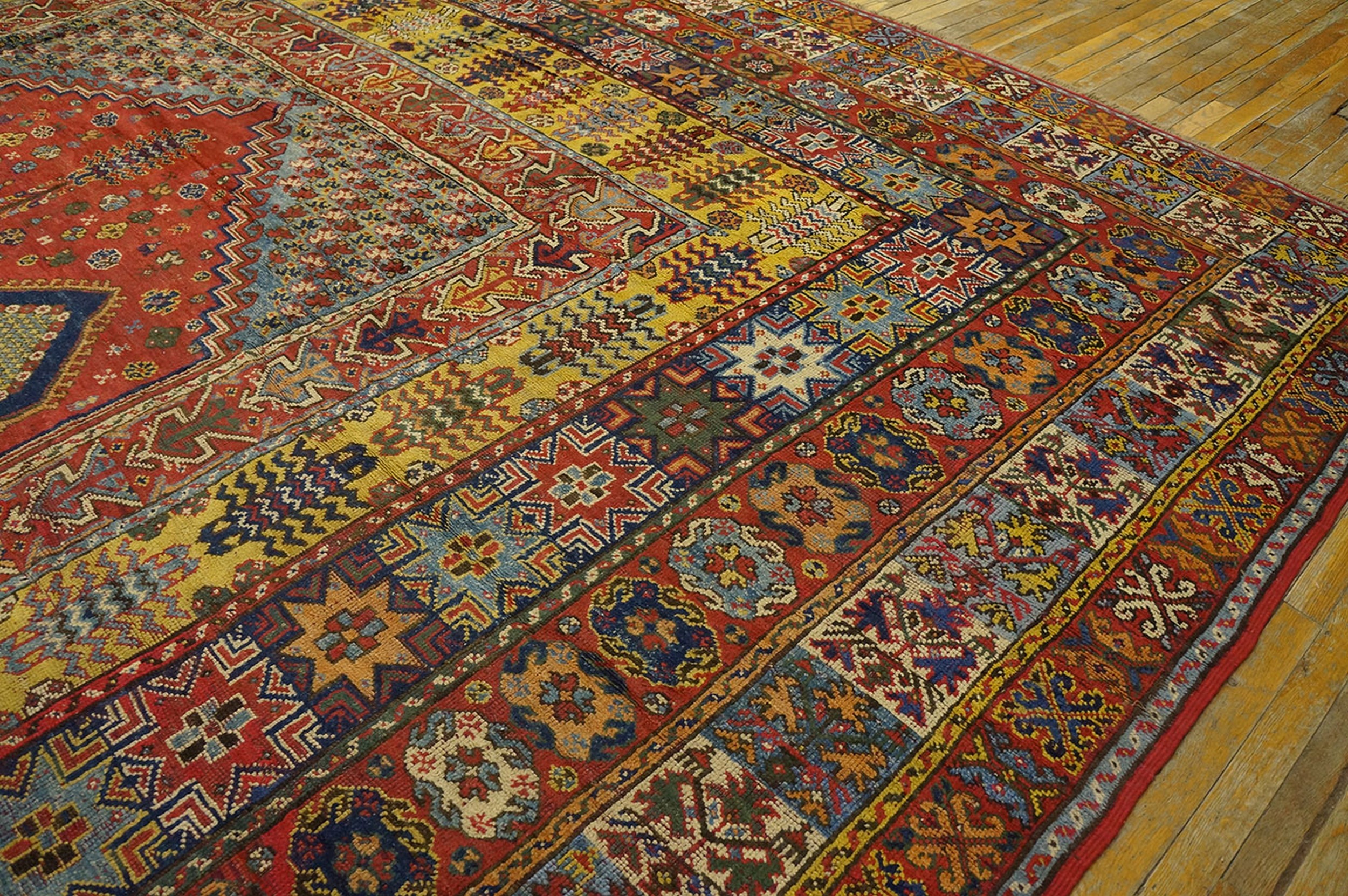
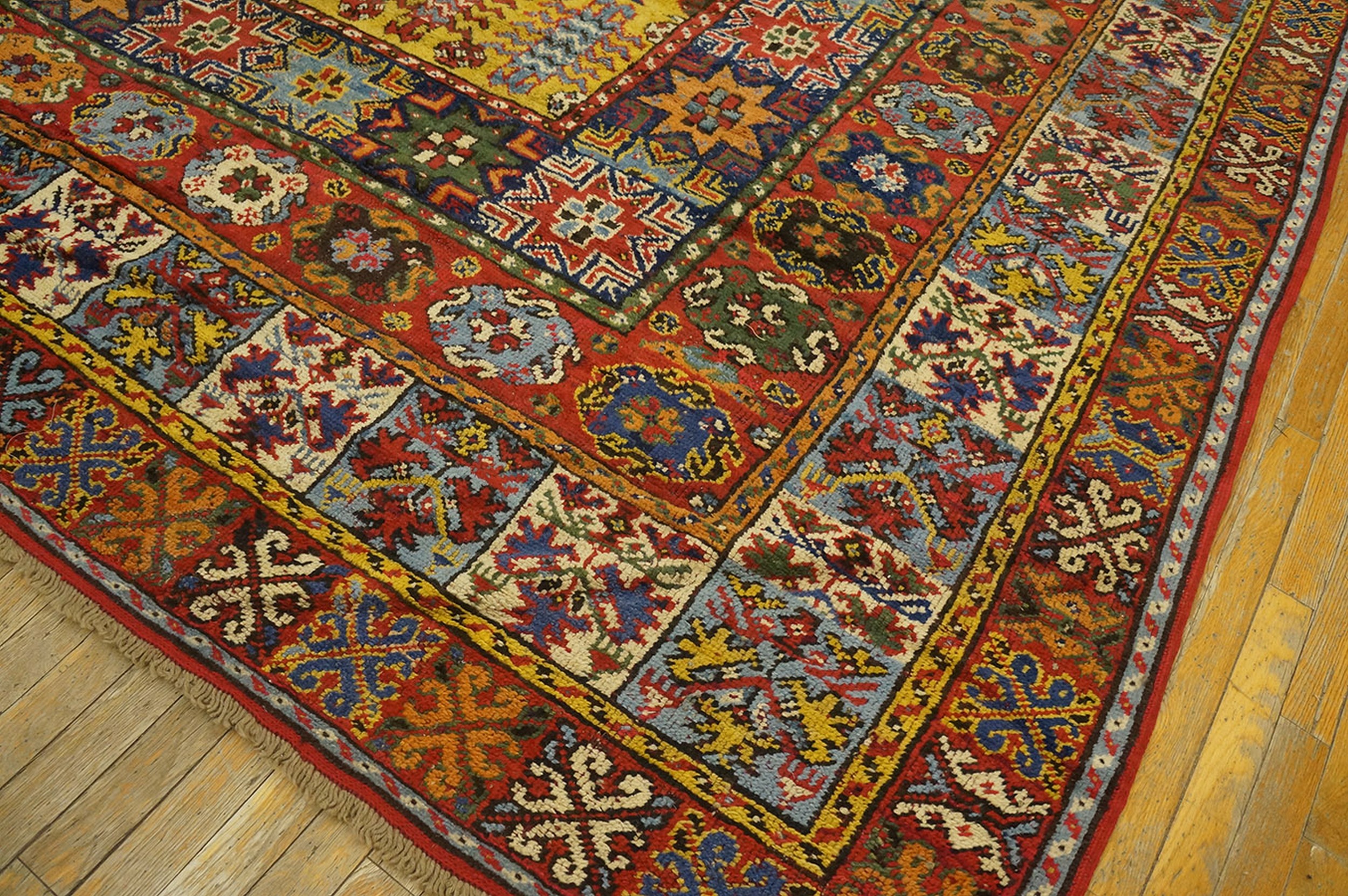
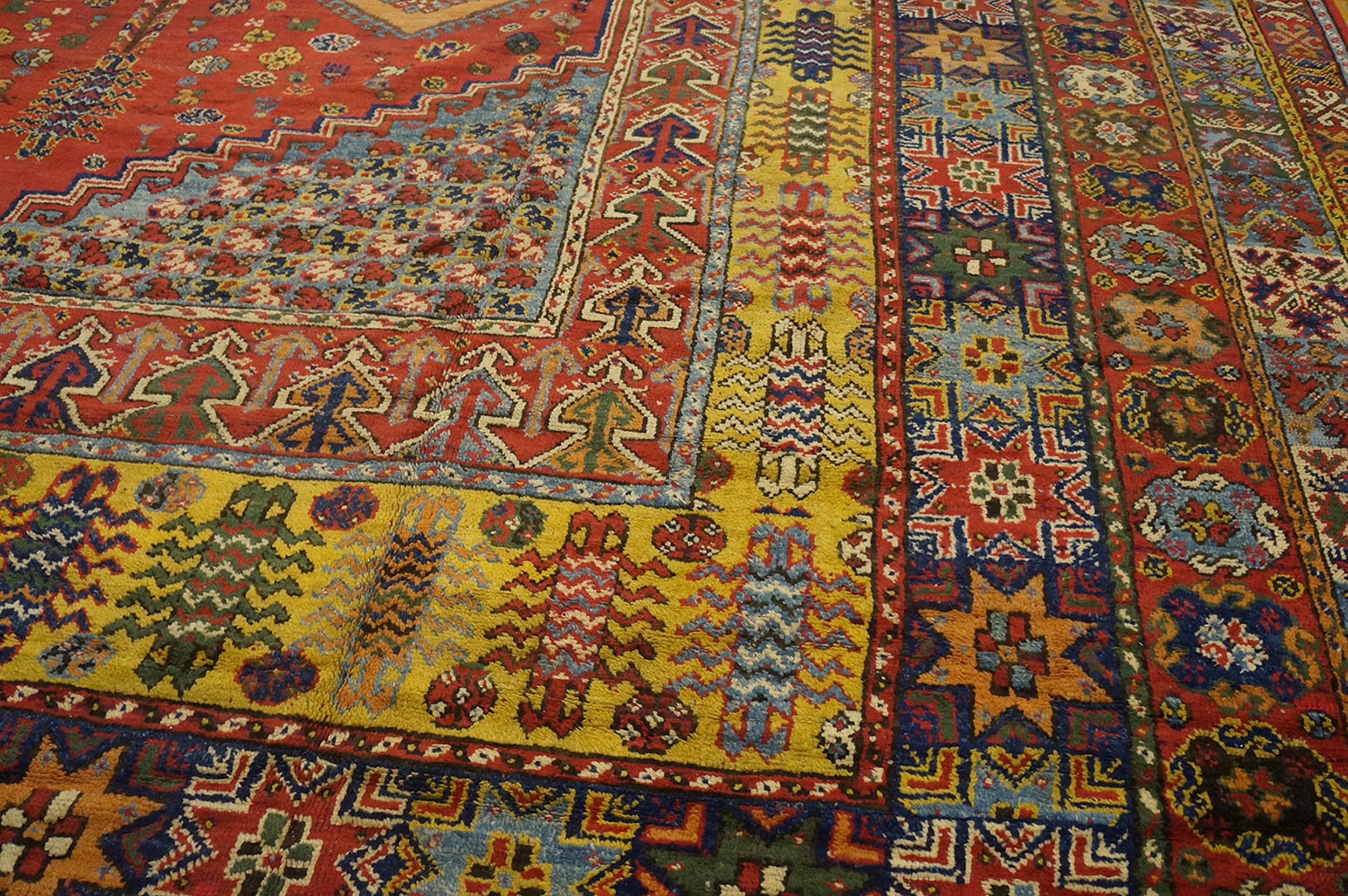
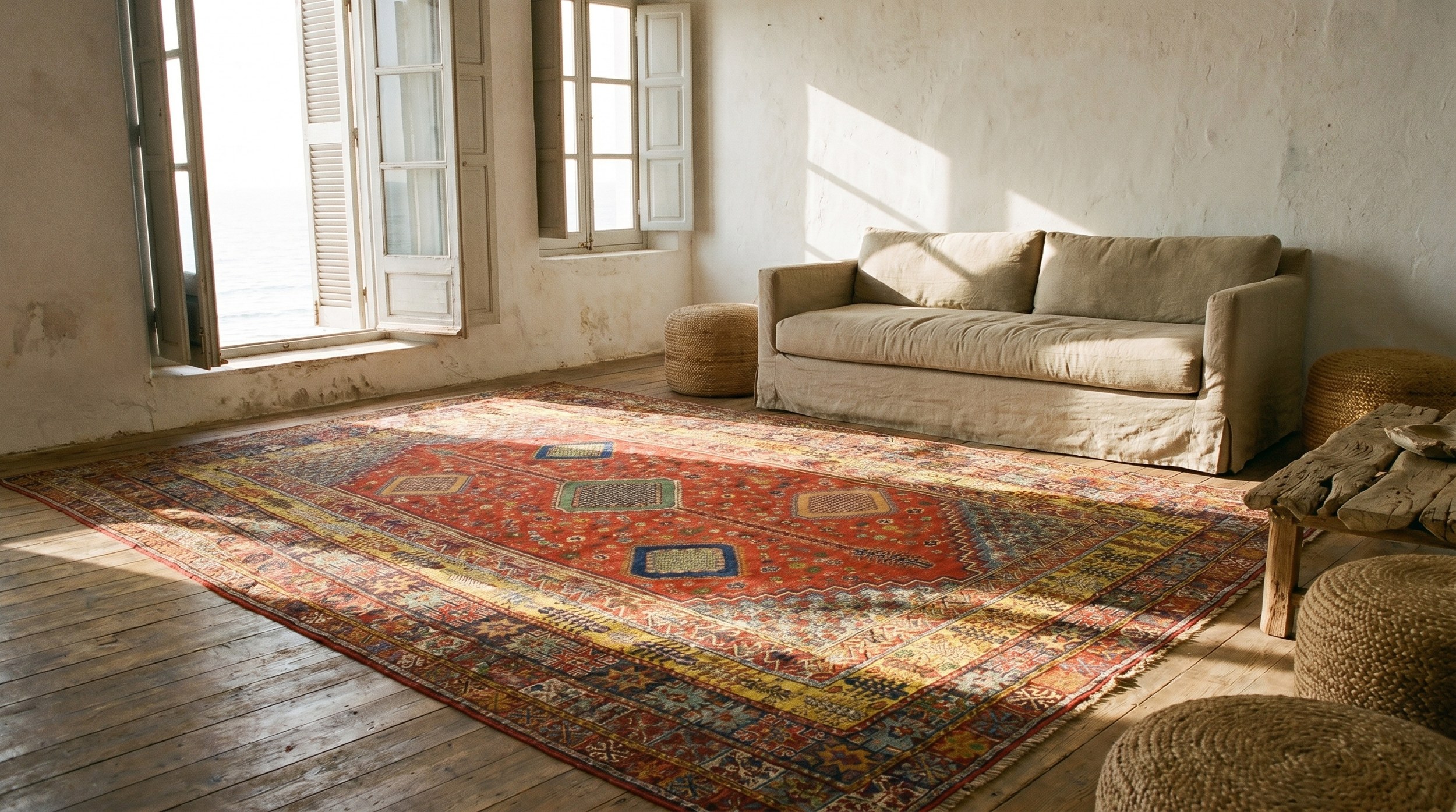
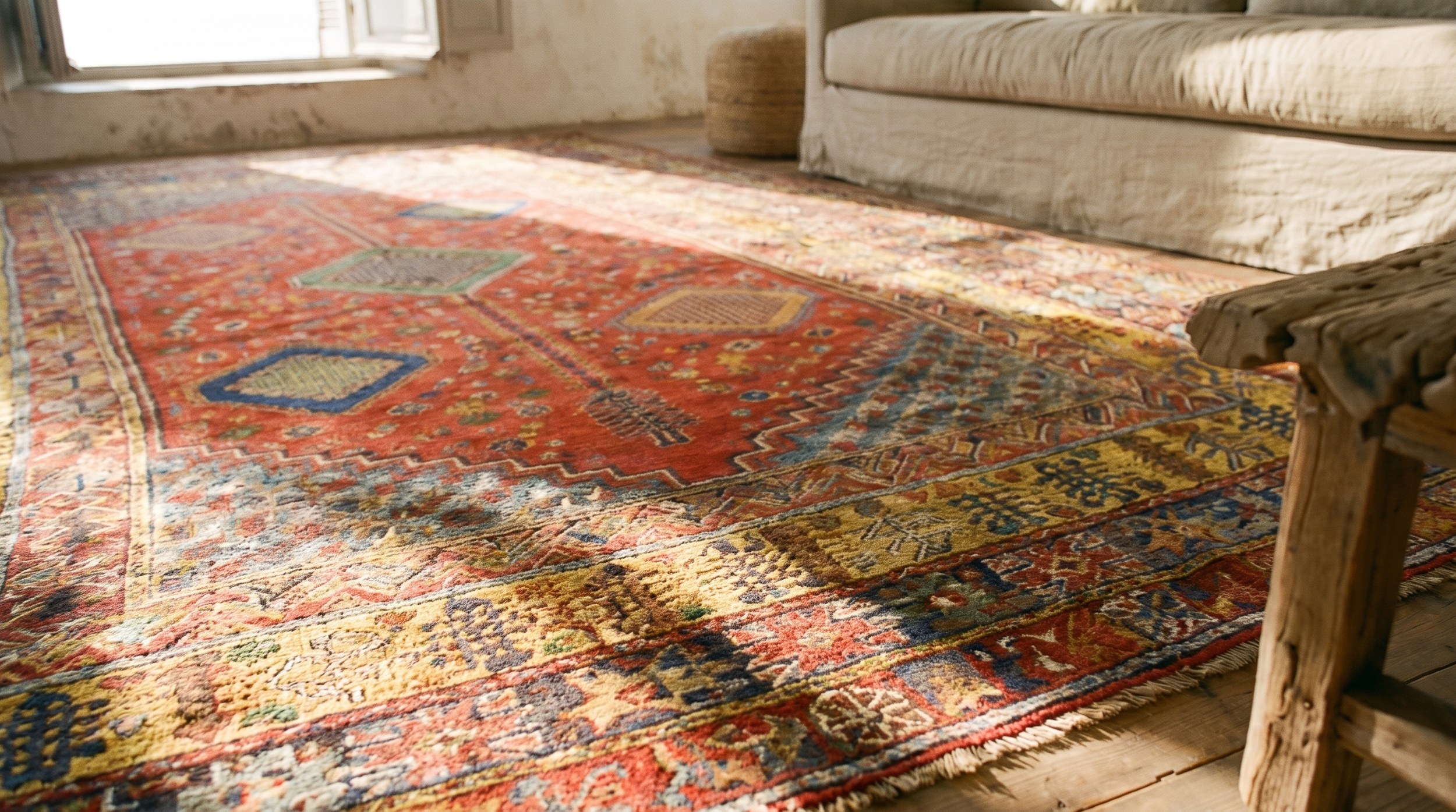
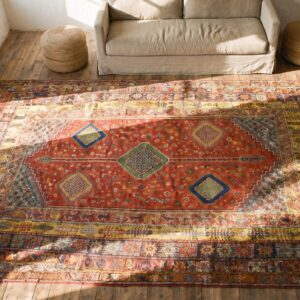
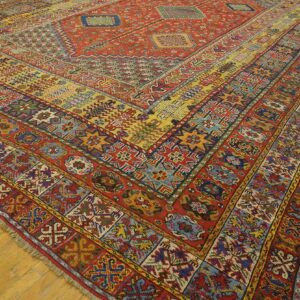
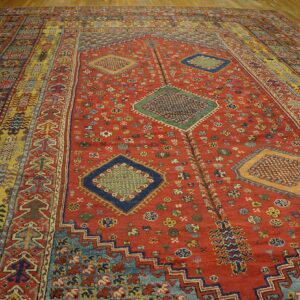
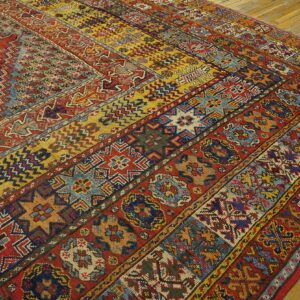
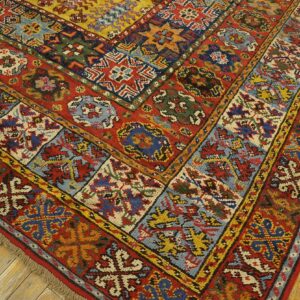
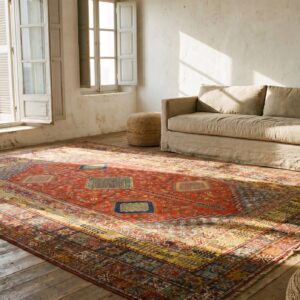
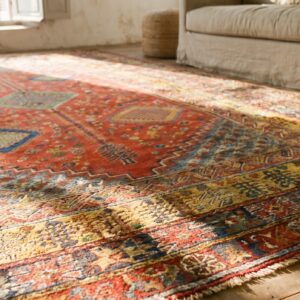
This rare and massive early 20th-century Moroccan Rabat carpet represents a sophisticated departure from the minimalist Berber weavings of the Middle Atlas, standing instead as a primary artifact of Morocco’s “Urban-Tribal” golden age. While the Berber tribes of the rural hinterlands favored thick, undyed shaggy piles for insulation, the coastal city of Rabat developed a prestigious weaving guild that integrated indigenous North African motifs with the classical sensibilities of the Ottoman Empire and Al-Andalus. This specific oversized specimen serves as a monumental record of that cultural synthesis, featuring a rustic, tribal geometry that is both ancient and remarkably modern in its graphic intensity. The oversized dimensions are particularly noteworthy, as such carpets were traditionally commissioned for administrative palaces or the expansive reception halls of high-ranking tribal dignitaries, where they functioned as both a status symbol and a communal anchor.
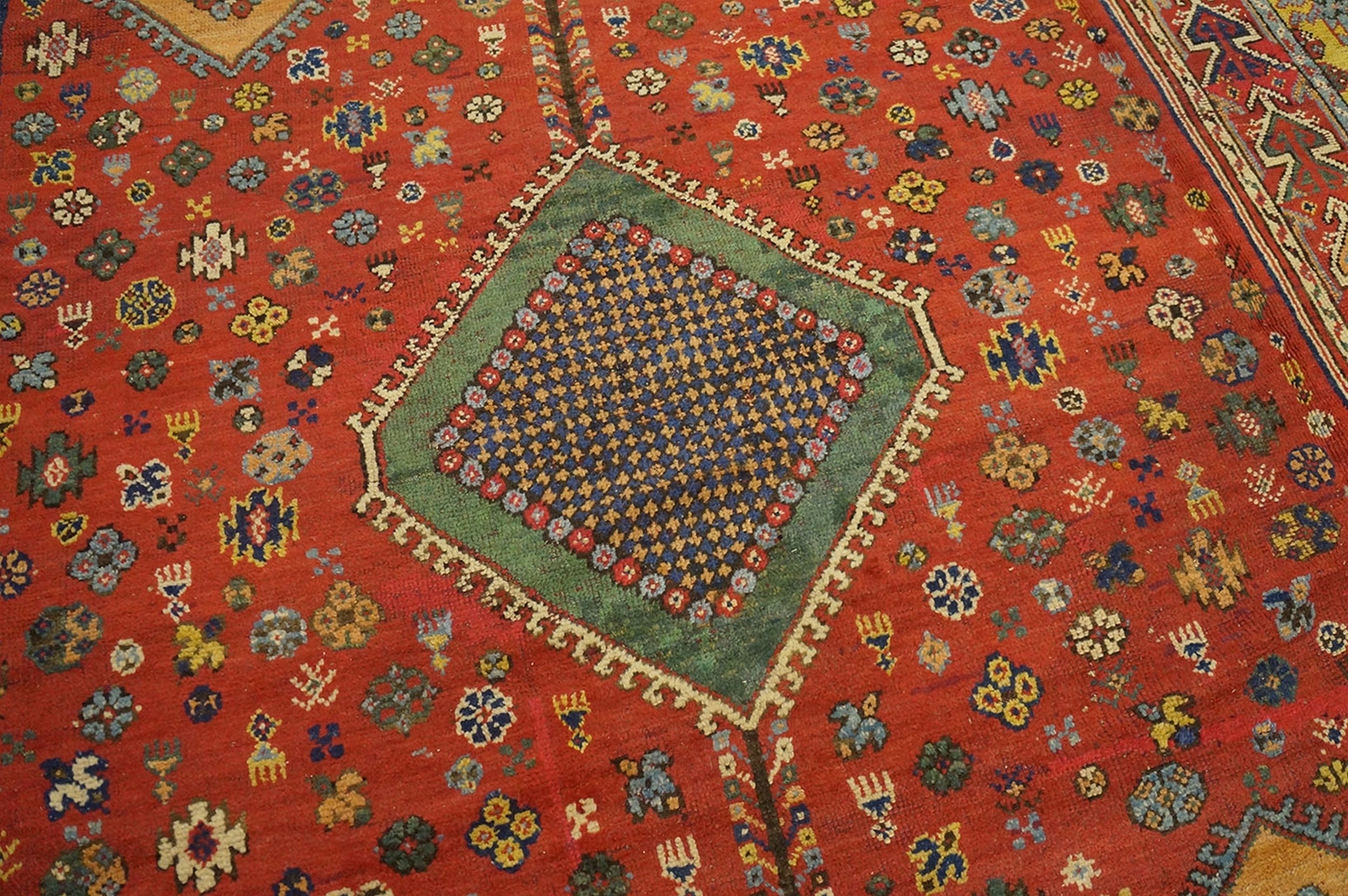
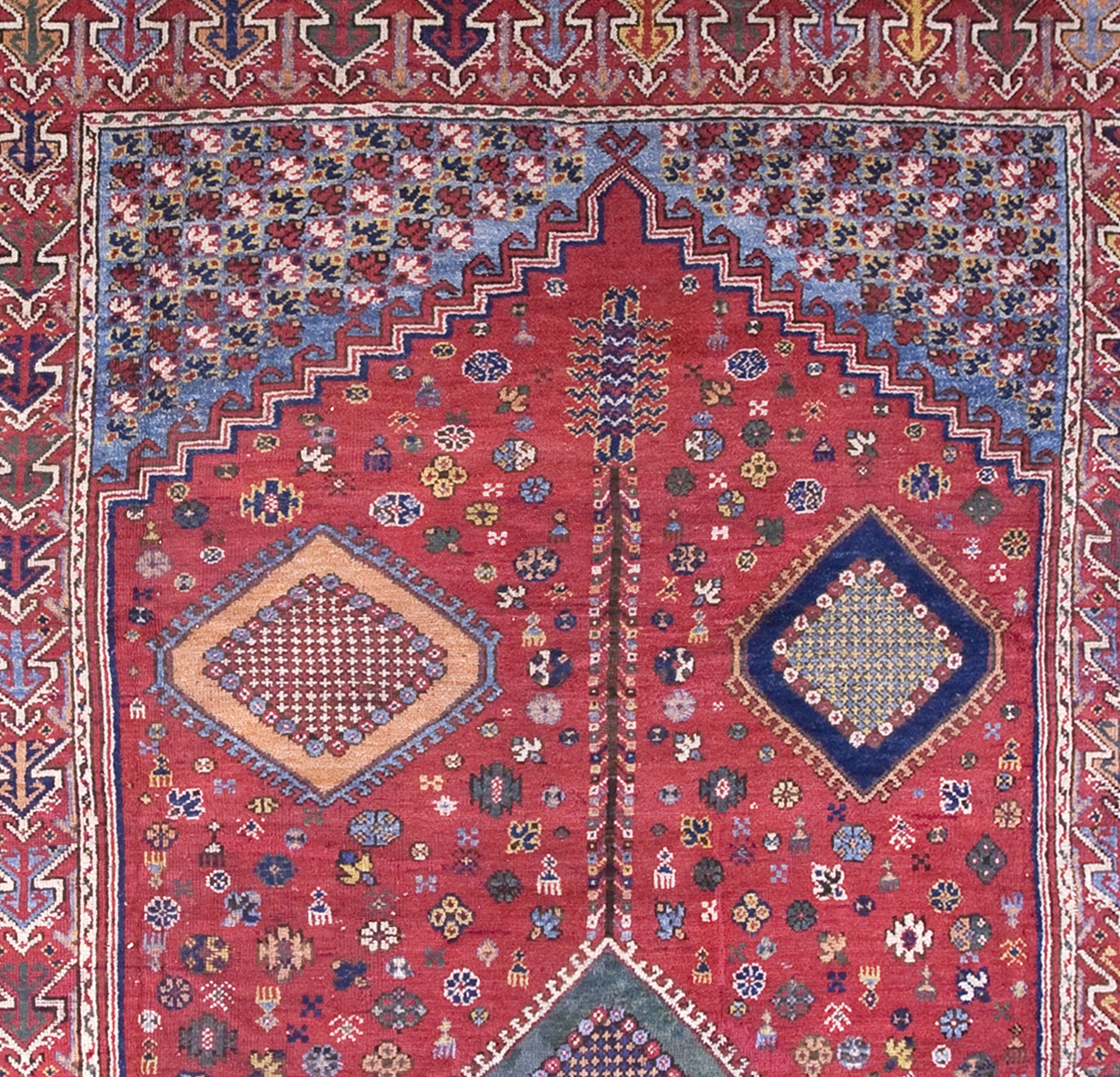
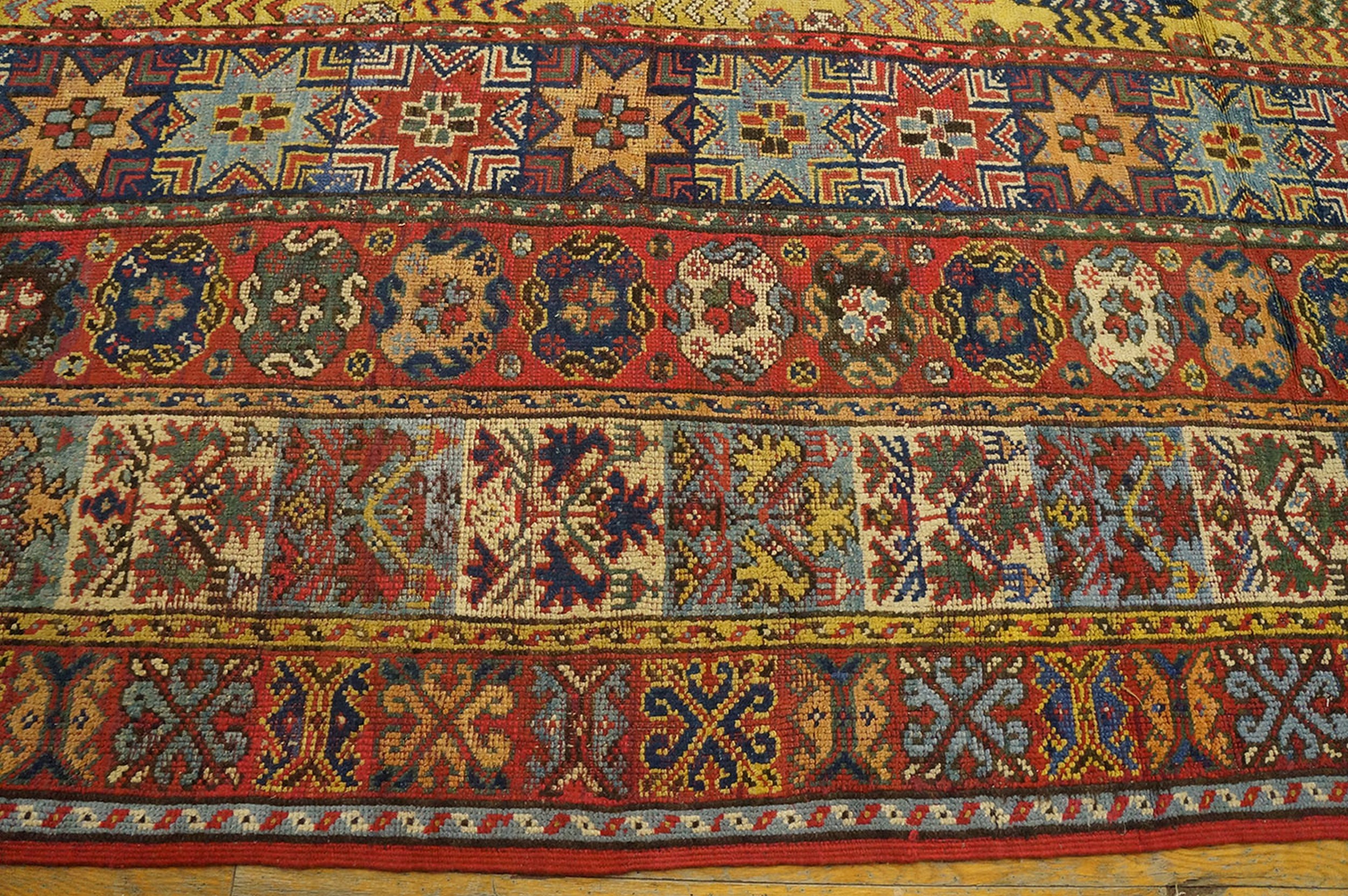
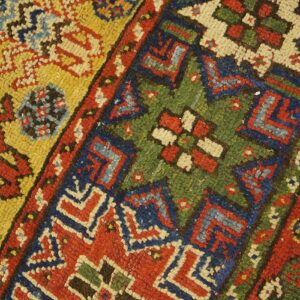
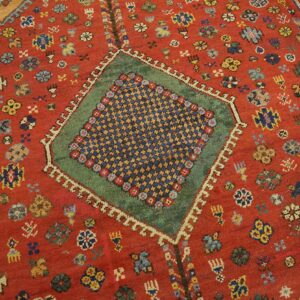
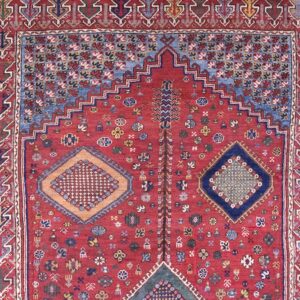
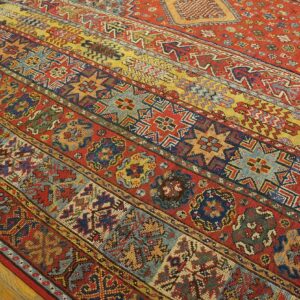
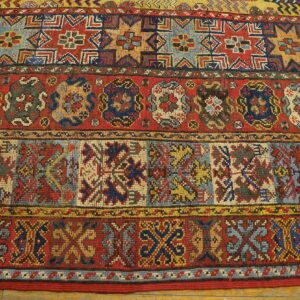
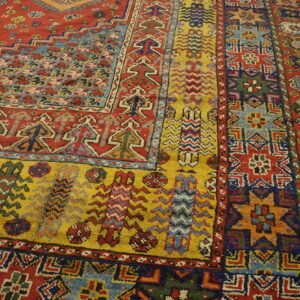
Historically, the aesthetic of the Rabat carpet is defined by its “field and frame” composition, a structural discipline that differentiates it from the more chaotic, spontaneous designs of nomadic Moroccan Berber carpets. The central field of this carpet is often left to breathe in a singular, saturated hue—traditionally achieved through a grueling fermentation process of madder root and pomegranate skins to produce deep reds. Within this field, one finds a series of geometric lozenges and “X” shapes, which in Berber semiotics represent the “Eye” and the “Diamond,” talismans intended to deflect the evil eye and protect the household from misfortune. The surrounding borders are a complex architectural achievement, often featuring seven distinct bands that represent the seven heavens of Islamic cosmology, effectively enclosing the rug in a layer of spiritual and physical protection.
The early 20th century was a period of profound transition for Moroccan textiles, as the arrival of the French Protectorate began to expose these traditional artworks to the Western avant-garde. Modernist masters such as Le Corbusier and Frank Lloyd Wright were famously captivated by the “ordered primitive” nature of vintage Moroccan carpets like this one, seeing in their rustic geometry a precursor to abstract expressionism. This carpet’s rare oversized format and tribal-geometric clarity offer a tangible link to a period when the weaver’s loom was the primary vessel for tribal history and cosmological belief. To house such a piece is to preserve a fragment of the Maghreb’s storied past—a work of art that bridges the gap between the nomadic soul of the desert and the refined architectural heritage of the Mediterranean coast.
This rug is featured in red tones.