
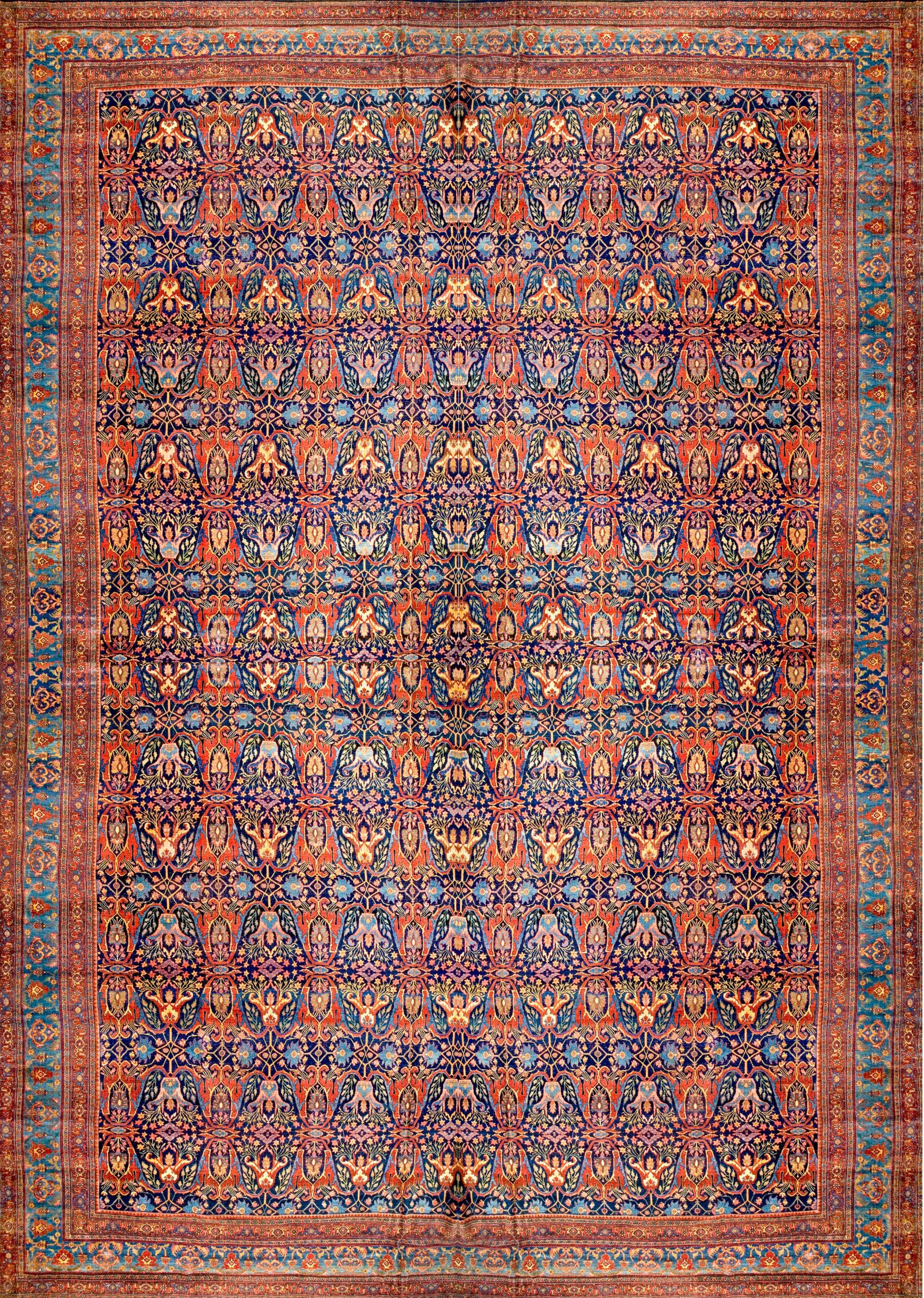
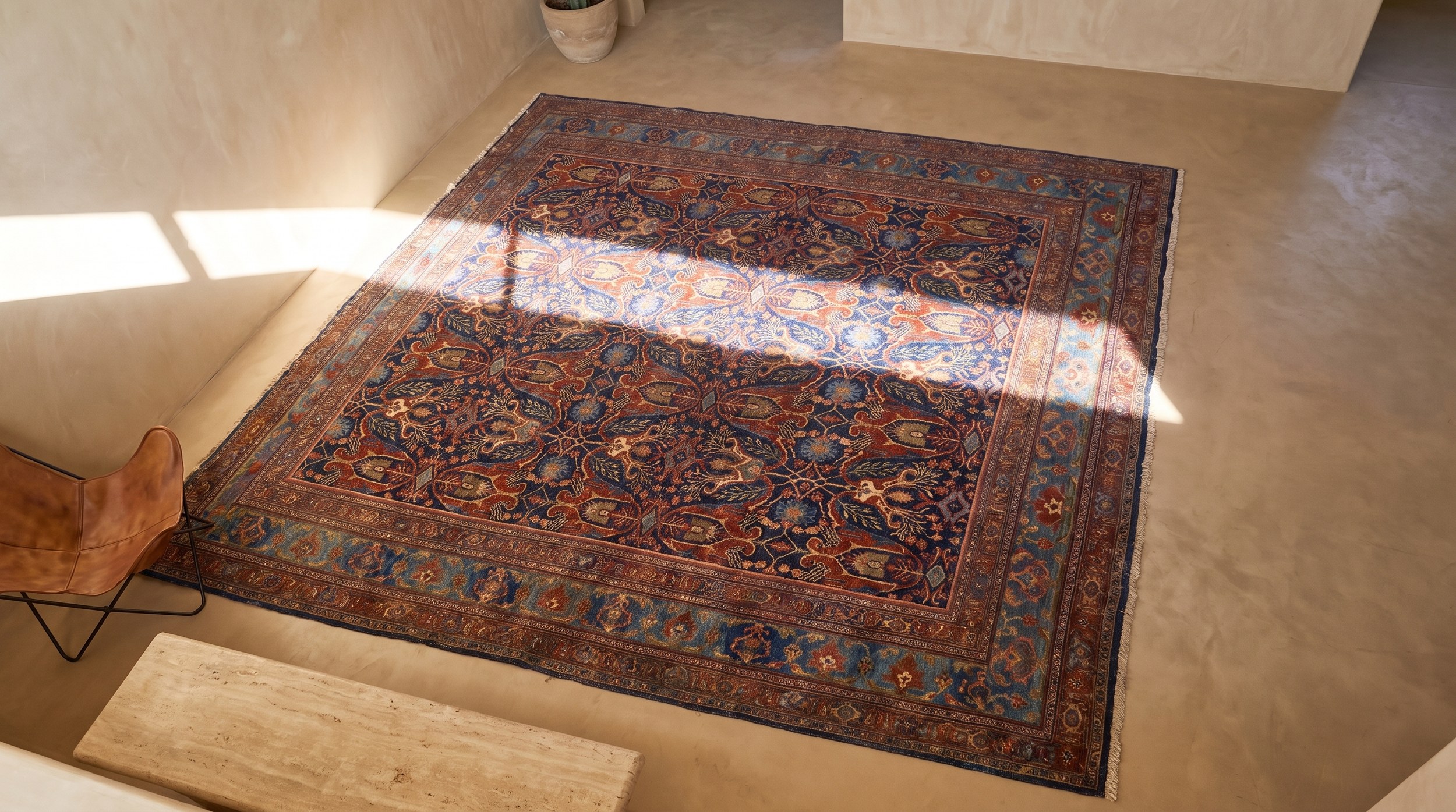
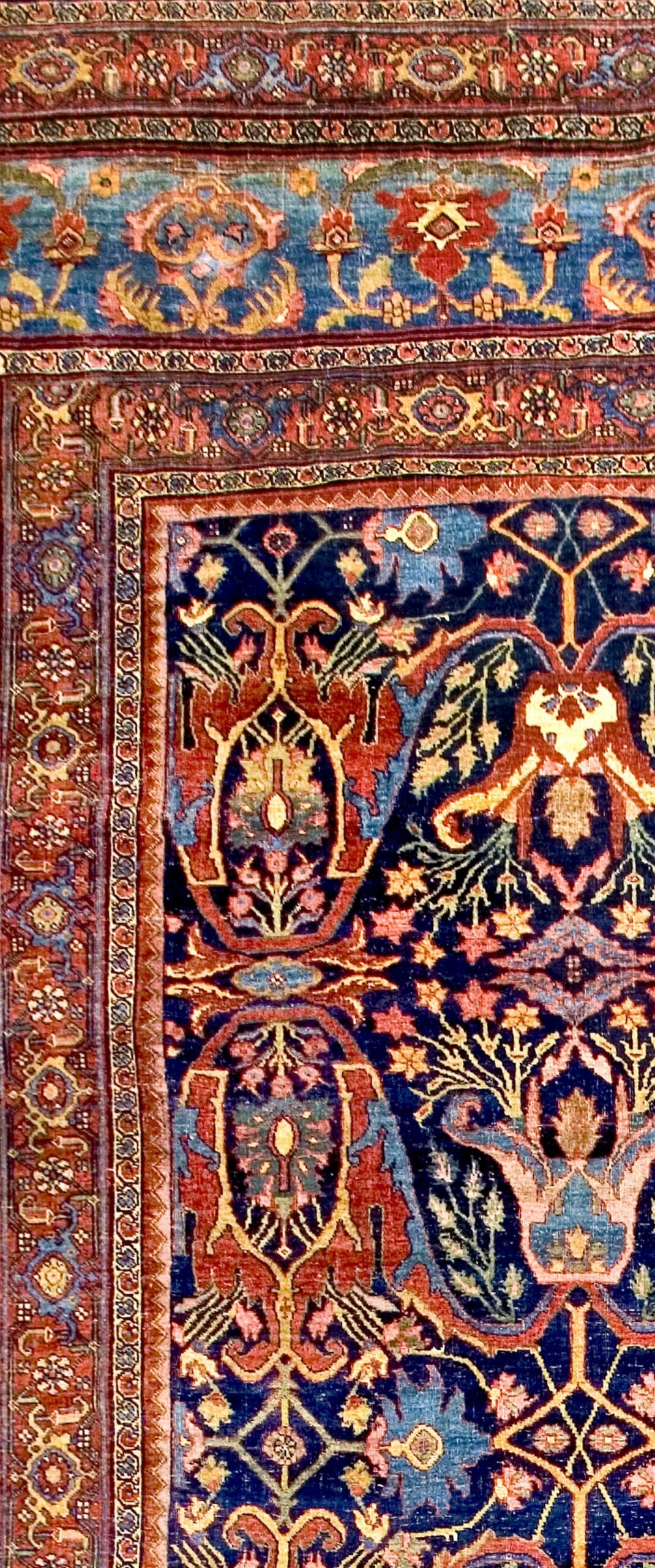
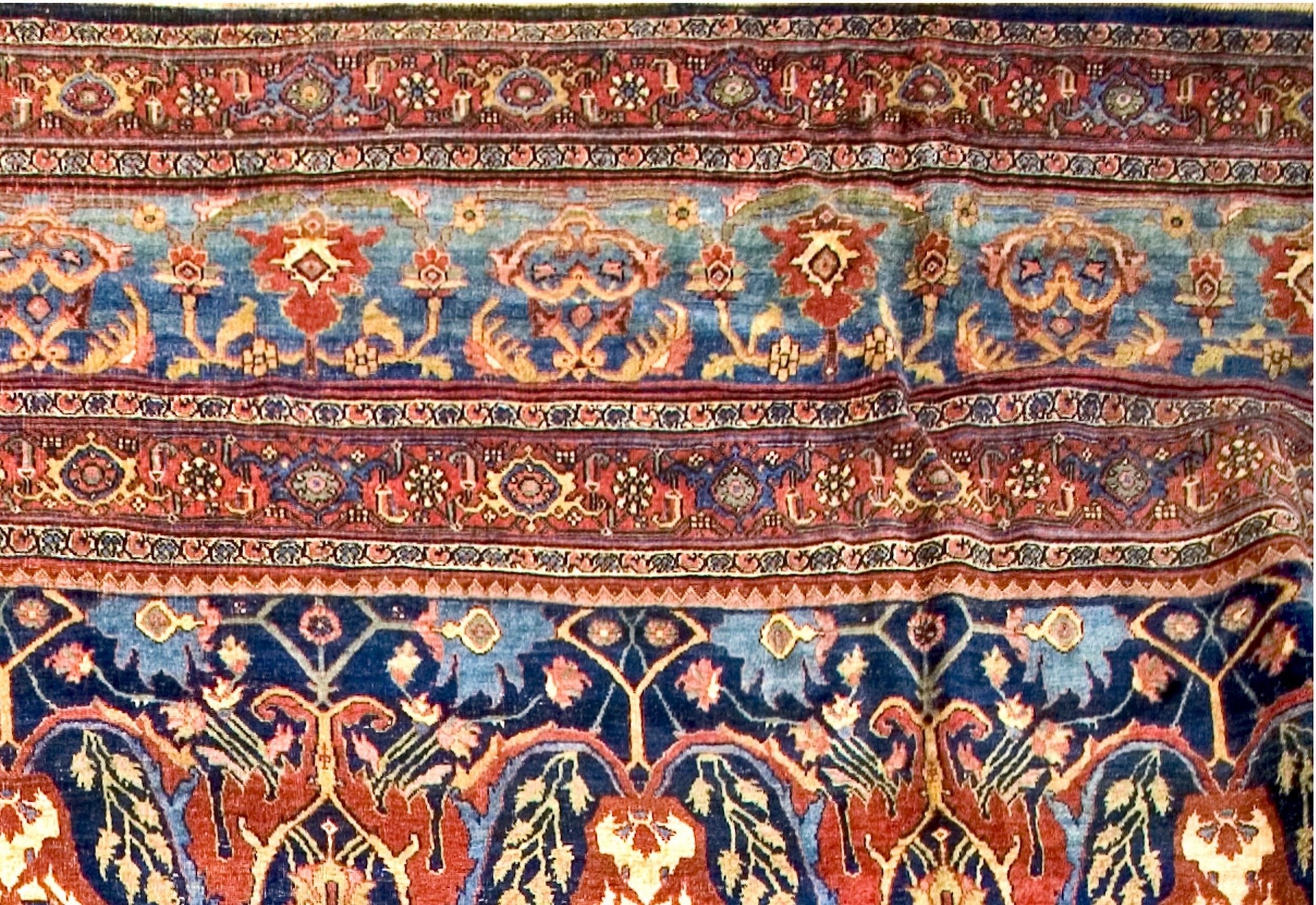
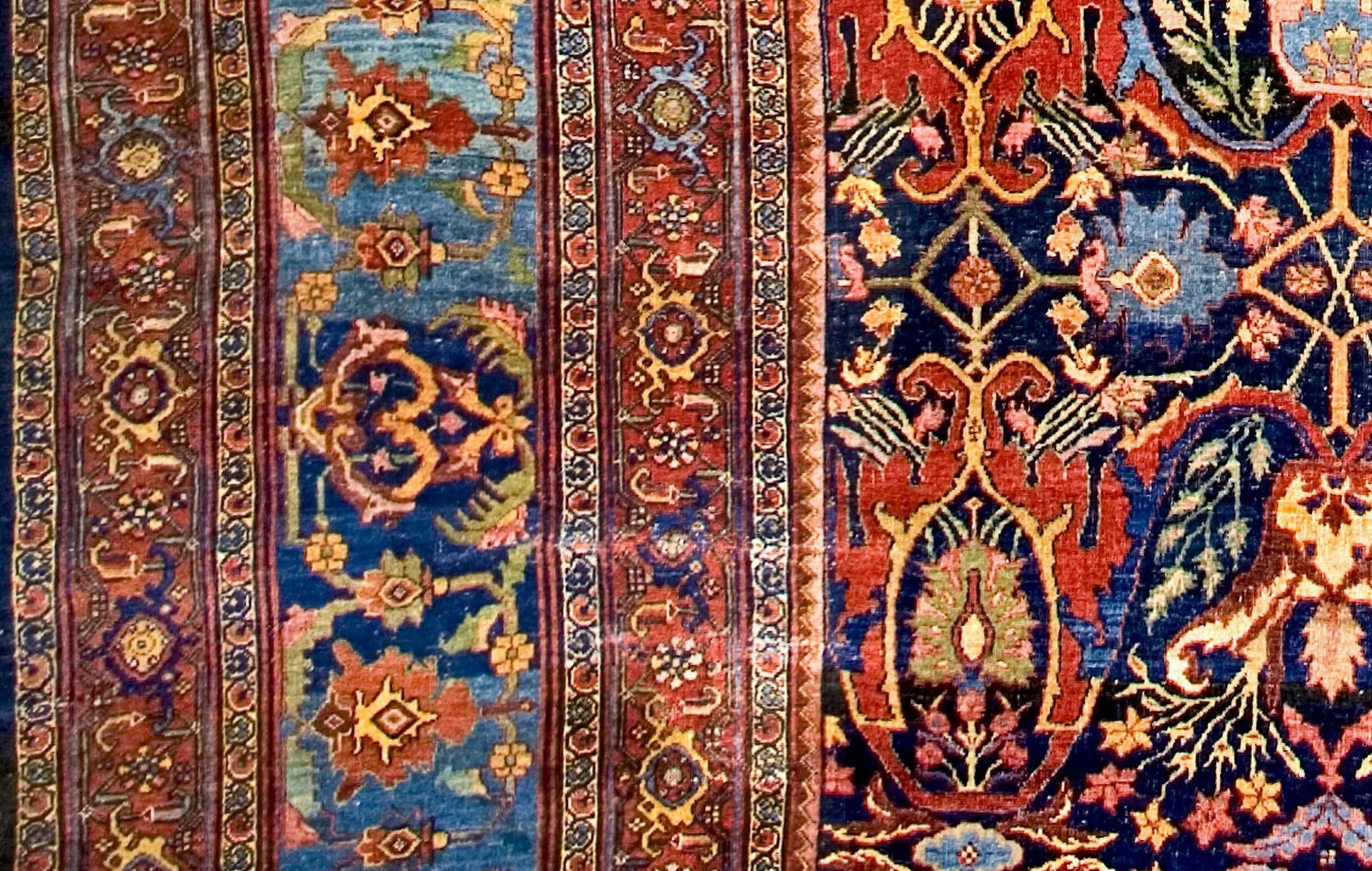
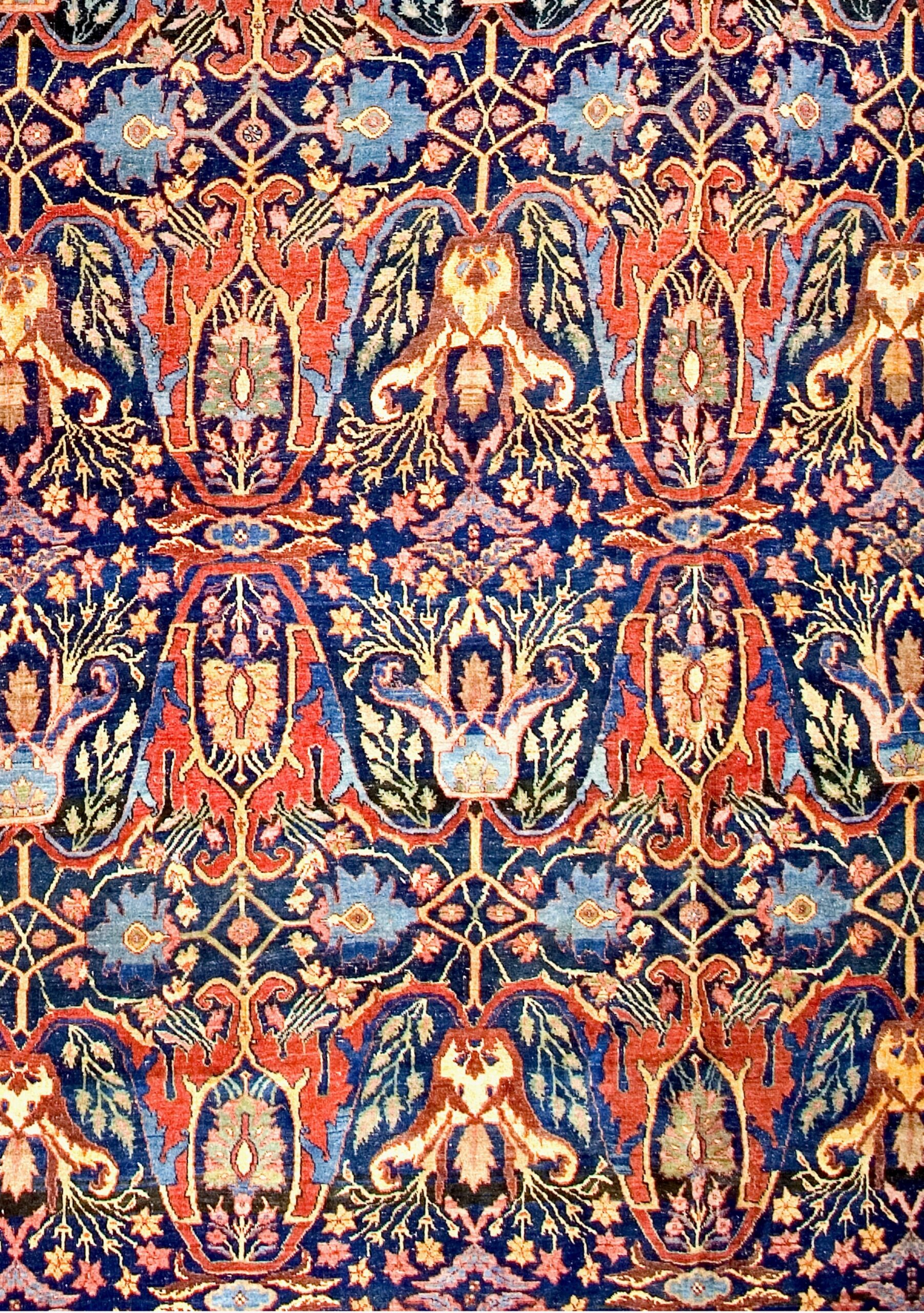
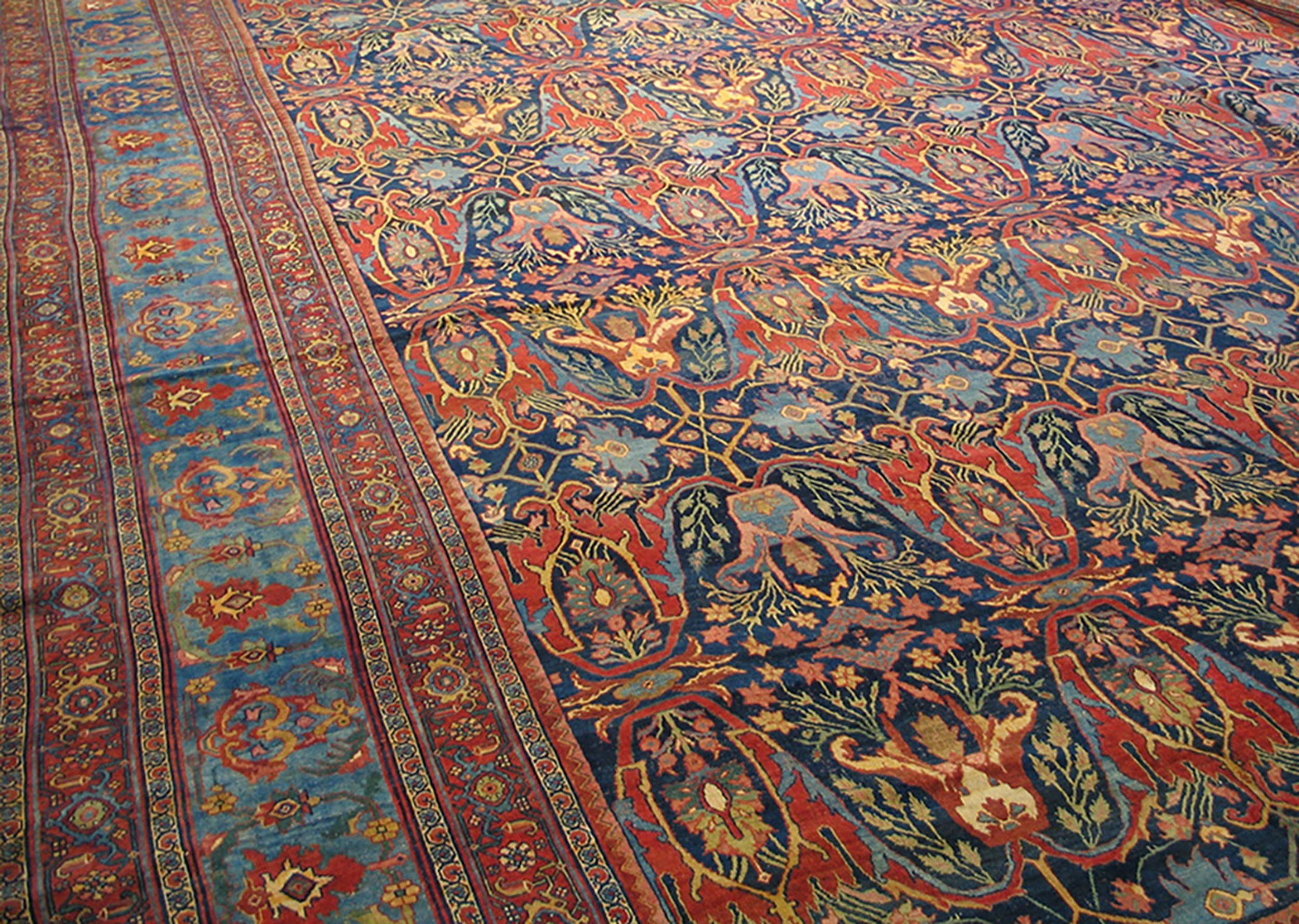
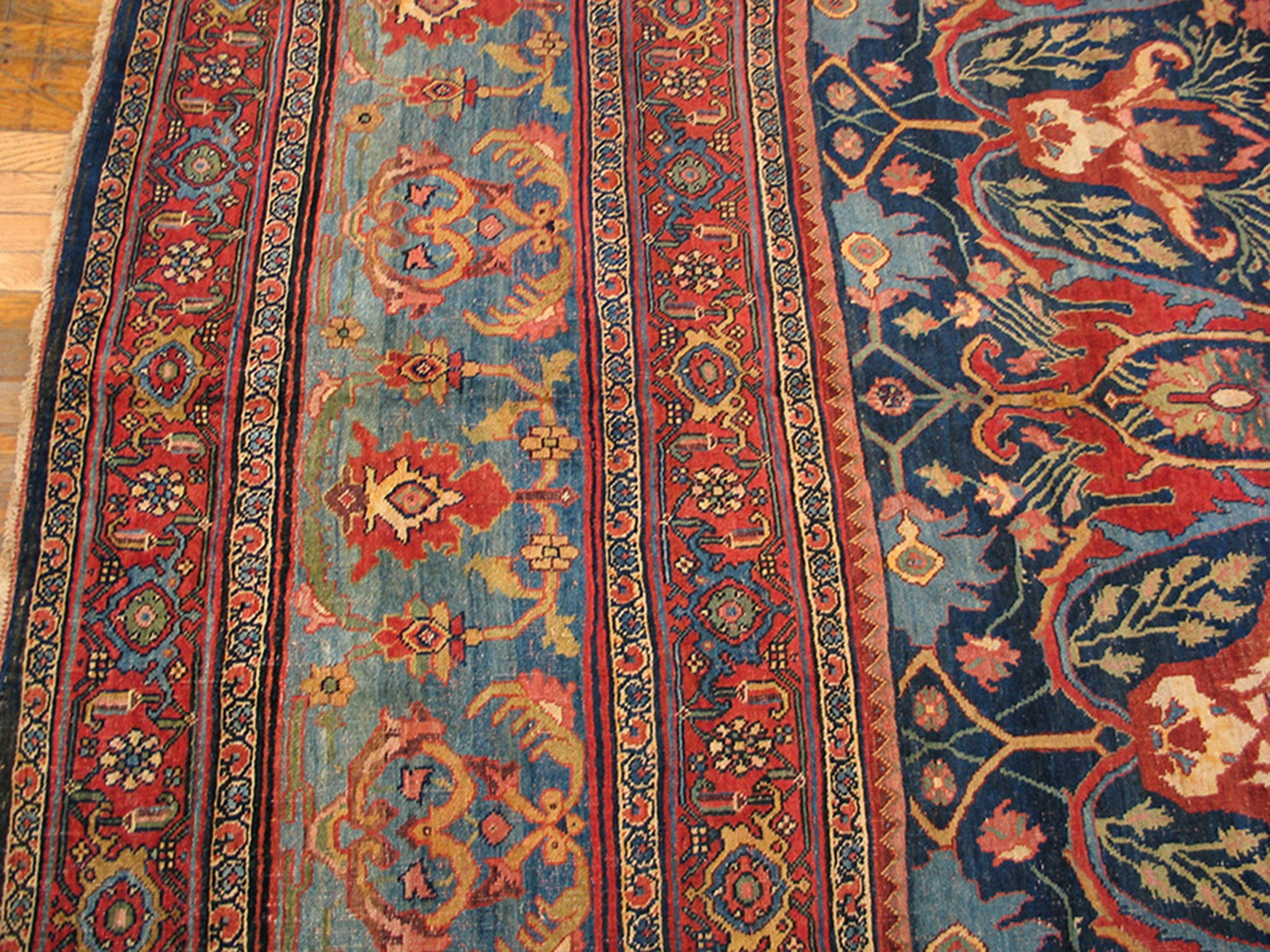
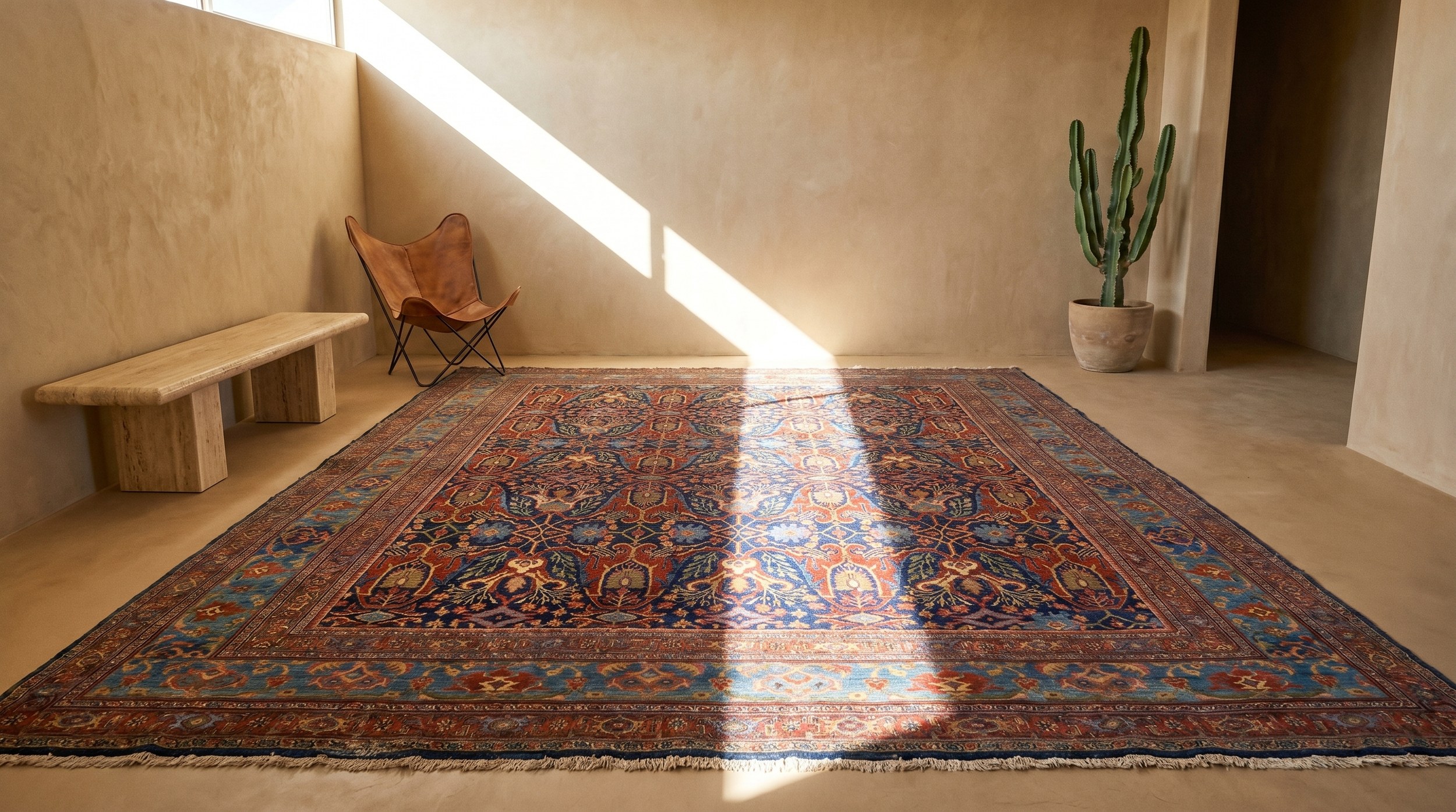
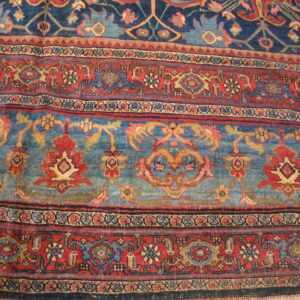
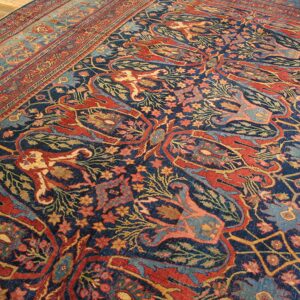
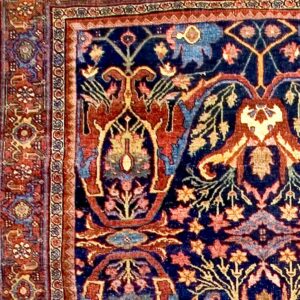
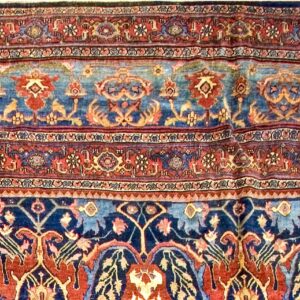
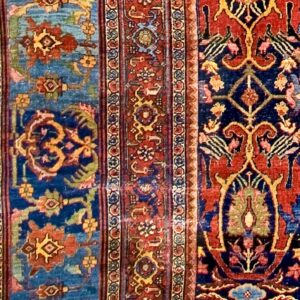
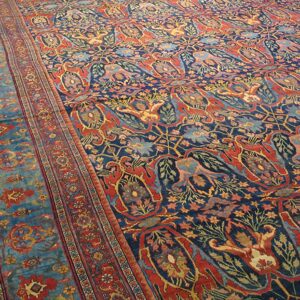
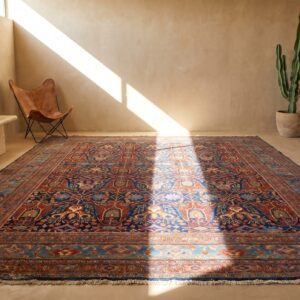
This oversized antique Persian carpet, dating to the late 19th century, is a formidable example of the “Iron Rugs of Persia” – AKA Persian Bidjar rugs. Renowned for their incomparable structural density and legendary durability, Bidjar weavings from this era are among the most sought-after by collectors who value both artistic gravitas and functional resilience. This particular rug features the rare and prestigious Garous design, a sophisticated aesthetic originally developed for the Persian nobility and later adopted by the Kurdish weavers of the Bidjar region. The result is a rug that successfully bridges the gap between courtly elegance and raw, tribal vitality.
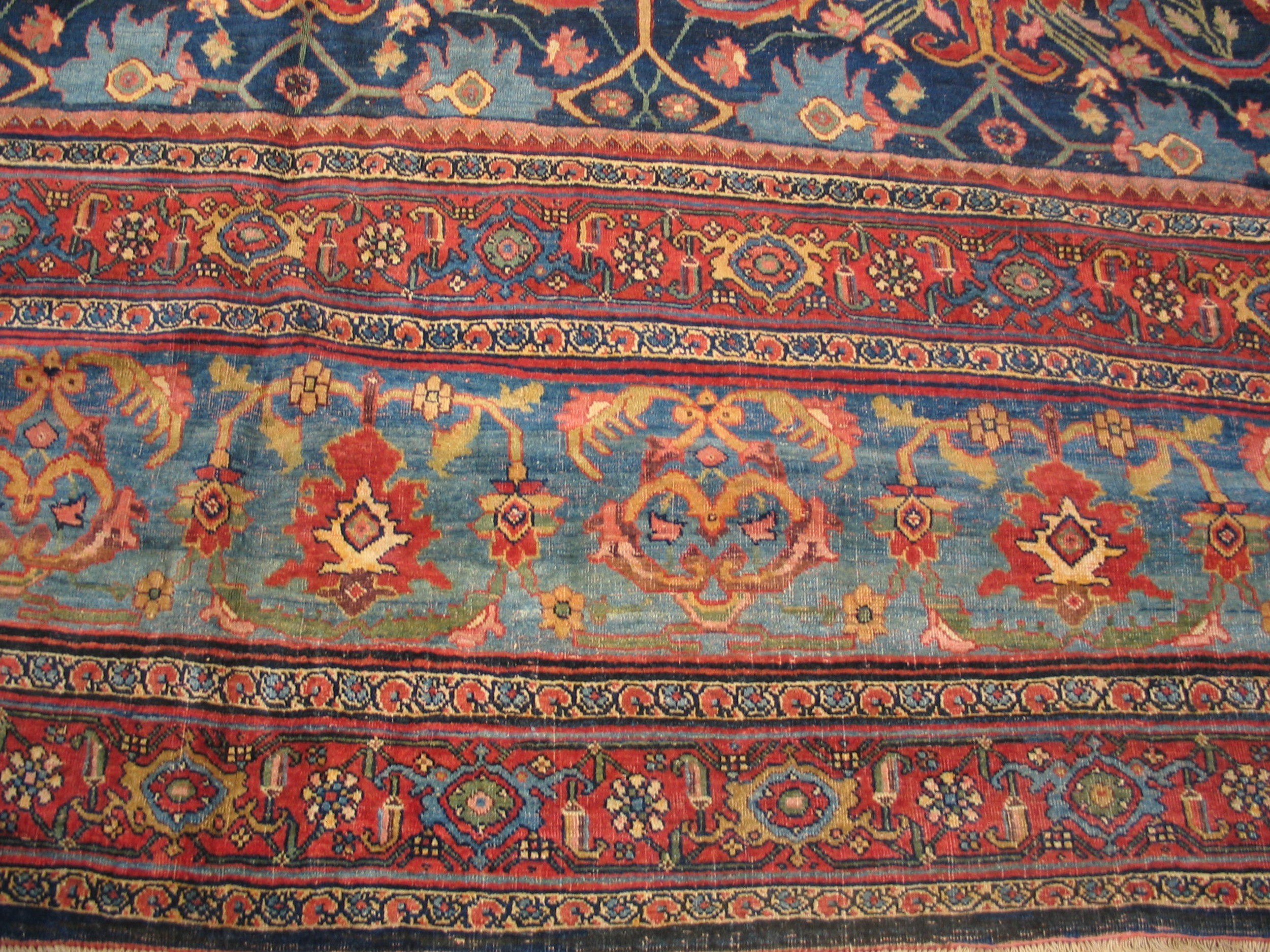
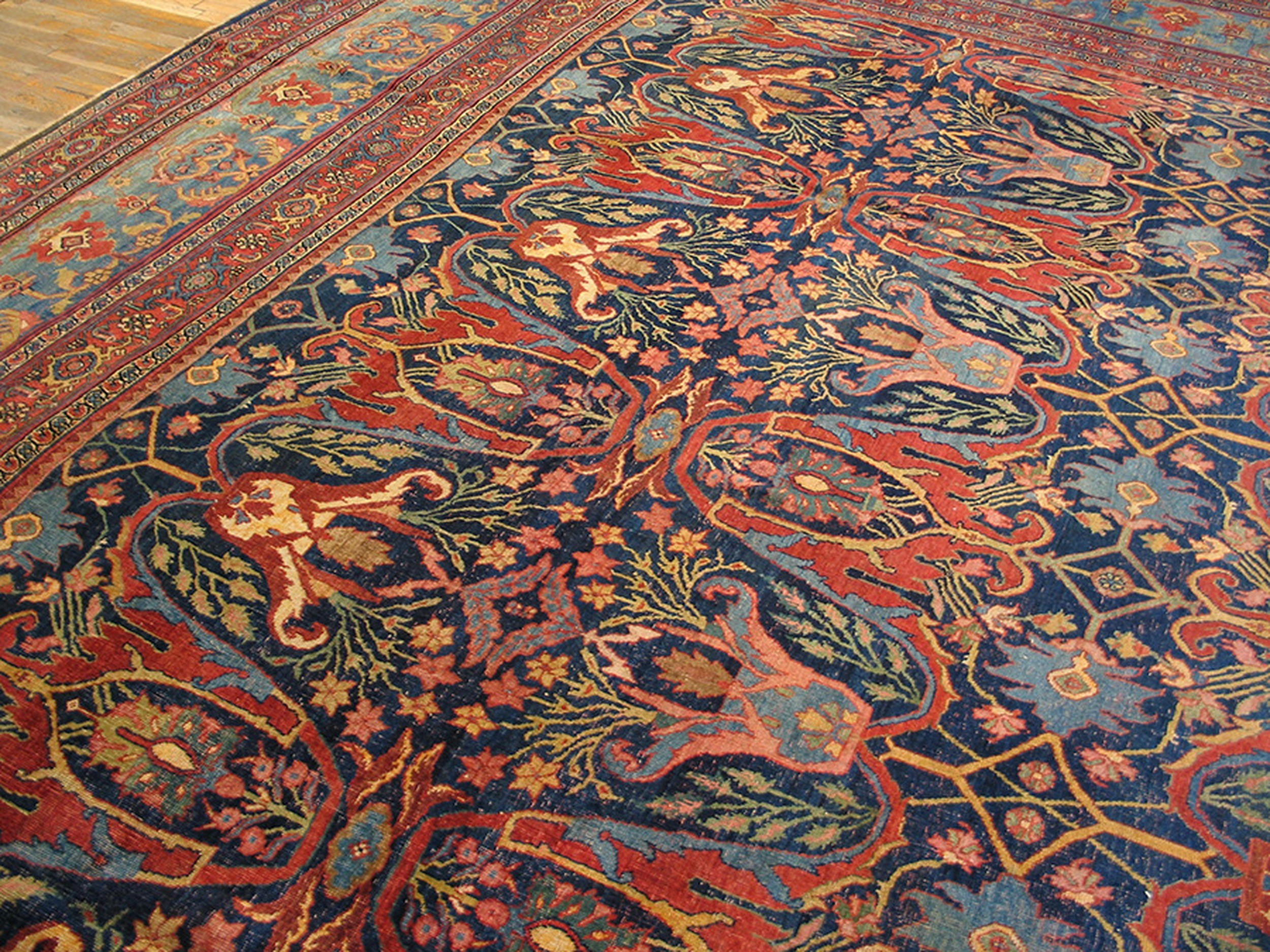
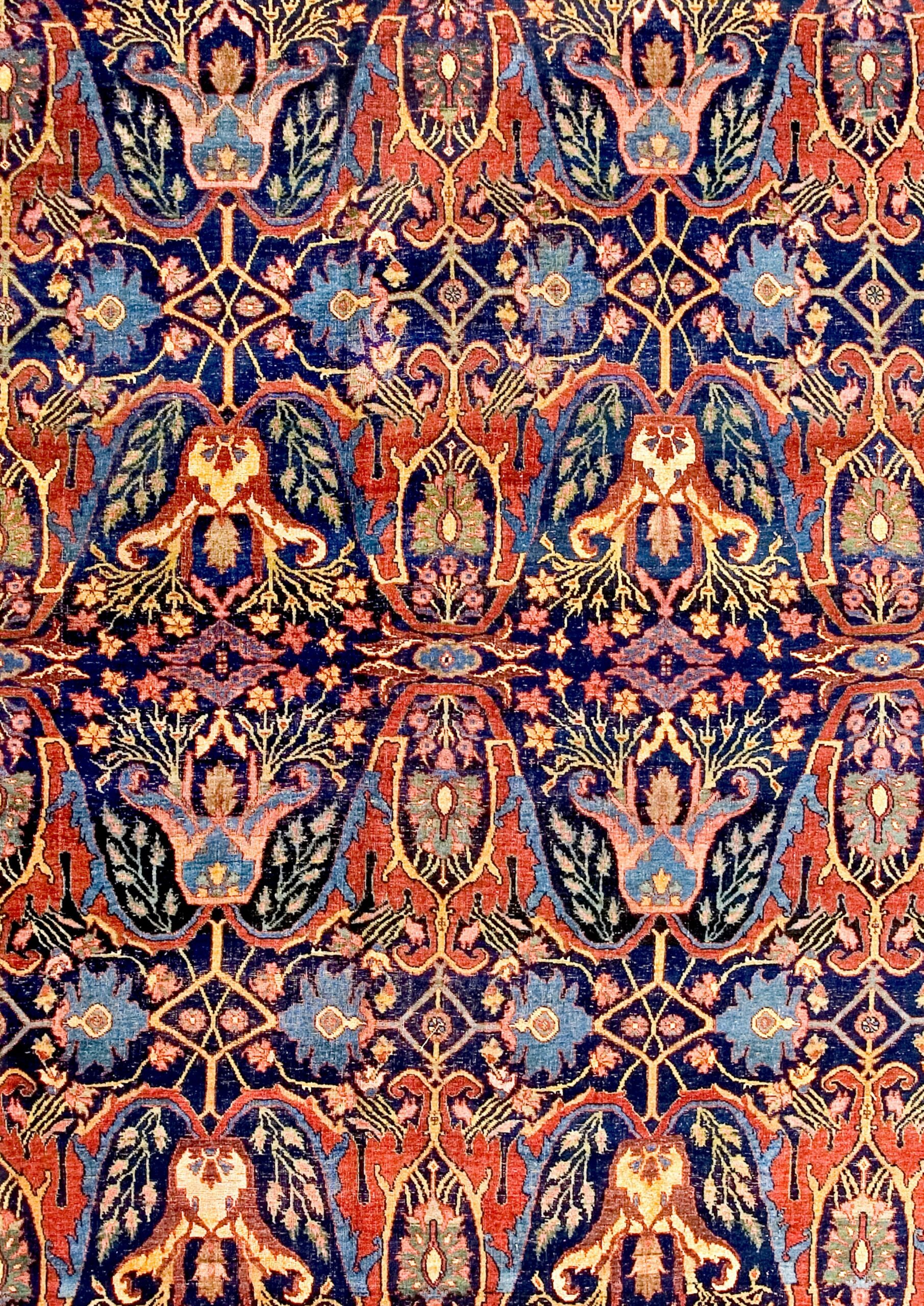
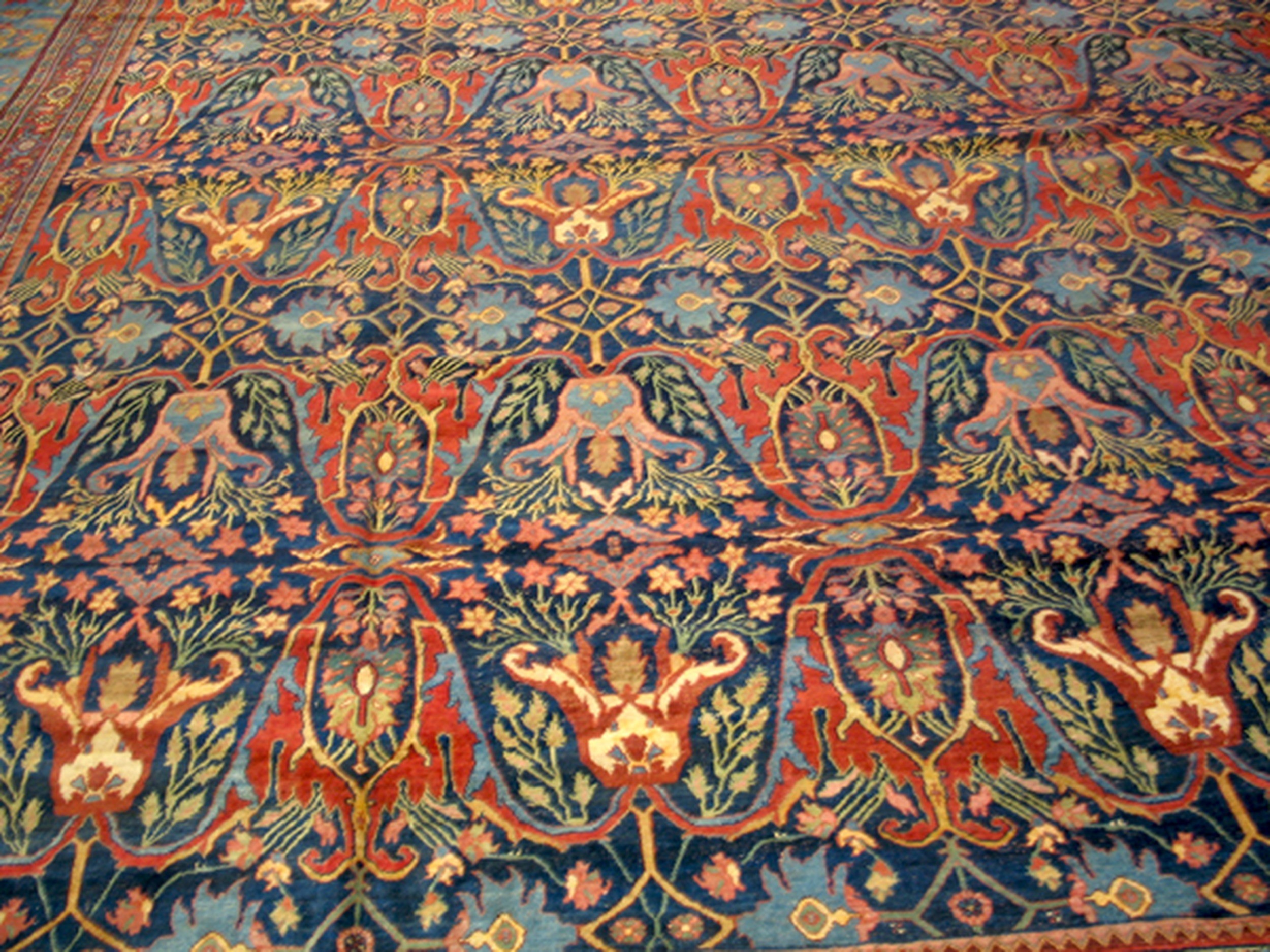
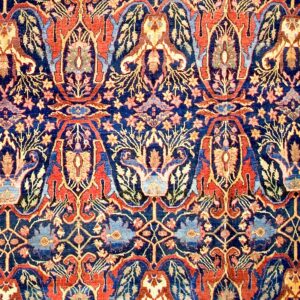
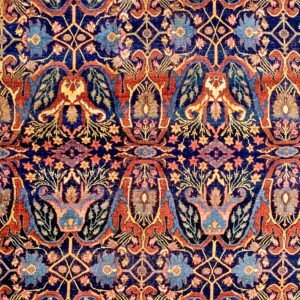
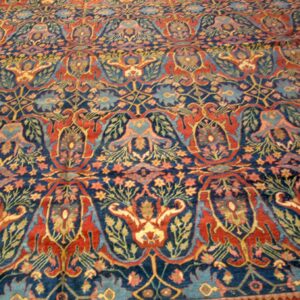
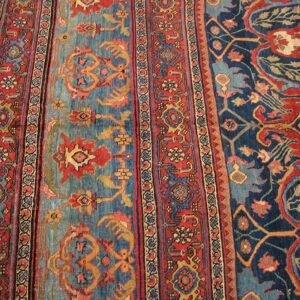
The carpet is defined by its deep, commanding midnight blue field, which serves as a dramatic canvas for a large-scale, allover arrangement of split-arabesques, scrolling vines, and stylized floral palmettes. Unlike the more common medallion-centered compositions, the Garous layout offers a rhythmic, architectural continuity that expands across the grand proportions of the rug. The saturated indigo ground is beautifully contrasted by a vibrant yet harmonious palette of terracotta red, forest green, and soft ochre, all rendered in hand-spun wool that has acquired a lustrous, age-mellowed patina over the last century.
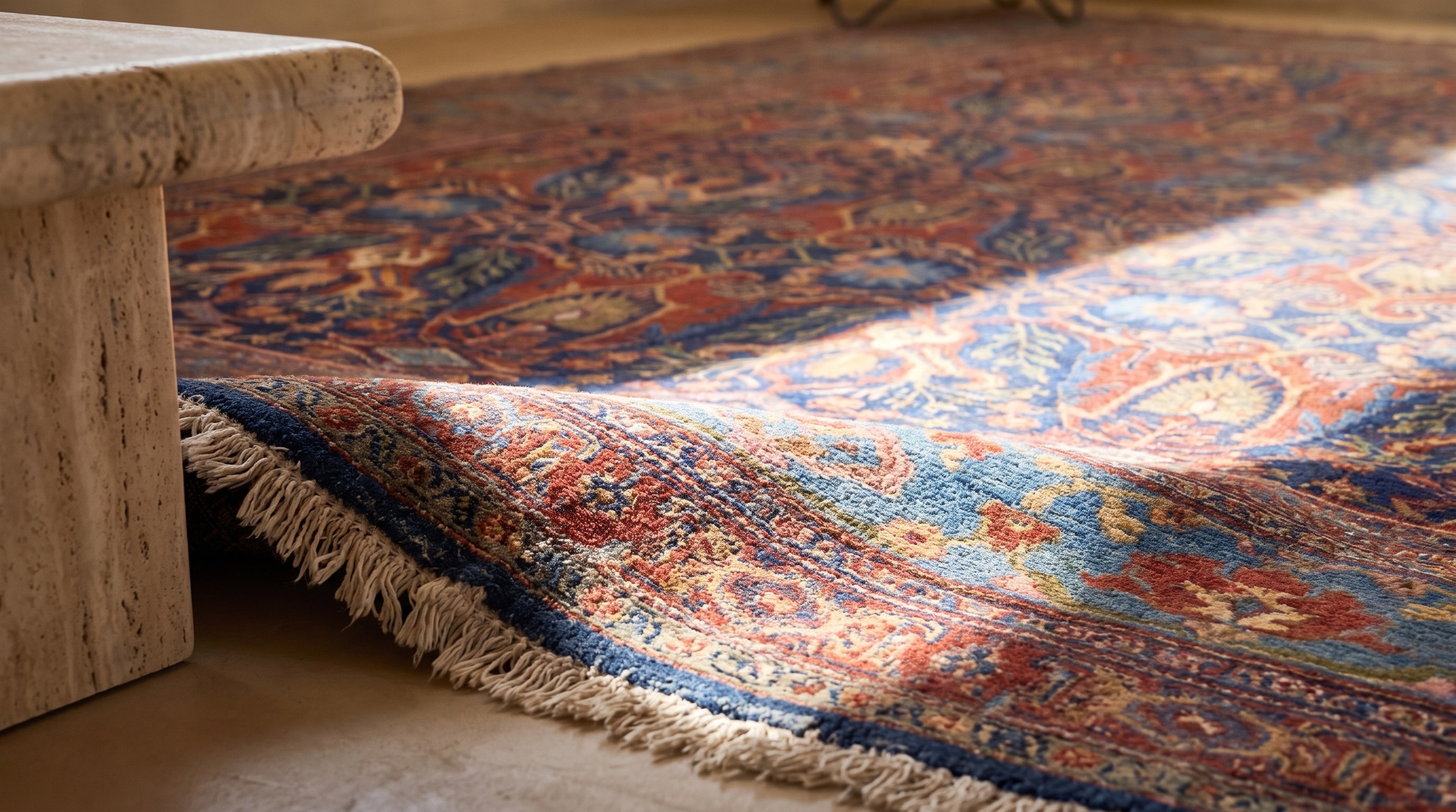
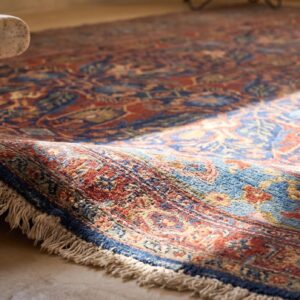
As an oversized architectural piece, this Bidjar possesses a physical presence that can anchor a palatial room with ease. Its “wet-woven” construction—a unique technique where the weft threads are dampened and hammered into place—creates a pile so dense it remains virtually impervious to wear. This is more than a decorative floor covering; it is a three-generation heirloom that captures the storied heritage of Northwest Persian weaving, making it a preeminent choice for an interior that demands a sense of history, strength, and scholarly refinement.