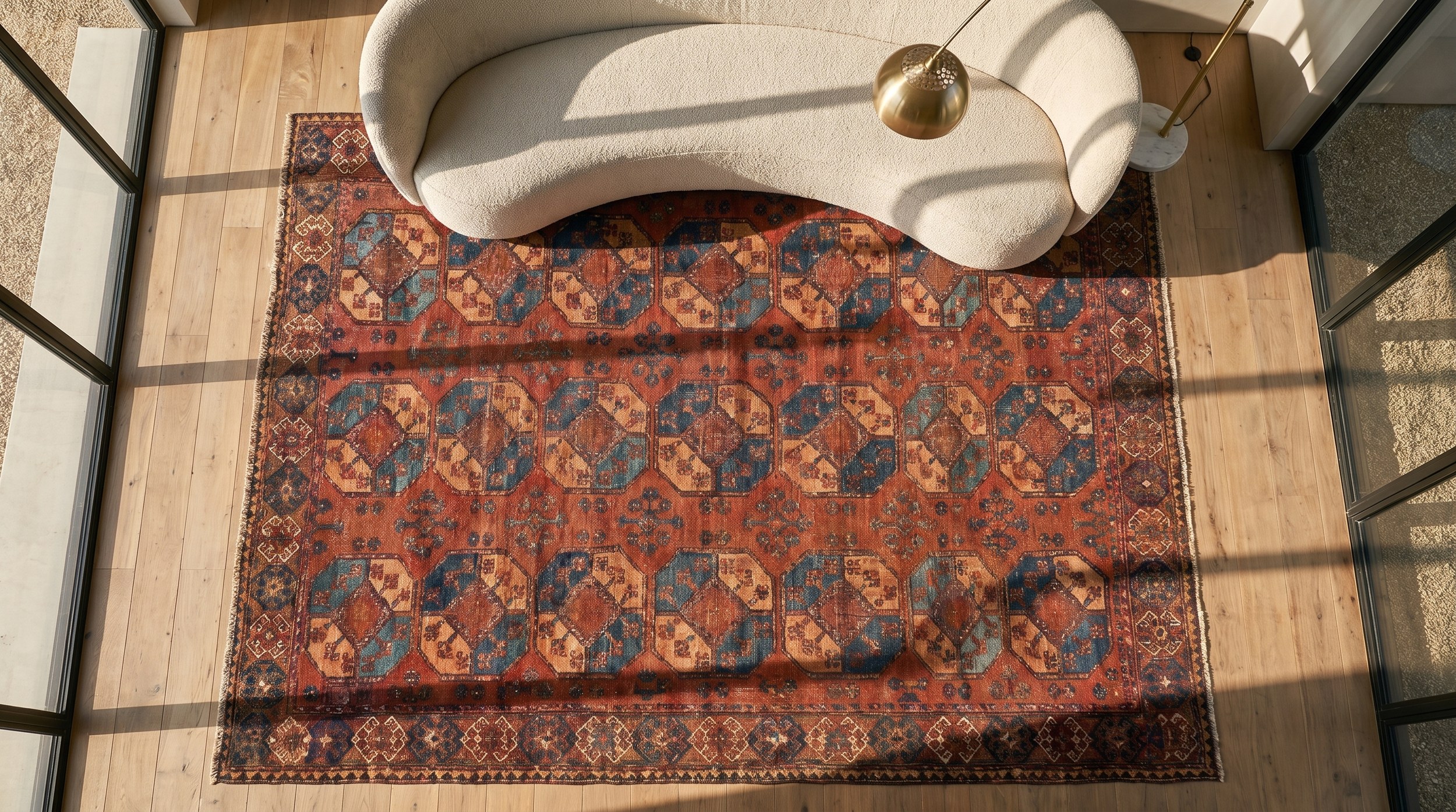
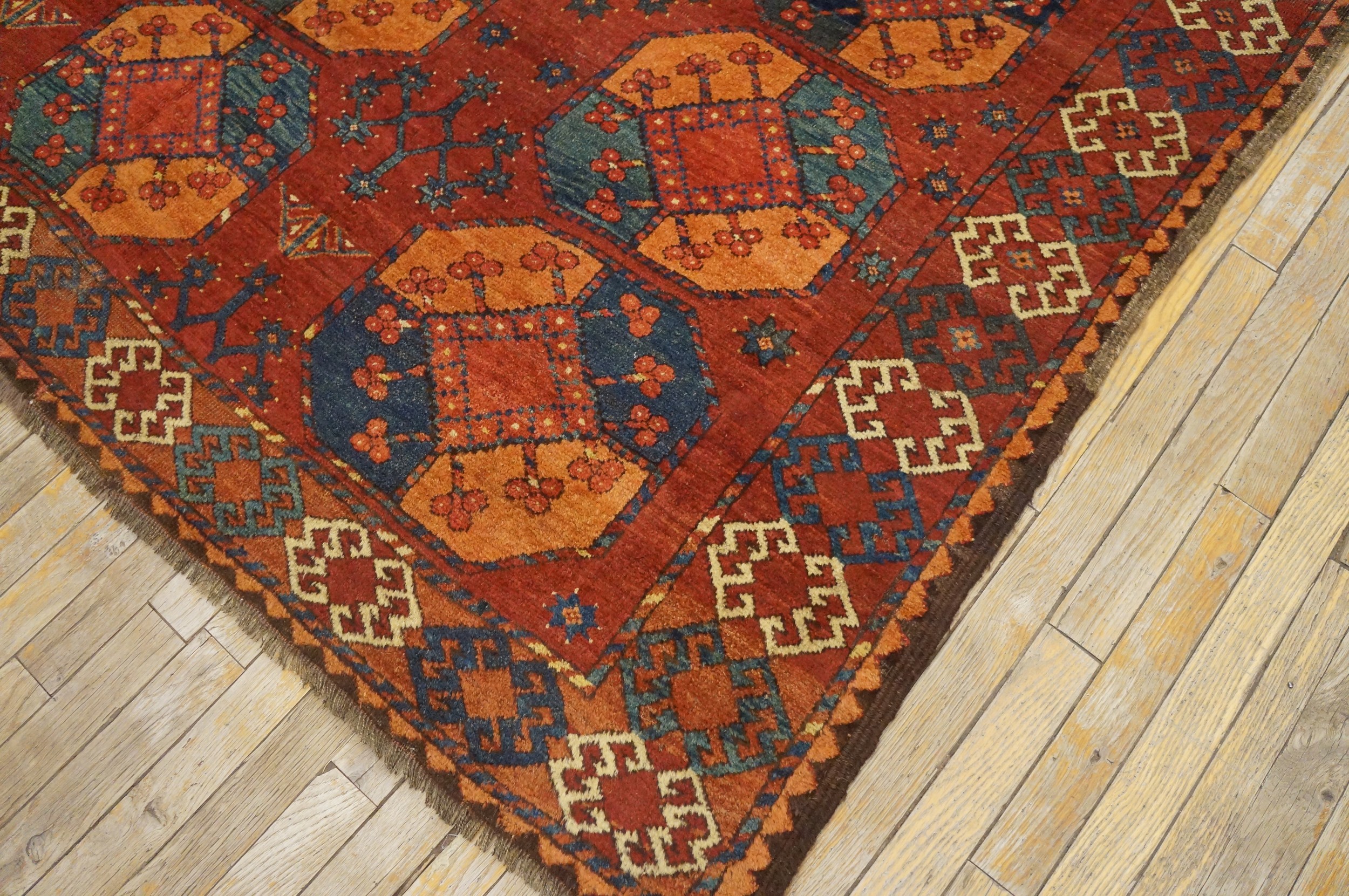
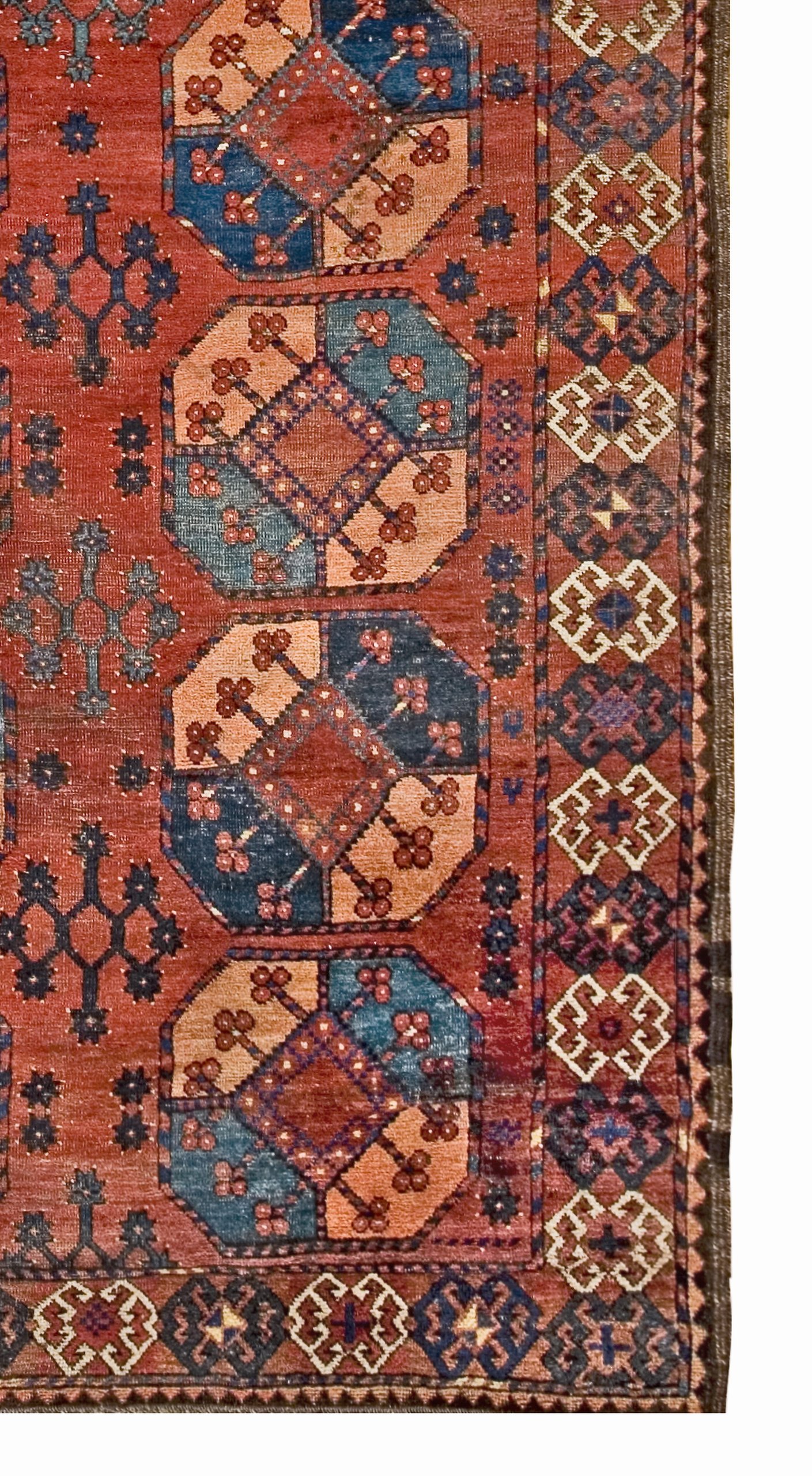
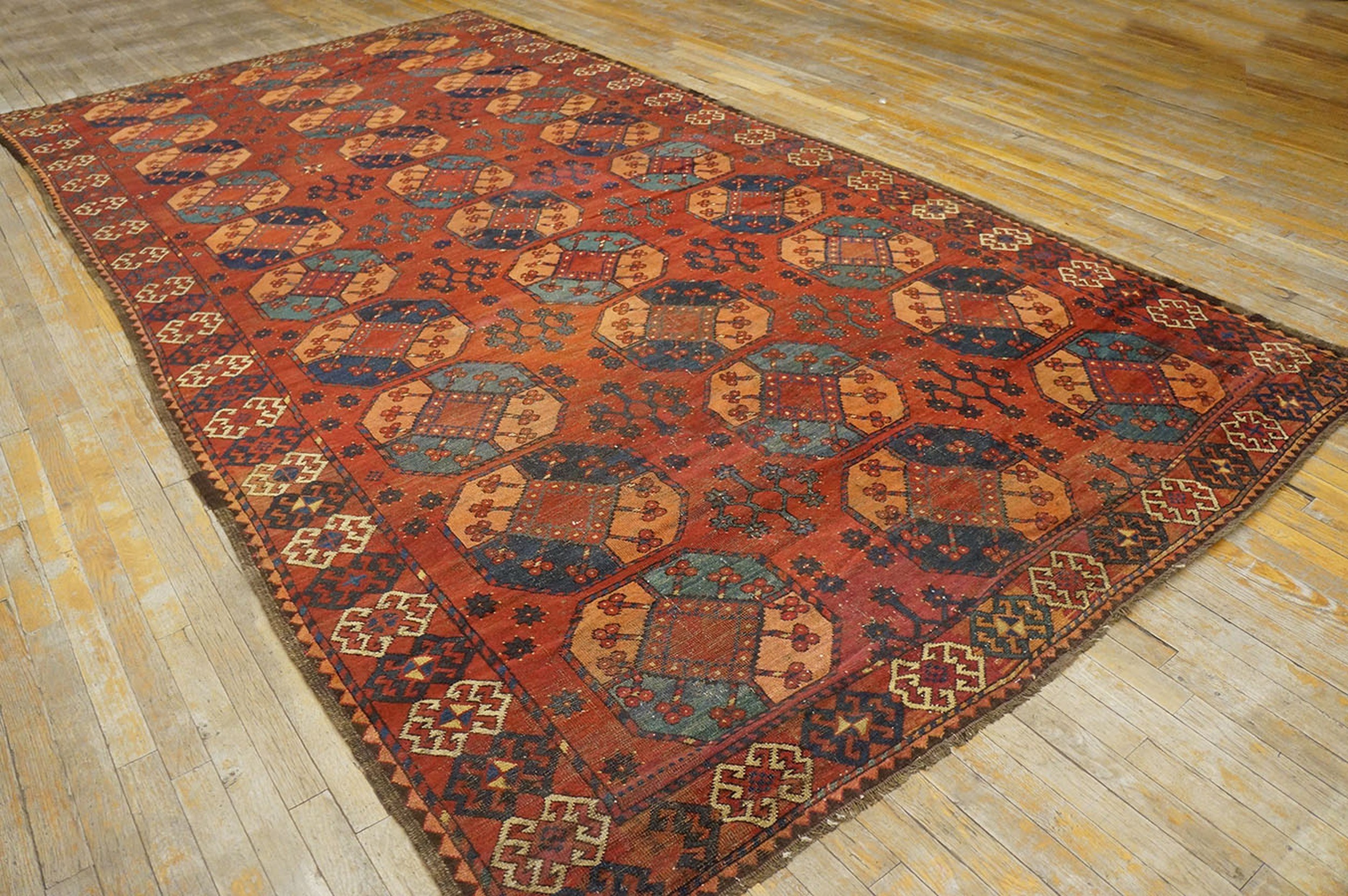
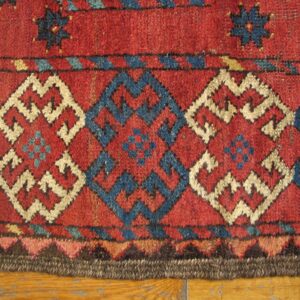
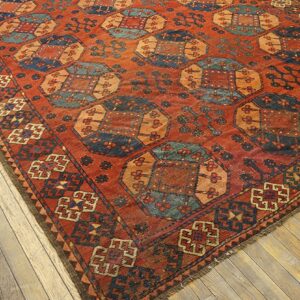
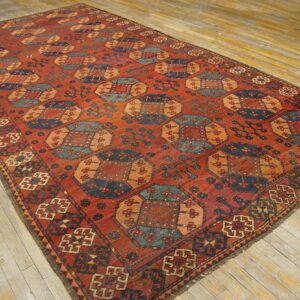
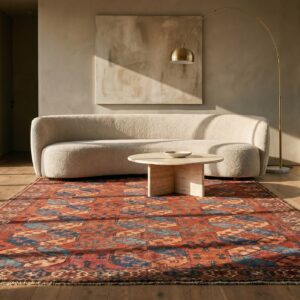
This nineteenth-century Central Asian Ersari Beshir carpet is a superlative example of “Great Steppe” weaving, representing the artistic soul of the Ersari Turkmen tribes. Located along the banks of the Amu Darya River, the Beshir weavers were unique among the Turkmen for their “Cosmopolitan Tribalism”—absorbing the sophisticated floral aesthetics of neighboring Persia and the Silk Road into their own rugged, nomadic traditions.
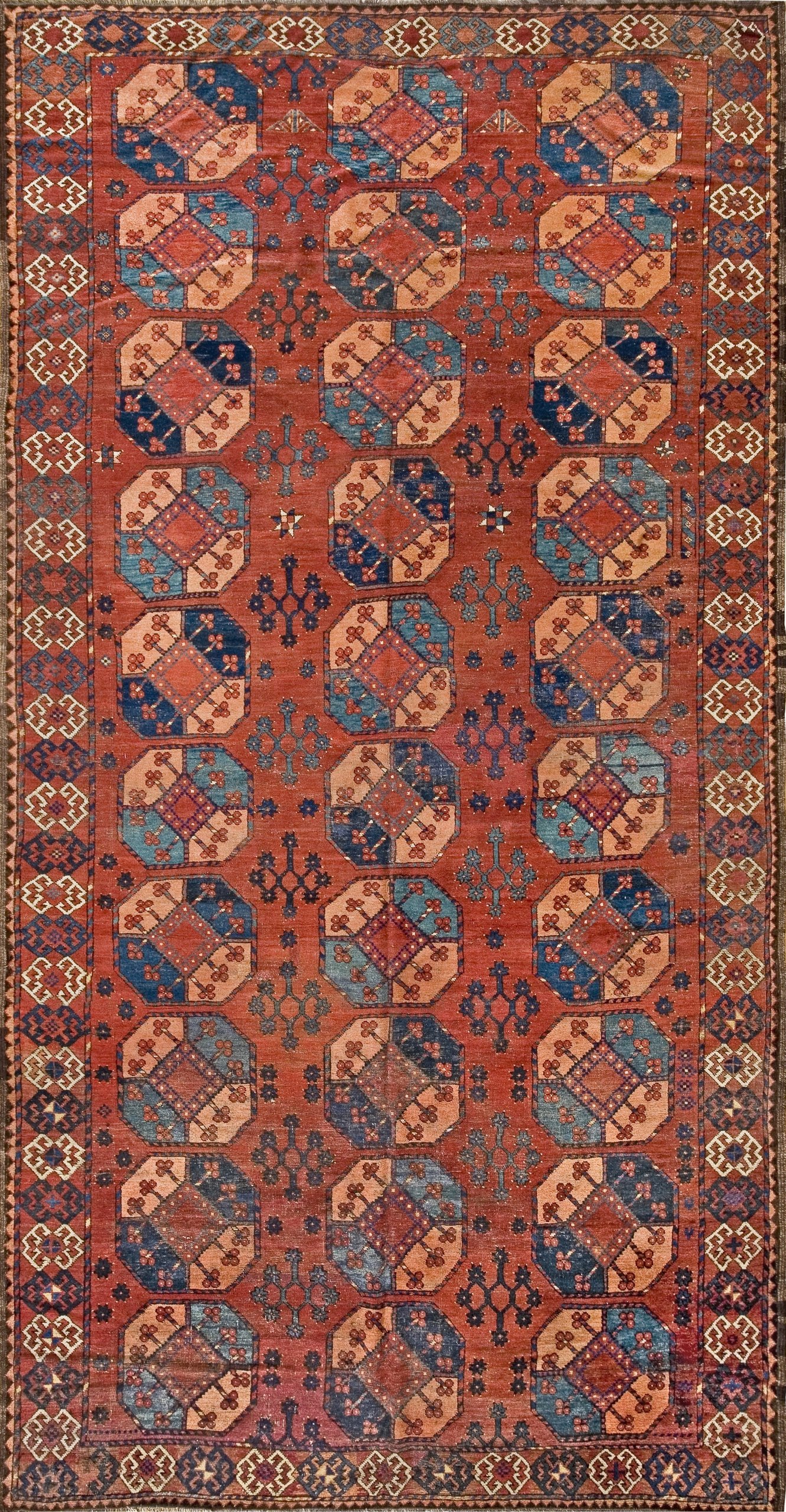
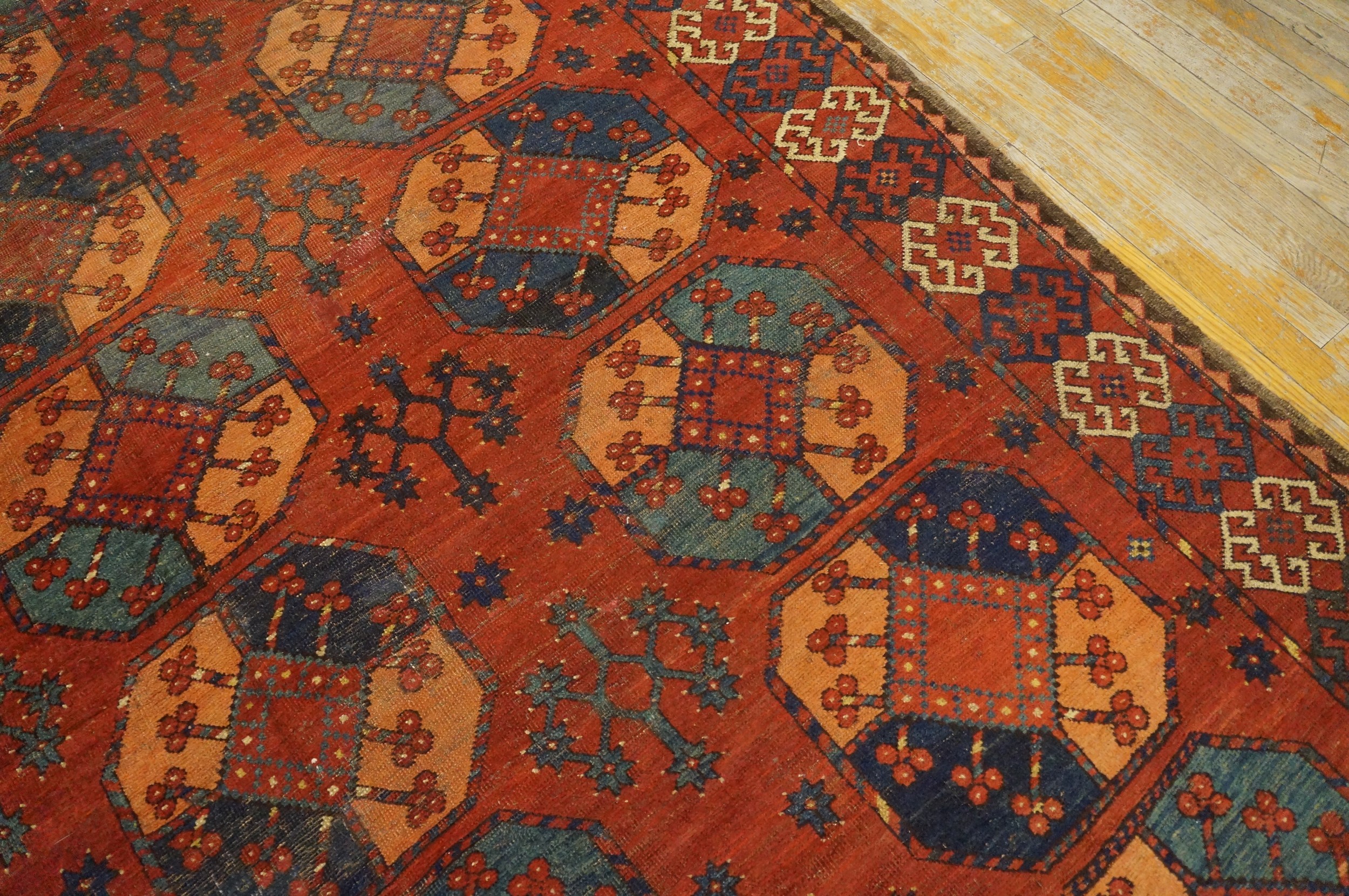
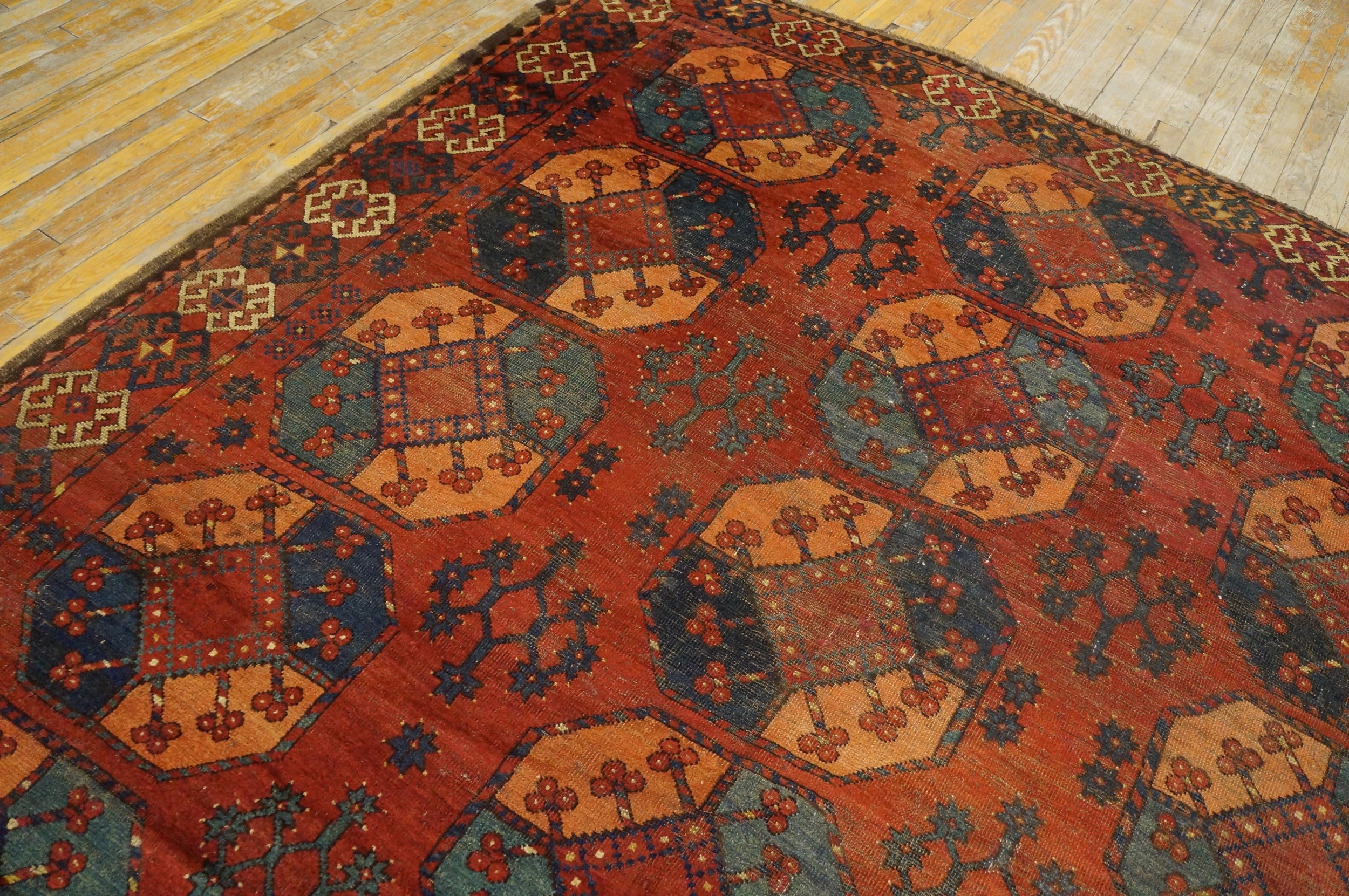
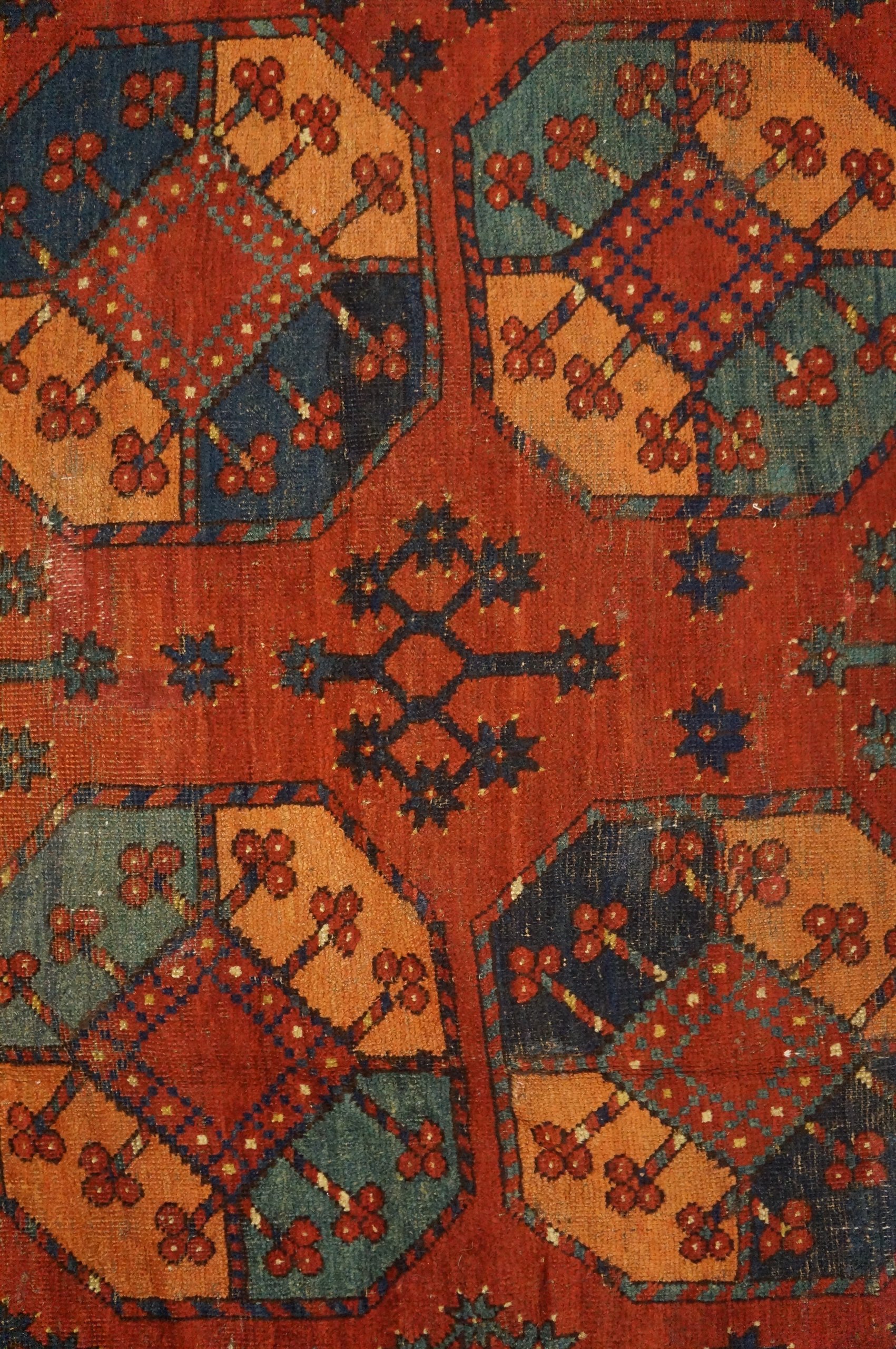
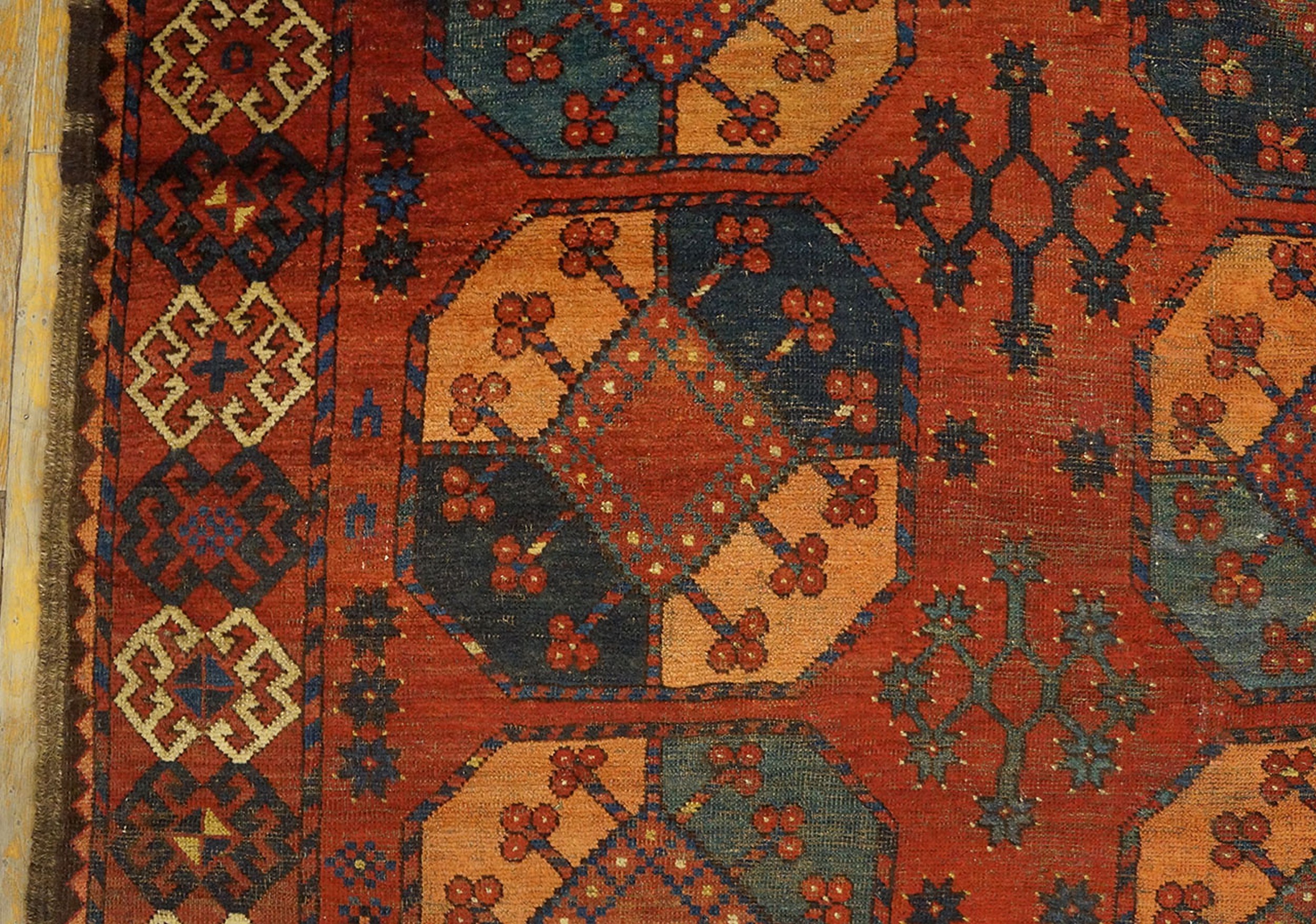
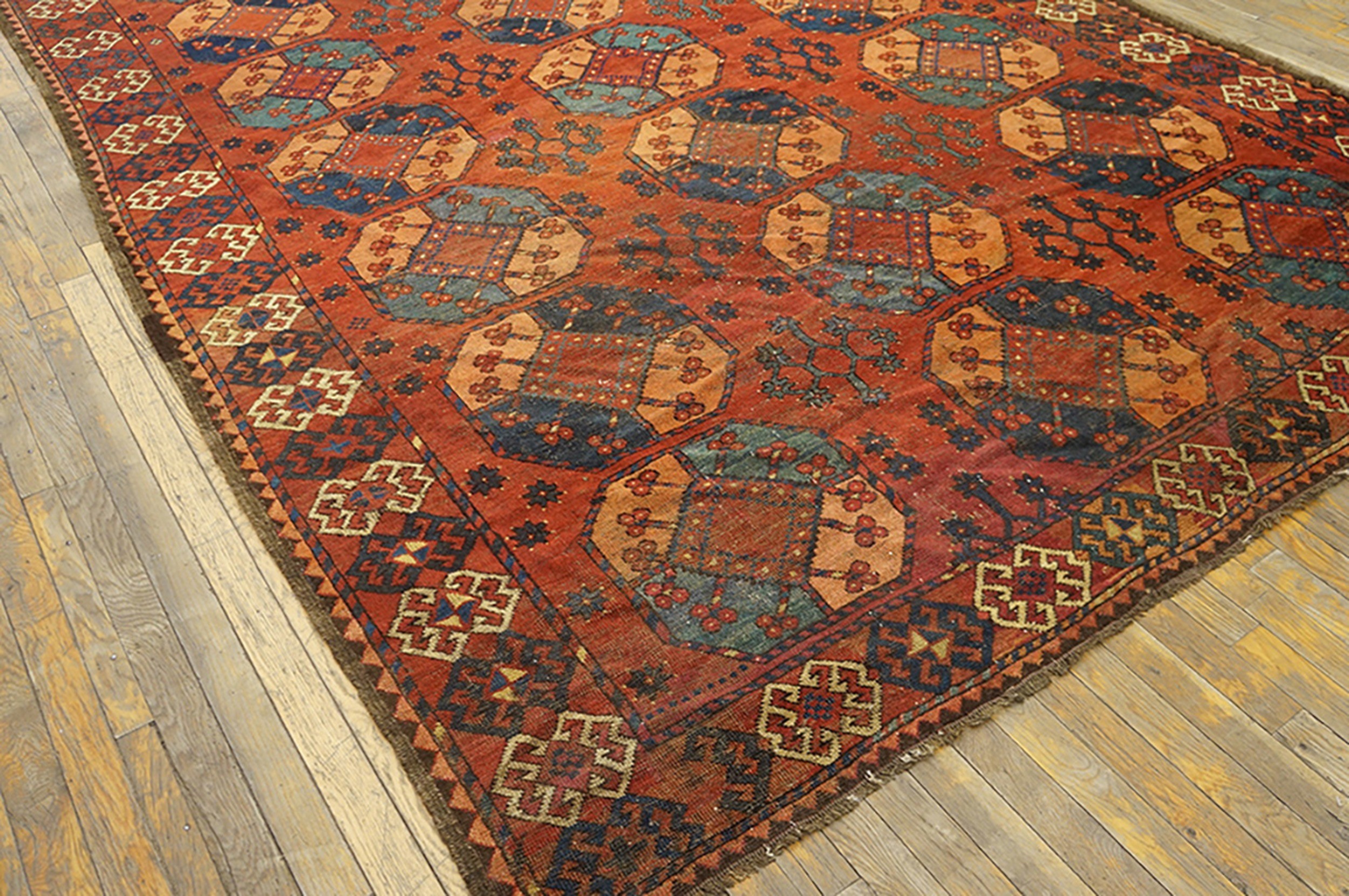
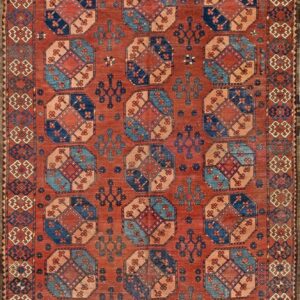
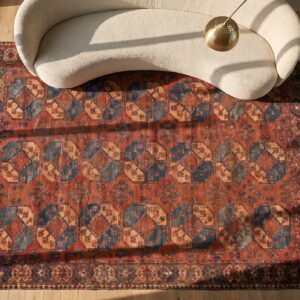
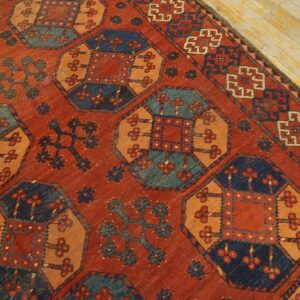
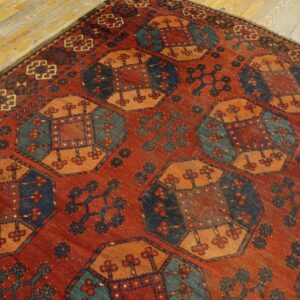
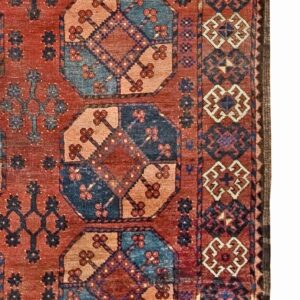
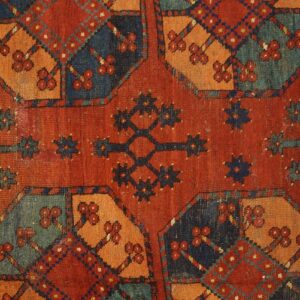
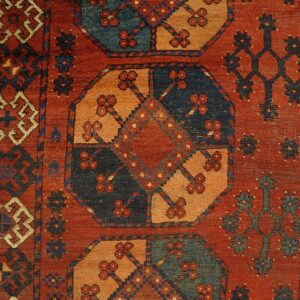
The composition is centered upon a powerful Bokara (Gul) design, but interpreted through the distinct Beshir lens. While many Turkmen rugs are strictly geometric, the Beshir tradition is famous for “floralizing” these totems. The field often features a rhythmic progression of oversized medallions or a sprawling, all-over pattern of stylized pomegranate seeds or “clouds.” This specific specimen is distinguished by its “Rustic” character—a term that refers to the bold, spontaneous scale of the motifs and the heavy, lustrous pile that provides both literal and visual warmth.
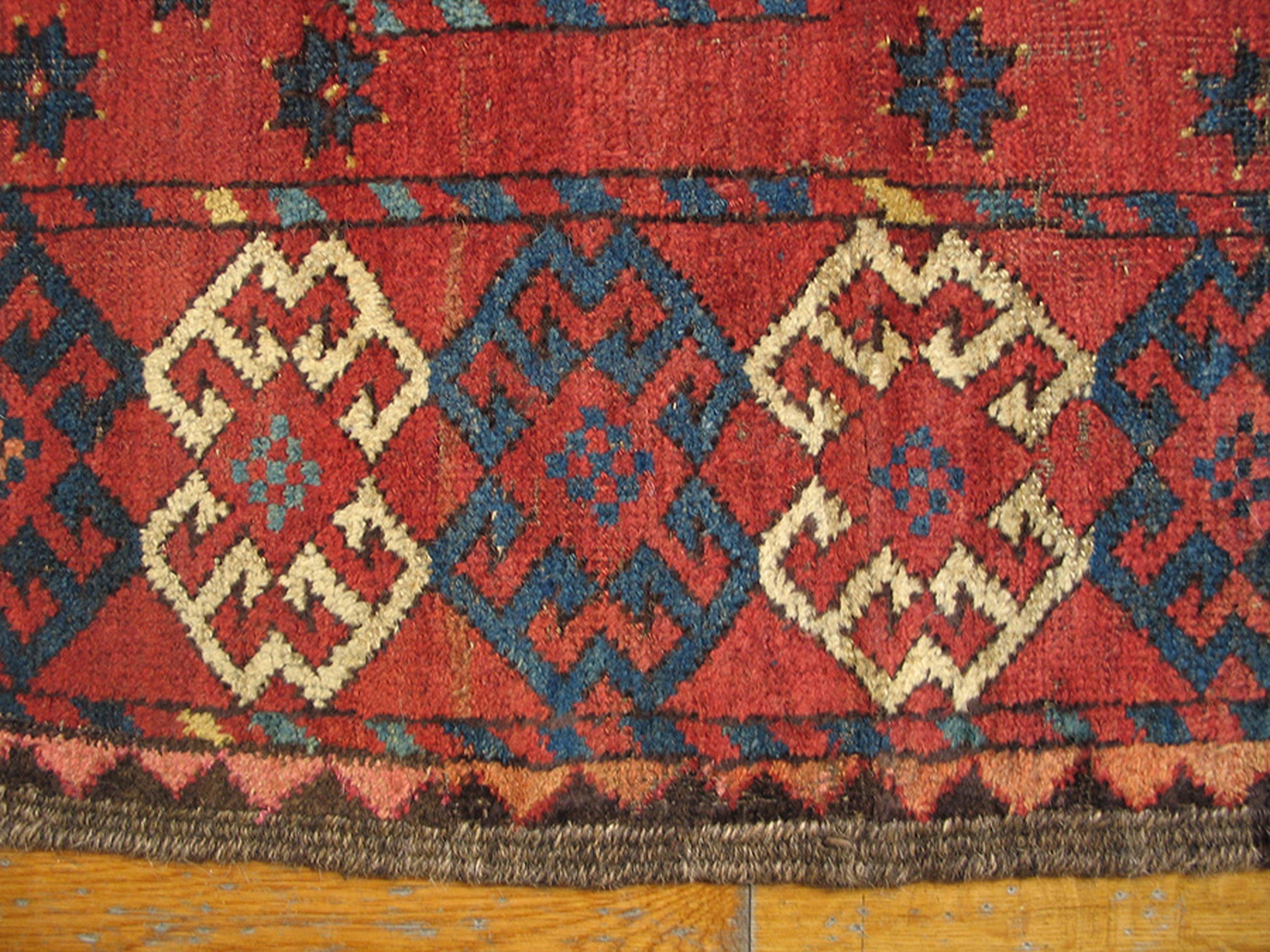
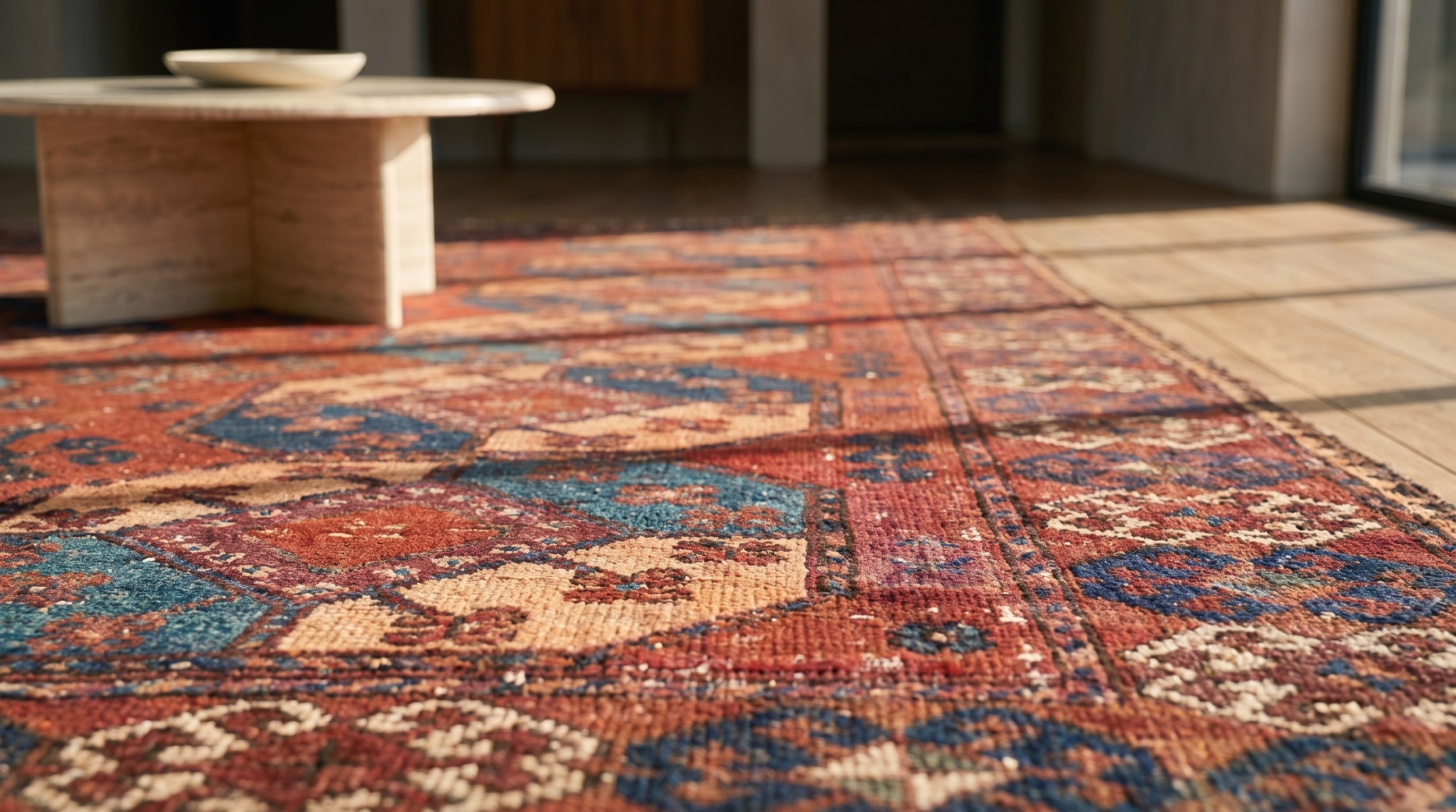
The palette is a masterclass in the use of deep, saturated red tones. The ground is a rich, “oxblood” madder red, providing a dramatic foundation for the intricate tribal motifs. Because the Ersari used local mountain wool and natural vegetable dyes, the bold tribal design rug possesses subtle abrash tones (tonal color variation), creating a shimmering, watercolor-like depth that prevents the red tones from appearing flat.
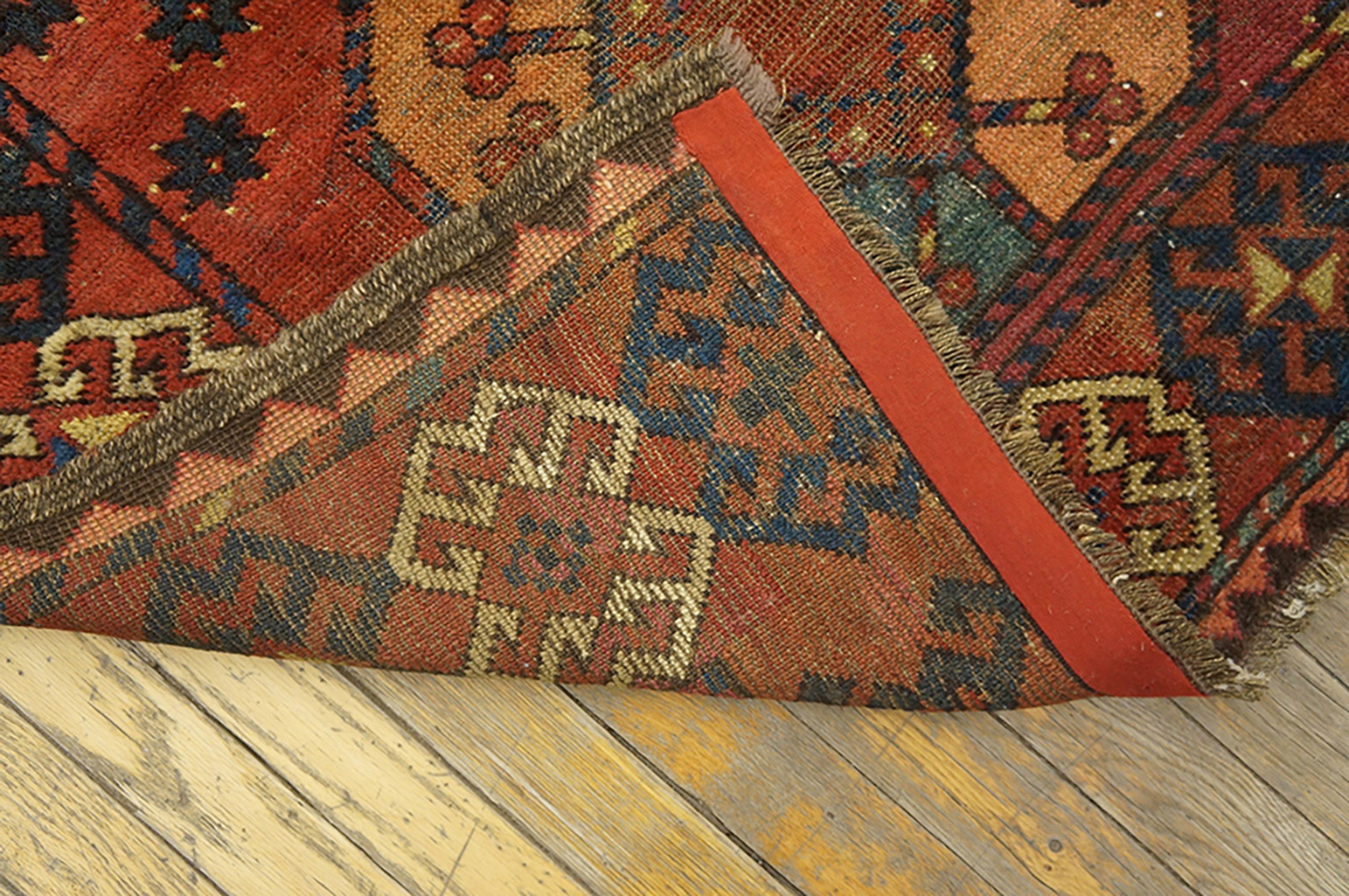
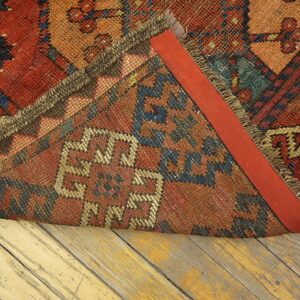
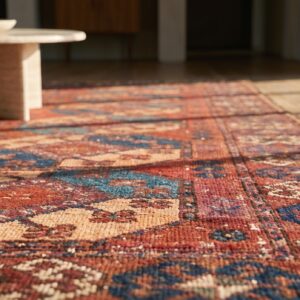
Technically, a Beshir of this caliber is prized for its substantial handle and silky wool quality. The wool is exceptionally long-staple and rich in natural lanolin, giving the antique Central Asian area rug a “mirror-like” sheen. Unlike the finer, thinner weaves of the Tekke tribes, the Ersari Beshir is more robust and tactile, offering a “fleshy” pile that feels substantial underfoot. Over more than a century, the wool has developed a soft, “lived-in” patina that is highly coveted by collectors.
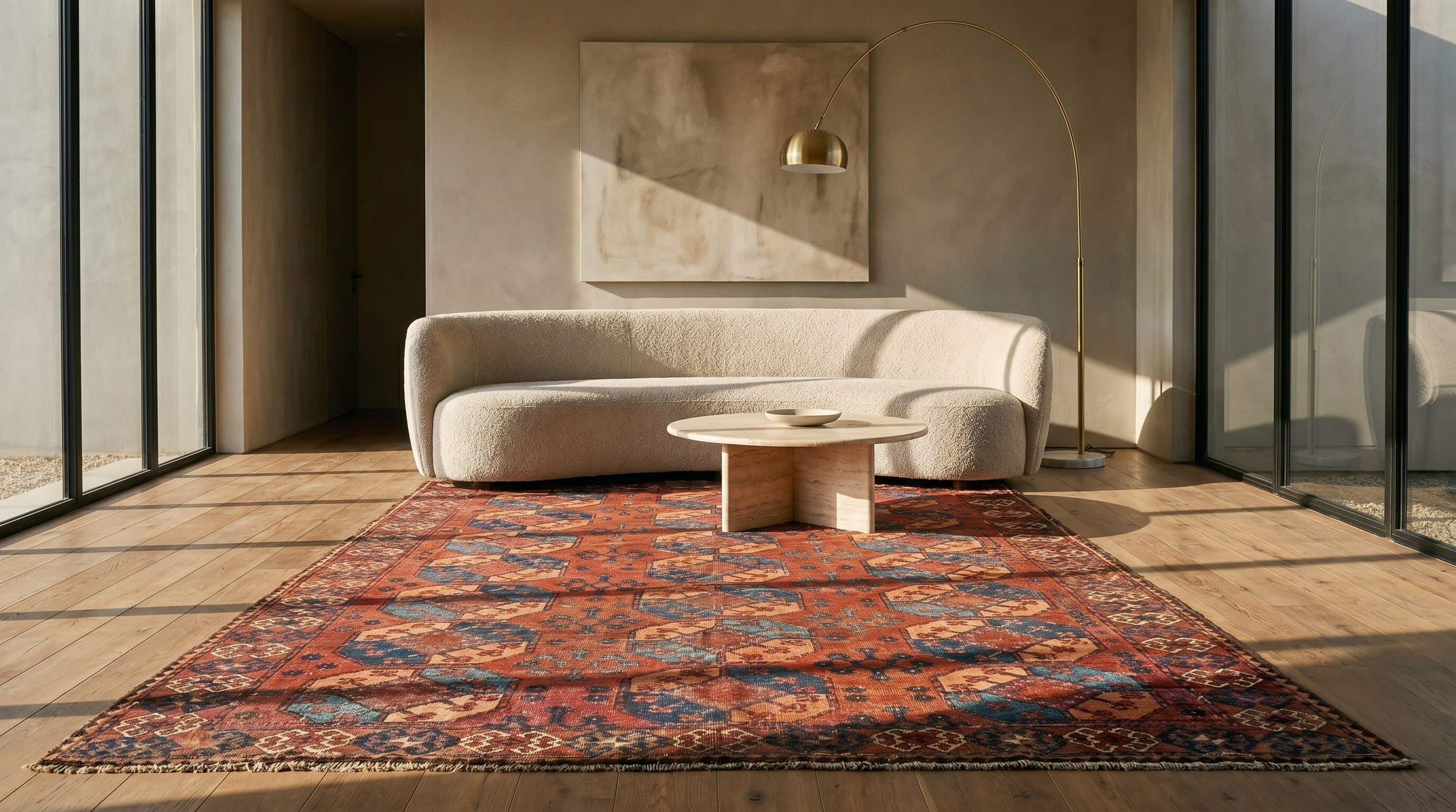
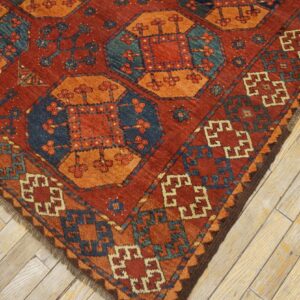
The borders act as a disciplined, architectural frame, often featuring a “primary” band of reciprocal triangles or stylized “leaf and calyx” patterns. These borders serve to “anchor” the expansive energy of the central field, providing a sense of classical permanence. To possess an antique Ersari Beshir is to hold a monument to the crossroads of the East—a work that bridges the gap between nomadic utility and scholarly design, transforming a room into a space of historical gravity and rugged, artistic power.