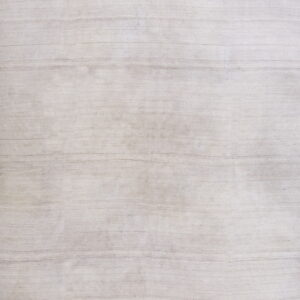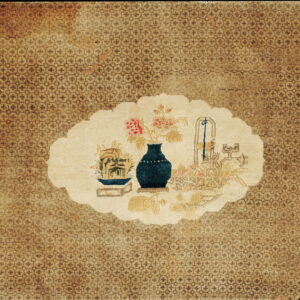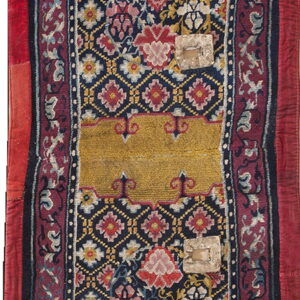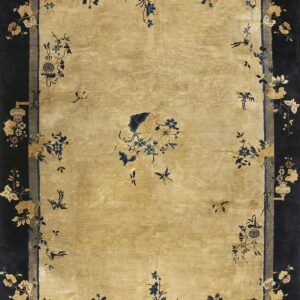
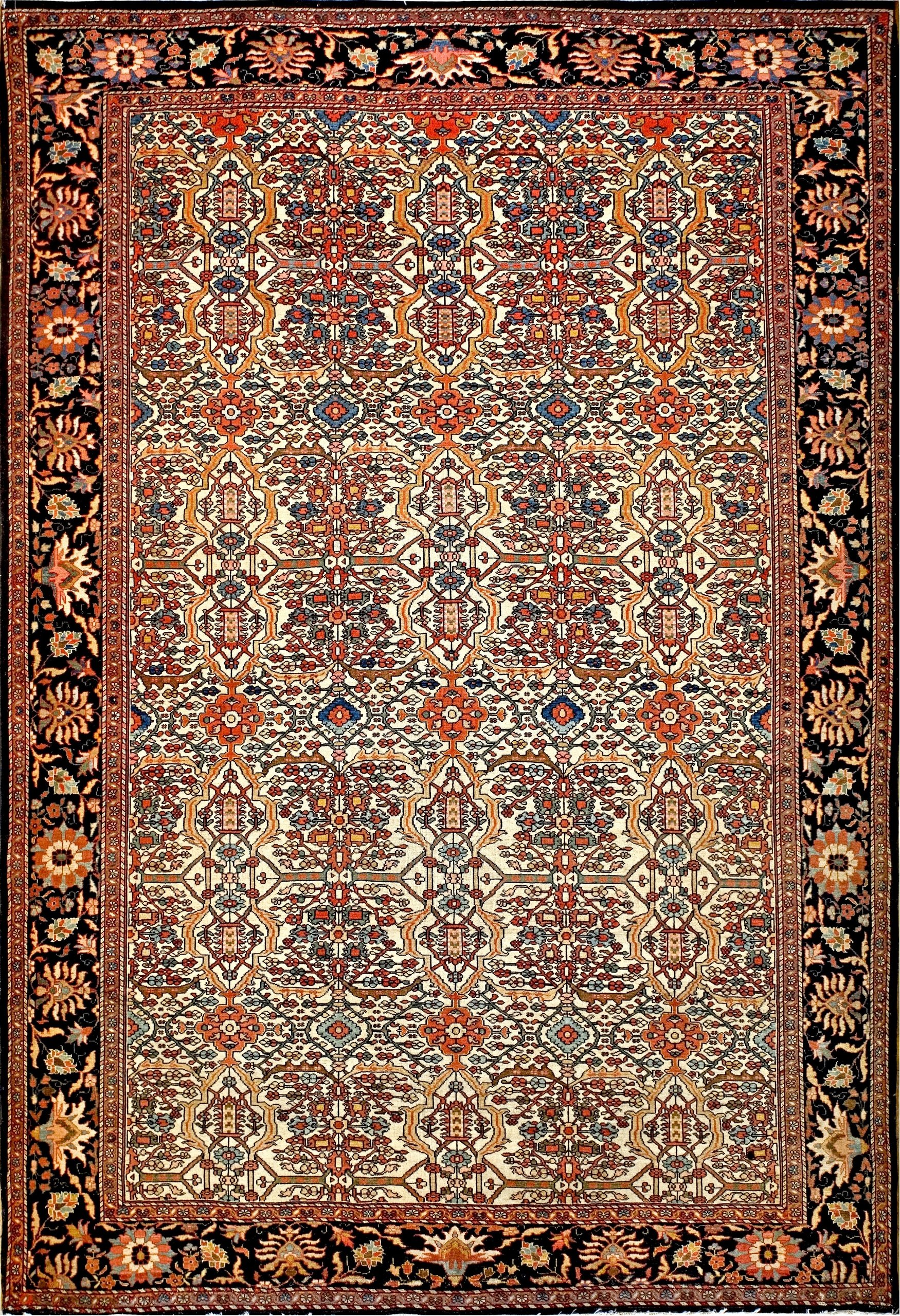
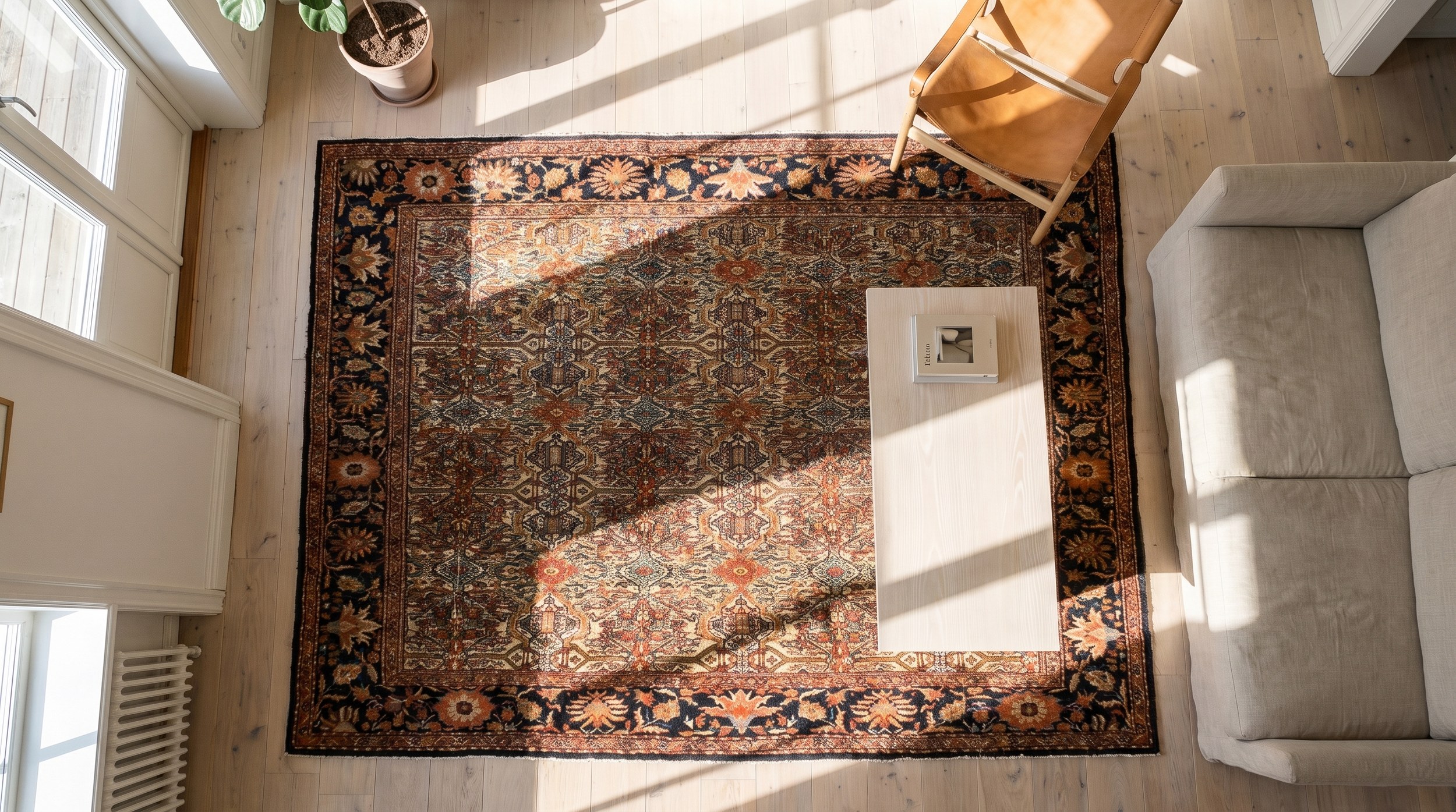
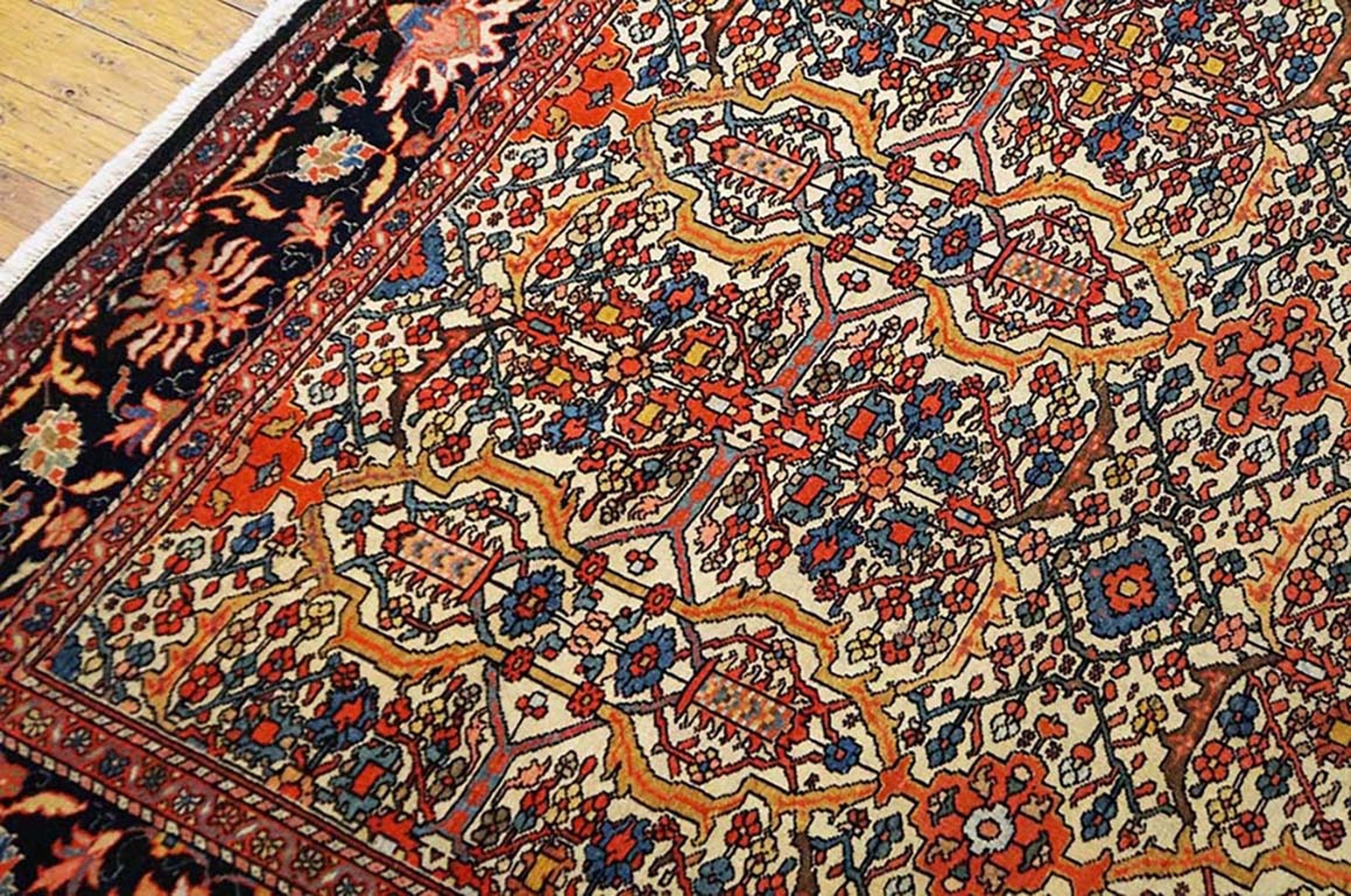
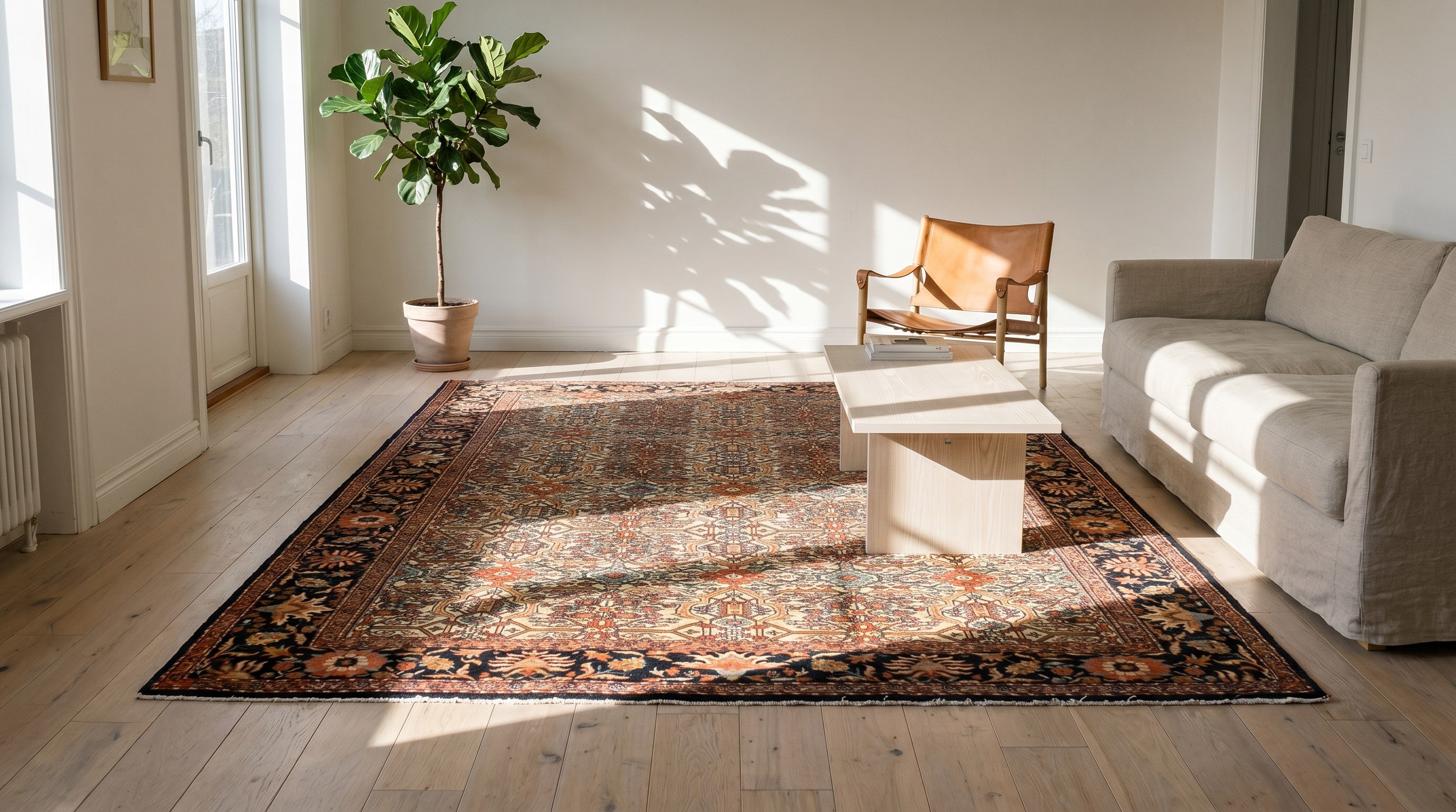
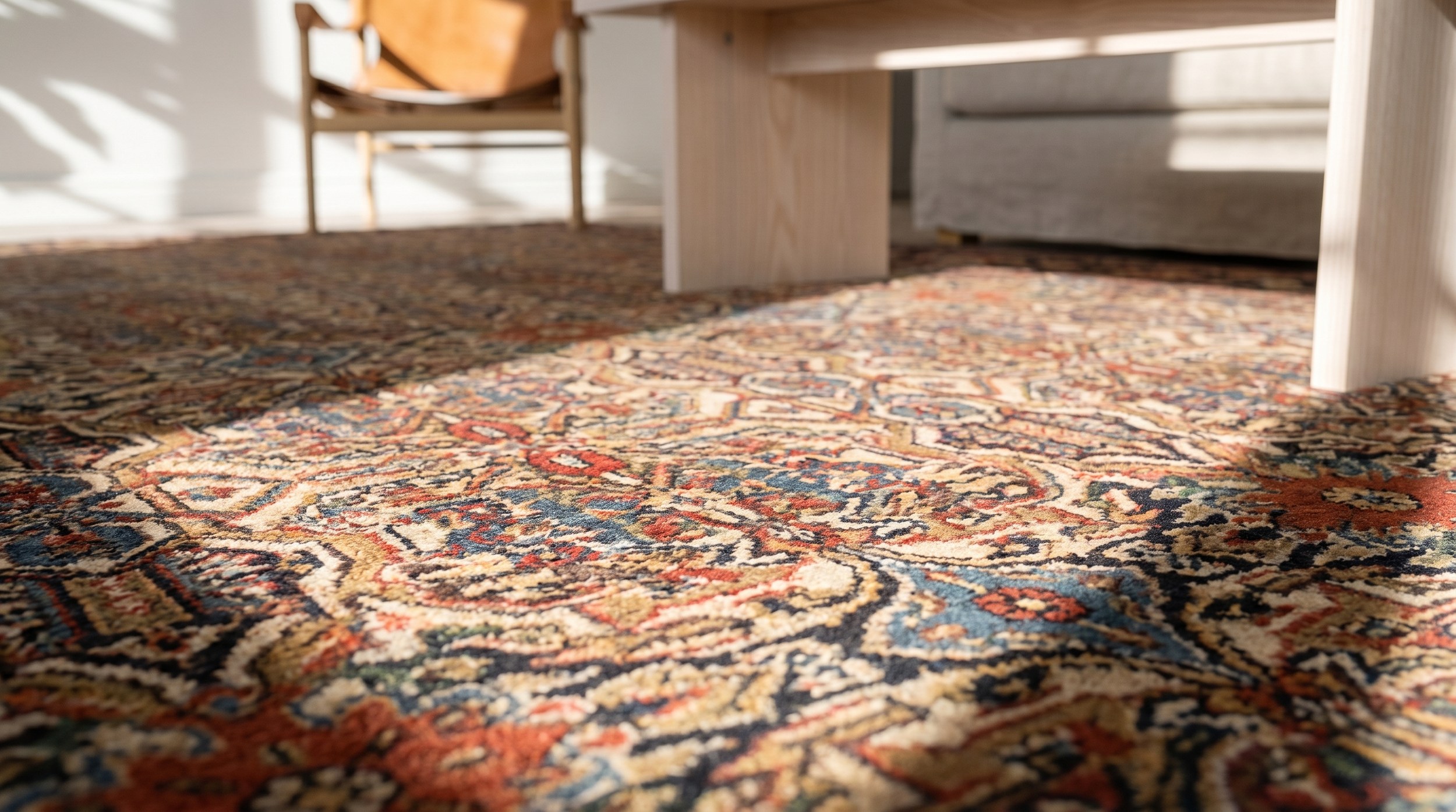
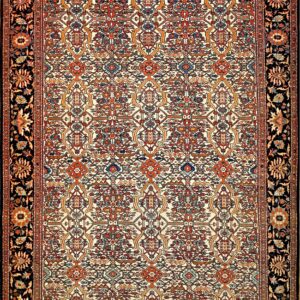
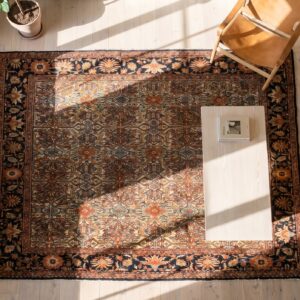
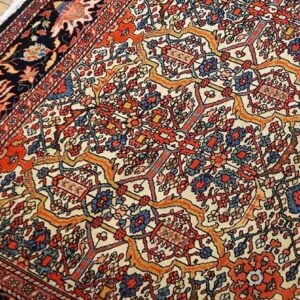
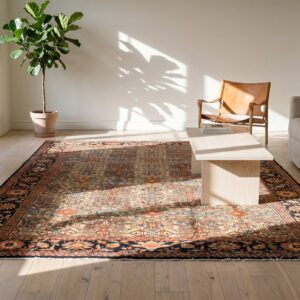
This late nineteenth-century Persian rug from Sarouk is a quintessential example of the “Classical” period of Sarouk weaving, originating from the Markazi province of Iran. Historically, the fine antique Persian Sarouk rugs from this era were renowned for their substantial, velvety pile and their sophisticated interpretations of traditional Persian floral motifs. While later “American Sarouks” favored a specific shade of painted red, this late 19th-century specimen is defined by its luminous ivory field—a choice that was significantly more rare and prestigious. An ivory ground serves as a “pristine canvas,” requiring the highest grade of wool to ensure clarity and a consistent, unblemished surface.
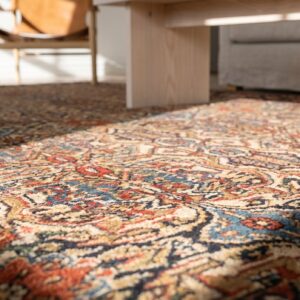
The composition features a delicate, “all-over” floral arrangement, eschewing the heavy central medallion in favor of a more balanced and airy design. This layout allows the intricate sprays of roses, lilies, and scrolling vines to float gracefully across the ivory expanse. The “fine” weave characteristic of the Sarouk workshop allows for a level of painterly detail that mimics the botanical realism found in Persian miniature paintings. The palette is a sophisticated blend of soft madder reds, deep indigo blues, and earthy greens, all achieved through the expert use of natural vegetable dyes which have mellowed over a century into a shimmering, harmonious patina.
Historically, a small-sized Sarouk of this caliber was often intended as a “luxury object”—a dowry piece or a high-status gift meant to showcase the weaver’s technical virtuosity. Because of its dense construction and high-quality wool, this antique rug possesses a distinctively heavy, luxurious “handle” and a subtle sheen that reflects light differently from every angle. The borders act as a stately frame, featuring a primary “Herati” or “Samovar” pattern that grounds the ethereal energy of the ivory field. To possess a fine late 19th-century ivory Sarouk is to hold a monument to a golden age of Persian craftsmanship—a work that bridges the gap between the rugged durability of village weaving and the scholarly refinement of the imperial city workshops.