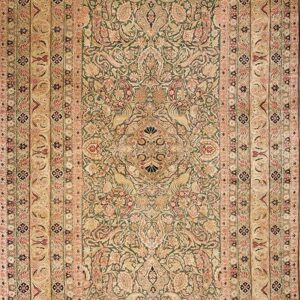
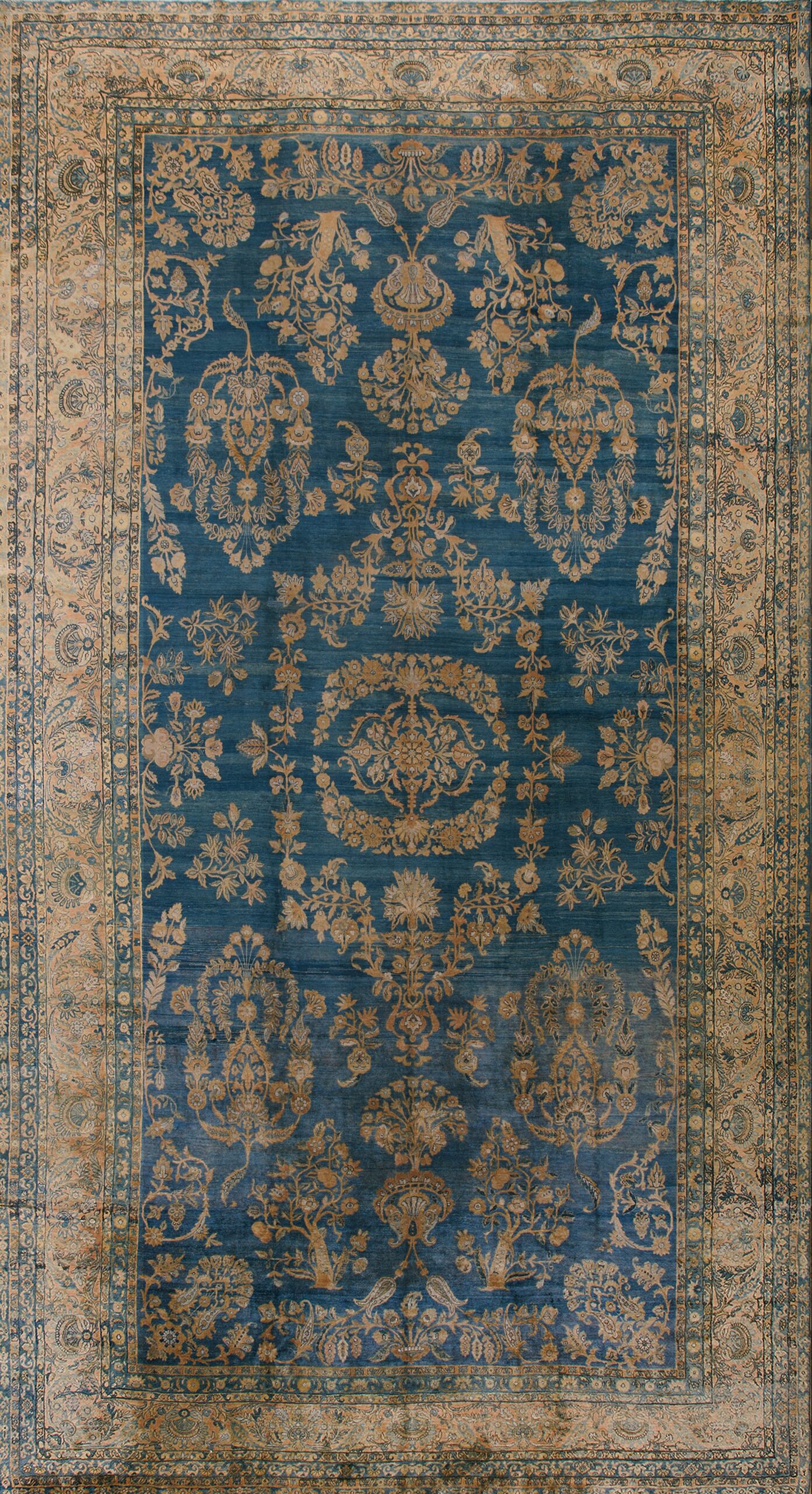
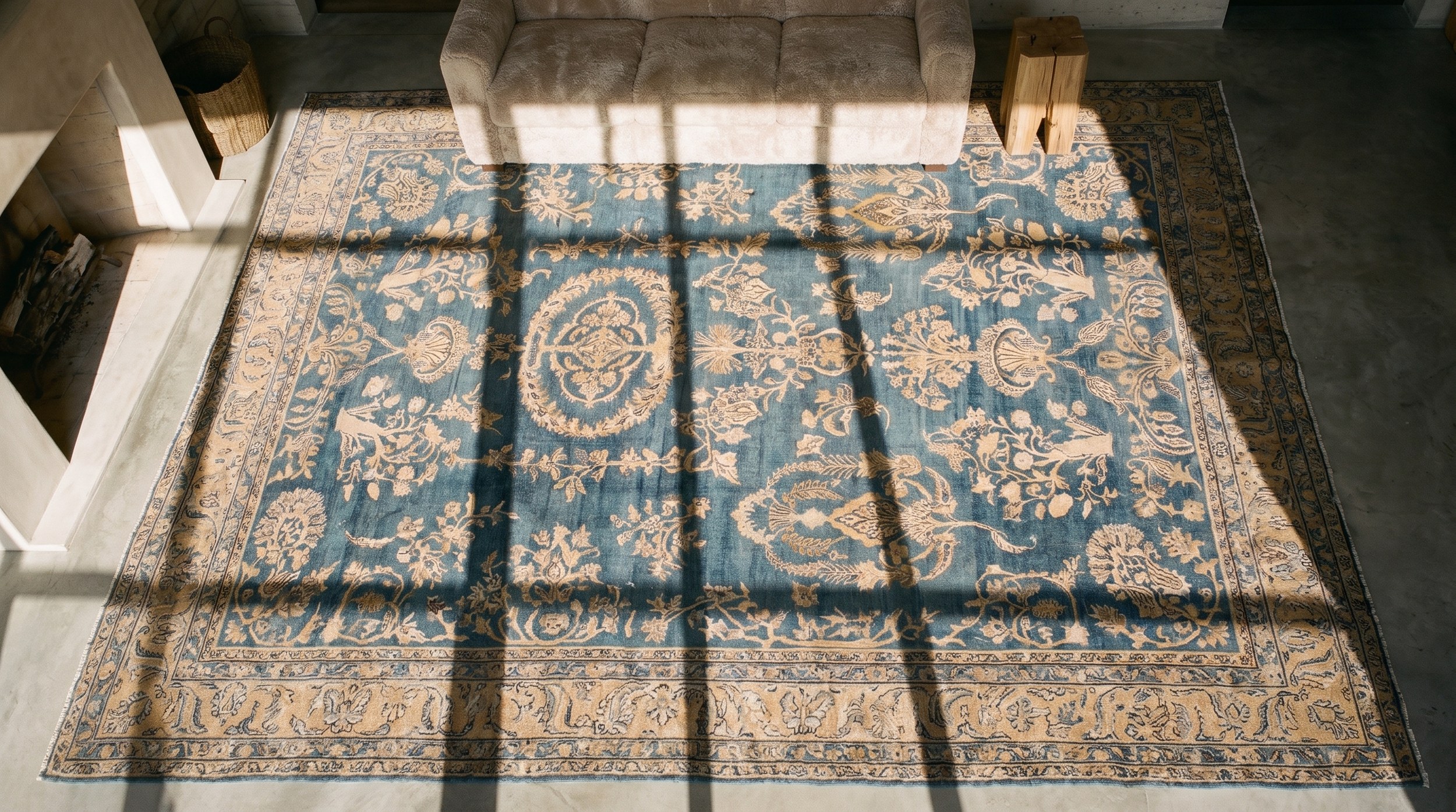
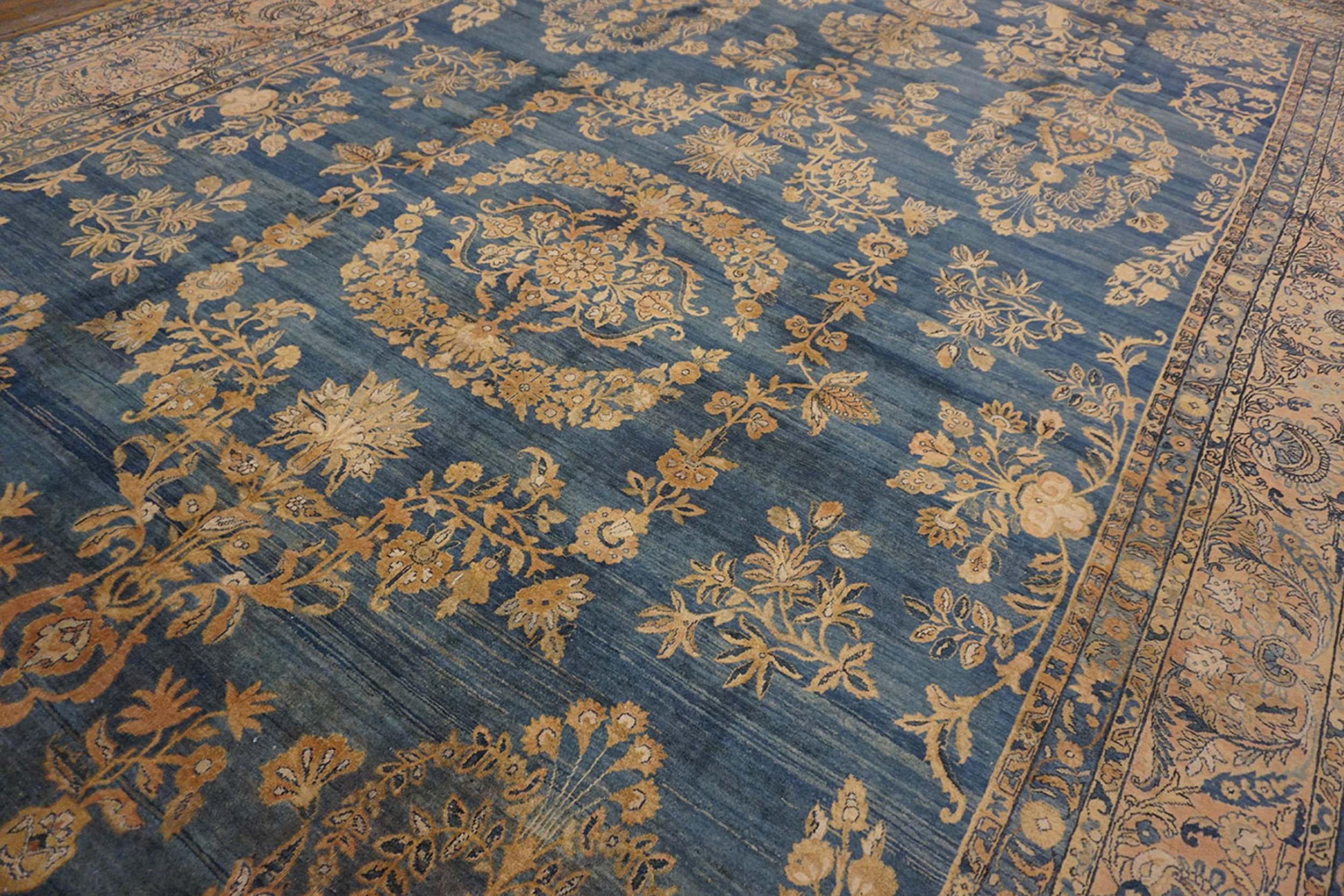
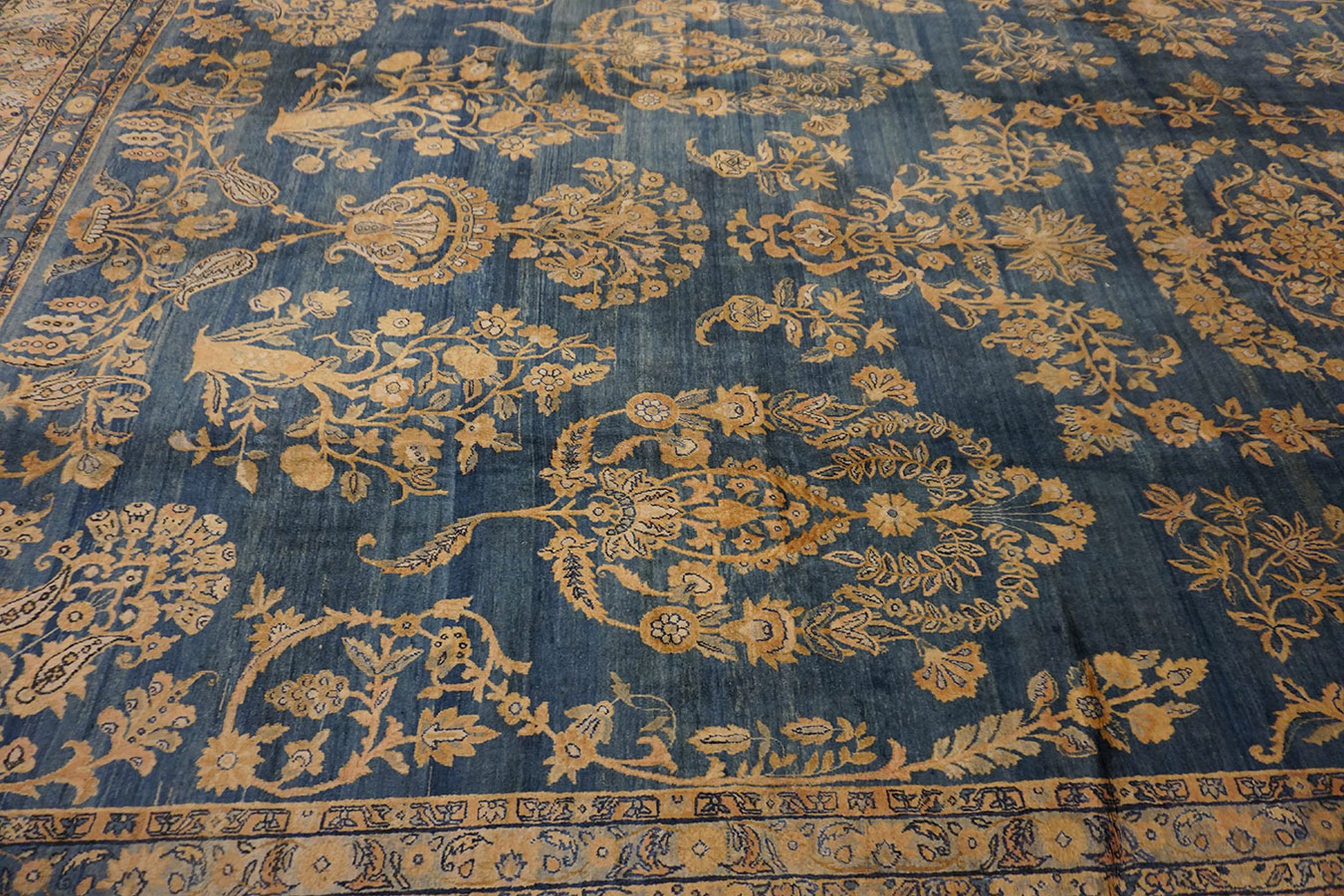
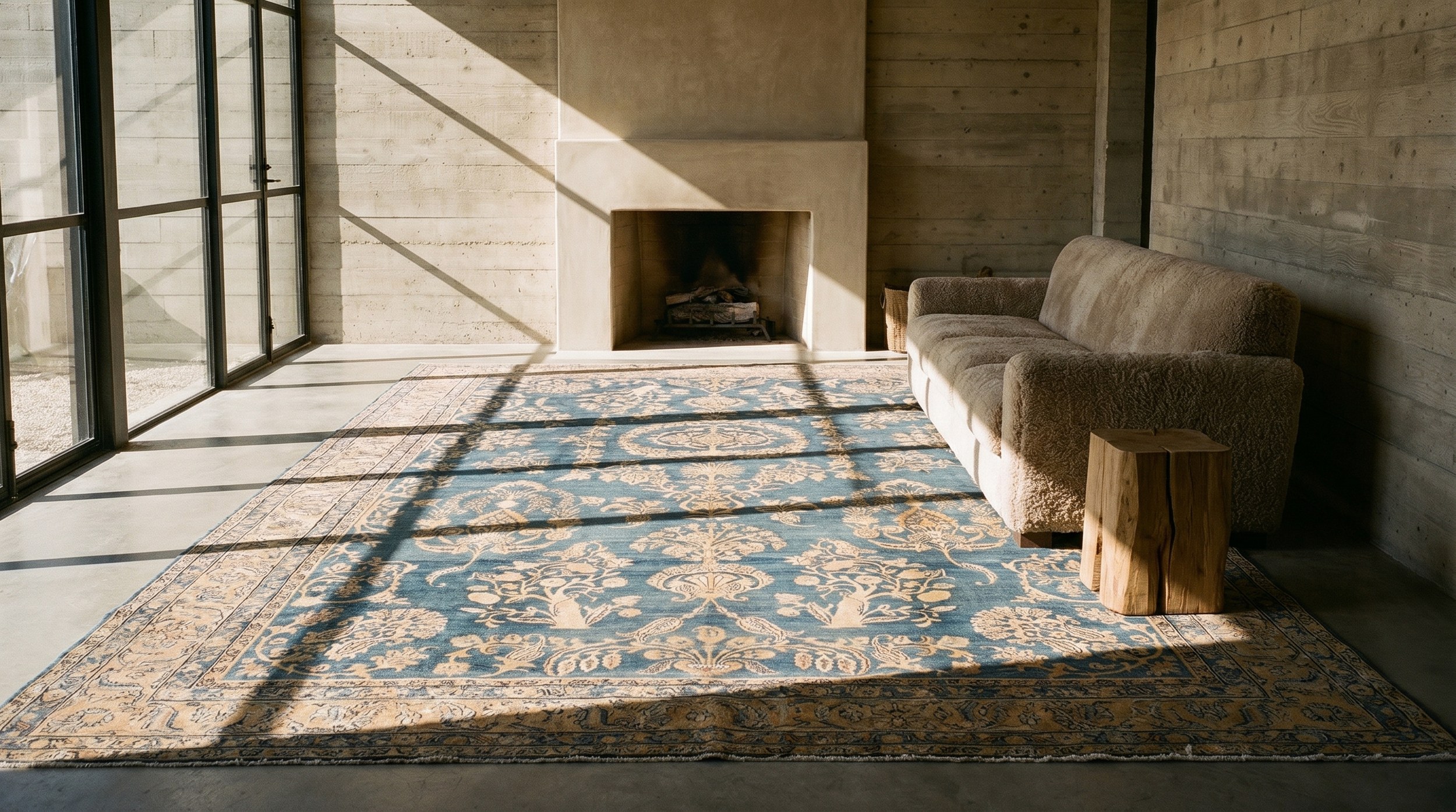
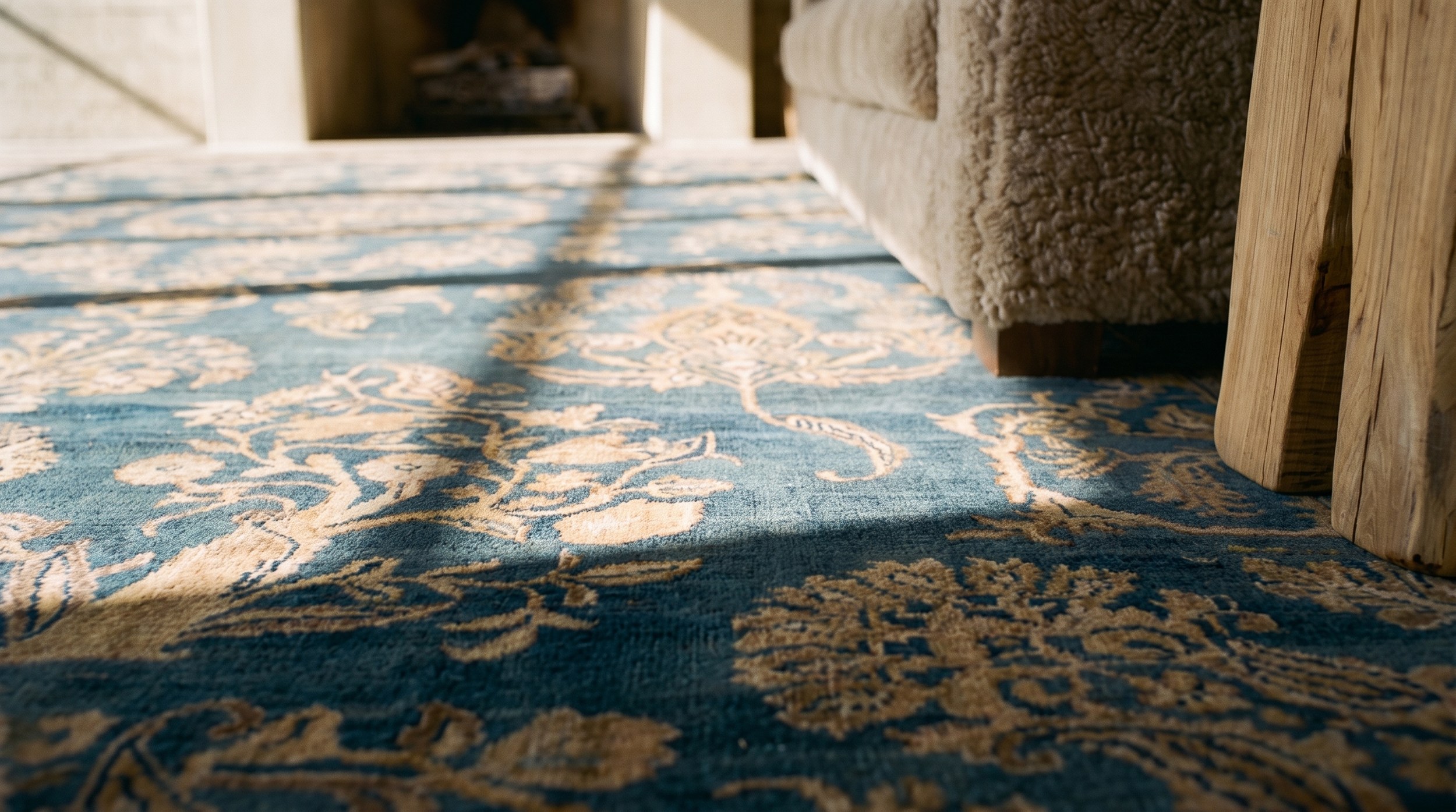
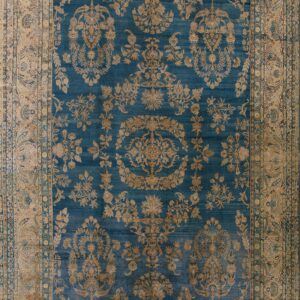
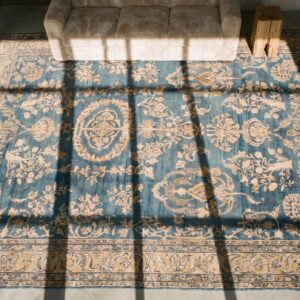
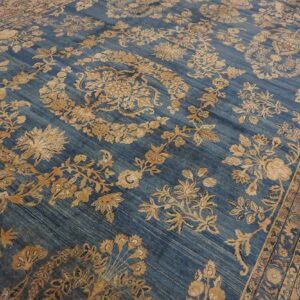
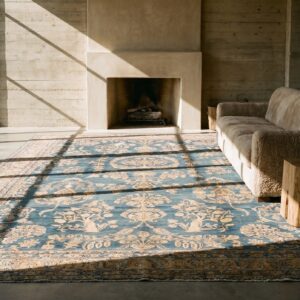
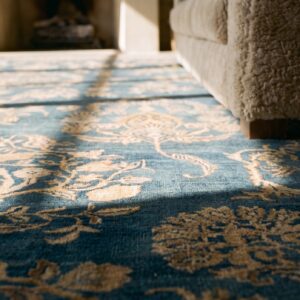
This magnificent late nineteenth-century floral Persian Kerman rug is a superlative example of the “Masterpiece” era of Southeast Persian weaving. Historically, Kerman was the center of textile innovation, known for its “painterly” approach to rug design and its access to exceptionally high-quality “Carmania” wool. This specific specimen is distinguished by its rare and ethereal light blue field—a “celestial” palette that was highly prized for its ability to bring a sense of airiness and sophisticated tranquility to the grand salons of the European and American elite.
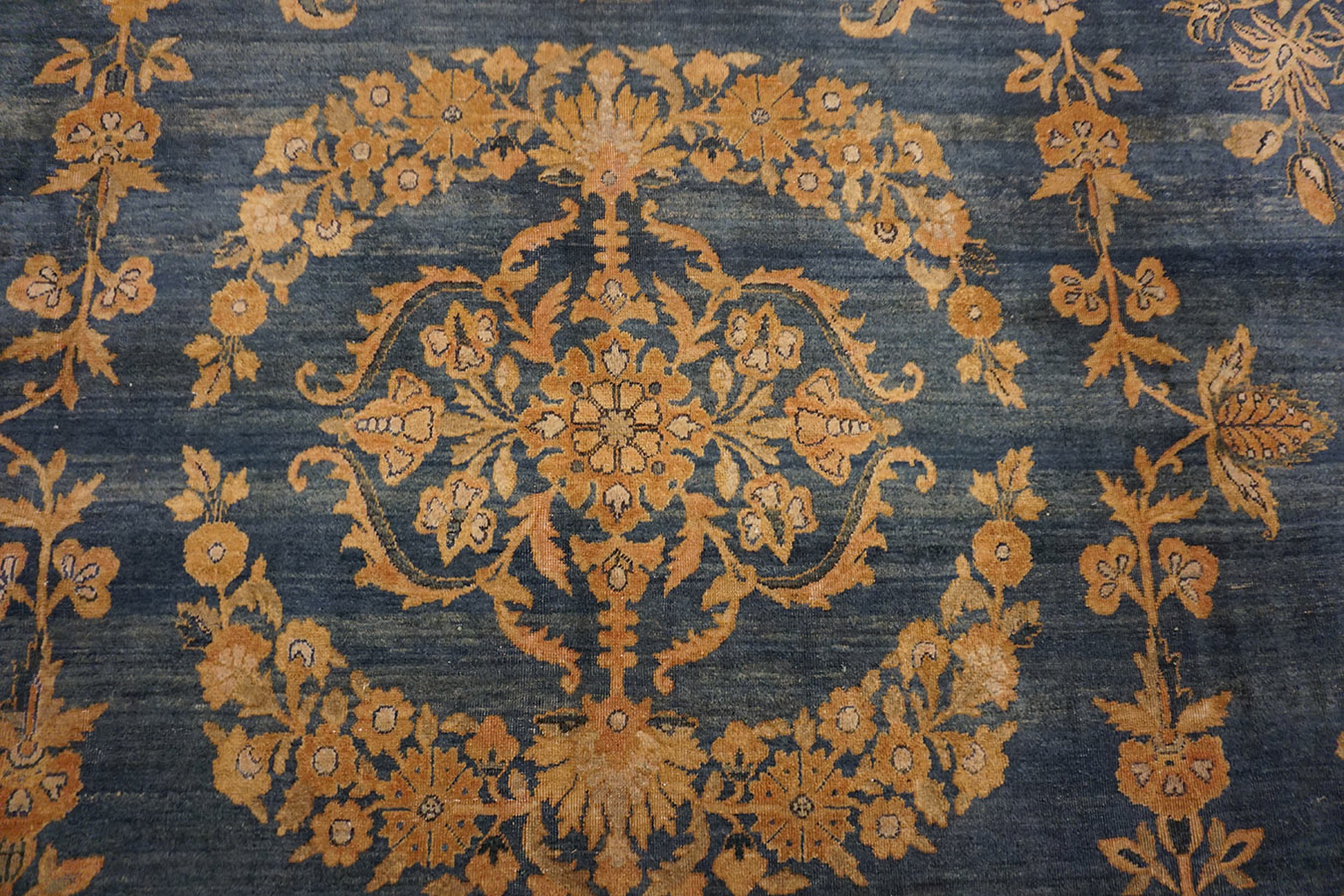
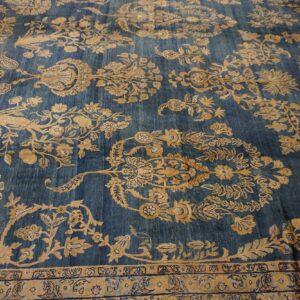
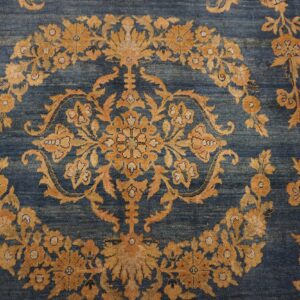
The composition features a lush, “large-scale” floral arrangement that eschews the rigidity of tribal geometry in favor of romantic, flowing botanical realism. The design showcases an abundance of scrolling vines, oversized palmettes, and delicate floral sprays, likely including the “Millefleurs” (Thousand Flowers) motif. This expansive layout is a hallmark of the Kerman “all-over” style, designed to create a visual field that feels like a sprawling garden in perpetual spring. The “finely woven” nature of this antique Persian rug allows for an incredible level of detail; each petal and leaf is rendered with a three-dimensional depth, a testament to the weaver’s ability to “paint with a needle.”
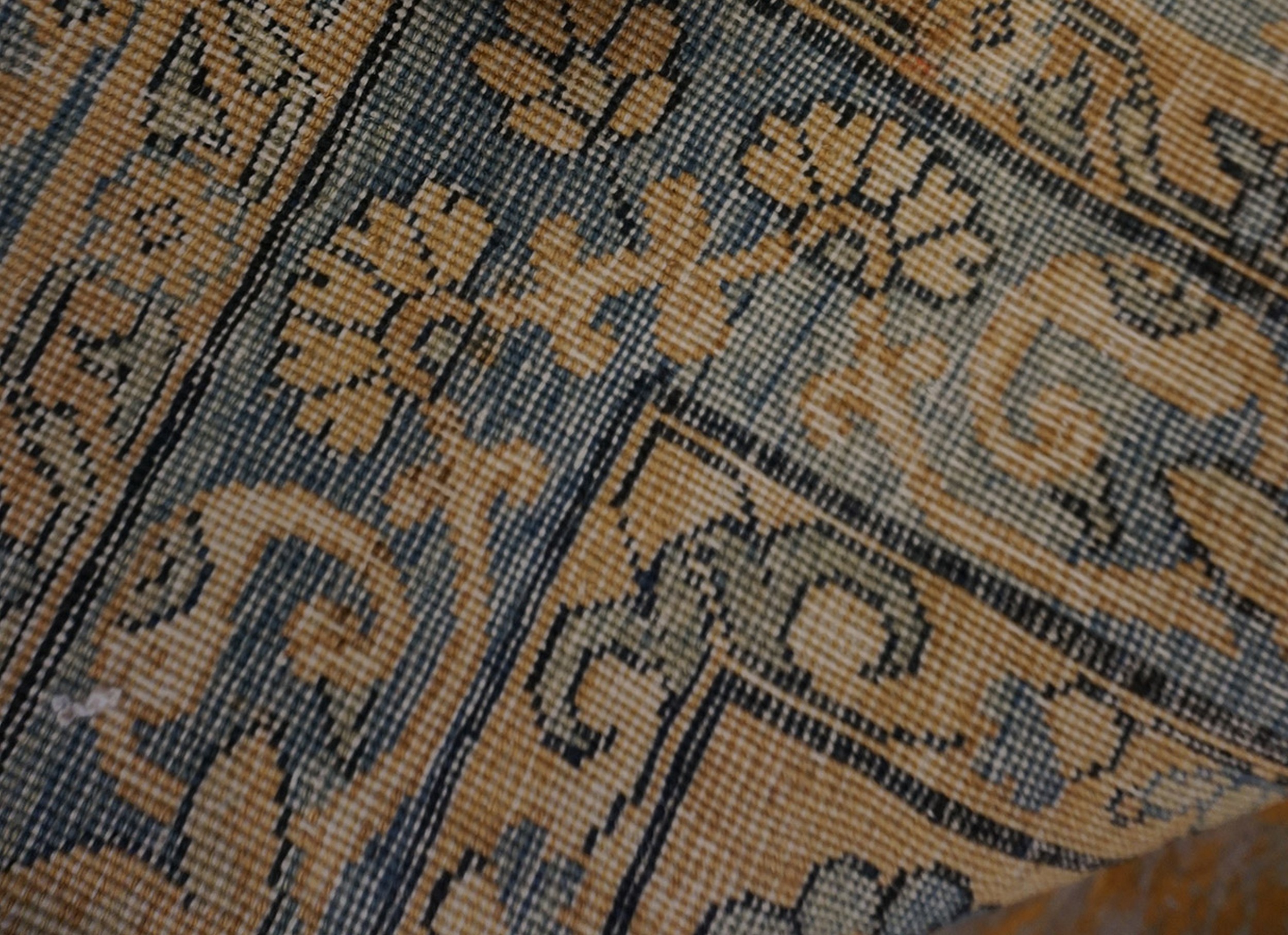
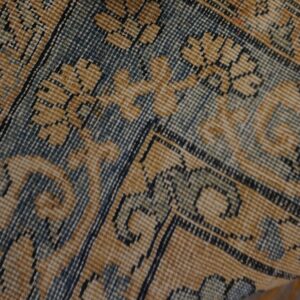
Technically, a Kerman of this caliber is prized for its supple “handle” and dense, low-profile pile. The palette is a masterclass in the use of natural vegetable dyes; the luminous light blue ground provides a soft contrast to the jewel-toned accents of madder red, sage green, and antique ivory. Over more than a century, these colors have developed a shimmering abrash (natural tonal variation), which gives the carpet a watercolor-like quality as light reflects off the lanolin-rich wool.
The borders act as a stately architectural frame, often featuring a primary band of alternating floral cartouches and delicate foliate scrolls that mirror the complexity of the central field. To possess an antique light blue Kerman of this scale and technical finesse is to hold a monument to the peak of Persian craftsmanship—a work that bridges the gap between the scholarly discipline of the city looms and the poetic, garden-inspired romanticism of the late 19th century.