
What Makes a Rug “Right” for a Kids’ Room
Kids room rugs have to balance fun with real life. Durability, comfort, and cleanability all matter here. These two pages help guide smart choices across the home.
Worth checking first: a complete guide to buying rugs and tips for proper placement in every room.
Explore the other room guides: Study, Living Room, Family Room, Dining Room, Bedroom, Foyer / Entry, Library.
Kids-room rug definition
When evaluating buying kids room rugs, the definition of quality shifts significantly from adult spaces. In a living room or dining area, a rug is primarily a visual anchor. In a child’s room, a rug serves as a primary “touch surface.” It functions as an active play mat, a safety buffer, and a hygiene filter. Therefore, the “right” rug is defined by its ability to support safe play, promote healthy indoor air quality, and withstand rigorous maintenance.
Safe kids room rugs are a matter of physical safety and hygiene, not just décor. The material must provide a stable platform for walking and running while offering a soft landing for falls. Furthermore, because children spend significant time close to the floor, the rug must not emit harmful volatile organic compounds (VOCs) or trap excessive allergens. The construction, pile system, fiber system, and backing finishes are the critical specifications that determine whether a rug is safe, rather than the pattern printed on the surface.
Why kids rooms are unique
Designing for children requires acknowledging that their rooms endure a specific set of stressors: high contact, high mess, and high movement. Unlike adults who walk over a rug with shoes or slippers, children are constantly in direct skin contact with the floor—crawling, rolling, and sitting. This makes the tactile feel and chemical safety of the materials paramount.
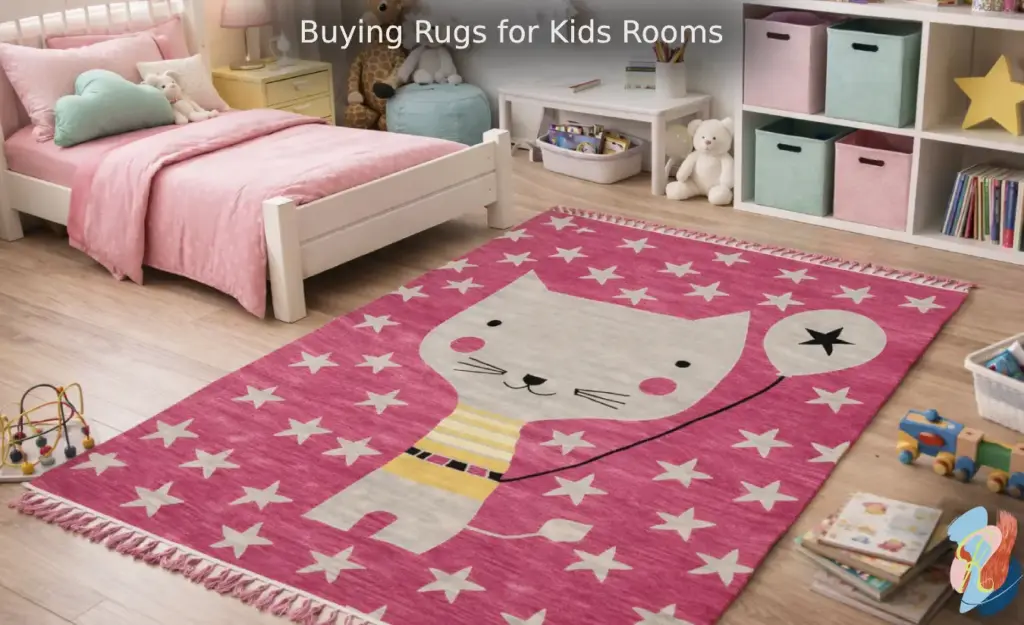
This environment also faces “high mess” scenarios, ranging from arts and crafts spills to snack crumbs and potty-training accidents. Consequently, specs underfoot matter more than pattern names; a beautiful rug that cannot handle moisture or frequent vacuuming will fail quickly.
Finally, the “high movement” aspect involves running, jumping, and wrestling. A lightweight decorative rug without proper grip becomes a slip hazard. The best rug for a child’s bedroom anchors the room securely, handling dynamic motion without bunching or sliding.
Core performance targets
To select a rug that functions as a high-performance tool for a child’s development, focus on these specific targets.
- Traction and Grip: Children run and change direction quickly. A rug must remain immovable to prevent slip-and-fall accidents. You should use a rug pad in kids rooms almost universally, as it locks the rug to the subfloor and adds a necessary layer of impact absorption.
- Stable Edges: Curling corners or high thresholds create trip hazards for toddlers and active kids. Serged or bound edges that lay flat are essential for safety.
- Cleanability and Stain Release: Spills are inevitable. The fiber system must resist absorbing liquids instantly, allowing parents time to blot stains before they set.
- Low Dust Shedding: High-pile Wool or poor-quality synthetic blends can shed micro-fibers, which negatively impacts air quality for sleeping children.
- Acoustics and Sound Dampening: Rugs absorb the noise of dropped toys and footsteps, creating a quieter environment conducive to sleep and focus.
- Thermal Comfort – Why: Children play on the floor. The rug must provide insulation against cold subfloors to keep play zones comfortable.
For some, loop-pile rugs (like some Moroccan Berber carpets or American hooked rugs) can be frustrating for building blocks or small toys, as the surface isn’t perfectly flat. For such “issues” we recommend cut-pile or flat-weave rugs for heavy “toy-play” zones
Two buyer archetypes
Most parents navigating a kids bedroom rug buying guide fall into one of two categories based on their lifestyle priorities. Understanding which archetype you align with helps narrow down the vast market options.
The first archetype is the “Play-First” Buyer. This buyer prioritizes softness, cushioning, and sensory comfort. They often prefer plush textures or higher piles that make the floor feel like a bed. However, they must accept a higher maintenance load, as plush rugs trap more debris and are harder to deep clean.
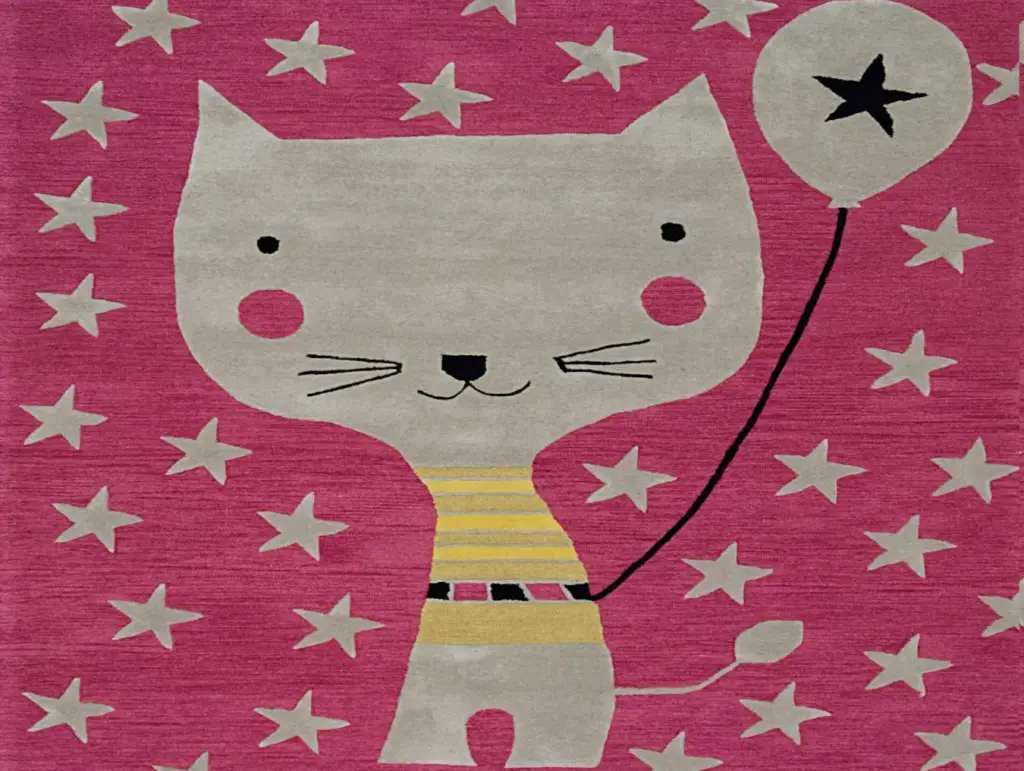
The second archetype is the “Clean-First” Buyer. This buyer prioritizes hygiene and ease of maintenance above all else. They often ask, “Is low pile better for kids Room Rugs?” For this buyer, the answer is often yes. Low-pile and flatwoven kilim rugs allow vacuums to remove dust easily and make wiping up spills simple. These buyers trade some plushness for the ability to keep the rug essentially sterile.
*A note on ‘Washables’: While popular, many thin, printed washable rugs lack the necessary cushion for floor play. For a better balance, consider a traditional cotton flat-weave. It offers the same machine-washability but with more structural integrity and ‘soul’ than a disposable synthetic print.
Beyond the clean-vs-plush debate, consider Sensory Comfort. For children with sensory processing sensitivities, the ‘scratchiness’ of some natural fibers like jute or the ‘slippery’ feel of certain synthetics can be agitating. In these cases, high-quality wool or organic cotton provides a consistent, natural tactile experience that is calming and soft to the touch.
Quick-start decision path
To begin the selection process efficiently, follow this decision path.
- Identify the Zone: Determine if the rug covers the “play zone,” the “bed zone,” or a “reading nook.” A rug under a bed needs less cleaning performance than one in the center of the room where play happens.
- Assess Cleaning Tolerance: Be honest about how much effort you will put into maintenance. Your cleaning tolerance should drive your pile choice; if you hate vacuuming, avoid high-pile shags.
- Verify Material Safety: Check for certifications regarding low VOCs and non-toxic dyes to ensure the rug is chemically safe for high-contact use. The rug materials safest for kids rooms are typically natural fibers like Cotton and wool, or high-quality solution-dyed synthetics free from harsh chemical treatments.
- Measure for Stability: Ensure the rug is large enough for furniture legs to anchor it, or plan to purchase a heavy-duty rug pad to prevent movement.
Safety First: Slip, Trips, and Edge Control
Why slip control is non-negotiable
In adult spaces, foot traffic is generally predictable and low-velocity. In a child’s room, the floor is a gymnasium. Children run, jump, wrestle, and stop abruptly during play. Because of this high-energy movement, slip control is the single most critical safety factor when furnishing the room. A rug that is not anchored to the subfloor becomes a dangerous projectile underfoot, turning a simple game of tag into a risk for head injuries or fractures.
Learning how to stop rug from slipping in kids room environments is not about convenience; it is a mandatory safety protocol. The friction generated by a child sprinting across the room far exceeds the natural grip of most rug backings. Therefore, relying solely on the rug’s weight or a “non-slip” chemical backing is rarely sufficient for the “play zone.” A dedicated physical anchor system is required to lock the textile to the floor.
Rug pad basics
The most effective way to secure a rug is through a high-quality underlayment. Should you use a rug pad in kids rooms? The answer is an absolute yes. A rug pad for kids room rugs serves two distinct functions: grip and impact absorption.
- Grip: The pad must feature a rubberized or felt / rubber hybrid surface that grips hard flooring. This prevents lateral shifting and “bunching,” where the rug ripples up to create a trip hazard.
- Cushioning: Beyond stability, a dense pad adds a layer of shock absorption. This protects children during inevitable falls and insulates them from cold subfloors during sedentary play.
- Sizing: To function correctly, the pad must be trimmed 1–2 inches smaller than the rug on all sides. This allows the rug’s edges to taper naturally to the floor, preventing the “ledge” effect that can cause tripping.
Edge and corner stability
While a pad secures the center, the perimeter of the rug presents its own set of risks. Edge and corner stability are determined by the finishing method used during manufacturing. A non slip rug for children’s room must also be a “non-trip” rug.
Look for rugs with reinforced binding or serging—a continuous wrap of yarn around the edge—which adds weight and structural integrity. This prevents the corners from curling upward, a phenomenon known as “lipping.” Curled corners are a primary cause of trips for toddlers who shuffle their feet or early walkers with unsteady gaits.
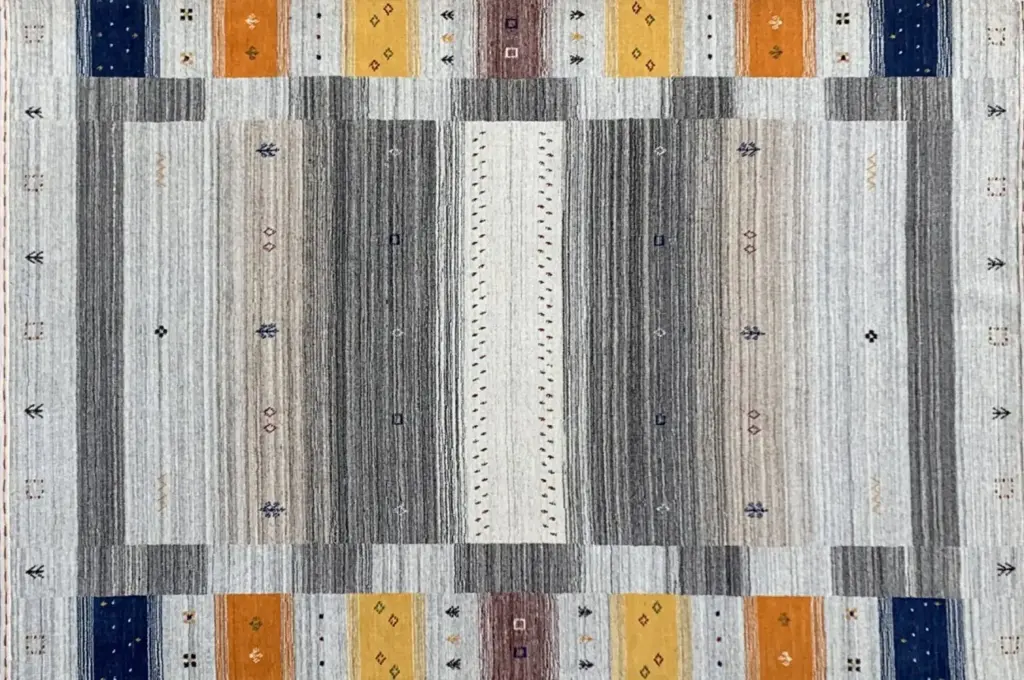
If a rug arrives with curled corners from shipping, they must be flattened (often using weights or reverse-rolling) before the child is allowed to play on it. These safety choices can be invisible but are high-impact interventions for accident prevention.
Door clearance planning
Before purchasing, you must calculate door clearance for rugs to ensure the room functions mechanically. If the rug falls within the swing radius of any door (entry, closet, or balcony), the pile height must be lower than the gap between the bottom of the door and the floor.
- Measure the Gap : Use a coin or tape measure to determine the Vertical space under the door. Standard interior doors often have gaps ranging from 0.5 to 1 inch, but this varies significantly in older homes.
- Check Pile Height + Pad Thickness: You must add the rug’s pile height and the rug pad’s thickness together. A 0.5-inch rug on a 0.25-inch pad may block a door with a 0.6-inch gap, causing the rug to bunch up every time the door opens.
- Account for “Sweep”: Some doors have weather stripping or sweeps attached to the bottom. These rigid elements will snag on loop piles or drag heavy rugs out of position.
Growth-Proofing & Underfloor Heating
- Growth-Proofing: Choose a Transitional Design. While themed rugs are tempting for toddlers, a high-quality geometric Caucasian, a distressed Oushak, or a neutral Sultanabad will grow with the child. These styles move effortlessly from a nursery to a teen’s study, ensuring your investment pays off over 15+ years.
- Underfloor Heating: If the room has radiant heat, stick to natural fibers (wool/cotton) with a breathable felt pad. Avoid heavy latex-backed rugs, as the heat can cause the adhesive to degrade faster, potentially trapping moisture or releasing odors.
Common safety mistakes
Even well-intentioned parents can overlook details that compromise safety. Avoiding these errors ensures the rug remains a safe “touch surface.”
- Skipping the Pad on Carpet: Rugs placed over wall-to-wall carpet can “creep” or walk across the room due to the nap of the carpet below. A specific carpet-to-rug pad is needed to lock it in place.
- Unroll Off-Site: If possible, unroll the new rug in a garage or spare room with open windows for 24-48 hours before placing it in the child’s bedroom. This allows the initial surge of trapped odors to escape away from the sleeping area.
- Active Cross-Ventilation: Open windows on opposite sides of the room to create a draft. Passive air exchange removes airborne particulates and VOCs far faster than air conditioning filtration alone.
- Run HEPA Filtration: While HEPA filters primarily trap particles rather than gases (unless they have a carbon stage), running an air purifier helps circulate air and capture any dust stirred up during the installation process.
- Vacuum Immediately: A thorough vacuuming upon installation removes loose fibers and dust settled during transit, instantly improving the hygiene of the surface.
- Check for a Children’s Product Certificate (CPC): Manufacturers and importers of children’s products must certify compliance with applicable safety rules in a written Children’s Product Certificate. You can often request this document from the seller.
- Review Material Composition Labels: Transparency is key. A reputable brand will clearly list the face fiber, backing material, and any chemical treatments, helping you answer “What rug materials are safest for kids rooms?” with factual data rather than guesswork.
- Look for Third-Party Testing Seals: Beyond government mandates, voluntary seals (like OEKO-TEX or GREENGUARD) indicate the manufacturer has invested in external verification of safety claims.
- Vague “Universal” Marketing: If a seller claims a rug is for “kids, pets, garage, and outdoors,” they may be trying to bypass strict children’s product regulations by categorizing it as a general-use item.
- Missing Country of Origin: Traceability is a component of safety. If you cannot identify where the rug was made, verifying the manufacturing standards becomes impossible.
- Strong Chemical Odors Upon Unboxing: While some scent is normal, an overpowering chemical smell that persists suggests the use of cheap, potentially non-compliant adhesives or solvents.
- Save the Product URL and Description: Marketing claims can change. Keep a screenshot of the safety guarantees made at the time of purchase.
- Archive Digital Receipts: Receipts contain batch numbers or SKUs that are essential for cross-referencing against CPSC recall lists in the future.
- Keep the Manufacturer’s Label: The tag attached to the rug often contains the tracking label required by law for children’s products, including the production date and location.
- Resilience determines how well the rug springs back after being stepped on or played upon.
- Comfort dictates the tactile experience for crawling and bare skin.
- Shedding affects air quality and cleaning frequency.
- Cleanability defines how easily liquid spills and solids can be removed without permanent damage.
- Texture: These fibers are coarse and scratchy. They are abrasive to sensitive skin (knees and elbows) during crawl or play time.
- Cleanability: Jute is highly absorbent and prone to “browning” or water stains. You cannot scrub these rugs vigorously; doing so shreds the fibers.
- Hygiene: Because they are fibrous and often loosely woven, they trap dust and crumbs deep in the weave where vacuums cannot reach, creating a hygiene issue over time.
- Latex/Adhesive Backings: Common in hand-tufted and many washable rugs. A cloth is glued to the back of the tufts using latex. While this provides weight, a latex backed rug kids room purchase requires caution; lower-quality latex can emit strong odors (VOCs) and crumble over time, releasing dust.
- Action-Back / Synthetic Grid: Standard on machine-made carpets. This is a stiff, durable mesh that holds its shape well but is rough on hardwood floors, necessitating a pad.
- Woven (Integrated) Backing: Found in machine-woven and flatweave rugs. The backing is simply the warp and weft yarns. These are the most breathable, trapping the least amount of moisture and emitting the fewest odors.
- Serging: A continuous wrap of yarn around the edge. While attractive, it can be snagged by toys or Velcro shoes.
- Binding: A strip of fabric (usually cotton or synthetic) sewn over the edge. This is generally more durable than serging for a durable kids bedroom rug because it presents a smooth surface that is harder for little fingers to pull apart.
- The “Grin” Test: Fold the rug back on itself. If you can easily see the backing grinning through the pile, the density is low. Low-density rugs matte down quickly under traffic.
- Tuft Bind (The Pull Test): Gently pull on a single tuft. It should feel locked in. If it pulls out easily, a child or vacuum will deconstruct the rug rapidly.
- Weight and Stiffness: A heavier rug generally indicates more material and better stability. Floppy rugs (unless they are specific flatweave vs tufted for kids choices meant to be washable) often indicate lower structural integrity.
- Flatweave (Zero Pile): These rugs have no vertical tufts. They are woven flat like a tapestry, offering maximum durability but zero cushioning.
- Low Pile (Under 0.25 inch): Tightly looped or sheared fibers that sit close to the backing. This is the standard for high-traffic commercial spaces.
- Medium Pile (0.25 to 0.5 inch): The middle ground, offering a balance of softness and stability.
- High Pile / Shag (Over 0.5 inch): Long, loose fibers designed for luxury and texture, often creating a “messy” or relaxed look.
- Building Blocks and Cars: Flatweave or Low Pile. High piles create an unstable surface where towers topple and toy cars get stuck. A smooth surface is critical for floor play mechanics.
- Reading Nooks: High Pile or Shag. This is a low-mess, sedentary zone where sensory comfort is the priority. The risk of spills is lower, and the reward of coziness is higher.
- Art and Craft Tables: Vinyl Mat or Machine-Washable Low Pile. Paint, glue, and glitter are nightmares for rug fibers. You need a surface that can be wiped or laundered easily.
- General Bedroom Traffic: Medium Pile. A standard cut-pile wool or synthetic rug offers enough softness for bare feet while remaining dense enough to vacuum effectively.
- Low Pile: As discussed in previous sections, a tight, low profile prevents allergens from sinking into the base of the rug where vacuums struggle to reach. A low pile rug asthma friendly design keeps particulates on the surface.
- Washability: The ability to cycle a rug through a washing machine removes 99% of biological contaminants (mites, skin cells, saliva) that vacuuming misses. A washable rug for allergies kids room setups provides a “reset button” for air quality that static rugs cannot offer.
- Vacuum Twice Weekly with HEPA: Frequent passes prevent dust from settling into the backing. A HEPA filter ensures that fine particles are trapped in the machine, not blown back into the room.
- Institute a “No Shoes” Policy: Shoes track in pesticides, pollen, and street grime. Leaving shoes at the door creates a primary firewall against outdoor allergens.
- Rotate the Rug Regularly: Traffic patterns mat down fibers, trapping dirt. Rotation exposes all areas to airflow and vacuum suction evenly.
- Sun-Cure Periodically: UV light is a natural disinfectant. Hanging a rug outside on a sunny, dry day can kill dust mites and bacteria without chemicals.
- Blot, Don’t Rub: Rubbing pushes the liquid deeper into the pile and spreads the stain. Press down firmly with clean, dry white towels to absorb volume.
- Lift the Rug Immediately: You must break the seal between the wet rug and the floor. Air must circulate underneath the backing to evaporate moisture trapped at the base of the fibers.
- Employ Active Airflow: Point a box fan directly at the damp spot or use a dehumidifier. Speed is safety; the faster the rug dries, the lower the risk of mold establishment.
- Sanitize After Drying: Once dry, apply an appropriate enzyme cleaner (for organic spills) or disinfectant to neutralize any remaining bacteria.
- Potty Accidents on Jute or Shag: Replace. These fibers are too absorbent and complex to sanitize 100%. The risk of lingering bacteria is too high.
- Surface Water Spills Dried in <24 Hours: Restore. If the water was clean and dried quickly, the rug is safe to keep.
- Recurring Musty Odors: Replace. A persistent smell indicates active mold or mildew growth in the backing glue, which cannot be cleaned out.
- Deep Saturations on Wall-to-Wall Carpet: Restore professionally. How often should you clean my kids room rugs? Standard vacuuming is weekly, but if a rug suffers a deep saturation event that you cannot dry within 24 hours, professional extraction is required immediately to prevent the need for total replacement.
- The Play Zone: In larger rooms, the rug should anchor the open floor space rather than the bed. This creates a dedicated area for building blocks, puzzles, and wrestling, keeping the mess away from the sleeping area.
- The Bed Zone: For comfort, a kids bedroom rug placement that sits two-thirds under the bed provides a warm landing for bare feet in the morning. Alternatively, runners placed on either side of the bed offer thermal comfort without requiring a massive area rug.
- The Mixed Zone: In smaller nurseries or bedrooms, a single Large Rug that sits under the front legs of the crib/bed and extends into the center of the room unifies the space, connecting sleep and play areas seamlessly.
- Select a Shape: Round or organic-shaped rugs work best here, softening the harsh corners of the room and distinguishing the nook from the main Rectangular play rug.
- Layer for Density: Placing a plush sheepskin or high-pile rug over a flatweave creates an invitation to sit. This extra cushioning is essential for floor-based reading.
- Anchor with Seating: Place the front legs of a bean bag or small armchair on the rug to prevent it from sliding and to visually tie the elements together.
- Maximize Coverage: Using the largest size the room can handle (leaving just 12-18 inches of bare floor around the perimeter) pushes the visual walls outward.
- Furniture Anchoring: Placing the front legs of dressers and bookshelves on the rug connects them to the floor plan, preventing the “floating furniture” look that makes a room feel disjointed.
- Horizontal Orientation: Orienting a Striped or patterned rug perpendicular to the entrance can visually widen a narrow room.
- The “Postage Stamp” Rug: A small 3×5 or 4×6 rug floating in the center of a room with no furniture touching it creates a “island” effect, chopping up the floor plan and making the room feel shrinking.
- Blocking Flow Paths: Placing a rug where it interferes with the door swing or creates a trip hazard in the main walkway disrupts the natural movement through the room, making it feel cramped.
- Too Much Pattern: In a small room already filled with colorful toys, a busy rug pattern can create visual chaos. A simpler design expands the sense of space.
- Map the Perimeter: Measure the full dimensions of the room. The rug should ideally leave 12 to 18 inches of bare floor around the edges to frame the space.
- Mark Furniture Footprints: Use painter’s tape on the floor to outline where the bed, dresser, and desk sit. This helps visualize if the rug will sit fully under, partially under, or awkwardly bump against these items.
- Identify Traffic Lanes: Ensure the rug covers high-traffic paths completely. You want the child walking entirely on the rug or entirely off it, not straddling the edge which creates a trip hazard.
- Anchor with Legs: The bed’s weight acts as a primary anchor. Place the rug so the bed’s lower legs (and ideally upper legs for larger rugs) sit firmly on top to prevent shifting.
- Clear the Nightstand: Stop the rug before it hits the nightstand legs. This keeps the bedside table level on the hard floor and prevents the rug from looking “stuffed” into the corner.
- Align Symmetrically: Ensure the rug extends an equal distance on the open side(s) of the bed. For a twin bed against a wall, ensure plenty of rug extends at the foot and open side.
- The Base Layer: Use a large, inexpensive, low-pile or flatweave rug (like jute or synthetic sisal) to cover the majority of the floor. This provides sound dampening and thermal insulation.
- The Top Layer: Place a smaller, plush, or machine-washable rug on top in the primary play zone. This adds softness where knees hit the floor and can be easily removed for cleaning.
- Safety Protocol: To layer safely, you must use a dual-sided rug pad or carpet tape between the two rugs. Without friction, the top rug will “surf” on the bottom one, creating a dangerous slip hazard for running children.
- Colorful / Patterned: A colorful vs neutral kids room rug debate often ends in favor of pattern for one key reason: mess masking. Busy patterns, speckles, and heathered yarns hide stains, lint, and crushed crackers far better than solid blocks of color. However, highly stimulating patterns can sometimes clash with the chaos of scattered toys.
- Neutral/Solid: Solid neutrals offer longevity, growing with the child from nursery to teen years. The trade-off is higher maintenance; a solid cream or grey rug shows every spot and requires diligent vacuuming.
- The “Worth It” Scenario: If you are potty training, have a child with severe dust allergies, or deal with frequent food spills, a washable rug kids room worth it rating is high. The ability to toss the rug in the wash offers unmatched convenience and hygiene.
- The Trade-Off: Washable rugs are generally thinner (often flatweaves or very low pile) and lack the plush cushioning of traditional rugs. They also have a shorter lifespan; the backing will eventually break down after repeated wash cycles. You are trading longevity and plushness for the “best easy clean rug for kids” functionality.
- Create a “Shoe-Free” Zone: Prevention is better than cure. Removing shoes at the door cuts incoming dirt and bacteria by up to 80%.
- Treat Stains Instantly: A stain that dries is ten times harder to remove. Keep a bottle of non-toxic enzymatic cleaner in the closet for immediate deployment.
- Use a Protective Spray: Applying a fiber protector (like Scotchgard, if safe/compatible) creates a sacrificial layer that buys you time to blot up spills before they soak in.
- Shake It Out: For smaller rugs, taking them outside and shaking them vigorously removes embedded dust that vacuums struggle to lift.
- Is low pile better for kids room rugs? Yes, because it keeps allergens on the surface where they can be removed.
- Is shag a bad choice for kids rooms? It is not inherently “bad,” but it is a hygiene liability. It traps crumbs, small toys, and dust deep in the fibers where vacuums cannot reach. In a child’s room, cleanability usually trumps maximum plushness.
- Safety (Slip Control): Should you use a rug pad in kids rooms? Yes, non-negotiable. If the rug slips, it is dangerous regardless of how soft it is.
- Hygiene (Cleanability): Are washable rugs worth it for kids rooms? If you have a high-mess household, yes. Prioritize machines-washable or low-pile options that release stains easily.
- Health (Air Quality): Should kids room rugs be hypoallergenic? Ideally, yes. Look for Low-VOC certifications (CRI Green Label Plus or GREENGUARD) to protect the breathing zone.
- Comfort (Texture): Only after the rug is safe, cleanable, and non-toxic should you worry about how soft it feels.
- [ ] Size Verified: Measures allow for 12-18” of floor border; rug clears door swings.
- [ ] Stability Secured: Rug pad added to Cart (felt/rubber combo for hard floors).
- [ ] Fiber Selected:
- High Mess: Cotton/Synthetic Flatweave (Washable).
- Comfort/Traffic: Wool or Nylon Cut-Pile (Resilient).
- [ ] Compliance Checked: Product has “Kids” designation or low-emission certification.
- [ ] Moisture Strategy: Rug is not placed directly under a humidifier; backing is breathable.
- [ ] Maintenance Plan: You have a vacuum with a HEPA filter and enzyme cleaner ready.
- How do I make rugs for kids rooms safer?
Use a quality rug pad, trim curled edges, and vacuum regularly. Simple maintenance goes a long way in keeping kids room rugs safe.
- Is it okay to buy vintage rugs for kids rooms?
Yes, with care. Vintage rugs can be durable, but ensure they’re clean, structurally sound, and appropriate for high activity.
- Are rugs for kids rooms suitable for underfloor heating?
Many are. Low-pile wool and synthetic rugs generally work well with radiant heat systems when paired with the right pad.
- Should rugs for kids rooms match the room décor?
Function comes first. Rugs for kids rooms often prioritize playfulness and durability over perfectly matching furniture.
- What rug shapes work best in kids rooms?
Rectangular rugs are most common. Round rugs also work well for play areas or smaller kids rooms.
- Can rugs for kids rooms handle pets too?
Many can. Low-pile rugs made from wool or polypropylene hold up well to both kids and pets.
- Are synthetic rugs bad for kids rooms?
Not necessarily. Many synthetic rugs are durable and easy to clean, though parents concerned about materials may prefer wool or cotton.
- Are hand-knotted rugs practical for kids rooms?
Surprisingly, yes. Dense hand-knotted rugs are durable and repairable, though they cost more upfront than machine-made options.
- How often should rugs in kids rooms be replaced?
Most rugs for kids rooms last 5–10 years. Heavy play, frequent spills, or growth changes may shorten that timeline.
- Should rugs for kids rooms be stain resistant?
Stain resistance is highly recommended. Many rugs for kids rooms are treated or naturally resistant, helping spills clean up faster.
- Are rugs for kids rooms safe for crawling babies?
Low-pile, tightly woven rugs with a non-slip pad are safest. Avoid loose fibers or curled edges in baby and toddler rooms.
- Can rugs for kids rooms help reduce noise?
Yes. Rugs absorb sound and reduce echo, especially helpful in upstairs kids rooms or shared living spaces.
- Are natural fiber rugs good for kids rooms?
Some are. Wool and cotton work well, but jute and sisal rugs are rougher and less forgiving for kids rooms with lots of floor play.
- How do I clean rugs used in kids rooms?
Regular vacuuming plus spot cleaning is usually enough. For deeper cleaning, many rugs for kids rooms benefit from annual professional cleaning.
- Are patterned rugs better than solid rugs for kids rooms?
Usually yes. Patterns help disguise spills and wear, making them practical for kids rooms with heavy activity.
- What colors work best when buying rugs for kids rooms?
Medium or patterned colors hide stains best. Rugs for kids rooms often use playful designs or multicolor patterns to mask everyday messes.
- Do kids room rugs need a rug pad?
Yes, a rug pad is recommended. It prevents slipping, adds cushioning, and helps rugs for kids rooms stay in place during play.
- Are washable rugs better for kids rooms?
Washable rugs can be helpful for kids rooms. They handle spills well, though frequent washing may shorten lifespan compared to traditional woven rugs.
- How big should a rug be in a kids room?
Most kids rooms use 5×8 or 6×9 rugs. The rug should extend under beds or play areas to create a defined, comfortable zone.
- Should I avoid high-pile rugs when buying rugs for kids rooms?
Often yes. High-pile rugs can trap crumbs and dust, while low-pile or flatweave rugs are easier to clean and safer for active play.
- Are wool rugs safe for kids rooms?
Yes, wool rugs for kids rooms are generally safe. Wool is naturally flame-resistant and regulates moisture, though some children may be sensitive to shedding at first.
- What rug materials are best when buying rugs for kids rooms?
Wool, cotton, and polypropylene are most common. Wool is naturally durable and stain resistant, while polypropylene is budget-friendly and easy to clean.
- Are rugs for kids rooms supposed to be soft or firm?
Rugs for kids rooms should be comfortable but supportive. Medium-soft rugs with dense construction cushion play while still holding up to daily wear.
- What should I look for when buying rugs for kids rooms?
Prioritize durability, easy cleaning, and safety. Low-pile or flatweave rugs made from wool or washable synthetics are common choices for high-use kids rooms.
Indoor Air Quality: VOCs, Odor, and Low-Emission Labels
VOC basics for homes
Indoor air quality is a critical consideration for children’s spaces because modern homes are built to be airtight for energy efficiency. This lack of passive ventilation can cause volatile organic compounds (VOCs)—chemicals released as gases from solids or liquids—to concentrate indoors at levels significantly higher than outdoors. Since children have higher respiration rates relative to their body weight and play directly on the floor within the “breathing zone” of a rug, minimizing these emissions is essential.
When searching for a safe rug for nursery indoor air quality, the goal is to reduce the total chemical load in the room. New home furnishings, including rugs, paints, and furniture, can off-gas these compounds. While many VOCs are naturally occurring and harmless, others can cause respiratory irritation or headaches. Therefore, controlling the source by selecting a low VOC for Kids room rugs environments is the most effective preventive measure.
One of the most significant, yet often overlooked, benefits of wool pile area rugs in a child’s room is its natural flame retardancy. Unlike many synthetic rugs that require chemical flame-retardant treatments (which can contribute to VOC levels), wool is difficult to ignite and is self-extinguishing. This provides an extra layer of passive safety without adding a chemical load to the room.
Low-emission certifications
Navigating marketing claims can be difficult. Third-party certifications provide an objective verification of a product’s chemical safety profile. When evaluating options, look for these specific labels to validate claims.
| Label | What it signals | Best use-case |
|---|---|---|
| UL GREENGUARD Gold | Verifies the product meets strict chemical emissions limits for over 360 VOCs. It is specifically calibrated for sensitive environments like schools and healthcare facilities. | This is the primary target when shopping for a **GREENGUARD Gold Rug nursery** item, ensuring the lowest possible emission levels for infants. |
| CRI Green Label Plus | Administered by the Carpet and Rug Institute, this certifies that carpet, adhesives, and cushions emit very low levels of VOCs. | Ideal for ensuring the foundational layer of the room is safe. A CRI Green Label Plus rug meets high industry standards for indoor air quality. |
| OEKO-TEX Standard 100 | Tests for harmful substances and chemical residues in the textile itself, rather than just emissions. | Use this to verify that the fibers touching your child’s skin are free from allergenic dyes or harmful pesticides. |
New rug odor expectations
It is important to distinguish between a “new rug smell” and harmful off-gassing. Many new area rugs and textiles will have a distinct odor upon unboxing. This is often the result of the packaging trapping scents from the manufacturing and warehousing process. In most cases, these low-level emissions diminish rapidly.
If a rug has been certified low-VOC, the odor is likely not indicative of a health hazard and will dissipate significantly within 48 to 72 hours with proper ventilation. However, if a strong chemical smell persists beyond a week despite airflow, it may indicate the presence of lower-quality adhesives or latex backings that are continuing to off-gas.
“Natural” isn’t always healthiest
Parents often ask, “What rug materials are safest for kids rooms?” expecting the answer to always be “100% natural wool or cotton.” However, from an air quality perspective, “natural” is not automatically superior. A natural wool fiber rug may be backed with synthetic latex glue that emits high levels of VOCs. Conversely, a high-quality synthetic rug might use a heat-fused backing that requires no chemical adhesives at all.
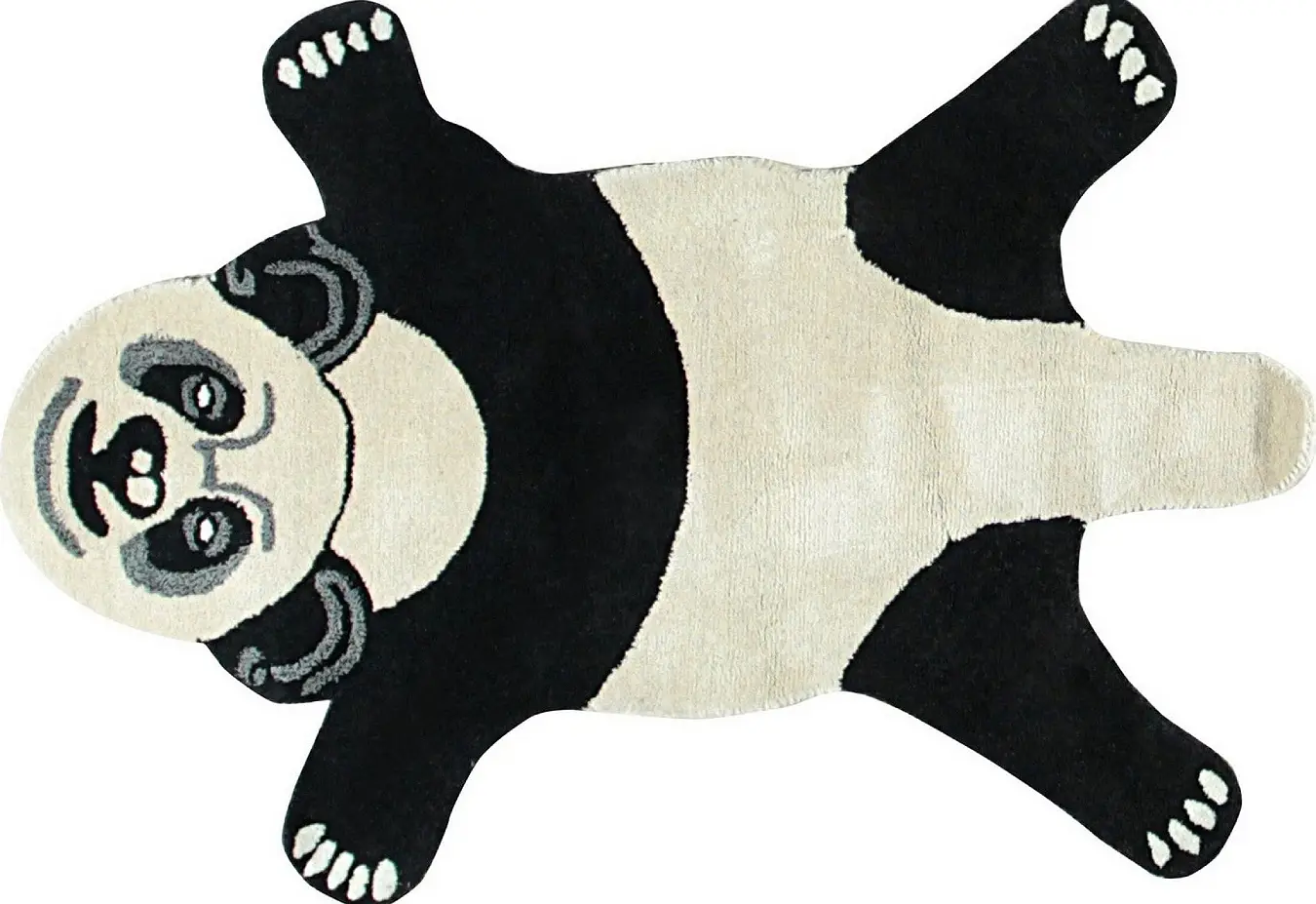
The safety of the air depends heavily on the entire system—fiber, dyes, and especially the backing and finishes—rather than just the face fiber. A synthetic rug with a top-tier certification like GREENGUARD Gold is often a safer choice for indoor air quality than a non-certified “natural” rug processed with harsh chemical finishes or heavy glues.
Ventilation playbook
Ventilation is the simplest, highest-leverage step you can take to ensure a healthy environment. Even the safest products benefit from a “flush out” period.
Compliance and Peace of Mind When Rugs Are Marketed for Kids
Why “marketed for kids” changes the context
When a manufacturer explicitly labels a rug as a “kids rug” or uses marketing imagery featuring children, it does more than signal a whimsical design; it triggers a distinct set of regulatory expectations. In the United States, products designed or intended primarily for children 12 years of age or younger fall under the jurisdiction of the Consumer Product Safety Commission (CPSC). This classification means that children’s rug compliance is not optional—it is a federal requirement.
For parents, this distinction provides a layer of protection. A general-use area rug is treated as a home furnishing, while a designated children’s product must meet stricter kids rug safety standards, particularly regarding hazardous substances. Therefore, seeing “Kids” in the product title is a signal that the item should have undergone more rigorous safety vetting than a standard living room carpet.
Lead limits in children’s carpets/rugs
One of the primary concerns for safe kids room rugs guidance is lead exposure. Under the Consumer Product Safety Improvement Act (CPSIA), children’s products must not contain more than 100 parts per million (ppm) of total lead in accessible substrates. While rug fibers themselves (Nylon, wool, Polyester) rarely contain lead, the risk often lies in the secondary materials: the backings, adhesives, or screen-printed coatings used to create vibrant designs.
Finding a lead safe rug for nursery use involves understanding that the CPSC monitors these levels. While general-use rugs are not exempt from safety rules, rugs specifically targeted at children are subject to mandatory third-party testing to ensure they do not exceed these lead limits. This makes the “intended use” category a critical factor in your buying decision.
What to verify before buying
To ensure you are purchasing a compliant product, verify the following details before Checkout.
Red flags
Be wary of products that display these warning signs, as they may indicate a lack of compliance.
How to document your due diligence
Documentation provides “peace of mind” and a paper trail should a safety recall occur later.
Materials for Kids Rooms: Wool, Cotton, Synthetics, and Natural Fibers
Fiber system overview
Selecting the best material for kids bedroom rug setups involves balancing four distinct performance metrics: resilience, comfort, shedding, and cleanability. It is not enough to simply choose a fiber that feels soft; the material must withstand the specific mechanical stresses of a child’s environment.
Every material choice is a trade-off between these factors.
Wool in kids rooms
A wool rug for kids room design is often considered the gold standard for long-term performance. Wool fibers have a natural coil-like structure that provides excellent “bounce-back,” meaning the rug resists crushing even in high-traffic play zones. Wool is also naturally flame-retardant and regulates humidity, making it physically comfortable year-Round.
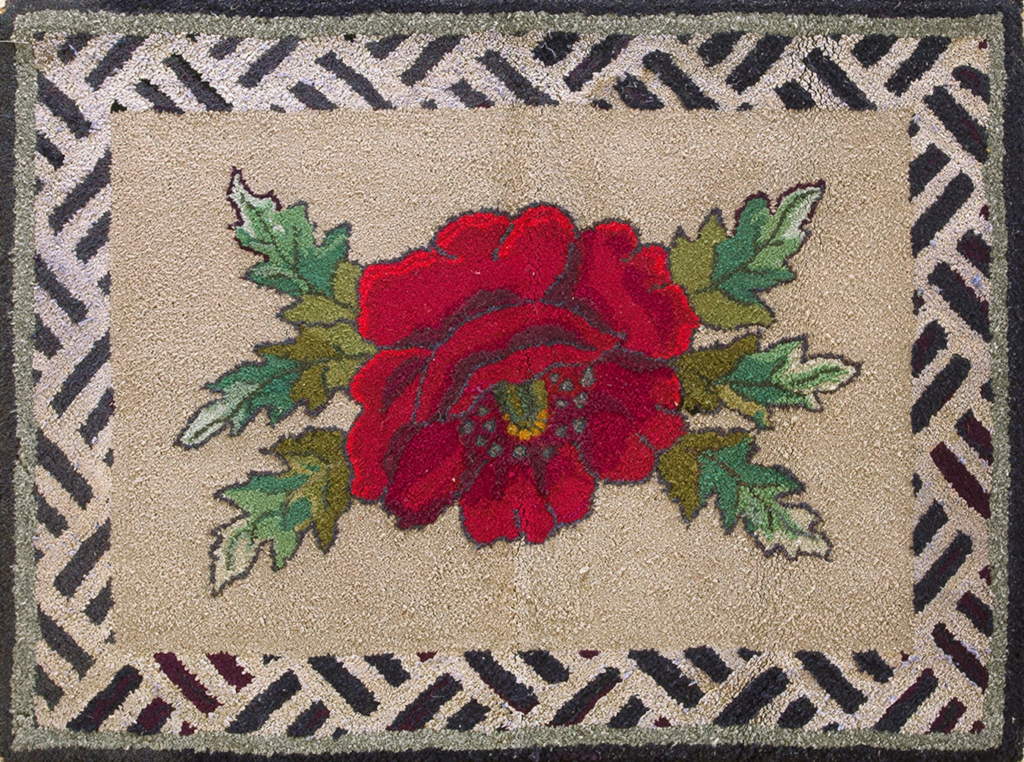
However, parents must anticipate “early shedding.” New wool rugs release loose fiber fragments (fluff) for the first few months of use. This is a normal characteristic of the fiber, not a defect. While this requires frequent vacuuming, it diminishes over time. Regarding allergies: Should kids room rugs be hypoallergenic? Ideally, yes. Wool is naturally hypoallergenic because its dry structure inhibits the growth of bacteria and dust mites, provided the shedding is managed with regular vacuuming.
Cotton and washability
Cotton is the fiber of choice when total hygiene is the priority. A cotton washable rug kids room option is typically a flatweave or low-pile construction that is light enough to fit into a residential washing machine. This allows for deep sanitization following sickness, potty-training accidents, or major craft spills.
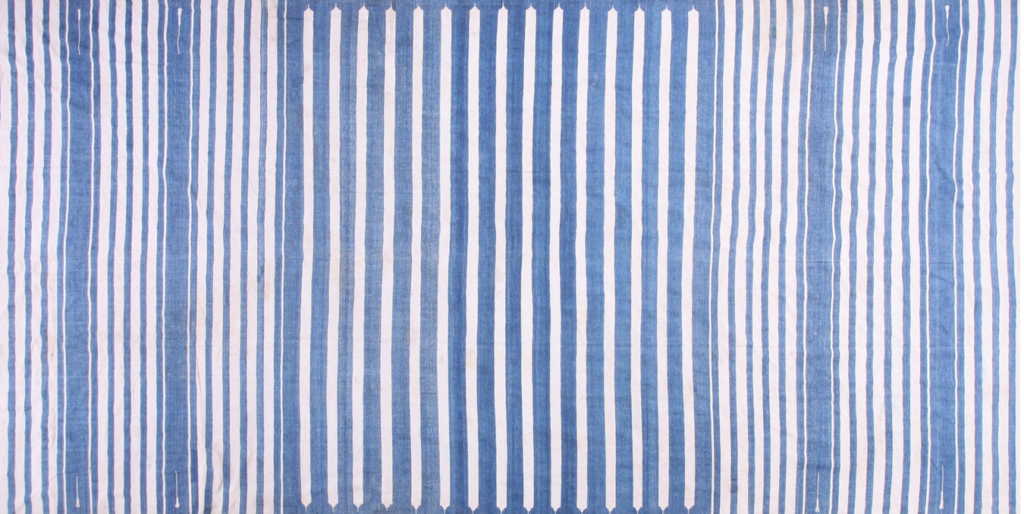
The trade-off with cotton is low resilience. Unlike wool, cotton fibers do not have a memory; they tend to compress, flatten, or “mash down” quickly. Cotton rugs are excellent for hygiene but provide less structural support and cushioning for long-term floor play.
Synthetics overview
Synthetic fibers (Nylon, Polyester, Polypropylene) dominate the market due to their affordability and vibrant color options. When evaluating synthetic rug kids room pros cons, the primary advantage is stain resistance. Solution-dyed synthetics are nearly impervious to liquid stains because the color goes all the way through the fiber, like a carrot.
However, synthetics vary wildly in chemical safety. What rug materials are safest for kids rooms? The answer is not always “natural fibers.” A high-quality synthetic rug with a certified non-toxic backing (like GREENGUARD Gold) can be safer than a natural fiber rug processed with harsh glues.
“Safest” is about the whole build: the fiber system plus the backing and finishes. Be aware that lower-quality synthetics may retain odors or off-gas more than natural counterparts if not properly certified.
Jute/sisal cautions
While popular for their natural, “boho” aesthetic, plant fibers like jute and sisal are generally poor choices for a child’s room.
Best material by household scenario
Use this table to align your material choice with your specific lifestyle needs.
| Scenario | Best Choice | Avoid |
|---|---|---|
| Potty Training / High Mess | Machine Washable Cotton or Polypropylene. These can be hosed down or laundered. | High Pile Wool or Jute. These trap liquids and are difficult to deep clean. |
| Rough Play / Wrestling | Plush Wool or Nylon. Offers high resilience and cushion for falls. | Thin Flatweaves. Insufficient impact protection. |
| Allergies / Sensitive Skin | Low Pile Wool or Nylon. Tight weaves prevent dust trapping and are easy to vacuum. | Shag / High Pile. These act as particulate sinks. |
| Budget / Temporary Fix | Polypropylene. Stain-resistant and affordable for short-term use. | **Silk or Viscose.** Extremely fragile and water-sensitive. |

Construction and Backing: What’s Under the Surface Matters
Construction types overview
The longevity of a rug is determined more by how it is assembled than by the fiber used. When searching for the best rug construction for kids room areas, you must weigh the desire for plushness against the reality of shedding and delamination (separation of layers).
| Type | Pros | Cons | Best for kids rooms? |
|---|---|---|---|
| Machine-Woven / Power-Loomed | extremely dense, durable, and precise patterns. often affordable. | pile height is limited; can feel less “organic” than handmade. | Excellent. High durability and tight weave resist snagging toys. |
| Hand-Tufted | plush, thick feel; less expensive than knotted. | uses latex glue which can off-gas; sheds significantly; backing can degrade. | Moderate. Good for cushion, but lower air quality scores due to glues. |
| Flatweave (Cotton/Wool) | easy to clean, often reversible, no pile to trap dust. | offers zero cushion; requires a thick pad; can slip easily. | Good. Ideal for high-traffic play zones or allergy sufferers. |
| Hand-Knotted | incredible durability; no glue (better air quality); investment grade. | very expensive; cleaning requires professional care. | Moderate. If not too pricy, high-quality wool contains natural lanolin, which acts as a built-in stain repellent. These rugs are also fully repairable and can last for decades, evolving with the room. |
| Braided | extreme durability; reversible; hides stains well. | texture is bumpy for block building; loops can be pulled by pets/kids. | Moderate. Great for rustic themes but tricky for Lego play. |
Backing types explained
The backing is the structural spine of the rug. It dictates stability, air quality, and reaction to moisture.
Edge finishing methods
Kids are notorious for picking at loose threads. The edge finish is the first line of defense against unraveling.
Treatments and coatings
Many performance rugs come with stain-repellent coatings. These hydrophobic treatments prevent liquids from soaking into the fiber, keeping spills beaded on the surface. While highly effective for cleanliness, parents concerned with chemical exposure should verify if these treatments use PFCs (perfluorinated compounds). There is often a trade-off: a treated rug is easier to clean, while an untreated rug contributes less to the chemical load of the room.
This leads to a common question: Are washable kids room rugs worth it? Generally, yes. The ability to toss a rug in the wash is a massive hygiene advantage. However, frequent saturation can shorten the life of the backing on cheaper models. If buying a washable rug, ensure the backing is designed for water exposure, or the adhesive layers will eventually disintegrate.
Durability signals you can feel
You can assess quality without being an expert by using these physical tests.
Pile Height and Texture: Comfort vs Cleanability Trade-offs
Pile system explained
The “pile” of a rug refers to the density and height of the fiber loops or tufts. Understanding these categories is essential for predicting how a rug will perform under the unique stresses of a child’s room.
Is low pile better?
Parents frequently ask, “Is low pile better for kids room rugs?” From a maintenance and hygiene perspective, the answer is unequivocally yes. A low pile rug for kids room setups offers a distinct advantage: it does not trap debris.
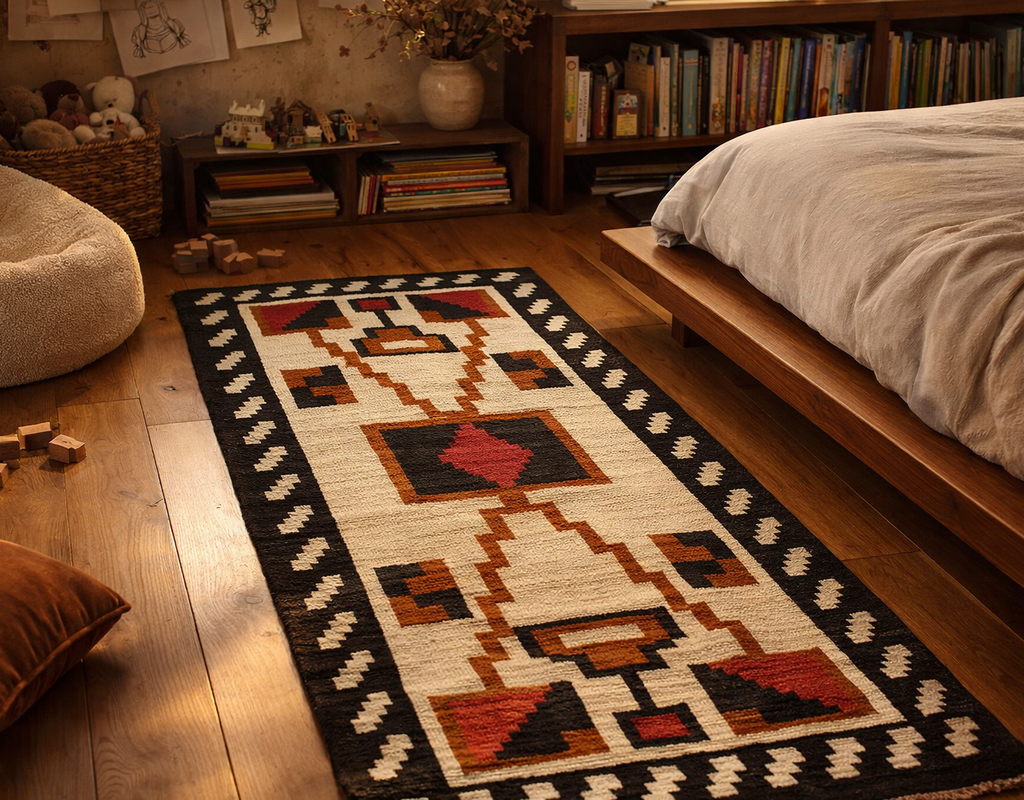
In a child’s room, the floor collects everything from cracker crumbs to tiny Lego bricks. On a low-pile surface, these objects sit on top of the fibers, making them visible and easy to sweep up. Furthermore, low pile creates an easy to vacuum kids rug experience; the vacuum cleaner can maintain strong suction against the backing to remove dust. In contrast, deep piles can “choke” a vacuum or require special attachments, discouraging frequent cleaning. For allergy sufferers, low pile is the superior choice as it minimizes the reservoir for dust mites and pollen.
Is shag a bad choice?
Conversely, is shag a bad choice for kids rooms? Not necessarily, but it is a high-commitment choice. When evaluating shag kids room rugs pros cons, the primary pro is sensory comfort. It provides a cloud-like surface for reading or rolling around.
However, the cons are significant. Shag rugs are notoriously difficult to clean. If a liquid spill occurs on a high-pile rug, the fluid runs down the long fibers and pools at the base, soaking into the backing and pad. Because air cannot circulate deep within the dense pile, this creates a persistent dampness risk that can lead to mold or mildew odors.
Additionally, small toys and earrings can get “lost” in the shag, only to be found painfully by a bare foot later. Shag is not “bad,” but it requires a strict “no food or drink” policy and a high tolerance for maintenance.
Comfort-first vs clean-first
As mentioned earlier, your choice of pile height forces a direct trade-off between the “Play-First” and “Clean-First” buyer archetypes. You generally cannot have maximum plushness and maximum ease of cleaning in the same product.
The best pile height for kids bedroom rug selection depends on where you fall on this spectrum. If you prioritize a cozy, soft landing zone (Comfort-First), you are likely looking at medium to high piles, accepting that you will need to spot-clean frequently. If you prioritize the ability to quickly sanitize the room and keep dust levels low (Clean-First), you must sacrifice that plush feel for the utility of a flatweave or low-pile construction.
Matching pile to activities
To make the most practical decision, match the pile height to the primary activity in that specific zone of the room.
Allergies, Asthma, Dust, and Hygiene Strategy
Should kids room rugs be hypoallergenic?
When parents ask, “Should kids room rugs be hypoallergenic?” the answer requires nuance. The term “hypoallergenic” is unregulated in the textile industry and can be misleading. Generally, it implies that the material itself (like wool or certain synthetics) is resistant to mold and bacteria or does not shed irritating fibers.
However, even a “hypoallergenic” material can become an allergen trap if the construction allows dust, pollen, and pet dander to settle deep into the weave. Therefore, the “safest” rug is not just one made of specific fibers, but one that is structured to release dirt easily. Truly hypoallergenic kids room rugs are ones that you can clean thoroughly and frequently.
Washable + low pile guidance
For households managing asthma or severe sensitivities, the strategy shifts from “material selection” to “maintenance capability.” The best kids room rugs for children with allergies is almost always a washable, low-pile option.
Dust and allergen mechanics
It is a biological fact that all Textiles can harbor dust. Rugs act as a “sink” for airborne particles; gravity pulls dust down, and the rug fibers trap it. In one sense, this is beneficial because it keeps dust out of the breathing zone—until the rug is disturbed by playing children, which re-launches the particles into the air.
This mechanical action is why high-pile shag rugs are problematic for sensitive kids. The deep fibers hold a massive volume of dust that is released in a cloud when a child jumps or rolls on the rug. Conversely, a flatweave rug holds very little dust capacity, forcing it to be cleaned up or moved to the hard floor where it can be mopped.
Cleaning routines that reduce allergens
Routine maintenance beats one-time deep cleaning. To maintain a healthy environment, adopt these habits.
When to rethink carpeted floors
In extreme cases of sensitivity, even the cleanest rug might be too much. If a child suffers from severe, uncontrolled asthma, the best floor covering might be no rug at all. Hard surfaces (wood, laminate, tile) can be wet-mopped to completely remove allergens.
If warmth and softness are still needed, consider using small, easily laundered throw mats (like 2×3 cotton bath mats) at the bedside instead of a large area rug. This allows for weekly hot-water washing, ensuring the sleeping zone remains virtually sterile while providing a soft place to land in the morning.
How often should you clean kids room rugs?
For general hygiene, vacuum twice a week. For deep cleaning (shampooing or laundering), aim for every 3 to 6 months, or immediately after any illness or significant spill.
Moisture, Spills, and Microbial Risk: The Hidden Enemy
Why moisture is the main hygiene risk
While dirt and crumbs are visible annoyances, moisture is the “hidden enemy” in a child’s room. Biological growth (mold and mildew) can begin within 24 to 48 hours of a rug becoming damp. In a kids’ room, sources of moisture are frequent: spilled juice, potty-training accidents, and even humidity from humidifiers.
The danger lies in “dampness persistence.” A rug that stays damp is worse than a less cozy rug. If liquid penetrates the face fiber and soaks into the backing or pad, it creates a dark, humid environment perfect for microbial proliferation. This biological activity degrades indoor air quality and can trigger respiratory issues, making moisture control a critical safety protocol.
Spill response protocol
To minimize risk, you must treat moisture incidents as urgent. Learning how to dry rug after spill events correctly is essential for preventing long-term damage.
Pad and backing moisture trapping
As discussed earlier, the construction of the rug heavily influences its reaction to water. Backing and pad choices affect drying speed significantly. A solid latex or “action-back” rug can act as a vapor barrier, trapping moisture against the subfloor. To prevent mold under rug pad surfaces, you need a system that breathes.
The best rug pad for spills kids room scenarios is often a dual-surface felt pad (which is breathable) or a specialized barrier pad that stops liquid from hitting the hardwood but allows the rug above to be cleaned. However, thick pile combined with thick, absorbent padding increases dampness persistence. If a spill happens on a thick setup, surface cleaning is rarely enough; the liquid often sits in the pad like a sponge, requiring you to disassemble the setup to dry it properly.
Humidity and humidifier incidents
A less obvious source of moisture is the nursery humidifier. Cool-mist humidifiers often output heavy moisture that settles downward. If a rug is placed directly beneath the unit, it can become chronically damp without a distinct “spill” ever occurring.
This creates repeated damp events that slowly degrade the rug’s backing and encourage dust mites. A moisture safe kids bedroom rug strategy involves keeping the rug at least three feet away from humidifiers or placing the unit on a waterproof mat to capture fallout.
When to replace vs restore
Sometimes, cleaning is not enough. Use this guide to decide when a rug has become a health hazard.
Layout and Placement: Where the Rug Goes in a Kids Room
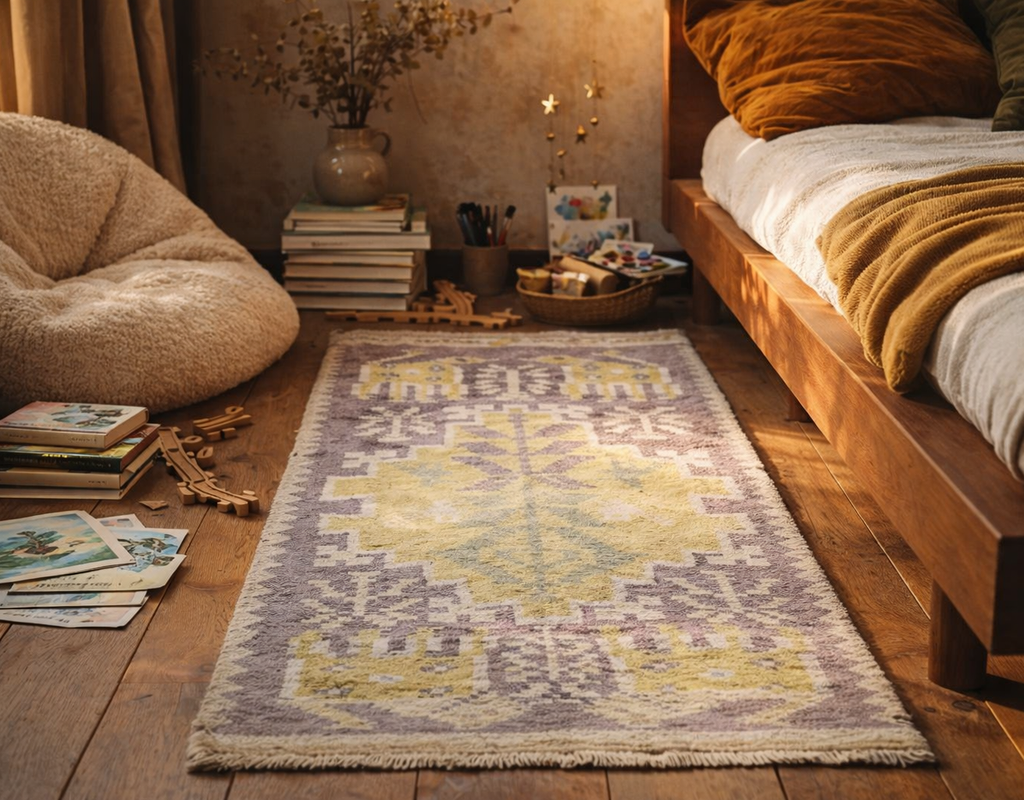
Where should I place my kids room rugs?
Determining where to put rug in child’s room layouts is a functional decision that defines how the space is used. Unlike adult bedrooms, where symmetry often dictates placing a rug partially under the bed, a child’s room requires “zoning.” The rug defines the “soft territory” for specific activities.
Creating a reading nook
Can rugs create a reading nook in kids rooms? Absolutely. A rug for kids reading nook setups acts as a visual boundary, signaling that a specific corner is for quiet time rather than active play. This zoning improves function without adding the clutter of extra furniture.
Can a rug help reduce noise?
Parents often ask, “Can a rug help reduce noise in kids rooms?” The answer is yes, and it is one of the most practical reasons to install one. Hard surfaces like laminate or hardwood reflect sound waves, creating echoes that amplify the noise of dropped toys, crying, or shouting.
The sound dampening kids room rugs strategy relies on mass and absorption. The fibers of the rug absorb airborne sound (voices), while the pad absorbs impact noise (footsteps/jumping). This acoustic dampening creates a quieter, calmer environment that is conducive to sleep and focus, preventing noise from transmitting to rooms on the floor below.
Room-expanding placement tricks
Strategic placement can trick the eye into perceiving a small bedroom as spacious.
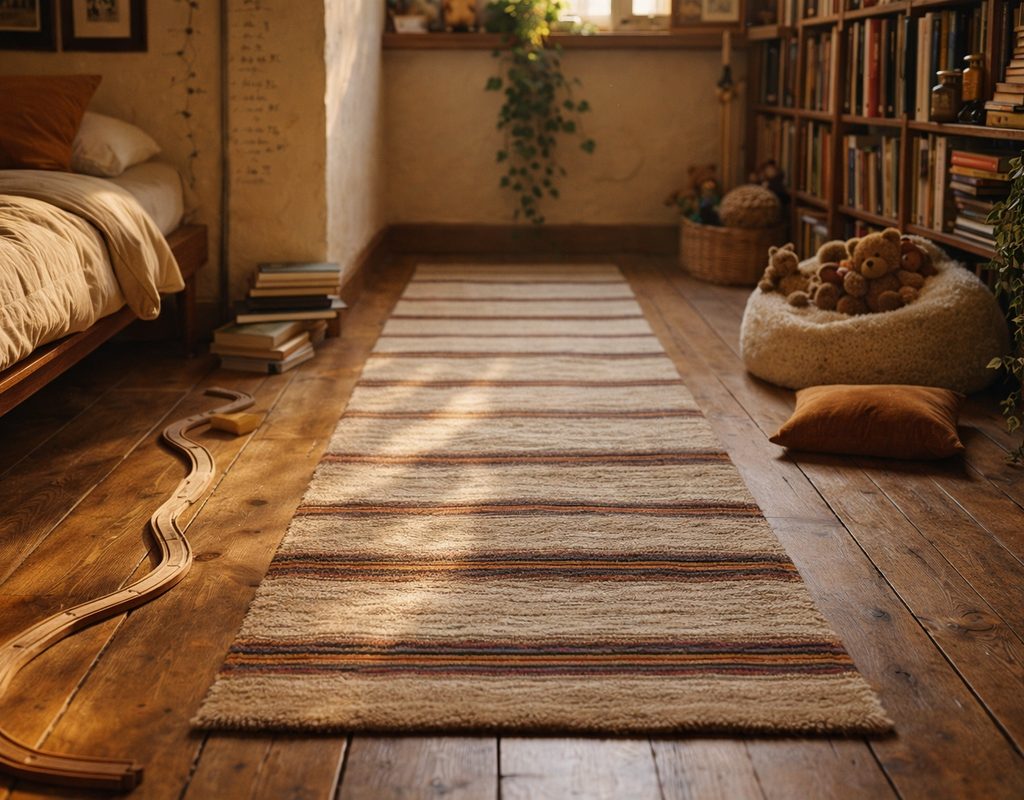
Mistakes that make rooms feel smaller
Avoid these common errors to ensure the room feels open and breathable.
Sizing and Measuring: Play Rugs, Bed Rugs, Door Clearance
Measuring kids room rugs
Accurate measurement is the difference between a custom-looking room and an awkward fit. Learning how to measure room for rug kids bedroom layouts involves more than just length and width.
Play zone sizing
For dedicated play areas, size is a safety feature. How big should a rug be for play? It should be large enough to contain the activity radius. If a child is building a train track or sprawling out with puzzles, the rug must accommodate the child and their toys.
A small rug forces play onto the cold floor or causes toys to teeter on the edge transition. The play area rug size should be generous—typically at least 5×8 or 6×9 feet for a standard bedroom—creating a unified “soft island” that insulates against falls and noise.
Twin bed rug sizing options
Twin beds are the standard for kids’ rooms, but sizing the rug correctly can be tricky. Use this twin bed rug size guide to select the best rug size for kids room layouts involving a twin bed.
| Rug Size | Under-Bed Placement | Best Look |
|---|---|---|
| 5′ x 8′ | Place the rug horizontally, starting about 12-18 inches down from the nightstand. | Balanced. Provides a nice soft landing on both sides and foot of the bed without swallowing the room. |
| 8′ x 10′ | Center the bed fully on the rug, or place two twin beds on one large rug. | Luxurious. Maximizes play space at the foot of the bed and unifies shared rooms. |
| 3′ x 5′ or Runner | Place alongside the bed (one side only). | Budget-Friendly. Ideal for small rooms or when showcasing beautiful hardwood floors is a priority. |
What rug size fits under a twin bed? While a 5×8 is the most versatile standard size, an 8×10 allows for maximum floor coverage in larger rooms.
How to place a rug under a bed
Placement technique matters for stability and aesthetics.
Door clearance checks
As emphasized earlier, door clearance is a mechanical constraint. Does a rug need clearance from doors? Yes, absolutely. Before finalizing your size, swing the bedroom and closet doors open. If the rug extends into the door’s arc, you must measure the vertical gap between the door bottom and the floor.
If the gap is tight (less than 0.5 inch), you have two choices: size the rug down so it stops before the door swing, or choose a flatweave rug with a low profile that clears the sweep. Ignoring this leads to the “door bunching” effect, which ruins the rug edge and frustrates daily use.
Style Choices That Still Perform: Round Rugs, Layering, Color, Shared Rooms
Do round rugs work better?
Do round rugs work better in kids rooms? The answer depends on the room’s geometry and traffic flow. A rectangular rug is designed to align with straight walls and furniture, creating a formal “grid.” A round rug kids room choice breaks this grid, softening the sharp corners of dressers and beds.
Functionally, round rugs are superior for tight or awkwardly shaped spaces. They do not require perfect alignment with walls, making them ideal for “floating” zones like a reading nook or a play circle in the center of the room.
They also improve flow; because there are no corners to walk around, they naturally guide movement through the space without creating trip hazards at the edges.
Layering rugs safely
Can you layer rugs in a kids room? Yes, and it can be a performance-first decision, not just a decorative one. Layered rugs kids bedroom strategies allow you to combine the best features of different rug types.
Neutral vs colorful
Should kids room rugs be neutral or colorful? This choice balances aesthetics with practicality.
Shared kids rooms strategy
Shared rooms present unique challenges in defining personal space. How do you choose a rug for shared kids rooms? Use this table to navigate common issues.
| Challenge | Rug Approach | Layout Idea |
|---|---|---|
| Defining Territory | Two Identical Small Rugs. | Place matching runners or 3×5 rugs at the foot or side of each bed to give each child their own “island.” |
| Unifying the Space | One Large Wall-to-Wall Anchor. | Use a massive 8×10 or 9×12 that goes under both beds, visually connecting the room into a single cohesive suite. |
| High Traffic / Mess | Central Durable Flatweave. | Focus spending on a tough, easy-clean rug in the shared center lane where wrestling and play happen. |
Shared kids room rug ideas should prioritize durability over novelty, as the traffic load is doubled.
“Learning” rugs and printed finishes
“Learning rugs” (featuring maps, roads, or alphabets) are popular for their educational value. However, realize that these are often printed on lower-quality nylon loop piles. The printing process can sometimes involve heavy use of dyes and binders.
When choosing these graphic-heavy rugs, look for “washability” and low-emission labels (like OEKO-TEX) as proxies for quality. A printed rug that cannot be washed will quickly become a disposable item. If you want the learning aspect without the chemical concern, consider a higher-quality wool rug for the main room and a smaller, roll-out vinyl or cotton play mat for the road map activities.
Cleaning, Maintenance, and “Are Washable Rugs Worth It?”
Cleaning frequency by mess level
Keeping a rug hygienic in a child’s environment requires a proactive schedule. A strict kids rug cleaning schedule prevents dirt from grinding into the fibers, which damages the rug and degrades indoor air quality.
| Task | Frequency | Why |
|---|---|---|
| Vacuuming | 2-3 times per week | Removes surface dust, allergens, and crumbs before they settle into the backing. |
| Spot Cleaning | Immediately upon spill | Prevents liquids from penetrating the fiber shaft and becoming permanent stains. |
| Deep Cleaning (Shampoo/Wash) | Every 6-12 months | Removes oily residues from bare feet and accumulated dust that vacuums miss. |
| Rotation | Every 6 months | Distributes wear patterns evenly and prevents “traffic lanes” from forming. |
Vacuuming and dust management
Vacuuming is the single most effective tool for maintenance. For a how to clean kids bedroom rug routine that prioritizes health, use a vacuum with a sealed HEPA filter. This captures fine particulate matter (dander, pollen, dust mite waste) rather than recirculating it into the room.
Adjust the beater bar height correctly; if it is set too low, it can shred the fibers of a soft wool rug. For shag or high-Pile Rugs, consider turning the beater bar off and using suction only to prevent pulling out the yarns.
Spotting vs soaking
When accidents happen, the instinct is often to soak the stain with water and cleaner. However, you must distinguish between “spotting” (treating the fiber) and “soaking” (saturating the backing).
Most rug backings, especially those using latex adhesives, degrade when soaked repeatedly. Excessive moisture can cause the latex to crumble (delaminate), ruining the rug’s structure. Unless the rug is specifically rated as “machine washable,” limit water use to surface blotting. Always dry the area quickly with a fan to prevent microbial growth in the pad.
Are washable rugs worth it?
Parents frequently ask, “Are washable rugs worth it for kids rooms?” The answer depends on your “mess profile” and time constraints.
How do you place a rug under a bed:
Simple maintenance plan
Adopt this simplified plan to keep the rug safe and attractive without constant effort.
How often should you clean a kids room rug?
Vacuum 2-3 times a week. Spot clean immediately. Deep clean or wash seasonally (every 3-6 months), or after any illness.
Common Myths and Quick Buying Framework
Myth: “Natural equals healthiest”
A pervasive misconception in the best rug for kids bedroom guide literature is that “100% natural” automatically equates to “non-toxic.” This is false. A wool rug (natural fiber) might be adhered to a backing using high-VOC latex glues and treated with harsh moth-proofing chemicals. Conversely, a nylon rug (synthetic) might carry a GREENGUARD Gold certification, ensuring it emits zero harmful gases.
What rug materials are safest for kids rooms? The safest material is one that balances a non-toxic fiber system with a certified low-emission backing. Do not rely on the fiber name alone; verify the entire construction assembly.
Myth: “Softest is best”
Parents often test a rug by touching it with their hand, assuming that if it feels plush, it is perfect for a child. This ignores the “debris trap” factor discussed earlier.
Myth: “All rugs follow the same rules”
Rugs explicitly marketed for children are a regulated product category under the CPSC, subject to strict lead and chemical testing. General-use Area Rugs do not face the same scrutiny. Assuming a standard living room rug meets the same safety thresholds as a designated nursery rug is a mistake. Always check for compliance indicators if you are repurposing a general household rug for a child’s space.
Final buying filter in order
To simplify how to choose kids room rugs, apply this filter in strict order. Do not proceed to the next step until the current one is satisfied.
Why Choose Rugs On Net for Your Child’s Room?
When you shop for rugs with Rugs On Net, you aren’t just selecting a pattern; you are gaining access to a curated collection of textiles that meet the highest standards of safety and craftsmanship. One that would rival most local rug stores or dealers.
Curated for Chemical Safety
We prioritize natural fibers like wool and cotton that are inherently safer for high-contact environments. By focusing on authentic weaving traditions rather than mass-produced “fast-decor,” we ensure our rugs are free from the heavy chemical loads and off-gassing common in big-box synthetic alternatives.
The “Lanolin Advantage”
Many of our hand-knotted and high-quality wool rugs are rich in natural lanolin. This isn’t just a marketing term—it’s nature’s own stain repellent. It allows you to blot away spills before they penetrate the fiber, making a “fine rug” surprisingly practical for a messy playroom.
Durability That Grows with Them
We don’t sell “disposable” rugs. Our pieces are chosen for their structural integrity. A Rugs On Net piece is designed to survive the “toddler years,” withstand the “teen years,” and remain a beautiful part of your home long after the toys have been packed away.
Technical Expertise
We understand the “mechanics” of a rug. From ensuring proper door clearance to recommending the exact density of a rug pad for impact protection, our expertise ensures that your rug isn’t just beautiful—it’s a functional, safe tool for your child’s development.
Heritage Over Trends
We source rugs with “soul”—pieces that carry the history of the rug weavers who made them. Bringing a piece of authentic textile art into a child’s room fosters an early appreciation for quality, craftsmanship, and global culture.
One-page cheat sheet
Use this Kids room rugs checklist to validate your final purchase decision.
The best rug is not the most expensive or the most stylish—it is the one you can keep clean, dry, and stable for the life of the room. Safe and washable kids rugs that stay flat and fresh will always outperform luxury rugs that trap dust and slide underfoot.