
Overview of Sultanabad Rugs
Explore our curated selection of authentic Sultanabad rugs and find the perfect grand centerpiece for your room.
Definition & Etymology
The term “Sultanabad”, as it pertains to rug weaving, refers to carpets produced in the historic city of Sultanabad, a renowned weaving center that became synonymous with Persian craftsmanship adapted for international taste. The city itself was founded in 1808 during the Qajar era, and its name—literally meaning “Sultan’s town”—reflected its status as a strategically important settlement.
Although the city was officially renamed Arak in the 20th century, the older name Sultanabad has persisted in the global rug trade, symbolizing a particular style and period of Persian weaving excellence. Collectors, dealers, and designers still use the term “Sultanabad” to distinguish rugs from this region, especially those created during its late 19th-century boom.
Geographic Location
Today, Sultanabad is known as Arak, the capital of Markazi Province in central Iran. Positioned on fertile plains and surrounded by mountains, this region provided both the wool supply and the skilled labor necessary for a thriving rug industry.
Arak’s location at a cultural and commercial crossroads helped it rise as a leading production hub. The city is approximately 280 kilometers southwest of Tehran, giving it access to major trade routes that connected Persian workshops with European and American markets.
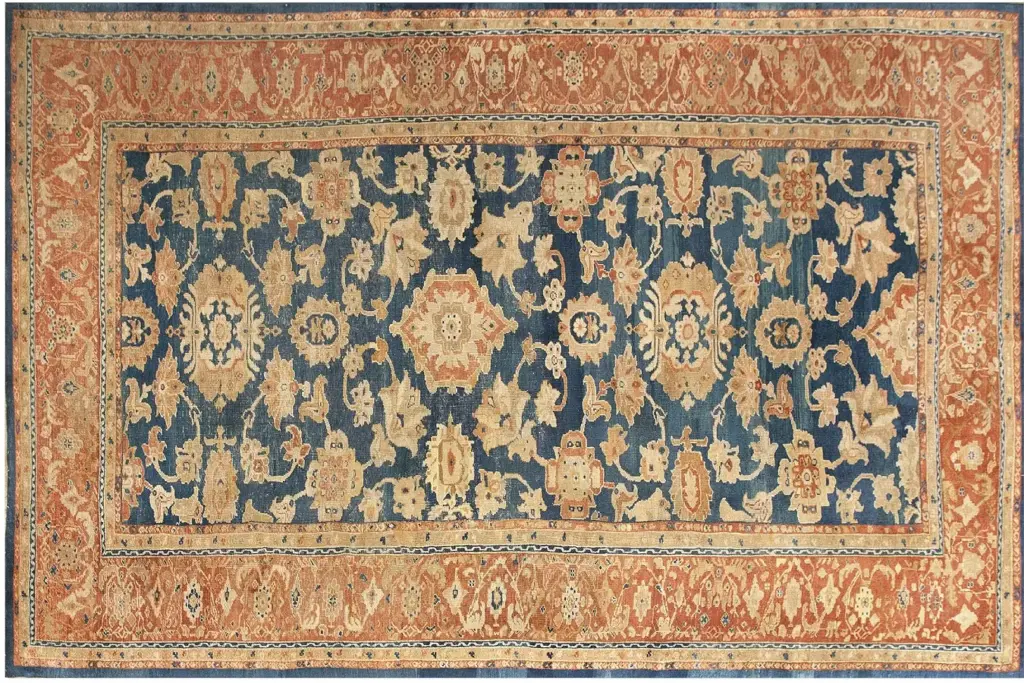
In modern rug terminology, Arak carpets often encompass not just Sultanabad pieces but also those woven in surrounding villages, each contributing to the broader regional style.
What is Sultanabad Famous For in Rug History?
In the history of Persian weaving, Sultanabad stands out as a major 19th-century export powerhouse. During the late 1800s, demand for Persian rugs surged in Europe and North America. To meet this interest, merchants and Western firms commissioned weavers in Sultanabad to produce large-format carpets tailored to the dimensions of Western interiors.
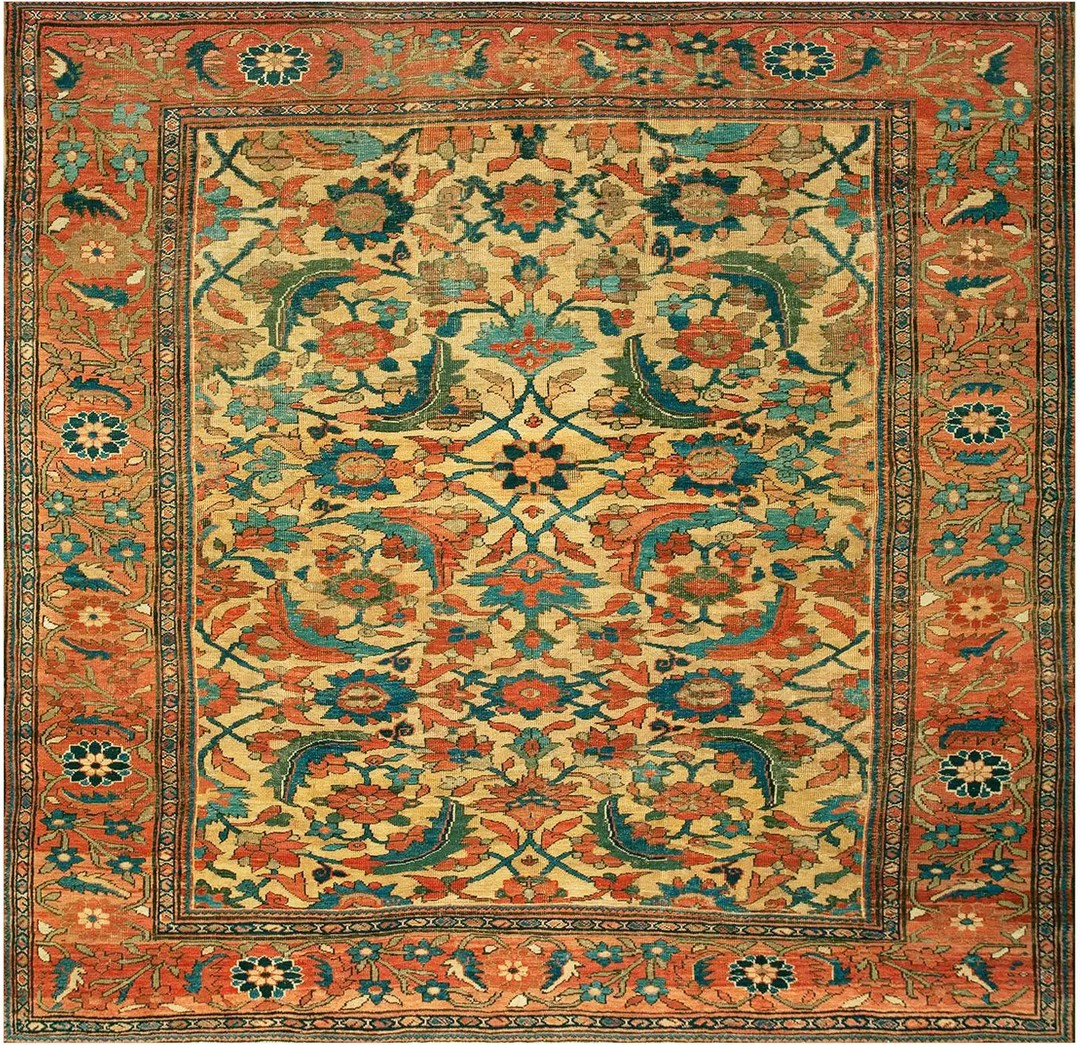
Unlike the finely knotted court carpets of earlier dynasties, these area rugs prioritized grand floral patterns, flowing vines, and open fields that created an effect often described as the “Persian garden” on floor coverings. The hallmark of Sultanabad Persian rugs is their blend of tradition and innovation. They preserved Persian motifs such as palmettes and arabesques but scaled them up into bold, oversized designs that felt modern and accessible to international buyers.
Their color palettes leaned toward soft, muted tones—rust, ivory, pale blues, and earthy greens—rather than the deep reds and navy blues typical of other Persian carpets. This stylistic adjustment made them highly desirable in the Victorian and Edwardian eras, when European and American tastes favored subtler hues and expansive, decorative fields.
By innovating within tradition, the city became a cultural crossroads of Persian artistry and Western design sensibility. The rugs not only represented Iran’s textile heritage but also demonstrated its ability to adapt and thrive in global markets. Even after the city’s renaming, the reputation of Sultanabad rugs endured, and they remain coveted antiques and modern reproductions alike.
Continuing Legacy
Although “Arak carpets” is the correct modern geographical designation, the enduring use of the term Sultanabad rugs reflects their established brand identity in the rug world. Collectors, interior designers, and museums continue to classify them under this name, ensuring that the legacy of their late-19th-century export era remains vibrant.
The city of Arak still supports weaving traditions, producing pieces that honor its history while appealing to contemporary global markets. This continuity underscores how Persian Sultanabad rugs embody both heritage and adaptation, standing as one of Iran’s most influential contributions to world textile history.
Historical Background
Origins of Sultanabad Carpet Weaving
The origins of the carpet weaving in that city lie in the Qajar era of the 19th century, when the newly founded city began to emerge as an important textile center. Established in 1808, Sultanabad’s location in central Iran offered access to both fine wool from surrounding villages and the commercial routes necessary for large-scale trade.
While weaving traditions had existed in nearby regions for centuries, Sultanabad itself became a major production hub in the mid-1800s, when carpet weaving shifted from a primarily domestic craft into an organized urban industry.
When did these Persian carpets begin? The production of what we now classify as Sultanabad rugs began around the mid-19th century, with a dramatic surge between the 1880s and early 1900s. This period marked the city’s transformation from a regional craft center into one of the most important contributors to the international Persian carpet boom.
The Persian Carpet Boom & Western Influence
By the second half of the 19th century, Persian carpets were in extraordinary demand across Europe and North America. This Persian carpet boom coincided with the rise of global trade networks and a Western fascination with Oriental decorative arts. Sultanabad was uniquely positioned to respond to this surge because of its adaptable weavers and its fertile environment for experimentation.
The most influential development came in 1883, when the English trading company Ziegler & Co. established workshops in Sultanabad. This initiative brought new organizational methods and design directives tailored specifically for Western markets. Ziegler & Co. standardized the weaving process, introduced new design templates, and ensured rugs were woven in room-size formats that matched the dimensions of European drawing rooms and American parlors.
How did Western traders influence these area rugs? Western merchants—most notably Ziegler—had a transformational impact. They guided artisans to enlarge traditional Persian floral motifs, soften the palette into pastels and earth tones, and emphasize allover decorative schemes rather than centralized medallions.
These stylistic choices aligned with late Victorian tastes for restrained elegance and made Sultanabad rugs more commercially viable abroad.
A Crossroads of Global Exchange
The collaboration between Sultanabad’s weavers and Western traders was not merely economic—it represented a profound cultural exchange. Traditional Persian artistry, rooted in centuries of symbolism and technical mastery, was adapted to the aesthetic preferences of distant markets. The result was a distinctive “Sultanabad style”: elegant yet accessible, innovative yet deeply Persian.
This partnership highlights the dual identity of Ziegler Sultanabad rugs. They are both authentic 19th-century Persian rugs and artifacts of global design history, shaped by a dialogue between Iranian weavers and European merchants. Through this fusion, the city secured its place as one of the most celebrated rug-producing centers of the modern Persian era, bridging East and West in woven form.
Design & Artistic Features
Layout & Motifs
Sultanabad rugs are instantly recognizable for their grand, open-field floral compositions. Unlike the densely patterned designs of many other Persian styles, Sultanabads often feature allover arrangements of scrolling vines, oversized palmettes, and leafy tendrils that create a sense of rhythm and spaciousness.
The influence of the Persian garden ideal is evident, with fields that resemble cultivated landscapes in bloom. While some Persian carpets center on a commanding medallion, these carpets typically minimize or eliminate central medallions in favor of uninterrupted floral fields.
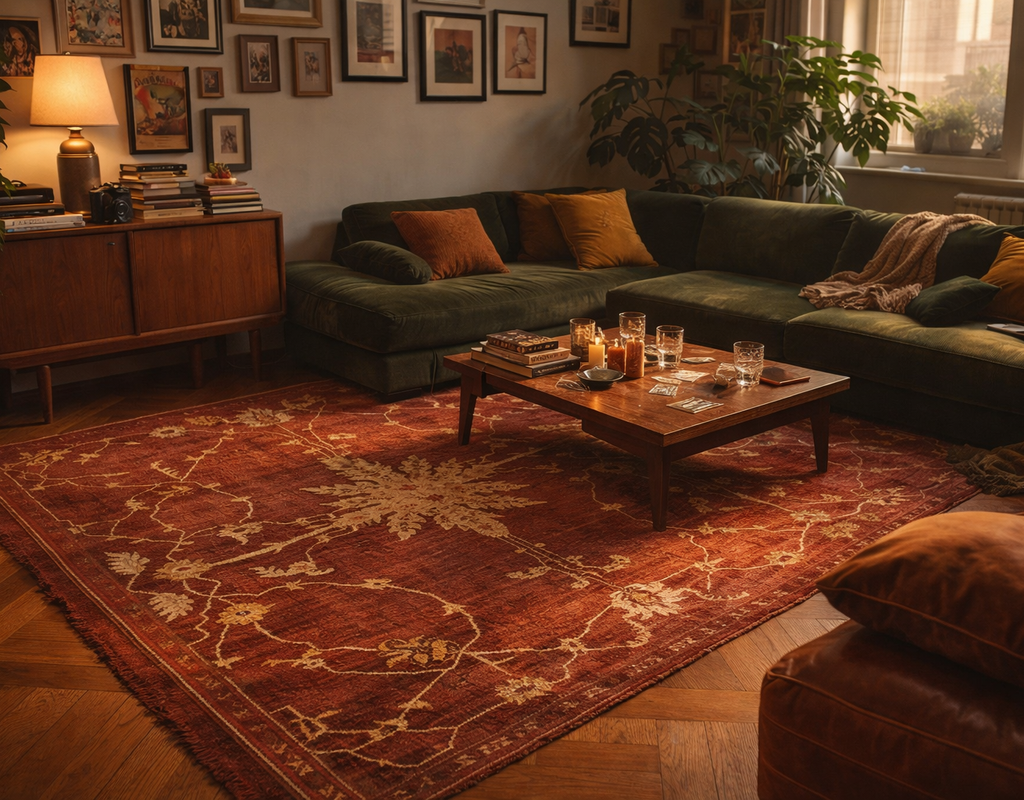
A richly colored, traditional-style rug grounds this moody, comfortable living space.
This design choice made them particularly appealing to Western audiences, whose interiors often required large decorative carpets without dominant focal points. The result is a garden-inspired Persian rug aesthetic—expansive, balanced, and airy—suited for both formal drawing rooms and relaxed salons.
Color Palettes & Natural Dyes
One of the hallmarks of Sultanabad rug colors is their reliance on natural dyes, which give the carpets their depth and warmth.
Traditional dyestuffs included:
- Madder root — produces rich reds ranging from soft rose to deep rust.
- Indigo — yields a spectrum of blues, from pale sky to midnight navy.
- Weld and related plants — provide yellows that combine with indigo to create soft greens.
- Walnut husks and pomegranate rind — supply earthy browns, golden tones, and subtle accents.
Which natural dyes color traditional Sultanabad carpets? The answer lies in this palette of plant- and root-based pigments, which allowed weavers to craft rugs with subdued earth tones and pastel hues.
These gentle shades distinguished Sultanabad from regions like Heriz or Sarouk, where bolder reds and blues dominated. The muted colors became a defining feature, especially as they resonated with Victorian and Edwardian tastes for softer interiors.
Western Demand & Design Innovation
How did Western demand shape Sultanabad design motifs? The influence of 19th-century export markets was profound. European and American buyers preferred carpets with larger-scale motifs, lighter tones, and more open designs than those typically found in traditional Persian households.
Traders such as Ziegler & Co. directed Sultanabad workshops to adapt existing Persian floral traditions into expanded, simplified patterns that maintained authenticity while fitting Western decorative sensibilities.
This Victorian influence on rugs transformed Sultanabad weaving into a hybrid art form. The balance of Persian elegance and Western restraint produced carpets that could bridge cultures—still unmistakably Persian, yet tailored to foreign drawing rooms.
Comparison with Regional Styles
In scale and openness, these truly iconic area carpets differ notably from other Persian weaving traditions. Heriz rugs favor bold geometric medallions, while Sarouk carpets often feature denser floral sprays on deep red grounds.
Mahal rugs, woven in neighboring districts, share some kinship with Sultanabad but typically use smaller motifs and less dramatic scale. Farahan rugs lean toward refinement and intricacy, whereas these rugs emphasizes breadth and boldness. This unique use of scale and space is what sets Sultanabad apart: floral Persian rugs rendered in a manner that feels expansive, airy, and distinctly modern for their time.
By marrying natural dyed palettes with garden-inspired layouts, Sultanabad weavers created carpets that not only defined a regional identity but also reshaped the global image of Persian decorative arts.
Materials, Construction, & Knotting
Fibers, Foundation, and Pile Height
Sultanabad rug construction relies on a combination of durable and natural fibers. The standard formula is a wool pile woven over a cotton foundation, with the double-wefted structure adding strength and resilience. The wool, often sourced locally, provides a soft yet sturdy surface, while the cotton warp and weft threads ensure stability and longevity.

A detailed focus on the intricate, vivid colors and geometric weave of a traditional textile rug.
Occasionally, silk highlights or camel hair were introduced, particularly in finer or experimental pieces, adding texture and variation. The pile height of Sultanabad rugs is generally medium to low, striking a balance between plush comfort and structural durability.
This characteristic made them especially suitable as large room-size floor coverings, able to withstand use while maintaining their decorative presence.
Knot Types & Density
Sultanabad weavers employed both Persian (asymmetrical) knots and Turkish (symmetrical) knots, depending on the specific workshop or village tradition. This versatility reflects the region’s role as a cultural crossroads of weaving practices. How does Sultanabad knot density compare to Sarouk? Sultanabad rugs typically measure around 100–150 knots per square inch (kpsi), which is considered moderate in Persian standards.
By comparison, Sarouk carpets—another celebrated product of Arak and surrounding districts—tend to have a finer weave and higher knot counts, resulting in denser detail. Sultanabad’s relatively lower density was intentional, allowing for larger-scale floral motifs and the open designs that defined its export appeal.
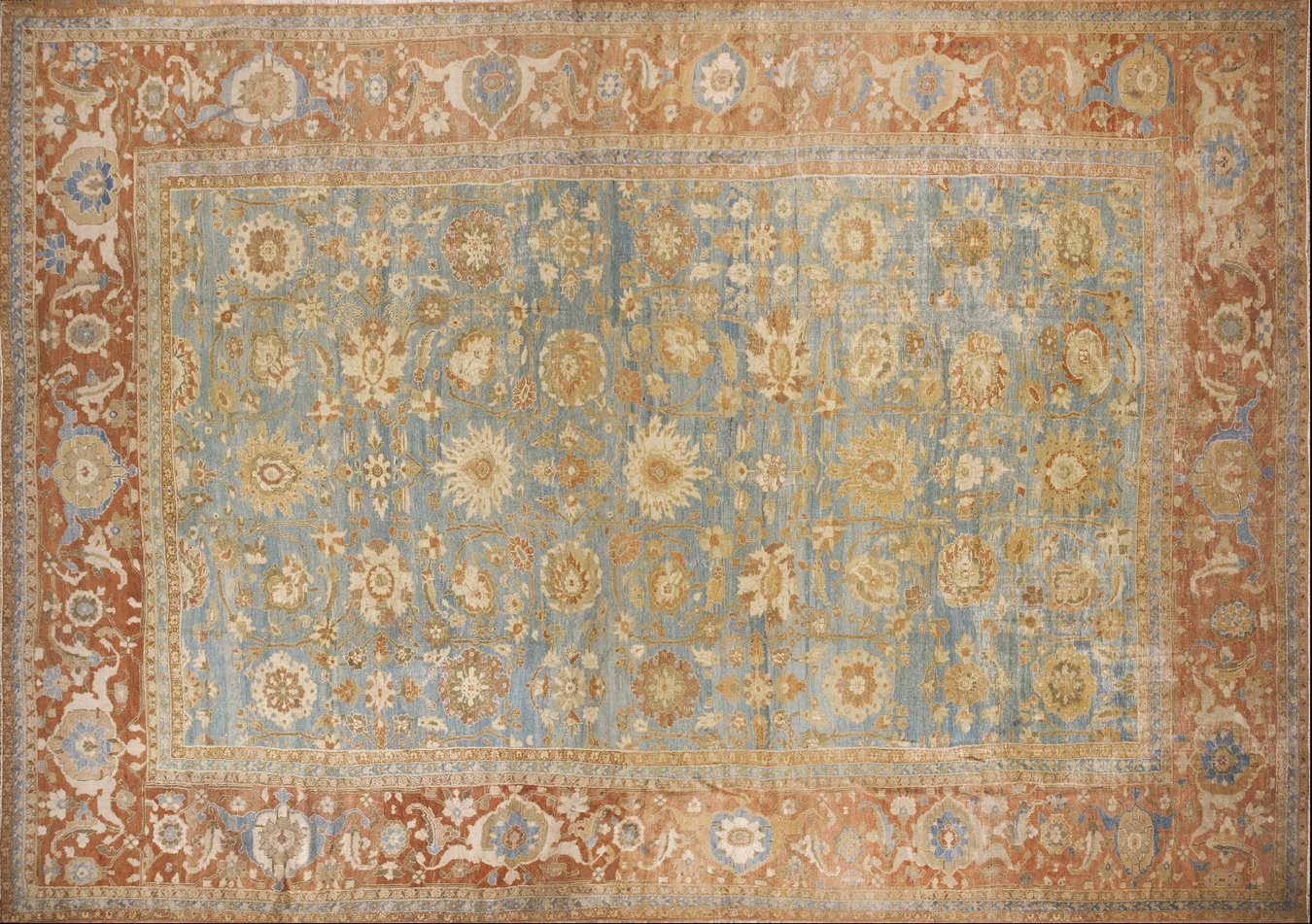
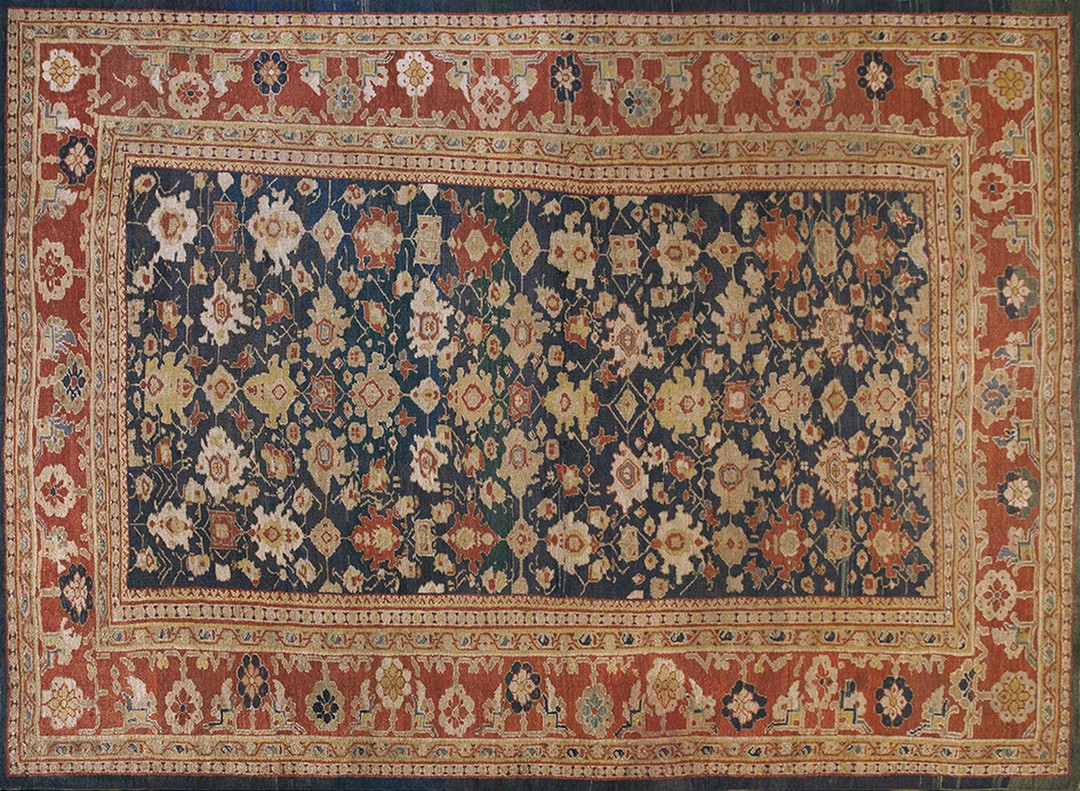
Antique Oversized Sultanabad Persian Geometric Knotted Rug – by Rugs On Net
This balance between coarser weave and bold artistry gave Sultanabad rugs their characteristic look: expansive, fluid, and decorative rather than minutely detailed.
Natural vs. Synthetic Dyes in Modern Rugs
Antique vegetable dyed Sultanabad carpets relied exclusively on natural dyestuffs such as madder, indigo, and weld, producing nuanced tones that aged beautifully. Their colors mellow into rich patinas over time, one of the reasons collectors prize them so highly. Are modern Sultanabad rugs using synthetic or vegetable dyes? The answer is both.
Many contemporary workshops continue to use natural dyes to maintain authenticity and meet collector demand, while others incorporate synthetic dyes for consistency, affordability, and mass-market production. The distinction is crucial for buyers, as naturally dyed rugs tend to develop more depth and subtlety with age, while synthetics can appear flatter.
Village Weavers’ Contribution to Sultanabad Production
The village weaving tradition has always been central to Sultanabad’s identity. While large firms like Ziegler introduced organized production in the late 19th century, the majority of rugs were—and still are—woven in family-run workshops and rural households surrounding Arak. Where do village weavers contribute to Sultanabad production today? They remain the backbone of both antique and modern rug output, supplying skills, labor, and continuity of tradition.
These weavers often pass down techniques through generations, ensuring that even contemporary rugs retain a direct link to the cultural heritage of the Markazi Province weaving community. By blending wool and cotton rugs with time-honored knotting methods and the artistry of village weavers, Sultanabad production embodies a balance of durability and beauty. Whether antique or modern, the region’s carpets continue to reflect the integrity of natural materials and the collaborative spirit of its communities.
Regional Variations & Related Types
Mahal, Sarouk, Farahan, Mushkabad, Garous
The Arak weaving region is remarkably diverse, producing a constellation of rug types that both complement and contrast with Sultanabad rugs:
- Mahal rugs — Known for room-size formats and allover floral designs, Mahal carpets often share stylistic ground with Sultanabad. Their softer palettes and looser knotting make them accessible, yet their artistry ensures they remain highly desirable. — Why: They represent the closest stylistic cousin to Sultanabad, sometimes even overlapping in trade designations.
- Sarouk rugs — Characterized by finer weaves, distinctive floral sprays, medallions, and bouquet designs, Sarouks differ significantly from Sultanabad in refinement and density. Their durability and luxurious feel led to enormous popularity in the early 20th century. — Why: Sarouk rugs highlight the contrasting end of the regional spectrum—dense, detailed, and commercially dominant in a different way.
- Farahan carpets — Distinguished by their tight Herati motifs, fine weave, and deeper, more traditional colors, Farahan carpets represent an older weaving tradition that predates the Sultanabad export boom. — Why: They connect Arak to Persia’s classical rug heritage and emphasize intricacy over openness.
- Mushkabad rugs — These are rustic and coarser, often woven with simplified floral or geometric patterns. They served as budget-friendly alternatives for buyers who wanted Persian style without the fineness or expense of Sarouk or Farahan. — Why: Mushkabad illustrates the more accessible, everyday side of regional weaving.
- Garous rugs — The name “Garous” was historically tied to Bijar/Kurdistan weavings, but in the modern market, it often refers to revivals in the Sultanabad style. These rugs continue the tradition of large-scale floral fields and muted tones, showing how the Sultanabad aesthetic remains relevant. — Why: They embody the ongoing legacy of Sultanabad’s design identity, bridging past and present.
Boundaries & Distinctions
While these rug types share geography, Sultanabad stands apart as the archetype of the export-driven Persian carpet boom. Its defining traits are the grand scale of floral motifs, muted earth-tone palettes, and expansive allover fields designed to suit Western interiors. By contrast:
- Sarouk emphasizes density and bouquet elegance.
- Farahan values tightness, repetition, and deeper hues.
- Mahal acts as a softer extension of Sultanabad but with less formality.
- Mushkabad remains rustic and pared down.
This spectrum of styles illustrates the regional variations of Persian rug production, with Sultanabad as the centerpiece—a style that redefined what Persian carpets could be in global markets.
Landmark Sites in Arak for Rug Travelers
What landmarks should rug travelers see in Arak? Visitors to Arak can explore its vibrant carpet bazaars, where antique and contemporary rugs are traded in the same lively spirit that fueled the 19th-century boom. The city is also home to the historic Four Seasons Bathhouse (Chahar Fasl Hammam), a Qajar-era monument featuring exquisite tilework and floral ornamentation.
Does the Four Seasons Bathhouse inspire patterns in Arak carpets? While direct documentation is scarce, its decorative arabesques, vine scrolls, and garden imagery echo the same aesthetic vocabulary seen in Sultanabad rugs. For enthusiasts, the parallels between local architecture and woven art reinforce the idea of a shared cultural and artistic language.
By visiting these Arak landmarks, rug travelers can experience not only the commercial heartbeat of Persian carpets but also the architectural and artistic settings that nurtured their creation. Together, they underscore how Sultanabad and its regional counterparts are both products of a specific place and enduring icons of Persian textile artistry.
Collecting, Authenticity, & Preservation
Why Collectors Prize Sultanabad Rugs
Why are Sultanabad rugs prized by collectors? Collectors value authentic Sultanabad rugs for their rare combination of artistry, history, and durability. Antique examples represent the height of 19th-century Persian carpet weaving, blending Persian floral traditions with Western-influenced scale and palette.
Their large-scale allover motifs, muted earth tones, and “Persian garden” effect make them versatile in both historic and modern interiors. Beyond aesthetics, they are prized for their lasting construction, historical role in the global carpet boom, and relative rarity compared to other Persian types.
For many, owning an antique Sultanabad means holding a piece of textile history that reflects both Iran’s cultural heritage and its engagement with global markets.
How to Authenticate Antique Sultanabad Rugs
How can buyers find authentic antique Sultanabad carpets? Authentication requires careful attention to structural and material details:
- Materials — Wool pile on a cotton foundation, with double wefts.
- Knotting — Persian (asymmetrical) or Turkish (symmetrical) knots at medium density (~100–150 kpsi).
- Dyes — Exclusively vegetable dyes in antique pieces, producing subtle patinas that synthetic dyes cannot replicate.
- Designs — Enlarged floral motifs and open fields characteristic of the Sultanabad style.
- Patina and wear — A natural sheen and age-consistent wear, not artificially induced.
- Dealer reputation — Buy only from trusted dealers or auction houses specializing in antique Persian carpets.
These markers together help distinguish an authentic example from later reproductions.
Verifying Provenance of 19th-Century Pieces
How to verify provenance of a nineteenth-century Sultanabad carpet? Documentation is essential. Buyers should look for:
- Certificates of authenticity from reputable dealers.
- Auction house records, especially from recognized institutions.
- Provenance documentation tracing ownership history.
- Museum or exhibition records, which can establish historical significance.
While not every rug comes with full provenance, verified documentation greatly increases both confidence and market value.
Preservation Steps for Vegetable-Dyed Rugs
What preservation steps prevent fading in vegetable-dyed Sultanabad rugs? Because their beauty relies on natural vegetable dyes, care is critical:
- Avoid direct sunlight, which can bleach and fade colors.
- Rotate the rug regularly to ensure even wear and light exposure.
- Use a rug pad to reduce friction and extend lifespan.
- Schedule professional cleaning with experts familiar with Persian rugs.
- Keep away from moisture to prevent dye bleeding or wool damage.
These rug preservation tips ensure that natural-dyed carpets age gracefully, developing the mellow patinas that collectors prize.
Can Investing in Antique Sultanabads Outperform Stocks?
Can investing in antique Sultanabad carpets outperform stocks? While rugs are not a guaranteed financial instrument, some collectors and investors have seen returns on antique Sultanabad value rival or even surpass traditional investments. Their rarity, increasing demand among global buyers, and status as cultural artifacts can make them strong long-term holdings.
Unlike stocks, they also provide aesthetic and cultural value in a living space. For investors seeking alternative assets, investing in Persian carpets like Sultanabad can diversify portfolios while preserving a tangible piece of history. Their strength lies in the fact that supply is fixed—no more true 19th-century Sultanabad rugs can ever be woven—while global appreciation for them continues to rise.
Modern Market & Legacy
Current Weaving & Export from Markazi Province
Does Markazi Province still export many Sultanabad carpets? The answer is: far fewer than in the 19th and early 20th centuries. While Arak (formerly Sultanabad) was once the beating heart of the Persian export carpet industry, weaving in Markazi Province has declined due to industrialization, global competition, and political constraints.
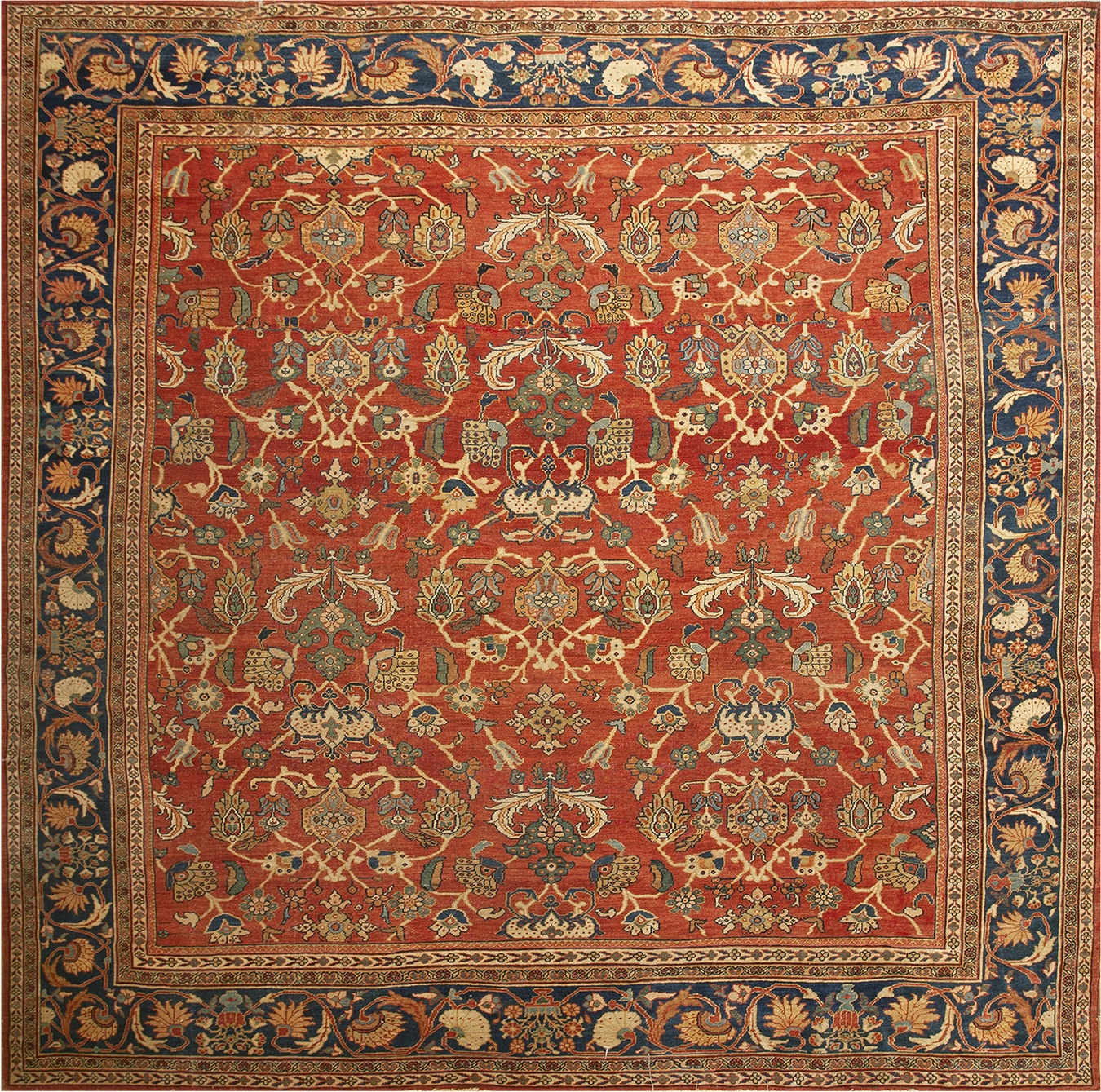
Antique Sultanabad Room Size Wool Burnt Rug – by Rugs On Net
Today, some workshops and village weavers in Arak still produce authentic pieces, but the majority of carpets marketed as modern Sultanabad rugs now come from India, Pakistan, and Afghanistan, where designs are reproduced with varying levels of fidelity. This shift highlights the need to distinguish between antique Sultanabads, woven in Iran during the 19th century, and contemporary reproductions produced outside the region.
Contemporary Production & Use of Dyes
Are modern Sultanabad rugs using synthetic or vegetable dyes? Both are in circulation. Antiques are always vegetable-dyed, with natural pigments like madder and indigo defining their patina. Modern productions, however, often rely on synthetic dyes for consistency, speed, and affordability.
Some high-end workshops—both in Iran and abroad—have returned to vegetable dyeing techniques to appeal to collectors and designers seeking authenticity. The result is a broad spectrum: from commercial-grade rugs made with synthetics to artisanal pieces replicating the natural-dyed character of originals.
Global Prices & the Impact of Sanctions
How are sanctions impacting global prices of Sultanabad rugs? International sanctions on Iran have significantly affected the availability of contemporary Persian carpets, including those from Arak. Restrictions on trade mean fewer Iranian exports reach Western markets, raising prices for authentic Persian pieces and shifting demand toward reproductions from South and Central Asia.
For antique Sultanabads, sanctions have indirectly increased desirability: with fewer new Persian rugs available, collectors turn more eagerly to the fixed supply of antiques. This scarcity effect underscores the rising antique Sultanabad value in global auctions and galleries.
Should Designers Choose Mahal or Overscale Sultanabad Rugs?
Should designers choose Mahal or overscale Sultanabad rugs? Both styles remain staples in high-end interiors, but their applications differ. Mahal rugs, often softer in palette and slightly more casual, suit transitional or informal spaces. Overscale Sultanabad rugs, with their bold floral patterns and sweeping scale, bring drama and sophistication to large, formal rooms.
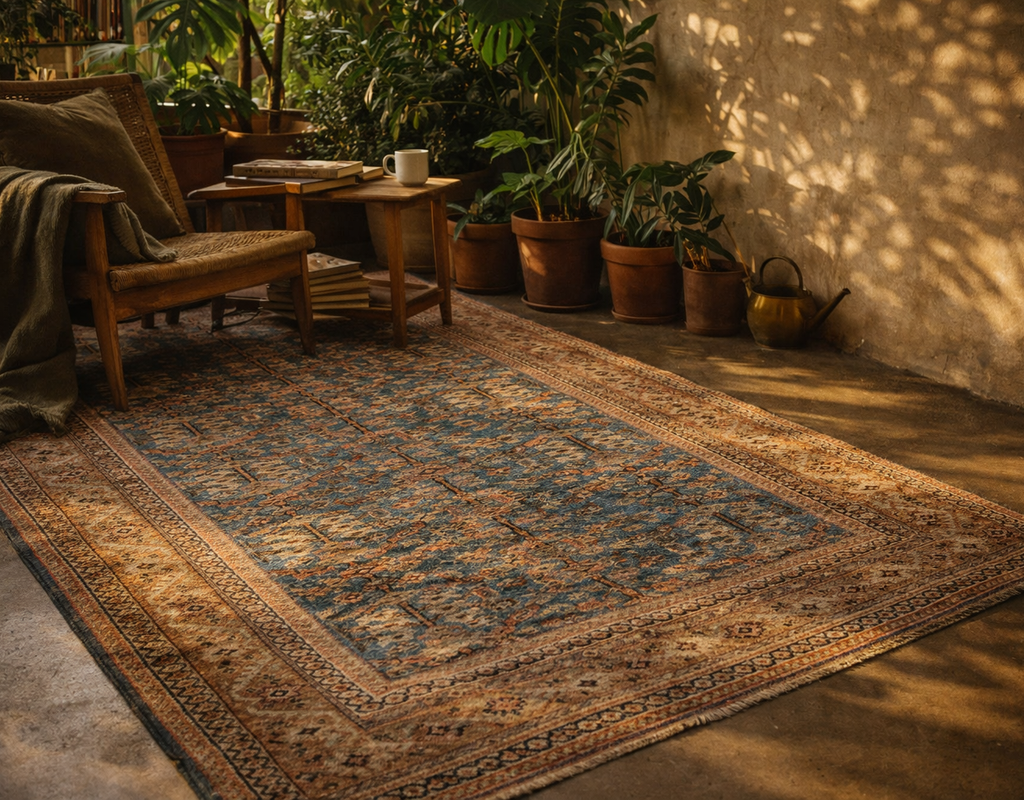
A beautiful, faded traditional rug complements the natural wood and abundant greenery in this peaceful, sun-drenched corner.
Designers typically select based on atmosphere: Mahal for warmth and approachability, Sultanabad for statement-making presence. Both, however, retain the adaptability that made them successful export carpets in the first place.
Influence in Contemporary Interiors
The legacy of Sultanabad weaving continues to inspire contemporary Persian carpets and global design trends. Many transitional rugs draw directly on Sultanabad motifs, scaling them up or simplifying them for modern aesthetics. Interior designers value their garden-inspired layouts, muted palettes, and oversized floral elements, which blend seamlessly into both classic and contemporary spaces.
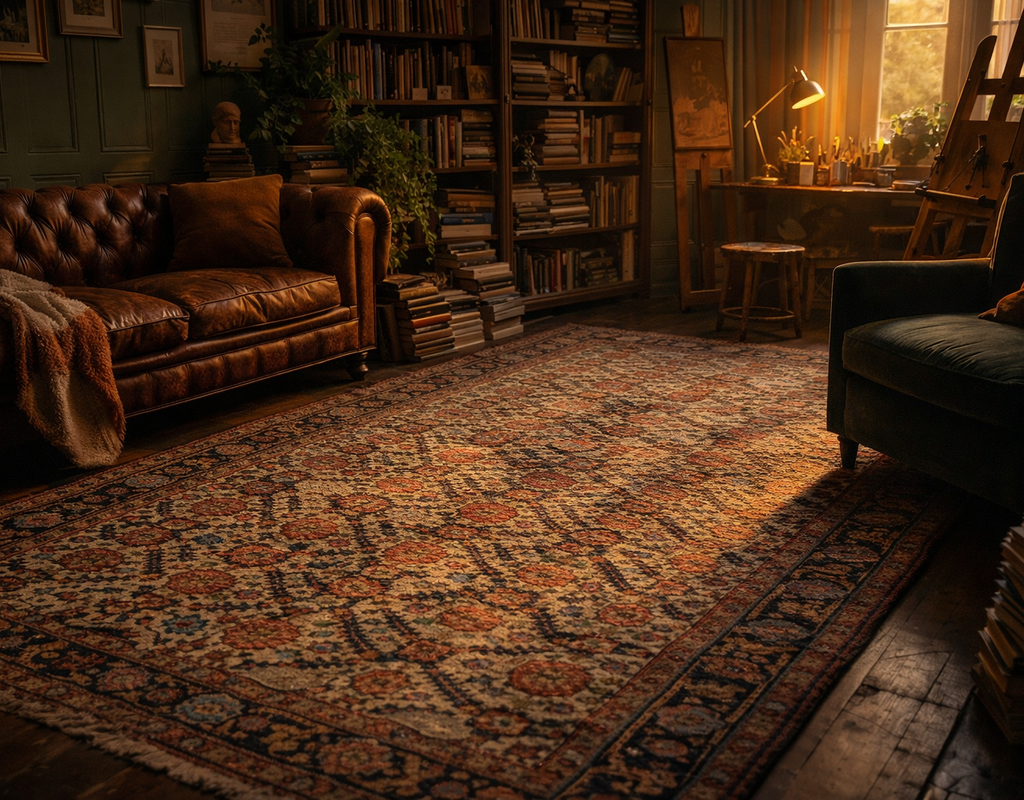
A warm, textural library space defined by a vintage Persian-style rug illuminated by soft afternoon light.
In today’s market, the coexistence of antique masterpieces, Iranian workshop pieces, and international reproductions demonstrates how legacy and innovation remain intertwined. Design trends in Sultanabad rugs affirm their enduring place in global décor: a 19th-century export phenomenon that continues to shape the modern rug world.
Symbolism, Culture & Storytelling
Artistic Heritage and Social Use
The artistic language of Sultanabad rugs carries deep symbolic meaning rooted in Persian tradition. Floral motifs are more than decoration: palmettes represent beauty and spiritual rebirth, while flowing vines symbolize eternal life and continuity. The overarching garden theme speaks to the Persian vision of paradise, prosperity, and harmony—a cultivated space that mirrors both earthly abundance and heavenly ideals.
Beyond their symbolic content, these rugs also played vital roles in social life. In Persian households, they were treasured as family heirlooms, included in dowries, and regarded as “the soul of the home.” They were not just functional objects but embodiments of memory, status, and cultural identity.
Persian Garden Motif and Four Seasons Bathhouse
Does Four Seasons Bathhouse inspire patterns in Arak carpets? Many scholars and enthusiasts draw parallels between the Four Seasons Bathhouse (Chahar Fasl Hammam) in Arak—renowned for its Qajar-era floral tilework and arabesques—and the motifs that flourish in Sultanabad rugs.
Both emphasize rhythmic vines, stylized blossoms, and garden-inspired imagery, reinforcing the cultural dialogue between architecture and textile art. The Persian garden rug thus becomes an extension of architectural and spiritual aesthetics, translating built spaces into woven fields of flowers.
Narratives Woven into Sultanabad Rugs
Each Sultanabad rug carries a narrative shaped by the human touch of its weavers. Unlike mechanical production, handwoven carpets bear small imperfections, sometimes deliberately included as gestures of humility before divine perfection. These irregularities testify to the presence of the artisan, turning each piece into a signature of individuality.
Weaving was often a family tradition, with skills passed down across generations in Arak and surrounding villages. In this sense, storytelling in carpets emerges not only in the visible motifs but also in the invisible thread of continuity linking mothers, daughters, and fathers to their craft. Sultanabad rugs became cultural ambassadors, bridging East and West during the great export era and carrying Persian symbolism into foreign homes.
Enduring Symbolism and Resonance
The symbolism in Persian rugs such as Sultanabads ensures that they endure as more than floor coverings. They embody cultural meaning, spiritual ideals, and human histories.
A Sultanabad rug is at once a Persian garden, a family story, and a piece of world heritage—woven testimony to the belief that beauty and narrative can live in every knot.
Actionable Buyer’s Guide
How to Buy Authentic Sultanabad Rugs
When searching to buy Sultanabad rugs, collectors and homeowners should take deliberate steps to ensure authenticity and quality:
- Work with reputable dealers and galleries — Why: Established experts reduce the risk of purchasing misattributed or reproduction rugs.
- Request provenance and documentation — Why: Auction records, dealer certificates, or exhibition histories add credibility and value.
- Inspect dyes and patina — Why: Antique Sultanabads use vegetable dyes that mellow with age, developing a unique depth that synthetics cannot replicate.
- Examine materials and structure — Why: Authentic pieces feature wool pile on a cotton foundation, with medium knot density (~100–150 kpsi).
- Seek expert appraisal — Why: Professional evaluation confirms authenticity and helps align pricing with current market trends.
Where to Find Antique Examples
How can buyers find authentic antique Sultanabad carpets? True antiques are most reliably sourced through specialized rug galleries, major auction houses, and trusted international dealers.
Institutions like Sotheby’s, Christie’s, or dedicated carpet galleries frequently offer antique Sultanabad for sale, often with detailed catalog notes on history and condition. Collectors should avoid generic online listings or unverified marketplaces, where reproductions are common.
Key Tips for Modern & Antique Rug Buyers
For both antiques and contemporary pieces, these tips for rug buyers remain essential:
- Antiques — Focus on natural dyes, wear consistent with age, and reliable provenance. — Why: These traits ensure long-term value and collectible status.
- Modern village rugs — Look for hand-spun wool, vegetable dyes, and robust knotting. — Why: These qualities echo tradition and provide durability.
- Compare with similar types — Why: Understanding differences between Mahal, Sarouk, or Sultanabad helps refine purchasing decisions.
- Balance aesthetic and investment goals — Why: A rug should enhance interiors while maintaining market value.
Village Production & Sourcing Today
Where do village weavers contribute to Sultanabad production today? Though large-scale export weaving in Arak has declined, village-woven Persian rugs remain the foundation of authentic production.
Family workshops in and around Markazi Province continue weaving Sultanabad-style carpets, often using traditional looms and time-honored methods. Outside Iran, villages in India, Pakistan, and Afghanistan have also taken up production, with varying degrees of fidelity to the original style. For buyers, this means verifying genuine origin is crucial, especially when the goal is to acquire a true Persian Sultanabad.
Calls to Action: Explore, Buy, Inquire
For those ready to explore the world of authentic Persian carpets, Sultanabads remain among the most versatile and prestigious options. Collectors can discover antique masterpieces at auctions and galleries, or acquire contemporary village-woven Persian rugs that honor tradition with modern craftsmanship.
The enduring appeal of Sultanabads lies in their ability to serve as both works of art and living heritage, making each acquisition an act of preservation as well as personal enjoyment.
Explore Some of Our Sultanabad Rugs
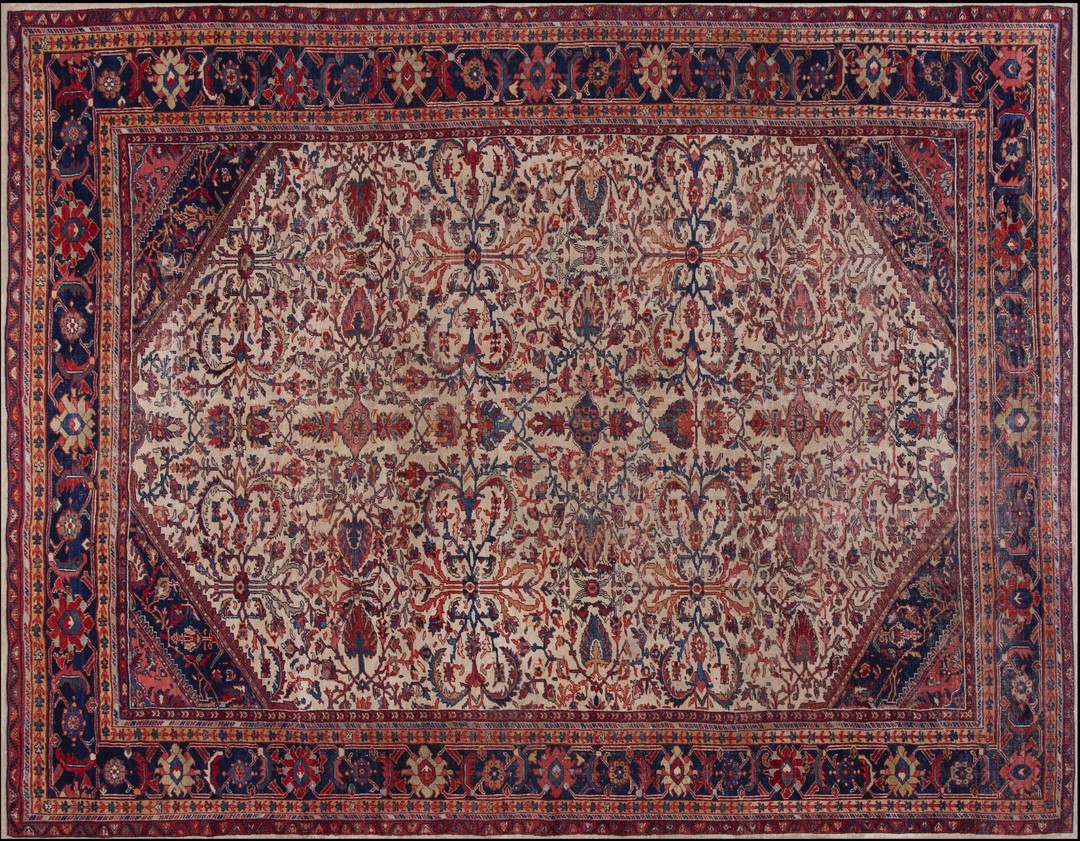
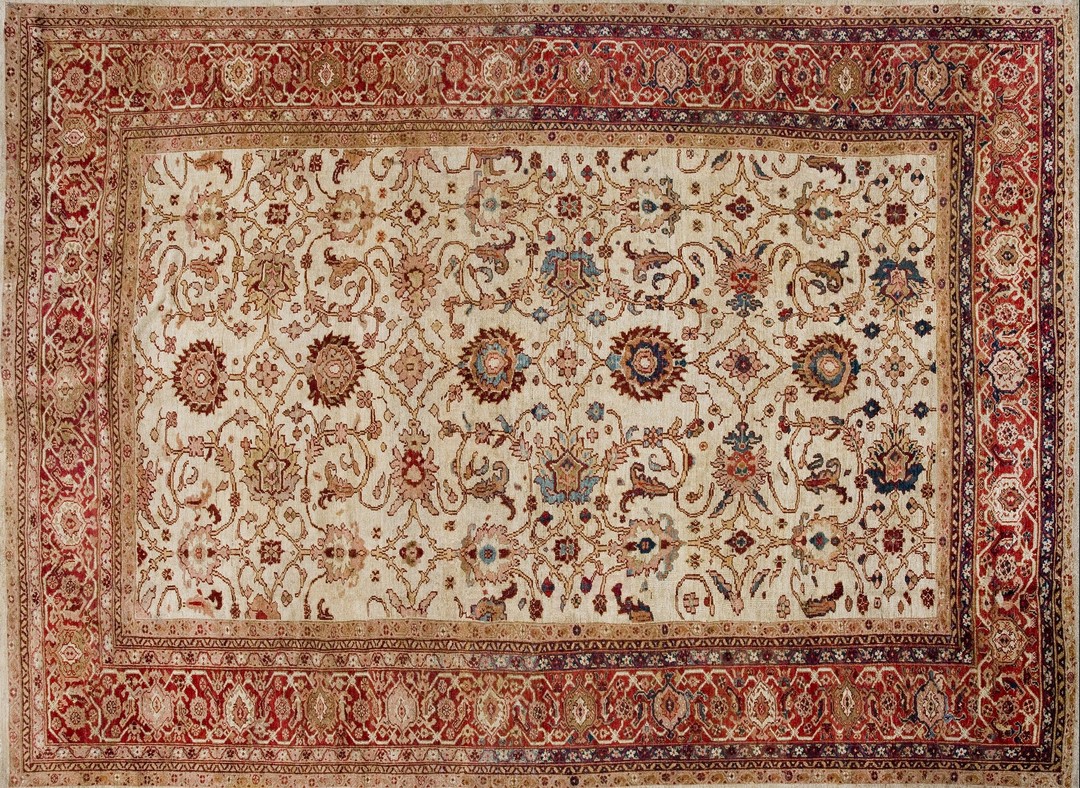
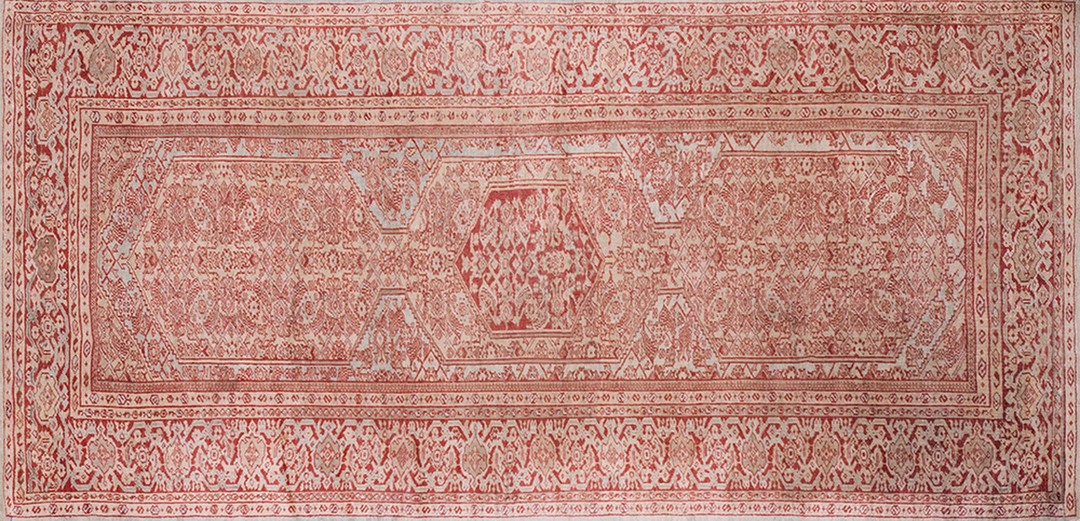
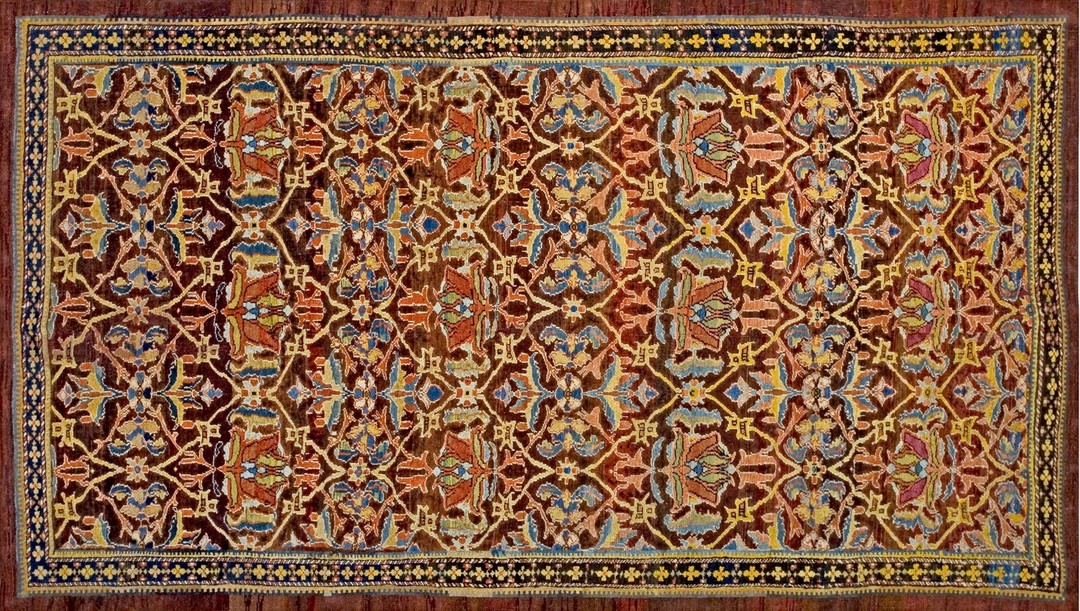
FAQ
- Are Sultanabad rugs a good investment?
Select antiques can appreciate, but values vary widely. Buy Sultanabad rugs for beauty and utility; for investment decisions, seek an independent appraisal and condition report.
- What is an “Ivory Sultanabad” rug?
It’s a Sultanabad rug with a luminous undyed-wool (ivory) field—airy, versatile, and highly decorative—often paired with soft blues, sages, and coral accents.
- Are Sultanabad rugs family- and pet-friendly?
Yes. Wool pile in Sultanabad rugs naturally resists soiling and recovers well. Blot accidents promptly, use a pad, and choose darker or patterned fields to disguise everyday messes.
- Are Sultanabad rugs safe with robot vacuums?
Use caution—robot rollers can catch fringe. Disable aggressive brush bars, block fringed edges, or exclude the area. When unsure, stick to manual suction-only vacuuming.
- How much do Sultanabad rugs cost?
Modern 9×12 Sultanabad rugs often run \~\$4,000–\$10,000. Antique room-size examples frequently sell from \~\$15,000 to \$50,000+ depending on age, condition, and provenance.
- What sizes are common for Sultanabad rugs?
Room sizes dominate—9×12 and 10×14 are typical—with many oversize examples. Smaller runners and scatters exist but the style shines in generous formats.
- How can I tell if a Sultanabad rug is hand-knotted?
Flip it—hand-knotted Sultanabad rugs show the design clearly on the back with slight irregularities, and fringe is part of the warp (not sewn on). Machine-mades look uniform and often have backing.
- Do Sultanabad rugs need a pad?
Yes—use felt plus natural rubber cut 1–1.5 inches smaller than the rug. Pads reduce slipping, cushion impact, protect floors, and extend Sultanabad rug life.
- How should I vacuum Sultanabad rugs?
Use suction-only vacuuming with the beater bar off, avoid fringe, and occasionally vacuum the back to lift grit. Rotate the Sultanabad rug periodically for even fading and wear.
- How do I clean spills on Sultanabad rugs?
Blot immediately (don’t rub) with cold water, optionally a little white vinegar, and test first. Avoid steam/hot water; schedule professional hand-washing every 1–3 years based on traffic.
- Can Sultanabad rugs go over radiant floor heating?
Yes—wool Sultanabad rugs are fine. Keep pads thin, avoid thick rubber backings, and limit total coverage so heat transfers efficiently; always follow your floor system’s guidance.
- What size Sultanabad rugs fit dining rooms?
Choose a Sultanabad rug that extends 24–30 inches beyond the table on all sides so chair legs stay fully on the rug when pulled out.
- What size Sultanabad rugs work in living rooms?
For balance, leave about 12–18 inches of floor visible around the rug and get a size where at least the front legs of seating rest on the Sultanabad rug.
- Do Sultanabad rugs shed?
New wool Sultanabad rugs may shed lightly for 1–3 months. Vacuum with suction only (no beater bar) and avoid fringe to minimize fiber loss.
- Are Sultanabad rugs durable for high-traffic areas?
Yes. Hand-knotted wool in Sultanabad rugs handles footfall well. Pair with a quality felt-and-natural-rubber pad and rotate every 6–12 months to distribute wear.
- Are modern Sultanabad rugs still made in Iran?
The style persists widely. Many modern “Sultanabad” or “Ziegler” rugs are woven in Pakistan or Afghanistan (often Ghazni wool, vegetable dyes), alongside Iranian and Turkish productions.
- What are Sultanabad rugs made of?
Most Sultanabad rugs use wool pile on cotton foundations with Persian (asymmetric) knots. Knot density commonly falls around \~70–150 KPSI, with outliers finer or coarser.
- What colors are typical in Sultanabad rugs?
Expect madder reds, indigo and sky blues, ivory, and earthy neutrals. Antique Sultanabad rugs often use softened palettes that read mellow—e.g., rose red fields with light blue and cream accents.
- What motifs appear on Sultanabad rugs?
Common Sultanabad rug motifs include Mina Khani rosettes, Herati (fish) repeats, large palmettes, and scrolling vines—usually arranged in relaxed, spacious allover patterns.
- How do Sultanabad rugs compare to Sarouk rugs?
Sultanabad rugs typically have a more moderate/coarser weave and larger motifs. Sarouk rugs are denser, with refined florals (including “American Sarouk” reds) and often tighter knotting.
- Sultanabad rugs vs Heriz/Serapi—what’s the design difference?
Sultanabad rugs favor curvilinear florals and palmettes in allover layouts; Heriz/Serapi skew more angular with medallions. Choose Sultanabad for flowing vines; pick Heriz/Serapi for bolder geometry.
- How do Sultanabad rugs differ from Mahal rugs?
Both come from the Arak region, but “Sultanabad” often labels earlier or higher-grade Mahal-type pieces. Expect bolder, larger palmettes in Sultanabad rugs; Mahals frequently show slightly tighter drawing yet significant overlap exists.
- What does “Ziegler Sultanabad rugs” mean?
Ziegler Sultanabad rugs were produced under Ziegler & Co. (founded 1883), which coordinated weaving in Sultanabad for Western tastes—bigger scales, softer dyes, and room-size formats that fit European and American interiors.
- Are Sultanabad rugs truly Persian?
Yes—Sultanabad rugs originate in Iran’s Arak region (once called Sultanabad). The workshop and village output there helped fuel a global craze for Persian carpets in the late 1800s.
- What are Sultanabad rugs?
Sultanabad rugs are Persian carpets from Arak (formerly Sultanabad), celebrated for large-scale floral allover patterns and softened palettes. Many date to the late-19th/early-20th century and were woven for Western room sizes.