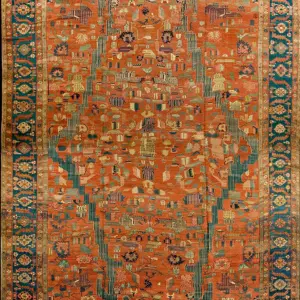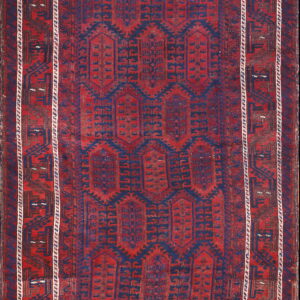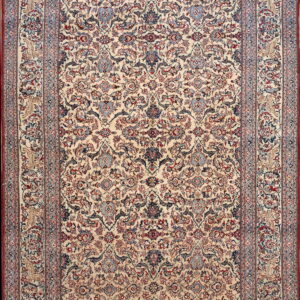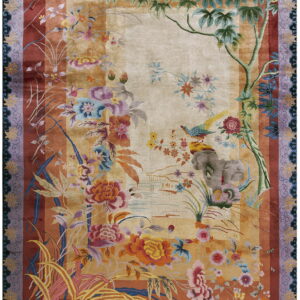
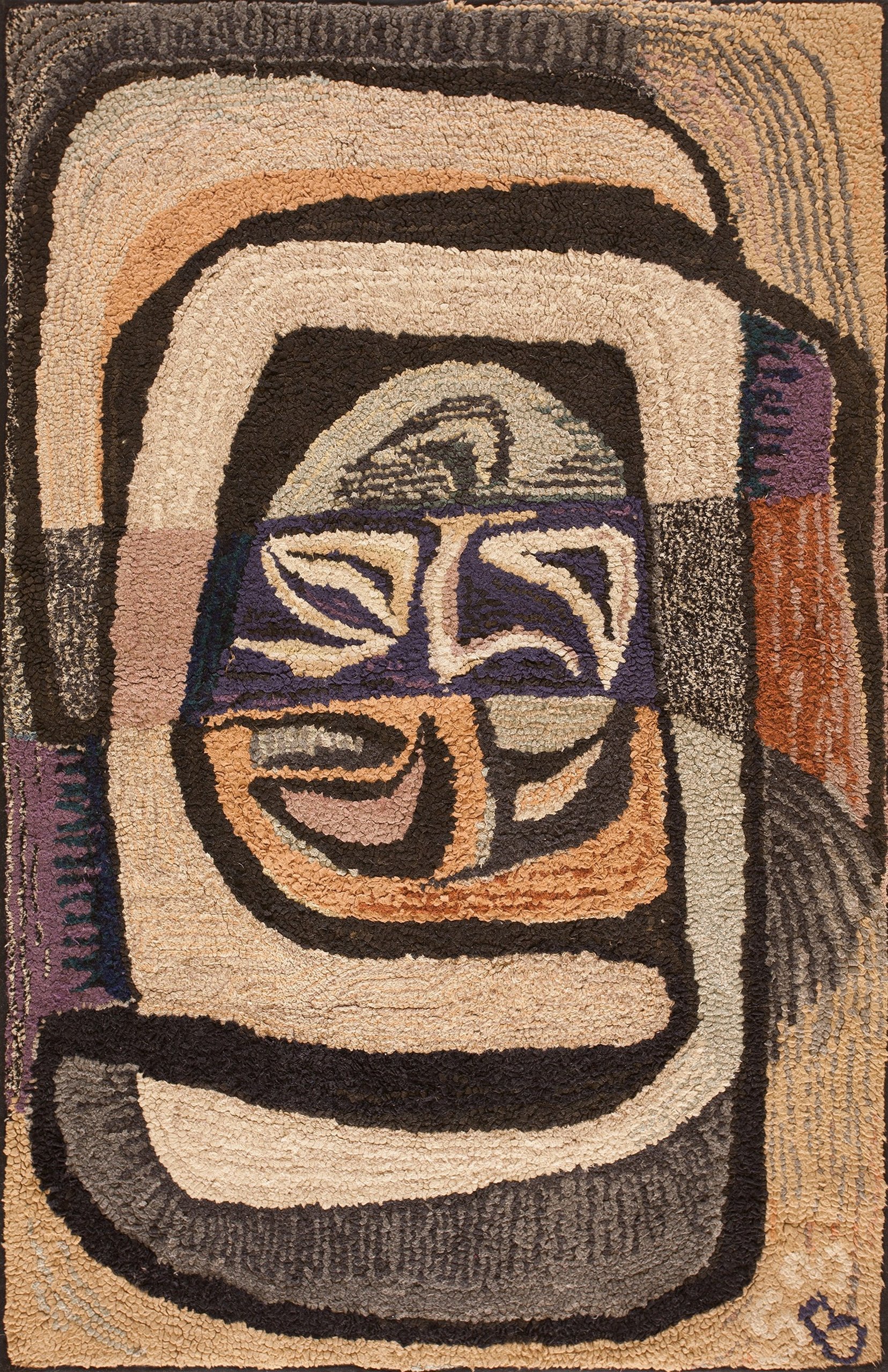
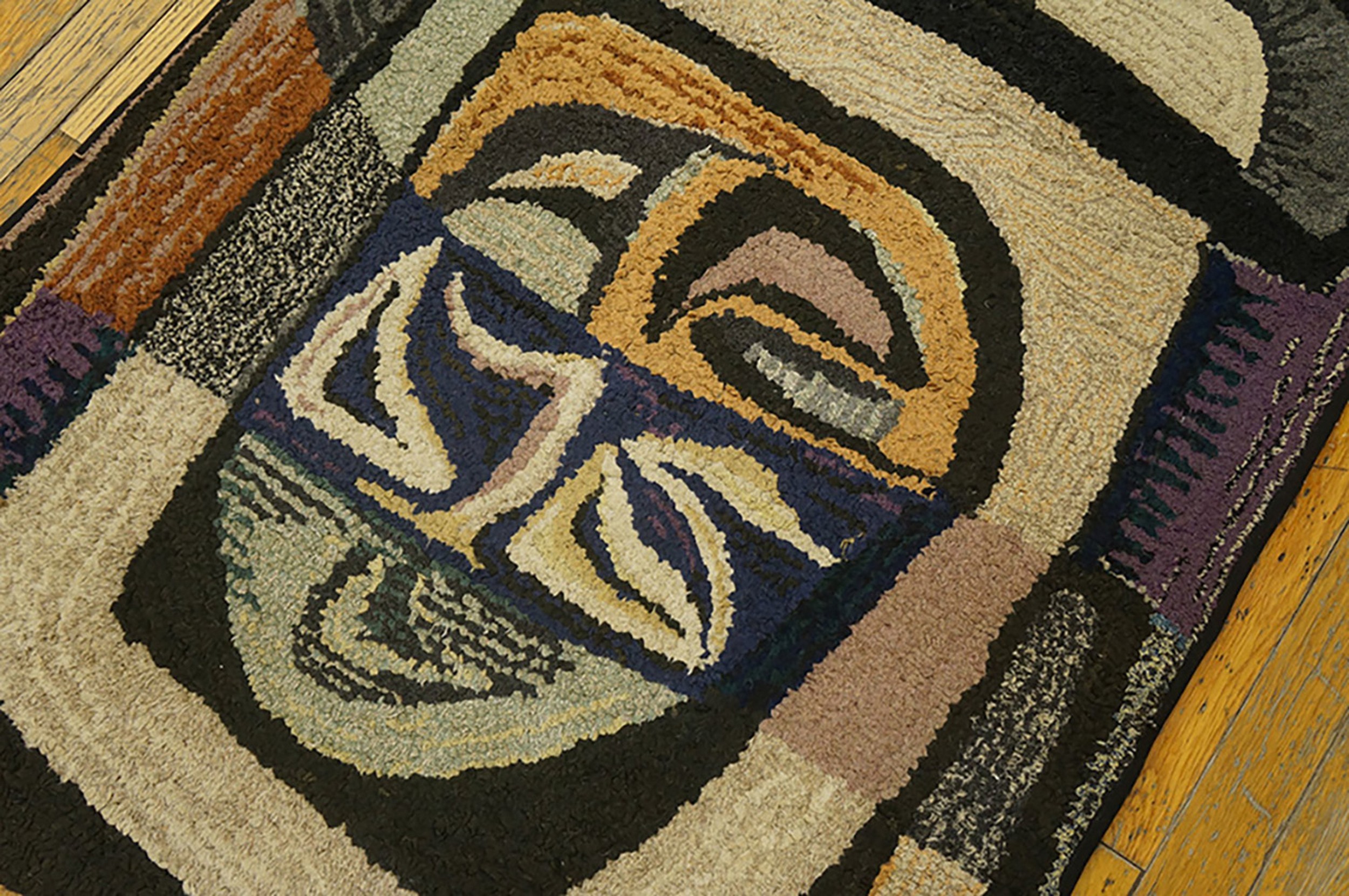
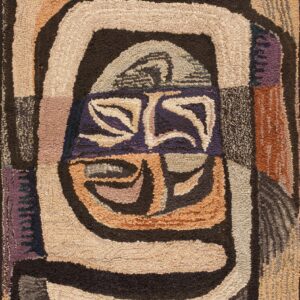
This early 20-century American Hooked rug is an exquisite example of “Textile Fine Art,” where the line between domestic utility and high-concept folk art is beautifully blurred. Unlike larger room-sized carpets, small size area rugs were often personal passion projects—experimental canvases where the weaver could showcase their most intricate hand-drawing and nuanced color-blending, resulting in a piece that functions as a “painting for the floor.”
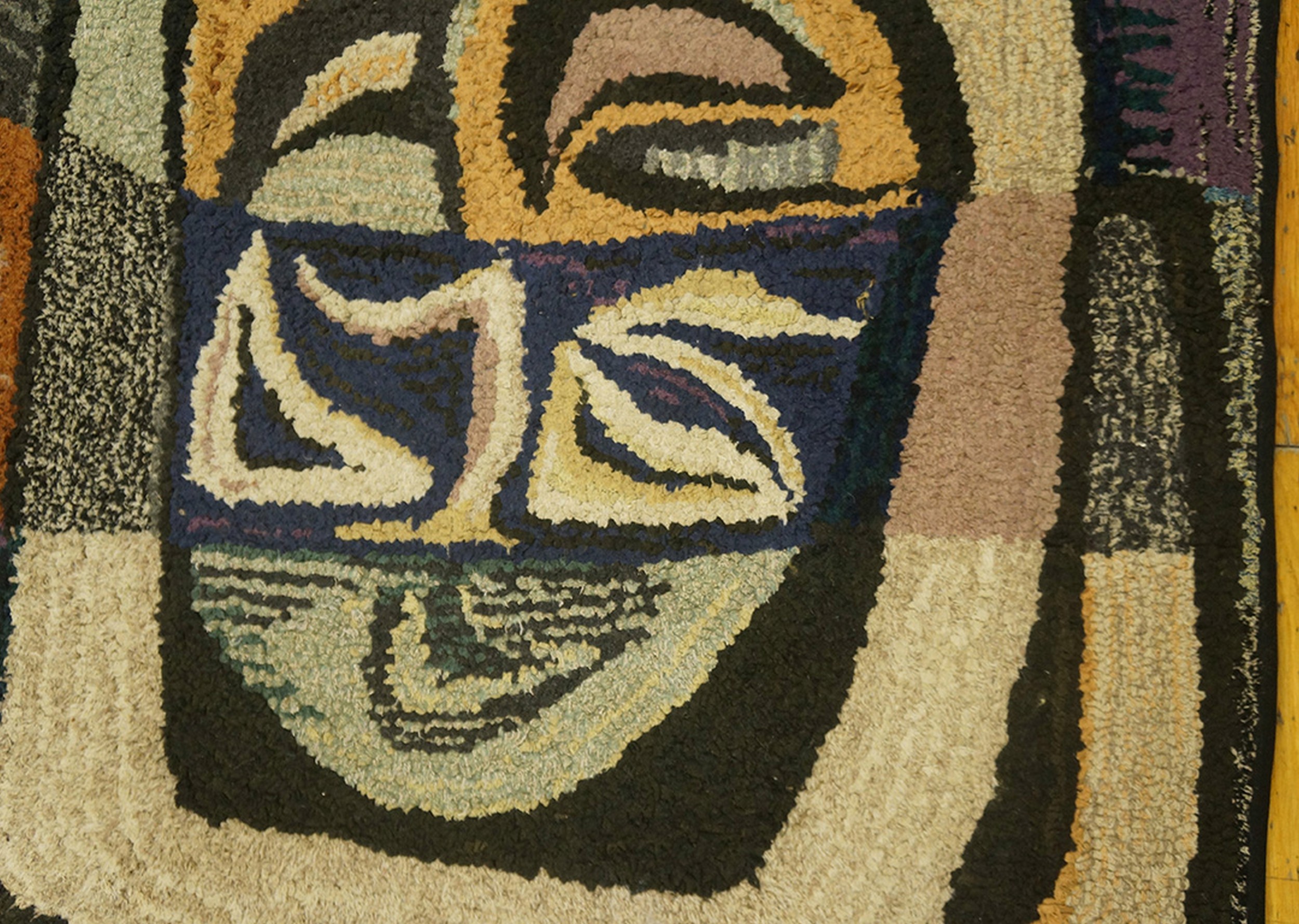
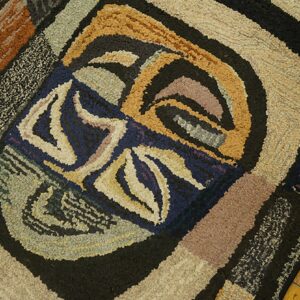
The composition of this artistic rug is centered upon an artistic American folk art design, characterized by a “free-form” and soulful drawing style. Eschewing the rigid symmetry of machine-made textiles, this piece features “painterly” motifs—likely a blend of abstract botanical forms or unique tribal-inspired geometries. The drawing is quintessentially “Primitive,” possessing a whimsical, hand-wrought honesty that reflects the individual spirit of the maker. This organic movement allows the design to “breathe” within the field, creating a sense of visual poetry that is highly sought after by collectors of authentic Americana.
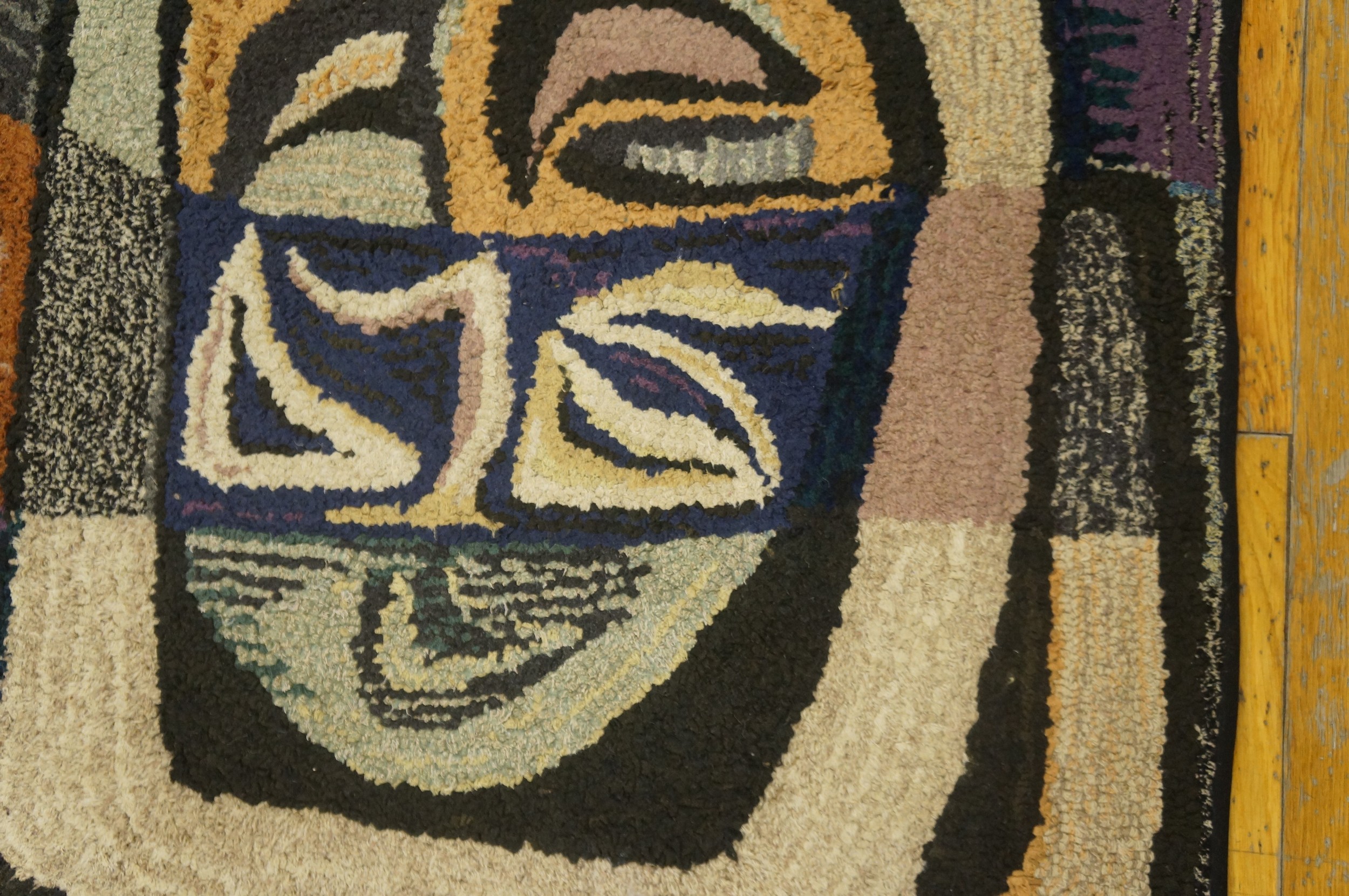
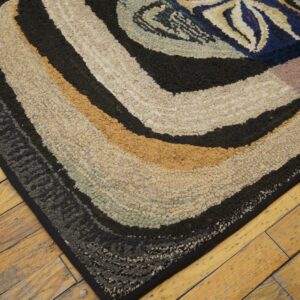
The palette is a masterclass in historical variegation. Because these magnificent antique American hooked area rugs were created using hand-cut strips of “found” materials—recycled wool flannel, hand-dyed garments, and scraps of old clothing—the colors possess a magnificent “marbled” depth. This natural shifting of tones (the folk-art equivalent of a weaver’s abrash) creates a shimmering, “salt-and-pepper” texture. The field often features a sophisticated blend of muted earth tones, soft indigos, and warm ochres, all softened by more than a century of natural oxidation into a rich, matte patina.
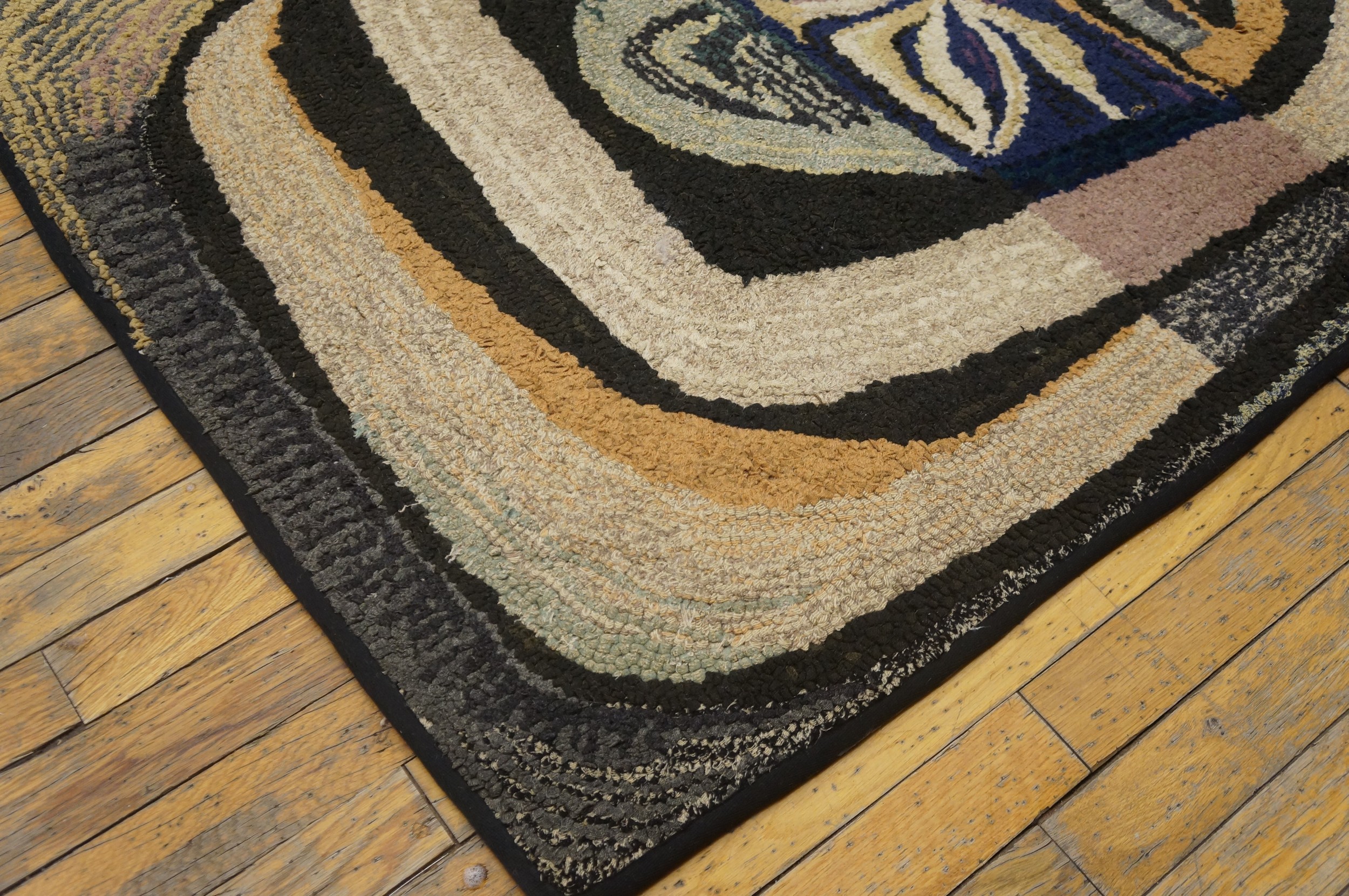
Technically, this small textile is prized for its tightly looped, nubby texture and surprisingly substantial, “meaty” handle. The process of hand-hooking individual loops through a burlap or linen backing creates a three-dimensional, tactile surface that catches the light differently from every angle. Over time, the wool fibers have slightly “felted” together, resulting in a velvety, suede-like surface that is incredibly soft to the touch and serves to round out the edges of the artistic design.
The borders typically act as a simple but effective architectural frame, often using a darker “mottled” tone to “lock in” the creative energy of the central field. The small size makes it an incredibly versatile piece, perfect as a focal point for a library nook, a bedside “jewel,” or even displayed on a wall as a work of narrative art. To possess this antique artistic hooked area rug from America is to own a monument of early 20th-century creative resourcefulness—a hand-wrought sanctuary of historical gravity and soulful, textile brilliance.