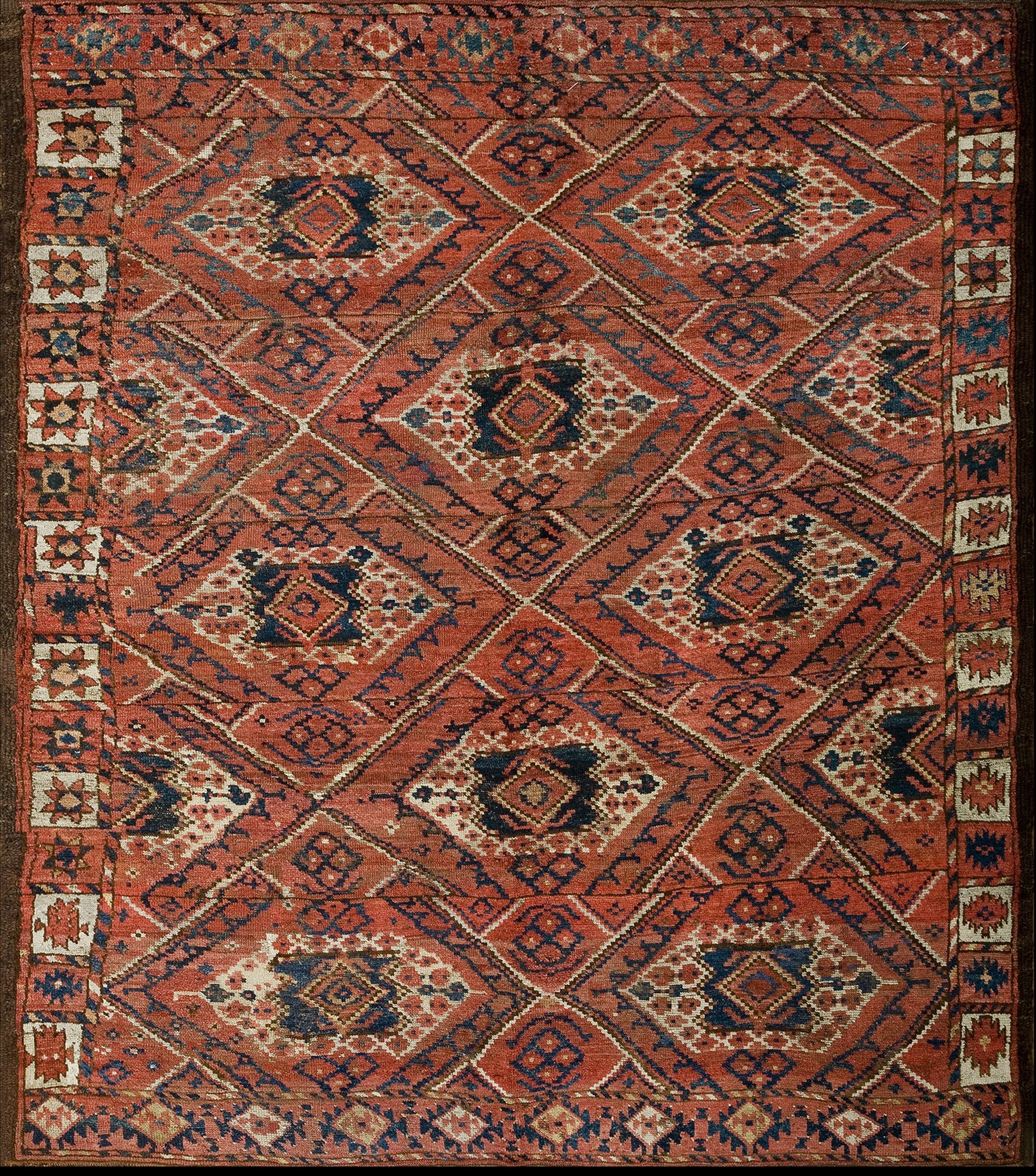
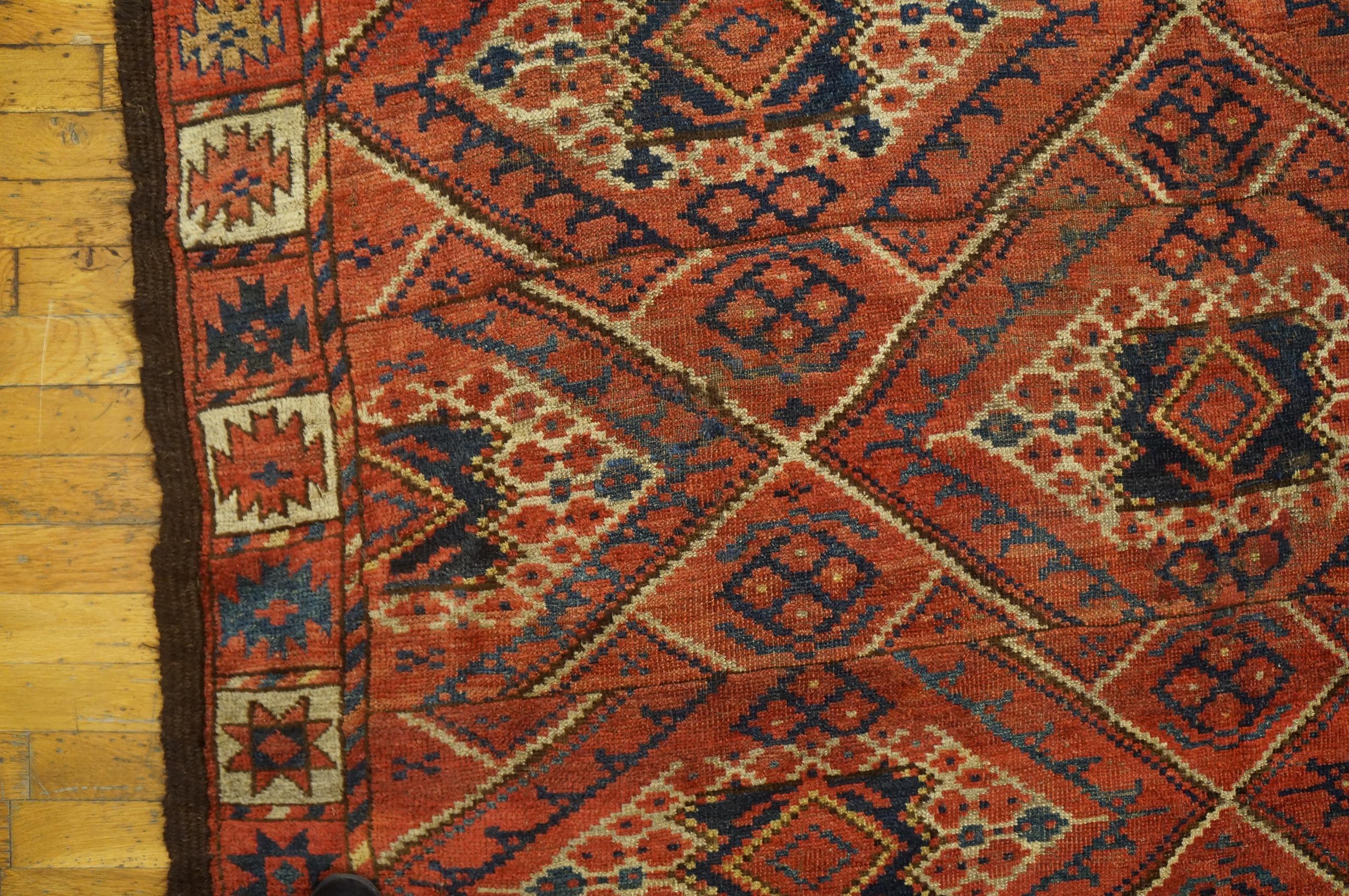
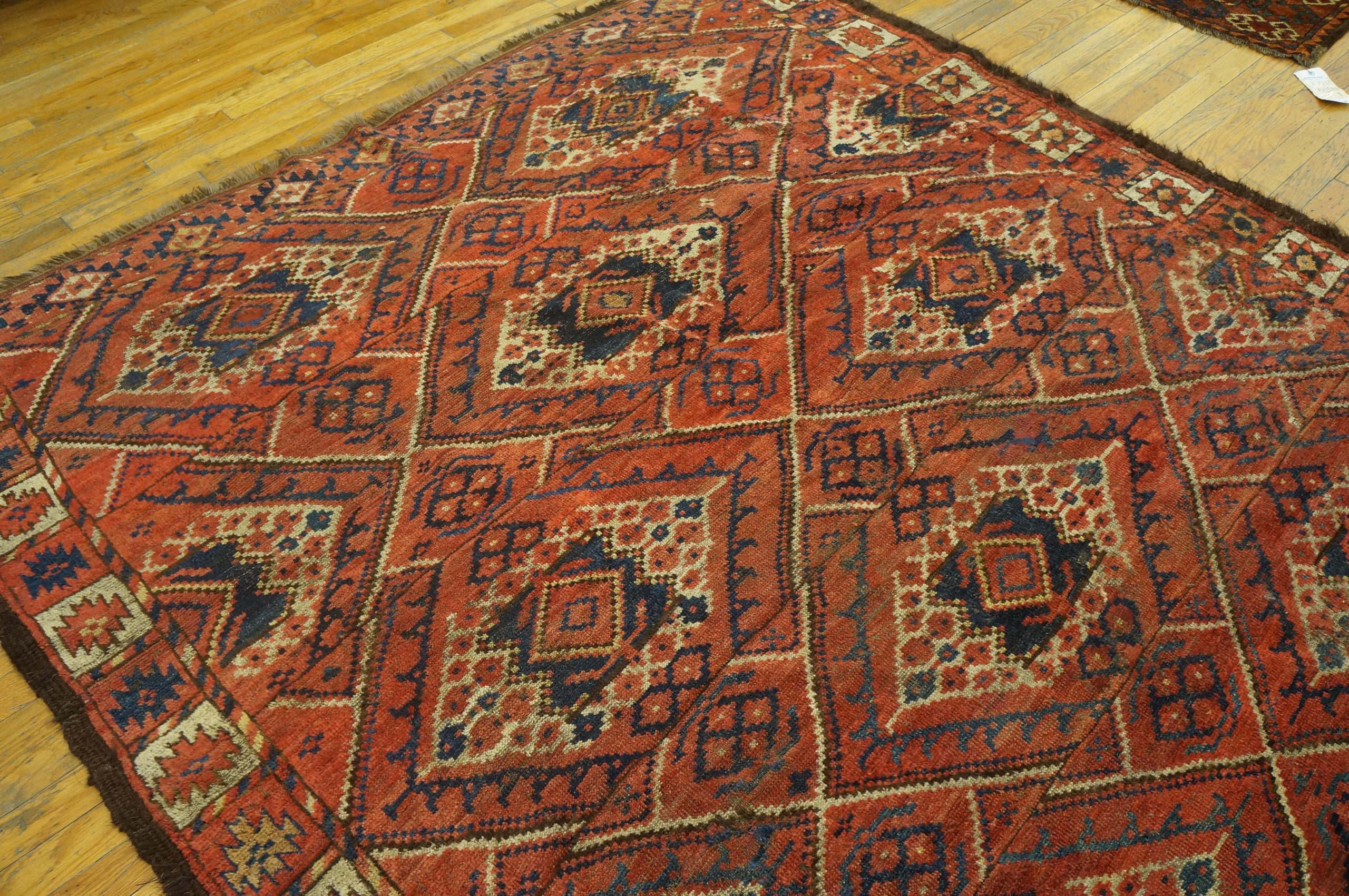
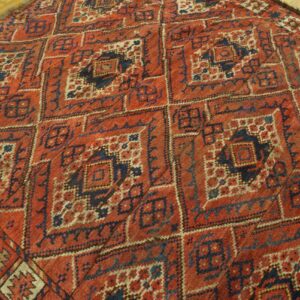
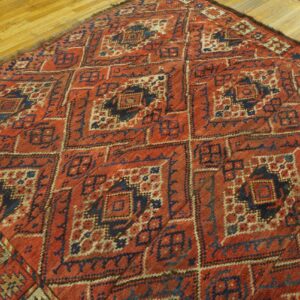
This late 19th-century Afghan Ersari Beshir rug is a profound example of Central Asian tribal rug weaving, representing the nomadic heritage of the Turkmen tribes along the Amu Darya river. While many Turkmen rugs are known for their rigid, repeating “Gul” (tribal seal) patterns, the Beshir sub-group is celebrated for its more creative, fluid, and often “Bukhara-influenced” designs, making this specimen a rare bridge between tribal ruggedness and sophisticated artistry.
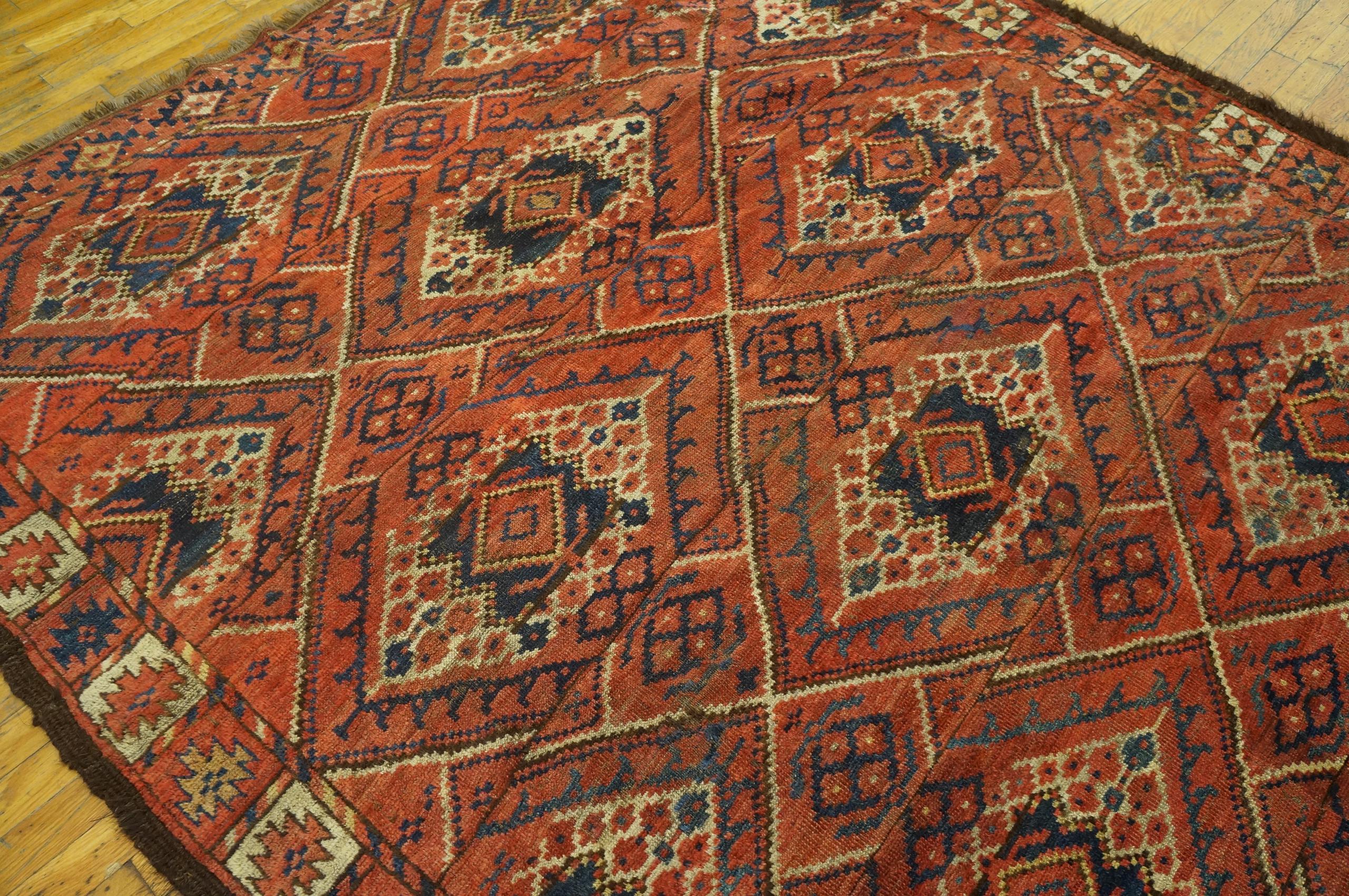
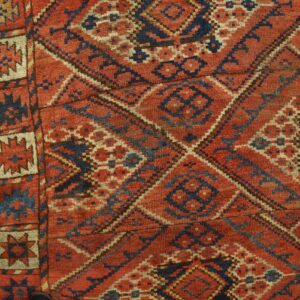
The composition is centered upon a powerful Tribal Geometric design, likely featuring a “cloud-band” motif or a series of elongated, stylized medallions. Unlike the starkly mathematical layouts of Tekke or Yomut rugs, the Beshir aesthetic is more “painterly.” The motifs are rendered with a primitive, hand-drawn quality that feels organic and alive. These geometric totems are often interspersed with small “scatter” motifs—stylized pomegranates or floral sprigs—which symbolize fertility and the abundance of the steppe.
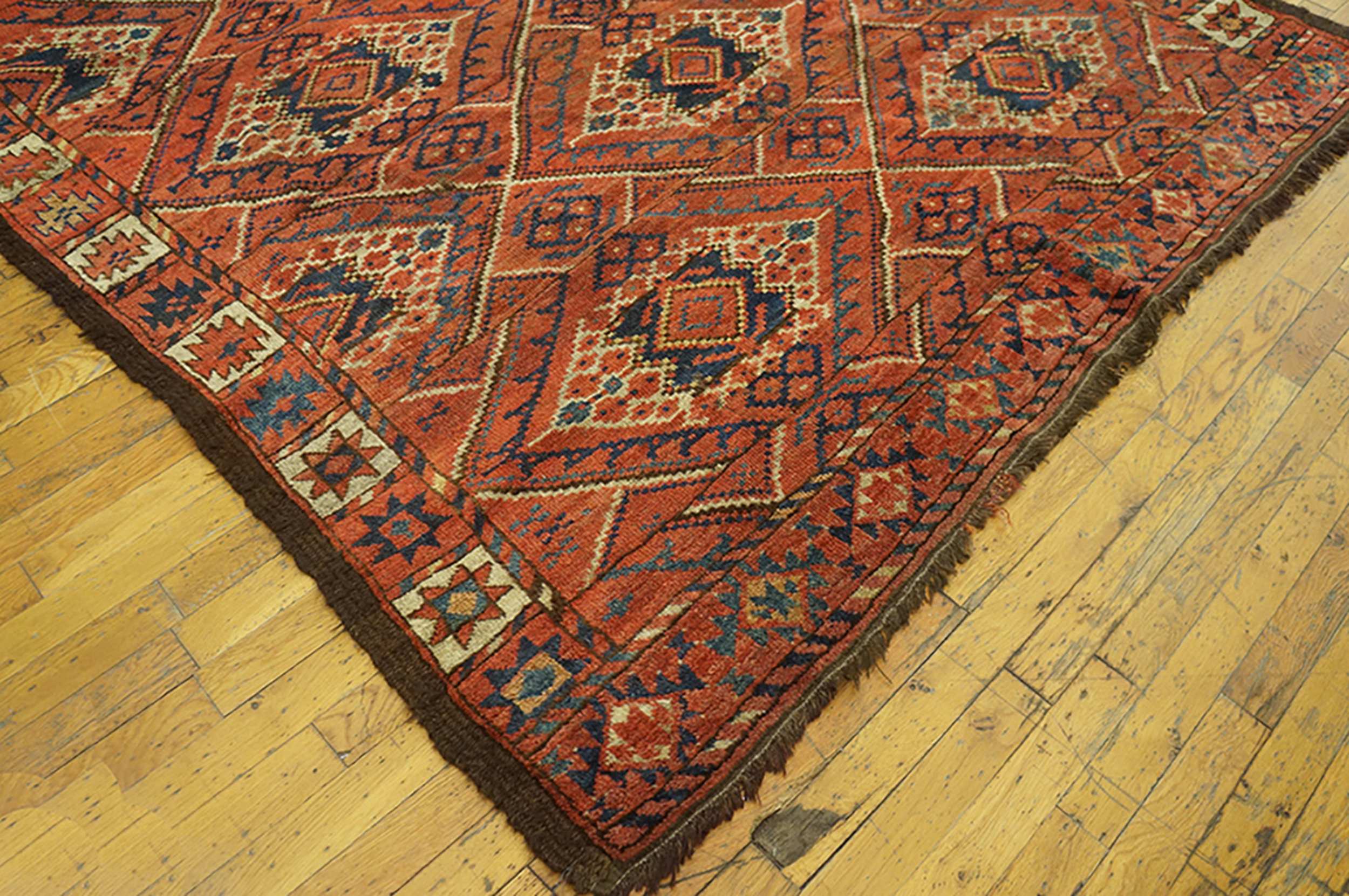
The palette is a masterclass in the use of deep, “Rustic” earth tones. The ground is typically a saturated Madder Red or Oxblood, a color synonymous with Afghan rugs. However, antique tribal Ersari Beshir rugs are distinguished by their liberal use of shimmering Indigo Blue and golden yellow. Because these tribal rugs were dyed using indigenous plants and minerals, the colors possess a magnificent abrash (tonal shifting). This natural variation creates a “watercolor” effect across the field, giving the dark, moody palette a luminous depth that synthetic dyes can never replicate.
Technically, this Ersari Beshir is prized for its substantial, “meaty” handle and lustrous wool. Woven on a wool foundation (common for nomadic pieces), the rug is supple and durable. The wool itself is sourced from fat-tailed sheep, which is exceptionally high in lanolin; this results in a pile that is not only soft to the touch but possesses a natural, light-reflective sheen. Over a century of use has mellowed the texture into a velvety, historical patina.
The borders act as a disciplined architectural frame, often featuring a complex series of geometric guard borders that “lock in” the expansive energy of the central field. To possess an antique Afghan Beshir is to hold a monument to a vanishing Silk Road heritage. It is a work of historical gravity and rugged, soulful power—a hand-wrought sanctuary that transforms any space into a gallery of Central Asian tribal brilliance.