
Introduction to Heritage of the Rugs Of France
Discover the elegance and sophistication of European textile art when you explore our curated collection of luxury French rugs.
Executive Overview & Cultural Significance
Rugs of France heritage is inseparable from the nation’s legacy of artistry, refinement, and cultural pride. Unlike purely utilitarian floor coverings, French rugs emerged as emblems of royal prestige and aesthetic sophistication.
From the 17th century onward, French monarchs and state institutions patronized workshops that elevated carpet art to the level of painting and sculpture. These creations were not merely decorative but symbolic—woven statements of national grandeur, diplomacy, and luxury.
Today, French rugs stand as functional artworks, bridging centuries of craftsmanship with modern design innovation, and serving as cultural patrimony celebrated both domestically and abroad.
What Makes French Rugs Unique?
The rugs of France are unique worldwide because they embody a rare fusion of royal tradition, technical mastery, and enduring artistry. While Persian and Turkish carpets are often associated with intricate knotting and tribal symbolism, French rugs distinguish themselves through painterly aesthetics, monumental scale, and narrative design.
Historic workshops such as Savonnerie and Aubusson produced rugs that mirrored the grandeur of French painting, with motifs ranging from baroque scrolls to pastoral scenes. This artistic emphasis elevated rugs beyond craft, positioning them as woven canvases designed to complement palaces, cathedrals, and state institutions.
The Savonnerie tradition in particular became synonymous with courtly luxury, producing carpets commissioned by Louis XIV that still adorn Versailles and the Louvre.
Meanwhile, Aubusson tapestries, recognized by UNESCO as part of the world’s intangible cultural heritage, highlight France’s commitment to preserving artisanal weaving at an international level.
Unlike many rug traditions that declined under industrialization, French rug production retained state sponsorship, ensuring continuity and prestige.
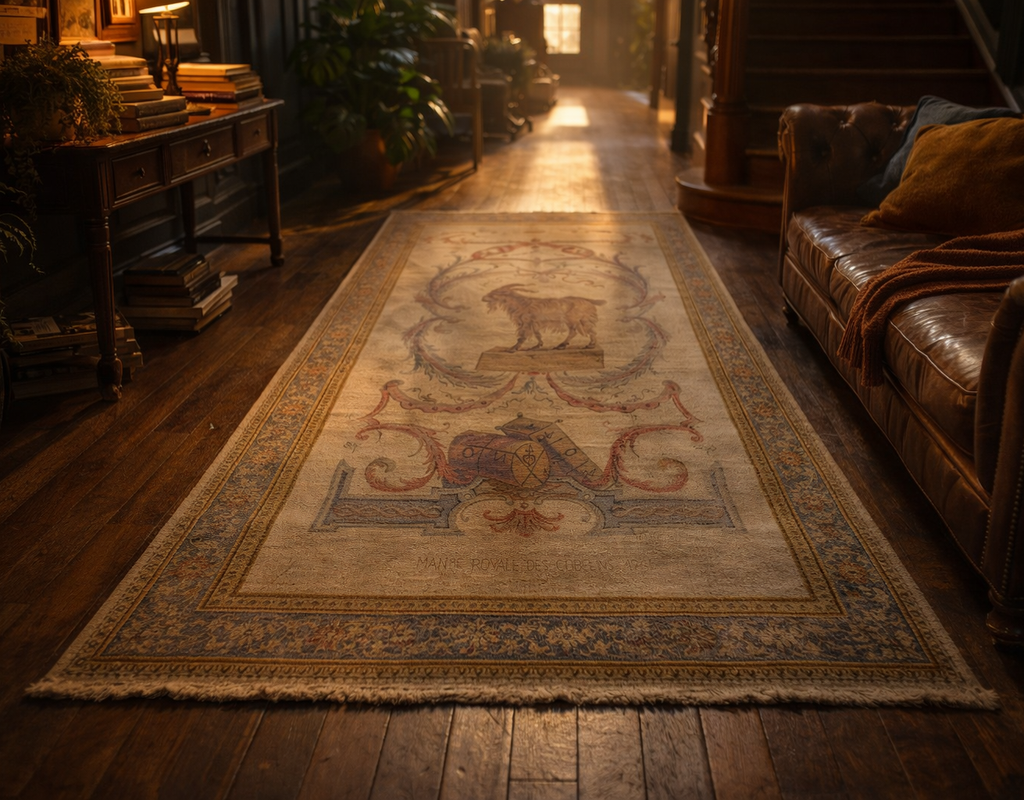
A striking, custom-designed tapestry rug adds an element of academic formality to this richly appointed, wood-paneled hallway.
This heritage also adapts to modernity. Contemporary French workshops balance historic motifs with sleek, innovative designs sought by collectors and interior designers worldwide.
The continued recognition of French carpet art lies in this ability to merge the past with the present, making French rugs both a historical treasure and a living art form.
MUST-HIGHLIGHT Themes
The captivating rugs of France uniquely combine royal heritage and modern innovation, preserving centuries-old techniques while embracing evolving design trends. The nation’s UNESCO-recognized tapestry tradition and the role of state-backed institutions reflect how textiles remain tied to national identity.
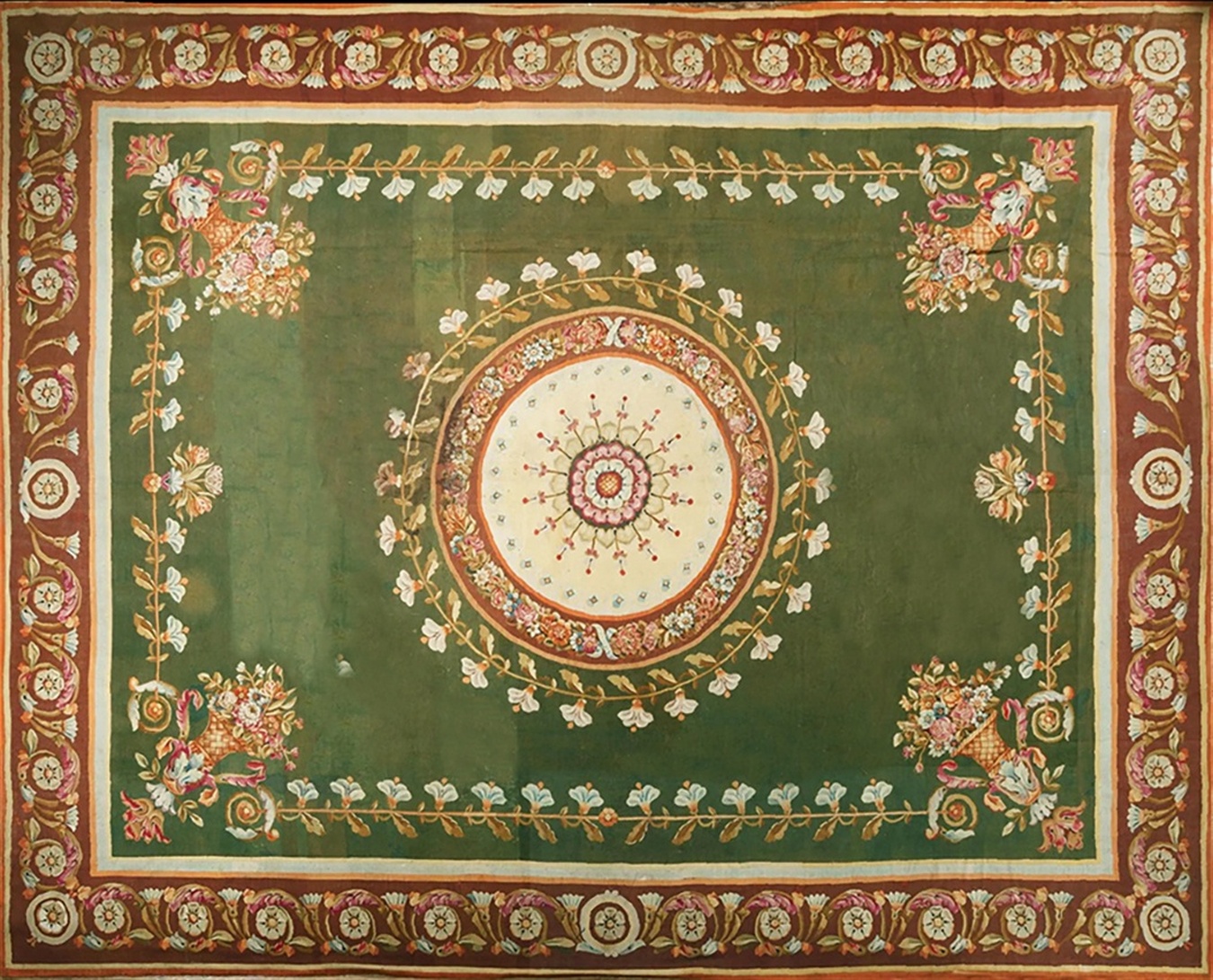
Above all, French rugs exemplify the dual role of being both functional and symbolic—luxurious surfaces that carry within them the narrative of French culture, artistry, and pride.
Country Overview & Iconic Landmarks

Iconic French landmark in a coastal setting.
France at a Glance
France, located in Western Europe, is one of the world’s most influential nations, with a population of approximately 68.6 million people. Its capital, Paris, serves not only as the country’s political and cultural heart but also as a global hub for luxury, fashion, and design.
France is the 7th largest global economy, renowned for its diverse industries ranging from aerospace and automotive to wine, fashion, and fine textiles.
Its geography stretches from the Atlantic coast to the Mediterranean, encompassing fertile plains, mountain ranges such as the Alps and Pyrenees, and river valleys that historically supported trade and cultural exchange.
These geographic and economic strengths have long positioned France as both a European leader and a global trendsetter in the arts and applied crafts.
Landmarks Connected to Textile History
French landmarks reveal how deeply textile heritage is woven into the nation’s cultural and urban landscape. Paris, beyond its world-famous monuments like the Eiffel Tower, is the cradle of French weaving excellence. The Gobelins manufactory, established in the 13th arrondissement, stands as one of the world’s most important centers for tapestry and carpet production.
Its location in the Gobelins quarter became synonymous with state-sponsored artistry, producing textiles for royal palaces and later for public institutions. Similarly, the Savonnerie workshop, originally founded in Paris, redefined French rug design by merging technical mastery with courtly aesthetics.
Outside the capital, landmarks such as Mont-Saint-Michel not only symbolize France’s medieval heritage but also reflect the cultural backdrop in which textiles played an integral role.
Monastic communities historically relied on woven goods for daily life, and the preservation of such sites underscores the longstanding bond between craftsmanship and French identity.
Together, these places highlight how Paris rug workshops and other textile institutions are inseparable from the broader narrative of French landmarks, merging national pride with artisanal achievement.
Historical Development of French Rug Weaving

Early workshop setting for French carpet making.
Timeline of Rug and Tapestry Innovation
- – Aubusson Origins: The earliest recorded mention of Aubusson tapestry established the town as a weaving hub, building on a medieval French tradition of wool tapestries like the celebrated arras, which adorned castles and cathedrals. — Why: This marked the foundation of a regional identity that would later gain global prestige.
- th Century – Arrival of Oriental Carpets: French nobility imported Ottoman and Persian carpets, which captivated elite circles with their intricate motifs and luxurious feel. — Why: This foreign influence inspired French workshops to adapt and eventually develop their own distinctive rug-making style.
- – Birth of Indigenous Rug Weaving: Under Henri IV, weavers were recruited to create “Turkey-style” rugs, laying the groundwork for an authentic French rug history. — Why: This decision was a deliberate act of cultural sovereignty, ensuring France could compete with the East’s dominance in luxury carpets.
- th Century – Savonnerie’s Founding: Established under Louis XIII with strong royal patronage, the Savonnerie manufactory became the epitome of French luxury, producing rugs that blended artistry with grandeur. — Why: Savonnerie institutionalized rug weaving as state art, linking textiles with monarchy and national identity.
- th Century – Industrialization and the Jacquard Loom: Mechanization and the invention of the Jacquard loom democratized rug access, spreading textile art beyond palaces into bourgeois households. — Why: This transition transformed rugs from exclusive symbols of royalty into staples of modern interiors.
- th–21st Centuries – Modern Art and UNESCO Recognition: French rug and tapestry design absorbed influences from modernism, while Aubusson tapestry received UNESCO safeguarding in 2009. — Why: This recognition secured France’s role as both innovator and guardian of world textile heritage.
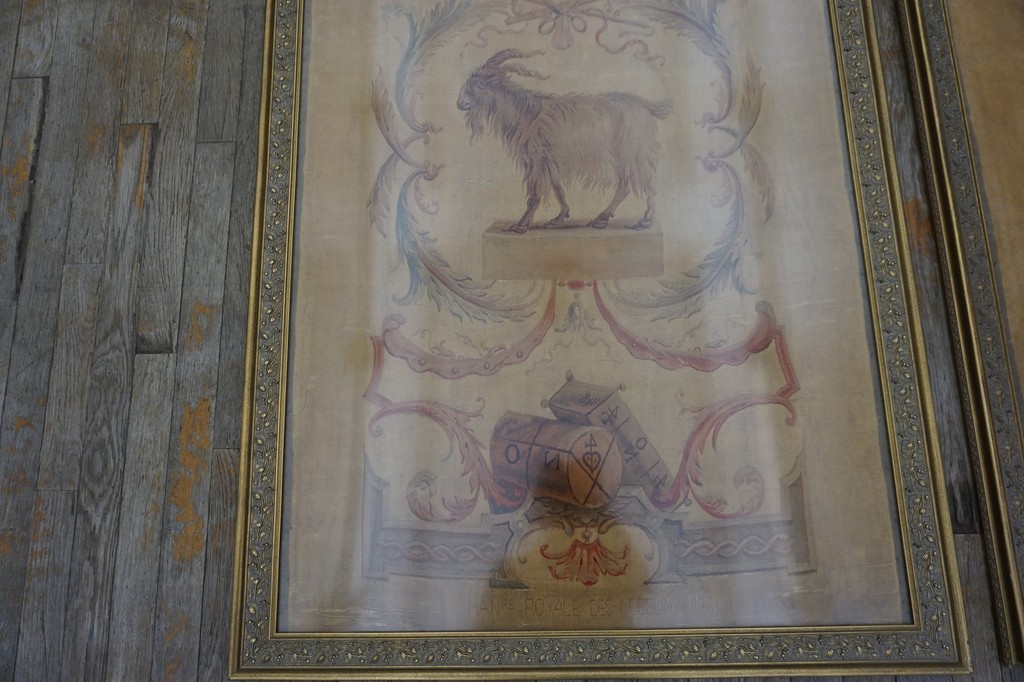
Pair of Scenic Antique 18th Century Beauvais French Tapestries by Rugs On Net
How Did Rug Weaving Start in France?
Rug weaving in France began in the early 17th century, when King Henri IV sought to reduce dependence on imported Oriental carpets. He invited skilled artisans to produce rugs in the style of Ottoman and Persian masterpieces, effectively planting the seeds of a national weaving industry.
This initiative not only fostered technical mastery but also gave rise to a uniquely French identity in rug production, which reached its pinnacle with the founding of the Savonnerie workshop under royal patronage.
The Arrival and Impact of Oriental Rugs
The influx of Oriental carpets in France during the Renaissance had a profound effect on French taste and production. Imported Persian and Ottoman pieces, displayed in noble households, set the aesthetic standard for luxury and inspired a passion for richly patterned textiles. Rather than merely imitating these imports, French artisans adapted their motifs into a distinctly local vocabulary—combining Eastern intricacy with European baroque and rococo flourishes.
This cultural exchange created a hybrid tradition where Oriental influence catalyzed French innovation, culminating in Savonnerie masterpieces and the Aubusson origins of tapestry weaving. Over time, France transformed from a consumer of imported carpets into a leader in artisanal rugs, celebrated for both originality and refinement.
The Royal Manufactories: Savonnerie, Gobelins, and Beauvais
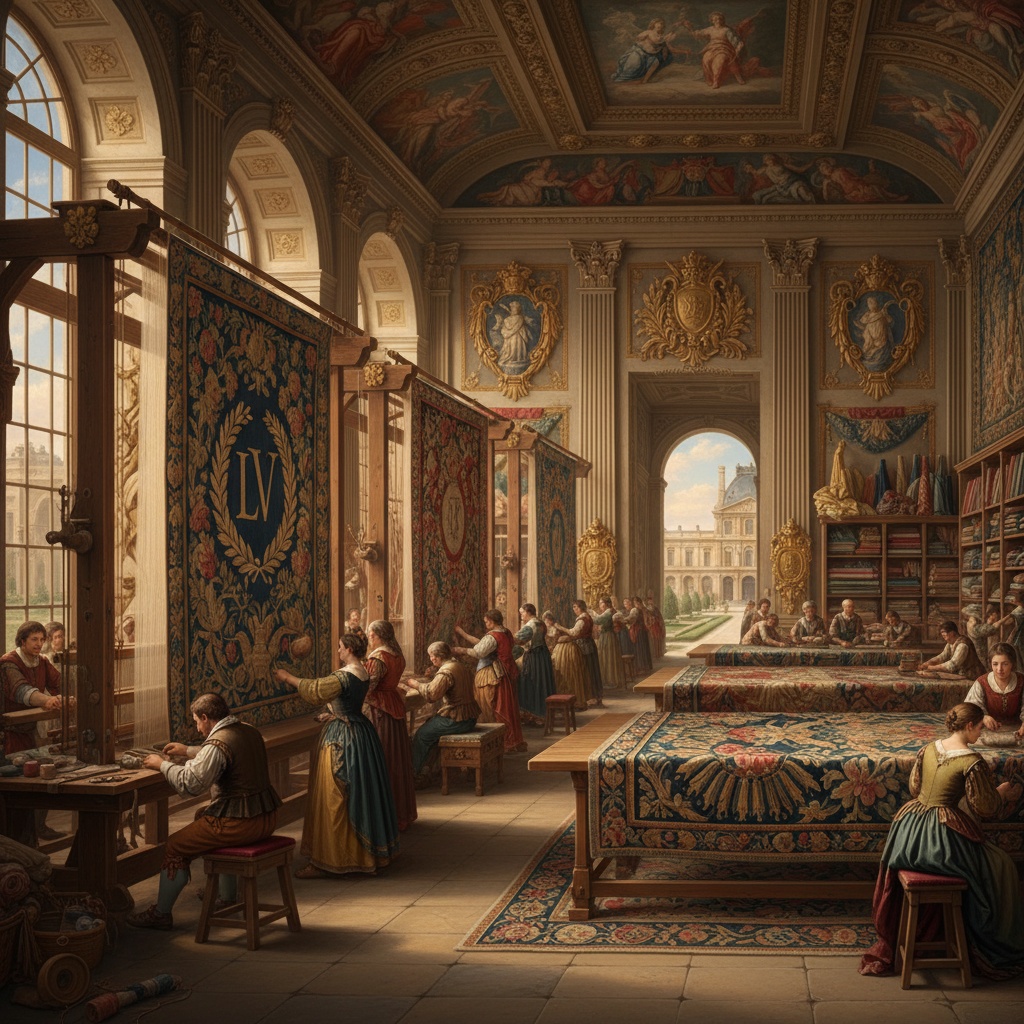
Artisans working in a grand royal weaving manufactory.
The Founding of Savonnerie
The Savonnerie workshop Paris was officially established in 1627 on the site of an old soapworks along the Quai de Chaillot. Its creation stemmed from royal ambition to free France from reliance on imported Oriental carpets and to assert a distinct national aesthetic. A monopoly was granted to two master weavers, Pierre DuPont and Simon Lourdet, who were tasked with producing carpets that could rival Ottoman and Persian masterpieces in both quality and grandeur.
The workshop’s proximity to the Louvre placed it firmly within the orbit of courtly life. The first Savonnerie carpets were woven in Paris, and from the outset, they embodied both technical virtuosity and the artistic ambition of French royal design.
The Gobelins and Beauvais: Royal and Private Patronage
While Savonnerie specialized in pile carpets, the Gobelins tapestry manufactory, formally established in 1663 in Paris’s 13th arrondissement, became the centerpiece of the state’s weaving program. Directed by Jean-Baptiste Colbert under Louis XIV, Gobelins produced not only carpets but also tapestries and furnishings destined for royal residences and diplomatic gifts.
The manufactory remains active to this day, preserving centuries of technical expertise. In contrast, the Beauvais manufactory, founded in 1664 in the Oise region, operated under a royal license but remained privately managed. It specialized in decorative wall tapestries and upholstery fabrics, complementing the state-controlled output of Gobelins.
Together, Gobelins and Beauvais balanced government-directed artistry with independent innovation, ensuring that French weaving traditions could meet both royal commissions and broader aristocratic demand.
Why Did Louis XIV Support Savonnerie Workshops?
King Louis XIV championed the Savonnerie workshops as part of his broader effort to project the image of France as the unrivaled center of luxury and power. Carpets commissioned for the Louvre and Versailles functioned as woven propaganda, underscoring the grandeur of his reign.
These area rugs, often monumental in size and rich in allegorical imagery, were designed to glorify the monarchy while reinforcing France’s leadership in the decorative arts. By supporting Savonnerie, Louis XIV not only advanced national prestige but also stimulated an artisanal economy that aligned with his vision of centralized royal authority.
Where is La Manufacture des Gobelins Located?
La Manufacture des Gobelins is located in Paris’s 13th arrondissement, on the Avenue des Gobelins. Its historic site has been a cornerstone of French textile production since the 17th century, when the Gobelin family’s former dye works were transformed into the crown’s premier tapestry manufactory.
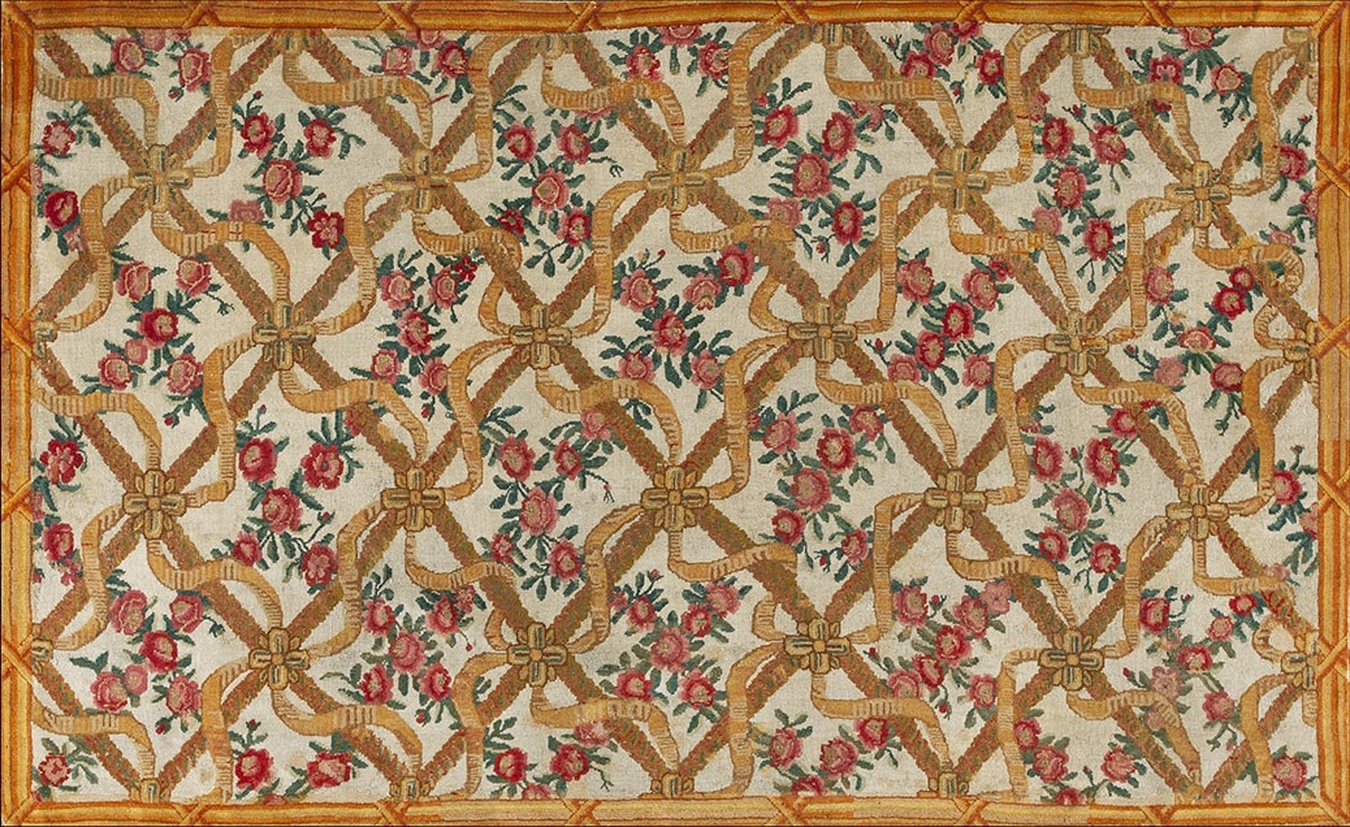
Antique Savonnerie French Allover Floral Knotted Rug – by Rugs On Net
The address situates the Gobelins in the heart of Paris, cementing the city’s role as the epicenter of French royal carpet and tapestry innovation. Today, the Gobelins remains both a working workshop and a cultural landmark, embodying the longevity of Gobelins tapestry traditions.
MUST-HIGHLIGHT Themes
The royal manufactories of Savonnerie, Gobelins, and Beauvais set global benchmarks for textile luxury, with Paris emerging as the unrivaled center of French carpet art. These institutions illustrate how royal sponsorship and cultural ambition intertwined to shape not only France’s heritage but also international standards of design and craftsmanship.
Signature Styles: Savonnerie, Aubusson, Beauvais
What Defines Savonnerie Carpets?
The Savonnerie carpet represents the pinnacle of French royal weaving. These rugs are knotted-pile works, distinguished by their use of luxurious wool and silk, monumental dimensions, and painterly motifs. Designs often featured central medallions, scrolling acanthus leaves, allegorical figures, and the radiant sun emblem of Louis XIV, aligning with the iconography of the French monarchy.
Initially woven exclusively for palaces such as Versailles and the Louvre, Savonnerie carpets symbolized power, opulence, and state authority. Today, they continue to be produced for national institutions, preserving their historic function as both art and political statement.
What Defines a French Aubusson Flatweave Rug?
A French Aubusson flatweave is woven without pile, using tapestry techniques that create a smooth, flat surface. Originating from the town of Aubusson, these rugs are celebrated for their refined floral garlands, architectural frames, and Rococo-inspired pastels.
Unlike Savonnerie’s sculptural pile, Aubusson relies on color, shading, and pattern to achieve its visual richness.
Their structural distinction makes them lighter and more versatile, suited for wall hangings as well as floor coverings. The artistry of Aubusson lies in its ability to transform woven wool into surfaces that resemble painted canvases, a hallmark of French rug styles.
Aubusson Fame & UNESCO Status
Aubusson tapestries and flatweaves achieved international fame due to their exceptional artistry, versatility, and enduring connection to European decorative arts. From the 17th to 19th centuries, Aubusson became synonymous with elegant interiors, its rugs gracing salons, theaters, and private estates across Europe.
Their popularity was tied not only to their aesthetic beauty but also to their adaptability—blending seamlessly with shifting styles from Baroque to Rococo to Neoclassical. In 2009, Aubusson tapestry was inscribed by UNESCO as an element of intangible cultural heritage, recognizing the workshops’ centuries-old expertise and their cultural significance to France and the world.
The Beauvais Tapestry Tradition
The Beauvais tapestry manufactory, established in 1664, developed its own distinctive artistic voice within the French textile tradition. Specializing in low-warp weaving, Beauvais excelled in producing wall coverings, upholstery fabrics, and decorative panels rather than monumental carpets.
Its visual identity often featured landscapes, chinoiserie themes, and pastoral scenes, aligning with aristocratic tastes for both European and exotic motifs.
Unlike Gobelins, Beauvais operated privately under royal license, which gave it creative flexibility and a reputation for refinement in domestic decoration. Beauvais thus stands as a complement to the grandeur of Savonnerie and the prestige of Aubusson, adding diversity to the canon of French rug styles.
How Does Savonnerie Knotting Differ from Persian Knots?
The defining technical distinction of the Savonnerie carpet lies in its use of the Turkish or symmetrical knot, unlike Persian rugs, which often employ the asymmetrical Persian (Senneh) knot.
The symmetrical knotting technique of Savonnerie results in a denser weave and a more sculptural pile, allowing for intricate shading, precise motifs, and luxurious texture. This structural choice reflects France’s adaptation of Eastern techniques to its own artistic vocabulary, producing carpets that combine technical mastery with uniquely French design.
MUST-HIGHLIGHT Themes
Each of these styles—Savonnerie, Aubusson, and Beauvais—functions as a status symbol, defined by its weaving method, motifs, and historical use. The UNESCO recognition of Aubusson and the continued preservation of these manufactories in museums and state workshops underscore their enduring legacy as treasures of world heritage and cultural identity.
Key Regions of French Rug Production
Regional Hotspots
- Creuse (Aubusson, Felletin): This central region is the cradle of Aubusson Creuse weaving, producing flatweaves and tapestries recognized by UNESCO. Museums and annual wool festivals anchor its cultural identity. — Why: Aubusson’s reputation ensures global recognition, making it one of the most important weaving centers in Europe.
- Oise (Beauvais): Home to the Beauvais Oise tapestry tradition, with private workshops historically engaged in international trade. — Why: The Oise region represents the blending of private enterprise with royal license, adding diversity to France’s weaving landscape.
- Paris (Gobelins & Savonnerie): The historic seat of the Paris Gobelins manufactory and the original Savonnerie workshop, where weaving was central to state-sponsored luxury and artistic innovation. — Why: Paris remains the symbolic capital of French rug-making and continues to influence global design trends.
- Hérault (Lodève): The modern Lodève Savonnerie continues the Savonnerie tradition, offering public tours and functioning as a point of regional pride. — Why: Lodève demonstrates how regional centers keep royal traditions alive while engaging contemporary audiences.
- Pas-de-Calais (Arras): Known for its medieval “arras” tapestries, which gave the English language its term for wall-hanging textiles. — Why: This region embodies France’s medieval legacy and its long-standing contribution to textile vocabulary and history.
What Regions Lead French Rug Production Today?
The leaders of French rug production today are Creuse (Aubusson and Felletin), Paris (Gobelins), and Hérault (Lodève Savonnerie). Aubusson maintains global prestige with its UNESCO-protected flatweaves, while Gobelins and Savonnerie, administered by the French state, ensure the continuity of royal weaving traditions.
Together, these regions uphold France’s reputation for excellence in artisanal and luxury textiles.
Are Provence Rugs Influenced by Mediterranean Colors?
Yes, Provence rugs are strongly influenced by Mediterranean colors. Regional workshops often weave using warm palettes of ochre, terracotta, olive green, and sea-inspired blues.
These tones reflect the landscapes of southern France, from lavender fields to sunlit coasts, embedding regional identity into textile aesthetics. Provence’s color language offers a softer, more natural contrast to the grandeur of Parisian Savonnerie designs.
How Do Brittany Weavers Source Their Wool Today?
In Brittany, contemporary weavers increasingly source wool from local and regional sheep breeds, aligning with heritage practices and modern sustainability initiatives.
Cooperative efforts and eco-conscious supply chains ensure that Brittany wool maintains both authenticity and ethical standards. This localized sourcing reinforces the cultural continuity of weaving traditions in the region.
Does Region Affect Valuation of French Rugs?
Yes, region plays a crucial role in determining the value of French rugs. Collectors and appraisers assign premium worth to pieces from renowned centers such as Aubusson, Savonnerie, and Gobelins, where provenance is meticulously documented.
Rugs from these workshops often command significantly higher prices in the art market due to their historical prestige and UNESCO or state recognition.
By contrast, regional variations like Provence rugs or contemporary Brittany weavings may appeal for their charm and authenticity but typically fetch lower values unless tied to a noted atelier. Provenance, workshop documentation, and regional heritage remain central factors in appraisal.
MUST-HIGHLIGHT Themes
Regional identity is inseparable from the story of French rug styles. From Aubusson Creuse flatweaves to Lodève Savonnerie carpets, geography shapes aesthetics, authenticity, and market value.
Protected designations and provenance confirm that French rugs are not just objects of beauty but markers of cultural and regional identity.
Materials, Dyes & Techniques
Traditional vs. Modern Materials
- Traditional French rug materials: Wool from local sheep, silk accents, and cotton warps formed the foundation of Savonnerie, Aubusson, and Beauvais textiles. These natural fibers gave rugs durability, depth of color, and a luxurious feel. — Why: They created works of art that aged gracefully, with antique French rugs retaining vibrancy and structural integrity over centuries.
- Modern materials: Recycled fibers and synthetic blends have entered the market, especially for mass production. However, heritage workshops continue to prioritize natural wool and silk. — Why: Modern fibers allow accessibility and affordability, while traditional materials preserve authenticity and collector value.
What Dyes Give Antique French Rugs Their Palette?
Antique French rugs achieved their luminous palette through vegetable dyes and natural pigments. Indigo produced rich blues, madder root supplied reds, weld provided golden yellows, and cochineal imported from the Americas gave brilliant crimson tones.
These dyes penetrated natural wool deeply, ensuring stability and nuanced shading. The reliance on organic sources gave Aubusson weaving and Savonnerie knotting a painterly quality, as colors could be blended and shaded much like brushstrokes on canvas.
The Wool Supply Chain: Past & Present
- Past: Historically, French weavers relied on wool from local sheep breeds, particularly in Creuse (Aubusson) and surrounding pastoral regions. Select imported wools were also used to achieve desired fineness and sheen. — Why: Regional wool supplied both quality and identity, binding local agriculture to national textile prestige.
- Present: Today, heritage manufactories continue to source from regional farms, while also incorporating wool from international suppliers to maintain consistency. Sustainability initiatives in regions such as Brittany emphasize eco-friendly, traceable production. — Why: The modern supply chain balances tradition with globalized standards, ensuring continuity of excellence.
Comparing Weaving and Knotting Techniques
French workshops stand apart in their technical execution. Savonnerie knotting employs the symmetrical Turkish knot, creating a denser pile than the asymmetrical Persian knot. This produces a more sculptural surface, ideal for detailed motifs and shading.
In contrast, Aubusson weaving employs a flatweave tapestry technique with no pile, relying on color gradation and intricate patterning to achieve depth.
While Persian and Turkish rugs emphasize symbolic or geometric design rooted in tribal or regional traditions, French rug-making pursued a painterly, courtly aesthetic aligned with European fine arts. These technical differences define the distinct identity of French rug materials, Aubusson weaving, and Savonnerie knotting within the global history of rugs and textiles.
MUST-HIGHLIGHT Themes
The value and longevity of French rugs are inseparable from their natural wool, vegetable dyes, and artisanal techniques. Whether knotted or flatwoven, French rugs stand apart for their ability to merge technical mastery with painterly design, ensuring their enduring reputation as cultural treasures.
French Rugs in Modern Interiors
Can French Rugs Match Modern Minimalist Interiors?
Yes, French rugs in modern decor pair seamlessly with minimalist spaces when chosen with intention. Their refined motifs and pastel palettes, particularly in Aubusson flatweaves, soften stark interiors without overwhelming them.
Even Savonnerie carpets, traditionally associated with grandeur, can serve as statement pieces when contrasted with clean-lined furniture.
The adaptability of French rug design lies in its balance of painterly elegance and structural clarity, making them suitable for contemporary, eclectic, and luxury interiors alike.
Modern French Designers Reviving Flatweaves
Today, a new wave of contemporary Aubusson designers collaborates with historic workshops to reinterpret traditional flatweaving. These partnerships introduce abstract patterns, modernist geometry, and fresh palettes while maintaining handwoven authenticity.
By fusing heritage techniques with present-day aesthetics, French designers are revitalizing Aubusson’s global reputation and ensuring its relevance for modern collectors and interior designers.
Collectability: Should Collectors Invest in Antique Aubusson?
Yes, collectors should strongly consider investing in antique French Aubusson carpets. These textiles hold enduring value due to their artistry, rarity, and UNESCO-recognized heritage. Market demand remains steady, with museum-grade Aubussons achieving high prices at auction.
However, provenance and condition are critical: rugs with documented workshop origins and well-preserved dyes command premium valuation. For collectors seeking both cultural significance and financial stability, to invest in French rugs, especially antique Aubussons, is a prudent choice that combines aesthetic beauty with long-term value.
MUST-HIGHLIGHT Themes
The enduring prestige of French rugs rests not only on their past but also on their adaptability. From French rugs in modern decor to contemporary Aubusson collaborations, these textiles remain relevant in today’s design language.
For collectors, antique Aubussons represent a high-value investment, blending artistry, provenance, and cultural heritage into one of the most rewarding areas of textile collecting.
Industry, Sustainability & Future Trends
French Rug Industry Today
- Handwoven sector: Only a small fraction of the French carpet industry—about 5% of exports—is hand-knotted or woven. These pieces come primarily from heritage workshops like Aubusson, Gobelins, and Savonnerie, sustained by state commissions, collectors, and luxury buyers. — Why: Handwoven rugs embody cultural heritage, attracting markets that value authenticity and artistry.
- Machine-made sector: The majority of production is tufted or machine-woven, dominating export volume and accounting for France’s $253 million annual carpet exports (2023). — Why: Machine-made rugs provide affordability and scale, meeting global demand while funding broader industry growth.
Sustainability Initiatives and Circular Economy
- Low recycling rates: Only 1.5% of carpets are recycled in France, exposing major environmental challenges in disposal and waste management. — Why: Carpets are difficult to recycle due to mixed materials, making circular economy solutions vital.
- Eco-materials & modular design: Manufacturers are experimenting with biodegradable fibers, recycled wool, and modular carpet tiles that can be replaced section by section. — Why: These innovations reduce waste and align with European Union sustainability goals.
- Policy & institutions: The Mobilier National and French law now encourage recycling, repair, and circular economy practices. — Why: Legislative support ensures environmental responsibility while safeguarding cultural industries.
The Future of French Rug Weaving
The future of French weaving depends on balancing heritage preservation with technological and environmental innovation. Institutions such as the Cité Internationale de la Tapisserie in Aubusson are training new generations of weavers, ensuring continuity of knowledge.
At the same time, collaborations with contemporary artists bring modern aesthetics into traditional looms, keeping French rugs relevant in global design markets.
Challenges remain: industrial competition, the scarcity of skilled artisans, and the urgency of sustainability in production. Yet these same pressures are spurring innovation in eco-friendly fibers, digital design integration, and consumer education.
The trajectory of sustainable rugs in France suggests that the industry’s resilience will lie in weaving cultural memory with modern solutions, reinforcing both national pride and global leadership.
MUST-HIGHLIGHT Themes
The French carpet industry stands at a crossroads where tradition and innovation converge. While handwoven masterpieces remain cultural treasures, machine-made carpets dominate the market.
Sustainability initiatives—especially in circular economy carpets—signal the next frontier. By investing in training, eco-conscious production, and artistic partnerships, France is preparing a future.
A future where French rug heritage continues to inspire while addressing the ecological and economic realities of the 21st century.
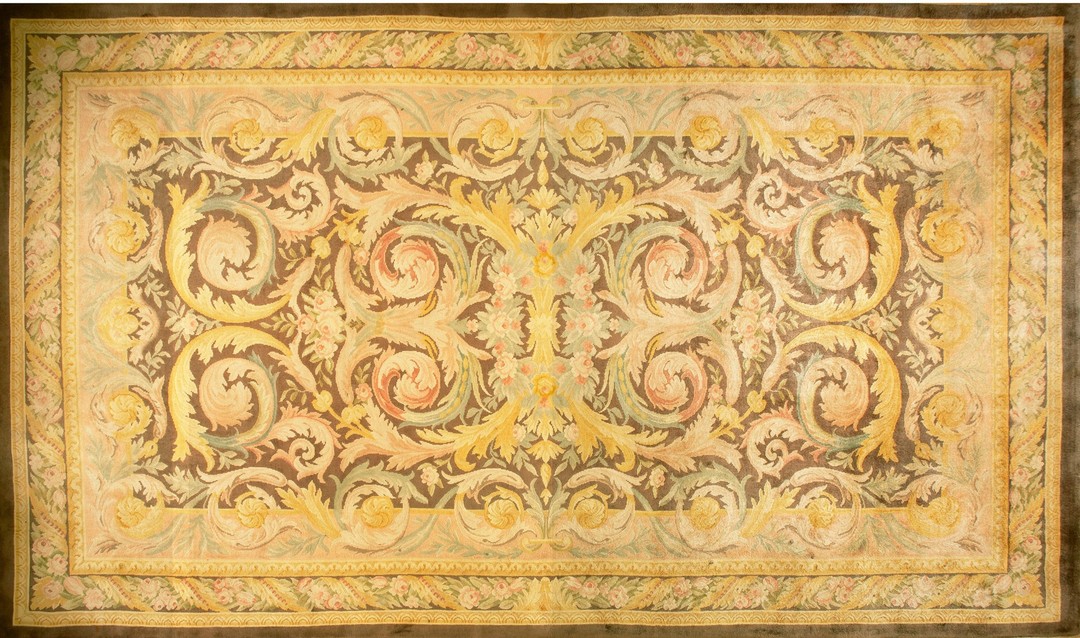
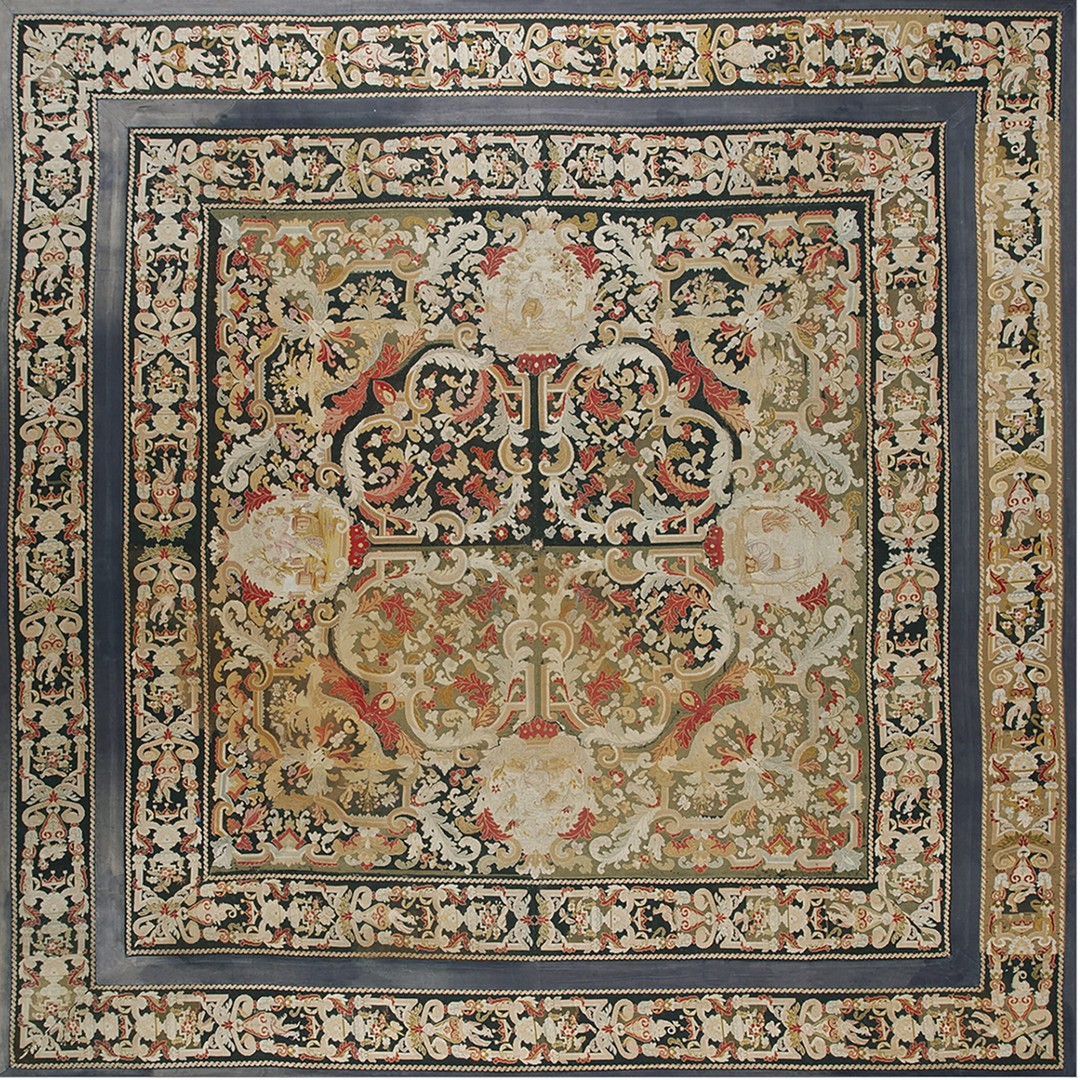
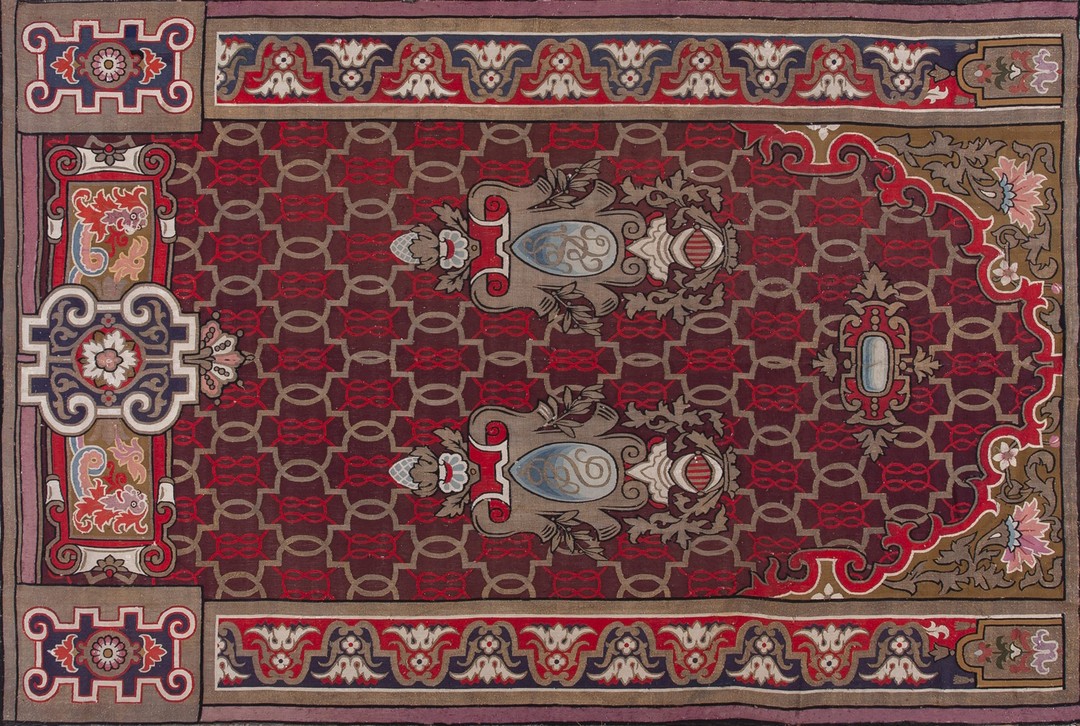
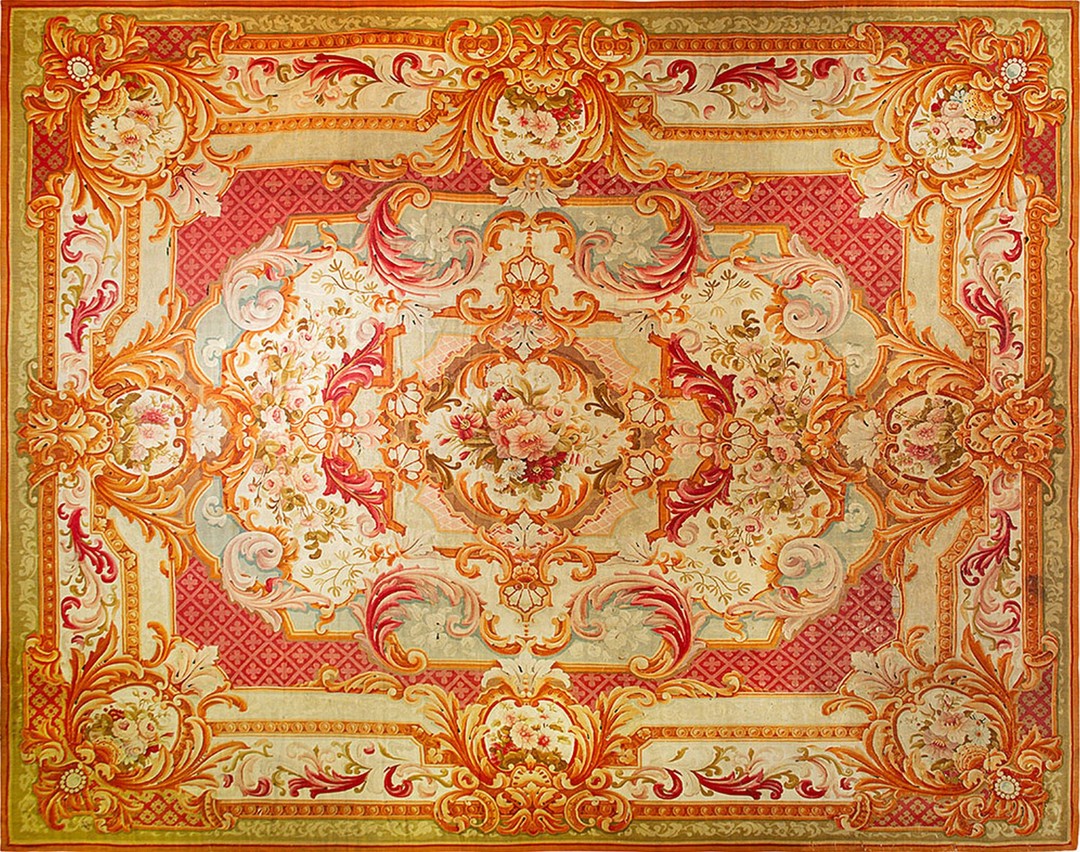
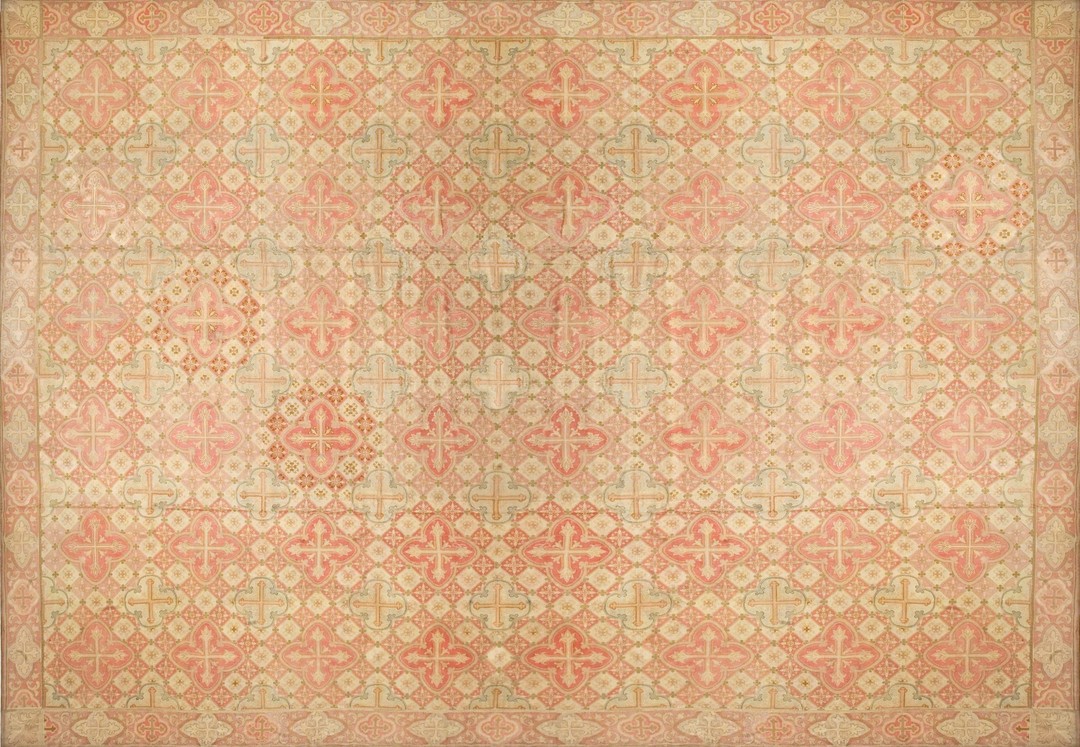
Discover a few of our French rug selections.
FAQ
- Where should I buy in the US?
Reputable dealers and auction houses. Request condition reports, restoration notes, and a 7–14-day return window; for antiques, get written attribution.
- Are French rugs good investments?
No for most buyers—purchase for beauty and craft. Only top-tier Savonnerie/Aubusson with provenance reliably appreciate; seek expert appraisal.
- Are French rugs eco-friendly?
Wool is renewable and low-VOC; pair with a natural-rubber or felt pad to avoid plasticizers that can stain floors.
- Do French rugs work in modern interiors?
Absolutely—balance ornate motifs with solid upholstery, clean-lined tables, and neutral walls so the rug becomes a single statement piece.
- Where do French rugs look best?
Formal living or dining rooms, bedrooms, and low-grit entries. A 9×12 typically anchors a 12×15 room nicely.
- Will sunlight fade the dyes?
Yes rotate the rug every 3–6 months and use UV shades; pastels on Aubussons can lighten noticeably.
- Are robot vacuums safe on fringed French rugs?
No fringe often tangles; tuck or tape fringes and set robot “no-go” zones to protect rug and machine.
- Can French rugs go over radiant floor heating?
Yes if the rug+pad’s combined tog is ≤2.5; avoid thick foam pads and monitor surface temperature.
- Do I need a rug pad under French rugs?
Yes a felt-and-natural-rubber pad (about 1/8–1/4 inch) prevents slipping and cushions fibers; trim it 1–2 inches smaller than the rug.
- How do I prevent moth damage to wool French rugs?
Vacuum edges and undersides regularly, keep rugs clean, use cedar/lavender or pheromone traps, and freeze infested textiles about 72 hours.
- Can I DIY-clean an Aubusson?
No soaking or scrubbing—use suction-only vacuuming (no beater bar) and schedule professional cleaning roughly every 1–3 years, based on traffic.
- What materials do French rugs use?
Mostly wool (pile or weft), sometimes with silk highlights; foundations may be wool, cotton, or linen depending on era and workshop.
- Is Aubusson tapestry officially recognized?
Yes it was inscribed on UNESCO’s Intangible Cultural Heritage list in 2009, honoring the Creuse region’s weaving tradition.
- What’s notable about Savonnerie history?
A royal manufactory near Paris peaked c.1650–1685, including a famed commission of 93 carpets for the Louvre’s Grande Galerie.
- Are most “Aubusson-style” rugs made in France today?
Yes many are woven in China, India, or Pakistan using Aubusson/needlepoint techniques; French-made pieces are rarer and command premiums.
- How much should I budget?
Reproductions range about \$200–\$5,000; antique Aubussons often \$3,000–\$50,000+. Top Savonneries can exceed \$100,000—one sold for \$4.4 million.
- Which sizes are typically encountered?
Aubussons often appear in 6×9, 8×10, and 9×12; Savonnerie includes palace sizes like 12×18+. Historic runners exist but are less typical.
- Can I put a French rug under a dining table?
Yes; size so chairs stay on the rug when pulled out—typically 8×10 or larger, allowing \~24 inches beyond the table. Use a pad and blot spills promptly.
- Are French rugs practical with kids or pets?
Yes with caveats—wool resists stains and odors, but Aubusson’s flat weave can abrade or snag; choose durable reproductions for high-traffic rooms.
- What designs and colors define French rugs?
Floral wreaths, cartouches, and central medallions in Rococo or Neoclassical layouts. Palettes often include blush, cornflower blue, cream, and gilt accents.
- How can I spot an authentic Aubusson, not a print or needlepoint?
True Aubusson shows tapestry structure and pattern visible on the back; needlepoint uses a canvas grid, while prints show ink on the surface.
- Are Savonnerie rugs hand-knotted?
Yes often with the symmetrical Turkish/Ghiordes knot, producing a dense wool pile and crisp scrollwork.
- Are Aubusson rugs flatweave?
Yes they’re tapestry-woven with no pile; look for slit-woven joins and a clear mirror image on the reverse.
- Savonnerie vs. Aubusson—what’s the difference?
Savonnerie is thick, hand-knotted pile with Baroque/Neoclassical medallions; Aubusson is flatwoven tapestry with no pile and pastel florals. Savonnerie feels cushier underfoot.
- What are “French rugs” in home decor?
Typically Savonnerie (knotted-pile) and Aubusson (flatwoven tapestry), plus needlepoint interpretations. Savonnerie flourished c.1650–1685; Aubusson workshops grew in France’s Creuse region.