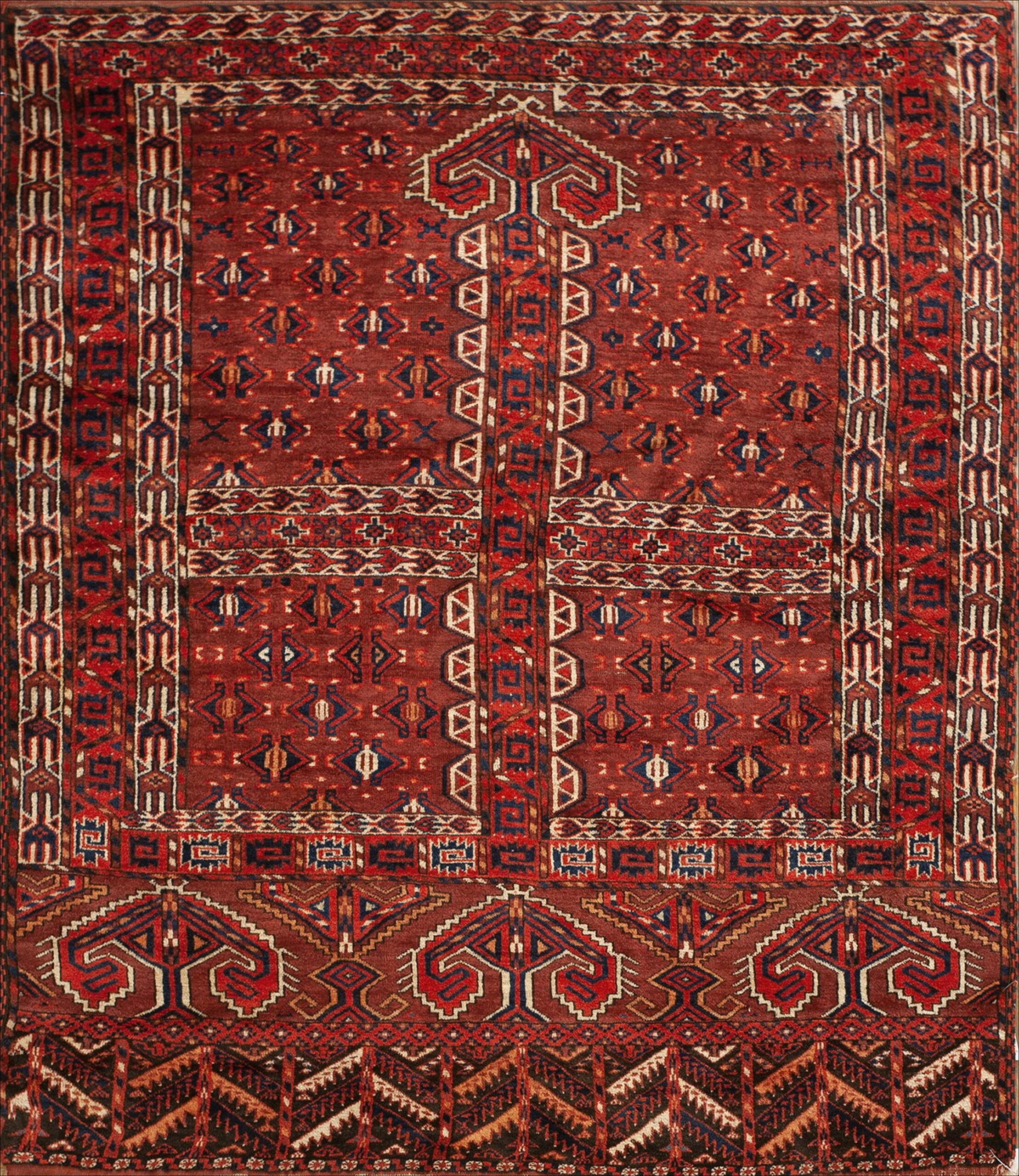
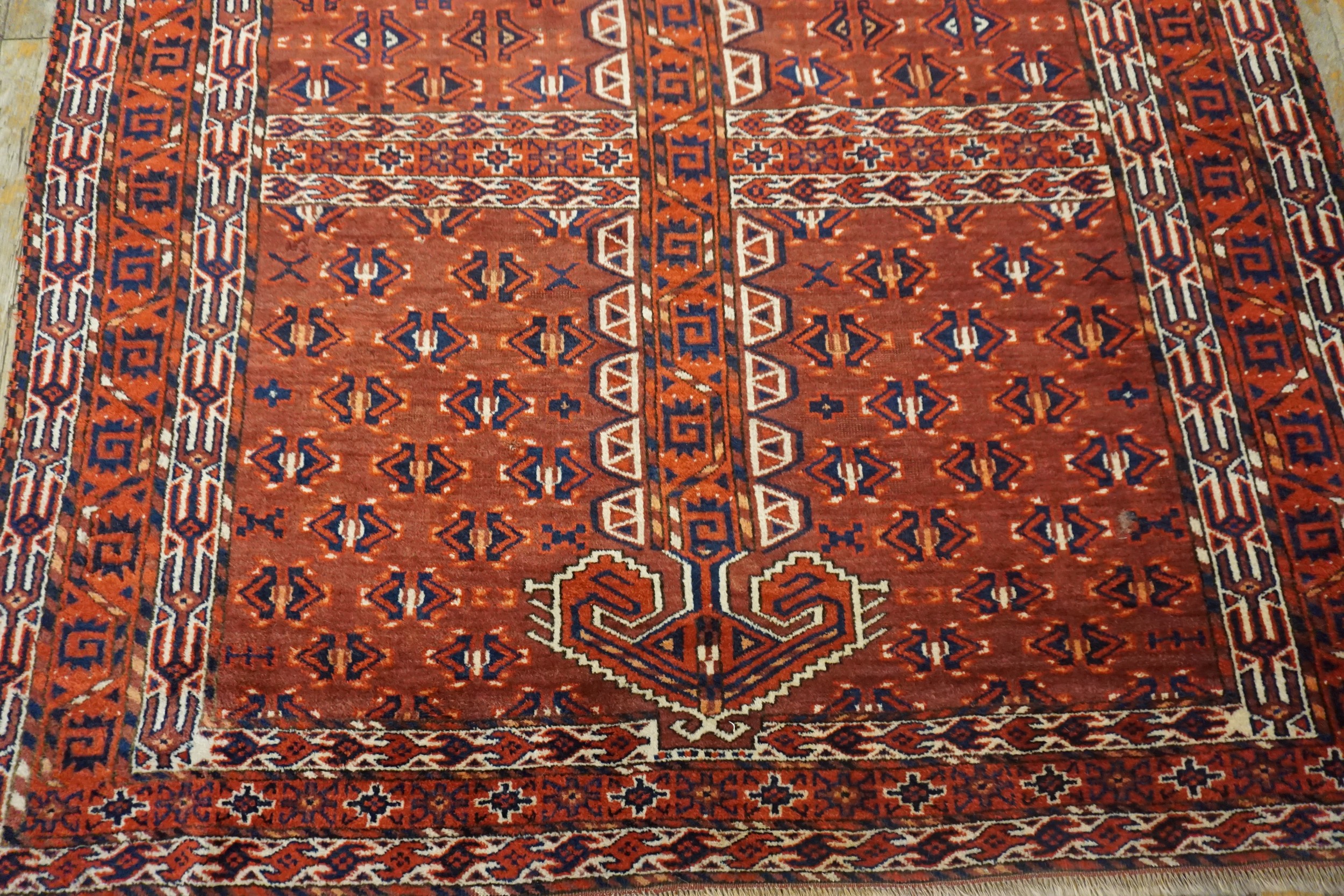
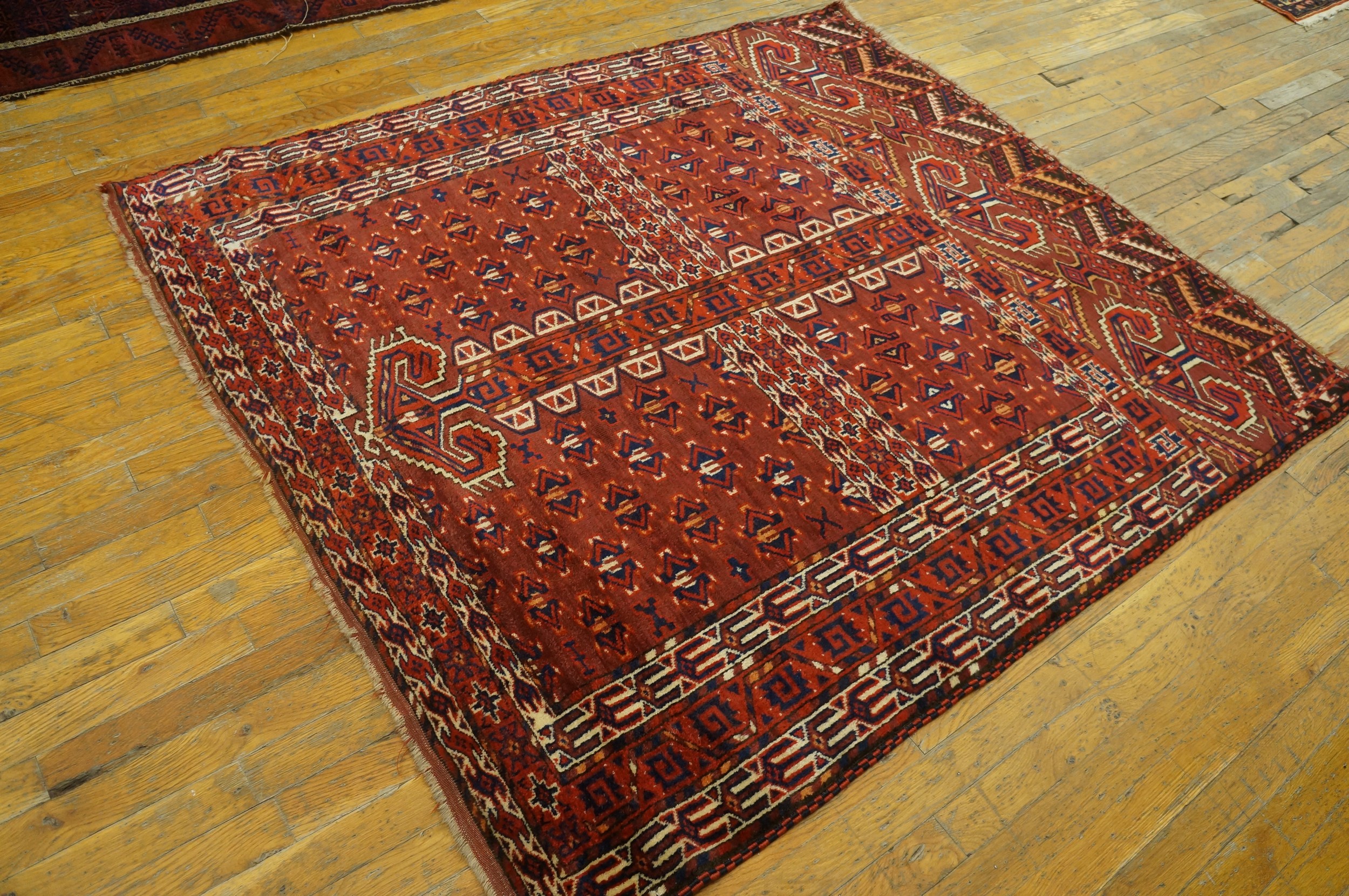
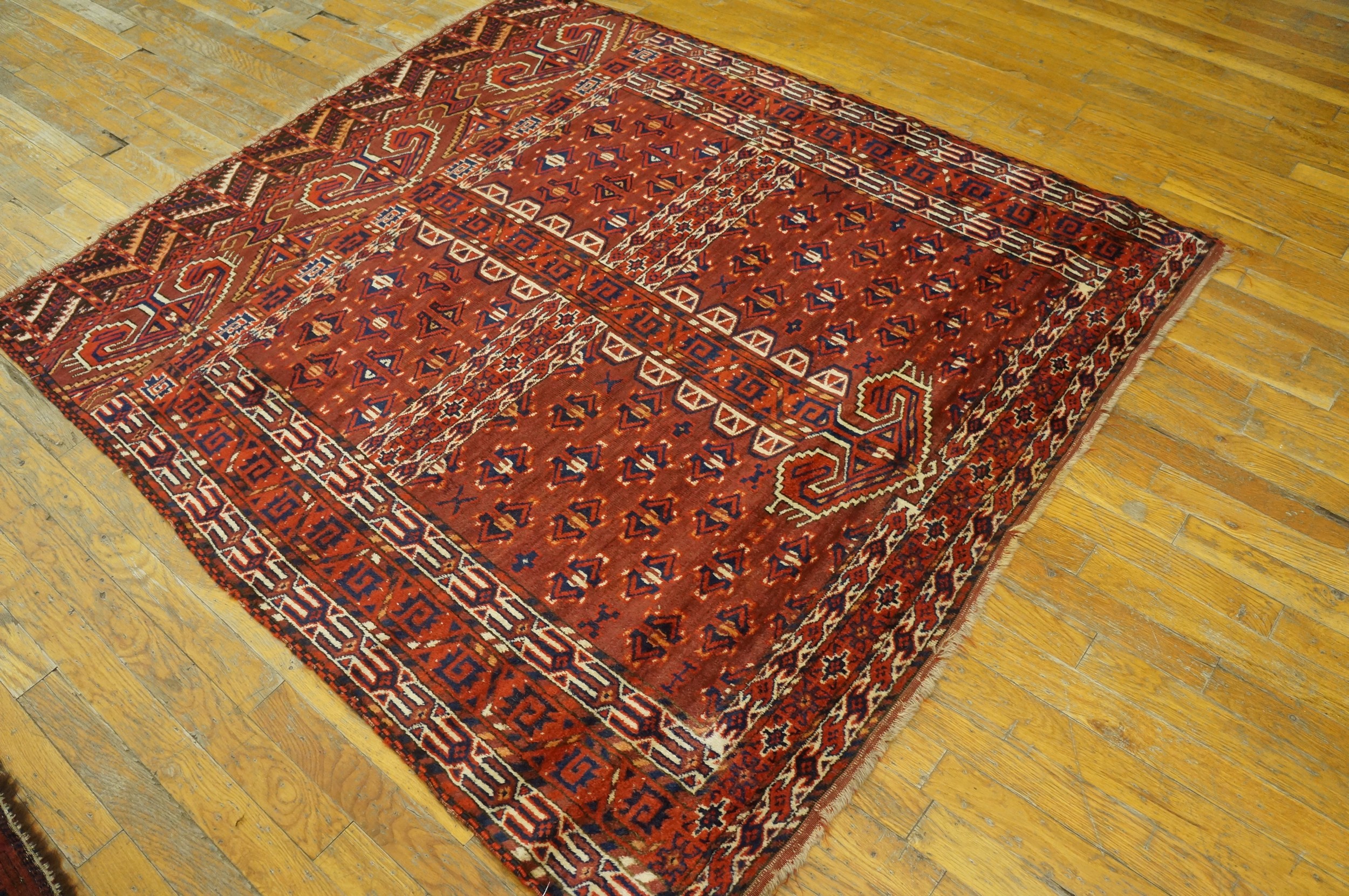
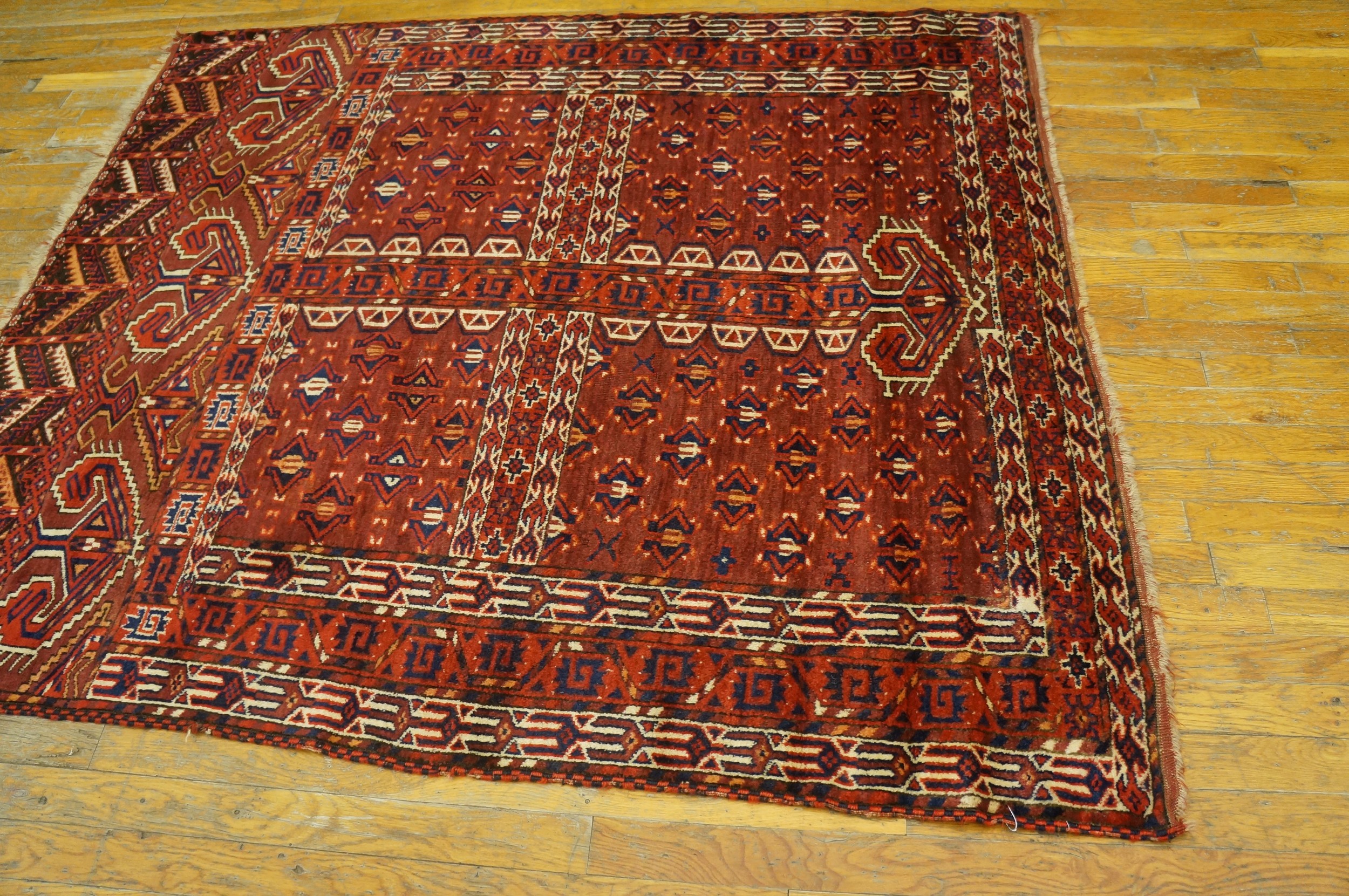
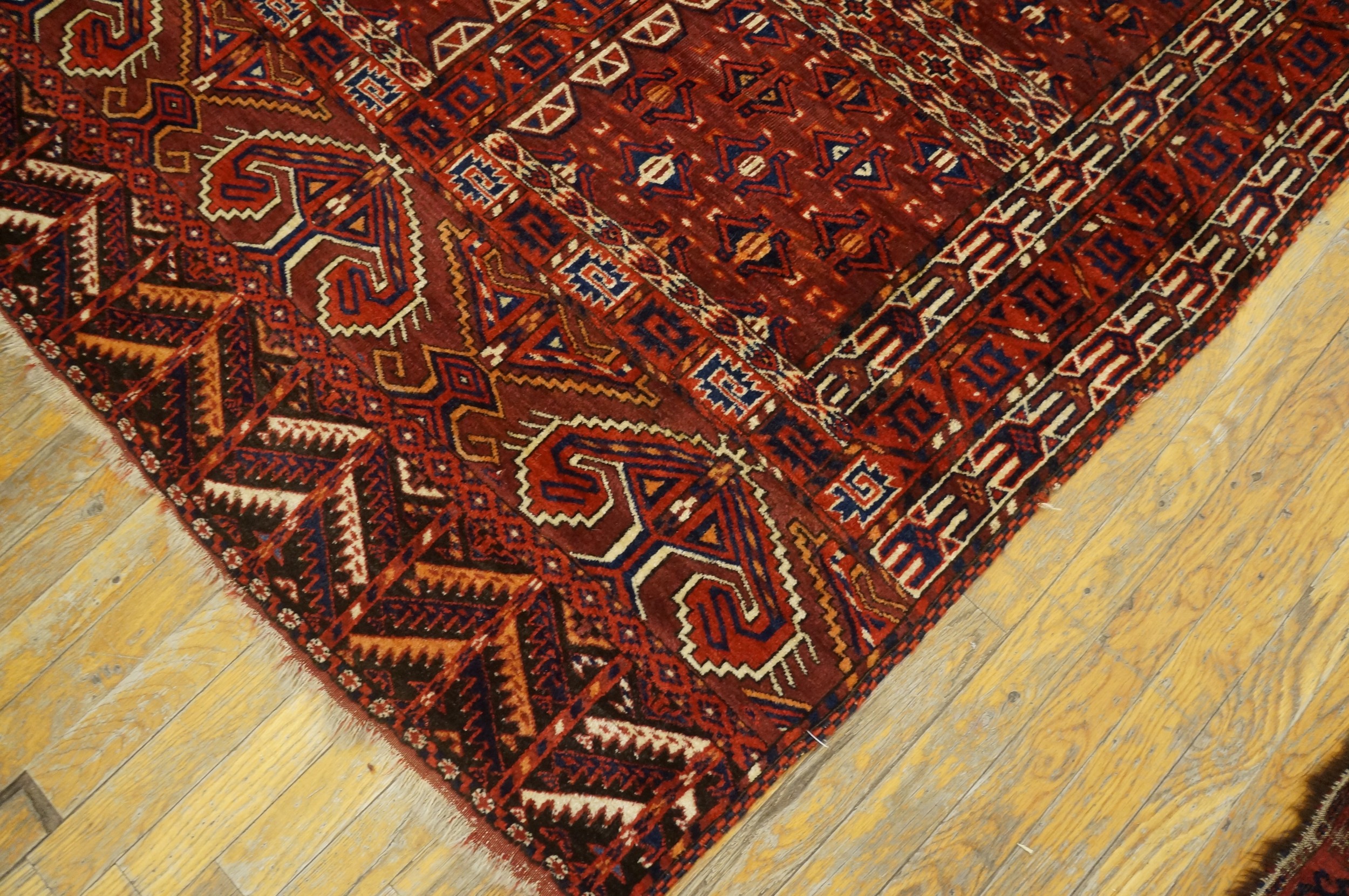
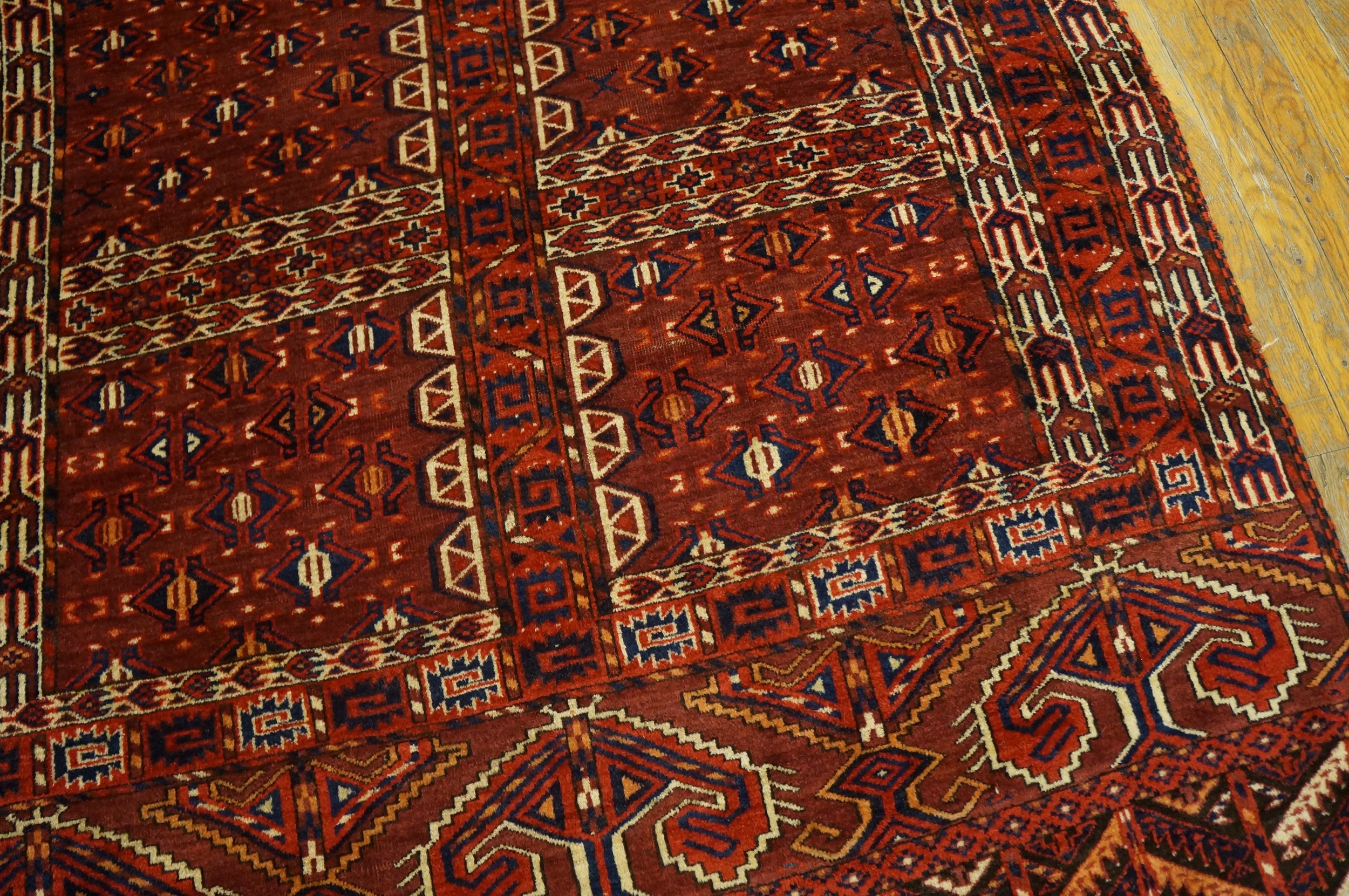
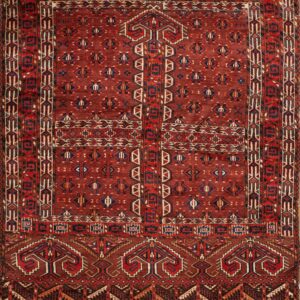
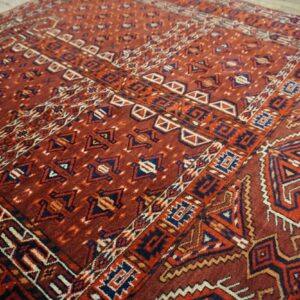
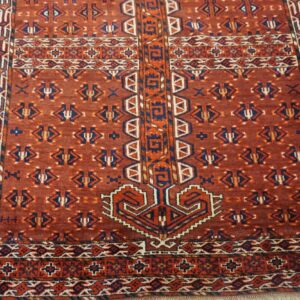
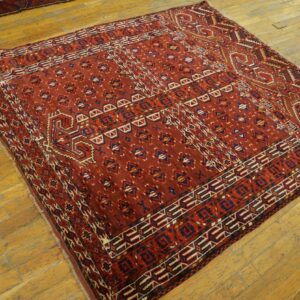
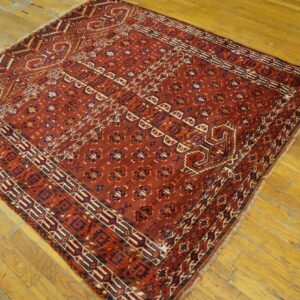
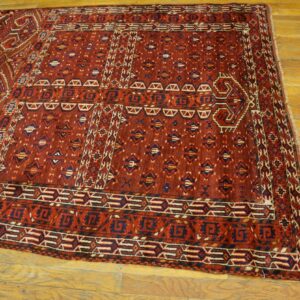
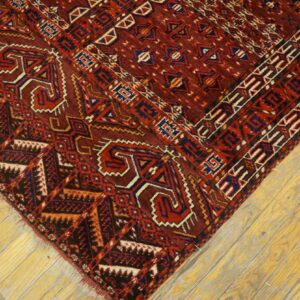
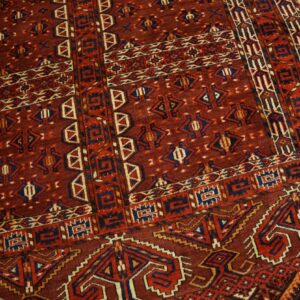
Antique Turkmen – Engsi Central Asian Allover Knotted Rug, Circa Date: 1880s. This exceptional example of an Engsi, originating from the Turkmen tribes of the Central Asia sphere, features the iconic Hatchli design, traditionally interpreted as a representation of the four quarters of the world or a stylized entrance. The precise, allover knotting technique speaks to the high quality expected of these important antique rugs.
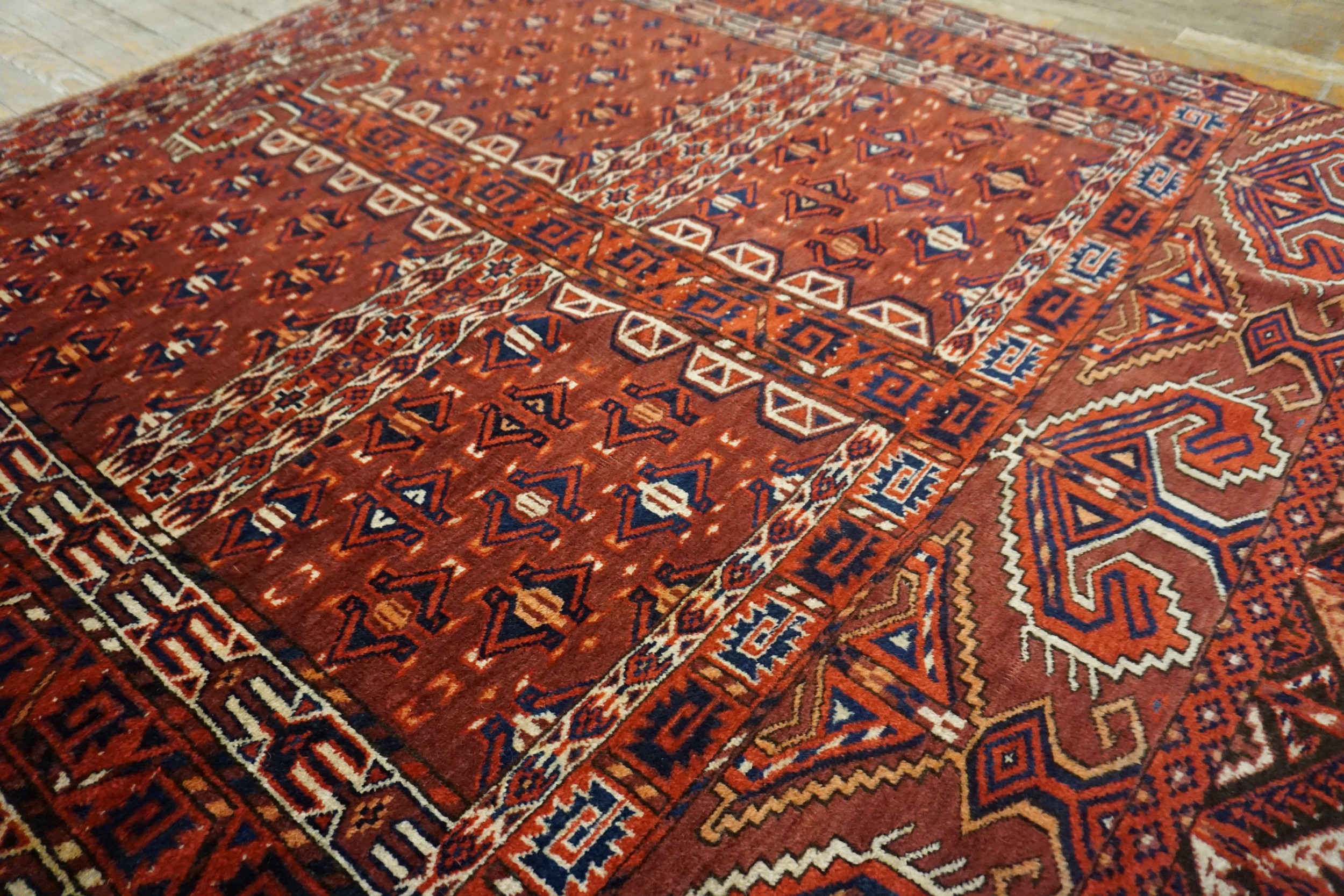
The palette is intensely saturated, centered on a rich, earthy madder dye, characteristic of rust red color rugs. This deep field provides a powerful backdrop for the highly geometric secondary motifs rendered in dark indigo, cream, and occasional accents of burnt sienna. The strong contrast emphasizes the enduring tribal symbolism embedded within the field.
Characteristic of the Engsi form, the borders are complex and multi-layered, framing the central Hatchli with repeating geometric elements and stylized animal forms. The main field is populated by small, repeating guls, which are abstract interpretations of tribal markers, lending the piece a powerful, ancestral resonance and visual depth.
Woven in the late 19th century, this piece represents the pinnacle of nomadic weaving artistry before the major shifts of the 20th century. Its dimensions make it a highly desirable piece for collectors seeking authentic, well-preserved examples of tribal art, perfectly suited as small scatter size rugs or a significant wall hanging.