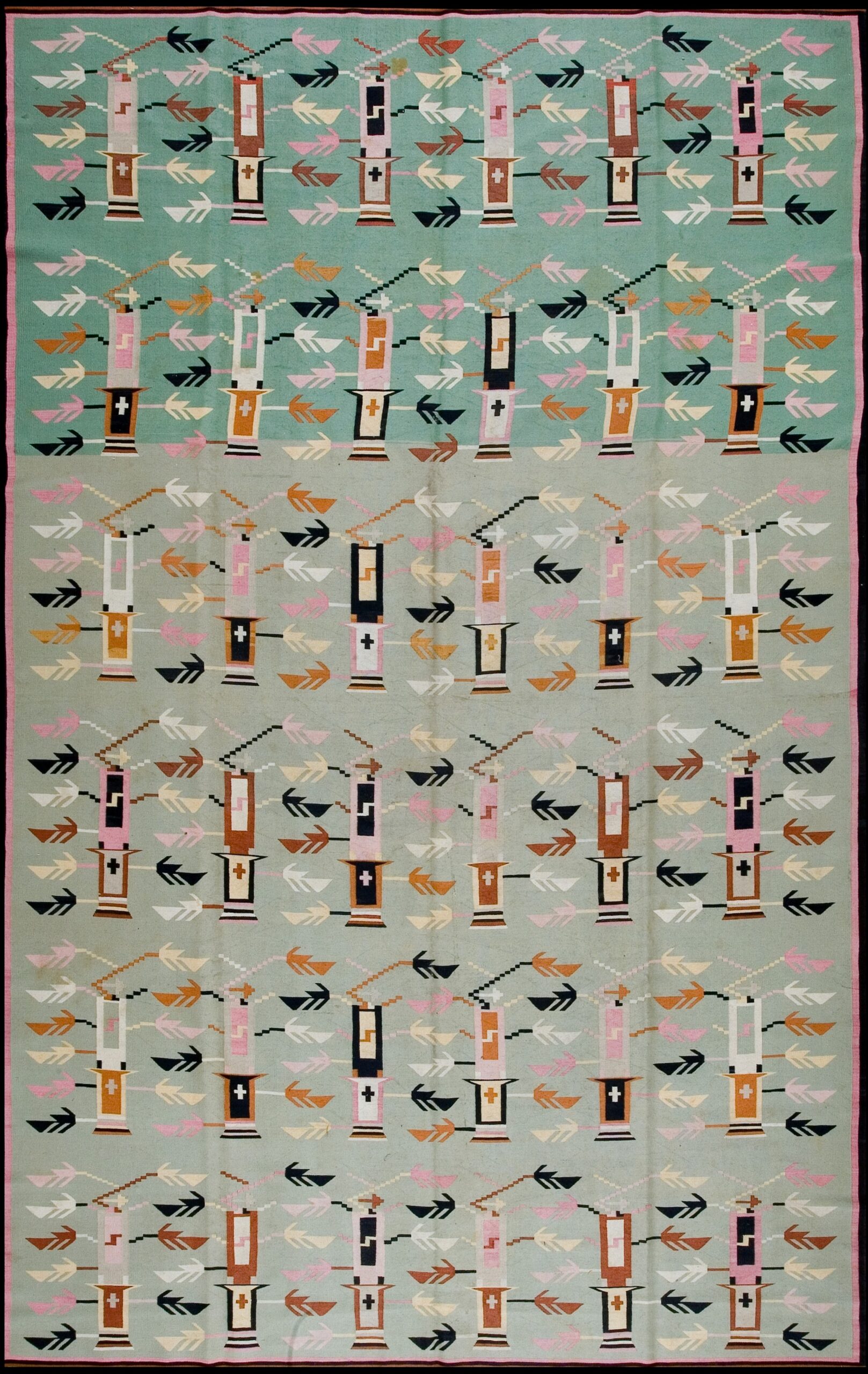
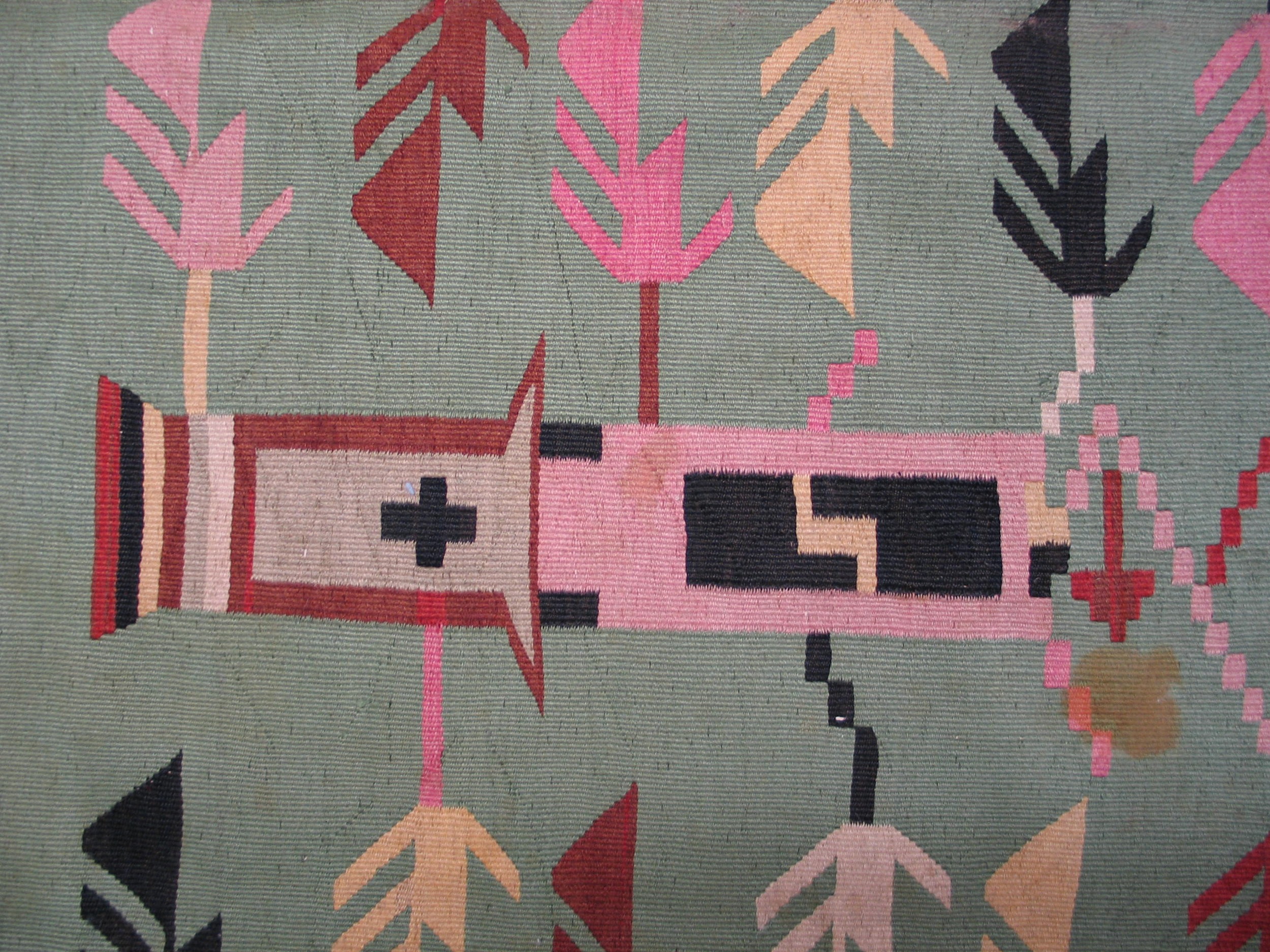
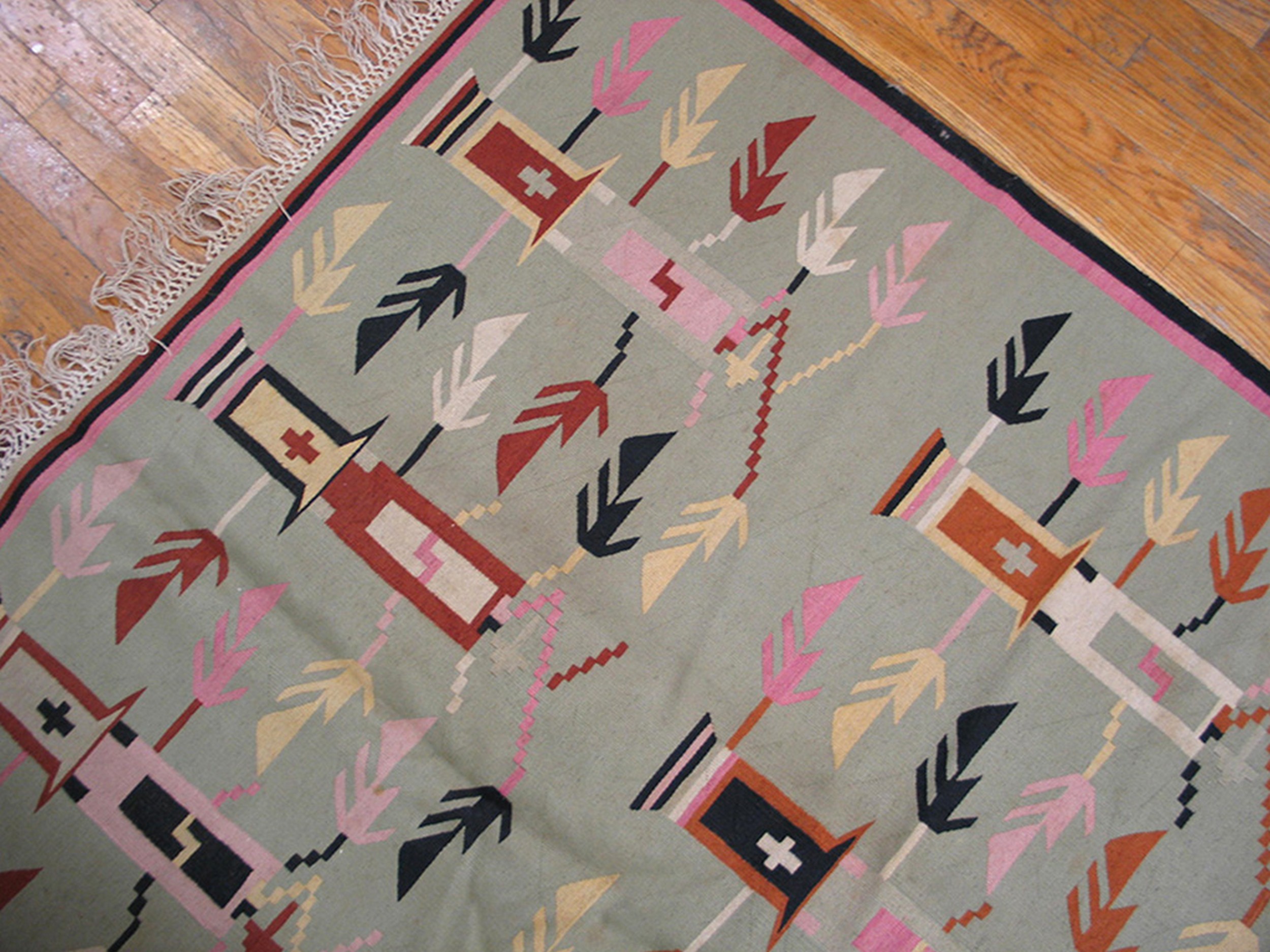
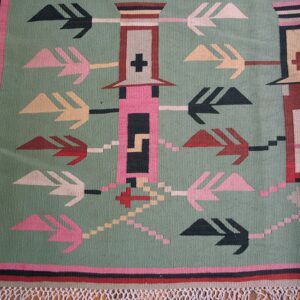
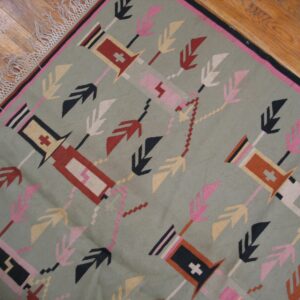
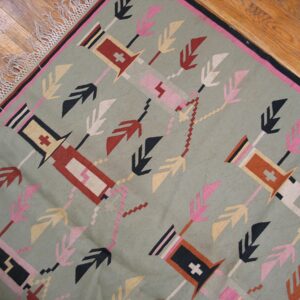
This antique early 20th century flat woven Bessarabian kilim rug is a breathtaking departure from the typical floral aesthetics of Eastern Europe, representing a rare intersection of nomadic folk art and early 20th century structural modernism. Historically, Bessarabian kilims (from the region encompassing modern-day Romania, Moldova and Ukraine) were famous for their lush, “Rose and Leaf” French-inspired patterns; however, this specific specimen is a significant rarity due to its bold geometric vocabulary and its extraordinary Teal-centric palette.
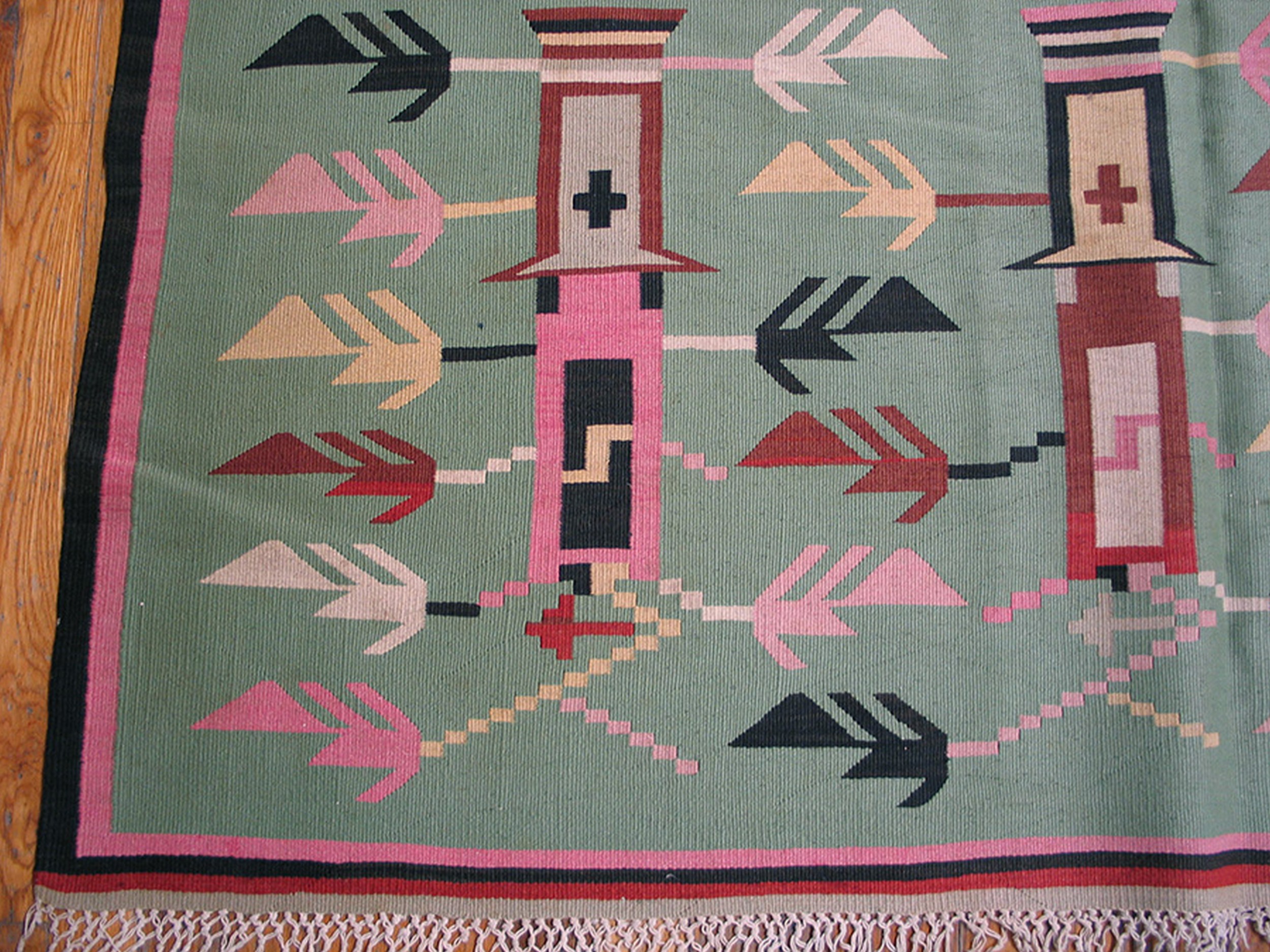
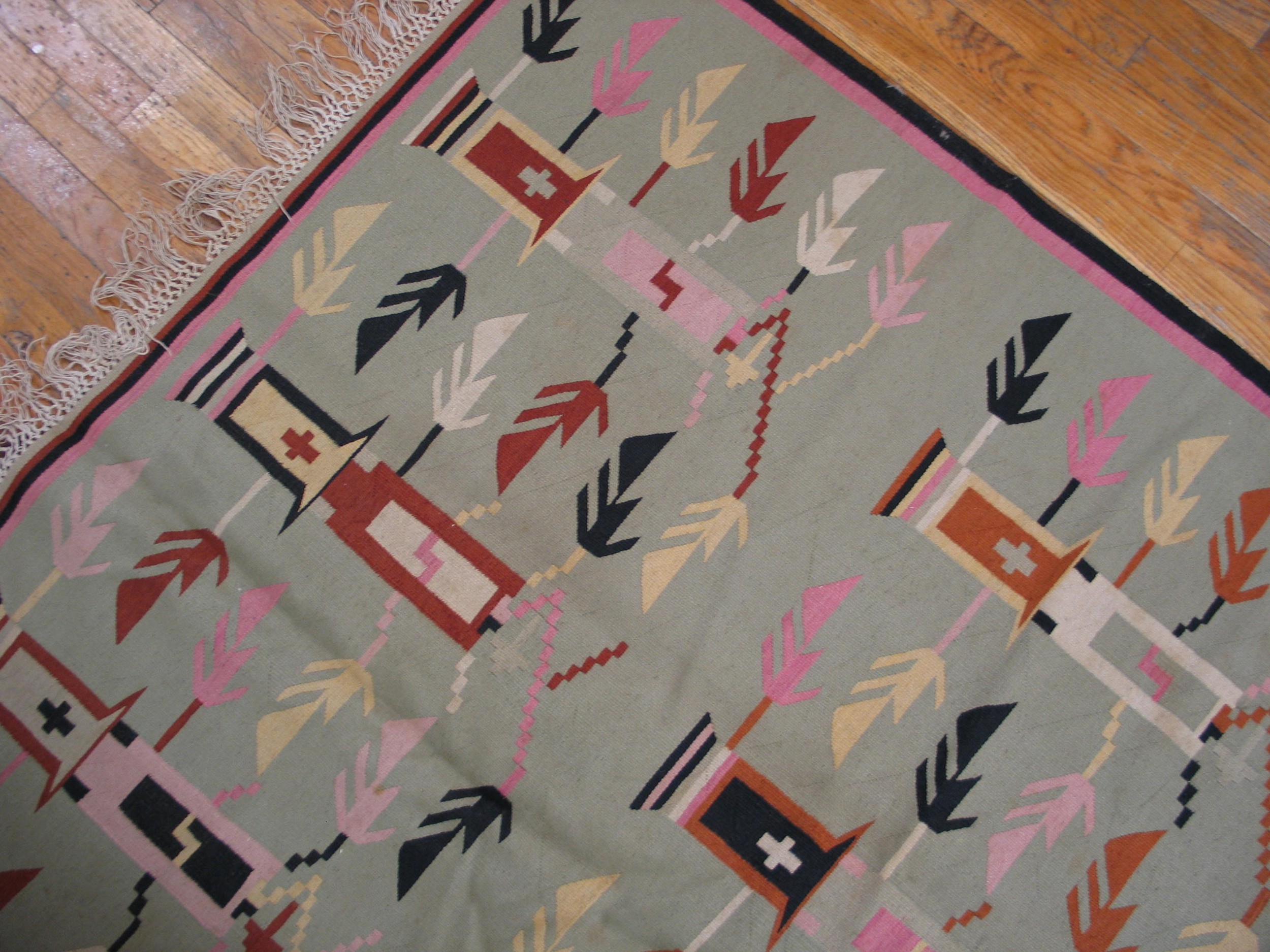
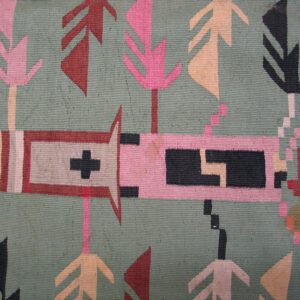
The composition is a virtuoso display of the Geometric Flatweave rugs. Eschewing the romantic bouquets of the “Rococo” Bessarabian style, this rug features a rhythmic, interlocking grid of diamonds or stylized “Sun” medallions. The design feels remarkably architectural and avant-garde, anticipating the minimalist movements of the early 20th century. The room-size scale provides a cinematic stage for this pattern, allowing the eye to travel across a balanced landscape of repeating tribal totems that resonate with a sense of ancient mathematical order.
The palette is the defining feature of this “Collector’s Piece.” The use of a saturated Teal or “Sea-Green” foundation is almost unheard of in the Bessarabian corpus, which traditionally favored black, brown, or madder red backgrounds. This teal ground is likely the result of a master dyer’s experimentation with indigo and weld (a yellow plant dye), creating a shimmering, jewel-toned field. Over more than a century, the natural dyes have developed a soft, translucent abrash (tonal variation), giving the flat surface a watercolor-like depth and a luminous, historical patina.
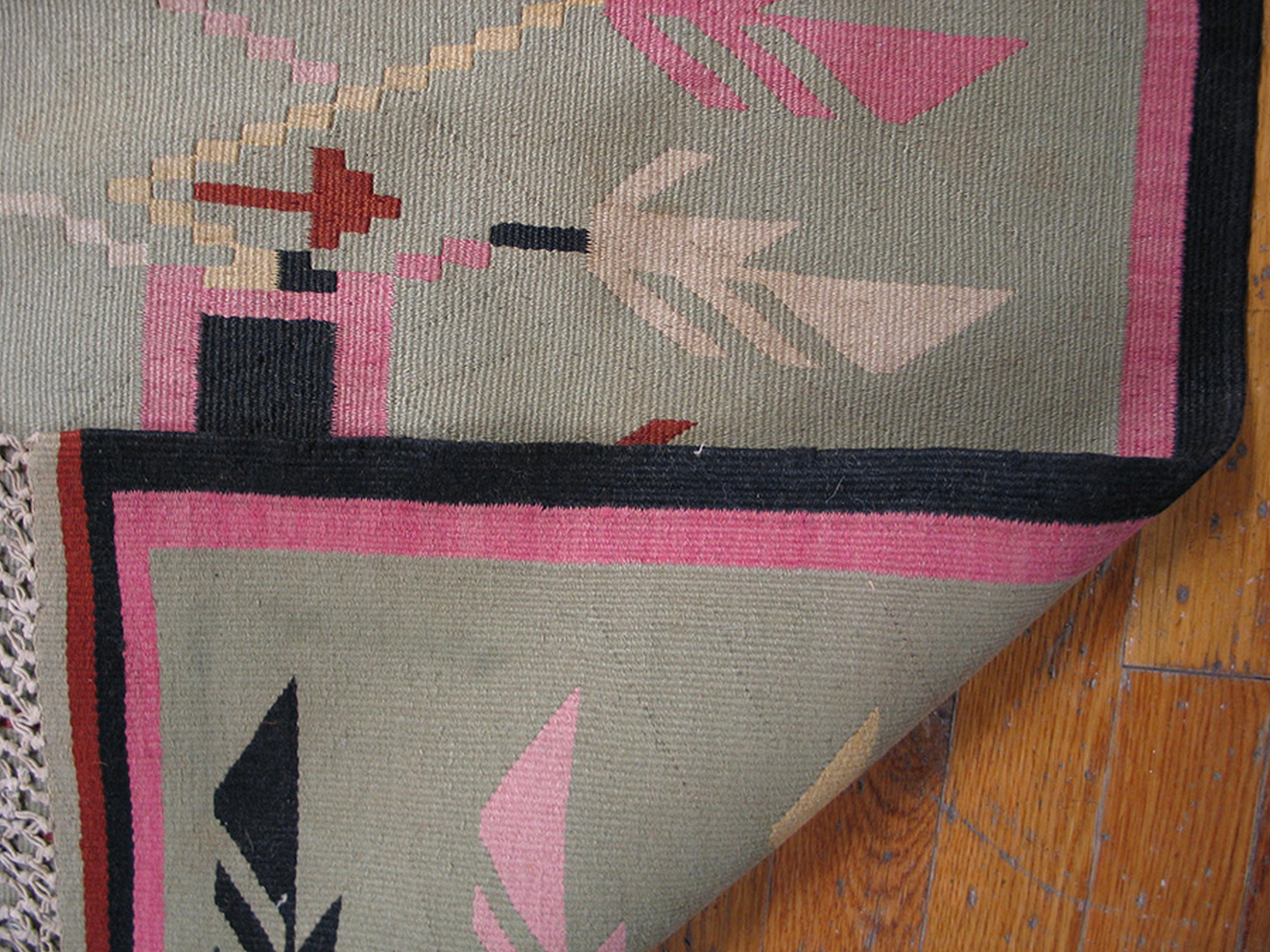
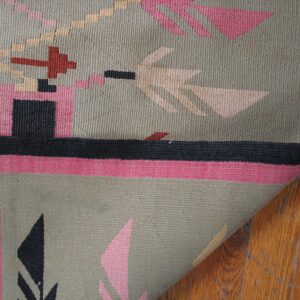
Technically, Bessarabian flatwoven Kilim rugs of this age and size is prized for its expert tapestry-weave construction. Unlike knotted rugs, kilims are flatwoven, resulting in a crisp, reversible handle that sits flush with the floor. The wool used is often local sheep’s wool—resilient, matte, and remarkably durable. The geometry is executed with “razor-sharp” precision, emphasizing the weaver’s ability to create complex shapes without the aid of a pile.
The borders act as a disciplined, minimalist frame, often featuring a “Reciprocal” or “Crenellated” pattern that “locks” the teal field into a state of visual equilibrium. To possess an antique teal geometric Bessarabian is to own a monument to cultural hybridity. It bridges the gap between the rustic hearths of the Balkans and the sophisticated requirements of a contemporary gallery—a hand-wrought sanctuary that transforms a large interior into a space of historical gravity and rare, chromatic brilliance.