
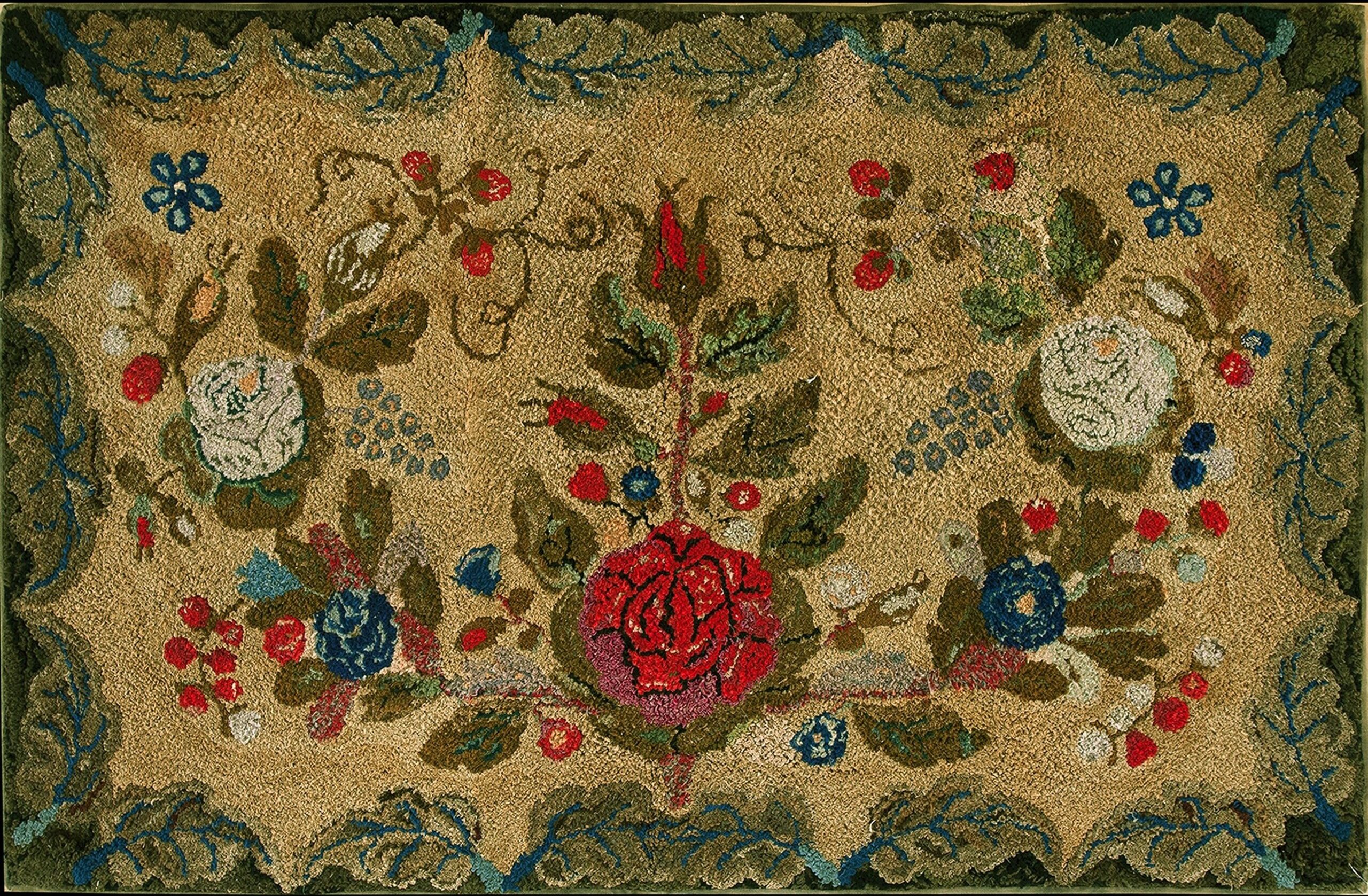
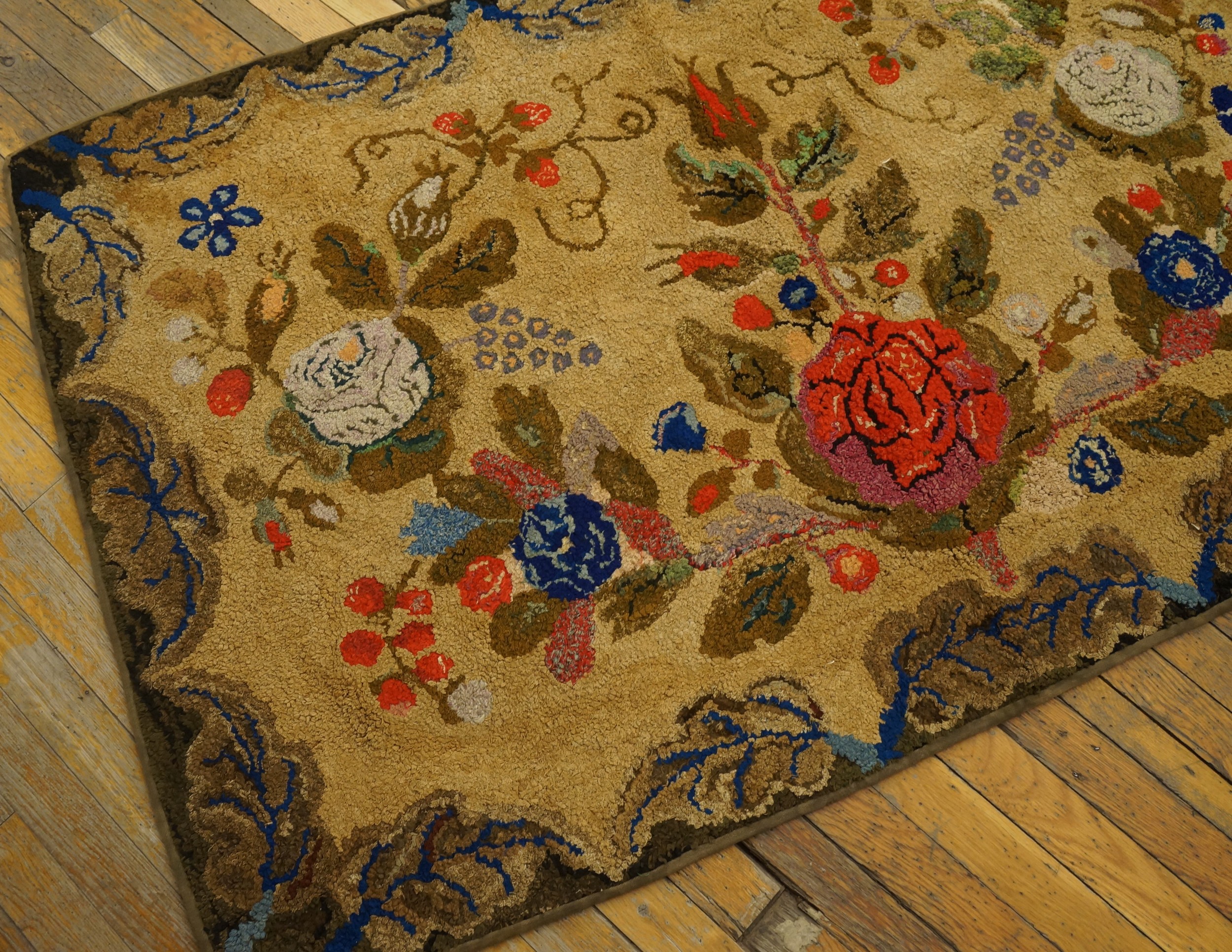
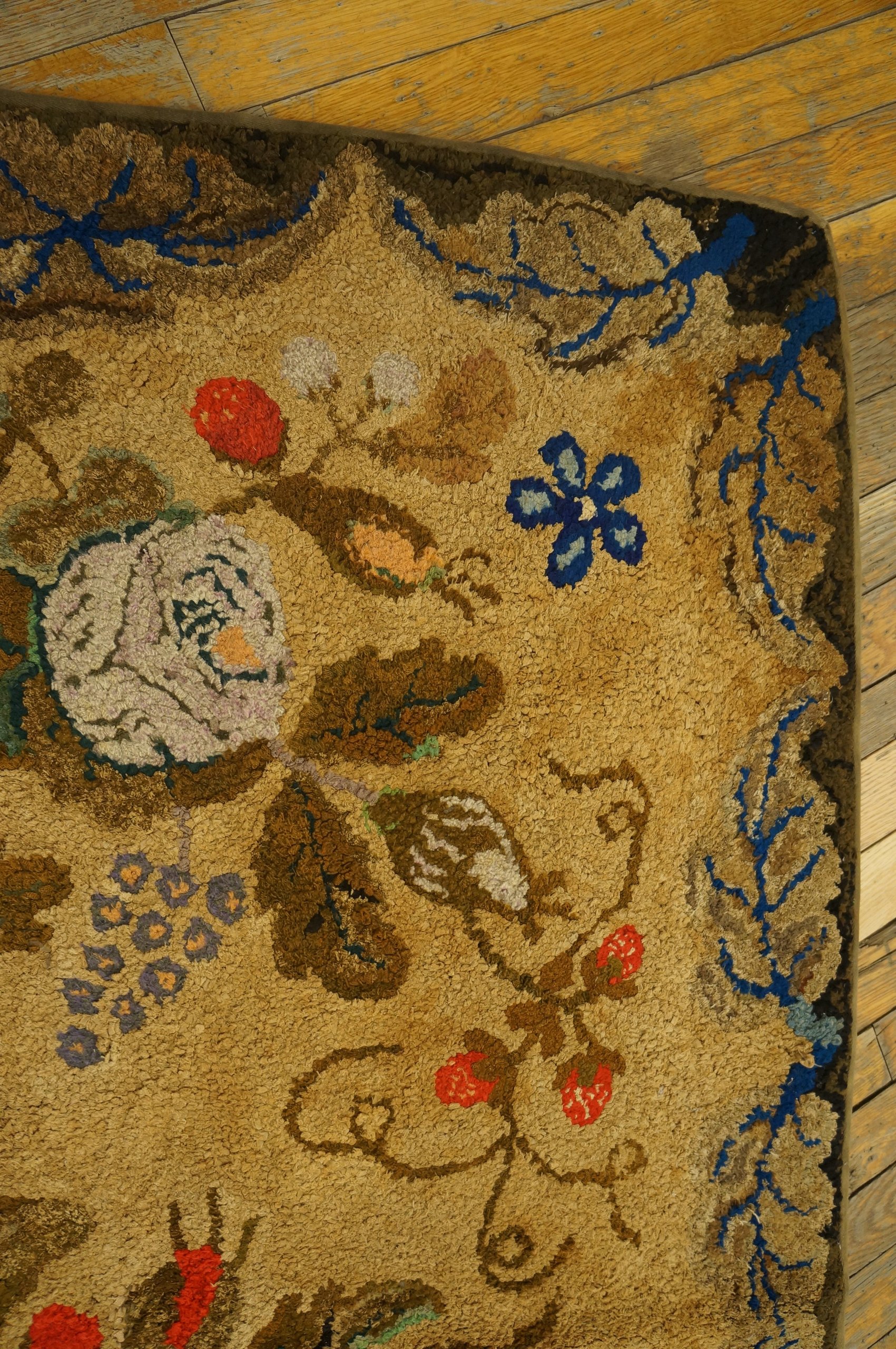
This late nineteenth-century American rug is a charming and quintessential example of “Hearthside Folk Art,” representing the personal creativity and domestic resourcefulness of rural life in the 1800s. Historically, these small-scale rugs—often referred to as “hearth rugs” or “accent rugs”—were the primary medium through which women in New England and the Canadian Maritimes expressed their artistic vision, utilizing repurposed fabric remnants to create vibrant pieces for their homes.
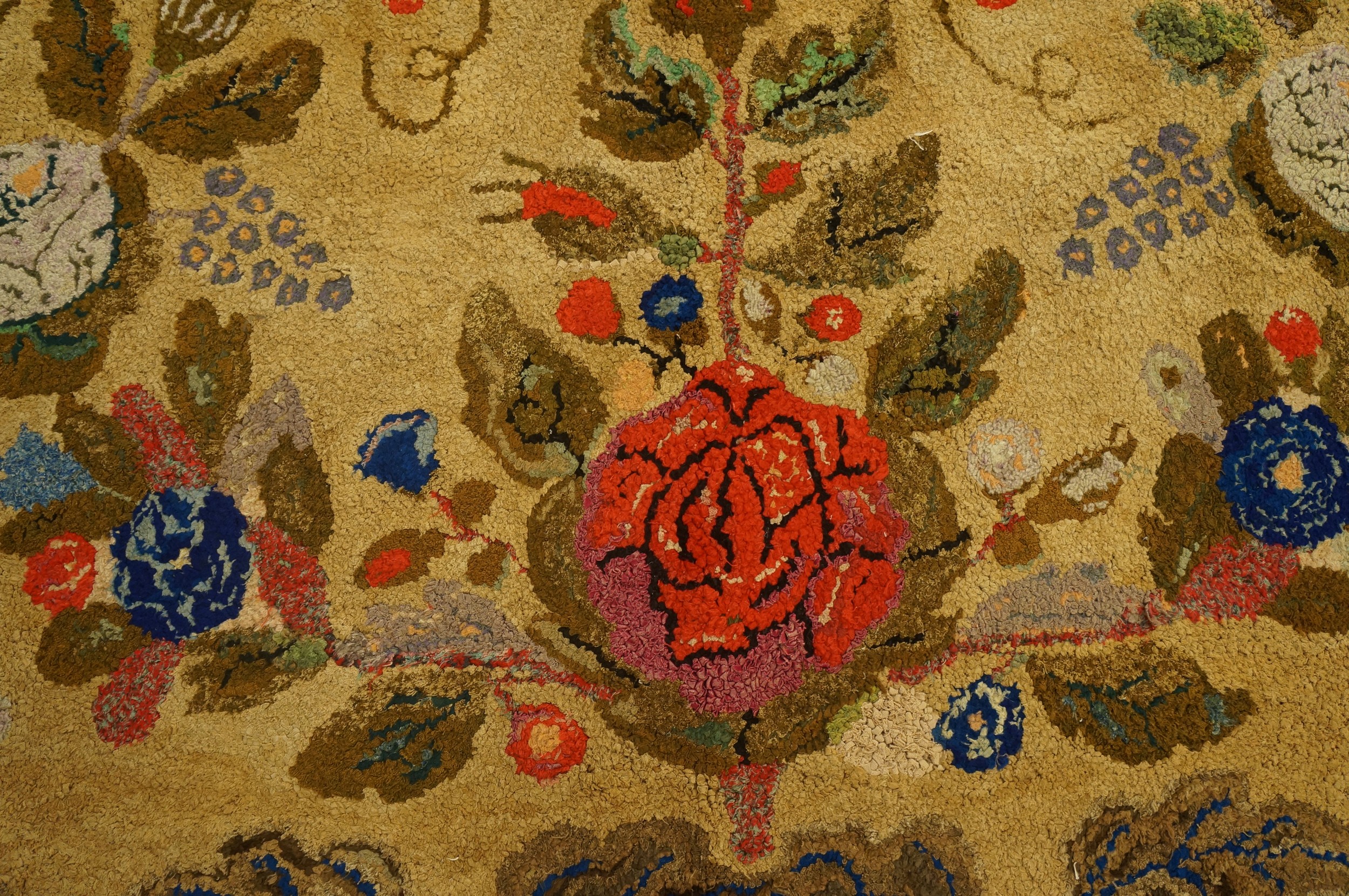
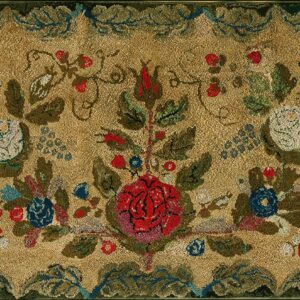
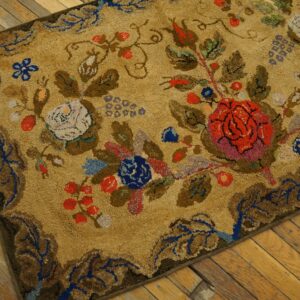
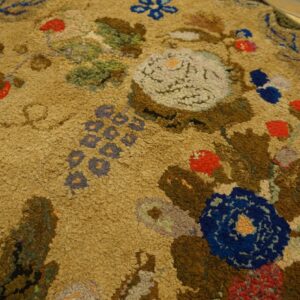
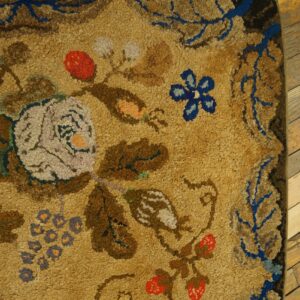
The composition is a virtuoso display of the American Floral tradition. Unlike the formal, symmetrical gardens of European carpets, this American folk art rug features a more organic, “hand-drawn” arrangement of botanical motifs. The design typically centers on a primary floral spray or a modest bouquet, rendered with a playful, three-dimensional quality. The artisan has utilized a “painterly” approach to color, layering varied shades of hand-dyed wool and cotton strips to create depth in the petals and leaves, giving the flowers a lively, “blooming” presence against the field.
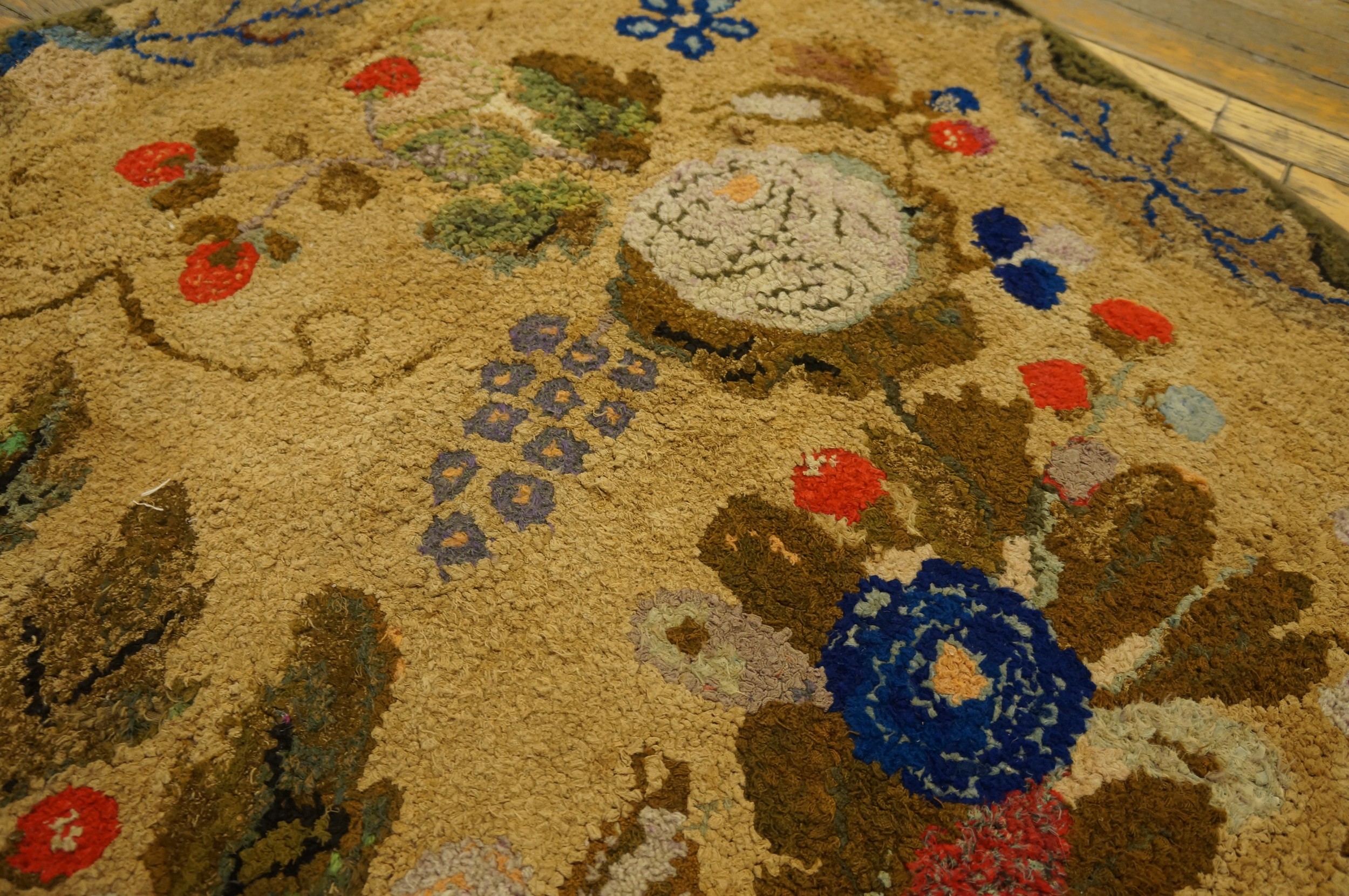
The palette is a hallmark of the period’s natural dye heritage. The background often features a neutral, “earthy” tone—such as deep charcoal, warm tan, or soft gray—which allows the saturated madder reds, mossy greens, and sunny ochres of the floral motifs to “pop” with graphic clarity. Over a century of use, the colors have mellowed into a sophisticated, watercolor-like patina, resulting in a shimmering abrash that modern synthetic dyes cannot replicate.
Technically, the rug is characterized by its tactile, “nubby” texture, created by pulling loops of fabric through a coarse burlap or grain-sack foundation. This hand-wrought construction gives the piece a substantial, architectural handle and a unique folk soul. The small size of the rug makes it an incredibly versatile “jewel” for a collector, perfect as a wall hanging or a sophisticated floor accent in a bedroom or study.
To possess late 19th-century American floral hooked rugs of this caliber is to hold a piece of social history. It bridges the gap between humble utility and high artistic expression—a serene, hand-knotted sanctuary that transforms a small corner into a gallery of American history and timeless, rustic elegance.