
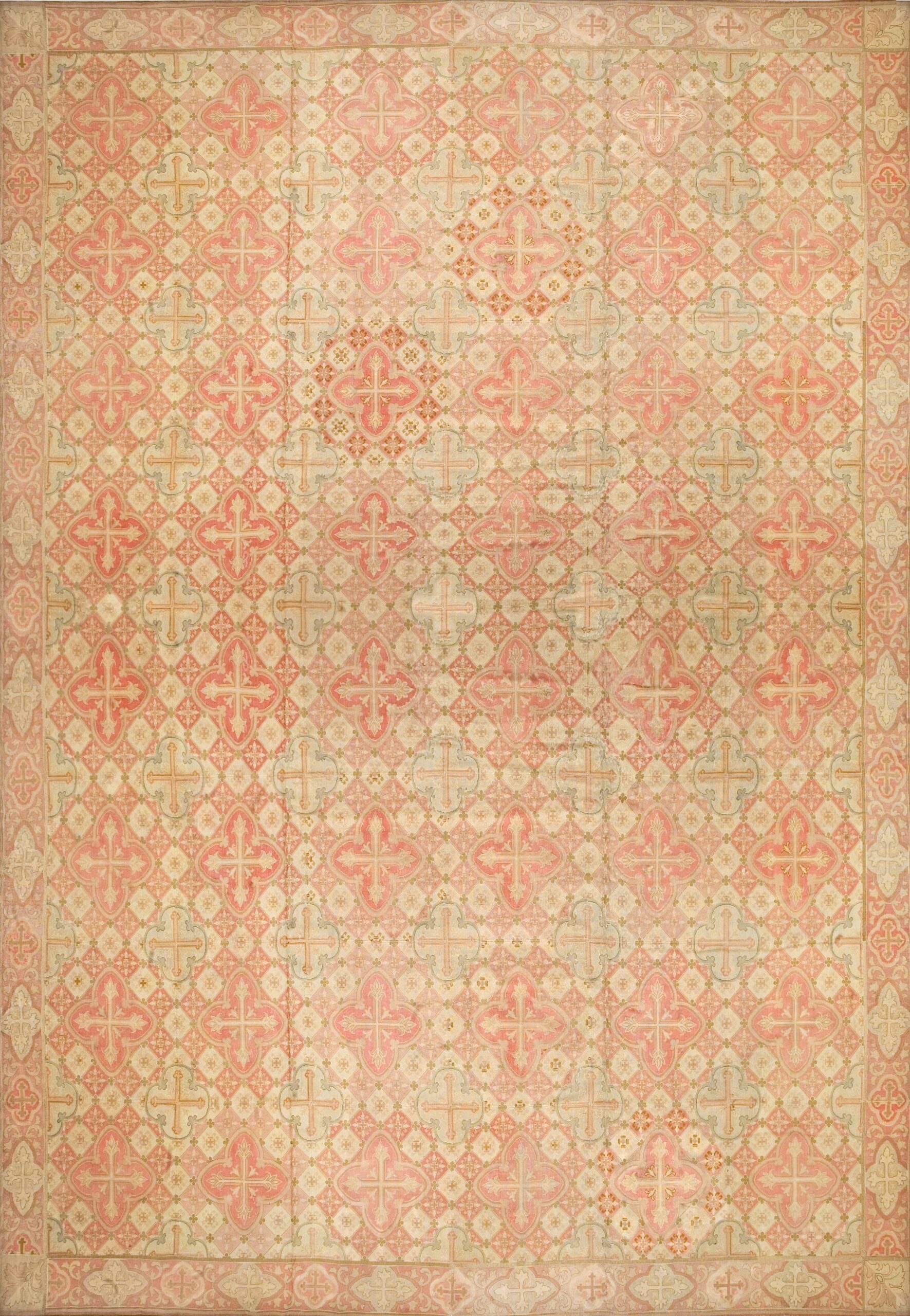
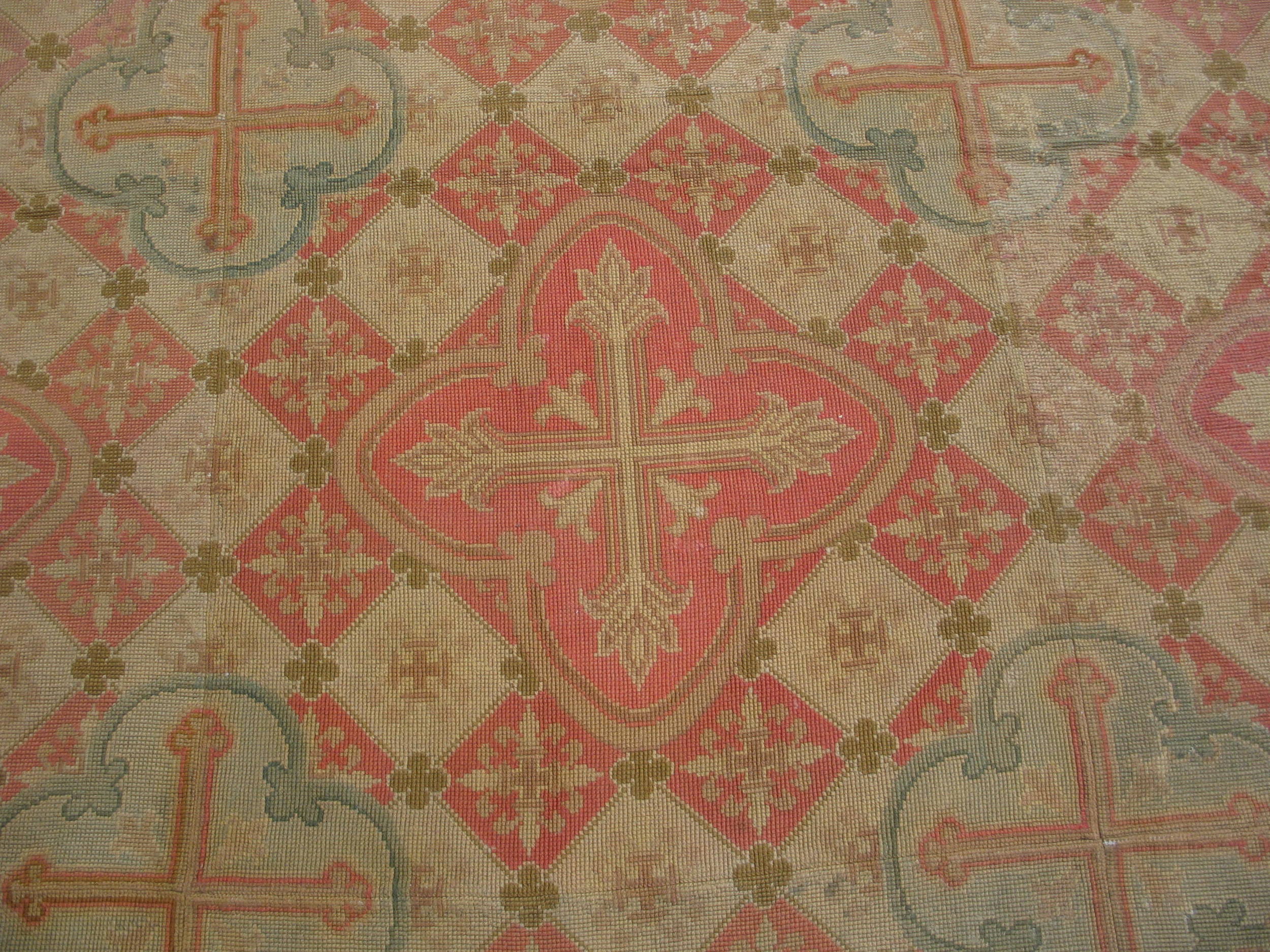
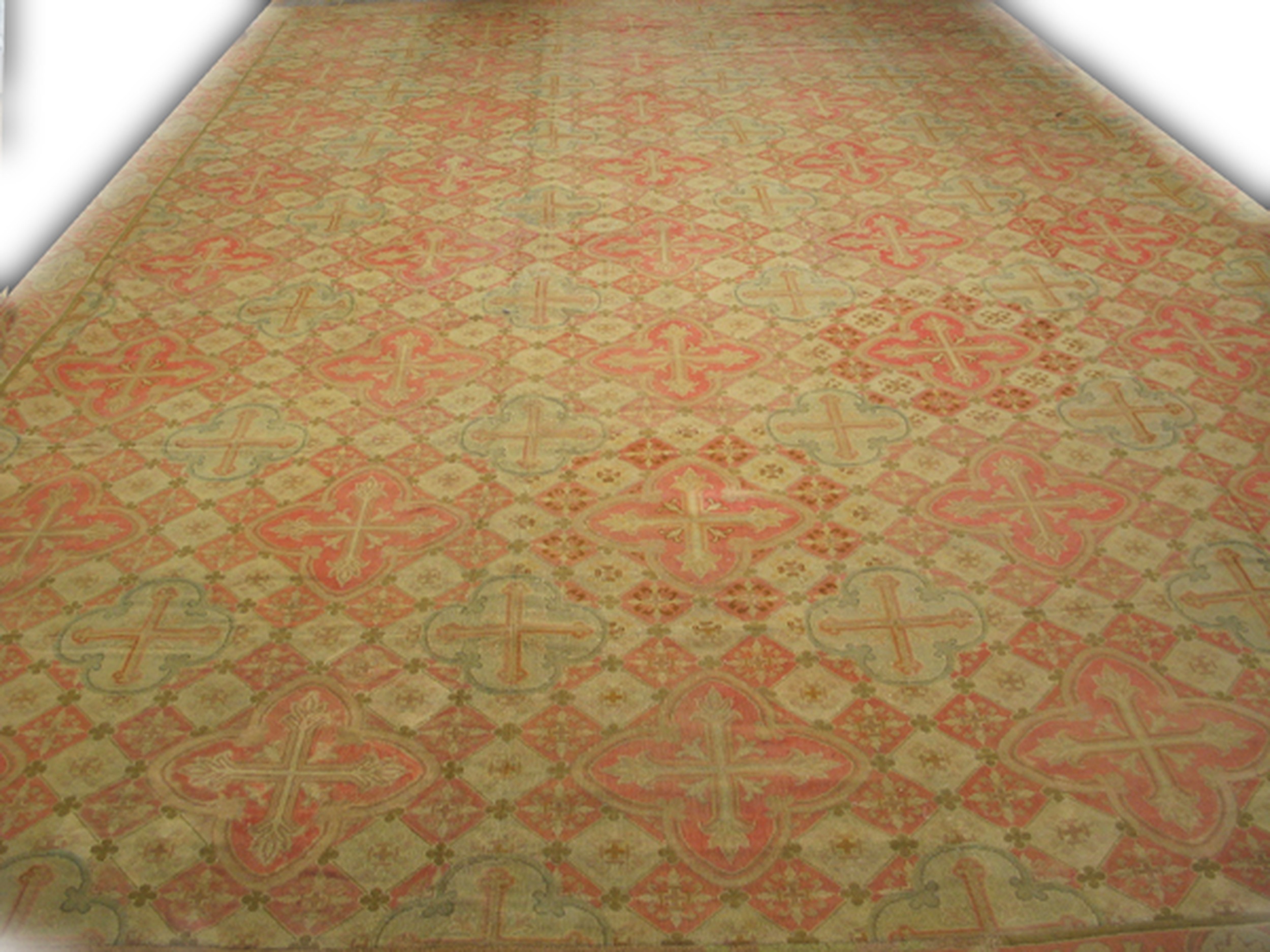
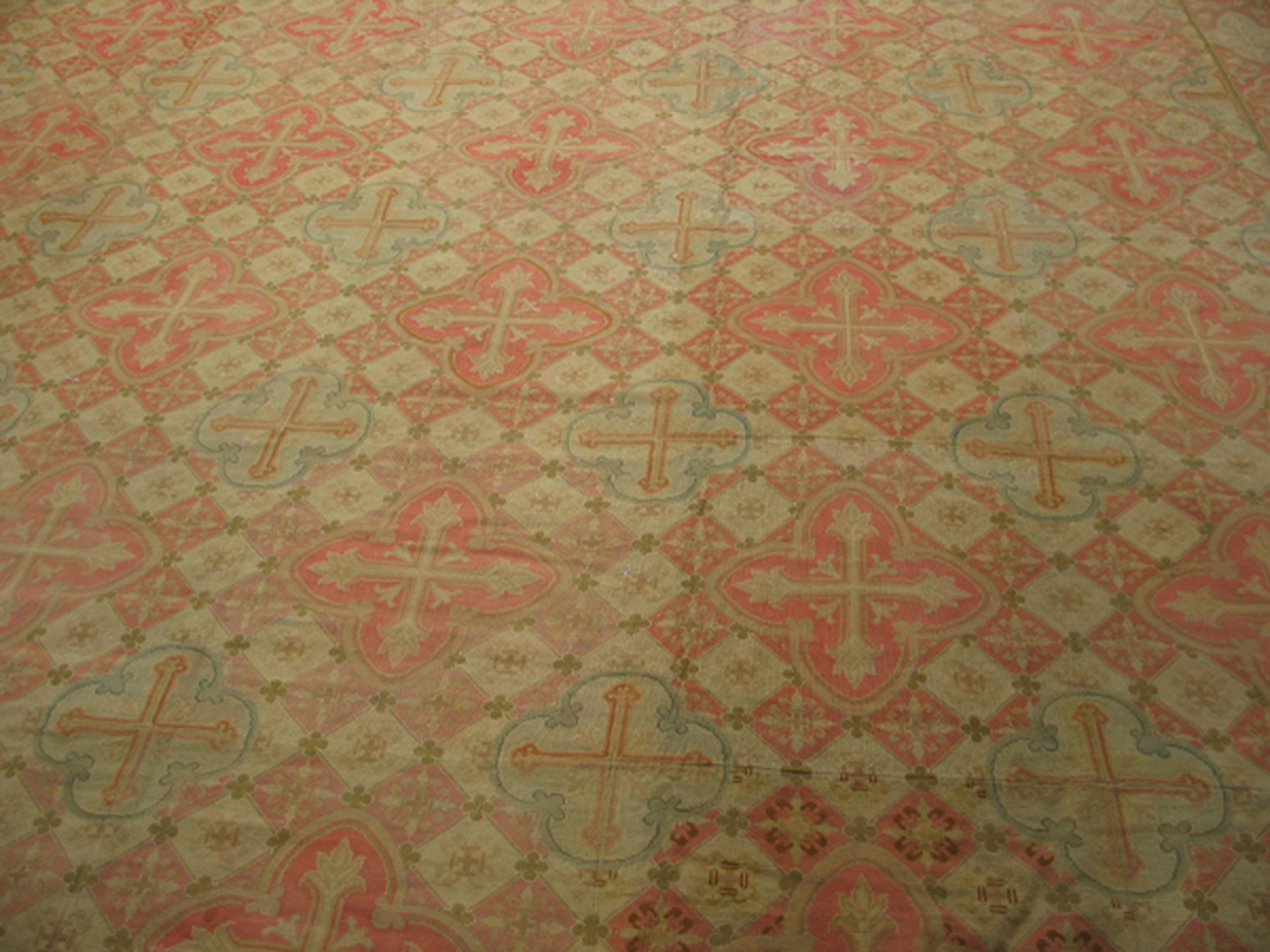
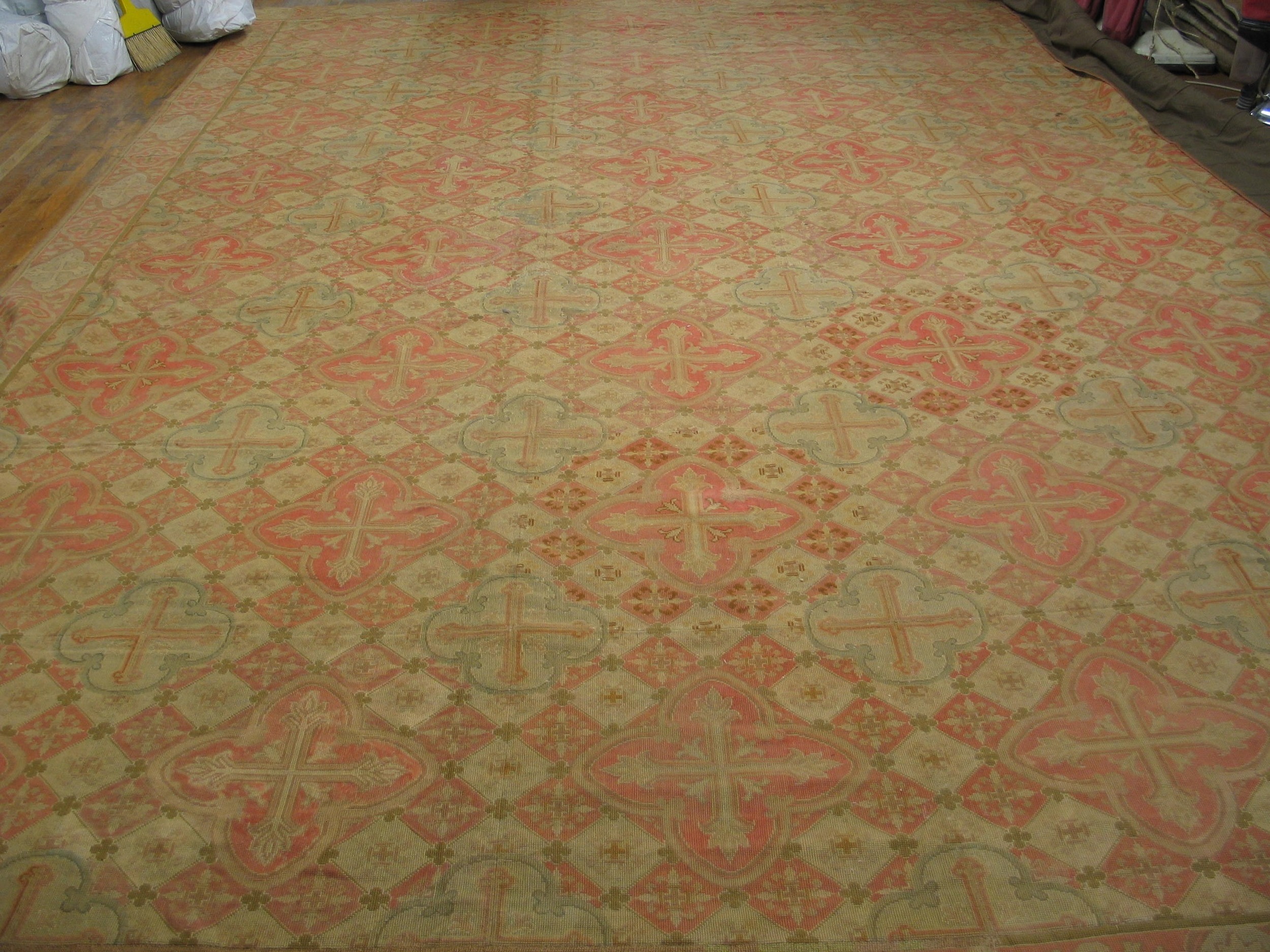
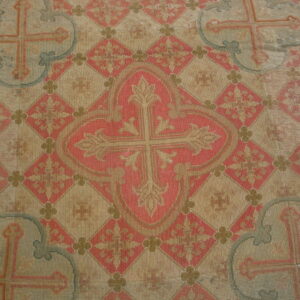
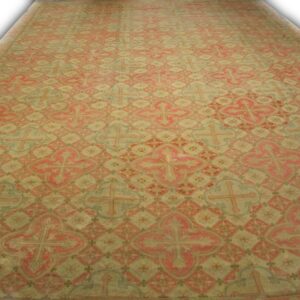
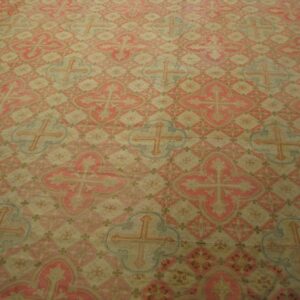
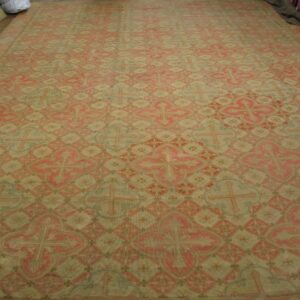
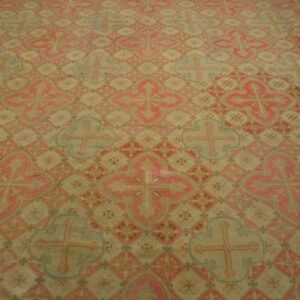
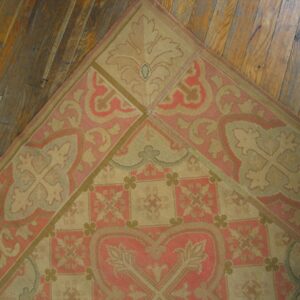
This large-format 19th Century French antique flatweave needlepoint carpet (circa 1870) in a sophisticated coral palette represents a rare and refined example of French rugs and artistry from the late Victorian era, when French ateliers were translating tapestry traditions into expansive floor textiles that marry decorative rigor with architectural scale.
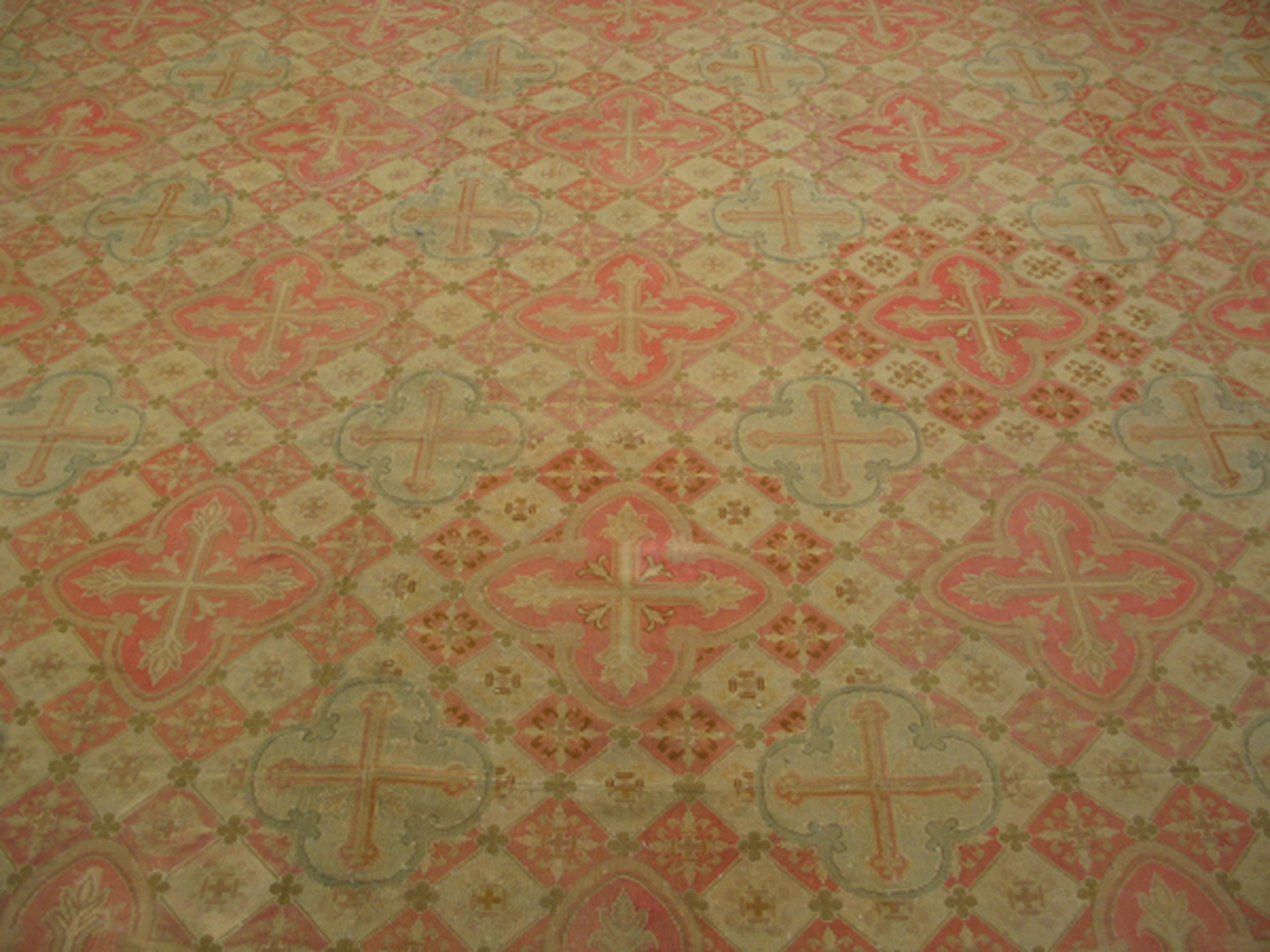
Hand-crafted in France in durable wool and flatweave needlepoint construction, the rug’s generous 14′ × 20′ proportions make it a commanding anchor for grand salons, formal libraries, or reception chambers. Its allover geometric design — composed of interlocking forms rendered in coral across the field with disciplined symmetry — demonstrates a sophisticated vocabulary of pattern that bridges classical European ornament and the mathematical rhythms prized in 19th-century decorative textiles.
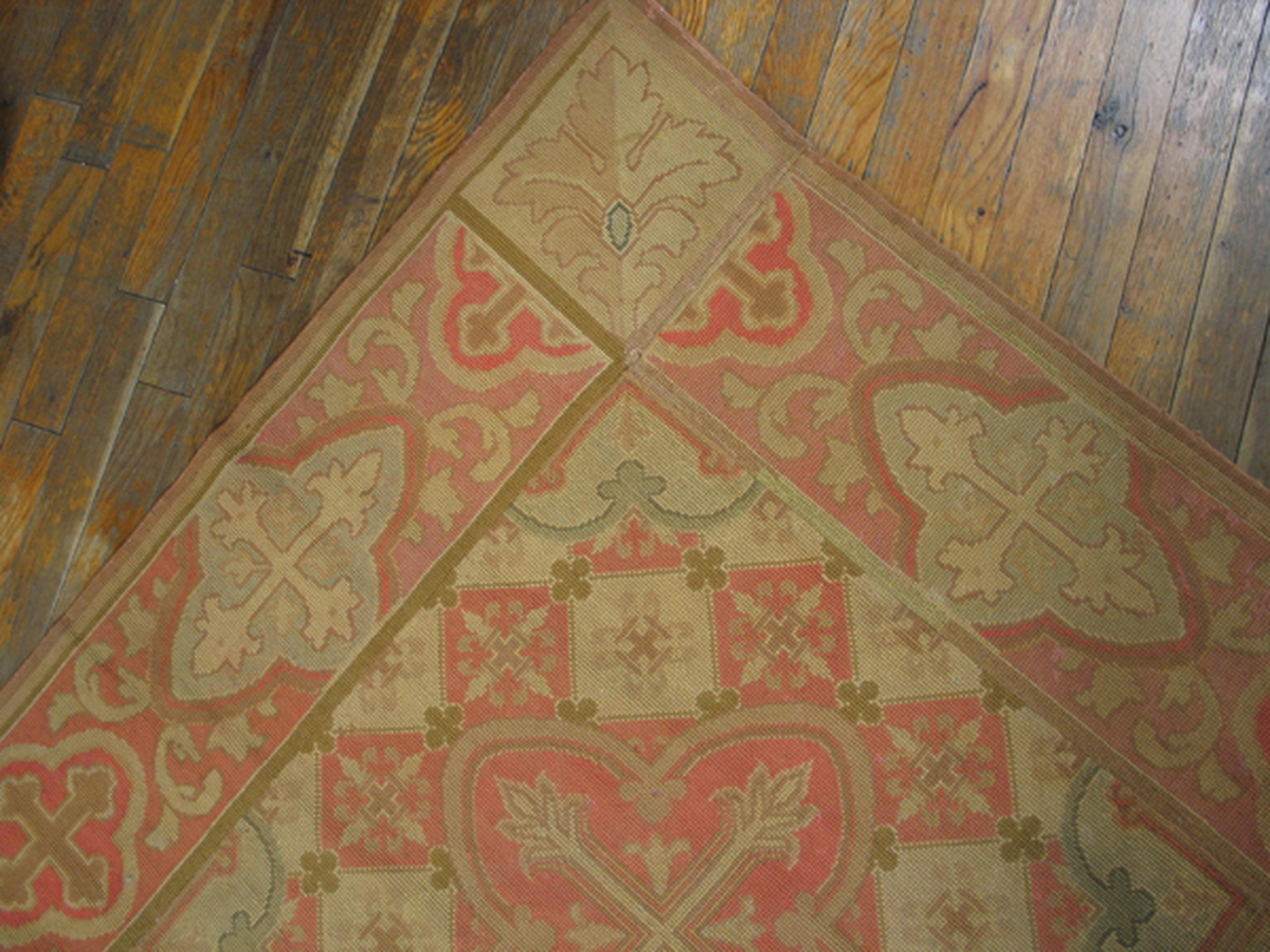
The geometric motifs, worked in wool with a flatweave technique, offer both visual clarity and structural stability: a testament to the technical prowess of needlepoint artisans in France during this period. The flatweave profile gives the carpet a low, elegant surface that integrates seamlessly into interiors without the high pile of knotted rugs, while still retaining an impressively tactile presence underfoot.
In its formal language and construction, this piece echoes the broader French tradition of tapestry and carpet design — an aesthetic lineage that encompasses both Aubusson and Savonnerie workshop practices, where controlled symmetry, balance, and geometric rigor were celebrated in textile form.
For collectors and connoisseurs, this carpet is not merely a functional object but a textile manifesto of period taste and technical sophistication: a sweeping geometric field that harmonises structure and surface with timeless coral vibrancy, ideally suited to distinguished interiors that value both historical depth and cultivated design sensibility.