
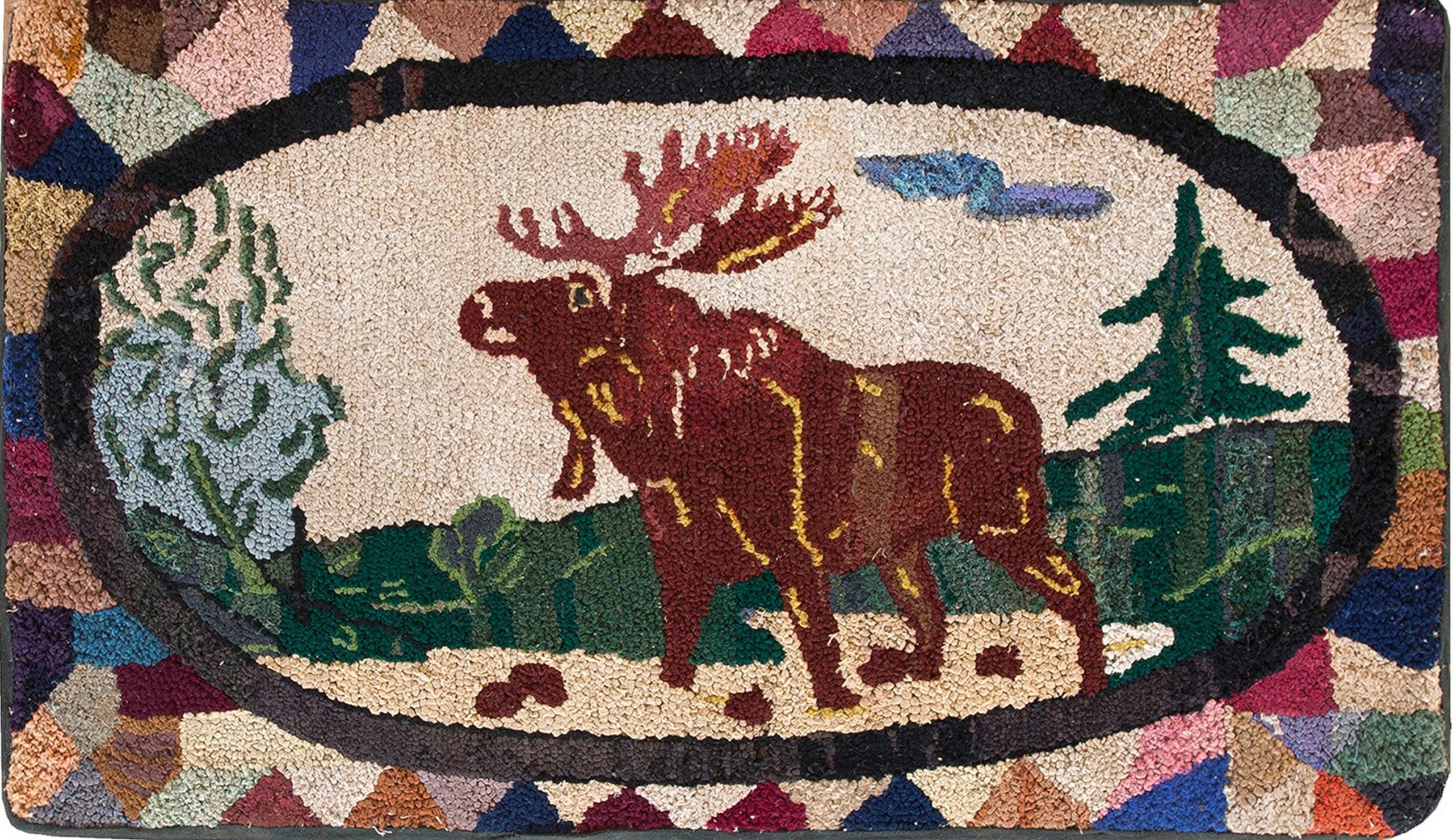
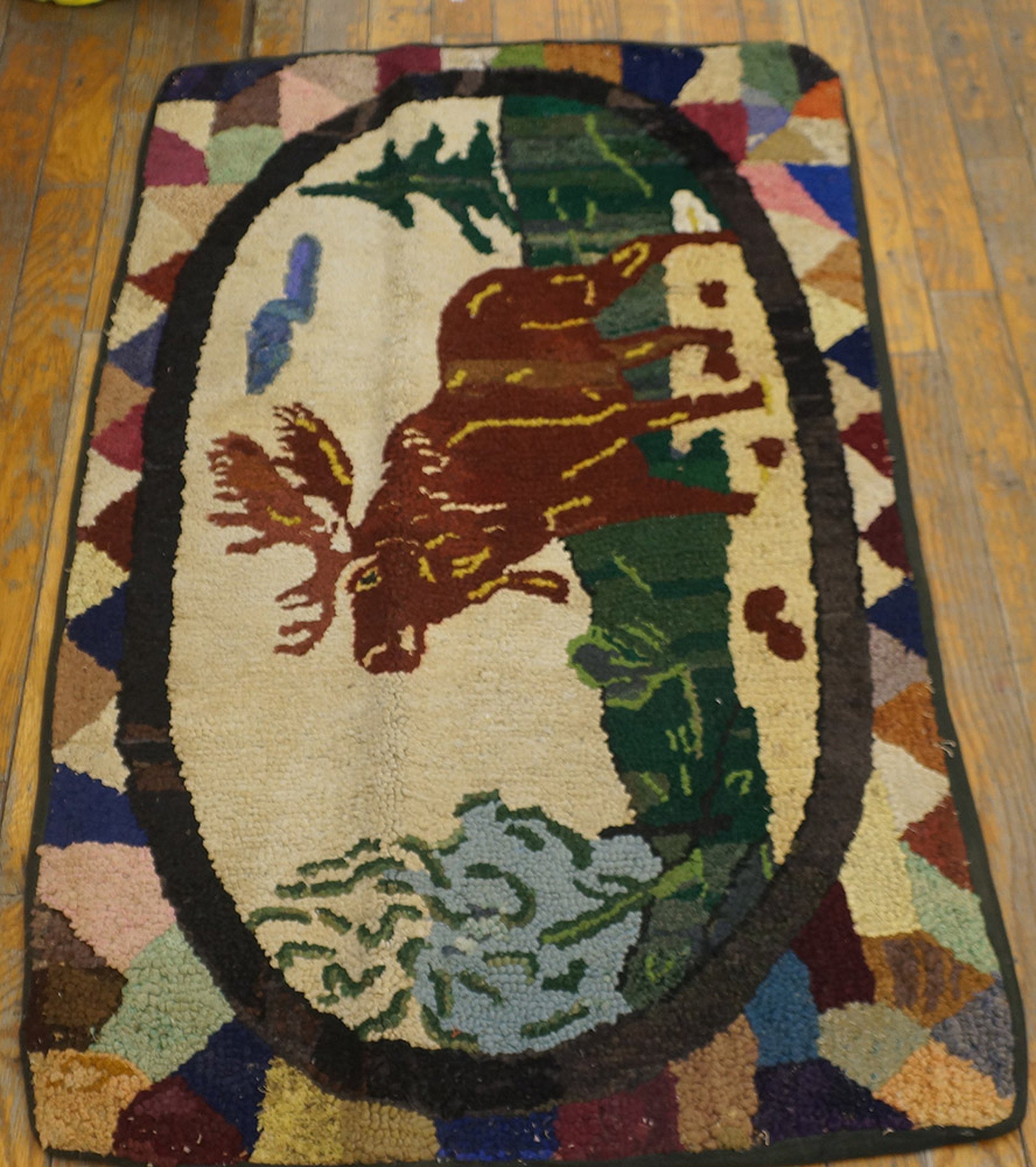
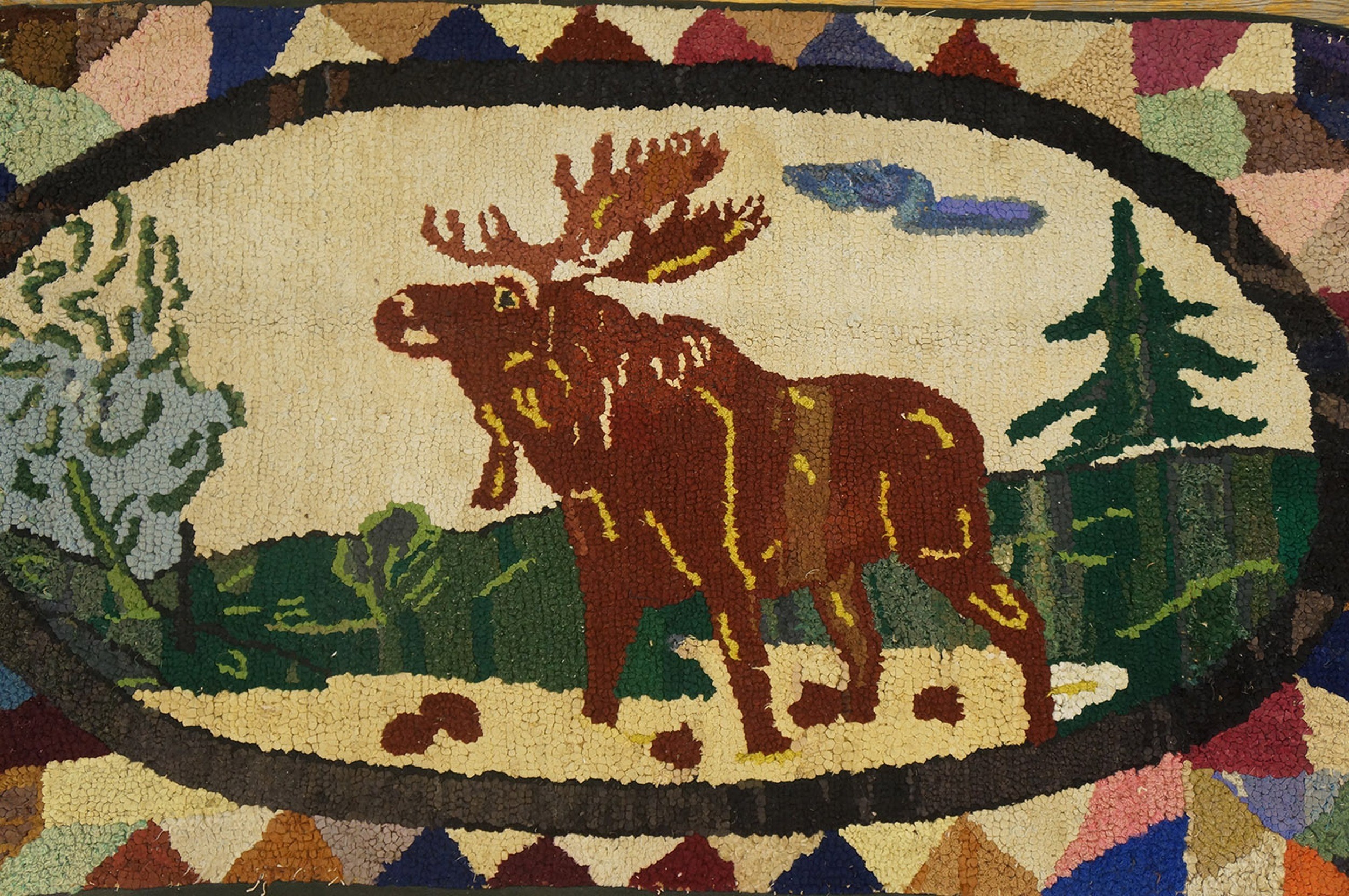
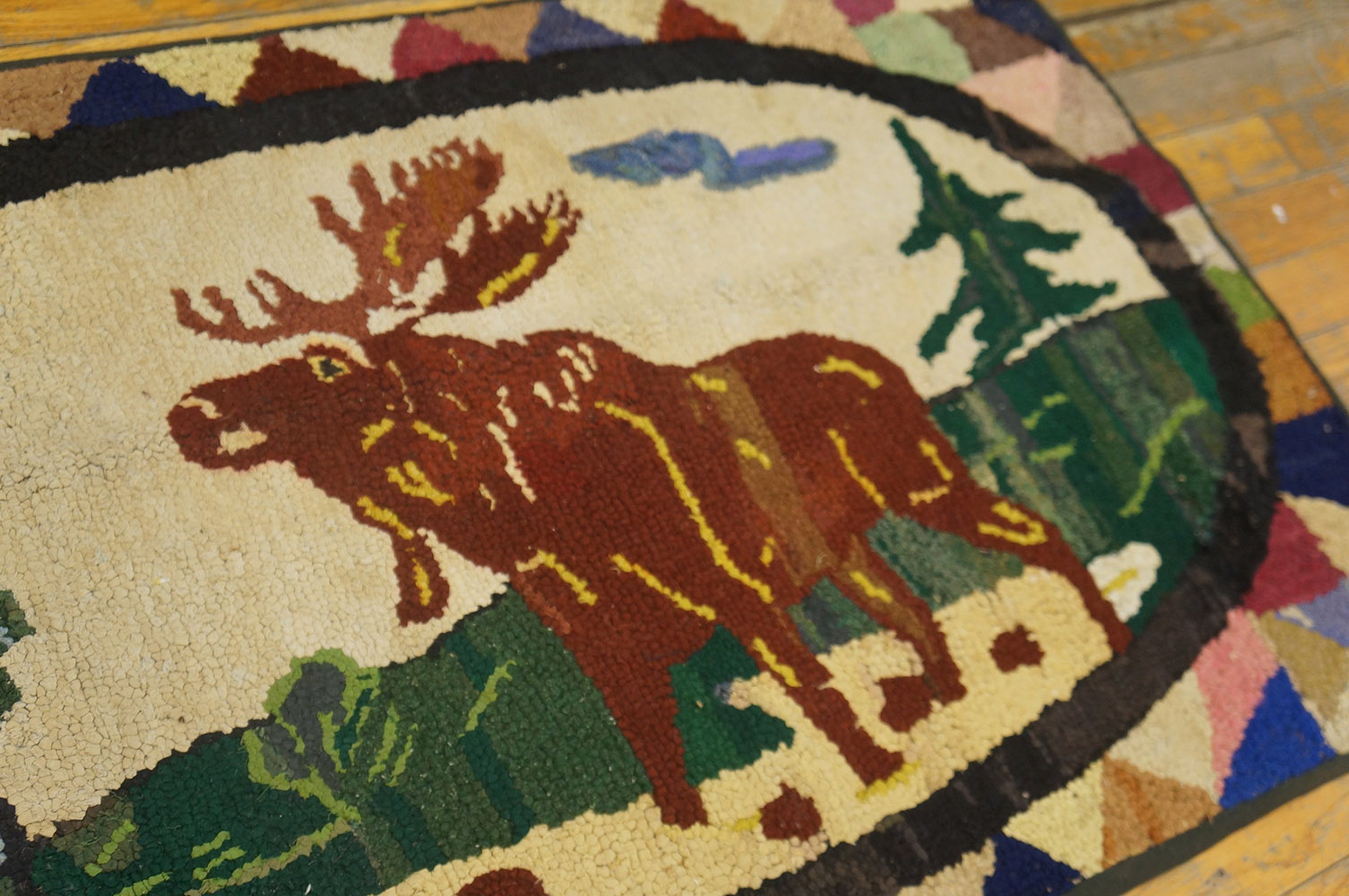
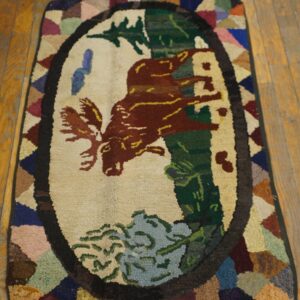
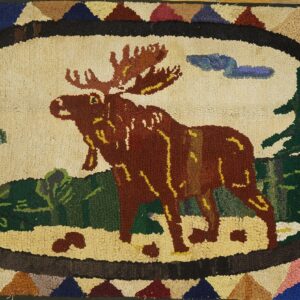
This early 20th-century American Hooked rug is a captivating piece of “Pictorial Americana,” representing the most soulful and narrative branch of the folk-art tradition. While antique floral and geometric American hooked rugs were more common, scenic or animal-themed rugs are significantly rarer and highly coveted by collectors for their storytelling quality and their ability to capture a specific moment in the rural American wilderness.
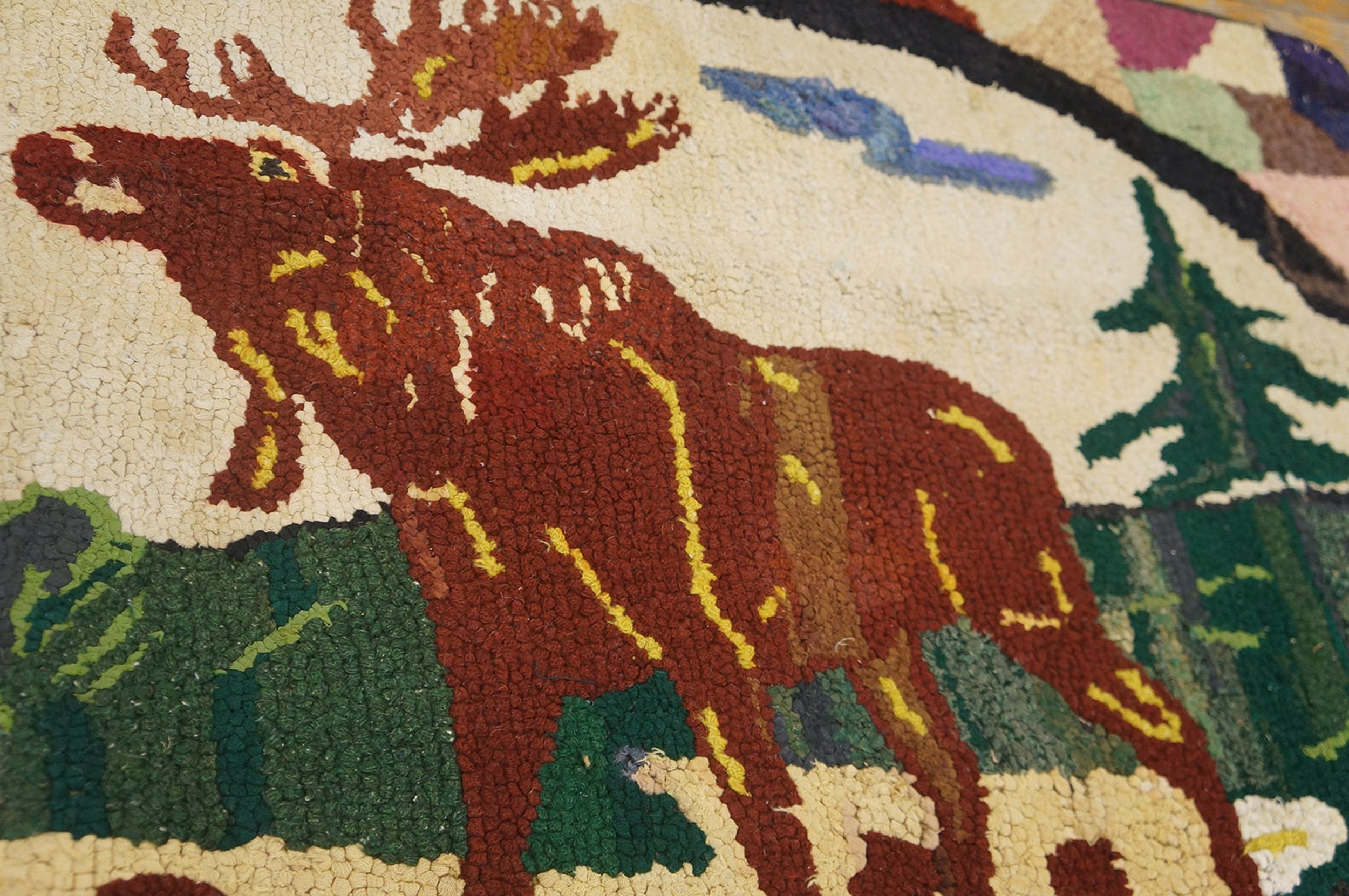
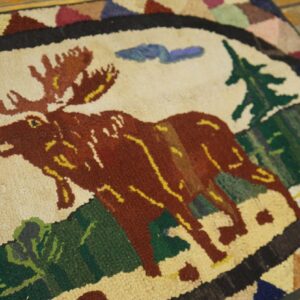
The composition is centered upon a charming and powerful Moose pictorial motif, set within a “scenic” landscape. The drawing is quintessentially “Primitive,” characterized by a whimsical, hand-drawn honesty that bypasses formal realism in favor of raw character. The moose—often rendered in a bold, silhouette-like style—stands as a majestic symbol of the northern frontier. Surrounding the central figure, the weaver likely incorporated elements of its natural habitat—perhaps stylized evergreen trees or a suggestion of water—creating a “window” into the 20th-century American landscape.
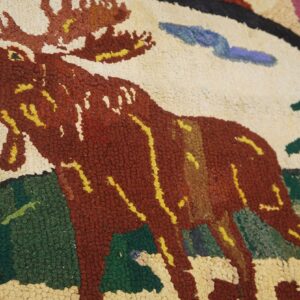
The palette is anchored by a luminous Antique Ivory foundation. This light, “parchment” ground acts as a high-contrast stage for the darker tones of the moose and scenery. Typically rendered in a “nature-inspired” palette of chocolate brown, forest green, charcoal gray, and hints of rust, the colors possess a magnificent “mottled” variegation. Because these artistic American folk art area rugs were made using hand-cut strips of recycled wool flannel and old clothing, the colors exhibit a beautiful “salt-and-pepper” texture (the folk-art equivalent of abrash), giving the ivory field a shimmering, watercolor-like depth.
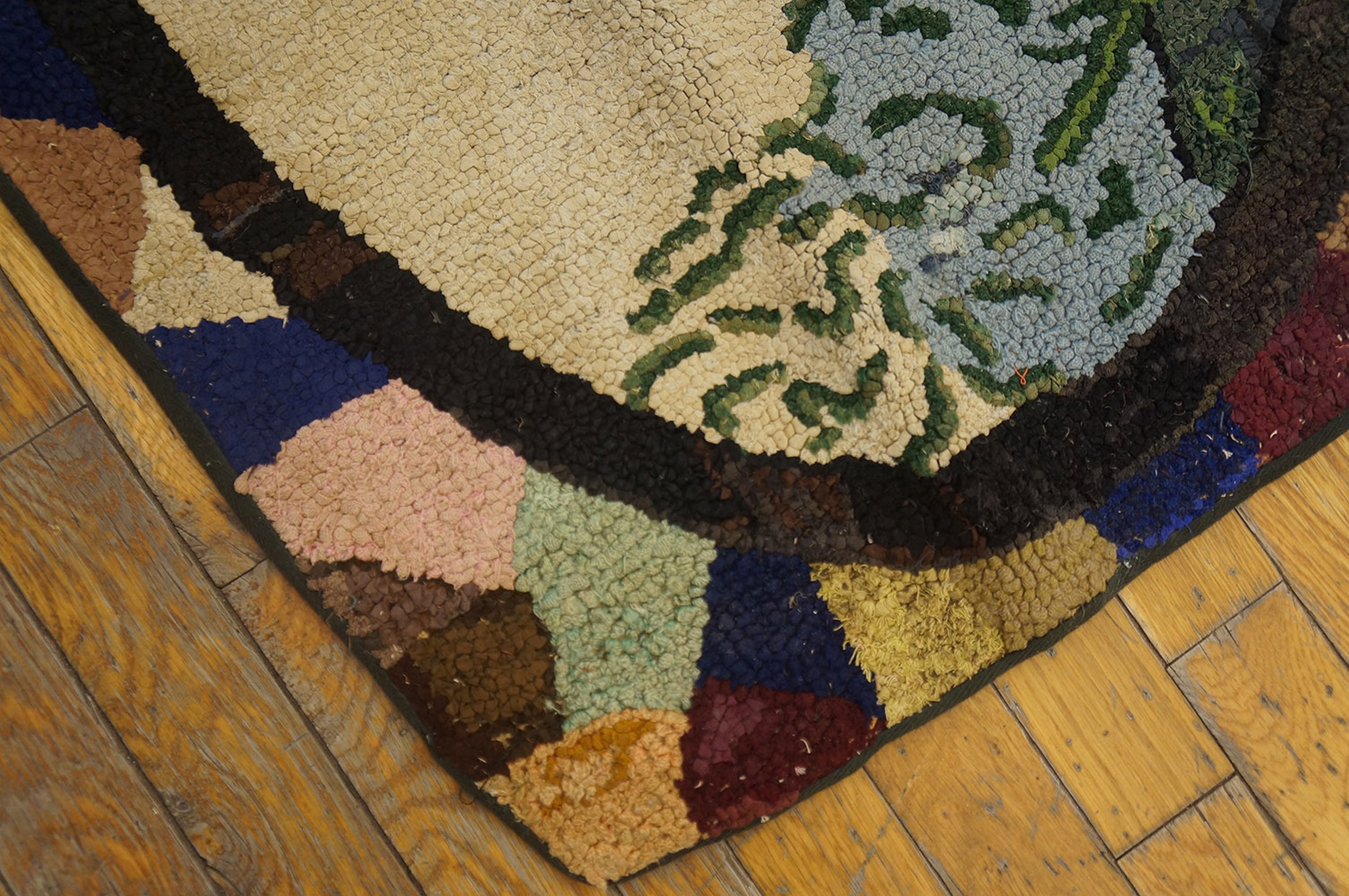
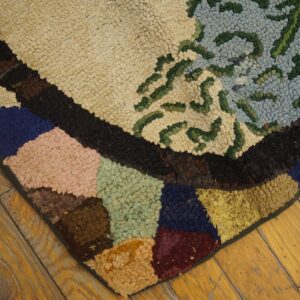
Technically, this hooked area rug from America is prized for its dense, nubby texture and substantial, “meaty” handle. The process of hand-hooking individual loops through a burlap or linen backing creates a three-dimensional surface that catches the light differently from every angle. Over the last century, the wool has “felted” and softened, resulting in a velvety patina that rounds out the edges of the primitive drawing, lending the piece a sense of historical gravity and warmth.
The borders often serve as a simple, grounding frame—sometimes a dark “mottled” edge that “locks in” the lightness of the ivory scenic field. To possess this Antique Moose Pictorial rug is to own a monument to the American creative spirit. It is a work that bridges the gap between domestic utility and narrative fine art—a hand-wrought sanctuary of historical charm and rugged, folk-art brilliance.