
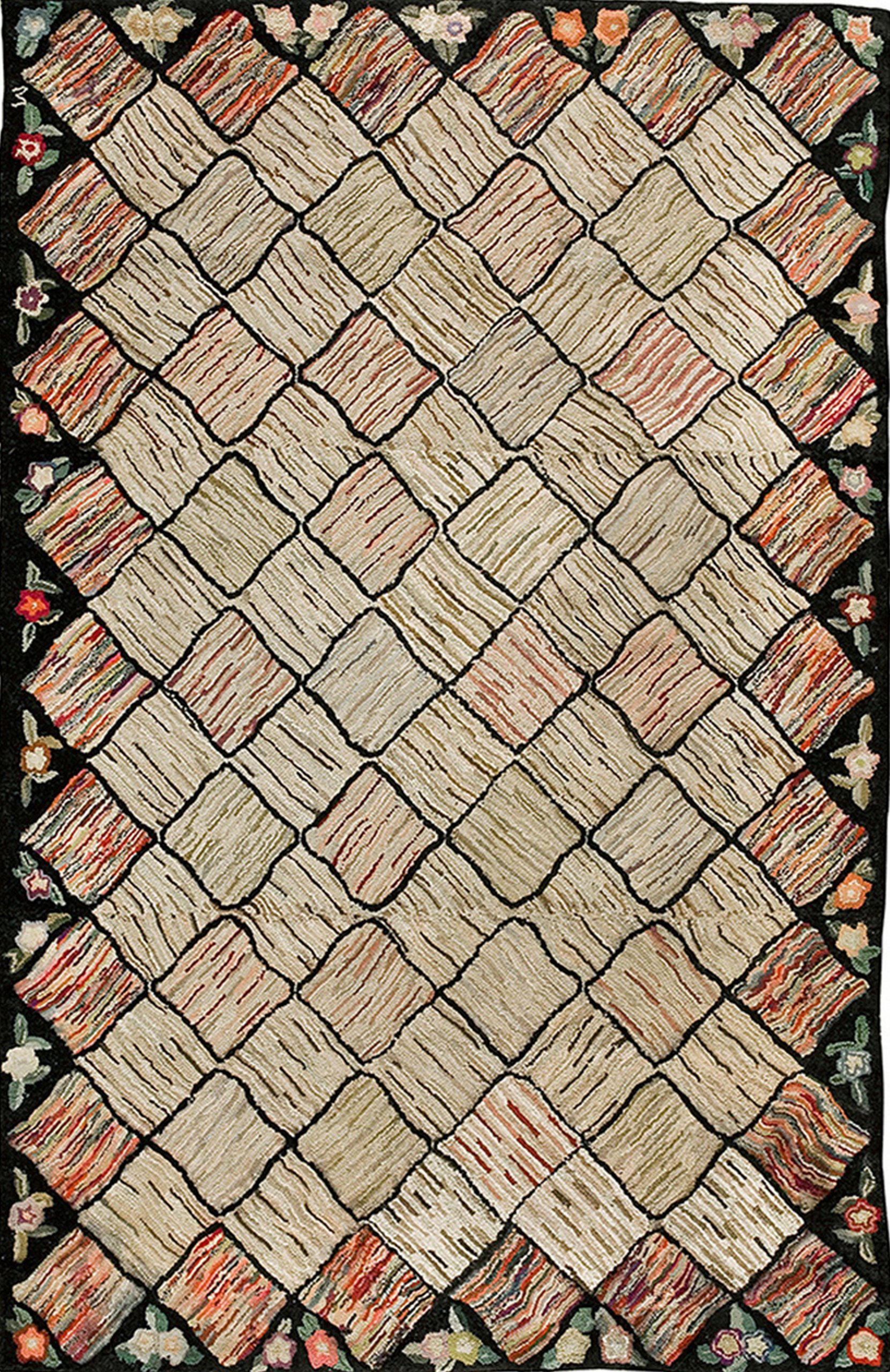
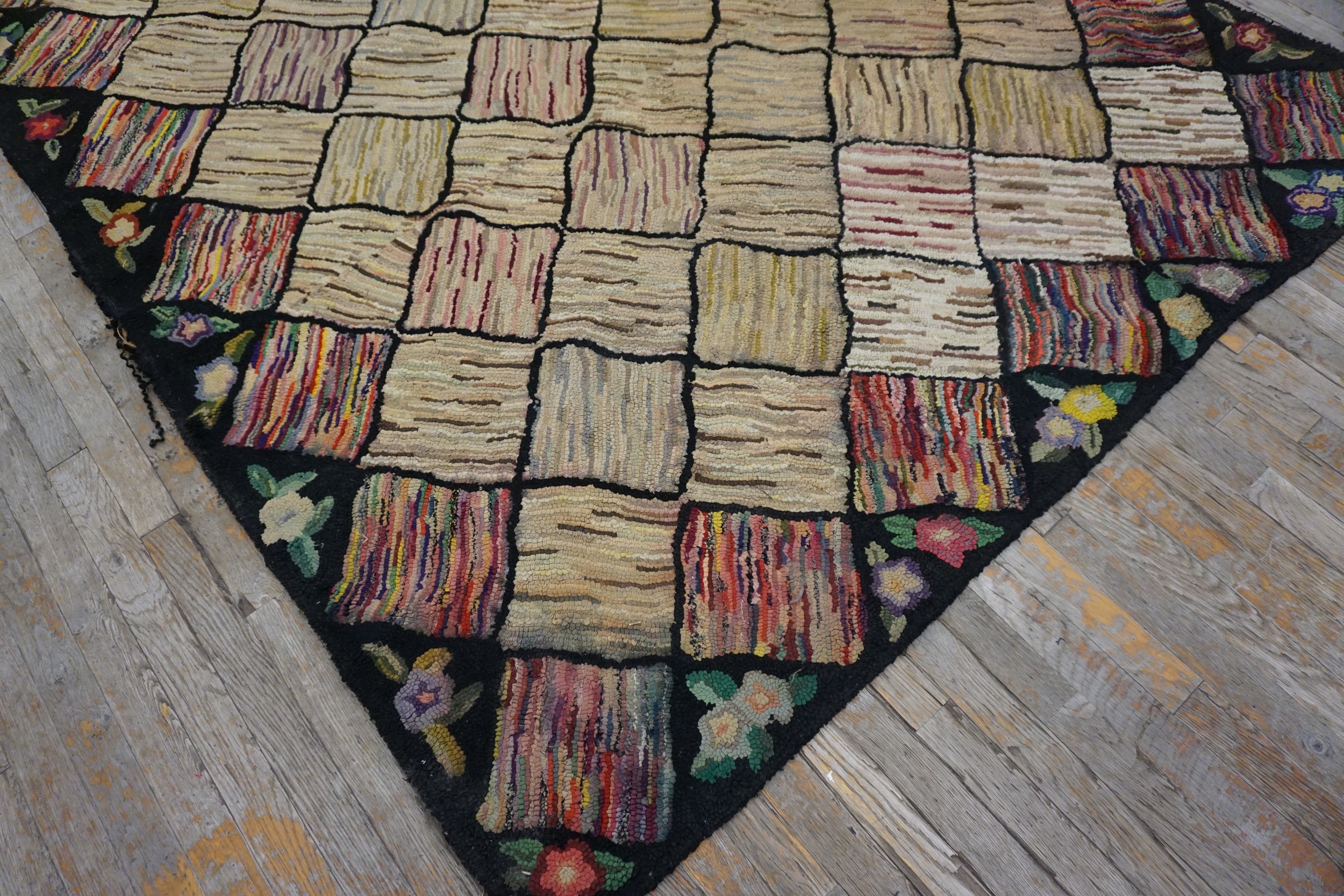
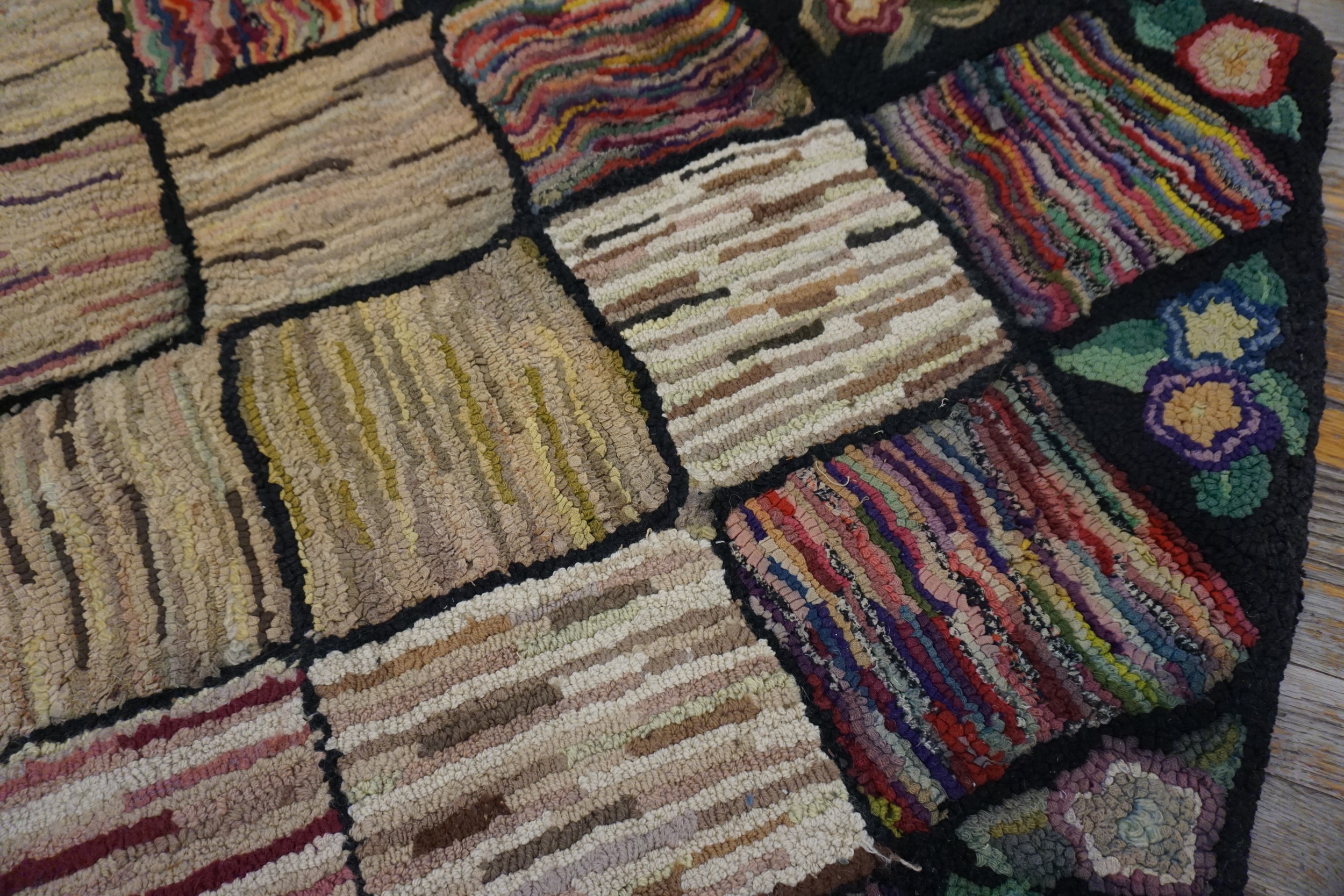
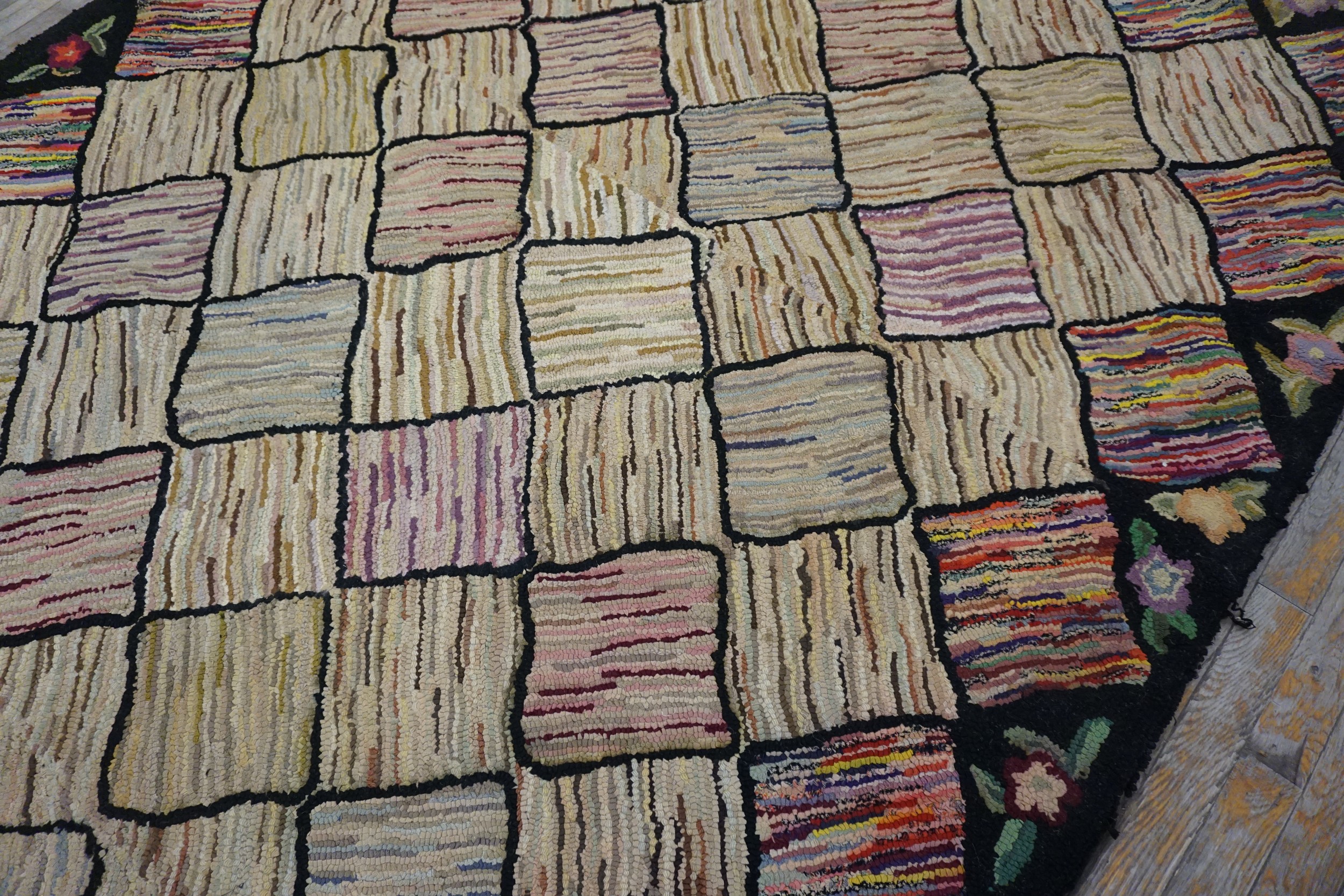
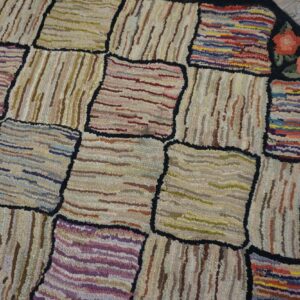
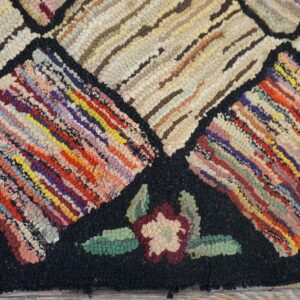
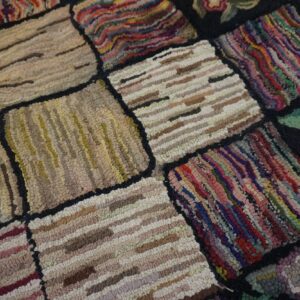
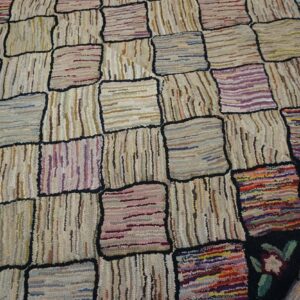
This early 20th-century American folk art hooked rug is a sophisticated example showcasing a departure from the more common pictorial or floral scenes of the era in favor of a disciplined, architectural aesthetic. Historically, these American folk art design hooked rugs were the product of domestic resourcefulness, but this specific specimen—with its refined Trellis and Lattice design—represents a high point of provincial craftsmanship, where the weaver sought to bring a sense of order and “Classical” structure to the home.
The composition is centered upon a rhythmic, all-over Lattice pattern. This geometric framework creates a series of repeating diamond or quatrefoil compartments, a design language that draws inspiration from garden trellises and architectural fretwork. Unlike the loose, spontaneous nature of many American folk art design area rugs, this “Trellis” layout requires immense spatial planning. The result is a work of balanced symmetry that feels remarkably modern and “Mid-Century” in its graphic clarity, despite its early 20-century origins.
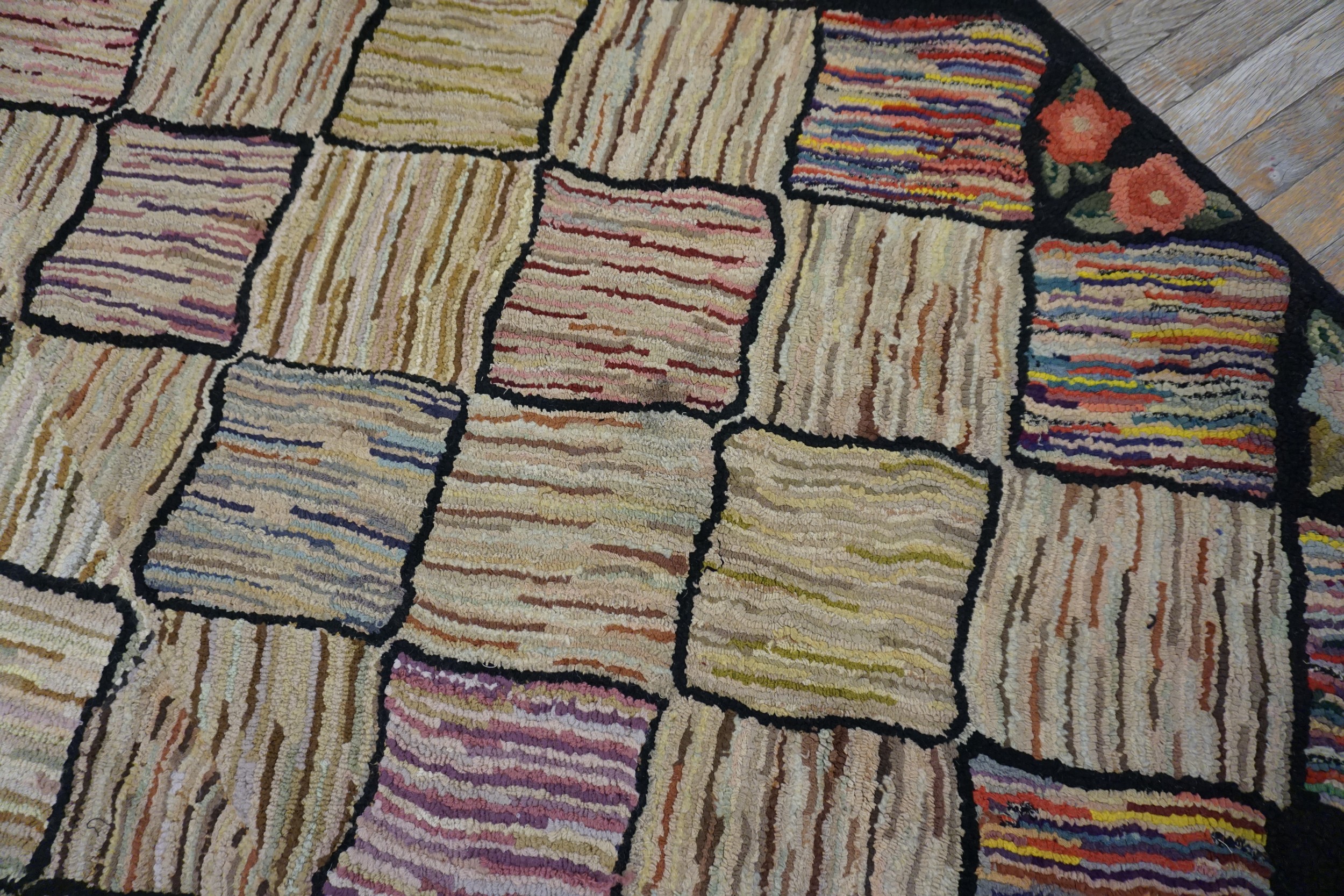
The palette is a masterclass in monochromatic elegance, dominated by a soft Ivory and Cream foundation. Against this luminous field, the lattice lines are rendered in subtle, earthy tones—perhaps soft taupe, muted browns, or faded moss greens. Because these rugs from America were made using hand-cut strips of recycled wool and flannel, the “solid” areas possess a beautiful mottled or “salt-and-pepper” texture. This creates a shimmering, watercolor-like depth that softens the geometric lines and gives the rug a warm, organic character.
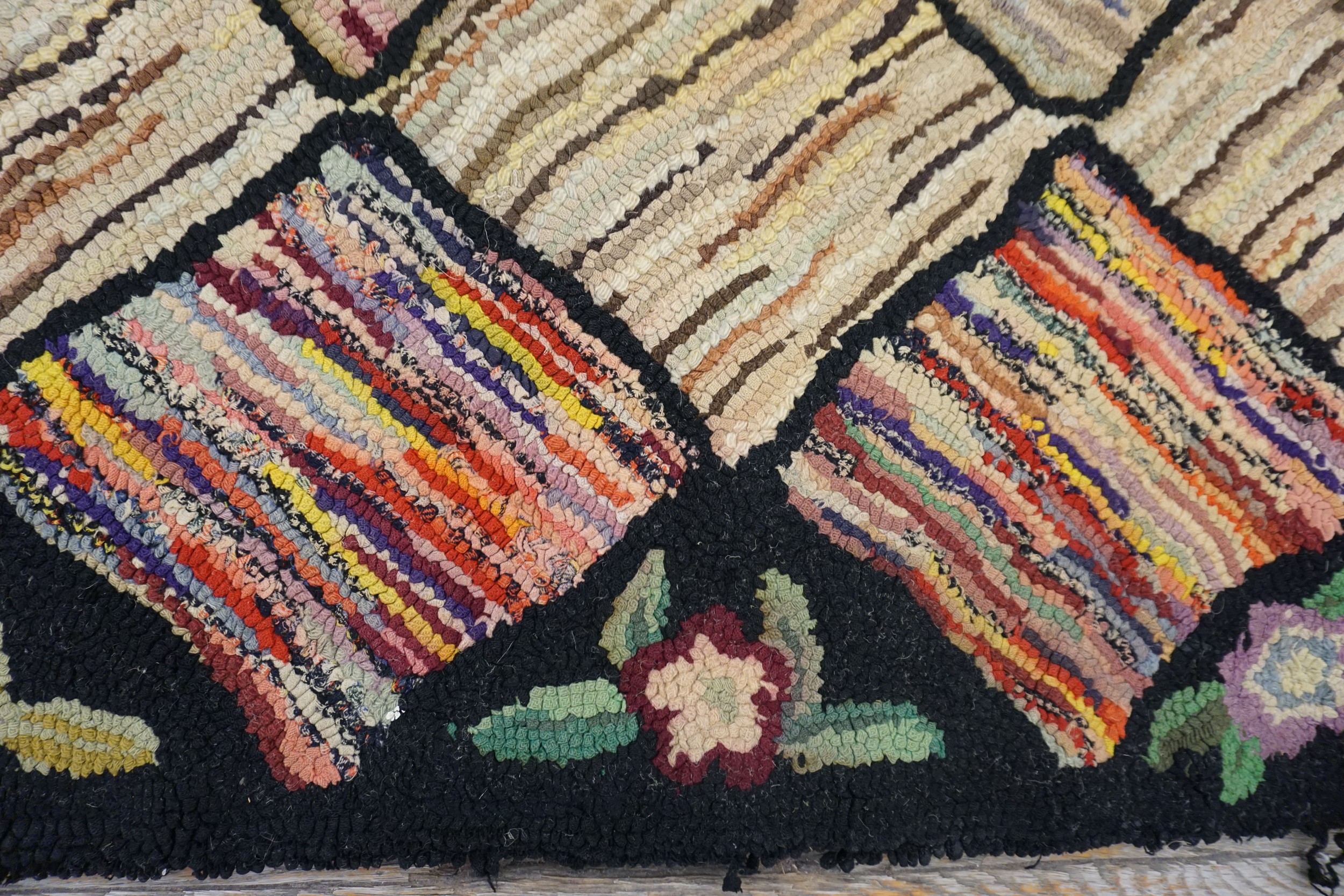
Technically, this rug is prized for its tactile, nubby texture. The process of pulling individual loops of wool through a burlap or linen backing results in a dense, substantial pile with a heavy handle. Over more than a century, the wool has developed a soft, felted patina, while the “primitive” variations in the dye and the loop height imbue the piece with a three-dimensional quality that modern machine-made area rugs cannot replicate.
The borders typically serve as a simple, grounding frame, perhaps echoing the tones of the lattice to “lock in” the expansive energy of the central field. To possess this Ivory American Trellis hooked rug is to own a monument to early American design. It is a work that bridges the gap between humble colonial craft and sophisticated modernism—a hand-wrought sanctuary of historical gravity and quiet, geometric grace.