
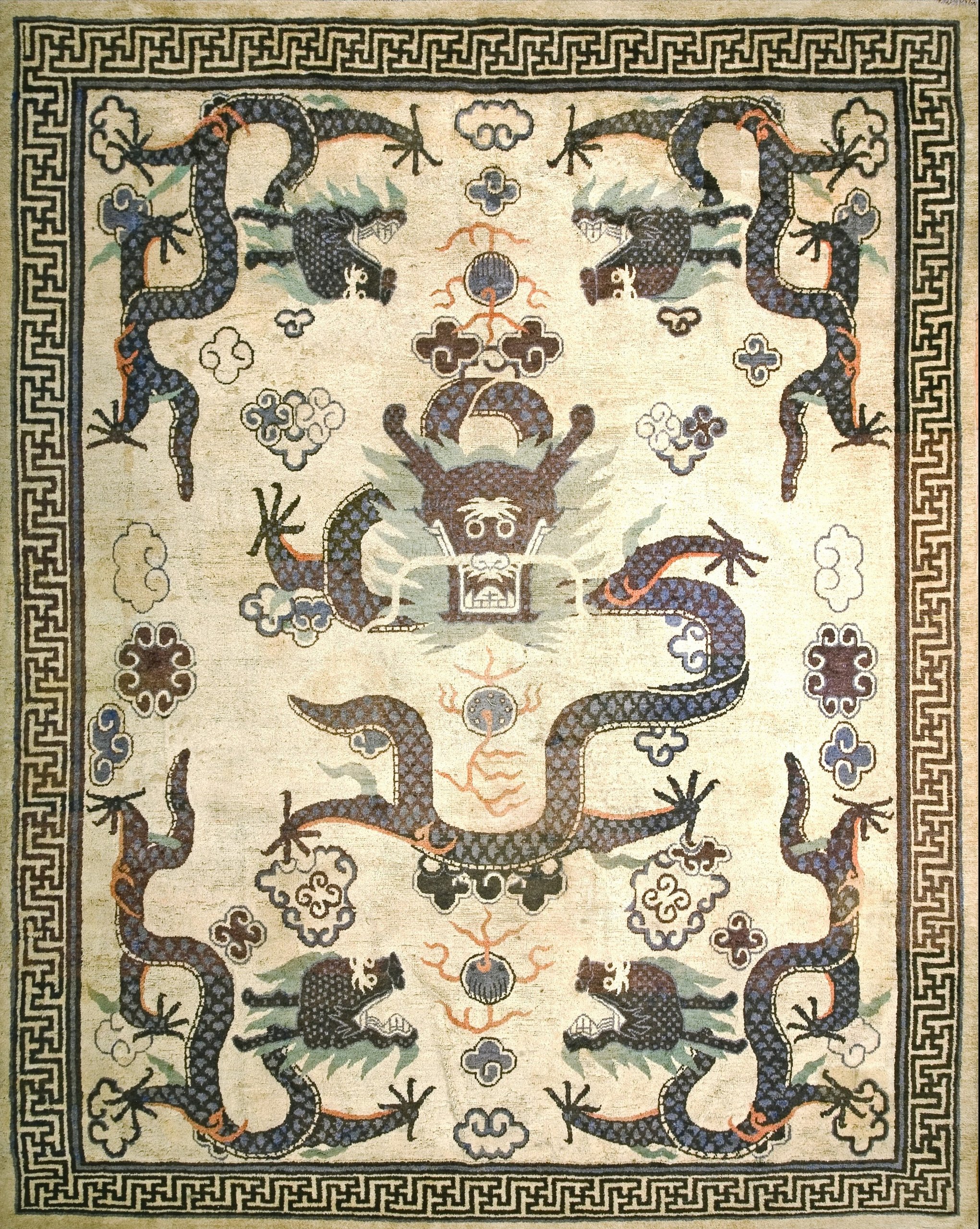
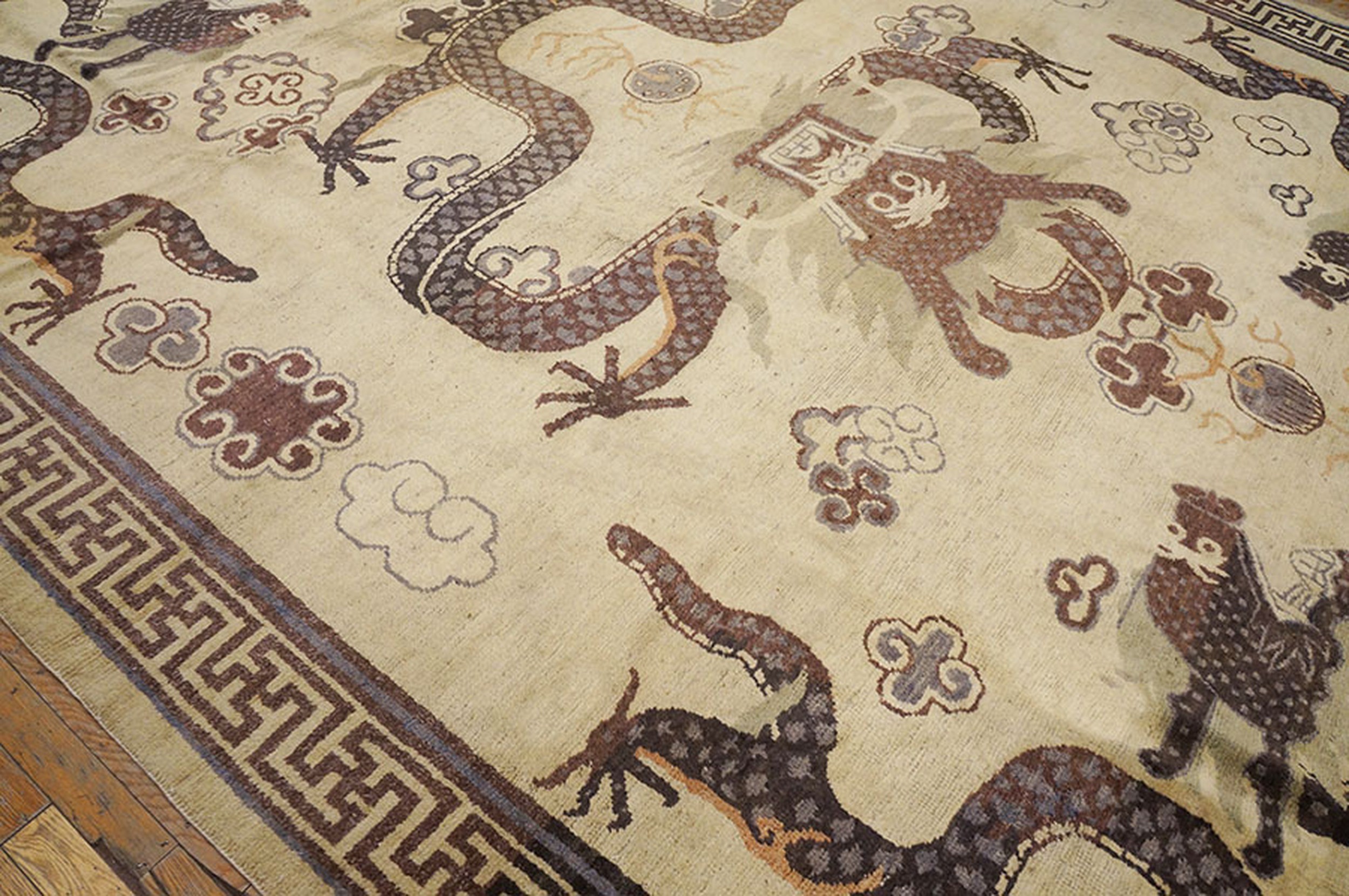
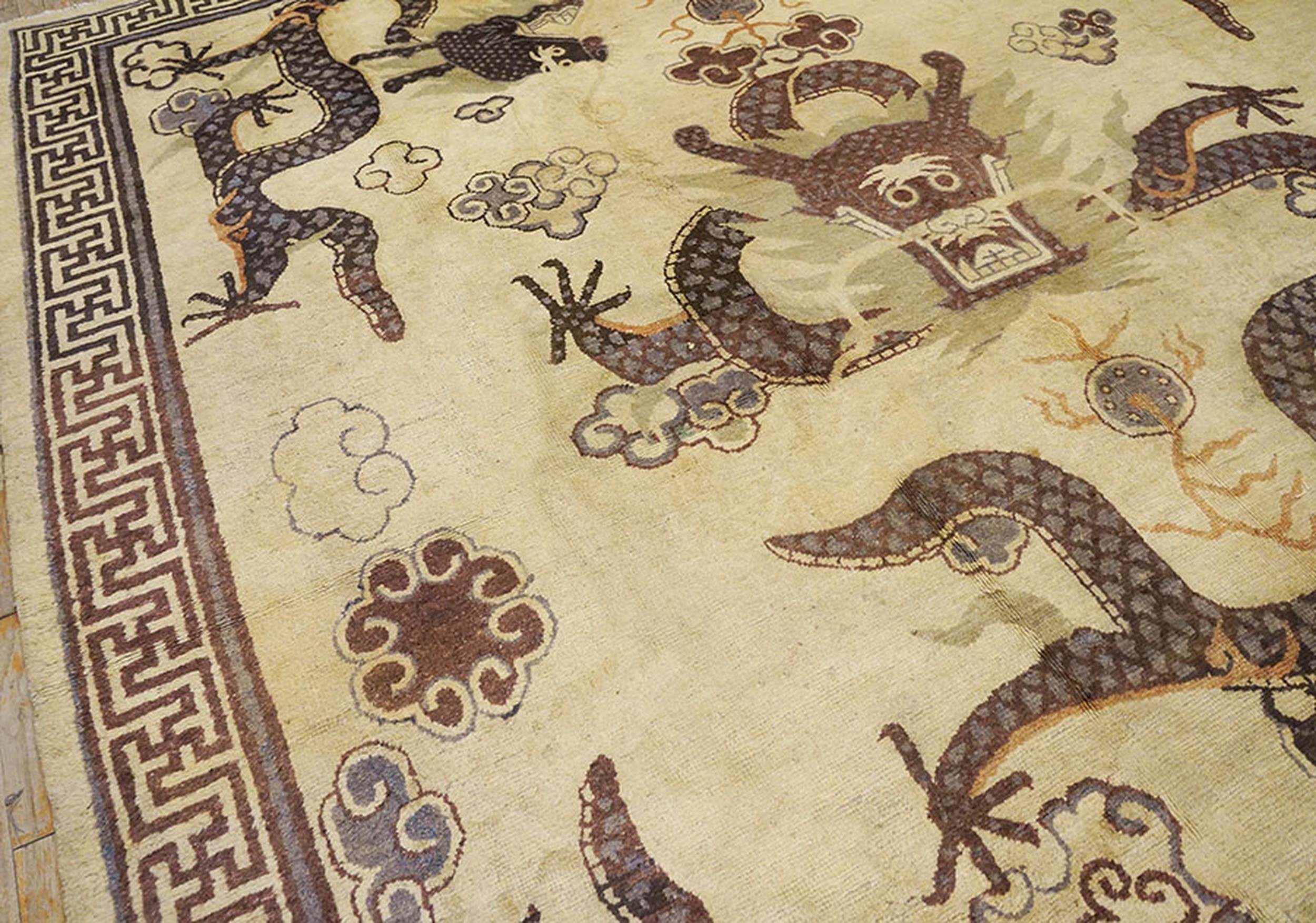
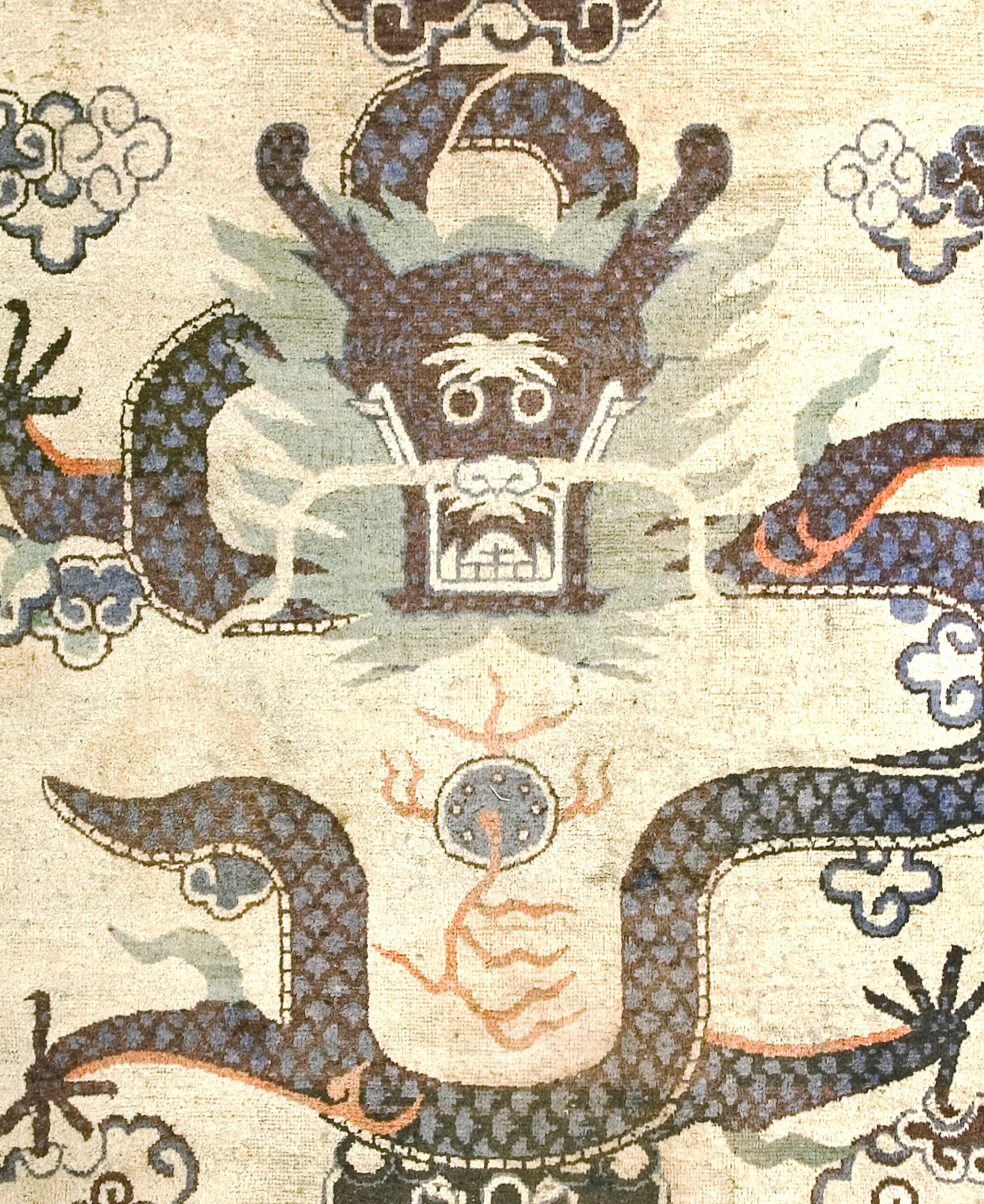
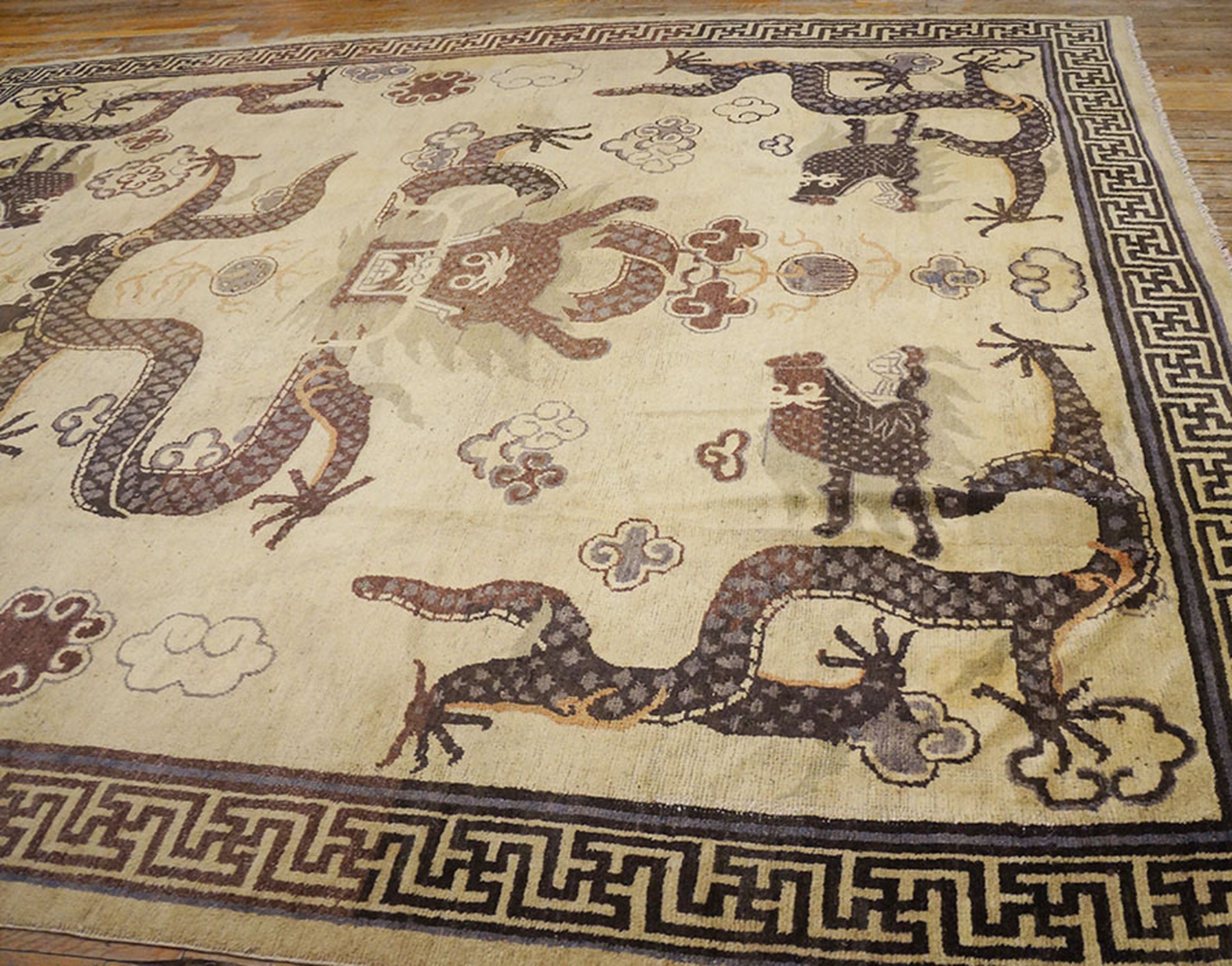
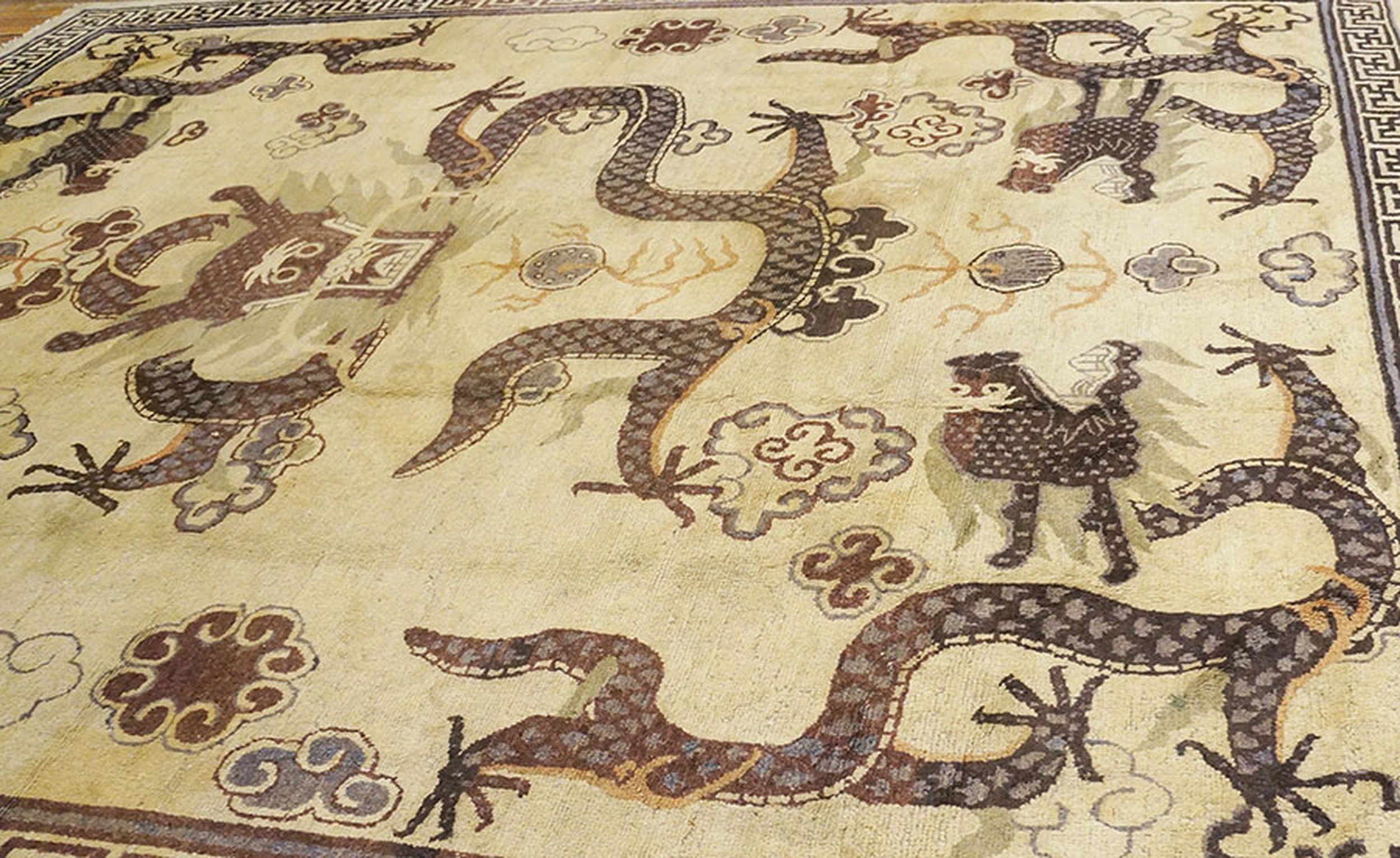
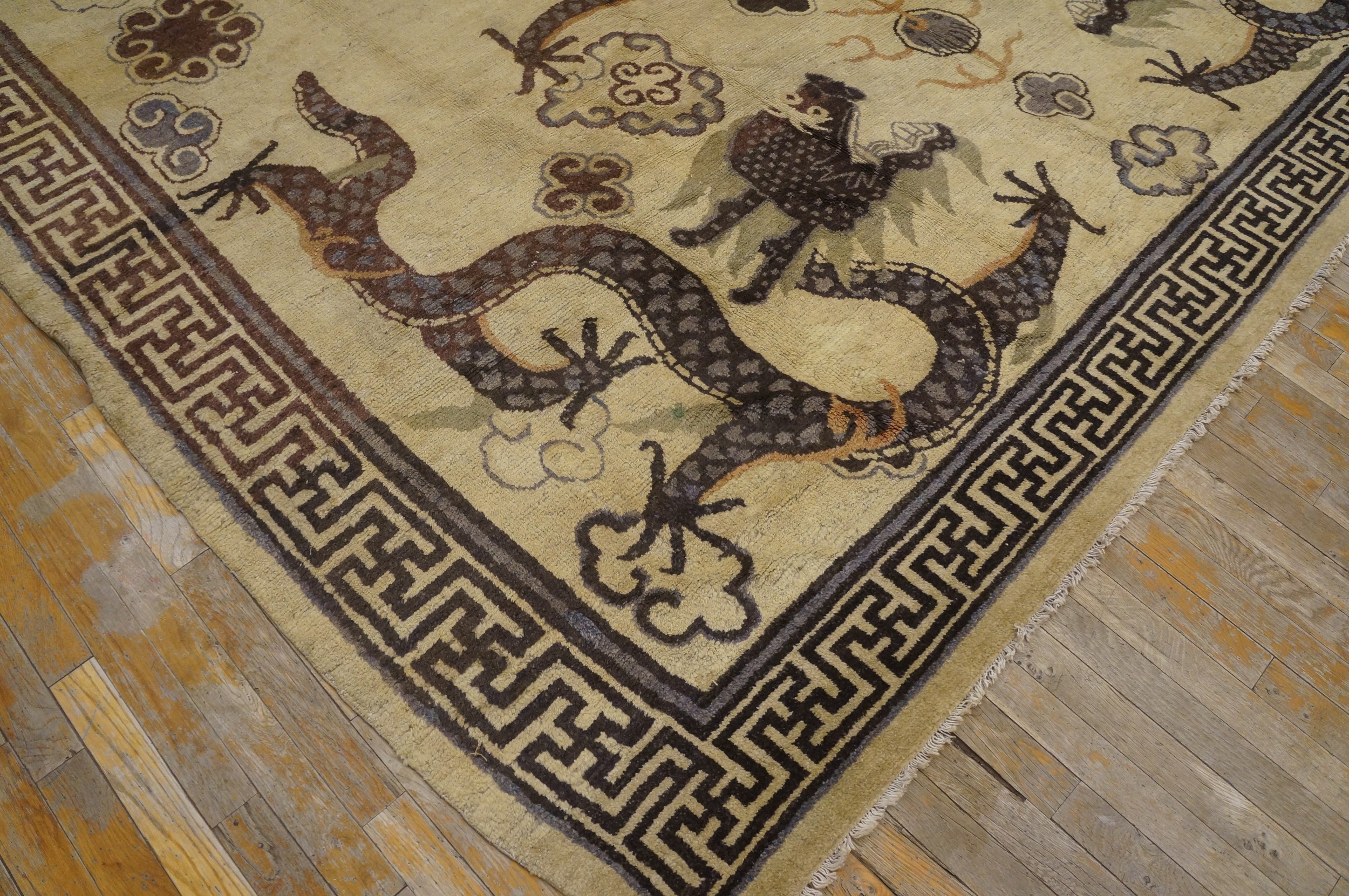
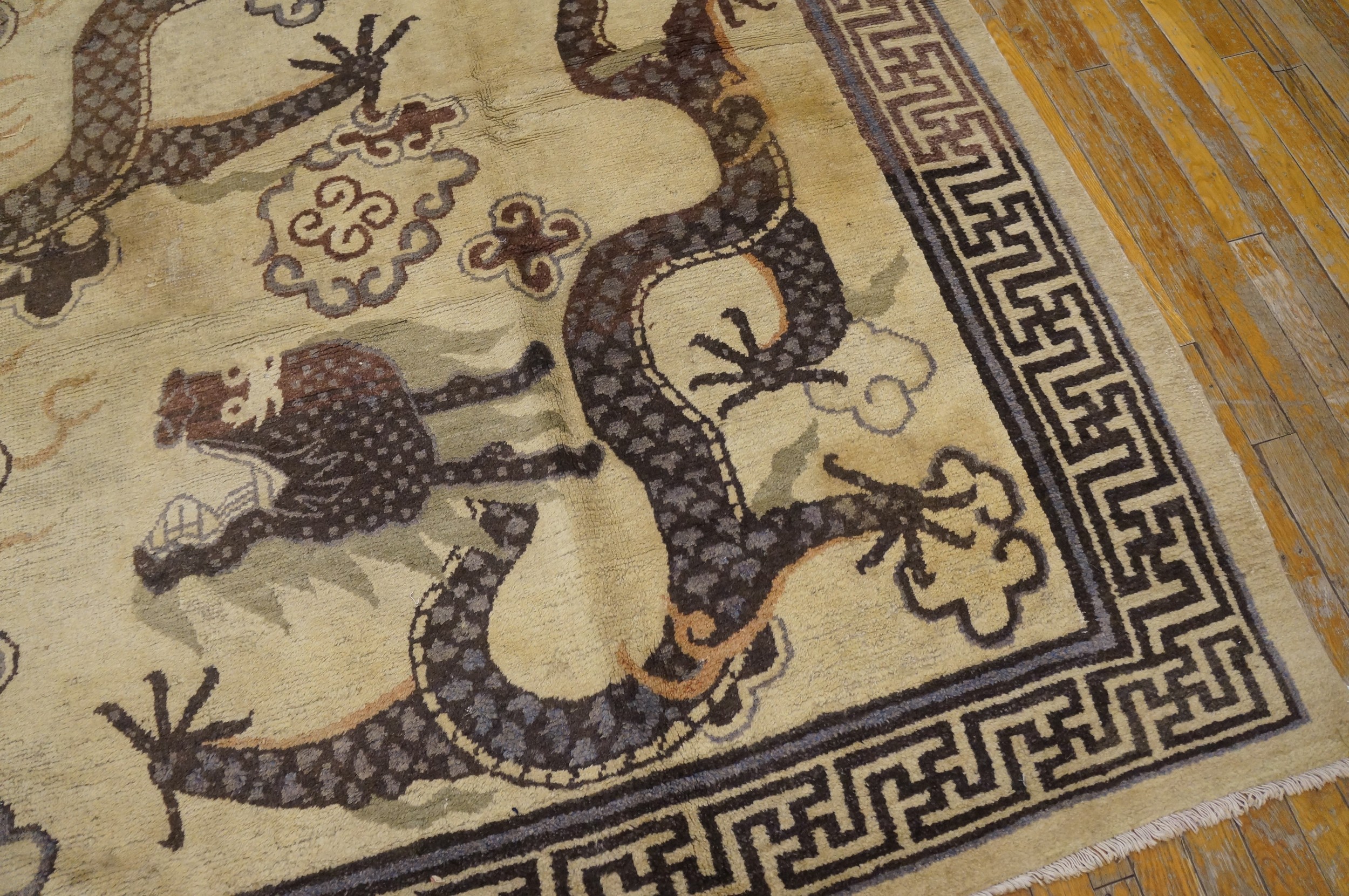
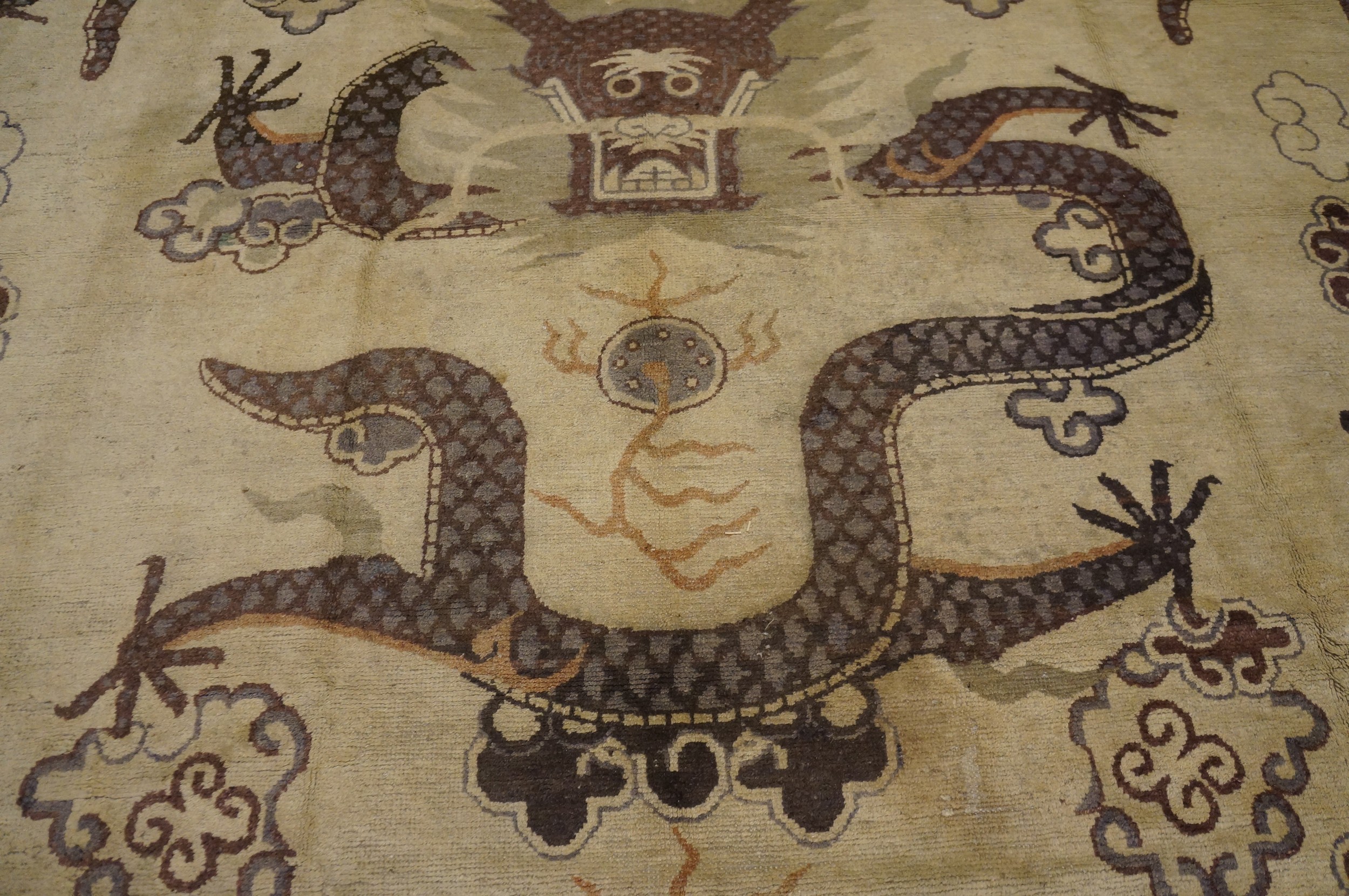
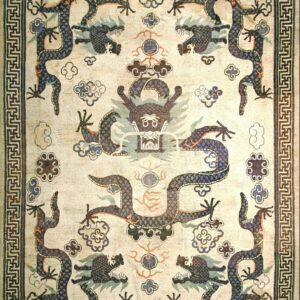
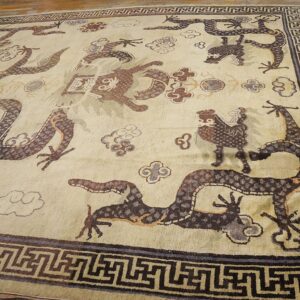
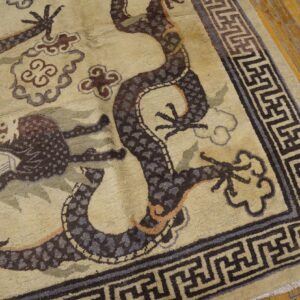
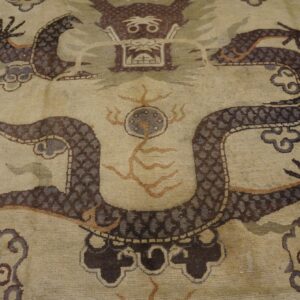
This magnificent room-sized antique Chinese carpet, dating from the late nineteenth century, is a superlative example of Mongolian-influenced weaving, a style that represents the powerful intersection of Buddhist cosmology and imperial Chinese artistry. Historically, rugs from the Mongolian border regions (often classified as Ningxia or Suiyuan) were distinct from the floral-heavy designs of the coastal cities, instead favoring a bold, symbolic language that reflected the spiritual and nomadic heritage of the northern steppes. This specific specimen features a luminous ivory field—a choice that was exceptionally rare and prestigious, as it provided a “sacred canvas” for the most potent of all Asian motifs: the Imperial Dragon.
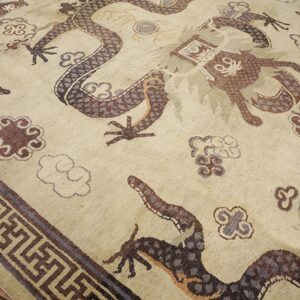
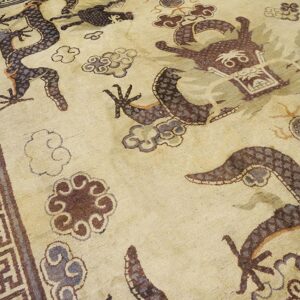
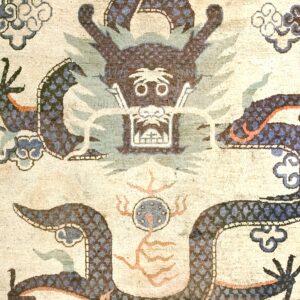
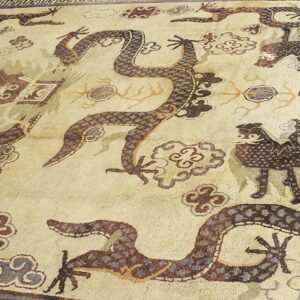
The composition is dominated by the rhythmic interplay of five-clawed dragons designs amidst a field of stylized clouds and “pearls of wisdom.” In Chinese mythology, the dragon is not a creature of terror but a celestial guardian of water, weather, and imperial authority. The “room-size” scale of this piece is particularly significant; most Mongolian rugs were produced as smaller “pillar rugs” or meditation mats, making an oversized ivory carpet like this a likely commission for a high-ranking monastery or a noble residence. The dragons are rendered in a “primitive-sophisticated” style, where the raw power of the tribal line meets the disciplined iconography of the Qing Dynasty court. The ivory ground serves to amplify the tonal depth of the dragons, which were often dyed with mineral pigments and local mountain plants to achieve a palette of earthy ochres and indigoes.
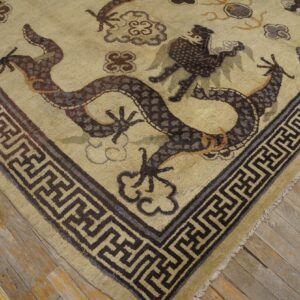
Historically, these carpets were highly sought after by the Western elite during the early 20th century—including early collectors like the Guggenheims—who were drawn to their “Modern-Antique” aesthetic and their calm, meditative geometry. The borders typically feature a “wave and mountain” pattern (Lishui), representing the cosmic boundary between the earthly and the divine. The wool is characteristic of the region: thick, lustrous, and remarkably soft, giving the rug a tactile, blanket-like quality that is a hallmark of the finest Mongolian weaving. To possess this 19th-century Chinese carpet is to hold a monument to a vanishing world—a work that bridges the gap between the nomadic spirit of the Mongolian plateau and the scholarly elegance of the Chinese imperial tradition.