The 1787 Homestead American Folk Art Hooked Rug
Antique American (likely Pennsylvania or New England) Folk Art Hooked Rug From The Early 20th Century (Colonial Revival Period): “The 1787 Homestead”
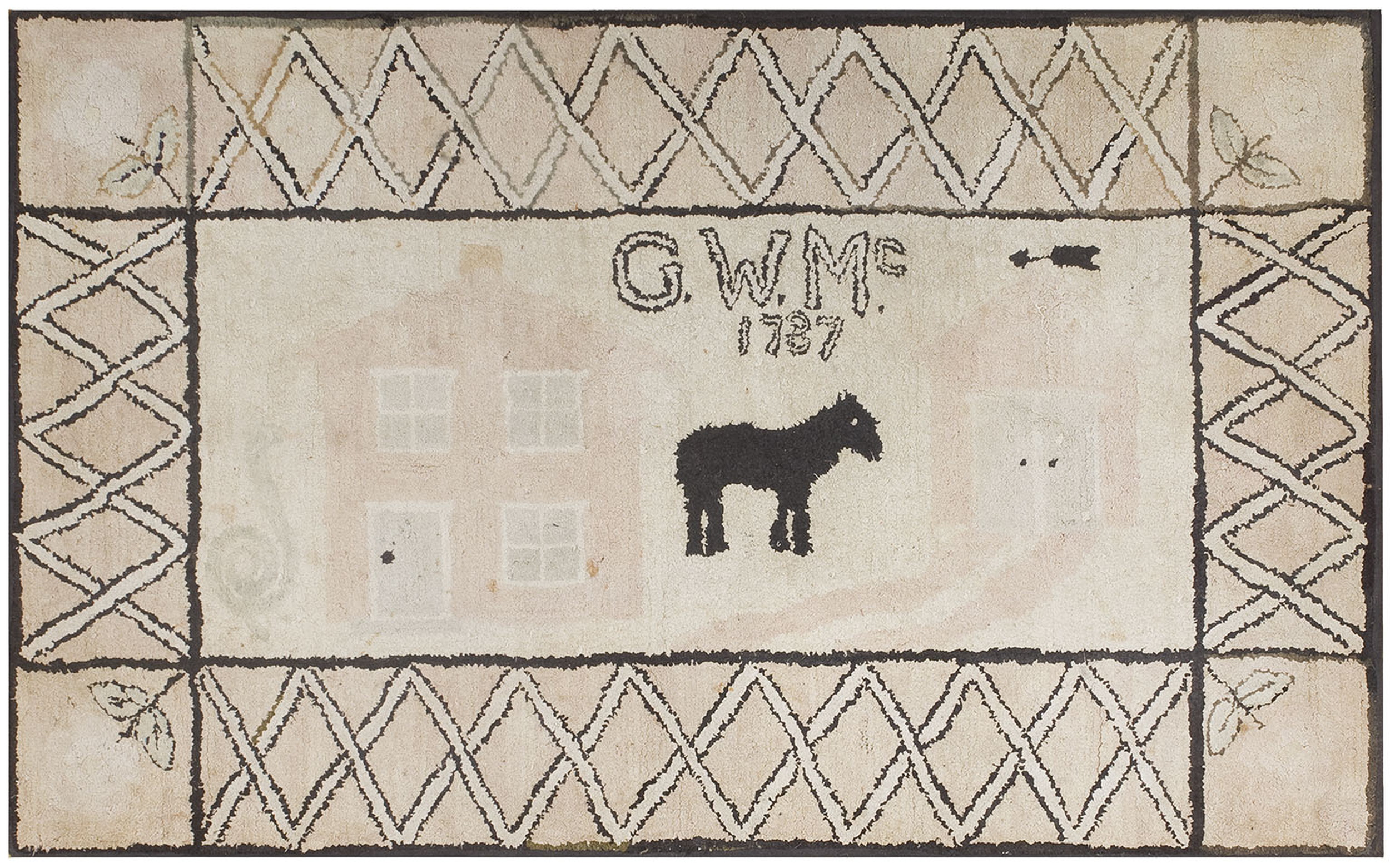
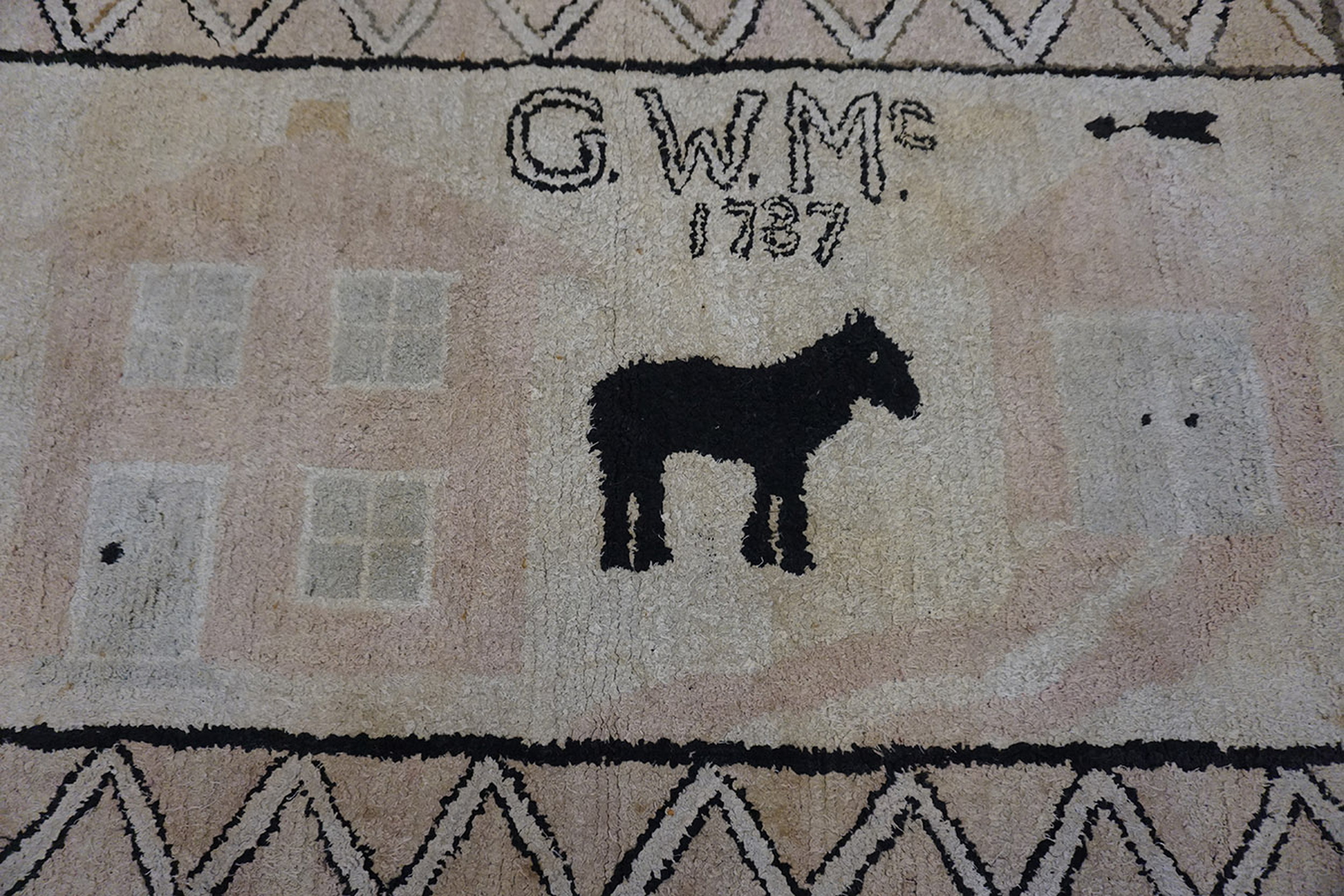
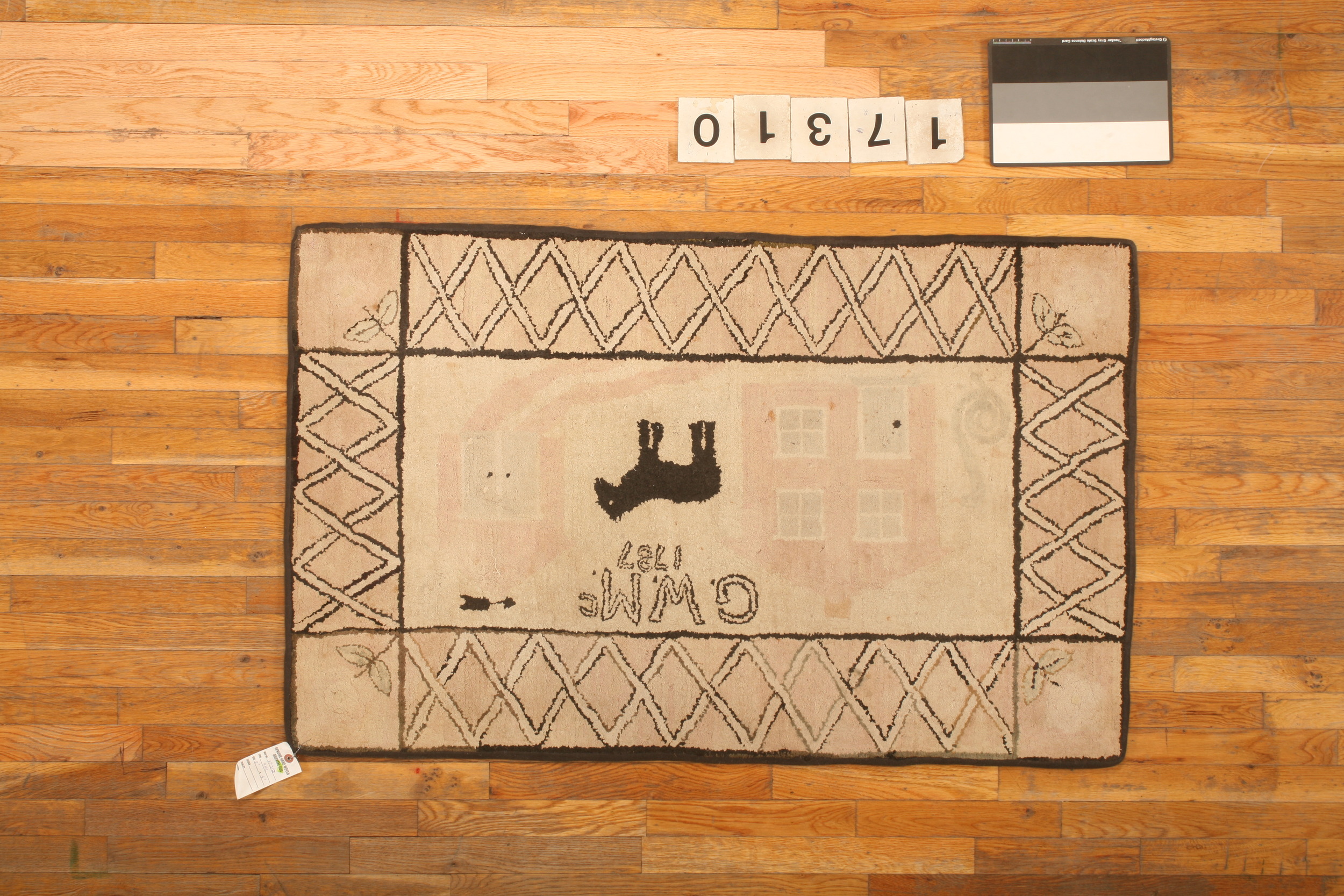
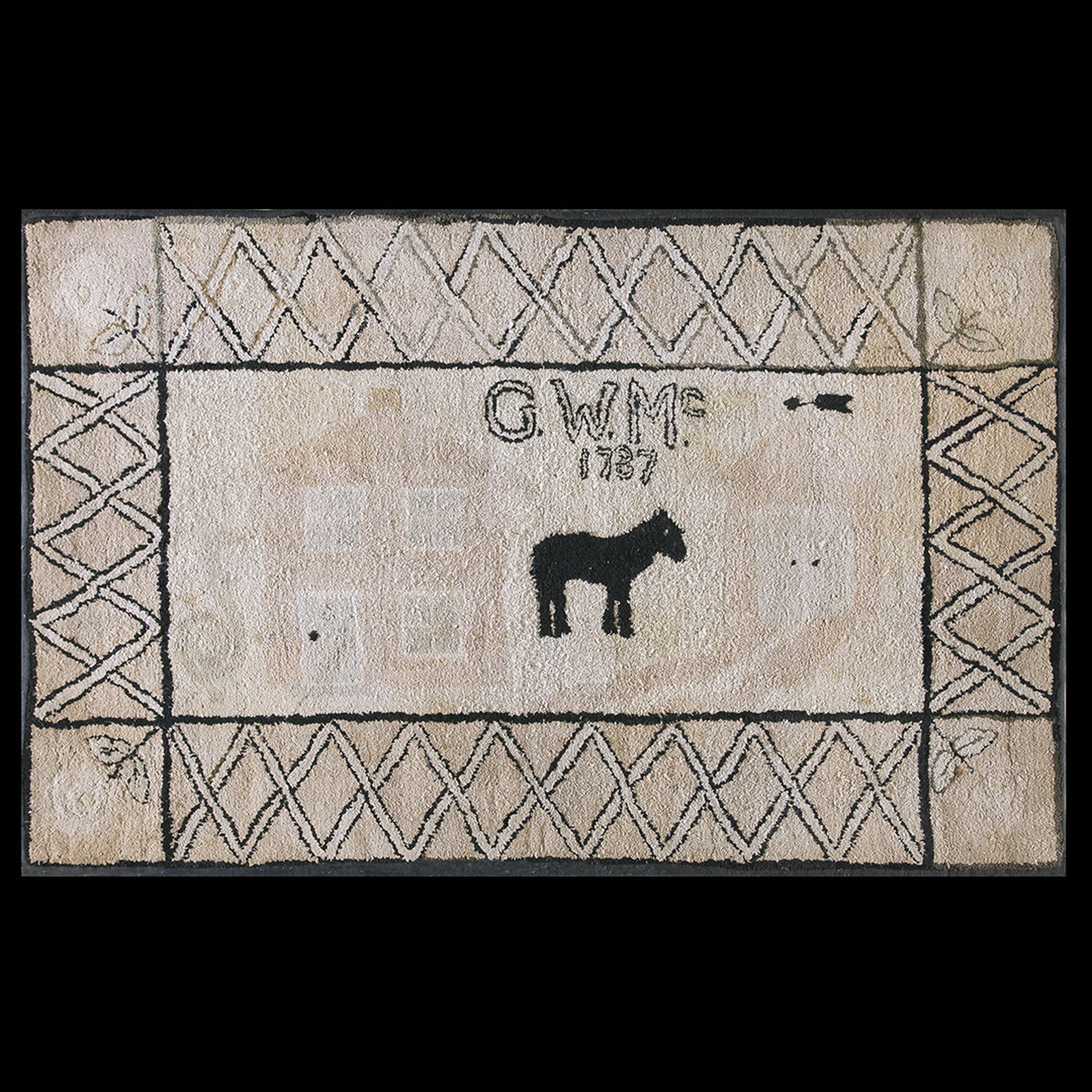
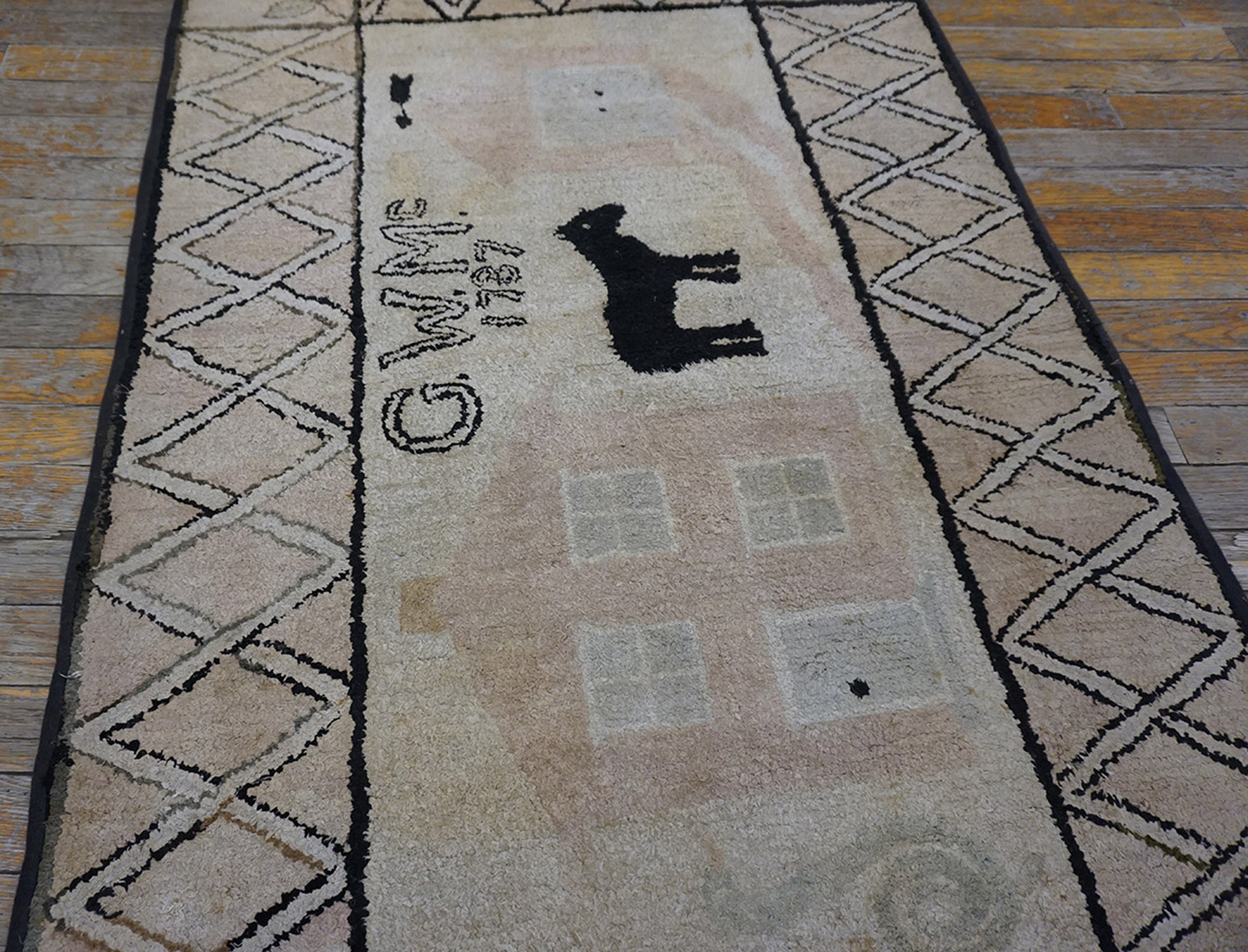
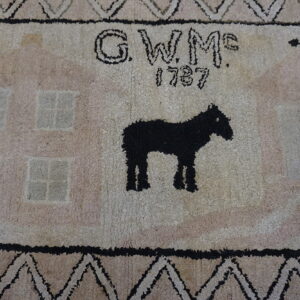
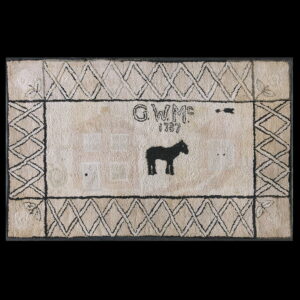
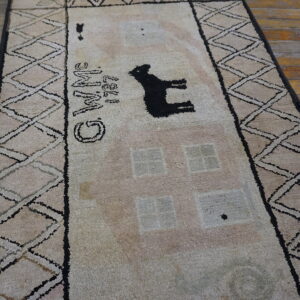
This Ivory hooked folk art is more than likely a commemorative family homestead with a black horse and initials. It is a quintessential work of American Colonial Revival folk art, this antique hooked rug is a masterful “memory textile” created during the early twentieth-century peak of ancestral documentation. While the woven date of 1787 and the initials “G.W. Mc” are boldly inscribed, they represent a celebratory tribute to a family lineage established during the founding era of the United States. This rug was likely crafted by a descendant during the height of the Daughters of the American Revolution (DAR) movement, an era when women utilized needlework to formalize their family’s connection to the “Constitution Generation.”
The prominent inscription likely honors a patriarch such as George Washington McClain or McCord—namesakes born in the late eighteenth century and named after the nation’s first president during a period of intense patriotic fervor. The use of the traditional superscript “c” in the “Mc” surname is a deliberate, archaic touch, mimicking the formal scribal traditions found in 1780s land deeds and family bibles.
The Architecture & Iconography
The central composition features a primitive “two-over-two” homestead—a classic symbol of early American stability—rendered in a soft madder-red palette. To its side stands a starkly silhouetted black horse, a powerful folk symbol of vitality and heritage that serves as a visual anchor for the design. Unlike commercial patterns of the era, the unique proportions and soulful execution of the house and figures suggest a one-of-a-kind commission rather than a mass-produced template. The date 1787 carries dual significance: it marks the framing of the U.S. Constitution and serves as the symbolic “birth year” for the family’s American identity.
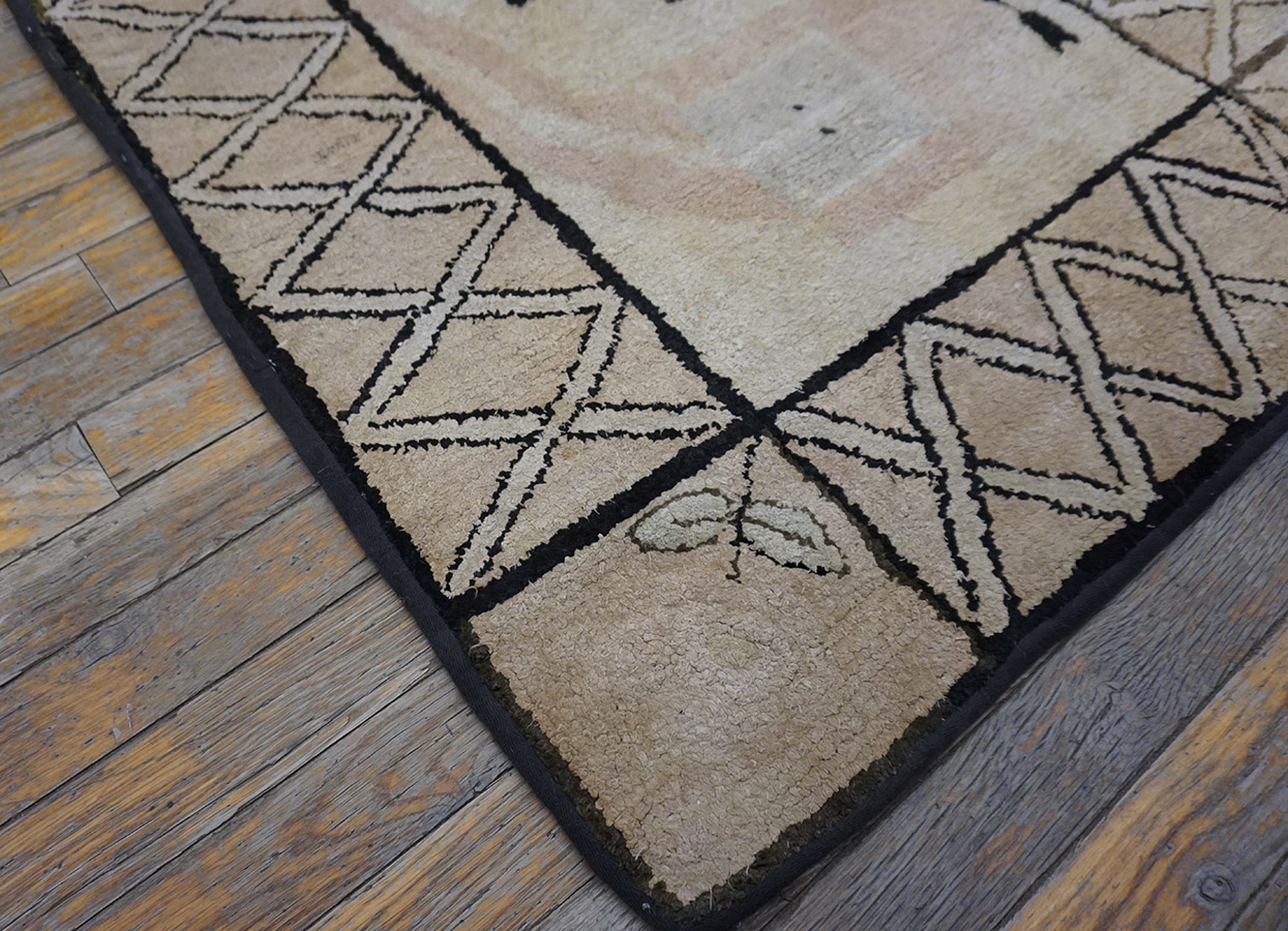
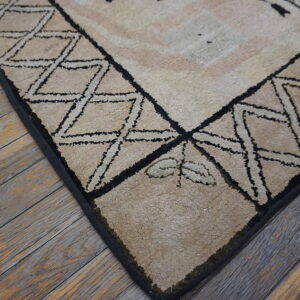
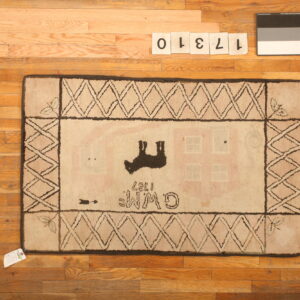
Framed by a disciplined, interlocking diamond lattice border with delicate floral sprigs at the corners, the rug balances a whimsical folk narrative with sophisticated geometric craft. Woven with hand-dyed wools that have mellowed into a warm palette of ivory, tobacco, and rose, this rug is a rare genealogical treasure that bridges the gap between the birth of the Republic and the artistic revival of the early twentieth century.