
Introduction to Hunting Scene Rugs
Discover our curated selection of luxury Hunters Patterned Rugs to elevate your décor today.
Definition and Visual Overview
Hunting rugs, often called hunting scene carpets or hunter motif rugs, are a celebrated category of pictorial rugs that depict elaborate scenes of the chase. The most iconic versions, known as Shekargah carpets, originated in Persia and show hunters on horseback armed with bows, spears, or rifles, pursuing animals such as deer, lions, tigers, and gazelles.
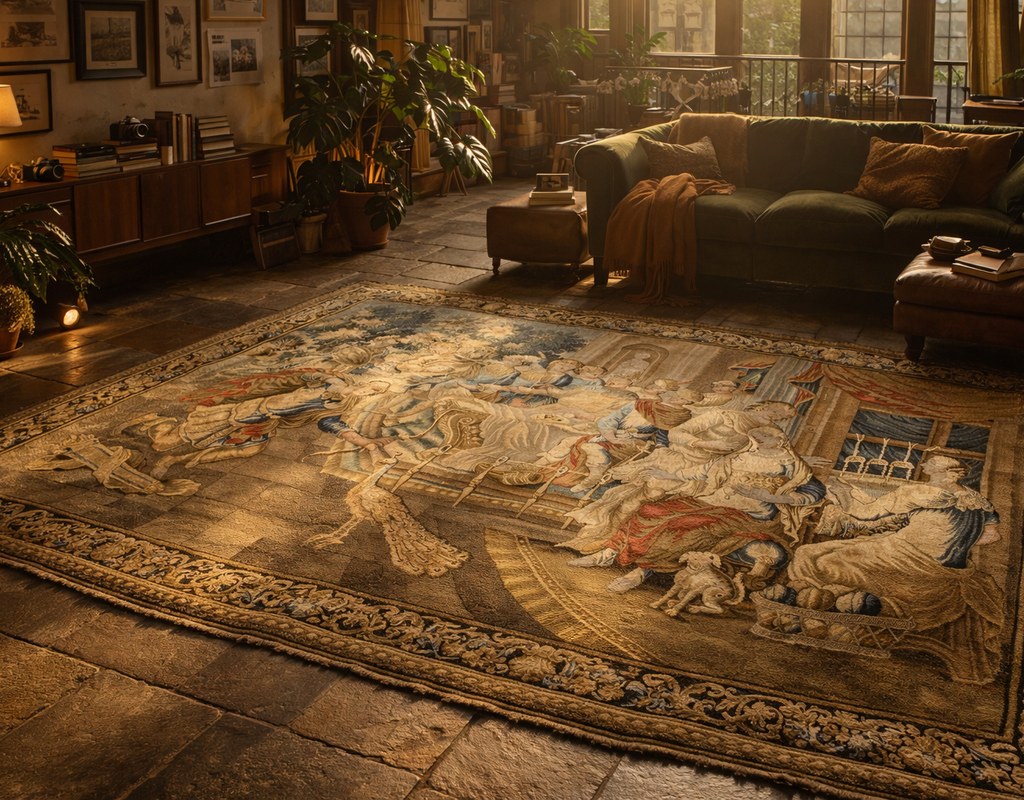
A vintage-inspired, story-rich tapestry rug anchors this cozy, dimly lit interior living space.
These scenes unfold within lush landscapes, often framed by floral or garden-inspired borders, merging the thrill of the hunt with the tranquility of nature. Unlike purely geometric or abstract designs, Persian hunting rugs tell a story—each knot contributes to a visual narrative, transforming the carpet into a woven canvas. Collectors often compare them to tapestries for their lifelike quality and richness of detail.
Why Are Hunting Rugs Still Sought-After?
The appeal of hunting rugs lies in their ability to function as both narrative art and luxury décor. They embody status and tradition, with origins in royal courts where hunting was a symbol of power and nobility. Owning a Shekargah carpet once marked wealth and refined taste, and today that legacy continues to attract collectors who value the artistry and cultural symbolism.
A vintage-style runner rug guides the eye down a warmly lit, rustic wooden hallway.
For decorators, these rugs offer striking focal points, blending history with visual drama. They are equally at home in classic interiors, where their storytelling complements antiques, or in modern spaces, where the boldness of the imagery creates contrast. Their longevity in demand comes not only from beauty but also from scarcity—authentic handwoven hunting scene carpets are rarities that hold or even increase in value over time.
Searcher Needs: History, Buying, Identification
Modern interest in hunting rugs reflects a mix of scholarly curiosity and practical buying intent. Searchers often want to know: What is a hunting scene rug? A hunting rug is defined as a pictorial carpet that portrays hunters and animals in pursuit, often framed by elaborate gardens or symbolic motifs. The Persian term Shekargah literally means “hunting ground,” and these designs became especially popular in Safavid Persia, where they were commissioned as courtly masterpieces.
Buyers and enthusiasts also seek guidance in identification and authenticity. Spotting a genuine hunting rug involves careful attention to motifs (such as the rendering of horses, weaponry, or mythical animals), materials (wool, silk, or mixed weaves), and the weaving technique that determines detail and knot density. Knowing these markers helps separate genuine Persian hunting rugs from modern reproductions or decorative imitations. Finally, the question of value drives many searches.
Collectors want to know if an inherited rug or a marketplace find is worth restoring, preserving, or investing in. Others are simply captivated by the artistry and want to understand how such pictorial rugs fit into today’s interiors. In both cases, hunting rugs remain highly relevant: they are tangible links between cultural history, artistic storytelling, and contemporary living.
Origins and Historical Development
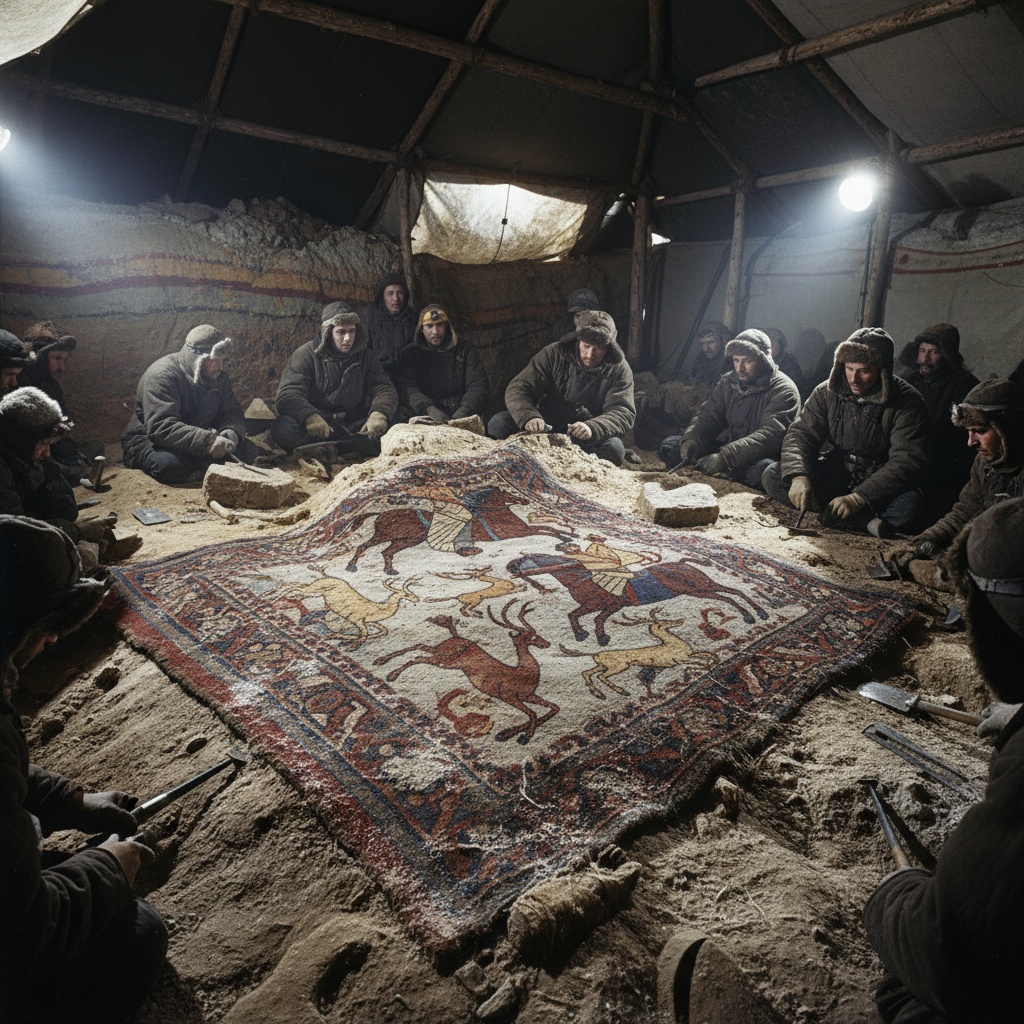
Early textile unearthed showing ancient hunting motifs.
Ancient Beginnings: The Pazyryk Carpet
The origin of hunting rugs can be traced to the Pazyryk carpet, discovered in a Siberian burial mound and dated to the 5th century BCE. This frozen relic is the earliest known knotted carpet in the world and features clear hunting motifs—men on horseback pursuing deer, framed by intricate borders. Scholars link the carpet to Persian royalty, suggesting it was both a ceremonial object and a marker of elite status. Its detailed depictions establish that from the very beginning, hunting imagery in carpets carried dual meaning: a celebration of power and a demonstration of weaving mastery. The Pazyryk carpet thus provides the first evidence of the hunting scene tradition, a visual language that would later resurface in grander forms.
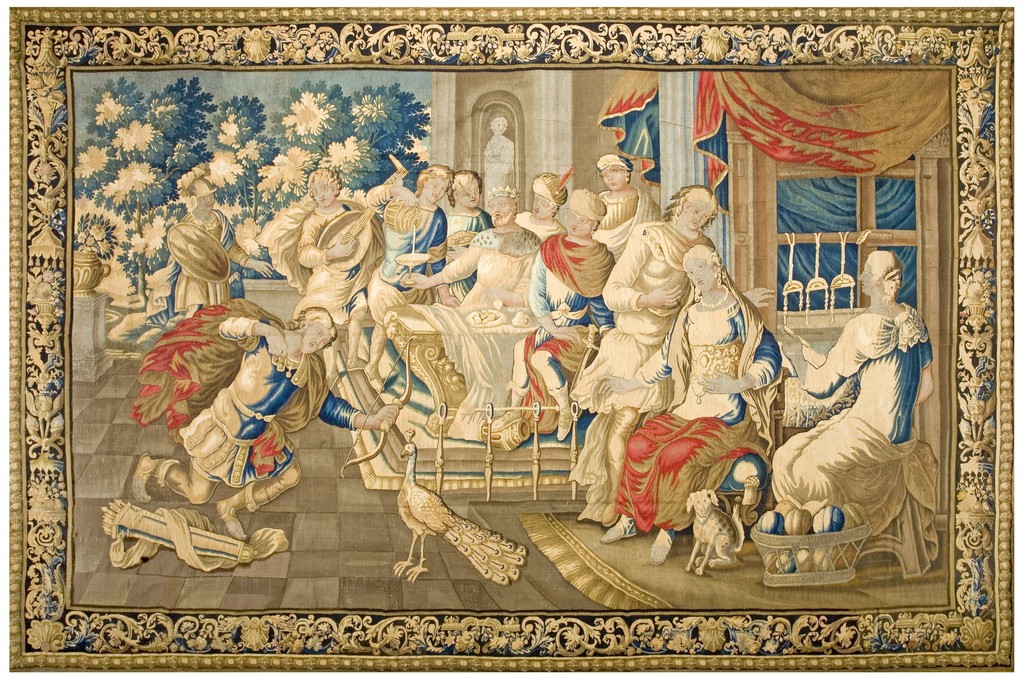
Antique Large Tapestry Belgium Flat Weave Rug by Rugs On Net
Disappearance and Revival Under Safavids
For nearly a millennium after the Pazyryk, hunting motifs in carpets largely disappeared. This absence is often attributed to Islamic art traditions, which emphasized geometry, calligraphy, and abstraction over figural representation. Yet by the 16th century, during the height of Safavid Persia, the hunting scene was spectacularly revived. Commissioned by royal courts, these Safavid hunting carpets became visual records of the aristocracy’s passion for sport and ceremony. The reappearance of these motifs signaled not only artistic innovation but also cultural assertion: depicting the hunt was a way to glorify kingship, strength, and divine favor. This revival marks a turning point in rug history, where narrative figuration reentered the vocabulary of weaving on a monumental scale.
Shekargah: The Archetypal Persian Hunting Ground Design
At the center of this revival was the Shekargah carpet. The word Shekargah translates to “hunting ground,” and in rug design it refers to expansive scenes of hunters chasing wild animals across stylized landscapes. These compositions are densely packed, with overlapping figures of horses, leopards, gazelles, and archers, all rendered with astonishing detail. What defines a Shekargah design is its sense of motion and abundance: animals leap across borders, hunters draw their bows mid-gallop, and the entire field feels alive with activity. Safavid weavers perfected this style, using silk and metallic threads to elevate these rugs into courtly treasures. The Shekargah became the archetype for all later hunting scene carpets, embodying both narrative artistry and technical brilliance.
Spread to Mughal India, Ottoman Turkey, and the Caucasus
The prestige of Safavid hunting rugs ensured their influence spread widely. In Mughal India, emperors commissioned Mughal hunting rugs that mirrored Persian designs but incorporated Indian flora and fauna, such as elephants and tigers. In the Ottoman workshops of Hereke, the theme took on a more decorative refinement, with symmetrical layouts and jewel-toned palettes. Meanwhile, in the Caucasus, hunting rugs blended Persian figural dynamism with regional geometric styles, resulting in bold, stylized depictions of horsemen and prey. Each adaptation localized the Shekargah tradition, proving its versatility as both a narrative and decorative form. The origin story of hunting scene rugs is therefore layered: from the royal Pazyryk carpet, to the long silence imposed by religious aesthetics, to the resplendent Safavid hunting carpets that redefined the form. The Shekargah design stands as the pinnacle of this evolution, while its spread across empires testifies to its enduring appeal.
Geographic and Cultural Variations
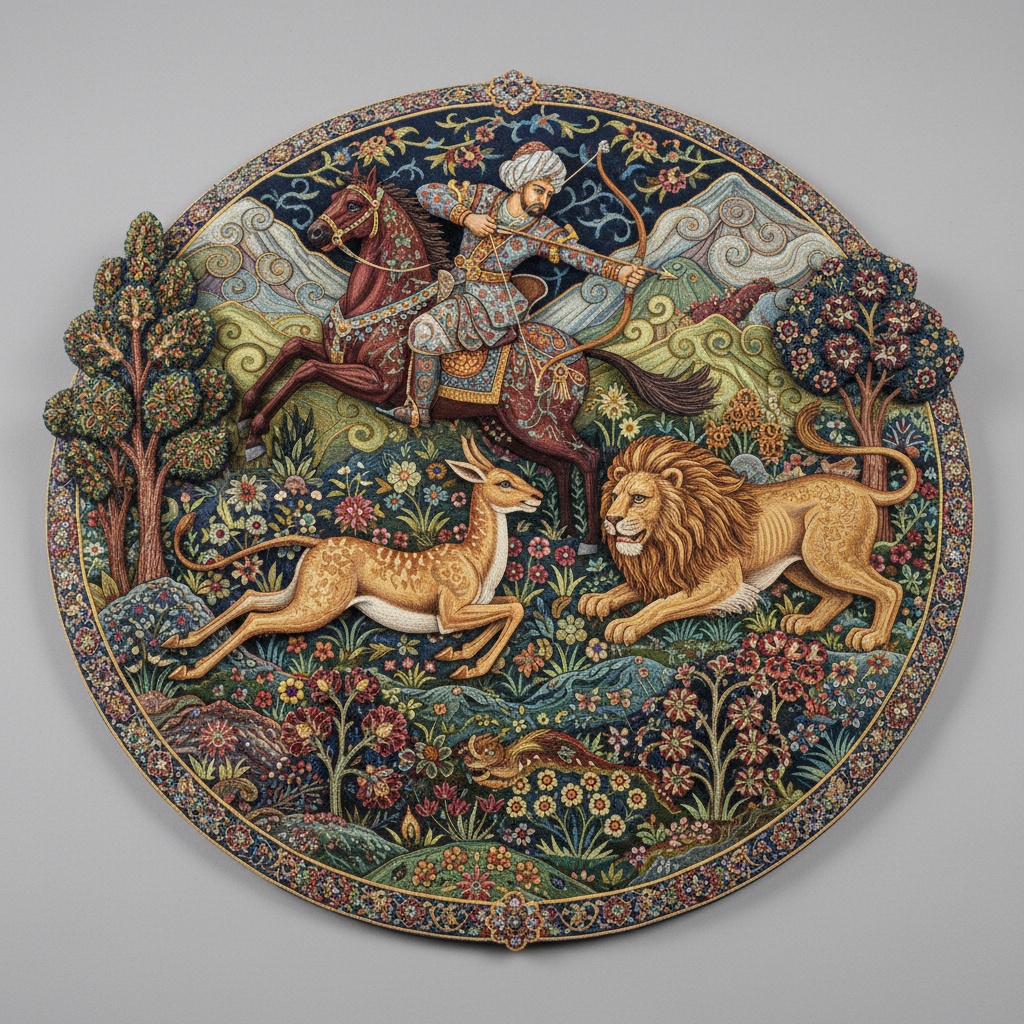
Central Asian hunting scene with rider, lion, and deer.
Persian Shekargah: Symbolism, Animal Types, Inscriptions
The Persian hunting carpet, particularly the Shekargah design, remains the gold standard of this tradition. These courtly masterpieces present hunters mounted on horses, bowstrings taut, pursuing gazelles, lions, and leopards across lush floral landscapes. Symbolism is rich: the lion might represent royal strength, the gazelle swiftness and divine beauty, and mythical beasts the ruler’s dominion over both real and imagined worlds. Inscriptions, often in poetic Persian verse, sometimes praise the patron or dedicate the carpet to a specific courtly occasion. High knot density, silk foundations, and metallic threads elevate these works into narrative art that was as much political statement as decoration. To answer directly: the animals most commonly featured in Persian hunting rugs include gazelles, lions, horses, leopards, and mythical beasts, each imbued with symbolic meaning.
Mughal India: Indian Fauna and Courtly Style
When the Mughals embraced hunting scenes, they adapted Persian templates to local tastes. A Mughal hunting scene rug often depicts elephants in the act of trampling or chasing, alongside Bengal tigers, peacocks, and exotic Indian flora. The style is naturalistic, with a painterly quality influenced by Mughal miniature painting. These rugs emphasize the grandeur of the emperor’s hunt, where the animals themselves, especially elephants, symbolize absolute power and control over nature. Indian court carpets thus stand apart from Persian versions by their distinct zoological cast and emphasis on imperial spectacle.
Ottoman/Hereke: Persian Influence and Imperial Taste
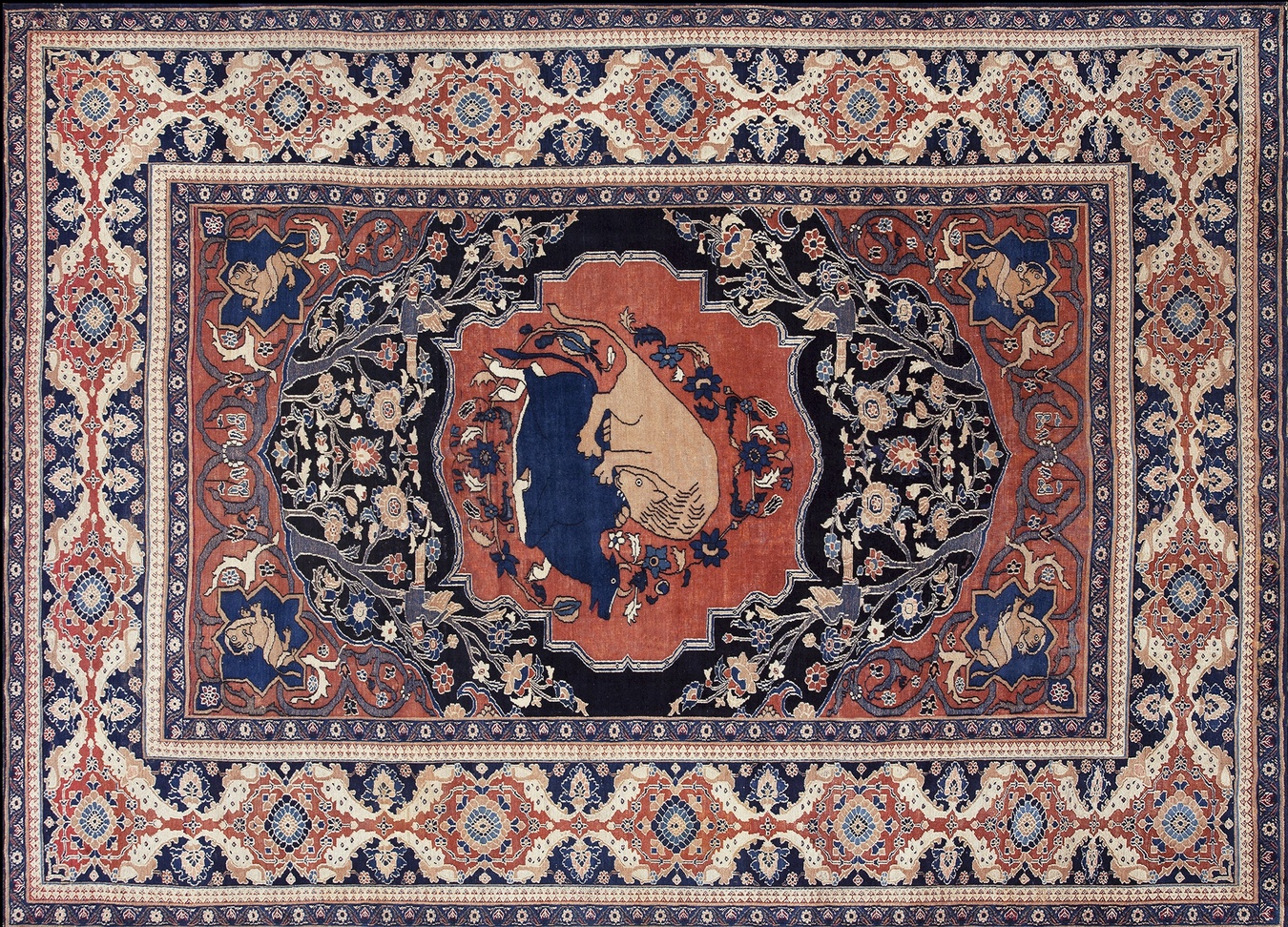
In the Ottoman Empire, especially in the Hereke workshops, hunting rugs took on an air of refined luxury. These Hereke hunting rugs leaned heavily on Persian Shekargah prototypes but softened them into more symmetrical and decorative compositions. Woven primarily in silk, they dazzled with jewel tones and intricate borders suited to palatial interiors. Rather than evoking the dynamic chaos of the hunt, Ottoman examples often present a more balanced and ornamental interpretation, reflecting the imperial preference for harmony and grandeur.
Caucasus: Folk, Geometric, Symbolic
In the Caucasus, particularly in Karabagh pictorial rugs, hunting motifs became bolder, geometric, and symbolic. Figures are stylized, with horsemen and animals reduced to angular, graphic forms. Rather than lush naturalism, these rugs carry a folkloric energy, where the chase is depicted as part of a larger symbolic language of protection, fertility, and resilience. Karabagh pictorial rugs often mix local symbolism with echoes of Persian influence, resulting in works that are vivid, direct, and highly collectible today.
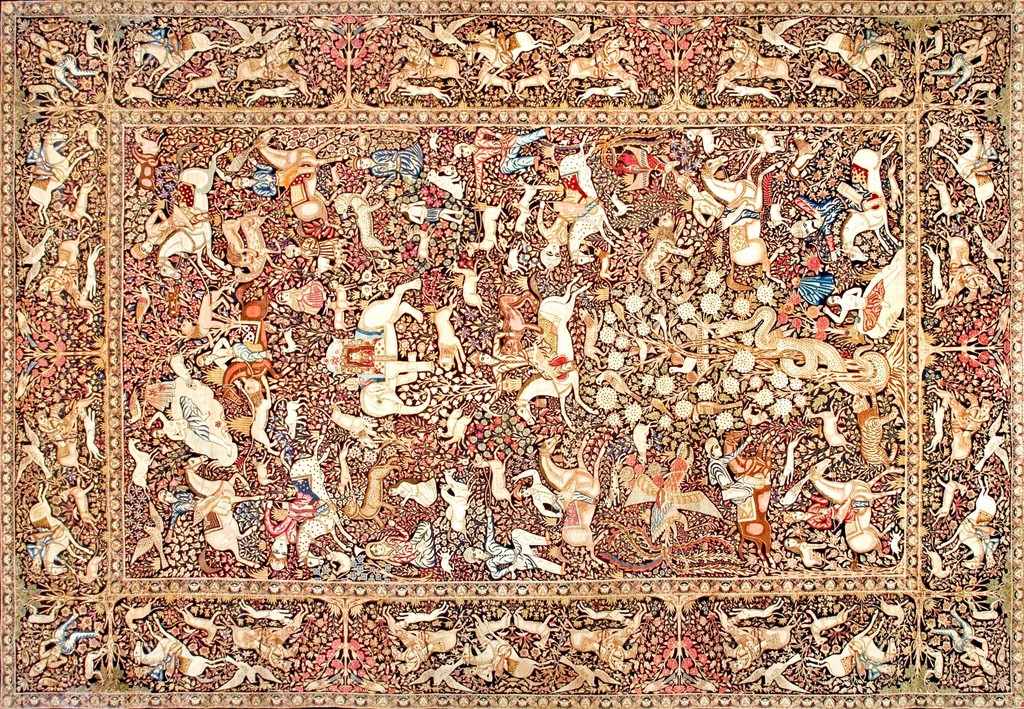
Rage Fine Weave Hunting Scene Design Antique Persian Kerman Animal Design Rug by Rugs On Net
Central Asia: Stylized and Rare Figural Scenes
In Central Asia, hunting motifs are rare but not absent. Among Turkmen or Uzbek groups, weaving traditions leaned toward abstraction and tribal symbols. When hunting imagery appears, it is stylized to the point of abstraction—horsemen reduced to geometric silhouettes, prey represented as symbolic animal totems. These carpets are scarce, but when found, they reveal how even highly abstract weaving cultures engaged with the universal theme of the hunt.
Folk vs. Courtly: Spotting Visual and Structural Cues
The difference between folk and courtly hunting rugs lies in both materials and intent. Courtly rugs, whether Persian, Mughal, or Ottoman, used silk, high knot density, and complex layered scenes, reflecting imperial commissions and ceremonial use. Folk rugs, by contrast, were woven in wool, with bolder outlines, simpler compositions, and often symbolic rather than naturalistic depictions of animals and hunters. The structural cues are clear: fine silk Shekargah carpets were art for the elite, while folk hunting rugs served as communal storytelling, embedding cultural values in more rugged, functional textiles. Regional hunting rugs thus reveal a spectrum of design and symbolism: from the lush realism of Persian hunting carpets to the animal spectacle of Mughal court rugs, the decorative refinement of Hereke hunting rugs, the folkloric symbolism of Karabagh pictorial rugs, and the rare abstractions of Central Asia. Each variation contributes to a larger story—how different cultures used the hunt as both symbol and spectacle in woven form.
Iconography: Identifying Hunting Scene Carpets
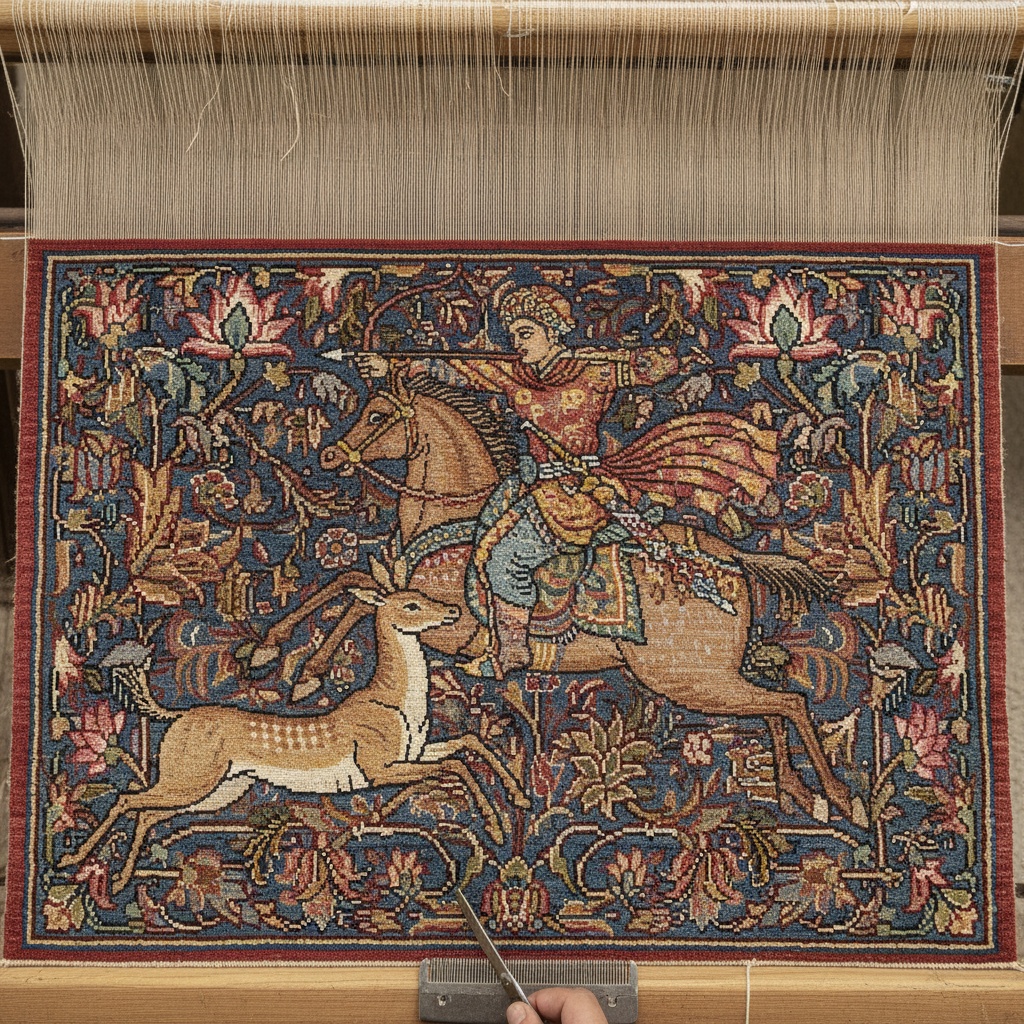
Detailed iconography of a mounted hunter and prey in a dense floral field.
Classic Motifs: Mounted Hunters, Prey Animals, Flora
The first step in identifying hunting rugs is recognizing their core motifs. At the center of nearly every authentic example are mounted hunters—horsemen galloping across the field with bows drawn, spears lowered, or falcons perched on gloved hands. They are locked in pursuit of prey animals, most commonly deer, gazelles, antelope, lions, leopards, wild boar, rabbits, and birds. In Persian traditions, mythical beasts such as dragons or phoenixes occasionally appear, linking the hunt to cosmic struggles between order and chaos. Surrounding these figures is a lush vegetal setting: scrolling vines, blossoming flowers, and cypress trees, motifs that evoke both the royal garden and the eternal cycle of life. Together, these elements define the authentic Persian hunting carpet, where narrative and nature intertwine.
Weapons, Accessories, and Mythical Creatures
- Bows and Arrows — Why: Signature Safavid weapon, symbolic of noble skill and divine justice.
- Spears and Swords — Why: Convey close combat and royal power; often shown raised dramatically.
- Bugles and Horns — Why: Call to the hunt, emphasizing ceremony and courtly ritual.
- Hunting Dogs and Falcons — Why: Indicators of elite sport, trained animals reinforcing mastery over nature.
- Dragons or Phoenixes — Why: Mythical additions found in some Persian carpets, symbolizing cosmic struggle or rebirth.
These accessories elevate the scenes beyond simple sport, embedding cultural values and imperial grandeur within the weave.
Field and Border Layouts
- Medallion with Hunting Scenes in Corners — Why: Combines traditional Persian medallion design with figural storytelling, popular in court commissions.
- Allover Hunting Field — Why: Continuous narrative with hunters and animals covering the surface; signals Shekargah design.
- Floral or Vine Borders — Why: Provide balance to the dynamic chase; reinforce garden symbolism.
- Border with Extended Hunting Scenes — Why: Indicates high artistry, as the action spills beyond the central field into the frame itself.
Understanding field and border design is critical for hunter motif identification, since structure often signals regional origin and workshop quality.
How to Identify an Authentic Hunting Scene Rug
- Fine Drawing of Figures — Why: Courtly rugs show lifelike anatomy and clothing; crude figures suggest later copies.
- Period Attire and Weaponry — Why: Safavid hunters wear turbans and robes; attire provides dating evidence.
- Material Quality — Why: Silk and wool piles with natural dyes indicate authentic origin, while synthetic fibers point to modern reproductions.
- Weave and Knotting — Why: Asymmetric (Persian) knots and high density are hallmarks of genuine Shekargah carpets.
- Inscriptions — Why: Poetry or dedications in Persian script signal authentic and often royal provenance.
For anyone asking, “How can I identify a classic hunting scene carpet?”, the answer lies in a checklist of iconography, structure, and material. Recognizing which animals are typical in Persian hunting rugs—gazelles, lions, leopards, horses, and antelope— alongside mounted hunters, floral backdrops, and refined detail is the foundation of accurate identification. Iconography is therefore the first key to identification. The interplay of field and border, the careful rendering of weapons and attire, and the choice of animals all separate an authentic Persian hunting carpet from decorative imitations. Collectors and decorators alike can avoid fakes by mastering these visual and structural cues.
Materials, Construction, and Weaving Techniques
Typical Materials: Wool, Silk, Cotton, Metal Threads
The foundation of every hunting motif carpet lies in its materials. In the grandest court ateliers, weavers used a silk pile knotted over silk or cotton foundations, often highlighted with threads of gold and silver. These luxury compositions, shimmering with metallic accents, were reserved for royalty and ceremonial display. By contrast, wool hunting rugs dominated village and export production—denser, heavier, and more robust, though less luminous than their silk counterparts. Cotton was typically used for warp or weft, providing stability, while natural fibers ensured longevity. To answer directly: the typical materials in antique hunting scene carpets include silk, wool, cotton, and occasionally metal threads, with the choice of fiber reflecting the intended audience, from royal courts to broader markets.
Knot Density and Its Visual Effect
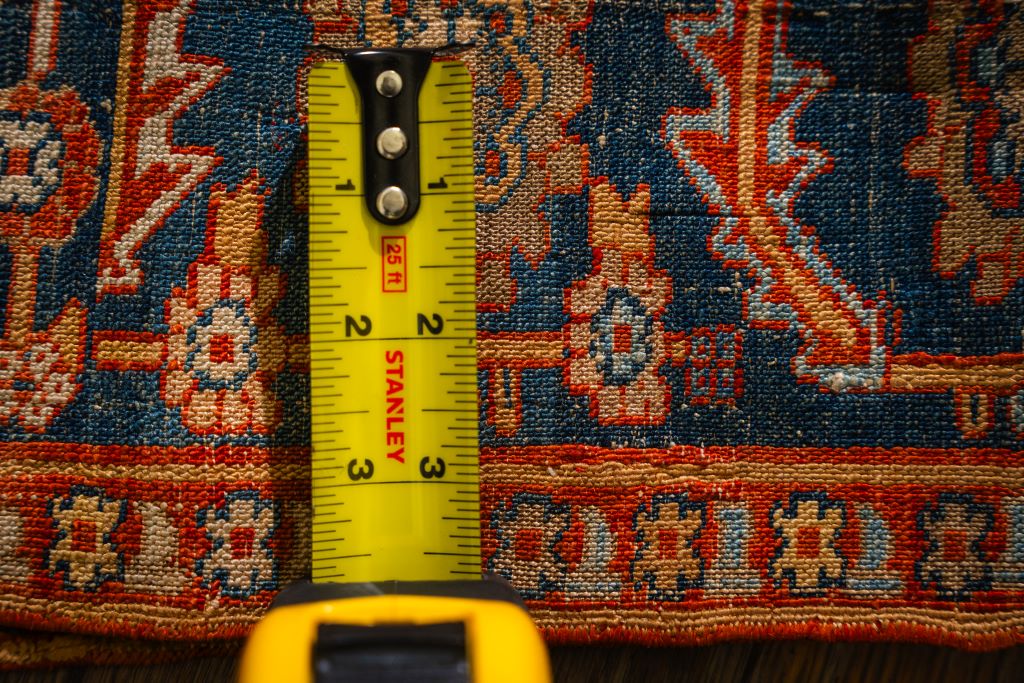
A detailed inspection of a richly colored oriental rug pattern while measuring its dimensions.
The knot count—the number of knots per square inch—plays a decisive role in how detailed a rug can be. In silk hunting carpets, densities often reach 700–800 knots per square inch or higher, enabling exquisite rendering of faces, horse anatomy, and intricate flora. The effect is painterly, with seamless curves and lifelike expressions. By contrast, wool hunting rugs usually have lower knot counts, producing bolder outlines and simplified forms. Thus, knot density directly affects detail in hunting scene rugs, with higher counts permitting finer storytelling and lower counts emphasizing graphic impact.
Silk vs. Wool: Look, Feel, Durability
- Silk Hunting Carpets — Luminous sheen, jewel-like colors, lightweight drape. They excel at intricate drawing and are considered masterworks of textile art. However, silk is less durable under heavy foot traffic, making these carpets better suited for display.
- Wool Hunting Rugs — Dense, warm, and resilient. They may sacrifice some precision of detail but gain in strength and everyday usability. Wool holds dye beautifully and withstands wear, making it the material of choice for folk and export weavings.
For those asking, “How are silk hunting rugs different from wool versions?”, the answer lies in purpose: silk offers brilliance and artistry, while wool provides accessibility and durability.
Court Atelier vs. Village Weaving
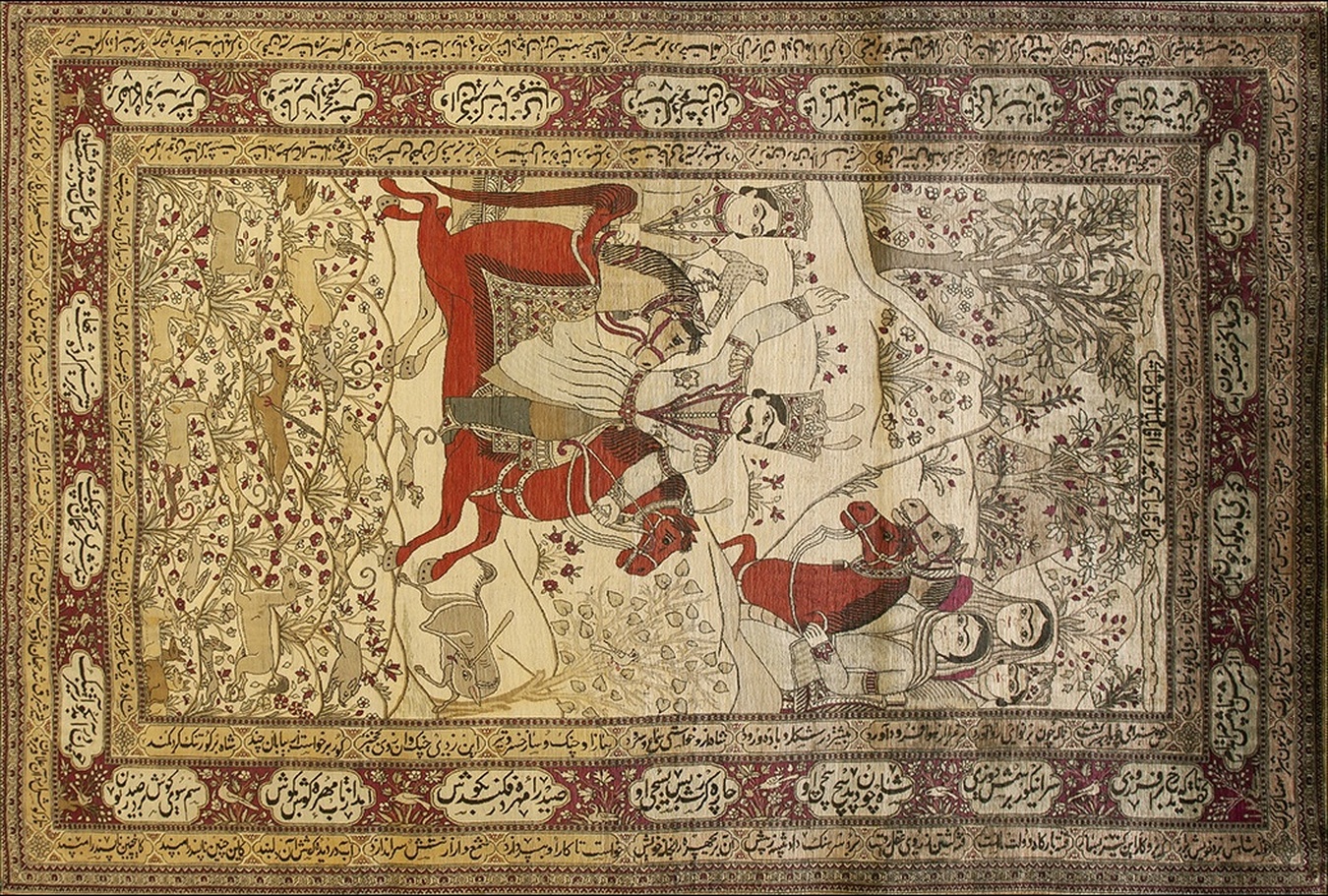
The contrast between court ateliers and village weaving is visible in both structure and design. Court rugs, produced under Safavid, Mughal, or Ottoman patronage, used the finest silk or high-grade wool, dyed with rare pigments, and followed detailed cartoons drawn by master designers. Figures are naturalistic, inscriptions are often present, and compositions are complex. Village rugs, however, rely on handspun wool, coarser tools, and oral design traditions. Motifs are bolder, proportions stylized, and weaving less uniform. These differences help specialists distinguish whether a hunting rug was woven for imperial display or as part of communal craft traditions.
Dyes and Color Palettes
Authentic hunting carpets employ natural dyes that remain vibrant centuries later. Persian silk rugs often feature deep indigo blues, cochineal or madder reds, saffron yellows, and soft ivory grounds, all enhanced by the reflective quality of silk. Wool hunting rugs lean toward earthier palettes—rust, brown, navy, and cream—suited to the materials’ texture and folk sensibility. The brilliance of the dye work is itself a marker of authenticity and often a clue to regional origin. In short, materials and knot density dictate detail, cost, and purpose. A silk hunting carpet dazzles with finesse and artistry, while a wool hunting rug balances strength and affordability. Whether woven in a court atelier or a village setting, construction methods remain the key to assessing authenticity, quality, and enduring value in these pictorial masterpieces.
Symbolism and Cultural Significance
Royal and Heroic Symbolism
The meaning of hunter motifs in rugs begins with royal power. Across Persia, Mughal India, and the Ottoman Empire, the hunt was not merely a pastime but a royal performance of courage, mastery, and divine right to rule. A lion leaping at prey symbolized strength and sovereignty; mounted archers embodied discipline and noble skill. By embedding such imagery in a hunting carpet, weavers transformed a functional textile into a declaration of kingship. These rugs operated as propaganda for rulers, projecting an image of heroic control over both nature and destiny.
Spiritual and Moral Allegories
Beyond courtly symbolism, symbolism in hunting rugs carries spiritual and moral undertones. The pursuit of prey could be read as the struggle of good against evil, or of the soul against temptation. The gazelle often represents innocence or divine beauty, while the phoenix suggests immortality and resurrection. Even water motifs or fish, when included, carry blessings of abundance and continuity. These allegories elevated the hunting rug beyond decoration, aligning it with themes of morality, faith, and cosmic order.
Storytelling and Status
As discussed in their origins, hunting rugs served as visual storytelling, recording royal hunts and heroic deeds for posterity. They also acted as markers of social status. A guest walking into a reception room dominated by a Persian hunting carpet would immediately recognize the owner’s wealth, refinement, and connection to aristocratic traditions. Folk versions echoed this status symbolism on a communal level, embedding local heroes, myth, and protection motifs into the warp and weft.
Why Lush Floral Backgrounds?
For those asking, “Why do hunting rugs include lush floral backgrounds?”, the answer is rooted in paradise garden symbolism. The abundant scrolling vines, blossoms, and cypress trees create a backdrop of harmony and eternal spring, evoking the Qur’anic image of paradise. By placing violent chase scenes against this garden-like setting, the weavers fused power with order, implying that true kingship exists within divine abundance. These floral backgrounds in carpets also balance the dynamic energy of the hunt, framing it within a vision of cosmic stability.
Modern Meaning and Reinterpretation
Today, collectors and designers value hunting rugs for their layered symbolism as much as for their artistry. In contemporary settings, they serve as conversation pieces—woven narratives that connect interiors to centuries of royal spectacle, myth, and moral allegory. For some, they are statement art, showcasing the timeless appeal of narrative design. For others, the symbolism in hunting rugs remains relevant: courage, innocence, harmony, and rebirth are as compelling in the 21st century as they were in Safavid Persia. The symbolism of hunting rugs is never singular. It is layered—royal, spiritual, and moral—woven into fields of lush floral abundance. For collectors and designers alike, understanding these meanings transforms the carpet from ornament into cultural text, a material link to the ideals and stories of past civilizations.
Collecting, Authentication, and Investment
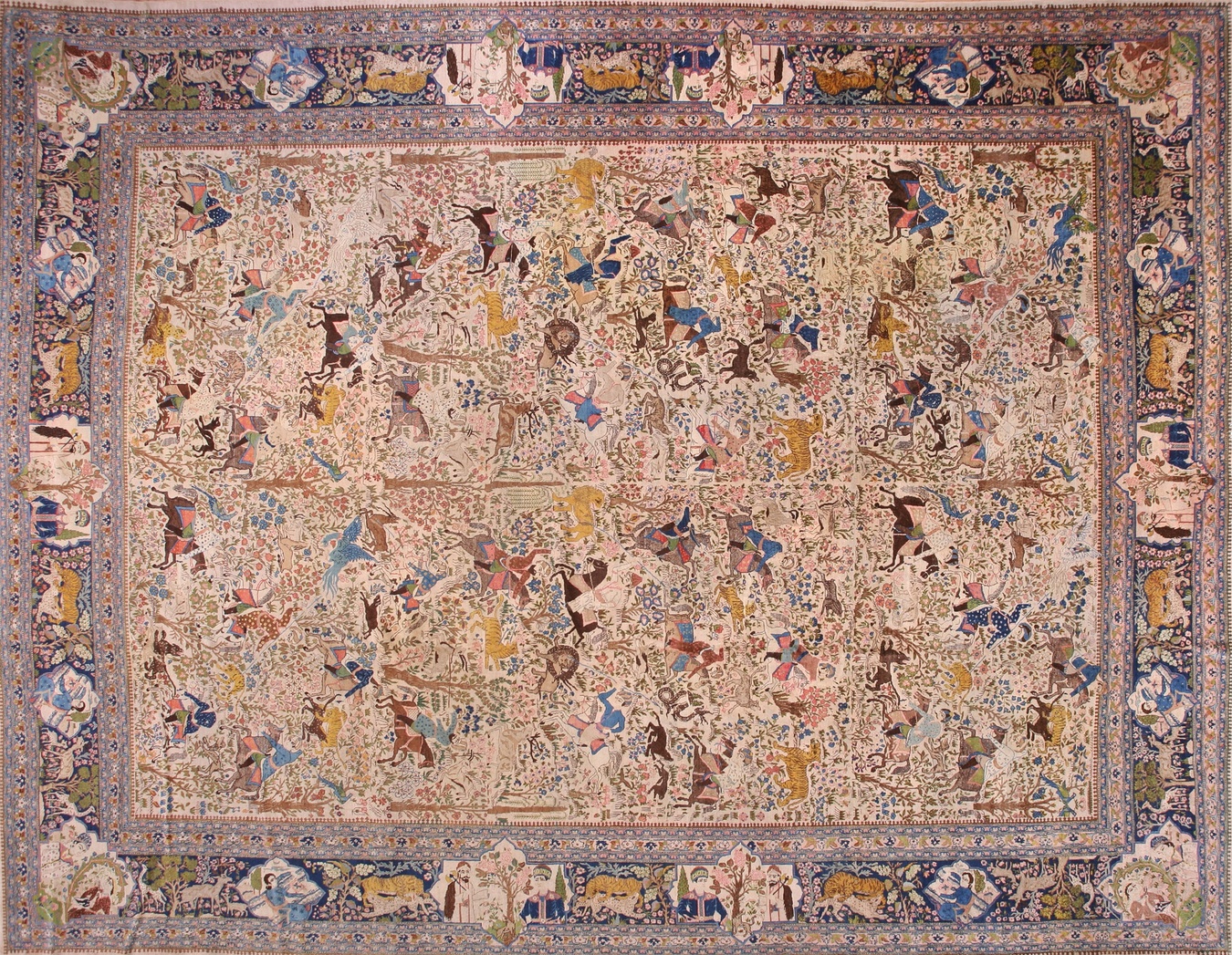
How to Identify, Date, and Value Classic Hunting Rugs
Identifying an authentic hunting carpet requires careful attention to structure, design, and materials. Classic Persian Shekargah rugs often feature silk or part-silk piles with gold or silver-wrapped threads, extremely fine knot counts (sometimes exceeding 700 knots per square inch), and detailed drawing of horses, hunters, and prey. Period-specific attire and weaponry, such as Safavid turbans or Mughal-style elephants, help date a rug to a particular dynasty. Inscriptions or dedications further anchor a carpet in time. Value is determined by the combination of materials, craftsmanship, condition, and documented history—where museum-quality pieces can command millions, while later village weavings remain more accessible.
Why Are Museum Hunting Carpets Prized?
Museum hunting carpets represent the pinnacle of textile art. Their value lies in rarity, imperial commission, and sheer artistry. The famous Safavid Shekargah carpets in collections like the Vienna Museum of Art History or the Poldi Pezzoli Museum in Milan are treasured not only for their luminous silk and precious metal threads but also for their role in documenting royal spectacle. Museums prize them as cultural artifacts, visual records of kingship, and masterpieces of narrative weaving. This explains why museum hunting carpets are valued so highly: they are irreplaceable expressions of courtly art, beyond the reach of private markets.
Tips for Authenticating a Safavid Hunting Carpet
- Expert Appraisal — Why: Only specialized scholars and auctioneers can confirm dating and authenticity of 16th–17th century rugs.
- Fiber Analysis — Why: Confirms use of silk, fine wool, or metallic threads typical of Safavid court workshops.
- Knot Structure — Why: Safavid rugs generally use asymmetrical Persian knots at very high densities.
- Inscriptions — Why: Dedications or poetic couplets help establish origin, date, and patronage.
- Provenance Papers — Why: Documentation of previous ownership, especially ties to museum or noble collections, increases trust and value.
These are the essential steps for how to authenticate a Safavid hunting carpet purchase.
Provenance and Its Impact on Value
Provenance—the documented ownership history of a rug—directly impacts price. A Shekargah carpet with a clear chain of custody through aristocratic families or museum exhibitions is worth exponentially more than an undocumented example. Collectors and investors alike ask, “Does provenance impact value of Shekargah rugs today?” The answer is unequivocal: yes, provenance often makes the difference between a valuable collector’s piece and an unsellable curiosity.
Insurance and Care Tips
- Specialist Valuation — Why: Standard home insurance rarely accounts for the true worth of antique carpets.
- High Replacement Coverage — Why: Ensures payout reflects actual market or auction value.
- Rare Item Clauses — Why: Protects against theft or damage specific to unique works of art.
- Professional Cleaning Only — Why: Prevents fiber loss and color fading.
- Rotate or Rest Rugs — Why: Prevents uneven wear and sunlight damage.
These guidelines address how to insure a high-value hunting scene Persian rug while ensuring long-term preservation.
Hanging Antique Rugs: Pros, Cons, Best Practices
Collectors often wonder, “Should I hang an antique hunting rug on walls?” Displaying rugs vertically protects them from foot traffic and allows them to be appreciated as narrative art. However, hanging exposes fibers to light and gravity, risking fading or distortion. Best practices include using padded support rods, avoiding direct sunlight, and rotating displays. While hanging is effective for museum settings, private collectors must weigh preservation against visual enjoyment.
Are Hunting Motif Carpets a Good Investment?
The question “Is a vintage hunting rug a good investment piece?” depends on age, authenticity, and quality. Genuine antique examples, particularly Safavid or Mughal hunting carpets, have consistently appreciated at auctions, sometimes breaking records. Mid-tier 19th- or early 20th-century examples also hold value, though appreciation is slower. The field is specialized, meaning successful investment requires expertise, documentation, and care. For seasoned collectors, hunting motif rugs represent both financial growth and cultural legacy.
Recent Trends and Auction Results
Recent years have seen a resurgence of interest in pictorial textiles, with authentic hunting carpets fetching high sums at Sotheby’s, Christie’s, and regional auctions. Safavid Shekargah examples remain nearly unobtainable, but even later Caucasian or Mughal hunting rugs are experiencing rising demand as collectors seek narrative art over purely geometric designs. This trend reflects a shift toward story-driven objects in the art market, reinforcing the enduring appeal of hunting carpets. In the world of collecting, authenticity and provenance are critical. Museum rugs are the masterpieces of the field, while private collectors look to secure pieces with history, artistry, and preservation potential. With proper authentication, care, and foresight, a hunting motif carpet can be both a treasured heirloom and a sound investment.
Modern Adaptations and Interior Use
Hand-Knotted vs. Printed or Machine-Made
For those asking, “Are modern hunting rugs printed or hand-knotted today?”, the answer is both. Luxury markets still offer hand-knotted modern hunting rugs, woven in workshops across Iran, India, and Afghanistan, often using wool or silk to echo the courtly tradition. Alongside these, mass-produced options exist: printed hunting rugs and machine-made carpets that replicate classic motifs at a fraction of the cost. Even tapestry-style wall hangings with hunting imagery are common, catering to buyers who want the aesthetic without the investment. The range spans from collectible heirlooms to accessible décor.
Affordable Hunting-Style Lodge Rugs
- Machine-Woven Rugs — Why: Durable, widely available, and budget-friendly, ideal for rustic cabins or lodge-style homes.
- Synthetic Fiber Carpets — Why: Easy to clean, stain-resistant, and accessible to families seeking practical hunting-themed décor.
- Big-Box Retail Options — Why: Widely sold online and in home stores, offering motifs inspired by deer, antlers, or rustic hunting lodge scenes.
- Printed Hunting Rugs — Why: Affordable alternatives to knotted rugs, functioning as decorative accents or wall pieces.
These lodge style carpets allow enthusiasts to enjoy hunting imagery without the cost of antique or high-end pieces.
Hunting Motif in Minimalist and Modern Décor
Collectors often wonder, “Can hunting motif carpets complement modern minimalist décor?” Yes—if approached thoughtfully. A designer pictorial rug with subdued colors or a pared-down scene can serve as striking statement rug décor, anchoring a minimalist room with visual storytelling. For modern interiors dominated by neutral palettes, a single hunting rug on the wall or floor becomes art, balancing simplicity with historic narrative. The key is contrast: one bold pictorial against a quiet backdrop.
Contemporary Designer Reinterpretations
How do contemporary designers reinterpret hunting scene motifs? Today’s weavers and textile artists often abstract the chase, using lighter palettes, geometric reductions of horses and hunters, or minimalist outlines. Others lift the imagery entirely into designer pictorial rugs that function as wall art rather than floor coverings. In some cases, the narrative is fragmented into panels or reimagined in modern tones—sage, gray, or muted gold—ensuring that the hunting theme resonates with contemporary aesthetics.
Placement, Care, and Display
- Feature Wall Hanging — Why: Highlights the narrative quality, protecting the rug from foot traffic.
- Under Glass Coffee Table — Why: Allows use in interiors while minimizing wear and stains.
- Low-Traffic Areas — Why: Preserves integrity of hand-knotted pieces, extending their lifespan.
- Rotation of Display — Why: Prevents sun fading and ensures even aging.
- Professional Cleaning — Why: Protects delicate fibers and preserves color vibrancy.
These strategies help both antique and modern hunting rugs thrive in contemporary homes. From hand-knotted heirlooms to printed hunting rugs for cabins, the hunting motif has adapted to modern lifestyles. Whether placed in rustic lodge interiors or minimalist lofts, a statement rug décor piece continues to carry the narrative power of the hunt—reinterpreted, but never forgotten.
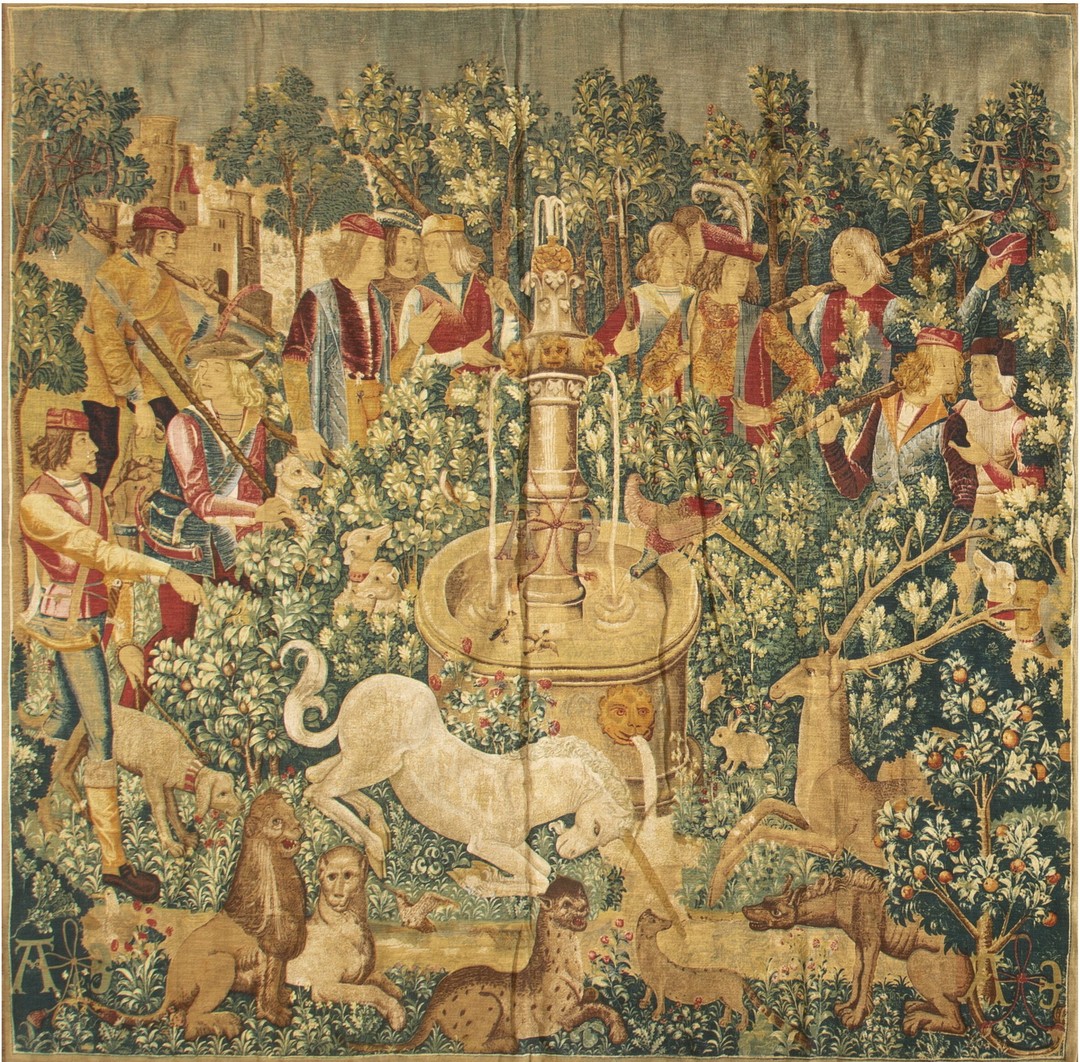
Explore a Few of Our Hunting Scene Rugs
FAQ
- How can I verify the age of a hunting carpet?
Seek an appraisal; experts assess knot type, dyes, wear, and structure. Comparisons to documented museum pieces help anchor dating.
- Are there ethical concerns with hunting imagery on rugs?
Hunting scenes reflect historical court pastimes, not modern advocacy. If concerned, select gentler vignettes—falconers with birds or deer in landscape.
- How do hunter motif rugs compare to “animal carpets”?
Animal carpets show creatures without hunters, often in repeating layouts. Hunter rugs focus on chase narratives—riders, dogs, and quarry in motion.
- What details make Persian hunting scene rugs so collectible?
Lifelike riders, layered foliage, and dynamic predator-prey scenes create depth. Cartouches, inscriptions, or rare silks can increase value.
- What time period are original Safavid hunting carpets from?
Most famed examples date to the 16th–17th centuries. Their courtly silk construction and knot density set the benchmark.
- Do hunter rugs pair well with pets and kids?
Choose sturdy wool hunter rugs; their busy scenes hide crumbs and paw prints. Avoid silk in playrooms or dining areas.
- What rug pad should I use under a hunter motif rug?
A felt/latex pad trimmed about 1–2 inches smaller than the rug adds grip and cushioning. It also reduces wear on the foundation.
- Are Caucasian or Kazak hunting-design rugs a thing?
Yes—Caucasian hunter rugs use bold colors and stylized riders and animals. They’re usually wool-on-wool with strong geometry.
- How do I spot a machine-printed “hunter rug” imitation?
Check the back: true hand-knotted rugs show individual knots and slight irregularities. Printed lookalikes have a mesh-like backing and perfectly uniform edges.
- What’s a typical size for hunter rugs?
Antique pieces can be palace-sized, but modern hunter rugs come in standards like 5×8, 8×10, and 9×12. Pictorial runners exist but are less common.
- Will a hunter rug fade in sunlight?
Yes—natural dyes can lighten with UV exposure. Keep out of direct sun and rotate the rug every 6–12 months.
- Can I hang a hunting carpet on the wall?
Yes—use a Velcro®/hook-and-loop textile mount or a sewn sleeve and rod. These distribute weight evenly and avoid puncturing the rug.
- How should I clean a hunter motif silk rug?
Vacuum gently without a beater bar and blot spills with a white cloth. For deep cleaning, use a specialist familiar with silk and vegetable dyes.
- Are silk hunting scene rugs durable for high-traffic spaces?
Silk hunting rugs are best in low-traffic rooms or walls. Choose dense wool hunter rugs for living rooms and entryways.
- Do hunter rugs work in modern interiors?
Absolutely—treat them as statement art on the floor or wall. Pair with neutral upholstery and let the scene’s movement provide contrast.
- What colors do hunter motif rugs usually feature?
Expect madder reds, deep indigo, ivory, and gold. Natural dyes create subtle abrash—gentle shade shifts across the field.
- Are hunter rugs considered pictorial rugs?
Yes—hunting scene rugs are a subset of pictorial rugs. They depict storytelling imagery rather than purely abstract repeats.
- How do hunting carpets differ from garden carpets?
Garden carpets map a “chahar bagh” plan with water channels and beds; hunting carpets show action scenes. One reads as a bird’s-eye garden, the other as narrative vignettes.
- What materials are common in hunter rugs?
Wool pile is typical; elite Safavid hunting carpets used silk pile with silk warps. Silk versions feel lighter and show sharper detail.
- Are hunting scene rugs always antique?
No—modern and vintage hunter rugs exist alongside antiques. Contemporary weavers reproduce classic scenes in standard sizes like 8×10 and 9×12.
- How do I recognize an authentic hunter motif Persian rug?
Look for asymmetrical knots, detailed figures, and medallion layouts with corner spandrels. Fine examples show cloud bands and dense flora woven with high precision.
- What symbols appear on hunter rugs and what do they mean?
Motifs can include the phoenix (immortality), hunting dogs (honor), and gazelles (innocence). These symbols often frame royal pastimes rather than religious scenes.
- What defines Persian hunter motif rugs versus Turkish or Caucasian versions?
Persian hunting scene rugs are naturalistic with archers on horseback and lush vines. Turkish and Caucasian hunter rugs skew more geometric, with bolder, angular figures and simplified animals.
- Where did hunting carpets originate?
Hunting carpets became famous in Safavid Iran, with court workshops in cities like Kashan and Tabriz. Silk examples from this era are museum pieces today.
- What are hunter rugs (aka hunting scene rugs)?
Hunter rugs depict mounted hunters chasing game—often deer, lions, or birds—amid foliage. The motif appears prominently in Persian carpets from the 16th–17th centuries.