
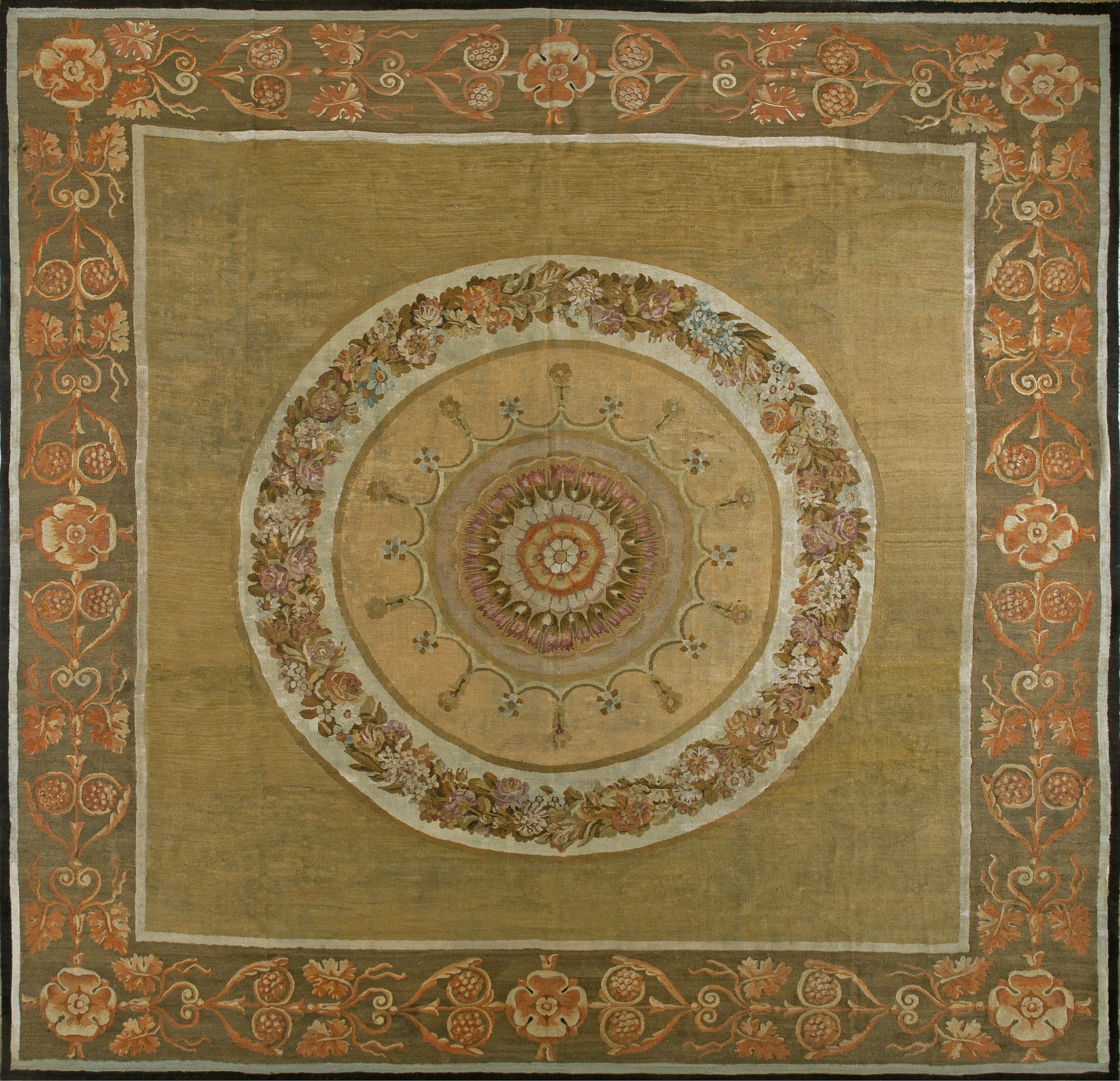
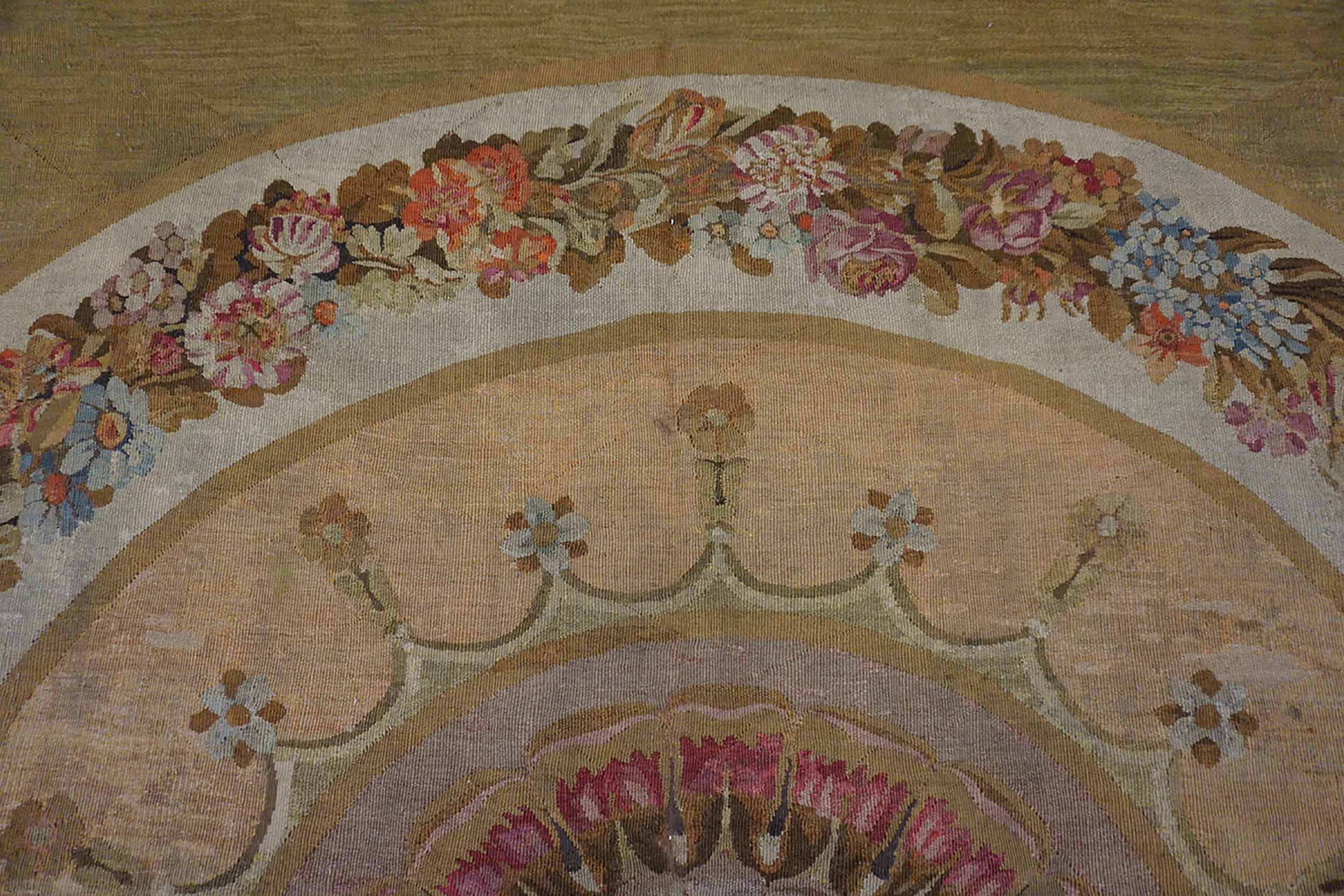
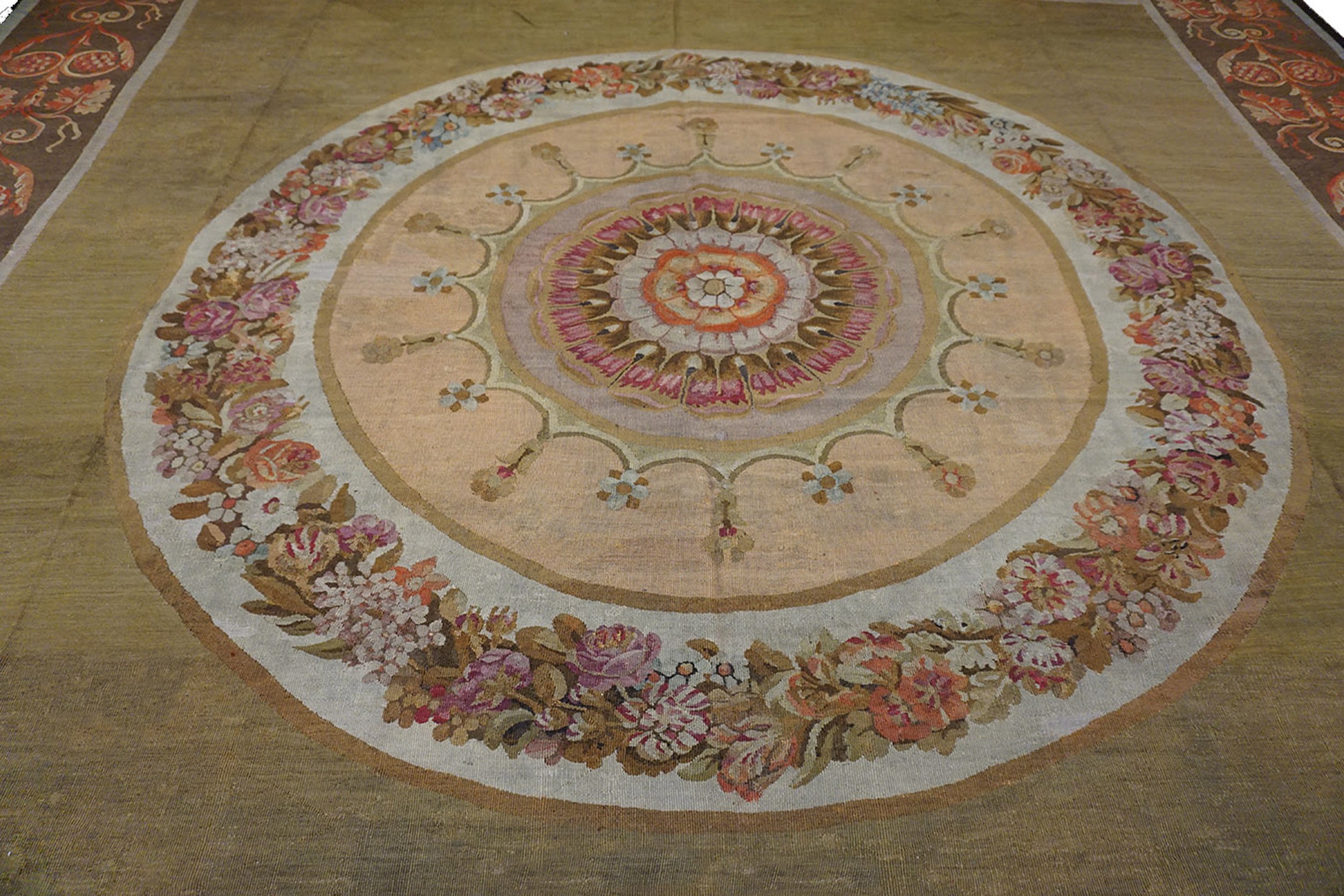
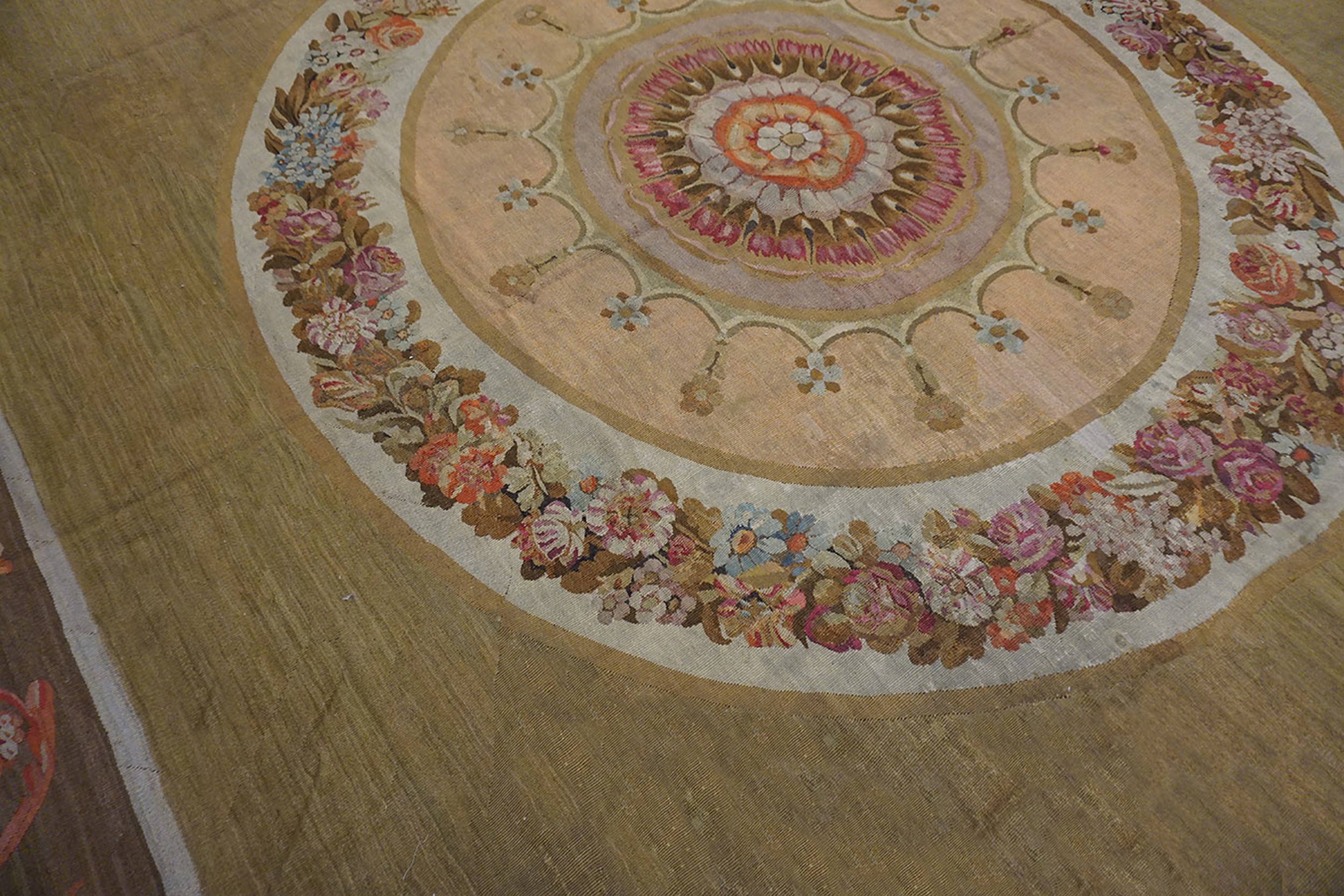
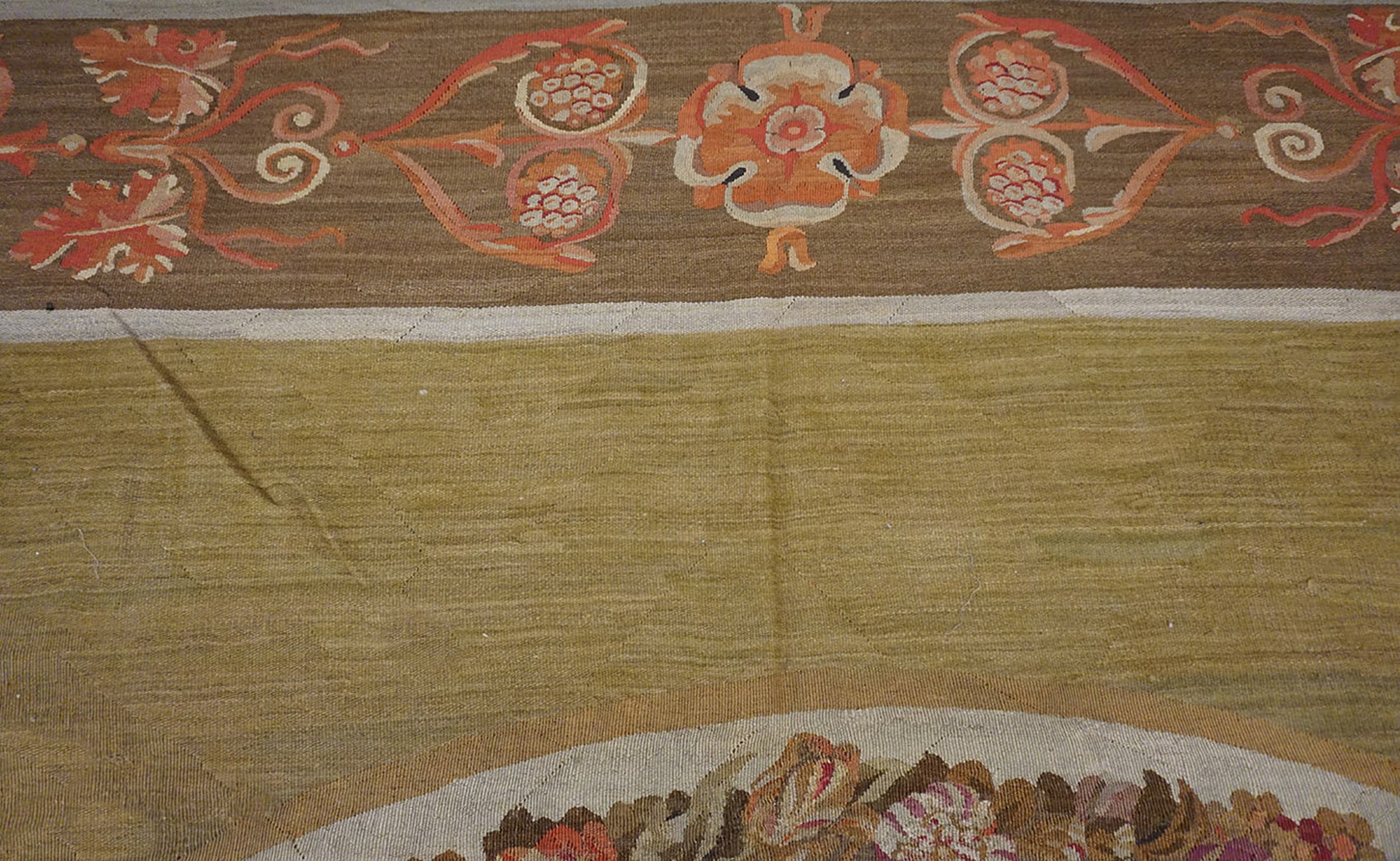
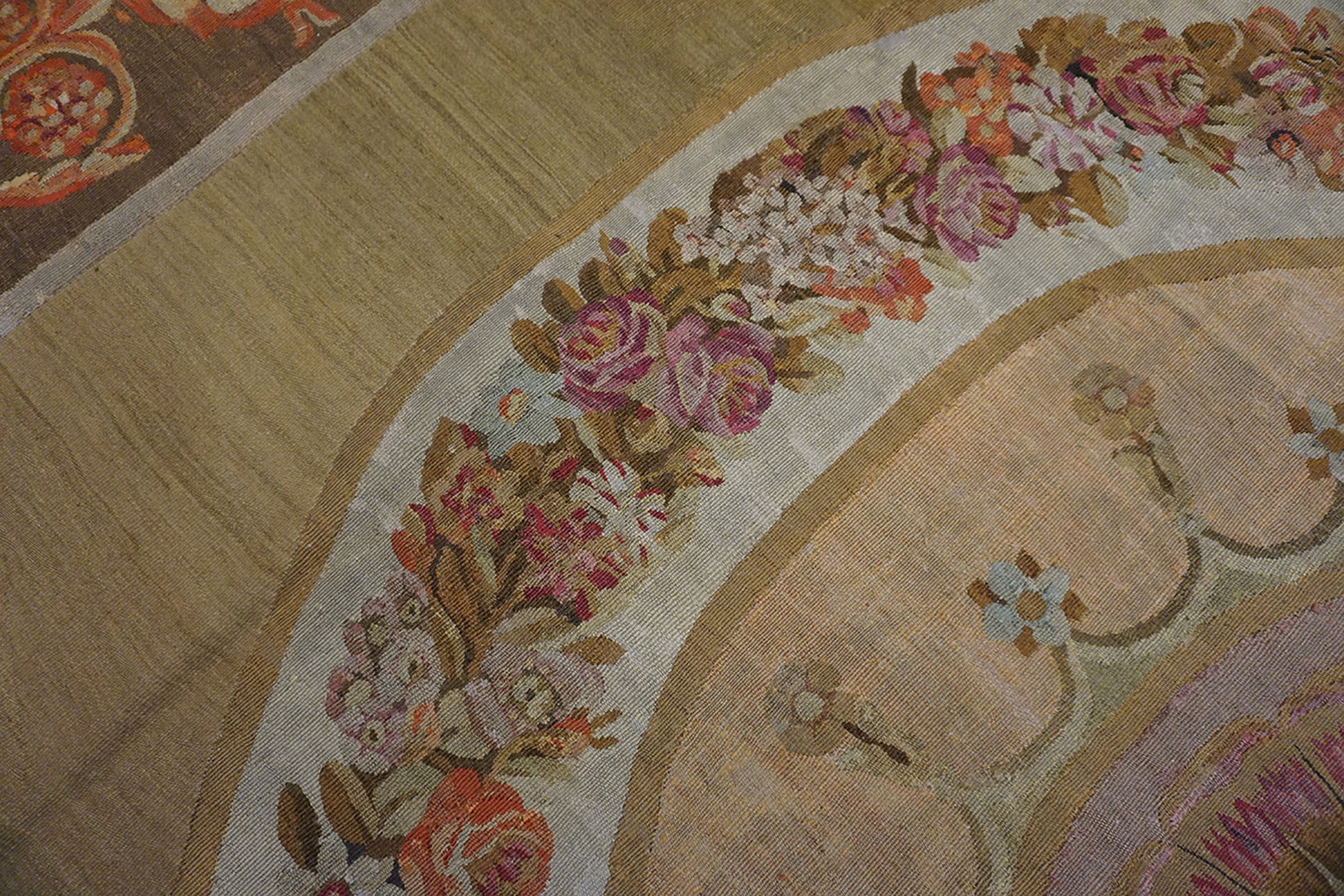
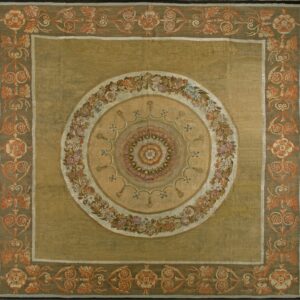
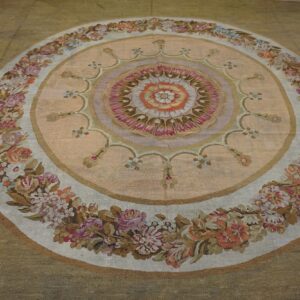
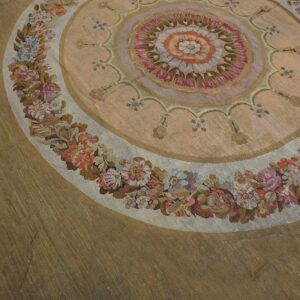
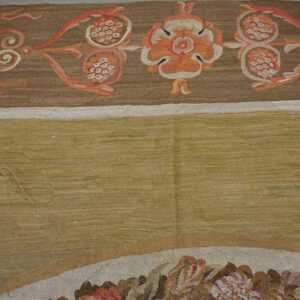
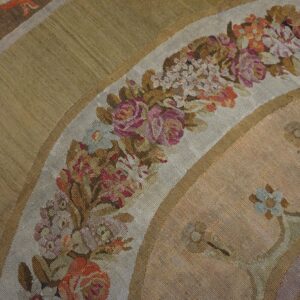
This rare antique French Aubusson rug, characterized by its square format and refreshing green palette, is a masterful example of the “pastoral neoclassical” style that flourished in central France during the nineteenth century. Unlike the heavy, knotted-pile Savonnerie carpets that were once the exclusive domain of the French royal court, the French Aubusson rugs utilized a sophisticated flatweave (or tapestry) technique. This method allowed for a far more painterly precision in the rendering of botanical details, as the weavers—working from the back of the loom—could manipulate the wool threads to create subtle tonal gradations, much like a brushstroke on canvas. The use of a verdant, mossy green as the primary field color is particularly significant; historically, such tones were intended to create a seamless visual transition between the interior salon and the lush, manicured gardens of a French chateau, effectively “bringing the outdoors in.”
The composition is anchored by a central floral medallion, a design hallmark that traces its lineage back to the Louis XVI era and the subsequent French Restoration. These medallions were often inspired by the “cartoons” (full-scale design sketches) produced by prominent court painters such as Jean-Baptiste Huët or Pierre-Josse Perrot. In this specific piece, the medallion is framed by delicate garlands and scrolling foliate borders, which serve to ground the exuberant floral motifs with a sense of architectural order. The symmetry and scale of the medallions were not merely aesthetic choices; they were designed to mirror the ornate plasterwork of the ceilings above, creating a harmonious “total environment” within the aristocratic homes of the nineteenth-century haute bourgeoisie.
From a historical perspective, the Aubusson region became the epicenter of European flatweave production because of the unique properties of the River Creuse. The river’s water was exceptionally low in lime, making it ideal for the washing and dyeing of wool, which resulted in the luminous, enduring colors seen in this beautiful antique French rug. During the mid-to-late 1800s, as the Industrial Revolution began to introduce machine-made alternatives, these hand-woven Aubussons remained the gold standard for luxury, prized for their “surface calm” and their ability to anchor a room without the visual weight of a high pile. Today, a square-format Aubusson in such a vibrant, unconventional colorway remains a true collector’s find, representing a period when French textile art reached a pinnacle of decorative refinement and botanical realism.