
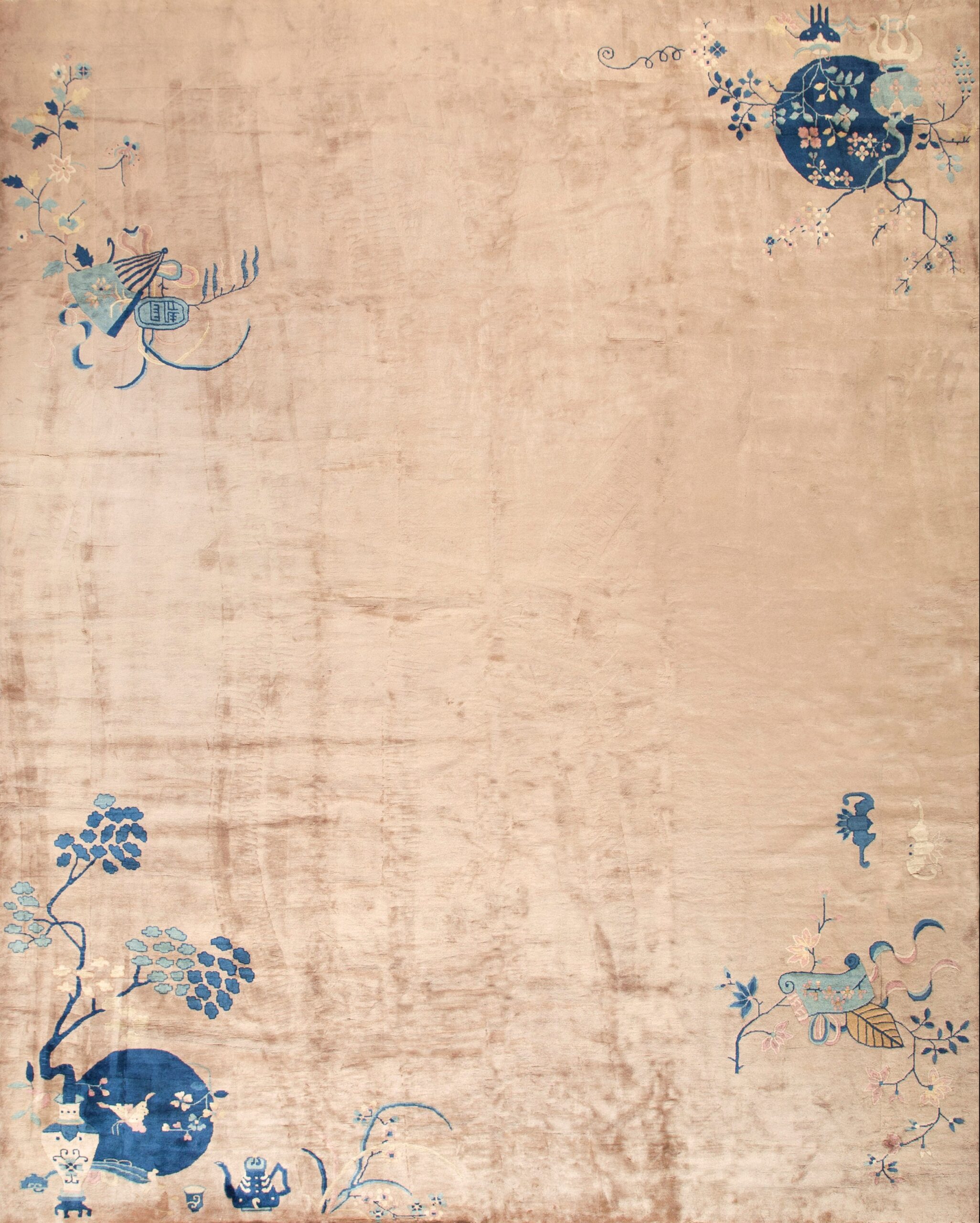
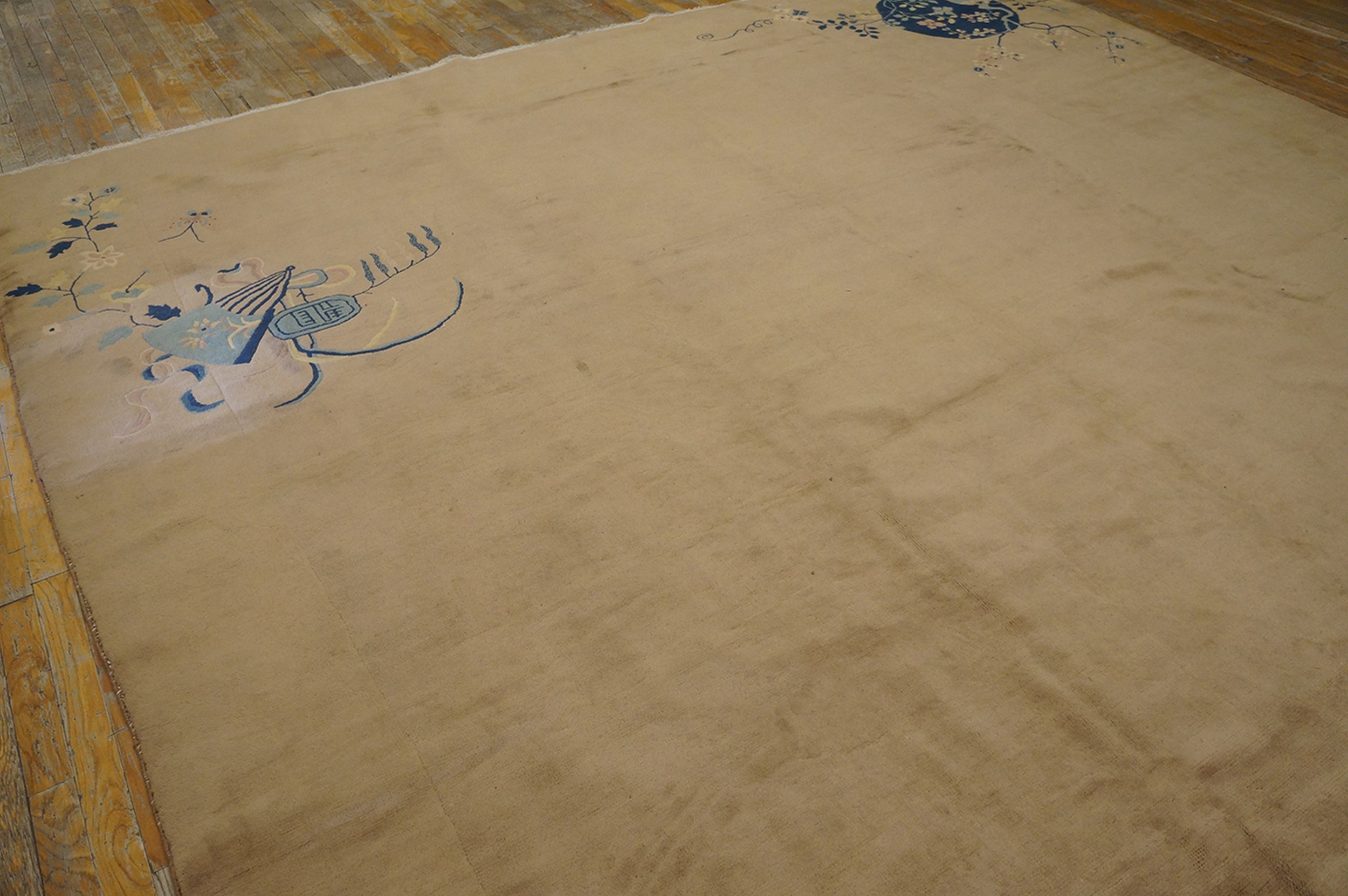
This early twentieth-century Chinese Art Deco rug is a quintessential example of the “East-meets-West” aesthetic that defined the high-glamour interiors of the 1920s and 30s. Produced during the “Golden Age” of the Tientsin and Beijing workshops, this room-size specimen represents a radical departure from traditional dynastic designs, favoring the bold, minimalist elegance that made Chinese Art Deco rugs a staple of the most fashionable jazz-age apartments in New York, Paris, and London.
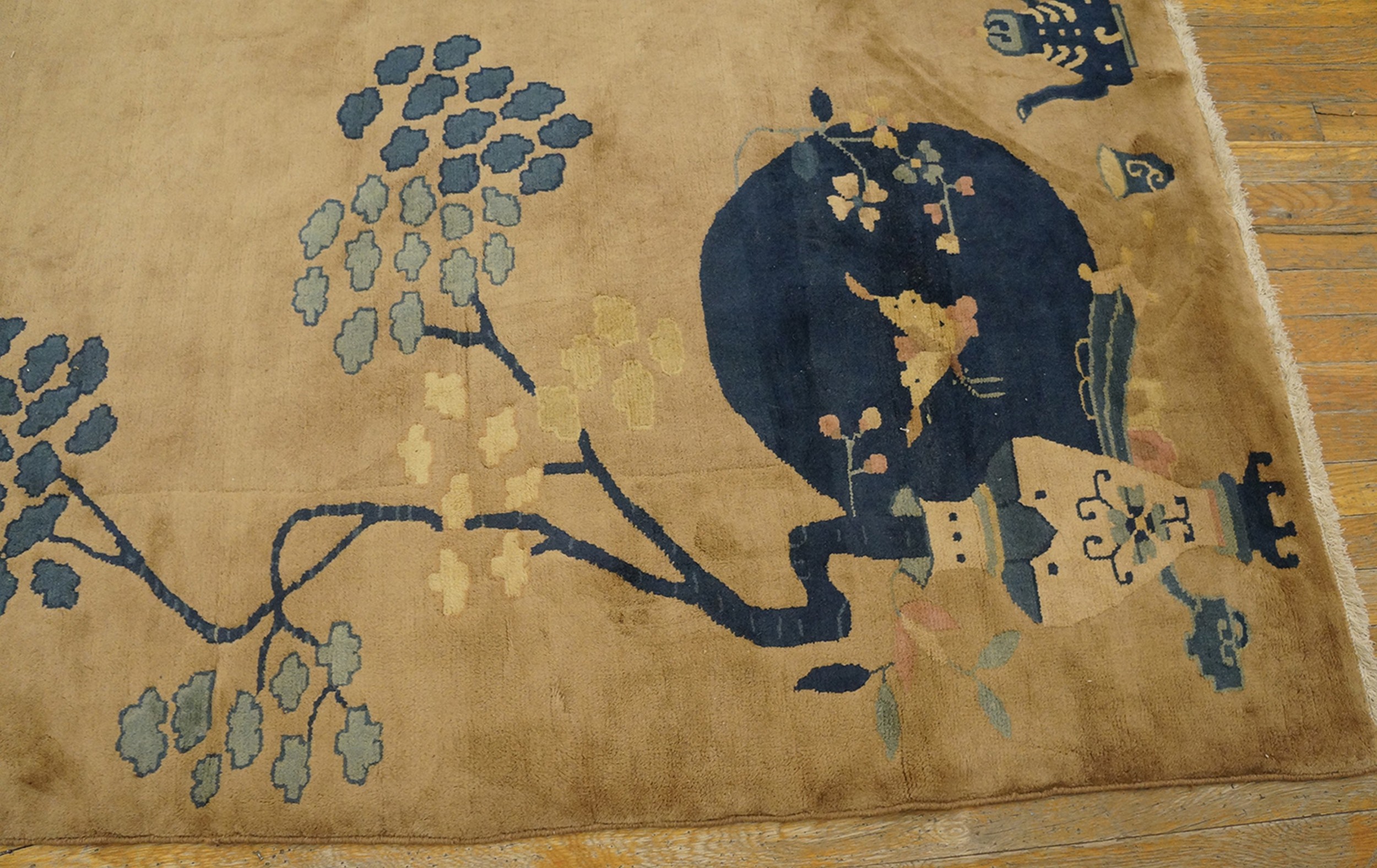
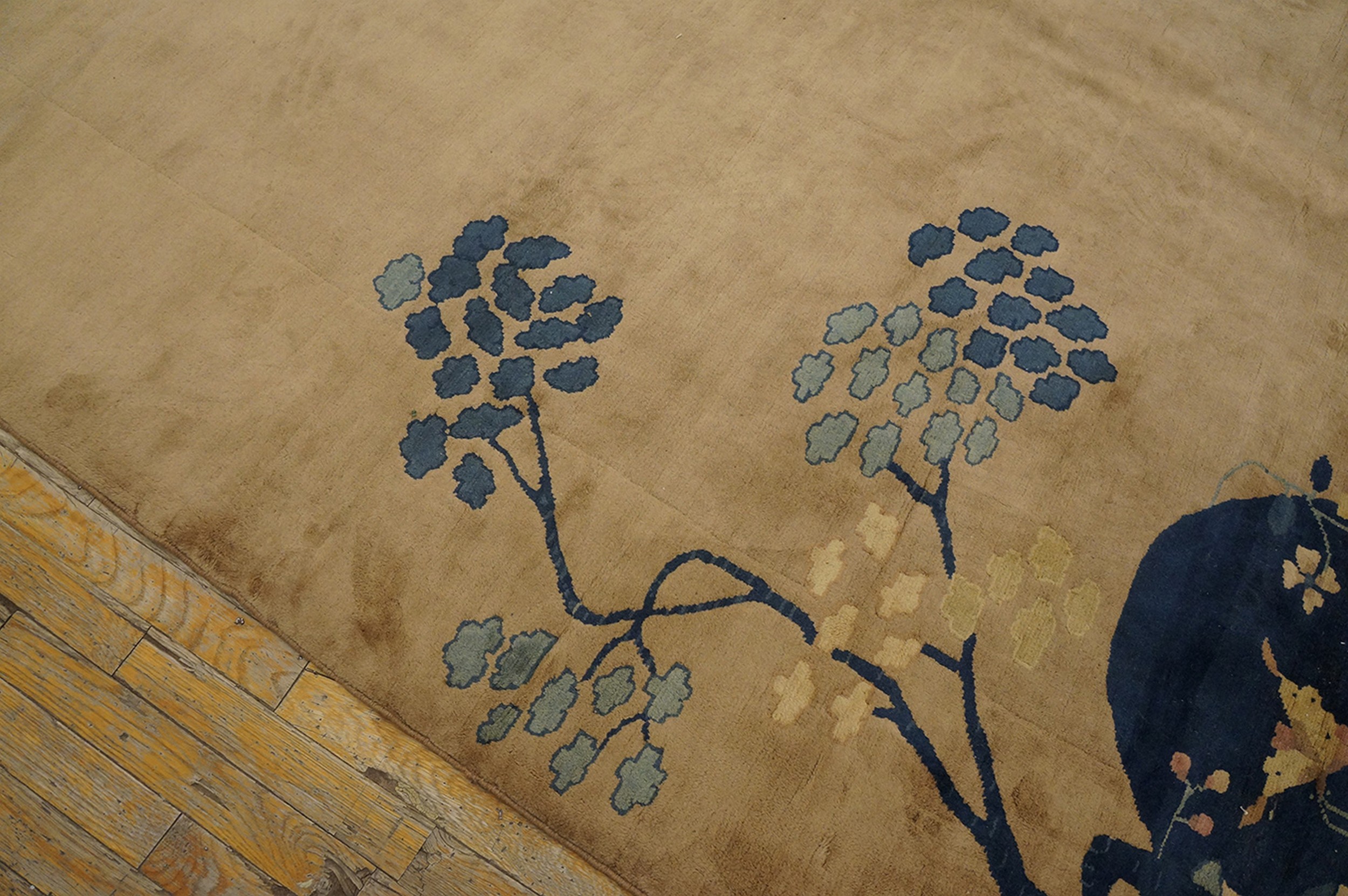
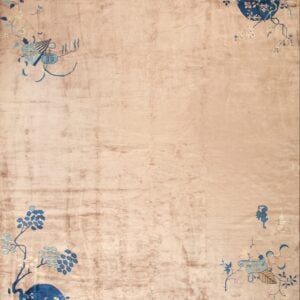
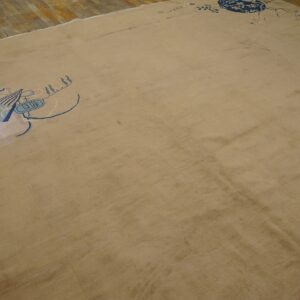
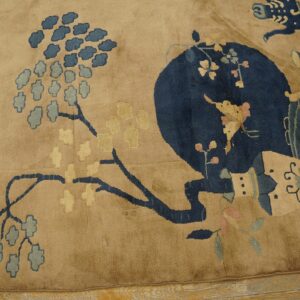
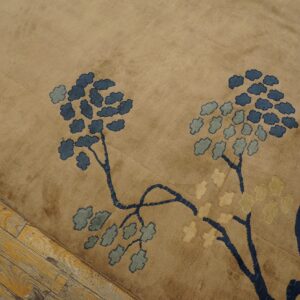
The composition is centered upon a magnificent open solid field design, a hallmark of the Art Deco period’s “Less is More” philosophy. By stripping away the dense central medallions of the previous century, the weaver created a vast, serene expanse that celebrates the sheer quality of the materials. The field is punctuated by asymmetrical floral or bird motifs—likely stylized peonies, lotuses, or cranes—which appear to “float” effortlessly in the corners or along the perimeter. This placement creates a sense of dynamic movement and “Modernist” balance that is highly sought after by contemporary interior designers.
The palette is anchored by a luminous and sophisticated Light Color foundation, typically a soft champagne, pale gold, or ivory. Against this tranquil, “moonlit” stage, the secondary accents are rendered in the vibrant, jewel-toned dyes characteristic of the era: emerald green, sapphire blue, and hints of coral or amethyst. Because this is an antique specimen, the colors possess a magnificent tonal depth and “shimmer.” The natural dyes have aged into a soft, matte patina, giving the light field a watercolor-like resonance that creates an atmosphere of airy, understated luxury.
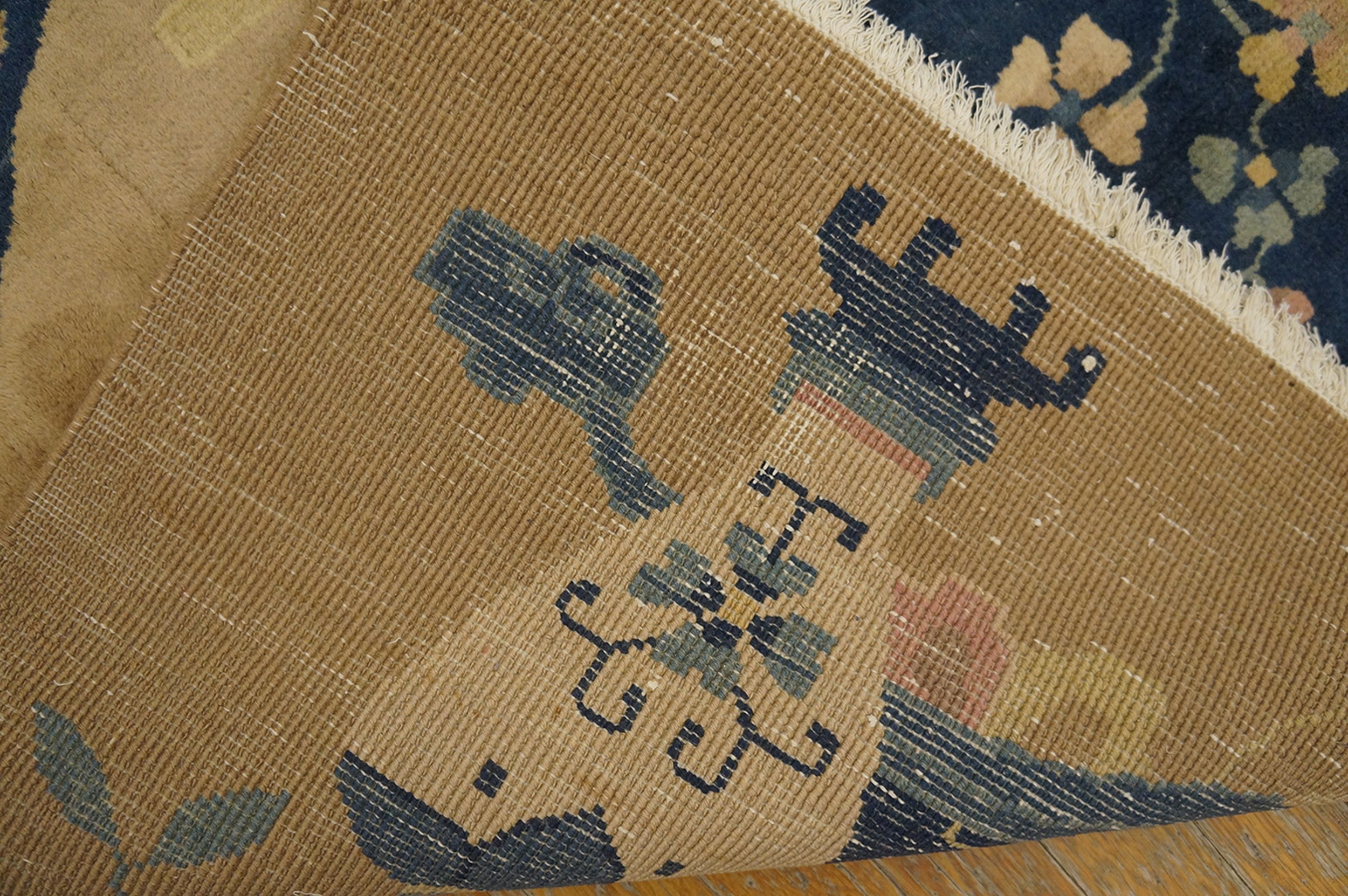
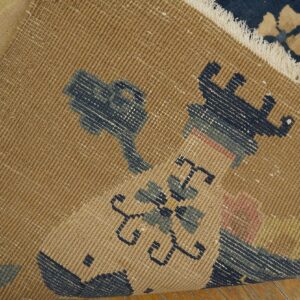
Technically, this Art Deco rug from China is prized for its exceptionally thick, “plush” pile and substantial, “heavy” handle. The wool used during this period was often a high-grade “Lustre Wool,” known for its long fibers and high lanolin content. This results in a surface that is not only incredibly durable but possesses a silky, reflective sheen. A defining feature of these rugs is the deep hand-carving or “incising” technique, where the weaver hand-clipped the wool around the decorative motifs to create a three-dimensional, sculptural effect, making the colorful blossoms “pop” against the open field.
The borders are often minimal or utilize a contrasting solid-color band to provide a sharp, architectural “frame” for the expansive field. To possess this Antique Chinese Art Deco Open Field rug is to own a piece of 20th-century design history. It bridges the gap between the ancient artistic traditions of the East and the avant-garde spirit of the West—transforming any grand space into a sanctuary of historical gravity, playful elegance, and serene, modern grace.