
Dhurrie Rugs: Meaning, Name, and Historical Origins
Discover our curated collection of stylish and durable Dhurrie rugs now.
Name and Etymology
The very word dhurrie has deep Indo-Aryan roots, reflecting both the antiquity and diversity of India’s weaving tradition. In Hindi, darī means “rug” or “carpet,” and it is connected to the Sanskrit dara, which described a mat woven of split cane. This ancient reference underscores how dhurries began as practical mats rather than decorative carpets.
Over time, regional variations enriched the vocabulary: in Punjab and Sindh, dari remains common; in Bengal, dhurrie shares space with satranji; and in parts of South India, the term jamkhana refers to similar flat-woven spreads. The differences in name highlight the pan-Indian nature of dhurrie weaving, where each region maintained its own linguistic and stylistic imprint, yet all belonged to the same family of flat-weave floor coverings.
Early Use and Evolution
Long before knotted carpets entered South Asia, flat-woven mats were central to daily life in India. Archaeological evidence, such as a 1st–3rd century CE fragment from Niya in Central Asia with links to Indian weaving, confirms that artisans had mastered techniques of interlacing cotton fibers more than two millennia ago.
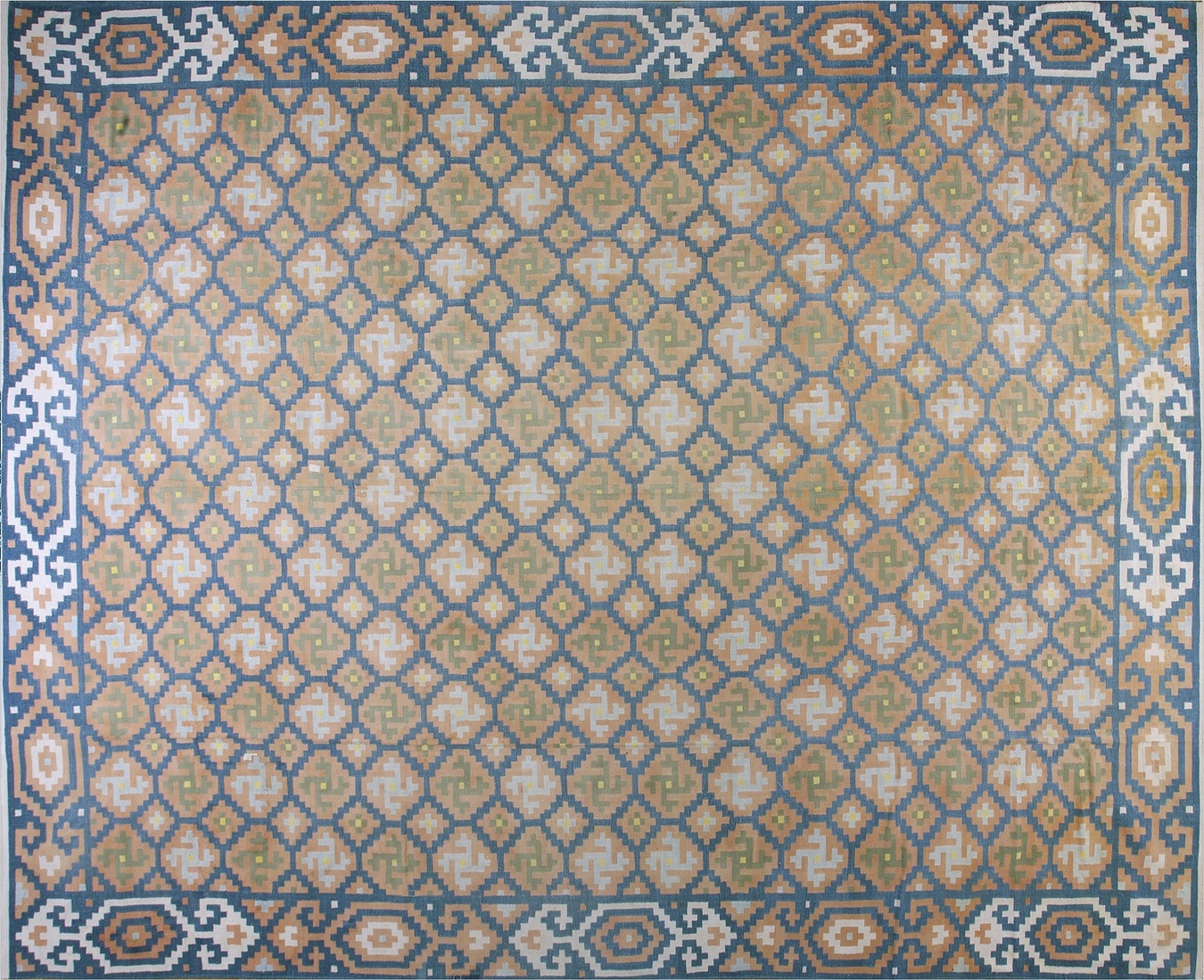
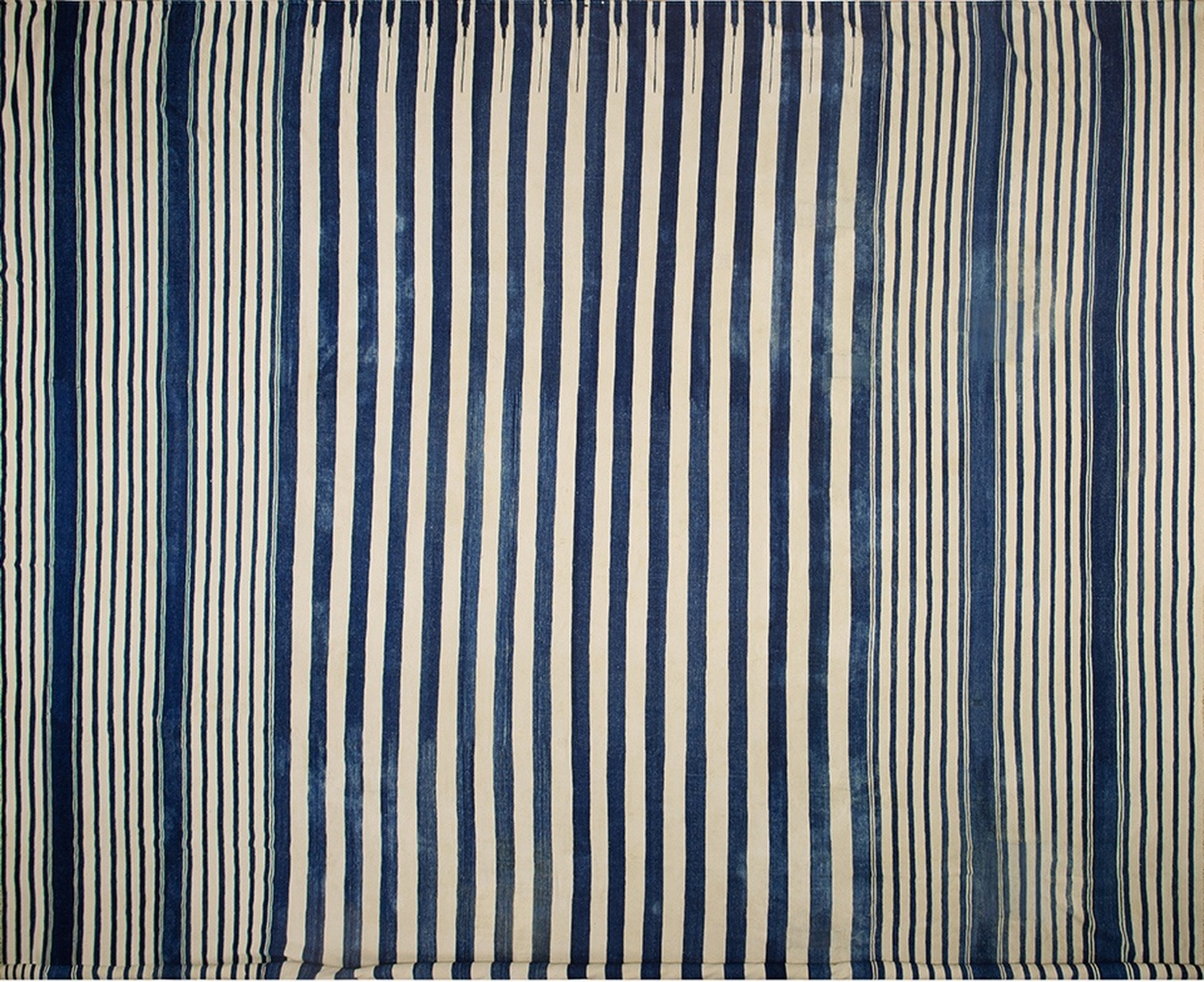
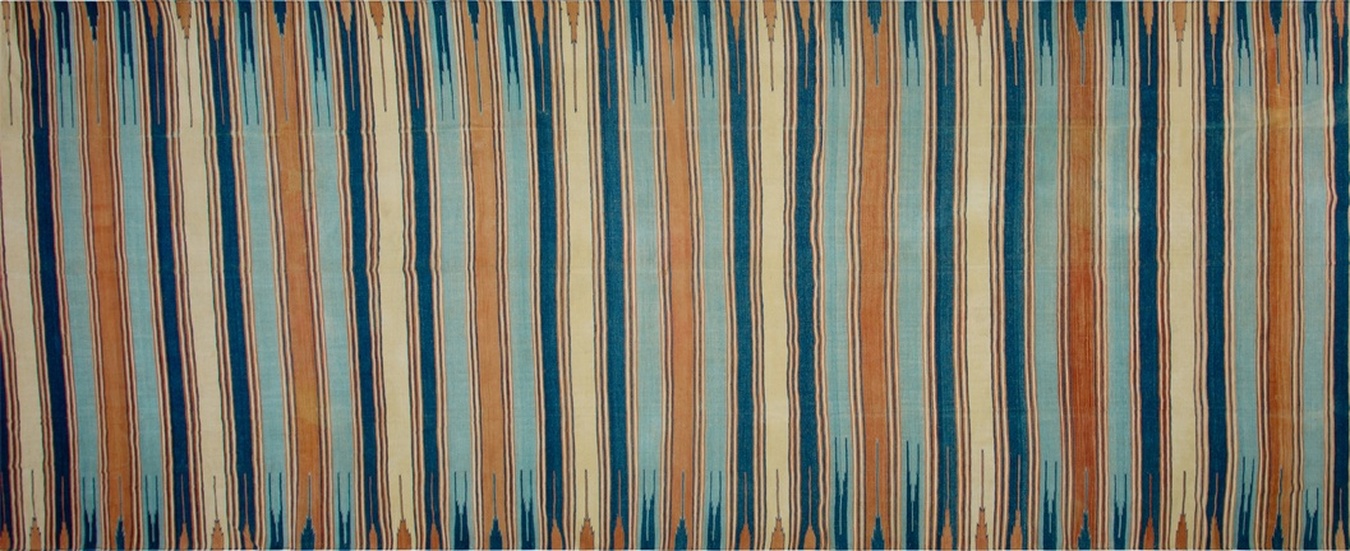
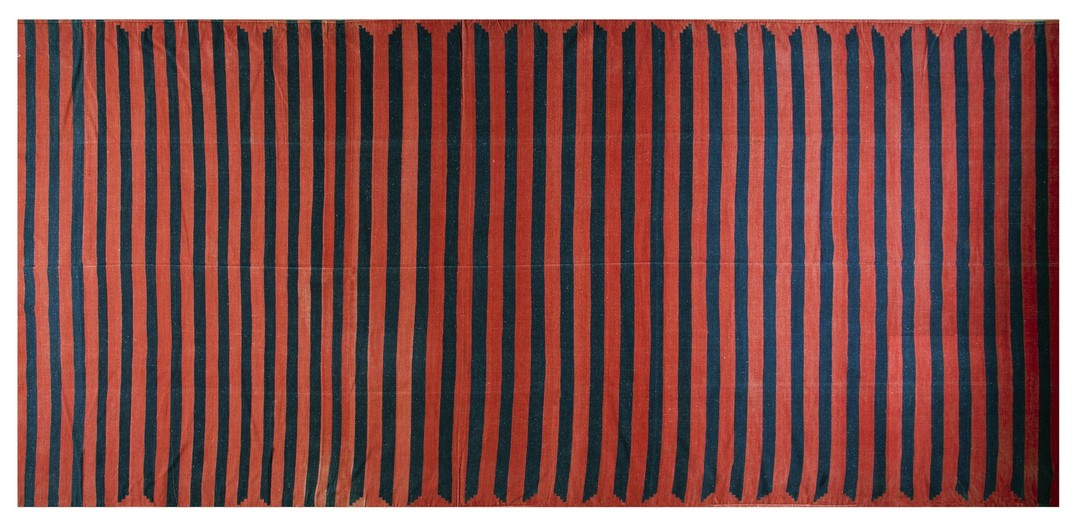
Antique Large Cotton Blue Flat Weave Rug – by Rugs On Net
These early mats and dhurries served multiple roles: cooling the floor in hot climates, providing seating for domestic and religious rituals, and functioning as versatile coverings for travel or bedding. By the medieval period, dhurries transcended their humble origins. While still integral to village households, they were also woven in more elaborate forms for palaces and temples, where geometric and floral designs elevated them into objects of prestige.
Under the Mughals (16th–19th centuries), court records describe satranji—a category of fine flat-weaves used for floor spreads and ceremonial purposes. In this era, dhurries bridged the world of folk craft and royal art, embodying both simplicity and luxury. The colonial period brought new dimensions to dhurrie production. The British favored these lightweight, durable weaves for their portability in barracks, clubs, and homes. Demand spurred exports abroad, while simultaneously leading to the establishment of prison weaving programs, particularly in northern India, where inmates produced standardized designs.
These practices helped sustain the craft, though they also reshaped it for commercial rather than cultural ends. In the 20th century, dhurries reemerged as symbols of modern Indian design. Innovators such as Shyam Ahuja revived them with bold stripes and contemporary palettes, introducing them to global markets as fashionable décor items. Today, dhurries remain a fixture of both local households and international design collections, embodying a journey from ancient mat to courtly textile to cosmopolitan accessory.
Timeline of Dhurrie Weaving
- First–3rd century CE: Evidence of early Indian flat-weaves (e.g., Niya textile fragment). — Why: Establishes the antiquity of Indian flat-weave traditions, predating knotted carpets.
- Medieval period (pre-16th century): Widespread household use of dhurries as mats, bedding, and ritual textiles. — Why: Shows their role as essential domestic and spiritual floor coverings.
- Mughal era (16th–19th centuries): Satranji dhurries appear in court inventories; designs grow more sophisticated. — Why: Marks the elevation of dhurries into elite cultural settings.
- Colonial era (18th–19th centuries): British patronage increases production; prison weaving institutionalized. — Why: Demonstrates how global trade and colonial governance reshaped dhurrie production.
- Modern revival (20th century–present): Designers like Shyam Ahuja reinvent dhurries for global décor markets. — Why: Confirms their resilience and adaptability across centuries.
Longevity and Origins Answered
Where did dhurrie rugs originate historically? Dhurries originated in India as flat-woven mats, deeply rooted in the subcontinent’s domestic and ritual culture, later refined in Mughal courts and colonial markets.
How long have artisans woven dhurries? Artisans have woven dhurries for over 2,000 years, making them one of the oldest continuous weaving traditions in India.
Geographic Spread & Regional Styles
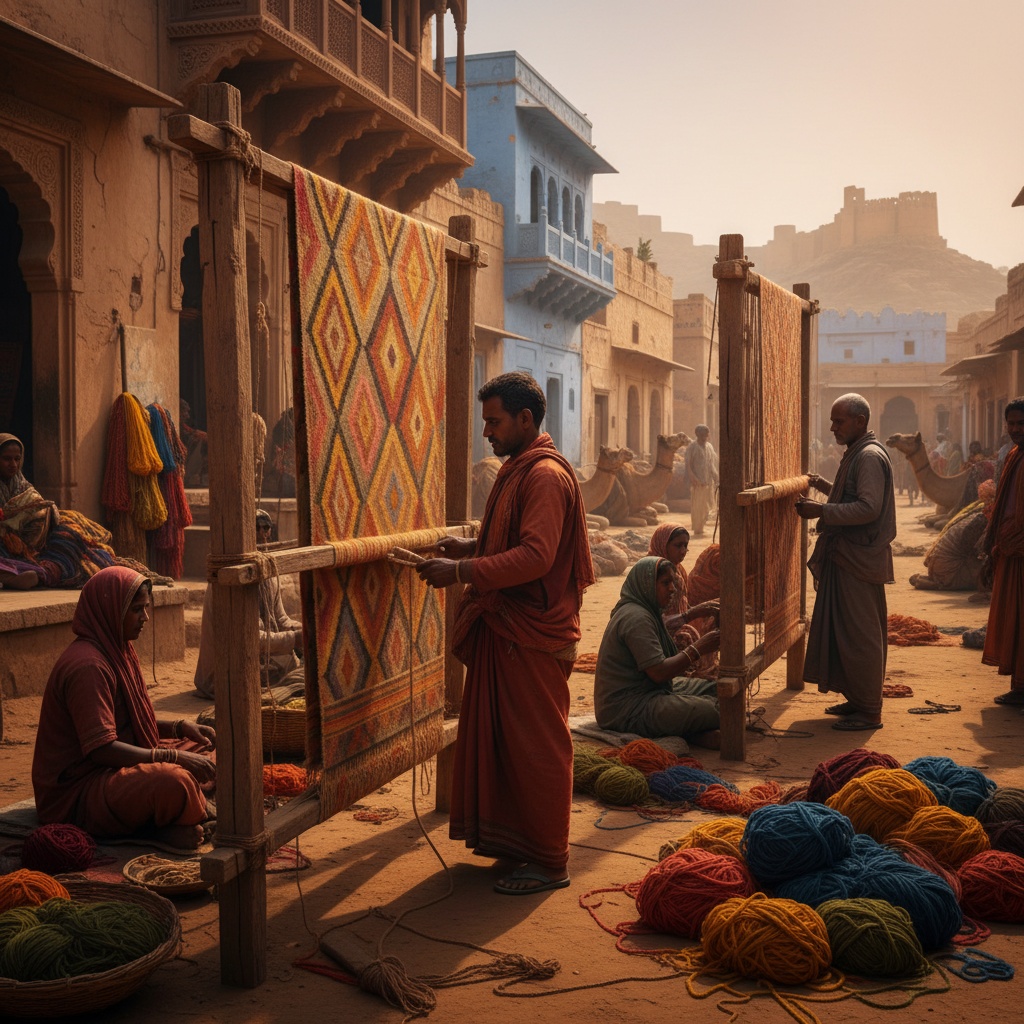
Artisans weaving colorful textiles in an outdoor setting.
Major Weaving Centers
Dhurrie weaving is a pan-Indian tradition, with each region contributing distinctive designs and methods that reflect local culture and resources.
- Rajasthan (Salawas, Jodhpur): Known for bold diamonds and stripes, Rajasthan dhurries are often woven with earthy palettes suited to desert life. — Why: The region’s textiles express both durability and desert aesthetics.
- Punjab & Haryana (Panipat): Panipat has been a weaving hub since the Mughal era, producing Panja dhurries marked by sharp geometric layouts. Punjab’s rural traditions favored shah-nashin or checkerboard layouts. — Why: These centers supplied both households and armies with practical, durable weaves.
- Uttar Pradesh (Sitapur): Sitapur—historically called Citapore under colonial trade—gained fame for finely woven cotton dhurries exported worldwide. — Why: Its reputation as a producer of high-quality cotton flat-weaves elevated the dhurrie as an international textile.
- Telangana (Warangal): Warangal dhurries are celebrated for extra-weft weaving, which produces raised textures and striking patterns. — Why: This technique gives the rugs a sculptural, tactile quality, making them both decorative and practical.
- Karnataka (Navalgund): The Navalgund jamkhana is woven on vertical looms, with peacocks, parrots, and temple motifs. — Why: These designs link the dhurrie to local religious and cultural symbolism.
Together, these centers highlight the geographic diversity of regional dhurrie styles, with each weaving town or village cultivating a reputation for distinct motifs and construction.
Regional Motifs and Techniques
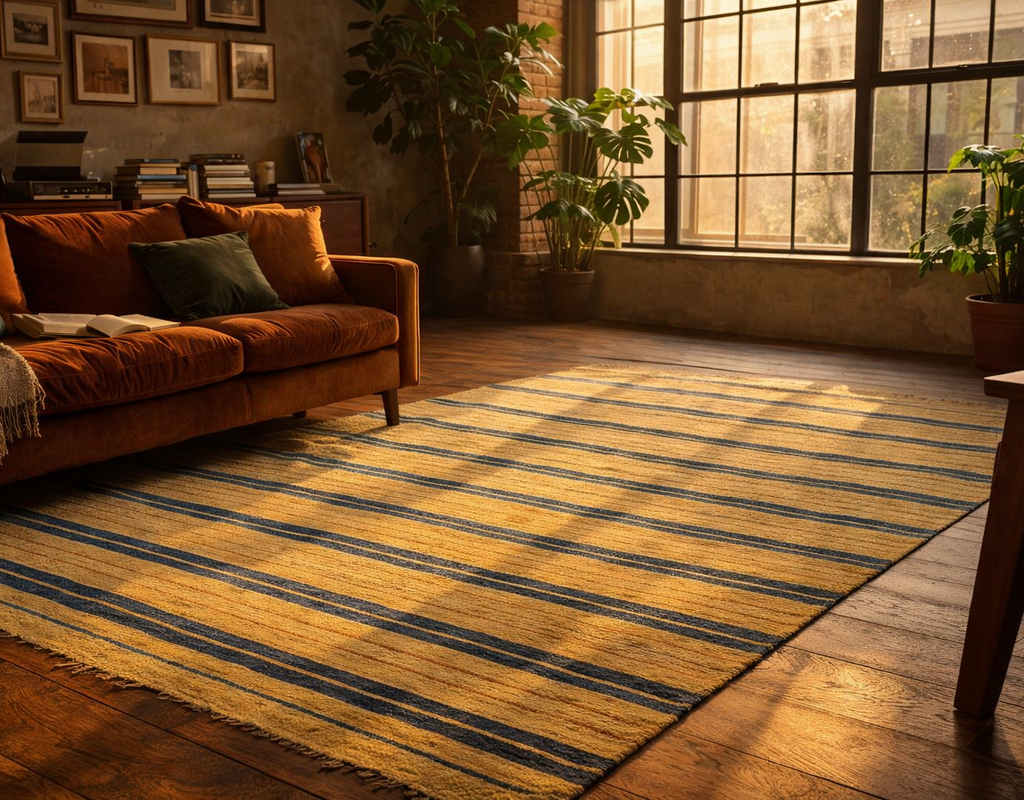
A golden and navy striped rug complements the warm tones of the velvet sofa in this sunlit, industrial-inspired room.
Each weaving region developed signature motifs and weaving techniques that tell stories about local identity. Jodhpur dhurries often display large, bold diamond shapes that mirror desert patterns and the martial culture of Rajasthan. Punjabi dhurries lean toward checkerboard and dice-board motifs, reflecting both play and ritual symbolism in Punjabi households.
Warangal dhurries stand apart for their extra-weft relief technique, where supplementary threads create raised geometric or floral textures, a hallmark of South Indian craftsmanship. Navalgund jamkhana feature stylized peacocks, parrots, and temple gopurams, woven on distinctive vertical looms found only in this region. Each motif reflects not only artistic innovation but also a deep link to regional culture, ritual, and environment.
Influence of Caste, Community, and Gender
Dhurrie weaving has long been tied to community identity and gender roles. In many regions, women wove dhurries within the household, often as part of dowry preparation, ensuring daughters brought practical and symbolic weavings into marriage. Caste and community identities also played roles: specific artisan groups specialized in weaving, passing skills across generations.
The act of weaving was both domestic labor and a marker of cultural belonging, reinforcing the social fabric of rural India. Today, dhurrie weaving remains a source of livelihood for both men and women, with cooperative societies and artisan clusters sustaining the craft.
Eco-Friendly Materials and Adaptations
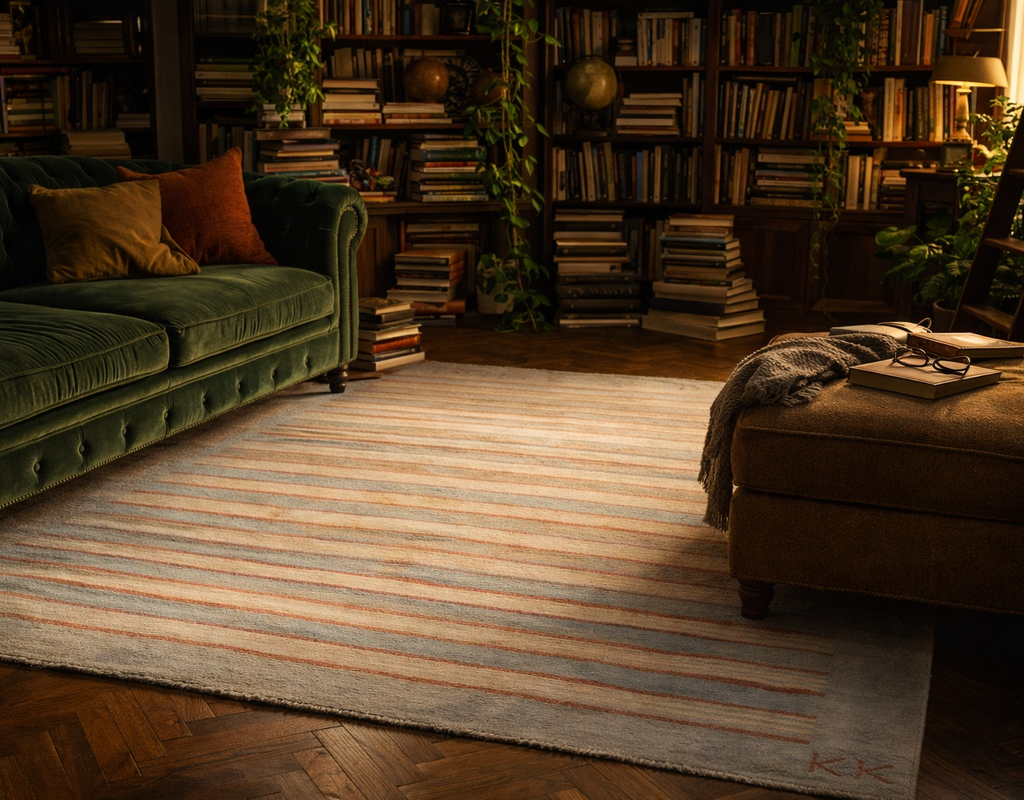
A warm and inviting reading nook characterized by deep colors, rich textures, and soft illumination.
Can dhurries be woven from eco-friendly jute? Yes. While traditional dhurries were primarily woven from cotton or wool, modern adaptations use jute and other natural fibers to meet eco-friendly demand. This adaptation keeps dhurries aligned with sustainability trends while honoring their flat-weave tradition.
Recognition and Cultural Value
Many regional dhurrie traditions have gained UNESCO or Geographical Indication (GI) recognition, affirming their importance as living heritage. Warangal dhurries, Panipat weaves, and Navalgund jamkhana are now celebrated not only as floor coverings but also as symbols of India’s intangible cultural heritage.
Main Weaving Centers Answered
What are the main weaving centers for dhurries? The key centers include Jodhpur and Salawas in Rajasthan, Panipat in Haryana, Sitapur in Uttar Pradesh, Warangal in Telangana, and Navalgund in Karnataka, each with its own regional motifs and techniques.
Materials, Construction & Weaving Techniques
Fiber Choices
The foundation of a dhurrie lies in its fiber selection, which determines its durability, look, and cultural identity. Cotton dhurries are the most widespread, valued for their coolness, light weight, and affordability—perfect for India’s hot climate. Wool dhurries add softness and warmth, making them more durable and resilient underfoot.
Jute flat-weave rugs have gained popularity for their rustic, eco-friendly appeal, while silk dhurries—rare and luxurious—were traditionally reserved for ceremonial or elite settings. Many dhurries also incorporate fiber blends such as cotton–wool, cotton–jute, or wool–jute, combining the strengths of each. In modern times, artisans and designers have experimented with synthetic blends for affordability and colorfastness, as well as “chindi” rag rugs made from recycled cloth strips, reinforcing dhurries’ adaptability to both sustainability and style.
What materials are used to make dhurries? Traditionally cotton and wool, but jute, silk, blends, and even recycled textiles are also used. Is wool dhurrie better than cotton for durability? Yes—wool dhurries generally last longer and withstand wear more effectively than cotton, though cotton versions are lighter and easier to maintain. Are vintage dhurries thicker than modern versions? Often yes. Older dhurries, especially wool-based or ceremonial examples, tend to be denser and heavier than their thinner, mass-produced modern counterparts.
Weaving Methods
Ground Looms
In rural homes, simple ground looms were traditionally used for weaving. These horizontal setups allowed weavers—often women—to create practical dhurries for household use.
Pit Looms
Pit looms, where the weaver sits with their feet in a pit below floor level, offer greater control and tension. These looms became common in professional weaving centers, producing dhurries of larger size and finer weave.
Panja/Punja Technique
The hallmark of the dhurrie is the panja (or punja) weaving technique, named after the heavy iron comb used to beat down the weft threads. This produces a dense, durable weave, ideal for both daily use and export-quality rugs. Panja dhurries from regions like Panipat remain iconic for their crisp geometric precision.
Flat-Weave Construction Explained
How are flat-woven dhurries constructed without pile? Dhurries are woven using a weft-faced flat-weave technique, where horizontal weft threads are tightly packed over vertical warp threads. Unlike knotted rugs, no pile is created—giving dhurries their signature thin, lightweight, and smooth surface. Motifs are formed through interlocking tapestry weaving, which avoids long slits and ensures structural integrity.
Reversible Weaving
How does dhurrie weaving create reversible designs? Because the weft threads dominate both sides of the textile, the design appears identically on the front and back. This reversible rug structure not only doubles the lifespan of a dhurrie but also makes it especially practical for households and travel.
Cleaning & Care Considerations
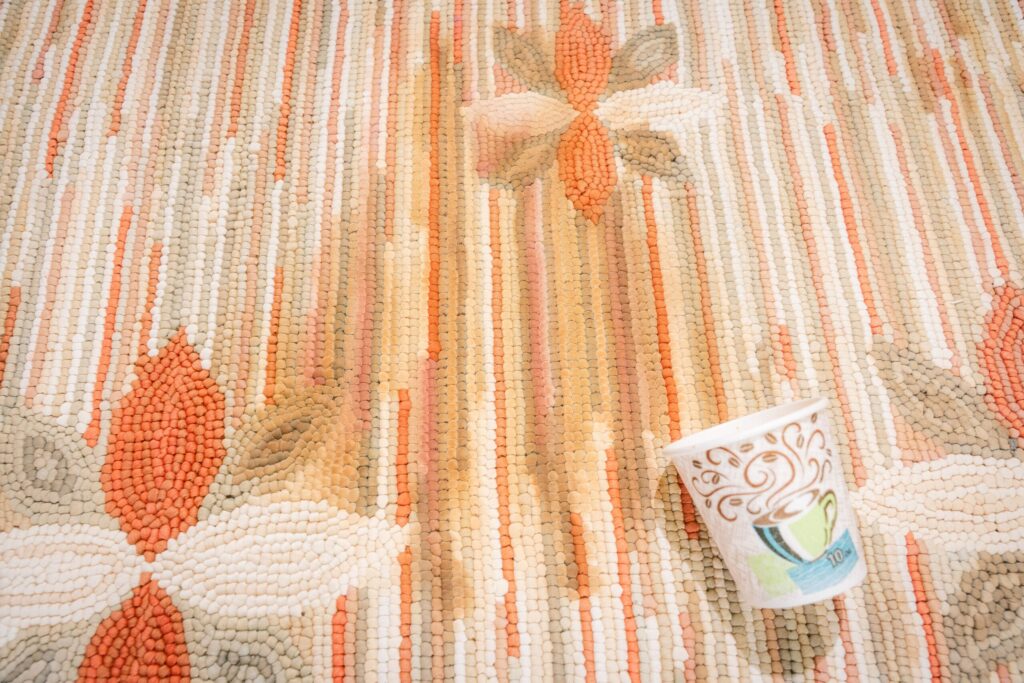
Close-up view of a tipped paper coffee cup resting on a handwoven wool rug, highlighting the rug’s dense pile, subtle color variations, and traditional geometric motifs in warm neutral and terracotta tones.
- No pile traps dirt — Why: Dust sits on the surface, making dhurries easier to shake or sweep clean.
- Washable cotton — Why: Cotton dhurries can often be washed with care, but they may shrink or fade if mishandled.
- Wool requires gentle cleaning — Why: Wool dhurries need mild detergents and careful drying to preserve resilience.
- Lighter weight — Why: Easier to roll, store, and transport than heavy pile carpets.
- Avoid harsh soaking — Why: While durable, dhurries can distort if waterlogged or scrubbed aggressively.
How does pileless construction affect dhurrie cleaning? With no pile, dhurries collect less embedded dirt, making them easier to clean—but their flat structure means they must be washed gently to avoid warping.
Dhurrie vs. Kilim: Material and Color Palette Differences
Does dhurrie color palette differ from kilims? Yes. Dhurries, especially cotton-based ones, often feature lighter, brighter, and more pastel shades, while kilims are typically woolen with earthy, bold tribal geometrics. Structurally, kilims often employ slit-tapestry techniques that produce small gaps between color blocks, whereas dhurries use interlocking tapestry to create seamless motifs.
Dhurries are generally smoother, thinner, and lighter, while kilims are thicker, coarser, and heavier in handle. In essence, dhurries distinguish themselves as handwoven, flat, reversible textiles—adaptable in fiber, versatile in design, and rooted in a construction that balances practicality with artistry.
Design Characteristics: Patterns, Motifs, and Color
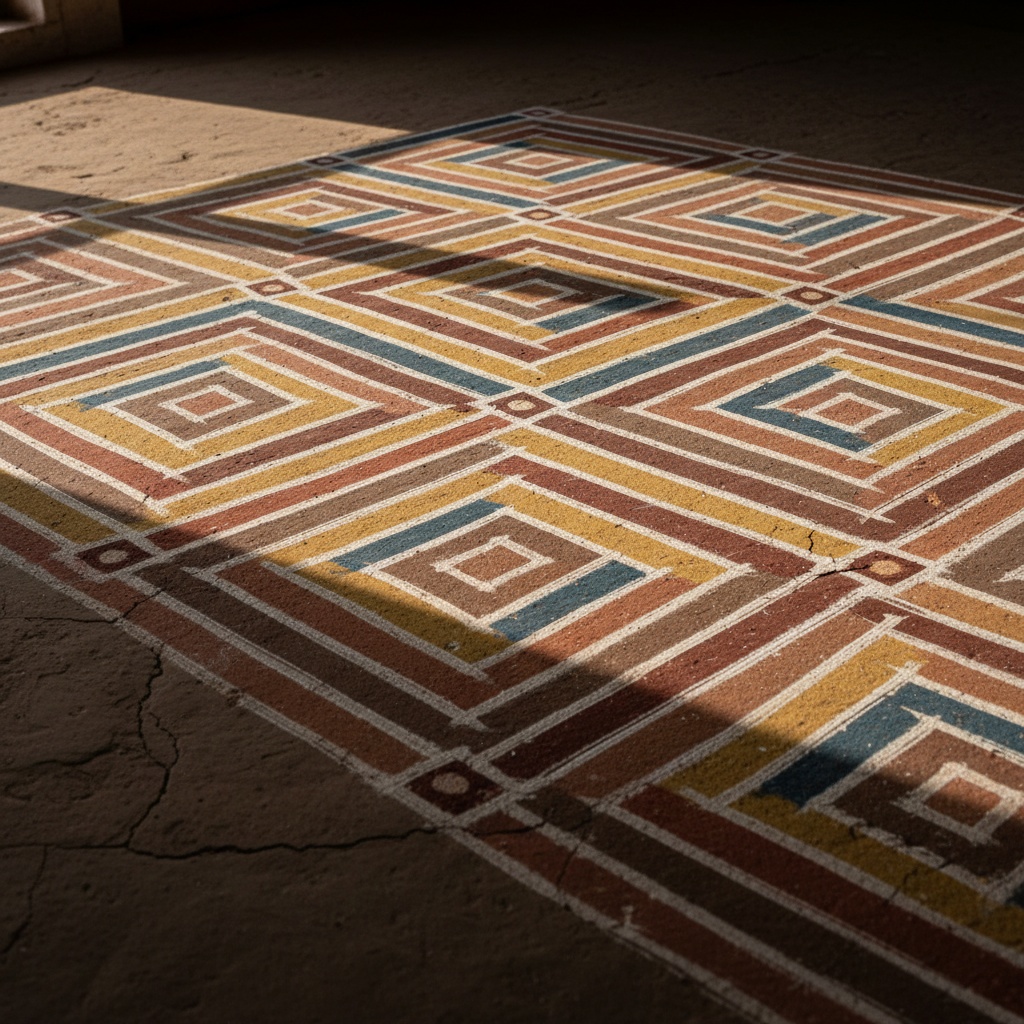
Earthy tones in a repeating geometric floor pattern.
Classic Patterns
Dhurries are celebrated for their wide range of patterns that balance simplicity with cultural depth.
- Stripes: Among the oldest and most widespread dhurrie rug patterns, multicolored stripes are often the first motif taught to new weavers. — Why: Their linear rhythm is simple to execute yet endlessly adaptable, making them a training ground for skill and creativity.
- Geometric designs: Diamonds, zig-zags, grids, and dice-board layouts dominate many regional styles, echoing floor art traditions such as rangoli or mandana. — Why: These sharp motifs reflect both symbolic meaning and visual clarity in flat-weave construction.
- Floral dhurries: Angular yet stylized blossoms, often influenced by Mughal art, introduce softer decorative appeal. — Why: They link folk traditions to India’s royal design heritage.
- Pictorial and narrative dhurries: Some rare dhurries illustrate stories—such as Noah’s Ark or village life scenes—or contain prayer rug designs with a mihrab arch for Muslim households. — Why: These add layers of narrative, faith, and cultural memory to the flat-weave format.
What patterns are typical of dhurrie rugs? Stripes, geometrics, florals, pictorial narratives, and prayer-arch motifs define the core repertoire.
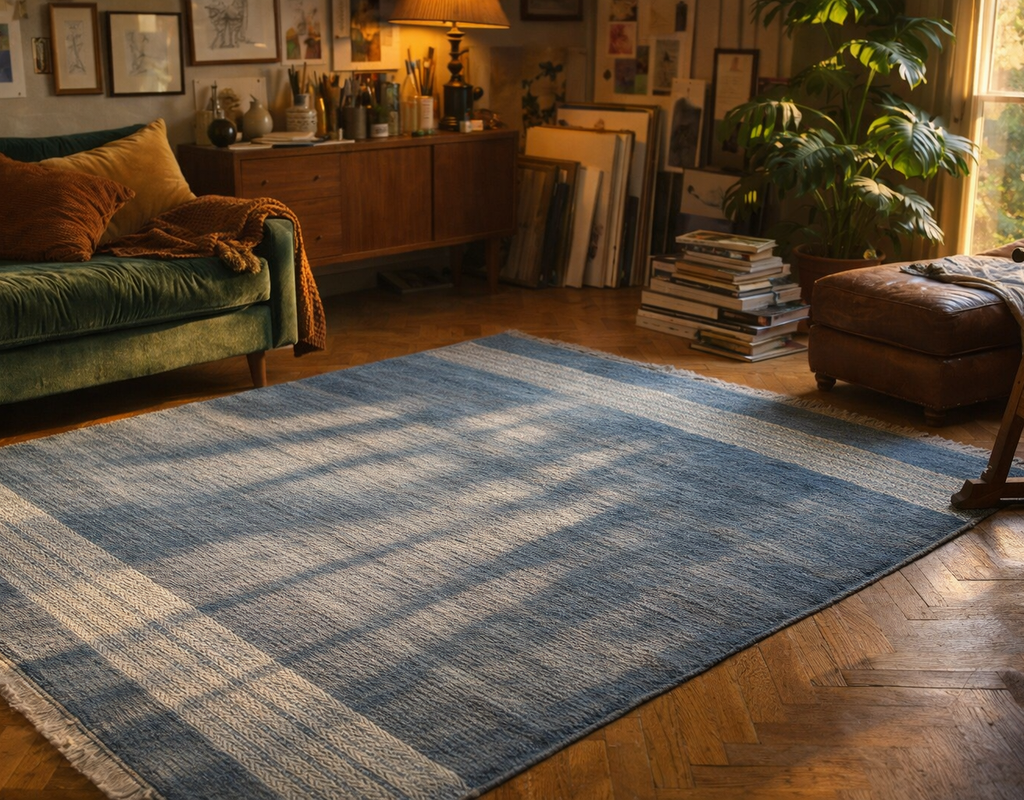
A blue textured rug anchors the seating area, complementing the rich textures and warm tones of the artistic, vintage-inspired room.
Regional Color Palettes
Color in dhurries reflects not just aesthetics but also geography, materials, and local taste. In Rajasthan, earthy browns, muted indigos, and desert-inspired tones dominate, mirroring the arid landscape. Warangal dhurries from Telangana favor bold red, blue, and black, heightened by the extra-weft weaving technique.
Navalgund jamkhana from Karnataka embrace bright primaries—greens, yellows, reds—giving their peacock and temple motifs striking presence. In contrast, Uttar Pradesh dhurries, particularly from Sitapur, often use softer pastel palettes of pink, lavender, and light blue, which were prized during colonial exports for their refined appeal. This regional diversity confirms that dhurrie color palettes differ from kilims: where kilims tend toward earthy wool tones and tribal geometry, dhurries embrace cotton-based lightness, brighter contrasts, and even playful pastels.
Symbolism & Storytelling in Dhurrie Design
Beyond decoration, dhurrie motifs carry symbolic weight and cultural storytelling. The lotus signifies fertility, purity, and divine beauty, often woven into floral dhurries for ceremonial use. The peacock, India’s national bird, represents beauty, grace, and seasonal abundance, frequently appearing in Navalgund designs.
The dice-board pattern, common in Punjabi dhurries, reflects ideas of harmony, fate, and the play of life, tying domestic textiles to ancient leisure and ritual practices. These motifs underscore dhurries’ role as more than floor coverings—they are woven narratives of Indian life and belief.
Contemporary Adaptations
How have contemporary designers updated traditional dhurrie motifs? In the late 20th century, figures like Shyam Ahuja reintroduced dhurries to urban and global markets by simplifying motifs into bold stripes and experimenting with modern palettes.
Today, contemporary dhurrie designs range from abstract compositions and monochrome minimalism to collaborations with artists who treat the dhurrie as a canvas. Digital printing and sustainable dyeing methods have also expanded the creative toolkit.
These updates allow the dhurrie to shift effortlessly from village courtyard to modern loft, while still rooted in traditional flat-weave construction. Dhurries thus stand at the intersection of tradition and modernity, defined by stripes, geometric Indian flatweaves, floral dhurries, prayer rugs, and contemporary adaptations—all bound together by their regional colors and timeless symbolism.
Cultural Significance & Everyday Utility
Social & Ritual Uses
Dhurries have always been more than decorative floor coverings—they are woven into the fabric of India’s social and spiritual life.
- Prayer: As flat, portable mats, dhurries often serve as Indian prayer rugs, with simple stripes or more elaborate mihrab arches to mark sacred space. — Why: Their reversibility and light weight make them ideal for personal devotion or communal rituals.
- Weddings: Brightly woven dhurries are spread for guests during marriage ceremonies, forming a shared floor for blessings and celebration. — Why: They symbolize hospitality, continuity, and cultural belonging.
- Community gatherings: In village courtyards or public halls, dhurries cover large areas, creating a common ground for collective activities from feasts to festivals. — Why: They transform open floors into hospitable, inclusive spaces.
- Bedding and wraps: Dhurries double as bedspreads, quilts, or even wrapping cloths for household storage. — Why: Their versatility underscores their importance in everyday domestic life.
What social and ritual roles have dhurries played? They have served as prayer mats, wedding décor, dowry textiles, seating at communal gatherings, and practical household bedding.
Dowry, Gift, and Ceremonial Traditions
For centuries, dhurries were integral to marriage dowries, with young women weaving or receiving them as part of their new household. Patterns often carried auspicious motifs: the lotus for fertility, the peacock for beauty and abundance, and the dice-board for harmony in domestic life.
Beyond weddings, dhurries were given as gifts for life-cycle events—births, festivals, or religious ceremonies—marking them as woven carriers of blessing. The dhurrie dowry tradition thus positioned the textile as both practical furnishing and symbolic safeguard, ensuring that a bride entered her new home with objects that embodied both utility and cultural meaning.
Gender & Community Identity
Dhurrie weaving has long been a community craft, sustaining artisan identity and reinforcing social bonds. In many regions, weaving was carried out primarily by women in domestic settings, both for family use and for dowry preparation. The shared labor of weaving fostered solidarity, with designs passed through generations as markers of community heritage.
In professional centers such as Panipat or Navalgund, entire artisan groups carried weaving as part of their caste or community identity, producing regional dhurrie styles recognized today under Intangible Cultural Heritage and Geographical Indication (GI) frameworks.
How does the weaving practice foster community and tradition?
By embedding knowledge within households and artisan clusters, dhurrie weaving links gender roles, communal identity, and cultural memory, ensuring continuity of tradition across centuries. Dhurries therefore hold a dual significance: they are practical objects for daily use—as bedding, seating, or coverings—while also serving as ritual and symbolic textiles central to India’s weddings, prayers, and communal life.
Dhurries in the Modern Marketplace
Key Production Hubs Today
Dhurrie weaving continues to thrive across India, balancing ancient traditions with modern demand. Rajasthan (Salawas, Jodhpur) still produces bold diamond and stripe patterns, while Panipat in Haryana remains a powerhouse for both artisan and industrial dhurrie production. Sitapur in Uttar Pradesh, once famous under the colonial name Citapore, still weaves fine cotton dhurries for export.
Warangal in Telangana and Navalgund in Karnataka preserve their distinct extra-weft and vertical-loom styles, recognized for their heritage value. Alongside these, newer industrial clusters and export hubs supply the global market, blending handloom traditions with powerloom mass production. — Why: These hubs ensure dhurries remain widely available while sustaining regional craft identities.
Vintage vs. New Dhurries
Should you choose vintage or new dhurrie for décor?
- Vintage dhurrie rug: Often thicker, denser, and woven with rare motifs no longer commonly produced. They carry patina and history, making them collectible and unique. — Why: Ideal for those seeking character and heritage value.
- Modern dhurrie: Offers a wider choice of colors, sizes, and custom designs, sometimes using sustainable or experimental fibers. — Why: Perfect for contemporary interiors and practical décor needs. Both options have value: vintage pieces as investments in textile heritage, and new dhurries as adaptable, affordable Indian rugs suited to everyday use.
Collectibility, Rarity, and Pricing
Dhurries are generally budget-friendly compared to pile carpets, partly because of their flat-weave construction and lower production costs. Still, pricing varies with material (cotton vs. wool vs. silk), size, rarity of design, and labor intensity. Vintage dhurries with rare motifs or fine weaving can command higher prices among collectors.
How much do custom-sized dhurries usually cost? Depending on fiber and weave, prices may range from a few hundred dollars for simple cotton versions to several thousand for large wool or silk examples. Why are dhurrie rugs usually budget-friendly options? Their pileless, reversible weave requires less material and time than knotted rugs, making them lighter, faster to produce, and thus more affordable.
Are hand-loomed dhurries harder to import currently? Yes—artisanal pieces may face higher costs and longer lead times due to limited production, fair trade oversight, and certification requirements, whereas machine-made powerloom dhurries are easier to source. Can dhurrie tariffs affect pricing in 2025? Absolutely. Import tariffs and trade policies directly influence final retail costs, particularly for handwoven, certified dhurries, where artisan welfare initiatives add further premiums.
Environmental & Ethical Aspects
Modern buyers increasingly value the sustainability of dhurries. Cotton, jute, and wool remain renewable fibers, and the rise of recycled “chindi” dhurries appeals to eco-conscious consumers.
Artisan cooperatives, NGOs, and fair trade rug initiatives ensure better wages and working conditions for weavers. Several regional styles, like Warangal and Navalgund, hold Geographical Indication (GI) recognition, safeguarding authenticity and helping artisans resist industrial imitation. As a result, the sustainable dhurrie has become both a décor choice and a statement of ethical consumption.
Cleaning, Care, and Longevity
Should you professionally clean cotton dhurries yearly? Yes—professional cleaning once a year helps preserve colors and structure, especially for cotton dhurries prone to fading or shrinkage.
Wool dhurries are naturally more durable, but both types benefit from regular shaking, sweeping, and careful washing to extend their life. With proper care, a handwoven dhurrie can last for decades, making it not just affordable but also long-lasting. In today’s marketplace, the dhurrie remains both timeless and modern: a textile that bridges heritage and affordability, sustainability and style, practical use and collectible value.
Explore a Few of Our Favorite Dhurries
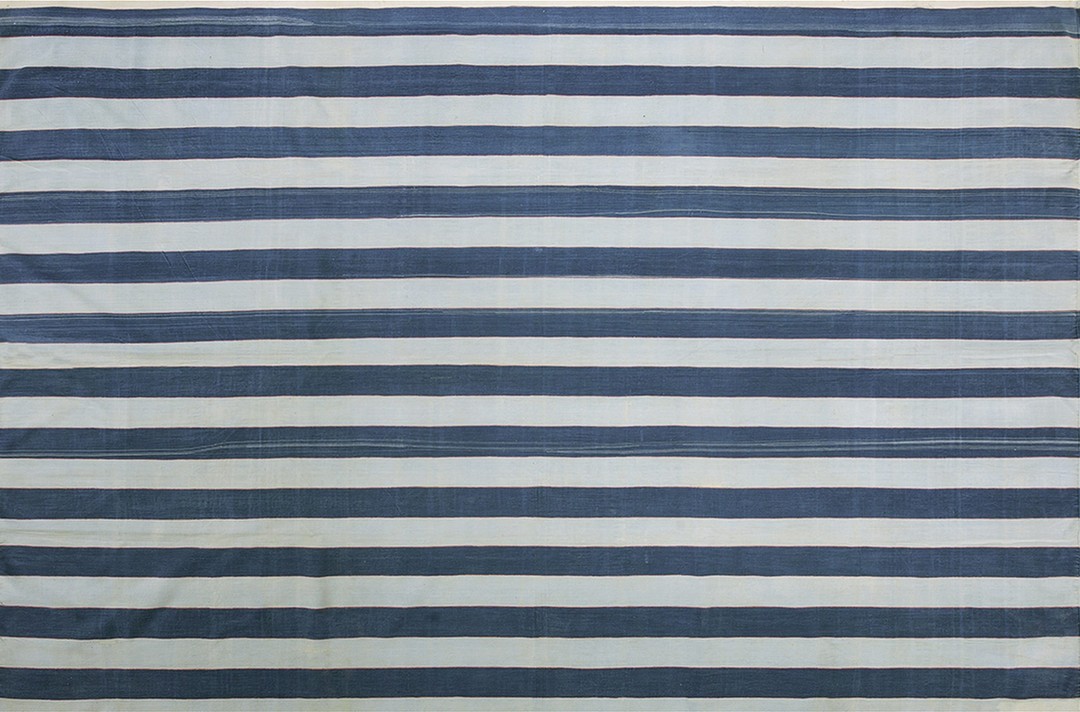
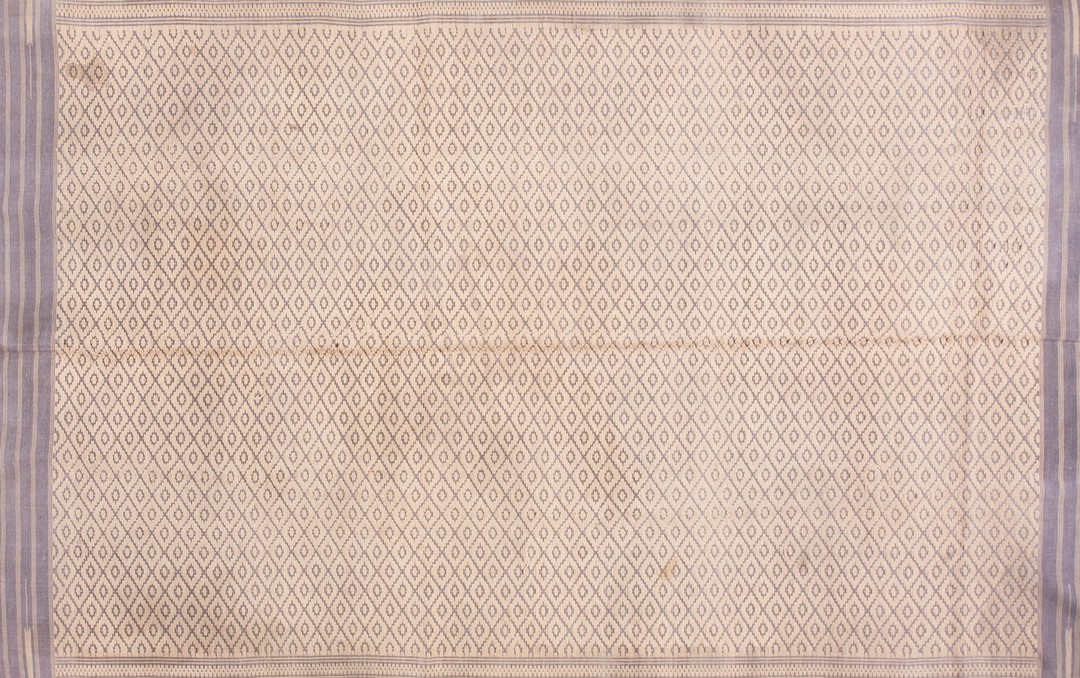
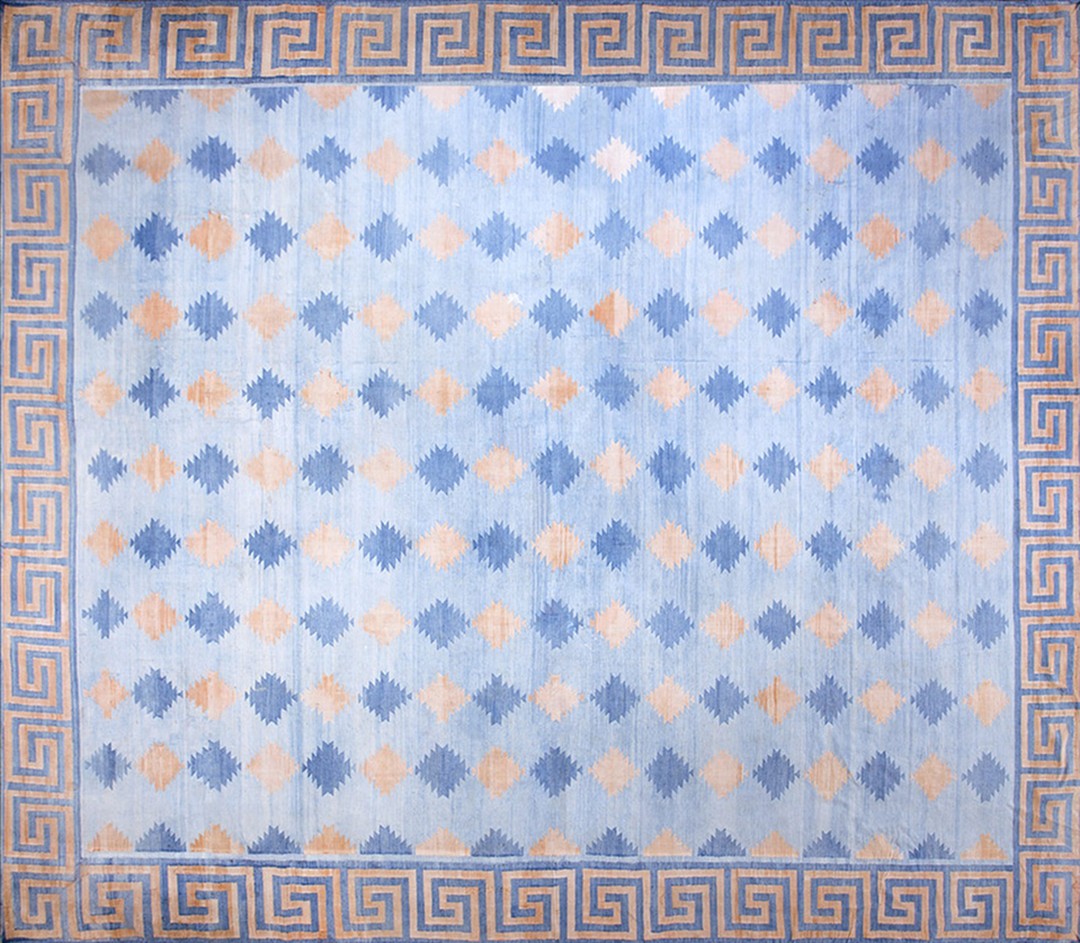
FAQ
- Where can I buy dhurrie rugs in the U.S.?
Dhurrie rugs are widely available via rug boutiques, department stores, and reputable online sellers. Check return policies and care labels; request close-up photos of the weave before buying.
- How can I tell if dhurrie rugs are handmade and authentic?
Look for a reversible weave with no glued backing, slight irregularities, and fiber content disclosure. Indian dhurrie rug hubs include Panipat, Jodhpur, and Varanasi.
- How much do dhurrie rugs cost?
Prices vary by size, material, and craftsmanship—small dhurrie rugs can start around \$50–\$150; 8×10 handwoven pieces commonly land \~\$300–\$900+, with designer/vintage dhurries higher.
- What sizes do dhurrie rugs come in?
Standard dhurrie rug sizes include 2×3, 3×5, 5×8, 6×9, 8×10, and 9×12, with runners (e.g., 2.5×8). Custom sizes are often available.
- How should I store dhurrie rugs?
Roll (don’t fold) dhurrie rugs, wrap in breathable cotton or muslin, and keep them dry and off the floor. Store clean to deter moths.
- Do dhurrie rugs fade in sunlight?
Yes—sun fades most textiles over time. Use window coverings and rotate dhurrie rugs every few months to distribute light exposure.
- How do I prevent color bleeding on dhurrie rugs?
Test for colorfastness before wet cleaning and avoid hot water or strong solvents. Dark reds/blues are most prone; consult a rug professional for valuable pieces.
- Can you machine-wash dhurrie rugs?
Small cotton dhurrie rugs may allow cold, gentle machine washing if the label says so and dyes are colorfast. Never machine-wash wool; when in doubt, hand-wash or use a pro.
- How do you clean dhurrie rugs day to day?
Vacuum with suction only (no beater bar) and blot spills promptly. Flip and rotate dhurrie rugs every 3–6 months for even wear.
- Are dhurrie rugs suitable outdoors?
Only if labeled for outdoor use (often PET/polypropylene “dhurrie-style”). Cotton/wool dhurrie rugs are best kept indoors away from prolonged moisture.
- Can I use dhurrie rugs with radiant (underfloor) heating?
Yes—natural-fiber dhurrie rugs transmit heat well. Pair with a heat-safe pad and avoid overly thick or insulating underlays.
- Are dhurrie rugs compatible with robot vacuums?
Generally yes—dhurrie rugs’ flat profile is robot-friendly. Secure corners and avoid long fringe to prevent tangles.
- Can dhurrie rugs work in kitchens or entryways?
Definitely—dhurrie rugs suit high-traffic spots; just use a non-slip pad and rotate periodically. Darker patterns help conceal day-to-day mess.
- Are dhurrie rugs good under dining tables?
Yes—flatweave dhurrie rugs let chairs slide easily and clean up fast. Size the rug at least 24 inches beyond the tabletop on all sides.
- How thick are dhurrie rugs, and will doors clear them?
Dhurrie rugs are thin—typically \~0.1–0.25 inches (3–6 mm). Most interior doors clear them easily, especially with a low-profile pad.
- Do I need a pad under dhurrie rugs?
Yes—a felt+rubber pad prevents slips, adds cushion, and protects floors. Size the pad about 1–2 inches smaller than the dhurrie rug on all sides.
- Are dhurrie rugs good with pets and kids?
Yes—low/no pile makes dhurrie rugs easy to vacuum and harder for claws to snag. Use a pad to stop sliding and choose patterns that hide spills.
- Do dhurrie rugs shed?
Minimal to none—dhurrie rugs have no pile to shed. Any initial lint on cotton types usually subsides after a few vacuums.
- How durable are dhurrie rugs in high-traffic areas?
Very durable for everyday traffic due to their tight flatweave. Expect years of use with rotation every 3–6 months and routine vacuuming.
- What materials are common in dhurrie rugs?
Dhurrie rugs are commonly cotton or wool, sometimes jute or blends. Cotton is cooler, budget-friendly; wool adds resilience and natural stain resistance.
- How do dhurrie rugs compare to hand-tufted or hand-knotted rugs?
Dhurrie rugs are woven (no pile), thinner, and usually more affordable. Hand-tufted/knotted rugs have pile, more cushioning, and typically higher cost and maintenance.
- What’s the difference between dhurrie rugs and kilims?
Both are flatweaves; “dhurrie” generally refers to Indian-origin flatweaves, while “kilim” is associated with West/Central Asia. Dhurrie rugs often use cotton or wool with bold stripes or geometrics.
- Are dhurrie rugs reversible?
Yes—most dhurrie rugs are reversible because the pattern is woven through, not printed or tufted. Flipping distributes wear and can double time between cleanings.
- How are dhurrie rugs made?
Dhurrie rugs are woven on looms using warp and weft (often “panja” combs) to create a weft-faced, flat surface. The technique produces crisp patterns and a thickness around 3–6 mm.
- What are dhurrie rugs?
Dhurrie rugs are flat-woven, reversible carpets (no pile) traditionally made in India and Pakistan. They’re lightweight and tightly woven, often with stripes, diamonds, or chevrons.