
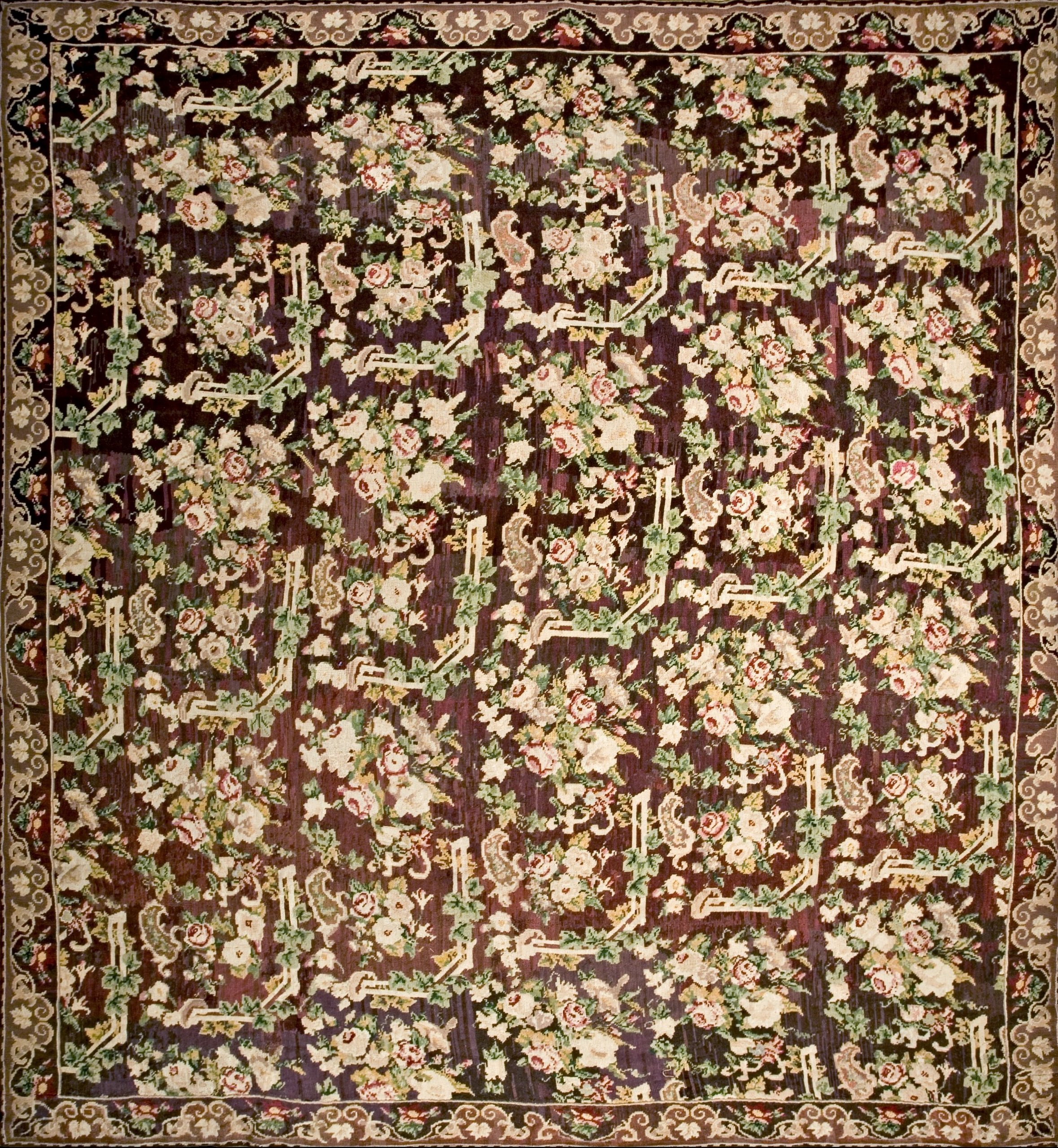
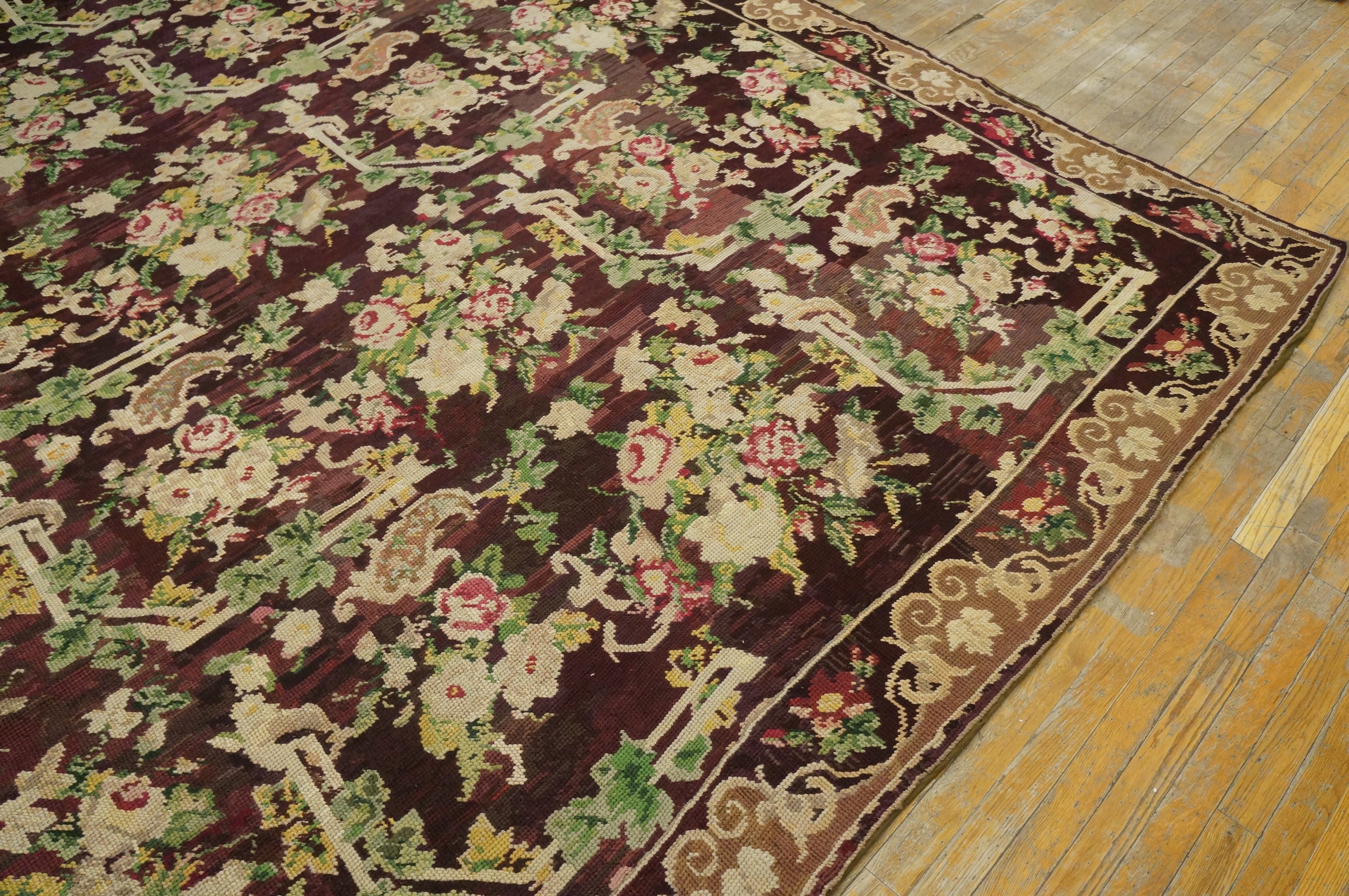
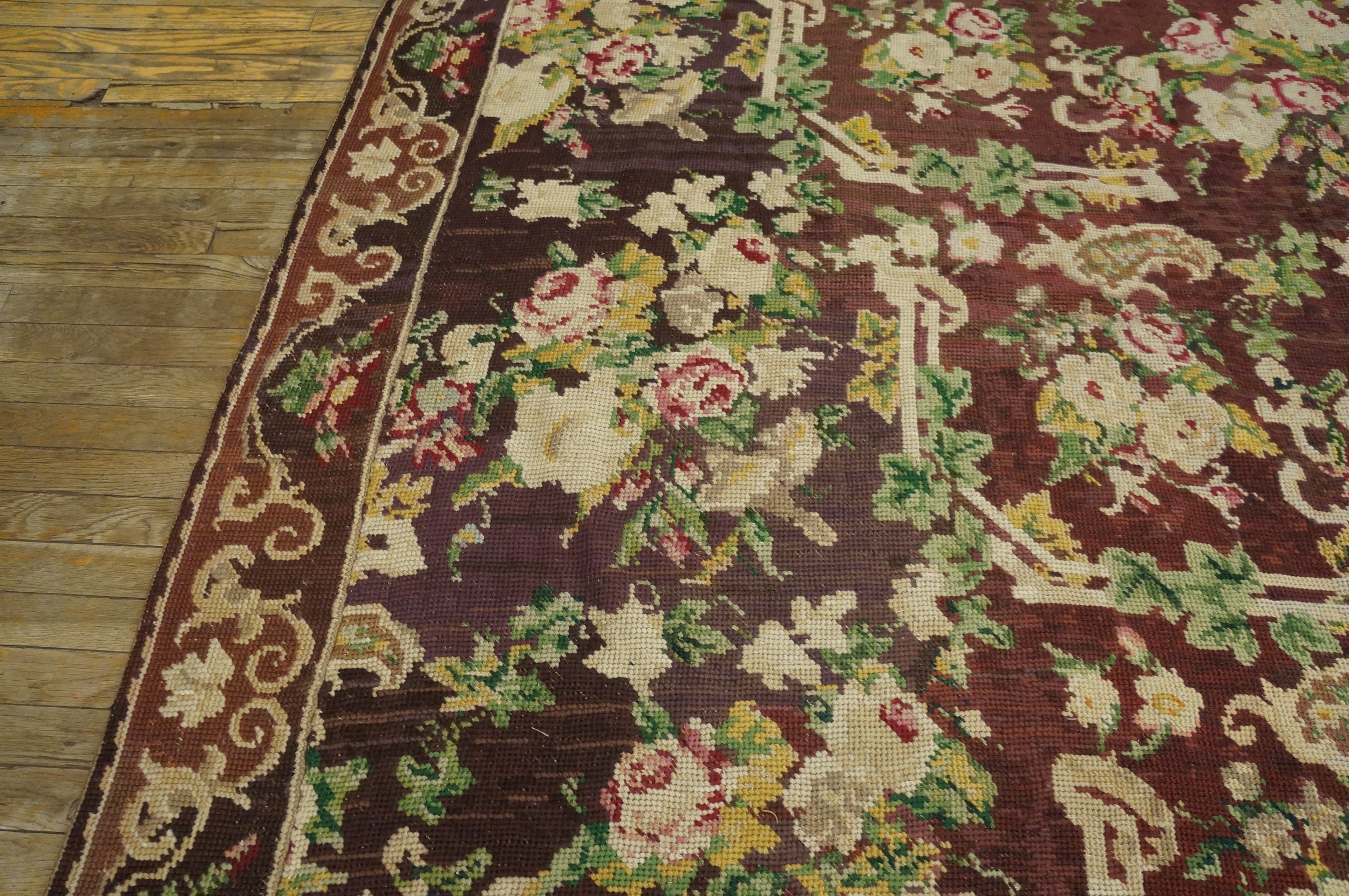
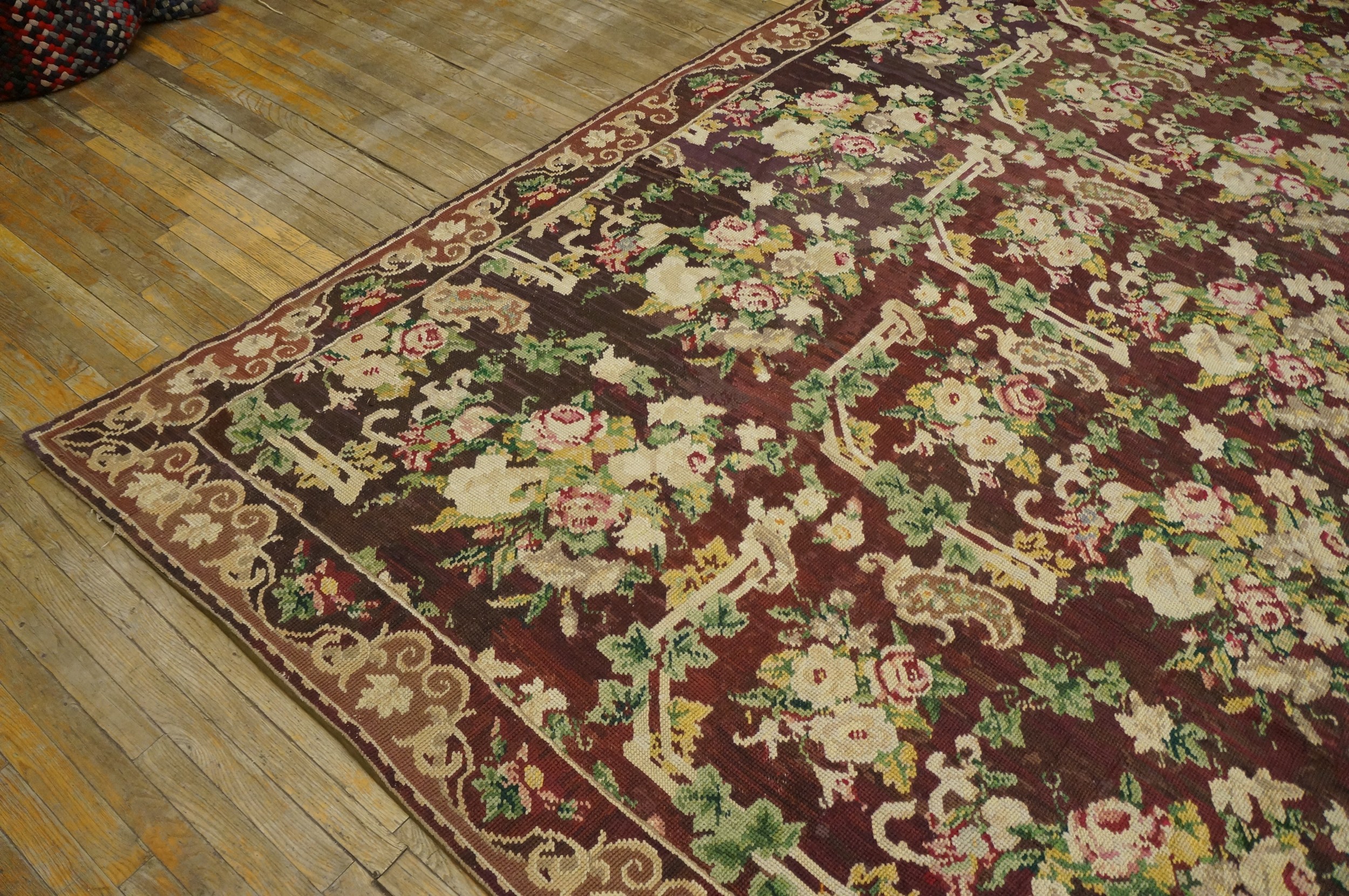
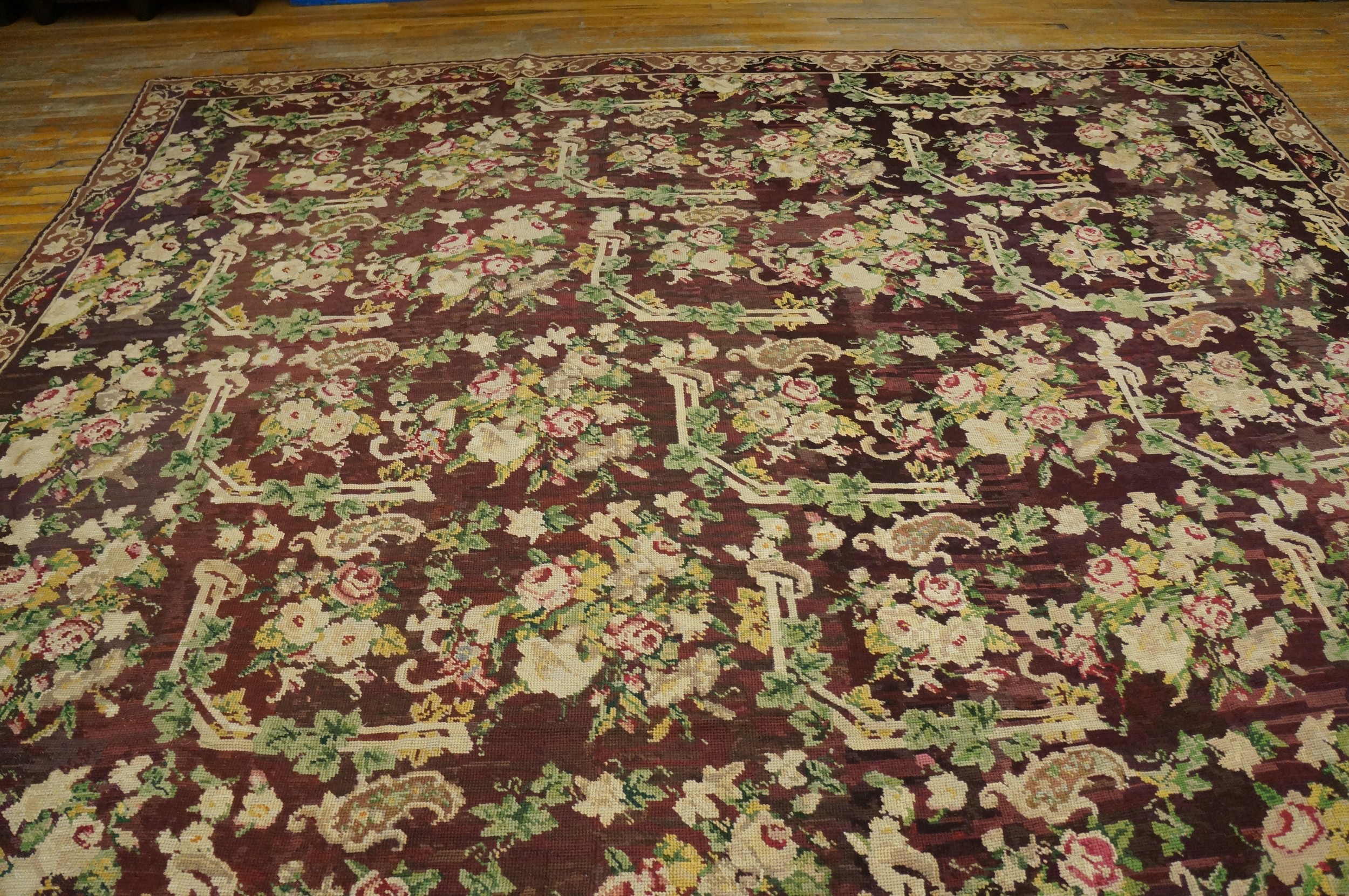
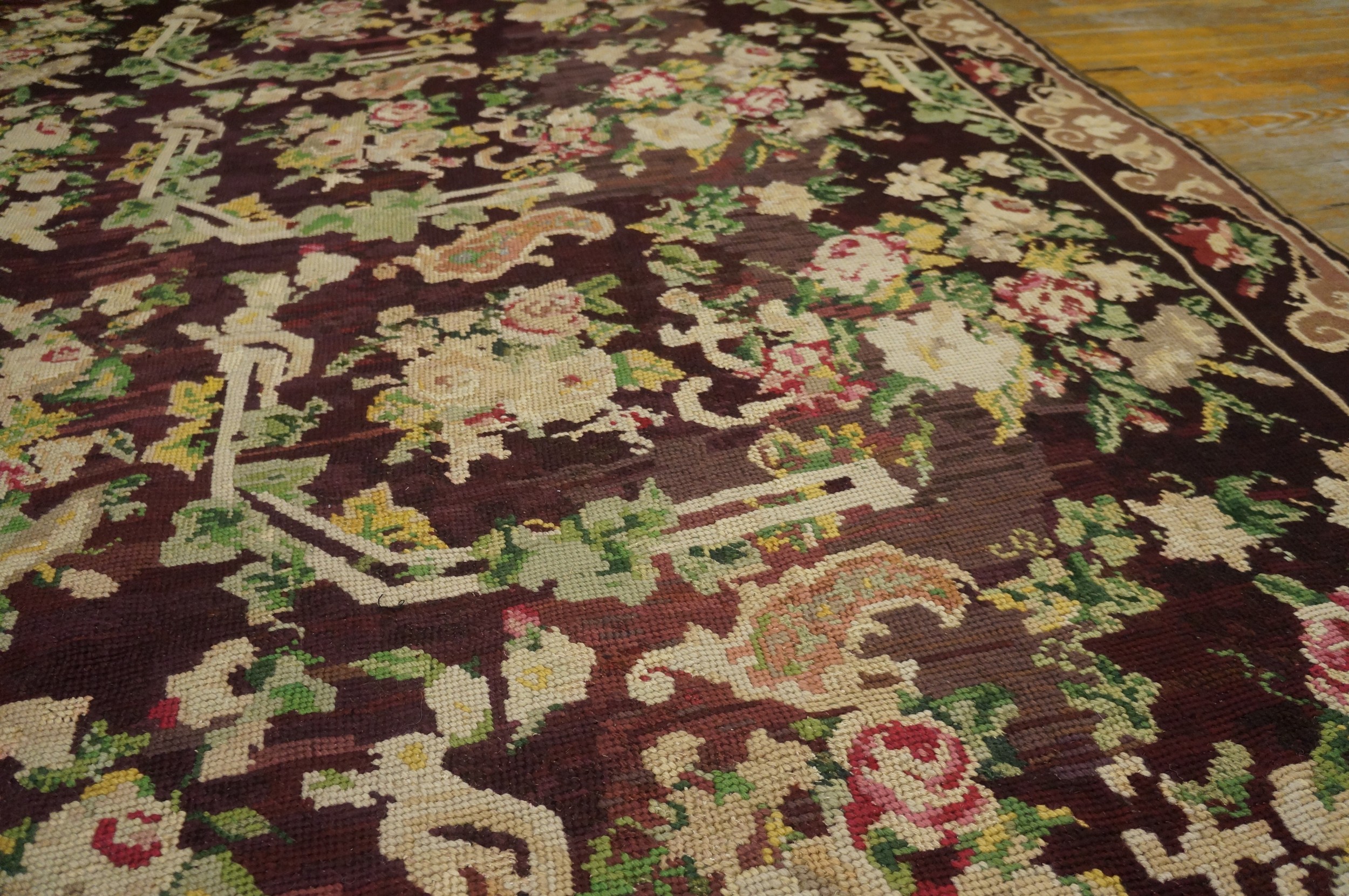
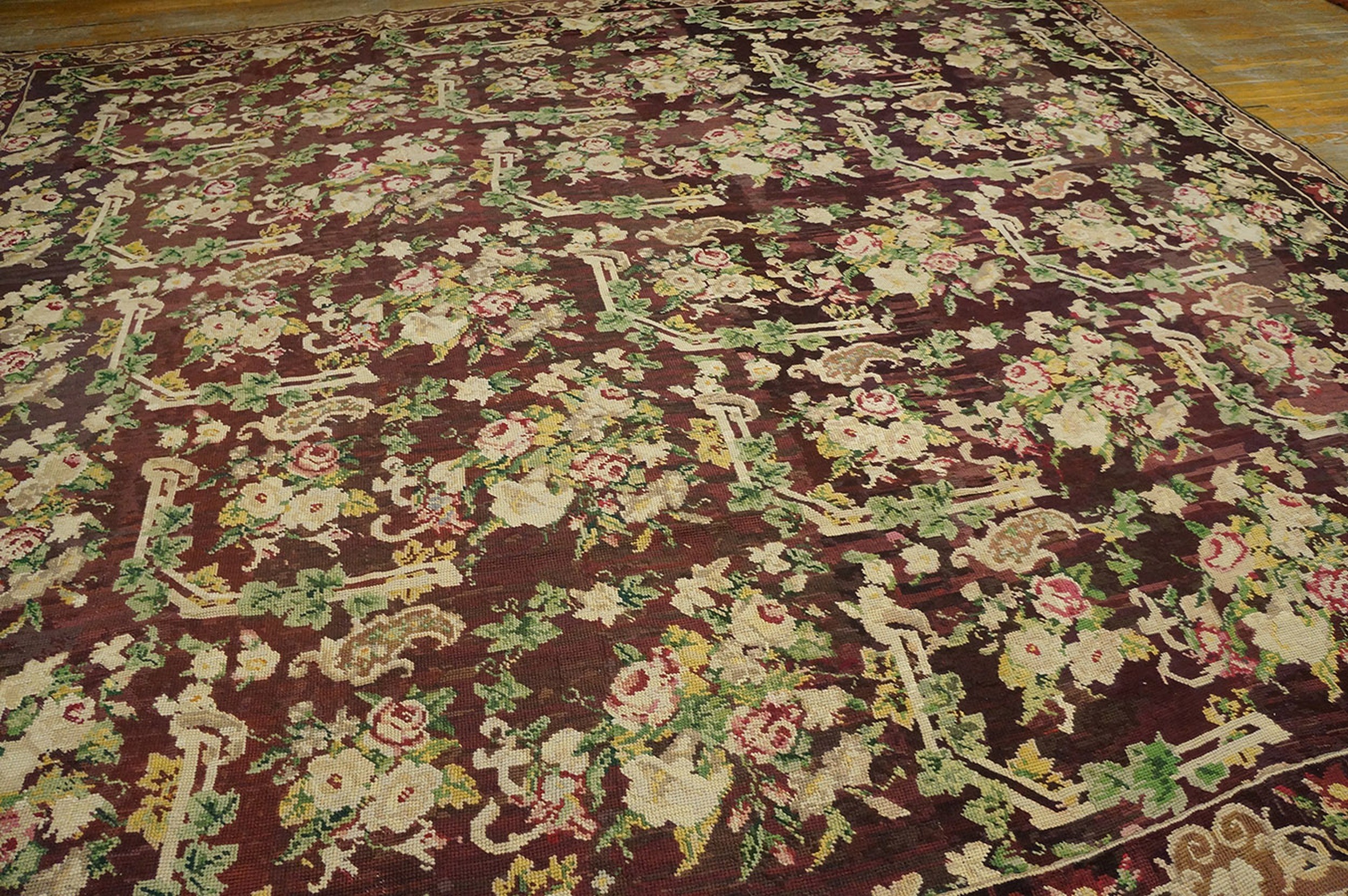
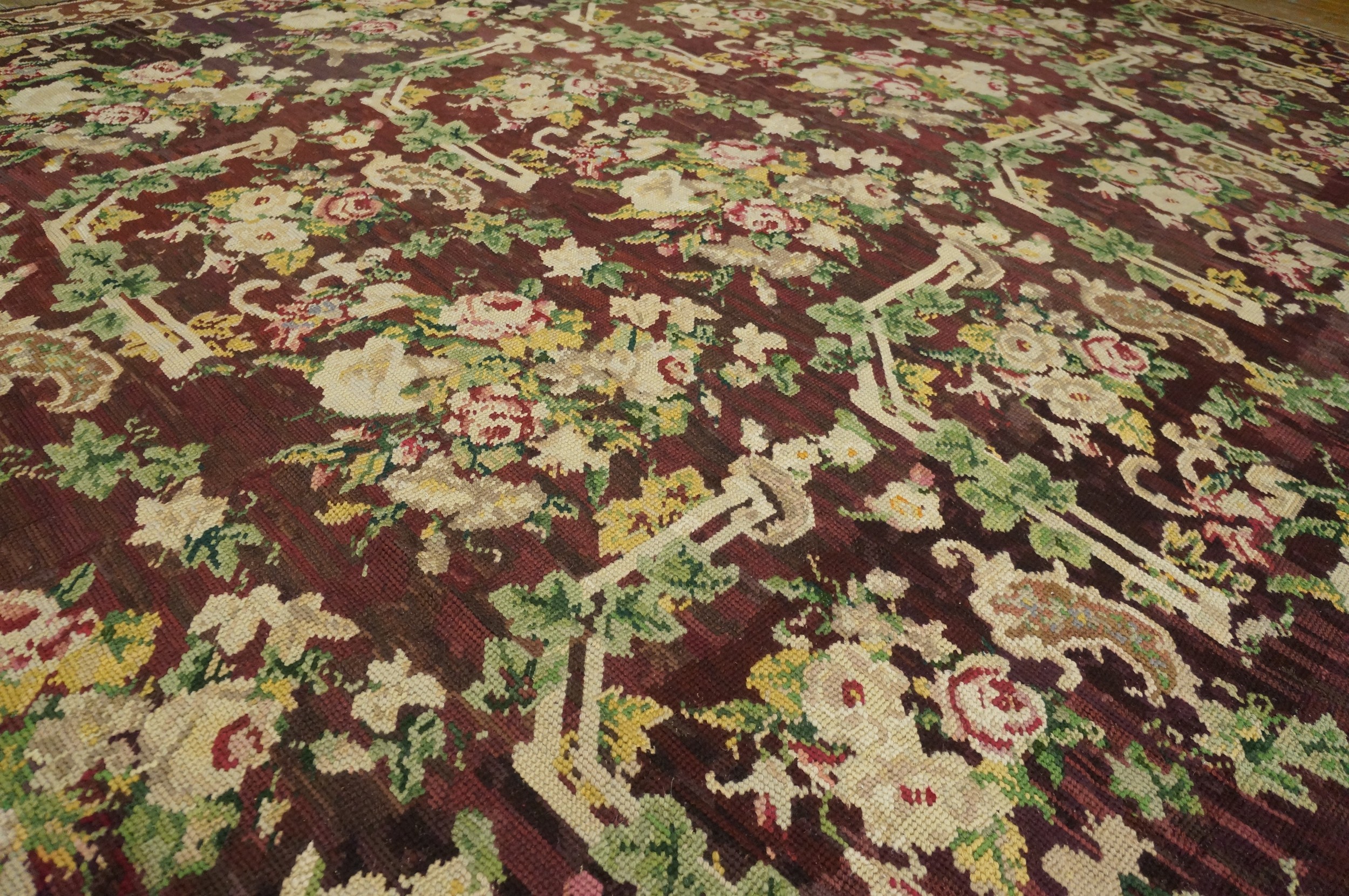
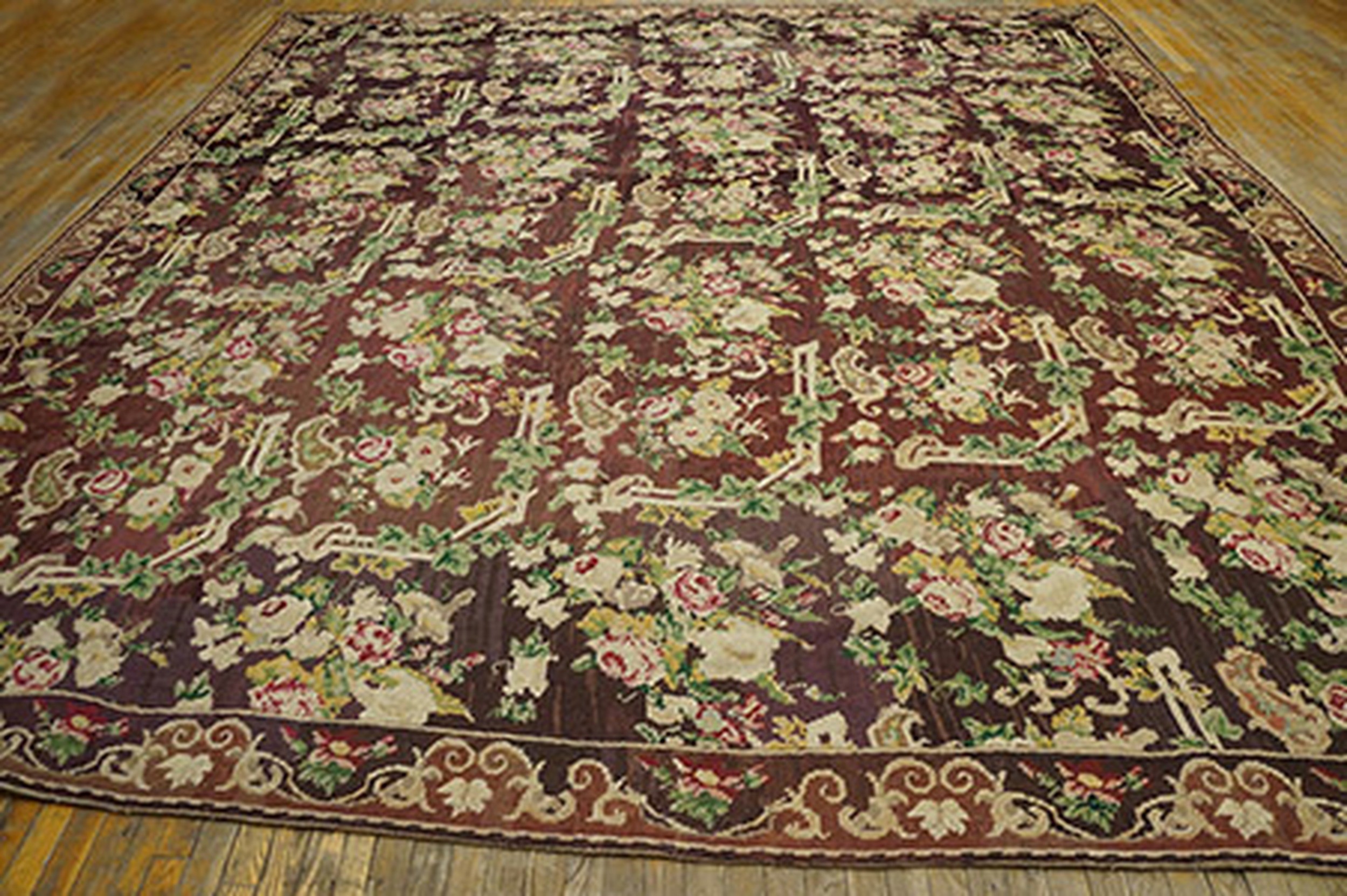
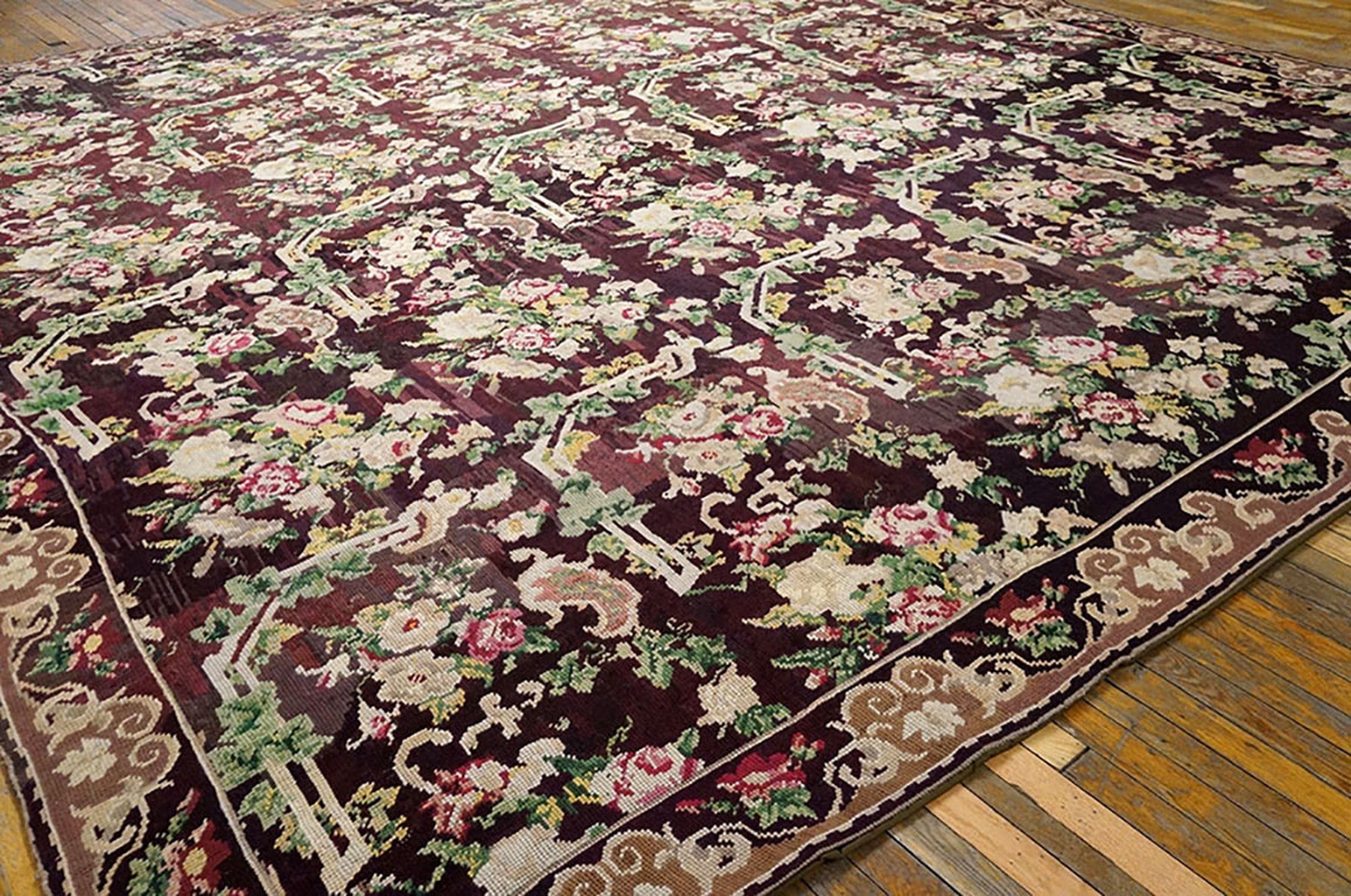
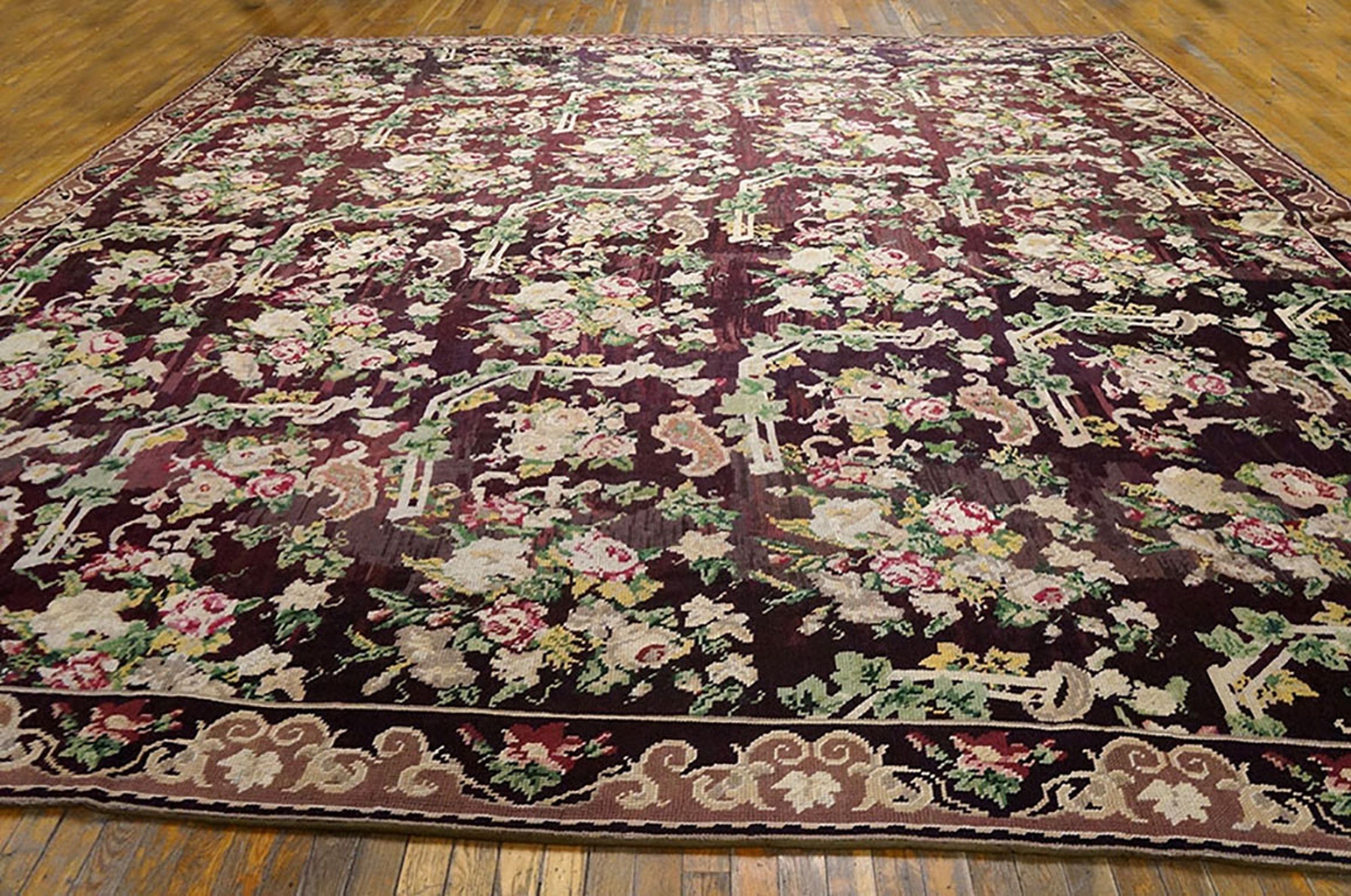
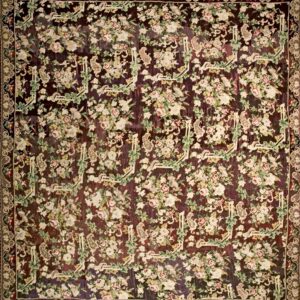
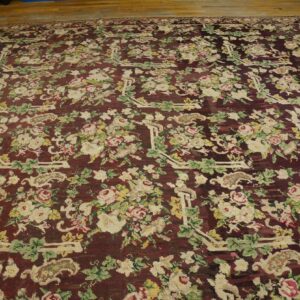
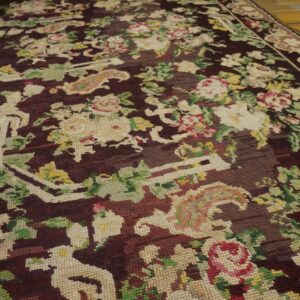
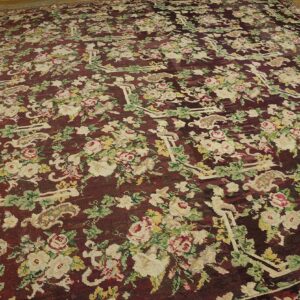
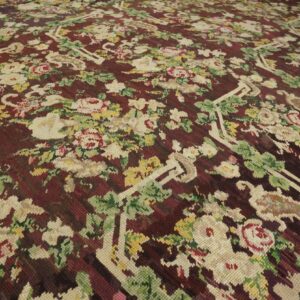
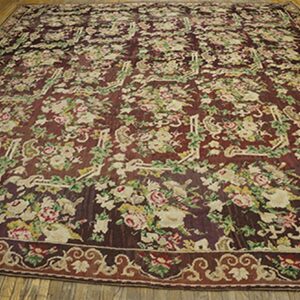
This magnificent room-sized antique English needlepoint rug, dating from the late nineteenth century, is a sophisticated exemplar of the Victorian era’s obsession with botanical realism and the “Grand Manor” aesthetic. Historically, the needlepoints (often referred to as “Hand-Stitched Woolworks”) English carpets was the preferred textile for the stately libraries and morning rooms of the British aristocracy. Unlike loom-woven carpets, these pieces were hand-stitched on a canvas foundation, a technique that allowed for an incredible degree of painterly shading and a “textile mosaic” texture that is both durable and elegantly flat.
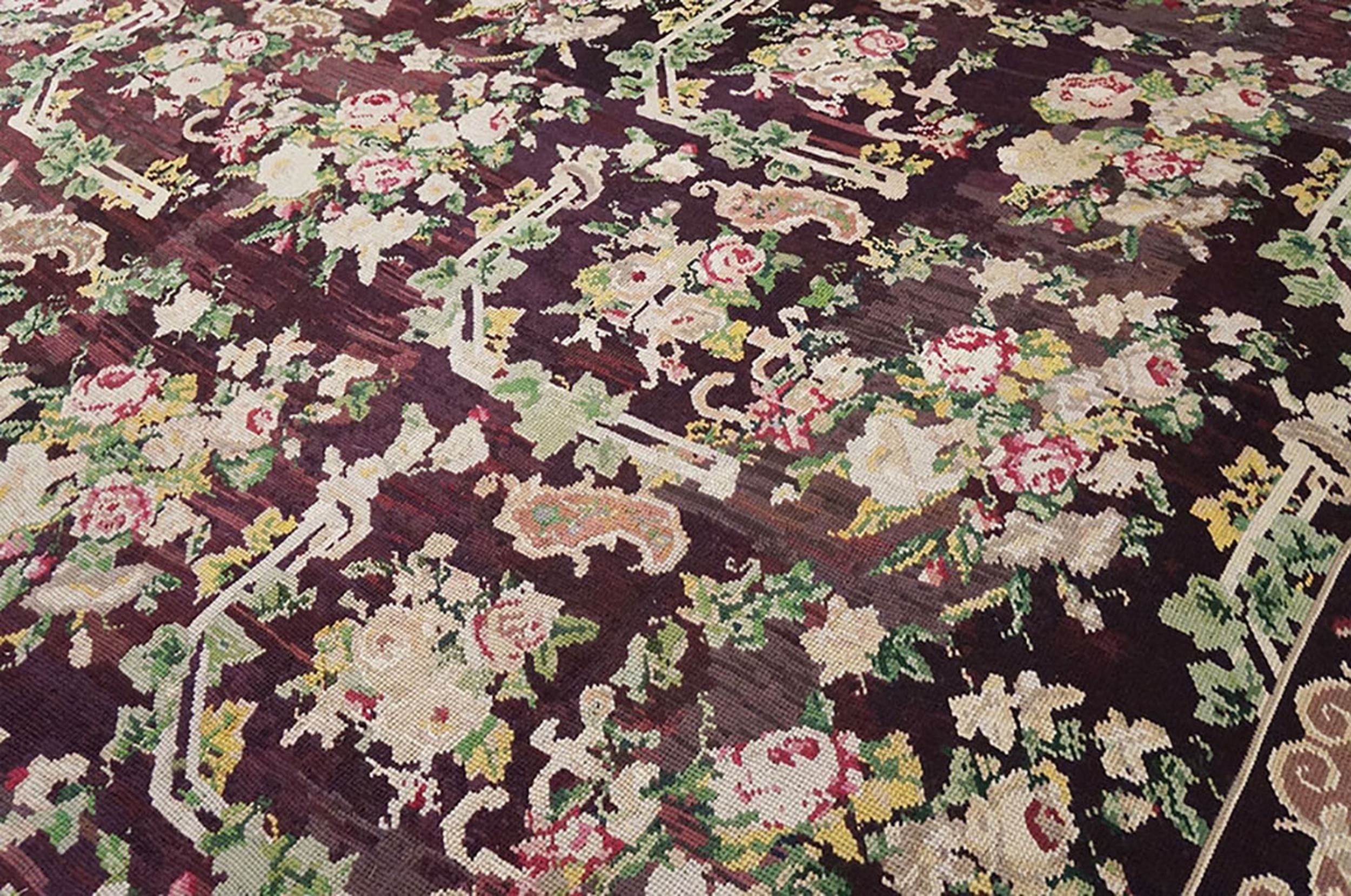
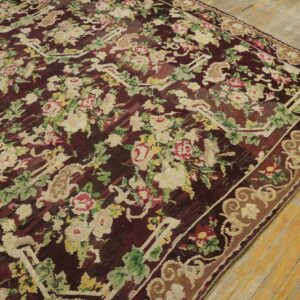
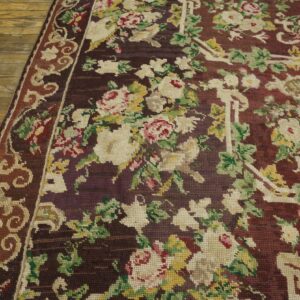
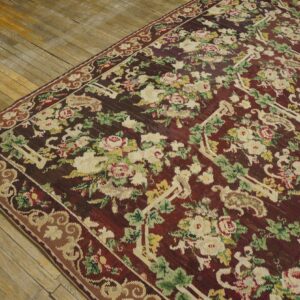
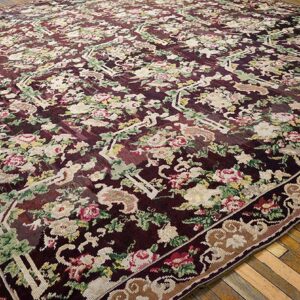
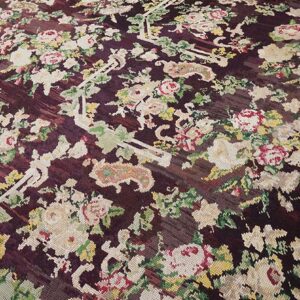
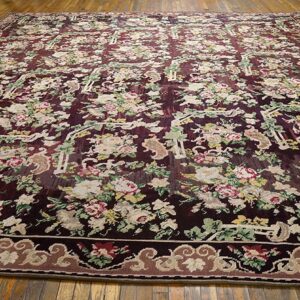
The composition is defined by its deep, saturated “tobacco brown” ground—a color of immense warmth and scholarly prestige. This earthy foundation serves as a dramatic, nocturnal stage for a sprawling “all-over” arrangement of European floral bouquets. The design features a lush variety of classic English garden flora—including roses, lilies, and hydrangeas—rendered with a three-dimensional depth. The needlework technique allows the artisan to “paint with wool,” using hundreds of subtle tonal variations to capture the delicate blush of a petal or the dewy green of a leaf. This “Brown-Ground” style was particularly favored during the late 1800s for its ability to anchor a room filled with heavy mahogany furniture and leather-bound books, providing a sense of “understated opulence.”
Technically, a needlepoint of this “room-sized” magnitude was a monumental undertaking, often requiring a team of skilled needlewomen months, or even years, to complete. Each square inch contains hundreds of meticulous “tent stitches” or “cross stitches,” resulting in a carpet that feels substantial and dense. The absence of a central medallion gives the rug a “modern-antique” versatility, allowing it to flow seamlessly through a large architectural space without dictating the placement of furniture. The borders act as a structural frame, featuring a primary band of scrolling acanthus leaves and smaller floral clusters that mirror the romantic energy of the central field.
To possess this English needlepoint 19th-century rug is to hold a monument to the peak of British domestic craftsmanship. It is a work that bridges the gap between the formal, structured gardens of the European continent and the cozy, botanical intimacy of the English countryside—a sprawling, hand-wrought canvas that transforms the floor into an eternal, autumnal garden.