
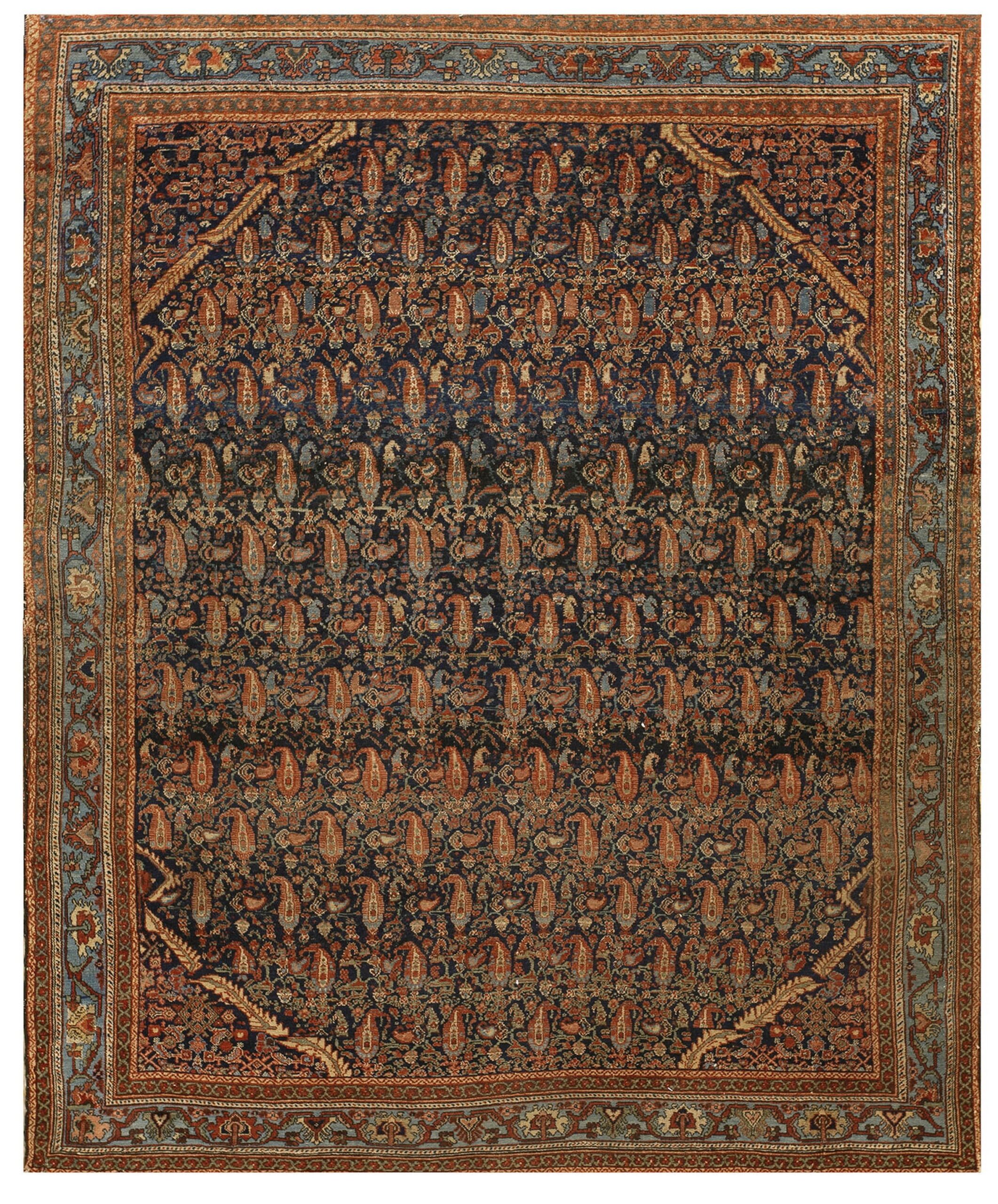
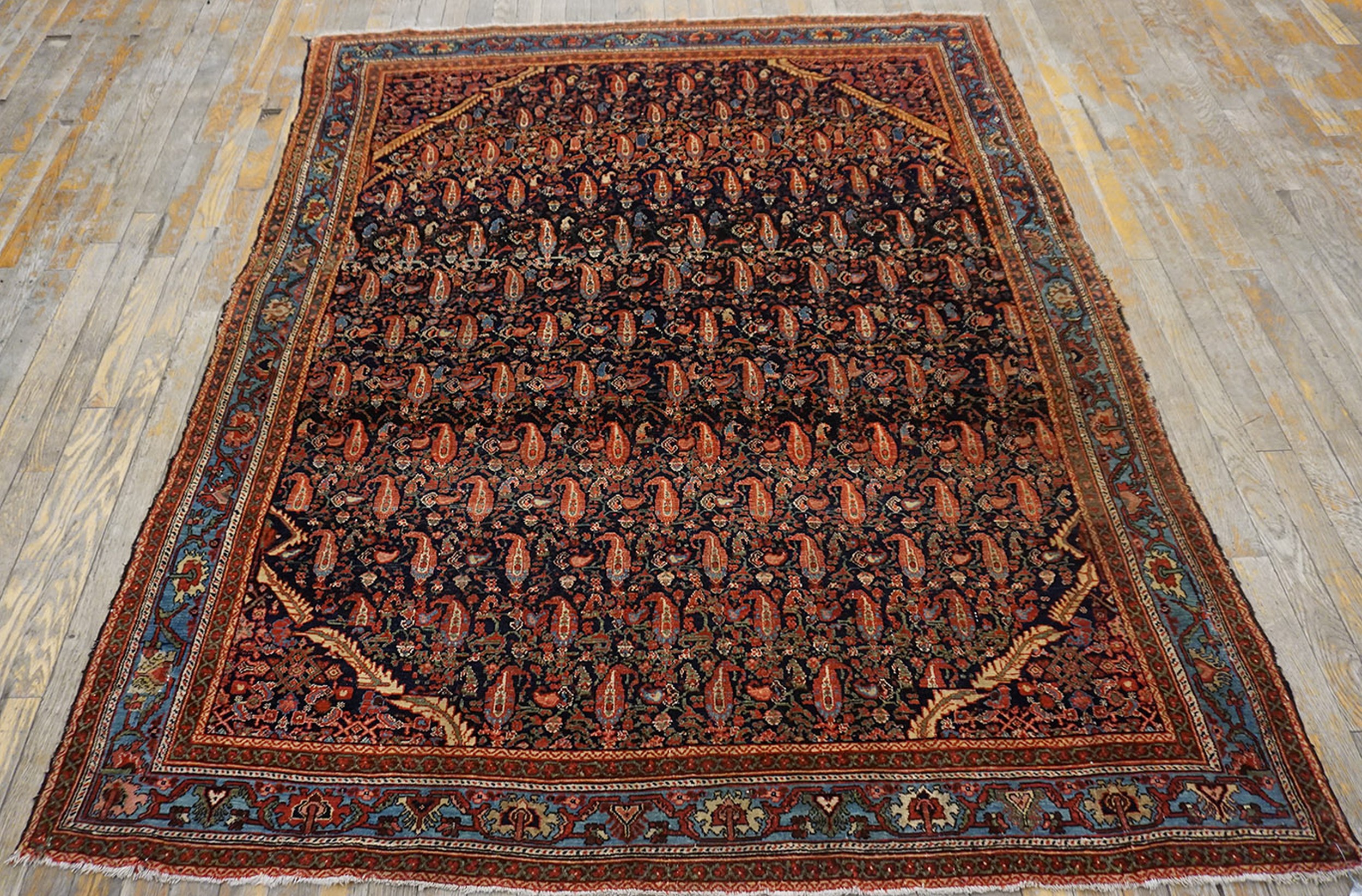
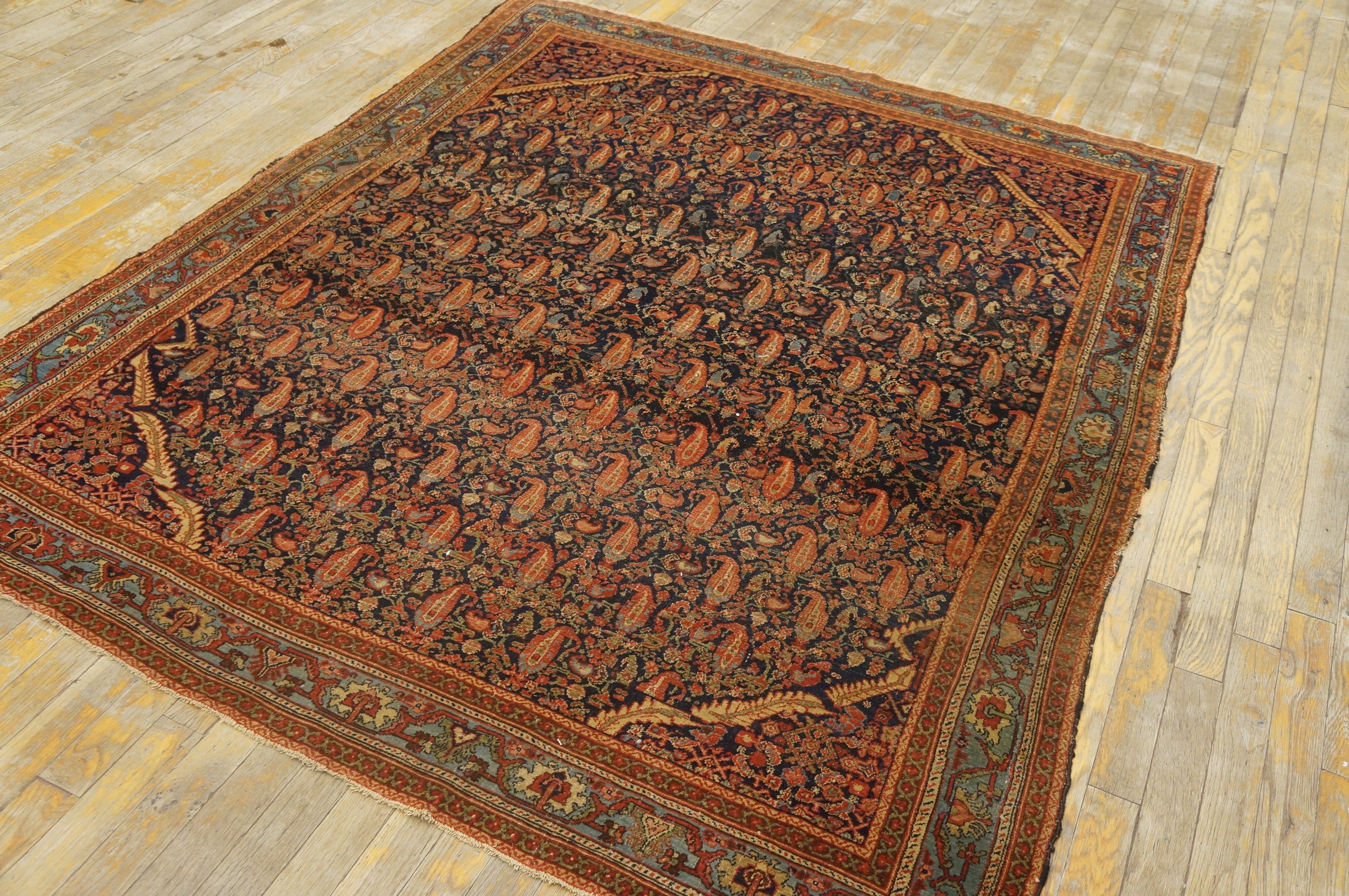
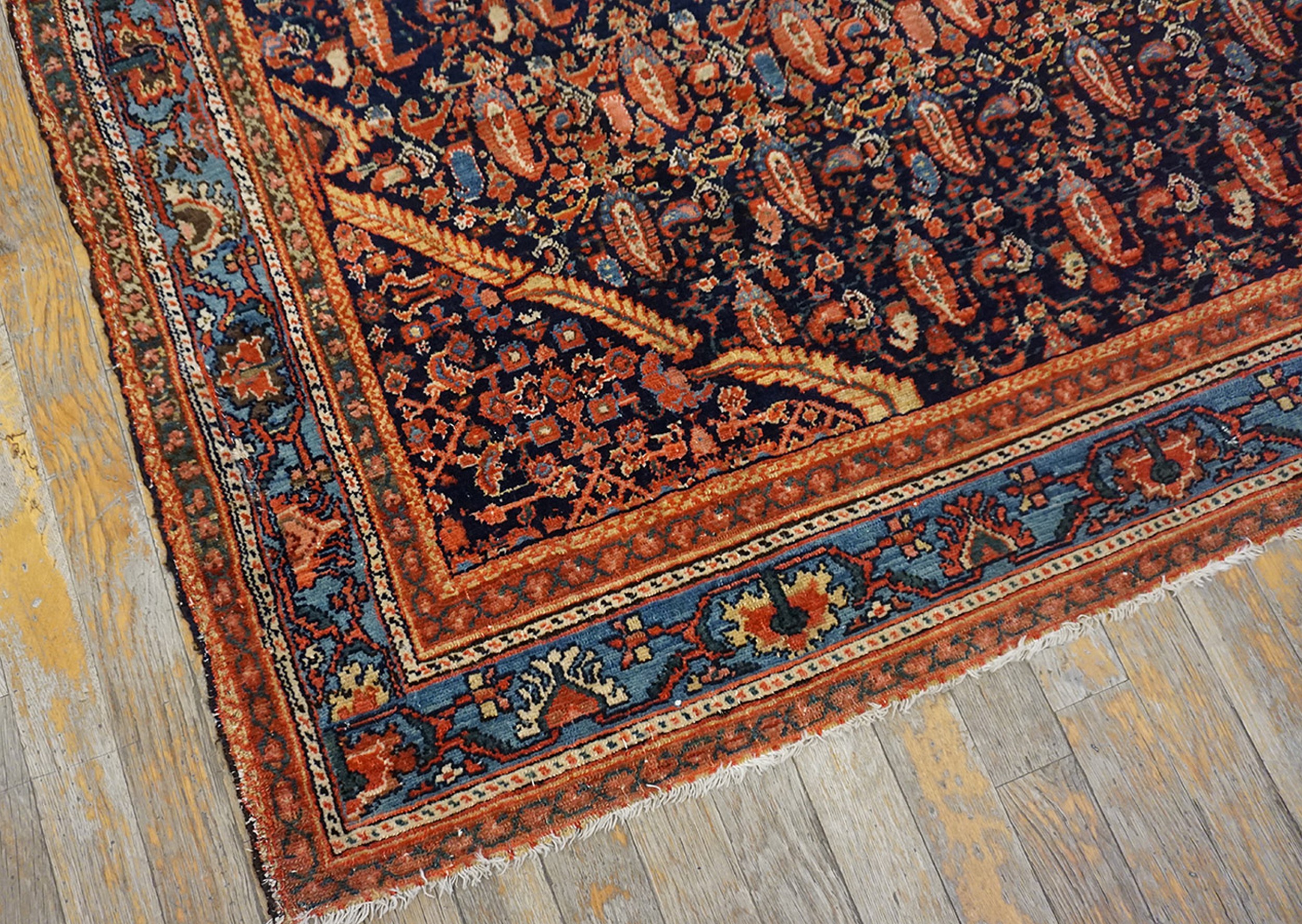
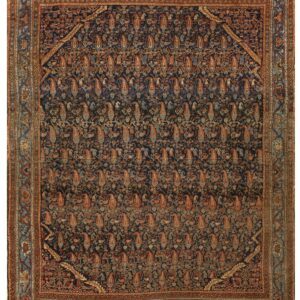
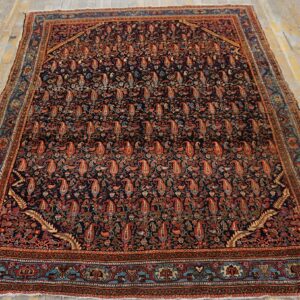
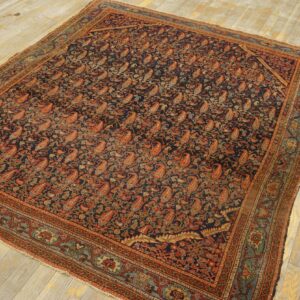
Antique Malayer Persian Geometric Rug, Country of Origin: Persia, Circa Date: 1890s. This exquisite example of late 19th-century weaving showcases the robust character inherent in Persian weaving traditions. Malayer rugs, woven in the Hamadan region, frequently blend curvilinear motifs with a strong underlying geometric structure, resulting in highly detailed, durable pieces.
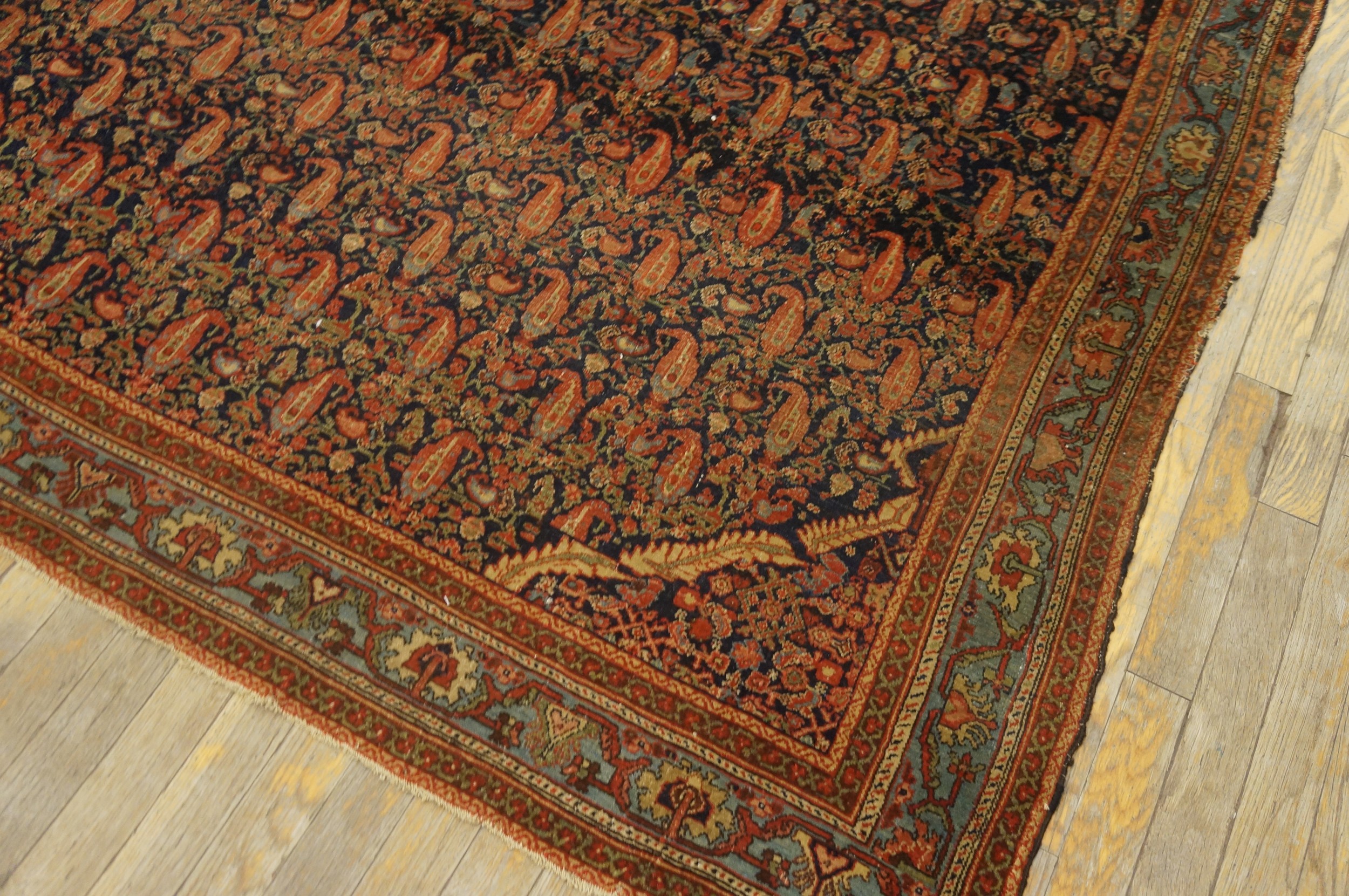
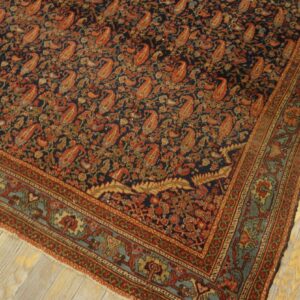
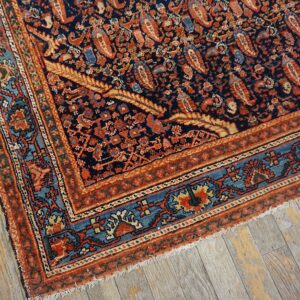
The field is dominated by an intricate, repeating pattern of boteh (paisley) figures, densely packed against a rich indigo ground. This complex arrangement, characteristic of village production, utilizes a sophisticated jewel-tone palette featuring oxidized reds, terracotta, and subtle highlights of pale robin’s egg blue in the borders. The overall effect is one of depth and visual texture.
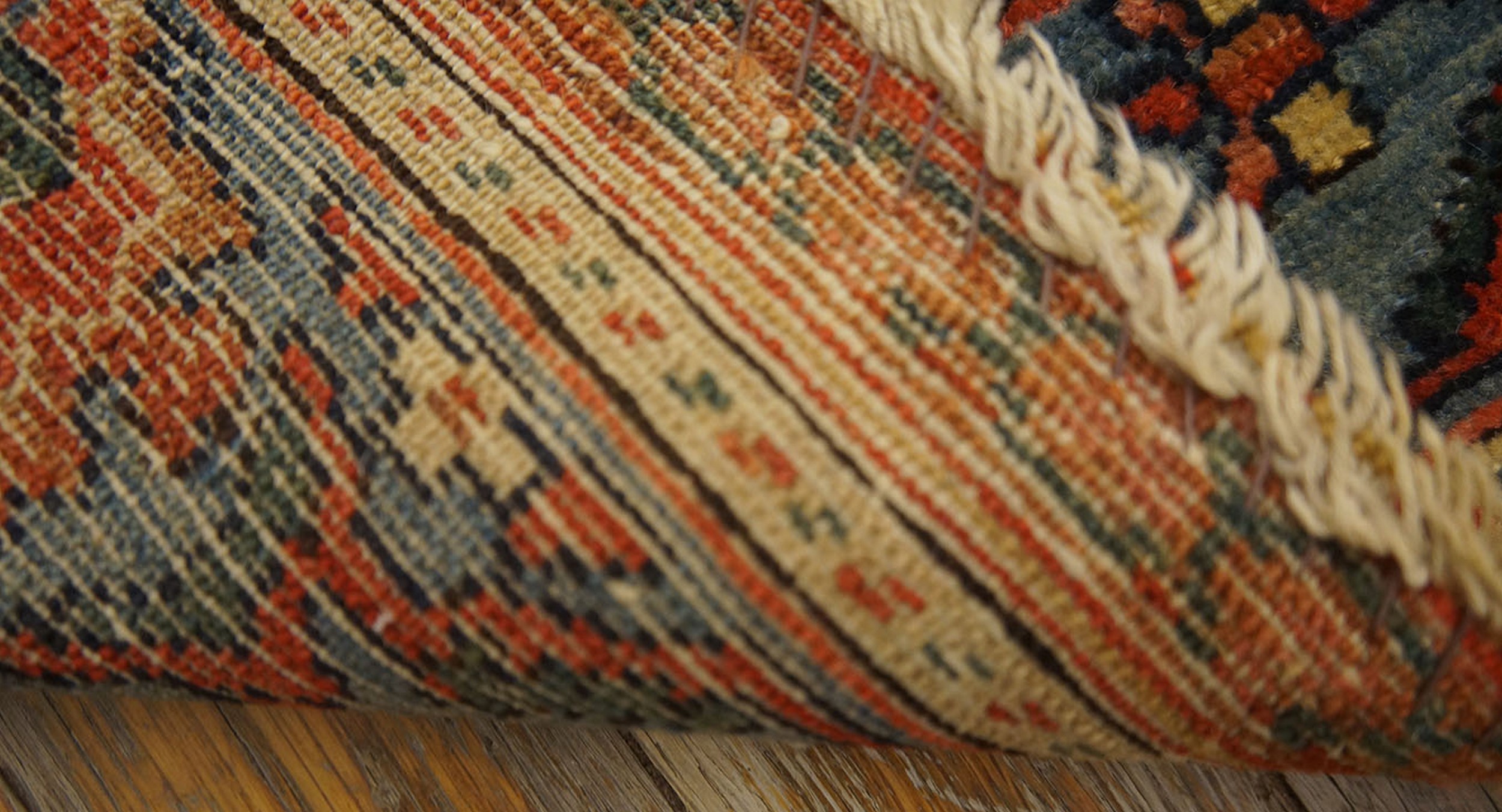
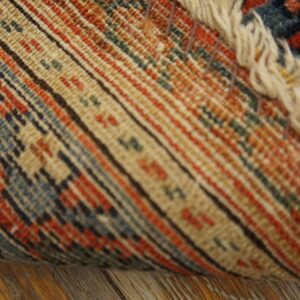
The relatively compact dimensions of this piece classify it as a small scatter size rug, making it highly versatile for placement in hallways, studies, or intimate seating areas where a concentrated dose of color and history is desired. Its finely knotted structure speaks to the high quality of the wool and the weaver’s skill, ensuring longevity.
As a genuine late 19th-century textile, this Malayer represents a desirable piece for collectors seeking authentic antique rugs from the Qajar era. The excellent preservation of the natural dyes and the integrity of the complex geometric border system confirm its status as a distinguished example of provincial Persian artistry.