
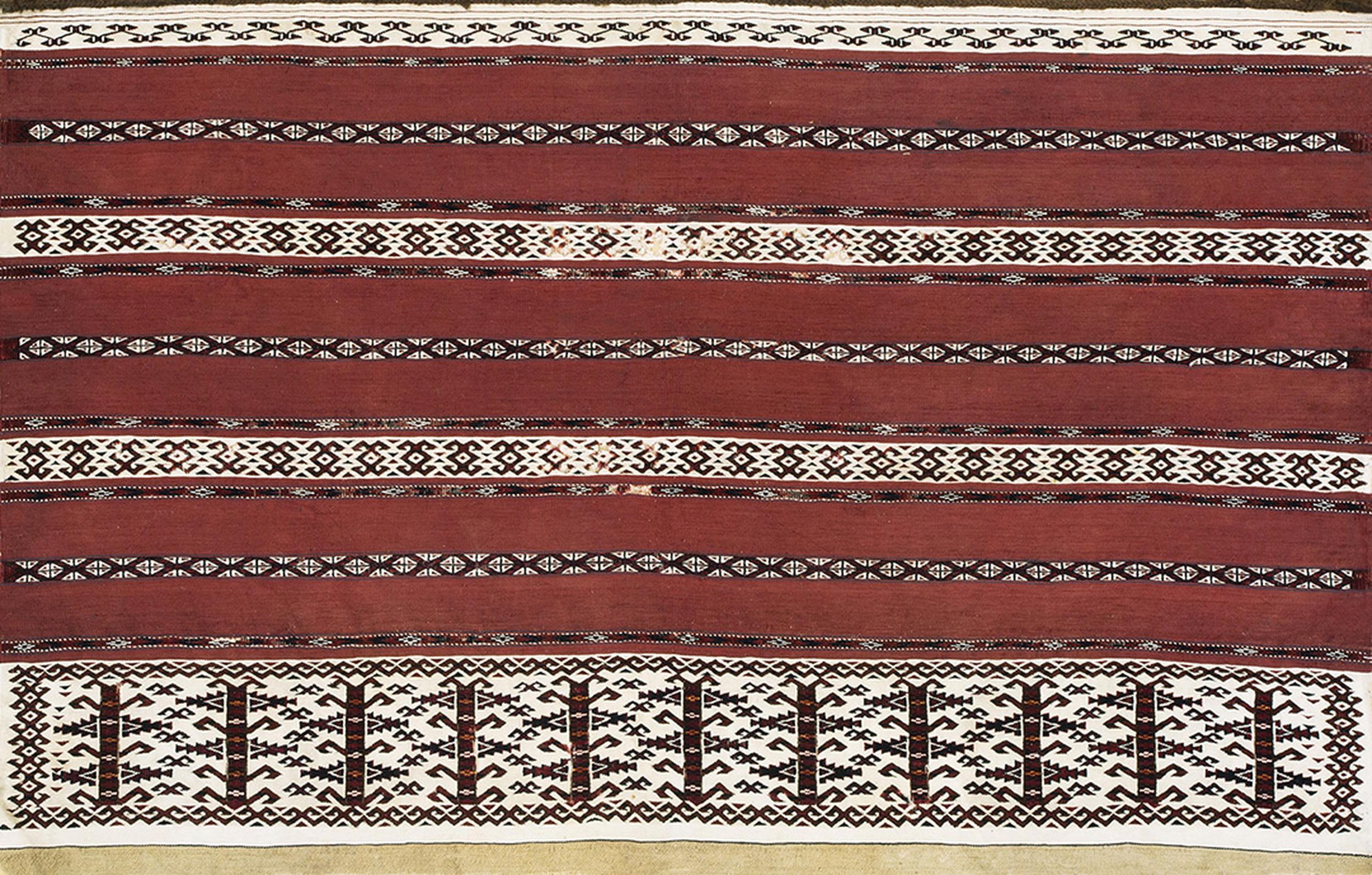
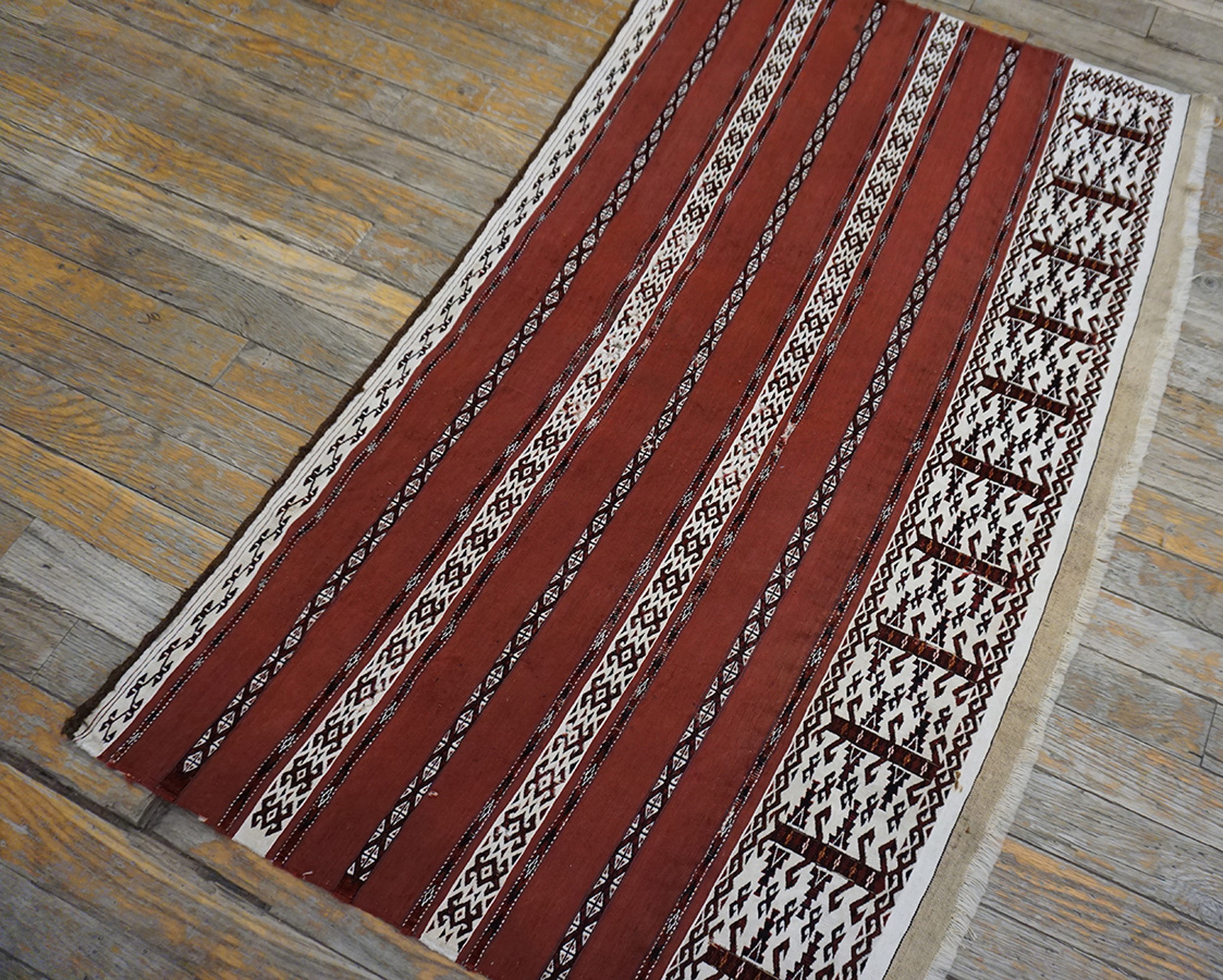
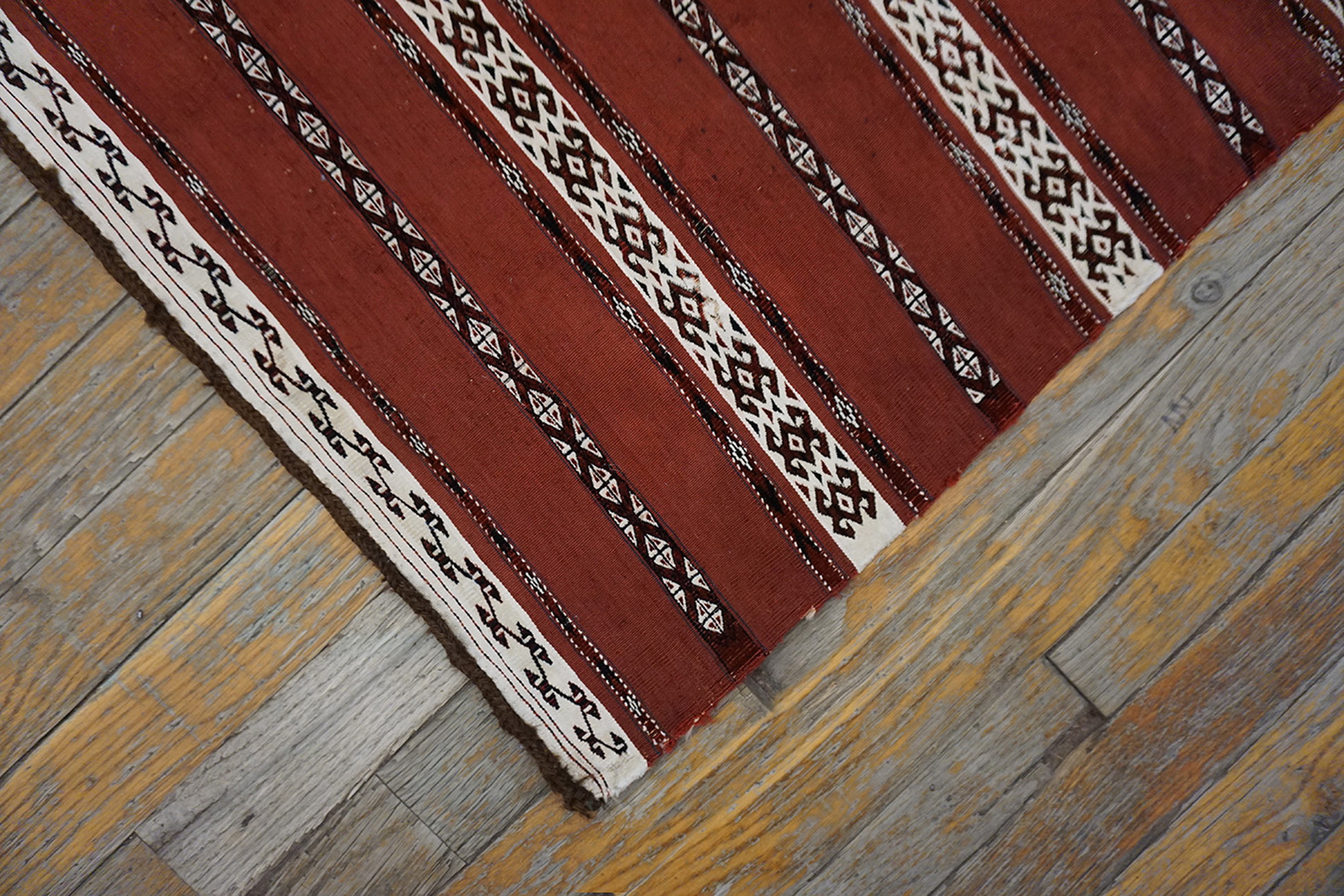
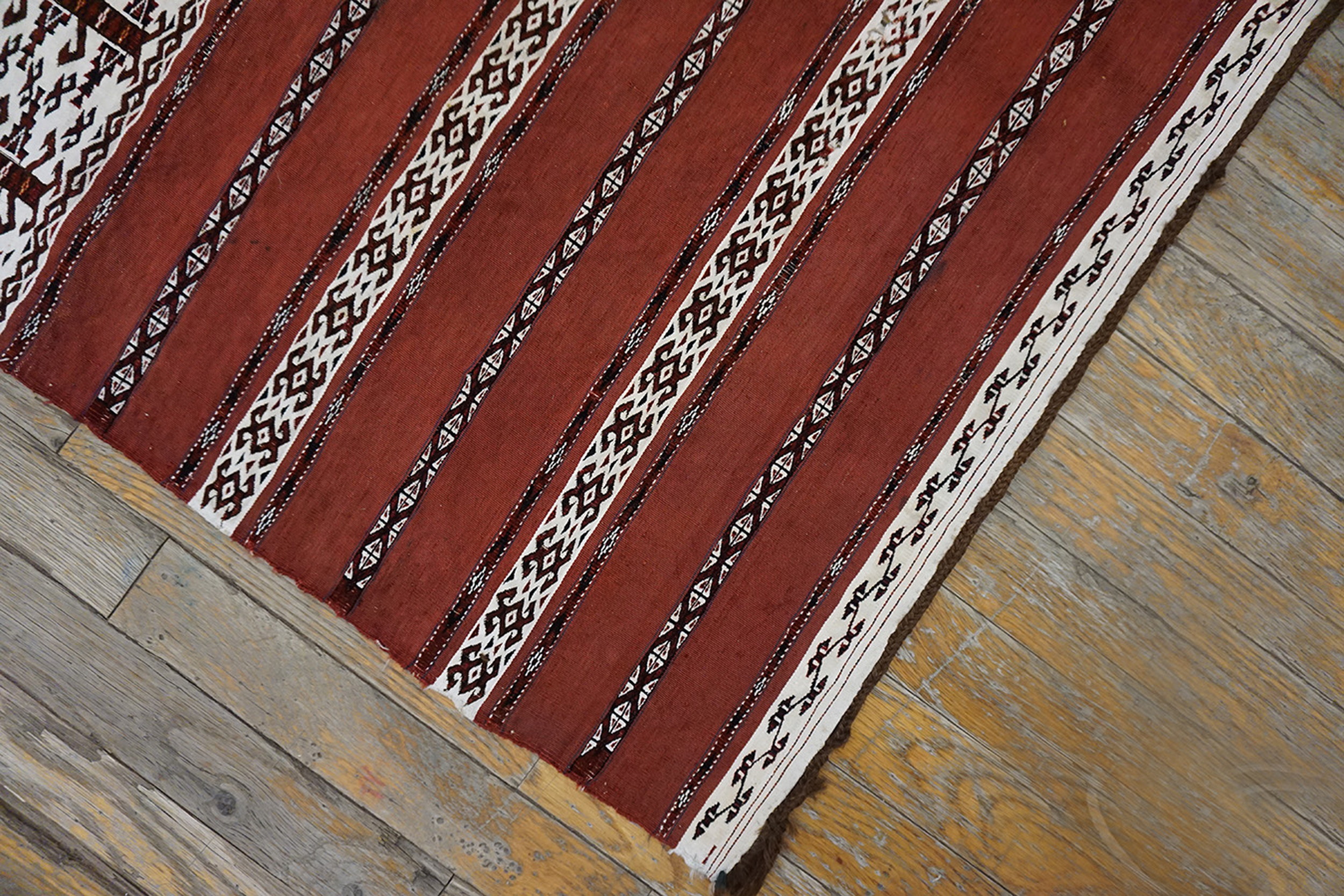
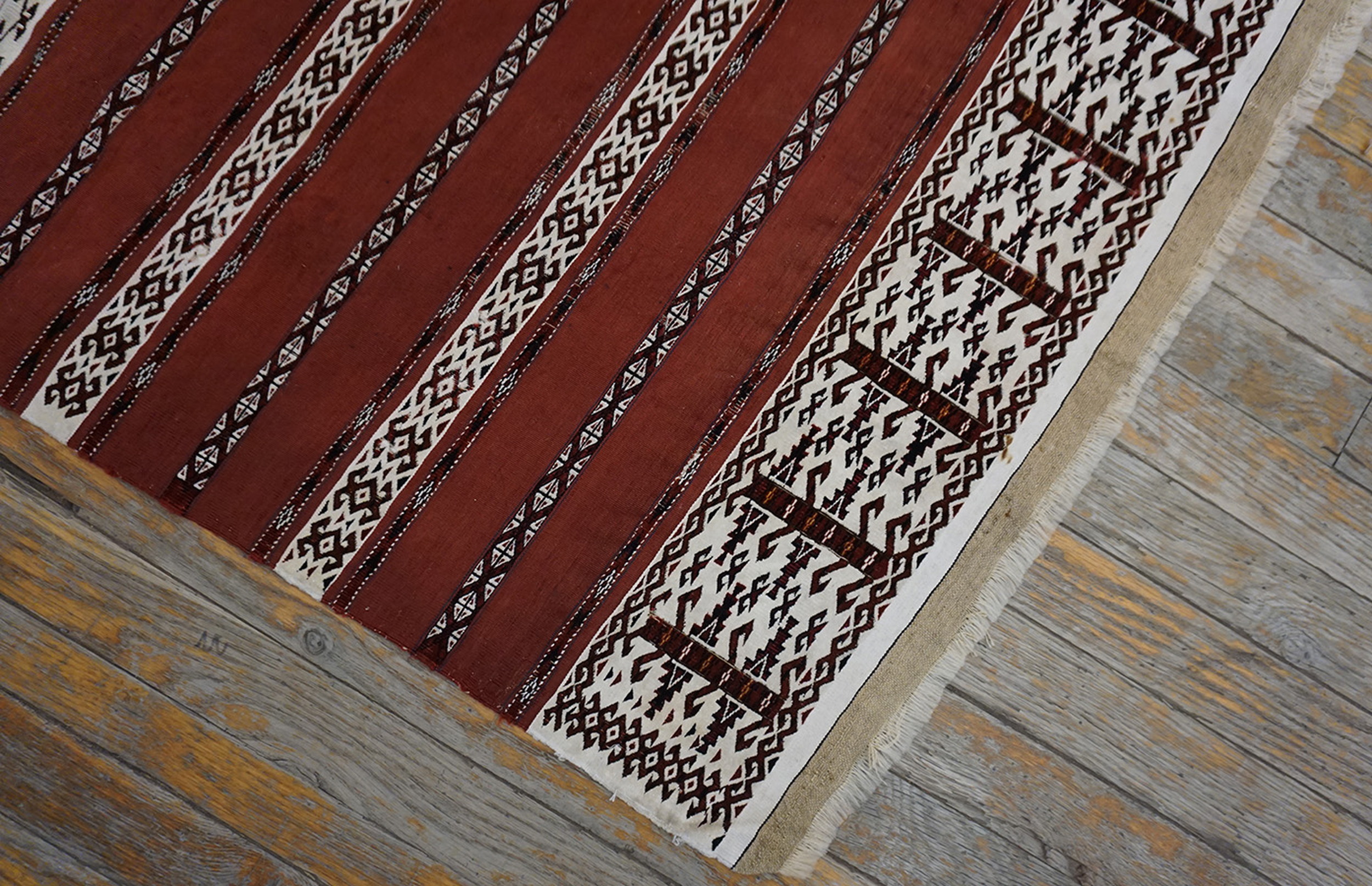
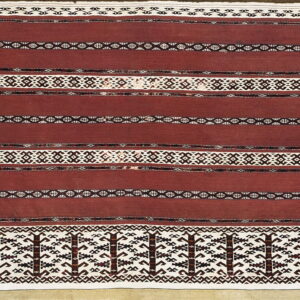
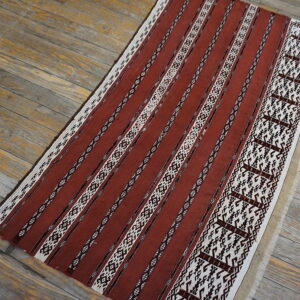
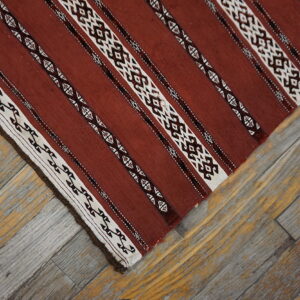
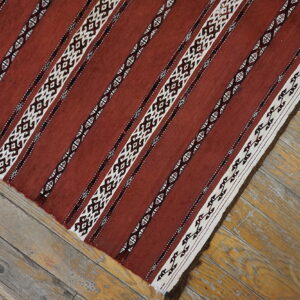
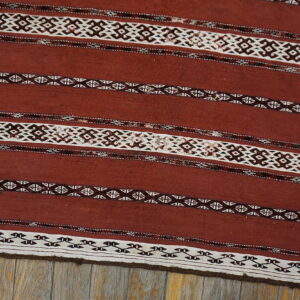
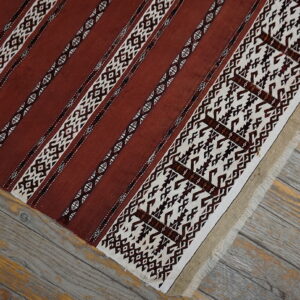
Antique Red Turkmaan – Tekke Turkmenistan Flat Weave Rug, Circa Date: 1880s. This exceptional example of nomadic artistry represents the finest traditions of the Tekke tribe, renowned for their mastery of both piled and flat-woven textiles. This piece, dating to the late 19th century, is a vital artifact among antique rugs and showcases the durable, practical beauty required for Central Asian tent life.
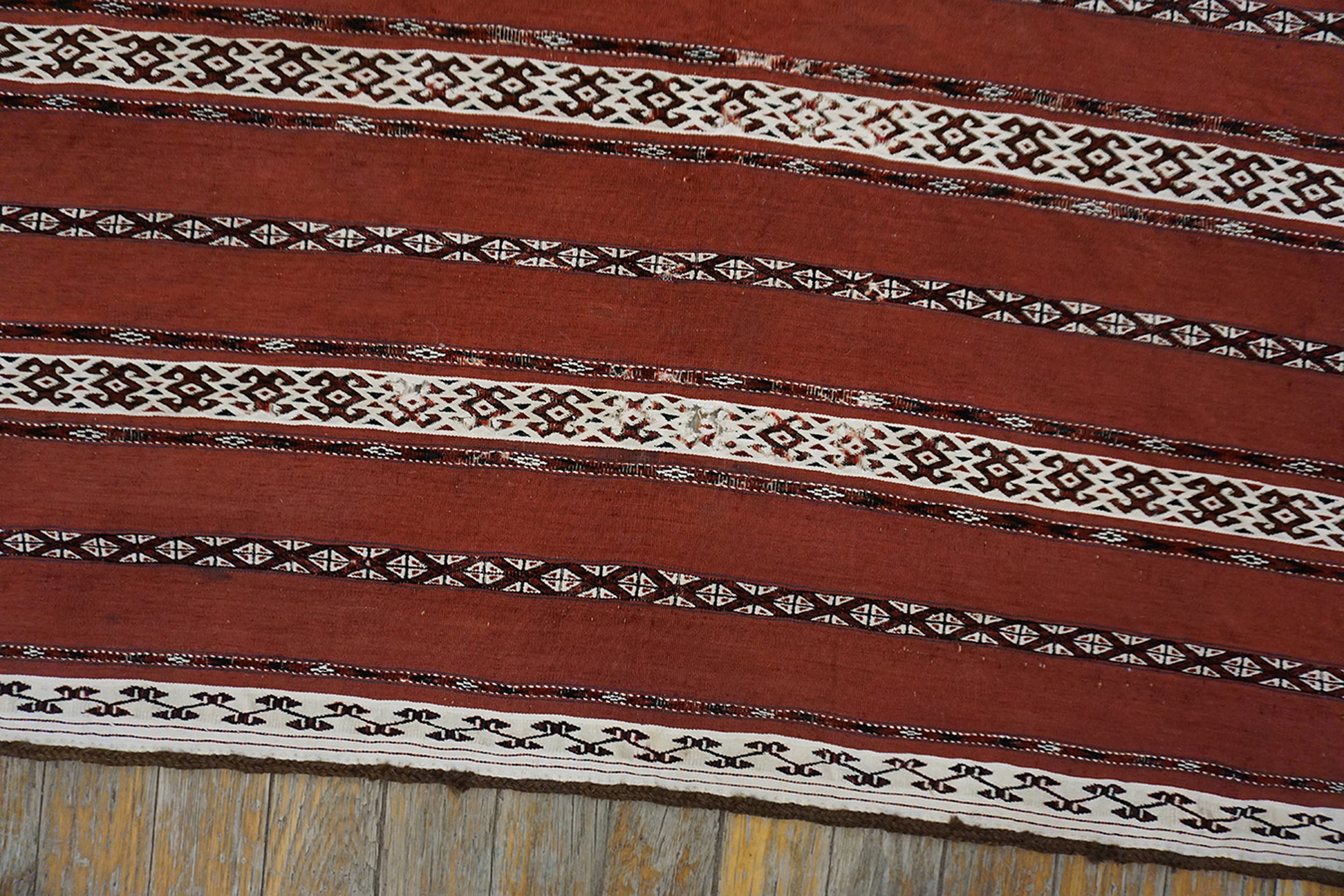
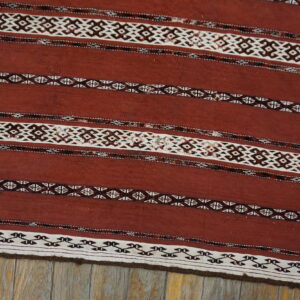
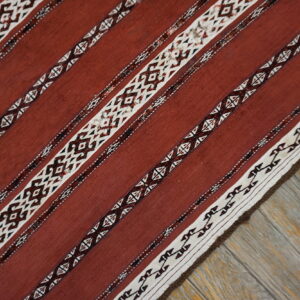
The palette is dominated by a saturated, earthy red hue, often described as madder red, which here leans toward a rich, dark tone characteristic of red rugs. This primary color is skillfully contrasted with lighter and darker bands, highlighting the sharp, angular geometry typical of traditional Tekke design and reflecting the limited but powerful dye resources available to nomadic weavers.
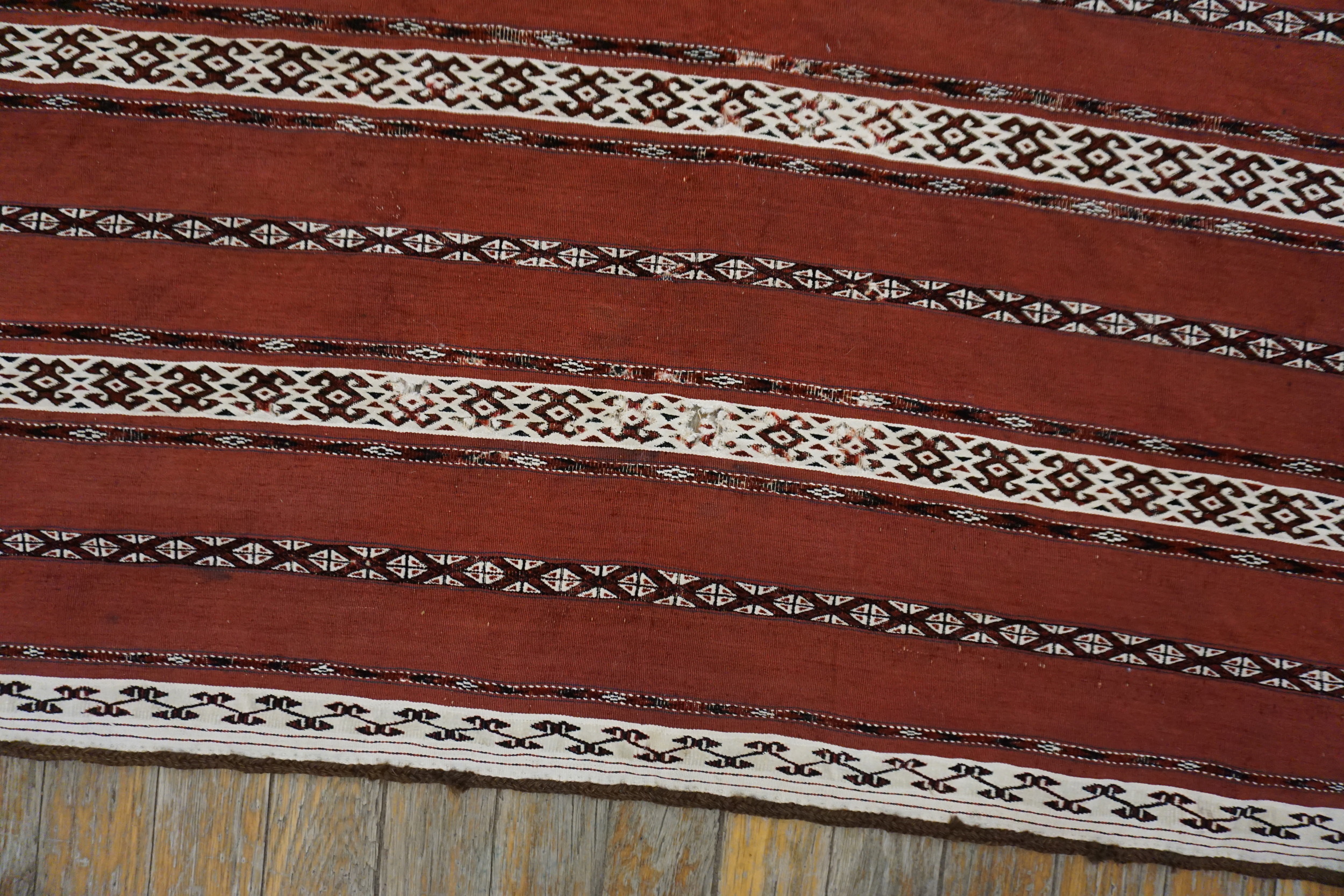
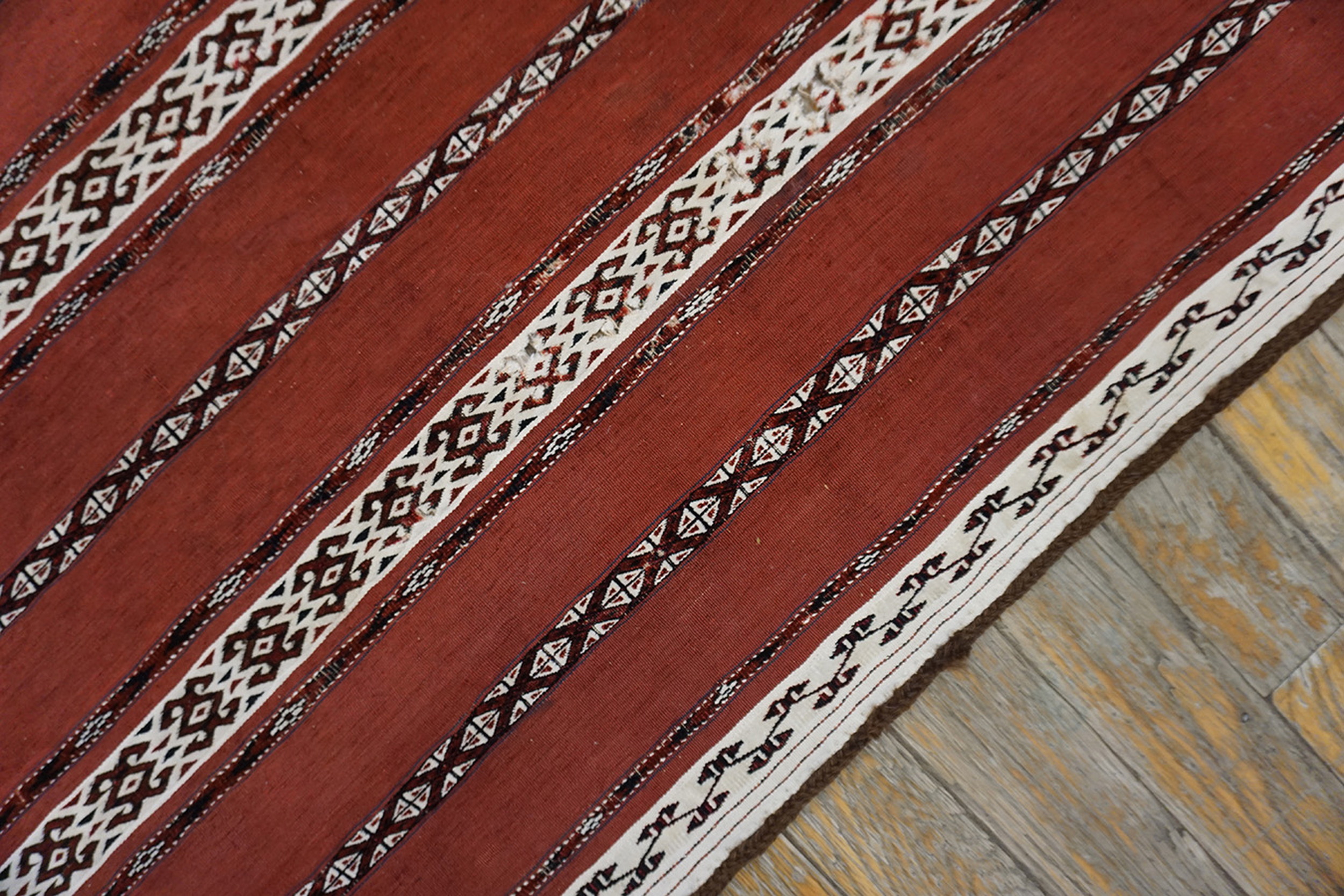
Constructed using the sturdy flat-weave technique, the rug features a highly organized structure of broad, solid color fields interspersed with narrow, intricately patterned horizontal bands. While the composition is strongly striped, the repetitive nature of the geometric motifs creates a continuous visual flow across the field, lending it the powerful density often associated with allover rugs.
Historically used as a tent hanging or bedding cover, this textile retains a remarkable integrity of weave and color saturation despite its age. Its dimensions classify it perfectly within the category of small scatter size rugs, making it an ideal accent piece for modern interiors seeking an authentic, restrained tribal aesthetic that speaks to a rich cultural history.