
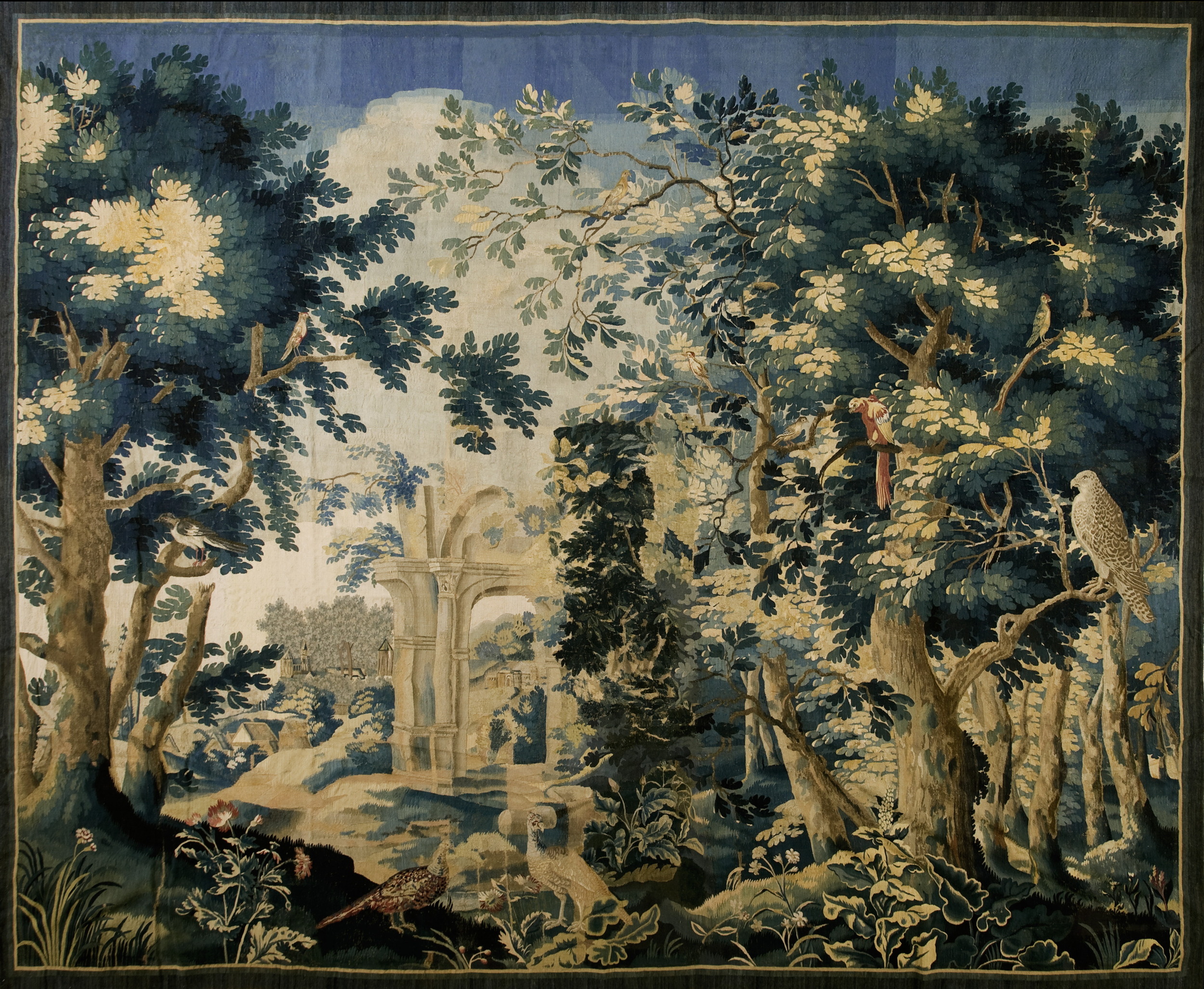
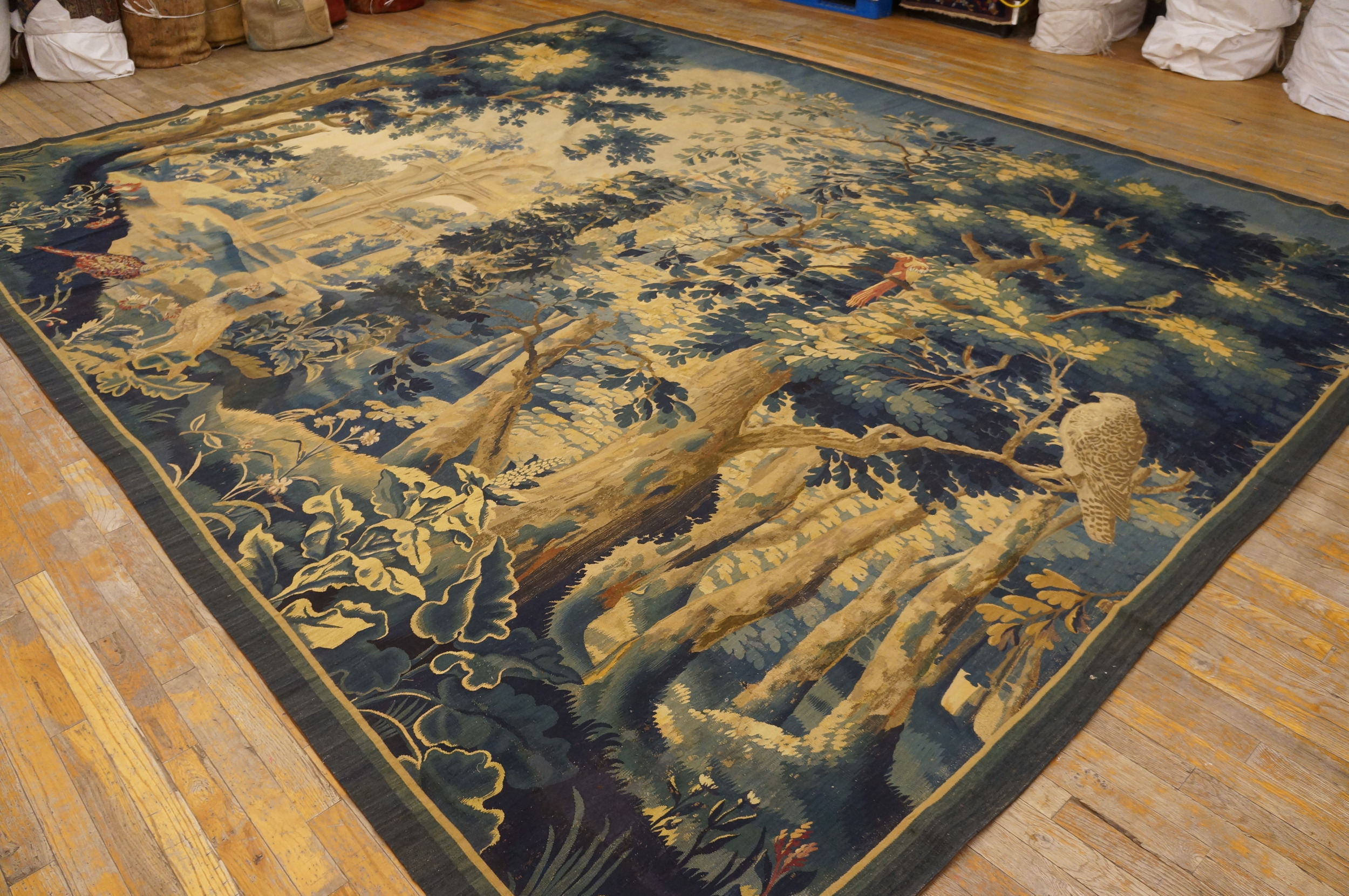
17th Century Flemish Baroque Verdure Tapestry: “The Aviary and the Triumphal Ruin”
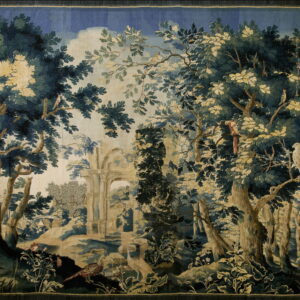
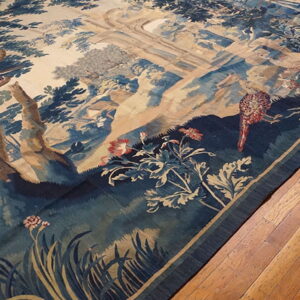
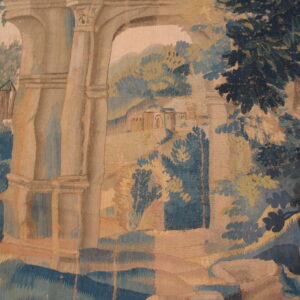
A breathtaking window into the seventeenth-century Flemish wilderness, this monumental Verdure tapestry is a tour de force of Baroque landscape artistry. The composition leads the eye through a sun-dappled forest of towering oaks and dense ivy, revealing the romantic silhouette of a classical ruin at its heart. More than a simple landscape, the scene is teeming with life; a noble hawk keeps watch from the canopy while exotic pheasants and parrots animate the foreground, their forms rendered with extraordinary tactile detail using a sophisticated interplay of wool and silk.
The palette of deep indigo, sage, and parchment creates a luminous, atmospheric depth that transforms any interior into an aristocratic gallery. Beyond the dense foliage, a quiet European village rests on the horizon, offering a poignant contrast between human settlement and the wild, untamed beauty of nature. Perfectly preserved with its rich tonal gradients, this tapestry remains a timeless symbol of luxury, intellectual depth, and the enduring allure of the natural world. It stands as a premier example of the Oudenarde tradition, designed to bring eternal spring to the grandest of domestic spaces.
Historical & Technical Identification
Title: The Aviary Verdure with Classical Ruin and Village Prospect
Origin: Flanders (likely Oudenarde, the premier center for Verdure production).
Period: Late 17th Century (High Baroque, circa 1680).
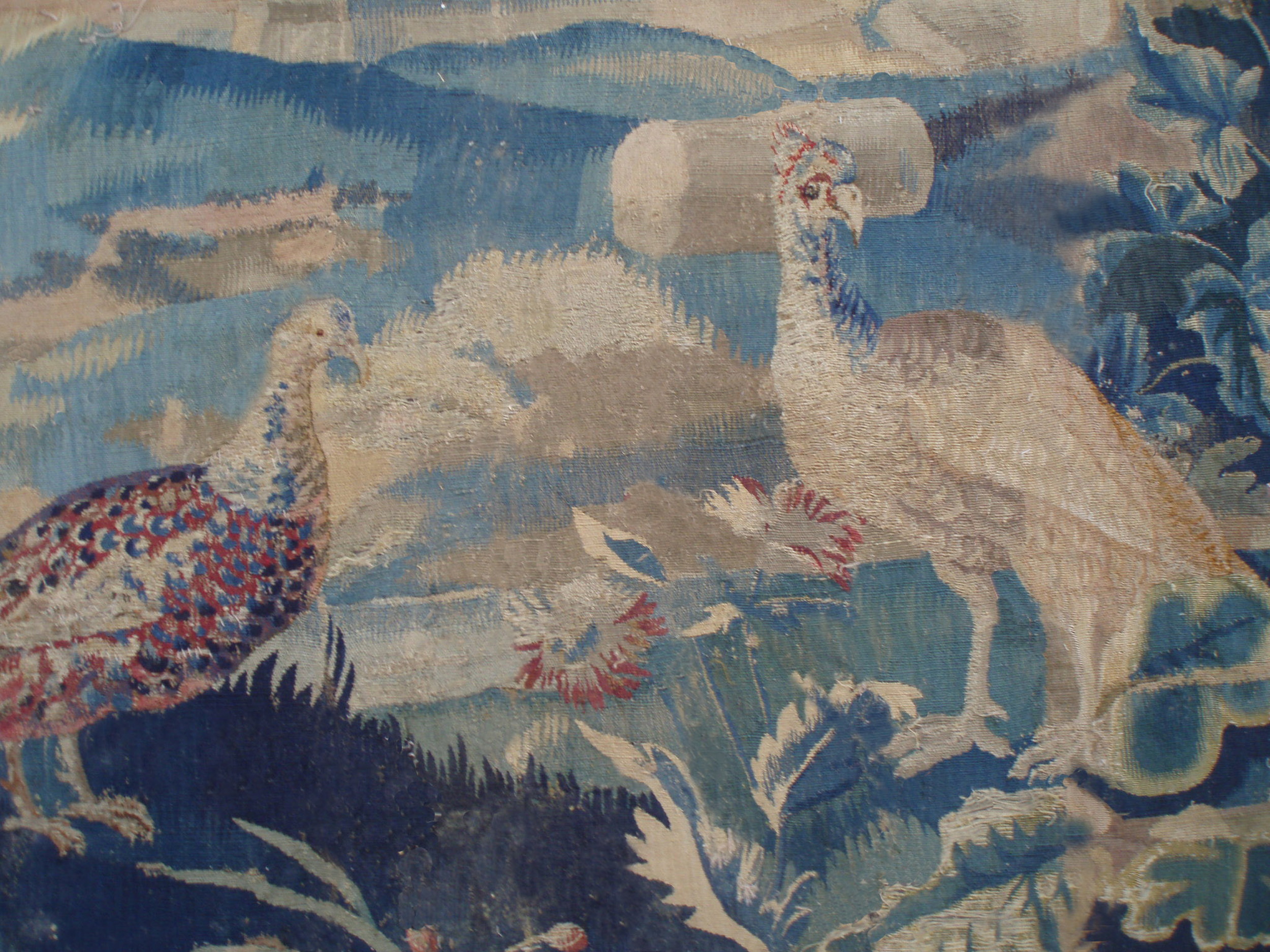
Technique: Hand-woven wool with silk highlights for luminosity in the foliage and bird plumage.
Materials: High-grade wool for structural depth; organic dyes including indigo (blue), madder (red), and weld (yellow).
Iconography & Narrative Breakdown
This tapestry is a quintessential “Verdure,” a genre that brought the outdoors into the grand halls of the European aristocracy. It functions as an allegory of nature’s enduring power.
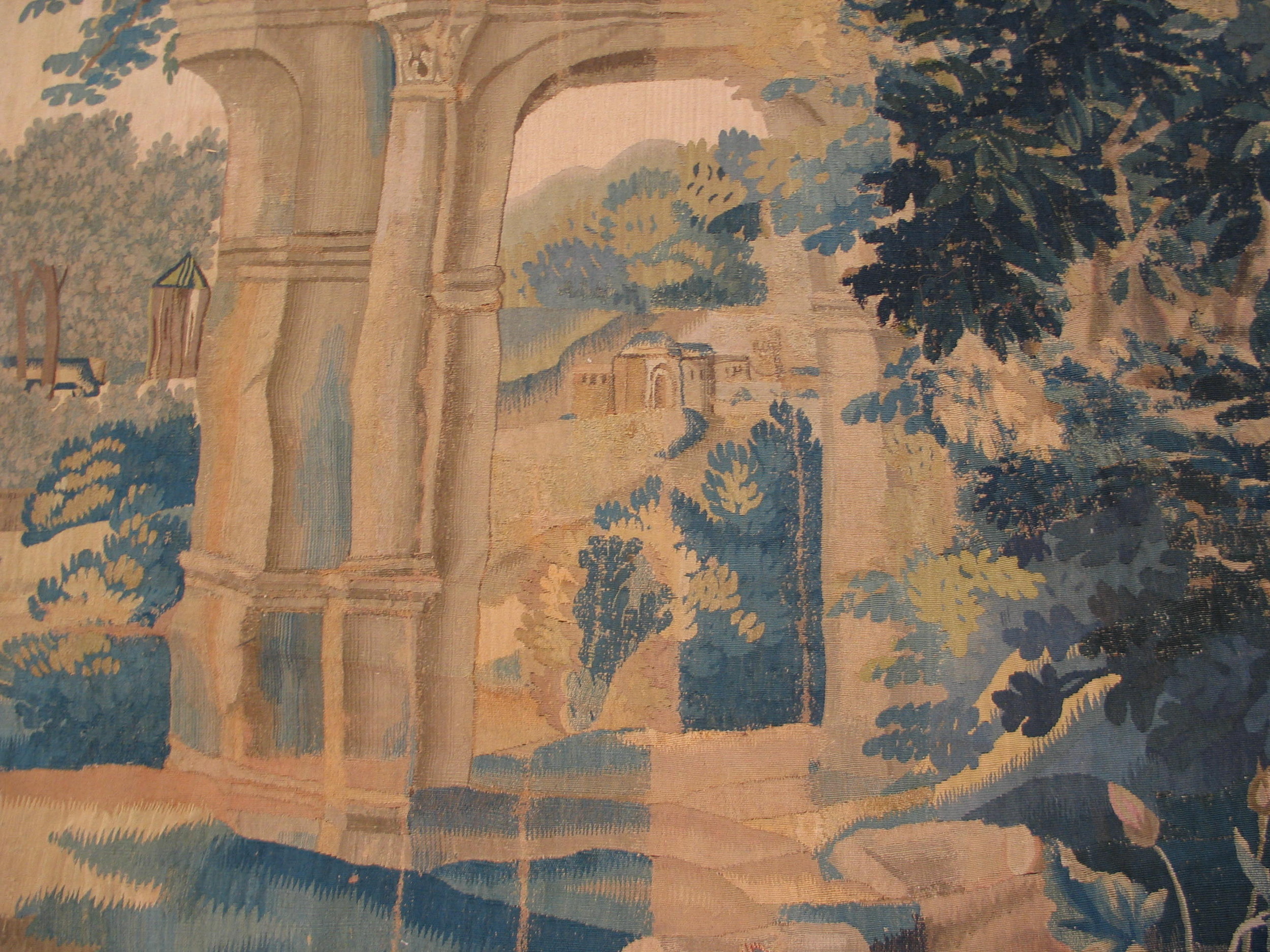
The Classical Ruin: The central architectural element is a decaying Roman-style triumphal arch. In the 17th century, these “capriccios” represented the transience of empire and the memento mori theme—reminding the viewer that even the greatest works of man will eventually be reclaimed by the forest.
The Exotic Aviary: The tapestry is remarkably “dense” with fauna, which was a mark of high value.
The Sentinel Hawk: On the far right, a noble hawk (or falcon) keeps watch, a symbol of the hunt and aristocratic privilege.
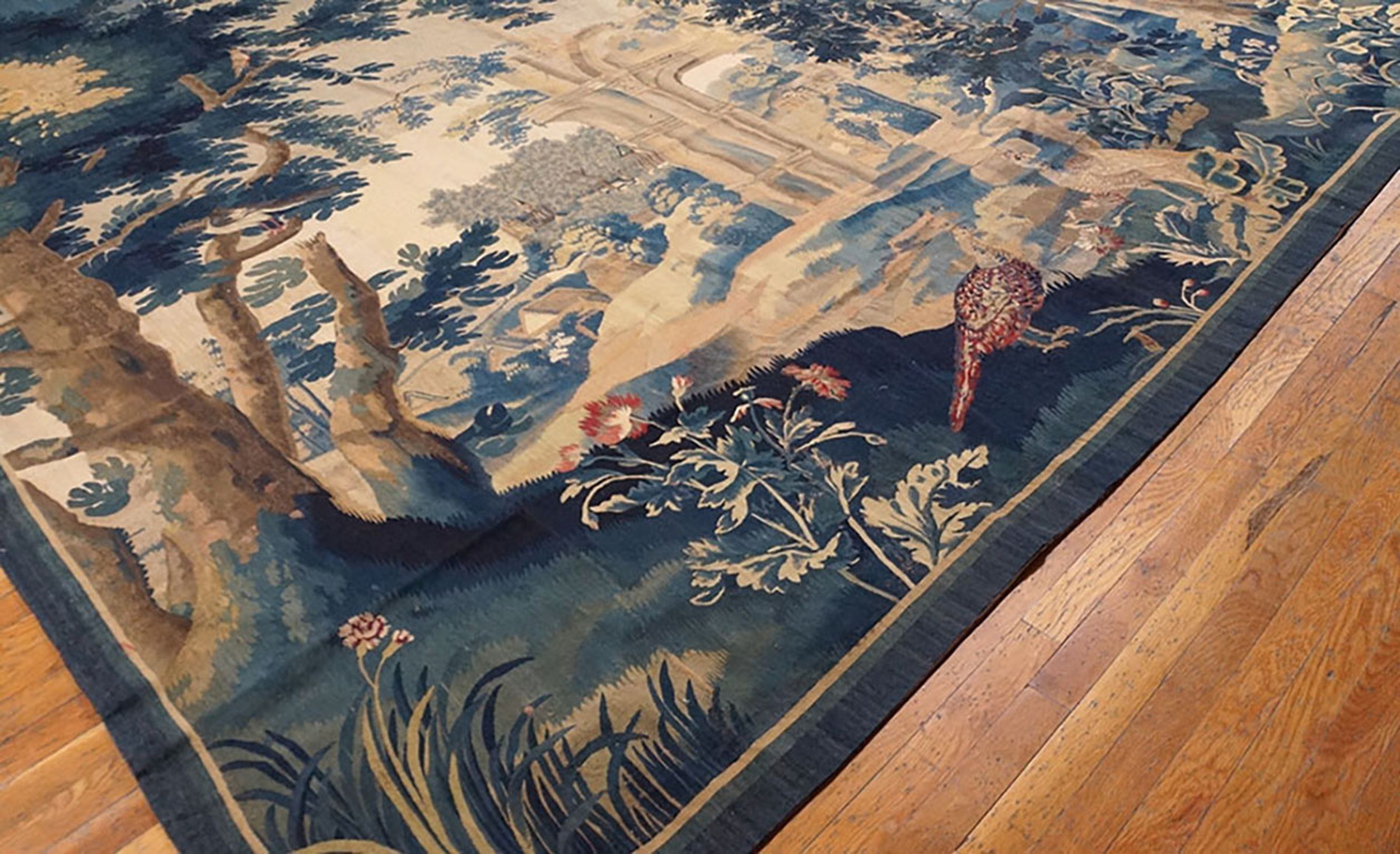
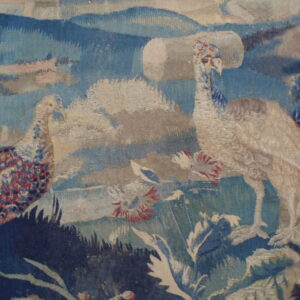
The Pheasant & Exotic Birds: In the foreground and canopy, colorful pheasants and parrots are rendered with botanical precision. These birds represented a fascination with “The New World” and the global reach of the Flemish trading companies.
The Village Prospect: To the far left, a tiny, detailed village with a church spire is visible through the trees. This “prospect” provides a sense of human scale and tranquility against the wild, untamed forest.
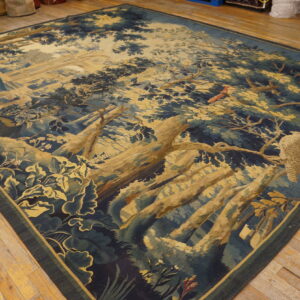
The “Blue-Forest” Palette: The striking blue-green tone is the result of centuries of natural aging. While the yellow pigments (weld) have mellowed, the deep indigo and woad dyes have remained vibrant, creating the sought-after “moonlit forest” aesthetic characteristic of the period.