
Antique Large Flemish Mythological Tapestry. Origin: Brussels Belgium. Circa Date: Mid 17th Century – 1650s
Structure:
- Warp: wool, z-2-s, 13/in.
- Weft: wool, z-2, average 56/in.
Iconography
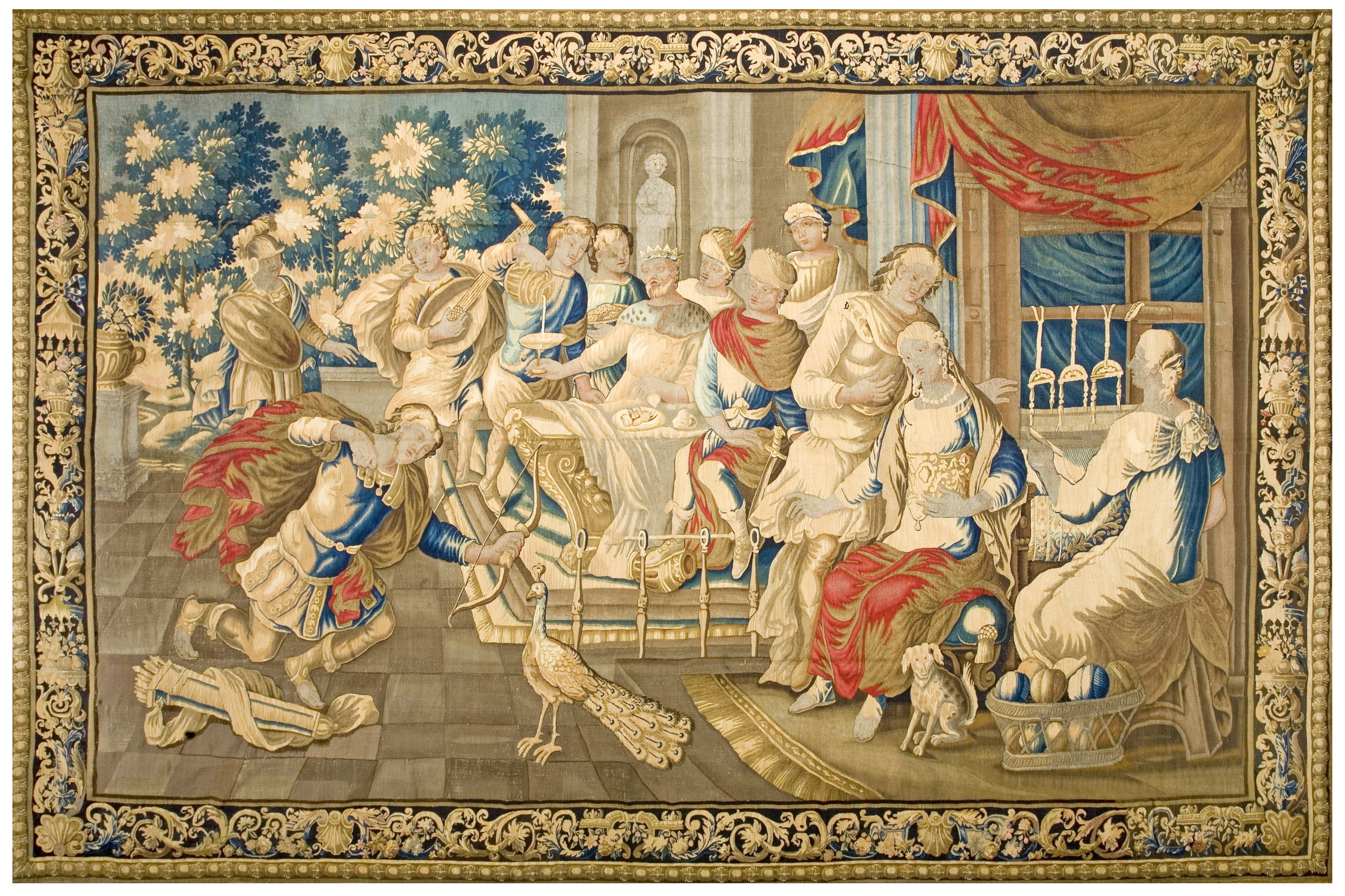
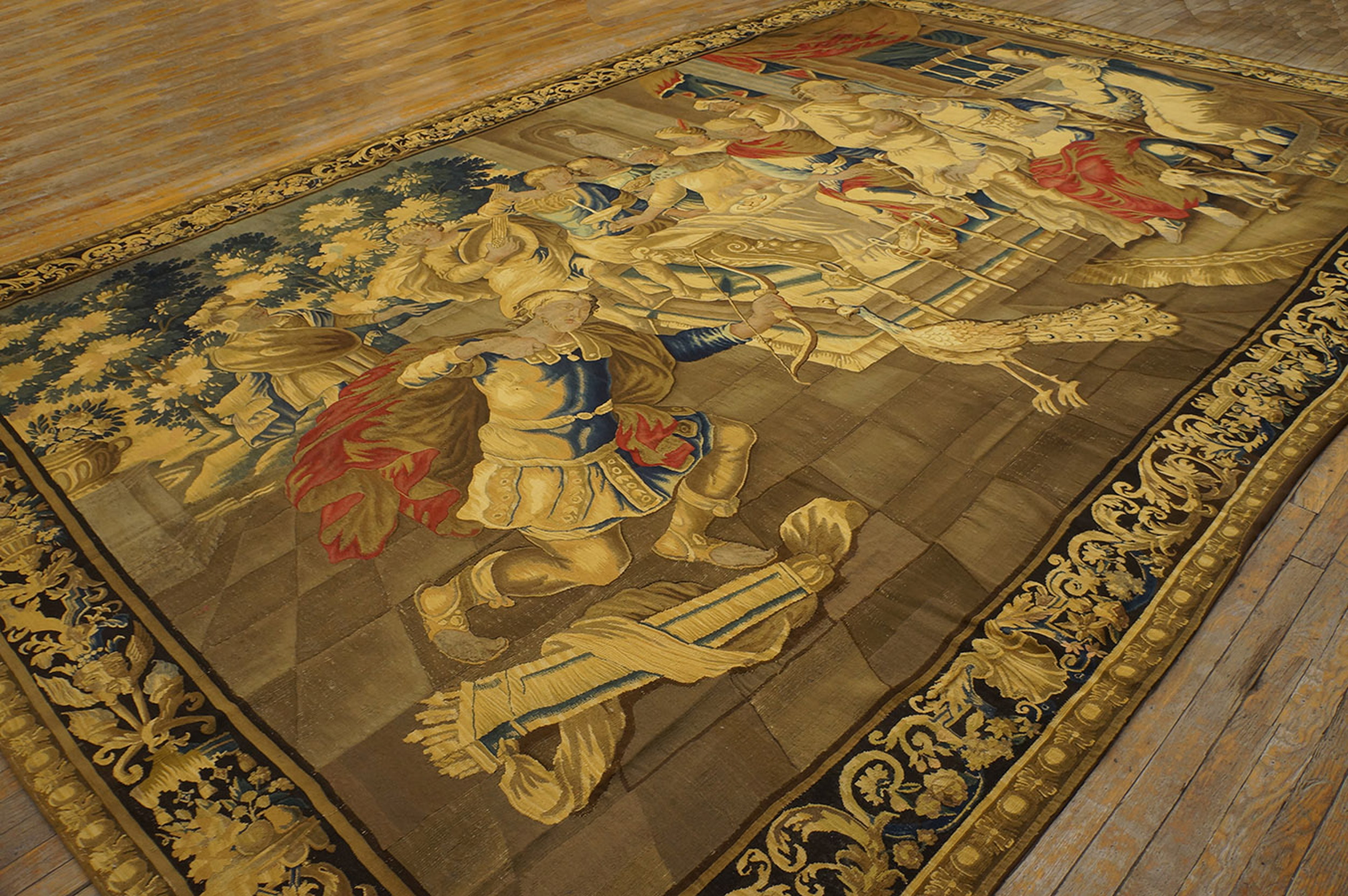
Pastiche of mythological elements
Foreground figures:
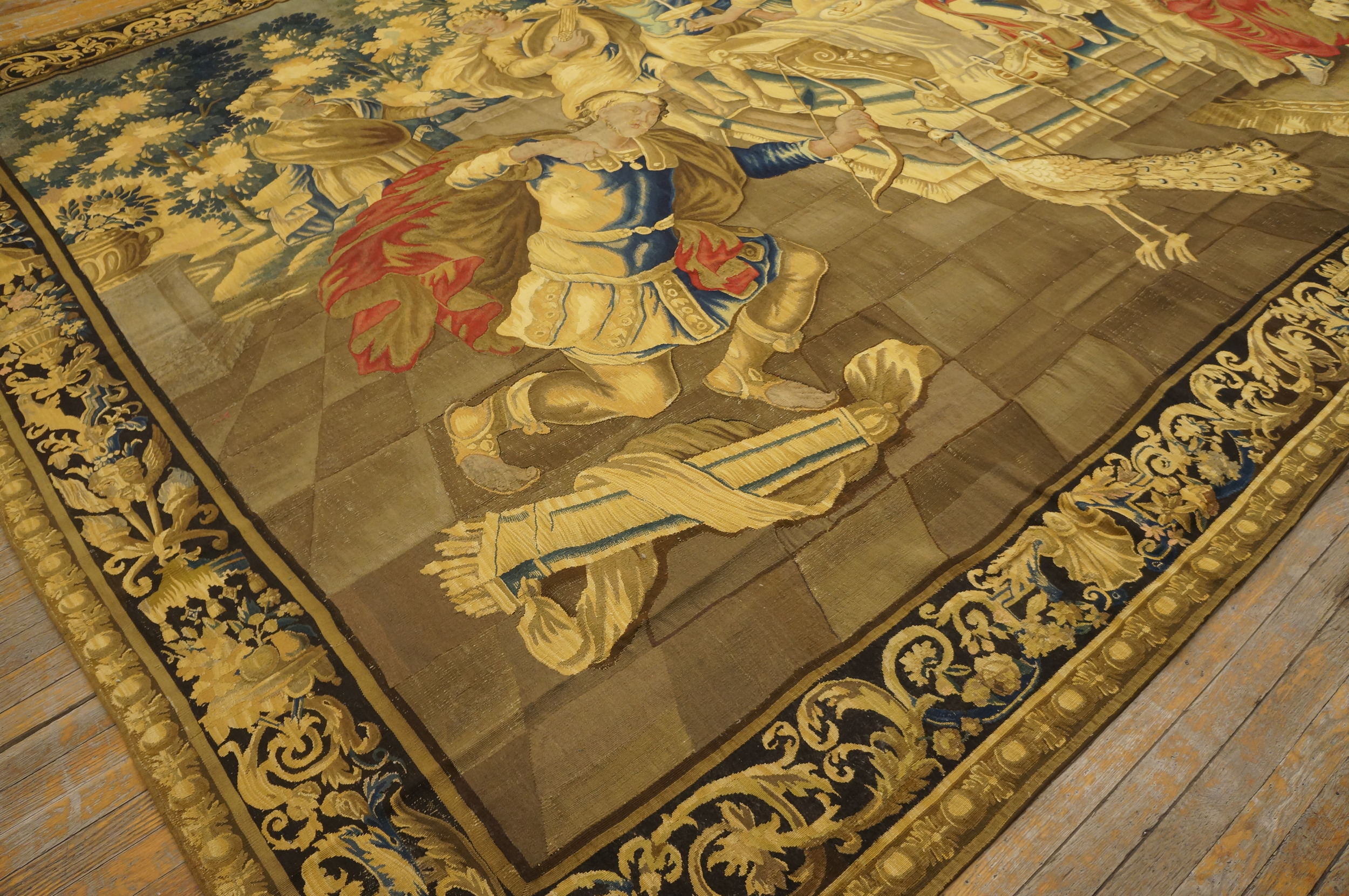
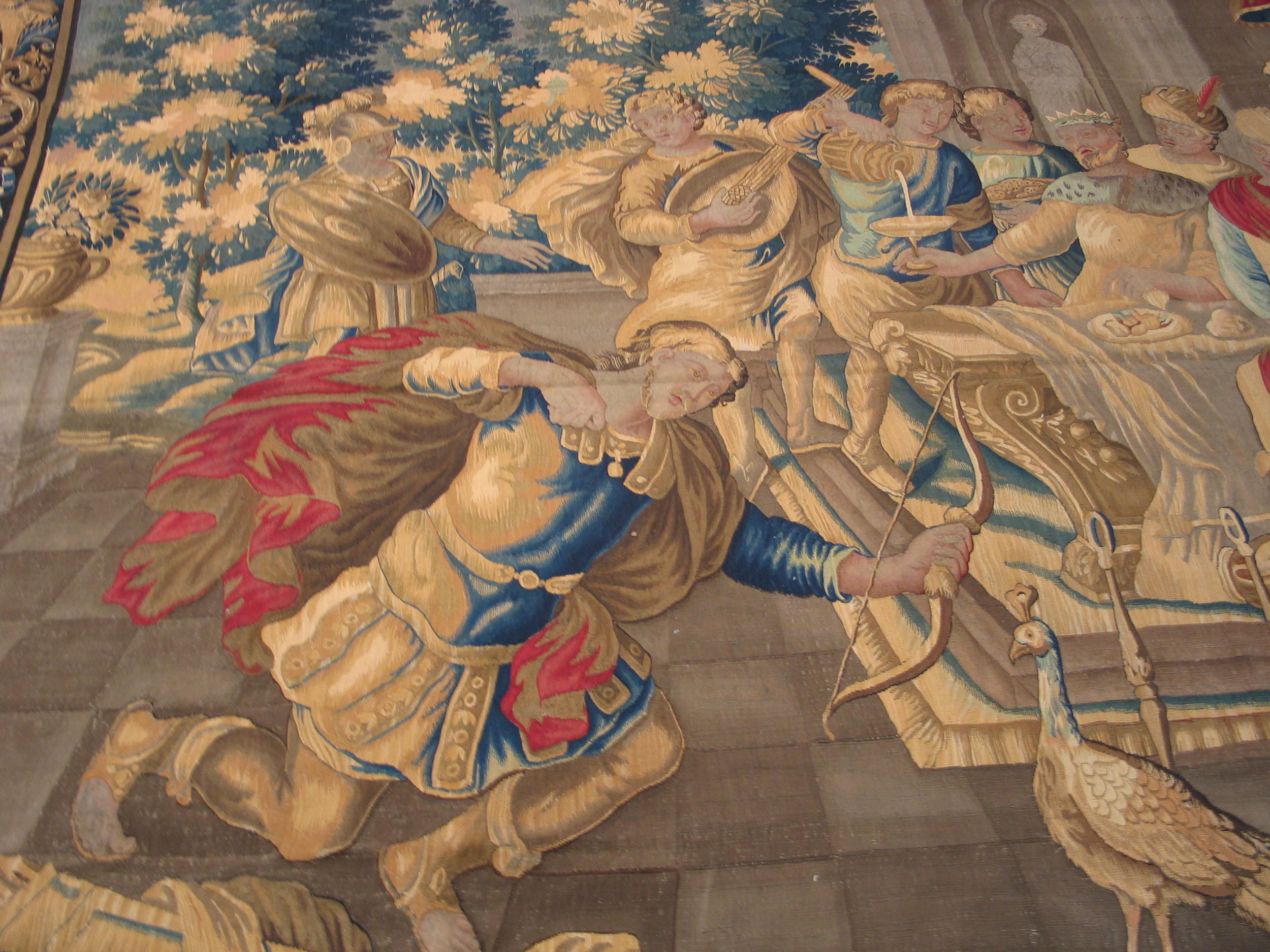
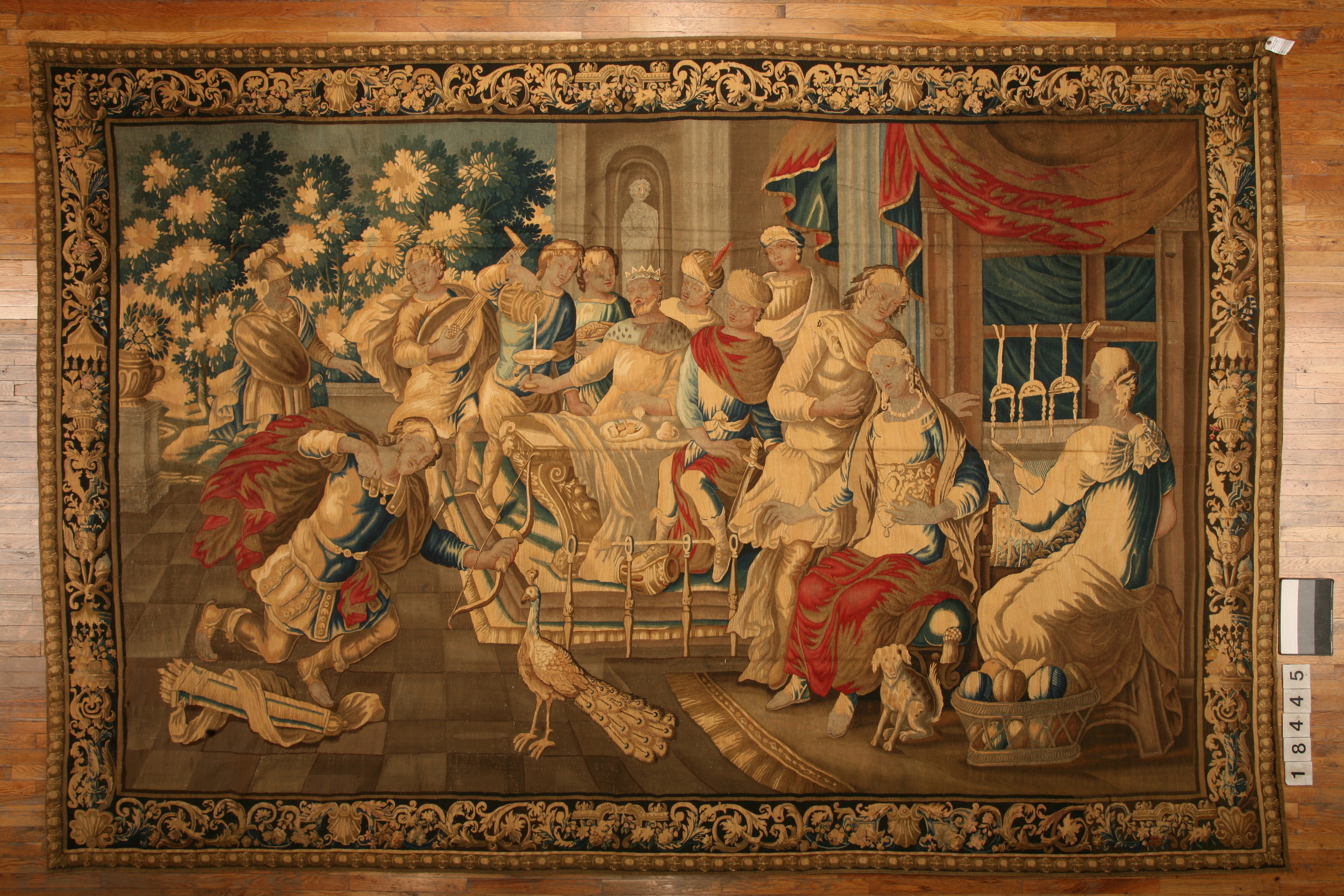
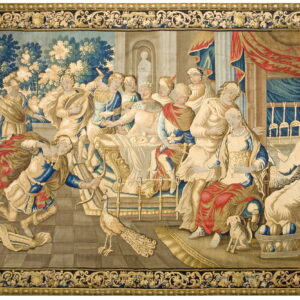
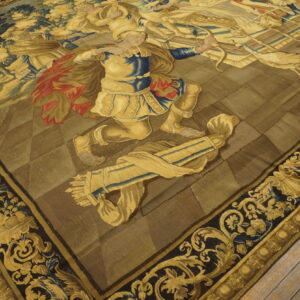
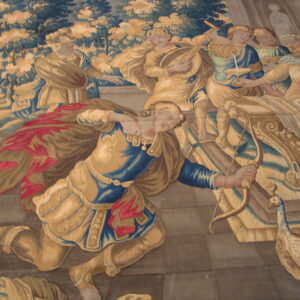
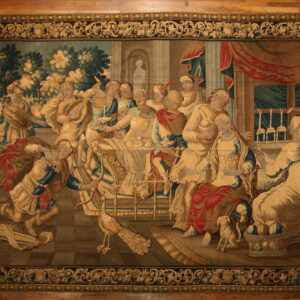
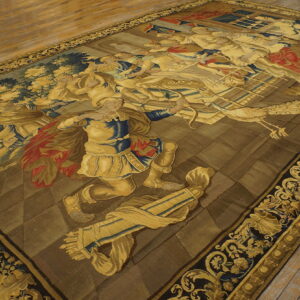
- At left Odysseus (Ulysses) shooting an arrow through a ring target. Taken from the episode from the Odyssey where the suitors of Penelope (see below) try to bend Odysseus’ bow (only he can do it); he shoots an arrow through a target of axes in sequence in the megaron (big room in the palace). Odysseus is often shown bearded, as is this figure.
- At right, Penelope (Odysseus’ wife) who has been awaiting his return for years. She has been weaving a tapestry, promising to select a suitor from the crowd of potential mates when she finishes weaving. But she unravels it at night, so she hopes Odysseus can return.
- The dog in the foreground is a well known symbol of fidelity, Penelope’s fidelity for Odysseus.
All the other characters are taken from other mythological sources:
- Hera (Juno) The elaborately dressed woman to Penelope’s left. Her symbol the peacock appears in the foreground.
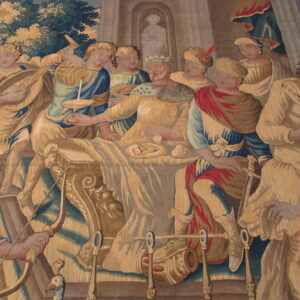
At the table are:
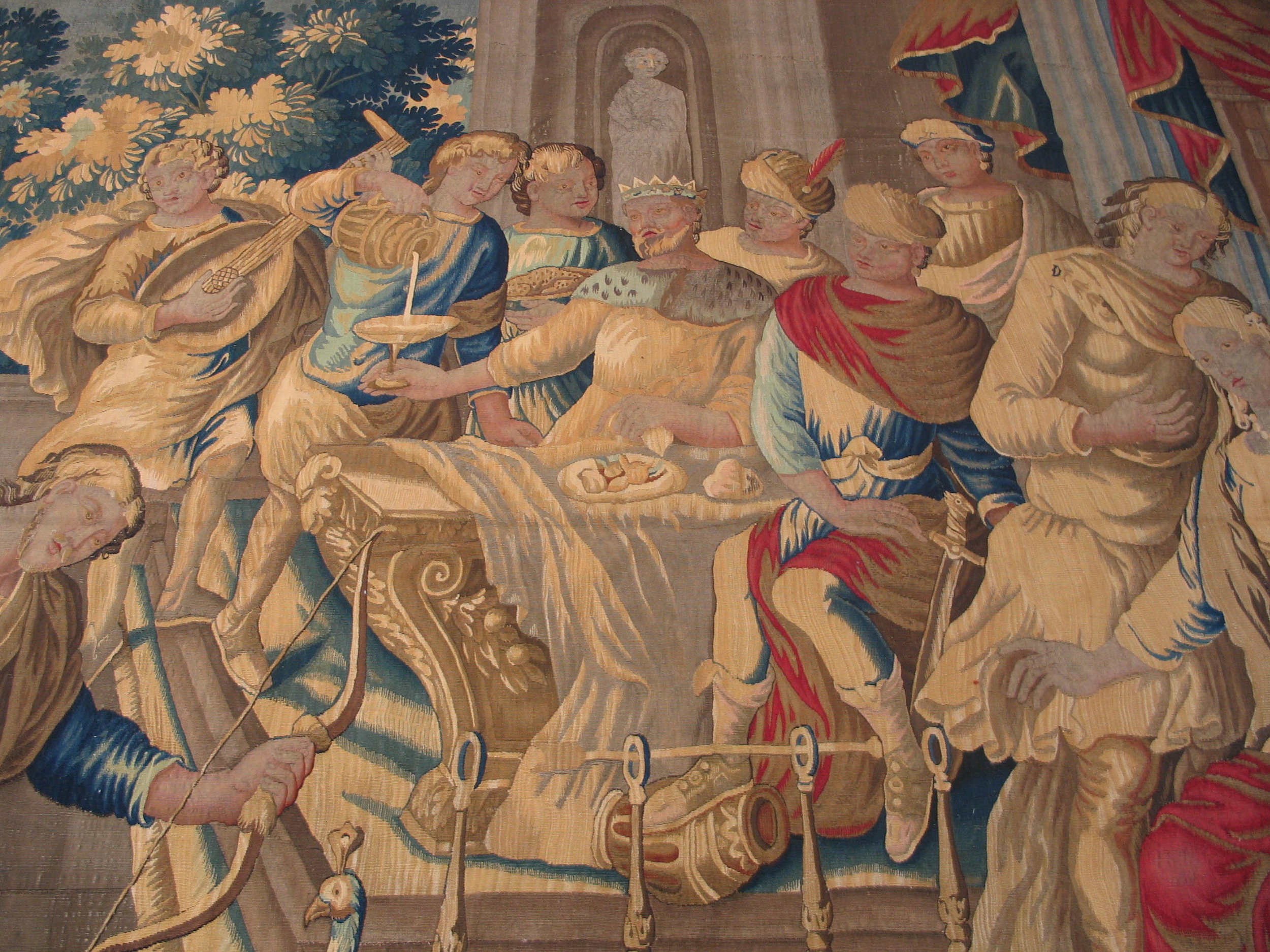
- Zeus (Jupiter), crowned, the king of the gods of Olympus
Being served by:
- Ganymede, the divine cupbearer.
- Mars, at far left with sword, shield and helmet
- Possibly Hermes (Mercury) The divine messenger seated to the right of Jupiter with sword.
The other figures in exotic dress (Turbans; etc) are basically fillers in the composition:
- The lute playing musician is at several removes taken from a 16th century Italian print.
The Sets Of Tapestries:
Tapestries were usually made in sets and this, therefore ought to be part of larger ensemble. But what? A story of Odysseus? Examples of Fidelity? A search of the literature, admittedly not complete, does not turn up any other example en suite – sharing a similar border, for example, and style of drawing.
The only other tale from classical mythology involving a woman weaving, is that of Arachne who Athena (Minerva) turned into a spider for her presumption to weave as well as the goddess. But that has only a group of woman as onlookers, not a mixed crowd of gods. And there are no tapestries of that subject matter known.
There is another Penelope panel, in Boston, depicting her alone, at her loom. French or Flemish, circa 1480. It is much smaller (5’1” x 3’4”) and part of a wholly distinct series depicting Virtuous women. There is, of course, no stylistic connection.
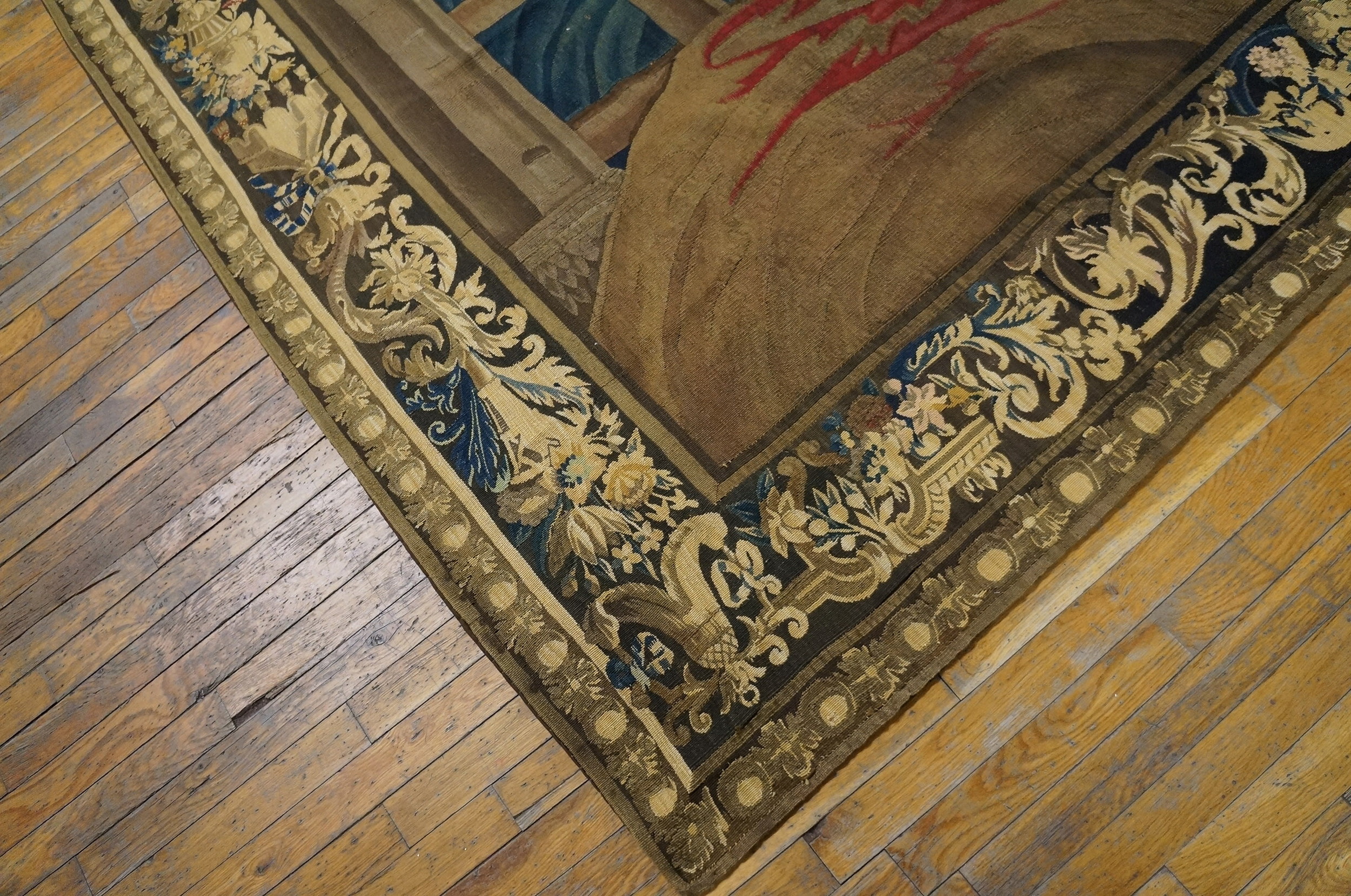
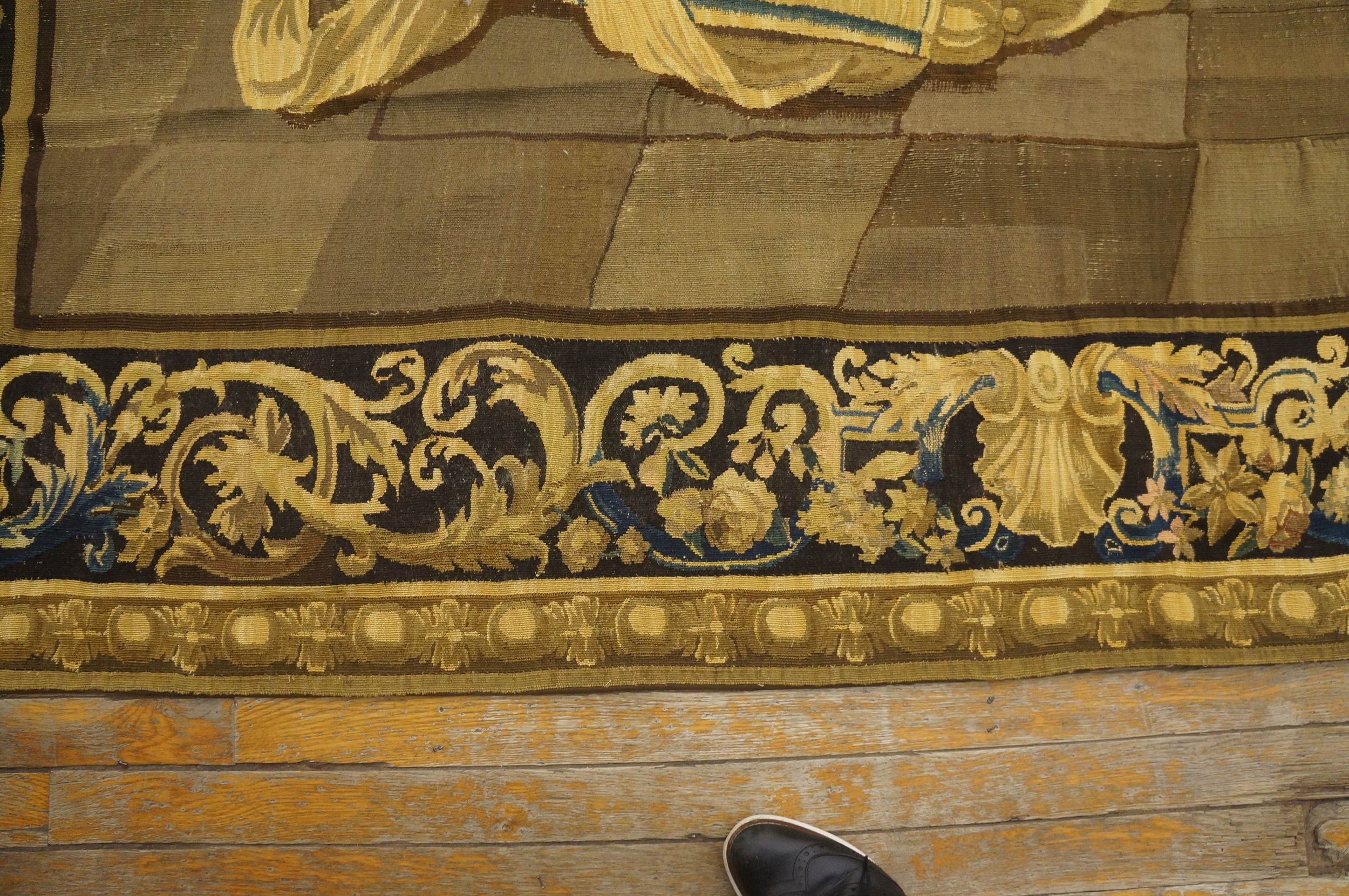
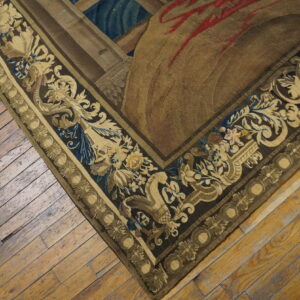
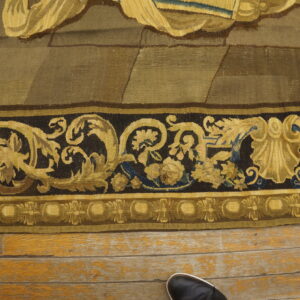
The border seems to retain elements of Mannerist origin: winged heads, strap-work fragments, shells, baldachins, as well as later acanthine rinceaux. This lacks the later elaborate, realistic. Three dimension al rendition of fruits & flauers of the 17th century.
The workshop is probably not identifiable (lacking another example in the series with weaver’s signature or mark), although the border is somewhat distinctive. The somewhat schematic depiction of foliage implies a workshop outside of Brussels. The provincial character is also indicated, the non-symmetry of the long borders. The design center is to the left of the physical center. This would not have been acceptable in a more accomplished shop with higher quality control.
The pasticcio character of the scene also argues for a less sophisticated operation. Higher quality pieces are quite icon-graphically exact and there is usually no confusion as to the personages, events, etc. The quality is decorative, perhaps made for speculative sale rather than for a patron’s special order with exacting requirements. The buyer wanted a colorful mythological effect without troubling himself with the exact meaning of it all.
Description:
This monumental piece is a remarkable example of European weaving from the mid-17th century, capturing a vibrant, classically inspired narrative scene. Such large-scale textiles served as primary decor and insulation in grand homes, placing this among the most important exampples available today.
The central field depicts a lavish courtly or mythological banquet scene, rendered with extraordinary detail in the high Baroque style. Figures in period dress are gathered around a table, set against a backdrop of lush foliage and classical architecture. The composition is framed by an ornate, scrolling floral border featuring acanthus leaves and stylized cartouches, typical of the period’s decorative arts.
Woven in the flat weave technique characteristic of historic tapestries, the texture retains a remarkable clarity of image. The palette utilizes a sophisticated range of earth tones—creams, ochres, and deep greens—punctuated by striking accents of crimson and cobalt, creating a rich effect reminiscent of jewel tone rugs. While originally designed as a floor covering, its narrative quality and scale make it an ideal wall hanging tapestry.
Measuring to an impressive scale, this textile commands attention, perfectly suited for a great hall or formal dining space. Its age and exceptional preservation offer a tangible connection to the opulence of 17th-century Belgian artistry. This historic artwork is one of the finest room size rugs we have encountered from the era, representing centuries of European textile mastery.