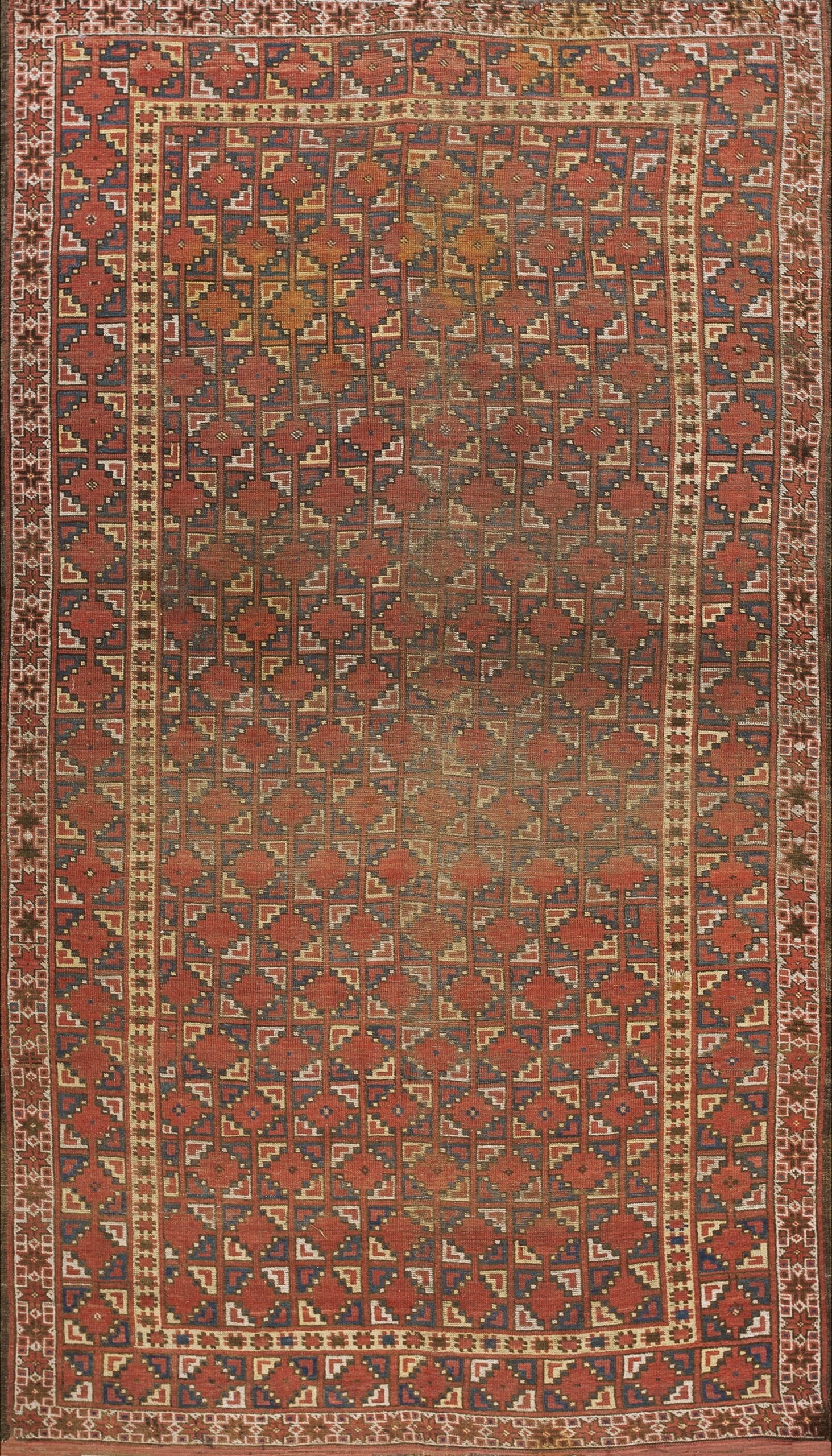
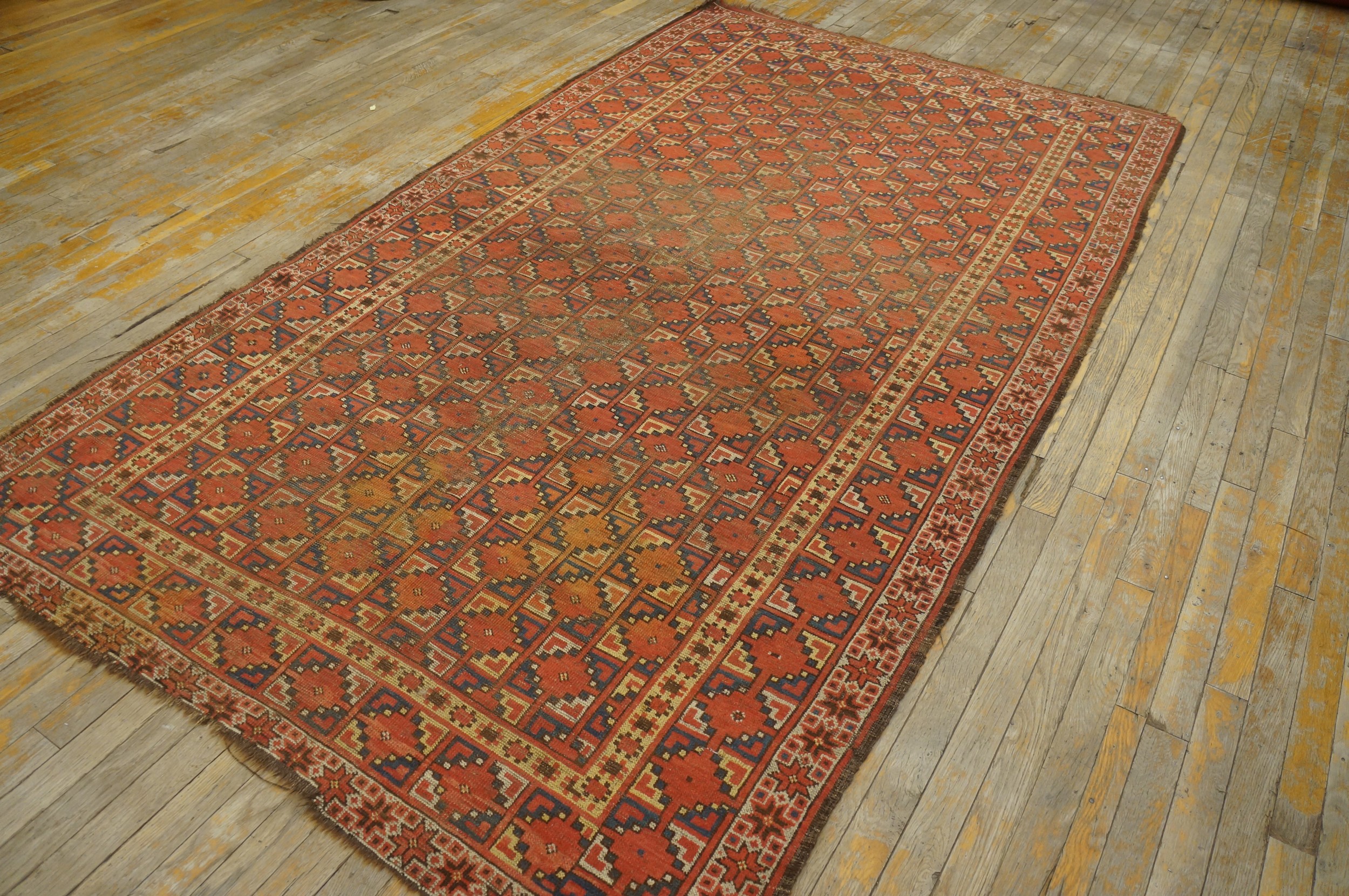
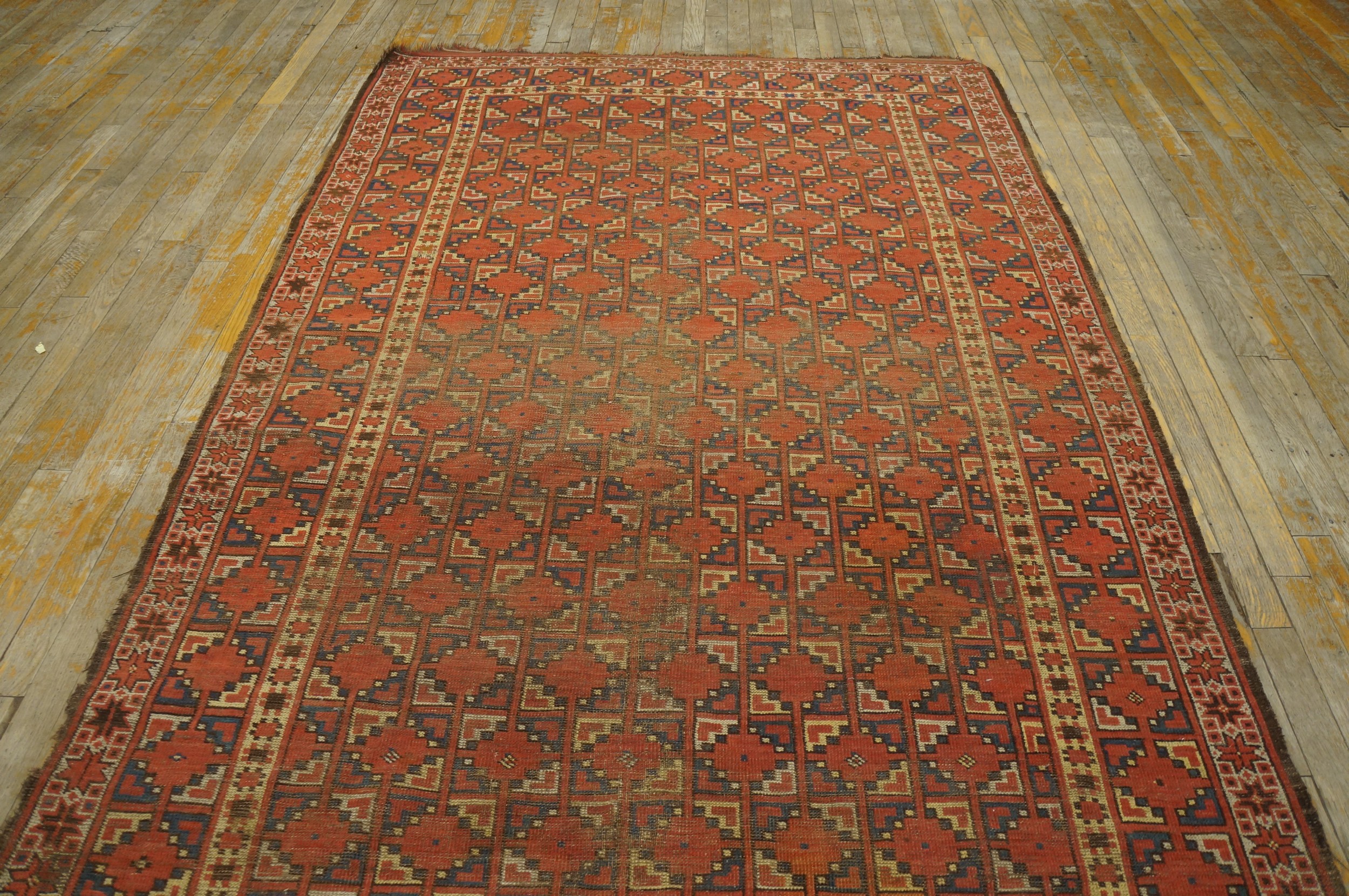
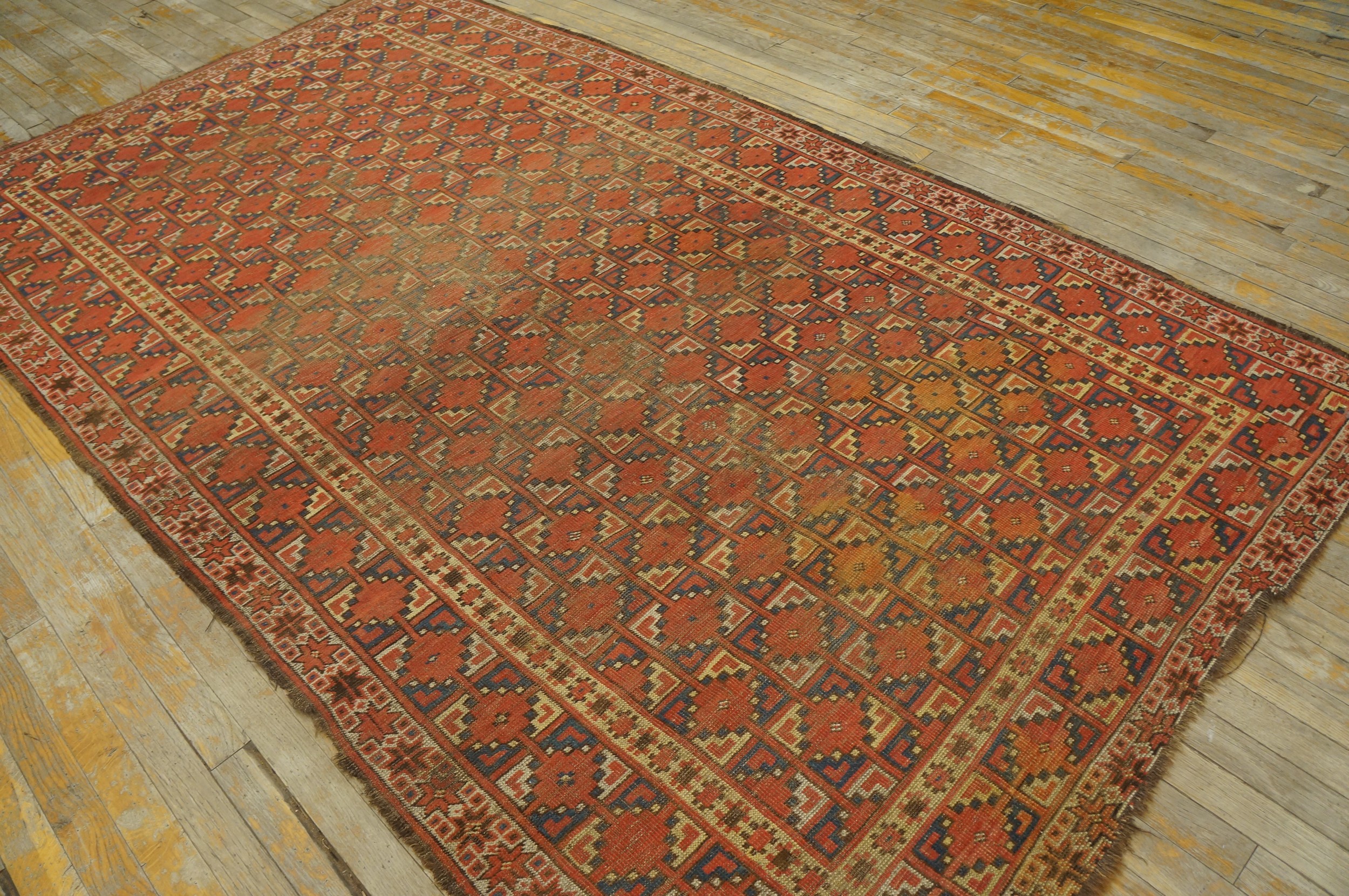
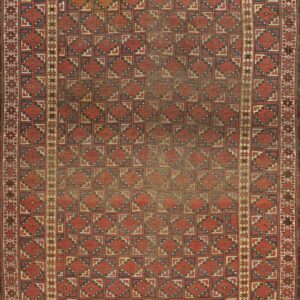
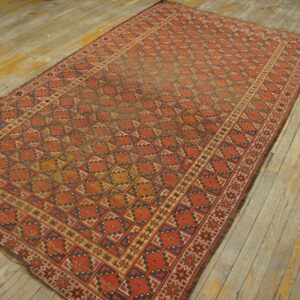
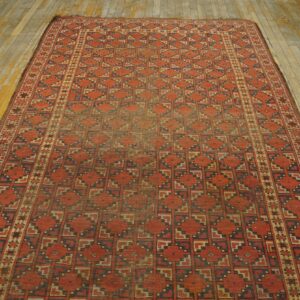
Antique Ersari – Beshir Russia Geometric Knotted Rug, Circa Date: 1875. This superb example of Central Asian weaving represents the finest traditions of the Ersari tribe, specifically those attributed to the Beshir region near the Amu Darya river. Its deeply saturated wool and precise geometric structure mark it as a distinguished piece among antique rugs.
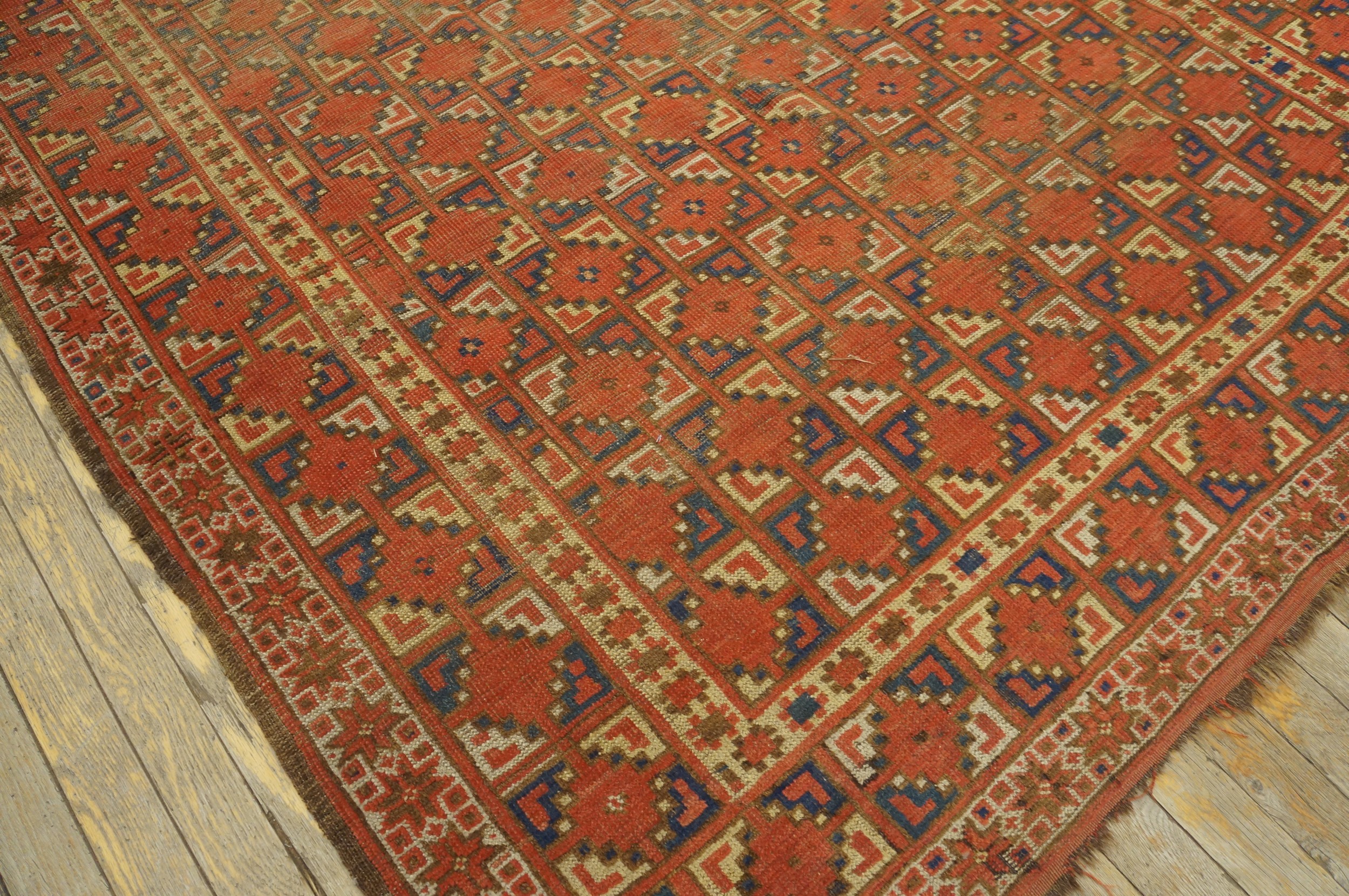
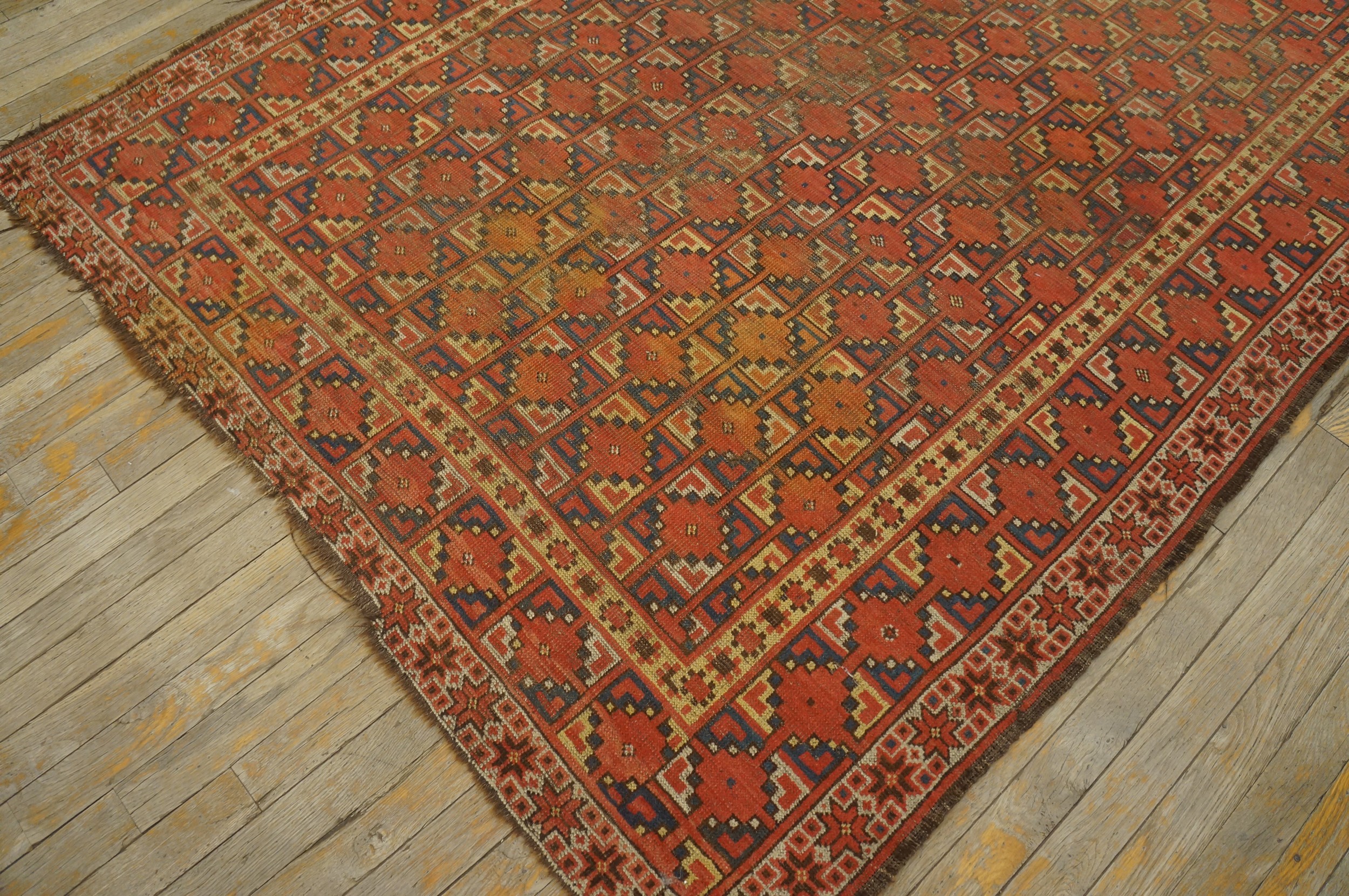
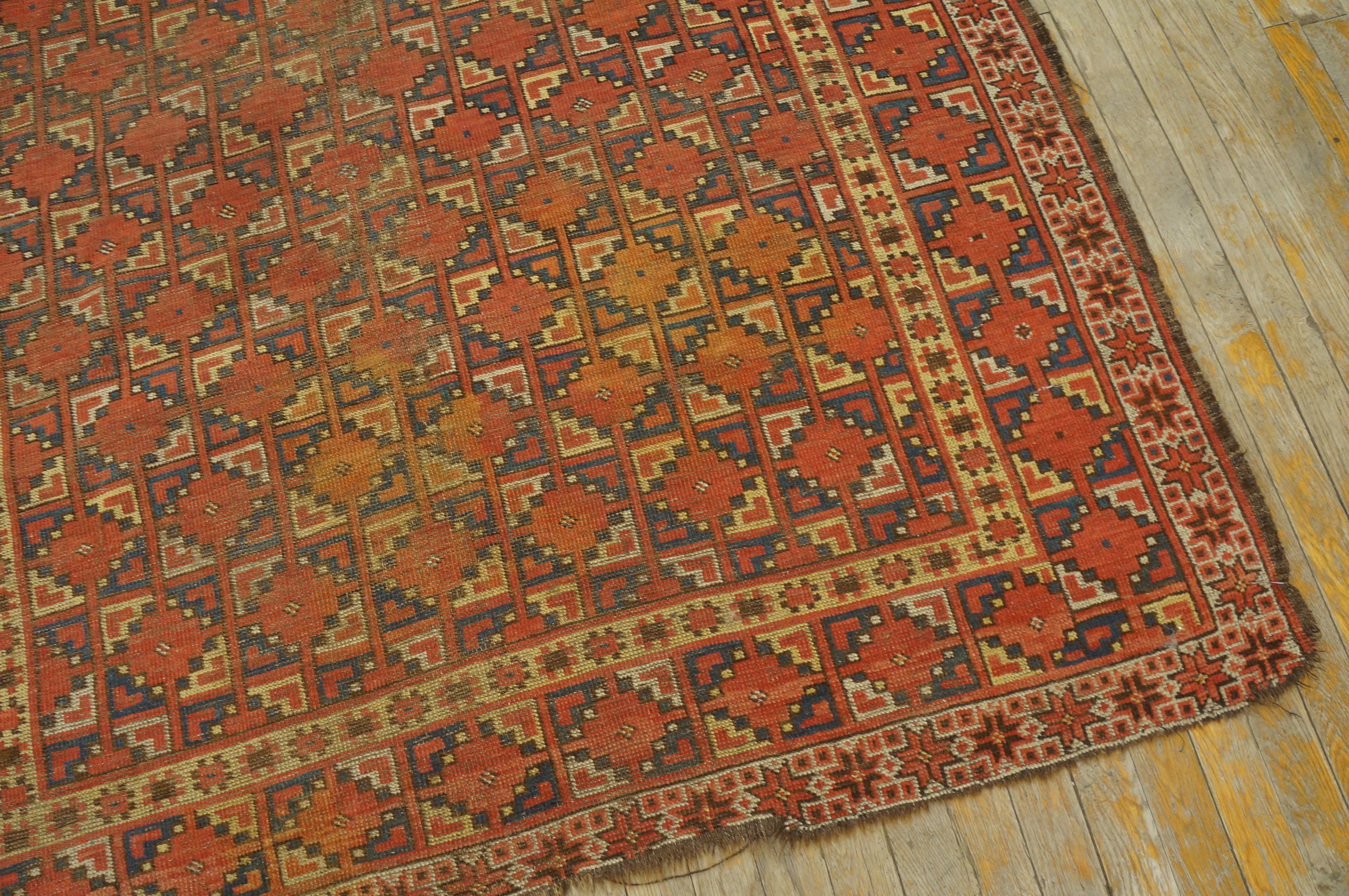
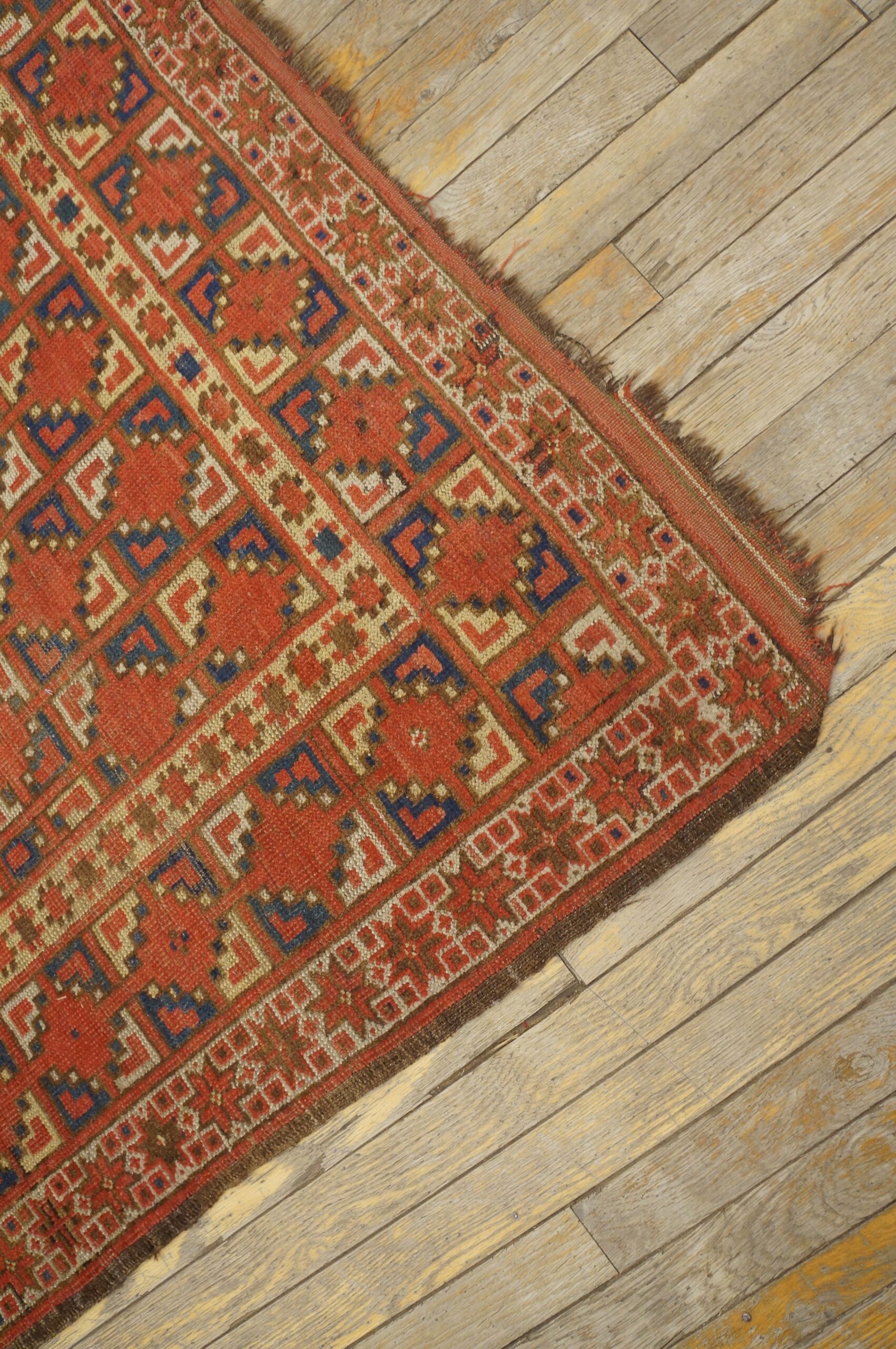
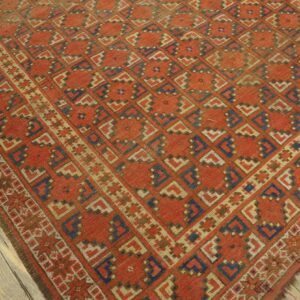
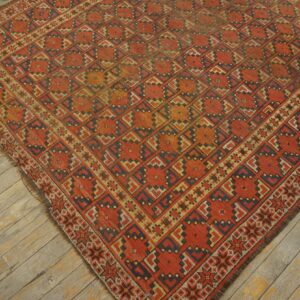
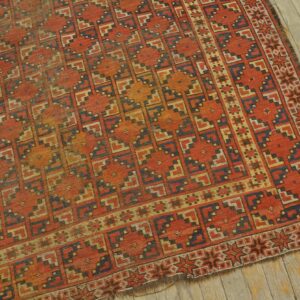
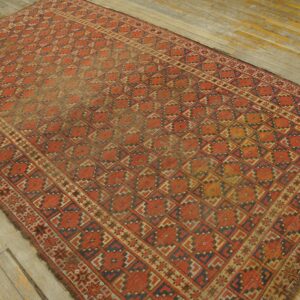
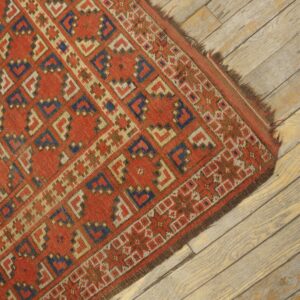
The main field is composed of repeating, stylized guls—octagonal medallions outlined in dark indigo and ivory—set against a rich, madder-dyed ground. The highly structured, all-over design demonstrates the rigorous symmetry favored by Turkmen weavers, creating a powerful visual rhythm that defines the aesthetic of this nomadic art form.
The palette relies heavily on natural dyes, yielding a mesmerizing range of rusts, terracotta, and deep claret. Subtle variations in the primary hue have mellowed over time, giving the field a lustrous patina that shifts between deep crimson and soft salmon coral pink. This rich color story is balanced by the crisp definition provided by the dark blue and cream accents.
While many Ersari pieces are broad, this particular format is elongated, suggesting it was woven for a specific domestic space, perhaps a tent or corridor. Its dimensions make it an exceptionally desirable piece for those seeking authentic, high-quality hallway runner rugs that bridge historical artistry with modern architectural needs.