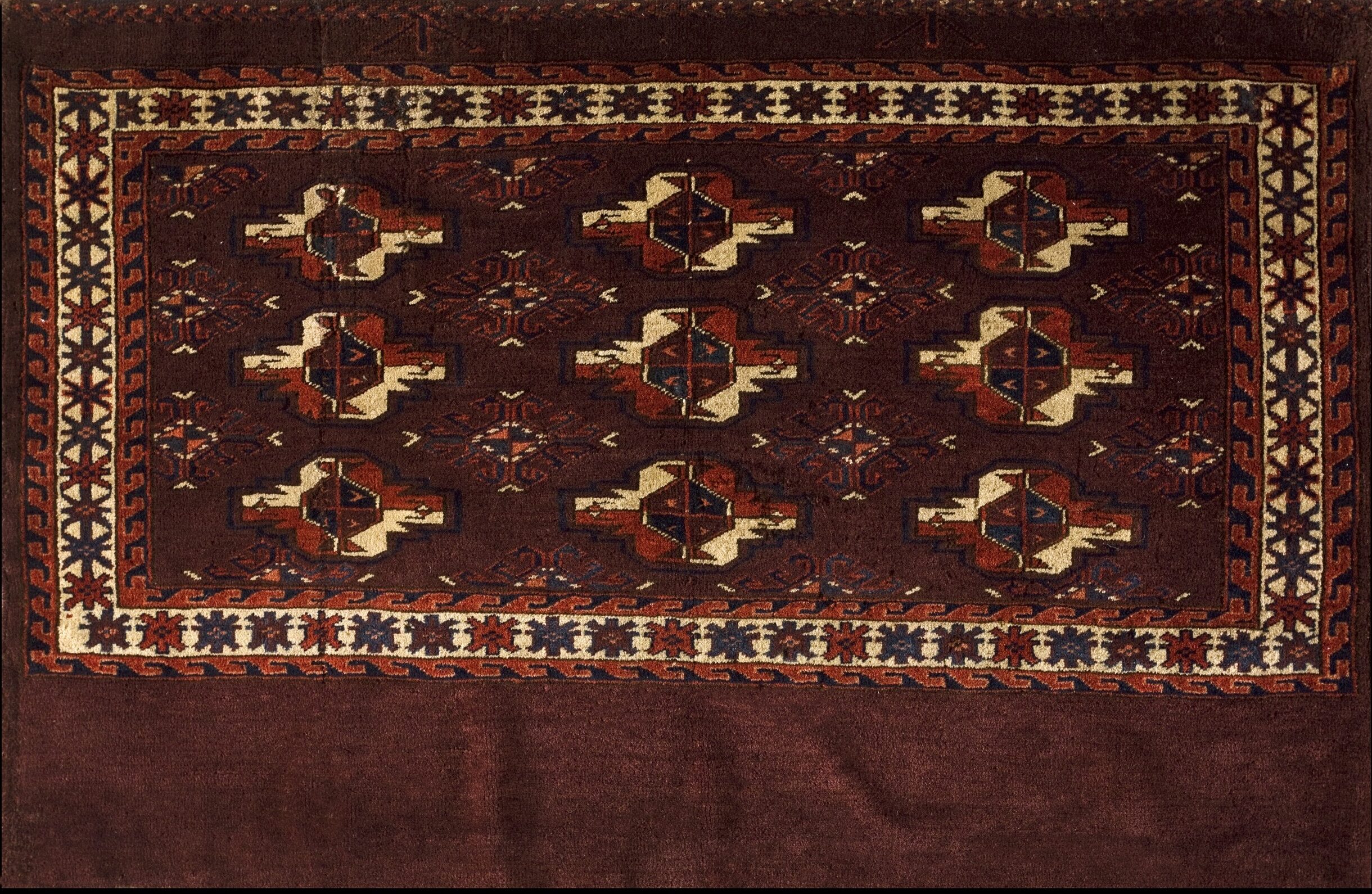
This nineteenth-century antique tribal Turkmen Tekke rug is a quintessential masterpiece of Central Asian nomadic rugs, representing the legendary “Bukhara” tradition at its peak. While many later examples became commercialized, a Tekke rug from the late 19th-century is a work of high tribal integrity, woven by the “People of the Tent” for domestic use and dowry, characterized by its extraordinary fineness and “gem-like” precision.
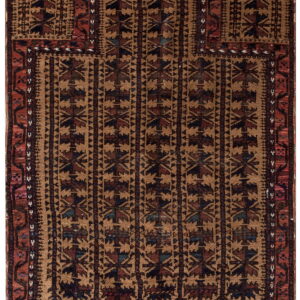
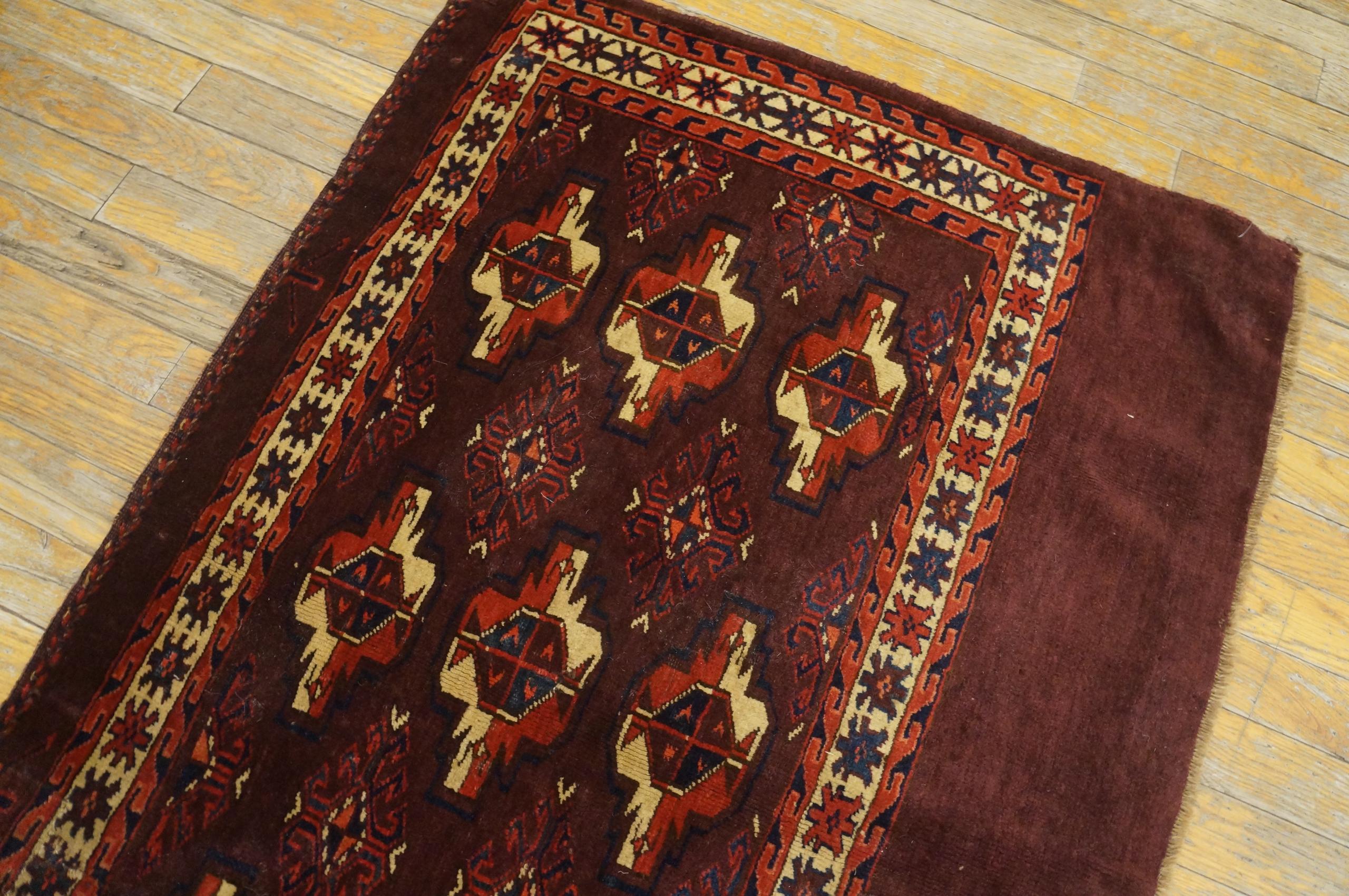
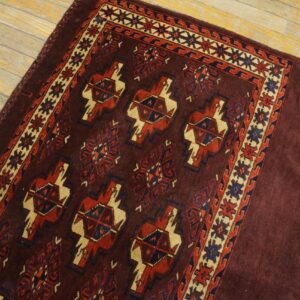
The composition is centered upon a disciplined arrangement of repeating tribal geometric guls. The “Gul” (meaning rose or flower) is the ancestral heraldic crest of the Tekke tribe; each octagonal medallion is bisected into four quadrants, often featuring small clover-like or bird-head motifs. The mathematical regularity of these rows creates a hypnotic, rhythmic energy that is a hallmark of Turkmen weaving. This “endless repeat” represents the continuity of tribal lineage and the infinite nature of the desert steppe.
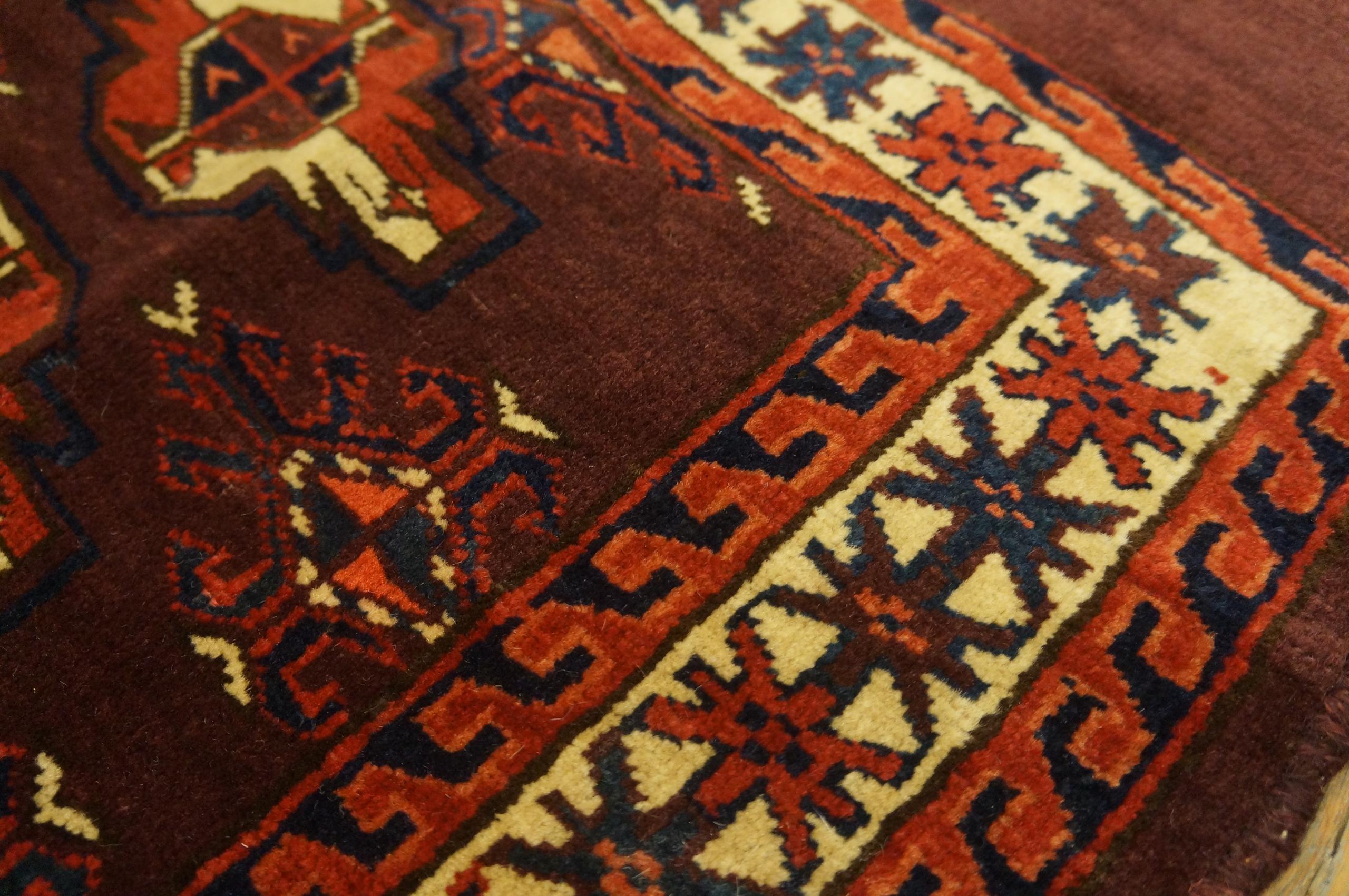
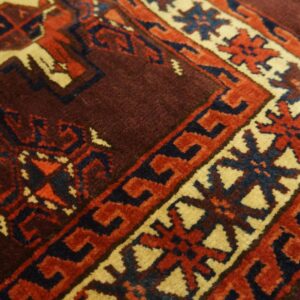
The palette is anchored by a breathtaking Deep “Oxblood” Red ground. This color is the soul of the antique tribal design area rug from Turkmenistan, achieved through the masterful use of madder root. Because this is an antique piece, the red is not uniform; it possesses a magnificent tonal depth and abrash, shifting from dark mahogany to a vibrant crimson depending on the light. This rich foundation provides a dramatic stage for the secondary accents of creamy ivory, midnight indigo, and hints of burnt orange, which make the guls “glow” against the dark field.
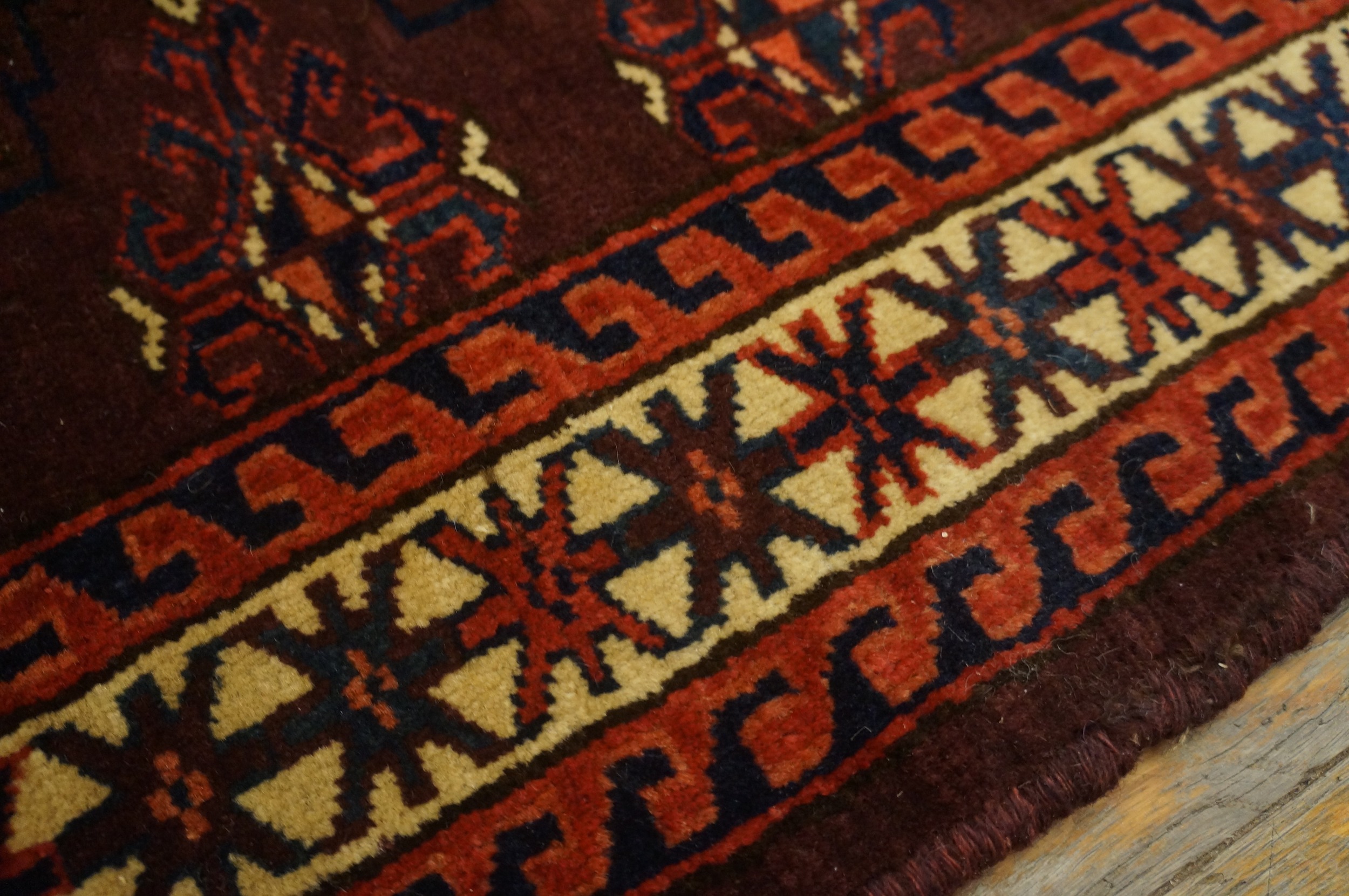
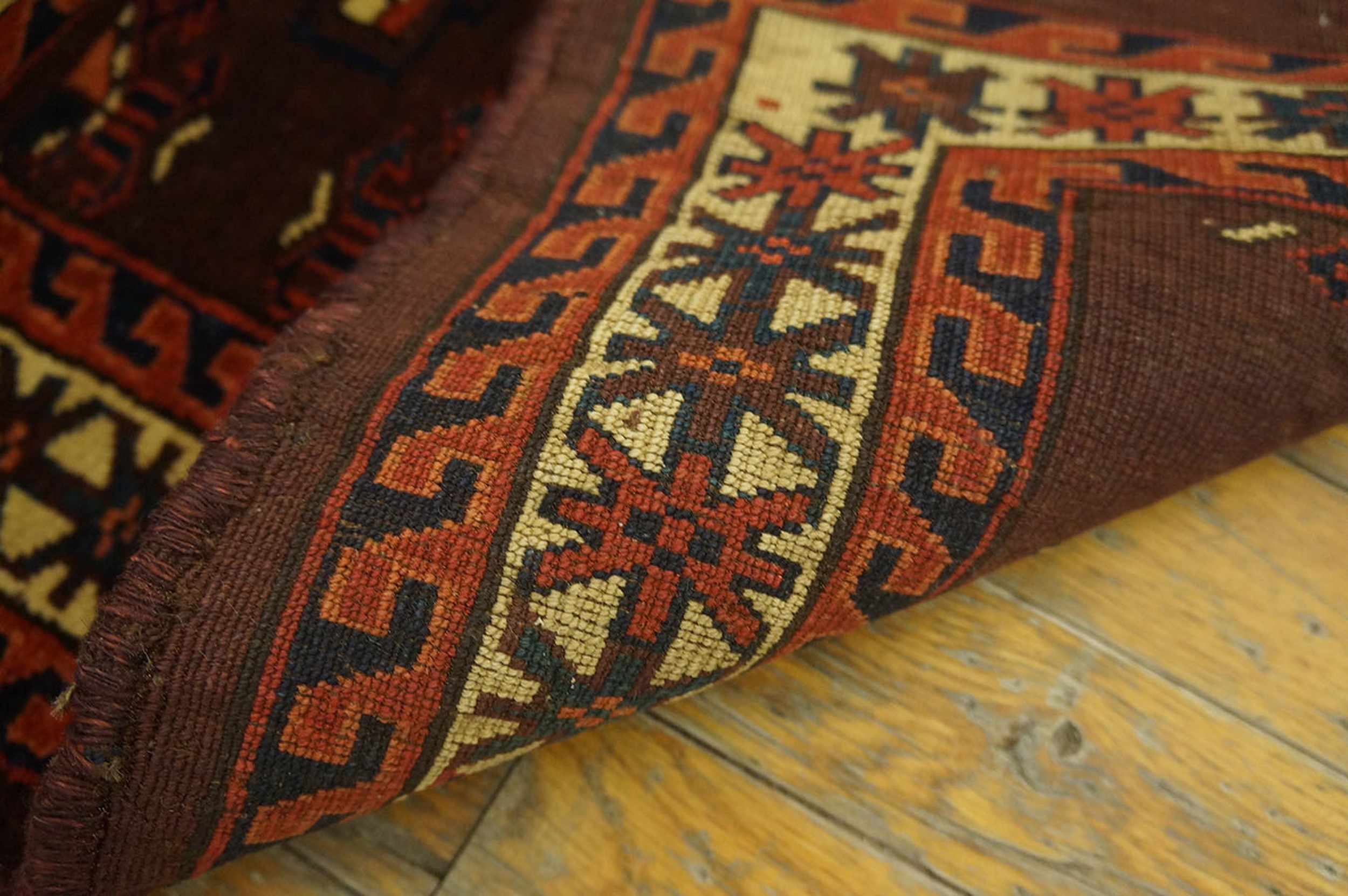
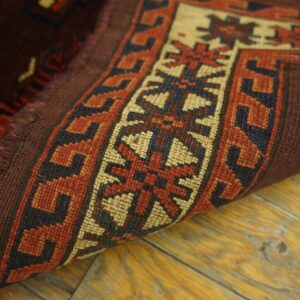
Technically, a Tekke of this era is prized for its exceptionally fine weave and “velvety” handle. Woven with the finest wool from local Karakul sheep, which is rich in natural lanolin, the pile is cut low to showcase the “razor-sharp” definition of the geometric drawing. The handle is soft and “floppy”—more like a heavy fabric than a stiff carpet—allowing it to be easily folded, a necessary trait for a nomadic lifestyle.
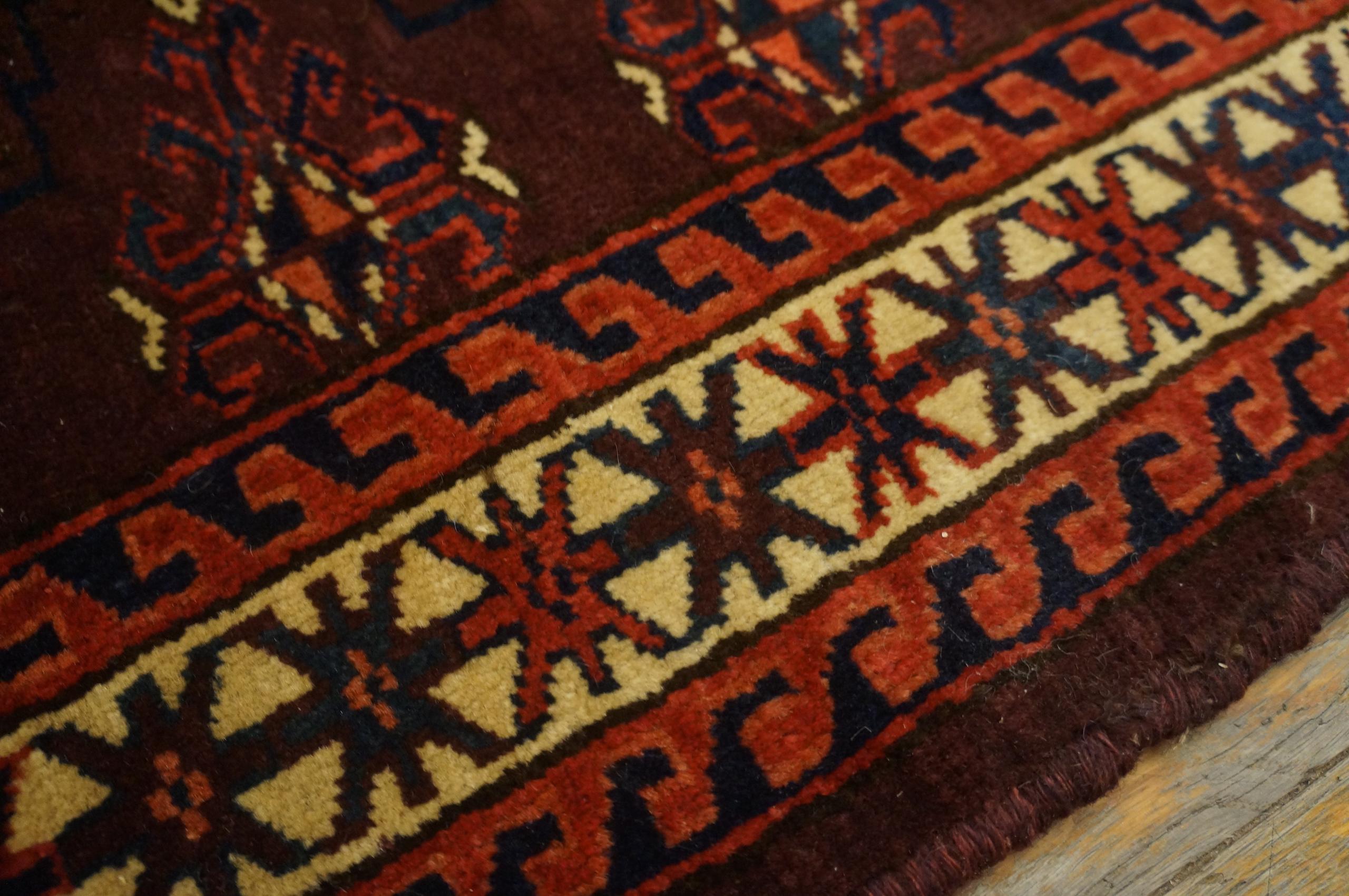
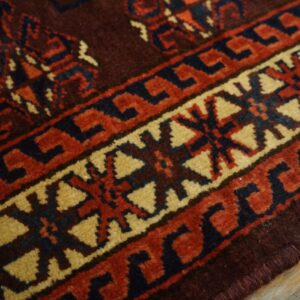
The borders act as a complex architectural frame, often featuring “Sun-Burst” motifs and delicate geometric chains that provide a sense of historical containment. The “elem” (the decorated end-skirts of the rug) often contains additional unique tribal patterns that serve as the weaver’s personal signature. To possess this Antique Deep Red Tekke rug is to own a monument to Central Asian heritage—a work that bridges the gap between nomadic utility and sophisticated geometric art, transforming any interior into a sanctuary of historical gravity and warm, tribal soul.