
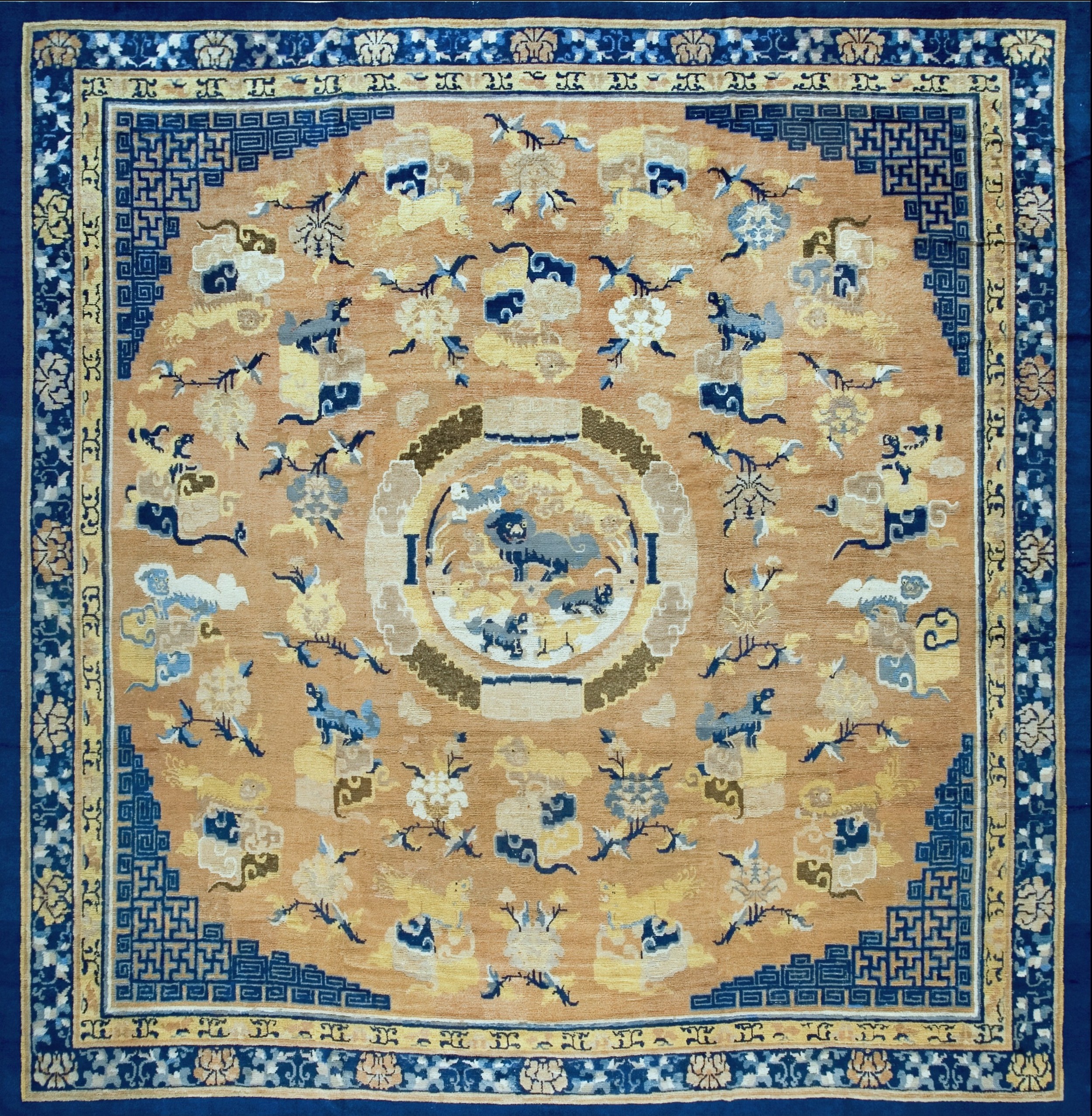
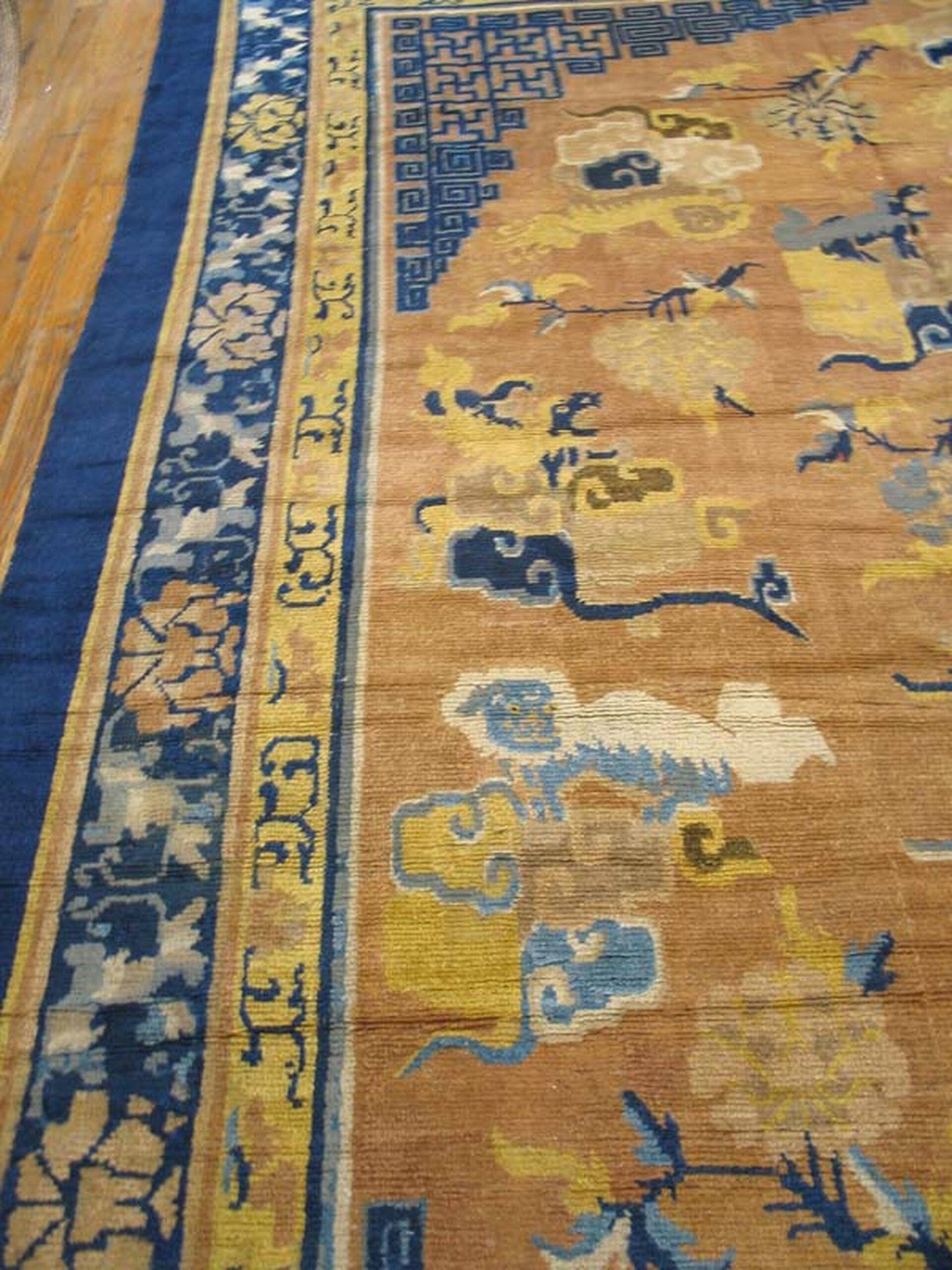
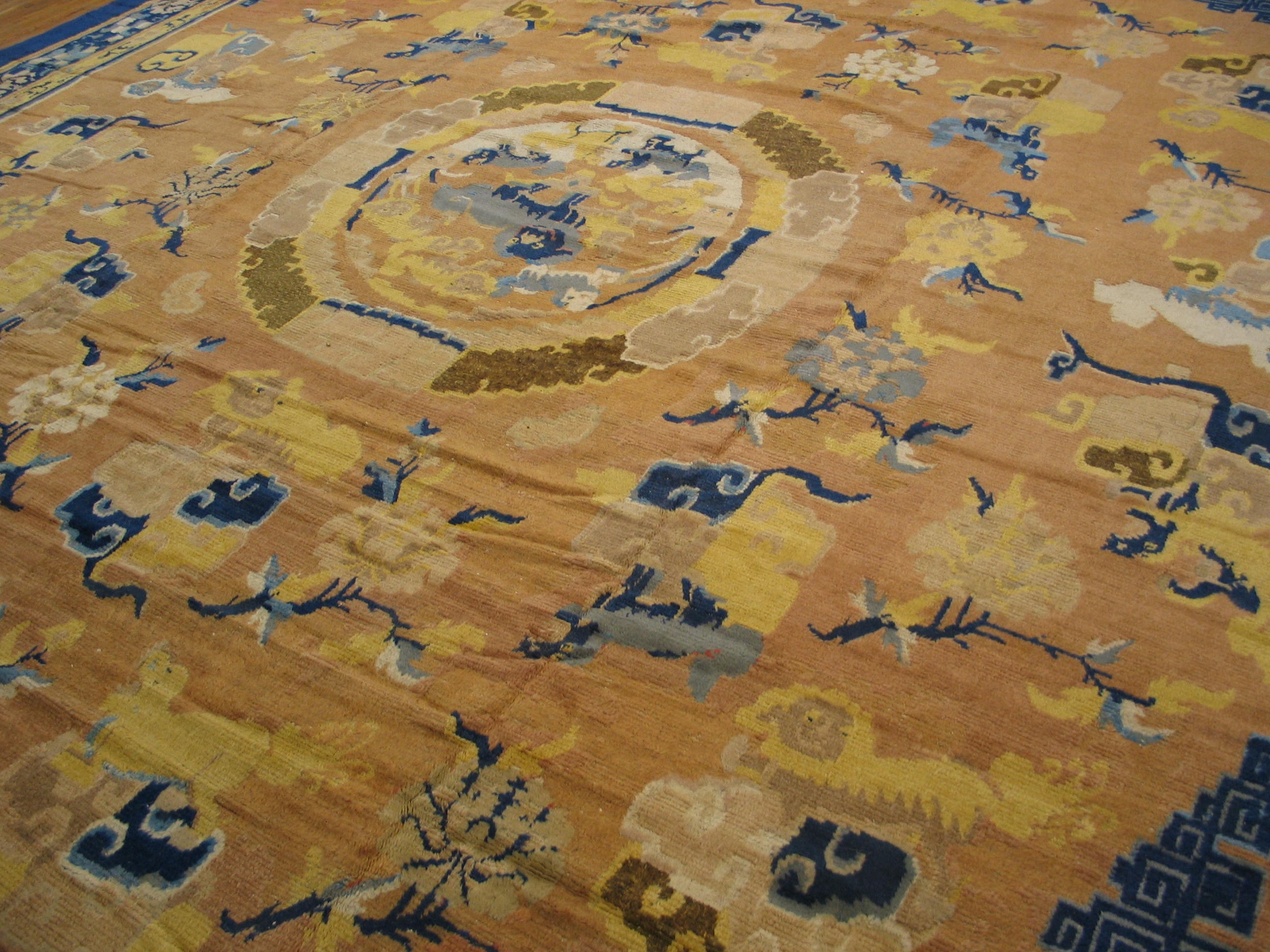
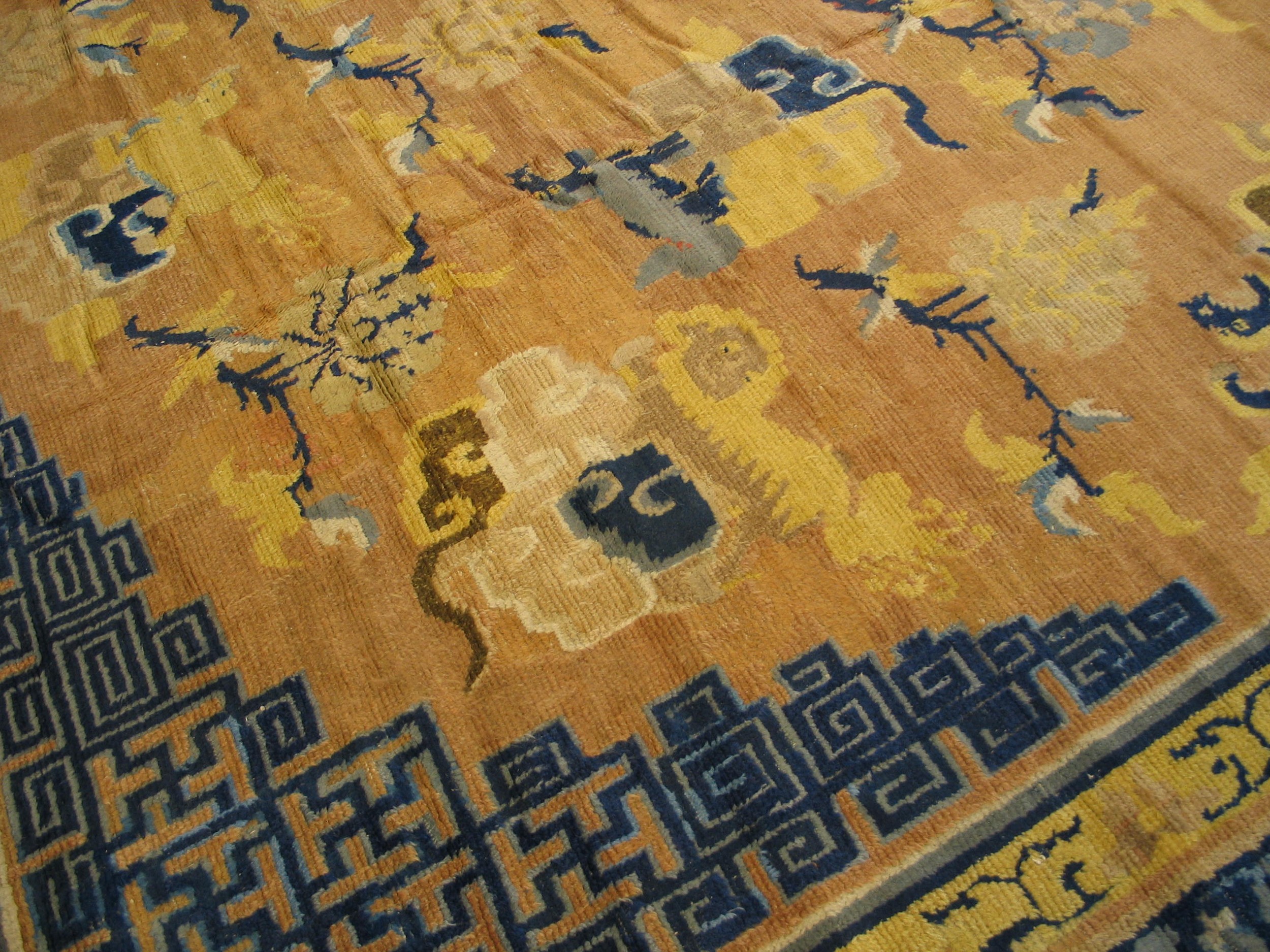
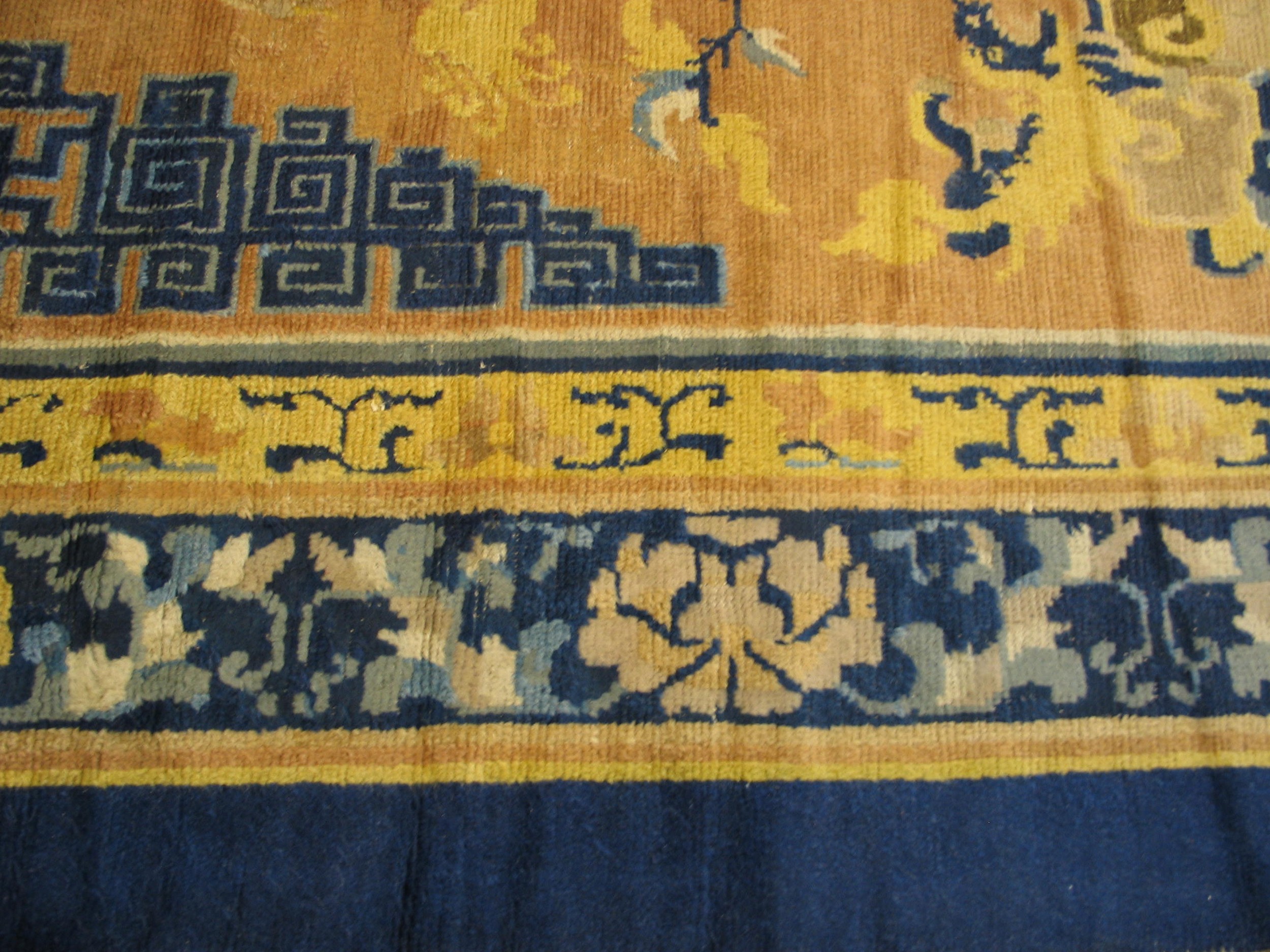
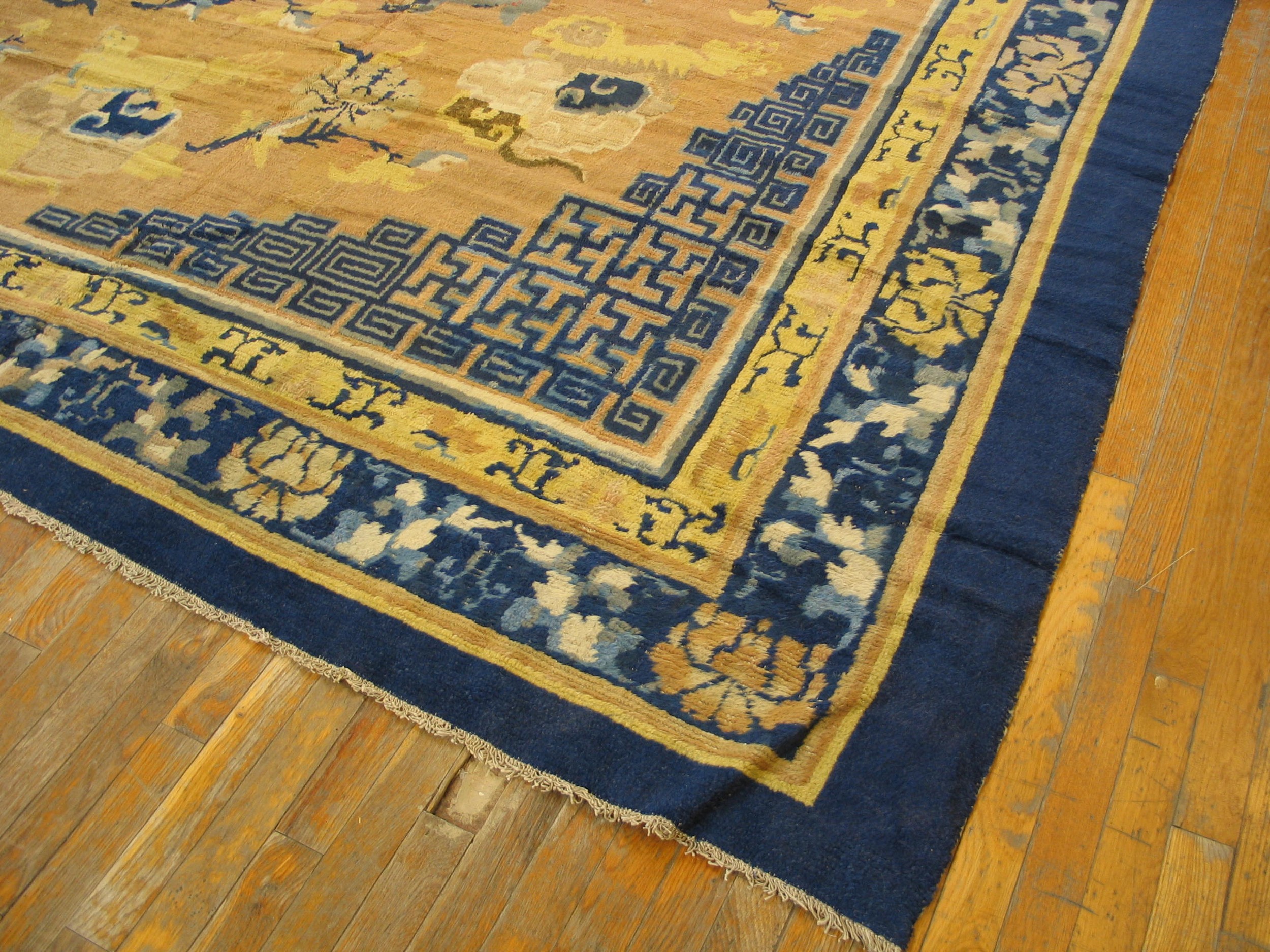
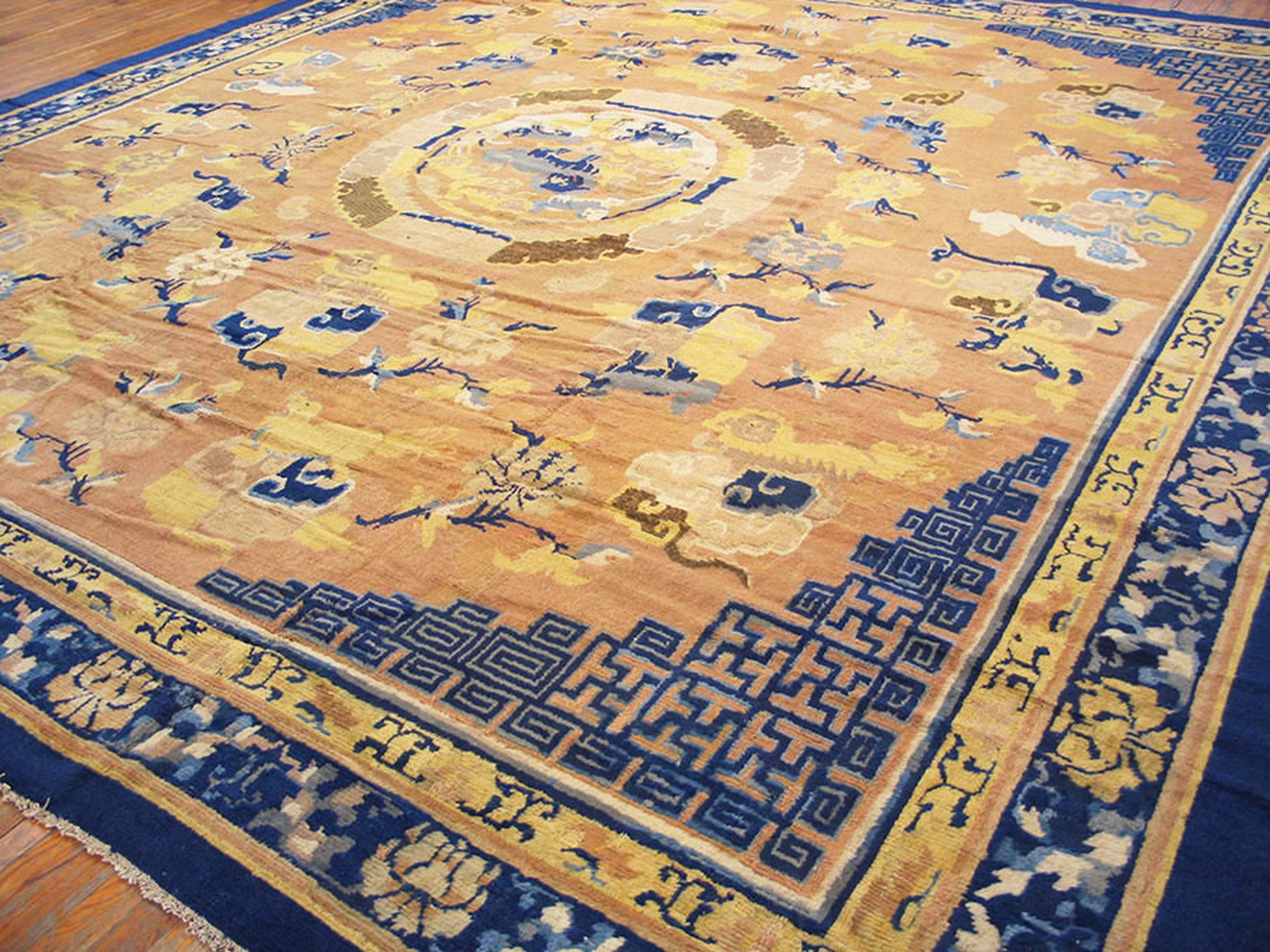
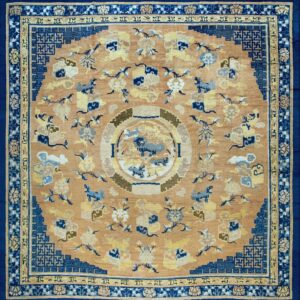
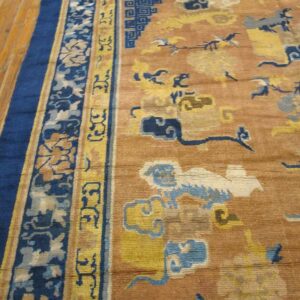
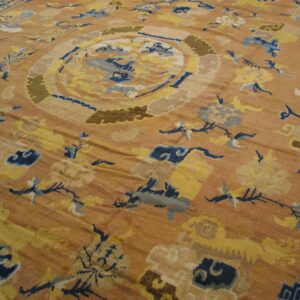
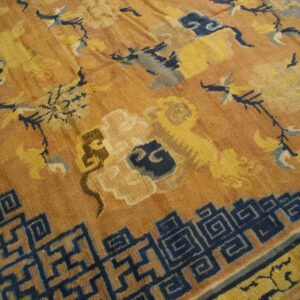
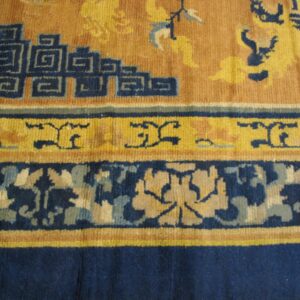
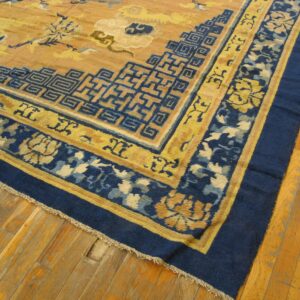
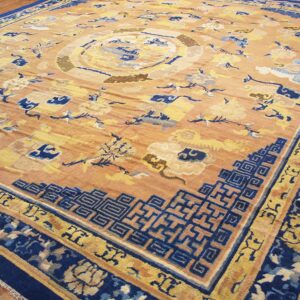
A distinguished example of early Chinese carpets from the historic Ningxia region in north-central China, this antique rug embodies the rich symbolic language and artisanal vigor of 18th-century textile traditions. Rugs from Ningxia are among the earliest known hand-knotted antique rugs from China, woven with distinctive pictorial motifs that reflect both religious symbolism and refined visual grammar.
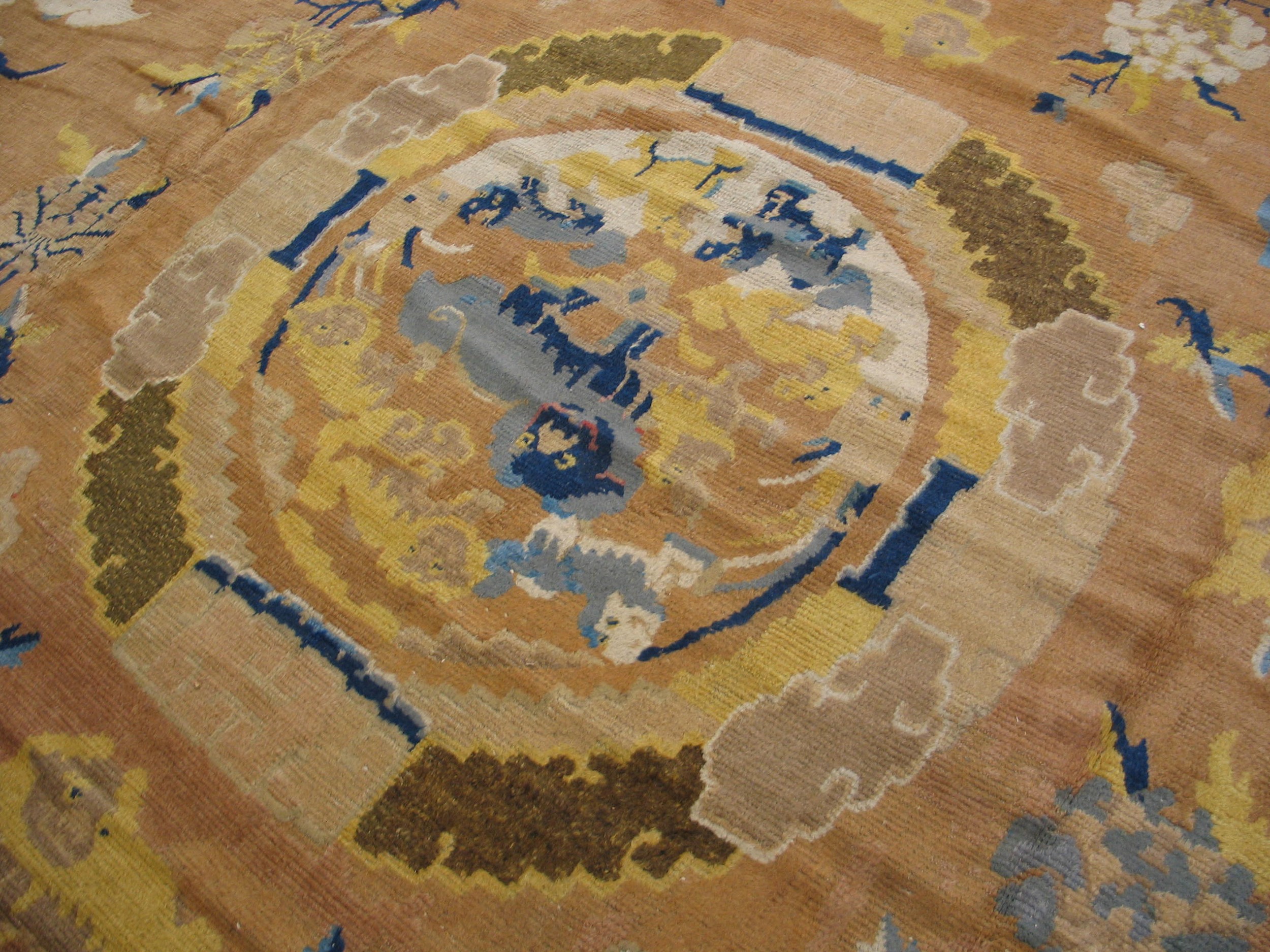
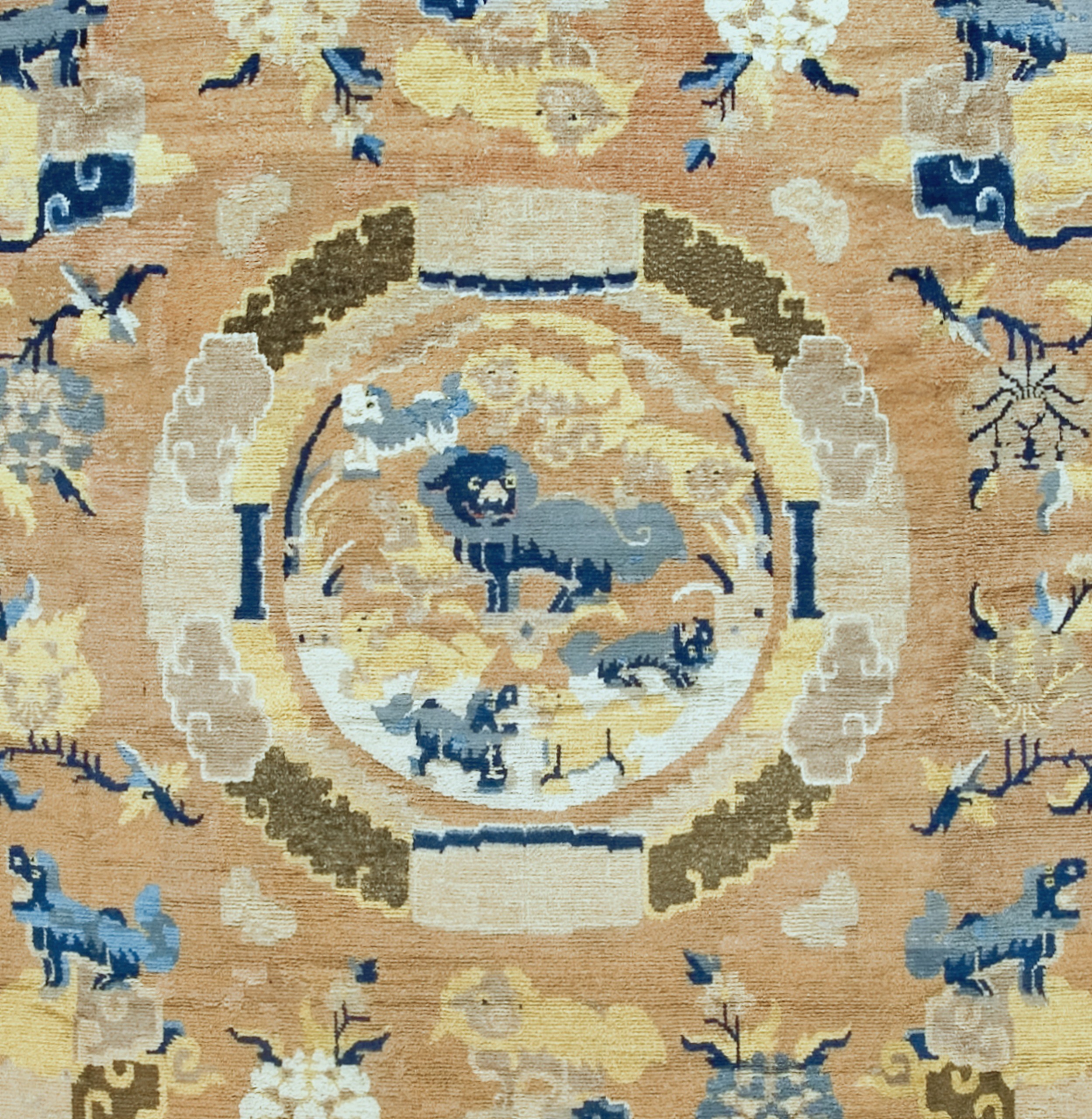
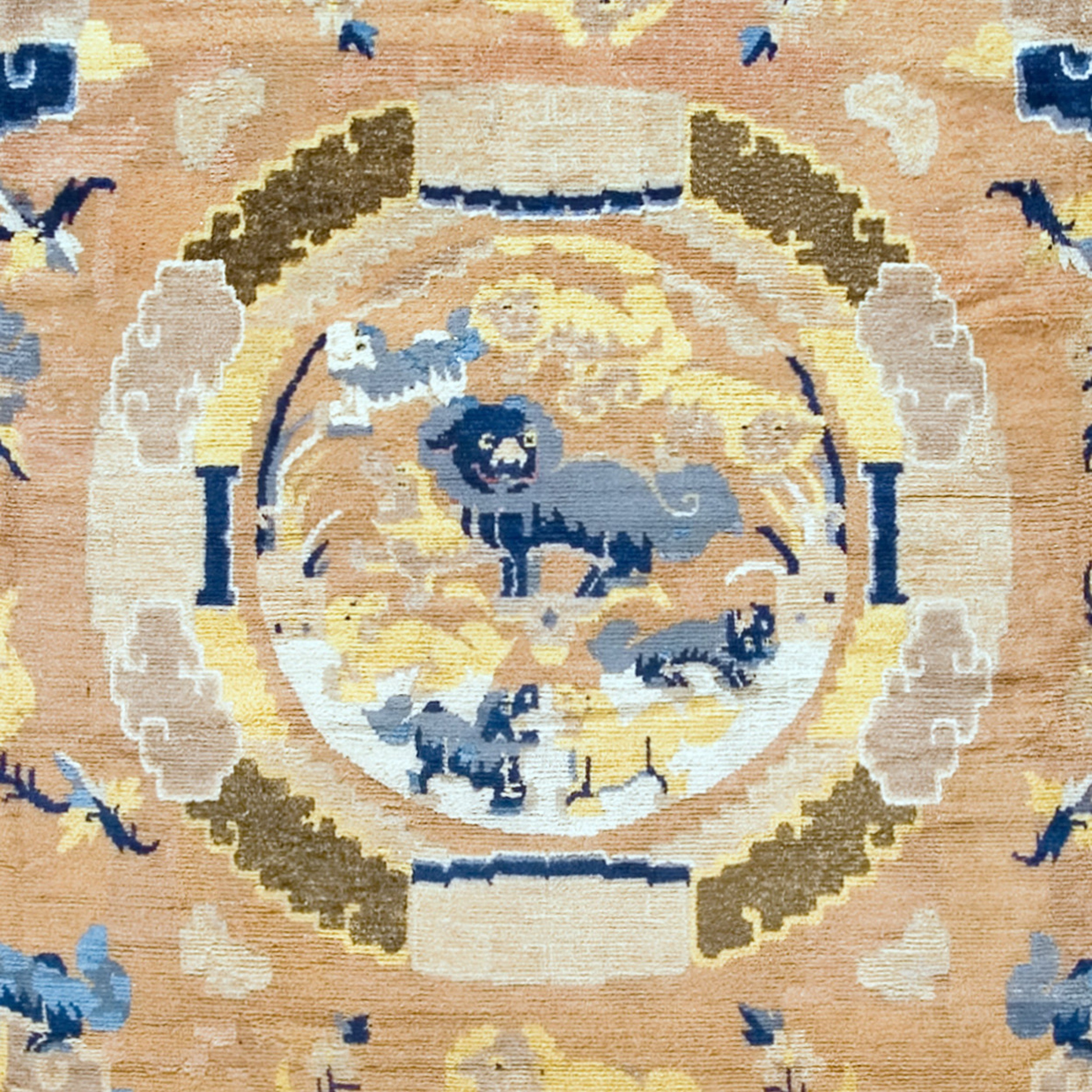
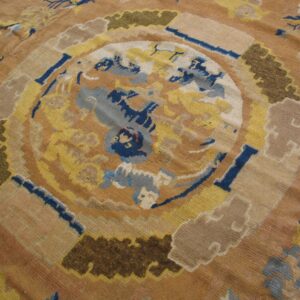
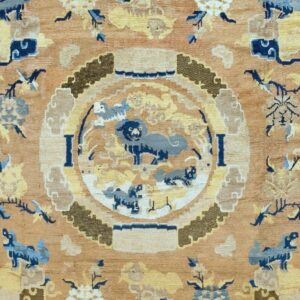
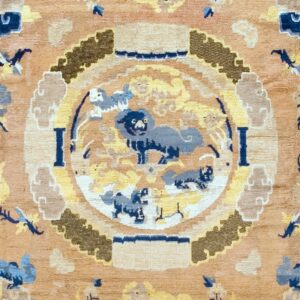
At the heart of this square composition, majestic lion-dogs — classically referred to in Western contexts as Foo dogs but rooted in the Chinese guardian lion tradition — stand as powerful emblems of protection and authority. In Chinese art and culture, these mythic creatures serve as symbolic sentinels, historically placed at thresholds of temples, palaces, and elite residences to ward off harmful influences and embody auspicious strength.
Interwoven with floral and auspicious symbols, the design balances narrative richness with formal symmetry. The interplay of lively Chinese lions food dog motifs and open field evokes the visual sophistication that distinguishes Ningxia carpets from their contemporaries, while the square format reinforces the piece’s architectural presence as a centerpiece for significant interiors.
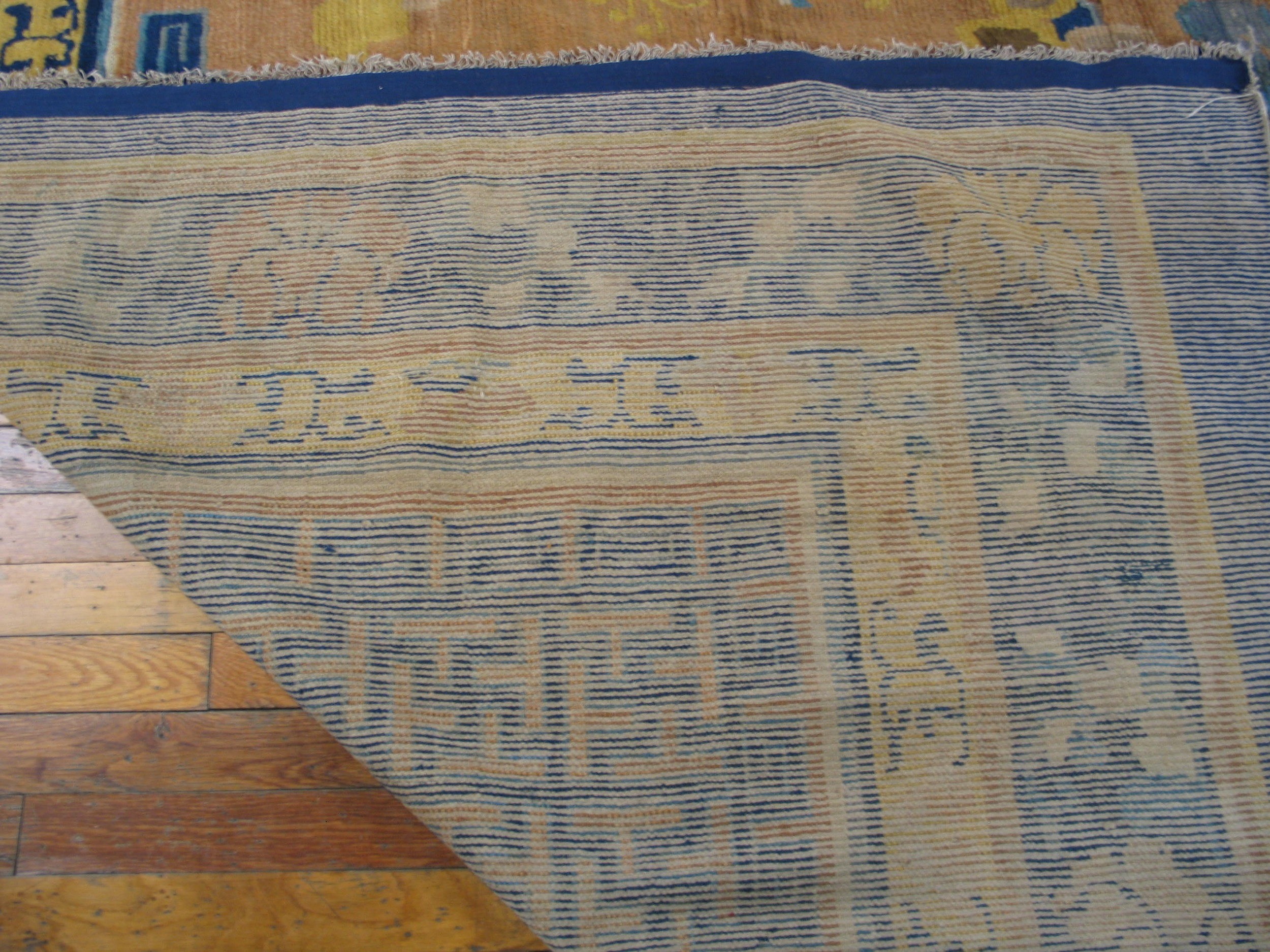
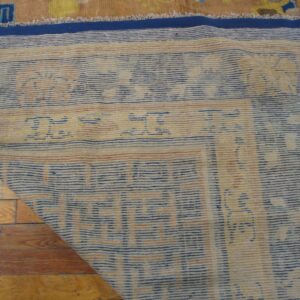
Crafted with skilled hand-knotting techniques on a wool foundation, the rug’s tactile pile and enduring dyes speak to both its practical durability and its cultural resonance as a functional work of art. Whether displayed in a formal salon, a gallery-like entry hall, or a curated collection of historical textiles, this exceptional square Ningxia rug offers a rare window into the artistic legacy of early Chinese weaving and the enduring symbolism that animates its imagery.