
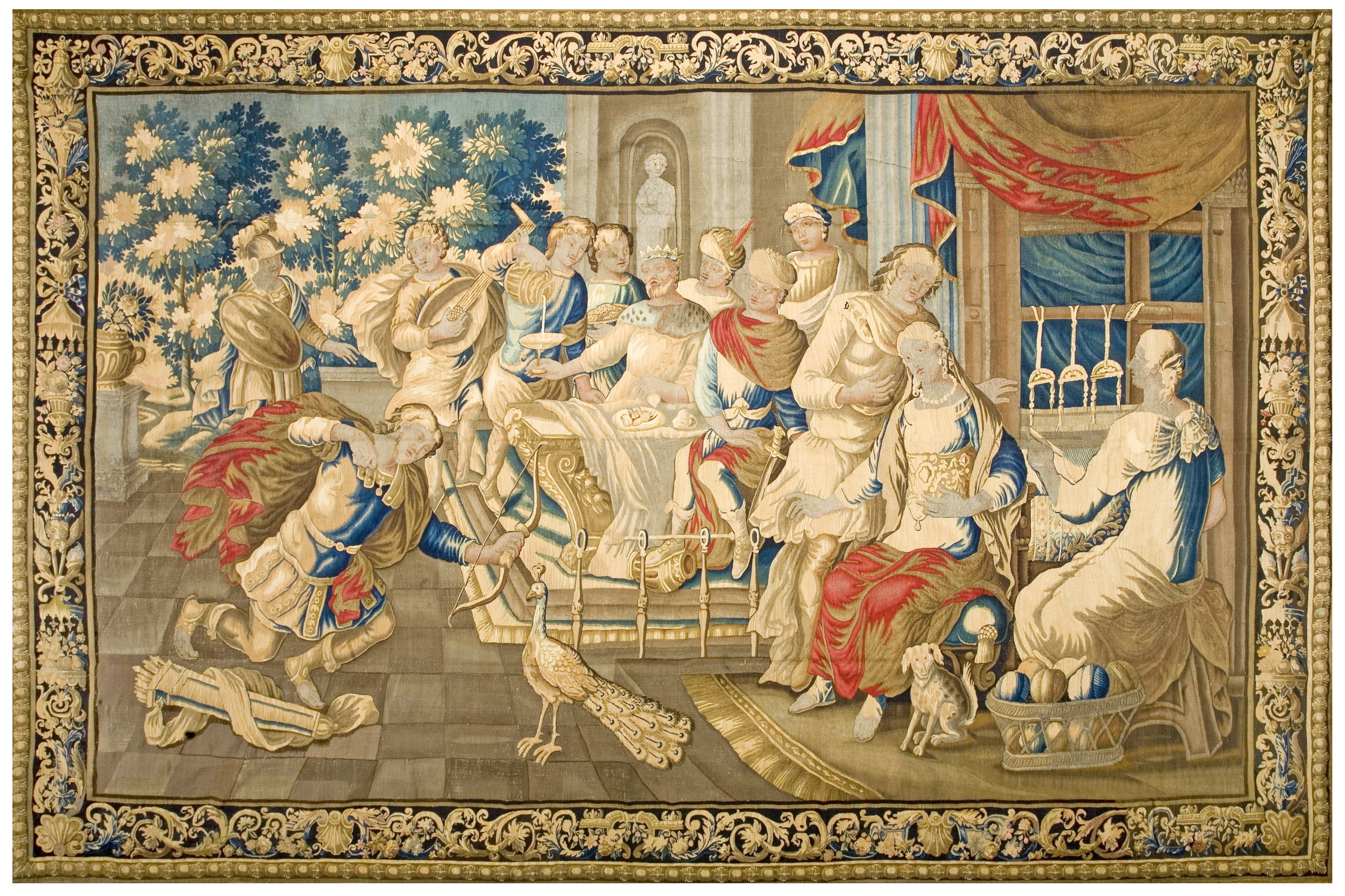
17th Century Flemish Baroque Tapestry: “The Triumph of Fidelity”
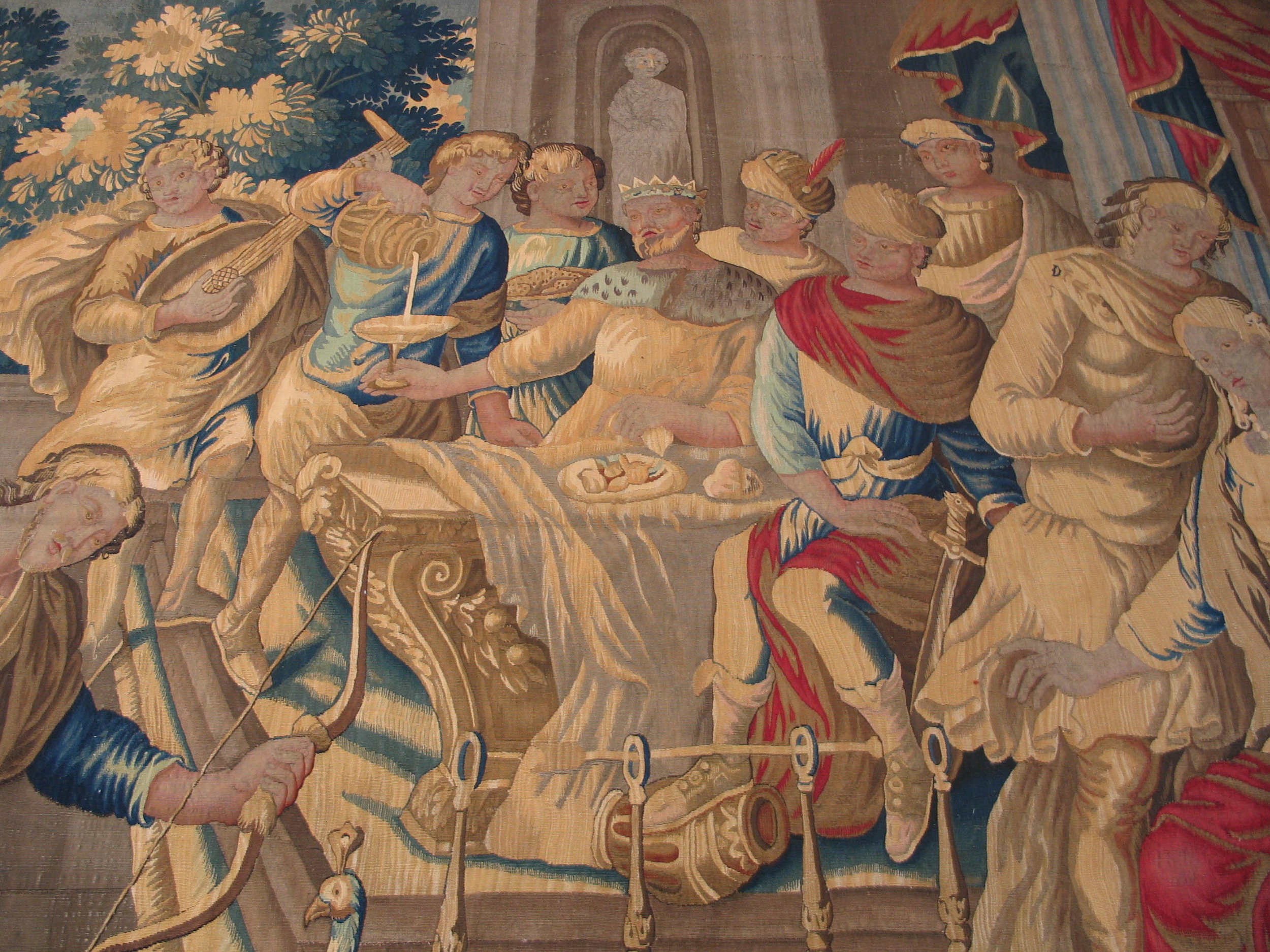
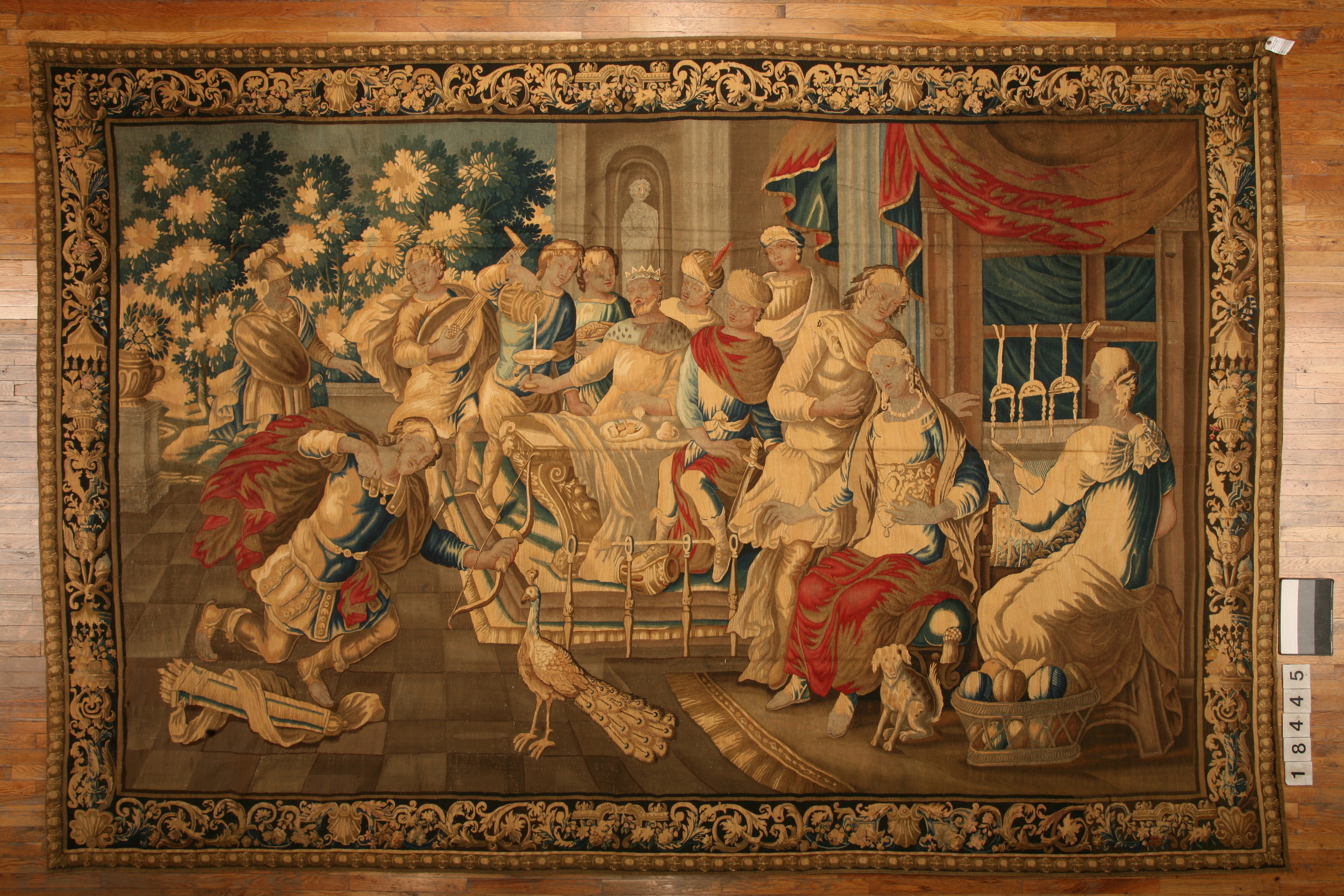
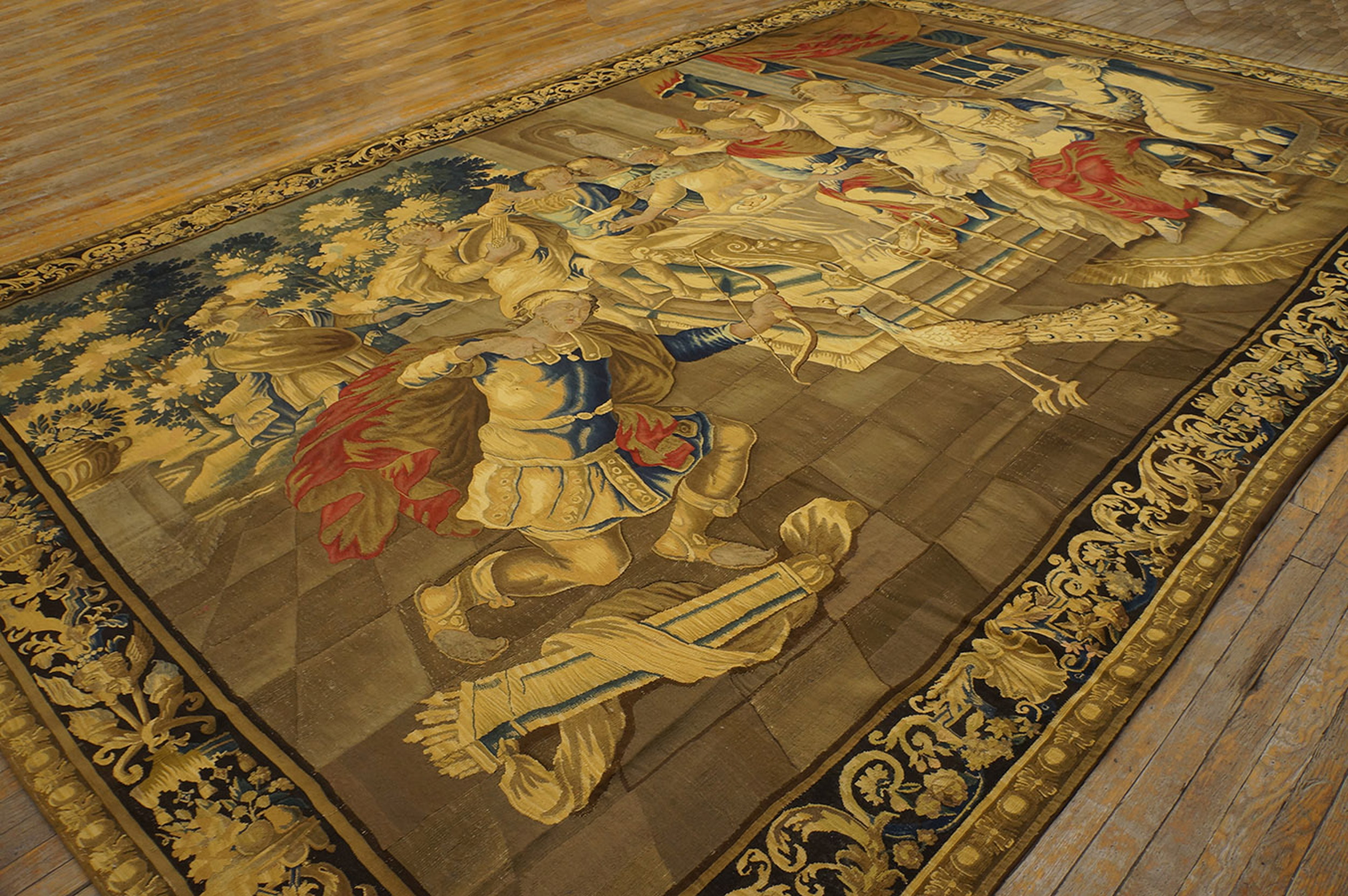
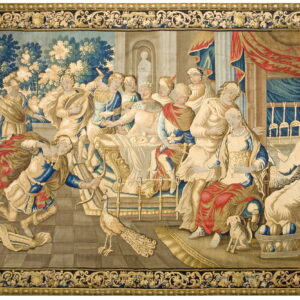
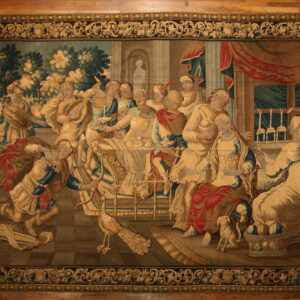
A monumental achievement of the seventeenth-century Flemish Baroque, this Brussels-produced tapestry brings the epic scale of the Odyssey into a grand decorative format. At its heart is the “Triumph of Fidelity,” depicting the climactic return of Odysseus as he proves his identity through the trial of the bow, while the faithful Penelope sits at her loom nearby. This heroic narrative is masterfully woven into a larger celestial banquet, where the gods of Olympus—Zeus, Hera, and Mars—preside over a scene of royal abundance.
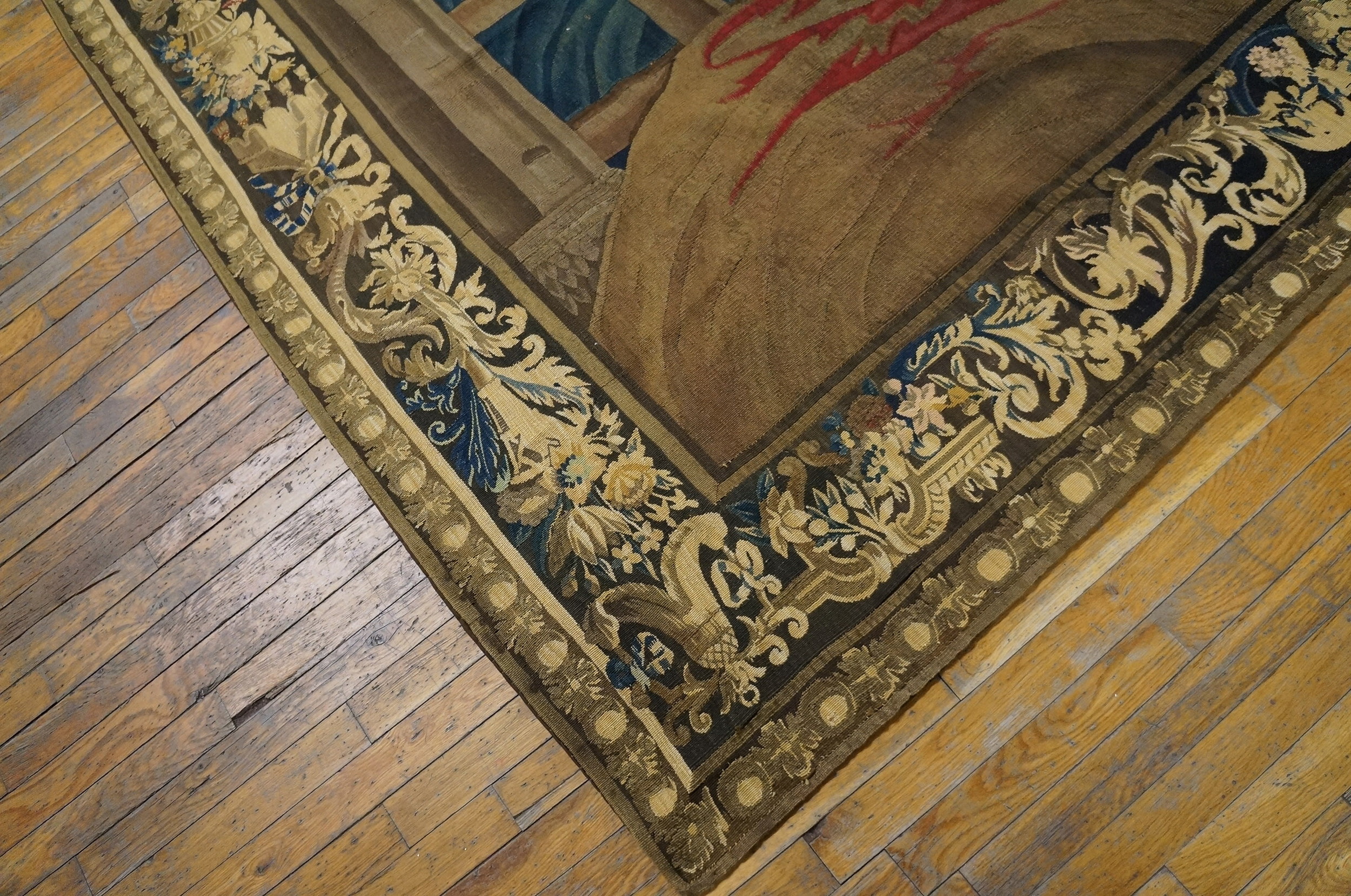
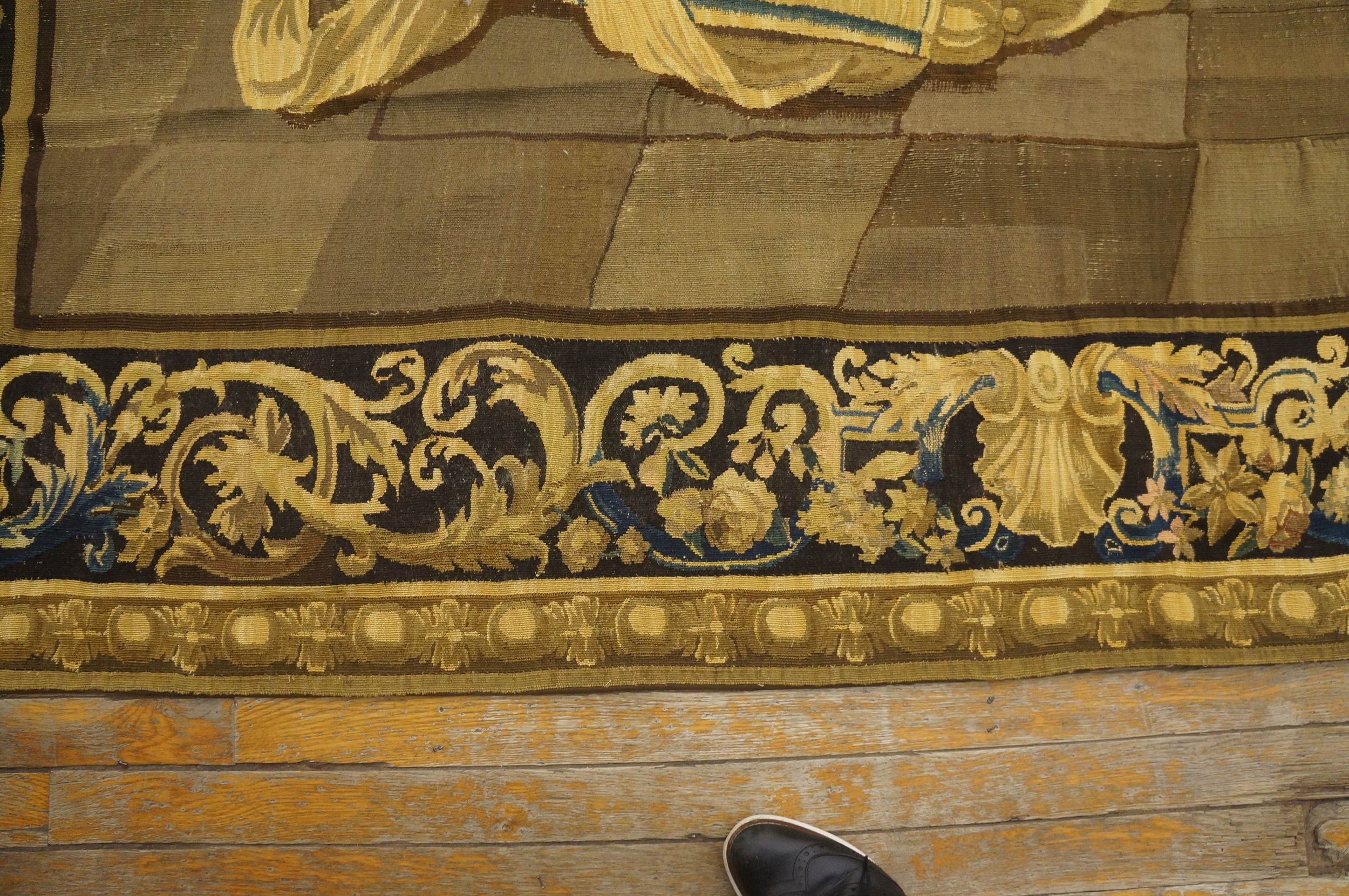
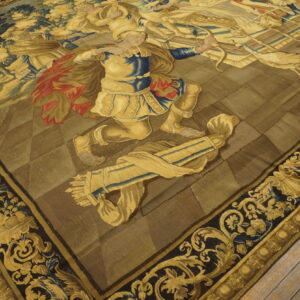
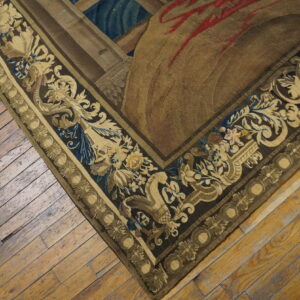
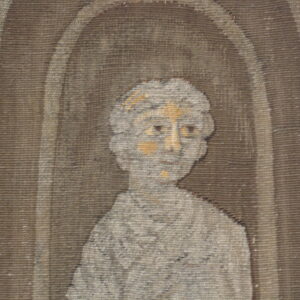
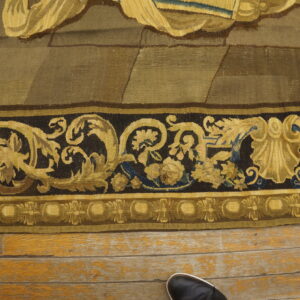
The tapestry is framed by a distinctive architectural border of scrolling acanthus and Mannerist “strap-work,” rendered in a rich palette of indigo, crimson, and golden ochre. The interplay of wool and silk highlights creates a striking sense of luminosity, particularly in the shimmering classical drapery and the atmospheric gardens visible beyond the palace pillars. This piece is a storied relic of the Flemish Golden Age, offering a sophisticated blend of heroic storytelling and ornamental elegance that commands any space it inhabits.
This monumental Flemish tapestry is a fascinating example of high-style decorative storytelling from the Golden Age of Brussels weaving. It is a rare “pasticcio”—a composition that blends specific literary narratives with a broad, theatrical display of mythological figures to create a visually rich, “colorful mythological effect.”
Historical & Technical Identification
- Title: The Return of Odysseus: An Allegory of Fidelity and the Olympian Banquet
- Origin: Brussels, Belgium (Provincial Workshop).
- Period: Mid-17th Century (circa 1650–1660).
- Artist/Cartoonist: Based on a “pastiche” design likely inspired by the school of Peter Paul Rubens or Jacob Jordaens, executed by a shop specializing in speculative works for the nobility.
- Structure: * Warp: Wool (13/in), providing a sturdy foundation for the narrative.
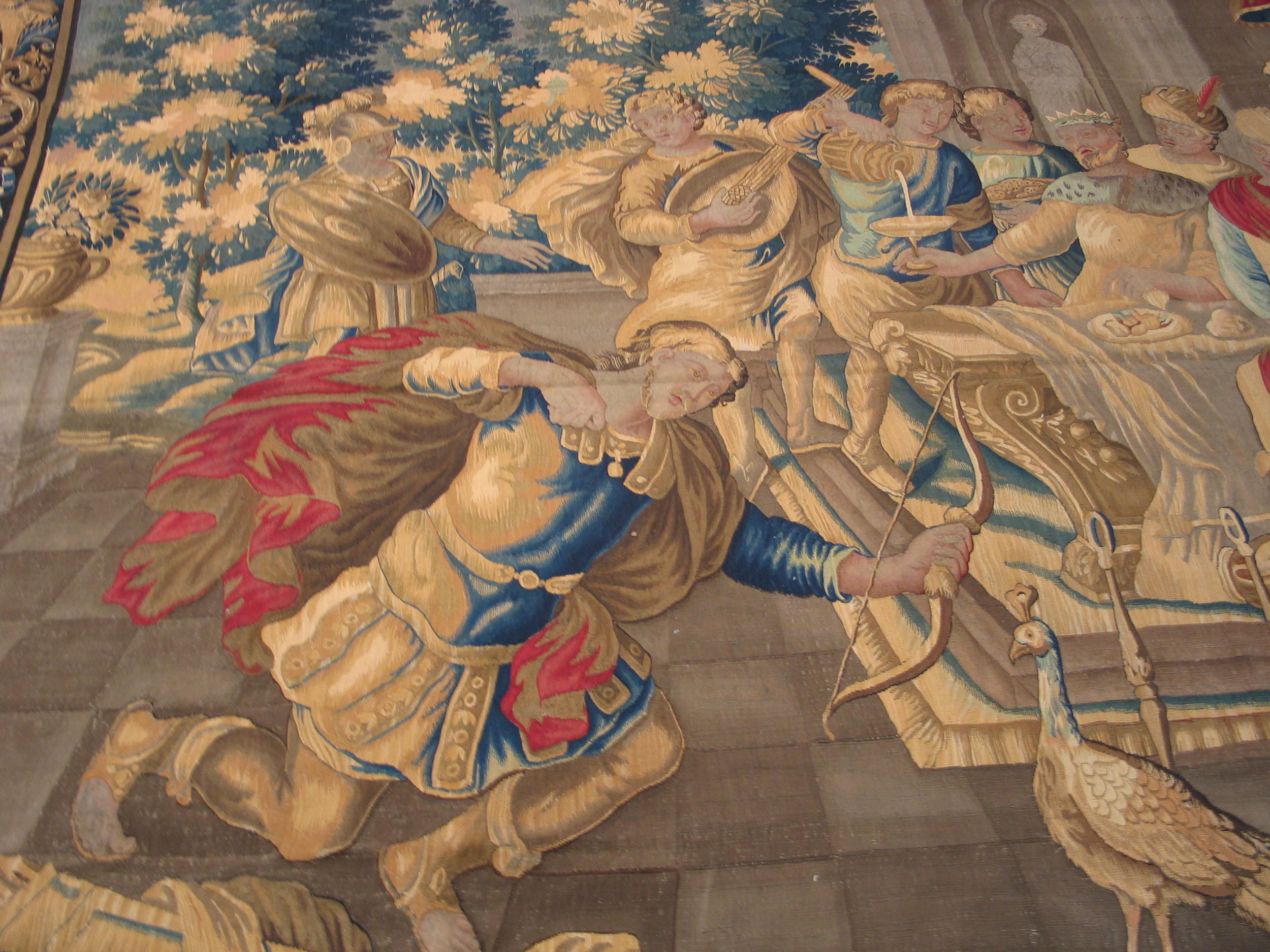
- Weft: Wool and silk highlights (average 56/in), allowing for the “painterly” shading of the figures.
Iconography: A Mythological Pastiche
The scene is a complex blend of the Odyssey and Olympian hierarchy, serving as a grand celebration of Fidelity (represented by Penelope) and Rightful Authority (represented by Odysseus and Zeus).
The Narrative of Odysseus & Penelope:
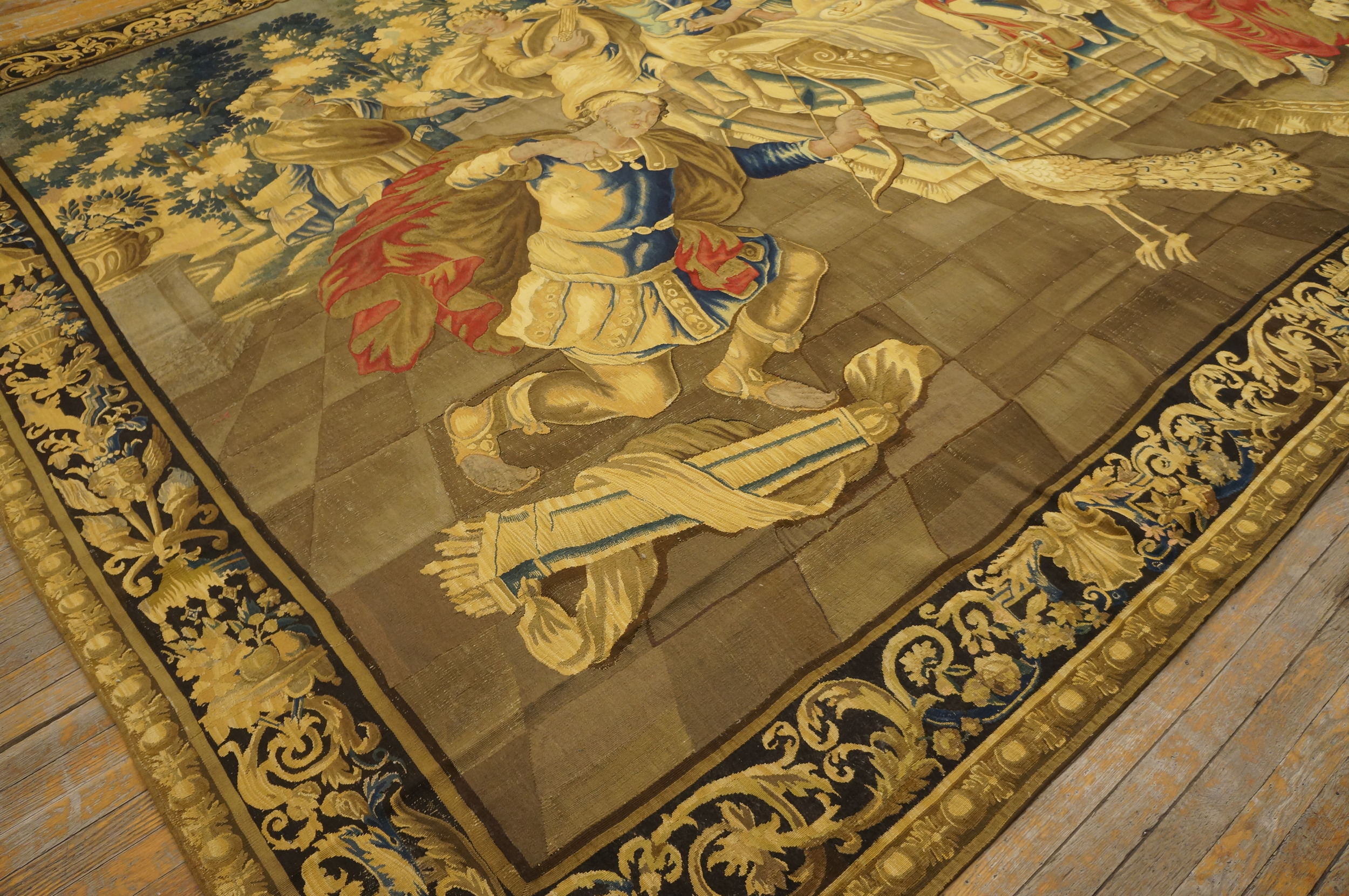
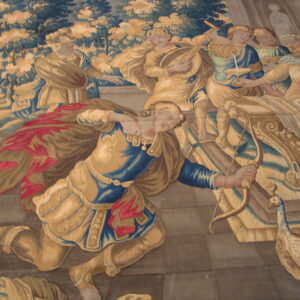
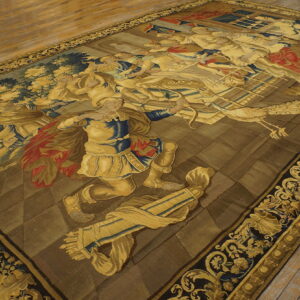
- Odysseus (Ulysses): At the far left, the bearded hero kneels in a dynamic “heroic” pose. He is captured in the climactic moment from the Odyssey where, disguised as a beggar, he successfully strings his great bow and shoots an arrow through the sequence of axe-head rings—a feat no suitor could match.
- Penelope: Seated at the far right, she is identified by her most famous attribute: the weaving loom. Her weaving was her defense against the suitors, and her presence here anchors the theme of the “Virtuous Woman.”
- The Dog: Resting at Penelope’s feet, the dog is the universal symbol of Fides (Fidelity), specifically referencing Odysseus’s dog, Argus, who was the only one to recognize him upon his return.
The Olympian Banquet:
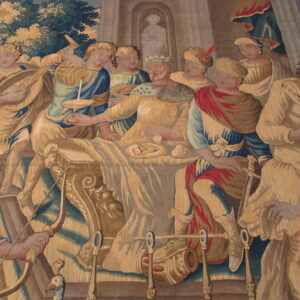
The center of the tapestry transitions into a “Banquet of the Gods,” featuring:
- Zeus (Jupiter): Crowned and seated at the head of the table.
- Hera (Juno): Seated to Penelope’s left in elaborate robes; her signature peacock struts in the foreground.
- Ganymede: The divine youth serving as cupbearer.
- Mars & Hermes: Attending the table at the left and right, identified by their martial and messenger regalia.
Artistic Observations & Style
- The “Pasticcio” Character: Unlike high-commission pieces that follow a strict singular text, this workshop combined various successful “cartoons” (design templates) to appeal to a buyer who wanted a grand, colorful mythological scene. This is evidenced by the “filler” figures, such as the lute player, which was adapted from 16th-century Italian prints.
- The Border: A distinctive transition from Mannerist to Baroque. It features “S-scrolls,” winged heads, and shells. Its non-symmetrical nature and the slightly off-center composition suggest a provincial workshop operating outside the rigid high-quality control of the central Brussels guild, yet still capable of producing a work of immense decorative power.
- Perspective: The use of checkered floor tiles creates a “stage” for the action, a technique used to give the textile a window-like depth within a large hall.