
Introduction to Agra Rugs
Discover our curated selection of elegant Agra rugs perfect for traditional and modern spaces.
Agra’s Location in India
Agra lies in northern India, within the state of Uttar Pradesh, set gracefully along the banks of the Yamuna River. Its Agra India location has long been central to the cultural and political history of the subcontinent, placing it at the crossroads of Mughal, Persian, and Indian influences. This positioning not only made the city a strategic stronghold for centuries but also laid the foundation for its flourishing as a hub of luxury crafts, including the renowned Agra rugs that carry its name.
Why Agra Is Renowned Among Global Travelers
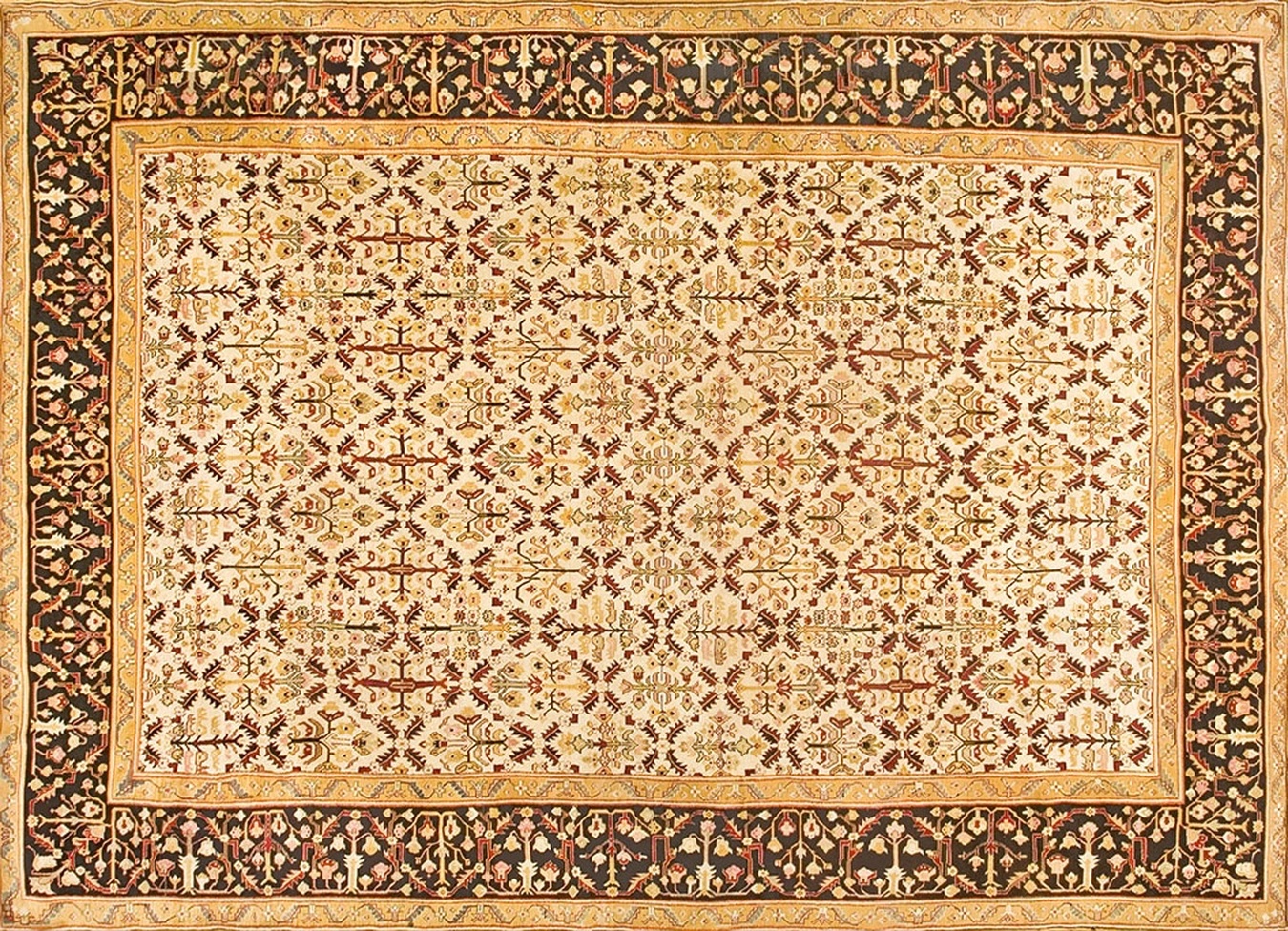
Antique Large Agra Indian Knotted Rug – by Rugs On Net
For centuries, Agra has drawn travelers from across the world, celebrated as one of India’s most iconic destinations. Its allure lies in its Mughal heritage, where grand monuments, intricate gardens, and traditional artistry converge. Visitors are captivated not only by the monumental architecture but also by the city’s vibrant cultural scene, which reflects its historic role as a center of design, craft, and luxury textiles. Beyond sightseeing, Agra offers a sensory experience: the rhythmic weaving of rugs, the scent of spices in bustling markets, and the vivid colors of handwoven artistry. This unique combination of history and living tradition makes Agra unforgettable for art lovers and tourists alike.
The Taj Mahal and Other Landmarks
The jewel of Agra is undoubtedly the Taj Mahal, the marble mausoleum that dominates the skyline and stands as one of the Seven Wonders of the World. Built in the 17th century by Emperor Shah Jahan in memory of his wife Mumtaz Mahal, the Taj Mahal is a UNESCO World Heritage site and a global symbol of beauty, craftsmanship, and enduring love. Its influence extends into the decorative traditions of Agra rugs, where floral motifs, balanced geometry, and Mughal-inspired artistry echo the monument’s elegance. Alongside the Taj Mahal, Agra’s skyline features other significant Agra tourist sites, such as the Agra Fort and Fatehpur Sikri, both steeped in Mughal history. Together, these landmarks weave a narrative of power, art, and devotion—an aesthetic and cultural backdrop against which Agra’s rug tradition thrives.
Historical Origins and Mughal Patronage
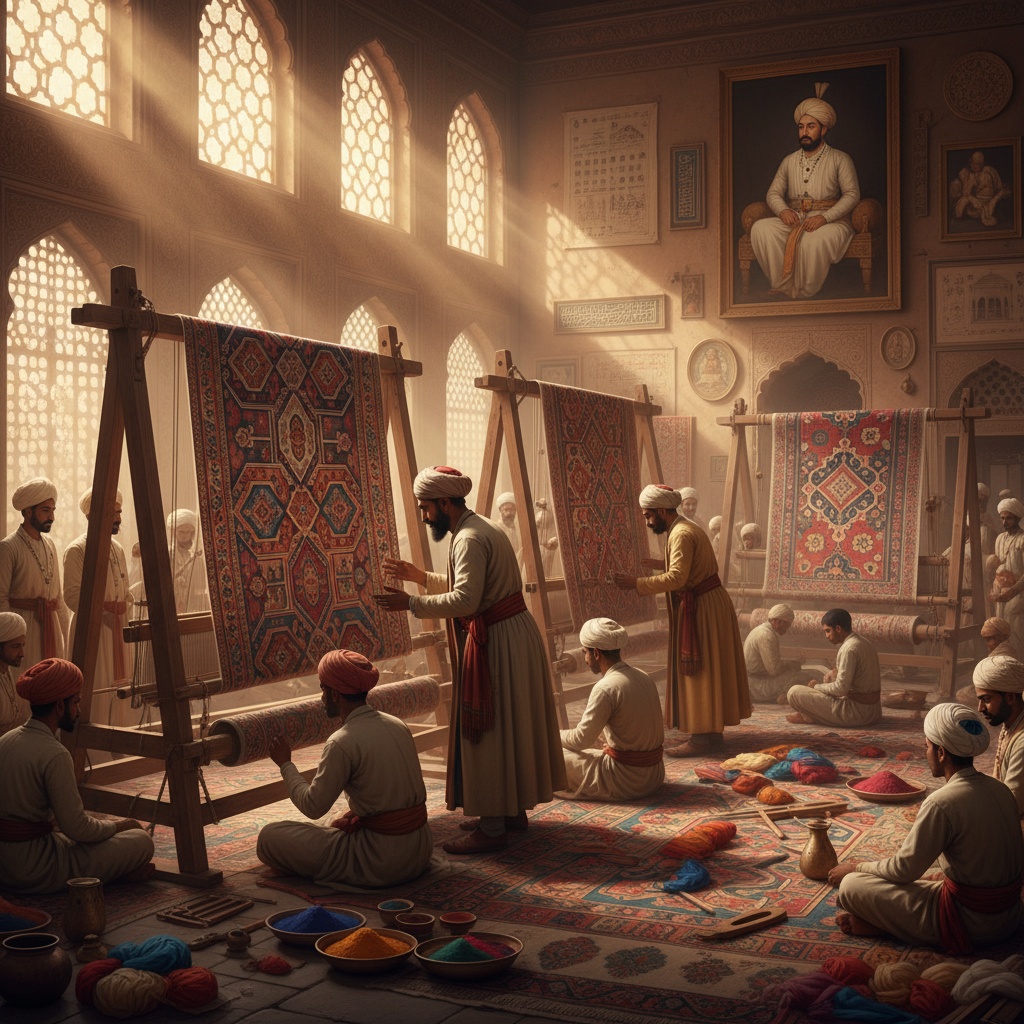
Mughal-era carpet weaving workshop scene
Who First Established Weaving Workshops in Agra?
The origins of Agra rugs trace back to the reign of the Mughal emperor Akbar, who first established weaving workshops in the city during the late 1500s. Known as Akbar’s workshops, these imperial ateliers were set up to elevate the arts and crafts of his empire, with textiles and carpets given special prominence. Skilled artisans from Persia were invited to Agra, introducing refined techniques that blended seamlessly with local traditions. This initiative marked the beginning of Agra’s legacy as one of India’s foremost centers of luxury carpet weaving.
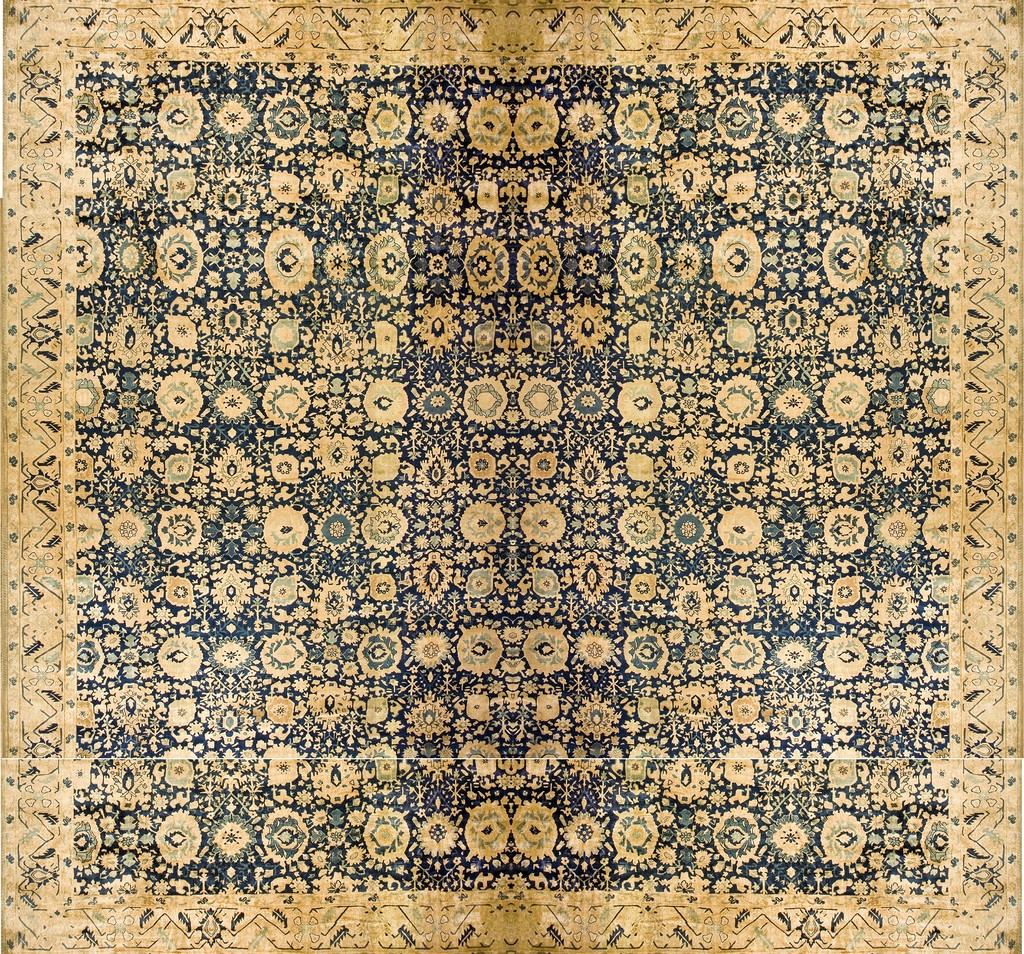
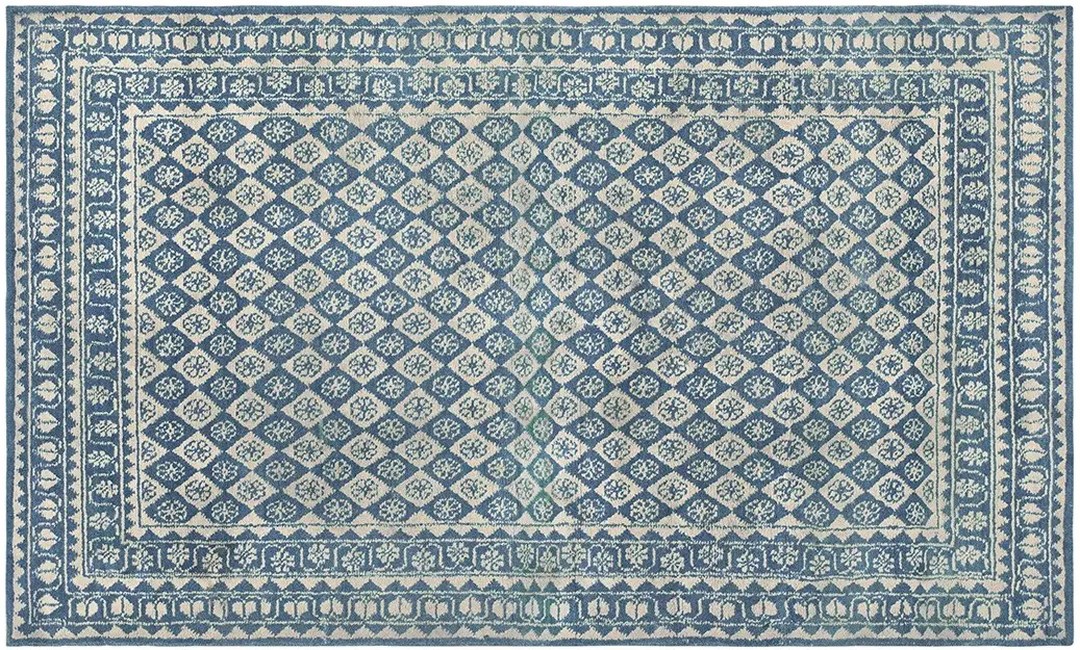
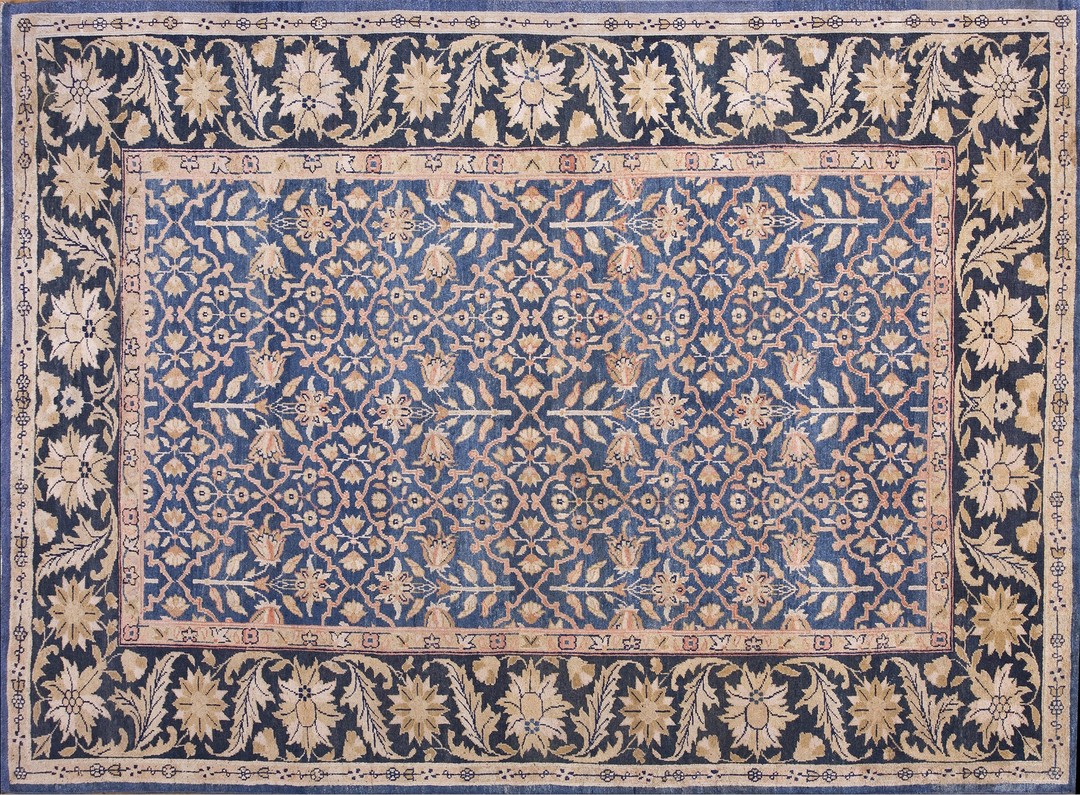
Antique Agra Oversized Large Big Wool Blue Rug by Rugs On Net
How Mughal Emperors Shaped Weaving History
Successive Mughal rulers carried forward Akbar’s vision, each leaving their own imprint on the craft. Under court patronage, Mughal carpets evolved into masterpieces of design, prized not only for their technical brilliance but also for their symbolism within the empire. Shah Jahan, the emperor who commissioned the Taj Mahal, fostered the development of intricate floral and geometric motifs that echoed Mughal architecture and Mughal art. Imperial sponsorship ensured that these carpets were not ordinary household items but works of grandeur—woven treasures intended for palaces, mosques, and gifts to foreign dignitaries. This royal investment cemented Agra’s role as a hub where weaving became a form of statecraft as well as artistry.
The Fusion of Persian and Indian Techniques
What distinguished Agra rugs from others of the era was the Persian influence carried by the master weavers Akbar had invited. Persian knotting methods and design sensibilities fused with Indian materials, dyes, and motifs, creating a hybrid form now known as Indo-Persian rugs. This blend resulted in carpets of extraordinary detail and cultural richness, where Persian medallions intertwined with Indian floral patterns and Mughal-inspired geometry. The synthesis reflected not just technical collaboration but also the broader spirit of the Mughal empire—a realm defined by cultural fusion and artistic innovation. Under this unique context, Agra rugs earned their enduring reputation as some of the finest carpets in the world.
Defining Features of Agra Rugs
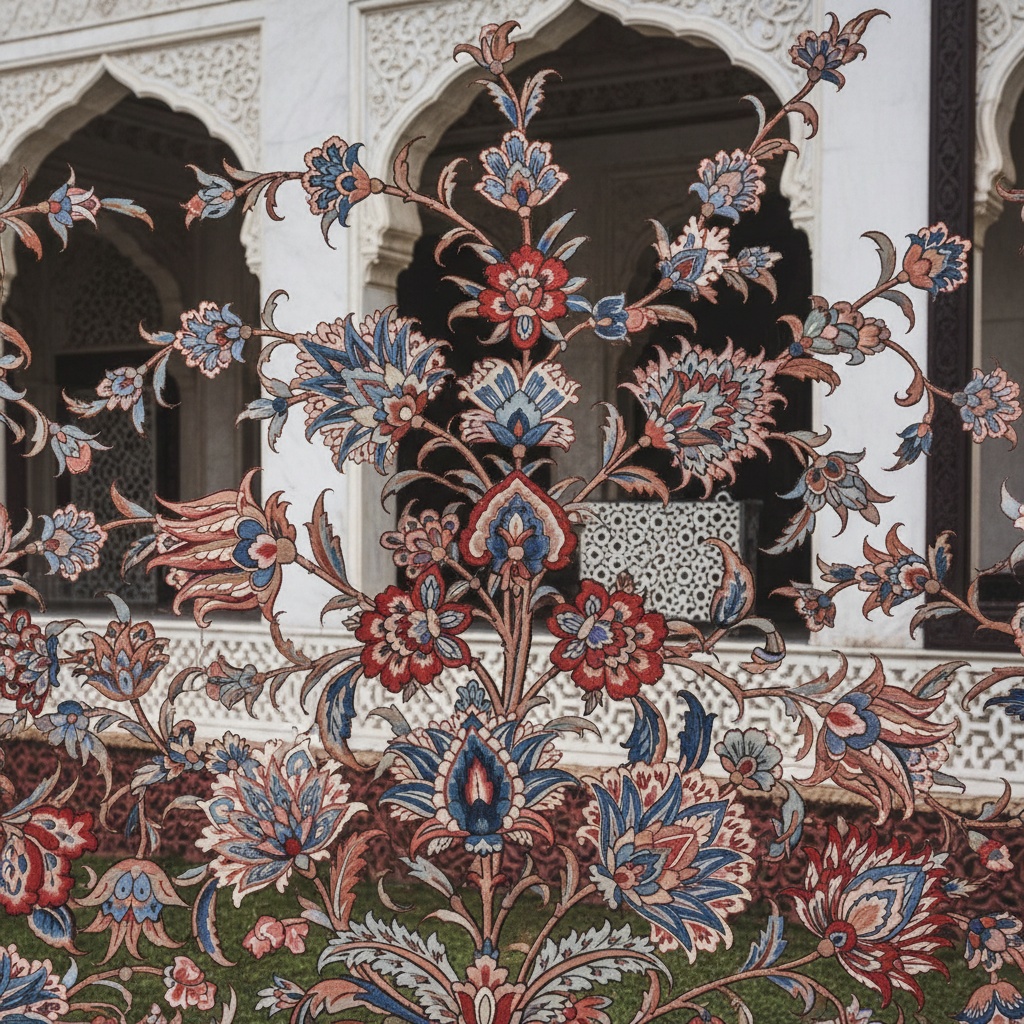
Vibrant floral patterns typical of Agra rugs.
Iconic Motifs and Floral Patterns
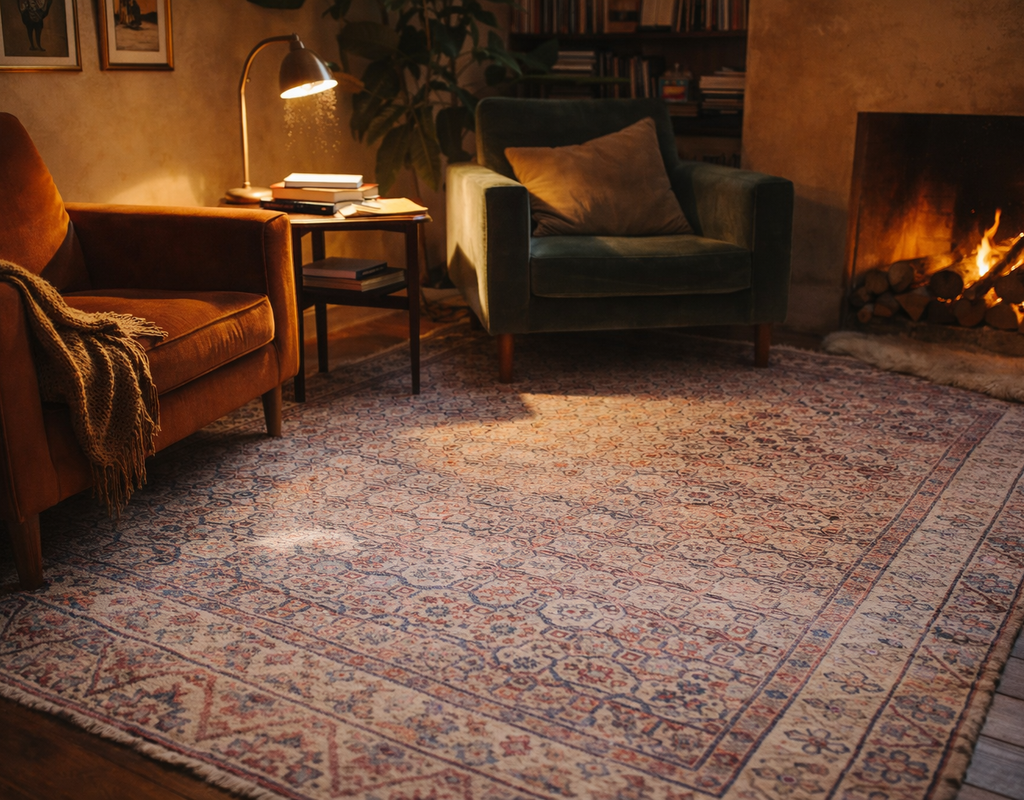
An inviting corner designed for relaxation, featuring richly colored furniture atop a detailed traditional rug.
- Floral carpet motifs with lush blossoms, vines, and foliage dominate Agra rug design — Why: These reflect Mughal aesthetics, inspired by palace gardens and the natural world.
- Medallions and geometric frames often anchor the field — Why: They balance the fluidity of florals with structure, echoing architectural influences.
- Animal scenes and narrative imagery — Why: Unlike purely Persian styles, Agra rugs sometimes include birds, deer, or hunting scenes, adding storytelling elements unique to India’s tradition.
These elements together define an Agra city-made rug, setting them apart as both ornamental and culturally expressive.
Color Palettes: Deep Reds, Indigo, Pastels
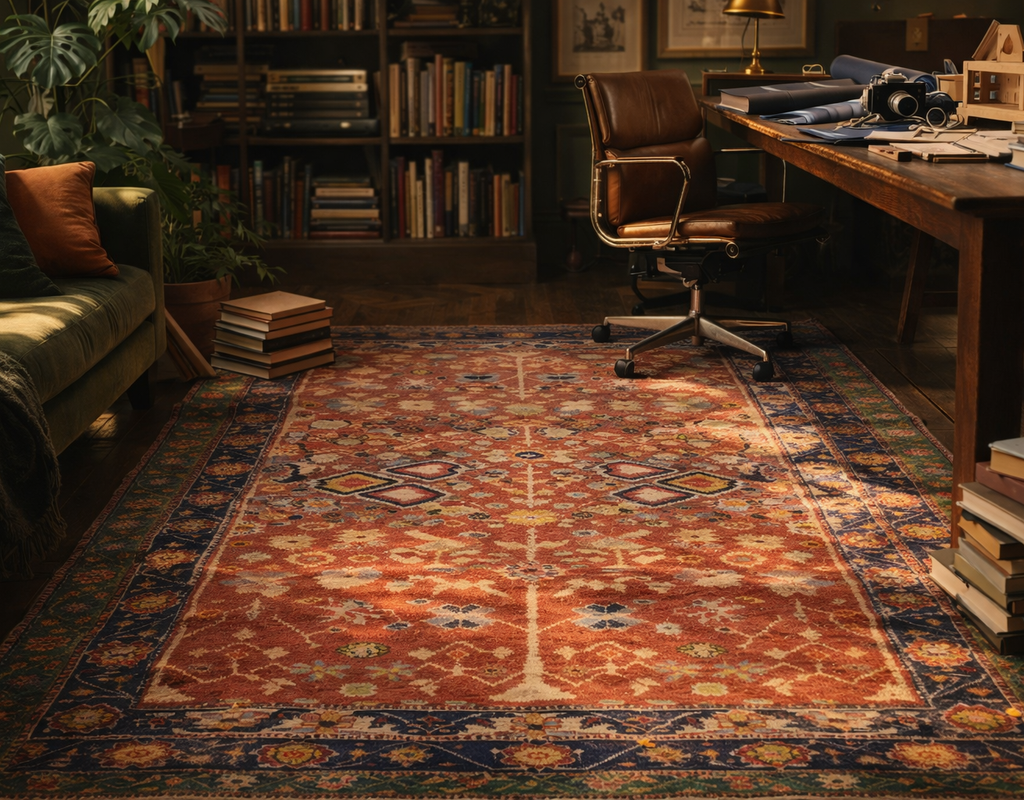
A traditional, richly patterned rug brings warmth and character to this moody, book-lined study.
- Madder red and indigo blue — Why: These bold, enduring tones reflect natural dyes and are core to Agra’s historic palette.
- Ivory and gold accents — Why: They provide contrast, enhancing the drama of florals and medallions.
- Pastel shades of pink, moss green, and soft rose — Why: This “rosy” palette became a signature of Agra weaving, offering a lighter, more romantic feel than many Persian rugs.
These Agra rug colors highlight the city’s openness to experimentation, producing distinctive pastel rugs admired by collectors.
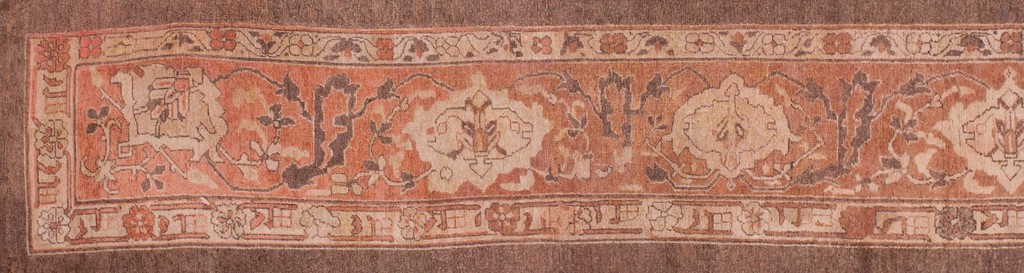
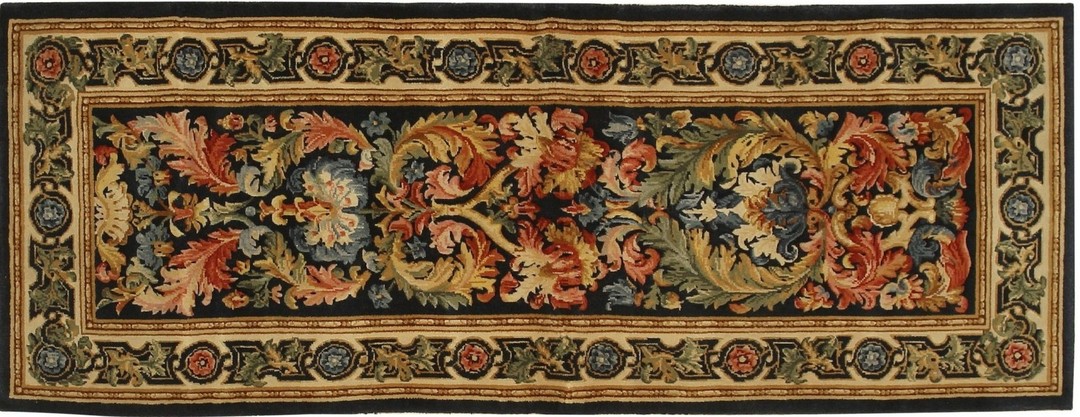
Rustic Coral Color Antique Agra Extra Long and Narrow Size Hallway Runner Rug by Rugs On Net
How Agra Floral Carpets Differ from Persian Styles
While Agra weaving borrowed structural foundations from Persia, its artistry moved in a different direction. Agra vs Persian rugs reveals a divergence: Persian designs often emphasize symmetry, stylized blossoms, and central medallions, while Agra floral carpets are more naturalistic, with looser vines and realistic depictions of animals. Persian rugs tend toward deep jewel tones; Agra rugs frequently soften the palette with pinks, moss greens, and ivory, giving them a more delicate, almost romantic impression.
Construction and Materials: Wool, Silk, Cotton, Knotting Techniques
- Wool pile — Why: High-quality wool formed the foundation of most Agra rugs, prized for durability and softness. Compared to Jaipur, Agra’s wool was often finer, contributing to a smoother texture.
- Cotton foundation — Why: Provided stability and allowed for larger carpets without warping.
- Silk and pashmina in Mughal-era works — Why: Added luxury and sheen, elevating rugs destined for imperial or aristocratic use.
- Hand-knotted structure — Why: Using asymmetric (Persian) knots, but adapted with Indian artistry, this ensured both durability and artistic flexibility.
Together, these materials and methods reflect the Indo-Persian fusion central to Agra’s identity—where imported technique met local creativity, producing rugs instantly recognizable for their blend of refinement and softness.
Historical Evolution of Agra Rugs
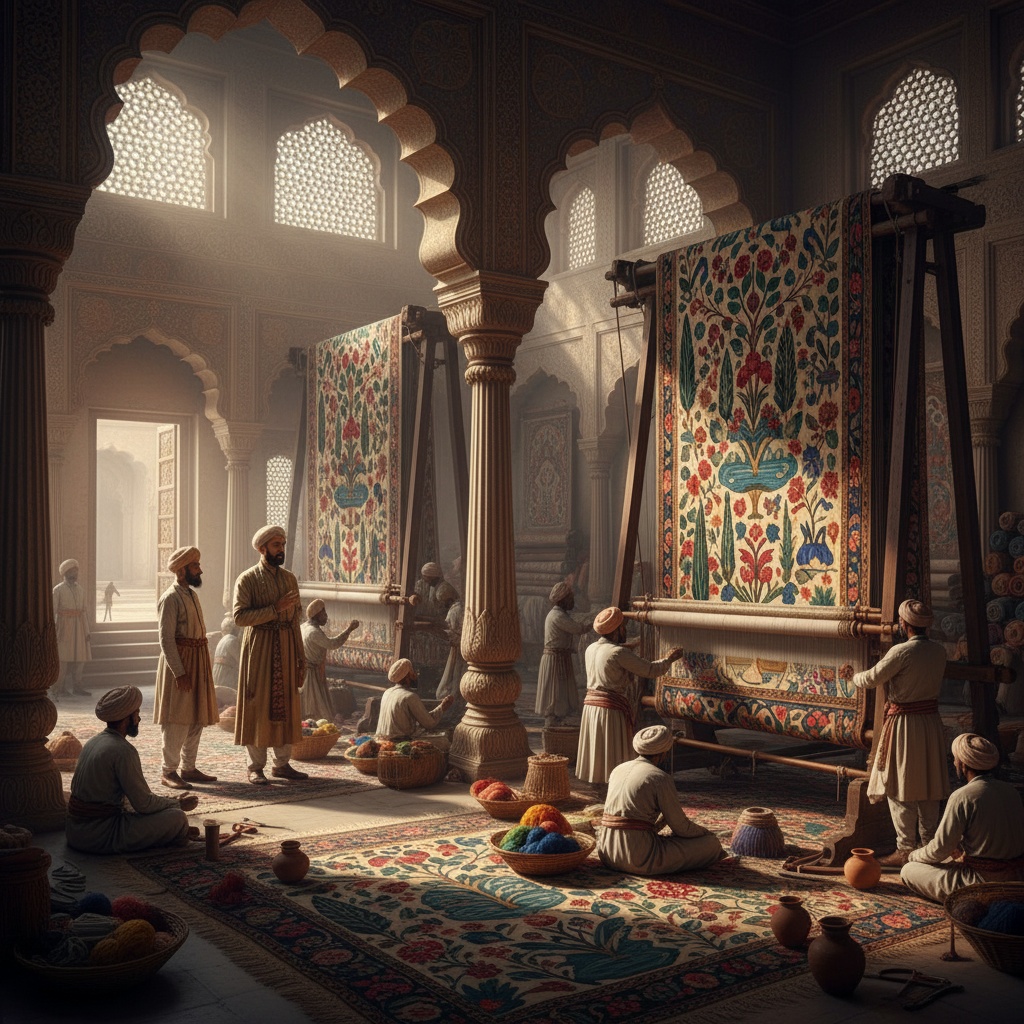
Traditional workshop setting for historical rug creation.
Mughal Era and Golden Age of Weaving
The story of Mughal carpets begins in the late 16th century, when Emperor Akbar established imperial workshops in Agra. Under his rule and that of his successors, weaving reached a golden age. Court-sponsored artisans produced masterpieces such as the famous Emperor’s Carpet, adorned with lush “flower-style” patterns that captured the Mughal fascination with gardens and paradise imagery. These works combined Persian structure with uniquely Indian naturalism, setting the standard for centuries of rug design.
18th-Century Decline and Regional Continuity
After the decline of the Mughal Empire, Agra’s weaving traditions weakened but did not vanish. The grandeur of courtly sponsorship gave way to smaller workshops and more regional output. Carpets from this period often leaned toward simpler, more geometric designs, a reflection of reduced imperial patronage and shifting markets. Even so, the skills of Agra’s artisans persisted, maintaining the city’s identity as a center of weaving even through political upheaval.
British Colonial Revival: Jail Carpets and Exports
During the 19th century, the British colonial administration revived Agra’s weaving industry through a unique and controversial system. Known as Agra jail carpets, these textiles were woven by prison labor under strict supervision, blending traditional Mughal floral designs with Victorian tastes for symmetry and muted tones. These British Raj rugs became highly sought after in Europe, where they were exported as luxury goods. It was during this era that Agra rugs gained popularity in Europe, prized by collectors and institutions alike for their size, durability, and hybrid aesthetics.
Post-Independence to Modern Revivals
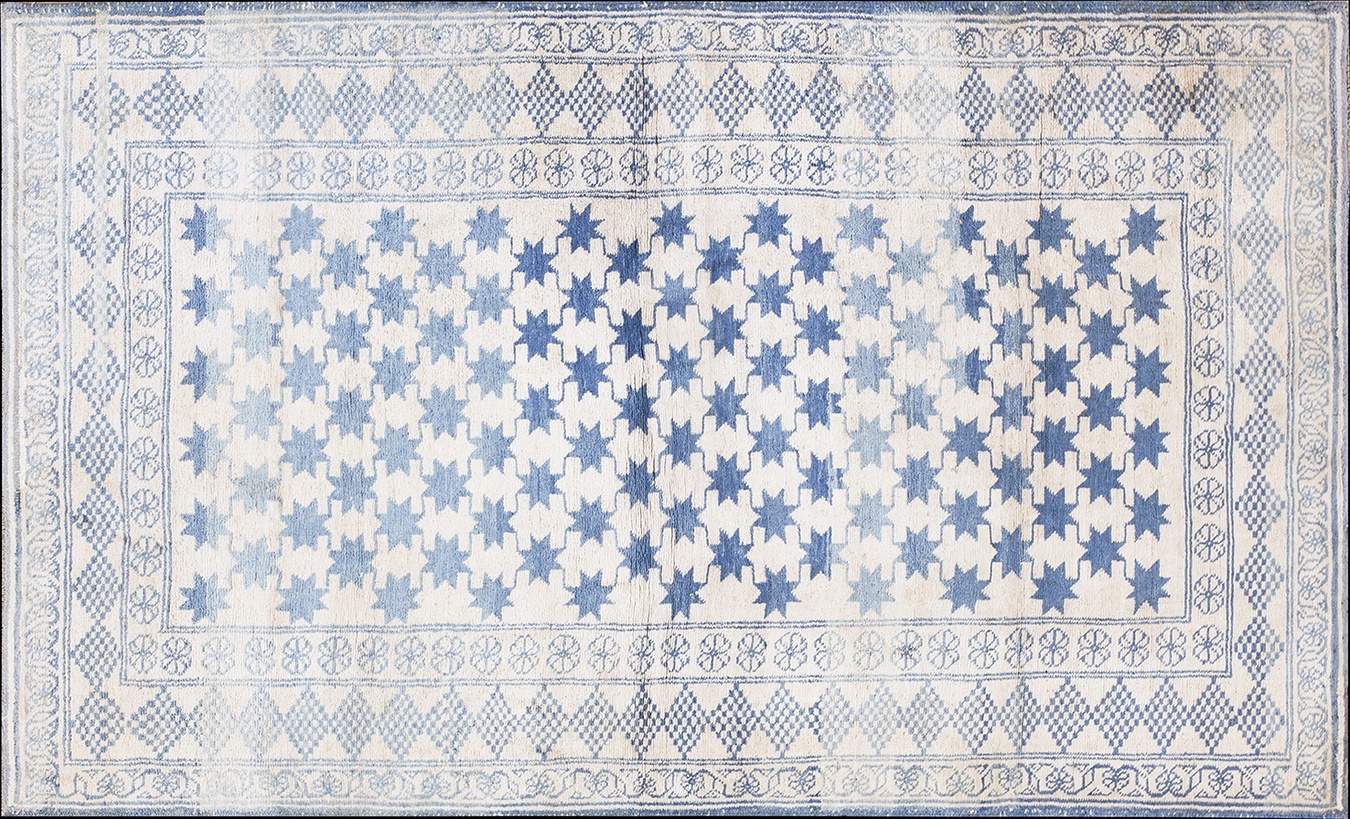
Following India’s independence in 1947, Agra’s carpet tradition entered yet another cycle of reinvention. Heritage motifs inspired by the Mughal past were reintroduced, often in custom commissions for both domestic and international clients. Today, modern workshops continue to produce carpet revival pieces that honor traditional designs while experimenting with new palettes and materials. For collectors, this ongoing tradition underscores the enduring antique Agra rug value, as older examples not only retain but often appreciate in value over decades due to their rarity and craftsmanship. Through these shifts—from Mughal patronage to colonial exports and contemporary revivals—the story of Agra rugs reflects resilience, adaptation, and a continuous dialogue between past and present.
Regional and Workshop Variations
Mughal vs. 19th-Century vs. Modern Agra Rugs
The evolution of Agra rugs can be read directly in their weave. Mughal-era Agras were typically finer and lighter, with exceptionally detailed floral and garden-inspired designs meant for imperial courts. By contrast, 19th-century Agra rugs produced under colonial supervision, including jail carpets, tended to be heavier, with thicker wool piles and a recognizable pastel palette. Some even adopted early synthetic dyes, giving them softer rose, moss, and lavender tones. In today’s modern Agra rugs, heritage motifs remain central, but workshops often experiment with contemporary color schemes, balancing tradition with global market demand.
Comparison: Agra, Jaipur, Amritsar
Regional variation is most apparent when comparing Jaipur rug vs Agra rug traditions. Agra typically favors softer pastels and more naturalistic florals, while Jaipur’s rugs often employ brighter hues and geometric precision. Wool quality also differs: Jaipur weavers frequently use coarser Indian wool, whereas Agra’s workshops historically sourced finer grades, yielding smoother textures. Amritsar, another important North Indian center, often used high-quality imported wool from merino sheep, producing plush piles with deep jewel-toned palettes. Knot density, dye sources, and finishing techniques all serve as subtle clues to a rug’s origin, allowing experts to distinguish regional rug styles at a glance.
Workshop Signatures and Indo-Isfahan / Indo-Herati Types
One of Agra’s hallmarks is its ability to absorb and reinterpret Persian traditions. Certain workshops became known for producing Indo-Isfahan or Indo-Herati rugs, adopting Persian medallion and allover patterns but softening them with the Mughal preference for naturalistic florals and pastel tones. These hybrids reflect Agra’s position as a cosmopolitan weaving center, where Persian influence blended seamlessly with Indian sensibilities.
Modern Production Centers and Looms
Today, the legacy of Agra weaving extends well beyond the city itself. Agra looms remain concentrated in Uttar Pradesh districts, but production is no longer exclusive to Agra. Workshops in Bhadohi, Mirzapur, and Varanasi contribute significantly, weaving both traditional and modernized Agra-style rugs for export. Jaipur also maintains a strong presence, producing rugs in similar designs but with subtle differences in wool and palette. To answer directly: most contemporary Agra-style rugs are produced in Uttar Pradesh, with Bhadohi often considered the global hub of Indian wool rugs. For buyers and collectors, understanding these regional and workshop nuances is key to spotting authentic Agra rugs and distinguishing them from their Jaipur or Amritsar counterparts—each carrying its own unique blend of history, materials, and artistry.
Symbolism, Culture, and Agra’s Place in Indian Art
Courtly Life and Ceremonial Uses of Carpets
From their inception under the Mughal emperors, Agra rugs were far more than floor coverings. They played central roles in courtly life, functioning as portable palaces and markers of royal status. Woven carpets lined imperial halls, accompanied rulers on campaigns, and were exchanged as diplomatic gifts with foreign courts. In ceremonies, they elevated the grandeur of Mughal ritual, their designs mirroring the sophistication of Mughal symbolism that defined the empire’s art.
Symbolic Motifs: Lotus, Animals, Medallions
- Lotus in rugs — Why: A sacred symbol in both Hinduism and Buddhism, the lotus stands for purity, spiritual rebirth, and divine perfection. Its frequent use in Agra rugs highlights the blending of Indian spiritual traditions with Mughal aesthetics.
- Animal motifs — Why: Deer, lions, and birds appear as emblems of power, cosmic balance, and royal prestige. Such motifs reflect the Mughal fascination with the natural world and hunting scenes.
- Medallions — Why: Central medallions, inspired by Persian art, signify unity, cosmic order, and authority, reinforcing the hierarchical worldview of the Mughal court.
These symbolic rug motifs merge Persian, Hindu, and Islamic traditions, making Agra carpets both spiritual objects and cultural documents.
Reflection of Agra’s Marble Monuments
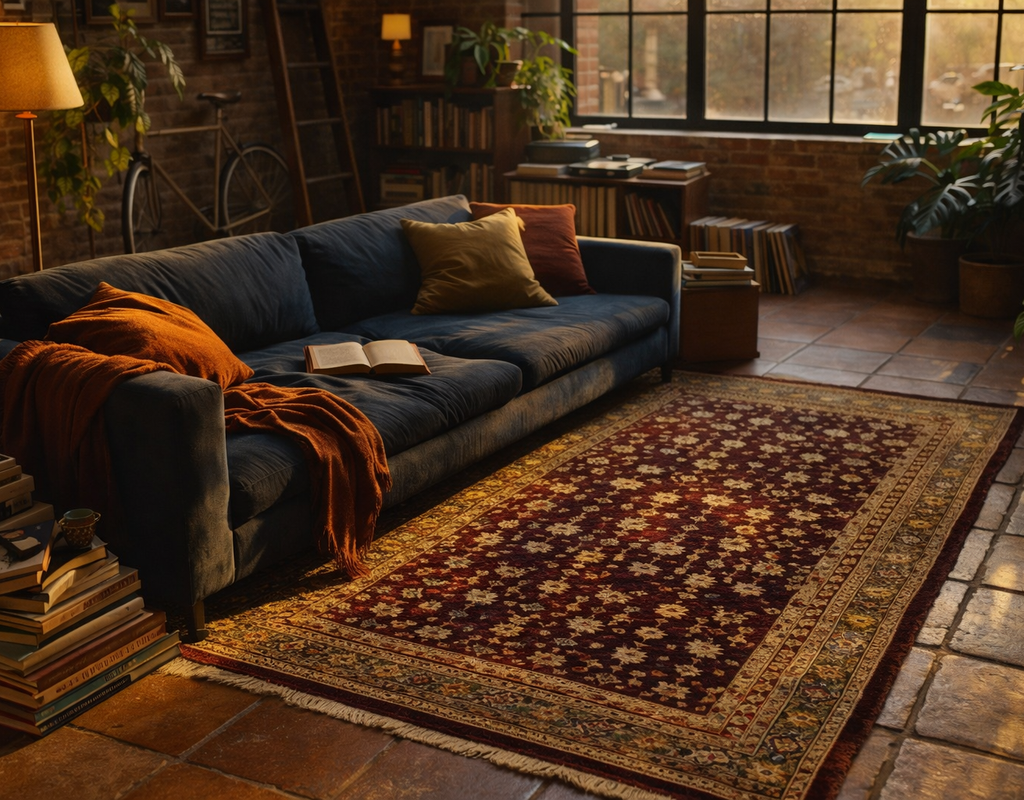
A rich burgundy traditional rug anchors the seating area in this warmly lit, plant-filled industrial loft.
A defining feature of Agra weaving is its visual dialogue with the city’s architecture. The Taj Mahal and other Mughal monuments, with their marble inlay, floral palmettes, and symmetrical gardens, directly inspired carpet design. Soft ivory grounds echo white marble surfaces, while vine-scrolls and garden layouts reflect the charbagh (four-part garden) patterning of Mughal tombs. This explains why Agra’s marble landmarks are reflected in rug motifs—weavers sought to translate the majesty of stone monuments into portable textiles, allowing patrons to carry echoes of the Taj Mahal’s perfection into their homes and courts.
Rugs as Status Symbols and Storytelling Objects
In Mughal India, an Agra Taj Mahal rug was more than decoration; it was a statement of wealth, refinement, and global connection. Carpets conveyed prestige not only by their size and material but also through their storytelling elements—floral gardens symbolizing paradise, animal hunts reflecting royal leisure, or lotus blossoms affirming purity. As status symbols, they embodied the power of their patrons. As storytelling objects, they preserved the artistic vision of an era where textiles carried the same cultural weight as architecture, painting, or poetry. In this sense, Agra rugs remain essential to India’s artistic identity: both reflections of a city of marble and metaphors woven into wool.
The Modern Market: Buying, Value, and Collecting
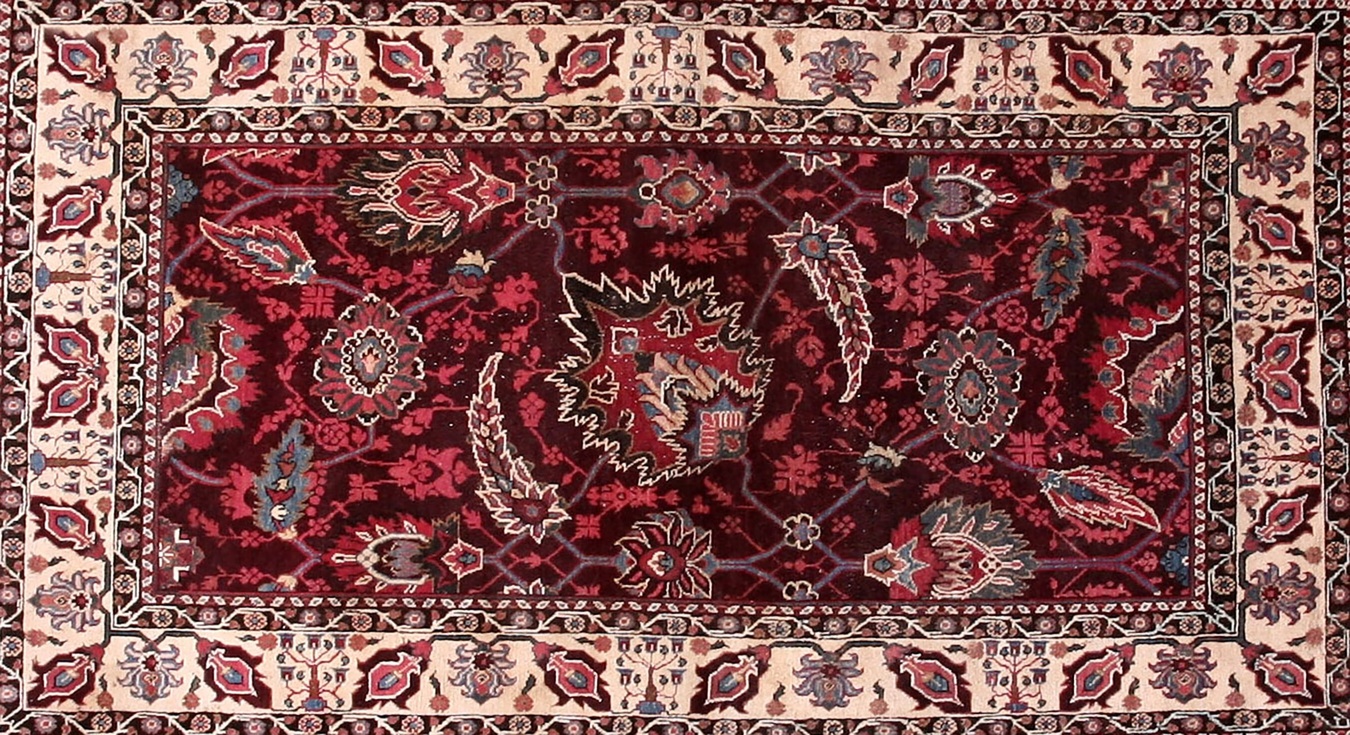
Antique vs. Contemporary: What Should Collectors Look For?
When deciding whether to buy an Agra rug, collectors face a choice between antique and contemporary pieces. Antique Agras—particularly those from the Mughal and British colonial eras—are highly prized for their rarity, craftsmanship, and historical significance. These rugs often command high antique rug value, especially when well-preserved. Contemporary Agra-style rugs, by contrast, are more accessible, often woven in traditional designs but with updated palettes or materials. Collectors seeking long-term value and history typically prefer antiques, while contemporary rugs appeal to buyers who want durability, affordability, and heritage-inspired beauty.
Provenance, Authentication, and Value Appreciation
The question of authenticity is crucial when purchasing an authentic Agra carpet. Buyers should always request documentation, provenance records, or expert certification. Distinctive markers such as knot type, dye use, and wool texture can also help confirm authenticity. Provenance not only ensures cultural integrity but directly impacts rug provenance and value. In terms of investment, the answer is clear: yes, Agra rugs can appreciate in value over decades, especially rare Mughal carpets and fine 19th-century jail pieces. Their limited availability and cultural significance make them enduring assets for serious collectors.
Safe Shopping: Visiting Agra’s Rug Bazaar
For those traveling to India, the Agra rug bazaar offers an immersive experience in the city’s living craft tradition. Located in a well-traveled and tourist-friendly area, the market is generally considered safe to visit, with many reputable dealers showcasing both antique and modern examples. Tourists should still exercise normal precautions—shop with established sellers, compare prices, and verify authenticity before purchasing. Beyond commerce, visiting the bazaar provides insight into the cultural heartbeat of Agra’s weaving tradition.
Where Are Most Contemporary Agra-Style Rugs Produced?
Although Agra itself remains a symbolic center, most contemporary Agra-style rugs are produced in India and Pakistan, particularly in Uttar Pradesh’s Bhadohi-Mirzapur belt, which is now the world’s largest hand-knotted rug hub. Workshops in Jaipur and Lahore also contribute significantly. This distribution ensures a steady supply of new Indian wool rugs in the Agra tradition, even as antique examples grow rarer. For collectors and travelers alike, the modern market offers both opportunity and responsibility: opportunity in acquiring pieces of beauty and history, and responsibility in ensuring authenticity, provenance, and fair trade practices when bringing an Agra rug home.
Industry, Policy, and Trade in Uttar Pradesh
Concentration of Looms in Uttar Pradesh
Yes, Agra looms are concentrated in Uttar Pradesh districts, making the state the backbone of India’s hand-knotted rug industry. Beyond Agra itself, key weaving hubs include Bhadohi, Mirzapur, and Varanasi, often called the “Carpet Belt of India.” These areas house thousands of looms producing both traditional and modern Uttar Pradesh carpets, many in the Agra style. This geographic concentration creates economies of scale, supports generational craft knowledge, and ensures that Agra rugs remain central to the region’s identity and economy.
State Policy and Industry Support
The government of Uttar Pradesh plays an active role in sustaining the Agra rug trade. Through Indian carpet policy initiatives, the state provides artisan training programs, organizes participation in international trade fairs, and promotes exports under the “Make in India” initiative. Subsidies for modern looms, financial support for cooperative societies, and design development centers help artisans compete in the global market. Such policy backing ensures that the centuries-old craft adapts to modern consumer demand while preserving its traditional character.
Weather and Its Effect on Dyeing and Rug Quality
Local climate also shapes the final product. Agra’s weather—marked by dry heat and seasonal humidity—directly impacts rug dyeing weather conditions. Natural dyes set more effectively in dry heat, which can improve color fastness and vibrancy. Conversely, excessive humidity may complicate wool handling and slow the dyeing process. These environmental factors, combined with access to the Yamuna River for washing, influence both the quality and longevity of finished rugs, making climate a subtle but important part of Agra’s textile heritage.
Modern Exports and Trade Trends
Today, Agra rug exports play a significant role in India’s position as one of the world’s top suppliers of hand-knotted rugs. Traditional Agra motifs—florals, medallions, pastel tones—remain popular in North America and Europe, while contemporary adaptations cater to global interior design trends. Export demand continues to shape production, pushing workshops to innovate with sustainable materials, new palettes, and modern sizes while staying rooted in Mughal-inspired designs. In this way, Uttar Pradesh not only preserves the craft of Agra weaving but also positions it within a dynamic, export-driven market—balancing heritage with innovation in the global rug trade.
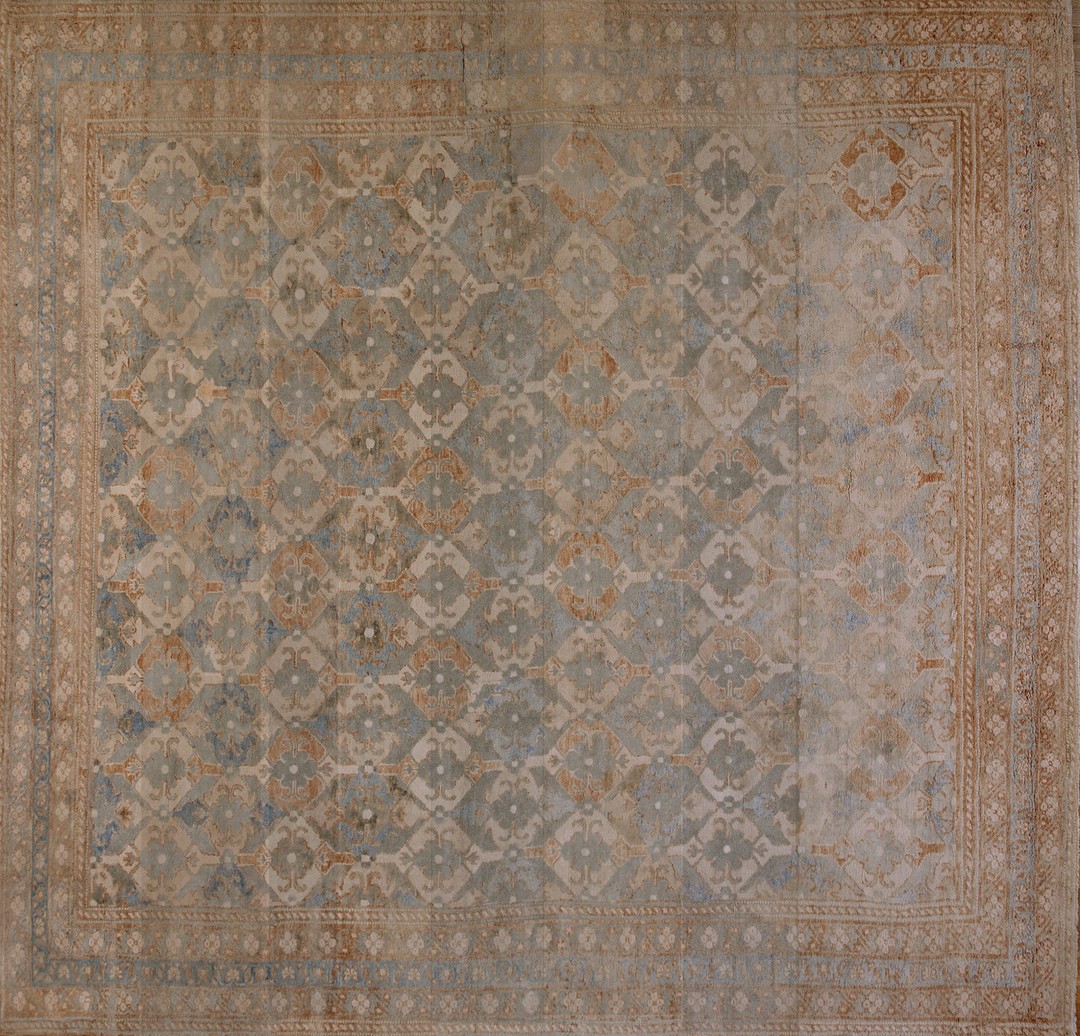
Explore a few of our favorite Agra rugs
FAQ
- Are Agra rugs a good investment?
Well-kept antique Agra rugs can hold or appreciate, especially large, fine examples. Buy verified hand-knotted pieces and document provenance.
- What size Agra rug fits a dining room?
Choose an Agra rug that extends 24–30 inches beyond the table on all sides. For a 6–8-seat table, 8×10 or 9×12 usually works.
- Are there Agra rug runners for hallways?
Yes—Agra runners typically measure about 2′6″–3′ wide and 8′–14′ long. A 3′×10′ Agra runner suits many hallways.
- Can Agra rugs work in modern interiors?
Absolutely—neutral-ground Agra rugs with restrained florals pair well with contemporary furniture. Beige-gold fields read calm while adding heritage.
- How do Agra rugs differ from Amritsar rugs?
Both are North Indian; Agra rugs skew richer reds/golds with Mughal florals, while Amritsar often favors softer, earth-tone palettes and broader drawing.
- What’s the history behind Agra rugs?
Agra rugs began in Mughal courts (16th–17th centuries) and resurged in the 19th century, including famous prison-workshop productions.
- How do Agra rugs compare to Persian rugs?
Agra rugs are Indian, often borrowing Persian motifs but with distinct Mughal aesthetics and color palettes. Quality ranges are comparable when hand-knotted.
- What sizes do Agra rugs come in?
Agra rugs commonly appear in 3×5, 4×6, 6×9, 8×10, and 9×12, with occasional oversized pieces. Runners are also available.
- What rug pad works best under an Agra rug?
A ¼″ felt-plus-natural-rubber pad adds cushion and prevents slipping. It also reduces wear on Agra rugs and floors.
- Are Agra rugs good with pets?
Wool Agra rugs repel moisture and hide dirt well, making them pet-friendly. Use a felt-rubber pad and address accidents within minutes.
- Will an Agra rug fade in sunlight?
Prolonged direct sun can fade Agra rug dyes. Use window UV film, rotate every 6 months, and consider blinds or sheer drapes.
- Do Agra rugs shed?
New wool Agra rugs can shed initially as loose fibers release. Frequent vacuuming the first few months reduces fuzz.
- How often should Agra rugs be professionally cleaned?
For wool Agra rugs, plan every 1–3 years depending on traffic, pets, and soil. Always choose a cleaner experienced with hand-knotted rugs.
- How do I clean a wool Agra rug at home?
Blot spills, then spot-clean with wool-safe detergent after a dye test. Vacuum weekly with beater-bar off and groom the pile afterward.
- Are Agra rugs wool or silk?
Most Agra rugs are wool-pile on cotton foundations. Some premium pieces include silk highlights or, rarely, full silk pile.
- What knot density do Agra rugs have?
Many Agra rugs fall around 80–200 KPSI (knots per square inch). Finer examples, especially silk-accented, can be higher.
- How do I identify an antique Agra rug?
Antique Agra rugs (≈100+ years) often show supple handle, mellow vegetable dyes, and polished backs. Look for cotton foundations and nuanced abrash.
- How can I tell if an Agra rug is hand-knotted?
Flip an Agra rug: hand-knotted backs show individual knots and no fabric/latex layer. Hand-tufted “Agra-style” rugs have a canvas backing and latex.
- How much do Agra rugs cost today?
New hand-knotted Agra rugs often run \$1,000–\$5,000 for 8×10. Antique or exceptional 9×12 Agra rugs can range roughly \$6,000–\$25,000+.
- Are Agra rugs durable for high-traffic spaces?
Yes—wool Agra rugs are naturally resilient and soil-resistant. With a pad and routine care, many handle living rooms and halls for decades.
- What colors do Agra rugs usually have?
Agra rugs favor deep reds, soft greens, golds, beiges, and occasionally lavender or rose accents. Borders often contrast in burgundy or dark tones.
- What designs are typical in Agra rugs?
Agra rugs commonly feature scrolling vines, palmettes, and vase-and-floral repeats. Birds, animals, and medallions also appear in some patterns.
- How are Agra rugs constructed?
Traditional Agra rugs are hand-knotted using the Persian (asymmetrical) knot. Expect dense weaving and a medium to high pile height.
- Where do Agra rugs come from?
Agra rugs originate from Agra, India, with weaving traditions dating to the Mughal era and a 19th-century revival. Workshops also produced “jail carpets” under British rule.
- What is an Agra rug?
An Agra rug is a hand-knotted Indian carpet famed for Mughal-influenced floral designs and soft, jewel-toned palettes. Most use wool pile on a cotton foundation.