
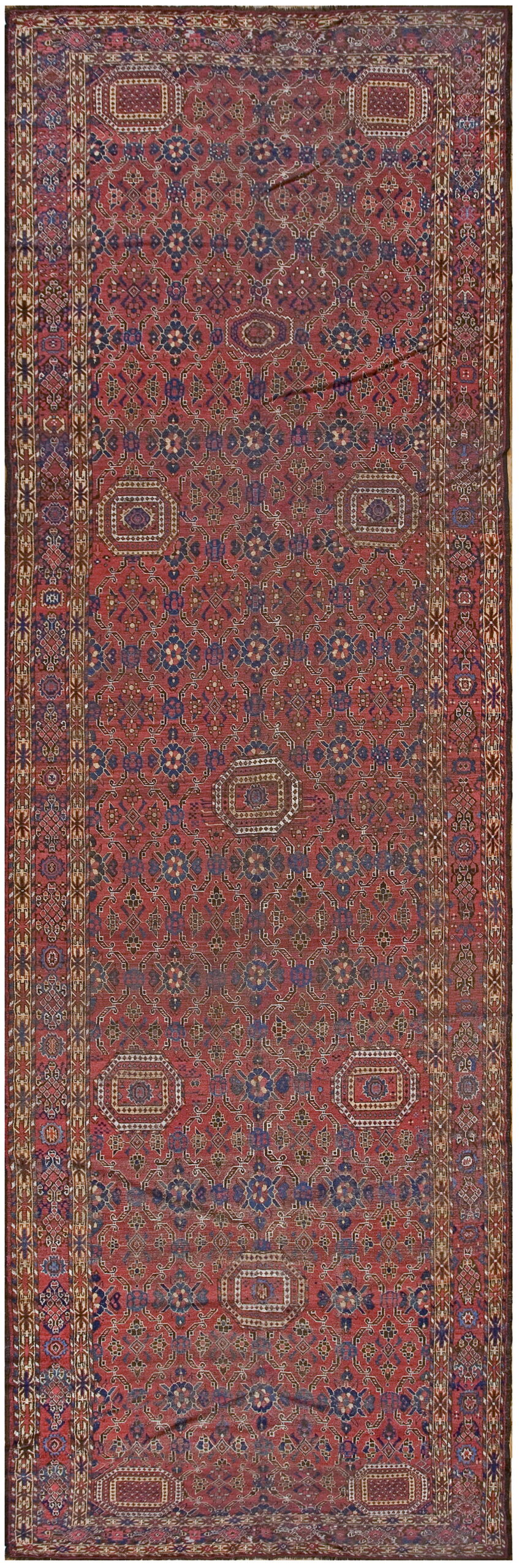
Antique Oversized Ersari – Beshir Central Asian Knotted Rug, Country of Origin: Central Asia, Circa Date: 1850s. This exceptional 19th-century weaving represents the finest nomadic traditions of the region. The specific tribal structure, known as Ersari-Beshir rugs, is characterized by powerful, repeating geometric guls set against rich, saturated grounds, reflecting the artistry of tribes located near the Central Asian borderlands. This piece is a magnificent example of rugs from Central Asia during the mid-Victorian era.
The field is dominated by a stunning, aged madder dye, exhibiting the deep, resonant hues typical of the period. This particular shade, a sophisticated blend of crimson and terracotta, falls into the highly desirable category of coral color rugs. The all-over design features interconnected octagonal and cruciform motifs, meticulously rendered in indigo, cream, and subtle browns, creating a mesmerizing and highly structured visual rhythm across the surface.
Given its impressive scale, this textile functions beautifully as a substantial room size rug, capable of anchoring a grand hall or a long, formal living space. The narrow, elongated format emphasizes the verticality of the repeating pattern, lending an architectural quality to the piece. Beshir weavers were renowned for their ability to maintain precise detail even across such vast expanses, a testament to the skill involved in its construction.
Retaining remarkable color clarity and structural integrity after more than 170 years, this weaving is a superb acquisition for collectors of antique rugs. It offers a tangible connection to the history of Central Asian weaving, combining durable nomadic construction with a highly decorative aesthetic. This piece is a rare, museum-quality textile that transcends mere floor covering, serving instead as a historical statement.
Condition: Good. Rewoven.