
Introduction to Tiger Design Rugs
Discover our complete range of dramatic tiger motif rugs and unleash a bold aesthetic in your home.
What is a Tiger Design Rug?
A tiger design rug, the original, would have been a hand-knotted carpet originating in the Himalayan region, most closely tied to Tibetan culture and Buddhist ritual practice. Unlike generic tiger stripe carpets or mass-produced animal-print designs, these pieces depict a highly stylized representation of a full tiger skin.
Traditional weavers carefully include the defining elements of the pelt: the fierce tiger head, elongated body with bold stripes, and even the limbs and tail. The form is not accidental.
The Tibetan tiger carpet evolved as both an artistic and spiritual object, echoing the revered power of the tiger in Himalayan and Buddhist traditions. While some are woven in rectangular formats, many deliberately mimic the outline of a stretched hide, complete with claws and tail curling into the border.
This direct reference sets the tiger-skin motif apart from generic fashion-driven prints, anchoring it in ritual symbolism and cultural heritage. For centuries, these rugs were used by monks, nobles, and lamas as meditation seats or temple furnishings, where the tiger’s image symbolized protection, fearlessness, and the ability to subdue destructive forces.
Their production has always been limited compared to broader rug traditions, giving them a rare and specialized identity.
Overview of Tiger Design Rug Appeal
- Cultural and Spiritual Depth — Why: A Buddhist tiger rug carries more than visual appeal; it embodies centuries of symbolism linked to protection and enlightenment, making it a meaningful piece for collectors and practitioners alike.
- Distinct Visual Identity — Why: Unlike a simple tiger print, the tiger-skin motif includes the animal’s full form—head, claws, tail, and stripes—resulting in a striking and instantly recognizable design.
- Artistic Craftsmanship — Why: Each Tibetan tiger carpet is hand-knotted, often in wool, with intricate stripe work and bold color contrasts. This artistry makes them valued as both functional textiles and gallery-worthy art pieces.
- Statement Décor — Why: In contemporary interiors, the graphic lines and fierce face of a tiger rug add drama and individuality, creating a centerpiece that blends ancient tradition with modern design sensibilities.
- Collector and Market Value — Why: Because authentic tiger rugs are rarer than many other Asian carpets, and carry an aura of mystique, they hold lasting value in both antique and modern markets.
The fascination with tiger design area rugs rests on this unique intersection of sacred symbolism and dramatic artistry. They are not merely floor coverings or decorative accessories but objects that project power, identity, and cultural memory. The tiger stripe carpet—when authentic—becomes a bridge between Himalayan tradition and contemporary style, ensuring that its legacy continues in homes, galleries, and meditation spaces across the world.
Ultimately, to ask “What is a tiger rug?” is to encounter a textile unlike any other: a woven tiger skin, sacred and fierce, distinct from the endless parade of generic animal-print fabrics.
Its full-bodied form, spiritual resonance, and bold design set it apart as both protector and art piece, as relevant today in modern interiors as it was centuries ago in Himalayan monasteries.
Origin and Symbolism

Tiger design rug motif used in meditation setting.
Historical Origin of Tiger Design Motif Rugs
The origin of tiger design rugs lies in Tibet, where they first appeared as ritual objects for Buddhist lamas. Instead of using real animal pelts, which were both scarce and sacred, Tibetan artisans created hand-knotted carpets that depicted a stylized tiger skin. These woven surrogates preserved the visual and symbolic power of the tiger while avoiding the taking of life.
The earliest known examples date back several centuries and were closely tied to monastic and aristocratic use, serving as meditation seats, temple furnishings, or gifts for high-ranking figures. By reproducing the fierce head, outstretched claws, and bold stripes, these rugs directly echoed the appearance of a flayed pelt—yet they carried the refinement of textile art and the depth of Buddhist meaning.
Spiritual & Tantric Symbolism
In Tibetan Buddhist symbolism, the tiger holds a unique place above other animals. It represents raw power, fearlessness, and the ability to overcome destructive forces. In Vajrayana practice, the image of a flayed tiger skin is especially significant: it symbolizes the conquest of primal instincts, aggression, and fear. To sit upon such a tantric rug is to embody mastery over one’s inner obstacles, transforming wild energy into enlightened awareness.
Other animals do appear in Himalayan art—snow lions, dragons, and garudas—but the tiger is unique for its dual nature: terrifying in the wild, yet protective as a sacred emblem. Its presence beneath a lama or practitioner asserts both spiritual authority and the triumph of discipline over instinct.
This explains why Tibetan rugs feature tiger designs so consistently, while other motifs often serve decorative rather than ritual functions.
Geographic Spread: Tibet, Bhutan, China, Nepal
Although born in Tibet, the Himalayan rug tradition carried the tiger design motif across the wider Buddhist world. In Bhutan, tiger rugs appeared in monastic settings tied to tantric rituals. In Nepal, especially within Tibetan refugee weaving communities, the design flourished in modern production while retaining its spiritual essence.
Chinese workshops, particularly in regions bordering Tibet, produced their own versions, often integrating imperial motifs with the tiger-skin pattern. Even in Mongolia, tiger design imagery found its way into carpets, echoing the broader Vajrayana influence across Inner Asia. Each regional interpretation preserved the symbolic power of the tiger while reflecting local aesthetics and weaving techniques.
Are Tiger Design Rugs Good Luck?
Yes—lucky tiger design carpets are considered deeply auspicious in both spiritual and folk traditions. Within Buddhism, they are believed to ward off evil forces and protect the practitioner from harm during meditation or ritual. Beyond the monastery, households often regarded them as charms of prosperity, strength, and longevity.
The tiger’s fierce stripes were thought to repel misfortune, while its commanding presence invited good fortune. In modern home décor, this aura of protection and vitality continues: many buyers see a tiger rug not only as a dramatic design choice but also as a talisman that radiates courage and luck.
Ultimately, the tiger design rug is far more than a decorative carpet. It is a woven embodiment of Tibetan Buddhist symbolism, a tantric rug that represents fearlessness and transformation, and a lucky tiger carpet whose protective aura has carried from temples into homes across centuries.
Design, Motifs & Identification
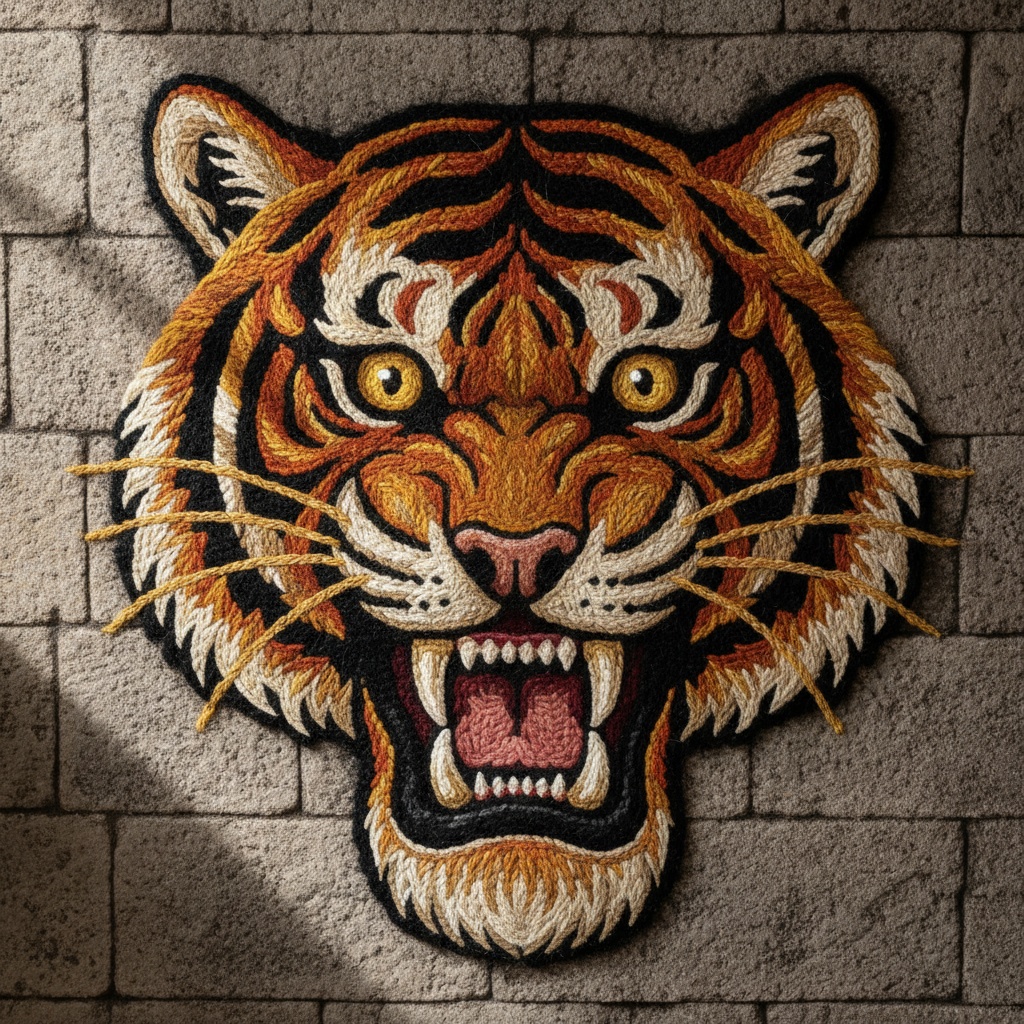
Detailed tiger head motif in textile art.
Visual Features of Authentic Tiger Design Rug Patterns
An authentic tiger design rug is instantly recognizable by its dramatic, stylized imagery. Unlike simple tiger-print fabrics, these rugs present the full outline of a tiger pelt, complete with the animal’s head, paws, tail, and bold stripes. The face is typically fierce, with bulging eyes, bared teeth, and curling whiskers, while the body stretches across the field with rhythmic black stripes against tones of orange, gold, or rust.
This flayed posture is not decorative alone—it is a symbolic stance reflecting Buddhist tantric meaning. Authentic pieces often feature proportionate claws and curled tails that frame the rug’s edges, elements absent in generic animal-pattern carpets. The genuine tiger design motif is therefore not an embellishment but a deeply codified design with sacred associations.
Regional Motif Types
Tiger rugs vary across the Himalayan and East Asian world, reflecting local weaving traditions:
- Tibetan — Compact in scale, often around 3×5 feet, these rugs served as meditation mats. They feature abstracted stripes, stylized faces, and bold, contrasting colors created with natural dyes. The use of the Tibetan knot technique gives them a unique, dense texture.
- Chinese — Often larger and more realistic, Chinese tiger carpets emphasize naturalistic stripes, softer facial details, and broader compositions. They may blend imperial motifs with the tiger-skin form, reflecting both Buddhist and courtly symbolism.
- Nepalese — Particularly among Tibetan refugee weavers, Nepalese tiger rugs balance tradition with modern export appeal. They may feature brighter palettes or stylized variations, but the essence of the tiger-skin motif remains.
- Bhutanese — Rarer, but deeply tied to monastic traditions, Bhutanese tiger design rugs lean toward bold, graphic interpretations of the tiger, reflecting the country’s strong tantric heritage.
These regional differences help scholars, collectors, and decorators place a rug within its cultural context and assess authenticity.
How to Identify a Genuine Tiger Design Area Rug:
- Check for full-body iconography — Why: A true authentic tiger design rug shows the entire tiger—head, claws, and tail—not just stripes. This distinguishes it from ordinary animal-print textiles.
- Examine dyes — Why: Vintage pieces use natural dyes that produce soft oranges and golds, while synthetic dyes in modern rugs create unnaturally bright tones.
- Look at construction — Why: The Tibetan knot is a hallmark of authenticity, producing a dense, durable pile; machine-tufted rugs lack this hand-crafted quality.
- Inspect the wool — Why: Hand-spun wool with slight irregularities signals a genuine origin, whereas machine-made fibers appear overly uniform.
- Note proportions and size — Why: Many genuine tiger rugs are small meditation mats, often in the 3×5 ft range, reflecting their ritual use.
These markers are essential for identifying tiger rugs and separating authentic heritage pieces from decorative imitations.
Vintage vs. Modern Reproductions
Vintage tiger design carpets—often from the 19th century—display the hallmarks of natural dyeing, subtle striping, and softened edges from age and hand-spun yarn. Their palette tends toward earthy orange, muted gold, and deep brown, with a tactile quality that modern reproductions rarely capture.
By contrast, modern tiger design area rugs may rely on synthetic dyes that produce electric hues, sharper outlines, and less nuanced shading. Some contemporary versions remain hand-knotted, but others are machine-tufted or mass-produced, sacrificing the symbolic fidelity of the genuine tiger design motif for commercial appeal.
While these rugs can serve as bold décor, they lack the spiritual depth and craftsmanship of an authentic Himalayan piece. In sum, the difference between a vintage tiger carpet and a reproduction lies not only in age but in materials, methods, and meaning. Authenticity shines through in natural dyes, hand-spun wool, and the unmistakable density of the Tibetan knot—features that make a true tiger rug stand apart from generic animal prints or factory-made imitations.
Materials and Construction
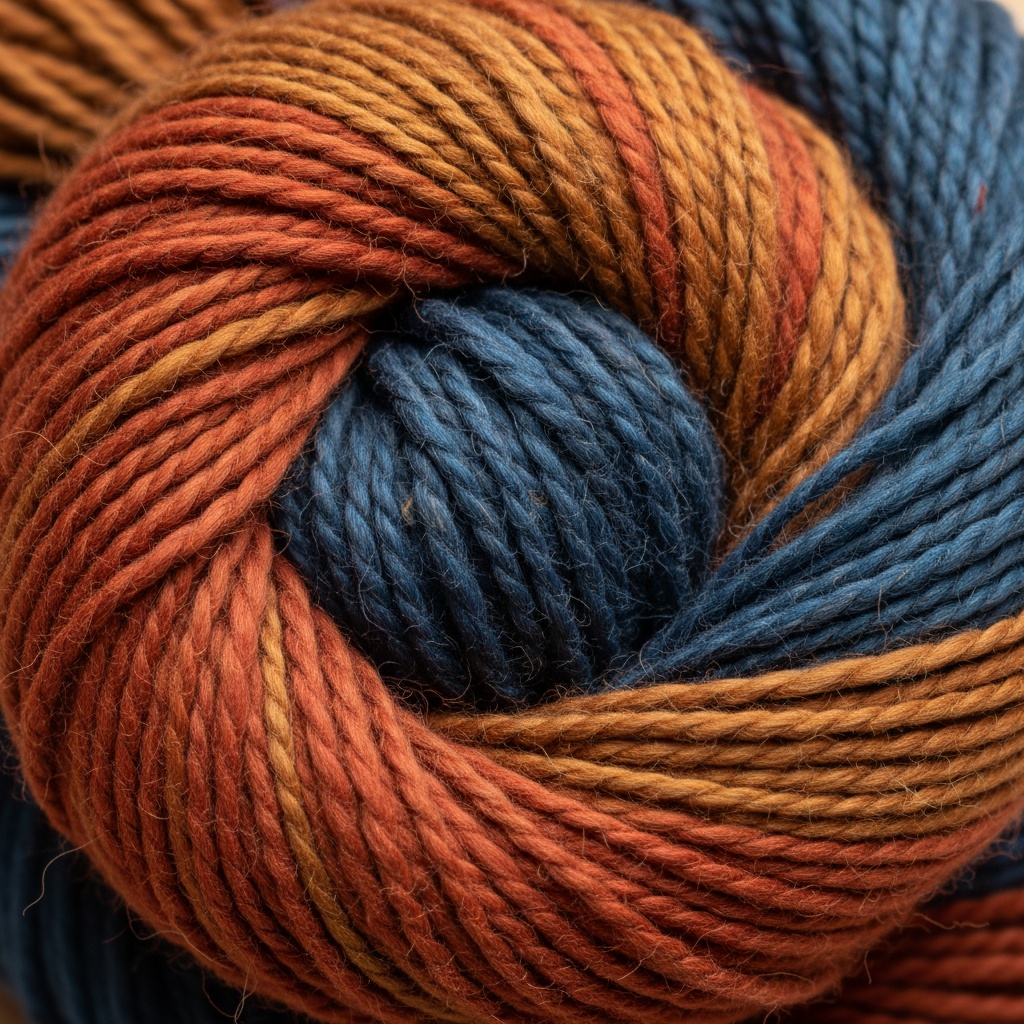
Variegated yarn showing material texture and color transitions.
Traditional Materials Used
The foundation of a traditional hand-knotted tiger design area rug is wool—most often sheep’s wool sourced from the Tibetan highlands. This wool is highly prized for its long fibers and natural lanolin content, which make it both soft and exceptionally durable. Hand-spun yarns add subtle irregularities that enrich the rug’s texture and authenticity.
Early tiger design rugs were dyed with natural materials such as madder for red-orange tones, indigo for blues, and various plant extracts for golden or brown shades. Only in later periods did synthetic dyes appear, introducing brighter colors but often reducing the subtle depth seen in vintage examples. Thus, when asked “What materials are traditional tiger rugs made from?” the answer is clear: hand-spun Tibetan wool, naturally dyed, and woven with spiritual precision.
Construction Methods
The defining technique of a Tibetan knot sets tiger rugs apart from other Asian carpets. Unlike the Persian or Turkish knot, the Tibetan knot involves looping yarn around a rod and then cutting it, producing a dense yet plush pile. This method allows for bold, graphic striping while keeping the rug durable for daily use.
Knot density is moderate, balancing clarity of motif with strength of structure. Traditional dyes, whether vegetable or mineral-based, enriched the design with deep, organic tones that softened beautifully over time. Together, the knotting method, material choice, and dye traditions embody the cultural and practical artistry behind the wool tiger design carpet.
Durability of Wool Hand-Knotted Rugs
A hand-knotted tiger design rug made from Tibetan wool is remarkably durable. The natural resilience of the fibers, combined with the dense construction of the Tibetan knot, makes these rugs suitable for daily use—even in high-traffic areas.
The lanolin content of the wool also gives the rug natural stain resistance, helping it withstand wear while retaining its luster.
In short, “How durable are wool hand-knotted tiger rugs?”—they are built to last generations when properly cared for.
Knot Density & Value
Knot density often comes up in rug evaluation. In tiger rugs, higher density usually allows for more detailed striping, sharper facial features, and finer shading. Collectors often associate this with greater value. However, moderate density is typical for Tibetan examples and should not be mistaken for lower quality.
The spiritual meaning, wool quality, and authenticity of the Tibetan knot matter just as much as knot count. So while knot density can affect the precision of a design and influence market price, it is not the sole determinant of a tiger rug’s value.
Wool-Silk Blend & Sheen
Some tiger rugs incorporate silk alongside wool, creating a wool-silk tiger rug. The addition of silk increases the rug’s sheen and highlights design details such as stripes or facial features.
This luxurious touch appeals to collectors and modern decorators alike, as the interplay of matte wool and shimmering silk brings depth to the tiger design motif.
To answer directly: “Does a wool-silk blend enhance a tiger design motif’s sheen?”—yes, it does, adding refinement and subtle brilliance to the overall composition.
Modern Production: Tufted & Digitally Printed
Contemporary markets also produce tufted tiger rugs, where wool or synthetic yarns are punched into a backing with a mechanized tool. These rugs can mimic the look of traditional designs but lack the structural integrity of hand-knotted construction.
Their loop or cut pile may flatten quickly, making them less durable. Even further removed are printed tiger design carpets, which use digital printing to apply motifs onto a textile surface. While affordable and visually bold, these are purely decorative and not built for heavy foot traffic.
So, “Are digitally printed tiger carpets durable for high-traffic areas?”—no, they are best suited for low-use or decorative spaces. In every case, the choice of material and method defines both the look and lifespan of a tiger rug. From the resilience of Tibetan wool and the artistry of the Tibetan knot to the shimmering elegance of silk blends and the compromises of tufted or printed versions, construction tells the story of value, meaning, and durability.
Style, Placement & Pairing
Interior Design Uses
A tiger design rug in decor functions as more than a floor covering—it is a bold artistic statement. Traditionally, tiger rugs were used as meditation mats in temples and homes, but in contemporary interiors they have expanded into versatile roles. They work beautifully as entryway accents, bedside rugs that energize a private space, or focal points in a living room where their fierce face and flowing stripes command attention.
In small apartments, even a compact meditation-sized rug can serve as a dramatic statement rug, while larger reproductions bring scale and grandeur to modern interiors. Their striking design ensures they never disappear into the background, instead serving as both art piece and cultural anchor.
Pairing Tiger Stripe Design Rugs with Minimalist Interiors
- Creates Striking Contrast — Why: A minimalist tiger rug introduces bold patterning into otherwise neutral, pared-back rooms, providing immediate visual drama without clutter.
- Adds Color and Energy — Why: Against white or gray interiors, the orange, gold, and black stripes inject warmth and vibrancy, enlivening a restrained palette.
- Introduces Cultural Intrigue — Why: Beyond aesthetics, a tiger rug carries Himalayan symbolism, lending depth and meaning to minimalist spaces that thrive on carefully chosen, conversation-worthy elements.
- Defines Space with Character — Why: In open-plan interiors, a statement rug with tiger stripes anchors specific areas (reading corners, entryways) while maintaining the overall clean aesthetic.
Thus, to answer “Can tiger stripe design rugs be paired with minimalist interiors?”—absolutely. Their dramatic presence can be balanced with simplicity elsewhere, resulting in interiors that are both modern and culturally rich.
Custom Colors and Cultural Authenticity
Designers sometimes experiment with custom color tiger carpets, replacing the classic orange, gold, and black with blues, pinks, or monochrome palettes. These adaptations can make the motif more adaptable to contemporary trends, aligning with specific interiors or personal style.
However, the question arises: “Can custom colors in tiger designs preserve cultural authenticity?” While creative palettes have design value, authenticity is most closely tied to the traditional color scheme, which reflects the tiger’s natural symbolism and Buddhist meaning.
A pink or teal tiger rug may function as a stylish statement, but it departs from the sacred resonance of the orange-and-black original. Collectors and traditionalists usually favor the classic hues, while modern decorators may embrace experimentation for visual effect.
Common Sizes and Shapes
Historically, most tiger rugs were produced as small mats, around 3×5 feet, designed for meditation seating. These compact forms remain the most authentic and collectible. However, with growing global demand, workshops now produce a range of sizes: elongated runners for hallways or alongside beds, and larger rectangular rugs intended for living rooms or open spaces.
While traditionalists value the intimate mat size, larger statement rugs extend the tiger design motif into grand interiors, ensuring that the sacred design adapts to modern lifestyles without losing its visual power. The versatility of the tiger rug lies in this balance—sacred origin, bold design, and adaptability.
Whether placed at the foot of a bed, in a stark modern living room, or in vibrant custom colors, the tiger rug continues to command attention, linking contemporary interiors with Himalayan tradition.
Buying Guide: Market, Pricing, and Value
Price Range for Antique, Vintage, and Modern Tiger Rugs
When considering a purchase, it is essential to understand the wide spectrum of tiger design rug prices:
- Antique Tibetan tiger rugs (19th century and earlier) — $10,000 to over $100,000 at auction. — Why: Their rarity, spiritual significance, and historical provenance make them highly sought after by collectors and museums.
- Vintage 20th-century examples — $2,000 to $10,000. — Why: Quality varies, but natural dyes, hand-spun wool, and clear motifs ensure enduring appeal without the astronomical premiums of antiques.
- Modern artisan hand-knotted rugs — $1,000 to $5,000. — Why: Produced in workshops in Nepal, Bhutan, or Tibet-in-exile communities, these combine traditional techniques with sustainable sourcing.
- Mass-market tufted or printed versions — $200 to $1,000. — Why: Affordable options for décor, but lacking the craftsmanship, durability, and spiritual depth of authentic hand-knotted pieces.
To answer directly: “What price range should I expect for antique Tibetan tiger rugs?”—between $10,000 and $100,000+, depending on condition, origin, and provenance.
Common Price Tiers for Designer and Collector Rugs
In the contemporary market, designer tiger rugs fall into distinct tiers:
- Emerging artisan designers — $1,500–$3,000, often handmade but with contemporary palettes or stylized interpretations.
- High-end collectors’ rugs — $5,000–$15,000, typically wool-silk blends, natural dyes, and limited runs.
- Museum-quality reproductions — $20,000+, particularly when commissioned by leading studios or linked to exhibitions.
Thus, “What are common price tiers for contemporary designer tiger rugs?”—from a few thousand dollars for artisan hand-knotted carpets to five figures for limited-edition collector pieces.
Where to Buy Ethically Sourced Tiger Design Rugs
For those concerned with sustainability, ethically sourced tiger rugs can be found through:
- Certified artisan workshops — Why: Ensure fair wages, traditional methods, and transparent sourcing.
- Refugee-run weaving centers in Nepal and India — Why: Provide direct livelihood to displaced Tibetan communities while maintaining cultural authenticity.
- Fair-trade dealers and accredited rug cooperatives — Why: Guarantee rugs are made without exploitative labor and with sustainable materials.
To answer “Where can I buy ethically sourced tiger design rugs?”—look for GoodWeave-certified dealers, refugee cooperatives, or established fair-trade rug importers.
Verifying Provenance for Museum-Quality Rugs
Provenance is essential in establishing the authenticity and antique tiger carpet value of museum-worthy pieces:
- Dealer documentation and sales records — Why: Provide verifiable ownership history.
- Auction house catalogues (Sotheby’s, Christie’s, etc.) — Why: Establish authenticity through expert vetting.
- Museum references or published studies — Why: Connect specific carpets to academic or institutional recognition.
- Expert appraisals — Why: Confirm knotting style, dyes, and age.
Thus, “How to verify provenance on a museum-quality tiger rug?”—always seek transparent documentation backed by reputable institutions or certified experts.
Should You Invest in Rare 19th-Century Chinese Tiger Rugs?
Yes, but with caution. Rare Chinese tiger rugs from the 19th century can command high returns because of their unique blend of imperial symbolism and Buddhist imagery.
However, the market is highly specialized. Expertise is required to distinguish authentic examples from later reproductions, and provenance is critical. For seasoned collectors, investing in tiger rugs of this caliber can be rewarding, but newcomers are advised to work with experienced dealers or auction houses before committing.
Restoration and Resale Value
Professional restoration can stabilize and preserve a rug, often maintaining its market value. Small repairs to edges or minor reweaving using traditional methods typically do not diminish worth. However, excessive intervention—such as aggressive re-dyeing, synthetic patching, or altering the original design—can reduce collector interest.
The key point: “How does restoration impact the resale value of tiger rugs?”—sympathetic repairs preserve value, but over-restoration lowers authenticity and thus market demand. In today’s market, tiger rugs range from affordable decorative pieces to six-figure collectibles.
Whether seeking a buy tiger design rug for contemporary décor or a museum-quality treasure with verifiable provenance, the buyer must balance budget, authenticity, and ethical considerations. Ultimately, the combination of materials, knotting, age, and provenance determines whether a piece is a stylish statement rug or a once-in-a-lifetime investment.
Legacy, Contemporary Trends & Cultural Impact
Timeline: Monastic Roots to Modern Decor
The tiger rug legacy begins in Tibetan monasteries, where the motif served as a sacred meditation seat for lamas. Its flayed form symbolized tantric conquest over primal instincts and fear.
By the 19th and early 20th centuries, these carpets were circulating beyond temples, admired by collectors, explorers, and scholars. In the mid-20th century, Tibetan refugees carried weaving traditions into Nepal and India, ensuring survival of the craft. By the late 20th century, tiger rugs began appearing in auctions and Western collections, cementing their place as art objects.
To answer “When did tiger print rugs become popular in Western homes?”—they gained wider popularity from the 1960s onward, when Himalayan rug exports grew, and surged again in the 1980s–1990s as interior designers embraced bold statement pieces. Today, the contemporary tiger carpet functions not only as ritual textile but as global design icon.
Tiger Rugs in Fashion and Design
Far from remaining confined to the floor, the tiger design motif has found its way into fashion, graphic design, and furniture. Designers reinterpret the tiger rug in fashion through prints on clothing, accessories, and home textiles, while contemporary interior designers incorporate them as striking statement rugs in minimalist or eclectic spaces.
Their bold stripes resonate with modern aesthetics that value graphic clarity and cultural depth. Limited-edition collections and collaborations between rug workshops and design houses ensure that the motif remains relevant, bridging the gap between Himalayan tradition and cosmopolitan style.
Artistic Reinterpretations and Conservation Messaging
Modern artists have embraced the tiger design rug not only as an aesthetic motif but also as a canvas for environmental advocacy. The tiger conservation rug has emerged as a symbol linking cultural tradition with wildlife preservation.
Exhibitions highlight the rug as a metaphor: the woven tiger skin reminds viewers of the endangered animal itself, urging protection of real tigers in the wild. These reinterpretations blend reverence for tradition with contemporary urgency, giving the motif a dual role as art and activism.
Cultural Preservation, Workshops, and Future Trends
Efforts to sustain this cultural preservation are ongoing. Workshops in Nepal, Tibet, and India produce hand-knotted tiger design rugs using traditional methods, often under fair-trade or refugee-run initiatives. These enterprises protect the craft while supporting livelihoods, ensuring that artisans are compensated ethically.
Museums, collectors, and publications further reinforce the tiger rug’s value, showcasing them in exhibitions and maintaining their visibility at major auctions. Looking ahead, the tiger rug’s future rests on balancing authenticity with adaptation.
Younger weavers experiment with new color palettes and larger formats for contemporary interiors, while heritage-minded workshops preserve the traditional orange-and-black scheme. Both streams sustain the tradition—one by honoring cultural fidelity, the other by ensuring relevance in a changing global design market.
The contemporary tiger design carpet thus continues to evolve: sacred in origin, fashionable in design, symbolic in conservation, and enduring in craftsmanship. Its ability to shift between monastery, gallery, runway, and living room secures its place as one of the most versatile and powerful textile motifs of the Himalayan world.
Explore Some of Our Favorite Tiger Design Rugs
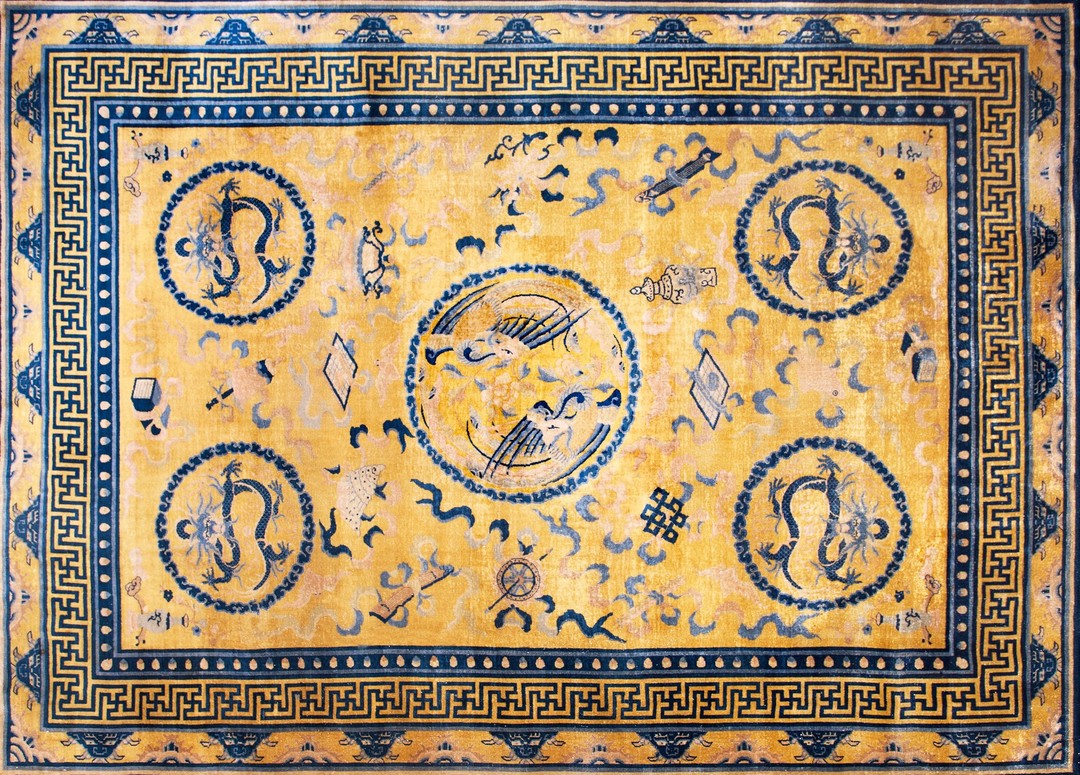
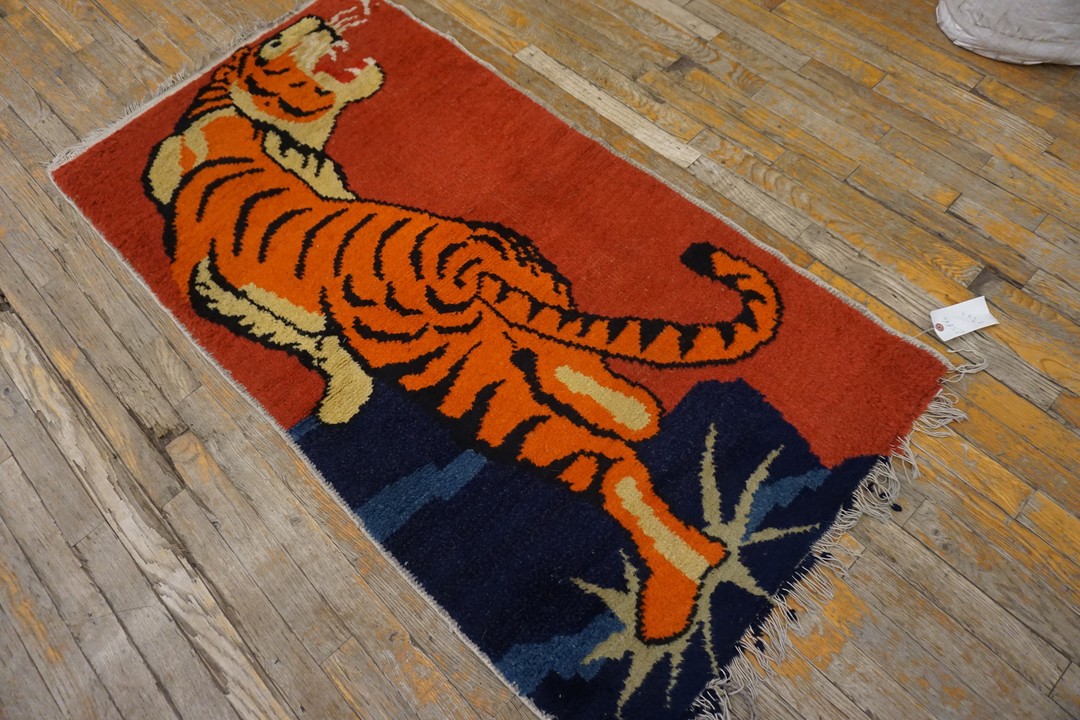
FAQ
- Where can I buy tiger-motif rugs in the US?
Look to specialty Asian-rug dealers, auctions, and reputable online galleries. Hand-knotted pieces from Nepal/Tibet often carry GoodWeave labels; antiques require condition reports.
- How can I verify an older tiger rug’s authenticity?
Check structure (hand-knotted back, integral fringe), look for age-consistent wear and natural dye nuances, and ask for provenance or auction records.
- How should I store a tiger rug?
Clean, dry, then roll pile-in and wrap in breathable cotton or acid-free paper. Store in a cool, dry space with cedar or lavender; avoid plastic.
- Can I use a tiger rug outdoors?
Not if it’s wool—moisture and UV will damage it. For patios, choose tiger-pattern polypropylene or PET; hose-clean and let dry fully.
- Where do tiger rugs look best?
Use pelt-shapes as accents (entry, bedside) and larger stripes to anchor living rooms. In small rooms, a 3×5 can create a bold focal point without crowding.
- How do I size a tiger rug for dining rooms?
Let the rug extend 24–30 inches beyond the table on all sides so chairs stay on the rug when pulled out. Low-pile weaves clean easiest under dining.
- What’s the difference between Tibetan and Chinese tiger rugs?
Tibetan examples often served as meditation seats with bold stripes or pelt shapes; Ningxia pieces include temple/palace formats and classic saffron-and-blue palettes.
- Is buying a tiger rug cultural appropriation?
These are long-standing Tibetan and Chinese motifs. Buy respectfully—seek artisan-made pieces and labels like GoodWeave to support ethical production and avoid real animal skins.
- Are tiger rugs family- and pet-friendly?
Yes—choose low/medium-pile wool for resilience and pattern camouflage. Add a quality pad to prevent slips and consider darker grounds to hide stains.
- Do tiger rugs fade in sunlight?
All rugs can fade. Rotate every 3 months, use UV-filtering film or shades, and keep bright areas out of direct midday sun.
- What rug pad should I use under a tiger rug?
Felt + natural rubber gives cushion and grip. Choose a pad 1–2 inches smaller than the rug; 1/8–1/4-inch thickness suits most rooms and door clearances.
- Will robot vacuums snag tiger-rug fringes?
They can. Use no-go zones or “carpet avoidance” settings, tuck or tape fringes under, and run lower suction to prevent tangles.
- Are tiger rugs safe over radiant floor heating?
Yes with the right pad—choose a thin, heat-rated felt/rubber pad and avoid thick foam. Lower R-value pads transfer heat better.
- Can I machine-wash a tiger rug?
Generally no for wool or hand-knotted pieces—excess water can cause dye bleed or damage backing. Spot clean, then use a professional when in doubt.
- How should I clean a wool tiger rug?
Blot spills immediately with water and mild detergent after a quick dye-stability test. For deep care, schedule professional cleaning every 12–18 months.
- Do wool tiger rugs shed?
Some shedding is normal for the first few months. Vacuum weekly with suction-only (no beater bar), and avoid over-vacuuming to reduce fiber loss.
- Which materials work best for tiger rugs?
Wool is the classic choice—durable, naturally flame-resistant, and lanolin-rich to help repel spills. Silk accents add sheen but suit low-traffic areas.
- How can I tell hand-knotted from hand-tufted tiger rugs?
Hand-knotted backs mirror the front and have woven fringes; tufted rugs have a canvas/latex backing. Knotted rugs can last decades; tufted pieces often 5–10 years.
- How much do tiger rugs cost?
New hand-tufted styles start at low hundreds; hand-knotted often run \$800–\$3,000+ for 3×5. Antique Tibetan pieces vary widely, from about \$5,000 to £30,000+ at sales.
- Are tiger rugs legal to buy in the US?
Yes—when they’re wool designs. Real tiger skins are generally illegal to trade under CITES/ESA. If in doubt, ask sellers for written provenance and permits.
- What sizes do tiger rugs come in?
Traditional throne/sleeping rugs are roughly 3×5 ft; modern weavers offer 4×6, 6×9, 8×10, and runners. Measure so furniture front legs rest on the rug in living rooms.
- What types of tiger designs exist?
Three common types: abstract stripes, full “pelt” shapes with legs and head, and centered tiger heads. All appear on rectangular seat rugs and larger area rugs.
- Where did tiger rugs originate?
The best-known examples come from Tibet and China’s Ningxia region, with designs documented from the 18th–19th centuries and revived today in Nepal and India workshops.
- What do tiger motifs symbolize in rugs?
In Tibetan Buddhism they signify courage, protection, and energy; in Qing-era China they also signaled status and power. Many were used as meditation mats for lamas.
- What is a tiger rug motif?
A rug featuring tiger-stripe, pelt, or tiger-head designs—most famously Tibetan and Chinese styles—not an actual animal skin. Traditional khaden seat rugs measure about 3×5 feet.