
Introduction to Cupids and Cherubs in Rug Design
Explore our romantic selection and shop our Cupids Cherubs Tapestries Rugs to infuse your home with neoclassical charm.
Defining Cherub and Cupid Motifs
In rug design, cherubs and cupids are often depicted together, yet they originate from different traditions. A cherub rug motif draws from the biblical “cherubim,” once envisioned as powerful and awe-inspiring angels. Over time, in European art, the cherub softened into the image of a childlike angel, often plump and innocent, symbolizing purity and divine protection.
A cupid rug pattern, on the other hand, comes from Roman mythology. Cupid, the god of love, is usually portrayed as a mischievous winged boy armed with a bow and arrows to stir affection. While both figures share the visual form of winged infants, their meanings diverge: cherubs lean toward spiritual and protective associations, while cupids emphasize romance and desire.
Adding to the mix are putti in art—an Italian term for chubby, winged children used broadly in Renaissance and Baroque decoration.
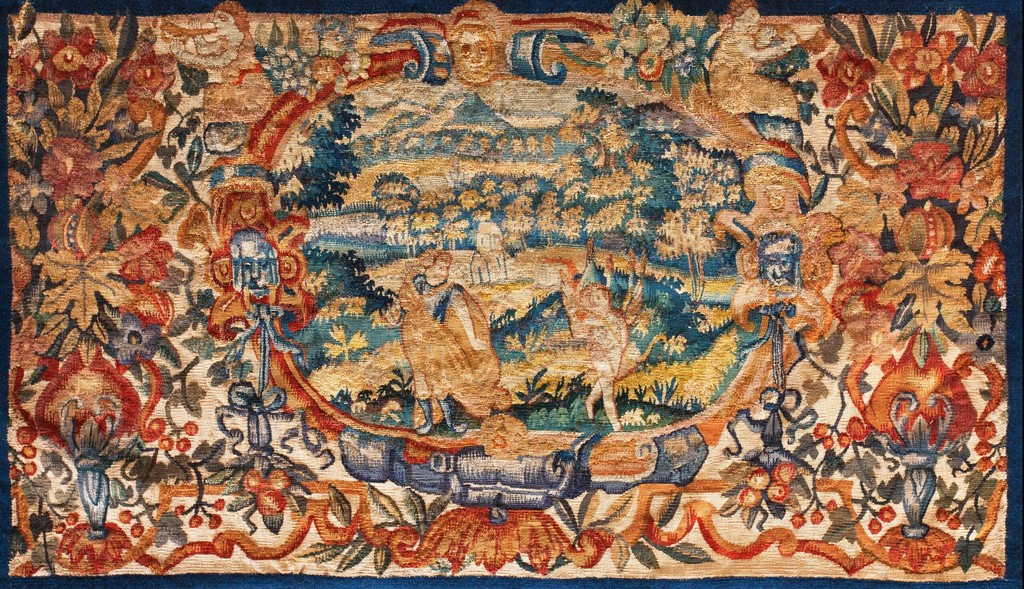
Small Size Wool & Silk Antique 17th Century Wall Hanging Flemish Tapestry by Rugs On Net
Putti are not specifically divine or mythological; they can symbolize playfulness, joy, or general innocence. In classical rug designs, these three figures—cherub, cupid, and putti—are sometimes blended, creating a rich but layered decorative vocabulary.
Origins and Symbolism Of Cupids in Textile Art
- Renaissance beginnings — Why: Cherubim, cupids, and putti first appeared in European tapestry and carpet workshops during the Renaissance, when artists drew inspiration from classical antiquity and Christian iconography.
- Baroque and Rococo flourish — Why: The Rococo period amplified these motifs, celebrating romance, playfulness, and divine light through swirling, ornate rug and textile designs.
- Cultural crossovers — Why: The motifs bridged sacred and secular art, making their way into textiles not just as biblical references but also as symbols of love and domestic harmony.
- Symbol of protection and affection — Why: In rug art, these winged infants often represented guardianship over the home, while also adding romantic and joyful undertones to interior design.
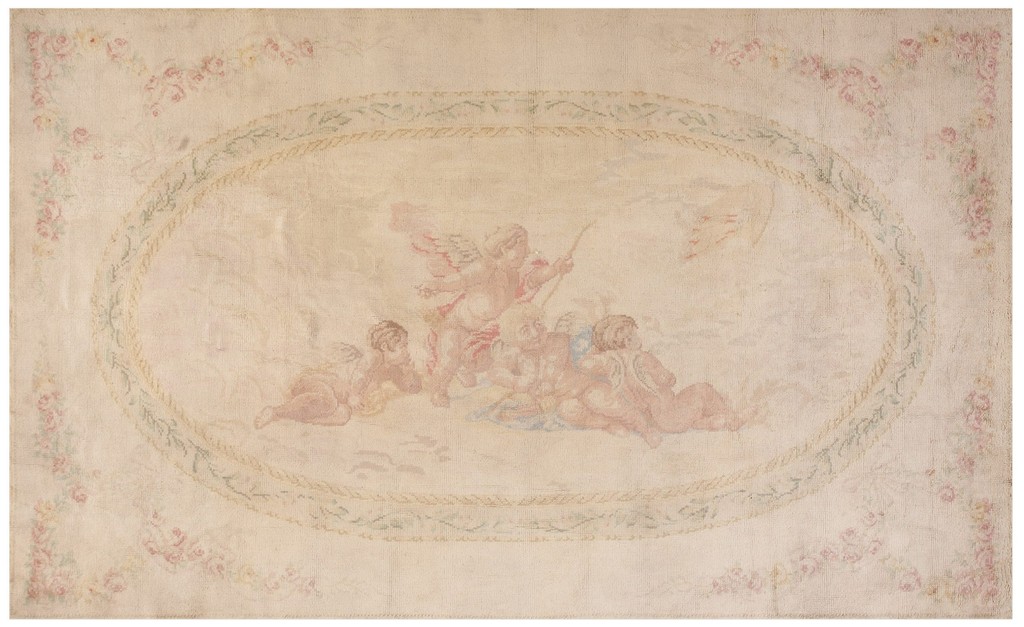
Antique Savonnerie French Floral, Medallion Knotted Rug by Rugs On Net
Key Terms: Cherub, Cupid, Putti, Rococo
- Cherub: Once fierce protectors in scripture, later softened into angelic children symbolizing purity in visual arts and textile design.
- Cupid: The Roman god of love, identified by bow and arrows, symbolizing romance, desire, and affection.
- Putti: Italian for plump, childlike figures, often winged, widely used in European decorative arts; sometimes conflated with cherubs and cupids.
- Rococo: An 18th-century decorative style characterized by ornate, swirling patterns, pastel colors, and playful motifs, where cherubs and cupids were frequently central figures.
The introduction of cherubs and cupids into rug weaving underscores how textile art borrowed from larger artistic movements. Their presence represents both cultural symbolism and cross-media influence, bridging the sacred aura of angels with the playful energy of classical myth.
In today’s interiors, these motifs remain powerful emblems of romance, innocence, and timeless beauty.
Historical Development and Geographic Spread
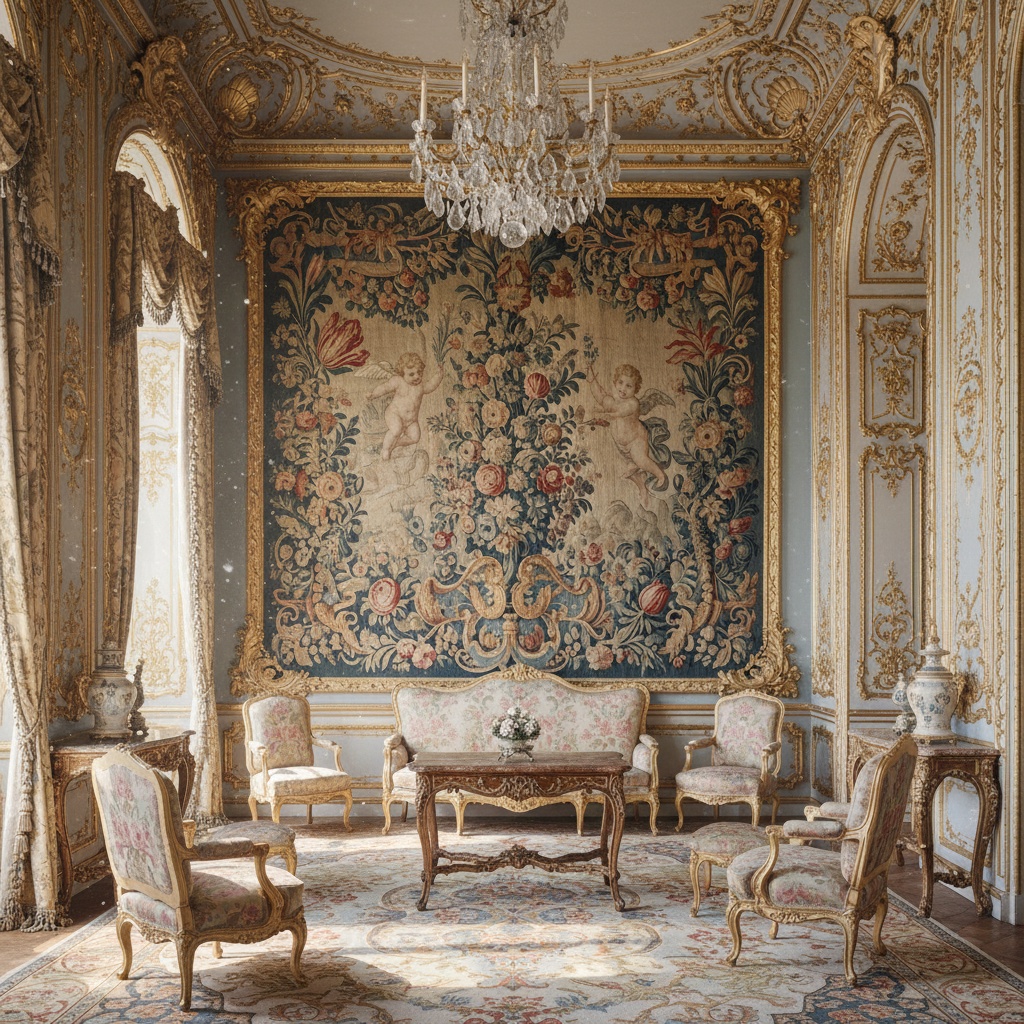
Rococo interior showcasing tapestry motifs popular in European design.
Early Use in Renaissance and Baroque Europe
The history of cupids and cherubs in rugs begins in Europe during the Renaissance, when textile workshops translated the artistic fascination with angelic and mythological figures into woven form. By the 16th century, Spanish Renaissance carpets and large-scale Renaissance tapestry with cupids depicted cherubs and putti alongside floral scrolls and allegorical figures.
These designs were meant for aristocratic and royal settings, reinforcing themes of divine protection and romantic grandeur. The real flourishing came with the French workshops of Savonnerie and Aubusson, which from the 17th to 18th centuries specialized in weaving Rococo cherub carpets.
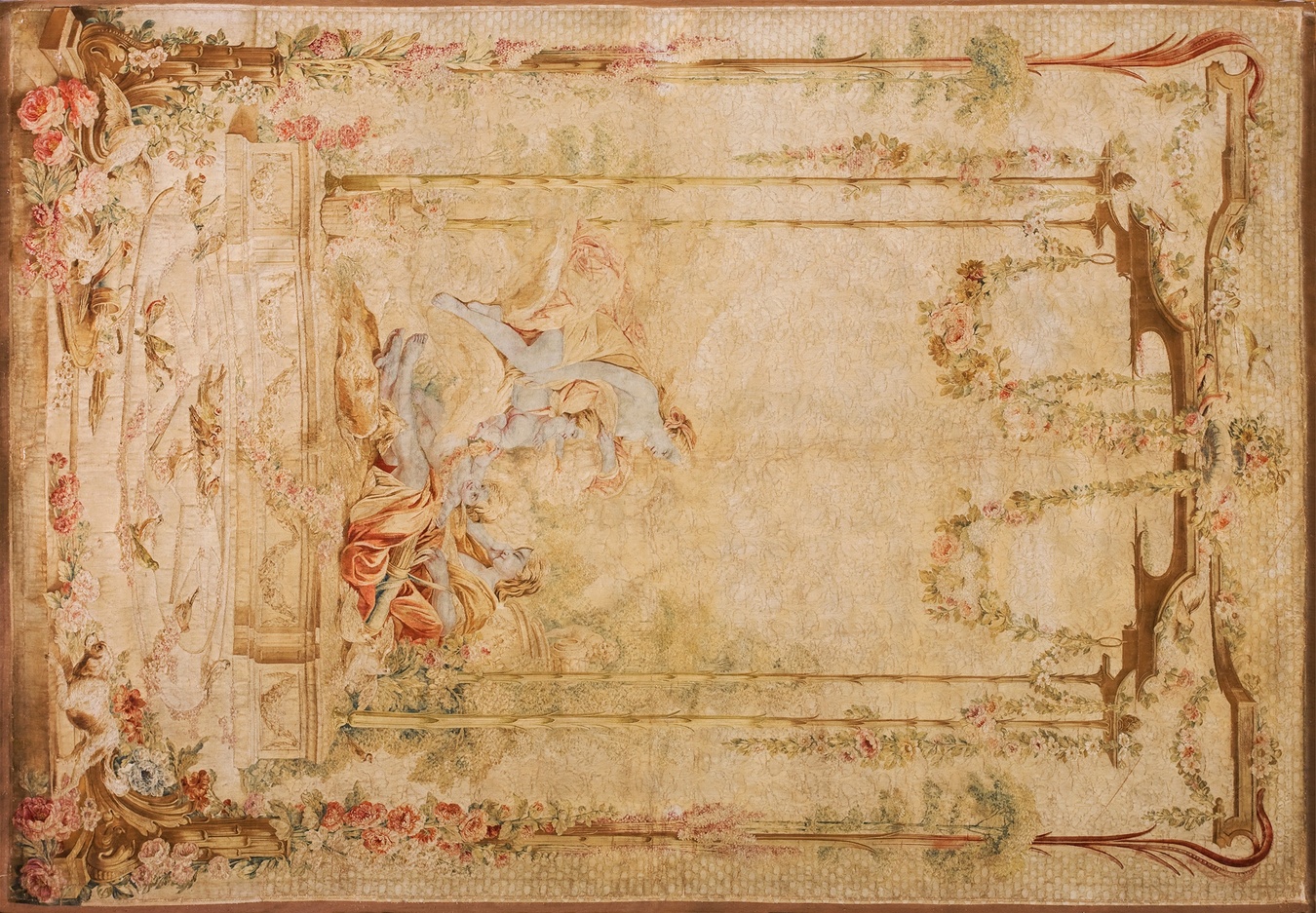
Antique Tapestry French Ivory 1750s Rug – by Rugs On Net
These productions combined ornate scrollwork, pastel palettes, and playful cupid figures, making them symbols of elegance in the salons of Louis XIV and Louis XV. The earliest weavers to incorporate cupids into tapestry carpets were thus the elite European ateliers that catered directly to courts and noble households.
Entry into Persian and Oriental Rug Weaving
The adoption of cherubs and cupids into Persian weaving marks one of the clearest examples of cross-cultural exchange in textile history. By the 19th century, Kerman pictorial rugs began to feature European-inspired cherubic figures, introduced through trade and the growing demand for export pieces that appealed to Western buyers.
Persian weavers reinterpreted the imagery with their own artistry, often blending cherubs into lush floral borders or palace scenes. This shows that cherub imagery entered Persian carpet weaving not organically but through commercial adaptation, as merchants sought to meet European tastes while still maintaining the finesse of traditional Oriental craftsmanship.
Rococo, Neoclassical, and Victorian Evolution
After the Rococo period, which remains the best-known style for cupids and cherub-themed carpets, the motif adapted into other design eras. In the Neoclassical age, cupids and cherubs appeared in more restrained, symmetrical layouts, reflecting classical revival ideals.
During the Victorian era, the motif experienced a revival in decorative textiles, often paired with floral garlands and allegorical portraiture. These shifts show that while the visual style of cherubs evolved, their symbolic role as emblems of love, innocence, and romantic nostalgia endured across centuries of rug production.
Global Adoption: France, Persia, India, and Others
- France — Why: The Savonnerie and Aubusson manufactories established cherubs and cupids as icons of Rococo textile art, setting the global standard for aristocratic taste.
- Persia (Kerman) — Why: Local weavers adopted cherubic motifs in the 19th century for export markets, blending Western romantic imagery with Oriental craftsmanship.
- India — Why: Under colonial patronage, workshops produced Indo-Aubusson cherub rugs that mimicked French designs, destined for European clientele.
- Other regions — Why: The motif spread wherever European influence was strong, from Italy’s tapestry tradition to later adaptations in revivalist carpets across Britain and beyond.
When did cupid designs become popular on rugs? They became fashionable in the 16th–17th centuries with European tapestries and carpets, achieving their height in Rococo France.
Where are cupids and cherub-themed rugs traditionally produced? The tradition centers on France, Persia (Kerman), and India (Indo-Aubusson), with early roots in Spain. Ultimately, cupids and cherubs in rug art reflect both elite European tastes and the global diffusion of decorative symbolism through trade and cultural exchange.
Design Features of Cherub and Cupid Rugs
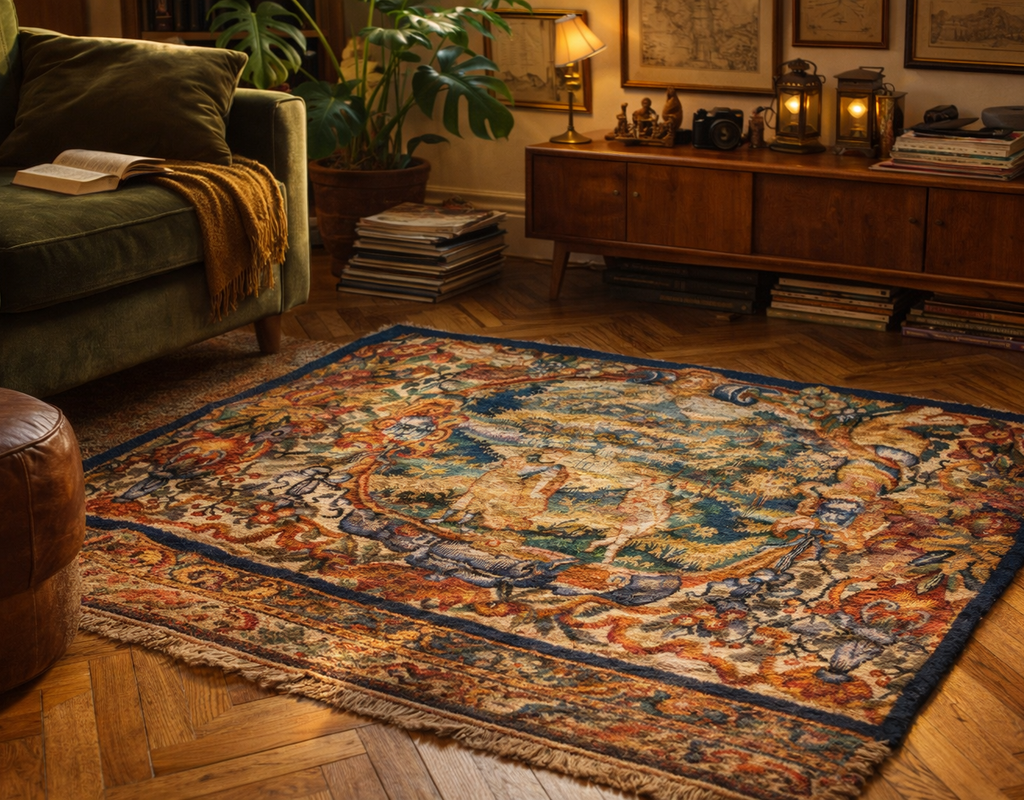
A richly patterned, colorful rug anchors a warm and layered living room design.
Woven cherub design detail with bow and arrows
Cupids Visual Characteristics: Iconography, Poses, Settings
Identifying cherub motifs and cupids in rugs requires careful attention to detail. Cherubs are almost always shown as plump, winged infants, often carrying garlands, trumpets, or wreaths—objects that symbolize celebration or divine presence.
Cupids, while visually similar, are distinguished by their bow and arrows, the classic markers of romance and desire. In many rugs, these figures appear in pairs or small groups, reclining on clouds, frolicking in gardens, or framed by scrolling acanthus leaves and floral ornament.
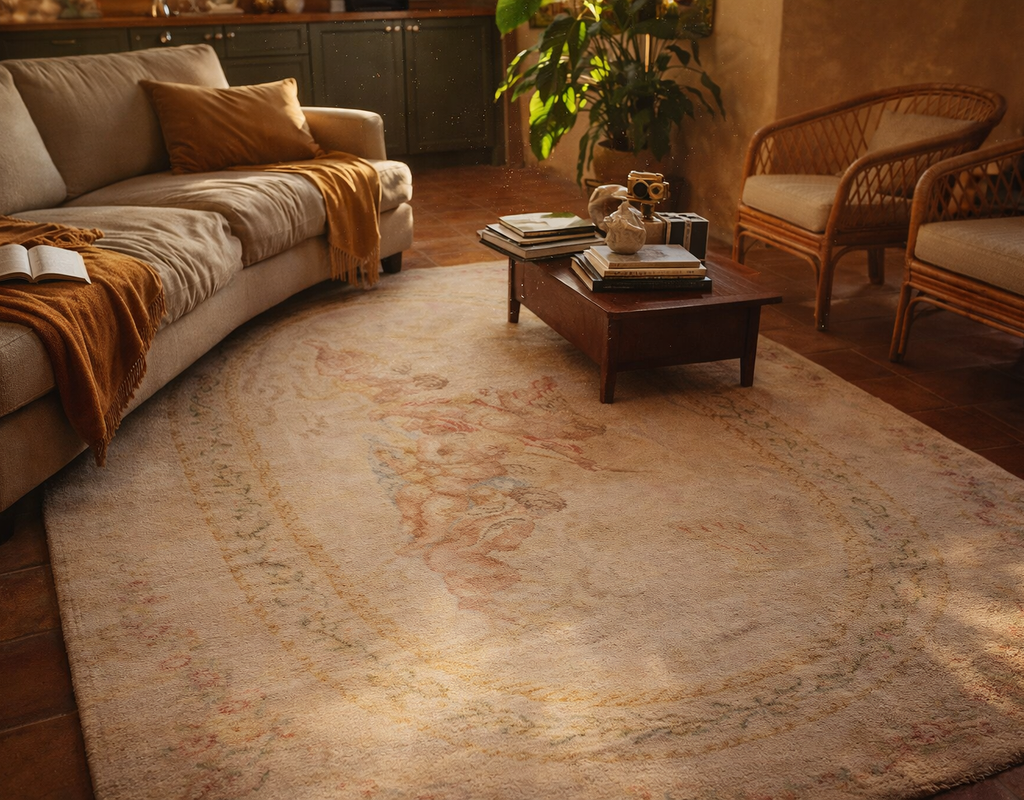
A beautifully lit, bohemian-inspired living area centered around a softly patterned, vintage-style rug.
The integration of these motifs with Rococo rug ornament, such as vines and swirling borders, is a hallmark of the style. For cupid rug identification, the presence of weaponry (arrows, quivers, or bows) is the surest indicator that the figure is mythological Cupid rather than a more generalized cherub or putto.
Symbolism: Love, Innocence, Protection
- Love and Romance — Why: Cupids represent the Roman god of love; their arrows are metaphors for desire and passion, a theme woven into rugs to signify romance within the home.
- Innocence and Purity — Why: Cherubs, softened from their biblical origins, symbolize childlike purity, making them popular in rugs meant to convey gentleness or grace.
- Guardianship and Protection — Why: In antique rugs, cherubs often serve as protective emblems, representing divine watchfulness over a household or sacred space.
Compositional Layouts
Cherubs and cupids are not randomly scattered but thoughtfully placed within rug designs. In some cases, they occupy a central medallion, serving as the visual heart of the composition. Others appear in the corners or along borders, paired with floral garlands or scrolls to frame the main field.
Some rugs adopt full vignette-style pictorial scenes, where cherubs frolic in lush landscapes or float among stylized clouds. Each arrangement underscores their dual function as both decorative highlights and carriers of symbolic meaning.
Cherubs vs Putti vs Cupids
Building on the earlier definitions, it is clear that cherubs, cupids, and putti are related yet distinct figures in textile art. Cherubs embody innocence and protection, cupids embody love and passion, while putti in art—the more neutral, playful winged infants—often serve as decorative fillers. In rug design, these categories blur, but knowing the subtle iconographic differences allows for precise recognition.
How can I identify authentic cherub motifs on rugs? Look for wings and symbolic props—garlands for cherubs, bows and arrows for cupids. What symbols do cherubs represent on antique rugs? They stand for innocence, divine guardianship, and purity.
Are cherub rugs considered a particular style? Yes, they are most often tied to classical rug designs influenced by Rococo and Neoclassical traditions, where pictorial and ornamental flourishes were central to the aesthetic.
Materials, Construction, and Craftsmanship
Best Materials for Detailed Cupids and Cherubs
- Silk — Why: A silk cherub carpet allows for exceptional detail and luminous sheen, ideal for highlighting wings, flesh tones, and fine outlines.
- Fine Wool — Why: High-quality wool, when densely knotted, provides both durability and the softness required for delicate shading.
- Silk-and-Wool Blends — Why: Blended fibers combine the strength of wool with the brilliance of silk, ensuring motifs remain clear and elegant under light.
For collectors and artisans alike, these materials are considered the best for executing cherubic imagery with depth and precision.
Techniques: Hand-Knotted, Flatweave, Needlepoint
The hand-knotted cherub rug remains the gold standard. Its vertical loom process permits extraordinary detail, with each knot carefully placed to render angelic expressions, curls of hair, or cupid’s bow with realism. In France, however, tapestry cherub rugs from the Aubusson and Savonnerie manufactories favored flatweave and needlepoint techniques, which used shading and gradation to achieve painterly effects. Both methods served the same goal: clarity of form and delicacy of detail.
Dye Techniques for Delicate Outlines
The best dyes for cherub rugs are natural plant- and mineral-based dyes, chosen for both beauty and longevity. Pastel pinks, creams, and soft golds created the gentle Rococo aesthetic, while occasional blues or reds added accents.
Natural dyes age gracefully, preserving delicate outlines without the bleeding or harsh fading common to synthetic dyes. Their stability ensures that motifs retain their elegance over generations, which is especially important in fine silk cherub carpets.
Knot Density and Pictorial Clarity
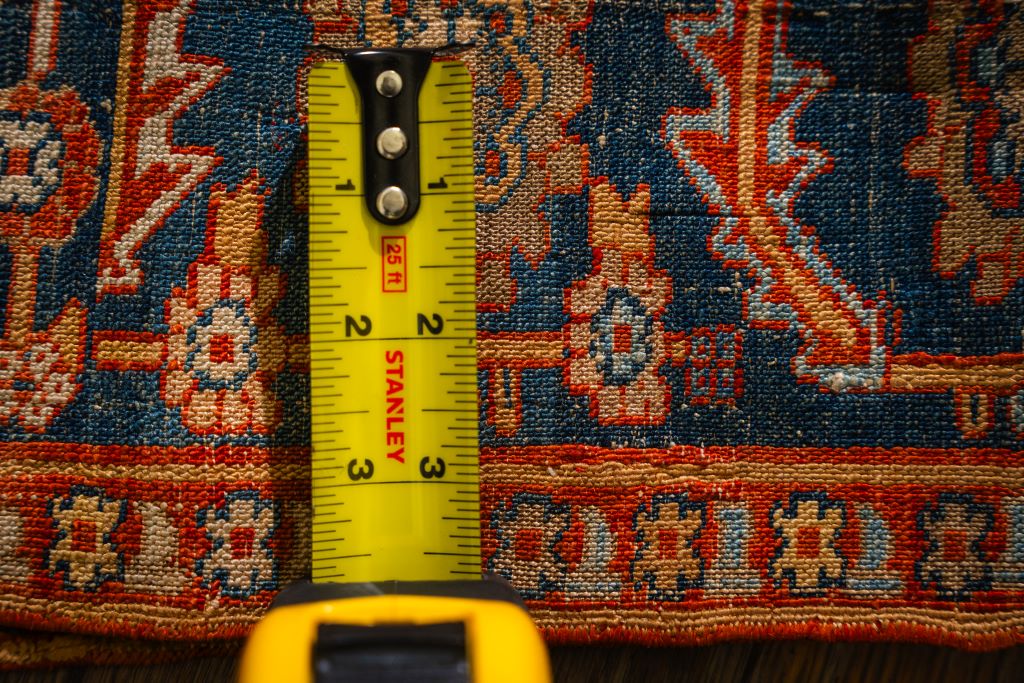
A detailed inspection of a richly colored oriental rug pattern while measuring its dimensions.
- High Knot Density (90+ KPSI) — Why: A high-knot-count rug allows artisans to weave cherub faces, wings, and props with lifelike precision, almost like painting with knots.
- Medium Knot Density (50–90 KPSI) — Why: While less detailed, these rugs balance clarity with affordability, making them accessible yet still collectible.
- Low Knot Density (under 50 KPSI) — Why: Figures become simplified, losing expression and detail, diminishing both artistry and resale value.
In pictorial cherub and cupid rugs, knot density directly impacts collectible value: the higher the count, the sharper the figure, and the greater the appeal to connoisseurs.
What materials suit detailed cupid designs best? Silk or fine wool, often in combination. Does hand-knotted construction enhance cherub rug clarity? Yes, it offers unmatched sharpness compared to flatweaves. Which dye techniques preserve delicate cupid outlines? Natural dyes, which maintain pastel tones and clarity over centuries.
Should I restore worn cupids on a silk palace carpet? Restoration is possible but must be done with great caution, as it can affect both value and integrity. How does knot density affect resale of cherub pictorials? Higher density increases both clarity and resale value, making it a defining factor in collectible worth.
Regional Styles and Notable Traditions
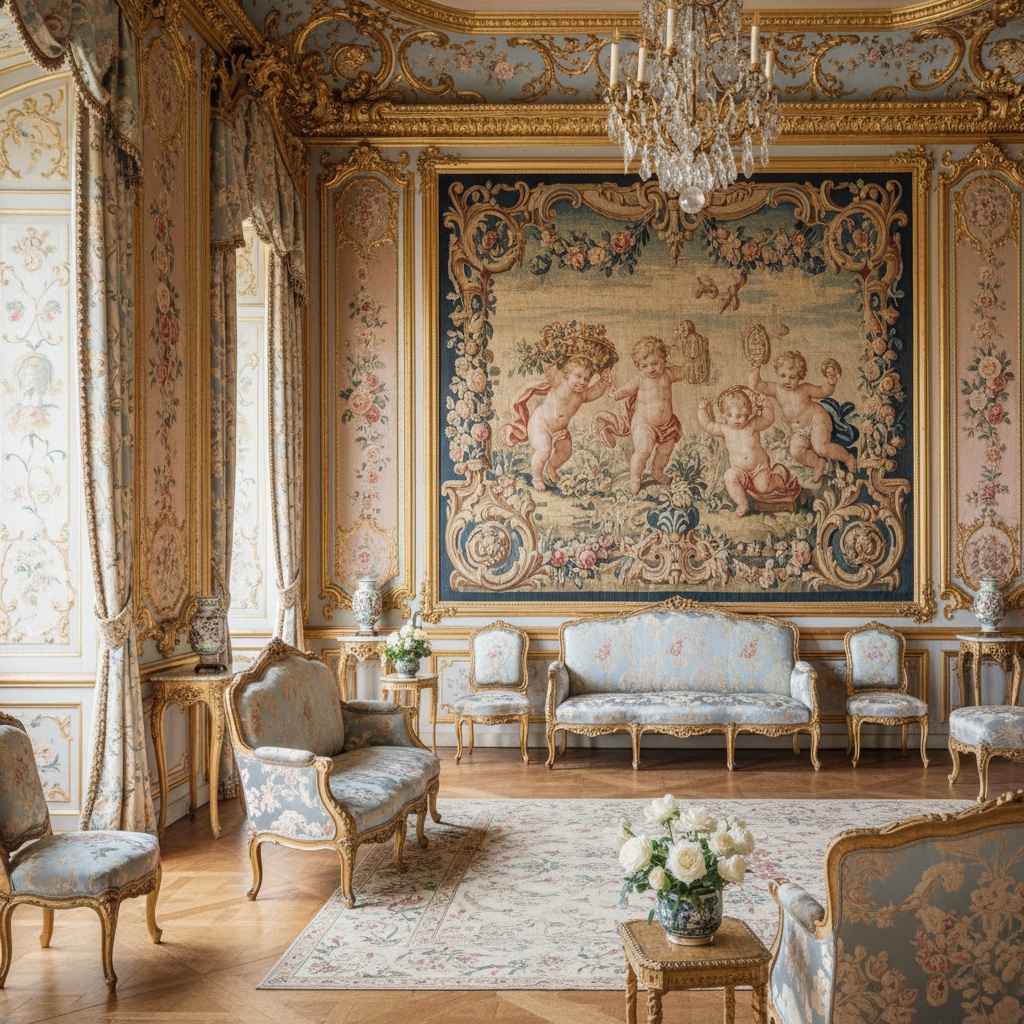
Rococo interior showcasing cherub motif in tapestry art.
French Savonnerie and Aubusson Cherub Rugs
The most celebrated French cherub carpets were created in the Savonnerie and Aubusson workshops, which shaped the iconography of cherubs and cupids in European textiles. The Savonnerie cherub rug, woven in pile, was often commissioned for royal palaces and courtly settings. These carpets featured allegorical scenes, blending cherubs with scrollwork, floral garlands, and mythological references.
By contrast, the Aubusson tradition relied on tapestry weaving, producing pastel-colored, flatwoven masterpieces. Aubusson rugs captured the elegance of Rococo art—delicate cherubs frolicking among flowers and clouds—perfectly aligned with 18th-century French interiors. Both traditions drew heavily on Baroque and Rococo aesthetics, where ornament, symbolism, and playfulness converged.
Persian Pictorial Rugs
In Persia, particularly in Kerman cherub pictorial rugs of the 19th century, we see a fascinating fusion of East and West. Influenced by European export demands, Kerman weavers began incorporating cherubs into finely knotted pictorial rugs. During the Qajar era, figures of cupids and angelic infants appeared alongside floral borders or palace vignettes, woven in silk or fine wool.
These rugs were not traditional Persian designs but reflected a commercial adaptation to Western tastes. Their hybrid quality makes them significant: they stand as proof of cultural exchange through trade while retaining the technical excellence of Persian weaving.
English, Spanish, and Indo-European Variants
- English Axminster — Why: Inspired by French models, English Axminster carpets replicated cherub and Rococo themes for aristocratic estates, showing Britain’s appetite for continental taste.
- Spanish Alcaraz — Why: Spanish looms also borrowed from Italian and French designs, integrating cherubs into Renaissance-influenced textiles.
- Indo-Aubusson — Why: In colonial India, workshops produced Indo-Aubusson cherub rugs specifically for European clients, demonstrating how design trends migrated across empires.
These regional versions show how the motif spread beyond France and Persia, taking on local adaptations while retaining its symbolic appeal.
Modern and Custom Commissions
- Contemporary Hand-Made — Why: Modern artisans reinterpret cherub motifs in bespoke commissions, often blending traditional weaving methods with updated color schemes or abstract settings.
- Machine-Woven Variants — Why: Affordable mass-market rugs featuring cherubs exist today, though they lack the artistry and depth of handwoven examples.
- Custom Cherub Rug Orders — Why: Designers and collectors commission unique cherub rugs to recreate historical grandeur in modern interiors, proving the motif’s continued relevance.
Where are cherub-themed rugs traditionally produced? Historically, France (Savonnerie and Aubusson) and Persia (Kerman) are most prominent, followed by England, Spain, and India. Are custom cherub designs viable for contemporary rug commissions? Yes—modern workshops and artisans still create custom cherub rugs, allowing clients to adapt the timeless motifs to their personal vision, balancing tradition with innovation.
Cultural and Symbolic Meanings
Cherubs and Cupids: Love, Innocence, and Guardian Symbols
- Innocence — Why: Cherubs embody childlike purity, symbolizing untouched goodness and grace in a household.
- Divine Love and Guardianship — Why: As softened versions of angelic beings, cherubs act as protectors, making the guardian angel rug motif a reassuring presence in domestic and sacred interiors.
- Romantic Love and Desire — Why: Cupids, with their bows and arrows, directly symbolize passion, marital blessings, and enduring affection, making them ideal for spaces meant to celebrate love.
This triad of meanings—innocence, divine guardianship, and romance—anchors cherub symbolism across centuries of rug design.
Aristocratic, Religious, and Festive Associations
In their historical context, cherub and cupid rugs were most common in aristocratic residences, churches, and festive interiors. For the nobility, cherubs added prestige and refinement, reinforcing associations with classical learning and divine favor.
In religious settings, their imagery recalled angels and celestial hosts, offering spiritual comfort. During festive or romantic occasions, particularly in Rococo salons, cupids conveyed lighthearted joy and intimacy. The cupid meaning in rugs was thus layered, adapting to context: sacred in one setting, playful in another.
Modern Symbolism and Sentimentality
Today, cherub and cupid motifs retain their resonance but are also used to evoke nostalgia and sentimentality. A cherub rug for modern home décor might bring softness to a nursery, a sense of whimsy to a bedroom, or a symbolic gesture of love in a living space. Even in minimalist interiors, cherubs can coexist as focal points—when balanced with neutral palettes, their delicate outlines and symbolic depth provide contrast without overwhelming simplicity.
What symbols do cherubs represent on antique rugs? They represent innocence, divine love, and protection. Can cherub motifs coexist with minimalist interior schemes? Yes—when used thoughtfully, their symbolic presence provides warmth and depth, enriching even the most pared-back settings with timeless meaning.
Market Value, Collecting, and Care
Why Rococo Cherub Rugs Command Higher Prices
The rococo cherub rug value lies in its rarity, historical context, and artistry. These rugs, woven primarily in the 17th and 18th centuries in French Savonnerie and Aubusson workshops, embody the peak of Rococo design. Their intricate cherubic scenes, pastel palettes, and high-quality materials make them highly desirable to collectors.
Few authentic examples survive, and those that do are tied to aristocratic or royal provenance, further elevating their price. Today, Rococo cherub rugs stand among the most collectible pictorial textiles due to both their aesthetic beauty and their cultural resonance.
How to Identify Authentic Cherub Motifs
- Material — Why: Authentic pieces use fine wool or silk, sometimes with blended fibers for sheen.
- Technique — Why: High-knot-count hand-knotted construction or Aubusson-style tapestry weaving ensures pictorial clarity.
- Iconography — Why: True cherubs appear with garlands, wreaths, or trumpets, while cupids carry bows and arrows; period-accurate poses help distinguish genuine works.
- Age and Wear — Why: Antique cherub rugs often show natural dye patina and subtle fading, unlike the uniform tones of reproductions.
These details are essential for accurate investment in cherub carpets and for distinguishing genuine antiques from modern copies.
Where to Source Antique Cupid Carpets Reliably
Antique cherub rug sourcing should focus on established channels: specialist rug galleries, international auction houses, and reputable antique dealers. Many collectors also look to curated museum deaccessions or trusted online marketplaces with provenance guarantees.
Because forgery and reproduction are common in pictorial rugs, certification, documentation, and expert evaluation are indispensable.
Restoration, Investment, and Modern Viability
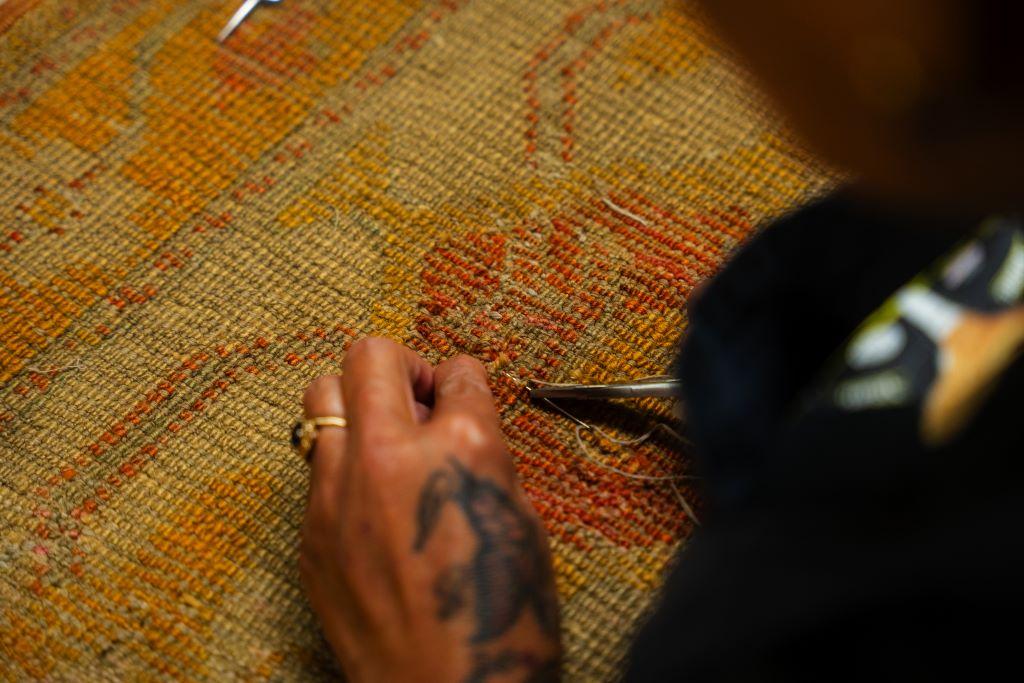
Detail of hands mending a rustic, richly colored woven rug.
- Restoration — Why: Careful repair of worn cherubs on silk or wool rugs can extend lifespan, but heavy restoration may reduce originality and value. Always consult an expert restorer before investing.
- Investment Potential — Why: Factors such as knot density, material quality, provenance, and condition determine a cherub rug’s long-term value. Collectors should weigh artistry and rarity as much as current market demand.
- Modern Viability — Why: While antiques are prized investments, vintage vs modern cherub rugs must be distinguished. Vintage rugs may retain handwoven authenticity, while modern printed versions—though decorative—lack the collectible value of true woven works.
Why do Rococo cherub rugs command higher prices today? Because they are rare, aristocratically linked, and display masterful artistry.
Where can collectors source antique cupid carpets reliably? Through auctions, reputable galleries, and trusted dealers.
How should I evaluate a cherub rug’s investment potential? By considering knot density, craftsmanship, provenance, and condition.
How do vintage cherub rugs differ from modern prints? Vintage examples preserve authentic handwoven character, while modern prints are decorative reproductions without significant collectible value.
Decorating with Cherub and Cupid Rugs Today
Integrating Classic Motifs into Modern Interiors
Decorating with cherub rug designs in contemporary spaces requires balancing tradition with modern aesthetics. In minimalist interiors, a cherub rug can serve as a striking focal point, its ornate detail contrasting with clean lines and neutral tones.
In maximalist or eclectic homes, cherub and cupid motifs blend seamlessly with layered textures, bold palettes, and curated antiques, adding whimsy or nostalgia. For modernists, these motifs can even be used ironically—classical imagery placed in sharp, contemporary settings to create visual dialogue. This flexibility ensures that a cherub rug for modern home design remains relevant beyond its Rococo origins.
Cherub Rugs as Nursery, Parlor, and Bedroom Accents
Cherub and cupid motifs carry symbolic weight, making them ideal for intimate or meaningful spaces. A cherub rug for nursery conveys innocence and protection, echoing guardian angel associations.
In bedrooms, cupids add romance and tenderness, reinforcing their historical symbolism of love and desire. In parlors or salons, cherub rugs function as conversation pieces, connecting interiors with European artistic heritage while offering a touch of warmth and charm.
Custom Cherub Motifs in Contemporary Design
For collectors and designers seeking individuality, the custom cherub carpet offers unlimited creative freedom. Modern workshops reinterpret cherubs with updated palettes, abstracted outlines, or integration into bespoke interior schemes.
These commissions allow homeowners to retain the symbolic resonance of cherubs while aligning with their personal tastes, whether they prefer subtle pastels or bold, graphic reinterpretations.
Actionable Tips for Collectors and Designers
- Placement Matters — Why: Position rugs in spaces where symbolism enhances function—nurseries for protection, bedrooms for romance, parlors for artistry.
- Protect from Sunlight — Why: Natural dyes in cherub rugs fade when exposed to direct light; use curtains or low-light placement.
- Rotate Regularly — Why: Prevent uneven wear and preserve motif clarity over time.
- Use Professional Cleaning — Why: Only specialists in fine or art rugs should handle cherub rug care to maintain delicate outlines and original dyes.
Can cherub motifs coexist with minimalist interior schemes? Yes—when treated as intentional focal points, they bring depth and character without overwhelming simplicity.
Are custom cherub designs viable for contemporary rug commissions? Absolutely—today’s artisans and manufacturers offer custom cherub rugs that adapt timeless motifs into modern, meaningful floor art.
In skilled hands, cherub and cupid imagery continues to inspire, enrich, and protect modern homes just as it did centuries ago.
FAQ
- How do I style small spaces with cherub motif rugs?
Keep walls/furniture neutral and let the cherub rug sing. Try a 3×5 entry mat or a 2×7 runner layered over jute for texture.
- Where can I find authentic cherub rugs in the U.S.?
Check reputable antique dealers, auction houses, and museum-affiliated sellers. Ask for material, age, and provenance; request close-ups of the back and fringe.
- Are cherub rugs “religious” decor?
Typically no—cherub rugs use secular putti/Cupid imagery from classical art. They’re decorative motifs, not liturgical symbols.
- Can I hang a cherub rug like a tapestry?
Yes—use a Velcro header sewn to a cotton strip and a wall batten for even support. Heavy pieces may require a conservator’s guidance.
- Will sunlight fade cherub rugs?
Yes—UV fades dyes, especially silk and bright pastels. Rotate cherub rugs every 6–12 months and use window UV film or sheers.
- Are cherub rugs okay on radiant floor heating?
Yes—prefer low-pile wool cherub rugs and heat-rated felt/rubber pads. Aim for a total tog rating ≲2.5 to let heat pass efficiently.
- What rug pad should I use under cherub rugs?
Felt + natural-rubber pads provide grip and cushioning without floor staining. Trim the pad 1–2 inches shy of the rug edge.
- Can robot vacuums handle cherub rugs with fringe?
Fringe tangles are common—tuck fringe under, use a no-go zone, or remove side brushes. Secure lightweight cherub rugs with a pad.
- What about cleaning silk cherub rugs?
Avoid water and home steam-cleaners; blot and call a specialist. Protect silk cherub rugs from direct sun to reduce fading.
- How do I clean a wool cherub rug after a spill?
Blot immediately with plain water, then a wool-safe detergent; avoid scrubbing. For deep cleaning, use a rug specialist rather than wall-to-wall carpet cleaners.
- Do wool cherub rugs shed?
New wool cherub rugs often shed for 1–3 months, tapering by about six months. Vacuum gently with suction-only (no beater bar).
- Are cherub rugs safe for nurseries or kids’ rooms?
Yes—choose low-VOC, low-pile wool or washable synthetics and skip beadwork or loose tassels. Add a non-slip pad and vacuum with a HEPA filter.
- Are cherub rugs trending or dated in 2025?
Cherub rugs read “classic romantic” and work as statement pieces amid today’s texture-forward trends. Use them sparingly—one bold rug can anchor a room.
- How much do cherub rugs cost on average?
Printed cherub rugs start around \$50–\$150; quality wool runs roughly \$300–\$2,000. Antique Aubusson/Savonnerie-inspired pieces can range from \$5,000 to \$50,000+.
- What sizes do cherub rugs commonly come in?
Expect standard area sizes like 5×8, 8×10, and 9×12 for cherub rugs, plus runners. Antique or palace-scale reproductions can exceed 12×18.
- How can I spot a hand-knotted cherub rug versus machine-made?
On hand-knotted cherub rugs, the fringe is part of the foundation and the back mirrors the front. Machine-made usually has sewn-on fringe and perfectly uniform backing.
- How do authentic Aubusson-style cherub rugs differ from printed ones?
Aubusson-style cherub rugs are tapestry/flatwoven with crisp woven detail; printed pile versions show surface-only designs. Examine the back for woven imagery vs. a print base.
- Can polypropylene cherub rugs go outdoors?
Many polypropylene cherub rugs are outdoor-safe and resist moisture. Keep them away from direct heat sources and use a breathable outdoor pad.
- Should I avoid viscose (rayon) cherub rugs?
Use viscose cherub rugs cautiously—they’re moisture-sensitive and show water marks. Skip them in dining rooms, kitchens, or kid/pet zones.
- Are silk cherub rugs practical for everyday use?
Silk cherub rugs are best for low-traffic rooms or walls due to sun and spill sensitivity. Keep them out of direct light and clean professionally.
- Are wool cherub rugs good for high-traffic areas?
Yes—wool cherub rugs handle foot traffic well and hide soil. Pair with a felt+rubber pad to reduce wear and slipping.
- What materials work best for cherub rugs?
Wool cherub rugs are durable and naturally stain-resistant; silk offers sheen but needs gentle care. Synthetic options (polypropylene/polyester) are budget-friendly and easy-care.
- Which interiors do cherub motif rugs suit best?
Cherub rugs flatter traditional, neoclassical, and maximalist rooms, and can be a playful contrast in modern spaces. Try them with gilded frames and neutral upholstery for balance.
- Are cherub rugs the same as angel rugs or putti rugs?
In decor, yes—cherub rugs, angel rugs, and putti rugs typically depict similar winged infants. “Cupid rugs” usually add romantic motifs like arrows, doves, or Venus.
- What are cherub rugs (Cupid rugs), exactly?
Cherub rugs feature putti/Cupid figures—winged infants—from classical and Rococo art, used decoratively rather than theologically. You’ll often see garlands, medallions, and soft pastels surrounding the figures.