
Argyle Rugs: Origins and Pattern DNA
Shop our premium collection of Argyle Motif Rugs to define your space.
Scottish Origins and Etymology
The argyle rug origin traces directly to the Scottish Highlands, specifically the historic territory of Clan Campbell of Argyll in western Scotland. The very name “Argyle” comes from Argyll, a county long associated with the clan’s tartan. The Scottish diamond pattern of argyle reinterprets the clan’s tartan setts by cutting them on the bias, transforming the crisscrossed plaid into a dynamic series of diamonds. This diagonal reinterpretation was not a departure from heritage but a clever evolution that paid tribute to ancestry while creating something distinct. In this way, argyle became both a visual homage to Clan Campbell and an enduring design vocabulary that would later extend well beyond Scotland.
From Tartan to Argyle: What Sets Them Apart?
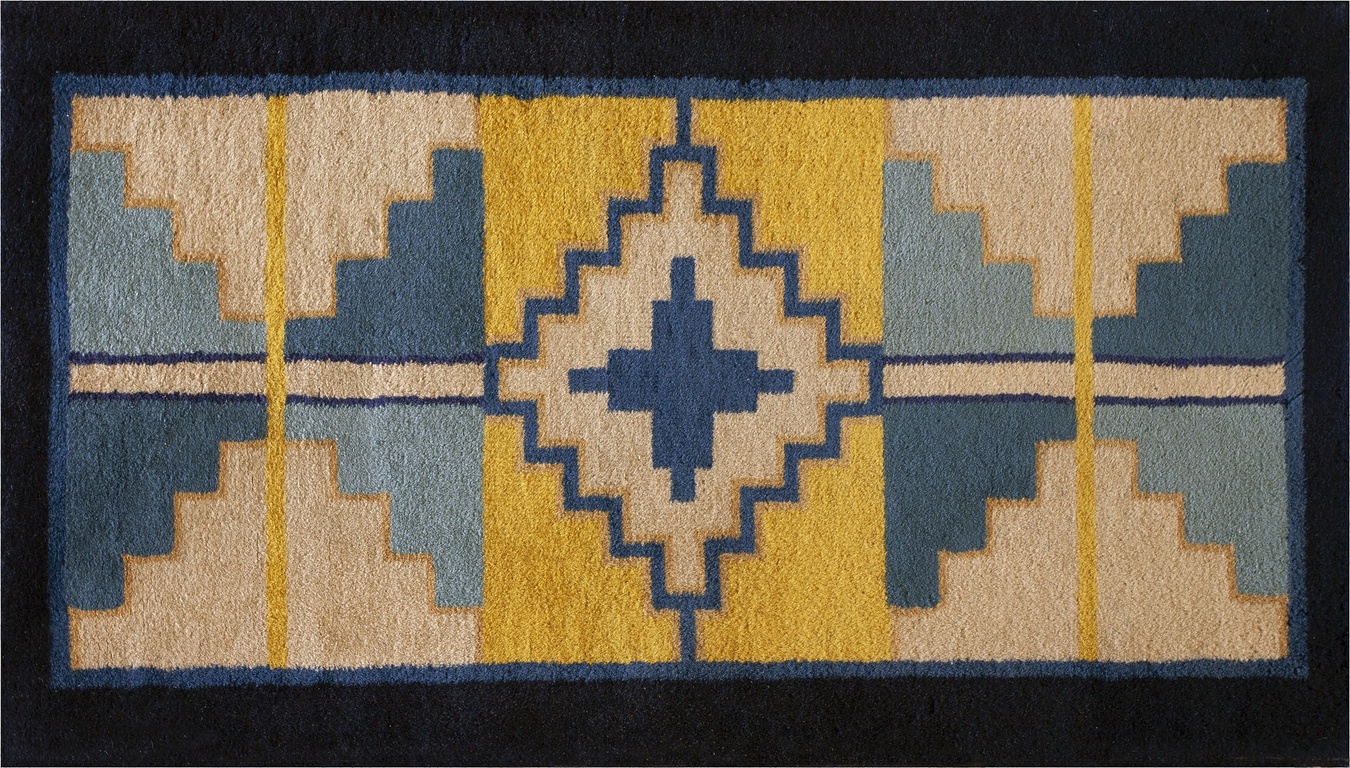
Antique Chinese – Art Deco Chinese Allover Geometric Knotted Rug – by Rugs On Net
Understanding argyle vs tartan requires a close look at their structures and symbolism. Tartan is built from horizontal and vertical bands that cross at right angles, forming recognizable plaid patterns tied to clans, regions, and Scottish identity. Argyle, on the other hand, reconfigures this concept into a diagonal diamond grid, often enhanced by overlay lines that intersect the diamonds at angles. Where tartan conveys order through straight alignment, argyle conveys motion, dynamism, and visual layering. In cultural terms, tartan served as a badge of kinship and loyalty, while argyle became associated with refinement, versatility, and modern reinterpretation. When woven into rugs, the difference is immediately apparent: tartan-patterned rugs emphasize plaid regularity, whereas tartan-inspired rugs that use argyle highlight slanted, geometric diamonds that bring rhythm and energy to floor design.
Early Argyle in Textiles and Rug Adaptation
The earliest expressions of argyle were not carpets but clothing. Historical records show the motif appearing in knit hose and leggings, particularly worn by Scottish Highlanders. These patterned stockings became iconic in the 17th and 18th centuries, where the diagonal diamonds allowed flexibility and stretch in knitted form. It was only later, as textile production diversified, that argyle moved from hosiery and knitwear into home textiles. The transition into rugs occurred gradually during the 19th and 20th centuries, coinciding with the wider popularity of argyle in global fashion. By the 20th century, argyle was cemented as both a sartorial classic and a decorative motif, and its adaptation into rugs allowed households to embed this Highland heritage into interior design. Today, argyle carpets continue to be recognized as a blend of heritage, geometry, and global modernity, maintaining their link to Scottish roots while evolving as versatile décor.
Defining the Argyle Motif in Rugs
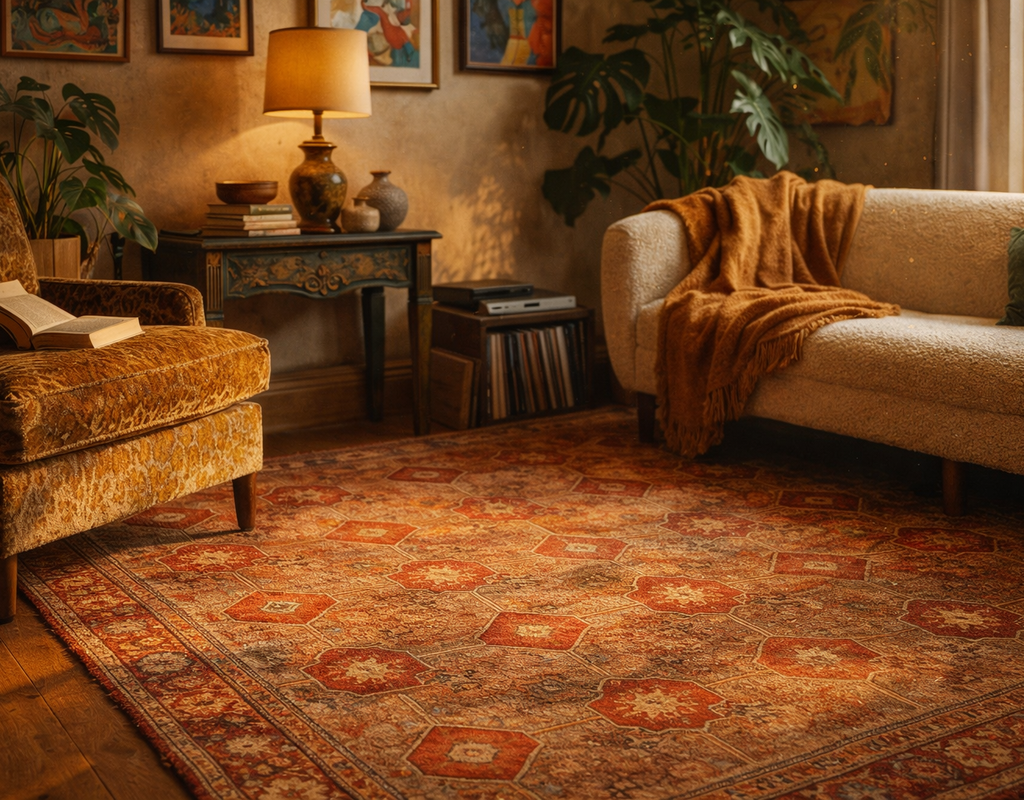
A vibrant, richly patterned area rug defines the warm and cozy seating arrangement of this eclectic living space.
Knitted textile showing diamond lattice structure
Anatomy of the Diamond Motif
At its core, the argyle diamond rug is built from a grid of repeated lozenges, each tilted at a 45-degree angle to create a diagonal rhythm. This diamond lattice carpet differs from square or rectangular grids by emphasizing diagonal flow and symmetry. A hallmark of the design is the overlay: thin bars or stripes that cut through the diamonds, forming crisscross layers that give the illusion of depth and even a knit-like effect. The diamonds themselves may be solid, outlined, or layered, often arranged in two or more contrasting colors. Traditional palettes favored deep navy, green, white, and black—an homage to Scottish Highland patterns—but modern argyle geometric rugs experiment with every shade, from understated neutrals to vivid contemporary tones.
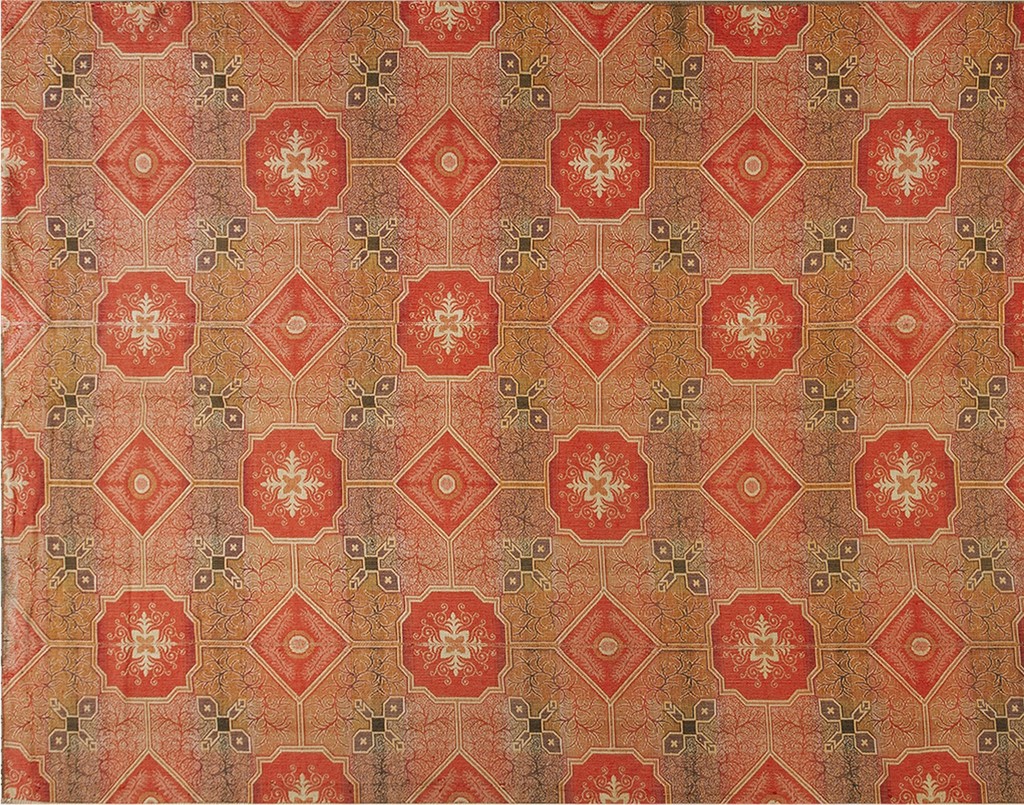
Antique Ingrain American Flat Weave Rug by Rugs On Net
Key Visual Features
- Diagonal Diamond Grid — Why: This defines the argyle pattern characteristics, setting it apart from tartan and creating a balanced, non-directional design.
- Overlaying Stripes or Bars — Why: They add visual motion and a sense of layering, mimicking the texture of knitted fabric.
- High Contrast Colors — Why: Contrasting tones highlight the diamond edges and maintain crisp symmetry across the rug.
- Symmetry Without a Central Focal Point — Why: Unlike medallion rugs, argyle distributes its pattern evenly, making it adaptable to any space without dictating orientation.
- Versatile Palette Options — Why: From traditional Scottish tones to bold modern schemes, argyle can function as either a subtle texture or a striking statement piece.
Argyle vs. Tartan and Other Geometric Patterns
As established in Section 1, the defining difference between argyle vs tartan lies in the rotation of the grid. Tartan’s plaid relies on horizontal and vertical bands, while argyle turns this grid diagonally, creating symmetry on the bias. Unlike checkered or chevron motifs, argyle incorporates both the diamond shape and the crisscross overlay, giving it a unique dual-layer geometry. This “DNA” of diamonds plus overlay is what transforms argyle from a simple geometric pattern into a recognizable and enduring style, distinct within the broader world of rug design.
Materials and Construction of Argyle Rugs
Common Materials: Wool, Synthetics, Cotton
- Wool Argyle Rug — Why: Wool remains the traditional and most luxurious choice, offering softness, resilience, and natural stain resistance, though at a higher price point.
- Synthetics (Polyester, Nylon) — Why: Synthetic fibers make the durable argyle rug affordable, easy to clean, and stain-resistant, ideal for households with pets or children.
- Cotton — Why: Cotton is most often used in flatwoven argyle designs such as dhurries, which are lightweight, reversible, and budget-friendly, though less resilient than wool.
Construction Techniques: Flatweave, Tufted, Hooked, Woven, Printed
- Flatwoven Argyle — Why: Thin, reversible, and easy to clean, making it practical for kitchens, entryways, and high-traffic spaces.
- Tufted Argyle Runner — Why: Creates a plush, soft surface by punching yarn into a foundation fabric; common in affordable handmade options.
- Hooked Argyle — Why: Adds textured loops that give a vintage, handcrafted appearance but require delicate cleaning.
- Woven Argyle — Why: More durable, with interlaced construction that enhances longevity.
- Printed Argyle — Why: The most budget-friendly, achieved through digital or screen printing on synthetic bases; provides crisp pattern accuracy at low cost.
Handcrafted vs. Machine-Made Argyle Rugs
When asking, are argyle rugs usually handwoven or machine made? the answer lies in accessibility. Today, most machine made argyle carpets dominate the mass market, offering pattern precision and affordability. Hand-tufted and hooked argyle rugs provide artisanal appeal at midrange prices, while true hand-knotted argyle rugs are rare luxury pieces due to the time-intensive labor required. Machine-made rugs democratize the pattern, but handcrafted rugs stand out for texture, individuality, and collector value.
Durability and Pile Height Recommendations

A detailed focus on the intricate, vivid colors and geometric weave of a traditional textile rug.
For high-traffic spaces, flatwoven or low/medium pile argyle rugs are best suited, as they resist crushing and are easier to vacuum. A durable argyle rug in loop pile offers a vintage aesthetic but requires extra care to avoid snagging. Plush, high-pile argyle rugs are best reserved for bedrooms or low-use spaces where softness outweighs practicality.
Cleaning and Care for Argyle Rugs
- Wool Argyle Rug — Why: Spot clean with wool-safe solutions to preserve softness and dye vibrancy.
- Synthetic Argyle Carpet — Why: Easiest to wash and stain-treat, making it the most low-maintenance option.
- Loop Pile Argyle Rug — Why: Requires special care; avoid harsh beater bar vacuums as loops can pull or fray.
- Flatwoven Argyle — Why: Simple to shake out or vacuum, making it highly practical in entryways and kitchens.
Ultimately, the choice of wool, synthetic, or cotton, along with the construction style, directly impacts the look, feel, and longevity of an argyle rug. Machine-made techniques make argyle widely available, while handcrafted methods preserve its artisanal charm.
Historical Evolution and Vintage Argyle Rugs
Timeline: From 17th-Century Clan Wear to 21st-Century Interiors
The story of the vintage argyle rug begins not in carpets but in clothing. In the 17th century, the Campbell clan of Argyll popularized the diamond-and-stripe motif through knit hose and leggings, which symbolized Highland identity. For centuries, argyle remained rooted in fashion, particularly knitwear. It was not until the mid-20th century that the pattern crossed into the world of interiors. During this period, as geometric motifs grew popular in home décor, argyle was reinterpreted into hooked and tapestry rugs, often as folk-art projects in Britain and America. By the 21st century, argyle had evolved into a staple authentic argyle area rug design, appearing in both handcrafted mid-century pieces and contemporary machine-made carpets.
Vintage vs. Modern Argyle Rugs
- Vintage Argyle Rug — Why: Typically hand-hooked or tapestry-style, these rugs have a crafted, folk-art appeal and a warm mid-century aesthetic. Their handmade character makes each piece unique.
- Modern Argyle Rug — Why: Machine production allows for precision and wider accessibility. Available in diverse colors, materials, and custom options, they reflect current interior design trends.
- Collectible Argyle Carpet — Why: Vintage examples are rare compared to kilims, but their scarcity makes them attractive to niche collectors.
Collecting Vintage Argyle Rugs: Value and Investment Potential
When considering is a vintage argyle rug a worthwhile long-term investment? the answer depends on perspective. Mid-century argyle rugs, especially collectible argyle carpets with strong colors and handmade character, do hold value in folk-art and retro décor markets. However, they typically appreciate more slowly than rare geometric kilims, which command stronger global demand. For buyers, a vintage argyle rug offers aesthetic charm and cultural nostalgia rather than rapid financial return. It is best seen as a decorative investment—something to enjoy in a home while holding modest resale value in specialized circles.
Where to Find Authentic Vintage Argyle Rugs
- Antique Shops — Why: Local dealers often carry mid-century hooked or tapestry argyle pieces with provenance.
- Online Auctions — Why: Platforms like eBay and LiveAuctioneers occasionally feature antique argyle rugs, offering both affordability and rare finds.
- Vintage Décor Retailers — Why: Specialized mid-century and folk-art shops frequently stock authentic argyle area rugs for design-conscious buyers.
- Folk-Art Dealers — Why: Many mid-century argyle rugs were handmade as craft projects, making them more likely to appear in folk-art collections than in traditional oriental rug galleries.
While mid-century argyle rugs remain a niche collectible, their rarity ensures they hold a unique place in rug history, bridging Scottish heritage, folk-art craft, and modern interior design.
Argyle Rugs in Interior Design
Argyle’s Adaptability to Modern Styles
The argyle rug interior design appeal lies in its versatility. In minimalist spaces, argyle works as a subtle geometric texture when rendered in muted neutrals or soft pastels. For contemporary interiors, it can become a bold graphic element, especially when paired with monochrome or high-contrast palettes. Argyle has long been tied to preppy and collegiate styles, where the diamond grid embodies tradition and refinement. Beyond everyday use, it also thrives in festive settings, particularly during Christmas, when bold reds, greens, and whites echo seasonal knitwear. Few patterns transition as fluidly from quiet elegance to playful celebration as argyle.
Choosing Argyle Rugs for Different Spaces
- Living Rooms — Why: Large argyle area rugs anchor seating arrangements, either as a statement piece or background texture.
- Nurseries or Gender-Neutral Rooms — Why: Pastel argyle rugs provide softness and warmth without leaning toward stereotypical color schemes.
- Libraries or Studies — Why: Dark argyle tones create a scholarly, traditional ambiance.
- Game Rooms or Sports-Themed Interiors — Why: Bold argyle runners inject energy and playful dynamism, tying into athletic and collegiate associations.
- Entryways & Hallways — Why: Argyle runners bring pattern continuity into transitional spaces while being durable and easy to replace.
Color Choices: Pastel vs. Bold in Small Rooms
When asking should I pick pastel or bold argyle rugs for small spaces? the answer depends on the desired effect. A pastel argyle rug with soft tones enlarges a room visually, creating an airy, calming feel perfect for compact apartments or bedrooms. In contrast, a bold argyle runner or area rug turns the small space into a showcase, drawing attention and adding personality. Both approaches work, but the choice defines whether the rug acts as a neutral background or a visual centerpiece.
Argyle Runners, Area Rugs, and Custom Orders
- Argyle Runners — Why: Ideal for narrow hallways or kitchens, where the linear form highlights the repeating diamond motif.
- Custom Argyle Area Rug — Why: Allows homeowners to choose size, palette, and fiber, tailoring the pattern to unique interiors.
- Sustainable Argyle Carpet — Why: Increasingly available from specialty makers who offer natural wool, jute, or organic cotton options for eco-conscious buyers.
Ultimately, argyle adapts seamlessly to many aesthetics, from preppy tradition to contemporary minimalism. Whether chosen in soft pastels or bold, festive hues, an argyle rug transforms interiors through both its geometric DNA and its ability to shift mood through color and scale.
Buying Guide: Argyle Rugs for Every Budget
Price Ranges: Handmade Wool vs. Machine-Made Synthetics
The price of an argyle rug is shaped largely by its material and method of construction. A handmade wool argyle carpet represents the top tier, with natural fibers, artisan labor, and time-intensive techniques driving costs higher. These pieces often last decades and carry collectible value. In contrast, affordable argyle rugs made from polyester, nylon, or blended synthetics are widely available. Machine-made production reduces cost while preserving crisp pattern accuracy, making argyle accessible at nearly every budget. Cotton flatweaves sit in the middle range, valued for practicality and reversible use.
Where to Buy Affordable Argyle Rugs Online
- Wayfair & RugsUSA — Why: Large selections of affordable argyle rugs, from bold runners to subtle neutrals, often discounted.
- Target & Lowe’s — Why: Ideal for entry-level shoppers seeking budget-friendly modern argyle runner rugs in durable synthetics.
- Home Depot & Ruggable — Why: Strong options in washable and stain-resistant custom argyle runner styles, perfect for family homes.
- eBay, 1stDibs, Etsy — Why: Vintage, handmade, or unique argyle finds directly from artisans or collectors.
Sourcing Custom/Sustainable Argyle Rugs
For buyers asking, can custom argyle rugs be ordered in sustainable natural materials? the answer is yes. Sustainable argyle rugs are increasingly available from boutique makers who specialize in organic wool, jute, or cotton. Some online platforms also allow full customization of size, palette, and fiber, offering eco-conscious households the ability to combine heritage design with environmental responsibility.
Budgeting for Handmade Argyle Wool Rugs
- Size — Why: Larger rugs require exponentially more material and labor, increasing price.
- Knot Density / Tufting Quality — Why: Higher density adds durability and detail, but also raises cost.
- Origin & Artisan Labor — Why: Rugs made in regions with long weaving traditions command higher prices due to skill and heritage.
- Finishing & Backing — Why: True hand-tufted or hand-knotted argyle rugs often cost significantly more than hand-hooked or machine-backed options.
Import Considerations: Duties and Shipping
- Custom Orders — Why: Ordering from international artisans may involve added import duties or VAT.
- Vintage Rugs — Why: Shipping costs for heavy or fragile pieces can exceed expectations.
- High-Value Purchases — Why: Customs clearance fees and insurance are often necessary, raising overall argyle rug import cost.
- Online Marketplaces — Why: Always review seller policies for hidden charges or estimated delivery times.
From affordable argyle rugs found at major retailers to sustainable argyle carpets crafted from organic fibers, options span every price point. With careful budgeting and attention to import details, buyers can select the argyle rug that best balances style, durability, and cost.
Explore a few of our favorite Argyle rugs
FAQ
- Can argyle rugs be custom-sized or custom-colored?
Yes. Many makers offer custom argyle rugs; expect a 20–50% premium and 4–12 weeks lead time. Provide a color swatch and repeat size for best results.
- Do argyle rugs off-gas or have chemical smells?
Some synthetics may off-gas briefly. Air out 48–72 hours, ventilate, and consider rugs/pads with low-VOC certifications (e.g., Green Label Plus, OEKO-TEX).
- How can I tell if an argyle rug is hand-knotted, hand-tufted, or machine-made?
Flip it: hand-knotted shows individual knots and no glue; tufted has a fabric backing glued on; machine-made shows uniform stitches and often latex backing.
- How much do argyle rugs cost by construction?
Machine-made argyle rugs (8×10) often run \~\$100–\$400; hand-tufted wool \~\$300–\$1,000; hand-knotted pieces \~\$1,000–\$5,000+ depending on size, detail, and origin.
- How do I choose the right scale of diamonds on an argyle rug?
Small, tight diamonds read “busier”; large diamonds feel calmer and can visually open small rooms. As a guide, 8–12″ repeats suit most living rooms.
- What argyle rug colors are easiest to live with?
Neutrals like ivory/khaki/gray feel timeless and hide dust. For color, forest green, navy, or chocolate add warmth; black/white argyle is bold but shows lint more.
- Which decor styles pair best with argyle rugs?
Argyle rugs bridge preppy, mid-century, and contemporary looks. Tonal diamonds soften minimalist rooms; high-contrast palettes suit statement spaces.
- How should an argyle runner rug be sized for a hallway?
Leave 4–6 inches of floor showing on each side and 6–12 inches at each end. Cover about three-quarters of the hallway length for balance.
- What size argyle rug fits under a dining table?
Extend the rug 24–30 inches beyond the tabletop on all sides so chairs stay fully on the rug when pulled out. For a 36″x72″ table, a 8×10 usually fits.
- What size argyle rug works for a living room sofa?
Common picks are 8×10 or 9×12. Aim for the rug to extend 6–8 inches beyond the sofa sides and leave 18–24 inches for walkways.
- Are argyle rugs safe over radiant/underfloor heating?
Generally yes—choose thin to medium piles and a heat-rated pad. Avoid thick foam pads that insulate heat; always check the flooring and rug manufacturer’s guidance.
- What rug pad should I use under an argyle rug on hardwood?
Use a felt + natural-rubber pad (trim 1–2 inches smaller than the rug). Avoid cheap PVC or sticky latex pads that can discolor finishes.
- Are argyle rugs compatible with robot vacuums?
Usually, if low- to medium-pile. High-pile or shag argyle rugs and fringe can trap brushes—set “no-go” zones. Most bots handle flatweaves and short piles well.
- Do argyle rugs shed, and how long does it last?
New wool argyle rugs often shed initially for weeks to a few months; hand-knotted shed less long-term than tufted. Vacuum gently; avoid aggressive beater bars on delicate piles.
- How do I clean a polypropylene argyle rug?
Blot, then use mild dish soap and water; rinse thoroughly. Outdoors, hose off. For stubborn stains, a diluted bleach solution (about 10%) can work—spot-test first.
- How do I clean a wool argyle rug safely?
Blot spills immediately; test dyes, then use cool water and a wool-safe detergent. Avoid over-wetting; vacuum regularly; schedule professional cleaning for thick or antique pieces.
- Can I use an argyle rug outdoors?
Yes—look for polypropylene argyle rugs labeled indoor/outdoor. They’re typically moisture-, mildew-, and UV-resistant; hose clean and air dry.
- Are argyle rugs good for homes with kids and pets?
Yes. Choose low-pile wool or polypropylene argyle rugs for easier cleanup and fewer snags. Washable flatweaves and indoor/outdoor synthetics perform well in playrooms and dining areas.
- Which material is best for argyle rugs: wool or synthetic?
Wool argyle rugs are durable, naturally stain-resistant (lanolin) and long-lasting; synthetics (polypropylene/polyester) are budget-friendly, colorfast, and easy to clean. Pick wool for longevity; synthetics for kids-, pets-, and spill-heavy zones.
- Are argyle rugs in style in 2025?
Yes—checks, plaids, and diamond patterns remain strong. Argyle rugs feel current when scaled larger or done in tonal neutrals (ivory/gray) or saturated accents (forest green, cobalt).
- Where did the argyle rug motif originate?
The argyle pattern traces to Scottish tartans (Argyll) and knitwear; rug makers adapted its diamond geometry into woven and tufted designs across styles and materials.
- Are argyle rugs the same as checkered or plaid rugs?
Checkered rugs use squares; plaid mixes crossing stripes; argyle rugs use diamonds with diagonal overlays. All are classic, but argyle reads more diagonal and dynamic.
- Are argyle rugs the same as trellis rugs?
No. Trellis rugs are lattices of interlaced lines forming diamonds; argyle rugs display filled diamonds with overlay lines. Trellis feels airy; argyle feels more graphic.
- What’s the difference between argyle rugs and harlequin rugs?
Harlequin rugs show high-contrast diamonds without crossing lines; argyle rugs add diagonal overlays. If you want bolder, go harlequin; for layered geometry, choose argyle.
- What is an argyle rug?
An argyle rug features overlapping diamonds (lozenges) often crossed by thin diagonal lines. It’s a geometric pattern that reads crisp and orderly, great for grounding modern or transitional rooms.