
The Enduring Appeal of Red & Rust Rugs
Explore our curated collection of striking rust red area rugs ready to ship today.
Emotional & Visual Warmth
Red has long been the most celebrated color in rug weaving, symbolizing life, vitality, and joy across cultures. The visual power of warm red rugs lies in their ability to draw the eye and create an immediate sense of intimacy. Red wavelengths are physically warmer to the human eye, which is why stepping into a room anchored by a red rug often feels like entering a space filled with energy and comfort.
Large expanses of red fields, whether in Persian medallion carpets or bold tribal pieces, radiate a hearth-like glow, echoing associations with fire, passion, and celebration. This quality explains why red rugs have remained a timeless choice for dining rooms, parlors, and gathering spaces—they heighten atmosphere and invite people in. In addition to their chromatic warmth, red rugs often feature subtle abrash, or tonal shifts within the dye.
These variations prevent the field from appearing flat, instead creating depth and movement that enhances the sense of coziness. Such qualities make red rug atmosphere unmatched: not only does the color warm the space, but the play of light and shade within the fibers evokes a living, breathing surface underfoot.
“Red” vs. “Rust”
While both fall within the warm spectrum, classic red and rust play distinct roles in rug design. A bold red field projects vibrancy, celebration, and strength, making it a centerpiece in traditional Persian carpets, Kazakh tribal weavings, and contemporary floor decor alike. Rust, by contrast, is an earthy red rug tone infused with brown and orange undertones.
This muted variation carries a grounded quality, evoking clay, soil, and sun-aged brick, offering a more harmonious and natural effect. The difference between rust vs red rugs is not simply brightness—it is mood. Red can dominate a room with bold intensity, while rust settles in as an inviting rust carpet tone that blends easily with neutral or earth-inspired palettes.
Where a red carpet might inject passion and vitality, a rust rug suggests aged elegance and enduring warmth. Rust hues also age gracefully, developing patina that enhances their charm, making them especially versatile in both traditional interiors and modern rustic spaces.
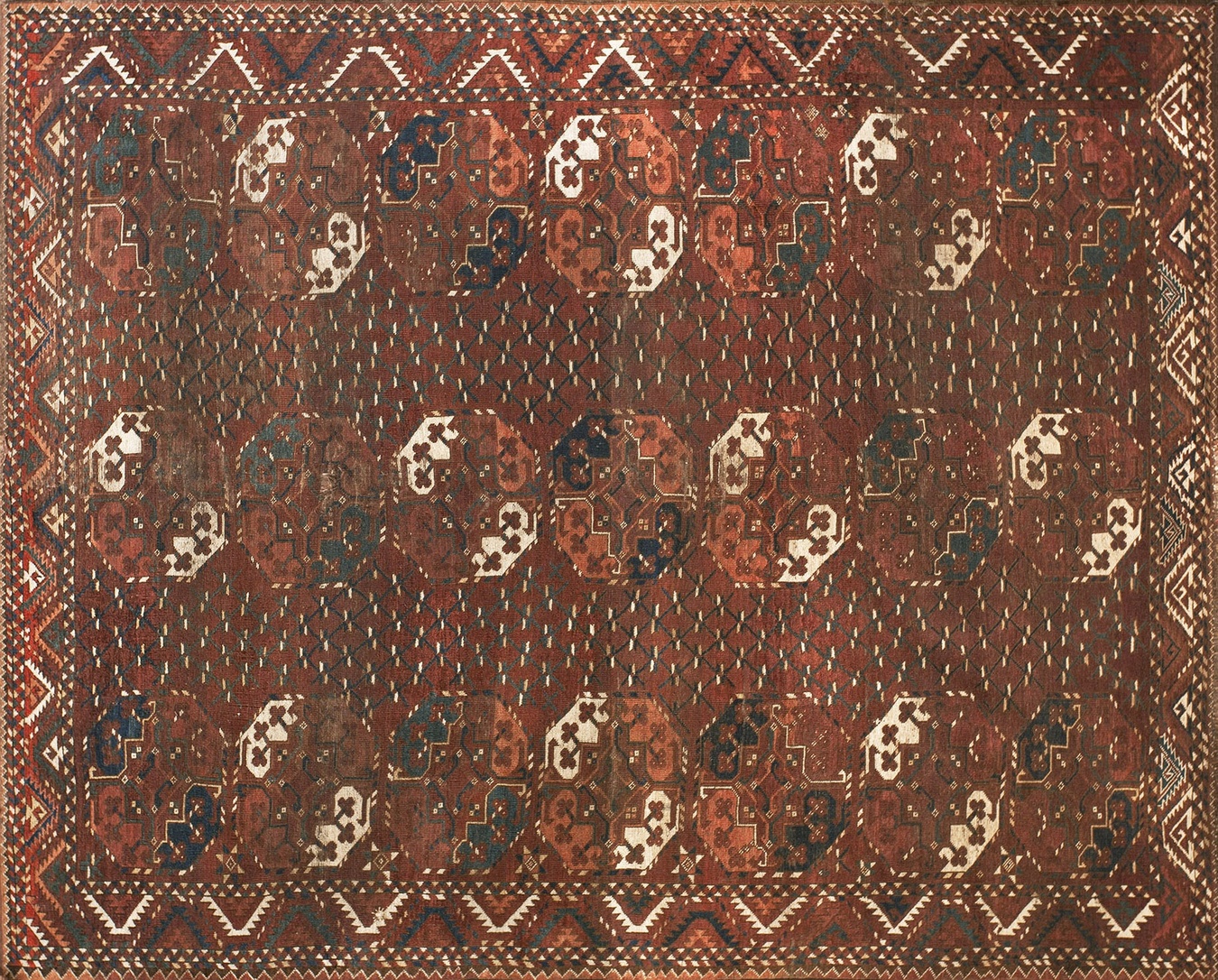
Antique Allover Geometric Wool Hand Knotted Pile Coral / Salmon Pink 1860s Rug – by Rugs On Net
Together, red and rust rugs provide two sides of the same coin: red enlivens, rust soothes. Both create cozy red floor décor, but in complementary ways—red ignites energy, while rust grounds it, ensuring designers and homeowners alike can find the perfect balance between atmosphere and timeless style.
The Color Science: Visual Qualities & Dye Origins
Red and Rust Hue Spectrum
The color family of red in rugs spans a wide spectrum, from the glowing scarlets and carmines of Central Asian weavings to the deeper burgundies and brick reds found in Persian and Anatolian carpets. Rust, by contrast, emerges as a red with orange or brown undertones—tones reminiscent of iron-rich soil, terracotta, and weathered clay.
These hues are often chosen intentionally: bold reds are commonly reserved for rug fields, where their vibrancy can dominate and unify the design, while rust tones frequently appear in motifs, borders, or secondary fields, offering balance and harmony. The presence of abrash, or natural shifts in tone due to dyeing variation, is especially pronounced in red rugs.
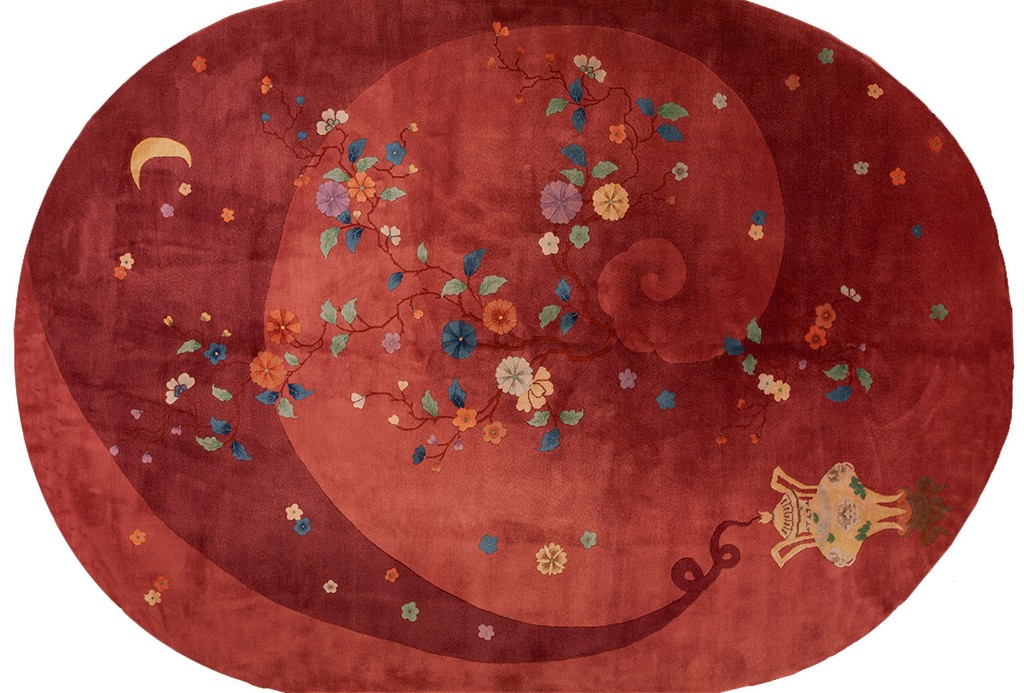
Oval Shape Antique Artistic Swirl Pattern Rustic Red Siena Color Art Deco Chinese Rug by Rugs On Net
Abrash not only enhances authenticity but also gives a lively, textured dimension, preventing the surface from looking flat. Knot density also plays a role in how these hues appear: finer, denser knots allow for more uniform and vivid reds, while looser weaves create softer transitions of tone.
Natural Dyes: Madder, Cochineal, Others
- Madder root — The foundation of red in rug weaving, producing a spectrum from orange-red to brick. — Why: It is stable, abundant, and highly adaptable across regions, making madder-dyed rugs some of the most enduring.
- Cochineal insect dye — A deep crimson extracted from scale insects, especially prized in Europe and the Middle East. — Why: Cochineal red carpet tones are brilliant, long-lasting, and were historically considered a luxury.
- Kermes — An ancient source of crimson from Mediterranean insects. — Why: Valued before cochineal, kermes created rich shades though less economical to produce.
- Brazilwood and lac — Imported dyestuffs producing bright reds, though less stable than madder or cochineal. — Why: They allowed weavers to experiment with tonal variety, but their tendency to fade made them less preferred.
- Safflower — Yields pinkish-red hues, often used in tribal weaving. — Why: Provided unique shades, though it lacked the permanence of stronger dyes.
Natural reds from these sources tend to mellow beautifully with age, developing soft, harmonious tones prized in antique carpets.
Synthetic Dyes: Aniline to Modern
- Aniline dyes (19th century introduction) — Why: Offered brilliant reds but were unstable, often bleeding or fading unevenly. Early synthetic dye red rugs sometimes show jarring, unnatural shades today.
- Chrome dyes (20th century) — Why: More durable, producing consistent reds with better resistance to fading.
- Azo dyes and modern synthetics — Why: Provide a wide palette of red hues with predictable results, though they lack the subtle depth of natural dyes.
While synthetic reds ensure uniformity and affordability, plant-based rug dyes like madder remain preferred for collectors due to their graceful aging and complex tonal shifts.
Madder Root Dyeing in Persian Rugs
The traditional dyeing process with madder root lies at the heart of Persian weaving. Roots are harvested, dried, and ground into powder, then boiled with fibers in a mordant bath to fix the color. The specific shade depends on factors such as water mineral content, the mordant chosen (alum for brighter reds, iron for deeper tones), and the length of immersion.
This chemistry gives Persian madder-dyed rugs their extraordinary range—from warm terracotta to deep brick. Because madder is both stable and abundant, it became the backbone of red dyeing across Iran, Anatolia, and Central Asia. Its reliability ensures that centuries-old rugs still display warm, earthy reds that have aged with elegance rather than fading harshly.
Key Considerations for Buyers
Madder root and cochineal remain prized for their stability and depth, making them preferred choices for collectors who value authenticity. Knot density color saturation should also guide buyers: finer weaves yield stronger, more luminous reds. Cochineal dye is still occasionally used in modern artisan weaving, particularly in revivals that emphasize natural dye traditions.
When considering durability, plant-based rug dye offers aging grace, while high-quality synthetics provide colorfast convenience. Choosing between them often depends on whether one values historical depth and patina or modern uniformity and maintenance ease.
Symbolism and Cultural Meaning Across Traditions
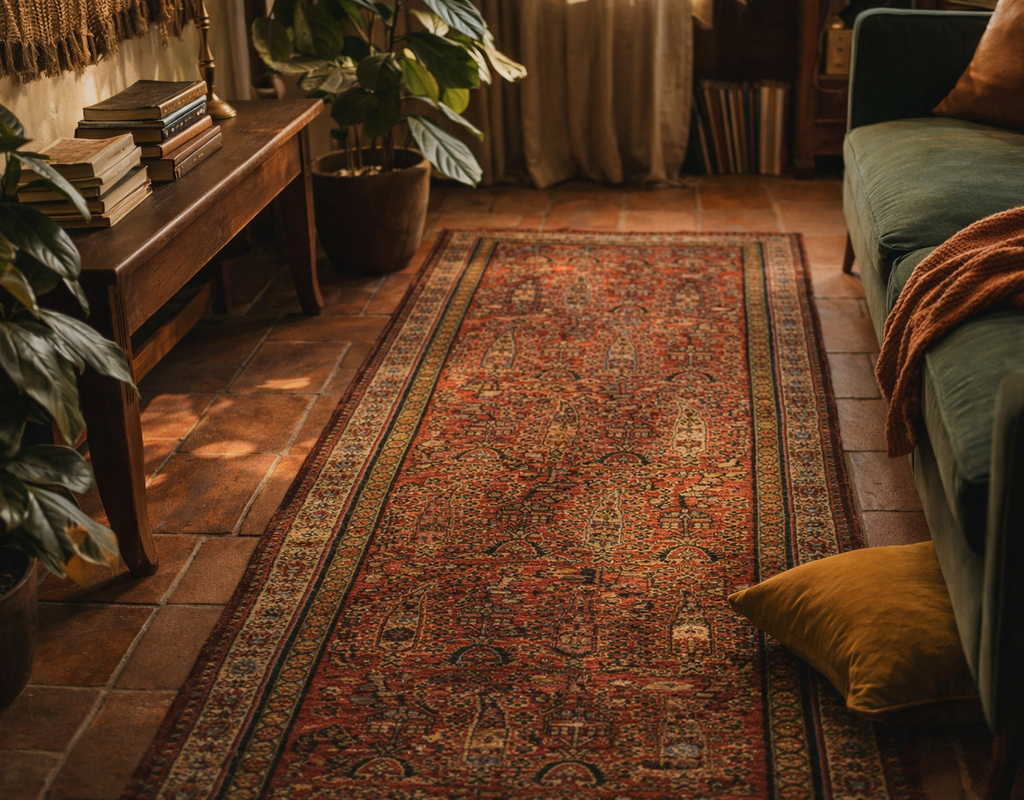
A richly colored runner rug defines the pathway between comfortable seating and antique wooden furniture bathed in soft natural light.
Persian vs. Turkish Red Symbolism
In the Persian weaving tradition, red is the color of joy, courage, and prestige. It is often the foundation of Persian red meaning, appearing in central fields or important medallions to signal vitality and luck. A red rug in Persian culture was not simply decorative but a marker of status and prosperity, intended to infuse its environment with energy and good fortune.
In Turkish and Anatolian weaving, red carried overlapping but distinct associations. Turkish carpet red symbolized power, wealth, happiness, and protection. It was common in bold geometric designs, where red not only energized the motifs but also acted as a protective force against misfortune.
This protective function carried into the use of red in amulet motifs woven into prayer rugs and kilims, ensuring both spiritual and physical safeguarding of the home. Thus, while both cultures revered the color’s vitality, Persians emphasized its role in joy and honor, while Turks leaned toward its protective and status-enhancing powers.
Sacred, Celebratory, and Earthy Connotations
- Sacred uses — Red often appeared in prayer rugs and ceremonial carpets. In Armenian tradition, the sacred vordan karmir dye, derived from insects, was revered for its deep crimson hue, linking red rug symbolism to religion, ancestry, and divine protection. — Why: These associations elevated red to more than a color—it became a channel for spiritual and cultural identity.
- Celebratory uses — Red rugs were frequently used in weddings and festive gatherings. Their brightness conveyed happiness, fertility, and the vitality of life. — Why: The color’s inherent warmth made it the natural backdrop for rituals that marked beginnings and communal joy.
- Earthy connotations — Rust carpet symbolism diverges from the fiery associations of pure red. Rust tones, with their brown and orange undertones, evoked soil, hearth, and stability. — Why: These earthy shades tied rugs to ideas of home, grounding, and permanence, balancing red’s intensity with reassurance.
Red rug tradition across regions is never static—it is charged with emotional weight and context. Whether invoking sacred reverence, celebration, or protection, the color red anchors meaning in carpets, while rust softens and deepens that symbolism by rooting it in the earth and the everyday.
Rug Styles and Patterns That Highlight Red & Rust
Deep Red Dominance: Heriz, Serapi, Kazak, Bokhara
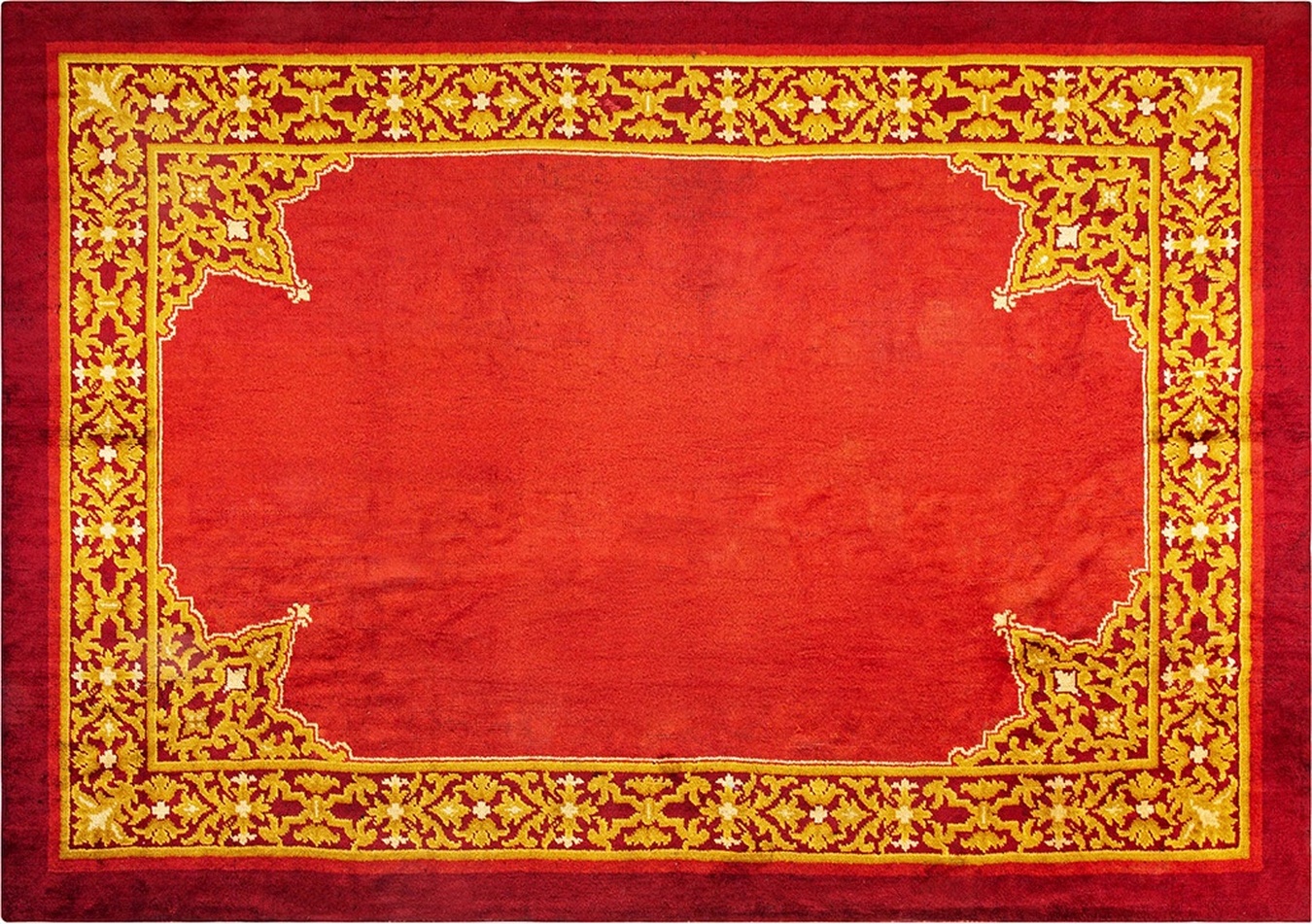
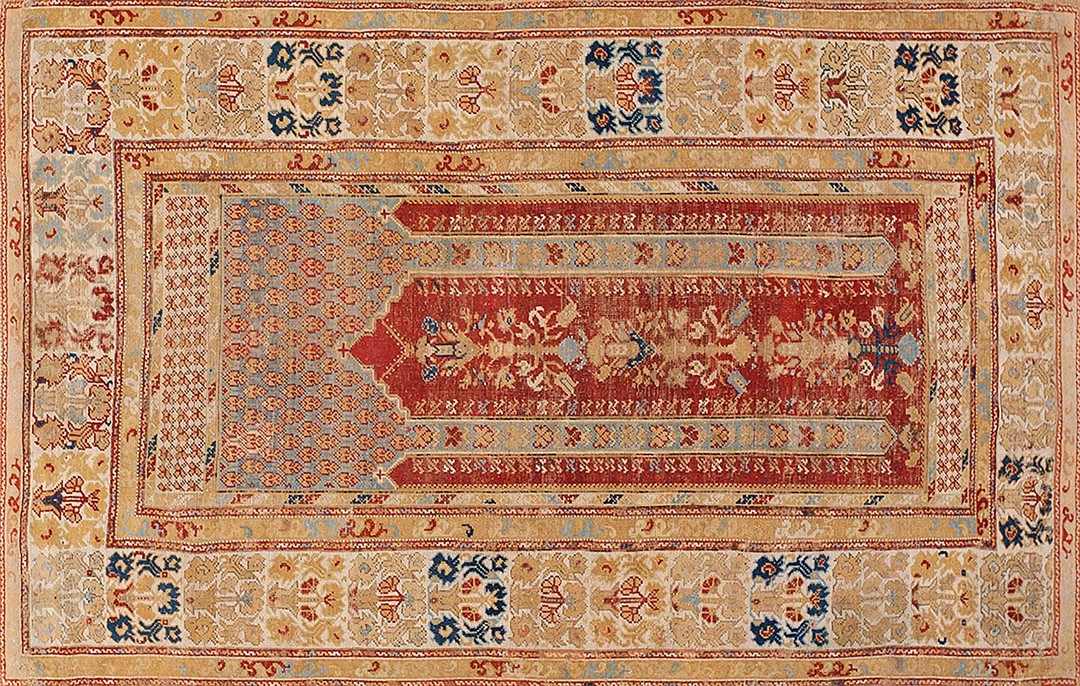
Antique Spanish Carpet Europe Allover Knotted Rug – by Rugs On Net
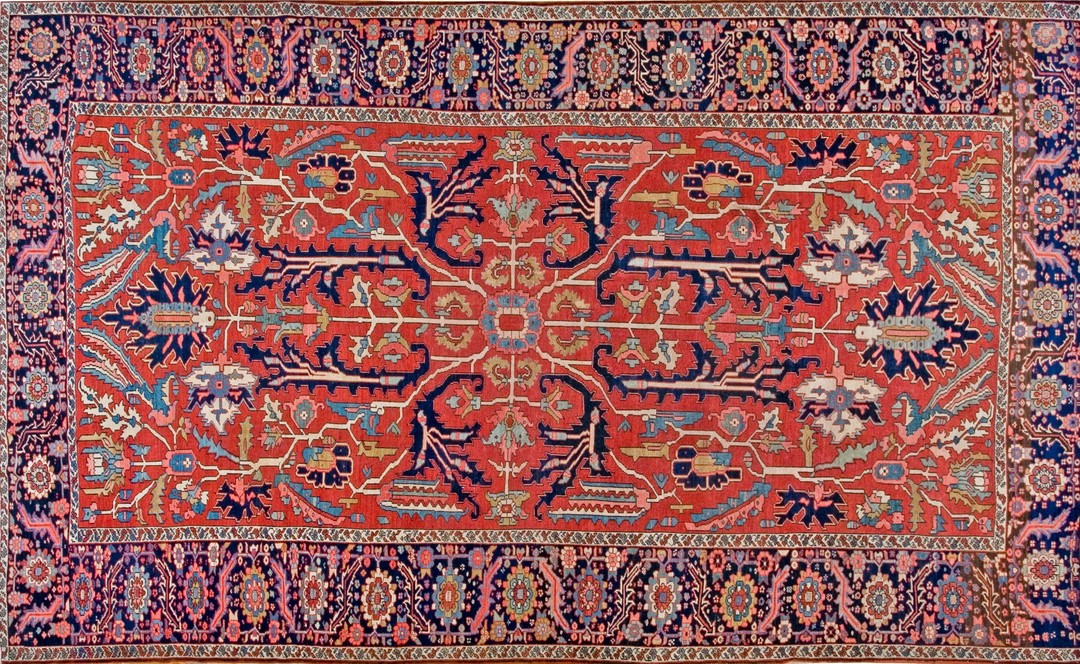
- Heriz red rug (Northwest Persia) — Known for their bold geometric medallions, Heriz rugs often feature terracotta or rust-red fields that radiate warmth and anchor the design. — Why: The combination of earthy reds with strong angular motifs makes them both durable and visually striking, perfect for large living spaces.
- Serapi rugs — A finer, earlier version of the Heriz tradition, Serapi carpets emphasize softer terracotta-red backgrounds paired with delicate detailing. — Why: Their use of warm reds enhances their refinement and collectible value.
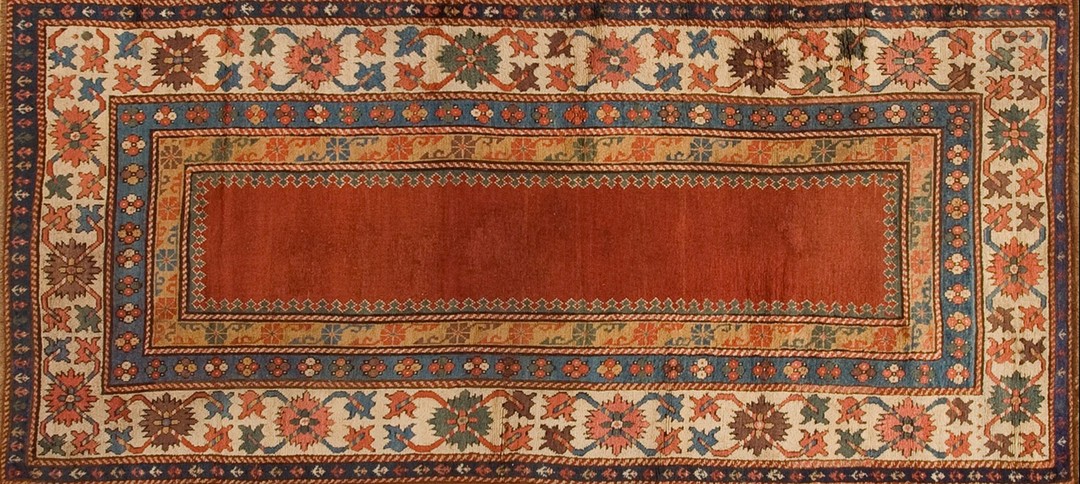
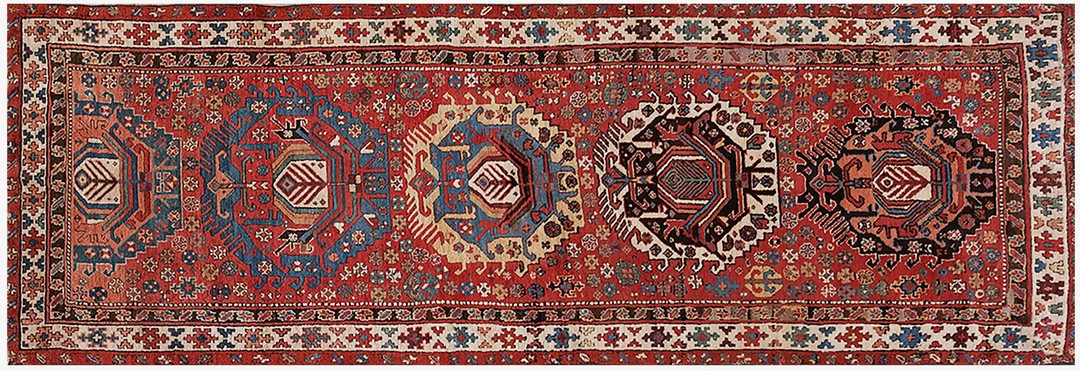
- Kazak red carpet (Caucasus) — Renowned for saturated crimson fields, Kazak and Armenian rugs use vibrant reds as dominant backdrops for bold, tribal motifs. — Why: The intensity of the red gives these rugs a celebratory, powerful character that stands out in any room.
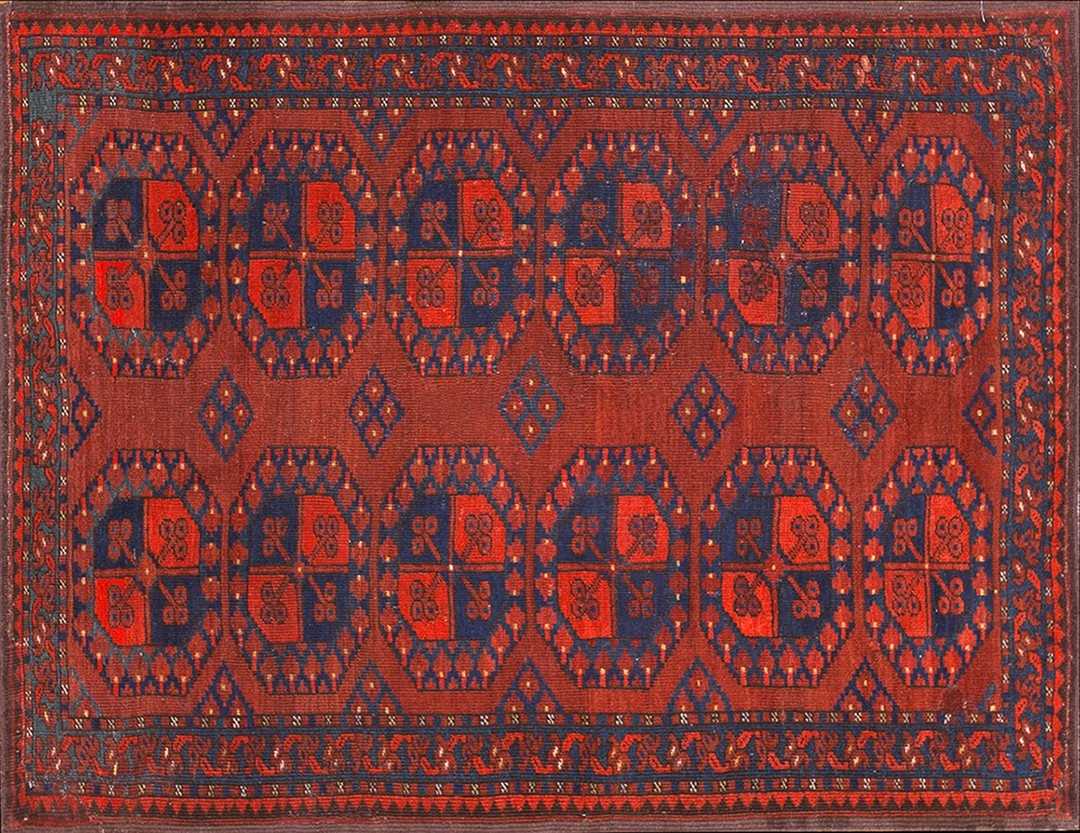
- Bokhara madder rug (Turkmen) — Characterized by repeating gul motifs on deep madder-red backgrounds, Bokhara and Turkmen rugs epitomize tribal red rug identity. — Why: Their iconic geometric patterns are inseparable from their rich, dark red fields, making them instantly recognizable worldwide.
Rust Hues in Vintage & Tribal Rugs
- Turkish village rugs — Rust tones appear frequently in Anatolian weaving, where muted earthy reds form backgrounds for stylized floral and geometric motifs. — Why: Rust grounds the design and harmonizes with natural palettes inspired by soil and clay.
- Kurdish rugs — Often woven with rustic, terracotta backgrounds, Kurdish pieces show rust-red as a cultural hallmark. — Why: The earthy red underscores their tribal identity, linking symbolism of home, earth, and resilience.
- Vintage tribal rugs — Rust emerges in tribal weavings across Persia, Anatolia, and the Caucasus, particularly in older pieces where brighter reds have mellowed into earthy tones. — Why: Time and natural dyes transform bold reds into subtle rust, making these vintage rust rugs especially prized for their aged beauty.
Modern & Bohemian Rust Rug Trends
In contemporary interiors, the resurgence of the bohemian rust rug reflects a desire for warmth and authenticity. Designers and homeowners alike favor rugs with distressed, over-dyed, or faded rust tones that echo the charm of vintage tribal weavings. These rugs fit seamlessly into eclectic, layered interiors where organic textures and earthy colors are key.
Beyond bohemian spaces, rust has also gained traction in modern minimalism, where it adds depth without overwhelming a neutral palette. The rising demand for vintage rust rug styles—authentic or newly distressed—shows how rust tones bridge tradition and trend, making them a versatile choice for today’s homes.
From iconic tribal red rugs to contemporary bohemian designs, red and rust remain signature elements of some of the world’s most collectible and trend-forward rug patterns.
Red & Rust in Interior Design
Anchoring Minimalist and Maximalist Rooms
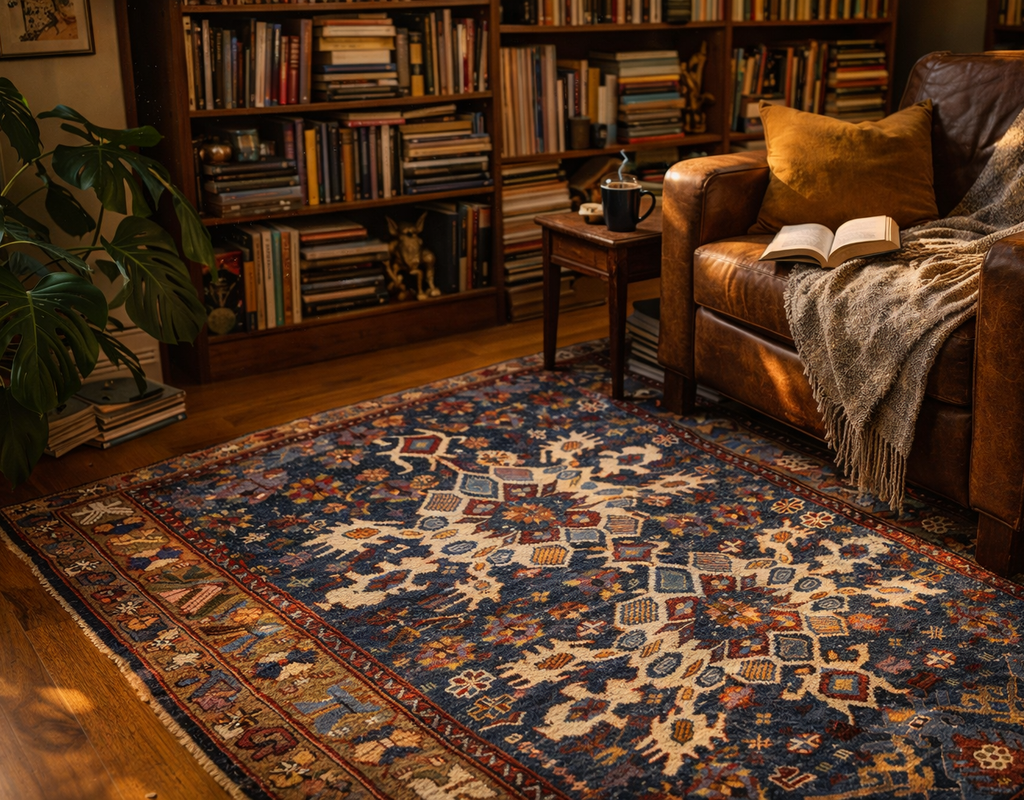
A richly colored Persian-style rug sets the tone for this inviting and book-filled home library corner.
- Minimalist red rug — In pared-back interiors, a bold red rug becomes the statement piece. A single crimson or madder field rug introduces warmth and vitality without needing additional ornamentation. — Why: Minimalist spaces benefit from one strong focal point, and red rugs naturally draw the eye while keeping the rest of the design calm and balanced.
- Maximalist red carpet use — In eclectic, layered rooms, red rugs integrate seamlessly into complex color stories. Whether Persian, Kazak, or bohemian, their saturated tones harmonize with other vibrant patterns. — Why: Red carries enough weight to stand up to busy interiors, adding richness instead of disappearing among competing colors.
Pairing with Neutrals and Color Schemes

A moody, richly textured reading corner defined by the vibrant color of a vintage-style area rug.
- Rust rug with neutral palettes — Creams, grays, and natural woods provide an ideal backdrop for rust rugs. Their earthy warmth blends easily without overwhelming. — Why: Designers use rust rugs as grounded, organic elements that highlight the textures and tones of neutral furniture.
- Red rug pairing with accent colors — Crimson and burgundy rugs work well alongside blues, greens, and metallics, while coral or rust tones pair beautifully with terracotta pottery or muted ochres. — Why: Strategic pairing prevents reds from dominating, allowing them to harmonize with other décor choices.
Rust in Paint & Decor Updates
Rust hues are especially prized for their adaptability. Unlike sharper reds, rust tones adjust gracefully to shifting paint trends. A rust rug can pair with everything from soft sage walls to modern gray palettes and even bolder accent tones like navy or black.
Designers often call this future-proof rug flexibility—an investment in a piece that won’t clash when the rest of the room evolves. This makes rust carpets practical choices for homeowners who anticipate redecorating or updating color schemes over time.
Mixing Multiple Red Hues
- Layering crimson, rust, and coral — Combining different red shades within one room creates depth and richness. For example, a rust rug may ground the floor while crimson textiles or coral pillows add vibrancy. — Why: Mixing red carpets intentionally introduces tonal variety, preventing a space from feeling flat or one-dimensional.
- Avoiding overwhelm — Too many intense reds can dominate a room. The key is balance: pair strong reds with earthy rust or muted burgundy for harmony. — Why: Careful layering ensures warmth without visual clutter, keeping the atmosphere both inviting and sophisticated.
Whether serving as a minimalist anchor, blending into neutrals, or adapting to new paint trends, red and rust rugs prove endlessly versatile. They can shine as focal points or act as grounding neutrals, ensuring long-lasting relevance in evolving interior design schemes.
Practical Care, Cleaning, and Longevity
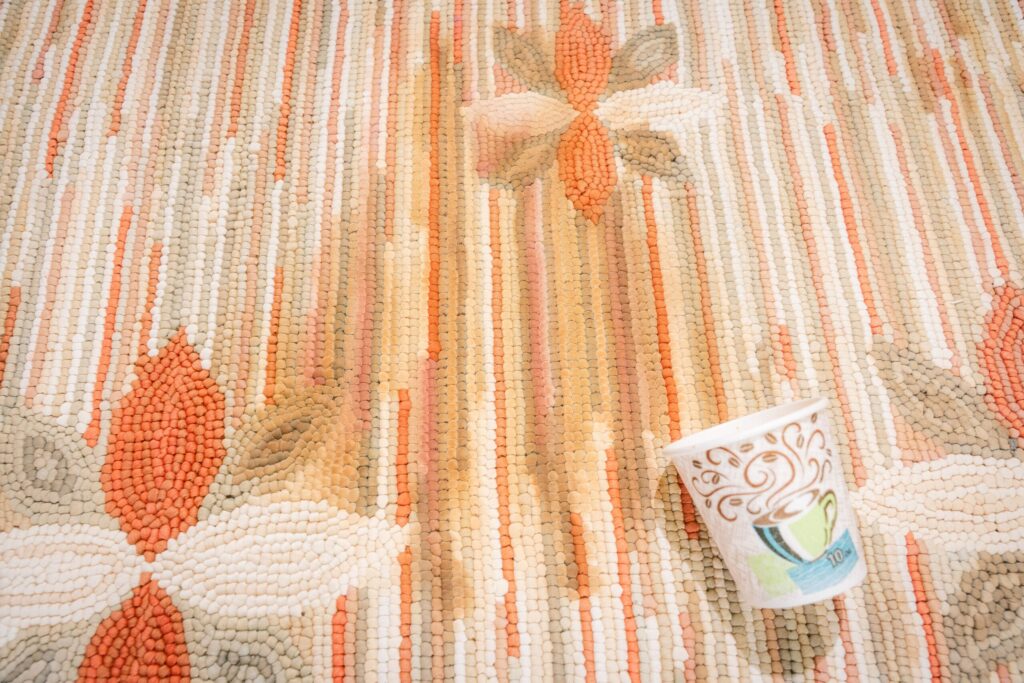
Close-up view of a tipped paper coffee cup resting on a handwoven wool rug, highlighting the rug’s dense pile, subtle color variations, and traditional geometric motifs in warm neutral and terracotta tones.
Why Red Rugs Fade & How to Prevent It
- Sunlight sensitivity — Red rug fading is common because many natural and early synthetic dyes are especially vulnerable to UV exposure. Direct sunlight accelerates color loss, leaving reds dull or uneven over time. — Why: Red wavelengths break down faster under UV light than cooler tones, making them more fragile in bright rooms.
- Prevention methods — Use UV-filtering window film, blinds, or curtains in sunlit rooms; rotate rugs every few months to ensure even exposure. — Why: These steps spread wear and prevent certain areas from bleaching out while others stay vibrant.
Cleaning to Preserve Vibrancy
- Gentle detergents — For rust rug care, always use pH-neutral or slightly acidic solutions. — Why: Harsh alkali cleaners can destabilize dyes, shifting reds toward brown or orange and reducing vibrancy.
- Avoid water saturation — Red dyes, especially in older or unstable synthetic rugs, may bleed when wet. — Why: Minimal water and professional-grade drying methods prevent bleeding and protect adjacent colors.
- Professional cleaning — Antique or high-value rugs should be entrusted to specialists. — Why: Experts can preserve red dye through controlled washing, and they can reintroduce color-matched wool during restoration if fading has already occurred.
Protecting from Sun and Wear
Sun exposure remains the greatest risk to preserving red and rust hues. To extend longevity, avoid placing rugs directly under skylights or unfiltered windows.
In addition, prevent concentrated wear by rotating placement, using rug pads, and lifting heavy furniture rather than dragging it across fibers. Rug sun protection and proper handling not only extend the life of the dyes but also reduce fiber wear, keeping rugs both vibrant and structurally sound.
Layering Rugs: Effects on Red/Rust Longevity
Layering red rugs over carpeting is stylish but comes with caveats. The trapped heat between rug and carpet accelerates fading and may encourage moisture retention, which destabilizes dye. Furthermore, layered rugs face more concentrated foot traffic and compression from furniture, leading to earlier wear.
Regular rotation and lifting heavy pieces instead of sliding them help mitigate damage.
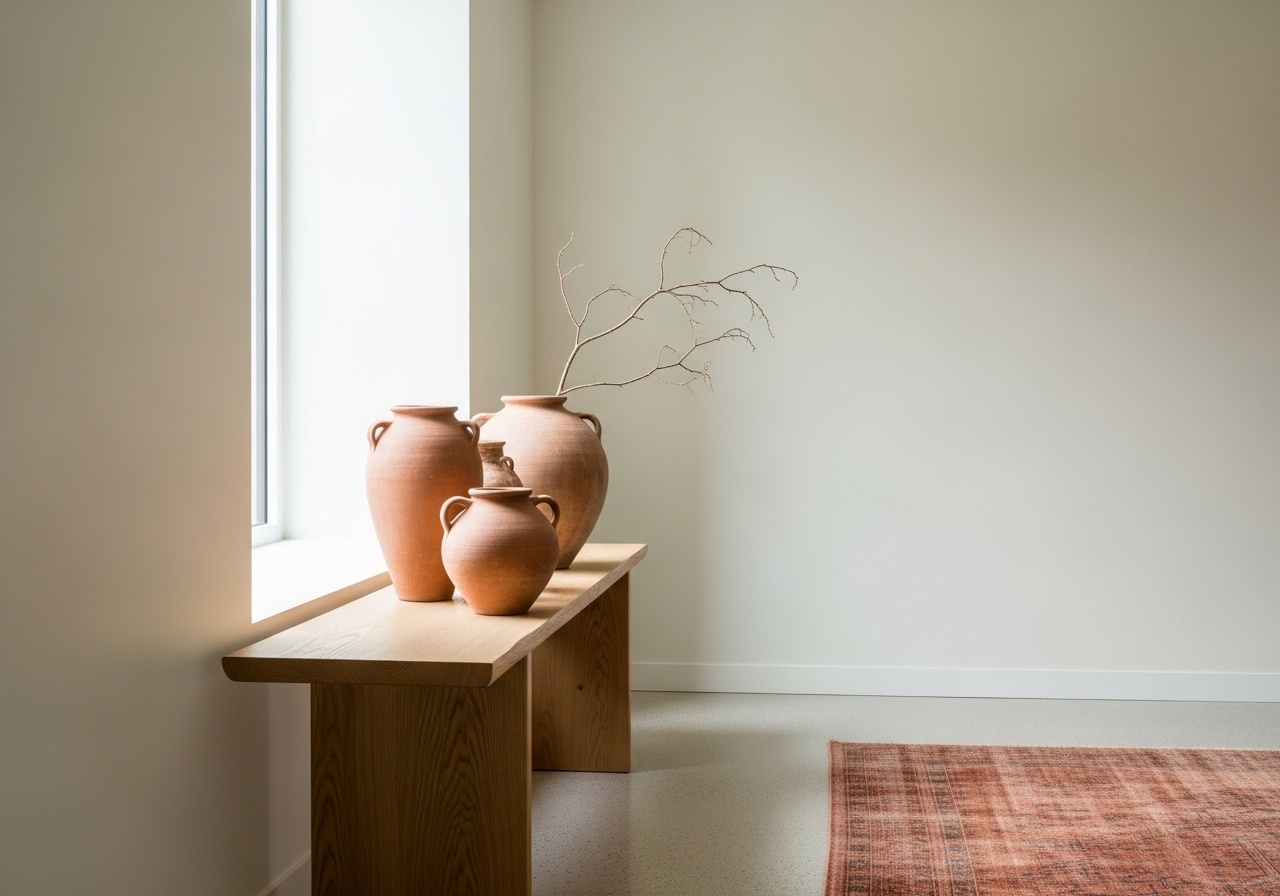
Earthy terracotta decor paired with a rust rug.
For practicality, layering works best with durable, less valuable rugs rather than antique or collector pieces. Red and rust rugs reward attentive care.
With proper rug cleaning tips, mindful sun protection, and careful placement, their colors remain vibrant and their fibers strong—ensuring that their warmth and atmosphere endure for decades.
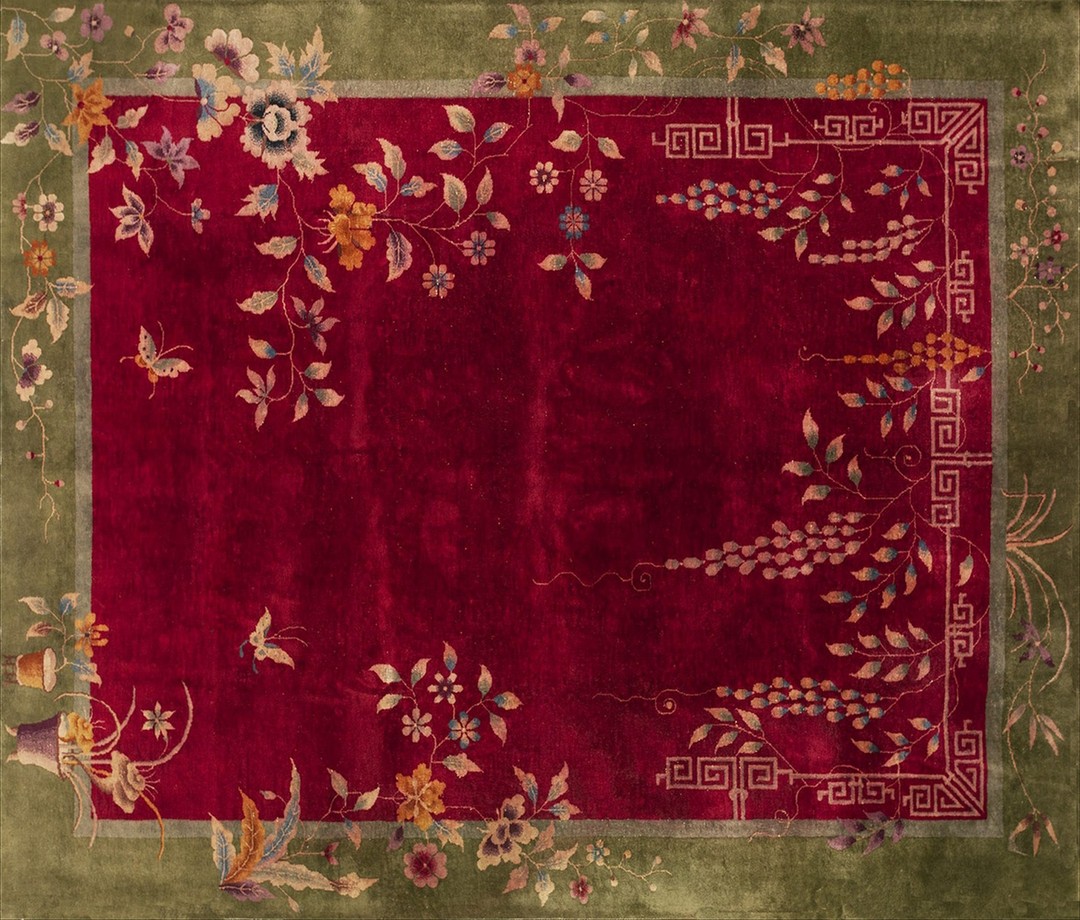
Explore a Few of Our Favorite Red-Rust Rugs

FAQ
- Rust rugs vs red rugs—what’s the difference in vibe?
Rust rugs feel earthy and mellow; red rugs read bolder and more energetic. Choose rust for warmth and subtlety, red for stronger contrast or a focal point.
- How do I layer a rust rug over a jute base?
Use a thin felt-rubber pad between layers to prevent creep. Center a smaller rust rug (e.g., 5×7) over a larger jute (e.g., 8×10).
- Are rust rugs compatible with robot vacuums and pets?
Yes—pick low-pile, bound-edge rust rugs without fringe to avoid tangles. Spot-clean accidents promptly; enzyme cleaners help with pet odors.
- Can rust outdoor rugs handle rain and sun?
Choose 100% polypropylene rust rugs for patios; they shed water and dry quickly. Elevate with breathable pads so moisture escapes.
- How can I prevent fading on rust rugs near windows?
Use UV-filtering shades, rotate the rug 180° every 6 months, and avoid harsh cleaners. Sun fading is gradual; prevention keeps tones richer longer.
- What size rust rug fits under a king bed?
Common picks are 9×12 or 8×10 rust rugs. Leave about 18–24 inches of rug showing on the sides and foot for comfortable step-off.
- Are rust rugs good for fall-inspired decorating?
Yes—rust rugs echo autumn tones and look great with ochre, mustard, and deep green. Swap in seasonal pillows and throws for quick updates.
- Will rust rugs clash with gray sofas or walls?
No—rust rugs warm up gray beautifully. Add a connecting accent like an olive pillow or walnut table to tie the palette together.
- What materials are best for high-traffic rust rugs?
Low-pile wool and solution-dyed polypropylene are reliable for busy areas. Both resist crushing and stains; polypropylene excels for basements, entryways, and outdoor spaces.
- Do rust rugs hide dirt better than beige rugs?
Often yes—mid-tone, patterned rust rugs conceal everyday debris more than pale solids. Vacuum regularly and schedule deeper cleans 1–2 times per year.
- Are rust rugs considered neutral or a bold accent?
Rust rugs act as a warm near-neutral; they read earthy, not loud. They’re an easy bridge between cool grays and warm woods.
- What colors complement rust rugs in a living room?
Rust rugs love cream, camel, walnut, olive, ochre, and matte black. Pair with natural textures—linen, leather, and wood—for warmth.
- What size red rugs work under a dining table?
Add at least 24 inches on all sides so chairs stay on the rug when pulled out. For a 60-inch round table, start around 8×10.
- How much do red rugs cost on average?
Machine-made red rugs often run \$100–\$600 for 8×10, while hand-knotted wool can range from \$800 to \$3,000+. Age, knot density, and materials drive price.
- Which rug pad should I use under red rugs on hardwood?
Choose a non-staining felt + natural-rubber pad, about 1/8–1/4 inch thick. Avoid PVC pads, which can discolor floors and slip more over time.
- Are red rugs safe over radiant floor heating?
Usually yes, but avoid thick pads that trap heat. Use low-profile felt-and-rubber pads and check flooring and rug maker guidelines for max temperatures.
- How do I clean a spill on wool red rugs?
Blot immediately with a white towel, then treat with a wool-safe solution and cold water. Work from the spill’s edge inward; never rub, and dry with airflow.
- What materials are best for durable red rugs?
Wool red rugs balance durability, stain resistance, and color richness. For budget or outdoor use, polypropylene is tough and easy to clean, while cotton suits low-traffic spots.
- Can red rugs make small rooms feel smaller?
A large, low-contrast patterned red rug can still expand a space. Keep walls light, choose a larger size to reduce floor seams, and limit heavy, dark furniture.
- Do red rugs fade in direct sunlight?
Strong UV can fade red dyes over time. Rotate the rug every 3–6 months and use window shades or UV film; avoid prolonged sun exposure.
- What size red area rug works under a standard living-room sofa?
Most rooms suit 8×10 or 9×12 red rugs. Let front sofa legs sit on the rug and keep 8–12 inches of bare floor around the perimeter.
- Will red rugs bleed color when cleaned, and how can I prevent it?
Some red rugs can bleed if saturated. Blot, use cold water, test with a white cloth first, and use wool-safe detergent; for large stains, hire a professional cleaner.
- Are red rugs good for high-traffic homes with kids or pets?
Yes—medium to dark patterned red rugs hide dirt better than light solids. Choose low-pile wool or polypropylene and spot-clean quickly to prevent set-in stains.
- What colors pair best with red rugs?
Neutrals (white, cream, gray), navy, forest green, and brass accents complement red rugs. Repeat red in 2–3 small accents—pillows or art—for cohesion.
- What styles work with red rugs in modern homes?
Red rugs suit traditional, transitional, and modern rooms when balanced with neutrals. Aim for about 70% whites, woods, or grays so the rug leads without overwhelming.