
The Ultimate Master Guide to Carpet and Rug Smelly Odor Removal: Luxury, Antique, and High-Performance Textiles
The definitive industry resource for the science of textile preservation, olfactory management, and indoor air quality.
You may also want to review: How To Care For Your Rugs
I. The Philosophical and Aesthetic Impact of Odor
Antique rugs and luxury rugs are more than mere floor coverings; they are cultural artifacts, design statements, and functional pieces that enhance the ambiance of a room. The presence of odor in a rug can significantly influence the atmosphere of a space, affecting how a room feels to both residents and visitors.
Musty, sour, or stale smells can subconsciously reduce the perceived cleanliness, sophistication, and comfort of an environment.
The human olfactory system is one of our most primitive and powerful senses, directly linked to the limbic system, which governs emotion and memory. Because of this, unpleasant odors can trigger immediate feelings of irritation, distraction, or even stress, whereas a neutral or fresh-smelling rug enhances feelings of relaxation and elegance.
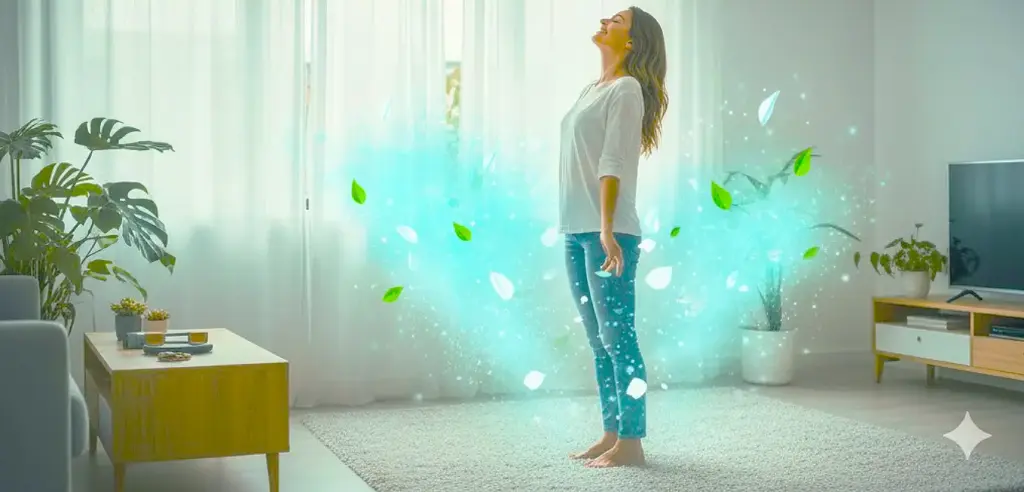
The Positive Impact: “The Scent of Luxury”
When a room features a fresh, clean, or subtly aromatic rug (such as one treated with cedar or sandalwood), it triggers the parasympathetic nervous system. This reduces cortisol levels and creates a “halo effect” for the home.
A good-smelling rug communicates safety, order, and high status, making the occupants feel more grounded and relaxed.
The Negative Impact: “The Sensory Tax”
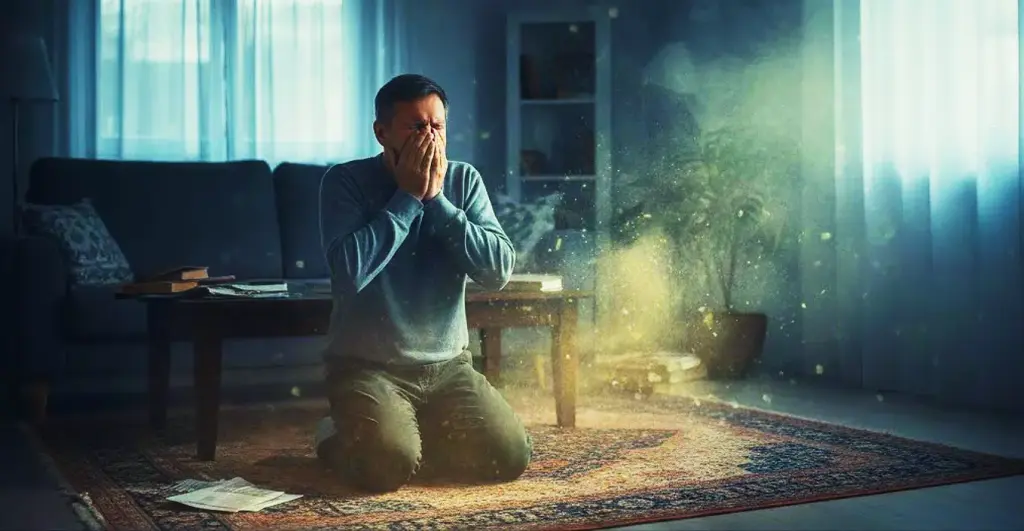
Conversely, a foul-smelling / smelly rug, acts as a constant, low-level stressor. Because the amygdala processes smell as a potential warning (historically identifying rot, fire, or predators), a musty or ammonia-heavy rug keeps the brain in a state of subtle “alert.”
This leads to:
- Olfactory Fatigue: You may stop “noticing” the smell (going nose-blind), but your brain is still processing the toxicity, which can lead to headaches and irritability.
- Perceived Devaluation: A $10,000 antique rug that smells like a damp basement is perceived as having low value, regardless of its visual beauty.
The Power of “Neutral”
In the world of high-end textile conservation, the “Gold Standard” isn’t actually a perfumed rug—it is Absolute Neutrality. A neutral scent profile indicates a rug that is chemically balanced, free of microbial activity, and structurally sound.
A neutral rug allows the intentional scents of a home (like fresh flowers or a fireplace) to shine without competing with the background “noise” of a dirty carpet.
Scent In Interior Design
In high-end environments, the scent is often considered the “invisible layer” of interior design; a foul-smelling rug acts as a sensory tax that devalues the visual beauty of the architecture and furniture.
For collectors and homeowners alike, maintaining a neutral or pleasing scent in a rug is essential not only for aesthetic reasons but also for emotional well-being and indoor air quality (IAQ).
II. Understanding Why Rugs Retain Odor: The Molecular Science
Rugs are inherently porous structures composed of fibers that act as a three-dimensional filter for the home. To effectively treat an odor, one must understand the biological and chemical matrix of the specific materials involved.
Over time, these trapped materials—moisture, oils, dust, and particulate matter—lead to persistent odors that affect both the sensory experience of a space and the long-term integrity of the rug.
The Biological Complexities of Wool and Silk
Wool is a protein fiber characterized by a complex, overlapping scale structure known as cuticles. These microscopic scales are designed by nature to trap matter, which in a home environment means they collect skin cells, dust mites, and airborne oils. While wool contains natural lanolin that provides a degree of water repellency, it is also highly hygroscopic.
It can hold up to 30% of its weight in water vapor without feeling damp to the touch. This “hidden moisture” allows organic residues to break down slowly, providing a perfect substrate for bacterial growth that creates persistent, heavy odors.
Silk, while smoother and less prone to trapping physical dust than wool, presents a different set of challenges. It is a protein fiber secreted by larvae and is highly sensitive to atmospheric pollutants. Because silk is chemically similar to human hair, it can be physically dissolved or weakened by high-pH alkaline cleaners or aggressive enzymes. This makes odor removal a high-stakes task where the wrong chemical can literally digest the rug’s pile.
Cotton Foundations and Synthetic Limitations
Cotton is almost universally used in the foundation (warp and weft) of antique rugs. As a cellulose-based fiber, it acts as a primary wick, pulling moisture into the very “spine” of the rug. If the foundation stays damp, it becomes the primary site for fungi. This fungal activity is what produces the permanent, earthy, or “rotting” smell often associated with old textiles that have been stored improperly.
The Role of Rug Construction
Hand-knotted pile rugs contain thousands of knots that create pockets capable of trapping dust, oils, and moisture deep within the fibers. In high-density rugs, these pockets are so tight that standard vacuuming cannot reach the bottom.
Tufted rugs, manufactured with an adhesive backing (often SBR latex), may retain odors in the adhesive layers. As this latex ages, it undergoes oxidative degradation, releasing a sour “burnt sugar” odor. Flatweave rugs, lacking a pile, allow odors to travel easily from the rug pad through the woven structure.
III. Masking vs. Neutralizing vs. Deodorizing
Understanding the difference between these three approaches is critical for luxury rug owners. Using the wrong method can lead to permanent damage or the creation of a “cloying” scent that is worse than the original odor.
Masking involves the use of heavy perfumes or fragrances to cover up an existing odor. This does not address the source of the smell; it simply overwhelms the nose with a stronger, more pleasant scent. In luxury rugs, masking is discouraged because the chemical oils in perfumes can attract more dirt and eventually turn rancid, bonding with the original foul odor to create a complex, inseparable stench.
Neutralization is a chemical process where a cleaning agent reacts with the odor-causing molecule to change its structure. For example, when an acidic odor (like certain bacteria) meets an alkaline neutralizer (like baking soda), a chemical reaction occurs that renders the original molecule odorless. This is the preferred method for high-value rugs because it removes the problem at the molecular level without adding heavy residues.
Deodorizing is an umbrella term that often includes both neutralization and physical removal. It involves eliminating the odor-producing bacteria or fungi entirely. Deodorizing high-end rugs usually requires a “multi-vector” approach: physical dry-soil removal, moisture extraction, and the application of an agent that kills the microbial source of the scent.
IV. Effective Deodorizers: A Technical “How-To” Guide
The best rug deodorizer depends entirely on the specific nature of the contaminant and the fiber type. Below are the detailed protocols for each major agent.
1. Baking Soda (Sodium Bicarbonate)
Best For: Acidic spills, light dampness, and general “stale” air. Suitable for wool, cotton, and synthetic rugs.
How to Use: Ensure the rug is completely dry. Sprinkle a generous, even layer over the entire surface. Using a soft horsehair brush, gently “groom” the powder into the pile so it reaches the foundation. Let it dwell for 24 to 48 hours. This long dwell time is necessary for the pH neutralization to occur. Vacuum thoroughly using a HEPA-filter vacuum on a suction-only setting.
2. Activated Charcoal
Best For: Cigarette smoke, fireplace soot, and heavy chemical off-gassing (VOCs).
How to Use: Charcoal should not be applied directly to the fibers as it can stain. Instead, place charcoal pellets or powder inside breathable muslin or mesh bags. Tuck these bags under the rug or place them in a perimeter around the rug in a closed room for 72 hours. Avoid direct application on delicate silks.
3. Bio-Enzymatic Cleaners
Best For: Pet urine, vomit, and organic contamination in wool, cotton, and synthetic rugs.
How to Use: First, blot any liquid. Apply the enzyme cleaner until the area is damp but not saturated. Cover the treated area with a piece of plastic wrap or a damp white towel to slow evaporation, as enzymes need moisture to “digest” organic matter. Allow 4 to 8 hours of dwell time. Remove the cover and let it air dry naturally. Test on antique rugs in a small area first.
4. Distilled White Vinegar
Best For: Neutralizing alkaline salts and “refreshing” wool scents.
How to Use: Create a solution of 1 part vinegar to 3 parts distilled water. Lightly mist the surface of the rug. Do not soak. The acetic acid will neutralize alkaline odors and then evaporate completely, taking the odors with it.
V. Moisture: The Hidden Culprit & Basement Environments
Moisture is the single most important factor contributing to rug odor. Even rugs that appear dry can retain significant moisture absorbed from the environment, spills, or cleaning processes.
Humidity levels exceeding 55–60 percent accelerate microbial activity, allowing bacteria and fungi to metabolize trapped organic matter and release volatile compounds responsible for musty or sour smells.
Basements present a unique challenge due to cool temperatures and high humidity. Concrete floors transmit water vapor into rugs and pads through capillary action. Basements, low-ventilation rooms, and storage areas are especially prone to moisture accumulation.
Maintaining indoor humidity between 30–50% and using breathable rug pads are essential strategies for any collector storing rugs at or below ground level. Periodic airing and rotating rugs can prevent stagnation and limit microbial growth.
VI. Mold, Mildew, and Microbial Growth Pathology
Mold and mildew are among the most persistent sources of rug odor. Mold spores are present naturally in indoor environments but only become problematic when they encounter moisture and organic matter such as dust, hair, or skin cells embedded in a rug.
Once active, they release volatile compounds that create a musty odor. In antique or densely knotted rugs, mold may grow deep within the pile or padding, making early detection difficult.
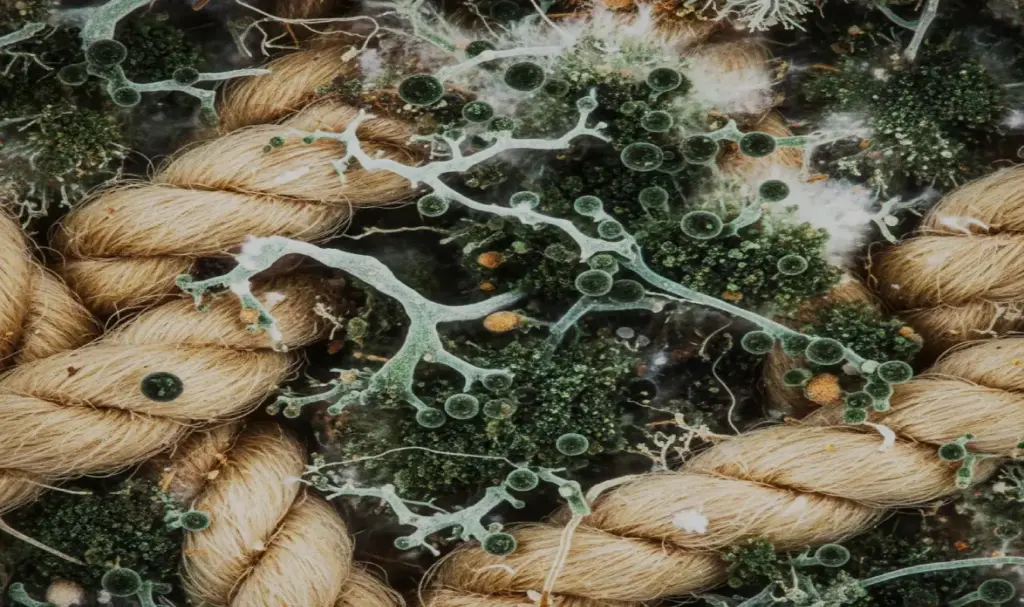
Beyond odor, mold can affect indoor air quality, triggering allergies or respiratory irritation. Effective remediation often requires professional cleaning, including controlled immersion washing, antimicrobial treatments, and climate-controlled drying.
In severe cases, replacement of contaminated padding or subflooring may be necessary to ensure odors do not return.
[Image showing mold growth on carpet fibers under magnification]
VII. Pet Odors, Smoke, and Organic Contamination
The Persistence of Pet Urine
Pet urine is a particularly challenging source of rug odor. Urine contains urea, creatinine, and uric acid, which can crystallize within fibers and padding. These crystals are insoluble and can persist even after the rug appears dry. When humidity or moisture is reintroduced, the crystals release strong ammonia-like odors.
Enzyme-based cleaners are the most effective solution, digesting uric acid molecules and neutralizing the odor at its source. Deep or repeated contamination may require professional extraction and padding replacement. Surface sprays and masking agents provide only temporary relief and are insufficient for long-term odor control, especially in valuable antique rugs.
Smoke, VOCs, and Chemical Odors
Rugs also absorb chemical residues and VOCs from cigarette smoke, fireplaces, cooking, paints, and household cleaning agents. These compounds bind to fibers and are gradually released into the air over time. Activated charcoal can adsorb some VOCs, but deeply embedded odors typically require professional cleaning for full removal.
Antique rugs are particularly sensitive, as harsh chemicals or excessive moisture can damage fibers or natural vegetable dyes. Low-moisture cleaning techniques combined with proper airflow management are crucial to eliminate chemical odors while preserving rug integrity.
Top 4 Smelly Carpets and Rugs Complaints and Remediation
Not all “bad smells” are created equal. To effectively restore a luxury rug, the treatment must be calibrated to the specific molecular structure of the contaminant.
Below is the technical breakdown for the three most common luxury rug complaints:
- The Problem: Removing Urine and “Pee” Smells (The Ammonia Cycle): Urine is a complex biological fluid that presents a dual threat to rugs. Initially, it is acidic; however, as it dries, bacteria break down the urea into ammonia and uric acid crystals. These crystals are hygroscopic—they act like tiny magnets for moisture. On humid days, they re-absorb water and “off-gas” ammonia, which is why a rug may smell worse in the summer.
- The Fix: Standard steam cleaning is insufficient because it cannot dissolve the crystals. You must use a bio-enzymatic digester. These enzymes physically “eat” the crystals. For luxury wool, ensure the enzyme is pH-balanced (near 7.0) to prevent fiber damage. After application, cover the spot with a damp white cloth to keep the enzymes active for at least 6 hours.
- The Problem: How to Get Cat and Dog Smells Out of a Rug: General “pet smell” is usually a combination of lipids (skin oils) and dander (protein). Because wool is oleophilic (oil-attracting), it bonds with the natural oils from a dog or cat’s coat. These oils eventually turn rancid, creating that heavy, “greasy” animal scent that permeates a room.
- The Fix: This requires a two-step process. First, use a low-moisture solvent or a specialized wool-safe degreaser to break the bond between the animal oils and the wool’s natural lanolin. Second, apply Baking Soda (Sodium Bicarbonate) as a dry absorbent to pull the loosened oils out of the pile. For cat odors, which are more concentrated, a distilled white vinegar mist (1:3 ratio with water) helps neutralize the alkaline components of feline dander.
- The Problem: How to Get Mildew and Musty Smells Out of a Rug: The “musty” smell is actually the scent of Microbial Volatile Organic Compounds (mVOCs). This is a byproduct of active mold or mildew consuming the organic fibers of your rug (usually the cotton foundation). If you smell mildew, the rug is actively being “digested” by fungi.
- The Fix: The primary cure is dehydration and UV exposure. Move the rug to a low-humidity environment (under 40% RH) immediately. The “Solarization” technique—placing the rug pile-face down in direct sunlight—is the most effective natural way to kill mildew spores. For persistent smells, a professional Ozone Treatment or a Hydroxyl Generator can be used to oxidize the spores at the molecular level without using wet chemicals.
- The Problem: How to Get Vomit and Puke Smells Out of a Rug: Vomit is particularly hazardous to luxury textiles because it contains hydrochloric acid and digestive enzymes. These components do not just create a foul odor; they can actually “digest” the protein bonds in wool and silk, leading to permanent fiber weakening and “color bleeding.” The sour smell is caused by butyric acid, which is extremely persistent and can permeate the rug’s foundation if not treated with a neutralizing agent.
- The Fix: Speed is essential. First, remove as much solid matter as possible using a blunt spoon—avoid scrubbing, which pushes the acid deeper into the knots. Second, neutralize the acid using a “slurry” of baking soda and water, or a specialized alkaline spotter. Once the bubbling stops, the acid is neutralized. Finally, apply a bio-enzymatic cleaner to break down the remaining proteins and bile. For persistent sour smells, a final rinse with a 50/50 mix of water and 3% hydrogen peroxide (on light-colored rugs only) will oxidize the remaining odor molecules.
VIII. How to Get Odors Out: The Tactical Protocol
To successfully remove odors, you must follow a strict sequence that addresses the rug from the foundation up.
- Mechanical Dusting: Before any liquid touches the rug, you must remove the particulate matter. Without this, liquid cleaners turn dust into “mud” inside the knots.
- Diagnosis: Identify if the smell is biological (musty), chemical (off-gassing), or protein-based (pet accidents).
- Application: Choose your agent (Baking Soda, Charcoal, or Enzymes) based on the guide above.
- The Physics of Drying: Use high-volume fans to ensure the rug dries within 6–8 hours. If a rug remains damp for too long, it will develop a “wet dog” smell due to the off-gassing of damp proteins.
IX. How to Make Your Carpet Smell Good (Archival Safe)
To achieve a “luxury” scent profile without using harmful sprays, consider the “Solarization” technique. By placing a rug pile-side down on a clean, dry surface in the sun for 3–4 hours, you utilize UV rays to kill surface bacteria. To add a luxury scent without chemicals, you can infuse your baking soda with high-grade essential oils like cedarwood or sandalwood.
These oils mimic the natural scents of the high-altitude regions where many antique rugs were originally woven, providing an authentic and sophisticated fragrance. Vacuum gently, rotate rugs to prevent uneven wear, and address spills immediately to keep area rugs fresh year-round.
X. DIY vs. Professional Cleaning: The Threshold of Risk
Routine maintenance can mitigate minor odors. Vacuuming gently, surface dusting, and airing rugs outdoors are effective for everyday freshness. However, persistent odors, microbial contamination, pet accidents, or smoke damage usually require professional intervention. Experts use climate-controlled drying, advanced extraction, fiber-safe deodorization methods, and controlled immersion washing to remove odors without damaging fibers, foundations, or natural dyes.
Antique rugs, in particular, benefit from professional expertise to preserve both aesthetic and historical value. Professionals use climate-controlled drying, advanced extraction, and controlled immersion washing to remove odors safely.
XI. Chemical Compatibility and Dye Stability
Antique rugs demand exceptional care due to their delicate fibers and natural dyes. Vegetable-dyed rugs can bleed or fade if exposed to high-pH cleaning solutions, excessive moisture, or harsh chemicals. Professional cleaning involves controlled immersion with pH-balanced solutions, careful extraction, and climate-controlled drying.
| Rug Type | Dye Source | Safe Deodorizer | Danger Zone |
|---|---|---|---|
| Antique Persian | Vegetable (Natural) | Baking Soda, Vinegar | High-pH soaps (causes bleeding) |
| Luxury Silk | Natural/Acid Dyes | Activated Charcoal | Enzymes (can digest silk fibers) |
| Modern Tufted | Synthetic | Most Agents | Steam (melts the latex adhesive) |
| Tribal Kilim | Natural/Aniline | Baking Soda | Heavy Water (causes bleeding) |
XII. Long-Term Value and Restoration
Maintaining a rug’s freshness requires ongoing attention. Vacuum regularly, rotate rugs, address spills immediately, and use breathable pads to reduce moisture accumulation. Even with meticulous care, some rugs eventually require repair or restoration due to saturated padding, microbial contamination, or structural weakening.
Early detection and intervention are critical for maintaining aesthetic and historical value pf rugs. Professional restoration ensures that luxury and antique rugs remain visually stunning, structurally sound, and odor-free for decades, preserving both their intrinsic and collectible worth.
Conclusion: Odor in rugs is a complex interplay of fiber properties, construction, microbial activity, moisture, and chemical residues. By addressing odor at its source, maintaining proper environmental conditions, and implementing preventative strategies, homeowners and collectors can enjoy rugs that are visually stunning and pleasantly fragrance-free for generations.
FAQ
- When should I call a professional for smelly carpets and rugs odor removal?
Call a pro if odors return after cleaning/drying, if there’s floodwater exposure, or if you suspect mold. Pros can extract deeper, treat padding/subfloors, and advise whether replacement is smarter.
- What should I avoid doing when trying rug odor removal?
Avoid soaking the rug or using too much cleaner—over-wetting drives odors into the pad and slows drying. Also avoid harsh bleach on fibers unless the manufacturer explicitly allows it.
- Can steam cleaning fix smelly carpets and rugs odor removal problems?
Steam/extraction can help when done with proper rinsing and fast drying. If the odor source is in the pad/subfloor or there’s mold, steam alone usually won’t solve it.
- How do I remove vomit odor from carpet quickly?
Remove solids, blot, then clean with an enzyme cleaner (or mild detergent + rinse/extract) and dry fast. Odor persists when proteins remain in the fibers or padding.
- How do I remove food spill smells (milk, grease) from rugs?
Blot, then clean with a small amount of mild detergent and rinse/extract; grease often needs a degreasing cleaner. If the spill hit the pad, odor removal may require lifting and drying underneath.
- Will a carpet deodorizer powder work better than baking soda?
Many powders mainly add fragrance; baking soda absorbs odors but must be vacuumed fully. If you use any powder, use it sparingly and remove it thoroughly to avoid residue buildup.
- How often should I deep clean carpets to prevent odors?
A common baseline is about once a year, more often for pets/high-traffic homes (every 3–6 months). The key is drying completely after any deep clean.
- Can a HEPA vacuum help with smelly carpets and rugs odor removal?
It helps by removing odor-carrying particles like dust, dander, and mold spores. Vacuum both sides of removable rugs and empty/clean the vacuum outdoors to avoid redistributing odor.
- What’s the best way to remove “new carpet smell” or new rug smell?
Ventilate heavily (open windows/fans) and let the rug off-gas in a well-ventilated area when possible. Odors often drop noticeably after 48–72 hours of airflow.
- Do odor-absorbing products like activated charcoal work for rug odor removal?
They can help reduce background smells in a room by adsorbing odors in the air. Use them as a supplement—charcoal won’t remove the source contamination inside a rug or pad.
- How do I get smoke smell out of carpets and rugs?
Vacuum with HEPA, clean the carpet, and clean other absorbent surfaces (curtains, upholstery) because smoke spreads everywhere. Severe smoke odor often needs professional deodorizing beyond basic carpet cleaning.
- Can smelly carpets and rugs odor removal require treating the subfloor?
Yes—urine, smoke, and floodwater can soak through to the subfloor and baseboards. Odor removal may require sealing/treating the subfloor after cleaning, especially if smells “come back” in humidity.
- When should I replace carpet padding for odor removal?
Replace padding if urine penetrated deeply, flooding occurred, or the odor returns after cleaning and drying. Padding is a sponge—once contaminated, it can keep re-smelling even if the top looks clean.
- How do I remove musty/mildew smell from carpets after a leak?
Dry aggressively: extract water, lift/dry the carpet and pad if needed, and dehumidify the room. If carpet/pad stayed wet more than ~48 hours, replacement is often the only reliable fix.
- What’s the safest DIY option for smelly rugs odor removal with kids and pets?
Start with ventilation, HEPA vacuuming, and a light baking soda treatment you fully remove. For pet accidents, choose a pet-safe enzymatic cleaner and keep pets off until fully dry.
- How do I remove wet-dog smell from rugs and carpets?
Vacuum hair/dander first, then clean with a mild detergent solution or a carpet extractor and dry fast with airflow. Wet-dog odor often lives in oils + dander trapped in fibers.
- Why does my carpet still smell after shampooing (carpet odor removal not working)?
Shampooing can leave residue or re-wet the pad/subfloor, which reactivates odors. If smell returns as it dries, the padding or subfloor likely needs treatment or replacement.
- How do I remove old pet urine smell from rugs when I can’t find the spot?
Use a UV flashlight in a dark room to locate urine areas, then treat those zones with an enzyme cleaner per label directions. Repeat treatments often work better than one heavy soak.
- What’s best for pet urine carpet odor removal—enzyme cleaners or steam?
Enzymatic cleaners are usually best because they break down urine compounds. Steam or hot water can “set” odors if the urine residue isn’t removed first.
- Does vinegar help with smelly carpets and rugs odor removal?
Vinegar can neutralize some odors, but it’s not ideal for every fiber (especially some natural rugs) and won’t fix underlying moisture. Spot-test first and avoid soaking the rug backing/pad.
- Is baking soda safe for all vacuums during rug odor removal?
Not always—fine powders can clog filters and stress motors, especially on some bagless units. If you use baking soda, use a small amount and a well-filtered vacuum, and clean/replace filters after.
- How long should baking soda sit for carpet odor removal?
Let baking soda sit at least 15 minutes; 4–8 hours is better for smells, and overnight can help for strong odors. Vacuum slowly and thoroughly afterward.
- Can I remove carpet odor without masking it with fragrance?
Yes—use absorption + cleaning: vacuum thoroughly, apply an odor-absorbing powder (like baking soda), then remove it completely. Real odor removal comes from removing residues, not adding scent.
- What’s the fastest first step for smelly carpets and rugs odor removal?
Find the source spot, blot/dry it, then ventilate and run a fan + dehumidifier. If the rug or pad stayed wet over ~48 hours, odor removal gets harder and mold risk rises.
- What causes smelly carpets and rugs in the first place?
Odors usually come from moisture + trapped organic gunk (pets, spills, food) feeding bacteria or mold. If it smells “musty,” assume dampness and fix the moisture source first.