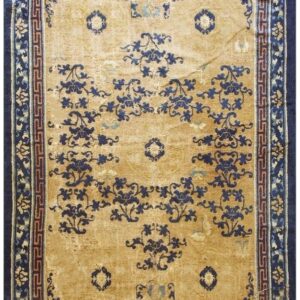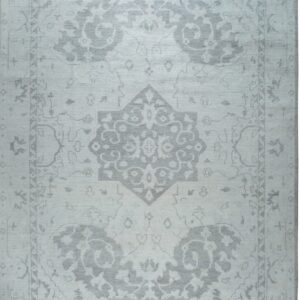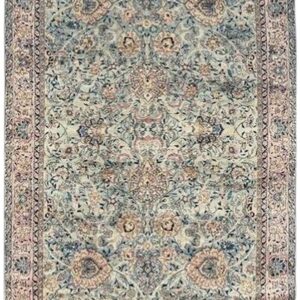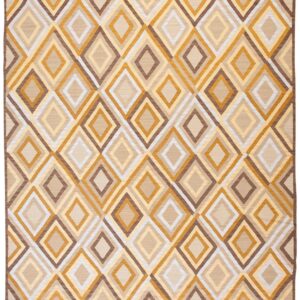
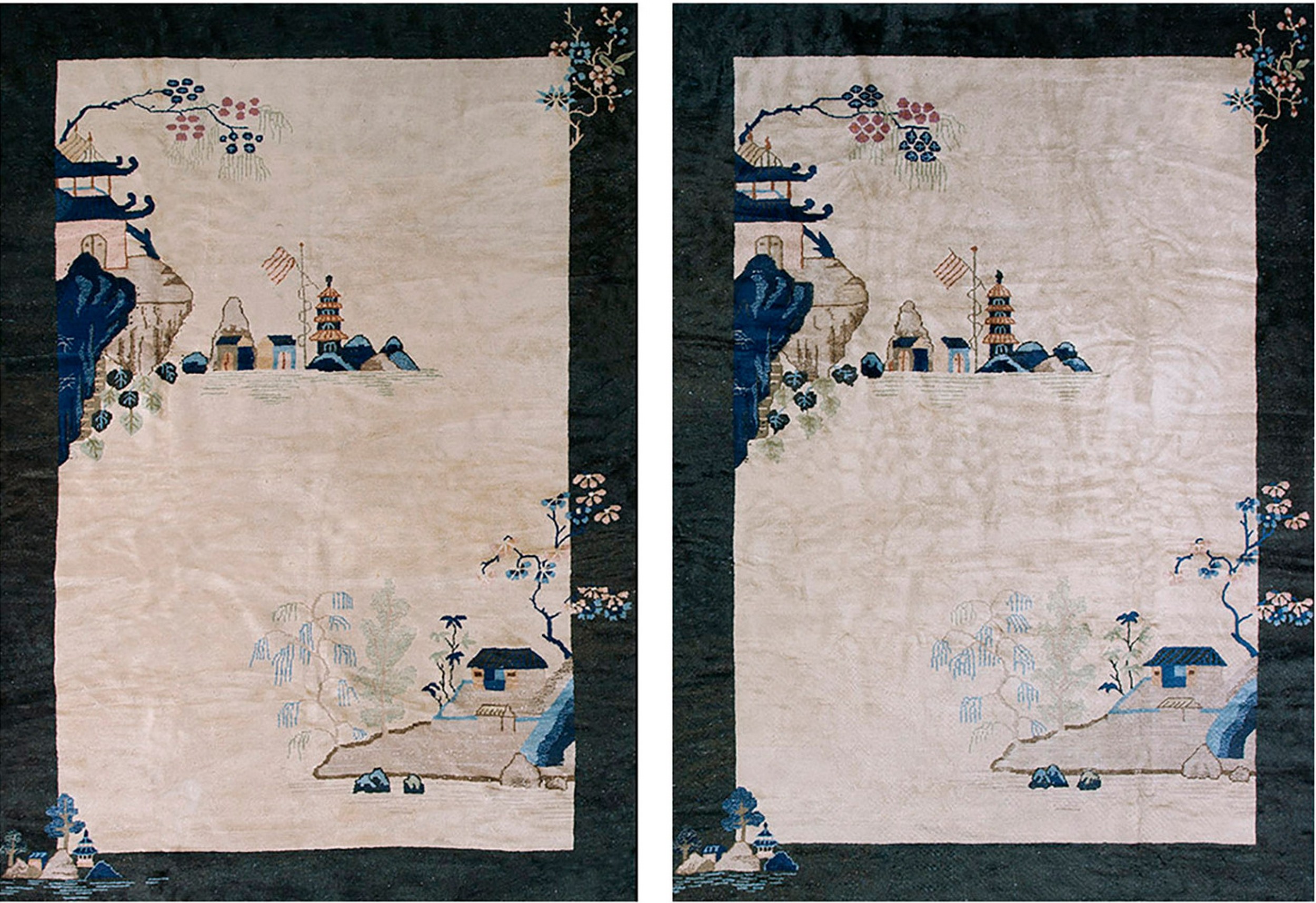
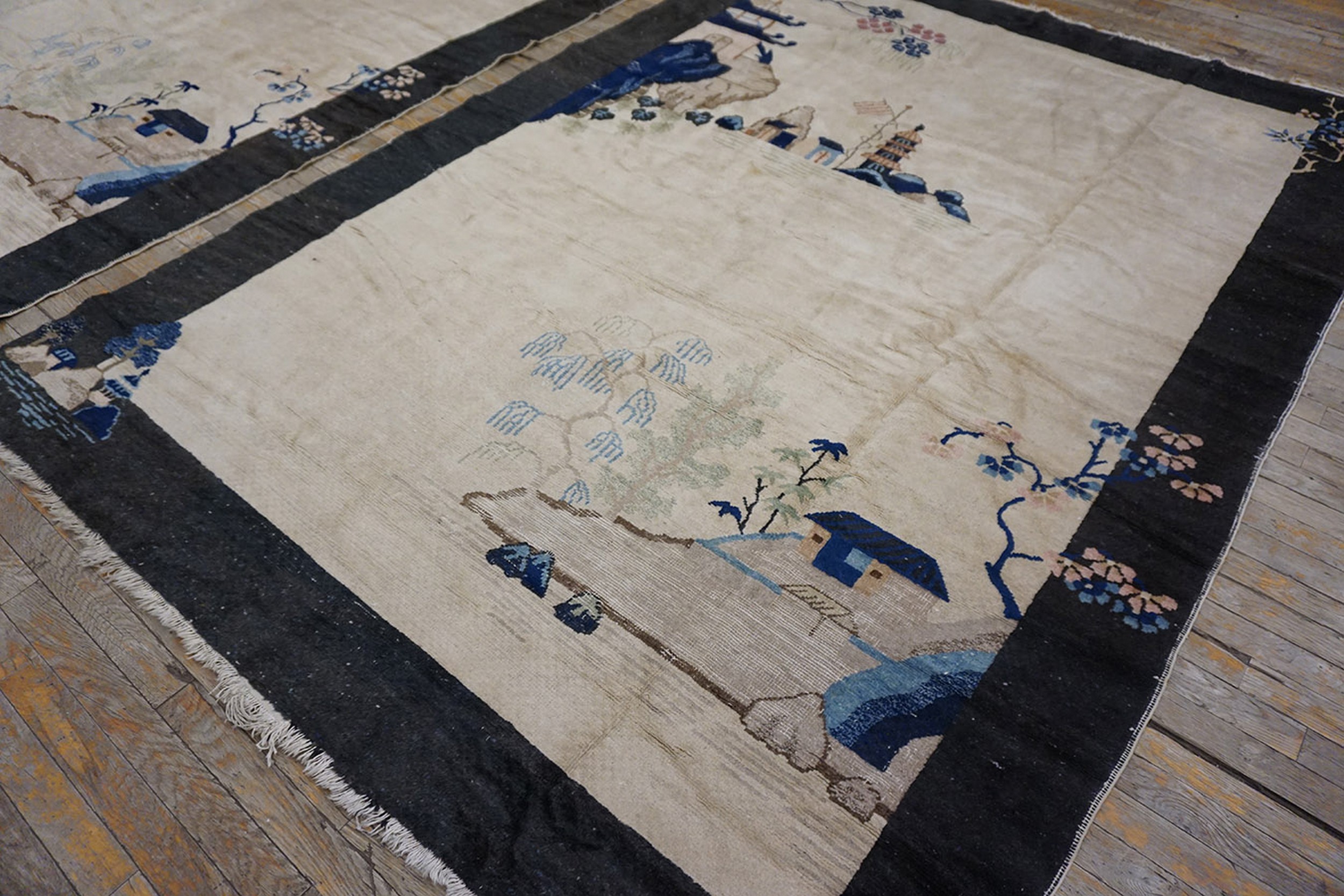
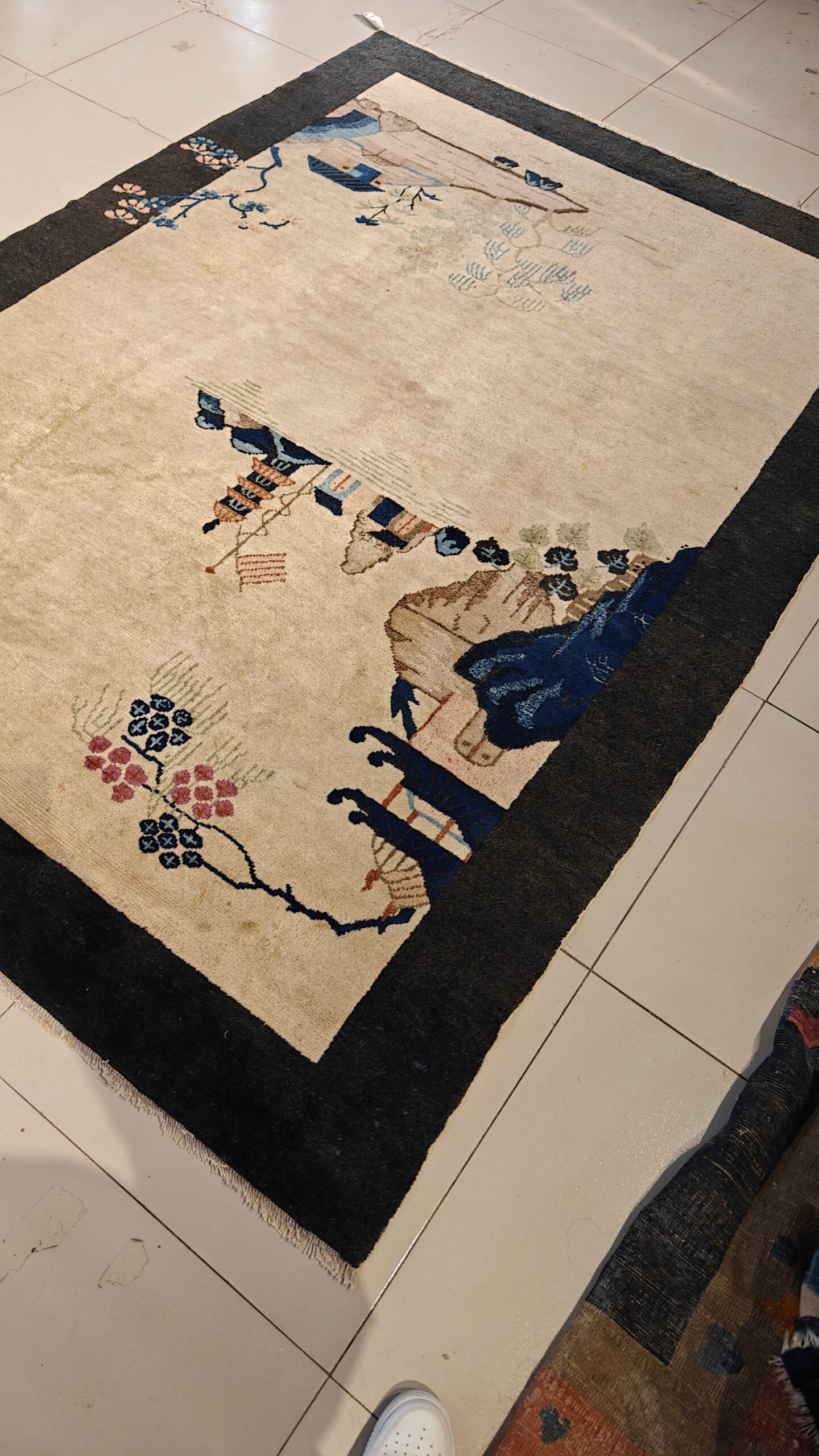
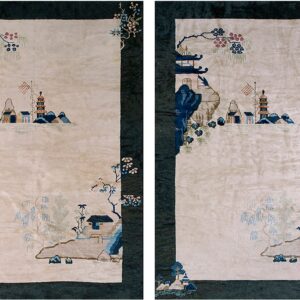
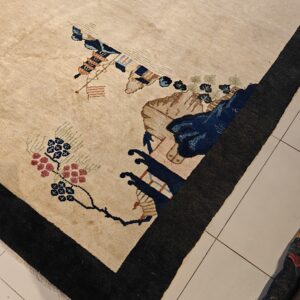
This rare and exquisite pair of early 20th-century Chinese Art Deco carpets represents the “Golden Age” of the Tientsin (Tianjin) and Peking workshops. Historically, these pieces are part of the stylistic revolution spearheaded by designers like Walter Nichols and Helen Fette, who merged ancient Chinese pictorial traditions with the bold, streamlined sensibilities of the Western Art Deco movement. Finding a true pair of such area rugs is a significant rarity, as they were often used in symmetrical architectural layouts—such as flanking a fireplace or gracing a grand master suite—to create a unified, high-status interior.
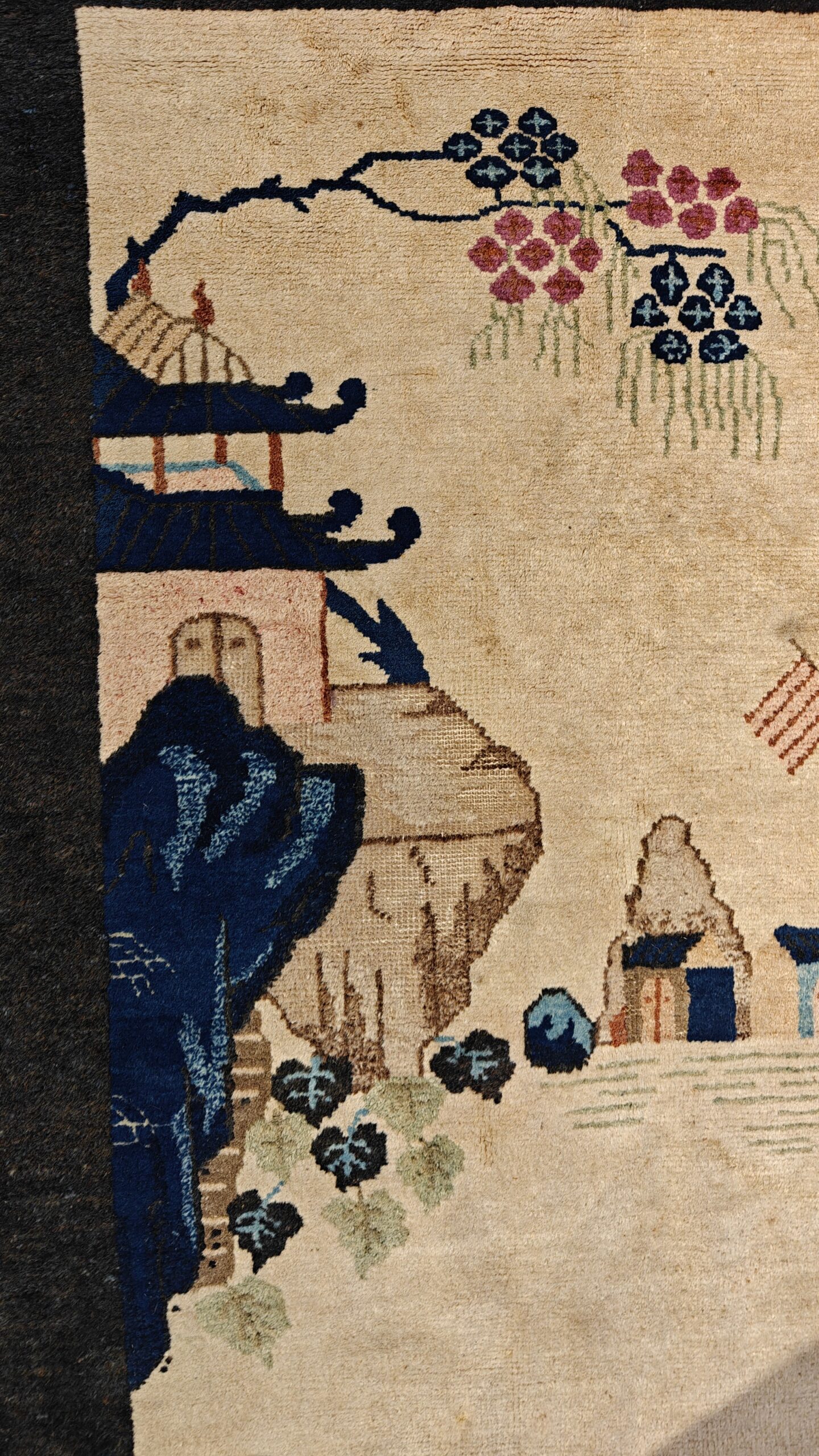
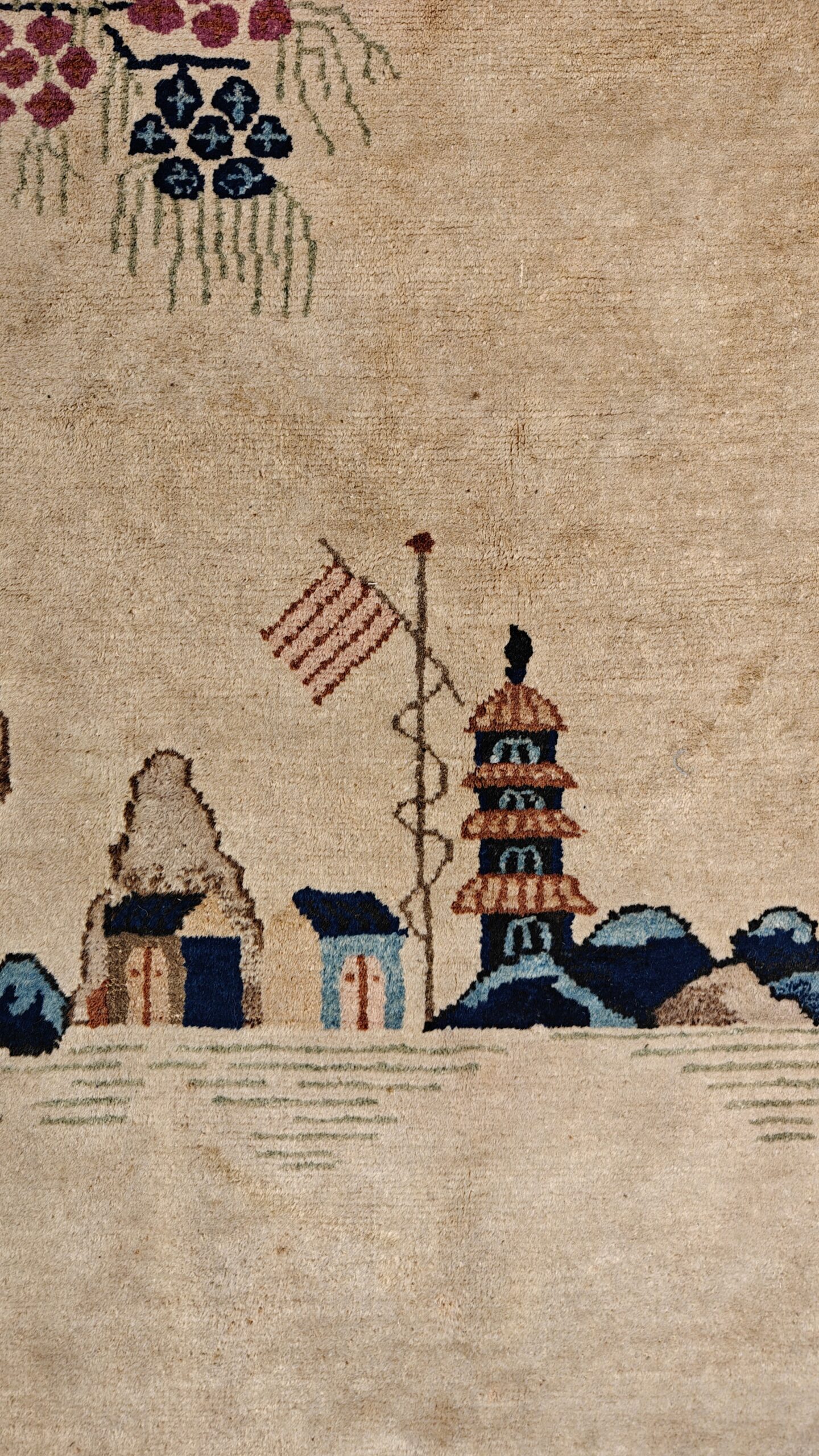
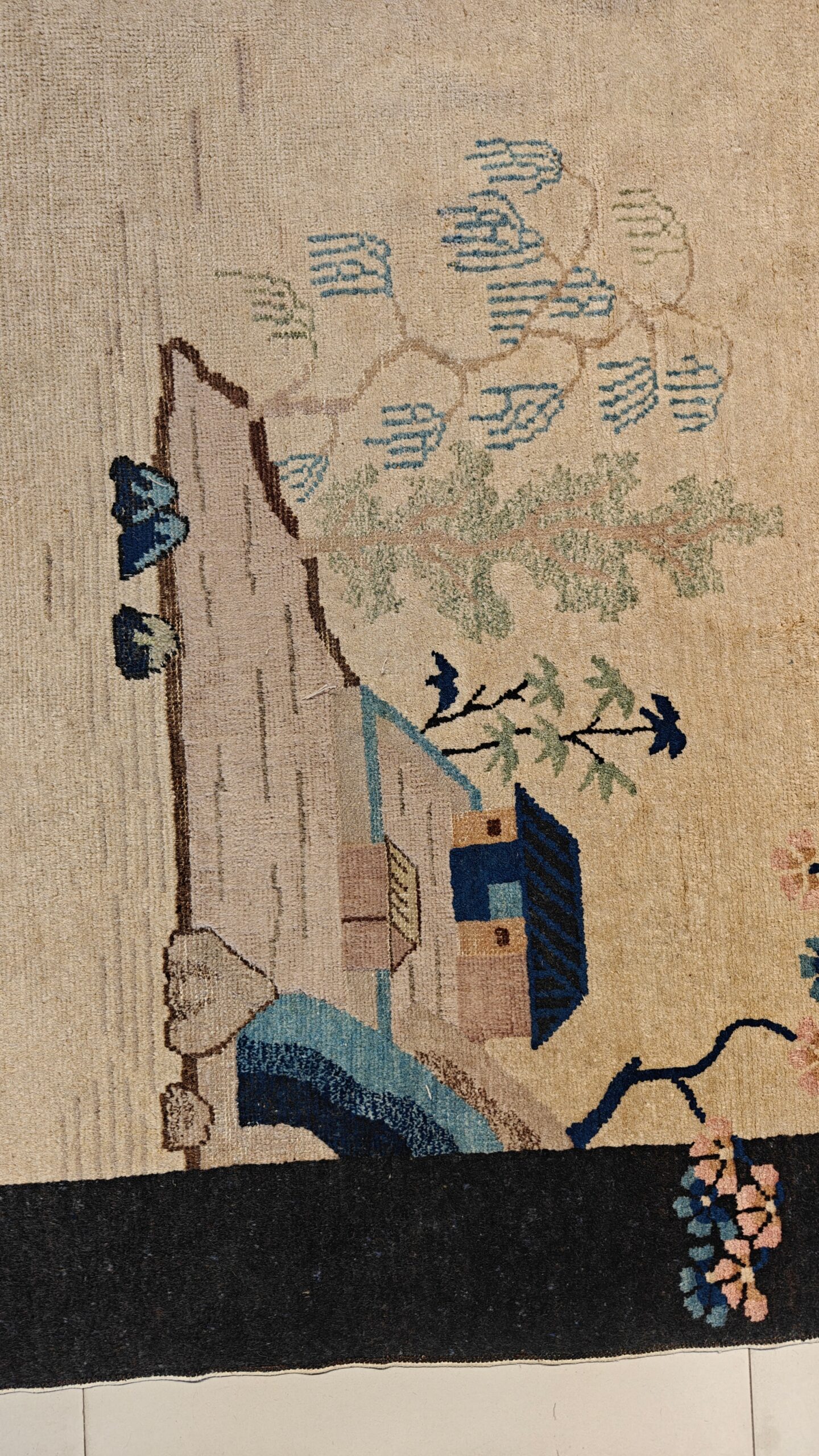
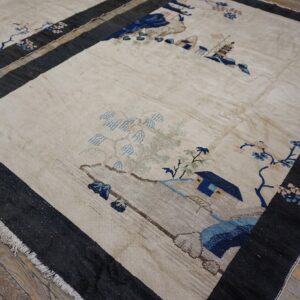
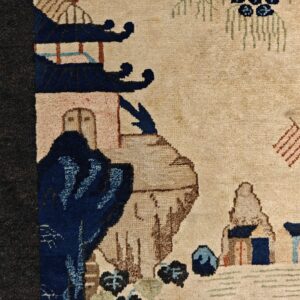
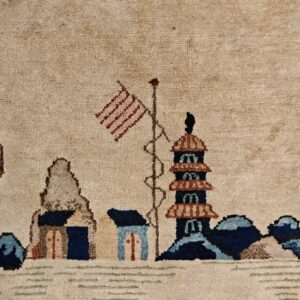
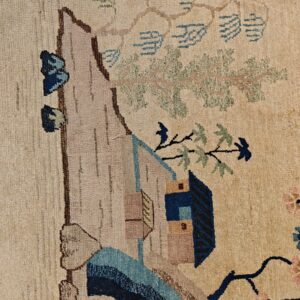
The composition is defined by its luminous Ivory field, a hallmark of the most sophisticated Art Deco production. This open, neutral ground serves as a “painterly” stage for the scenic pictorial elements, which often depict a lush landscape or a “garden of the immortals.” Unlike the rigid symmetry of Persian carpets, these Chinese rugs embrace the “asymmetry of nature,” featuring diagonal flowering branches, pagodas, or scholar’s rocks that appear to float effortlessly within the ivory space. The motifs are rendered in a vibrant, “gem-tone” palette of indigo blue, coral, and emerald green, achieving a shimmering depth through the use of high-quality, vegetable-dyed wool.
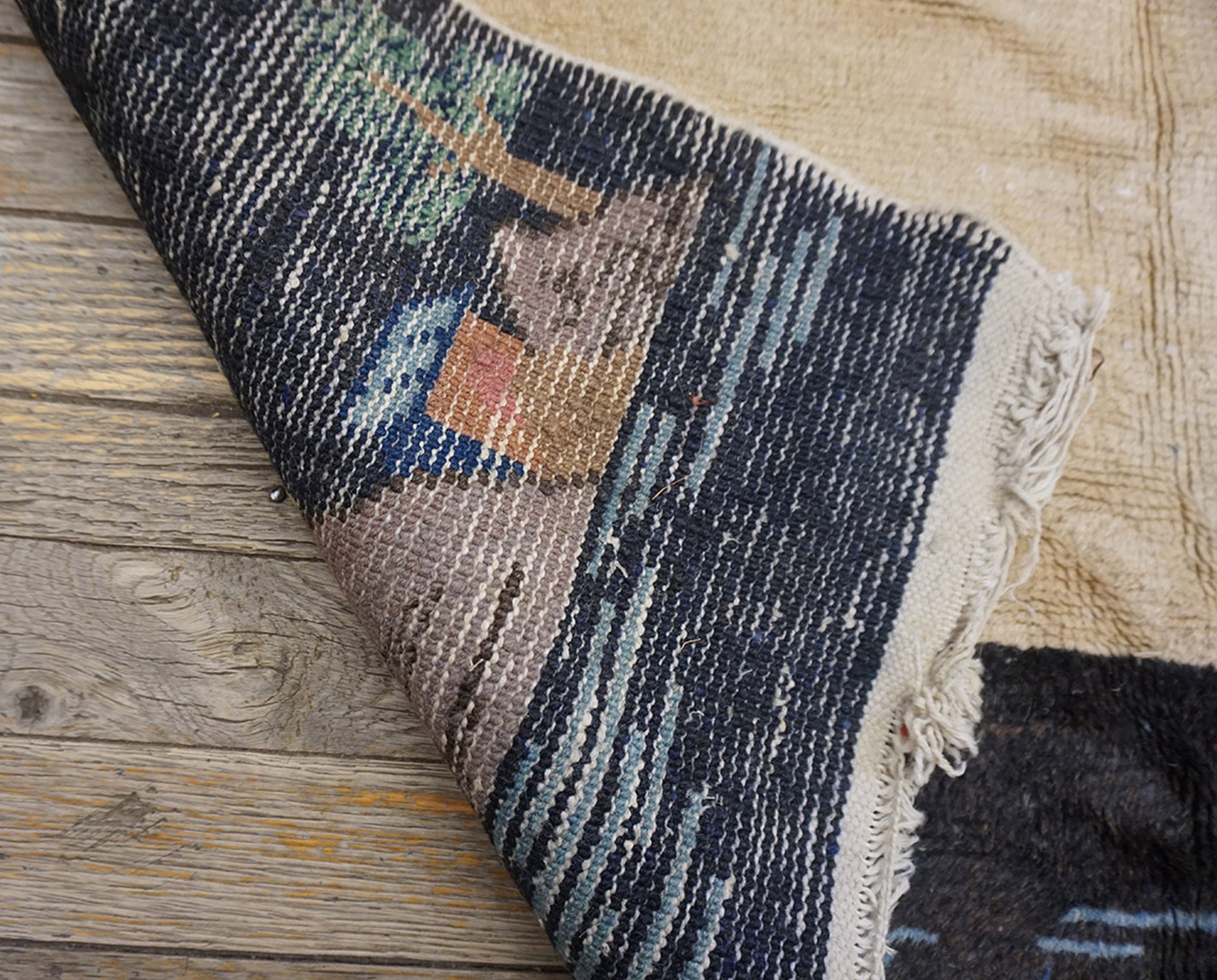
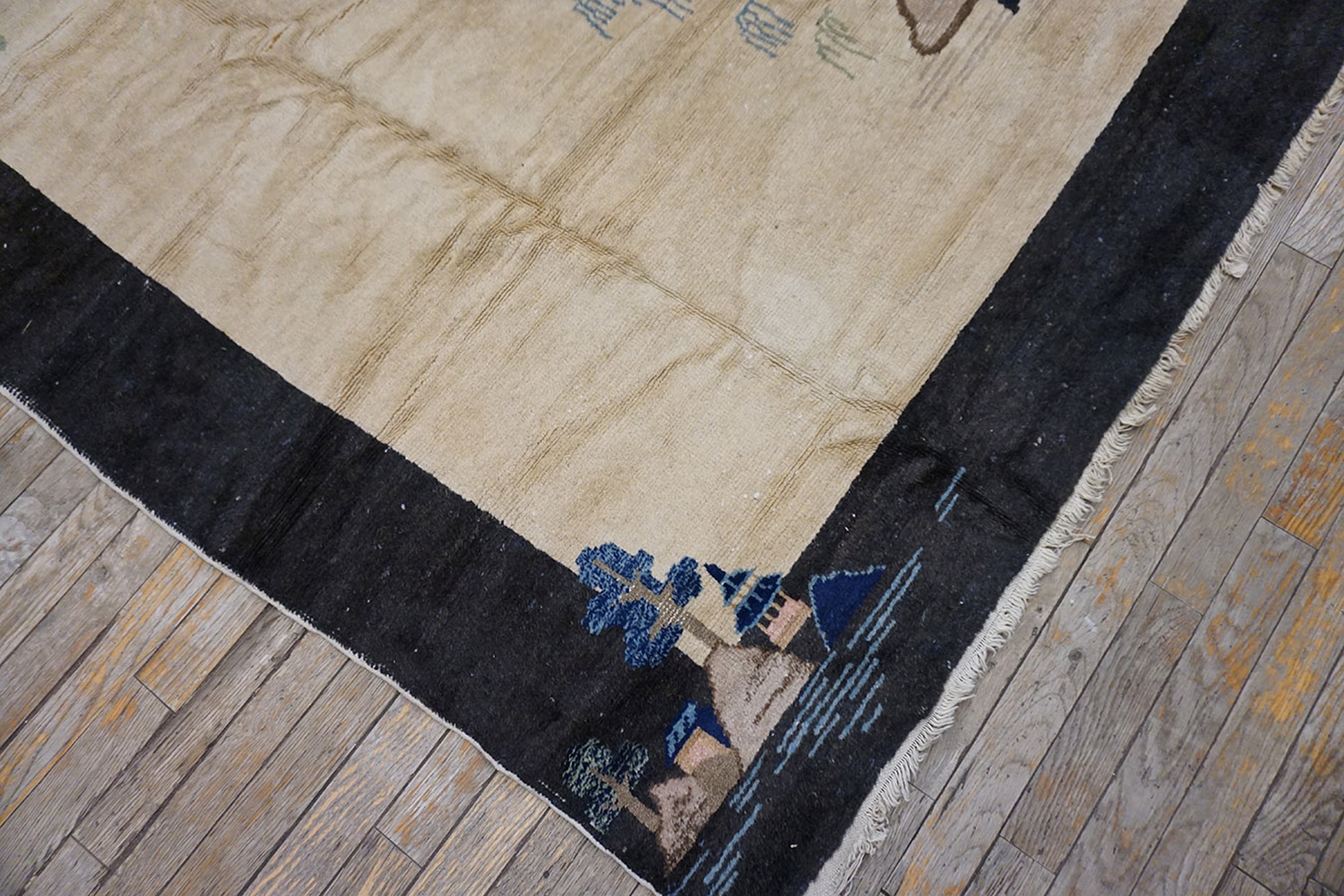
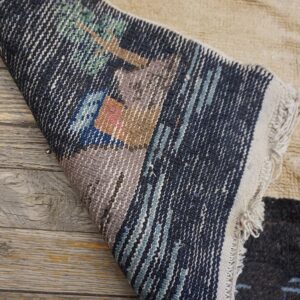
Technically, these art deco carpets are prized for their “Nichols” style construction—characterized by a thick, heavy pile and a lustrous, “silken” handle. The wool used in this era was often hand-carded and chrome-dyed (or naturally dyed), ensuring that the colors remained saturated and “pop” against the light field even after a century. A unique feature of these pictorial pieces is the “contour carving” or high-low shearing, where the weaver subtly incised the edges of the floral and landscape motifs to create a three-dimensional, sculptural effect.
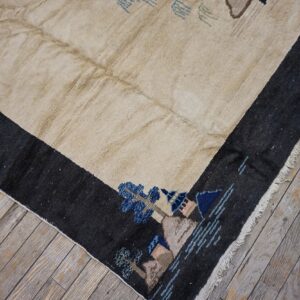
The borders are typically minimalist, often consisting of a single, solid-colored band of deep navy or plum, which serves to “frame” the ivory scene without distracting from its narrative. To possess a pair of antique ivory Chinese Art Deco pictorial carpets is to hold a monument to a unique cultural exchange—a work that bridges the gap between the scholarly elegance of the Qing Dynasty and the glamorous, cosmopolitan optimism of the 1920s and 30s. They are as much “floor-paintings” as they are functional textiles, transforming any room into a serene, hand-wrought sanctuary of Eastern art.