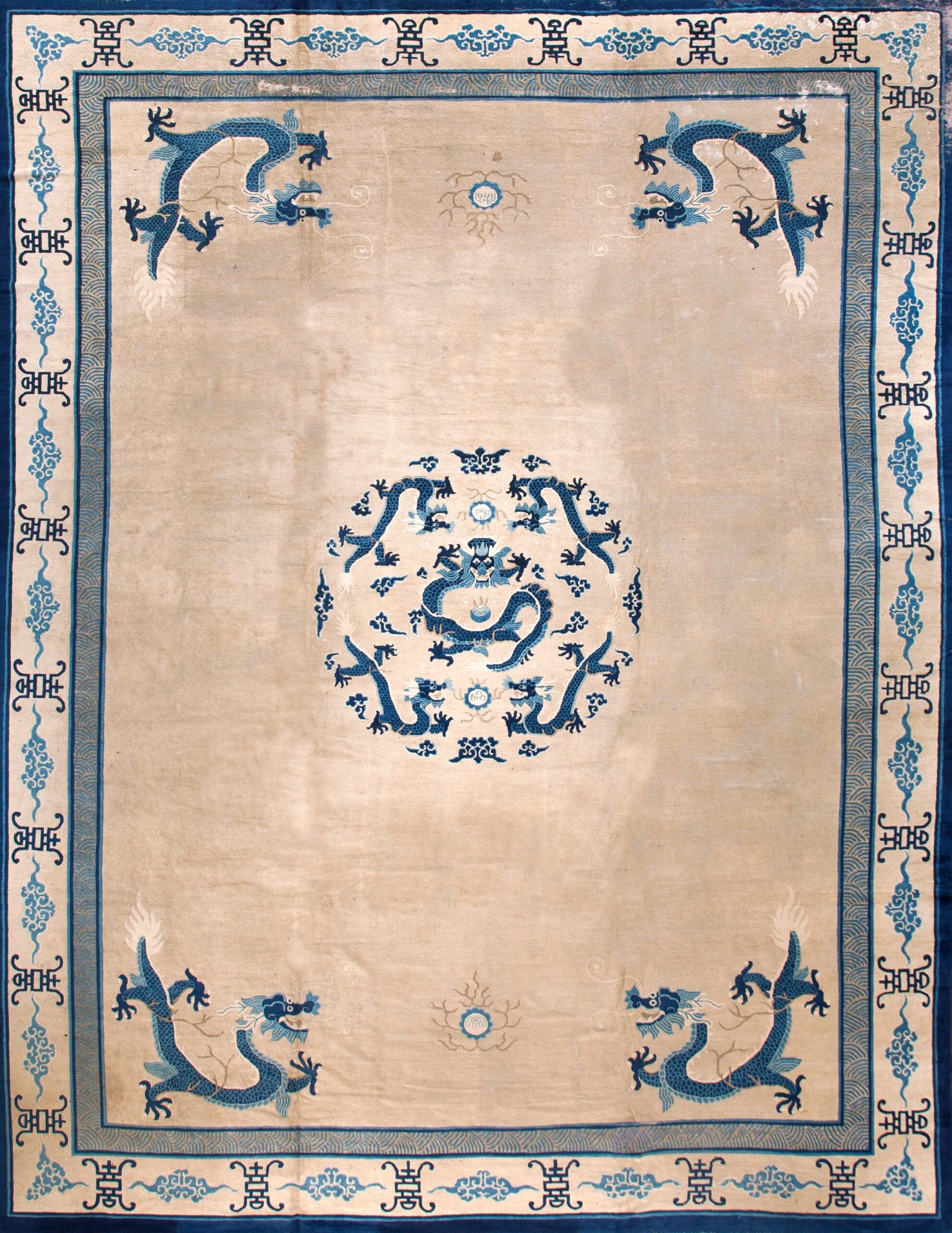
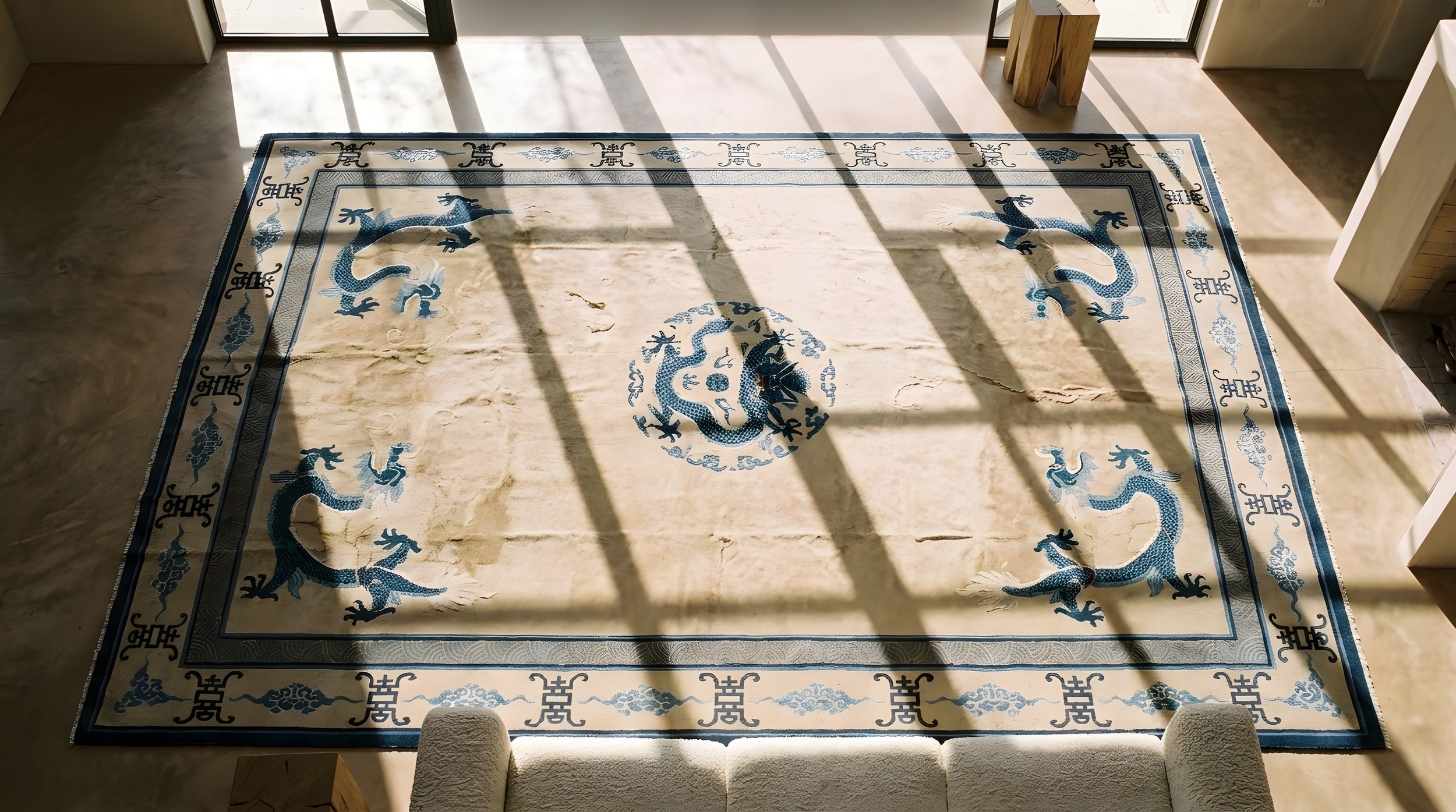
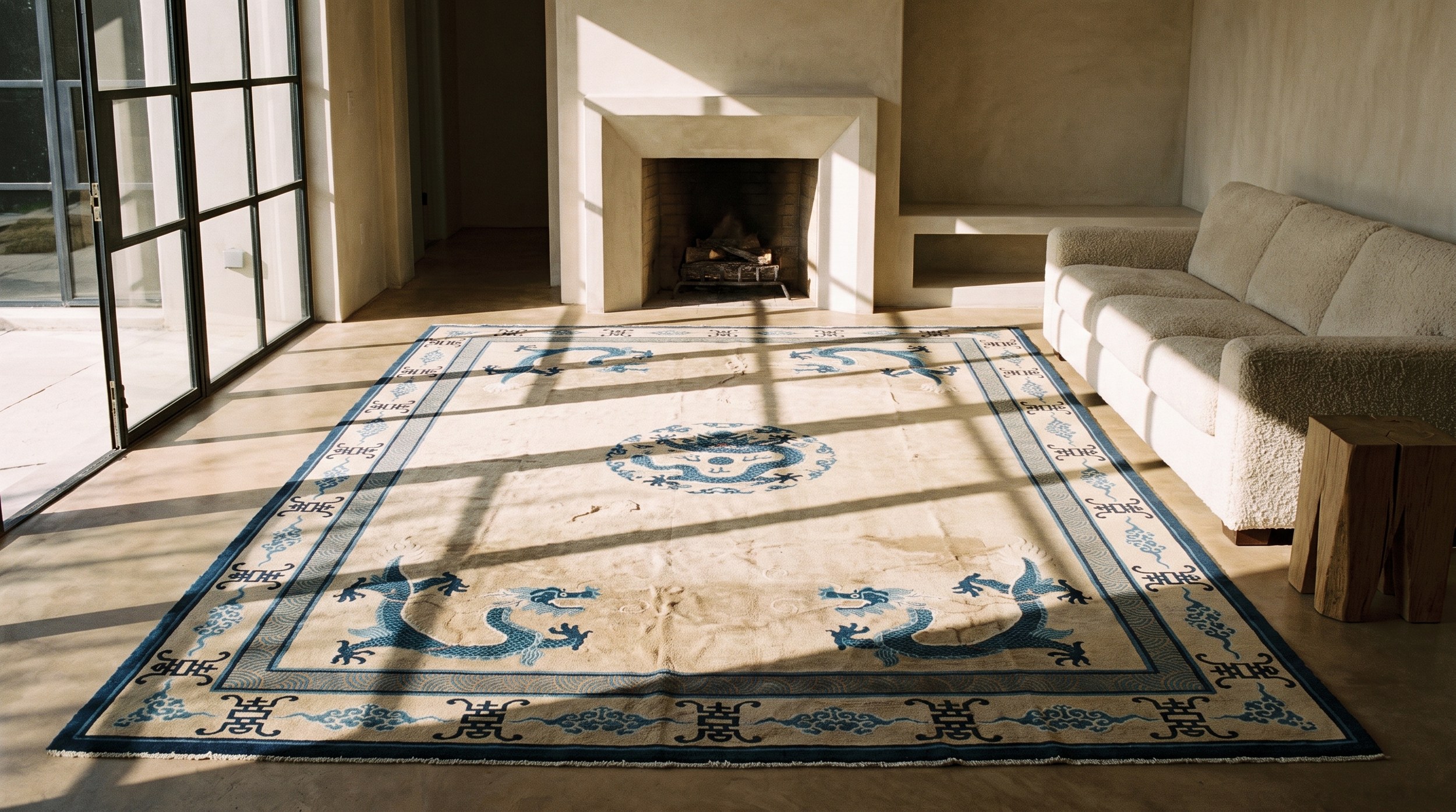
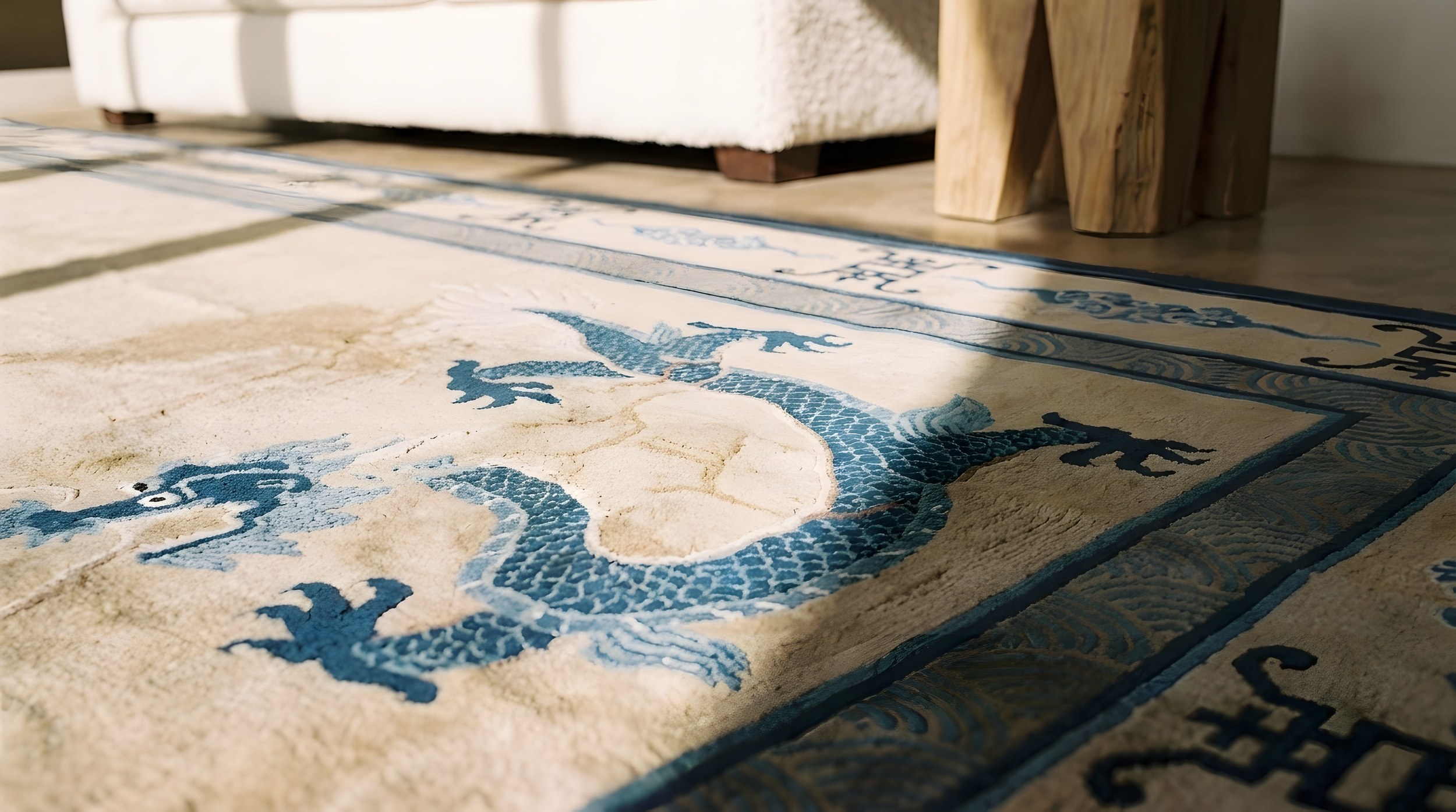
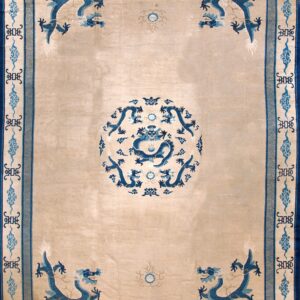
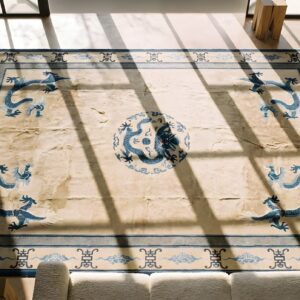
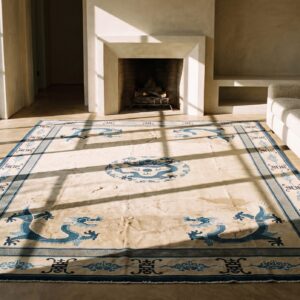
This nineteenth-century Chinese Peking rug is an exceptional example of “Imperial-style” weaving, characterized by its rare combination of expansive negative space and powerful dynastic iconography. While many antique Chinese area rugs from this era utilize allover floral patterns, this large room-size specimen features a sophisticated open field medallion layout, a design choice that reflects the “scholar’s taste”—emphasizing clarity, balance, and philosophical depth.
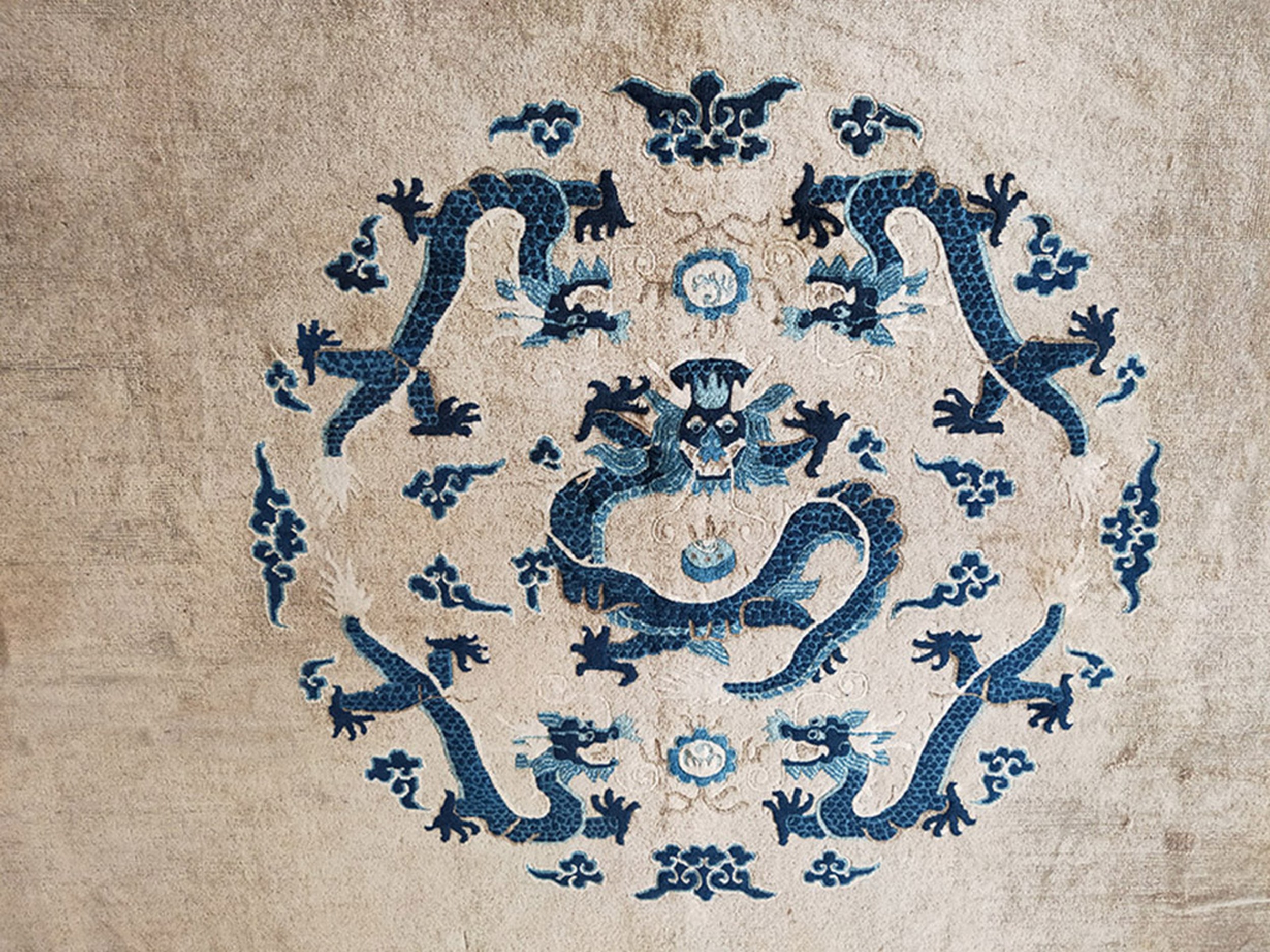
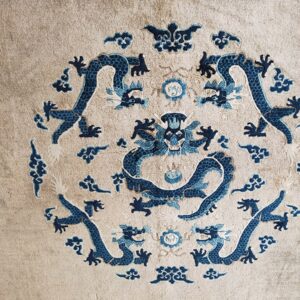
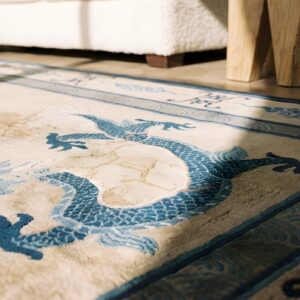
The composition is centered upon a singular, commanding dragon medallion. The dragon, an ancient symbol of the Emperor and divine protection, is rendered with calligraphic fluidity, coiled in a circular form that suggests the cycle of eternity. Surrounding this central figure are ethereal Cloud Bands (Yun) design pattern and delicate floral sprays, which appear to float within the field like celestial islands. The use of the “Open Field” is particularly effective here, as it creates a sense of vast, meditative space, allowing the intricate detail of the central medallion and corner spandrels to resonate without visual competition.
The palette is anchored by a luminous and rare Antique Ivory foundation. This “parchment” or “clotted-cream” ground has mellowed over more than a century into a warm, sun-drenched tone that reflects light with a soft, matte glow. Against this tranquil stage, the motifs are rendered in a sophisticated range of Indigo Blue, Slate, and Midnight. Because this is a 19th-century specimen, the natural dyes exhibit a magnificent “watercolor” abrash, where the blues shift in tone like a shifting sky, giving the limited color palette a three-dimensional depth and a sense of historical gravity.
Technically, this antique artistic Chinese Peking area rug is prized for its lush, high-grade wool pile and substantial, “heavy” handle. The wool, sourced from high-altitude sheep, is exceptionally rich in natural lanolin, resulting in a velvety surface with a subtle, healthy sheen. A defining characteristic of this tradition is the hand-carving or “embossing” technique, where the weaver hand-clipped the wool around the dragon and clouds to create a sculptural depth, making the imperial figures appear to lift away from the ivory field.
The borders act as a disciplined architectural frame, often featuring a “T-fret” or “Meander” (Greek Key) design to symbolize infinity, providing a structural “lock” for the airy elegance of the field. To possess this antique ivory Peking dragon design motif rug is to own a monument to Chinese dynastic history. It bridges the gap between sacred mythology and sophisticated minimalist art—transforming any grand space into a sanctuary of historical soul and serene, celestial grace.