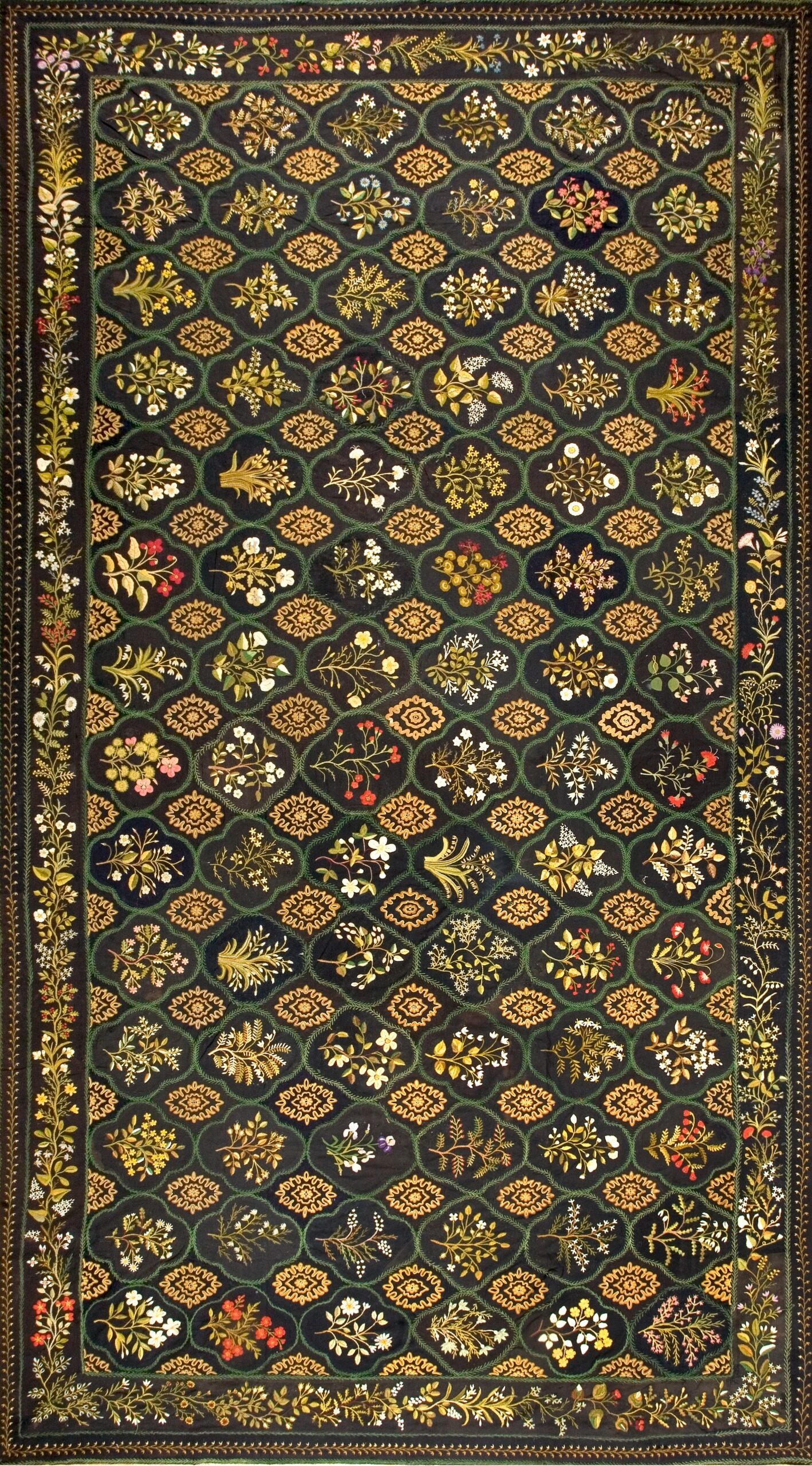
This nineteenth-century English carpet is a striking example of British textile sophistication, representing a departure from the lighter, more pastel palettes typically associated with European flat-weaves. In the hierarchy of antique needlepoint carpets, a large-size specimen with a dark, moody foundation is a rare find, highly sought after by modern designers for its ability to anchor a grand room with both historical gravity and a contemporary edge.
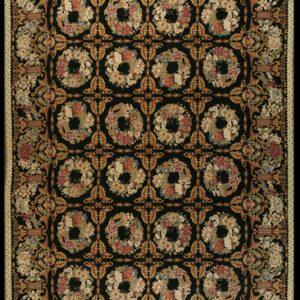
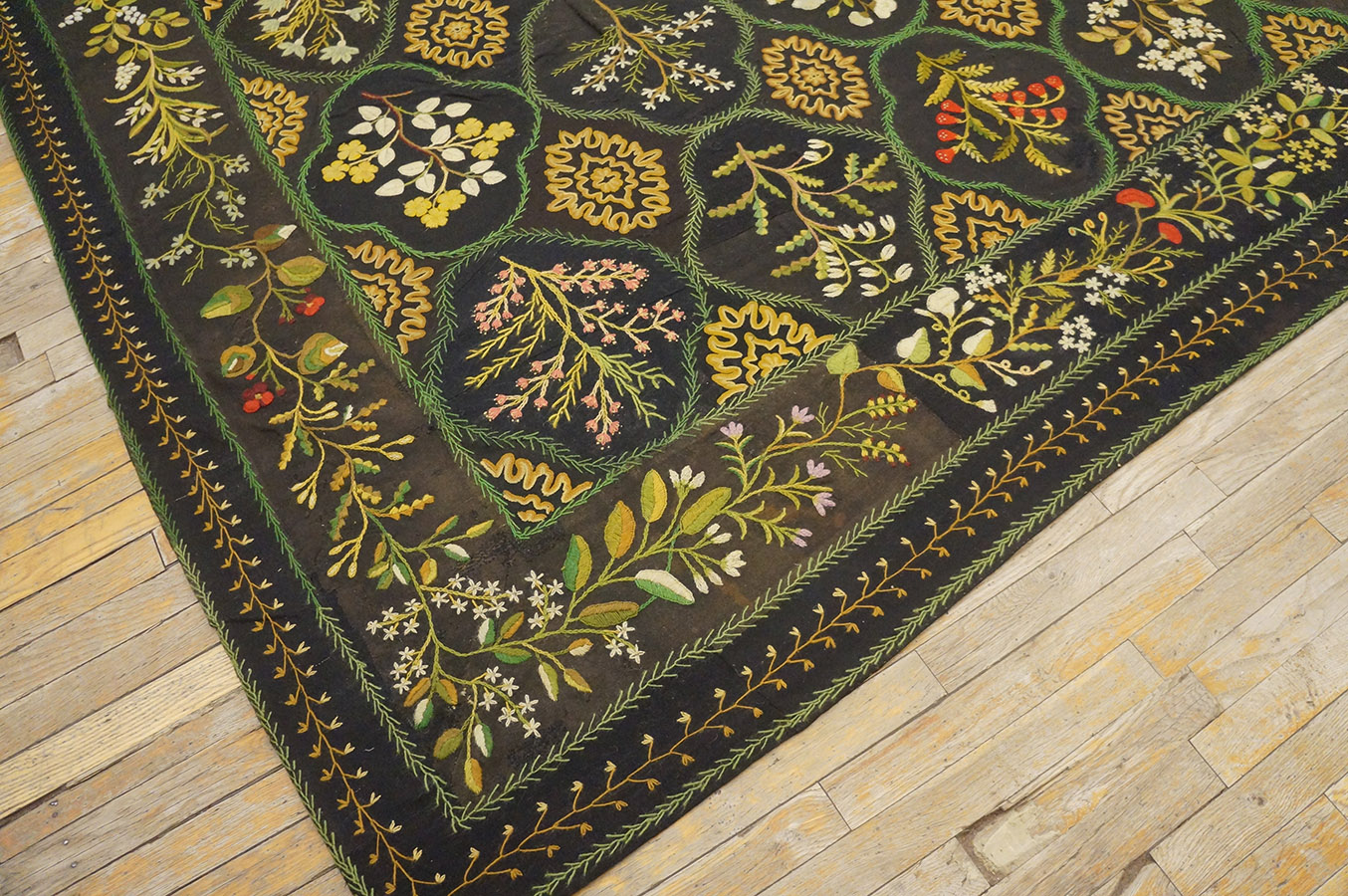
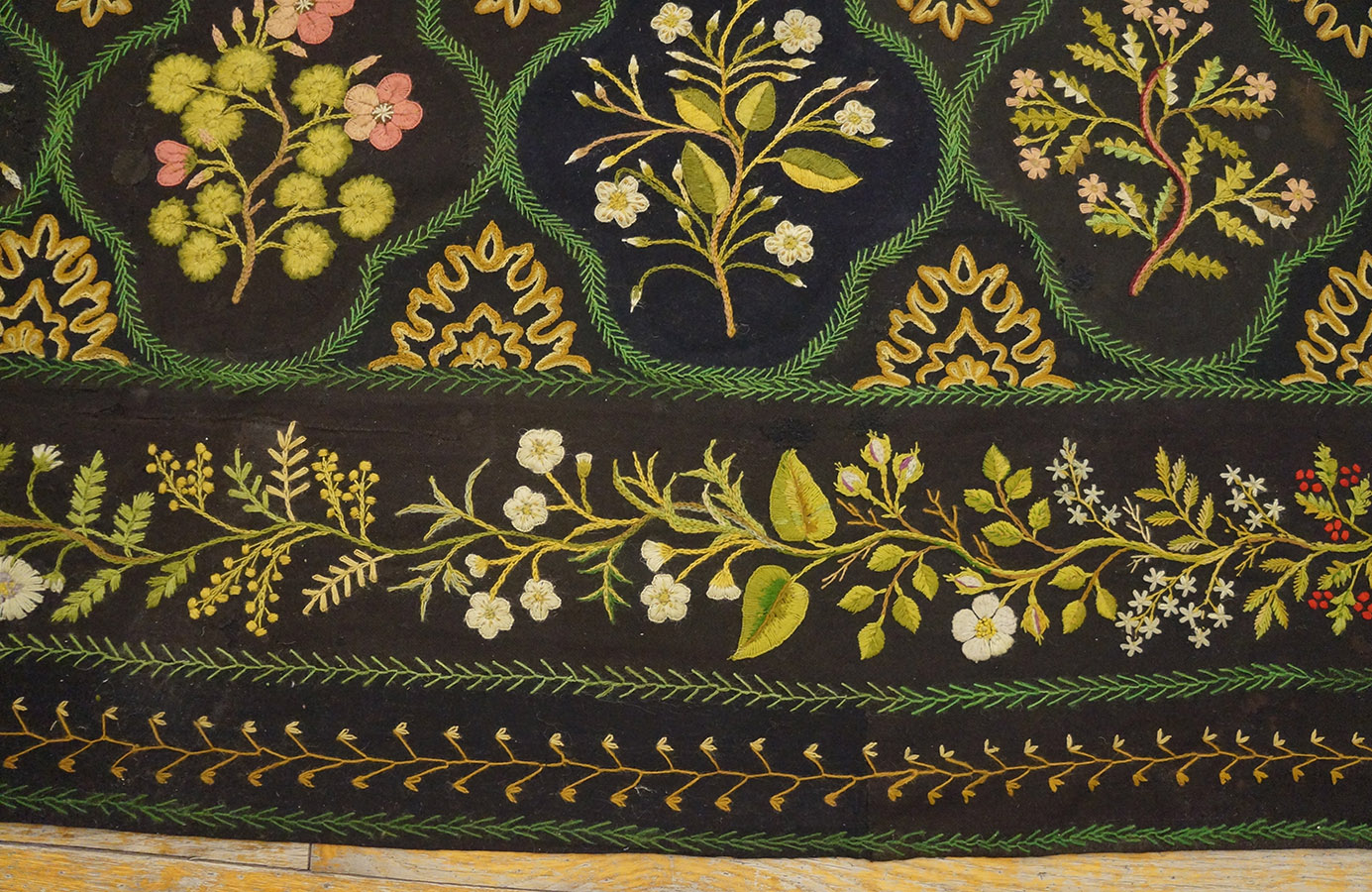
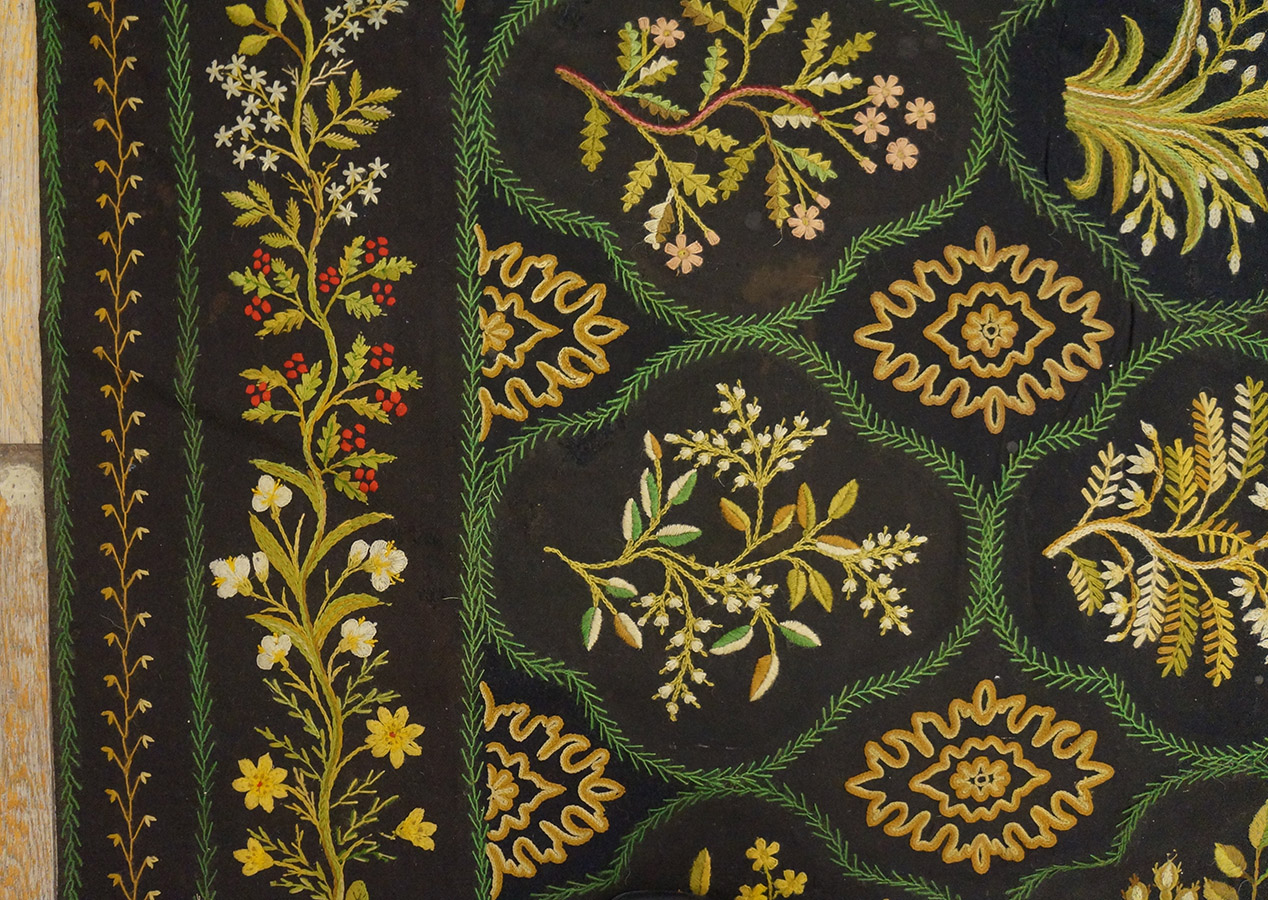
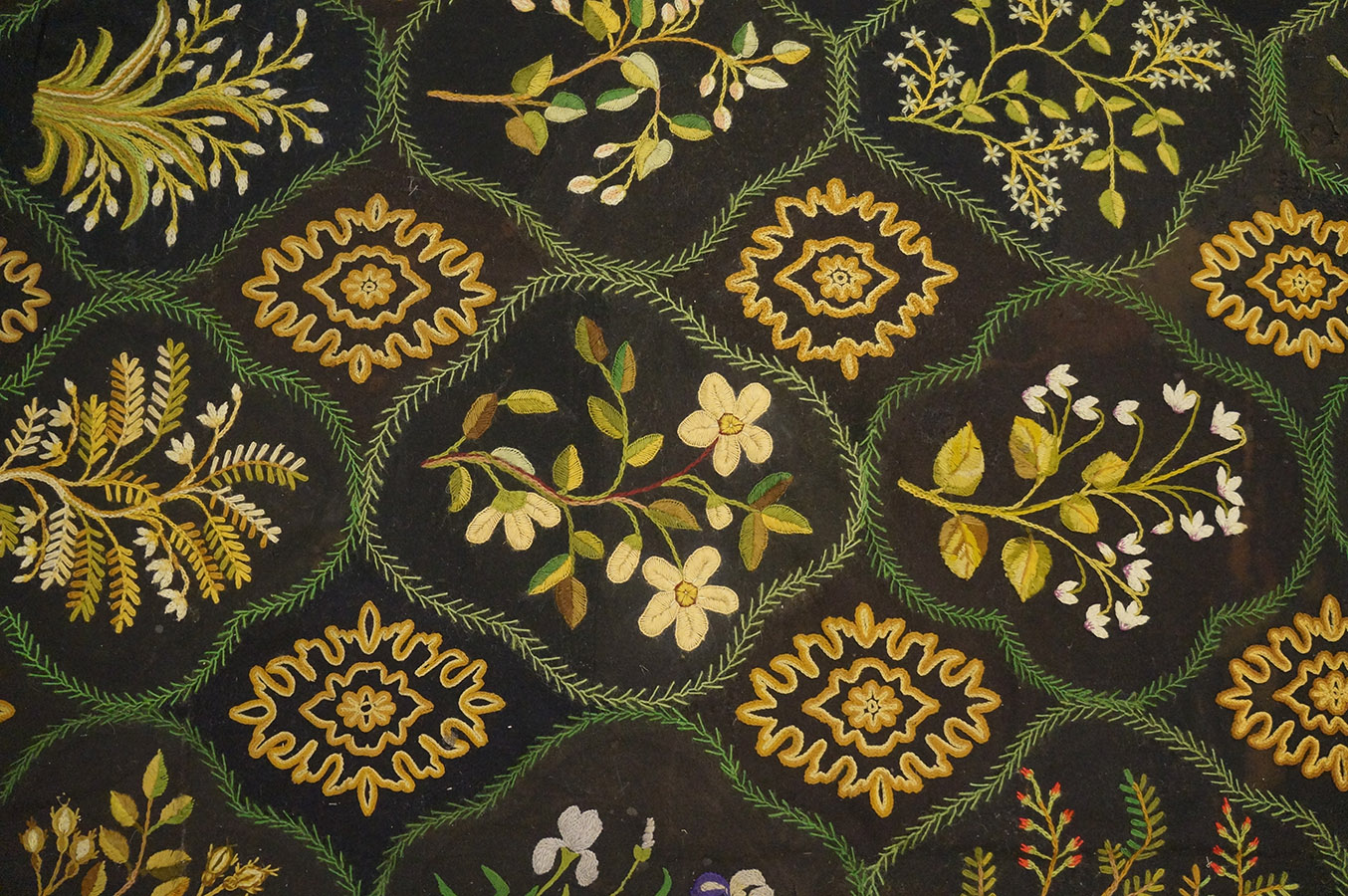
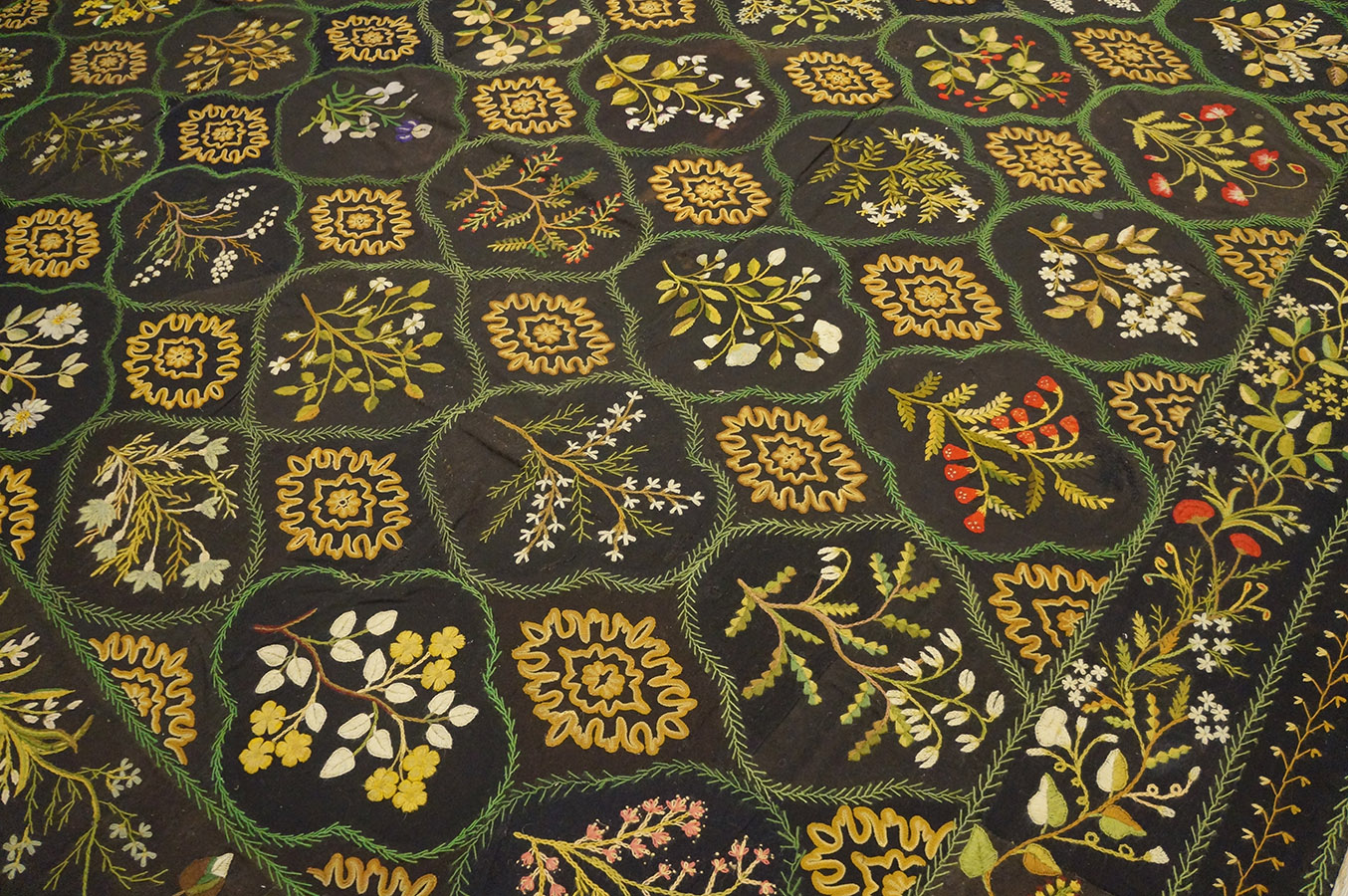
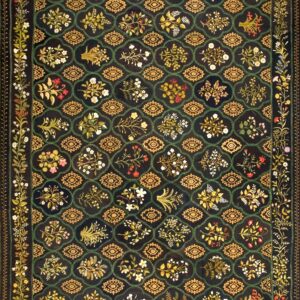
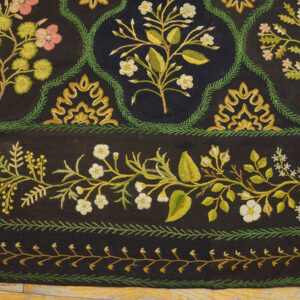
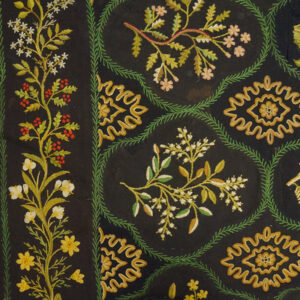
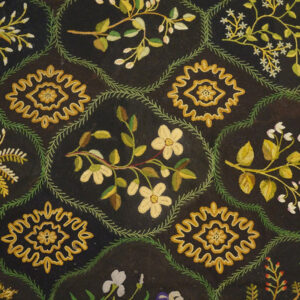
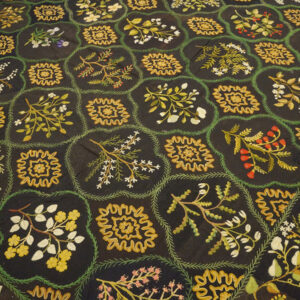
The composition is centered upon a lush floral design, featuring a dense and rhythmic arrangement of English roses, lilies, and scrolling acanthus foliage. The drawing is remarkably detailed, achieved through the “Gros Point” needlework technique—where wool yarn is hand-stitched onto a structural canvas. Unlike the abstract geometry of Eastern rugs, this English specimen offers a “painterly” realism, creating a surface that resembles a grand, hand-wrought tapestry for the floor. The “allover” layout ensures a balanced visual weight, making it an ideal foundational piece for formal dining rooms or expansive libraries.
The palette is anchored by a magnificent and rare charcoal / brown foundation. This deep, dramatic ground provides a high-contrast stage that allows the floral motifs to “pop” with a luminous intensity. The secondary colors include a sophisticated range of crimson, dusty rose, sage green, and muted gold. Because this is an antique specimen, the charcoal field exhibits a beautiful tonal variegation; the natural dyes have oxidized over a century to create a soft, matte patina that shifts from deep obsidian to a smoky graphite, preventing the dark color from appearing flat or heavy.
Technically, this antique carpet is prized for its refined flat-weave texture and substantial, “fabric-like” handle. The hand-stitched nature of the needlepoint creates a uniform surface that is both durable and remarkably elegant. One of the most significant advantages of this construction is its “low-profile” height, which allows for the easy placement of fine antique furniture without the instability of a high pile. The sheer labor involved in a large-scale needlework of this caliber represents thousands of hours of meticulous hand-work, a testament to the high domestic woven art of the 19th century.
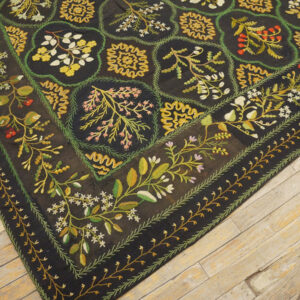
The borders act as a grand architectural frame, often mirroring the central botanical themes with a continuous floral garland or scrolling foliate border to “lock in” the vibrant energy of the field. To possess this Antique Charcoal English Needlework carpet is to own a monument to Victorian-era craftsmanship. It bridges the gap between the traditional English garden and a sophisticated, modern aesthetic—transforming any large space into a sanctuary of historical soul and dramatic, floral grace.